LONDON-(MaraviPost)-Andrew Mountbatten-Windsor, brother of King Charles III of England, has been arrested on suspicion of misconduct in public office.
According to CNN, officers arrived at Mountbatten-Windsor’s home at Sandringham, King Charles’s estate in Norfolk, early Thursday morning.
Police said they were searching addresses in Norfolk and Berkshire, where the former prince lived until he left his home at Windsor this month.
Police had previously said the force was reviewing allegations that a woman was trafficked to the UK by Jeffrey Epstein to have a sexual encounter with Mountbatten-Windsor, and claims he shared sensitive information with the convicted sex offender while serving as the UK’s trade envoy.
Mountbatten-Windsor has denied all accusations against him and insisted that he never witnessed or suspected any of the behaviour of which Epstein was accused.
He has not commented on recent allegations of misconduct in public office.
The British loyal family is also yet to comment on the matter.
Dorothy in Yellow during previous court session on corruption charges
LILONGWE-(MaraviPost)-About eleven months have passed since High Court Judge Patrick Chirwa, sitting as Chief Resident Magistrate ruled that former Malawi Energy Regulatory Authority (MERA) Chief Executive Officer Collins Magalasi, businesswoman Dorothy Shonga, and two other suspects have a case to answer in a high-profile corruption case.
The four were arrested in 2020 on allegations of abusing their positions to manipulate MERA’s Internal Procurement and Disposal Committee (IPDC) into awarding a lucrative MK186 million contract to Vink Enterprise, a company owned by Shonga.
The deal, which sparked a major scandal, raised concerns about procurement irregularities within MERA.
Delivering his ruling in March 2025, Judge Chirwa stated that the prosecution had presented sufficient evidence to warrant the accused defending themselves in court. The ruling effectively dismisses any possibility of an immediate acquittal and sets the stage for the defence to present its arguments.
“This court has carefully examined the evidence submitted by the State, and it is clear that the accused have questions to answer regarding their involvement in the contract awarding process,” Chirwa said.
The case revolves around allegations that Magalasi, in collaboration with Shonga and the other accused, bypassed standard procurement procedures to unlawfully benefit Vink Enterprise.
The Anti-Corruption Bureau (ACB), which led the investigation, has argued that the deal was tailored to favour Shonga’s company at the expense of transparency and fairness.
Following the ruling, legal experts say the accused had the opportunity to challenge the evidence and present their defence.
If found guilty, they could face severe penalties, including imprisonment and financial restitution.
The case attracted significant public attention, as it underscores ongoing efforts to combat corruption in Malawi.
Civil society organizations and governance watchdogs welcomed the court’s decision, urging authorities to ensure that justice is served without bias.
But now with eleven months after the ruling was made in March 2025, the case has never seen a day in the court.
Both ACB and Judiciary public relations office are yet to give reasons why the case has stalled for a year.
Why could such a high profile case stall like that after the suspects were found a case to answer? Who is sitting on the case
Amid calls from the Public Affairs Committee (PAC) to President Professor Arthur Peter Mutharika to fire Cabinet ministers and government officers with outstanding corruption cases, governance and human rights advocates have urged the President to exercise caution.
Recently, the Public Affairs Committee (PAC) – a quasi-religious grouping, which together with the Catholic Bishops, spearheaded the birth of multiparty democracy in 1992, called upon President Mutharika to sack officials facing corruption and other charges.
However, a seasoned governance and human rights advocate Undule Mwakasungula cautioned the President against acting on the calls wholesome, fearing this could be a recipe for disaster.
He reminded Malawians that hasty decisions have ruined lives and careers for innocent citizens before, citing the case of former Minister of Agriculture, Dr. George Chaponda, who was victimized for a crime he never committed.
“PAC’s call to fire ministers and senior officials over corruption allegations deserves attention. However, it does not automatically mean the President made a mistake in appointing them. First, the President acted on the information available at the time of the appointments. Many of those appointed had strong qualifications, experience, and a proven track record. For this reason, it will be unfair to say the President failed in make the right choices,” reacted Mwakasungula.
He wondered why PAC is raising this issue now when they were silent when the appointments were being made.
Mwakasungula urges PAC and other groups to avoid handling this matter emotionally or politically, emphasizing that government needs stability to function well.
“If every allegation leads to immediate removal, government operations may be seriously affected. Then also a risk that such calls could be used politically to weaken the administration rather than to promote justice. Much as oversight is necessary, but it should strengthen, not be used to paralyze government functions. We must also keep the principle of “innocent until proven guilty” at the center. Allegations are not proof. Removing ministers or officials based only on accusations is creating fear and instability, and may encourage the use of rumors as political weapons. This would harm our governance more than it would help,” emphasized the most revered governance and human rights advocate.
In a separate interview, a human rights lawyer, Alfred Munika, echoed Mwakasungula’s views, stressing that it would be unfair to punish someone who is still presumed innocent.
“We have seen cases where officials are acquitted after being dismissed, only to be left without a job or reputation. The case of George Chaponda, former Minister of Agriculture, is a stark reminder of the dangers of knee-jerk reactions. Dr. Chaponda was dismissed from the cabinet over maize-gate allegations, only to be acquitted and cleared by the court. This shows how hasty decisions can ruin lives and careers,” said Munika.
He further argued that it is not practical for a president to work with entirely new faces, who did not accompany him on his campaign trail.
“These are people he knows, trusts, and has worked with. Replacing them overnight could lead to a vacuum in leadership and disrupt government operations,” said Munika.
As Mwakasungula concluded, while accountability is crucial, due process must be respected. The Constitution guarantees the right to a fair hearing, and it’s essential that this principle is upheld.
“The President should focus on ensuring that the law takes its course rather than pre-empting it,” said Mwakasungula.
Mutharika’s predecessors have faced similar pressures, often with disastrous consequences.
In 2013, Joyce Banda sacked several officials over corruption allegations, only to see some reinstated or cleared later. This created uncertainty and undermined government effectiveness.
The PAC’s call for sackings may be well-intentioned, but it’s essential to consider the broader implications.
Malawi needs stability and continuity, not a revolving door of officials. Mutharika should resist this pressure and prioritize prudent governance over populist posturing.
Instead, the President could consider suspending officials with cases in court, allowing them to defend themselves while ensuring they don’t interfere with investigations.
This balanced approach would demonstrate commitment to accountability while upholding the principles of fairness and justice.
As Mwakasungula puts it, “A president can’t just wake up one morning and decide to start afresh with new faces. That’s not how governance works.”
Mutharika would do well to heed this advice and prioritize wise counsel over hasty decisions.
LILONGWE-(MaraviPost)-More than 20 households in Area 25C were left without electricity on the morning of Saturday, 14 February, after suspected thieves allegedly stole black service cables connected to Electricity Supply of Malawi (ESCOM) power lines.
Residents say they woke up to darkness after experiencing a sudden power outage during the night.
Because it had been raining, many initially assumed the blackout was caused by bad weather.
Speaking to Maravipost one of the victims, Rose Banda said her family only realized something was wrong when electricity did not return in the morning.
“In the middle of the night, the power went off. Since it was raining, we thought it was just a fault,” Banda explained.
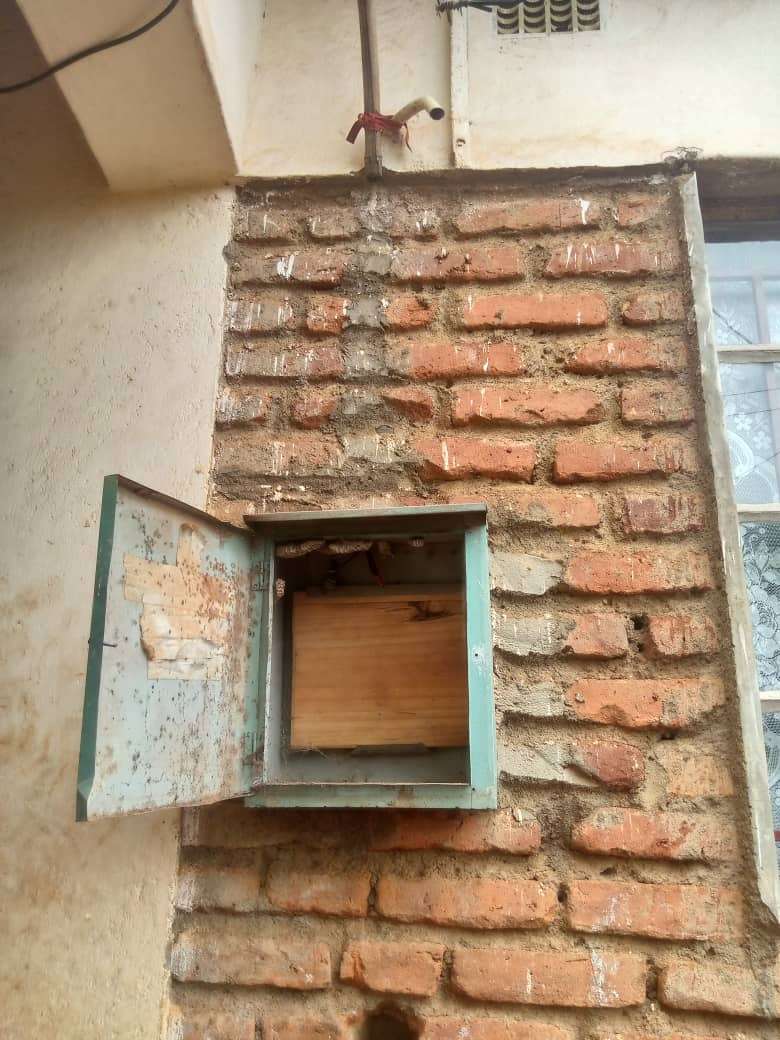
“When we woke up, we found that the metal box where ESCOM staff connect the electricity had been forced open, and the black wire was gone.”
Banda who rents the property with her family, said she immediately alerted her landlord, who lives nearby.
“When I went to inform the landlord, we discovered that their house had also been affected. That’s when we realized many houses in the area were victims,” she said.
Another resident, Innocent Mainga, suggested that the theft may have been motivated by the copper inside the cables.
“We have heard that these wires contain copper. That could be the reason the thieves targeted our area,” he said.
Cable theft has become an increasing concern in many communities, as stolen copper is often sold illegally for scrap.
The crime not only disrupts power supply but also exposes residents to safety risks due to damaged electrical infrastructure.
Affected households have called on authorities and Eskom to urgently address the situation and strengthen security measures to prevent further incidents.
Residents say the outage has disrupted daily activities, including cooking, refrigeration, and small home businesses that depend on electricity.
At the time of reporting, it was clear that no arrests has been made but Community members are urging anyone with information about the incident to report it to local authorities.
ESCOM staff have not visited the area since the incident, even though several victims say they have been calling reporting the issue since Saturday.
The recent Supreme Court ruling directing the Reserve Bank of Malawi (RBM) to compensate Finance Bank for the revocation of its licence in 2005 has sent shockwaves across the nation, with many questioning the prudence of the judgment.
The decision, which requires the RBM to pay compensation calculated from 2005 to date, has sparked intense debate, with critics arguing that it could have far-reaching consequences for the country’s financial stability and regulatory framework.
The RBM, as the primary banking regulator, revoked Finance Bank’s licence due to concerns over its financial stability and potential risks to the broader banking system, acting within its statutory mandate to protect depositors and maintain financial stability.
However, the Supreme Court’s ruling suggests that the RBM’s actions were unlawful, and the bank is entitled to compensation for the loss of its licence.
But is this judgment a victory for justice, or a recipe for disaster?
The Attorney General’s claim for damages against the RBM is a misguided attempt to shift responsibility and undermine the regulatory authority’s autonomy, argues Burnett Munthali, a renowned commentator.
The RBM’s role is to regulate and supervise banks, not to guarantee their success, and it would be unfair to hold the RBM liable for Finance Bank’s collapse, which was reportedly due to its own mismanagement and risk-taking.
Awarding damages to the government in this context could set a troubling precedent, effectively allowing the state to shift the burden of private sector failures onto the regulatory authority, and undermining the principles of accountability and good governance.
The RBM’s actions, if deemed lawful and reasonable, should be shielded from liability to ensure that regulators can act decisively without fear of financial consequences, as provided for in Section 15(2) of the Reserve Bank of Malawi Act.
It is crucial to maintain a clear distinction between regulatory oversight and commercial risk, lest we create a moral hazard where banks take excessive risks knowing they will be bailed out or compensated.
Dr. Ken Lipenga, a renowned English language professor, echoes this sentiment, arguing that the Supreme Court’s decision raises fundamental questions about the prudence of judicial decision-making.
Jurisprudence, he notes, involves considering the consequences of a decision and its impact on the community, and the recent ruling has sparked intense debate, with many questioning its legality.
The decision could have far-reaching consequences, potentially destabilizing the economy and undermining public trust, and it is essential to consider the implications of this judgment carefully.
Malawians need to think seriously about clarifying how society wants regulation to function when regulators act in good faith, and this requires a framework that balances accountability with protection for regulators, ensuring that officials can act decisively to protect the public without fear of reprisal.
This is jurisprudence in its deeper sense: cultivating judgment across institutions and across time, and a decision that satisfies a rule but fractures the community is not justice; it is judgment without prudence.
The Supreme Court’s ruling is a classic example of judgment without prudence, and it is essential to rethink this decision to ensure that it does not have devastating consequences for Malawi’s financial sector.
The recent High Court ruling in Lilongwe that quashed the redeployment of five senior Malawi Defence Force (MDF) officers to the civil service epitomizes a judiciary deeply entangled in politics and far removed from the true essence of justice.
This ruling, and several others like it, reveal a disturbing trend: the Malawian judiciary appears less as an independent arbiter of law and more as a political actor obstructing the legitimate efforts of the government to implement its policies.
It is high time this uncomfortable reality is confronted honestly and without fear, for the good of Malawi and its future.
The Democratic Progressive Party (DPP), under the visionary leadership of Professor Arthur Peter Mutharika, has charted a clear path for Malawi’s development. Their government has demonstrated a commitment to reforms and to steering the country towards greater prosperity.
Yet, despite these noble intentions, the judiciary persistently stands as a formidable barrier, frustrating and nullifying executive decisions that are essential to the functioning of the state and the advancement of national interests.
The ongoing standoff between the executive and the judiciary is now undeniable, and the consequences of this power struggle are detrimental to Malawi’s progress.
Consider the redeployment of MDF senior officers—a routine administrative action that has been a normal feature of government operations, including during the previous Malawi Congress Party (MCP) regime.
Redeployment is not dismissal; it is a strategic repositioning within government ranks to meet evolving institutional needs. It is baffling, therefore, that the judiciary should intervene to halt such a standard practice.
One must ask: Why did the judiciary raise an alarm over redeployments under the DPP, when similar transfers occurred without controversy during MCP’s tenure? Is this selective legal activism, or worse, political interference masquerading as judicial prudence?
The hard truth is that the judiciary seems to be serving partisan interests rather than the rule of law. Its actions suggest a clear bias against the current administration.
By obstructing government moves such as redeploying MDF officers, the courts are effectively undermining the chain of command and the authority vested in the executive by the Constitution.
The military, by its very nature, is disciplined and hierarchical. Orders from senior commanders, including the Commander-in-Chief, must be obeyed promptly and without question.
The decision by some senior MDF officers to seek judicial intervention rather than comply with redeployment orders is a direct challenge to military discipline and the principle of obedience that underpins effective defense forces worldwide.
The judiciary should understand this fundamental aspect of military operations. Redeployment does not equate to job loss or demotion; it is a standard personnel management practice.
Instead of supporting the executive’s lawful directives, the courts have sided with officers who flout military discipline, thereby encouraging insubordination.
This is dangerous precedent-setting that threatens both national security and the principle of civilian oversight over the military.
Moreover, the judiciary’s penchant for nullifying executive decisions has broader implications.
It sends a message that every viable government initiative, no matter how reasonable or necessary, can be stalled or overturned by judicial fiat. If the DPP government fails to deliver on its promises, it will not be for lack of vision or effort, but because the judiciary has systematically hampered its ability to govern effectively.
This politicization of the judiciary is a betrayal of the very people the courts purport to serve.
Judge Kenyatta Nyirenda’s recent public tirades against the media further illustrate the judiciary’s troubling conduct.
His accusations of ignorance and propaganda directed at Malawi’s journalists are not only baseless but also deeply disrespectful to an institution that plays a critical role in democracy. The media—professional, dedicated, and often under-resourced—works tirelessly to inform the public and hold power to account.
The judge’s disparaging remarks, including questioning journalists’ credentials and competence, reveal a profound misunderstanding of the media’s role and an alarming intolerance for scrutiny.
The hard truth here is that Kenyatta Nyirenda, despite his legal expertise, is neither a media expert nor an authority on journalism. His attempt to undermine and belittle the press is an abuse of his position and an affront to the democratic principles of freedom of expression and information.
The judiciary must respect the independence of other institutions, especially those that serve as watchdogs over government and society.
Judges should confine their critiques to legal matters and refrain from launching unwarranted attacks on the media, which only serve to erode public confidence in the judiciary itself.
This situation is exacerbated by the judiciary’s own operational shortcomings. Malawi’s courts are notorious for delays and inefficiencies. It is common knowledge that while litigants arrive early, often as early as 7:30 am, court sessions do not commence until well after 10:30 am.
Such delays undermine public trust and deny timely justice to those who need it most. Worse still, there is rarely an apology or explanation for these delays, signaling a lack of accountability and respect for the public.
If the judiciary claims to be the guardian of justice, it must first demonstrate professionalism and commitment to serving the people efficiently.
Malawi’s judiciary is far from infallible; it is not a demigod or a semi-god institution that should intimidate or threaten the citizenry.
The reverence accorded to the courts must be balanced with a critical appraisal of their performance and impartiality.
When judges stray from the law to serve political interests or personal biases, they do a disservice to the country’s democratic foundations.
The judiciary’s perceived partisanship and questionable rulings erode the public’s faith in the justice system and fuel cynicism about the rule of law in Malawi.
The hard truth is that Malawi’s judiciary is in desperate need of a complete overhaul. Structural reforms, enhanced transparency, accountability mechanisms, and rigorous training focused on judicial ethics and independence are urgently required.
Without these changes, the judiciary will continue to be a stumbling block to national development and a source of injustice for ordinary Malawians.
The judiciary’s interference in the redeployment of MDF officers, its antagonism towards the media, and its operational inefficiencies paint a grim picture of an institution that has strayed from its constitutional mandate.
The courts must cease using their authority to frustrate government policies and must respect the disciplined nature of military service.
Judge Kenyatta Nyirenda and his colleagues should recognize that their role is to interpret the law impartially, not to engage in political battles or vilify other democratic institutions.
Malawi deserves a judiciary that is independent, professional, and committed to delivering justice without fear or favor.
Until then, the country’s democratic progress will remain hostage to judicial overreach and partisanship. The time for candid reflection and bold reform is now. The future of Malawi depends on it.