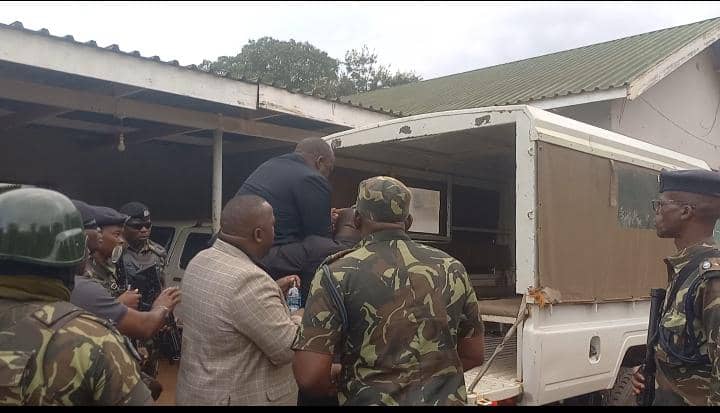
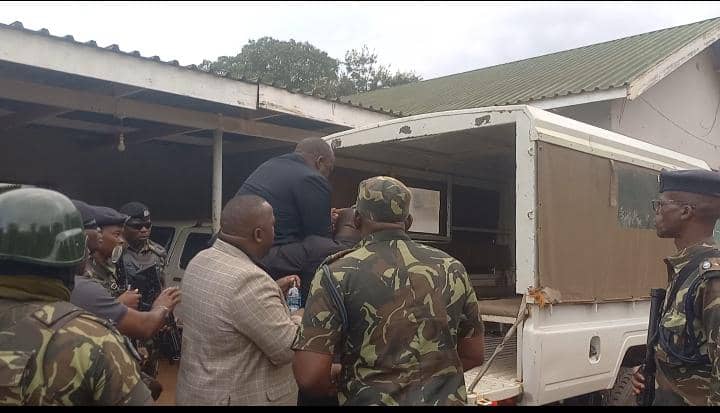
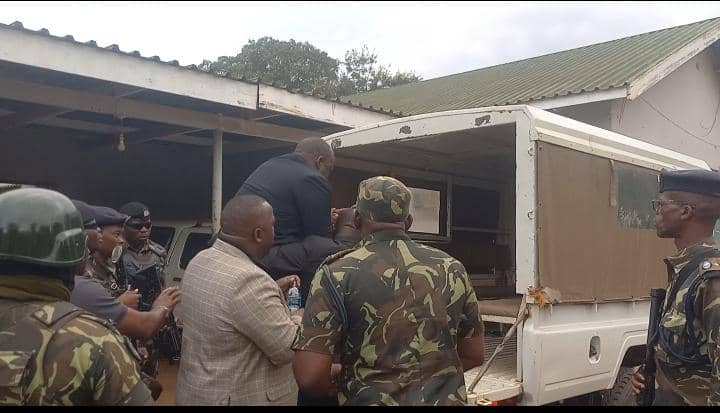
LILONGWE-(MaraviPost)-Opposition Malawi Congress Party (MCP) Secretary General Richard Chimwendo Banda has been committed to Maula Prison after he was discharged from the hospital on Monday afternoon, December 29, 2025.
His lawyer, George Jivason Kadzipatike told the Nation online that his client was discharged on recommendation from the doctors.
Kadzipatike, however, said the MCP secretary general is not fully fit as doctors have given him another day when he should go for medical treatment.
Chimwendo Banda has been in the hospital for the past two weeks after he fell sick while in police custody.
He is waiting for judgement on his bail application, which Judge Mzonde Mvula said would be communicated on an unspecified date.
The MCP SG is accused of attempting to kill former MCP member Frank Chiwanda in Dowa in 2022.
Chimwendo is yet to be granted bail.
Share this:
Like this:
LikeLoading…
Discover more from The Maravi Post
Subscribe to get the latest posts sent to your email.
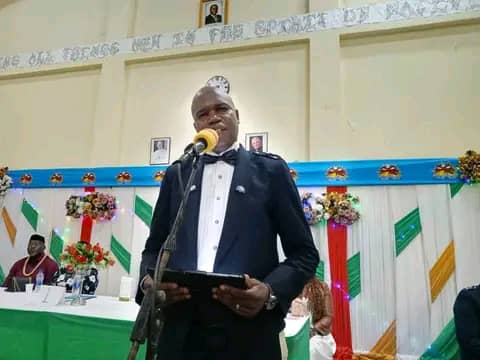
LILONGWE-(MaraviPost)-The Central East Police Region is grappling with an alarming increase in crime cases, with a rise from 4,125 in 2024 to 4,381 in 2025, according to Deputy Commissioner of Police Gladson Chipumphula.
The trend has been described as worrisome, with officers being urged to intensify patrols, strengthen community policing initiatives, and work closely with local leaders to reverse the surge in crime.
Chipumphula made the remarks during the region’s end-of-year review meeting, where police officers assessed their performance over the past year.
The meeting provided a platform for officers to reflect on their achievements and challenges, with a focus on addressing the rising crime rates.
The police deputy commissioner emphasized the need for a collaborative approach, involving local leaders and communities, to tackle the issue.
The increase in crime cases is a concern, but what’s even more disturbing is the high number of suicide cases recorded in the region.
A total of 78 people took their own lives in 2025, with 66 being men and 12 women.
This highlights the need for increased mental health support and awareness in the region.
Despite the challenges, the police in the Central East Region have been commended for their hard work, discipline, and dedication to duty.
Representing the Inspector General of Police, Sam Nkhwazi praised the officers for their efforts, particularly following the general elections held this year.
The police have played a crucial role in maintaining peace and stability in the region, and their efforts have not gone unnoticed.
The rise in crime cases is a call to action for the police and the community.
It’s time for stakeholders to come together and address the root causes of crime, such as poverty, unemployment, and lack of access to education and opportunities.
Community policing initiatives can play a vital role in this regard, fostering trust and cooperation between law enforcement and the public.
The police have a tough task ahead, but with the right strategies and support, they can turn the tide on crime.
Intensifying patrols, strengthening community policing, and working with local leaders are steps in the right direction.
The community must also play its part, reporting suspicious activities and cooperating with the police to ensure a safer environment for all.
The high number of suicide cases is a stark reminder of the mental health challenges facing the region.
It’s essential to increase awareness and provide support for those struggling with mental health issues.
The police, local leaders, and communities must work together to address this issue, providing resources and services for those in need.
As the Central East Police Region looks to the future, it’s clear that a multifaceted approach is needed to tackle crime and mental health issues.
With the right strategies and support, the region can become a safer and more stable place for all.
The police have shown their commitment to duty; now it’s time for the community to join forces and address these pressing issues.
The road ahead is challenging, but with collective effort and determination, the Central East Region can overcome its challenges and build a brighter future for all.
Share this:
Like this:
LikeLoading…
Discover more from The Maravi Post
Subscribe to get the latest posts sent to your email.
The dangerous prejudice of publicizing suspects’ photos by Malawian police
Jones Gadama
In any society that values justice and the rule of law, the principle that a person is innocent until proven guilty is sacrosanct. This foundational concept ensures that every individual is accorded a fair trial and that their rights are protected from unwarranted harm or prejudice.
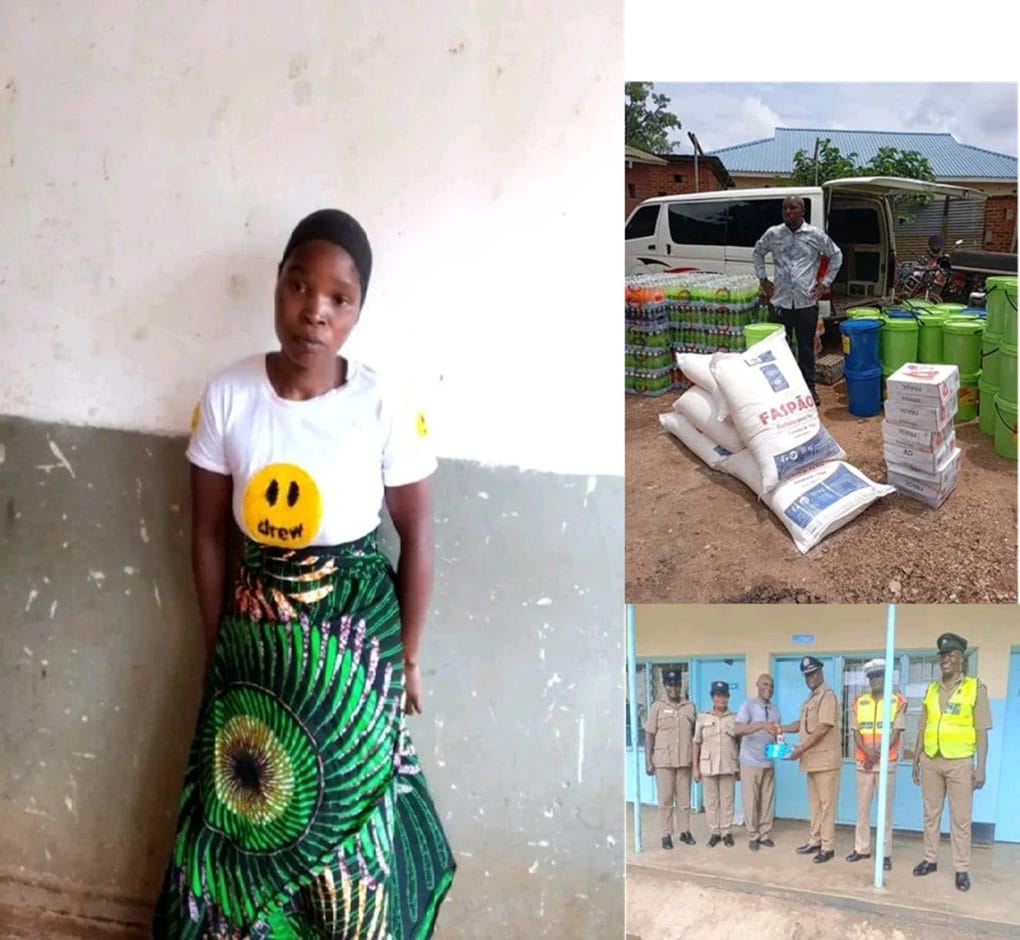
In Malawi, however, there is a disturbing and increasingly prevalent practice by the police of photographing suspects at the point of arrest and disseminating these images widely on social media platforms.
This trend is not only improper but deeply harmful, undermining the very essence of justice, eroding public trust, and inflicting irreparable damage on individuals who have not yet been proven guilty.
The first and most glaring issue with this practice is that it violates the presumption of innocence. When police officers post images of suspects publicly, they inadvertently—or sometimes deliberately—paint these individuals as criminals in the eyes of the public.
This is a dangerous shortcut to judgment that bypasses the courts, which are the rightful arbiters of guilt or innocence. The courts are designed to weigh evidence, hear defense arguments, and deliver verdicts based on due process.
When the police take it upon themselves to broadcast suspects’ images, they effectively usurp the courts’ role, creating a parallel system of judgment driven by public opinion rather than facts or law.
This premature exposure leads to a trial by social media, where the court of public opinion operates without the safeguards of legal procedures.
Social media thrives on sensationalism and instant reactions; it does not allow for the nuance, context, or the presumption of innocence. Once a suspect’s photo is out there, the damage to their reputation begins, regardless of whether they are later found innocent. In many cases, suspects are never proven guilty, yet the stain of suspicion lingers in their communities, workplaces, and families.
This can result in social ostracism, loss of employment opportunities, and psychological trauma. The police, entrusted with protecting citizens and upholding justice, become unwitting agents of public shaming and character assassination.
Moreover, this practice undermines the integrity of the entire criminal justice system. When the police broadcast suspects’ images and details prematurely, it can jeopardize ongoing investigations and court proceedings.
Potential witnesses might be intimidated or influenced by public sentiment, jurors may form biases, and suspects may feel pressured to plead guilty to avoid further public humiliation.
The principle of a fair trial becomes compromised, and justice becomes elusive. This is not just a theoretical concern; it has real consequences on the outcomes of cases and the lives involved.
Another critical repercussion is the erosion of trust between the community and the police.
The police are supposed to be guardians of public safety and fairness. When they engage in practices that seem to punish suspects before the law does, they risk alienating the very communities they serve.
People begin to see the police not as impartial enforcers of the law but as vigilantes or media agents seeking public approval through sensationalism. This distrust can lead to reduced cooperation in investigations, making it harder to solve crimes and maintain law and order.
Furthermore, the exposure of suspects on social media raises serious ethical and human rights concerns.
The right to privacy, dignity, and protection from defamation are fundamental human rights recognized globally and enshrined in Malawi’s own legal framework. By publishing photos of suspects without convictions, the police infringe on these rights.
This is particularly troubling in a country where many suspects come from vulnerable or marginalized backgrounds and may lack the resources to seek legal redress for defamation or damage to their reputation.
It is also important to consider the psychological impact on suspects and their families.
Being publicly labeled a criminal before any court judgment can lead to stigma, anxiety, depression, and social isolation. Families may face harassment and discrimination, compounding the suffering caused by the accusation itself.
The police should be mindful of these human costs and act with restraint and professionalism, ensuring that the rights and dignity of suspects are respected.
The argument that posting suspects’ photos serves as a deterrent to crime or helps in gathering public information might seem compelling at first glance.
However, such justifications do not outweigh the harm caused. Effective crime prevention and investigation must operate within the bounds of law and respect for human rights.
The police can and should use lawful means of communication that do not prejudice suspects or undermine the judicial process.
For example, public appeals for information can be made without revealing suspects’ identities or images, especially before charges are formally laid or trials concluded.
The Malawian police’s tendency to photograph suspects and expose them on social media is a deeply flawed practice that must be condemned and urgently reformed.
It infringes on the presumption of innocence, damages reputations, compromises fair trials, erodes public trust, violates human rights, and causes unnecessary psychological harm.
Justice should not be a spectacle for public consumption but a solemn process governed by law and fairness.
The police must uphold their duty to protect not only the public but also the rights and dignity of all individuals, including those suspected of crimes.
It is imperative that the Malawi Police Service revises its policies to prohibit the public dissemination of suspects’ images until after a fair trial has established guilt beyond reasonable doubt.
Only through such responsible conduct can justice truly be served, and public confidence in the criminal justice system restored.
Feedback: 0992082424 jonesgadama@gmail.com
Share this:
Like this:
LikeLoading…
Discover more from The Maravi Post
Subscribe to get the latest posts sent to your email.
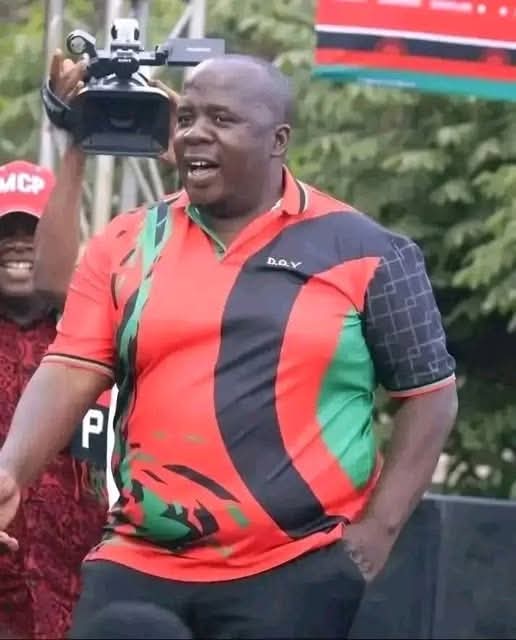
LILONGWE-(MaraviPost)-The High Court in Lilongwe has granted bail to Malawi Congress Party (MCP) Secretary General Richard Chimwendo Banda.
The court delivered the ruling today through email to the lawyers
This comes after earlier reserving its decision following a bail hearing in an attempted murder case in which Chimwendo Banda is a suspect.
Details of the bail conditions are yet to be made public.
Chimwendo Banda’s legal team had argued that his continued detention was unlawful as there was no formal charge before the court, and also cited humanitarian grounds, noting that he is currently receiving medical treatment.
The State had indicated it would be ready to formally commit the matter in the weeks beginning January 5, 2026.
Source: Times360
Share this:
Like this:
LikeLoading…
Discover more from The Maravi Post
Subscribe to get the latest posts sent to your email.
LILONGWE-(MaraviPost)-The opposition Malawi Congress Party (MCP) Secretary General Richard Chimwendo Banda will remain in police custody as he awaits a ruling from High Court Judge Mzondi Mvula on his bail application.
It means Chimwendo will spend Christmas in cell unless the court grants him bail by close of business today.
The bail application came up for hearing today at the High Court, where lawyers representing Chimwendo Banda presented their arguments, while the State also responded.
After hearing submissions from both sides, the court adjourned the matter for a ruling.
The judge indicated that the ruling will be delivered via email once it is ready.
During today’s court bail proceedings, State lawyer Dzikondianthu Malunda has asked the court not to release Richard Chimwendo Banda, arguing that the applicant is a person of influence and is capable of influencing or intimidating witnesses, thereby jeopardizing the case.
Chimwendo Banda’s lawyer George Kadzipatike has asked the court to release his client, arguing that the State has so far failed to formally charge him.
Kadzipatike adds that the client is not a flight risk and is currently admitted at the hospital, where he is receiving medical treatment.
The MCP SG is accused of attempting to kill Frank Chiwanda in 2022 in Dowa.
Share this:
Like this:
LikeLoading…
Discover more from The Maravi Post
Subscribe to get the latest posts sent to your email.
LILONGWE-(MaraviPost)-The High Court Judge Mzondi Mvula on Friday, December 19, denied bail application for Malawi Congress Party (MCP) Secretary General Richard Chimwendo on attempted murder case to Frank Chiwanda.
The court has therefore adjourned the bail application to next week Wednesday for hearing.
Chimwendo Banda applied for bail pending trial, but the State, through Senior State Advocate Luckia Japhali, objected, saying there was no urgency and that it needed at least two weeks to respond.
However, his lawyer Jivason Kazipatike argued that the matter required urgent attention, saying his client is traumatised as he remains under police guard while receiving medical treatment.
In his ruling, Mvula directed the State to file a written response by Monday, December 22, and set the bail hearing for Wednesday, December 24, at 10:00am.
Chimwendo Banda will meanwhile remain in hospital under police guard pending the bail ruling.
The case has attracted public interest on how Chimwendo Banda and his accomplice Dala Kadula will get away the case.
Share this:
Like this:
LikeLoading…
Discover more from The Maravi Post
Subscribe to get the latest posts sent to your email.