Veteran federal prosecutors in Minnesota resign after pressure from Justice Department leaders to investigate the widow of Renee Macklin Good, the woman killed by an ICE agent, raising new questions about political interference. President Trump takes his economic message on the road, pitching affordability as voters remain frustrated by high prices. And while gas prices have dipped, rising heating costs, grocery prices, and stubborn inflation show why relief still feels out of reach for many families.
Want more analysis of the most important news of the day, plus a little fun? Subscribe to the Up First newsletter.
Today’s episode of Up First was edited by Rebekah Metzler, Gigi Douban, Krishnadev Calamur, Mohamad ElBardicy and Alice Woelfle.
It was produced by Ziad Buchh, Nia Dumas and Christopher Thomas.
We get engineering support from Neisha Heinis. Our technical director is Carleigh Strange.
And our Supervising Producer is Michael Lipkin.
(0:00) Introduction (02:19) Minnesota Prosecutors Quit (06:10) Trump in Detroit (09:52) Inflation Report
Protesters in Minneapolis return to the streets as federal agents take over the investigation into the killing of a Minnesota woman by an ICE agent, while Portland officials condemn another immigration-related shooting. A review of immigration related shootings under President Trump shows a rising pattern of violence as federal agents carry out increasingly aggressive and public operations in U.S. cities. And President Trump signals the U.S. could run Venezuela “much longer” than expected, as oil executives head to the White House to discuss America’s expanded oversight of the country’s future.
Want more analysis of the most important news of the day, plus a little fun? Subscribe to the Up First newsletter.
Today’s episode of Up First was edited by Gigi Douban, Rebekah Metzler, Mohamad ElBardicy, and Alice Woelfle.
It was produced by Ziad Buchh, Milton Guevara and Christopher Thomas.
We get engineering support from Zo van Ginhoven. Our technical director is Stacey Abbott.
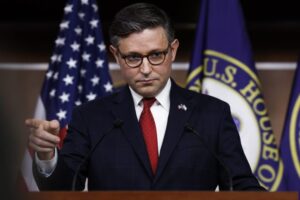
WASHINGTON, DC – NOVEMBER 14: U.S. Speaker of the House Mike Johnson (R-LA) speaks during a news conference after a weekly Republican conference meetingin the U.S. Capitol Building on November 14, 2023 in Washington, DC. During the news conference House Republican leadership spoke to reporters about a range of topics including the upcoming vote on a continuing resolution to fund the government through early 2024. (Photo by Anna Moneymaker/Getty Images)
Minnesota state law enforcement officials are working with the FBI to investigate the fatal shooting of a Minneapolis woman by an Immigrations and Customs Enforcement officer. U.S. forces boarded a tanker carrying sanctioned oil after a two-week chase across the Atlantic, as the Trump administration expands plans to take control of Venezuela’s oil sales indefinitely. And Health Secretary Robert F. Kennedy Jr.’s new dietary guidelines flip decades of advice, elevating meat and dairy and alarming many public health researchers.
Want more analysis of the most important news of the day, plus a little fun? Subscribe to the Up First newsletter.
Today’s episode of Up First was edited by Rebekah Metzler, Kelsey Snell, Kate Bartlett, Mohamad ElBardicy, and Alice Woelfle.
It was produced by Ziad Buchh, Nia Dumas and Christopher Thomas.
We get engineering support from David Greenburg. Our technical director is Stacey Abbott.
And our deputy Executive Producer is Kelley Dickens.
WASHINGTON-(MaraviPost)-U.S. Senator Jeanne Shaheen, the Ranking Member of the US Senate Foreign Relations Committee, has issued a statement condemning the ongoing repression of opposition figures, civil society leaders, and activists in Uganda as the country gears up for its tightly contested January 15, 2026 general election.
Senator Shaheen has demanded that Ugandan authorities must “refrain from violence and suppression especially around the elections,” warning that “the arrests of citizens, opposition figures, and civil society leaders cannot go unaddressed.”
The Senator has particularly called for the immediate release of human rights lawyer Sarah Bireete, writing, “I call on the Ugandan authorities to release Sarah Bireete immediately.”
Bireete’s arrest has become emblematic of broader concerns over shrinking civic space in Uganda.
Sarah Bireete, the Executive Director of the Centre for Constitutional Governance (CCG) and head of regional election-observer coalitions, was detained on December 30, 2025, after security forces surrounded her home in Kampala, according to multiple reports.
She was subsequently charged with unlawfully obtaining or disclosing personal data under Uganda’s Data Protection and Privacy Act, alleged to involve National Voters’ Register information.
During her appearance at Buganda Road Chief Magistrate Court, she denied the charges and was remanded to Luzira Prison while a bail hearing is set for later in January.
The circumstances of the arrest have drawn widespread condemnation from local and international observers, with civil society organisations arguing that the charge is politically motivated and part of a broader pattern of intimidation aimed at stifling critics ahead of the polls.
Amnesty International has documented reports of security forces using tear gas against peaceful crowds, pepper-spraying and beating individuals, and launching what its Regional Director for East and Southern and Africa, Tigere Chagutah, called a “brutal campaign of repression” that inhibits fundamental freedoms ahead of the elections.
The international community is increasingly concerned about the shrinking civic space in Uganda and the government’s crackdown on opposition voices, with Senator Shaheen’s statement adding to the growing pressure on Ugandan authorities to respect human rights and ensure a free and fair election.
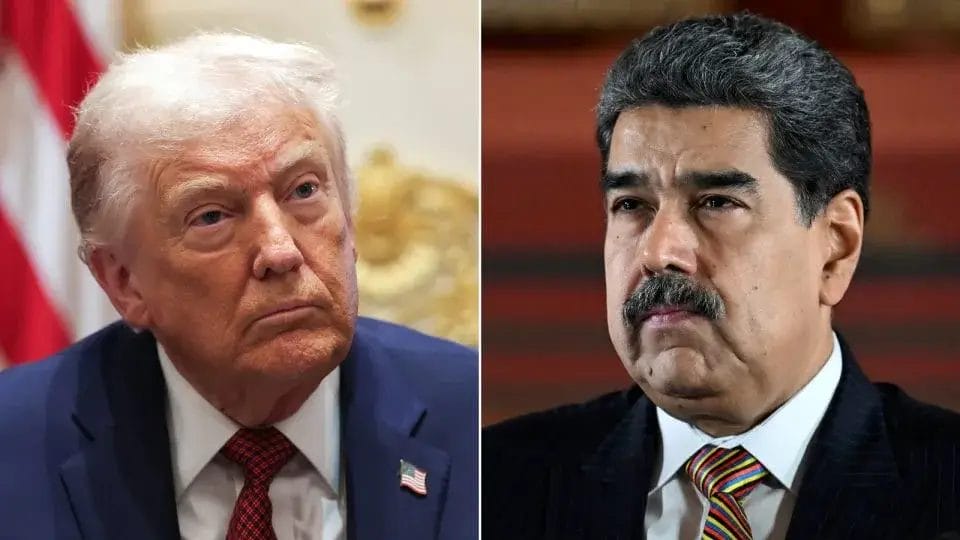
President Trump says the United States will run Venezuela after U.S. forces seized Nicolás Maduro and his wife in Caracas. Venezuela’s acting president Delcy Rodriguez shifts from defiance to calls for cooperation as the White House ramps up pressure and threatens further action. And Nicolás Maduro is set to appear in a New York courtroom, facing drug trafficking, weapons, and narco-terrorism charges that could test the reach of U.S. law overseas.
Want more analysis of the most important news of the day, plus a little fun? Subscribe to the Up First newsletter.
<
p class=”readrate”>Today’s episode of Up First was edited by Andrew Sussman, Tara Neill, Krishnadev Calamur, Mohamad ElBardicy, and HJ Mai.
<
p class=”readrate”>
<
p class=”readrate”>It was produced by Ziad Buchh, Nia Dumas and Christopher Thomas.
<
p class=”readrate”>
<
p class=”readrate”>We get engineering support from Neisha Heinis. And our technical director is Carleigh Strange.
<
p class=”readrate”>(0:00) Introduction (01:54) U.S. In Venezuela (05:49) Future Of Venezuela (09:46) Maduro In NYC Court
p class=”readrate”>Venezuelan President Nicolas Maduro is in a federal prison in Brooklyn, New York, awaiting trial on charges of narcoterrorism, cocaine-importation conspiracy and weapons charges. The operation to capture Maduro happened in the middle of the night as U.S. troops enjoyed the element of surprise. The U.S. says Maduro is not the legitimate president of Venezuela and accuse him of being the leader of a violent drug cartel.