p class=”readrate”>A federal judge dismissed the indictments President Trump ordered up against former FBI Director James Comey and New York Attorney General Letitia James. The judge found the prosecutor in the case was improperly appointed.
Europeans have offered their ownproposal to end the war in Ukraine. How is it different from President Trump’s 28-point proposal?
Also, the Trump administration named Venezuela’s president the leader of a terror group.
<
p class=”readrate”>
<
p class=”readrate”> Want more comprehensive analysis of the most important news of the day, plus a little fun? Subscribe to the Up First newsletter.
<
p class=”readrate”> Today’s episode of Up First was edited by Anna Yukhananov, Kate Bartlett, Rebekah Metzler, HJ Mai and Alice Woelfle.
<
p class=”readrate”>
<
p class=”readrate”>It was produced by Ziad Buchh, Nia Dumas and Christopher Thomas.
<
p class=”readrate”>
<
p class=”readrate”>We get engineering support from Damien Herring. And our technical director is Carleigh Strange.
<
p class=”readrate”>
<
p class=”readrate”>Our Supervising Producers are Vince Pearson and Michael Lipkin.
LUSAKA-(MaraviPost)-Netball Zambia has announced the withdrawal of both the Women’s and Men’s National Netball Teams from the 2025 Africa Netball Cup, a major continental tournament set to run from December 8–14 in Lilongwe, Malawi.
In a press statement issued in Lusaka on Monday, the Association described the move as a painful but unavoidable decision prompted by its failure to raise the MK1.2 million required for the teams’ travel, accommodation and participation expenses.
Despite weeks of outreach and discussions with potential sponsors, Netball Zambia said all efforts to secure funding had been unsuccessful.
Netball Zambia Secretary General, Pritchard Ngoma, expressed deep regret over the development, noting that the Association had exhausted all possible avenues.
“It is with great disappointment that we announce the withdrawal of our Men’s and Women’s National Teams from the 2025 Africa Netball Cup. We have done everything within our means to mobilise resources but we can no longer hold on in the hope of a last-minute sponsor at this advanced stage, as doing so risks exposing the Association to penalties,” Ngoma said.
He further thanked players, fans and the wider netball community for their unwavering commitment to the sport.
“We appreciate the athletes’ dedication and the support from the netball community nationwide. We remain hopeful that Zambia will bounce back stronger and compete at next year’s tournament,” he added.
The announcement comes as a particular blow to the Women’s National Team, which made history by lifting their first-ever Africa Netball Cup title in 2023.
Netball Zambia acknowledged that the withdrawal would be especially disappointing for the reigning champions and their supporters.
However, the Association assured the nation that it remains focused on rebuilding and strengthening its systems to ensure better preparation and sustainable funding for future competitions.
Netball Zambia also extended its gratitude to all stakeholders, partners and fans for their continued support as it works to secure long-term solutions for the national teams.
Share this:
Like this:
LikeLoading…
Discover more from The Maravi Post
Subscribe to get the latest posts sent to your email.
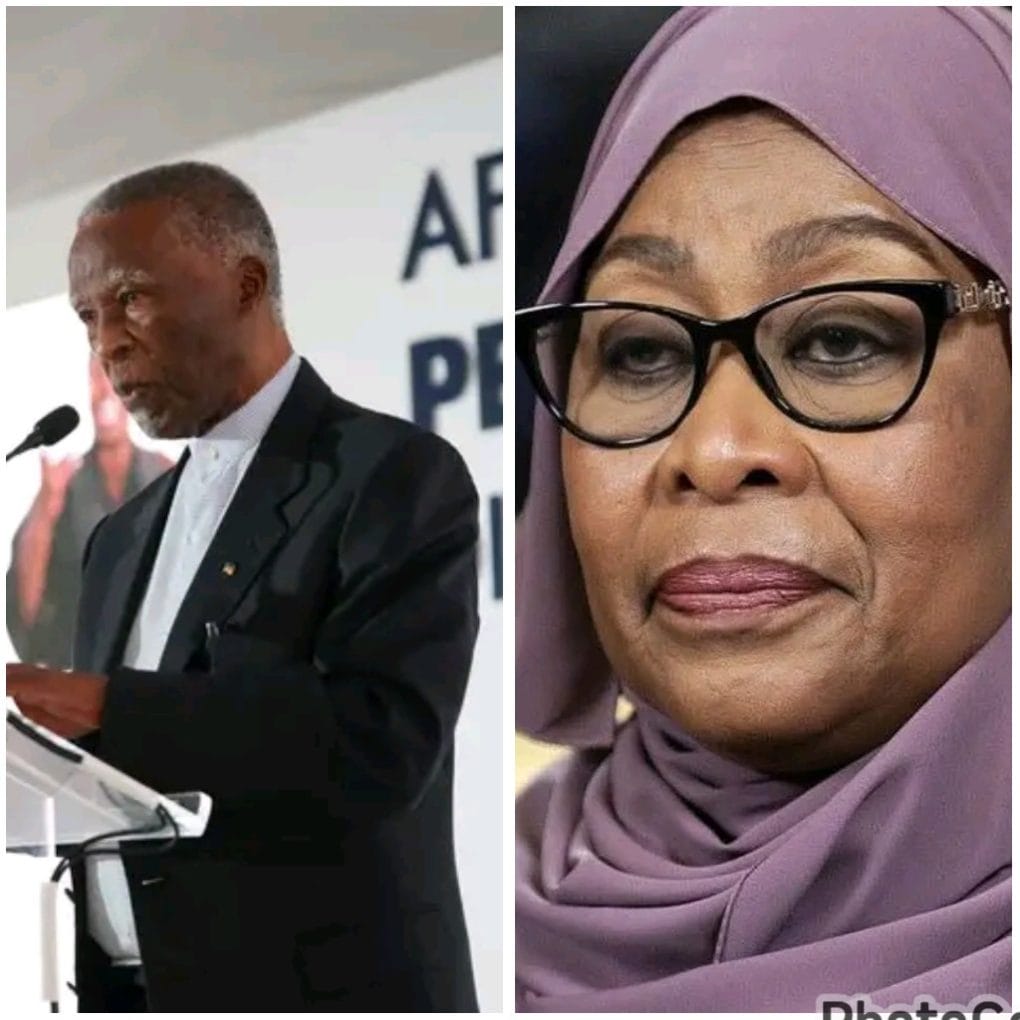
PRETORIA-(MaraviPost)-In a statement that has sent ripples across East African political circles, the Thabo Mbeki Foundation, representing South Africa’s former President Thabo Mbeki, has publicly declared that Tanzania currently lacks a legitimate government.
The foundation contends that the administration led by President Samia Suluhu Hassan was “imposed upon the people through a combination of force and fraudulent means,” raising urgent questions about governance and democracy in the East African nation.
The pronouncement comes amidst ongoing regional concerns about political transparency and democratic processes in several African countries.
Thabo Mbeki, a respected elder statesman known for his diplomatic approach to conflict resolution and governance issues, has through his foundation urged Tanzanians to reflect critically on the trajectory their country is taking.
The foundation’s statement calls for a collective examination of what has gone wrong and what corrective measures are necessary to restore Tanzania on a path that respects the will of its people.
Tanzania, under the leadership of President Samia Suluhu Hassan, who assumed office in March 2021 following the sudden death of her predecessor John Magufuli, has experienced significant political shifts. President Hassan’s administration has been marked by efforts to open the political space, improve relations with international partners, and stimulate economic reforms.
However, the foundation’s assertion challenges the legitimacy of the current government’s ascent and tenure, suggesting that these changes may have been engineered through undemocratic practices.
The foundation’s statement reflects deep concerns about the electoral processes and political freedoms in Tanzania. Over recent years, international observers and local opposition groups have reported incidents of political repression, restrictions on media freedoms, and limitations on civil society activities.
These factors have contributed to a climate of suspicion and distrust among segments of the Tanzanian population and the wider international community.
Thabo Mbeki’s foundation emphasized the need for open dialogue and inclusive participation to address the critical questions facing Tanzania. “What went wrong, and what must be done to put the beloved country back on course?” the foundation asked, implying that the current situation threatens the social contract between the government and the people.
Such a call for introspection and reform is significant given Mbeki’s reputation for advocating peaceful solutions and democratic governance across the continent.
The implications of the foundation’s statement are profound for Tanzania’s political landscape. It signals a potential shift in regional perspectives about the legitimacy of governments and the respect for democratic norms.
Neighboring countries and regional blocs such as the East African Community (EAC) may find themselves pressured to engage more critically with governance issues in Tanzania.
President Samia Suluhu Hassan, Tanzania’s first female president, has faced numerous challenges since taking office.
She inherited a nation grappling with economic difficulties, international isolation due to the previous administration’s policies, and internal political tensions. Her administration has attempted several reforms, including re-engaging with international financial institutions and promoting a more open political dialogue.
However, the allegations from the Mbeki Foundation suggest that these efforts may not fully address underlying governance concerns.
Political analysts note that the foundation’s critique may stem from wider regional anxieties about governance and legitimacy in Africa.
The continent has witnessed a complex interplay of democratic transitions, electoral disputes, and governance challenges in recent decades.
South Africa, under Mbeki’s presidency, played a significant role in promoting peace and democratic governance in Africa, which adds weight to the foundation’s pronouncement.
Locally, Tanzanian political actors have responded with mixed reactions.
Supporters of President Hassan’s government have dismissed the foundation’s statement as interference in Tanzania’s internal affairs, emphasizing the legitimacy conferred by the constitutional processes following President Magufuli’s death.
Opposition parties and civil society activists, however, have expressed cautious optimism that such international attention could foster greater accountability and political reform.
The broader African community is watching closely how Tanzania will respond to these criticisms.
The country’s stability and democratic health are vital not only for its citizens but also for the region’s economic integration and security.
East Africa’s development agenda heavily depends on political stability and good governance, making Tanzania’s situation a matter of regional interest.
The statement from the Thabo Mbeki Foundation brings to the forefront critical questions about governance legitimacy in Tanzania under President Samia Suluhu Hassan.
It challenges the narrative of a smooth political transition and calls for a collective reckoning with the country’s current political trajectory.
As Tanzania navigates these challenges, the eyes of the continent remain firmly fixed on how its leaders and people will respond to restore trust, uphold democratic principles, and ensure a future that reflects the will of its citizens.
The call for dialogue and reform echoes beyond Tanzania’s borders, resonating with broader struggles for democracy and good governance across Africa.
Share this:
Like this:
LikeLoading…
Discover more from The Maravi Post
Subscribe to get the latest posts sent to your email.
LILONGWE-(MaraviPost)-Malawi’s second tier Centre football governing body (CRFA) has expelled Chatoloma ADMARC which plays in the Chipiku Stores Premier Division League due to the failure to fulfill its fixtures in the league.
The Kasungu North based outfit, Chatoloma as per the body failed to honor three fixtures two away and one home without providing conducive reasons to the body.
The fixtures which Chatoloma failed to fulfill include against LUANAR away in Lilongwe which was scheduled to take place on 12th November 2025, another away fixture against Airborne Rangers on which was set to take place on 20th November and home match which the team was anticipated to play against Armour Battalion on 23rd November.
General Secretary for Central Region Football Association (CRFA), Antonio Manda, said in the charge sheet released on 24th November 2025, that despite several formal communication and adequate notice, the club failed to honour official league matches without providing any justification.
He stated, “This behavior disrupts the league’s integrity, causes logistical challenges which results in financial loss for the association, particularly in the deployment of the officials. Effective immediately Chatoloma is removed from the league.
Manda added that the team is also barred from participating in any competition under its body for the maximum of five seasons (years).
“CRFA remains committed to enforcing discipline, upholding professionalism and safeguarding the credibility of all completions under our jurisdiction. No team or individuals will be allowed to compromise the standard of the game”, Manda added.
Chatoloma ADMARC general secretary Moses Botha confirmed to have received the charge sheet who said they have to sit down and evaluate the charge to map the way forward of the team.
“Indeed our team has been going through financial cris hence we struggled to look after the players welfare, logistics when playing away, this led us to fail to fulfill the fixtures.
“Its very painful that we have been expelled from the league, the team put Chatoloma on the map by nurturing the talent.If the community can join hands to support the team we can try to reason with CRFA to assist us completing the league”, Botha said.
Chatoloma ADMARC are sitting second from the bottom in the 16 member log table.
The team has 16 points from 20 games, they managed to win only three games, drawn 7 and registered 10 losses, scoring 16 goals and conceded 34 with a goal difference of -18.
Share this:
Like this:
LikeLoading…
Discover more from The Maravi Post
Subscribe to get the latest posts sent to your email.
Godfrey’s not convinced Nicki Minaj is going to bat for Christians in Nigeria for all the right reasons … and he wonders if she’s trying to get on President Trump’s good side for something down the line. We got the comedian at LAX on Monday, and…
Share this:
Like this:
LikeLoading…
Discover more from The Maravi Post
Subscribe to get the latest posts sent to your email.
LILONGWE-(MaraviPost)-The United Transformation Movement (UTM) party has strongly criticized the 2025/26 Mid-Year Budget, accusing the Democratic Progressive Party (DPP) government of continuing what it describes as a “failed economic path” left behind by the former Malawi Congress Party (MCP) administration.
In a statement released today and signed by UTM Director of Finance and Economic Affairs Simon Mwayang’ana, the party highlighted the fragility of Malawi’s economy, citing rising food prices, foreign exchange shortages, growing public debt, increasing unemployment, and deepening poverty that continues to keep the country among the poorest in the world.
UTM acknowledged that the DPP inherited these challenges from the previous MCP government but stressed that the new administration must now take full responsibility for addressing them.
The party criticized the mid-year budget for failing to deliver solutions, arguing that the measures outlined fail to respond to the country’s urgent economic needs.
“Malawi needed discipline – it received consumption. Malawi needed a production revolution – it received tax hikes. Malawi needed liquidity control – it received expansion. Malawi needed a credible foreign exchange plan – it received administrative controls,” the statement reads in part.
UTM further noted that the budget does not adequately address structural issues and risks perpetuating fiscal mismanagement, worsening inflation, and further burdening citizens already struggling with high living costs.
The party also raised concerns about the overestimation of Gross Domestic Product projections, the inflation outlook that is not aligned with prevailing economic realities, and ongoing foreign exchange challenges that threaten to destabilize trade and business activities.
Additionally, UTM warned that fiscal deficits and domestic borrowing remain unchecked, and criticized the newly introduced tax measures as heavy, inflationary, and counterproductive, potentially undermining economic growth and development.
The statement concludes with a call for the government to implement policies that prioritize production, fiscal discipline, and sustainable economic reforms to alleviate poverty and restore public confidence in national economic management.
UTM’s critique underscores growing public concern over Malawi’s economic trajectory and highlights the pressure on the DPP to adopt bold measures to address the country’s persistent financial and structural challenges.
Share this:
Like this:
LikeLoading…
Discover more from The Maravi Post
Subscribe to get the latest posts sent to your email.