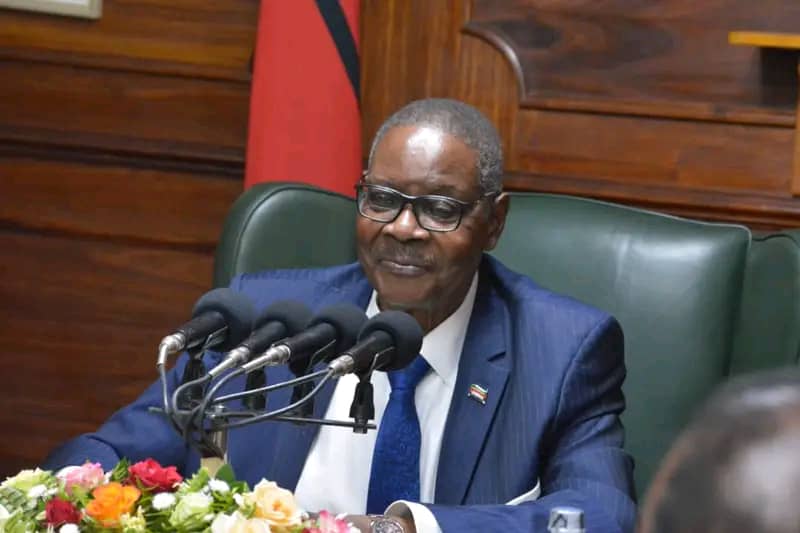

When will Mutharika reinstitute Parastatal boards amid fears of corruption breeding?

LILONGWE-(MaraviPost)-As of November 20, 2025, most of Malawi’s parastatal boards remain vacant, more than six weeks after the government dissolved all previous boards.

The Office of the President and Cabinet (OPC) announced the dissolution of all boards of parastatal organisations and state-owned enterprises (SOEs) on October 7, 2025, with immediate effect.

When contacted on the appointments delay, President Peter Mutharika’s Press Secretary Cathy Maulidi referred The Maravi Post to Chief Secretary arguing that, “The State House is the last slot to comment as it starts from Chief Secretary”.

Chief Secretary to Malawi government Justin Saidi acknowledged the delay.

Saidi however cited complications in the appointment process as the reason for the delay in filling the vacancies.

He therefore assured that the reconstitution of boards is underway, though no comprehensive list of new appointees has been released to date.

The absence of functioning boards has created a governance vacuum, raising concerns among experts about potential risks and the concentration of power in the hands of SOE executives.

During this period, all matters requiring the attention of boards are being directed to the OPC through the Department of Statutory Corporations.

The Department has also suspended all ongoing and planned recruitments and major procurements across all parastatals to prevent irregularities during the transitional period.

Since the dissolution, the only notable appointment announced has been that of Felix Tambulasi as Commissioner General of the Malawi Revenue Authority (MRA).

However, Tambulasi’s appointment is an executive position and does not address the vacancies at board level.

Governance experts warn that prolonged vacancies could hinder decision-making, delay critical projects, and increase administrative bottlenecks within state-owned enterprises.

Some observers have urged the government to expedite the appointment process to restore proper oversight and accountability in parastatals.

The government maintains that once the process is complete, new boards will be equipped to provide effective governance and ensure transparency in operations.

As the appointment process continues, stakeholders remain keenly monitoring developments to gauge how soon Malawi’s parastatals will regain functional leadership.


Discover more from The Maravi Post

Subscribe to get the latest posts sent to your email.

The Maravi Post

Zambia’s Hichilema UPND cadres abduct, harass former justice Minister Lubinda

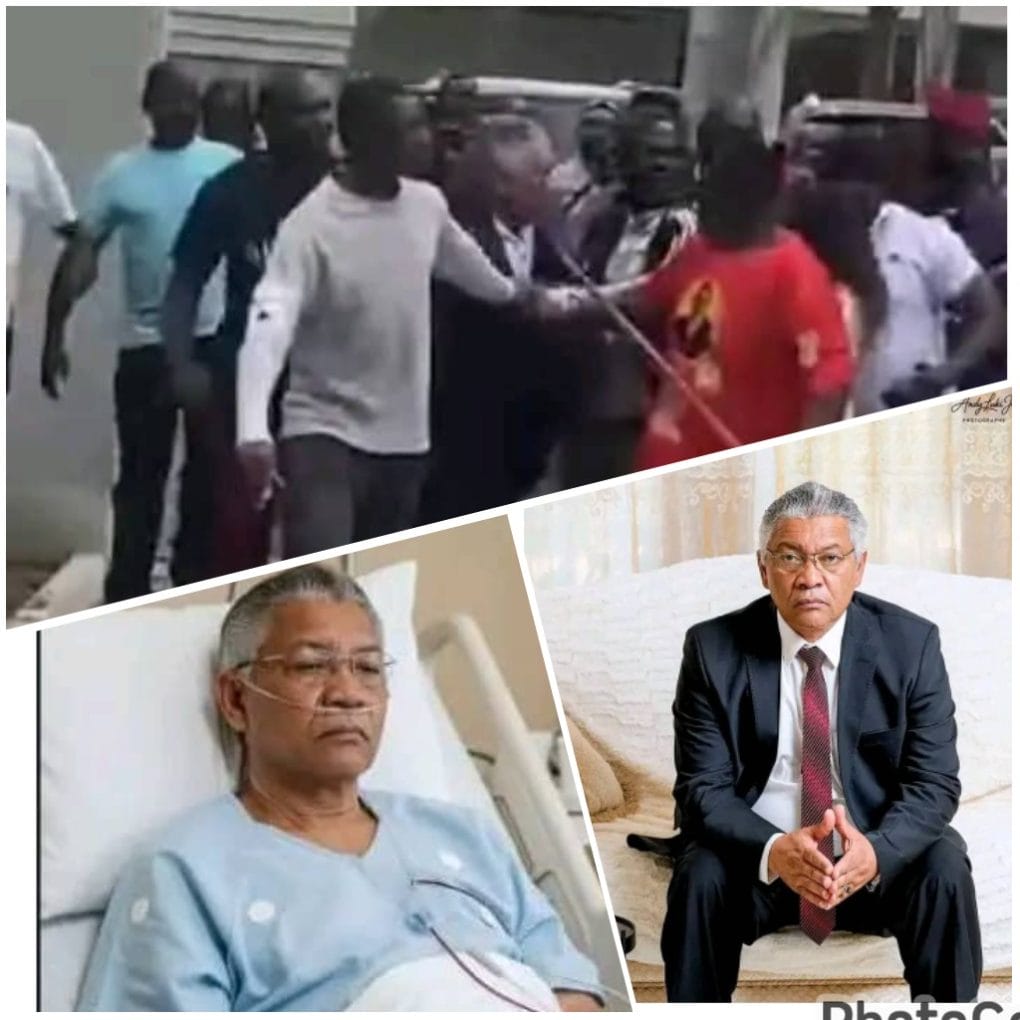
LUSAKA-(MaraviPost)-The Zambian governing United Party for National Development (UPND) cadres on Wednesday reportedly abducted former Justice Minister Given Lubinda, subjecting him to harassment before police officers intervened to rescue him.

UPND is a major political party in Zambia, currently in power, with Hakainde Hichilema as the current President of Zambia and the party leader.

The incident escalated quickly as the group confronted Lubinda in what appeared to be a politically motivated attack.

Eyewitnesses say the cadres surrounded him, shouting threats and insults while attempting to force him into a vehicle against his will.

The situation grew tense as the harassment intensified, drawing the attention of bystanders who feared the confrontation might turn deadly.

According to witnesses, the cadres accused Lubinda of undermining the ruling party and vowed to “teach him a lesson,” signalling a troubling rise in political intolerance.

Police officers who were alerted to the incident arrived promptly at the scene and managed to disperse the attackers before safely extracting Lubinda from their hold.

Law enforcement authorities confirmed the rescue, noting that the cadres had acted unlawfully and would be pursued for criminal conduct.

In their statement, police condemned the attack and warned that political violence would not be tolerated under any circumstances.

The rescue operation brought temporary relief, but it also sparked wider national concern about the growing pattern of political thuggery.

Several political commentators have criticized the incident, describing it as a dangerous reminder of how partisan violence threatens democratic stability.

Opposition figures have also condemned the attack, calling it a deliberate attempt to silence dissenting voices through intimidation.

Citizens across social media expressed outrage, urging authorities to take decisive action against perpetrators regardless of political affiliation.

Many observers have emphasized that political competition must never justify lawlessness, stressing the need for stronger protection of public figures.

Lubinda, though visibly shaken, was safely escorted to an undisclosed location where he is receiving support from colleagues and family members.

The incident has revived debate about Zambia’s political environment, with many calling for urgent reforms to curb cadre violence.

Analysts warn that the normalization of such attacks risks eroding public trust in law enforcement and institutional governance.

Others argue that unless perpetrators face real consequences, political violence will continue to grow and spread unchecked.

As investigations proceed, the public is demanding transparency, accountability, and meaningful action from both the police and the political leadership.

The attack on Lubinda serves as a stark reminder that democracy cannot thrive in an environment where fear replaces dialogue.

It also underscores the urgent need for political leaders to denounce cadre behaviour and promote a culture of peaceful engagement.

Zambia now watches closely as authorities take the next steps, hoping this incident marks a turning point in the fight against politically motivated violence.


Discover more from The Maravi Post

Subscribe to get the latest posts sent to your email.
The Maravi Post

Tigers beat Kamuzu Barracks in TNM Super League

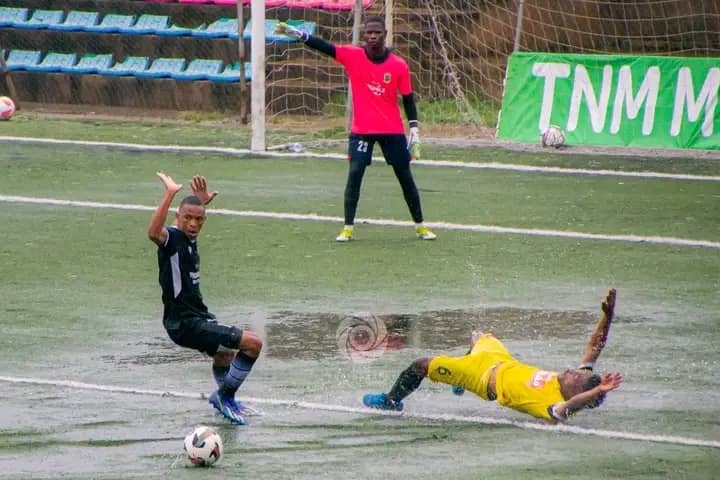
BLANTYRE-(MaraviPost)-Mighty Tigers on Wednesday afternoon braved a heavily waterlogged Mpira Stadium in Chiwembe to claim a hard-fought 1–0 victory over Kamuzu Barracks in a TNM Super League match marked by persistent rains.

Earlier in the day, the state of the pitch had raised concerns as officials were seen pushing away water from the drenched surface while match organisers installed commercial boards under rainfall.

Players from both teams were forced to delay warm-ups and remained in the dressing rooms as the situation gradually stabilised.

Despite the soggy conditions, the match kicked off as scheduled, with Tigers showing early intent.

By the 2nd minute, they had already won their first corner, and moments later Bakali Osman fired a powerful free-kick over the bar from just outside the penalty area but Kamuzu Barracks survived those early scares.

The visitors responded with their own corner in the 12th minute as rains continued pouring, though they struggled to capitalise.

Tigers eventually found the breakthrough in the 16th minute when Greyson Msowoya connected beautifully to a delivery from Masambiro Kalua, sliding the ball past goalkeeper Hastings Banda to make it 1–0.

From then, the match became a battle of determination.

Zeliet Nkhoma was a constant threat for KB, pushing relentlessly for an equaliser but the Tigers’ defence remained composed.

A dramatic moment came in the 43rd minute when KB’s goalkeeper handled the ball outside the box, giving Tigers a free-kick, while bench player Peter Mughogho received a yellow card for confronting the assistant referee.

In the second half, Tigers nearly doubled the lead in the 48th minute when Msowoya set up substitute Precious Kwalenga but KB keeper Hastings Banda reacted brilliantly to deny the effort.

KB made several substitutions to bolster their attacking power, but Tigers continued to look dangerous on the break while defending with discipline.

Both teams endured more stoppages as the soaked pitch made play difficult.

Tigers earned multiple corners but failed to convert, while KB’s hopes remained pinned on lone marksman Zeliet Nkhoma, whose efforts were repeatedly kept at bay by goalkeeper Lucky Tizoola and a resolute Tigers backline.

As the clock ticked towards full-time, both sides continued making tactical changes.

Tigers’ coach Trevor Kajawo introduced fresh legs to preserve the narrow lead, while KB sought one last push for an equaliser. After three added minutes, the referee blew the final whistle, confirming Tigers’ 1–0 triumph.

Speaking after the match, Tigers’ coach Trevor Kajawo expressed satisfaction, saying his players understood the importance of the fixture as they continue fighting to move away from the relegation zone.

On the other hand, Kamuzu Barracks’ coach Nicholas Mhango accepted defeat, saying one critical mistake cost them the match.

However, Mhango remained optimistic about their ambition to finish in the top eight.

Kamuzu Barracks remain 7th on the log with 35 points from 25 matches, while Mighty Tigers move to 26 points from the same number of games on position 12.


Discover more from The Maravi Post

Subscribe to get the latest posts sent to your email.

The Maravi Post

Fashion Designer Jerry Lorenzo Finds Buyer for $10M Los Feliz Home

Fashion designer Jerry Lorenzo just locked it in … he’s officially found a buyer for his Los Feliz pad. The “Fear of God” streetwear designer picked up the place with his wife back in 2018 for a cool $8.5 million. The house was listed for…


Discover more from The Maravi Post

Subscribe to get the latest posts sent to your email.

The Maravi Post

Blantyre City Mayor Osman makes history by share tables with street kids in his office

By Zakeyu Mamba

LILONGWE-(MaraviPost)-The Mayor of Blantyre City, Jomo Osman, made history this week on by becoming the first mayor in Malawi to officially invite street children into his office for an open, motivational, and personal conversation.

The rare moment, which took place Tuesday 18 Nomber, 2025, has drawn widespread praise from community members, leaders, and social-welfare advocates who view the gesture as a compassionate and progressive step toward supporting vulnerable young people.

During the meeting, Mayor Jomo spoke to the children with humility and honesty, sharing the difficulties he faced while growing up.

He explained that his journey to leadership was filled with struggles, uncertainty, and moments where giving up seemed easier.

However, through perseverance, discipline, and continuous effort, he managed to shape a better future for himself.

His message to the children was clear: Their present situation does not determine their destiny, and with commitment and self-belief, they can rise above any challenge.

The children listened closely as the mayor encouraged them to avoid destructive behaviors and to distance themselves from influences that may push them deeper into hardship.

He emphasized the value of education, respect, hard work, and good conduct-qualities he described as essential for anyone who wishes to transform their life.

He also assured them that his office remains open for guidance, mentorship, and support whenever they may need it.

As the meeting concluded, Mayor Jomo politely reminded the children to respect the office environment and ensure that nothing went missing as they left.

The remark, although delivered with humor, carried an important lesson about trust, responsibility, and integrity.

The visit has since been celebrated as a groundbreaking effort to build stronger relationships between city leadership and marginalized children-many of whom often feel unseen, unheard, and forgotten in society.


Discover more from The Maravi Post

Subscribe to get the latest posts sent to your email.

The Maravi Post

Why a Coup won’t work in Modern-Day Nigeria

President Bola Tinubu

By Tony Ogunlowo

In the runup to the October 1st Independence celebrations Sahara Reporters leaked a story that a bloody coup aimed at destabilizing , and overthrowing, the democratic government of President Tinubu had been thwarted.

There is still no official confirmation of this todate even though top service chiefs have been replaced and more than 40 officers have been arrested by the DSS who allegedly have had them under surveillance since August 2024.

Nigeria is a different country to the way it was in the 60s, 70s and 80s when anybody, presumably any disgruntled junior officer, could just pick up a gun, overthrow the incumbents, become Head of State and start their dictatorships: Africa, and mostly certainly Nigeria, have moved on from the Abachas and Idi-Amins of the past.

A military junta coming into power will abolish all laws and will rule by degree, so it’ll be a question of them shouting ‘jump’ and the people going ‘how high?’. Nigerians have long evolved beyond this and it’ll only bring out the people , en-masse, to protest. And as we’ve seen from previous mass protests, such as #ENDSARS, it’s not easy to crush the will of the people anymore. No more are they scared of a soldier with a gun. And with SM to pass the word around and keep everyone up to date; a medium even the junta can’t control or shut down completely as we’ve seen when the Buhari-led government tried shutting down Twitter usage in Nigeria, people just used VPNs to get around the ban. So a government overall control of the media is out of the question.

Nigerians have tasted the freedom of democracy, however imperfect it may be, and a return to a repressive military will not be welcomed with open arms: people now have the right to elect whoever they want to rule them instead of having somebody imposed upon them.

For a military coup to be successful the military will have to coral the people into a pen they can control: this can work in countries like Mali or Niger where the entire populace is less than the population of Lagos state. In Nigeria, a country of more than 200 million souls plus, the military is already stretched beyond its limits fighting insurgencies in the North and South-East so a new military junta won’t have the might – or equipment – to control the country successfully.

Mali and Niger armed forces removed democratically elected Presidents and their governments on the grounds of absolute abuse of office. Some will argue that the same should happen in Nigeria.

Whilst I’m not a big fan of President Tinubu it’s got to be said  he’s been in power for less than two years and he inherited a mess from Buhari who in turn inherited it from Jonathan, who….need I go back any further? Logically thinking, anybody coming into power, military or civilian, will not have the power to change things overnight, as the people want, and the hardship will continue. For those old enough to remember when the Buhari/Idiagbon junta ousted Shehu Shagari from power in 1983 change did not happen overnight: it was a gradual undertaking and things weren’t as bad as they are now. So a military junta coming in will just huff and puff without getting anything done.And to make matters worse the international community will be watching and will impose extremely tough sanctions upon the nation in effect crippling all business transactions in and out of the country. And if they go as far as declaring an oil embargo and call in all loans obtained, the country will be finished. Further more ECOWAS, the OAU – including President Trump’s USA – may decide on a military intervention to forcibly remove the junta from power because democracy can not be seen to fail in Nigeria, Africa’s most populous nation, as it has in Mali,Niger and elsewhere.( – and don’t forget Trump is looking for any excuse to bomb ‘disgraced’ Nigeria anyway!). If people think life under Tinubu is hard, then it’ll become unbearable.

In an earlier article ( “Are Coups in Africa still a Good thing?) I did point out that if we are going to practice democracy the African way there should be provision to remove inept and corrupt leaders the African way (aka a coup d’etat). Without sounding like I’m contradicting myself, people like the late Robert Mugabe needed a palace coup to remove him from office ( – as may well Paul Biya of Cameroon) for the systematic abuse of the democratic process that kept him in power. The same can be said also of the autocratic democracies of Niger, Mali etc who were also overthrown by the military. But the question is, as I pointed out then, is where do you draw the line?

Nigeria is still a fledgling democracy, I say is still in its infancy and mistakes will be made as we learn as once did the great democracies of the Western world: we are going to screw things up, abuse things but eventually we’ll get it right ( – whenever that might be!) as they say Rome wasn’t built in a day. Allowing the boys in khaki back will just send us back to square one and all the efforts of those who fought for modern-day democracy in Nigeria, like MKO, would have been in vain.

So the idea that a semi-illiterate gun-totting ‘who-build-dis-garda’ Army General seizes power and miraculously restores the country to its former glory, overnight, is not going to happen. It’s simply against the Law of Averages.


Discover more from The Maravi Post

Subscribe to get the latest posts sent to your email.
The Maravi Post