BLANTYRE-(MaraviPost)-Southern Africa is celebrating a landmark moment as Malawi’s Temwa Chawinga and Zambia’s Barbra Banda have both been nominated for the FIFA Best Attacker Award solidifying their positions among the world’s elite forwards.
Temwa’s nomination carries even greater weight.
She has become the only African woman nominated for the FIFA Best Women’s Player of the Year, a rare and remarkable achievement that cements her status as one of the most influential players on the global stage.
Temwa making Malawians proud
Her dominance in the USA Women’s Super League, where she finished as top scorer and delivered match-winning performances, has earned her respect from coaches, analysts and fans worldwide.
Barbra Banda’s nomination reflects her unstoppable rise in world football.
Her power, athleticism, leadership and consistent ability to deliver in big moments for both club and country have made her one of the most feared attackers in the women’s game.
From Olympic heroics to club brilliance, Banda has continued to put Zambia on the global football map.
The dual nominations of Temwa and Banda represent a significant victory for African women’s football. For years, African female players have had limited representation at the highest level of FIFA awards.
This moment signals a shift one where the world can no longer overlook African excellence.
As the spotlight shines on women’s football, global football giants are also making headlines on the men’s side.
In stunning fashion, Cristiano Ronaldo and Lionel Messi have both been nominated for the 2025 FIFA The Best Men’s World XI.
Even in the twilight of their legendary careers, the two icons widely regarded as the GOATs of modern football continue to command respect with their unmatched class and longevity.
The inclusion of Ronaldo and Messi once again in a world XI shortlist underscores their enduring influence in the game.
Despite rising stars across Europe and beyond, the two superstars remain at the top of world football conversations.
Their presence in this year’s nominations adds an extra layer of excitement to the awards season, combining the emergence of new African stars with the sustained brilliance of football’s greatest legends.
Share this:
Like this:
LikeLoading…
Discover more from The Maravi Post
Subscribe to get the latest posts sent to your email.
LUSAKA-(MaraviPost)-Legal and economic experts are urging the Malawi government to pursue an out-of-court settlement in the controversial helicopter deal with Zambia’s AYA Technologies, warning that dragging the matter through international arbitration could cost taxpayers billions more in damages, interest, and legal fees.
The Malawi government has been advised to consider an out-of-court settlement in the ongoing $9.2 million helicopter dispute with Zambian firm AYA Technologies Ltd, amid fears that continued litigation before the International Court of Arbitration (ICC) in Paris could lead to escalating financial losses for the country.
The dispute stems from the government’s July 2024 decision to cancel a deal for two Bell 412 helicopters, which were later condemned as unfit to fly. The government had already paid $500,000 (about K867 million) as a deposit to AYA Technologies before pulling out of the contract.
The company has since sued for $4.6 million (about K8 billion), arguing that Malawi breached the agreement.
While Malawi’s former Attorney General (AG) Thabo Nyirenda, insists the contract was invalid and wants the advance payment refunded, some analysts warn that the government’s position could be legally and financially untenable.
“We’ve already admitted liability by paying,” says lawyer Blantyre-based commercial lawyer Chifundo Soko said Malawi’s initial deposit is legally significant because it shows that the government had acknowledged and entered into a binding contract with AYA Technologies.
“Once the government paid that $500,000, it created a contractual relationship. Whether or not the helicopters were airworthy, that payment demonstrates consent and intent to transact. Unilaterally cancelling now exposes the state to litigation risk,” Soko said.
“In arbitration, the ICC will not only look at the technical side of the aircraft but also at the conduct of the parties. Malawi could easily be found in breach and ordered to pay both damages and interest,” he added.
Soko said an out-of-court mediation settlement could be a less expensive and reputationally safer option, especially given that international arbitration often involves high legal costs and currency penalties.
Economists warn of ballooning costs Economic governance analyst Michael Cipo said the government’s refusal to engage in mediation could see costs spiral far beyond the K8 billion currently being demanded.
“International arbitration is extremely expensive. By the time the case concludes, Malawi could be paying upwards of K12 or even K15 billion, once you add interest, lawyer fees, and arbitration costs in Paris,” Chipo warned.
“It is in the country’s best financial interest to negotiate a settlement—perhaps by compensating AYA for its expenses and withdrawing cleanly—rather than waiting for a costly judgment.”
He added that a protracted legal fight could also affect Malawi’s credit reputation and relations with regional partners, especially given AYA’s Zambian origin.
Middlemen at the centre of the storm Public procurement specialist Dr. Anthony Kamwana argued that the deal’s problems partly stemmed from the use of middlemen in defence procurement, a recurring issue in Malawi’s military acquisitions.
“If the government already made a deposit, that means the intermediary was engaged and fulfilled certain contractual conditions. Those intermediaries need to be properly compensated to avoid more penalties,” Kamwana said.
“Government should settle with AYA, clean up the process, and move on. Otherwise, this will become another long-running legal mess like the cement and fertilizer procurement cases that drained millions.”
Lessons from previous arbitration cases Malawi has a poor record in managing international contract disputes.
In 2020, the government lost $8 million in a similar arbitration case involving a European supplier over a cancelled procurement deal.
Legal experts warn that history could repeat itself if Lilongwe insists on defending the AYA case through full arbitration.
Former Solicitor General Janet Banda, now an international law consultant, said Malawi’s defence—based on claims of the helicopters being “unfit to fly”—may not be strong enough to avoid liability.
“Arbitration tribunals often prioritize procedural fairness over technical assessments. If Malawi did not follow proper termination procedures or failed to give adequate notice, the tribunal may rule in AYA’s favour regardless of the aircraft condition,” Banda said. “A negotiated settlement is the most practical and least damaging option right now.”
The case for settlement Experts agree that Malawi can still limit its exposure by engaging in structured mediation, paying off the Zambian supplier a portion of the claimed amount, and formally ending the contract to avoid ongoing penalties “If government pays even half of the K8 billion claim as a negotiated settlement, that’s far cheaper than the billions more it might lose after arbitration,” Chipo emphasized.
The Attorney General’s office maintains it will defend the case vigorously, but insiders within the Ministry of Finance admit privately that arbitration in Paris could “cripple the budget.”
As one Treasury official who asked not to be named put it: “The truth is, we paid something. That payment binds us legally. Unless we resolve this quickly, it will cost the taxpayer far more than anyone is admitting.”
In summary
Malawi’s attempt to walk away from the controversial helicopter deal could soon backfire.
With AYA Technologies pursuing damages before an international tribunal, experts say the government should swallow its pride, negotiate a settlement, and spare the nation a costly and humiliating legal defeat.
Share this:
Like this:
LikeLoading…
Discover more from The Maravi Post
Subscribe to get the latest posts sent to your email.
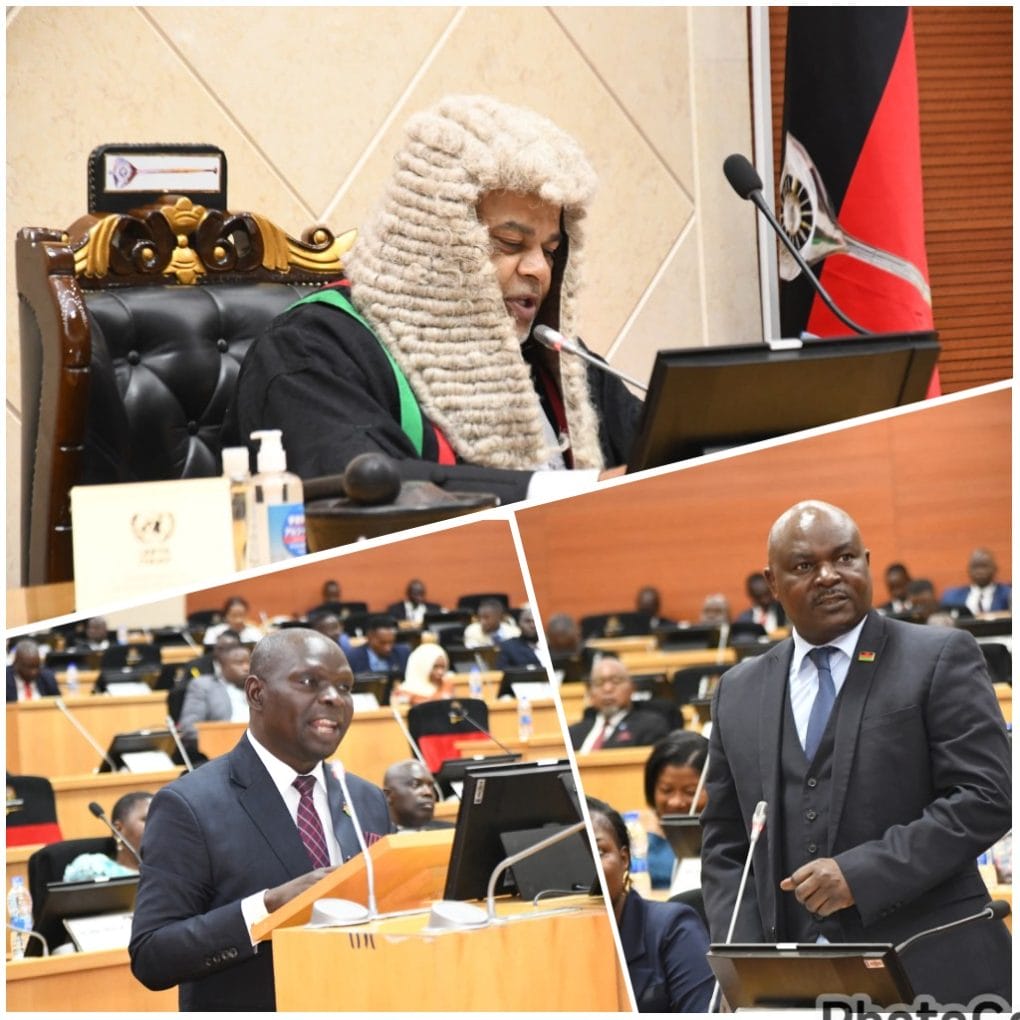
LILONGWE-(MaraviPost)-Malawi Parliament has commenced the First Meeting in the 52nd Session of Parliament, which serves as the 2025/2026 Mid-Year Budget Review Meeting.
The Meeting follows the official opening of the 52nd Session by President Arthur Peter Mutharika on Friday, 31st October 2025, at the Parliament Building in Lilongwe.
Speaker of Parliament, Right Honourable Sameer Suleman, informed the House that the Meeting will run for five weeks, from 5th November to 5th December 2025.
During his address, the Speaker also announced the leadership of the House as submitted by various political parties.
For the Democratic Progressive Party (DPP), the leadership comprises Jappie Mhango as Leader of the House, Patricia Wiskes as Chief Whip, and Martha Ngwira Munthali as Deputy Whip.
For the Malawi Congress Party (MCP), Simplex Chithyola Banda will serve as Leader of Opposition, with Moses Kunkuyu as Whip and Monica Chang’anamuno as Deputy Whip.
From the United Transformation Movement (UTM), the team includes Dr. Patricia Kaliati as Leader of UTM in the House, Edgar Kapalamula as Deputy Leader of UTM in the House, Felix Njawala as Whip, and Kenneth Ndovie as Deputy Whip.
The United Democratic Front (UDF) has Hon. Aisha Mambo Adams as Leader of UDF in the House, Ismail Rizzq Mkumba as Whip, and Tulinje Muluzi as Deputy Whip.
On the leader of opposition, Speaker Suleman further announced that, in accordance with Standing Order 35, Hon. Simplex Chithyola Banda for Kasungu South, is officially recognised as Leader of the Opposition.
Presenting resolutions of the Business Committee, the Speaker outlined the parliamentary programme for the five-week Meeting.
Debate on the President’s Address will take place from 5th to 14th November 2025.
He encouraged new Members to use this period to deliver their maiden speeches.
The Minister of Finance, Economic Planning and Development is scheduled to deliver the 2025/2026 Mid-Year Budget Review Statement on Friday, 21st November, followed by debate from 24th to 28th November 2025.
The House will then proceed to the Committee of Supply from 1st to 3rd December, to scrutinize and adopt revised budget estimates before adjournment sine die on 5th December, 2025.
Meanwhile, Members of Parliament have started debating the Presidential address that President Peter Mutharika made on Friday.
Share this:
Like this:
LikeLoading…
Discover more from The Maravi Post
Subscribe to get the latest posts sent to your email.
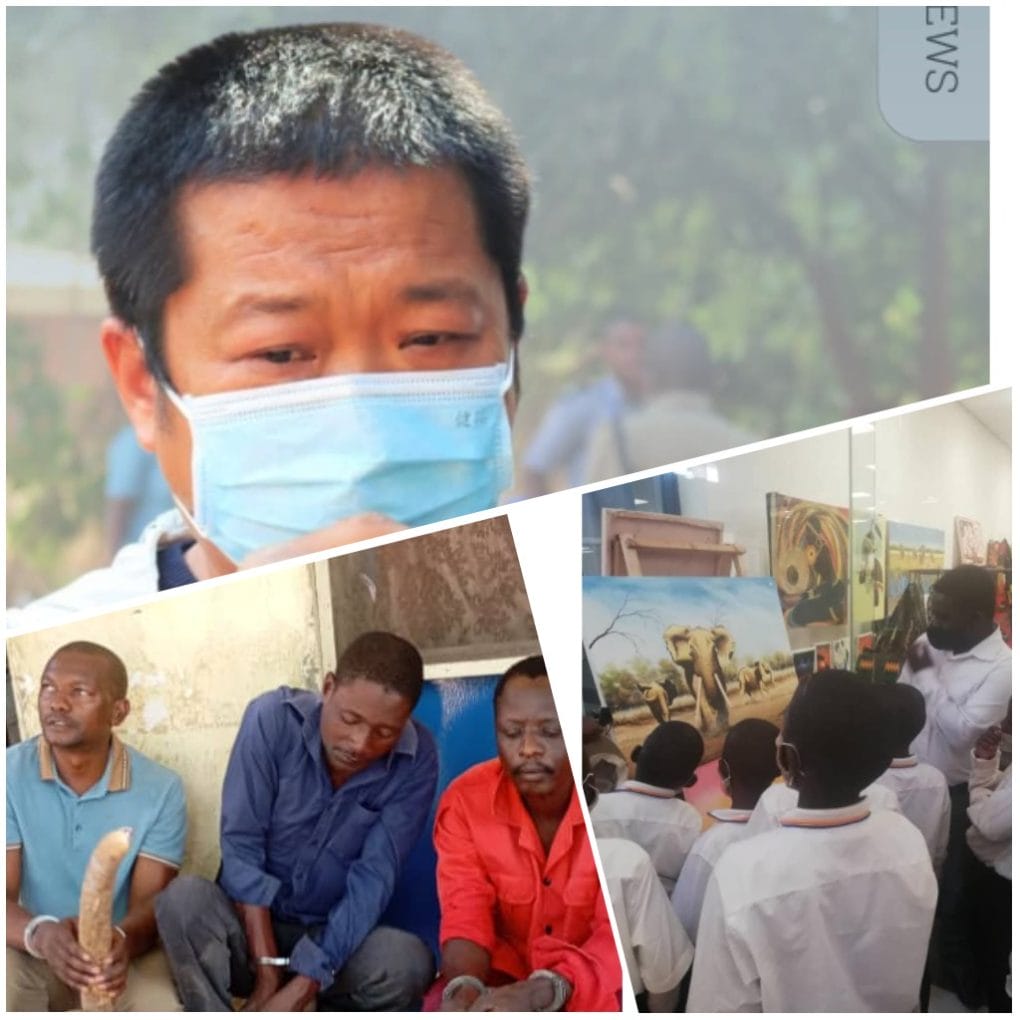
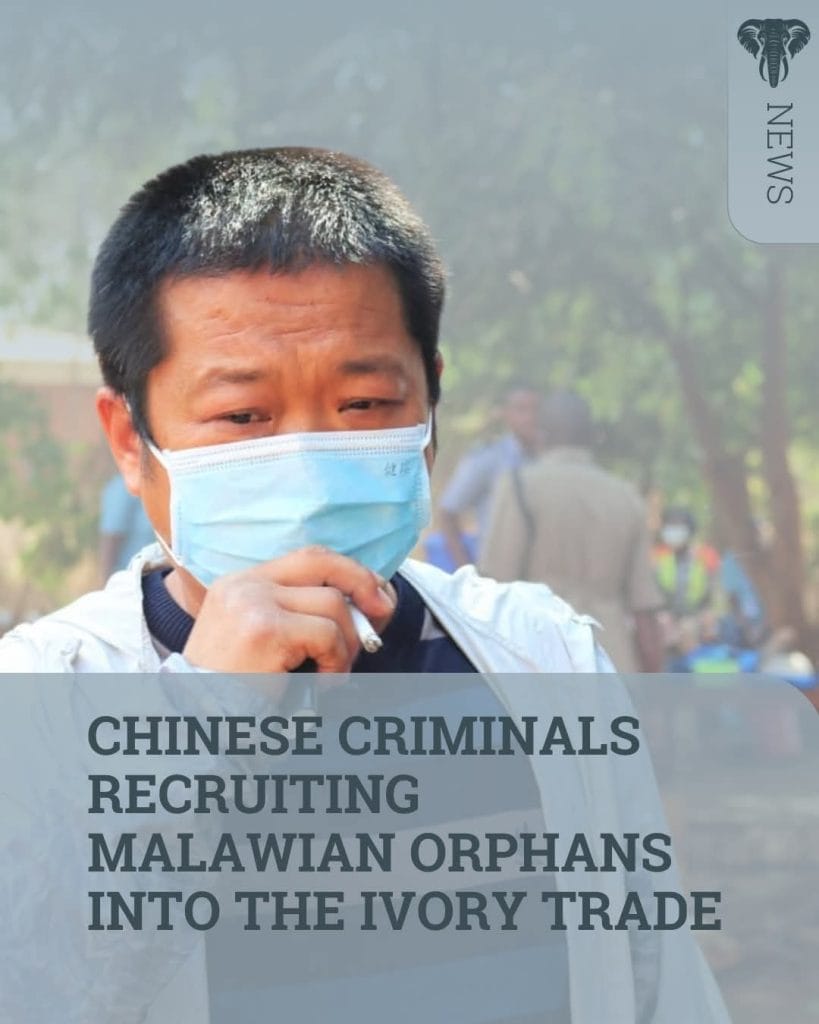
BLANTYRE-(MaraviPost)-An explosive investigation by The Economist has uncovered a disturbing web of wildlife trafficking allegedly orchestrated through the Taiwanese Buddhist-managed Amitofo Care Centre (ACC) in Blantyre, Malawi — a facility established to care for orphans and vulnerable children.
Instead, evidence suggests that some of these orphans have been systematically groomed and exploited by a network of Chinese wildlife criminals posing as business investors.
The revelations point to deep-seated corruption, institutional negligence, and a dangerous exploitation of Malawi’s most vulnerable youth.
Inside Amitofo Orphanage centre
From Orphanage to Wildlife Mule: Francis’s Story
At the heart of The Economist investigation, titled “The School for Wildlife Traffickers”, lies the chilling account of a 19-year-old boy, identified as Francis, who says he was coerced by Amitofo’s Human Resources Manager, Branson Njunga, into participating in illegal ivory transactions.
Njunga — recently arrested in Chikwawa for possession of ivory and currently facing charges — allegedly acted as a conduit between Amitofo’s vulnerable youth and Chinese wildlife traffickers.
“He had heard about former students at Amitofo who had been recruited into the illegal wildlife trade,” writes journalist Rachel Nuwer. “He had also seen news stories about people caught with ivory serving years in prison.”
Fearing for his future, Francis abandoned his education and left the centre — a decision that may have saved his freedom.
Inside the Illicit Network: Njunga, Lin, and the Chinese Connection
Undercover investigators quoted in The Economist report reveal that Njunga openly admitted to working with Chinese associates in Lilongwe, sourcing ivory for them.
Njunga arrested in sky blue from from left
He even offered to supply 20 kilograms of ivory to an undercover journalist.
“It’s risky business, but where there is money, people take risks,” Njunga allegedly told the investigator.
His recent arrest alongside two others in possession of ivory only reinforces the allegations.
They are now facing charges for possessing specimens of protected species — an offence carrying severe custodial penalties under Malawi’s wildlife protection laws.
But Njunga’s role appears to be just one part of a much larger, well-coordinated network.
The Shadow of Yunhua Lin: Pardoned Kingpin Still Pulling Strings
The Economist investigation also revisits the case of Yunhua Lin, an international wildlife trafficker once convicted in Malawi.
Despite his 14-year sentence, Lin was controversially pardoned by President Lazarus Chakwera in July this year — while one of his Malawian “runners,” Aaron Dyson, remains behind bars serving a 15-year sentence for crimes he was reportedly coerced into committing.
Lin, who is now facing separate corruption charges, has been repeatedly denied bail by the courts, with judges citing him as a flight risk.
Yet, despite multiple failed applications, Lin has again filed for bail — raising questions about whether the judicial system is being manipulated to his advantage.
Human rights observers say Lin’s influence continues to extend deep into Malawi’s institutions.
Lin, Wildlife crime convict
“It is shocking how Chinese traffickers manipulate vulnerable Malawians — including orphans — into committing crimes on their behalf, only for the locals to rot in jail while the real masterminds use their illicit wealth to escape justice,” said a human rights and legal expert from Chancellor College, who spoke on condition of anonymity.
The investigation reveals that Lin maintained ties with the Lilongwe branch of Amitofo Care Centre, even purchasing part of land near the facility to reportedly store illegal wildlife products.
Former Amitofo student Aaron Dyson, once celebrated as a “model orphan” and Mandarin prodigy, was recruited into Lin’s network after returning from language training in Taiwan.
Dyson’s story underscores the tragic transformation from hopeful student to victim of transnational crime.
He allegedly handled ivory and rhino horn runs across Namibia, Botswana, Tanzania, Kenya, and Zimbabwe — operations believed to have been financed and directed by Lin.
Equally concerning is the state’s response.
Despite repeated arrests and court findings, Lin continues to exploit legal loopholes and influence networks to maintain his freedom.
His July presidential pardon remains one of the most controversial acts of executive clemency in recent memory.
Call for Urgent Government Action.
“The revelations demand immediate scrutiny from Malawi’s Ministry of Gender, Ministry of Homeland Security, Department of National Parks and Wildlife, and the Anti-Corruption Bureau,” calls Lilongwe based environmental activist asked for annonymity.
He stressed on the need for authorities to protect and rehabilitate victims of the trafficking network; Investigate the conditions surrounding Lin’s presidential pardon; and Strengthen oversight over foreign religious and charitable institutions operating in Malawi.
“Anything less would be a betrayal of the very children and communities the state is meant to protect.” he earned.
“If these findings are left unchecked, Malawi risks becoming a regional hub for wildlife trafficking — fuelled by poverty, foreign manipulation, and institutional indifference.
“It is now up to the authorities to act — not with statements, but with prose,” said a Chancellor college legal and human rights expert also opted for anonymity.
The Ministry of Gender and Ministry of Justice are yet to comment on the unfolding developments .
Share this:
Like this:
LikeLoading…
Discover more from The Maravi Post
Subscribe to get the latest posts sent to your email.
LILONGWE-(MaraviPost)-The country’s Second Vice President Enoch Chihana is appealing to corporate world to generously support former soldiers towards their welfare during this year’s Popy week.
Chihana made the appeal when he donated MK2.5 million towards the campaign at his private residence in the capital Lilongwe.
The Second Veep lauded the leadership of Veterans and Ex-service League of Malawi (Verom) under Henry Odilo for supporting the course.
Chihana therefore expressed gratitude for the Verom gesture by engaging his office on Popy Week events, “Humbled to meet people who matter in public”.
The Second Veep also expressed his heartfelt appreciation to General Odilo for presenting him with a poppy flower in honor of Malawi’s fallen heroes.
“This gesture, made during the Poppy Week commemorations, is a poignant expression of the sacrifices made by those who have laid down their lives for the nation.
“I am deeply touched by General Odilo’s thoughtful gesture,” said the 2nd VP.
He added, “His act of presenting me with a poppy flower is a beautiful way to pay tribute to our fallen heroes. It shows that their sacrifices will never be forgotten.”
The 2nd VP commended General Odilo for his spirit of patriotism and respect for those who have served the nation.
“We must continue to honor the memory of our fallen heroes by working towards a united and prosperous Malawi,” he added.
In his remarks, Verom President Odilo lauded Chihana for the timely support towards Popy Week fundraiser.
Odilo disclosed that the grouping targets MK300 million in this year’s edition.
He stated that the main event will be on Sunday, November 8, 2025.
Share this:
Like this:
LikeLoading…
Discover more from The Maravi Post
Subscribe to get the latest posts sent to your email.
Luthando Holdings Limited owner Hendrix Laher in ACB radar for aiding foreigners to obtain Malawi Citizenship fraudulently
LILONGWE-(MaraviPost)-The High Court Judge Kenyatta Nyirenda has emphatically dismissed Luthando Holdings Limited, Hedrix Laner’s application against Director of Public Prosecution (DPP)’s March 2024 decision to discharge criminals’ changes on Paramount Holdings Limited and its directors.
Luthando Holdings owner Hedrix Laner sought high court review against DPP decision to discharge Paramount Holdings and Directors on case number 37 of 2025.
The Malawi Law Society (MLS) joined the case as Amicus Curia Corum while Luthando Limited and Laner and DPP are claimants and defendant respectively.
Despite a number of applications in the courts pursued privately, Judge Nyirenda is still amused with Luthando’s defiance on the matter.
Judge Nyirenda initial observation in the ruling, “Based on the wording of the Certificate of Discontinuance and the Order of Discontinuance, the challenged decision was effectively made on 3rd April 2024. There is nothing ongoing about the challenged decision. According to Order 19, rule 23(3), of the CPR, the Claimants had up to 4th July 2024 to commence judicial review proceedings challenging the Defendant’s decision to discontinue the case against the accused persons”.
In the 18 page ruling, Judge Nyirenda observes that, “I am completely baffled by the desperate attempt being made by the Claimants to muddy the waters by asserting that the court process in the Magistrate’s Court for discharge of the accused persons was on going.
“What the Claimants seek to be judicially reviewed is not the court process but the decision by the Defendant to discharge the Claimants: see paragraph 3 of this Ruling. By its very nature, a decision to discharge the Claimants cannot be ongoing. The material part of the Certificate of Discontnuance states as follows: “IT IS HEREBY CERTIFIED in exercise of the powers conferred by section 77 of the Criminal Procedure and Evidence Code that the State enters discontinuance of the aforementioned charges against the named accused persons”.
Reads the ruling in part. “It is not uninteresting to note that the Claimants have not addressed the point made by the Defendant that the law does not allow the Republic to recommence a matter outside the stipulated time limits. That the Claimants have not done so does not come to me with a sense of surprise. The arguments advanced by the Defendant are so formidable that they cannot be assailed. The Court has no option but to fully endorse the submissions set out in paragraphs 3.21 to 3.28 of the Defendant’s .
“It is commonplace that the application for judicial review was filed with this Court on 17th June 2025. This means that the Claimants delayed by more than eleven months. Needless to say, the Claimants made no application that they be allowed to bring these proceedings outside the period of three months prescribed by Order 19, rule 20(5), of the CPR. In the same vein, and perhaps more importantly, no reasons have been given for the inordinate delay in commencing the present proceedings. In view of the foregoing, I fully agree with the submissions by the Defendant that the application by the Claimants for judicial review of the challenged decision is time barred and this constitutes a valid ground for discharging the permission that was granted herein”.
Nyirenda adds, “Whether or not the remedies being sought by the Claimants are moot? It is the case of the Defendant that the remedies being sought by the Claimants are moot and thus the proceedings are an exercise in futility. Paragraphs 3.21 to 3.28 of the Defendant’s Skeleton Arguments are relevant and they will be reproduced. It is also to be noted that the submissions of both the Claimants and the Amicus Curiae proceed on the assumption that the Supreme Court of Appeal only has appellant jurisdiction and not original jurisdiction. With due respect, the assumption lacks merit.
“The Supreme Court of Appeal is a creature of section 104 of the Constitution which provides, in subsection (1), among other things, that the Supreme Court of Appeal shall have such jurisdiction and powers as may be conferred on it by the Constitution or by “any other law”. Order 1, rule 18, of the Supreme Court of Appeal Rules falls within the category of “any other law” envisaged by section 104 of the Constitution: see also Order II of the Supreme Court of Appeal Rules which makes provision for the procedure to be followed by the Supreme Court of Appeal when exercising its original jurisdiction”.
Judge Kenyatta rules with costs, “The long and short of it is that the accused persons were acquitted and cannot be tried again over the same case or facts. The law is the law: see the case of The State (On application of Lin Xiaoxiao & Others) v. The Director General –Immigration and Citizenship Services and the Attorney General, HC/LDR Judicial Review Cause No. 19 of 2020. In this regard, the remedies being sought by the Claimants are moot and the proceedings are clearly an exercise in futility.
“All in all, the application has failed the litmus test on two grounds, that is, the application is time-barred and the proceedings are an exercise in futility. Accordingly, the Application to Discharge Permission is granted. The general rule is that costs follow the event. An instructive authority is Order 31, rule 3(2), of the CPR. Having succeeded in his application, the Defendant must be awarded costs of this action. I so order Pronounced in Chambers this 17th day of October 2025 at Lilongwe in the Republic of Malawi”.
Meanwhile, embattled Luthando Holdings Limited Director Laner has appealed against the ruling in the Supreme Court against the ruling.
In a landmark ruling delivered on Friday, June 27, 2025, the court cleared Paramount Holdings directors—Prakash Virji Ghedia, Arvindkumar Atit Patel, and Suresh Khimji Jagatiya—alongside the company, of three criminal charges, including conspiracy to commit a felony and the alleged use of false documents to obtain a government tender.
Significantly, the court issued an order prohibiting the Director of Public Prosecutions (DPP) from pursuing any further charges related to the matter against the individuals or the company.
“The accused persons are hereby acquitted from criminal charges,” reads the court’s ruling in Criminal Case No. 868 of 2023. “The court hereby bars the state from bringing any charges against the accused persons on the same grounds.”
The charges, initially filed in July 2021, were based on a complaint by Hendrix Laher, director of Luthando Holdings Limited—a business competitor. Laher alleged that Paramount Holdings had submitted a forged Yamaha dealership certificate to win a motorcycle supply tender issued by JHPIEGO, an international health NGO.
Court documents reveal that both Paramount and Luthando Holdings had submitted bids to supply Yamaha motorcycles to several entities, including the Ministry of Education, Ministry of Health, Ministry of Local Government, Kamuzu University of Health Sciences, and JHPIEGO.
The tender was awarded to Paramount Holdings on July 7, 2020. Laher subsequently lodged a complaint with the Fiscal and Fraud Section of the Malawi Police Service.
However, the case unraveled when the complainant failed to appear in court on at least three occasions.
This lack of cooperation, coupled with an absence of credible evidence, led the Office of the DPP—first under Dr. Steven Kayuni, then under Masauko Edwin Chamkakala—to discontinue the matter.
A formal certificate of discontinuance was issued on March 19, 2024, under Section 77 of the Criminal Procedure and Evidence Code.
After the statutory six-month period passed, the court officially acquitted the accused and barred the state from reopening the case.
The ruling provides Paramount Holdings and its directors with full legal vindication, enabling them to continue participating in public and donor-funded tenders without restriction or blemish on their record.
In 2022, Yamaha Motor Corporation Japan formally appointed Paramount Holdings as the sole authorized distributor of Yamaha motorcycles and related products in Malawi.
The company has reportedly advertised Yamaha-branded products across Malawi—despite lacking any formal authorization from Yamaha Japan.
However, legal experts have criticized these actions as misleading and potentially fraudulent.
In a related civil case, Luthando Holdings and other companies are challenging Yamaha Japan’s exclusive dealership agreement with Paramount Holdings.
These firms are alleged to have bid for government tenders using documentation from Yamaha agents based in South Africa—raising questions about the legitimacy of such practices under Malawi’s procurement laws.
Share this:
Like this:
LikeLoading…
Discover more from The Maravi Post
Subscribe to get the latest posts sent to your email.