By Draxon Maloya
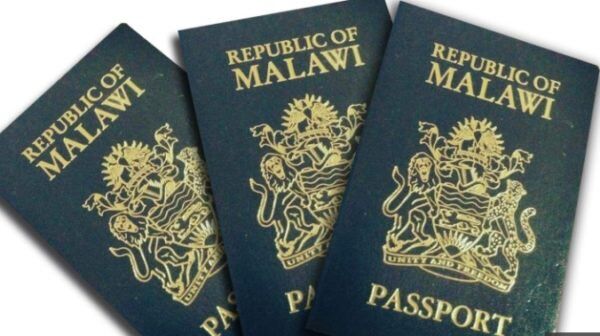
MZUZU-(MaraviPost)-Questions continue to mount following President Peter Arthur Mutharika’s declaration during his State of the Nation Address in Parliament on Friday that his government will procure heavy-duty passport printing machines to ease the burden of producing travel documents locally.
Socioeconomic advocates have expressed concern that the government persists in relying on Madras Security Printers (MSP) of India—a company widely accused of corruption and failed projects—despite the enormous strain this continues placing the Department of Immigration in issuing passports to citizens.
Commentators argue that MSP secured its contract under the previous administration through the influence of then-Acting Director General of Immigration Ananchuma Kalindangoma and Principal Secretary for Homeland Security Steven Kayuni, allegedly sidelining other qualified competitors in favour of kickbacks.
Mervin Nxumayo, chairperson of the Young Human Rights Defenders Network (YHRDN), warned that procuring more machines will not resolve the crisis:
“Madras Security Printers pocketed about IS$12.8 million upfront before processing a single passport as part of the US$27 million deal. Yet today, the government is buying printers for them. What was that US$12.8 million for if not heavy-duty printers? Malawi is obsessed with procurement,” lamented Nxumayo.
It is reported elswhere, MSP faces serious allegations of corruption and failed projects across multiple countries, including Kenya, South Sudan, Mauritius, and India.
Bangladesh even banned the company over fraudulent practices involving tax stamps and stolen data.
In early 2025, then-Leader of Opposition Hon. George Chaponda urged the Malawi Congress Party-led government to cancel MSP’s contract after a severe passport printing crisis left thousands stranded.
“Reports indicate that MSP failed to roll out passport printing months after being paid over K8.7 billion. The company was alleged to have been awarded over K100 billion in contracts through secretive, non-transparent processes,” Chaponda told Parliament, pressing for a “reputable and scandal-free company.”
An informant within the Department of Immigration revealed that Malawi already possesses heavy-duty passport printers capable of producing 150,000 passports in two days—enough to clear the backlog.
He further alleged that despite objections, the Anti-Corruption Bureau (ACB) was pressured by senior MCP and State House officials to approve a US$35 million deal with MSP for blank national ID cards.
Homeland Security Minister Peter Mukhitho recently announced that three new heavy-duty machines destined for Mzuzu, Mangochi, and Blantyre are expected to arrive next week.
“The machines are part of a contract signed in February 2025 between the Malawi Government and MSP. By the time the current administration assumed office, only US$9 million had been paid out of the required US$17.9 million. This funding gap disrupted implementation and contributed to delays,” Mukhitho explained.
Critics argue that MSP continues to print passports in India despite receiving millions for “setup costs.” Local firm Technobrain, they note, managed to establish operations in two weeks at less than US$500,000, printing over 200,000 passports in under a year despite political hostility and limited capacity. MSP, by contrast, has printed fewer than 50,000.
Social media advocate Leonard Chimbanga criticized the government’s continued dealings with MSP:
“Here in Malawi, Lazarus Chakwera and Madame Colleen Zamba are happily handing them a aUS$29.9 million passport deal. What could go wrong? Maybe next, we shall let bank robbers handle our treasury,” he wrote.
Chimbanga further alleged that continuing to work with MSP amounts to direct government funding of the former ruling Malawi Congress Party, which initially offered the contract under undisclosed terms.
In 2024, Malawi transitioned to a secure e-passport system after a major system hack and the cancellation of the previous supplier left thousands stranded.
To stabilize the situation, the government engaged local firm E-Tech Systems under temporary contracts.
The upgraded system was capable of processing over 10,000 passports daily, offering express services within 1–2 days and ordinary processing within 10 days—a significant improvement compared to delays of up to 12 months.
Despite the availability of six heavy-duty printers, political interference prevented their integration into the system.
Instead, authorities pursued new procurement deals, reportedly 40 times costlier than local solutions and payable in USD, allegedly to secure campaign kickbacks.
Progress was further marred by corruption, poor contract management, and abrupt termination of agreements without proper transition.
This locked in over 200,000 processed applications, forcing citizens to reapply. Reports also suggested that senior officials demanded bribes from E-Tech Systems, undermining efforts to clear the backlog.
In March 2024, passport fees were revised to MK100,000 for a 64-page (10-year) booklet and MK50,000 for a 32-page (5-year) booklet.
Citizens were also introduced to an online application system allowing renewals and real-time tracking—developed under the emergency solution but later publicized as MSP’s package.
Observers warn that the government is once again being misled into endless procurement.
The real problem, they argue, is not printing capacity but processing inefficiencies, politicization, poor contract management, and lack of system transitions.