UTM criticizes DPP’s mid-year budget, warns against continued economic mismanagement

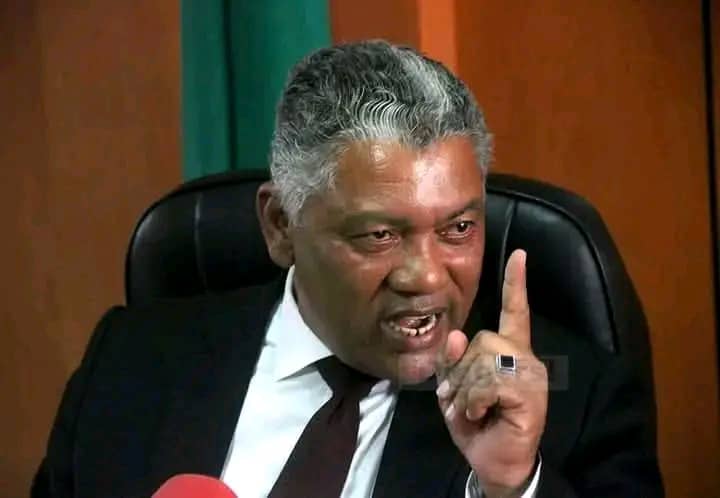
UTM president Dalitso Kabambe

LILONGWE-(MaraviPost)-The United Transformation Movement (UTM) party has strongly criticized the 2025/26 Mid-Year Budget, accusing the Democratic Progressive Party (DPP) government of continuing what it describes as a “failed economic path” left behind by the former Malawi Congress Party (MCP) administration.

In a statement released today and signed by UTM Director of Finance and Economic Affairs Simon Mwayang’ana, the party highlighted the fragility of Malawi’s economy, citing rising food prices, foreign exchange shortages, growing public debt, increasing unemployment, and deepening poverty that continues to keep the country among the poorest in the world.

UTM acknowledged that the DPP inherited these challenges from the previous MCP government but stressed that the new administration must now take full responsibility for addressing them.

The party criticized the mid-year budget for failing to deliver solutions, arguing that the measures outlined fail to respond to the country’s urgent economic needs.

“Malawi needed discipline – it received consumption. Malawi needed a production revolution – it received tax hikes. Malawi needed liquidity control – it received expansion. Malawi needed a credible foreign exchange plan – it received administrative controls,” the statement reads in part.

UTM further noted that the budget does not adequately address structural issues and risks perpetuating fiscal mismanagement, worsening inflation, and further burdening citizens already struggling with high living costs.

The party also raised concerns about the overestimation of Gross Domestic Product projections, the inflation outlook that is not aligned with prevailing economic realities, and ongoing foreign exchange challenges that threaten to destabilize trade and business activities.

Additionally, UTM warned that fiscal deficits and domestic borrowing remain unchecked, and criticized the newly introduced tax measures as heavy, inflationary, and counterproductive, potentially undermining economic growth and development.

The statement concludes with a call for the government to implement policies that prioritize production, fiscal discipline, and sustainable economic reforms to alleviate poverty and restore public confidence in national economic management.

UTM’s critique underscores growing public concern over Malawi’s economic trajectory and highlights the pressure on the DPP to adopt bold measures to address the country’s persistent financial and structural challenges.


Discover more from The Maravi Post

Subscribe to get the latest posts sent to your email.

The Maravi Post

Malawi School of Government faces allegations of sabotaging DPP agenda amid staffing concerns

Dzimbiri under fire for flouting procedure in hiring DPP cadet Asiyati Chiweza as MSG Director General

LILONGWE-(MaraviPost)-An anonymous lecturer at the Malawi School of Government (MSG) has raised serious concerns over the current management and operations of the institution.

The lecturer, who has served at MSG for over eight years, spoke on condition of anonymity due to the sensitive nature of the claims.

According to the source, the current MSG management was appointed by the previous MCP administration and appears to be undermining government programs, including initiatives under President Arthur Peter Mutharika’s agenda.

The lecturer alleged that the Director General (DG) was appointed without following a competitive recruitment process, in contravention of the MSG Act.

It is believed that the DG’s appointment was influenced by her husband, a pastor with strong ties to the former “pastor president,” raising concerns about her impartiality.

The seven directors currently serving at MSG were reportedly chosen based on connections to the DG, the former SPC Zamba, and MCP leadership, rather than merit.

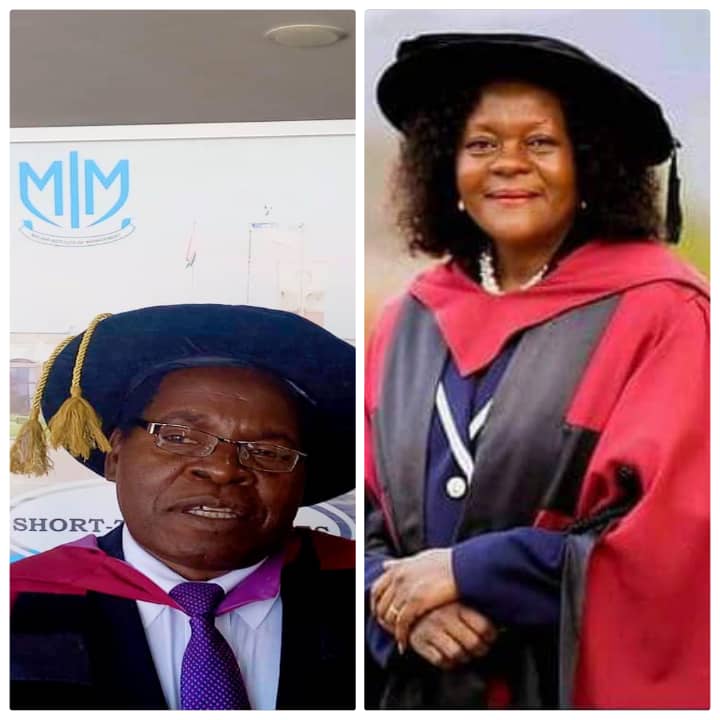
For instance, one Head of Department, an Assemblies of God pastor with an agricultural background, was appointed to lead the Business and Management Department despite lacking relevant qualifications.

The lecturer claims this director has a history of dishonesty and misleadingly represents himself as a “PhD Fellow,” although he has not completed such studies.

When MCP assumed power, several experienced and competent MSG staff members were removed, according to the source.

This was allegedly done through a controversial “Placement Exercise,” which the lecturer says was designed to eliminate individuals perceived as DPP sympathizers.

Positions were reportedly given to candidates aligned with the DG and MCP, even if they failed interviews or lacked qualifications, while qualified staff were ignored.

Among those displaced were the former Acting Executive Director, Mr. Sikelo, and his capable team, who had previously run the institution efficiently without government subvention.

Currently, MSG receives government funding but is described as “top-heavy,” with eight directors earning substantial salaries and benefits despite limited output.

Meanwhile, junior staff reportedly continue to face significant challenges, including low pay and minimal support.

The anonymous lecturer also noted that most of the government subvention is spent on vehicles, travel allowances, and other perks for the DG and directors.

While the DG claims credit for clearing pension arrears, the lecturer argues that these achievements were the work of previous management.

The source called for a comprehensive review of all MSG recruitments since the restructuring, including the Placement Exercise.

Financial and staffing audits, similar to those conducted at NEEF, were recommended to restore accountability.

The lecturer expressed concern that capable professionals were displaced for political reasons, while individuals brought in by the MCP administration continue to benefit.

The situation at MSG highlights the urgent need for corrective action to ensure that government training institutions serve national interests rather than partisan agendas.


Discover more from The Maravi Post

Subscribe to get the latest posts sent to your email.
The Maravi Post

French Navy clarifies: No confirmation of Pakistani Air superiority or Rafale shootdowns

The French Navy has formally denied recent claims made by some Pakistani media outlets regarding the purported statements of a French officer on regional air engagements.

Reports had suggested that Captain Yvan Launay confirmed Pakistan’s air superiority and the downing of Indian Rafale jets, a claim that quickly circulated online.

In a statement, the French Navy clarified that Captain Launay never made any such remarks.

The Navy emphasized that Captain Launay’s role is purely technical and he did not comment on operational aerial engagements or the capabilities of foreign systems, including Chinese aircraft.

The clarification comes amid heightened tensions in the South Asian region, where misinformation and speculative reports can rapidly influence public perception.

Officials noted that attributing statements to military personnel without verification can create diplomatic misunderstandings and undermine regional stability.

The French Navy’s statement reinforces the importance of relying on verified sources when reporting on sensitive defense matters.

Captain Launay himself has remained neutral, focusing on technical expertise rather than operational or strategic assessments of foreign air forces.

This development serves as a reminder of the need for caution in media reporting on military affairs, especially in conflict-prone regions.


Discover more from The Maravi Post

Subscribe to get the latest posts sent to your email.

The Maravi Post

South Africa’s G20 Presidency highlights Africa’s growth and global cooperation

PRETORIA-(MaraviPost)-President Cyril Ramaphosa has delivered the closing remarks at the G20 Leaders Summit, reflecting on South Africa’s historic tenure as the first African nation to host the forum.

In his address, President Ramaphosa extended his gratitude to G20 member states, invited countries, international organisations, and all participants for their support during South Africa’s Presidency.

He emphasised that the commitment of participating nations had been crucial in reaffirming the G20’s role as the premier platform for international economic cooperation and in addressing the world’s most pressing challenges.

President Ramaphosa noted that the summit occurred during a period of significant global difficulties, yet member states demonstrated the ability to unite and pursue a better world collectively.

South Africa’s leadership of the G20 placed Africa’s growth and development at the centre of the agenda, highlighting the continent’s potential as a key driver of 21st-century prosperity.

He stressed that realising this potential requires strong partnerships between Africa and the G20, and more broadly, between Africa and the global community.

President Ramaphosa also addressed the urgent need for global peace, calling for the cessation of conflicts and wars, and advocating for comprehensive and lasting resolutions.

The summit, he said, coincided with growing worldwide demands to tackle poverty, reduce inequality, and combat climate change.

Particular attention was given to the mounting debt burden in developing economies, which hampers their progress toward achieving the Sustainable Development Goals.

The G20 pledged to provide support to low- and middle-income countries facing debt vulnerabilities, with the aim of creating a virtuous cycle of reduced debt, higher public investment, and inclusive economic growth.

Disaster resilience and climate adaptation were central themes, with President Ramaphosa noting that climate-induced natural disasters disproportionately affect nations with limited capacity to recover.

South Africa introduced the High-Level Voluntary Principles for Investing in Disaster Risk Reduction, encouraging international collaboration to enhance investment in both prevention and post-disaster recovery.

The summit also advanced discussions on the just energy transition, emphasising the need for climate finance, support for developing economies, and the mobilisation of private capital to reduce global greenhouse gas emissions.

President Ramaphosa highlighted the G20 Critical Minerals Framework as a key initiative to ensure that mineral resources contribute to sustainable development worldwide.

The South African Presidency also marked the conclusion of the first cycle of G20 Presidencies, during which the G20@20 Review was undertaken to gather perspectives from all participating members and guest countries.

Overall, the summit underscored the G20’s commitment to inclusive global cooperation, sustainable development, and Africa’s growing role on the international stage.


Discover more from The Maravi Post

Subscribe to get the latest posts sent to your email.

The Maravi Post

Malawi Veep Ansah lands in Angola for pivotal AU–EU engagements

LILONGWE-(MaraviPost)-Malawi’s Vice President Jane Ansah, arrived in Angola on Saturday evening to lead the country’s delegation at two major African Union meetings, marking the beginning of an important diplomatic assignment for the nation.

Her arrival at Dr. António Agostinho Neto International Airport in the Icolo e Bengo province was greeted by Foreign Affairs Minister George Chaponda, Malawi’s Ambassador to Angola Margaret Constance Kamoto, and several government officials who welcomed her to the host nation.

According to the Ministry of Foreign Affairs, Dr. Ansah is set to participate in the 7th African Union–European Union Summit, a high-level forum where African and European leaders will revisit and strengthen their cooperation agenda.

This summit will delve into challenges and opportunities related to peace and security, governance, shared prosperity, global cooperation, and human mobility.

Beyond the official summit sessions, the Vice President will hold bilateral engagements with various partner countries.

These discussions will center on Malawi’s strategy to confront its immediate national pressures—including food scarcity, fuel constraints, fertilizer shortages, limited foreign exchange, and supply gaps in essential medicines.

This year’s summit holds symbolic importance as it commemorates 25 years of AU–EU partnership, a milestone reflecting long-standing commitment to collective development and shared political goals.

The event will be co-chaired by Angolan President João Lourenço and European Council President António Costa, bringing together influential leaders who are poised to reshape the future of intercontinental cooperation.

Joining them will be European Commission President Ursula von der Leyen and African Union Chair Mahmoud Ali Youssouf, further emphasizing the significance of the gathering.

With the theme “Promoting peace and prosperity through effective multilateralism,” the summit seeks to reinforce collaboration, deepen mutual trust, and chart a course for sustainable development and stability across Africa and Europe.


Discover more from The Maravi Post

Subscribe to get the latest posts sent to your email.

The Maravi Post

Seven arrested in connection with harassment of PF faction leader Given Lubinda

KABWE-(MaraviPost)-Seven male suspects have been arrested in Kabwe for allegedly harassing Patriotic Front (PF) faction leader Given Lubinda on Wednesday.

The suspects are currently in police custody as they await formal charges.

Zambia Police Service public relations officer Godfrey Chilabi confirmed the arrests in a statement issued to the media.

He said investigations into the incident are still underway, and the public will be updated as more information becomes available.

Meanwhile, police in Kabwe have requested Mr Lubinda, who is the complainant in the matter, to submit a formal statement.

They have also advised him to complete the necessary case-complaint procedures to support the ongoing investigation.

Mr Chilabi emphasised that the Zambia Police Service maintains a strict zero-tolerance approach to political violence.

He reiterated that any form of politically motivated harassment, intimidation, or assault constitutes a criminal offence.

The incident has raised concerns about rising political tensions and the need for greater adherence to the rule of law.

Police have urged members of the public to refrain from acts of violence and to allow legal processes to take their course.

The arrests mark the first major step in the investigation as authorities work to establish the full circumstances surrounding the harassment of Mr Lubinda.


Discover more from The Maravi Post

Subscribe to get the latest posts sent to your email.

The Maravi Post