
….Ntcheu lawmaker vows to continue defending the nation’s leader amid calls for accountability
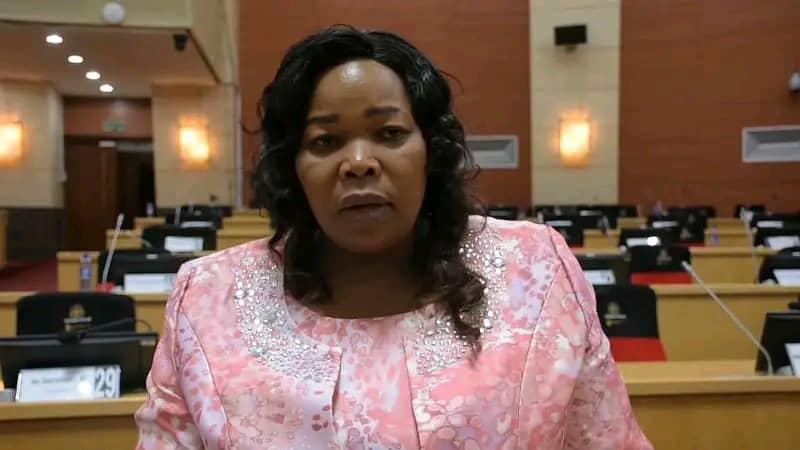
LILONGWE-(MaraviPost)-Norman Chisale, a Member of Parliament for the central region under Ntcheu District, has pledged that he will never stop defending President Peter Mutharika.
Chisale said people should stop questioning why he holds ministerial and parliamentary positions, stressing that these roles are separate from his commitment to protecting the President.
He insisted that while he might consider stepping down from other positions, his dedication to defending President Mutharika remains unwavering.
According to Chisale, there is no failure in his responsibilities when it comes to supporting the President, and he will continue to stand by him regardless of public criticism.
His remarks come amid increasing scrutiny from citizens and political observers who have questioned the loyalty of some government officials.
Chisale emphasized that defending the head of state is a duty he holds with utmost seriousness and is independent of any other political roles he occupies.
He also encouraged others who serve in government to demonstrate similar loyalty and commitment to national leadership.
The Ntcheu lawmaker’s statements underline a broader narrative of political solidarity within certain factions of the ruling administration.
Chisale concluded by reaffirming his position that while other responsibilities may change, his defense of President Mutharika is a constant that will not waver.
Share this:
Like this:
LikeLoading…
Discover more from The Maravi Post
Subscribe to get the latest posts sent to your email.

In today’s digital age, personalities like Bakili Muluzi TV (BMTV)-which has been operating undercover) have become household names, particularly among Malawians who follow online platforms for news, commentary, and public discourse. With a style that is both bold and unfiltered, Muluzi has captured the attention — and sometimes the ire — of audiences across the country.
Sylvester Kalizang’oma recently weighed in on Muluzi’s approach, urging people to “speak up like a brave person.”
Indeed, watching Bakili Muluzi TV, it is easy to see why such advice resonates. His on-screen presence is audacious, direct, and unapologetic — qualities that often make viewers either cheer or cringe.
Kalizang’oma notes that some may be tempted to label Muluzi as reckless, brash, or even arrogant.
Yet, as Muluzi himself has implied with the phrase “akulu akulu” — referring to leaders or people in authority — his approach is purposeful. Even if his style causes temporary discomfort, it often challenges those in power to reflect and, in some cases, respond.
This tension between audacity and responsibility is what makes Muluzi’s platform so compelling. In a media landscape where cautious reporting is the norm, he chooses to push boundaries.
His commentary is bold, but it is also rooted in a desire to hold leaders accountable and provoke public discussion.
Of course, the very qualities that make him popular also invite criticism. Some accuse him of sensationalism, while others suggest his unfiltered commentary risks misunderstanding or conflict.
But in an era where ordinary citizens struggle to have their voices heard, figures like Bakili Muluzi TV remind us of the value of fearless communication.
Kalizang’oma’s advice — to speak boldly yet responsibly — applies not only to media personalities but to all citizens who wish to engage with governance, policy, or public debate.
Muluzi’s work demonstrates that speaking out, even when it ruffles feathers, can serve a greater purpose: holding leaders accountable and encouraging open discourse.
In the end, Bakili Muluzi TV is more than just an online personality.
He symbolizes the power of audacity, the influence of digital media, and the role of fearless voices in shaping public dialogue.
As Kalizang’oma aptly puts it, if we are to speak out, we must do so like brave individuals — unafraid, thoughtful, and ready to stand by our words.
Share this:
Like this:
LikeLoading…
Discover more from The Maravi Post
Subscribe to get the latest posts sent to your email.
PRETORIA-(MaraviPost)-South Africa’s President Cyril Ramaphosa announced on Friday that his country will symbolically hand over the G20 presidency to an empty chair during the upcoming summit in Johannesburg, as the United States declines to attend.
The gesture highlights what many interpret as a diplomatic gaffe and a strain in relations between Pretoria and Washington at a time when South Africa seeks to assert its role on the global stage.
Ramaphosa, speaking from Soweto while overseeing preparations for the summit, said: “I have said in the past I don’t want to hand over to an empty chair, but the empty chair will be there. I will probably symbolically hand over to that empty chair and then talk to President Trump…”
The remark was prompted by the announcement from the U.S. that no government officials would attend the 22–23 November summit in South Africa.
The absence of U.S. leadership at the summit marks a rare low point for the G20 — an institution built on the cooperation of the world’s major economies.
The United States cited alleged human-rights abuses in South Africa, particularly claims of violence against white South Africans, as grounds for the boycott. These claims have been widely rejected by South African officials.
For South Africa, the presidency of the G20 is a major diplomatic milestone — the first time an African country holds the rotating leadership of the bloc.
The handover to the U.S., traditionally a powerhouse in global governance, was expected to go smoothly and symbolically.
Instead, the “empty chair” moment signals tension, distrust, and a rerouting of global power dynamics.
Ramaphosa’s reference to handing over to an empty chair carries significant symbolism.
On one hand, it reflects South Africa’s willingness to proceed with leadership and agenda-setting even when one of the bloc’s most influential members opts out.
On the other hand, it may be seen as a diplomatic rebuke — a message that the U.S. absence will not halt the G20’s function, but that the void will be visible.
Despite the tension, Ramaphosa made clear that trade and cooperation with the United States remain priorities for South Africa.
“We export products to that country that in the end don’t end up in the White House. They end up in the hands of consumers in the United States,” Ramaphosa noted.
He added that while some might argue for disengagement, South Africa must sometimes engage with countries that are not friendly to safeguard the interests of its people.
The upcoming summit in Johannesburg is expected to focus on issues high on the agenda of the Global South: climate resilience, debt relief, and inclusive development.
South Africa’s theme for the presidency, “Solidarity, Equality, Sustainability,” reflects this shift in priorities.
With the U.S. absence looming, the onus falls on other leaders and emerging economies to fill the vacuum.
Critics argue that without robust U.S. participation, the G20’s influence could diminish.
The United States has historically played a central role in shaping global economic and financial governance. Its absence may reduce the summit’s capacity to enact major agreements.
Supporters of South Africa’s approach, however, view the moment as an opportunity: the Global South can step forward, diversify leadership, and reduce reliance on traditional powers.
Ramaphosa’s “empty chair” gesture may thus serve dual purposes: a provocation and an invitation. It warns that global diplomacy cannot simply rely on one dominant player, and invites others to engage more fully.
For the Johannesburg summit, it may encourage African, Asian, and Latin American leaders to press their agenda, potentially with greater autonomy.
How the U.S. responds if invited to the hand-over remains uncertain.
Whether it sends even a low-level representative or stays completely away could send even stronger signals about its role in global governance.
For South Africa, the practical implications are serious: hosting a summit of this scale demands security, infrastructure, and resources.
The eyes of the world will be on Johannesburg next week.
In the end, the “empty chair” might become a powerful reminder: that in a changing world, leadership vacuums speak as loudly as fulfilled seats.
How the G20 adapts will reveal whether it remains relevant or becomes a relic of a shifting geopolitical order.
Share this:
Like this:
LikeLoading…
Discover more from The Maravi Post
Subscribe to get the latest posts sent to your email.
….Councillor Gerald Lipikwe chosen as Vice Mayor as Blantyre City Council ushers in new leadership…
BLANTYRE-(MaraviPost)-Blantyre City on Wednesday welcomed a new leadership team following the election of Isaac Jomo Osman as Mayor and Councillor Gerald Lipikwe as Vice Mayor during a fully attended council session held at the Blantyre City Council chambers.
Osman’s election marks a new chapter for the city, with councillors entrusting him with the responsibility of steering the commercial capital toward improved service delivery, enhanced development, and strengthened community engagement.
His rise to the mayoral seat comes at a time when residents are calling for renewed focus on infrastructure maintenance, security, waste management, and economic revival within the city.
Councillor Gerald Lipikwe, who was elected Vice Mayor, pledged to support the new Mayor in advancing the council’s development agenda.
He emphasized teamwork, transparency, and responsiveness to the needs of residents as key guiding principles in carrying out his duties.
The election drew excitement among community members and council officials, who expressed optimism that the new leadership will bring energy, accountability, and strategic thinking to the management of Malawi’s oldest city.
The new Mayor and his deputy are expected to immediately begin consultations with council departments, local leaders, and key stakeholders as they outline priority areas for the coming months.
The leadership will be central to driving the city’s developmental vision and restoring confidence in municipal governance.
Share this:
Like this:
LikeLoading…
Discover more from The Maravi Post
Subscribe to get the latest posts sent to your email.
….Swearing-in of 30 new councillors marks the beginning of a fresh five-year term
BLANTYRE-(MaraviPost)-The Blantyre City Council is today set for a decisive election as it chooses a new Mayor at the Civic Centre.
Three Democratic Progressive Party (DPP) ward councillors have thrown their hats into the ring, signalling an intense intra-party contest.
The contenders are Isaac Jomo Osman of Bangwe Ntopwa Ward, Eric Mofolo of Mapanga-Mzedi Ward, and Joseph Makwinja of Bangwe Namiyango Ward.
Each of the three councillors has publicly expressed confidence in their leadership capabilities and their desire to steer Blantyre City in a new direction.
The mayoral vote is taking place alongside the swearing-in and oath-taking ceremony for 30 newly elected Blantyre City councillors.
The ceremony marks the beginning of their five-year mandate to serve Malawi’s commercial capital and its residents.
The election of a new Mayor is expected to set the tone for how the council will manage critical issues such as road infrastructure, waste management, security, and service delivery.
Observers note that the race is likely to be tight, given that all three candidates are from the same political party and share similar political constituencies.
The emergence of internal competition is also seen as a test of unity and democratic maturity within the DPP’s local structures.
Residents of Blantyre are watching closely, hoping that the new leadership will bring fresh energy and solutions to the city’s long-standing governance challenges.
The results of today’s election will shape the council’s direction and determine the political atmosphere at the Civic Centre for years to come.
The Maravi Post will provide updates as the election concludes.
Share this:
Like this:
LikeLoading…
Discover more from The Maravi Post
Subscribe to get the latest posts sent to your email.

Malawians have currently expressed a series of criticisms or concerns regarding the actions and decisions of Malawi President Arthur Peter Mutharika (APM).
Firstly, Mutharika’s ad hoc approach to cabinet appointments during a significant economic crisis has been criticized for being inconsistent and ineffective.
For instance, at the time of fuel scarcity, APM took a long time to appoint the Minister of Energy, Jean Mathanga.
Secondly, the appointment of individuals with allegations of crime and corruption, such as Alfred Gangata, Enoch Chihana, and Richard Luhanga, has raised concerns about governance and integrity.
Unfortunately, there is another school of thought that such appointments may propagate the corruption culture thereby creating a conflict of interest.
Furthermore , there have been complaints regarding the lack of proper procedures in the appointments of key positions, such as the Director General of the Malawi Revenue Authority (MRA) and the Anti-Corruption Bureau (ACB).
Some have contended that the acting Director General of MRA should have been chosen from within the organization, even without the involvement of the board.
Additionally, the process of selecting the Director General of ACB was not properly followed by APM. It should have included merit-based interviews for potential candidates, with the ultimate decision of appointment resting with the president.
Unfortunately, Mutharika has also been accused of favoring the Lhomwe tribe in public office appointments, leading to claims of tribalism and lack of inclusivity in governance.
This is against the background that Mutharika was evenly voted into power across all regions and tribes of Malawi.
Some critics have questioned Mutharika’s absence at the military fallen heroes ceremony as exhibiting a lack of respect and commitment to the nation and its armed forces.
It is therefore unfortunate that the ongoing shortages of essential commodities such as fuel, food, foreign exchange, water, and electricity have been a significant concern for the populace, reflecting poorly on Mutharika’s leadership.
Although it is premature to make a final assessment of Mutharika’s administration, the government has not provided any concrete explanation or proposed solutions for the current predicaments.
Lastly, Mutharika’s warnings against holding constitutional demonstrations have been interpreted as an attempt to suppress dissent and limit citizens’ rights to protest.
In conclusion, these listed factors represent a variety of concerns about Mutharika’s leadership that have been currently brought up in public discussions.
It is important for the Mutharika administration to promptly address these criticisms in order to maintain the public’s confidence in his leadership.
Share this:
Like this:
LikeLoading…
Discover more from The Maravi Post
Subscribe to get the latest posts sent to your email.