16 Rejoice always, 17 pray continually, 18 give thanks in all circumstances; for this is God’s will for you in Christ Jesus. – 1 Thessalonians 5:16-18
“Open up prayer for all governmental leaders and their institutions so we can be quietly about our business of living simply, in humble contemplation.” —1 Timothy 2:2
The year 2025 continues to be a year where the country and the world is losing many of its greats – forming what we call the Bad. It is also the year many disastrous and Downright Ugly things have happened, right along there with the Good. Among those we have lost in 2025 are relatives, nationals, and international icons. While this week we outline the Downright Uglies of 2025, a section is reserved for the Bad. Losing loved ones or icons are Bad and unbearable experiences.
This week, as the year draws to its twilight, the Mayombo clan weeps again; this time with the loss of our brother, cousin, uncle, and friend, Ronald Mtisunge Mbekeani; he is the second from the clan to breathe his last. Earlier this year, we lost Rogers Zamachetcha Mbekeani.
From the international scene, former New York Congressman Charles Wrangle passed away this year. Others are musician Marianne Faithful, Brandon Clackson (husband to TV personality Kelly Clackson), Dolly Parton’s husband Carl Dean, a song writer and married to the singer for 60 years, died early in 2025. Phil Robertson, Ruth Buzzi, Uche Ujeh, David Lynch, and Diego Jota were all lost to us in 2025.
Three very gruesome killings took place in 2025. These include the slaying by gunshot of a Republican Party activist, an actor/director and his wife, and Hanukkah celebrants in Australia.
On September 10, 2025, an assassin gunned down, Charles James Kirk. He was an American right-wing political activist, entrepreneur, and media personality. He co-founded the conservative student organization Turning Point USA in 2012, and was a member of the Republican Party, and a highly influential figure in the Make America Great Again (MAGA) Movement. The assassination took place while Kirk was speaking at an outdoor campus debate at Utah Valley University in Orem, Utah. Twenty-two year old Tyler James Robinson, from Washington, Utah later surrendered to Police.
Acclaimed director, producer, screenwriter and actor Rob Reiner and wife Michele Reiner (née Singer), were found dead in their Brentwood, California, home on December 14, 2025. Their son Nick has been charged with two counts of first-degree murder. The cause of death was from knife wounds.
The shocking headline read: At least 15 killed in mass shooting at Hanukkah event on Sydney’s Bondi Beach. The assassins turned out to be a pair of father-and-son duo who used two “basic” improvised explosive devices that were found at the scene of the slaying. Among the dead was Rabbi Eli Schlanger, assistant rabbi at Chabad of Bondi and a key organizer of the event.
This killing took Australians by surprise as mass shootings are rare in Australia. It also took place during the annual Jewish festivity and celebration of Chanukah by the Sea, an event celebrating the start of Hanukkah. Meanwhile,Australian Prime Minister Anthony Albanese on Sunday called the shooting a “targeted attack against Jewish Australians” and a “terrorist incident.”
“An attack on Jewish Australians is an attack on every Australian,” Albanese said in a statement posted on social media. “There is no place for this hate, violence and terrorism in our nation. Let me be clear. We will eradicate it.”
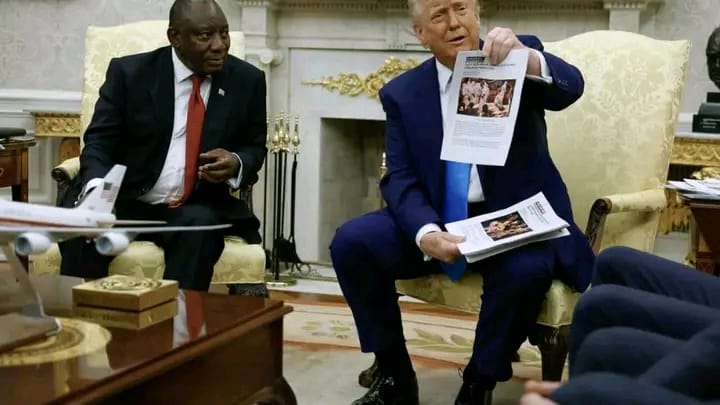
Turning to the US, let us continue to seek God’s face and pray, especially for President Donald Trump. The American leader is a gifted, highly admired gifted, and skillful communication professional. Let us pray that in 2026 President Trump uses his skills to bring global and national unity and peace beyond measure – in Europe, in the Middle East, in Latin America, and everywhere.
Let us pray that he uses his communication skills to bring an end to divisive, corrosive hatred, and racism. Let us pray, praising the LORD our God, that President Trump will bring about lasting respect for the rule of law and order within and even outside the USA.
Lastly, as the USA marches toward its celebration of the 250th Anniversary of Independence, let us pray that Mr. Trump will genuinely lead America to be the loveable country this land of the brave and free, land of opportunity continues to be the true bulwark of democracy it has been all these years. Let us pray, believe, and hold to be true that with God’s Mighty Hand, this President of the United States can do it.
Yes, he can, by God’s grace!
Discover more from The Maravi Post
Subscribe to get the latest posts sent to your email.