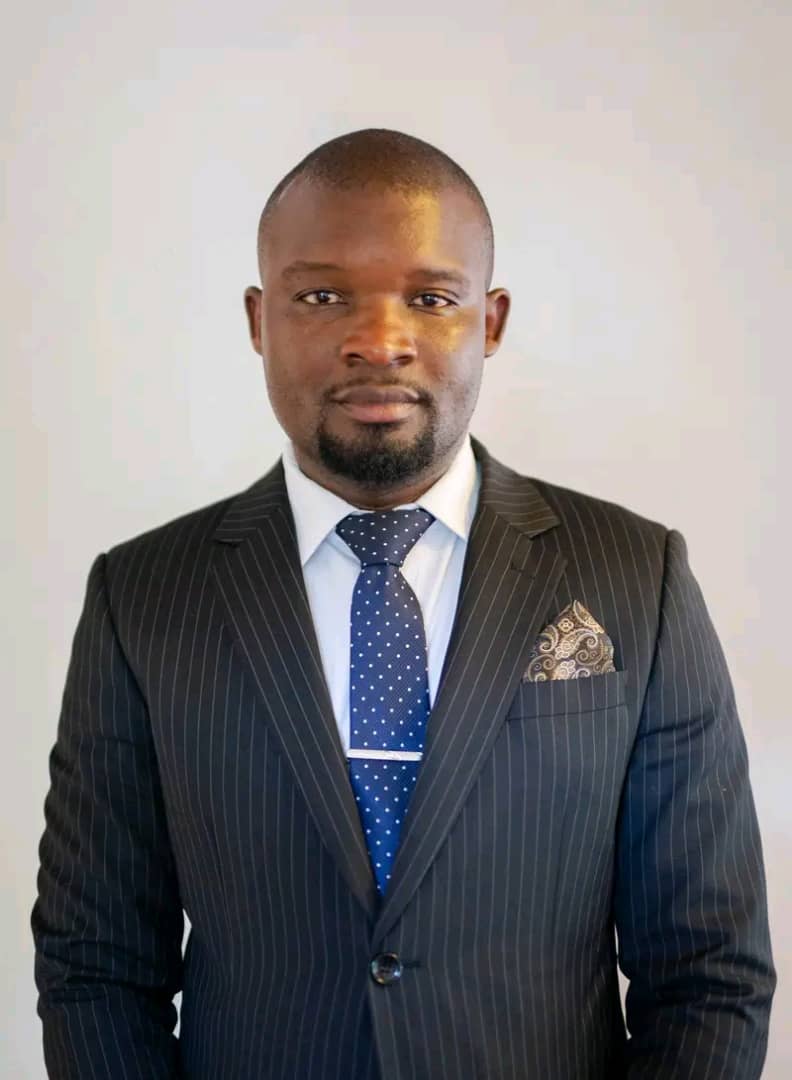
MANGOCHI-(MaraviPost)-Traditional leaders in Mangochi South West Constituency have commended their legislator, Dr. Shadric Namalomba, for taking time to thank his constituents following the September 16 general elections.
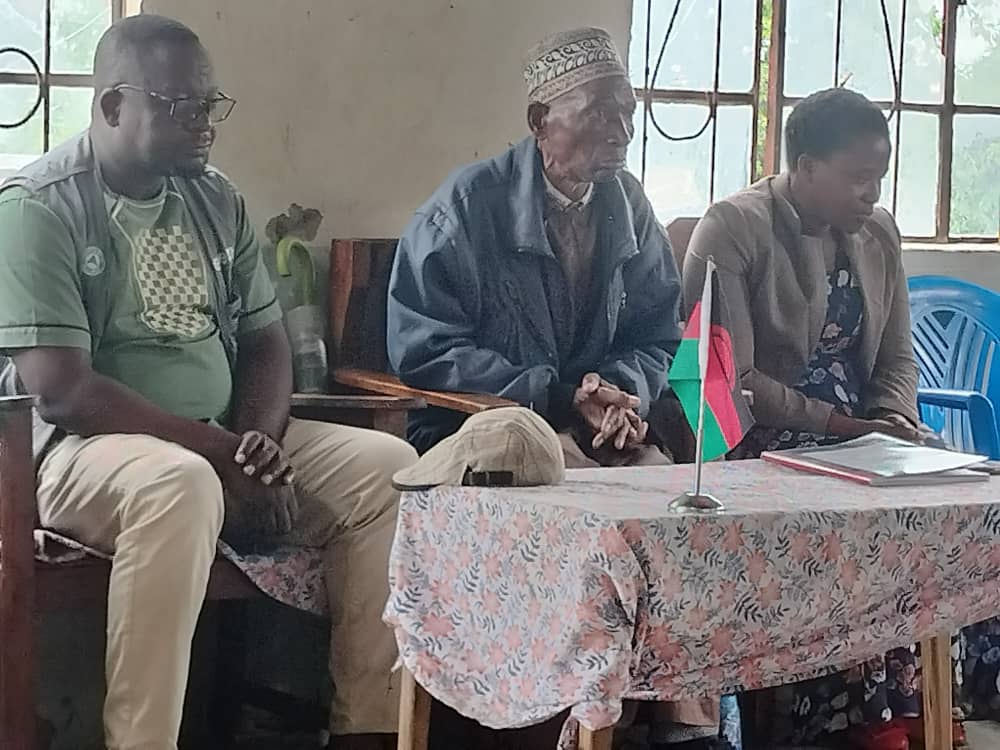
The chiefs, led by Senior Chief Chilipa and Sub Traditional Authority Masapi, made the remarks on Tuesday during two separate meetings held in their respective areas.
The meetings were organised by Namalomba who also serves as Minister of Information and Communications Technology to express gratitude for the peaceful conduct of the elections and the support rendered to him and President Professor Peter Mutharika.
Speaking on behalf of the traditional leaders, the chiefs most of whom were Group Village Heads said it is uncommon for elected leaders to return to their communities simply to express appreciation after securing victory at the polls. They therefore described Namalomba’s gesture as commendable and respectful.
The chiefs also thanked President Professor Peter Mutharika for appointing Namalomba to the Cabinet as Minister of Information and Communications Technology, saying the appointment was a source of pride for the constituency and should not be taken for granted.
During the meetings, the traditional leaders used the opportunity to present several development concerns.
Among the key issues raised were challenges in the delivery of subsidised fertiliser under the Farm Input Subsidy Programme (FISP), the need to replace a damaged electricity transformer at Chilipa Trading Centre, and calls for the construction of the Mangochi–Chilipa–Balaka road.
In his address, Namalomba expressed deep appreciation for the overwhelming support shown by traditional leaders and their subjects, who voted for Democratic Progressive Party (DPP) candidates at all levels ward councillors, Member of Parliament, and President during the September 16 polls.
He urged the chiefs to continue promoting unity and active community participation in development initiatives and he also called for the protection of Phirilongwe Forest, which he said is facing serious deforestation, and warned traditional leaders against engaging in corrupt practices, particularly in the implementation of government programmes such as FISP.
Responding to the concerns raised, Namalomba assured the chiefs that measures have already been put in place to ensure timely distribution of subsidised fertiliser across all areas. He further said government plans include upgrading Chilipa to a rural growth centre and facilitating the construction of the Chilipa road to improve connectivity and economic activity in the area.
Share this:
Like this:
LikeLoading…
Discover more from The Maravi Post
Subscribe to get the latest posts sent to your email.
LILONGWE-(MaraviPost)-In a remarkable turn of events, Professor Arthur Peter Mutharika has emerged as the Personality of the Year 2025, a testament to his unwavering dedication to public service and his unrelenting pursuit of democratic principles.
Mutharika’s 2025-win marks a significant milestone in his illustrious career, as he secured his second term as President of Malawi with a landslide victory.
The celebrations that erupted across the country were akin to a New Year’s Eve bash, with crackers lighting up the night sky and jubilant crowds taking into the streets to hail their leader’s triumph.
“Mutharika’s victory is a testament to his enduring popularity and connection with the Malawian people,” says veteran journalist Janet Karim, with 40 years of longstanding experience in journalism. “The manner in which millions of Malawians celebrated his victory throughout the country is a strong and valid testimony that indeed Mutharika is a man of the people and deserves being recognized as Personality of the Year.”
People from all occupations in various locations across the country went out on the streets celebrating their victory as a great achievement.
The celebrations were not limited to a specific region or demographic; they were a nationwide expression of joy and appreciation for Mutharika’s leadership. This outpouring of support is a testament to Mutharika’s enduring popularity and his ability to connect with the Malawian people.
Janet Karim, a veteran journalist with over 40 years of experience believes that Mutharika’s 2025-win marks a hat-trick of electoral victories, with wins in 2014, 2019, and 2025. This impressive streak is a testament to Mutharika’s enduring popularity and his ability to connect with the Malawian people.
Looking back at 2019, Mutharika won the presidential elections, only to have the results nullified by the Constitutional Court, a decision that sent shockwaves across the nation.
This unexpected turn of events could have spelled disaster for Mutharika’s political career, but instead, he chose to accept the court’s decision, demonstrating his commitment to the rule of law and democratic principles.
The nullification of the 2019 election results was a significant setback for Mutharika, but it also presented an opportunity for him to highlight his leadership skills and leadership. His decision to accept the court’s ruling and pave the way for a fresh election in 2020 earned him widespread respect and admiration, both locally and internationally.
corrupt: justices Healey Potani, Mike Tembo, Dingiswayo Madise, Ivy Kamanga and Redson Kapindu
In 2020, Mutharika faced defeat at the polls, but his gracious acceptance of the outcome cemented his reputation as a statesperson who puts the interests of the nation above personal ambition. This display of sportsmanship and respect for the democratic process earned him widespread admiration and respect, both locally and internationally.
The 2020 elections were not without controversy, however. The Constitutional Court’s interpretation of the majority required to win a presidential election sparked a heated debate, with many arguing that the court’s decision was a departure from the established practice of simple majority. The court ruled that a winning president must amass 50+1 votes, a decision that had far-reaching implications for the country’s political landscape.
The interpretation of the Constitutional Court saw the formation of the Tonse Alliance between Chakwera of MCP and Chilima of UTM, a calculated move that would change the course of Malawian politics. This alliance was seen as a strategic response to the court’s decision, and it paved the way for the opposition’s victory in 2020.
Saulos Chilima and Lazarus CHakwera, When MCP needed UTM
During the 2019 presidential election court case, Professor Mutharika described the court’s outcome as a judicial coup, claiming that he was robbed of his government. This bold statement underscored Mutharika’s conviction that the court’s decision was an injustice, and it highlighted his unwavering commitment to his vision for Malawi.
Mutharika’s first term as President began in 2014, when he won the presidential election and assumed office. His leadership during this period laid the foundation for his subsequent electoral victories and cemented his position as a prominent figure in Malawian politics.
Mutharika’s personality and leadership style have been instrumental in shaping Malawi’s political landscape. His calm and composed demeanor, even in the face of adversity, has earned him a reputation as a steady hand guiding the nation through turbulent times. His commitment to democracy, the rule of law, and the welfare of the Malawian people has resonated with voters, who have rewarded him with their trust and confidence.
The significance of Mutharika’s hat-trick cannot be overstated. It demonstrates his ability to adapt to changing circumstances, his resilience in the face of setbacks, and his unwavering dedication to public service. As a leader, Mutharika has shown that he is not afraid to take tough decisions but also knows when to yield and accept the will of the people.
Mutharika declared President as Malawi celebrates in jubilation
As we reflect on Mutharika’s journey, he has earned his place as Personality of the Year 2025. His leadership has been marked by a rare blend of strength, humility, and a deep understanding of the Malawian psyche. As the nation looks to the future, Mutharika’s vision and determination will undoubtedly play a pivotal role in shaping Malawi’s destiny.
Mutharika’s story is one of perseverance and determination, a testament to the power of leadership and vision. His hat-trick of electoral victories is a remarkable achievement that underscores his enduring impact on Malawian politics. As Personality of the Year 2025, he embodies the spirit of resilience, determination, and service that defines the best of Malawi.
In conclusion, Mutharika’s journey is a reminder that leadership is not just about winning elections, but about serving the people and upholding the principles of democracy. His commitment to these values has earned him a place in the annals of Malawian history, and his legacy will continue to inspire future generations of leaders.
As Malawi looks to the future, Mutharika’s leadership will undoubtedly play a crucial role in shaping the nation’s destiny. His vision, determination, and commitment to public service will continue to inspire and motivate Malawians, and his legacy will remain a beacon of hope for a brighter future.
The people of Malawi have spoken, and they have chosen Mutharika as their leader. His hat-trick of electoral victories is a testament to his enduring popularity and his ability to connect with the Malawian people. As Personality of the Year 2025, Mutharika has earned his place in the hearts of Malawians, and his legacy will continue to inspire and motivate the nation for years to come.
President Peter Mutharika’s leadership in the past 90 days has been marked by cautious optimism, with many Malawians praising his efforts to stabilize the economy and improve governance. Since taking office on October 4, 2025, Mutharika has appointed a lean cabinet, signaling his commitment to efficient service delivery. His administration has also vowed to root out government corruption and rebuild the ailing economy.
Many citizens view Mutharika as a steady hand, with experience in managing the economy, foreign relations, and governance. His calm and composed demeanor, even in the face of adversity, has earned him a reputation as a leader who prioritizes the nation’s interest’s above personal ambition.
It is the resilience and never-ending willingness to serve Malawians that the Management team of the Maravi post concur with the decision to crown Prof. Peter Mutharika as our person of the year.
Feedback: +265884433313
Email: bonnetmunthali2101@gmail.com
Share this:
Like this:
LikeLoading…
Discover more from The Maravi Post
Subscribe to get the latest posts sent to your email.
BLANTYRE-(MaraviPost)-The recent article published by ShireTimes titled “Contract King Grabs It All: Malawi Fumes As Gangata’s Empire Grows” is a prime example of sensational journalism that prioritizes emotional manipulation over fact-based reporting.
The piece attempts to paint businessman Alfred Gangata as a corrupt individual who has leveraged his connections to amass wealth, but it conveniently ignores the complexities of doing business in Malawi and the principles of fair competition.
The article’s central claim – that Gangata’s company, Master Security, has unfairly won major contracts, including the CEAR/Nacala Logistics deal – is a gross oversimplification. Malawi’s procurement laws, as outlined in the Public Procurement Act (2017), are designed to ensure transparency and fairness in the awarding of public contracts.
It is likely that Master Security met the required standards and submitted a competitive bid, yet the article implies foul play without providing concrete evidence.
The Constitution of Malawi, Section 13(h), emphasizes the state’s responsibility to promote economic development and manage public resources effectively.
Gangata’s success in securing contracts could be seen as a contribution to national development, rather than a personal affront to Malawians. Moreover, Section 30(1) of the Constitution guarantees the right to engage in economic activities, which includes participating in public procurement processes.
The narrative pushed by the article and its author is not about fairness or respect, as they claim, but rather about stifling competition and discouraging investment in Malawi.
By portraying successful businesspeople as “contract kings,” the publication perpetuates a culture of envy and undermines the entrepreneurial spirit that is essential for economic growth.
Furthermore, the article’s emotive language and unsubstantiated allegations are a clear attempt to whip up public outrage, rather than encourage constructive debate.
This approach is not only unprofessional but also detrimental to Malawi’s development, as it erodes trust in institutions and discourages transparency.
It is time for Malawians to demand better journalism, not sensationalized clickbait that serves only to divide and distract.
As a nation, we should be celebrating success stories like Gangata’s, which demonstrate the potential for growth and entrepreneurship in our country.
Share this:
Like this:
LikeLoading…
Discover more from The Maravi Post
Subscribe to get the latest posts sent to your email.
Tatiana — who is the granddaughter of late president John F. Kennedy and former first lady Jacqueline Kennedy Onassis — confirmed in an essay published by The New Yorker that she was battling acute myeloid leukemia and was given a year to live by doctors.
She learned that she has a “rare mutation called Inversion 3” that could not be “cured by a standard course” of treatment shortly after welcoming her daughter, Josephine, in May 2024. (Tatiana and her husband, George Moran, also share a son, Edwin Garrett Moran, who was born in 2022.)
“I did not — could not — believe that they were talking about me. I had swum a mile in the pool the day before, nine months pregnant. I wasn’t sick. I didn’t feel sick. I was actually one of the healthiest people I knew,” Tatiana wrote in The New Yorker. “I had a son whom I loved more than anything and a newborn I needed to take care of.”
News broke in December 2025 that Tatiana died. She was 35.
Keep scrolling for more information on Tatiana and her family.
George Moran
Tatiana Schlossberg met her future husband, George Moran, while they were both undergraduates at Yale University. Moran became a doctor at Columbia University’s Vagelos College of Physicians and Surgeons, while Schlossberg worked for The New York Times, Vanity Fair and The Washington Post as an environmental reporter.
The New York Times reported in September 2017 that the couple had tied the knot at the Kennedy family home in Martha’s Vineyard in a ceremony officiated by former Massachusetts governor Deval Patrick.
Tatiana’s younger brother, Jack Schlossberg, announced on NBC’s Today in 2022 that his sister and her husband had welcomed their first baby, a son named Edwin Moran.
“I can’t get away from them,” Jack said of his sister and his newborn nephew. “I love them.”
Tatiana and George welcomed their youngest child, a daughter, in 2024. They have chosen to keep her name private.
Following her terminal cancer diagnosis, Tatiana credited George for his immense support following her cancer diagnosis.
“George did everything for me that he possibly could. He talked to all the doctors and insurance people that I didn’t want to talk to; he slept on the floor of the hospital; he didn’t get mad when I was raging on steroids and yelled at him that I did not like Schweppes ginger ale, only Canada Dry. He would go home to put our kids to bed and come back to bring me dinner,” she recalled in the New Yorker.
Tatiana added, “I know that not everyone can be married to a doctor, but, if you can, it’s a very good idea. He is perfect, and I feel so cheated and so sad that I don’t get to keep living the wonderful life I had with this kind, funny, handsome genius I managed to find.”
Edwin Moran
Tatiana’s younger brother, Jack, announced that he’d become an uncle during a 2022 interview on NBC’s Today.
“[Tatiana’s son’s] name is Edwin but I like to call him Jack,” the Kennedy heir teased.
In her New Yorker essay, Tatiana recalled that Edwin’s visits to the hospital were rare bright spots as she received cancer treatment.
“My son came to visit almost every day. … The nurses brought me warm blankets and let me sit on the floor of the skyway with my son, even though I wasn’t supposed to leave my room,” she recalled.
Tatiana reflected on a bonding experience with her son as her hair began to fall out during treatment.
“My hair started to fall out and I wore scarves to cover my head, remembering, vainly, each time I tied one on, how great my hair used to be; when my son came to visit, he wore them, too,” she said.
Josephine
Tatiana and George welcomed their daughter, Josephine, in May 2024. After giving birth, Tatiana spent five weeks at Columbia-Presbyterian Hospital and was transferred to Memorial Sloan Kettering to undergo a bone-marrow transplant. She later underwent chemotherapy at home.
She wrote in her New Yorker essay that one of her biggest fears after receiving a terminal diagnosis was that her newborn daughter wouldn’t remember her.
“My son might have a few memories, but he’ll probably start confusing them with pictures he sees or stories he hears,” she wrote. “I didn’t ever really get to take care of my daughter — I couldn’t change her diaper or give her a bath or feed her, all because of the risk of infection after my transplants. I was gone for almost half of her first year of life. I don’t know who, really, she thinks I am, and whether she will feel or remember, when I am gone, that I am her mother.”
When the family announced Tatiana’s death in December 2025, it was revealed that her daughter’s name is Josephine.
John F. Kennedy and Jackie Kennedy
Tatiana is the granddaughter of late President John F. Kennedy and former first lady Jackie Kennedy. The Kennedys shared daughter Caroline Kennedy and son John F. Kennedy Jr. (They also lost two children, daughter Arabella and son Patrick.)
President Kennedy was killed at age 46 in a fatal shooting on November 22, 1963, in Dallas, Texas. Jackie later married Greek-Argentine magnate Aristotle Onassis, who died at age 69 in 1975. Jackie succumbed to Non-Hodgkin’s lymphoma at age 64 in May 1994.
Caroline Kennedy
John and Jackie Kennedy welcomed daughter Caroline Kennedy in November 1957. She was only 5 years old when her father was assassinated in 1963.
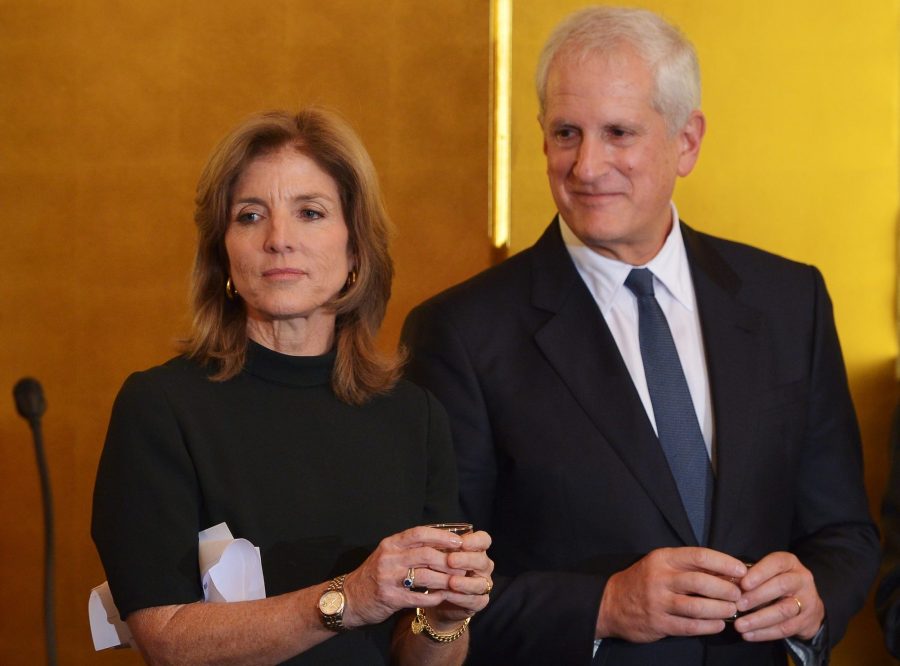
As an adult, Caroline worked at New York City’s Metropolitan Museum of Art, where she met her future husband, Edwin Schlossberg. They tied the knot at Our Lady of Victory Church in Centerville, Massachusetts in 1986 and later welcomed three children: Rose, Tatiana and Jack.
Caroline eventually followed in her family’s footsteps by entering politics as an ambassador to Australia and Japan during Joe Biden and Barack Obama’s presidential administrations.
Caroline Kennedy and Edwin Schlossberg in November 2013.MANDEL NGAN/AFP via Getty Images
Tatiana credited her parents and siblings with helping to raise her two children while she underwent grueling cancer treatment.
“My parents and my brother and sister, too, have been raising my children and sitting in my various hospital rooms almost every day for the last year and a half. They have held my hand unflinchingly while I have suffered, trying not to show their pain and sadness in order to protect me from it,” she wrote in her New Yorker essay. “This has been a great gift, even though I feel their pain every day. For my whole life, I have tried to be good, to be a good student and a good sister and a good daughter, and to protect my mother and never make her upset or angry. Now I have added a new tragedy to her life, to our family’s life, and there’s nothing I can do to stop it.”
Edwin Schlossberg
Caroline’s husband Edwin Schlossberg is an artist and designer. He founded the firm ESI Design and has written several books about design philosophy.
Edwin was appointed to the Commission of Fine Arts by President Obama in 2011, after receiving the prestigious National Arts Club Medal of Honor in 2004.
Rose Kennedy Schlossberg
Caroline and Edwin’s eldest daughter, Rose Schlossberg, arrived in June 1988 and was named after her maternal great-grandmother, Rose Fitzgerald Kennedy.
She attended Harvard University, where she once gave Lindsay Lohan and her then-girlfriend Samantha Ronson a campus tour, according to the Boston Herald. She later received her master’s degree in interactive telecommunications from New York University.
Rose has worked as a production assistant on the TV show Brick City and the 2012 documentary Hard Times: Lost on Long Island. She co-wrote and produced the Peabody Award-winning documentary series The Kalief Browder Story in 2017 and helped open a permanent exhibit for her late grandfather, John F. Kennedy, at the Kennedy Center in 2022.
She married restaurateur Rory McAuliffe in California in 2022.
John ‘Jack’ Bouvier Kennedy Schlossberg
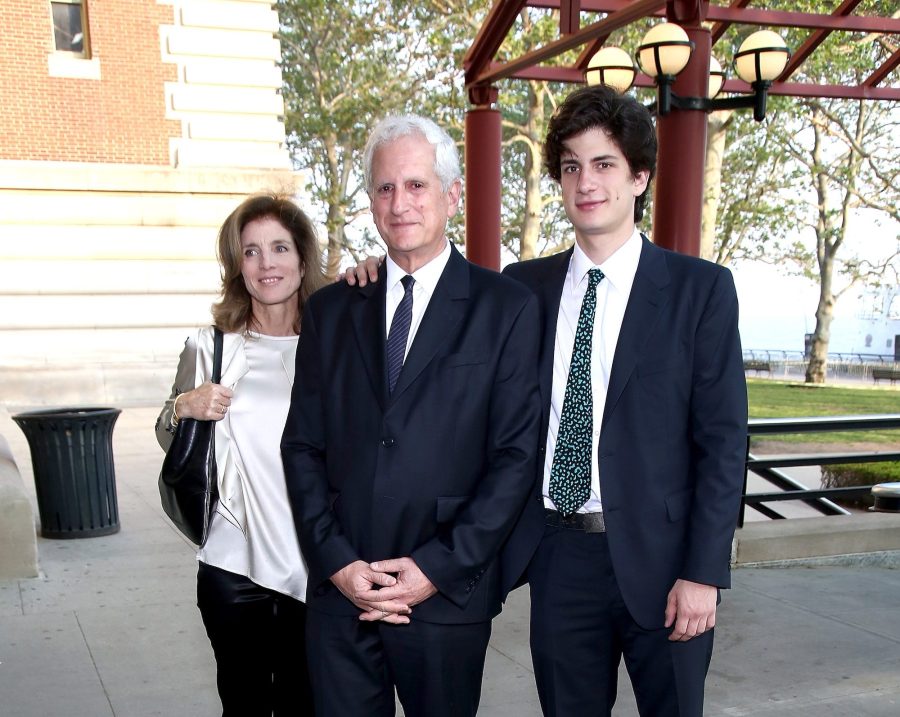
Caroline and Edwin’s youngest child, son Jack Schlossberg, was born in January 1993.
As an adult, he became popular on social media for his shirtless selfies and pop culture clapbacks — including criticizing American Horror Story creator Ryan Murphy’s planned series about Jack’s late uncle John F. Kennedy Jr. and his wife Carolyn Bessette Kennedy. (The couple were killed in a 1999 plane crash, along with Carolyn’s sister Lauren Bessette.)
In November 2025, Jack announced plans to run for Congress in New York’s 12th congressional district in the 2026 midterm elections.
Caroline Kennedy, Edwin Schlossberg and Jack Schlossberg in May 2015.Paul Zimmerman/Getty Images
“I’m not running because I have all the answers to our problems. I’m running because the people of New York 12 do. I want to listen to your struggles, hear your stories, amplify your voice, go to Washington and execute on your behalf,” he wrote via Instagram.
Jack continued, “There is nowhere I’d rather be than in the arena fighting for my hometown. Over the next eight months, during the course of this campaign, I hope to meet as many of you as I can. If you see me on the street, please say hello. If I knock on your door, I hope we can have a conversation. Because politics should be personal.”
Robert F. Kennedy Jr.
Like most of her family, Tatiana has had a strained relationship with her cousin Robert F. Kennedy Jr. since he endorsed Donald Trump in the 2024 presidential election. RFK Jr. was later appointed by Trump to lead the Department of Health and Human Services, which drew concern over his history of vaccine skepticism.
Tatiana wrote about her rift with her cousin in her New Yorker essay, revealing that his confirmation to the HHS role added stress during her illness. She pointed out that her husband George’s job at Columbia University was potentially in danger because the school was “one of the Trump Administration’s first targets in its crusade against alleged antisemitism on campuses.”
“If George changed jobs, we didn’t know if we’d be able to get insurance, now that I had a preëxisting condition,” she wrote. “Bobby is a known skeptic of vaccines, and I was especially concerned that I wouldn’t be able to get mine again, leaving me to spend the rest of my life immunocompromised, along with millions of cancer survivors, small children, and the elderly.”
Tatiana unequivocally distanced herself from RFK’s statement that “there’s no vaccine that is safe and effective” during a 2023 appearance on the “Lex Fridman Podcast.”
“Bobby probably doesn’t remember the millions of people who were paralyzed or killed by polio before the vaccine was available,” she added. “My dad, who grew up in New York City in the nineteen-forties and fifties, does remember. Recently, I asked him what it was like when he got the vaccine. He said that it felt like freedom.”
Share this:
Like this:
LikeLoading…
Discover more from The Maravi Post
Subscribe to get the latest posts sent to your email.
BLANTYRE-(MaraviPost)-As Malawi embraces a fresh chapter under the stewardship of President Professor Arthur Peter Mutharika, the nation witnesses not only a renewed leadership at the helm but also a meticulously selected cabinet that signals serious intent to restore and propel the country’s fortunes.
It has been nearly three months since Mutharika took office, and shortly thereafter, he appointed a 15-member cabinet—Malawi’s leanest ever—underscoring his commitment to streamlined governance and efficient service delivery.
This decisive move comes against a backdrop of a nation previously burdened by economic turmoil, mismanagement, and leadership distracted by extravagant travels, notably under the former administration of Lazarus Chakwera who, as many observe, prioritized sightseeing over national service.
This cabinet, carefully entrusted with the responsibilities to revive Malawi’s multifaceted sectors, is now approaching the two-month mark in office.
The MaraviPost is poised to undertake a thorough evaluation of each minister’s performance after six months, an exercise that will critically assess their dedication and effectiveness in serving the people of Malawi.
This coming assessment aims to ensure accountability and to provide recommendations on the ministers’ suitability to continue in their roles under President Mutharika’s future vision.
In the meantime, understanding the crucial roles and responsibilities assigned to each minister helps illuminate the expectations placed upon them and the vital tasks ahead.
The Minister of Education, Bright Msaka, shoulders the critical duty of shaping Malawi’s human capital by ensuring access to quality education, improving infrastructure, and enhancing teacher training to nurture a skilled future workforce.
Education is the foundation for long-term national development, and Msaka’s leadership in this portfolio is pivotal.
Alfred Gangata, the Minister of State, acts as a key coordinator within government operations, facilitating smooth inter-ministerial collaboration and ensuring that presidential directives are effectively implemented.
His role is central to maintaining governmental coherence and efficiency.
At the helm of Malawi’s foreign relations is Minister George Chaponda, whose responsibility is to strengthen diplomatic ties, attract foreign investment, and promote Malawi’s image on the global stage. His role is vital for securing partnerships that can aid economic recovery and development.
Minister of Information, Shadrek Namalomba, plays a strategic role in shaping public communication, transparency, and the flow of information between the government and citizens. In a democracy, an informed public is a powerful ally, making this ministry indispensable.
Joseph Mwanamveka, as Minister of Finance, carries the enormous responsibility of managing Malawi’s fiscal policies, budgeting, and financial reforms. His stewardship is crucial in stabilizing the economy, curbing inflation, and restoring confidence among investors and the citizenry.
In the health sector, Minister Chimwemwe Baloyi is tasked with overseeing public health services, improving healthcare infrastructure, and ensuring the availability of essential medicines. A healthy population is the backbone of a productive society, placing immense weight on Baloyi’s portfolio.
Roza Mbilizi, Minister of Agriculture, is entrusted with revitalizing Malawi’s agricultural sectors, including staples such as maize and tobacco, which form the economic backbone of the nation. Her role involves enhancing food security, increasing productivity, and supporting farmers through sustainable practices.
Ben Phiri, Minister of Local Government, has the crucial task of strengthening decentralization, empowering local councils, and improving grassroots governance. This ministry bridges the gap between the central government and communities, fostering inclusive development.
Minister of Transport, Feston Kaupa, is responsible for improving Malawi’s transport infrastructure, promoting safe and efficient movement of people and goods. This portfolio is key to unlocking economic potential through enhanced connectivity.
Jean Mathanga, Minister of Energy, shoulders the mission to increase access to reliable and affordable energy sources, promoting sustainable energy solutions vital for industrial growth and improved living standards.
Mary Navicha, Minister of Gender, undertakes the important work of promoting gender equality, protecting women’s rights, and addressing social issues related to gender-based violence and empowerment. Her ministry fosters social cohesion and inclusivity.
Defence Minister Chimwemwe Chipungu is charged with safeguarding national security, overseeing the armed forces, and ensuring Malawi’s sovereignty remains intact amidst regional and global challenges.
Peter Mukhito, Minister of Homeland, plays a critical role in internal security, law enforcement, and maintaining public order. His portfolio is essential for creating a safe environment conducive to growth and stability.
Joel Masina Chigona, Minister of Labor, is responsible for labor policies, employment promotion, and workplace standards. His work supports the creation of decent jobs and fair labor conditions, fundamental for economic progress.
George Partridge, Minister of Industrialization, carries the task of promoting industrial growth, attracting manufacturing investments, and facilitating value addition to Malawi’s raw materials. Industrialization is a cornerstone for sustainable economic diversification.
Patricia Wisikesi, Minister of Sports, promotes national unity and youth development through sports, nurturing talent, and encouraging healthy lifestyles that contribute to social well-being.
Jappie Mhango, Minister of Lands, manages land policy, registration, and dispute resolution. Land reforms and security of tenure are vital for economic activities, especially in agriculture and housing.
Charles Mhango, Minister of Justice, oversees the judiciary, legal reforms, and ensures the rule of law is upheld. Justice and fairness underpin democratic governance and citizen confidence.
Supporting some of these ministries are deputy ministers who provide additional leadership and assist in policy implementation.
Martha Ngwira Munthali, Deputy Minister of Gender, and Norman Chisale, Deputy Minister of Homeland, along with Francis Folley, Deputy Minister of Education, play supportive yet significant roles in their respective sectors, ensuring that ministerial objectives are met with diligence.
This carefully curated cabinet reflects President Mutharika’s strategic approach to governance—lean, focused, and results-oriented. The ministers are not merely figureheads but custodians of Malawi’s development agenda, tasked with translating policy into tangible improvements in the lives of ordinary Malawians.
As the country navigates the complex challenges of economic recovery, social cohesion, and infrastructural development, their leadership will be instrumental.
The MaraviPost’s upcoming evaluation after six months will be an important milestone, providing an objective gauge of how well these ministers are performing. It will examine their effectiveness in policy formulation, implementation, resource management, and responsiveness to the needs of Malawians.
The assessment aims to foster accountability and ensure that those who genuinely serve the nation’s interests continue to hold office, while also identifying areas for improvement.
President Mutharika’s early days in office have been met with cautious optimism, as noted by commentators like Wonderful Mkhutche, who praised the tangible improvements in the economy and governance after a period of stagnation.
The ministers’ roles are challenging, but their success will be pivotal in sustaining this new momentum.
Malawi stands at a promising crossroads with a cabinet designed to address the country’s most pressing issues head-on. Each minister carries the weight of responsibility to deliver on their mandates, contributing to the collective goal of national progress.
The MaraviPost’s forthcoming performance review will not only spotlight individual achievements and challenges but also reinforce the culture of accountability essential for democracy and development.
Under President Mutharika’s watchful eye, Malawi’s journey towards stability and prosperity is underway, with its ministers steering key sectors toward a brighter future.
Feedback: +265992082424 jonesgadama@gmail.com
Share this:
Like this:
LikeLoading…
Discover more from The Maravi Post
Subscribe to get the latest posts sent to your email.
LILONGWE-(MaraviPost)-Opposition Malawi Congress Party (MCP) Secretary General Richard Chimwendo Banda has been committed to Maula Prison after he was discharged from the hospital on Monday afternoon, December 29, 2025.
His lawyer, George Jivason Kadzipatike told the Nation online that his client was discharged on recommendation from the doctors.
Kadzipatike, however, said the MCP secretary general is not fully fit as doctors have given him another day when he should go for medical treatment.
Chimwendo Banda has been in the hospital for the past two weeks after he fell sick while in police custody.
He is waiting for judgement on his bail application, which Judge Mzonde Mvula said would be communicated on an unspecified date.
The MCP SG is accused of attempting to kill former MCP member Frank Chiwanda in Dowa in 2022.
Chimwendo is yet to be granted bail.
Share this:
Like this:
LikeLoading…
Discover more from The Maravi Post
Subscribe to get the latest posts sent to your email.