LILONGWE-(MaraviPost)-The country’s Vice-President Jane Ansah has departed Malawi for Luanda, Angola, leaving Kamuzu International Airport at 8:10 a.m.
Her trip follows an appointment by President Professor Arthur Peter Mutharika, who entrusted her with leading the Malawian delegation to the 7th African Union–European Union Summit.
The summit will take place in Luanda from 24 to 26 November 2025.
It will be held under the theme Promoting Peace and Prosperity through Effective Multilateralism.
A press release issued on 21 November 2025 by the Ministry of Foreign Affairs confirmed the Vice-President’s assignment.
The statement emphasised that the high-level meeting is expected to explore enhanced cooperation in several key areas.
These areas include peace, security, governance, and broader aspects of international collaboration.
Dr Ansah’s participation underscores Malawi’s commitment to contributing meaningfully to global and regional dialogue.
Her leadership of the delegation signals the government’s intention to engage proactively with continental and international partners.
The summit is anticipated to provide opportunities for strengthening ties between Africa and Europe.
It is also expected to promote joint strategies aimed at advancing stability, development, and shared prosperity.
Vice-President Ansah’s arrival in Angola marks the beginning of Malawi’s active involvement in discussions that will shape future cooperation frameworks.
Her mission is seen as an important step in reaffirming Malawi’s role on the global stage.
Share this:
Like this:
LikeLoading…
Discover more from The Maravi Post
Subscribe to get the latest posts sent to your email.
LILONGWE-(MaraviPost)-President Peter Mutharika’s government has imposed a new rule requiring foreign tourists to settle hotel bills in hard currencies including U.S. dollars and euros, Finance Minister, Joseph Mwanamvekha, has announced.
Mwanamvekha said the move forms part of a broader strategy to bolster Malawi’s shrinking foreign exchange reserves.
He explained that the country’s reserves have come under severe pressure since the termination of the International Monetary Fund’s Extended Credit Facility earlier in the year.
In addition, Mwanamvekha disclosed that some donor funding has been cut back, further exacerbating the shortage of foreign currency.
To implement the new policy, tourism businesses will need to apply for special licences, enabling them to conduct foreign exchange transactions directly with the central bank.
These measures are intended to capture and conserve every available dollar, closing loopholes in the current system, the minister said.
Alongside this, the government is shortening the time exporters have to repatriate their foreign earnings from 120 days to 90 days.
Exporters will also be required to surrender any excess foreign currency after they have settled their import bills.
In a further tightening of the foreign currency regime, Malawi is banning short-term foreign-exchange derivatives, saying that some market players have abused these tools.
Mwanamvekha added that these derivative products will not be reintroduced until stricter regulations are in place to prevent misuse.
Analysts suggest that the policy represents a partial “dollarisation” of the hospitality sector—an approach that some hotels in Malawi have already used voluntarily to hedge against the volatility of the kwacha.
The new regulation may also have broader implications for tourism, as visitors adjust to the requirement to carry or convert to hard currency to pay for accommodation and other services.
Share this:
Like this:
LikeLoading…
Discover more from The Maravi Post
Subscribe to get the latest posts sent to your email.
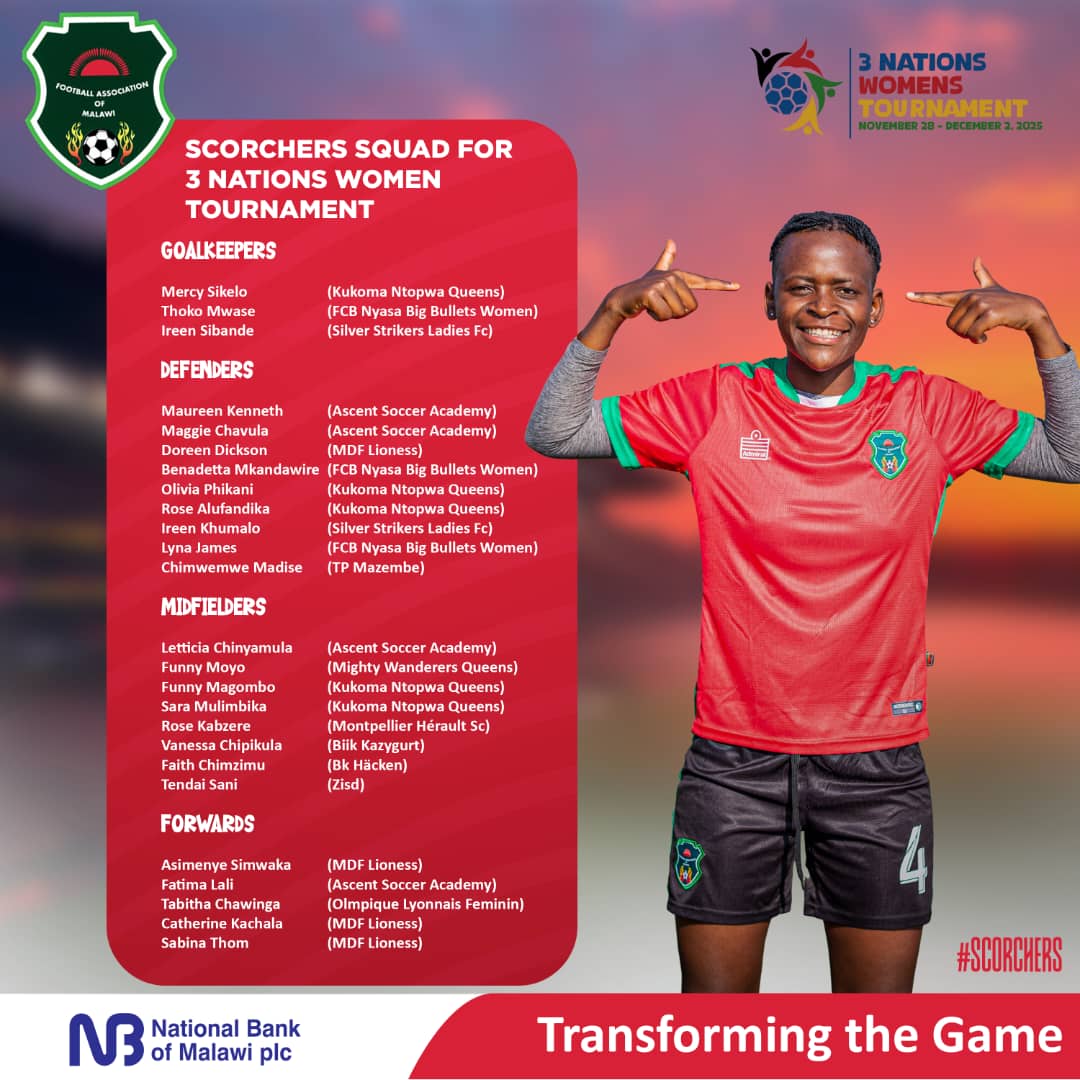
BLANTYRE-(MaraviPost)-Scorchers head coach Lovemore Fazili says he has avoided introducing new faces into the national team because this is not the right time for experiments, stressing that the squad needs stability ahead of the Three Nations Women’s Tournament from November 28 to December 2, 2025.
He explained that their recent performance against Angola in the WAFCON qualifiers showed that the group is functioning well, balanced and still playing with confidence.
Fazili said the team is currently “hot,” and maintaining the same players will help them keep their rhythm as they prepare for upcoming fixtures.
Despite sticking to his core squad, Fazili said opportunities remain open for players doing well in the NBM Women’s Premiership, noting that football is unpredictable and anything can change.
He emphasized that outstanding performers can still earn a call-up for WAFCON if they continue to shine at club level and show consistency.
Fazili also thanked the Football Association of Malawi (FAM) for organizing the women’s tournament, saying proper planning and preparation are key to building a successful team.
He said the competition will help the Scorchers assess their strengths and weaknesses as they fine-tune their tactics ahead of future assignments.
Confirming the squad, Fazili revealed that he has retained 24 of the 25 players who featured against Angola in the qualifiers.
The only change comes in the goalkeeping department, where Thoko Mwase of FCB Nyasa Big Bullets Women replaces injured Chimwemwe Kaonga of MDF Lioness.
Fazili said Mwase was brought in because she has been performing well and provides the needed depth in the goalkeeping position.
He added that maintaining the rest of the squad will help keep continuity as the players already understand each other’s style of play.
With the squad now confirmed, the Scorchers will focus on intensifying their preparations for the Three Nations Women’s Tournament.
Scorchers’ goalkeepers for the Three Nations Women’s Tournament are Mercy Sikelo (Kukoma Ntopwa Queens), Thoko Mwase (FCB Nyasa Big Bullets Women) and Ireen Sibande (Silver Strikers Ladies FC).
The defenders include Maureen Kenneth and Maggie Chawula (Ascent Soccer Academy), Doreen Dickson (MDF Lioness), Benedatta Mankandwire and Lyna James (FCB Nyasa Big Bullets Women), Olivia Phikani and Rose Alufandika (Kukoma Ntopwa Queens), Ireen Khumalo (Silver Strikers Ladies FC) and Chimwemwe Madise (TP Mazembe).
Midfielders called up are Letticia Chinyamula (Ascent Soccer Academy), Funny Moyo (Mighty Wanderers Queens), Funny Magombo and Sara Mulimbika (Kukoma Ntopwa Queens), Rose Kabzere (Montpellier Hérault SC France), Vanessa Chiputula (Bilik Kazygurt Kazakhstan), Faith Chibhimtizu (Bik Hacken Sweden) and Tendai Sani (Zisd).
The forwards in the squad are Asimenye Simwaka (MDF Lioness), Fatima Laili (Ascent Soccer Academy), Tabitha Chawinga (Olympique Lyonnais Féminin France), Catherine Kachala and Sabina Thom (MDF Lioness).
Share this:
Like this:
LikeLoading…
Discover more from The Maravi Post
Subscribe to get the latest posts sent to your email.
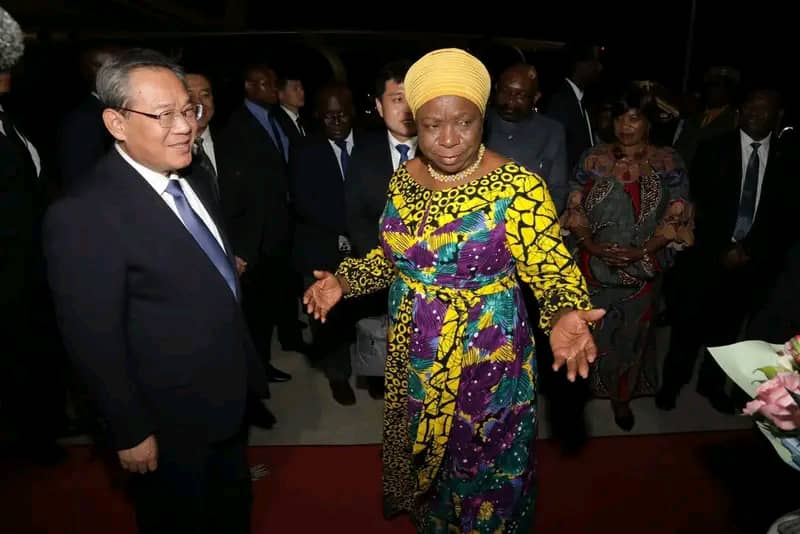
LUSAKA-(MaraviPost)-Chinese Premier Li Qiang arrived in Zambia on Wednesday night, embarking on an official visit designed to strengthen the long-standing ties between the two nations.
He was warmly received at Kenneth Kaunda International Airport (KKIA) in Lusaka by Vice President Mutale Nalumango, senior Zambian officials, and representatives of the Chinese Embassy.
The visit represents a historic moment, being the first official trip by a Chinese head of government to Zambia in nearly three decades.
It is also Premier Li’s first engagement in a sub-Saharan African country since taking office.
Zambia and China have maintained diplomatic relations for more than sixty years, marked by landmark collaborations such as the construction of the Tanzania-Zambia Railway (TAZARA).
Their partnership has grown to include extensive cooperation in sectors such as energy, healthcare, mining, and industrial development.
Prior to the visit, China’s Ambassador to Zambia highlighted the desire to advance the consensus reached between President Hakainde Hichilema and President Xi Jinping.
The Ambassador also emphasized the importance of implementing decisions from the Forum on China-Africa Cooperation (FOCAC) Beijing Summit.
“This visit is meant to enhance political trust, promote mutually beneficial projects, and strengthen coordination on regional and international matters,” the Ambassador said.
He added that the visit further demonstrates the commitment to building an ‘All-Weather China–Africa Community with a Shared Future for the New Era.’
The ambassador reflected on the deep historical bond between the two nations, noting China’s support for Zambia during its liberation struggle.
China also played a pivotal role in constructing TAZARA, which helped break the economic isolation facing Zambia at the time.
He stressed that Chinese investments continue to contribute significantly to Zambia’s economic development and social progress.
In 2023, President Hakainde Hichilema visited China, where he and President Xi upgraded bilateral relations to a Comprehensive Strategic and Cooperative Partnership.
This partnership ushered in a new era of engagement between the two countries.
Since that time, Zambia has witnessed the launch of several key projects, including the Lusaka–Ndola Dual Carriageway, the Luanshya Shaft 28 dewatering project, and the Chisamba Solar Power Plant.
Recent debt restructuring agreements have also facilitated smoother cooperation between Zambia and China.
During the FOCAC Beijing Summit, a Memorandum of Understanding for revitalizing TAZARA was signed, followed by a concession agreement in October.
Premier Li’s current visit aims to consolidate previous achievements while setting the stage for new initiatives in bilateral cooperation.
He is scheduled to hold talks with President Hichilema at State House, where discussions will focus on enhancing trade, boosting economic cooperation, and promoting South–South solidarity.
Officials expect over a dozen agreements to be signed, covering areas such as trade, green energy, innovation, and education.
Premier Li is also expected to witness the groundbreaking of the TAZARA revitalization project.
China’s recently announced 15th Five-Year Plan, which emphasizes innovation, green development, and social inclusion, closely aligns with Zambia’s national development priorities.
The visit underscores the shared commitment of both nations to sustainable growth, technological advancement, and strengthened diplomatic ties.
It signals a renewed chapter in China-Zambia relations, built on history, mutual respect, and future-oriented collaboration.
Share this:
Like this:
LikeLoading…
Discover more from The Maravi Post
Subscribe to get the latest posts sent to your email.
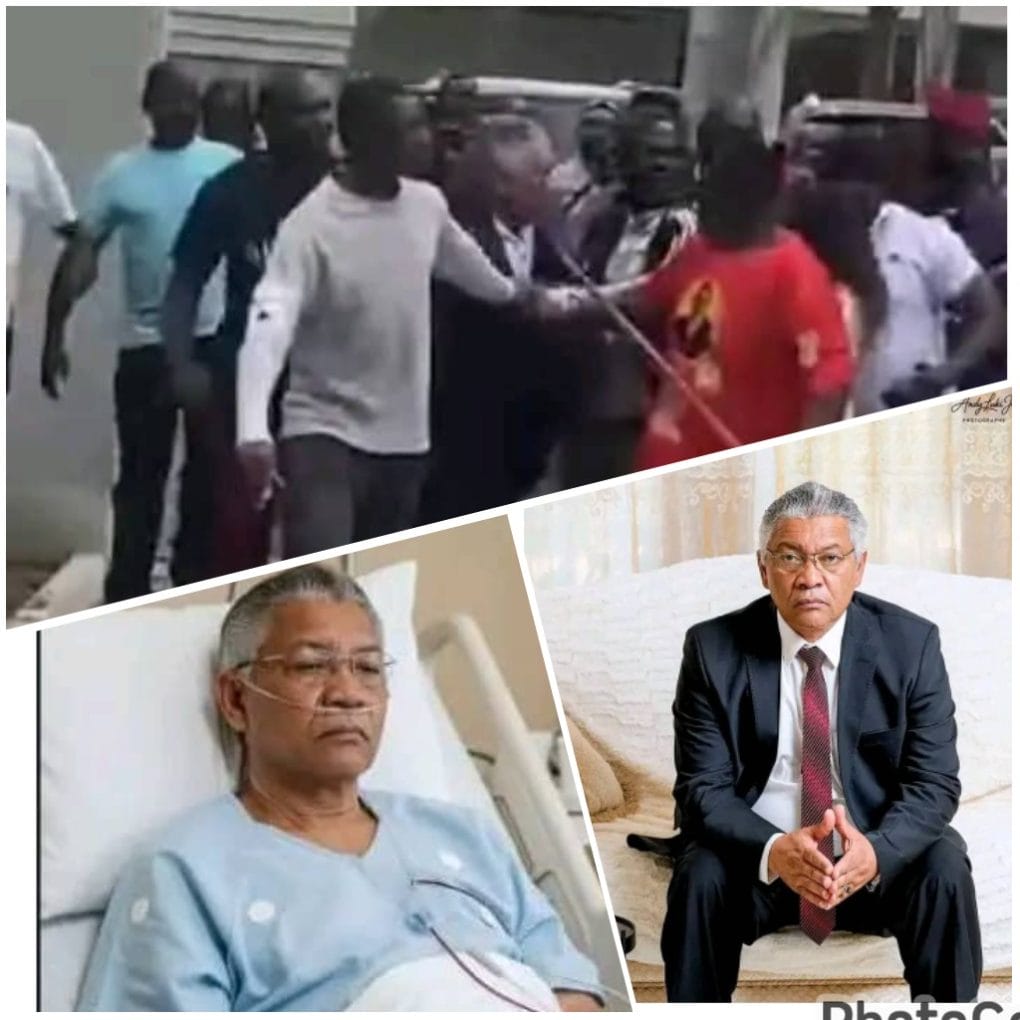
LUSAKA-(MaraviPost)-The Zambian governing United Party for National Development (UPND) cadres on Wednesday reportedly abducted former Justice Minister Given Lubinda, subjecting him to harassment before police officers intervened to rescue him.
UPND is a major political party in Zambia, currently in power, with Hakainde Hichilema as the current President of Zambia and the party leader.
The incident escalated quickly as the group confronted Lubinda in what appeared to be a politically motivated attack.
Eyewitnesses say the cadres surrounded him, shouting threats and insults while attempting to force him into a vehicle against his will.
The situation grew tense as the harassment intensified, drawing the attention of bystanders who feared the confrontation might turn deadly.
According to witnesses, the cadres accused Lubinda of undermining the ruling party and vowed to “teach him a lesson,” signalling a troubling rise in political intolerance.
Police officers who were alerted to the incident arrived promptly at the scene and managed to disperse the attackers before safely extracting Lubinda from their hold.
Law enforcement authorities confirmed the rescue, noting that the cadres had acted unlawfully and would be pursued for criminal conduct.
In their statement, police condemned the attack and warned that political violence would not be tolerated under any circumstances.
The rescue operation brought temporary relief, but it also sparked wider national concern about the growing pattern of political thuggery.
Several political commentators have criticized the incident, describing it as a dangerous reminder of how partisan violence threatens democratic stability.
Opposition figures have also condemned the attack, calling it a deliberate attempt to silence dissenting voices through intimidation.
Citizens across social media expressed outrage, urging authorities to take decisive action against perpetrators regardless of political affiliation.
Many observers have emphasized that political competition must never justify lawlessness, stressing the need for stronger protection of public figures.
Lubinda, though visibly shaken, was safely escorted to an undisclosed location where he is receiving support from colleagues and family members.
The incident has revived debate about Zambia’s political environment, with many calling for urgent reforms to curb cadre violence.
Analysts warn that the normalization of such attacks risks eroding public trust in law enforcement and institutional governance.
Others argue that unless perpetrators face real consequences, political violence will continue to grow and spread unchecked.
As investigations proceed, the public is demanding transparency, accountability, and meaningful action from both the police and the political leadership.
The attack on Lubinda serves as a stark reminder that democracy cannot thrive in an environment where fear replaces dialogue.
It also underscores the urgent need for political leaders to denounce cadre behaviour and promote a culture of peaceful engagement.
Zambia now watches closely as authorities take the next steps, hoping this incident marks a turning point in the fight against politically motivated violence.
Share this:
Like this:
LikeLoading…
Discover more from The Maravi Post
Subscribe to get the latest posts sent to your email.
In the runup to the October 1st Independence celebrations Sahara Reporters leaked a story that a bloody coup aimed at destabilizing , and overthrowing, the democratic government of President Tinubu had been thwarted.
There is still no official confirmation of this todate even though top service chiefs have been replaced and more than 40 officers have been arrested by the DSS who allegedly have had them under surveillance since August 2024.
Nigeria is a different country to the way it was in the 60s, 70s and 80s when anybody, presumably any disgruntled junior officer, could just pick up a gun, overthrow the incumbents, become Head of State and start their dictatorships: Africa, and mostly certainly Nigeria, have moved on from the Abachas and Idi-Amins of the past.
A military junta coming into power will abolish all laws and will rule by degree, so it’ll be a question of them shouting ‘jump’ and the people going ‘how high?’. Nigerians have long evolved beyond this and it’ll only bring out the people , en-masse, to protest. And as we’ve seen from previous mass protests, such as #ENDSARS, it’s not easy to crush the will of the people anymore. No more are they scared of a soldier with a gun. And with SM to pass the word around and keep everyone up to date; a medium even the junta can’t control or shut down completely as we’ve seen when the Buhari-led government tried shutting down Twitter usage in Nigeria, people just used VPNs to get around the ban. So a government overall control of the media is out of the question.
Nigerians have tasted the freedom of democracy, however imperfect it may be, and a return to a repressive military will not be welcomed with open arms: people now have the right to elect whoever they want to rule them instead of having somebody imposed upon them.
For a military coup to be successful the military will have to coral the people into a pen they can control: this can work in countries like Mali or Niger where the entire populace is less than the population of Lagos state. In Nigeria, a country of more than 200 million souls plus, the military is already stretched beyond its limits fighting insurgencies in the North and South-East so a new military junta won’t have the might – or equipment – to control the country successfully.
Mali and Niger armed forces removed democratically elected Presidents and their governments on the grounds of absolute abuse of office. Some will argue that the same should happen in Nigeria.
Whilst I’m not a big fan of President Tinubu it’s got to be said he’s been in power for less than two years and he inherited a mess from Buhari who in turn inherited it from Jonathan, who….need I go back any further? Logically thinking, anybody coming into power, military or civilian, will not have the power to change things overnight, as the people want, and the hardship will continue. For those old enough to remember when the Buhari/Idiagbon junta ousted Shehu Shagari from power in 1983 change did not happen overnight: it was a gradual undertaking and things weren’t as bad as they are now. So a military junta coming in will just huff and puff without getting anything done.And to make matters worse the international community will be watching and will impose extremely tough sanctions upon the nation in effect crippling all business transactions in and out of the country. And if they go as far as declaring an oil embargo and call in all loans obtained, the country will be finished. Further more ECOWAS, the OAU – including President Trump’s USA – may decide on a military intervention to forcibly remove the junta from power because democracy can not be seen to fail in Nigeria, Africa’s most populous nation, as it has in Mali,Niger and elsewhere.( – and don’t forget Trump is looking for any excuse to bomb ‘disgraced’ Nigeria anyway!). If people think life under Tinubu is hard, then it’ll become unbearable.
In an earlier article ( “Are Coups in Africa still a Good thing?) I did point out that if we are going to practice democracy the African way there should be provision to remove inept and corrupt leaders the African way (aka a coup d’etat). Without sounding like I’m contradicting myself, people like the late Robert Mugabe needed a palace coup to remove him from office ( – as may well Paul Biya of Cameroon) for the systematic abuse of the democratic process that kept him in power. The same can be said also of the autocratic democracies of Niger, Mali etc who were also overthrown by the military. But the question is, as I pointed out then, is where do you draw the line?
Nigeria is still a fledgling democracy, I say is still in its infancy and mistakes will be made as we learn as once did the great democracies of the Western world: we are going to screw things up, abuse things but eventually we’ll get it right ( – whenever that might be!) as they say Rome wasn’t built in a day. Allowing the boys in khaki back will just send us back to square one and all the efforts of those who fought for modern-day democracy in Nigeria, like MKO, would have been in vain.
So the idea that a semi-illiterate gun-totting ‘who-build-dis-garda’ Army General seizes power and miraculously restores the country to its former glory, overnight, is not going to happen. It’s simply against the Law of Averages.
Share this:
Like this:
LikeLoading…
Discover more from The Maravi Post
Subscribe to get the latest posts sent to your email.