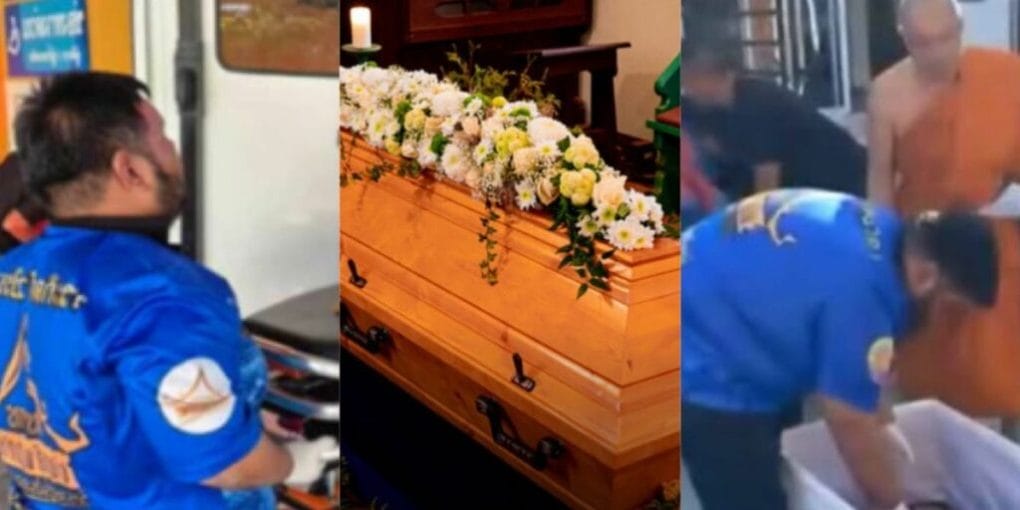
BANGKOK-(MaraviPost)-A 65-year-old woman in Nonthaburi, on the outskirts of Bangkok in Thailand has shocked her family when she knocked from inside her coffin after being declared dead.
Chonthirat Sakulkoo, who had been unwell for two years, was cared for by her brother, Mongkol Sakulkoo. When she was found unresponsive, Mongkol assumed she had passed away and began preparations for her cremation.
“All the documents had been issued, and we placed her in a coffin,” Mongkol explained.
However, before the cremation, Mongkol took Chonthirat to Chulalongkorn University Hospital to fulfill her wish to donate organs, but the hospital refused to accept her without an official death certificate.
At the Wat Rat Prakongtham crematorium, staff also insisted on a doctor’s certification before proceeding. It was during this discussion that Chonthirat suddenly knocked from inside the coffin.
Mongkol, surprised, asked to have the coffin opened, where family members were stunned to see her eyes slightly open and knocking.
Watch the video…
Doctors later diagnosed Chonthirat with acute hypoglycaemia, a condition that causes dangerously low blood sugar and can mimic death-like symptoms.
She is now receiving proper medical care at Bang Yai Hospital.
Share this:
Like this:
LikeLoading…
Discover more from The Maravi Post
Subscribe to get the latest posts sent to your email.
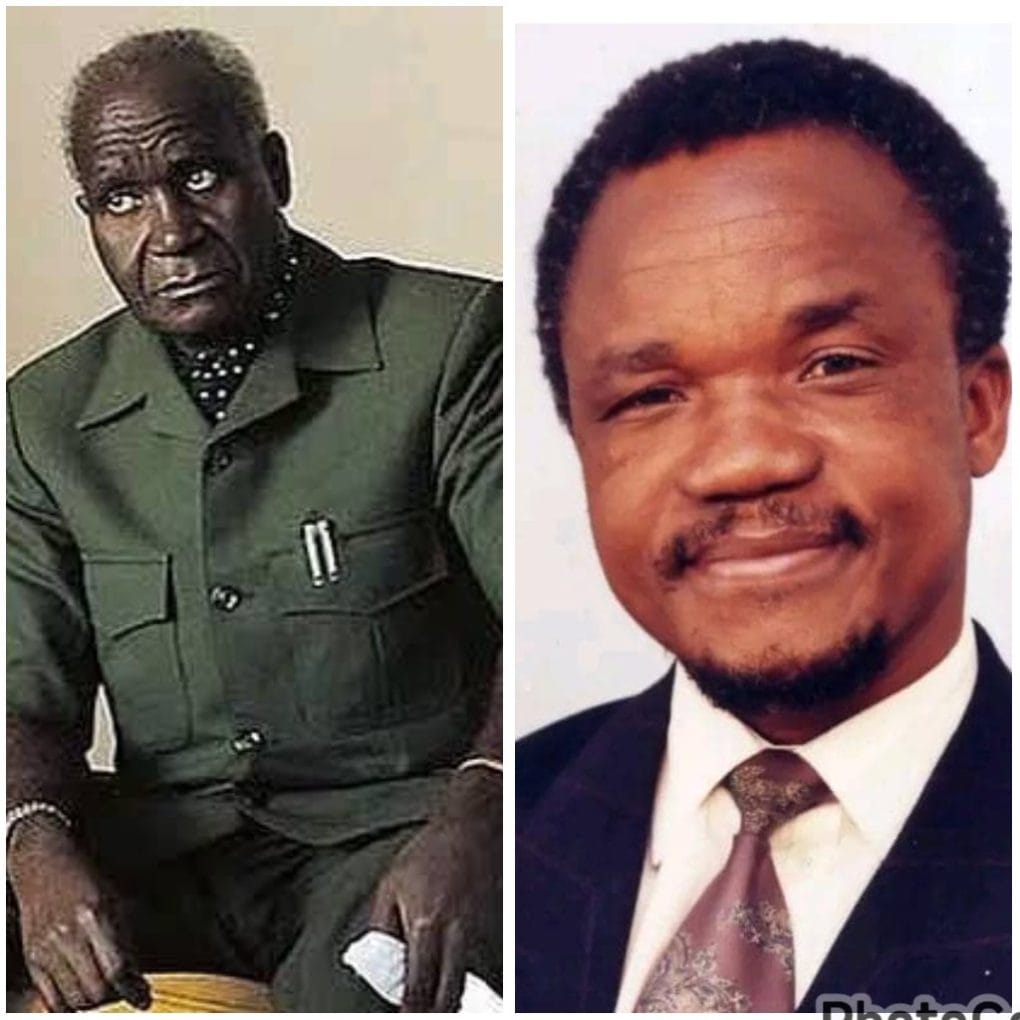
LUSAKA-(MaraviPost)-When Zambia transitioned from Kenneth Kaunda’s 27-year rule to Frederick Chiluba’s new multiparty era, the change appeared peaceful on the surface.
However, beneath the handshake diplomacy, one of Southern Africa’s most psychologically brutal political confrontations was unfolding.
On Christmas Day, 1997, Kaunda was arrested, a moment chosen for maximum symbolic impact.
Christmas, traditionally a day of presidential addresses and national unity, became the backdrop for Kaunda being bundled into a vehicle by armed officers.
The timing led many senior diplomats to conclude that the arrest was meant to break Kaunda psychologically, rather than simply pursue legal action.
The government accused Kaunda of involvement in a failed coup in October 1997, led by junior soldiers.
Yet Zambian intelligence insiders later admitted that there was no concrete evidence linking Kaunda to the mutiny.
Kaunda had been out of power for six years, had no military command, and was leading a peaceful political movement under UNIP.
Despite this, he became the central figure blamed for a coup he did not participate in.
At the time, Kaunda was experiencing an unexpected political resurgence, drawing large crowds to his rallies and maintaining widespread respect across rural districts.
Inside State House, Chiluba’s camp feared that Kaunda could potentially win the 1998 elections if allowed to run.
Kaunda’s moral authority still overshadowed other political figures and remained a unifying force across tribal lines, unlike the fragmented new elite.
For many observers, his arrest was interpreted as a pre-emptive political strike rather than a measure of national security.
During the same period, Kaunda was shot in the neck by government forces while leading a peaceful protest.
This injury left him physically vulnerable at the time of his detention.
For many Zambians, this act reinforced the perception that the state was willing to use lethal force against a national symbol.
Kaunda was subsequently held in Mukobeko Maximum Security Prison, a facility typically reserved for murderers, armed robbers, and political radicals.
This was not merely imprisonment but an attempt to erode his legacy by equating him with dangerous criminals.
Some prison officials later revealed they were instructed to treat Kaunda “as an ordinary dangerous suspect,” delivering a psychological blow aimed at undermining his stature.
The international community, including the Commonwealth, the United Nations, and African heads of state, intervened behind the scenes to pressure Chiluba to release Kaunda.
Even Nelson Mandela reportedly sent private messages condemning the treatment of the former president.
Diplomats feared that Zambia was descending into personal vendetta politics, with the potential to trigger ethnic tensions or civil unrest.
Chiluba’s own cabinet was divided on the matter, with some ministers warning that humiliating Kaunda could backfire politically.
Nevertheless, hardline security advisors convinced Chiluba that neutralising Kaunda was essential to consolidating power.
Ironically, the detention had the opposite effect of what Chiluba intended.
Kaunda emerged from prison more respected, seen as a statesman, and admired internationally as a martyr of democratic abuse.
The attempted political witch hunt, while meant to cripple Kaunda’s comeback, ultimately strengthened his legacy.
Historians agree that there was no direct evidence linking Kaunda to the coup, the arrest’s timing and style were deeply political, and Chiluba had strong incentives to remove a key rival.
Official statements cited national security, but the methods, symbolism, and sequence of events pointed clearly to a targeted political campaign.
The detention of Kaunda remains a powerful reminder of how political power struggles can shape the destiny of nations and the enduring respect commanded by principled leadership.
Share this:
Like this:
LikeLoading…
Discover more from The Maravi Post
Subscribe to get the latest posts sent to your email.
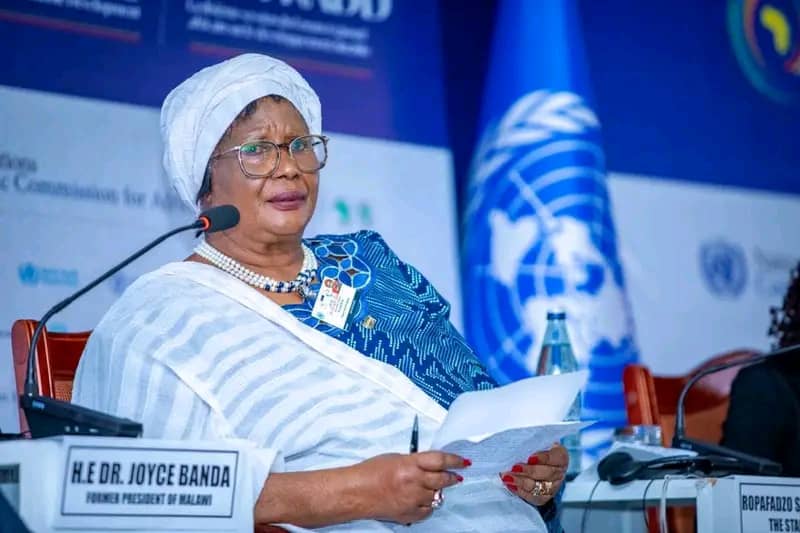
LILONGWE-(MaraviPost)-The country’s former President Joyce Banda has been appointed as board Chairperson for Global Fairness Initiatives (GFI).
Banda’s Executive Assistant, Media and Public Relations Arnold Mnelemba has to confirmed the news to The Maravi Post a while ago.
“I can indeed confirm that the 4th President of the Republic of Malawi Her Excellency Dr Joyce Banda has been appointed board chair for Global Fairness Initiative.
“It is something of great honour considering the fact that the initiative is a global institution of highest reputation,” Mnelemba said.
He added, “We are thrilled to hear the news and Her Excellency is ready to serve. It will be a great honour for Her Excellency to serve in the board whose first chairperson was President Bill Clinton.
“She is ready to serve in that capacity and her term begins on first January. She will chair Her first board meeting in May, Ghana”.
According to the Global Fairness Initiative (GFI), a leading NGO committed to creating more equitable, and secure livelihoods for the working poor, announced today that Banda will head the GFI Board of Directors replacing outgoing Chair H.E. Kabine Komara, Former Prime Minister of Guinea.
“We are honored to welcome President Banda as Chairperson of the GFI Board of Directors,” said H.E. Komara. “She has been a champion of working people in Malawi and throughout Africa, and her deep intellect and practical experience will bring great benefit to the important work of GFI and our grassroots partners throughout the world.”
Joyce Banda served as the 4th President of the Republic of Malawi from 2012 to 2014 following over a decade in public service as Vice President, Minister of Foreign Affairs, Minister for Gender and Community Services and a Member of Parliament. Dr. Banda was Malawi’s first female Head of State and the 2nd in Africa.
During her Presidency, she championed reforms that exemplified good governance and the democratic rule of law.
She is the recipient of numerous international awards and accolades and is celebrated for her work to tackle global challenges ranging from hunger to maternal health.
Through her Joyce Banda Foundation, she has supported primary and secondary school education of some of Malawi’s most vulnerable children.
The Joyce Banda Foundation also feeds and provides head-start education to over 10-thousand children across the country. The Foundation’s other key activity has been building climate-resilient houses for the vulnerable across the country, with recent focus being on those who lost their homes to the four cyclones that have hit Malawi in recent years.
“It is a privilege to have President Banda as the new Chair of the GFI Board of Directors,” said Karen Tramontano, Founder of Global Fairness Initiative.
“She has been a true advocate and partner to the grassroots, and we look forward to collaborating on our shared work to uplift working poor communities in Malawi and throughout the world.”
Global Fairness Initiative is a US-based INGO committed to creating a more equitable, sustainable approach to economic development through programs to reduce poverty, enfranchise informal workers, and create a more just, secure future for workers.
Founded by Karen Tramontano with Former President Bill Clinton as founding Chair, GFI has implemented programs that strengthen rights and livelihoods for the working poor in nations across the Global South.
Who is Joyce Banda?
Joyce Banda became President of the Republic of Malawi in 2012 following more than a decade in public service beginning with her election to Parliament and service as Malawi’s Foreign Minister and Minister for Gender and Community Services and then as Vice President.
Dr. Banda was Malawi’s first woman Head of State and only the 2nd in Africa, and she has been widely recognized for her work to expand the country’s economy, strengthen democratic systems and build strong diplomatic ties globally.
During her Presidency, Dr. Joyce Banda is credited with turning around an ailing economy which was on the verge of collapse to one that registered 6.2% in 2014 from 1.8% registered in 2012.
This followed her aggressive economic reforms which led to significant economic expansion.
Under President Banda, Malawi’s operational industrial capacity improved from 35% in 2012 to 85% in July 2014, and the foreign exchange import cover improved from one week to three and half months in July 2014.
In the areas of democracy, good governance, and rule of law, President Banda repealed a number of draconian laws which had weakened essential democratic institutions, infringed upon civil liberties, and restricted the freedom of the press.
Since her Presidency, Dr. Banda has launched women-centered organizations across Africa, including the African Federation of Women Entrepreneurs (AFWE), the Council for Economic Empowerment for Women in Africa (CEEWA), the American & African Business Women’s Alliance (AABWA), and her Joyce Banda Foundation.
She served as a Distinguished Fellow at the Center for Global Development and the Woodrow Wilson Center, a member of the United Nations Council of Women World Leaders and is a standing member of the Club de Madrid.
Share this:
Like this:
LikeLoading…
Discover more from The Maravi Post
Subscribe to get the latest posts sent to your email.
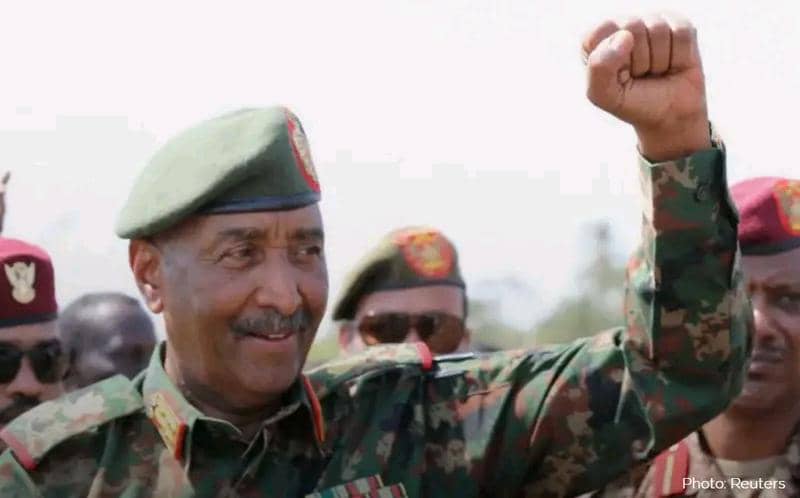
KHARTOUM-(MaraviPost)-The Sudanese army on Sunday seized several strategic areas west of Abbasiya Tagali in South Kordofan after fierce clashes with the Rapid Support Forces (RSF) and their ally, the Sudan People’s Liberation Movement-North (SPLM-N).
Witnesses reported that the fighting lasted several hours as both sides deployed heavy weapons in a battle that has intensified tensions in the disputed region.
Local residents described scenes of chaos as artillery fire and gunshots echoed across villages, forcing many families to flee their homes for safety.
Military sources indicated that the captured areas are considered critical supply routes previously controlled by RSF-affiliated forces.
Analysts say the Sudanese army’s latest gains mark a significant shift in momentum as government forces attempt to reclaim territories lost in recent months.
Humanitarian groups have raised concerns over the growing displacement, noting that renewed fighting in South Kordofan is worsening an already dire humanitarian situation.
Witnesses also reported that both the RSF and SPLM-N have been regrouping in nearby areas, suggesting that further clashes are likely in the coming days.
The situation remains fluid, with regional observers calling for urgent diplomatic intervention to prevent the conflict from escalating further.
Share this:
Like this:
LikeLoading…
Discover more from The Maravi Post
Subscribe to get the latest posts sent to your email.
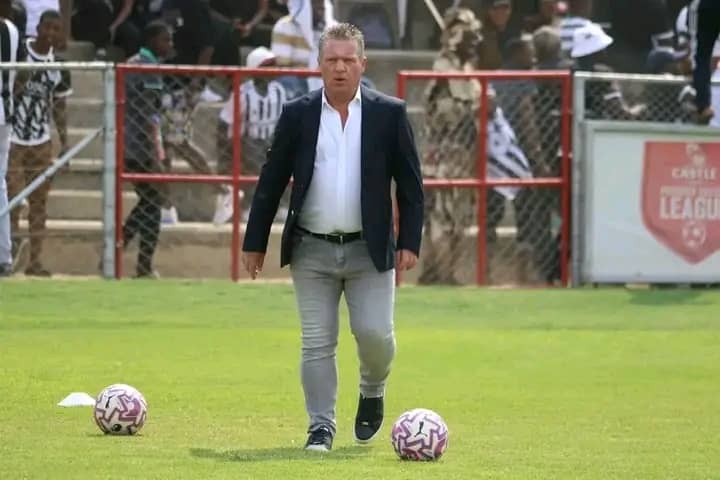
HARARE-(MaraviPost)-Highlanders FC of Zimbabwe has announced that it will not renew the contract of its head coach, Pieter De Jongh, marking the end of his tenure with the Bulawayo giants.
The development was confirmed through an official letter released by the club, indicating that both parties had mutually agreed not to extend the Dutchman’s contract, which expires on 31 December 2025.
De Jongh, who previously coached Malawi’s Silver Strikers, took charge of Highlanders with the hope of reviving the team’s competitive edge in the Zimbabwe Premier Soccer League. However, the 2025 season proved challenging for the club.
Highlanders finished the league campaign 11th, collecting 39 points from 34 matches, a performance that fell short of the club’s expectations and ambitions. Despite some spirited displays, the team struggled for consistency throughout the season.
In the statement, the club expressed gratitude to De Jongh for his service, professionalism, and commitment during his time at the helm. They acknowledged the effort he invested in trying to restore Highlanders’ glory but said it was time for the institution to pursue a new direction.
Sources within the club indicate that Highlanders will soon begin the search for a new head coach who can guide the team towards improved performances next season. Supporters are hoping for a tactician capable of building a stronger squad and competing for honours.
De Jongh leaves behind a mixed legacy praised for his tactical discipline and criticised in equal measure for the team’s inconsistent results. His departure marks yet another chapter in Highlanders’ ongoing efforts to rebuild.
Highlanders is expected to make further announcements in the coming days regarding interim technical arrangements and the recruitment process for a new coach.
For now, the club has urged supporters to remain patient and hopeful as the institution charts its next steps in preparation for the 2026 season.
Share this:
Like this:
LikeLoading…
Discover more from The Maravi Post
Subscribe to get the latest posts sent to your email.
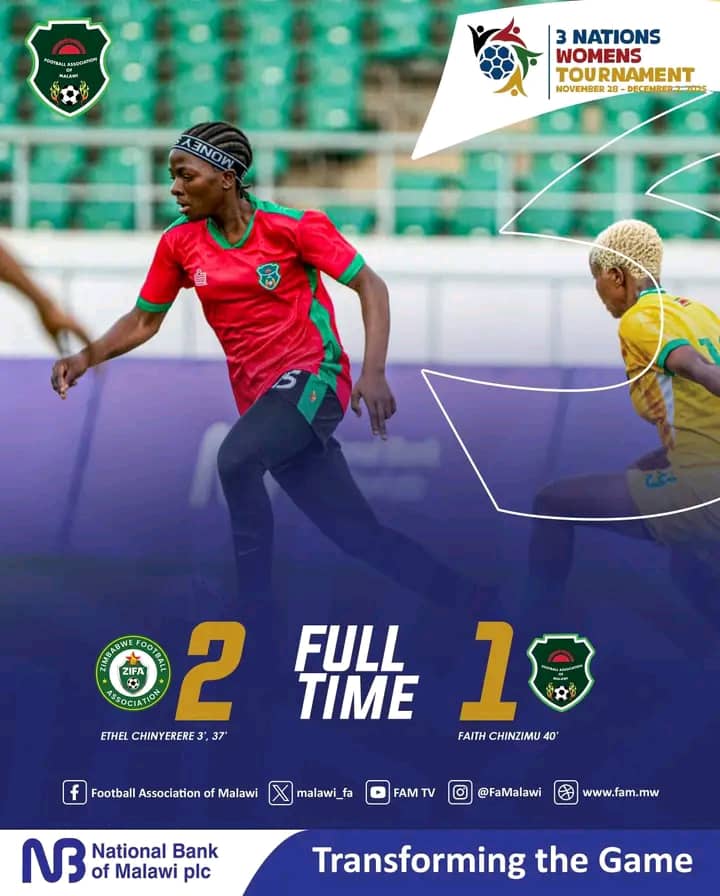
LILONGWE-(MaraviPost)-The Malawi National Women’s Football team, the Scorchers, suffered a disappointing defeat to Zimbabwe’s Mighty Warriors in their opening game of the Three-Nations tournament at Bingu National Stadium in Lilongwe on Friday, November 28, 2025.
Playing in front of their home fans, Malawi struggled to find the finishing touch upfront, and Zimbabwe capitalized on this weakness.
The Warriors broke the deadlock just three minutes into the match through Ethel Chinyerere.
In the 7th minute, Faith Chimzimu danced through the defenders before connecting with Rose Kabzere, but Zimbabwean defenders cleared the danger.
Ncube Nobukhosi rifled a free-kick over the crossbar in the 17th minute. Scorchers goalkeeper Mwase produced a stunning save from Christabel Katona’s left-footed effort. In the 23rd minute, Mwase made another crucial save from a glancing header, denying the Warriors a corner.
The Scorchers kept pushing for an equalizer. In the 25th minute, they broke down the right through Rose Kabzere, whose cross into the box found no teammate as Zimbabwe survived the scare.
Leticia Chinyamula tried her luck from distance but sent it over the bar in the 33rd minute. Kabzere delivered a good cross with her left foot in the 34th minute, but the goalkeeper collected comfortably.
As the first half wore on, Ethel Chinyerere extended the Warriors’ lead in the 39th minute. Faith Chimzimu reduced the deficit three minutes later, making it 2-1 at halftime.
Head coach Lovemore Fazili made four changes at the break. Captain Tabitha Chawinga, Mercy Sikelo, Sabina Thom, and Vanessa Chikupira replaced Thokozani Mwase, Mourine Kenneth, Chisomo Banda, and Tendai Sani.
The changes ignited Malawi’s performance. In the 47th minute, Faith Chimzimu played a defense-splitting pass to Sabina Thom, who shot wide from distance. Six minutes later, Thom’s long ball targeted Captain Chawinga, but the defenders cleared before she could reach it.
The Scorchers dominated much of the second half, constantly knocking on Zimbabwe’s door. In the 61st minute, Zimbabwe introduced Fiona Kabera for Privilege Mupeti, while Sabina Thom received a yellow card for a foul.
Rose Alufandika released Vanessa Chikupira on the left in the 67th minute. The attacker beat her defender before delivering a dangerous cross, which the opposition cleared.
Mercy Sikelo made a critical save in the 72nd minute, denying Zimbabwe from a free-kick. Malawi made their final change in the 78th minute when Fanny Moyo replaced Rose Kabzere. Zimbabwe withdrew two-goal scorer Ethel Chinyerere for Praynance Zawanda in the 82nd minute.
Tabitha Chawinga beat her marker before whipping a dangerous ball into the box, but Zimbabwe’s defense conceded only a fruitless corner. Vanessa Chikupira received a yellow card for a foul in the 84th minute.
Leticia Chinyamula came agonizingly close to equalizing in the 89th minute, her long-range effort missing the post by inches.
Captain Chawinga had the last chance in stoppage time, finding herself one-on-one with the goalkeeper, but her effort was saved, confirming Zimbabwe’s victory on Malawian soil.
Malawi face the Copper Queens of Zambia on Sunday, while Zimbabwe take on Zambia on Tuesday. Both Malawi and Zambia are using the tournament to prepare for the 2026 WAFCON finals in Morocco.
Share this:
Like this:
LikeLoading…
Discover more from The Maravi Post
Subscribe to get the latest posts sent to your email.