President Trump says the United States will run Venezuela after U.S. forces seized Nicolás Maduro and his wife in Caracas. Venezuela’s acting president Delcy Rodriguez shifts from defiance to calls for cooperation as the White House ramps up pressure and threatens further action. And Nicolás Maduro is set to appear in a New York courtroom, facing drug trafficking, weapons, and narco-terrorism charges that could test the reach of U.S. law overseas.
Want more analysis of the most important news of the day, plus a little fun? Subscribe to the Up First newsletter.
<
p class=”readrate”>Today’s episode of Up First was edited by Andrew Sussman, Tara Neill, Krishnadev Calamur, Mohamad ElBardicy, and HJ Mai.
<
p class=”readrate”>
<
p class=”readrate”>It was produced by Ziad Buchh, Nia Dumas and Christopher Thomas.
<
p class=”readrate”>
<
p class=”readrate”>We get engineering support from Neisha Heinis. And our technical director is Carleigh Strange.
<
p class=”readrate”>(0:00) Introduction (01:54) U.S. In Venezuela (05:49) Future Of Venezuela (09:46) Maduro In NYC Court
While 2025 certainly had some great TV shows, it also had a lion’s share of terrible series.
If we’re gonna talk about the best of 2025, then we naturally have to talk about the worst. Not every show is gonna be a hit, not every season 1 is an Emmy nominee. Many of them simply head to the trash — and some trash even gets a second season.
Watch With Us is rounding up the very bottom of our TV watches this year, from an ill-fated Suits spinoff to a goofy political thriller starring Robert De Niro.
We’ve picked and ranked the five worst shows that 2025 had to offer.
If The Pitt was the best medical drama of 2025, then Pulse may have been the worst. The show follows a group of surgical and emergency residents at Maguire Hospital, a trauma center in Miami, as they all vie for the same thing: the position of Emergency Medicine Chief Resident. The residents navigate their personal and professional lives as they handle various medical crises while dealing with the fallout of a massive scandal at their place of work.
Pulse ultimately failed to charm both reviewers and audiences, and it was justifiably canceled shortly after its disappointing debut. Critics ultimately found that Pulse went all-in on tired tropes without doing enough to set it apart from the other hospital dramas like Breathless or even the 86th season of Grey’s Anatomy. If it’s just another medical procedural show, then why not watch something that actually elevates itself like The Pitt? Despite some good acting, poor plotting, annoying characters and a questionable depiction of sexual harassment made this show is one to skip.
4. ‘Zero Day’ — Netflix
Robert De Niro stars as George Mullen, a former United States president who is brought out of retirement by his successor to handle a very special assignment. Mullen has been assigned as head of a group investigating a massive, global cyberterrorist attack that resulted in the deaths of thousands of innocent people. You see a new prestige series starring an acting tour de force like De Niro and you think, “How could it go wrong?”
Well, when it comes to Zero Day, it can go very wrong. The political thriller executive produced by Noah Oppenheim (A House of Dynamite) ends up a totally forgettable experience — a mealy-mouthed commentary on hot-button issues that fails to deliver anything of substance. Even the additional star power of Angela Bassett, Jesse Plemons andConnie Brittoncan’t help poor screenwriting and middling tension.
3. ‘Monster: The Ed Gein Story’ — Netflix
This is not the first time that Ryan Murphy‘s name will grace this list since the highly prolific showrunner committed multiple crimes against television this year. But perhaps the less offensive to the tastes was Monster: The Ed Gein Story, although it’s really a “lesser of two evils” situation. The third installment of the Monster anthology series follows the life of notorious serial killer Ed Gein while examining his influence on pop culture and true crime.
Critics somehow managed to find more value in Monster: The Ed Gein Story than this list’s next inclusion, All’s Fair, which sports an impressive 6 percent score on Rotten Tomatoes compared to Monster’s 22 percent. The main high point of the show is the ensemble cast’s across-the-board great performances and some stellar production design as well. However, most found Monster to be a repulsive contortion of Gein’s persona while failing to meaningfully comment on pop culture — the only thing Monster: The Ed GeinStory does is indulge in the very thing it wishes to admonish.
2. ‘All’s Fair’ — Hulu
The only reason All’s Fair isn’t number one on this list is that while the show was universally panned by critics, it received enough hate-watches from audiences to justify its continued existence — but just barely. It’s one of those Emily in Paris situations, where the car crash on the side of the road makes drivers wanna crane their necks and get a good look, even though they shouldn’t. It’s the same situation with All’s Fair, Murphy’s legal drama about an all-female law firm in Los Angeles that managed to clinch a series renewal.
A show that receives the moniker from numerous critics as being “one of the worst shows ever made” is unfortunately going to get a lot of people to watch out of curiosity for how exactly a show could be that bad. In the end, All’s Fair isn’t even a “so bad it’s good” situation because the show is too boring, too shallow and poorly written, to be entertainingly awful, all while helmed by an absolutely forgettable performance from Kim Kardashian.
1. ‘Suits LA’ — Peacock
The television “Flop of the Year” award goes to Suits LA, a remarkably ill-conceived spinoff of Suits predicated on the fact that people enjoyed checking out Suits when it was added to Netflix. But trying to exploit the streaming success of an older show doesn’t mean that a creatively uninspired spinoff is going to generate the same success. The creators behind Suits LA seemed not to understand what made Suits so good to begin with, and instead of trying something new and interesting, they just create the same thing a second time — but worse.
Suits LA simply tries to transpose the narrative of Suits onto a different setting, but without any of the writing, acting or editing that made the original a great, breezy and bingeable watch. Plus, the show already had a failed spinoff with Pearson back in 2019, which was cancelled after one season and starred one of Suits’ most compelling characters. If a show with an original character couldn’t work, why did they think they could capture magic with an all-new cast playing poorly-written characters? If All’s Fair at least has hate-watch intrigue, Suits LA absolutely has nothing to justify watching it.
Share this:
Like this:
LikeLoading…
Discover more from The Maravi Post
Subscribe to get the latest posts sent to your email.
“We are deeply saddened to confirm the sudden passing of a member of the Emily in Paris production family,” a spokesperson for Paramount Television Studios told Us in a statement. “Our hearts go out to the individual’s family and loved ones during this incredibly difficult time.”
Borella had collapsed while the crew were preparing a scene at Venice’s Hotel Danieli, according to multiple local outlets at the time. In light of Borella’s passing, the show briefly halted production. Lily Collins, who plays the titular Emily, and her costars resumed filming two days later.
Emily in Paris follows an American marketing executive after she moves from the United States to Paris to begin a new job at a luxury marketing agency. By the end of season 4, Emily was tasked with leading a branch of the company in Rome with new love interest Marcello (Eugenio Franceschini) in tow.
After a whirlwind on-off romance, Emily and Marcello traveled to Venice in the season finale for the city’s fashion week — and the debut of Marcello’s eponymous line. Despite a successful presentation, the couple ended up breaking up when Marcello revealed his plans to move back to Italy to assume control of his family’s fashion house. Emily, for her part, wasn’t ready to say au revoir to the City of Lights.
Courtesy of Diego Borella/ Instagram
The final episode further hinted that Emily could reconcile with ex-boyfriend Gabriel (Lucas Bravo), who sent her a postcard to “meet [him] in Greece.”
“Gabriel is important. He’s part of the DNA of the show,” series director and executive producer Andrew Flemingexclusively told Usabout the chances of reconciliation for the fan-favorite pair. “When he and Emily are in a scene together, something undefinable happens. They have this chemistry. They do. There’s just something about the two of them that’s very watchable.”
Fleming further teased that there’s more to Emily and Gabriel’s story if Emily in Paris gets renewed for a season 6.
“Looking ahead, they’re part of each other’s journey. Who is to say who Emily is going to end up with, but Emily and Gabriel are going to interact with each other,” the director told Us. “Stuff is going to happen [but] I really can’t say anything about what’s going to happen next season.”
Bravo’s Gabriel left his job running the Michelin-winning L’esprit de Gigi restaurant to serve as the private chef on a British businessman’s yacht.
“The ‘sexy chef’ was very much part of me in season 1 and we grew apart season after season because of the choices he makes and because of the direction they make him take,” Bravo told IndieWire in October 2024. “I’ve never been so far away from him. … There is only so much I can do in the limits of a script. I tried for seasons to bring nuances but we don’t have much liberty on set. We cannot change a word or an emotion. They know what they want and we just have to comply.”
Emily in Paris season 5 is currently streaming on Netflix.
Share this:
Like this:
LikeLoading…
Discover more from The Maravi Post
Subscribe to get the latest posts sent to your email.
The Kennedy Center in Washington, D.C. is one step closer to being called the Trump-Kennedy Center.
On December 18, 2025, the White House confirmed the board of the Kennedy Center voted to rename the building that is in honor of President John F. Kennedy.
“I have just been informed that the highly respected Board of the Kennedy Center, some of the most successful people from all parts of the world, have just voted unanimously to rename the Kennedy Center to the Trump-Kennedy Center, because of the unbelievable work President Trump has done over the last year in saving the building,” White House press secretary Karoline Leavitt wrote via X at the time. “Not only from the standpoint of its reconstruction, but also financially, and its reputation. Congratulations to President Donald J. Trump, and likewise, congratulations to President Kennedy, because this will be a truly great team long into the future! The building will no doubt attain new levels of success and grandeur.”
Soon after the news broke, several Kennedy family members spoke out against the board’s decision.
Maria Shriver questioned why Trump has been so interested in having his name be part of the cultural center.
“Next thing perhaps he will want to rename JFK Airport, rename the Lincoln Memorial, the Trump Lincoln Memorial. The Trump Jefferson Memorial. The Trump Smithsonian. The list goes on,” she wrote via Instagram. “Can we not see what is happening here? C’mon, my fellow Americans! Wake up! This is not dignified. This is not funny. This is way beneath the stature of the job. It’s downright weird. It’s obsessive in a weird way. Just when you think someone can’t stoop any lower, down they go…”
According to NBC News, Trump told reporters at the White House that he was “surprised” and “honored” by the board’s vote.
Keep reading to see how other Kennedy family members reacted to the news:
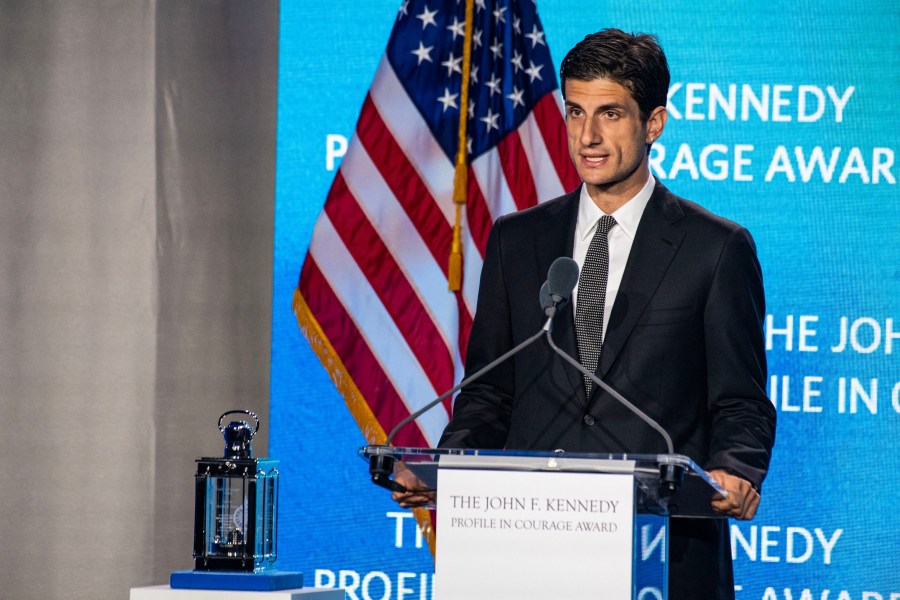
Jack Schlossberg
Jack SchlossbergJoseph Prezioso / AFP
JFK’s only grandson vowed to fight back against the Kennedy Center’s new name.
“SEND ME TO CONGRESS TO SMOKE THESE FOOLS — MAKE YOUR VOICE HEARD LOUD AND CLEAR,” Schlossberg, who is running for New York’s 12th Congressional District, said via Instagram on December 18, 2025. “I won’t back down or be drowned out.”
Joe Kennedy III
After seeing Leavitt’s announcement about the Kennedy Center, JFK’s nephew decided to speak out on social media.
“The Kennedy Center is a living memorial to a fallen president and named for President Kennedy by federal law,” he wrote via X on December 18, 2025. “It can no sooner be renamed than can someone rename the Lincoln Memorial, no matter what anyone says.”
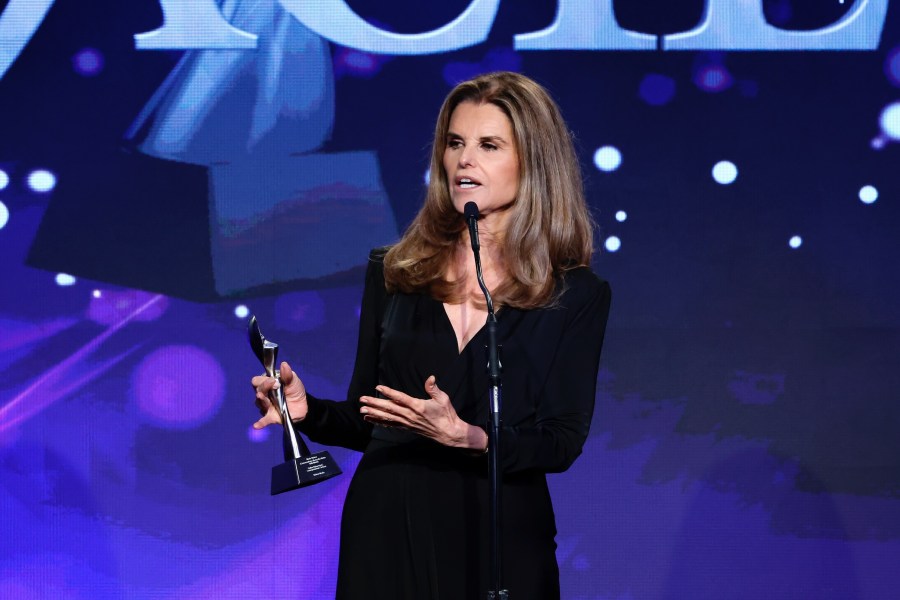
Maria Shriver
Maria ShriverEmma McIntyre/Getty Images for Alliance for Women in Media Foundation
The journalist and niece of JFK expressed her disappointment at the Kennedy Center being renamed to the Trump-Kennedy Center.
“The Kennedy Center was named after my uncle, President John F Kennedy. It was named in his honor. He was a man who was interested in the arts, interested in culture, interested in education, language, history,” she wrote via Instagram on December 18, 2025. “He brought the arts into the White House, and he and my Aunt Jackie [Kennedy Onassis] amplified the arts, celebrated the arts, stood up for the arts and artists.”
Shriver continued, “It is beyond comprehension that this sitting president has sought to rename this great memorial dedicated to President Kennedy. It is beyond wild that he would think adding his name in front of President Kennedy’s name is acceptable. It is not.”
After workers installed Trump’s name to the Kennedy Center building, Shriver spoke out again.
“This will always be the John F. Kennedy Center for the Performing Arts,” she wrote via Instagram later that month. “A great man would have said to his hand picked board, ‘Thank you, but the building already has its name. Let it stand. Let it be. I don’t need that.’ But then again…”
Kerry Kennedy
“President Trump and his administration have spent the past year repressing free expression, targeting artists, journalists, and comedians and erasing the history of Americans whose contributions made our nation better and more just,” JFK’s niece Kerry wrote via X on December 18, 2025. “President Kennedy proudly stood for justice, peace, equality, dignity, diversity, and compassion for those who suffer. President Trump stands in opposition to these values, and his name should not be placed alongside President Kennedy’s.”
One day later, Kerry reacted to Trump’s name being installed on the building.
“Three years and one month from today, I’m going to grab a pickax and pull those letters off that building, but I’m going to need help holding the ladder,” she wrote via X. “Are you in? Applying for my carpenter’s card today, so it’ll be a union job!!!”
“Perhaps the board isn’t aware that the Kennedy Center is 𝗧𝗛𝗘 memorial to the president of the United States, John F. Kennedy. Would they rename the Lincoln memorial? The Jefferson? That would be an insult to great presidents. This too is an insult to a great president,” JFK’s nephew Tim wrote via X in December 2025. “ Notwithstanding their short-sighted action, it is and will remain the John F. Kennedy Center for the Performing Arts.”
Share this:
Like this:
LikeLoading…
Discover more from The Maravi Post
Subscribe to get the latest posts sent to your email.
Donald Trump implied he’s resigning the presidency … well, if he’s not a better host than Jimmy Kimmel, that is … cracking the joke during a Kennedy Center Honors event at the White House. The President of the United States took another shot at…
Share this:
Like this:
LikeLoading…
Discover more from The Maravi Post
Subscribe to get the latest posts sent to your email.
With increased immigration enforcement under President Trump, many families with undocumented members are living in fear of US Immigration and Customs Enforcement, or ICE. Many are afraid to leave their homes and families are having to face the reality that they may be separated, detained and even deported. This week on The Sunday Story, NPR immigration correspondent Jasmine Garsd, reporting for the Code Switch podcast, takes us into the lives of the immigrant families who are facing immense pressure in the United States.