Bangladesh: Election with a Foregone Conclusion

Asia-Pacific, Civil Society, Crime & Justice, Democracy, Economy & Trade, Featured, Headlines, Human Rights, Labour, Press Freedom, TerraViva United Nations

Opinion

Credit: Munir Uz Zaman/AFP via Getty Images

LONDON, Jan 12 2024 (IPS) – Bangladesh just held an election. But it was far from an exercise in democracy.

Sheikh Hasina won her fourth consecutive term, and fifth overall, as prime minister in the general election held on 7 January. The result was never in doubt, with the main opposition party, the Bangladesh National Party (BNP), boycotting the vote over the ruling Awami League’s refusal to let a caretaker government oversee the election. This practice, abolished by the Awami League government in 2011, was, the BNP asserted, the only way to ensure a free and fair vote.


The BNP’s boycott was far from the only issue. A blatant campaign of pre-election intimidation saw government critics, activists and protesters subjected to threats, violence and arrests.

At the government’s urging, court cases against opposition members were accelerated so they’d be locked away before the election, resulting in a reported 800-plus convictions between September and December 2023. It’s alleged that torture and ill-treatment were used against opposition activists to force confessions. There have been reports of deaths in police custody.

Police banned protests, and when a rare mass opposition protest went ahead on 28 October police used rubber bullets, teargas and stun grenades. Following the protest, thousands more opposition supporters were detained on fabricated charges. As well as violence from the notorious Rapid Action Battalion (RAB) – an elite unit notorious for excessive and lethal force – and other elements of the police force, opposition supporters faced attacks by Awami League supporters. Journalists have also been smeared, attacked and harassed, including when covering protests.

As a direct result of the ruling party’s pre-election crackdown, in December 2023 Bangladesh’s civic space rating was downgraded to closed by the CIVICUS Monitor, the collaborative research project that tracks the health of civic space in every country. This places Bangladesh among the world’s worst human rights offenders, including China, Iran and Russia.

Civil society’s concerns were echoed in November 2023 by UN human rights experts who expressed alarm at political violence, arrests, mass detention, judicial harassment, excessive force and internet restrictions.

All-out assault

Such is the severity of the closure of Bangladesh’s civic space that many of the strongest dissenting voices now come from those in exile. But even speaking out from outside Bangladesh doesn’t ensure safety. As a way of putting pressure on exiled activists, the authorities are harassing their families.

Activists aren’t safe even at the UN. A civil society discussion in the wings of the UN Human Rights Council in November was disrupted by government supporters, with Adilur Rahman Khan, a leader of the Bangladeshi human rights organisation Odhikar, subjected to verbal attacks.

Khan is currently on bail while appealing against a two-year jail sentence imposed on him and another Odhikar leader in retaliation for their work to document extrajudicial killings. Following the session in Geneva, Khan was further vilified in online news sites and accused of presenting false information.

Others are coming under attack. Hasina and her government have made much of their economic record, with Bangladesh now one of the world’s biggest garment producers. But that success is largely based on low wages. Like many countries, Bangladesh is currently experiencing high inflation, and garment workers’ recent efforts to improve their situation have been met with repression.

Workers protested in October and November 2023 after a government-appointed panel raised the minimum wage for garment sector workers to a far lower level than they’d demanded. Up to 25,000 people took part in protests, forcing at least 100 factories to close. They were met with police violence. At least two people were killed and many more were injured.

Seemingly no one is safe. Nobel laureate Muhammad Yunus, who founded the Grameen Bank that has enabled millions to access small loans, was recently convicted of labour law offences in a trial his supporters denounced as politically motivated. Yunus has long been a target for criticism and threats from the ruling party.

Democracy in name only

The quality of Bangladesh’s elections has dramatically declined since the Awami League returned to power in the last reasonably free and fair election in 2008. Each election since has been characterised by serious irregularities and pre-voting crackdowns as the incumbents have done everything they could to hold onto power.

But this time, while the Awami League victory was as huge as ever, turnout was down. It was almost half its 2018 level, at only 41.8 per cent, and even that figure may be inflated. The lack of participation reflected a widespread understanding that the Awami League’s victory was a foregone conclusion: many Awami League supporters didn’t feel they needed to vote, and many opposition backers had no one to vote for.

People knew that many supposedly independent candidates were in reality Awami League supporters running as a pseudo-opposition to offer some appearance of electoral competition. The party that came second is also allied with the ruling party. All electoral credibility and legitimacy are now strained past breaking point.

The government has faced predictably no pressure to abide by democratic rules from key allies such as China and India, although the once-supportive US government has shifted its position in recent years, imposing sanctions on some RAB leaders and threatening to withhold visas for Bangladeshis deemed to have undermined the electoral process.

If the economic situation deteriorates further, discontent is sure to grow, and with other spaces blocked, protests and their violent repression will surely follow. International partners must urge the Bangladeshi government to find a way to avoid this. More violence and intensifying authoritarianism can’t be the way forward. Instead Bangladesh should be urged to start the journey back towards democracy.

Andrew Firmin CIVICUS Editor-in-Chief, co-director and writer for CIVICUS Lens and co-author of the State of Civil Society Report.

  Source

Climate Justice is the Responsibility of the Wealthier Nations, Says Bangladesh Climate Envoy

Asia-Pacific, Climate Action, Climate Change, Climate Change Finance, Climate Change Justice, Conferences, COP28, Editors’ Choice, Environment, Featured, Food Security and Nutrition, Headlines, Humanitarian Emergencies, Sustainable Development Goals, TerraViva United Nations

COP28

Five fishers pray for a benevolent sea in Dublar, Bangladesh. Credit: Rodney Dekker/Climate Visuals

Five fishers pray for a benevolent sea in Dublar, Bangladesh. Credit: Rodney Dekker/Climate Visuals

DUBAI, Dec 11 2023 (IPS) – Wealthier nations must deliver the finances so developing countries can adapt—the time for excuses is over, says Saber Hossain Chowdhury, Bangladesh’s Special Envoy for Climate Change in the Prime Minister’s Office.


In a wide-ranging exclusive interview with IPS, Chowdhury said climate change was at the forefront of Bangladesh’s focus, as one in seven people faces displacement due to climate impacts. With this in mind, the country was focused on building resilience and ensuring resources were directed toward the most marginalized.

“The biggest challenge we will have is the melting of the glaciers in the Himalayas because it means flooding in the short term and sea level rise in the long term. We will lose about one-third of our agriculture GDP between now and 2050, and we can lose up to 9 percent of our GDP by 2100,” Chowdhury said.

“For us, it is not just one sector of our economy; it is an existential challenge for Bangladesh.”

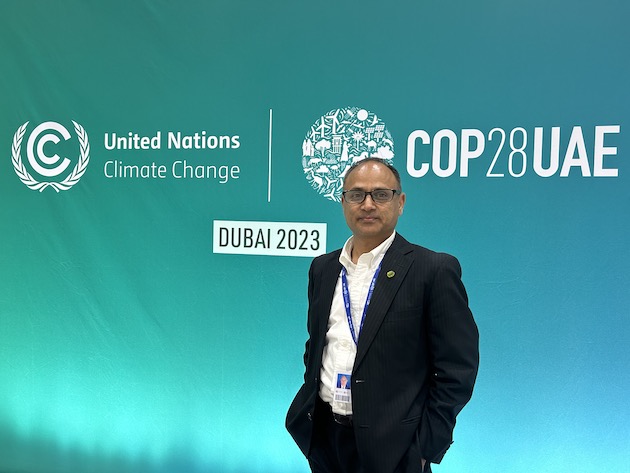
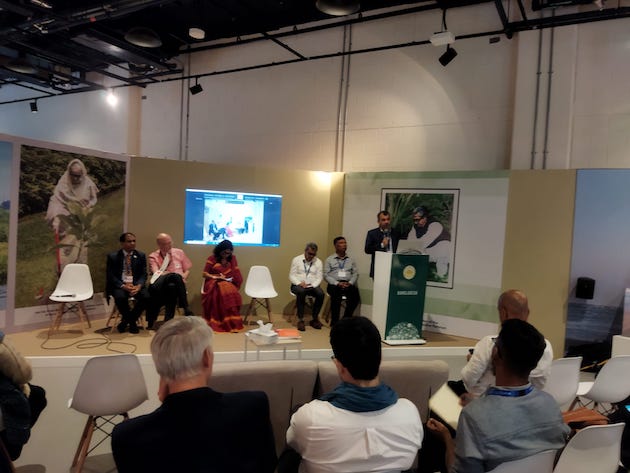
Saber Hossain Chowdhury, Special Envoy for Climate Change, Prime Minister’s Office Bangladesh, addresses an event on climate change at Bangladesh pavilion at COP28 in Dubai. Credit: Umar Manzoor Shah/IPS

Saber Hossain Chowdhury, Special Envoy for Climate Change, Prime Minister’s Office Bangladesh, addresses an event on climate change at the Bangladesh Pavilion at COP28 in Dubai. Credit: Umar Manzoor Shah/IPS

Here are edited excerpts from the interview:

IPS: In terms of climate change and the government’s actions, where is Bangladesh?

Chowdhury: Bangladesh is giving most importance to the Global Stocktake because it has two dimensions—one is looking back and the other is looking forward. We all know how bad things are when we look back because we know we are nowhere near where we are supposed to be.

But what do we do with that knowledge? How do we move forward across the board in terms of mitigation, adaptation, funding, loss and damage, and, of course, the global goals? And one of the points we are stressing is the continual interconnectedness between mitigation, adaptation, and loss and damage.

The more effective our mitigation in terms of keeping temperatures in check, the more manageable the adaptation becomes, and the more manageable the adaptation becomes, the lesser the burden that we pass on the loss and damage.  And it is meaningless to talk about adaptation without the context of mitigation. Because of the rise in temperature to 1.5°C (the threshold to which world leaders pledged to try to limit global warming), there will be a certain level of adaptation that you can do, but if the temperatures are close to 3°C, as it is now said the temperature is likely to rise to, then all adaptation will become loss and damage because there are limits to adaptation and there are limits to resilience.

IPS: What are your views on the ongoing COP 28?

Chowdhury: We got off to a great start. The fact that the Loss and Damage Fund was agreed upon on the first day. In terms of context, we only had this in the agenda last year and it was approved and within a year, the funds have started coming in.  That was a huge positive. We know that funds are nowhere near what the needs are. But it is a good start and we are hoping that the same spirit will be seen in other challenges such as mitigation, adaptation, funding, etc.

Also, I believe the presidency has tried to be very inclusive. But at the end of the day, it depends on global solidarity. If members of the conference come together, then we will have the deal we need. Let me say that this COP is a hugely important COP because we don’t have the luxury of tradeoffs.  We have to deliver across the board, and mitigation (to keep to the Paris Agreements) of 1.5°C is an absolute must, and if we go beyond that, I think we have lost the game. To what extent we can mitigate will then determine what our adaptation requirements are. The better we manage adaptation, the lesser the burden will be on loss and damage.  It is a litmus test. Bangladesh being at ground zero for climate change impact, this is a hugely important event for us.

IPS: Bangladesh is often termed a ‘victim of climate change’ across the globe. Why is that?

Chowdhury: One in seven people in Bangladesh will face displacement because of climate change, and that adds up to about 13–14 million people. We have a huge food security problem because we are losing agricultural land due to sea level rise.  The biggest challenge we will have is the melting of the glaciers in the Himalayas, which means flooding in the short term and sea level rise in the long term. We will lose about one-third of our agriculture GDP between now and 2050, and we can lose up to 9 percent of our GDP by 2100. For us, it is not just one sector of our economy; it is an existential challenge for Bangladesh.

IPS: What do you believe is the responsibility of wealthier nations towards Bangladesh?

Chowdhury: Climate justice is all about wealthier nations. They must deliver the finance so that we can adapt; they must rein in the emissions. They need to act as per science and not have any excuses. It is now or never because the window of action is closing very fast. If we don’t get it right in COP 28, whatever we do in subsequent COPs may well be too little, too late. We have to reduce emissions by 43 percent by 2030. We must reduce emissions by 60 percent by 2035, then we can get to net zero. With that, you also must have tripled the amount of renewable energy and doubled your energy efficiency. So, it has to be a package of responses. It is for the wealthier nations to mitigate, to provide funds for loss and damage as well as for adaptation.

IPS: How responsive do you find these developed nations to the climate crisis?

Chowdhury: Responses must be taken at two levels: one is making pledges, and the other is delivering on pledges. There is no point saying we will do this and then, as in the past, not do it. Pledges are the first step, and therefore everybody has to realize that this is the question of global solidarity.  It is not the question of Bangladesh and the developed world. What is happening in Bangladesh today will also happen in those countries that we call developed. Greenland will become greener again because the ice is going to melt. They will also face sea level rise. So it is not the question of “if,” it is the question of when.

IPS: Bangladesh has advanced warning systems for the climate. Please tell us about it.

Chowdhury: We have what we refer to as an ‘early warning system’ If you look at the cyclone that hit Bangladesh in the early 1970s, up to a million people died because of it. But now, when the cyclone hits Bangladesh, the number of deaths is in single digits. The reason for that is that through an early warning system, we can evacuate people to cyclone shelters. That has saved lives, and Bangladesh is a model for that.

Our honorable Prime Minister has this program where we are building cyclone shelters all around the coast of Bangladesh so that people can be evacuated there. We cannot stop a storm or a hurricane from coming, but we can prepare ourselves so that the loss of lives is minimal, and that is what Bangladesh has achieved. Also, the early warning system is very basic, and it is community-based.

IPS: What is Bangladesh doing about the agrarian crisis?

Chowdhury: Bangladesh has a huge success story in terms of food production. From a deficit nation, we are now a surplus nation, but climate change threatens that.  This is something we look at in terms of food security, so all of the advances and progress that we have made over the years are now at risk because climate change is impacting this sector.

IPS: What is the role of NGOs in terms of tackling climate change and offering support to governments?

Chowdhury: NGOs need to have partnerships with governments where they can take those ideas and scale them up. That is the reason that NGOs need to have a very close relationship with the government. The whole issue is not how much money I have spent; it is what impact I have generated through spending that money.

But the message at the end of the day is that whatever money is spent must be spent on those who are most marginalized. So how do we get funds for the people who are most in need? I think that must be an overriding issue. This is a learning process, and we are all on the learning curve. When we go back to Bangladesh, we need to have a brainstorming session with NGOs and CSOs and find out what is working, how we can make their job easier, and how we can make the collaboration a win-win between various ministries, government departments, and NGOs.
IPS UN Bureau Report


COP28: Climate Migrants’ Rights, Risk-based Labor Polices Under the Spotlight

Asia-Pacific, Civil Society, Development & Aid, Editors’ Choice, Featured, Headlines, Labour, Middle East & North Africa, Poverty & SDGs, TerraViva United Nations

COP28

Workers, some from regions impacted by climate change, joined queues for accreditation outside Expo 2020 in Dubai, where COP28 is being held. Credit: Stella Paul/IPS

Workers, some from regions impacted by climate change, joined queues for accreditation outside Expo 2020 in Dubai, where COP28 is being held. Credit: Stella Paul/IPS

DUBAI, Dec 7 2023 (IPS) – With COP23 underway, researchers and activists are pointing at the plight of climate migrants.

On November 30, a few hours before the COP23 was officially inaugurated, long, serpentine queues could be seen outside Expo 2020, the venue of the COP23. Standing under the blazing sun, besides delegates and media personnel, were hundreds of migrant workers, a majority of whom were from Nepal and the Philippines.


The workers, who would later be working in different service hubs such as food kiosks and cleaning units throughout the COP, were there to get registered and get a badge that would allow them entry inside the blue zone, the high-security area within the COP. Almost all of these workers are unskilled and employed by various contractors. Despite the long hours of standing in the scorching sun, none of them was complaining—some because they have worked in much worse conditions, while others didn’t want to earn their employers’ wrath by expressing any displeasure.

“The company decides where and when we will work, as well as how long. What is there to complain about? Please understand, it’s risky,” whispered Chandra, a worker from Nepal who requested not to reveal his last name. Chandra also wouldn’t reveal his exact address except that he is “from the upper Mustang,” a district in Nepal that has seen large-scale migration of locals following massive water scarcity caused by the drying of natural springs and groundwater sources.

Chandra’s whispered sentences nearly summarize the environment in which thousands of migrants work: exposure to harsh climate conditions, inadequate pay packages, and oftentimes abuse, say human rights advocates who have documented migrants across the Middle East.

Human Rights Watch, the US-based global human rights defender, recently published a study conducted in three climate-vulnerable countries—Nepal, Bangladesh, and Pakistan—that found that migrant workers faced a strong set of labor abuses that included paying high recruitment fees, low and irregular wages, and high exposure to extreme heat. Although the research did not specifically focus on climate migrants, most of the respondents were from places that have witnessed strong climate change impacts, including extreme weather events.

Ironically, their search for a secure livelihood and a better life also made them vulnerable to working in environments that leave them exposed to similar harsh climatic conditions. For example, during the construction of Expo City, the very venue of COP28, migrant workers were seen working in scorching heat that could lead to a plethora of health challenges, including heat stroke and extreme dehydration leading to chronic kidney failure. In fact, HRW’s study found that several migrants had had kidney failure and were on dialysis, which not only cost them their jobs but also pushed them into a financial crisis as they needed to take out loans for medical treatment.

“Our study interviewed 73 current and former UAE-based workers and 42 families of current migrant workers between May and September 2023 from Pakistan, Bangladesh, and Nepal. Ninety-four of these interviewees live in or are from areas already facing the devastating consequences of the climate crisis, with scientific studies linking extreme weather events like floods, cyclones, and the salinization of agricultural lands to climate change. In addition, former and current outdoor workers interviewed were working in jobs like construction, cleaning, agriculture, animal herding, and security and were often exposed to the UAE’s extreme heat, which is also increasing due to climate change,” says Michael Page, Deputy Director in the Middle East and North Africa division at Human Rights Watch.

Climate Migration: A global snapshot

According to the International Organization of Migration (IOM), the implications of the climate crisis on migration are profound and are ever-increasing. IOM cites data produced by the Internal Displacement Monitoring Center that shows in 2022 a total of 31.8 million internal displacements due to weather-related hazards.

The World Bank Groundwell Report also shows that in South Asia, 12.5 million people were displaced by climate disasters in 2022, while the numbers are 7.5 million in Sub-Saharan Africa and 305,000 in the Middle East and North Africa region. The report projects that without immediate and concerted climate and development action, the number could go up to over 216 million by 2050.

According to the Nepal government’s own assessment, the UAE, along with Qatar, remain the most popular work destinations among young Nepalis. Data collected by the country’s Department of Foreign Employment (DoFE), 37,492 young people arrived in the UAE for work between mid-July and mid-October of the current fiscal year alone. This group includes 7,015 women and 30,477 men.

A moment of global recognition

On Friday, Nepal, one of the biggest source countries of unskilled and climate migrants, found a special mention in the speech of UN Secretary General Antonio Guterres at the inaugural ceremony of COP28. “Just days ago, I was on the melting ice of Antarctica. Not long before, I was among the melting glaciers of Nepal. These two spots are far in distance, but united in crisis. Polar ice and glaciers are vanishing before our eyes, causing havoc the world over, from landslides and floods to rising seas,” Guterres said, addressing the global leaders at the opening ceremony.

Soon after, addressing the media, Nepal Prime Minister Pushpa Kamal Dahal said that his country was preparing to establish Nepal’s rights to receive compensation for loss and damage. According to him, Guterres’s speech had drawn the world’s attention to the climate crisis in Nepal, and his government would now push for the much-deserved compensation under the newly operationalized Loss and Damage mechanism.

Maheshwar Dhakal, Joint Secretary, Ministry of Forests and Environment, who is at the COP, says that Nepal has plans to address climate-induced displacement and migrations at their root, but it needs external support and resources.

“Due to climate change and loss of livelihood, our youths are migrating rapidly to other countries. This is also destabilizing the family value system and causing social disorder as youths are separated from their family elders. This is under discussion at the political level. But at the same time, unless and until equal education, opportunities, and a level of salary (available in other countries) are made available, we cannot stop this migration. We have assessed that the total cost to implement our National Action Program (that can address climate displacement) will be USD 50 billion, of which we can only raise USD 2 billion; we need the rest from external sources such as the various funds.”

Nepal senior delegate Maheshwar Dhakal. Credit: Stella Paul/IPS

Nepal senior delegate Maheshwar Dhakal. Credit: Stella Paul/IPS

Need of the hour: a risk-based labor policy

However, experts believe that host countries, particularly the COP presidency UAE, where migrant workers make up 88% of the labor force, can take immediate steps while negotiators develop their respective arguments and strategies to claim compensation for climate refugees and displaced people under the climate finance mechanisms.

One of these is adopting a risk-based labor protection policy.

Currently, the Ministry of Human Resources and Emiratisation (MoHRE) is implementing the ‘Midday Break’ initiative, which broadly means workers should not work outside from 12 to 3 p.m.  Violations of the ban can lead to a fine of Dh5,000 for each worker from non-compliant employers. The maximum fine amount is Dh50,000 when multiple workers are made to work during the banned hours.

However, the policy also allows employers to continue working through midday in areas where it is deemed unfeasible to postpone work until it is completed. These works typically include roofing, manning traffic, containing hazards or repairing damages such as interruptions to water supply or electricity, etc.

These provisions provide escape routes for employers who continue to push migrant workers into unsustainable and risky work conditions. The same ‘loopholes’ also make the labor policies inadequate for protecting migrant workers from harsh weather conditions, says Page of HRW, who thinks adopting a public health risk-based policy would be the right way to ensure migrant workers’ rights.

A risk-based approach would mean that countries, competent authorities, and employers would identify, assess, and understand the public health risks to which the workers are exposed and take the appropriate mitigation measures in accordance with the level of risk. One of these strategies would be to use the wet bulb globe temperature (WBGT) index, which is already in use in nations like Canada.

The wet bulb globe temperature (WBGT) unit considers a number of environmental factors, such as air temperature, humidity, and air movement, which contribute to the perception of hotness by people.

Page thinks that the adoption of the wet bulb globe temperature (WBGT) would be a great way to assess the risks for migrant workers in a place like the UAE because it can cover more risk factors that are usually ignored by employers but are regularly faced by the workers. For example, in some workplace situations, solar load (heat from radiant sources) is also considered in determining the WBGT as the basis of the risk assessment.

“If the UAE really cares about the protection of its migrant workforce, then they should also care about adopting a risk assessment method that is more reflective of local conditions; that will also ensure climate justice for the workers,” Page says.

IPS UN Bureau Report

  Source

The Intergenerational Impact of Nuclear Testing in Polynesian States

Asia-Pacific, Civil Society, Environment, Global, Headlines, Health, Human Rights, Nuclear Energy – Nuclear Weapons, TerraViva United Nations

Communities affected by nuclear testing, many originating from island nations in the South Pacific, share their experiences at the Nuclear Survivors Forum. Credit: ICAN / Haruka Sakaguchi

UNITED NATIONS, Dec 5 2023 (IPS) – The language used in the Treaty of the Prohibition of Nuclear Weapons (TPNW) is unambiguous on its focus of the grave humanitarian impact of nuclear weapons. The TPNW also recognizes the influence of the public conscience “in the furthering of the principles of humanity as evidenced by the call for total elimination of nuclear weapons”.


This public conscience has been shaped by what we know already of the consequences of nuclear testing. Hiroshima and Nagasaki are the historic reasons to argue for nuclear disarmament. Decades later, the hibakusha – the term used to refer to survivors of the Japanese nuclear bombings – continue to be vocal in their pleas to world leaders to end nuclear weapon proliferation. Beyond Hiroshima and Nagasaki, the experiences in other affected regions – as represented by second- and third- generation survivors – stand as clear reminders of the intergenerational impact of nuclear testing.

While the Second Meeting of State Parties was an opportunity for member states and NGOs to support the Treaty and express solidarity with affected communities, it has been through a side-events hosted by civil society that those affected can directly testify to their own experiences. It has been through holding such events that the narratives built around nuclear survivors can be expanded, be made more inclusive.

On November 30, the International Campaign for Abolishing Nuclear Weapons (ICAN), along with partner organizations such as Peace Boat and Nuclear Age Peace Foundation, convened the Nuclear Survivors Forum. Hosted at the Church Center for the United Nations, the event saw people from communities around the world commiserate over their experiences with nuclear testing and their impact on their homes and communities.

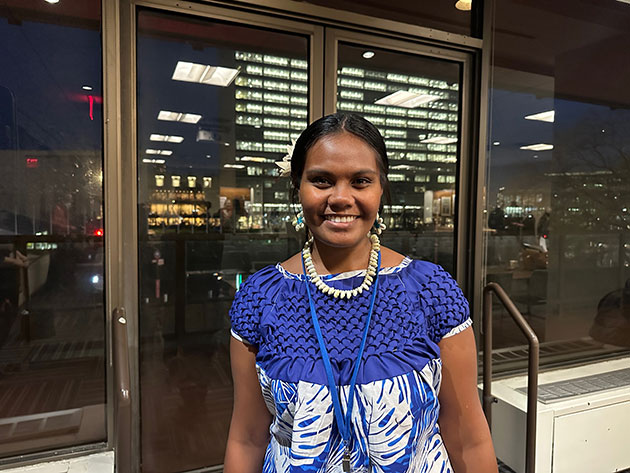
Taraem Taukaro, nuclear survivors forum. Credit: Katsuhiro Asagiri

The forum created a space where views, ideas, and common experiences were shared, especially for communities that “rarely have such opportunities”, according to Taraem Taukaro, a youth delegate who came to the event with the Kiribati government representatives. The Republic of Kiribati has been one of several island nations in the Pacific that were impacted by nuclear tests, notably conducted by British and American military forces in the mid-20th century. The Kiritimari island, which is part of the Republic, was previously the site of multiple nuclear bombing tests between 1956 and 1962.

Taukaro’s mother, who lived through the testing, suffers from health issues which is believed to have been caused by exposure to radiation from the fallout. This exposure also resulted in health complications for the next generation, like with Taukaro’s sister, who was born deaf. It is a challenge for this family to have been impacted this way. One of the direct impacts has been that the indigenous Kiribati people that lived through the tests are afflicted with health problems and have suffered losses in their environment and biodiversity. Their descendants now contend with the same issues.

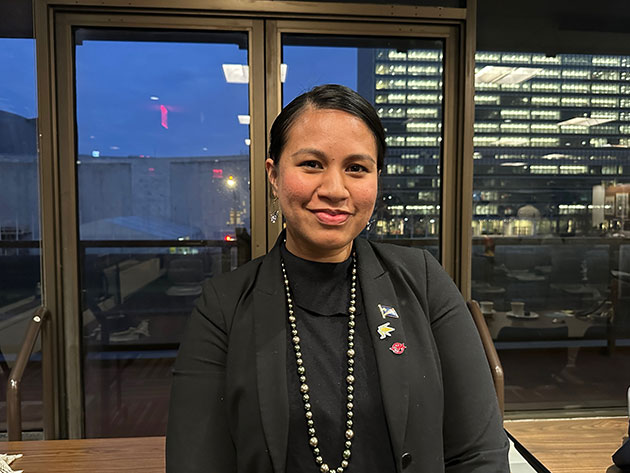
Bedi Racule, nuclear survivors forum. Credit: Katsuhiro Asagiri

Bedi Racule, an activist with the Pacific Conference of Churches, provided perspective on the impact of nuclear testing on the Marshall Islands and the greater South Pacific region. The US military conducted nuclear tests in the region, notably on Bikini Atoll between 1946 and 1958. As Racule noted, many Pacific communities continue to feel the impact of nuclear testing, which encompass cancer, displacement, and ecological contamination.

“There is a loss of our wellbeing and our quality of life and our connection to land and ancestors and culture,” she said. “…There is a lot of pain and trauma.”

When speaking of the nuclear survivors who attended the forum, she added: “I really feel for this community, and for my people. I also want to highlight their resilience, their strength. Having vulnerability is not weakness. It is strength… I just want to commend all of these people that have stood up now and in the past for a better world that’s free of nuclear weapons. And specifically, have a nuclear-free zone, and the first nuclear-free constitution.”

For young people, there is a greater responsibility to them to educate them on the impact of nuclear testing; to contextualize the history and the way their connection to culture has shifted, including what has been lost.

Racule remarked that during the forum, there was a call from the affected communities to establish an advisory group. “The core of [the TPNW] is the humanitarian response to nuclear weapons, knowing what has happened in the past and seeking justice for that and preventing these experiences from ever being felt again by anyone.”

Taukaro remarked that the international community, including the British government, could do more to provide funding and support for medical resources and environmental clean-up, as part of the compensation towards the affected communities in Kiritimari and its neighboring islands.

Racule expressed a different view. “Among our network of nuclear justice advocates, it is very well-acknowledged that nuclear issues are intrinsically linked to issues of colonization, of self-determination,” she said. “Even our countries in the Pacific that are free and independent and sovereign, they still have trouble voicing their wants… because of geopolitical interests, because of aid donor funding. We also see this development aid as a way to come in and influence what is happening, to take away our freedom not only politically but economically, financially, socially.”

With real life testimonies from survivors and their descendants, the event was a reminder that nuclear disarmament must be effective sooner rather than later to ensure that our future generations can live in peace and pursue decent lives. The public conscience must be respectful and elevate the voices of the indigenous communities who have been disproportionately affected by nuclear testing and live through its fallout, well into the new millennium.

IPS UN Bureau

  Source

Pacific Games Channels Youth Aspirations in the Solomon Islands

Asia-Pacific, Civil Society, Economy & Trade, Editors’ Choice, Featured, Headlines, Human Rights, Sustainable Development Goals, TerraViva United Nations, Youth

Youth

Jovita Ambrose and Timson Irowane are two young athletes training to be part of the Solomon Islands national team at the Pacific Games. Credit: Catherine Wilson/IPS

HONIARA, SOLOMON ISLANDS, Nov 17 2023 (IPS) – The Pacific Games, the most prestigious sporting event in the Pacific Islands region, will open in the Solomon Islands in the southwest Pacific on 19 November. And it is set to shine a spotlight on the energy, hopes and aspirations of youths who comprise the majority of the country’s population.


Timson Irowane (25), who has been competing in triathlons for the past six years, is brimming with confidence and anticipation. “The Pacific Games is a big event because my people are here, and it is very special because this is the first time the Solomon Islands is hosting the Games that I’ve been involved in,” Irowane told IPS during an interview at the Solomon Islands National Institute of Sport in the capital, Honiara. 

Every four years, a Pacific Island nation is chosen to host the regional multi-sport Pacific Games. And this year, about 5,000 athletes from 24 Pacific Island states, such as Papua New Guinea, Kiribati, Fiji and New Caledonia, will arrive in Honiara to compete in 24 sports, ranging from athletics and swimming to archery and basketball.

The Solomon Islands has a high population growth rate of 2.3 percent and about 70 percent of the country’s population of about 734,000 people are aged under 35 years. Christian Nieng, Executive Director of the Pacific Games National Hosting Authority, told IPS that it will be a chance to showcase their talents and achievements. “It is the biggest international event ever hosted in the country. And as we are hosting, we want to compete for every medal chance,” Nieng said.

Not far from Honiara city centre, the new Games precinct includes a large national stadium, which can accommodate 10,000 people, as well as swimming and tennis centres. Eighty percent of the funding needed to build the facilities and organize the Games has been provided by international donors and bilateral partners, including Australia, New Zealand, Papua New Guinea, China, Saudi Arabia, India, Korea and Indonesia.

“One of the long-term benefits of the Games is that we now have a new sports city as a legacy of the event,” Nieng added. It will be one of the best in the Pacific region, he believes, and, if well maintained, will last for 25 years, providing world-class facilities for Solomon Islanders to pursue their development and ambitions in sport.

At the sports institute, about 1,200 athletes are in training, and their energy and excitement is palpable. Here, Irowane, who is from Western and Malaita, two outer island provinces, is one among many who are striving to be selected for the national team of about 650 athletes who will represent the Solomon Islands later this month. His dedication has already led to international success. He participated in the Pacific Games held in Samoa in 2019 and numerous regional championships before heading to the Commonwealth Games hosted in Birmingham in the United Kingdom last year.

But he said that there were many wider benefits of sport to young people. “Triathlon is a multi-sport which involves discipline. Sport is not just for training, for fitness and skills that you learn in a specific sport, but it trains holistically to be a better person and a responsible person,” Irowane said. “And it helps athletes and individuals to be good citizens.”

Another local star aiming high is 21-year-old Jovita Ambrose, also from Malaita Province. “I started athletics and running during school games when I was 17 years old. When I’m running, I know that I’m good at it. When you are good at sport, it keeps you busy; it helps you stay healthy and not get involved in negative activities, such as drugs,” Ambrose said. In the last two years, she has travelled to competitions overseas, including the World Athletics Championships in Oregon in the United States last year and in Budapest, Hungary, three months ago.

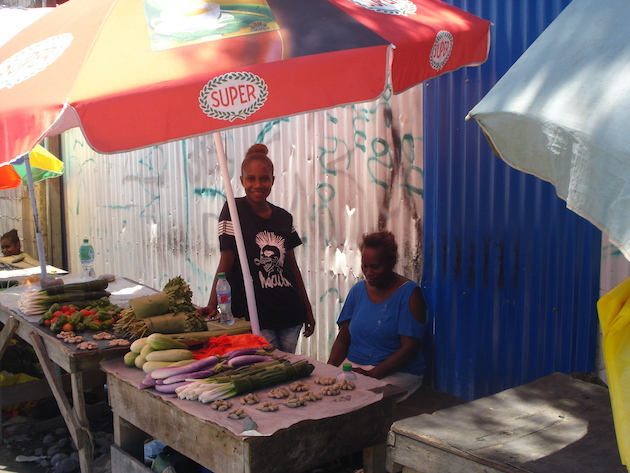
Many local businesses in the formal and informal sectors are hoping for increased visitors and business during the Pacific Games being hosted in the Solomon Islands in late November. Burns Creek Settlement market in Honiara. Credit: Catherine Wilson/IPS

Many local businesses in the formal and informal sectors are hoping for increased visitors and business during the Pacific Games being hosted in the Solomon Islands in late November. Burns Creek Settlement market in Honiara. Credit: Catherine Wilson/IPS

The Solomon Islands has a rural majority population that is scattered across more than 900 islands where there is often limited access to roads, basic services and employment. And the younger generation faces significant economic and development challenges. In a country which is not generating enough jobs for those of working age, the government estimates that 16,000-18,000 youths enter the employment market every year, with less than 4,000 likely to gain a secure job. Estimates of youth unemployment range from 35 percent to 60 percent.

“There is a lot of unemployment and, also, under-employment, where young people get a job opportunity which does not match their skill set. It is a real frustration for them when they are educated and still waiting for a job opportunity,” Harry James Olikwailafa, Chairman of the Solomon Islands National Youth Congress, explained to IPS. “The important issues for young people today are economic opportunities, employment opportunities and educational opportunities.”

In the last two decades, Solomon Islanders have also grappled with the aftermath of a five-year civil conflict. ‘The Tensions’, triggered by factors including urban-rural inequality, corruption and competition for land and resources, erupted in 1998 between rival armed groups representing local Guale landowners on Guadalcanal Island and internal settlers from Malaita Province. Hostilities ended in 2003, by which time many people, including children, had experienced violence, atrocities and displacement and had been deprived of education.

Morrison Filia 936) and his wife, Joycelyn (32), grew up in the aftermath of the conflict. And now, through a new entrepreneurial initiative, are aiming to help grow economic opportunities in Honiara. In August, they launched a new tourism business, Happy Isle Tours and Transfers, which offers airport transfers for visitors and tourists to hotels, as well as tours of Honiara, its history and landmarks, and excursions to World War II memorial sites on Guadalcanal Island.

“In Honiara, there are a lot of young people, and employment is a problem. So, the main idea is that we try to create this business so that we can employ more young people. We are trying to give young people opportunities,” Morrison told IPS.

They have also opened their business in time for the Games. “One of the other reasons why we started the business is that we noticed tourists and visitors coming [to the Solomon Islands], but they find it difficult to find transport,” Joycelyn said. “We are excited and looking forward to the Games because we are expecting more tourists. It will bring other different people to the country, and we are expecting increased bookings. I think it will also increase employment in the country and help us in our economy,” she continued.

The Pacific Games will continue for two weeks and finish on the 2 December. And like Morrison and Joycelyn, Timson Irowane has long-term goals. “I wish to be a role model, to introduce the sports and motivate more young people to be involved in any sport they are interested in. I love to encourage them because we have the advantage of the facilities here beyond the Games,” he declared.

IPS UN Bureau Report

  Source

Silent Struggles: Unraveling Korea’s Startling Elderly Suicide Surge

Active Citizens, Asia-Pacific, Development & Aid, Headlines, Human Rights, Humanitarian Emergencies, Population, TerraViva United Nations, Youth, Youth Thought Leaders

Opinion

In this, the fourth of IPS’ Youth Thought Leaders series, the author looks at suicide rates in older persons and concludes we should break barriers and celebrate the diversity each generation brings.

An image illustrating the ‘No-senior zone’ in a Korean café. Credit: The Nation

An image illustrating the ‘No-senior zone’ in a Korean café. Credit: The Nation

SEOUL, Oct 13 2023 (IPS) – Growing up in a culture that values respect for elders, I was acutely aware of the importance of caring for our aging population. However, my journey to understanding the gravity of this issue truly began with a personal anecdote. I watched my grandmother, a pillar of strength throughout my childhood, gradually withdraw from the vibrant world in which she once thrived. The cheerful twinkle in her eyes began to dim, replaced by an eerie sense of isolation.


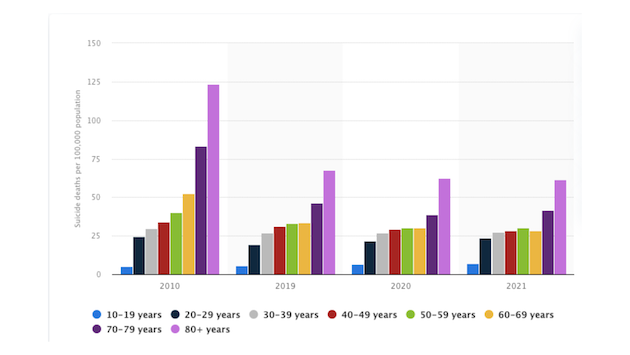
This experience opened my eyes to a stark reality: a disturbing surge in elderly suicide rates hidden beneath the facade of cultural reverence for seniors in Korea and Japan. In 2021, these rates reached 61.3 deaths per 100,000 people in Korea, primarily driven by profound social isolation.

Suicide deaths in Korea. Credit: Statista

Suicide deaths in Korea. Credit: Statista

Some may argue that these figures are insignificant, but the persistence of a high suicide rate cannot be dismissed. Moreover, they are poised to become even more critical as we approach a world where, according to WHO, the elderly population over the age of 60 is expected to double by 2050, and those 80 years or older are projected to triple.

So how severe are the elderly suicide rates due to isolation in Korea and Japan? Well, research highlights that this is due to the significant rise in the elderly population. Such an increase has been concurrent with the rising elderly suicide rates. The Global Burden of Disease study emphasizes that the global elderly suicide rate is almost triple the suicide rates across all other age groups. For example, in South Korea alone, there has been a 300% increase in elderly suicide rates.

If the world’s elderly population has increased overall, why is it that the elderly suicide rates within Korea and Japan have been especially severe? This was particularly confusing as I believed that due to cultural and social standards of filial piety and respecting your elders, such suicide rates would be low. However, I found the answer to my own question when I visited Korea in July this year.

When I arrived in the country, one of the first things I did was to visit a cafe to meet with a friend. However, as I was about to enter the cafe, I saw a group of elderly men and women leaving the cafe while comforting each other, saying, “It’s okay; it’s not the first time we’ve been rejected.” As I later found out, this was because the cafe was a ‘no-senior zone.’

Similar to how some places are designated as ‘no-kid zones,’ this cafe, and others, did not allow people over the age of 60 to enter.  According to Lee Min-ah at Chung-Ang University, “The continuous emergence of ‘no-something zones’ in our society means that exclusion among groups is increasing, while efforts to understand each other are disappearing.”

I also discovered that age discrimination is also present in other aspects of the elderly’s life, more specifically, in the workplace. According to a survey by the National Human Rights Commission of Korea, in 2018, 59 percent of the Korean elderly found it difficult to be employed due to age restrictions, and a further 44 percent experienced ageism within their workplace. The increase in discrimination against the elderly has heightened their sense of isolation, eventually leading to cases of suicide in extreme circumstances.

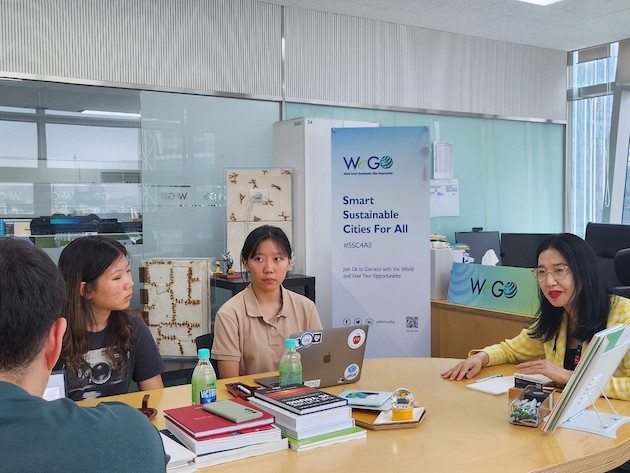
Jung Soon Park, the Secretary General of World Smart Sustainable Cities Organization (WeGo) with the author Hyunsung (Julie) Lee.

Jung Soon Park, the Secretary General of World Smart Sustainable Cities Organization (WeGo) with the author Hyunsung (Julie) Lee.

Interview with Jung Soon Park, the Secretary General of WeGo at the Seoul Global Center

Interview with Jung Soon Park, the Secretary General of WeGo at the Seoul Global Center

I wanted to learn more about the current action being taken to help the elderly feel more included in our society, as I believed this would be key to preventing isolation-related suicide cases. To gain further insight, I decided to interview Jung Soon Park, the Secretary General of the World Smart Sustainable Cities Organization (WeGo).

WeGo is an international association of local governments, smart tech solution providers, and institutions committed to transforming cities worldwide into smart and sustainable cities through partnerships. I believe that by interviewing the Secretary General of WeGo, I would be able to learn more about the specific solutions that governments and organizations are implementing collaboratively.

Through my interview, I gained an understanding that the South Korean government and social organizations are currently focusing on addressing age discrimination, recognizing it as a key factor in isolationism.

Park mentioned that one specific approach to resolving this issue involves the use of ‘meta spaces’ and technological wristbands. She emphasized that in today’s technology-driven world, enabling the elderly to adapt to such technology could bridge the generation gap between the younger and older generations. She further explained that meta spaces, allowing for anonymous communication, and technological wristbands, which could include features like a metro card and direct access to emergency services, would facilitate the elderly’s integration into modern society. Park concluded that enabling the elderly to adapt efficiently to the current social setting could break down the generational barrier between youth and the elderly, fostering a direct connection between these two disparate groups.

During my research, I coincidentally came across a website called Meet Social Value (MSV). MSV is a publishing company that specializes in writing and publishing insightful articles about contemporary social issues. Their most recent article, titled ‘Senior,’ delves into the social challenges faced by the elderly in Korean society and explores solutions involving inclusive designs and spaces.

MSV serves as a prime example of how contemporary social organizations are taking steps to address the issue of elderly discrimination. This is especially significant because, through youthful and trendy engagement on social media, it becomes easier to raise awareness of this issue among younger generations.

Meet Social Value's most recent article, titled 'Senior,' delves into the social challenges faced by the elderly in Korean society and explores solutions involving inclusive designs and spaces.

Meet Social Value’s most recent article, titled ‘Senior,’ delves into the social challenges faced by the elderly in Korean society and explores solutions involving inclusive designs and spaces.

As I continued my research, I started pondering what I, as an 18-year-old, could do to contribute to resolving this issue. Even though I’m still a student, I wanted to find ways to make a difference, especially after witnessing age discrimination and its consequences firsthand.

I found the answer to my question when I learned about the initiatives undertaken by the government of Murakami City and the Murakami City Social Welfare Council to bridge the gap between the youth and senior citizens. They introduced the Murakami City Happy Volunteer Point System, which aimed to encourage more people to assist seniors through various volunteering activities such as nursing facility support, hospital transportation services, and operating dementia cafes, among others. The system rewarded volunteers with points that could be exchanged for prepaid cards, creating an incentive for more individuals to get involved in helping their senior citizens.

Taking this into consideration, I believe that the younger generation, especially students, may contribute by creating such an incentivization system. For example, students may create senior volunteering clubs within their schools and take turns volunteering and connecting with elderly citizens every weekend. By doing so, clubs may incentivize their members through points which may later be traded for a snack or lunch at the school cafeteria. Through small incentives, this may naturally encourage more students to participate and thus naturally allow for the youth to create a relationship with the elderly, hence contributing to mitigating the issue of elderly isolation.

The webpage of the Murakami City Happy Volunteer Point System containing the system’s details.

The webpage of the Murakami City Happy Volunteer Point System contains the system’s details.

In Korea’s battle against ageism, we find ourselves at a turning point. To navigate this societal shift successfully, we must recognize that age discrimination not only undermines the dignity of our elders but also hampers our collective progress. The solution requires a comprehensive approach. Policy reforms are crucial, emphasizing stringent anti-ageism measures in the public space and the workplace. Equally significant solutions are awareness campaigns to challenge stereotypes and foster inter-generational understanding.

However, true change starts with the youth. By confronting our biases and engaging in volunteering activities, we can break down barriers and celebrate the diverse experiences each age group brings. Through such efforts, we can create a society where age is not a determinant of worth but a source of strength and wisdom. It’s a journey demanding our collective commitment, but one that will lead us towards a more inclusive and harmonious future for all.

Edited by Hanna Yoon

IPS UN Bureau Report

  Source