Maldives Election: What Now for Civil Society?

Asia-Pacific, Civil Society, Crime & Justice, Featured, Gender, Headlines, Human Rights, LGBTQ, Press Freedom, TerraViva United Nations

Opinion

Credit: Mohamed Afrah/AFP via Getty Images

LONDON, Oct 12 2023 (IPS) – Ahead of the presidential election, Solih faced accusations of irregularities in his party’s primary vote, in which he defeated former president Mohamed Nasheed. The Electoral Commission was accused of making it harder for rival parties to stand, including the Democrats, a breakaway party Naheed formed after the primary vote. The ruling party also appeared to be instrumentalising public media and state resources in its favour. Solih’s political alliances with conservative religious parties were in the spotlight, including with the Adhaalath Party, which has taken an increasingly intolerant stance on women’s and LGBTQI+ rights.


Big beasts battle for influence

If the two candidates seemed similar in their attitudes towards civil society, they stood on opposite sides of a geopolitical divide. In recent years Maldives, a chain of small Indian Ocean islands with a population of around half a million, has become a major site of contestation in the battle for supremacy between China and India. The location is seen as strategic, not least for control of shipping routes, vital for the transport of oil from the Gulf to China.

Civic space under pressure

Solih quickly conceded defeat and thanked voters for playing their part in a democratic and peaceful process. It’s far from rare for incumbents to lose in Maldives: there’s been a change at every election since the first multiparty vote in 2008. But there are concerns that Muizzu will follow the same course as former president Abdulla Yameen, leader of his party, the People’s National Congress.

Yameen, in office from 2013 to 2018, wanted to run again, but the Supreme Court barred him because he’s serving an 11-year jail sentence for corruption and money-laundering. Critics question the extent to which Muizzu will be his own person or a proxy for Yameen. Perhaps there’s a clue in the fact that Yameen has already been moved from jail to house arrest on Muizzu’s request.

The question matters because the human rights situation sharply deteriorated under Yameen’s presidency. The 2018 election was preceded by the declaration of a state of emergency enabling a crackdown on civil society, the media, the judiciary and the political opposition. Judges and politicians were jailed. Protests were routinely banned and violently dispersed. Independent media websites were blocked and journalists subjected to physical attacks.

Ultimately, Yameen was roundly defeated by a united opposition who capitalised on widespread alarm at the state of human rights. Some positive developments followed, including repeal of a criminal defamation law. But many challenges for civil society remained and hopes of significant progress were largely disappointed.

A restrictive protest law stayed in effect and parliament rejected changing it in 2020. Police violence towards protesters continued, as did impunity. Civil society groups were still smeared and vilified if they criticised the government. Activists have been subjected to smears, harassment, threats and violence from hardline conservative religious groups. Women’s rights activists have been particularly targeted.

In 2019, a prominent civil society organisation, the Maldivian Democracy Group, was deregistered and had its funds seized following pressure from religious groups after it published a report on violent extremism. It now operates from exile.

Ahead of the presidential election, Solih faced accusations of irregularities in his party’s primary vote, in which he defeated former president Mohamed Nasheed. The Electoral Commission was accused of making it harder for rival parties to stand, including the Democrats, a breakaway party Naheed formed after the primary vote. The ruling party also appeared to be instrumentalising public media and state resources in its favour. Solih’s political alliances with conservative religious parties were in the spotlight, including with the Adhaalath Party, which has taken an increasingly intolerant stance on women’s and LGBTQI+ rights.

Big beasts battle for influence

If the two candidates seemed similar in their attitudes towards civil society, they stood on opposite sides of a geopolitical divide. In recent years Maldives, a chain of small Indian Ocean islands with a population of around half a million, has become a major site of contestation in the battle for supremacy between China and India. The location is seen as strategic, not least for control of shipping routes, vital for the transport of oil from the Gulf to China.

India has historically had close connections with Maldives, something strongly supported by Solih. But Muizzu, like his predecessor Yameen, seems firmly in the China camp. Under Yameen, Maldives was a recipient of Chinese support to develop infrastructure under its Belt and Road Initiative, epitomised in the 1.4 km China-Maldives Friendship Bridge.

India has come to be a big issue in Maldivian politics. Under Solih, India established a small military presence in Maldives, mostly involved in providing air support for medical evacuations from isolated islands. But the development of a new India-funded harbour prompted accusations that the government was secretly planning to give India’s military a permanent base.

This sparked opposition protests calling for the Indian military to be expelled. Protests faced heavy restriction, with many protesters arrested. In 2022, Solih issued a decree deeming the protests a threat to national security and ordering them to stop. This high-handed move only further legitimised protesters’ grievances.

Muizzu’s campaign sought to centre the debate on foreign interference and Maldives’ sovereignty. He used his victory rally to reiterate his promise that foreign soldiers will be expelled.

In practice, the new administration is likely to mean a change of emphasis rather than an absolute switch. Maldives will still need to trade with both much bigger economies and likely look to play them off against each other, while India will seek to maintain relations, hoping that the political pendulum will swing its way again.

Time to break with the past

International relations were far from the only issue. Economic strife and the high cost of living – a common issue in recent elections around the world – was a major concern. And some people likely switched votes out of unhappiness with Solih’s failure to fulfil his 2018 promises to challenge impunity for killings by extremists and make inroads on corruption, and to open up civic space.

Neither India, where civic freedoms are deteriorating, nor China, which stamps down on all forms of dissent, will have any interest in whether the Maldives government respects the space for civil society. But there’s surely an opportunity here for Muizzu to prove he’ll stand on his own feet by breaking with both the dismal human rights approach of Yameen and the increasingly compromised positions of Solih. He can carve out his own direction by committing to respecting and working with civil society, including by letting it scrutinise and give feedback on the big development decisions he may soon be taking in concert with China.

Andrew Firmin is CIVICUS Editor-in-Chief, co-director and writer for CIVICUS Lens and co-author of the State of Civil Society Report.

  Source

Skyrocketing Inflation Puts Food Security in Pakistan at Risk

Asia-Pacific, Civil Society, Food Security and Nutrition, Headlines, Humanitarian Emergencies, Poverty & SDGs, TerraViva United Nations, Trade & Investment

Economy & Trade

Jamaat-i-Islami party stage protest in Peshawar against price-hikes. Credit: Ashfaq Yusufzai/IPS

Jamaat-i-Islami party stage protest in Peshawar against price-hikes. Credit: Ashfaq Yusufzai/IPS

PESHAWAR, PAKISTAN, Sep 26 2023 (IPS) – “We are under extreme stress about skyrocketing prices of essential edible commodities and the cost of gas and electricity. The situation is becoming worse because every day. We must pay more for wheat flour, sugar, tea, milk, oil, etc.,” Azizullah Khan, a civil servant, says.


Khan draws a monthly salary of 30,000 rupees (USD100), but the cost of living is increasing daily, making it hard for his family of eight to survive.

The electricity bill for August was 20,000 rupees (USD67), and two-thirds of his salary went into paying that, while the remaining 10,000 rupees (USD33) is meant to pay for gas and other family expenses, which, he says, is next to impossible.

“Now, we are seriously thinking of selling the small house we inherited from our parents because we have to repay loans to the shopkeepers and pay the school fees of three children,” says Khan, 30. He lives on the outskirts of Peshawar, the provincial capital of Khyber Pakhtunkhwa, one of Pakistan’s four provinces.

Pakistan’s leading economy and business analyst, Khurram Hussain, told IPS that the country has been seeing relentless and unending pressure on the exchange rate and price levels for more than two and a half years.

“The present bout of exchange rate volatility began in May 2021 and has continued unabated since then,” Hussain says. The dollar had from around 150 rupees to the dollar to about 300 to the dollar, he says.

Quoted in Dawn, a newspaper in Pakistan, he noted: “It took ten years for the dollar to double in value from 75 to 150 rupees, from 2008 till 2019. It took less than two and a half years to double again from May 2021 till today.

At the same time, inflation, as measured by the Consumer Price Index, started to skyrocket a few months after May 2021 and has risen relentlessly until now, with a few interruptions.

Muhammad Raees, 28, a daily wager, is severely hit by the cost of living.

“One year back, the price of 20 kg wheat four was Rs1300, which has now increased to Rs3000. I don’t find work every day because the construction activities have nosedived due to cement, iron, marble, and tile prices, and most of the contractors have stopped work,” Raees, a father of two, says.

“Many times, I have thought of committing suicide, but then I think of my children and wife,” he says.

At least ten people have committed suicide in the past two months.

“They were unable to pay electricity bills. Now, the government is mulling about jacking up the gas price by 50 percent. The poor population is the worst hit,” he says.

Javid Shah, a vegetable seller in Nowshera city adjacent to Peshawar, is fed up with life. “Cost of transportation has increased, and so the prices of vegetables and, as a result, sales have declined. Many who bought 1 kg of tomatoes, lady fingers, and potatoes daily are now taking half a kg,” he says. “I have to discard rotten vegetables daily for lack of sales.”

Akram Ali, a fruit seller in a tiny shop, also constantly complains of high inflation and devaluation of rupees. Ali says his business has reached a standstill as people no longer buy fruits due to high prices.

“As a result, I am going to close shop and start the business in a hand pushcart to save on rent.”

“My two sons are going to school, but the last one and half years have been tough, and I cannot pay their fees. Both have quit schools and sit at home,” he complained.

Saleem Ahmed, a local economist, tells IPS that pulses, considered poor men’s diet, are so expensive they are out of reach of many.

“All pulses are imported in dollars, so their prices have increased. The people are struck by inflation, and they cannot buy items, like pulses, which used to be cheap,” he said.

Prices were stable until former Prime Minister Imran Khan was removed in April 2022 in a no-confidence vote at the National Assembly.

“People have been running from pillar to post for two square meals. As if inflation wasn’t enough, huge smuggling of sugar, wheat flour, pulses, oil, etc. to neighboring Afghanistan have hammered the last nail in the coffin of the poverty-stricken masses,” he said.

Ahmed says the government is taking loans from the IMF, the World Bank, and other lenders with high interest rates, impacting the cost of living.

In such a scenario, Afghan refugees living in Pakistan are jubilant over the rising Afghan economy under the Taliban, and many are weighing options to return to their country.

“In Pakistan, the US dollar is equal to 300 rupees while it is traded for 75 Afghani back home,” Muhammad Mustafa, an Afghan with a sanitary business in Peshawar, says.

Mustafa says he had sent his elder son to Kabul to search for the rented shop so he could shift his business there.

“All my family live in Kabul, and we want to be there. The time is ripe for us to shift (back) there,” he says.

Petrol is being sold at 312 rupees (USD1.5) per liter in Pakistan, while its rate was 80 Afghani (USD1.02) in Kabul.

IPS – UN Bureau, IPS UN Bureau Report,

  Source

Kazakhstan’s Transition: From a Nuclear Test Site to Leader in Disarmament

Armed Conflicts, Asia-Pacific, Conferences, Headlines, Health, Nuclear Energy – Nuclear Weapons, Peace, TerraViva United Nations

Opinion

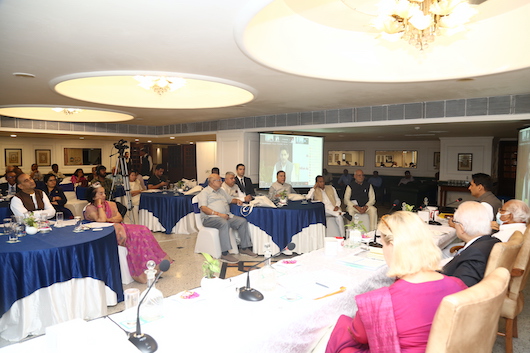
A Group photo of participants of the regional conference on the humanitarian consequences of nuclear weapons and nuclear-free-zone in Central Asia held on August 29, 2023. Credit: Jibek Joly TV Channel

ASTANA, Kazakhstan, Sep 7 2023 (IPS) – Exactly 32 years ago, on September 29, 1991, Kazakhstan, then part of the Soviet Union, made a historic decision that would alter its fate. On that day, Kazakhstan permanently closed the Semipalatinsk Nuclear Test Site, defying the central government in Moscow. This marked the start of Kazakhstan’s transformation from a nuclear-armed state, possessing the fourth-largest nuclear arsenal at the time, to a non-nuclear-weapon state. Kazakhstan’s audacious move to eliminate its nuclear weapons was rooted in a profound commitment to global disarmament, setting an inspiring precedent.


Eighteen years later, in 2009, the United Nations General Assembly adopted a resolution, led by Kazakhstan, designating August 29 as the International Day Against Nuclear Tests. This day serves as a solemn reminder of the catastrophic consequences of nuclear weapons and underscores the urgent imperative for disarmament.

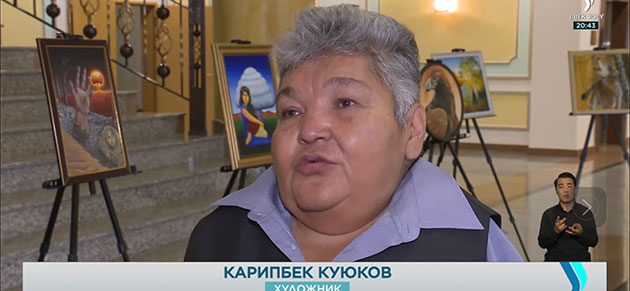
In a world where the threat of nuclear weapons being used again remains a grim reality, a pivotal question looms: Can we genuinely aspire to a world free of nuclear arms? To delve deeper into this pressing concern and comprehend the menace posed by nuclear weapons testing and deployment, we interviewed Karipbek Kuyukov and participants of the “Humanitarian Impact of Nuclear Weapons and the Central Asian Nuclear-Weapon-Free Zone” regional conference. This conference, organized by the Ministry of Foreign Affairs of Kazakhstan in partnership with the Center for International Security and Policy (CISP), Soka Gakkai International (SGI), the International Committee of the Red Cross (ICRC), and the International Campaign to Abolish Nuclear Weapons (ICAN), took place in Astana, Kazakhstan to commemorate this year’s International Day Against Nuclear Tests.

Karipbek Kuyukov is an armless painter from Kazakhstan, and global anti–nuclear weapon testing & nonproliferation activist. Credit: Jibek Joly TV Channel

One of the most poignant moments during the conference came from Dmitriy Vesselov, a third-generation survivor of nuclear testing. He provided a heartfelt testimony about the profound human toll exacted by nuclear testings on his family and the broader community. The nuclear tests conducted at the Semipalatinsk Nuclear Test Site over four decades unleashed explosions 2,500 times more potent than the atomic bombs dropped on Hiroshima and Nagasaki. The repercussions of these tests have echoed through generations, inflicting severe health problems and untold suffering.

Kuyukov, a renowned Kazakh artist born without hands due to radiation exposure in his mother’s womb, has devoted his life to raising awareness about the horrors of nuclear testing. His powerful artwork, created using his lips or toes, depicts the survivors of nuclear tests and serves as a poignant tribute to those who perished. Kuyukov’s unwavering commitment reflects the indomitable human spirit in the face of unimaginable adversity.

Dmitriy Vesselov’s testimony shed light on the ongoing challenges faced by survivors. He candidly shared his struggles with health issues, including acromioclavicular dysostosis, a condition severely limiting his physical capabilities. Vesselov expressed his deep concern about the potential transmission of these health problems to future generations. Consequently, he has chosen not to have children. The conference underscored the imperative of averting the repetition of history by delving into the past tragedies inflicted by nuclear weapons testings.

Hirotsugu Terasaki, Director General of Peace and Global Issues of SGI, commenting on the event said “I believe that this regional conference is a new milestone, a starting point for representatives from five countries of Central Asia to discuss how we can advance the process toward a nuclear-weapon-free world, given the ever-increasing threat of nuclear weapons.”

Terasaki observed that the international community is actively deliberating Articles 6 and 7 of the Treaty on the Prohibition of Nuclear Weapons (TPNW), mandating state parties to provide support to victims and address environmental remediation. He accentuated Kazakhstan’s pivotal role as a co-chair of the working group central to these discussions.

Kazakhstan does provide special medical insurance and benefits to victims of nuclear tests. However, these benefits are predominantly extended to individuals officially certified as disabled or a family member of those who succumbed to radiation-related illnesses. Numerous victims, like Vesselov, who do not fall within these categories, remain ineligible for assistance.

Despite his daunting challenges, Mr. Vesselov maintains an unwavering sense of hope. He hopes that his testimony will serve as a stark reminder of the perils of nuclear weapons and awaken global consciousness regarding the dangers posed by even small tactical nuclear weapons and the specter of limited nuclear conflicts. Ultimately, his deepest aspiration, shared by all victims of nuclear weapons, is that the world will never bear witness to such a devastating tragedy again.

As Kazakhstan assumes its role as President-designate of the third Meeting of States Parties to the TPNW, it reaffirms its steadfast commitment to global peace and disarmament. President Kassym-Jomart Tokayev’s resolute words resonate with the sentiment of a nation that has borne the scars of nuclear testing: “Such a tragedy should not happen again. Our country will unwaveringly uphold the principles of nuclear security.”

At the conference, member states of the Treaty of Semipalatinsk were encouraged to support Kazakhstan in this endeavor, and in its efforts to represent the Central Asian region’s contribution to nuclear disarmament, through attending the second Meeting of States Parties of the TPNW, at least as observers, which will take place at the United Nations Headquarters in New York between 27 November and 1 December this year, and by signing and ratifying the TPNW at the earliest opportunity.

In a world still grappling with the looming specter of nuclear devastation, Kazakhstan’s journey from a nuclear test site to a leading advocate for disarmament serves as a beacon of hope. Kazakhstan’s unwavering commitment to peace stands as a testament to the enduring legacy of a nation that once bore the weight of nuclear tests and now champions a safer, more secure world for all.

Katsuhiro Asagiri is President of INPS Japan and Kunsaya Kurmet-Rakhimova is a reporter of Jibek Joly(Silk Way) TV Channel.

IPS UN Bureau


Lawmakers Call on G20 to Prioritise Spending on Youth, Gender, and Human Security

Asia-Pacific, Conferences, Development & Aid, Gender, Headlines, Humanitarian Emergencies, Population, Poverty & SDGs, Sustainable Development Goals, Youth

Population

Asian Parliamentarians believe it’s important to prioritise spending on ageing and youth populations. Credit: APDA

Asian Parliamentarians believe it’s important to prioritise spending on ageing and youth populations. Credit: APDA

NEW DELHI, Sep 5 2023 (IPS) – Legislators from around the world, this week, officially submitted to the Sherpa of the G20 meeting set for September in New Delhi a declaration calling on governments to prioritise spending on ageing, youth, gender, human security, and other burning population issues.


The submission to the G20 Sherpa follows a workshop held on August 22 in New Delhi to discuss the Declaration first presented at the G7 Hiroshima summit in April by the Global Conference of Parliamentarians on Population and Development (GCPPD) under the UNFPA

“We have now submitted the Declaration to Amitabh Kant, Sherpa to the G-20 so that it can be taken up,” Manmohan Sharma, Executive Secretary of the Indian Association of Parliamentarians on Population and Development (IAPPD), told IPS.

Deepender Hooda, Vice Chair of the AFPPD and a member of India’s Parliament, said the workshop in New Delhi was significant not only because India is hosting the G-20 summit but also because India was expected to have overtaken China as the world’s most populous country reaching 1,425,775,850 people in April.

Lawmakers met in New Delhi to discuss the prioritisation of resources to prepare a declaration to the G20. Credit: APDA

Lawmakers met in New Delhi to discuss the prioritisation of resources to prepare a declaration to the G20. Credit: APDA

Keizo Takemi, member of the House of Councillors, Japan, and Chair of the AFPPD, observed that India faced many challenges that are hard to overcome, and these included the large size of its population, limited school attendance, and a high rate of unemployment. “Prioritisation of population issues is the most important,” he emphasised.

Hooda, a leader of the opposition Congress party from the state of Haryana, said he was concerned at the dwindling budgetary outlay in social sectors like health and education over the last few years in India. “Currently, for some reason, inclusive growth in education and health has fallen,” he told delegates.

A presentation to the workshop by Suneeta Mukherjee indicated that India is among the top five nations leading the ‘out-of-school’ category, with 1.4 million children in the 6-11-years-old age category not attending school. Also, out of every 100 students, 29 per cent drop out of school before completing elementary education.

Mukherjee, an Indian career bureaucrat who has served at the UNFPA, said the situation appeared to be worsening at the upper primary level given that the dropout rate at the upper primary level had gone up to 3 per cent in 2021-2022 while it was only 1.9 per cent in 2020-2021. The annual dropout rate of secondary school students was 14.6 in 2020-2021.

Citing recent studies in her presentation, Mukherjee said 36 per cent of Indians between the ages of 15 and 34 believe that unemployment is the biggest problem facing the country. She said one survey showed 40 per cent of graduates identified unemployment as their most pressing concern.

Said P.J. Kurien, chairperson of IAPPD: “It is important that all MPs take up population-related issues. They need to ask what percentage of the budget is devoted to education and health and ensure that every child goes to school with special attention given to girls.”

Echoing Kurien, Sharma said it was up to members of parliament to ensure that no child is left out in his or her constituency. “The solution is in your hands, but the prioritisation is missing.”

Delegates outlined at the workshop legislative steps taken by Parliamentarians in their countries in implementing the International Conference on Population Development’s Programme of Action and 2030 Agenda.

Josephine Veronique Lacson-Noel, Member, House of Representatives of the Philippines, said over the last two decades, her country had enacted such legislations as the Magna Carta of Women, Reproductive Health Law, 105-Day Expanded Maternity Leave, Act Prohibiting Child Marriage, Universal Health Care Act, Youth Council Reform and Empowerment Act, and an Act to enable conditional cash transfers.

On the anvil, she said, is the Adolescent Pregnancy Prevention Bill, a law to recognise, evaluate and redistribute unpaid care and domestic work done by women, and another to accord social protection for older persons and the promotion of active aging.

For 2023, the budget allocation for reproductive health was $14.9 million dollars, and that for training teachers to implement comprehensive sexuality education was $13.8 million, Lacson-Noel said.

Andrea W. Wojnar, UNFPA India representative and country director for Bhutan, said with the right expertise and skills, India’s 1.4 billion people could be turned into 1.4 billion opportunities.

Wojnar said India, with its large youth cohort — its 254 million youth in the 15-24 age bracket — can be a source of innovation and solutions, especially if girls and women are provided educational opportunities and skills to access new technologies and are empowered to fully exercise their reproductive rights and choices.

With close to 50 per cent of its population below the age of 25, India has a time-bound opportunity to benefit from the demographic dividend, according to Wojnar.

“Women and girls should be at the centre of sexual and reproductive policies and programmes. When rights, choices, and equal value of all people are truly respected and held, only then can we unlock a future of infinite possibilities,” Wojnar said in a statement.

“As the national fertility rate falls below 2.1 (the replacement level), India is at a unique historical opportunity, witnessing a great demographic transition as a youthful nation,” Wojnar said, adding that India also has the largest number of outmigrants and is affected by ageing, urbanisation and issues around sustainable development.

Wojnar warned that, overall, the Asia Pacific region was six times more likely to be affected by disaster events than other regions and is highly susceptible to changing weather patterns, calling for special attention by governments.

The Declaration presented to the Sherpa of the G-20 called on governments, among other things, to implement comprehensive legislation and policies that address all forms of gender-based violence and eradicate harmful practices such as child marriage, early and forced.

It also called for investment in sexual and reproductive health and rights, as well as comprehensive sexuality education toward making future societies economically dynamic and for building peaceful, inclusive, and sustainable societies. Support for political and economic participation by women and girls could ensure the development of societies that guarantee liberty and individual choice for women and girls, it said.

Governments were asked to promote and assure equitable access to health innovation, finance, technology, and medicines in the global community which can support human security, leaving no one behind.

Acknowledgement of the grave impacts of environment/climate change and global warming was important, as also the need to promote policies that address the needs of geographically vulnerable countries, which is a threat to health and human security, the Declaration said.

Investing in young people by providing decent work opportunities and enabling them to become a driving force for sustainable development was important as also addressing active and healthy ageing to enhance people’s overall quality of life by improving areas such as health and long-term care through resilient universal health coverage, physical security, and income stability.

Governments were also asked to enact national legislation and policies and ensure political will through allocation, oversight, and monitoring of budgetary resources to build universal health coverage, which is vital to enhance the global health framework.

IPS UN Bureau Report

  Source

Alleviating Urban Poverty Through Livelihood Generation

Aid, Asia-Pacific, Civil Society, Development & Aid, Featured, Headlines, Humanitarian Emergencies, Poverty & SDGs, Sustainable Development Goals, TerraViva United Nations

Poverty & SDGs

BRAC International recently signed a memorandum of understanding with the Bihar Government’s Rural Livelihoods Promotion Society to launch Satat Jeevikoparjan Yojana Shahari, the first government-led urban Graduation programme in Asia. Credit: BRAC

BRAC International recently signed a memorandum of understanding with the Bihar Government’s Rural Livelihoods Promotion Society to launch Satat Jeevikoparjan Yojana Shahari, the first government-led urban Graduation programme in Asia. Credit: BRAC

PUNE, INDIA, Aug 30 2023 (IPS) – In a bid to tackle the complexities of urban poverty, the Government of Bihar’s Rural Livelihoods Promotion Society (BRLPS) has launched Satat Jeevikoparjan Yojana Shahari (SJY Urban). The program will include a time-bound series of multifaceted interventions addressing food security, social inclusion, and sustainable economic livelihoods to enable participating households to achieve a better standard of living.


As part of this program, BRLPS has signed a Memorandum of Understanding (MoU) with BRAC International, which will serve as a thought partner to the Government of Bihar for the project development and also is building a consortium of partners to support the government in its implementation. Project Concern International (PCI), for example, is taking on management responsibilities and will also host thematic workshops across departments and with civil society experts to support inclusive learning and dialogue.

Mobile Creches will create a community cadre of childcare providers who will support maternal and child health. They have a 50-year-old history of providing childcare support, maternal and nutritional health, and WASH training to urban women in the slums of Delhi, Mumbai, and Pune. Quicksand will support the learning process to consolidate the design through ethnographic methods, prototyping, and other design elements. These learnings will help inform the project about the fabric of each respective urban community and provide a feedback loop once the rollout starts.

SJY Urban was inspired by the existing rural programme, Satat Jeevikoparjan Yojana (SJY), locally known as JEEVIKA, the largest government-led Graduation programme in the world, which has reached over 150,000 households as of early 2023 and is still expanding. SJY Urban is modelled on the rural programme’s six basic modules: 1) Building up the aspirations and confidence of households; 2) Financial Inclusion; 3) Improvement of Health, Nutrition, and Sanitation; 4) Social Development; 5) Livelihood generation; and 6) Government Convergence.

While taking inspiration from JEEVIKA, the Urban Programme will be adapted to respond to the unique challenges people in poverty face within the urban context.

“Urban poverty is complex and inadequately addressed,” said Shweta S Banerjee, Country Lead – India, BRAC International. “SJY Shahari is a unique project in the many challenges it has accepted, including supporting project participants during extreme heat waves. BRAC is excited and committed to serving as a thought partner to the Government of Bihar as we take the time to test, learn, relearn, and deploy the project design.”

Applying Learnings from the Rural Programme to the Urban

The 36-month SJY Urban Programme will be launched in five wards in Patna and five wards in Gaya for now and will be scaled up in a year’s time. Given the unique challenges in urban settings, where research and solutions are more limited in comparison to rural settings, the programme will incorporate learnings from the SJY programme.

“In keeping with the requirements in an urban setting, we intend to provide improved skill sets in carpentry, plumbing, welding, and the like that can help workers access better employment opportunities both within and outside Bihar. For instance, there are around 50,000 to 100,000 Bihar workers in the Tiruppur hosiery industry. We intend to provide them with the necessary skill certification through the National Skill Development Council,” Jeevika CEO Rahul Kumar told IPS.

Designed with a focus on women’s empowerment, SJY has made a pronounced difference for people living in extreme poverty in Bihar, particularly through inclusive livelihood development and access to financial security through self-help groups (SHGs). The urban programme will also utilise SHGs to improve financial opportunities along with sustainable livelihood options.

While the livelihood options are different, there is still a great opportunity for skill development for people living in urban poverty. JEEVIKA plans to pursue livelihoods for participants through conventional entrepreneurship, building up specific skills for trades, and partnerships with public utilities. The existing bank sakhi programme, a program that has trained rural women to assist customers in opening accounts and other administrative bank-related services, as part of JEEVIKA, saw 2,500 bank sakhis leverage Rs 10,000 crore in business for various banks.

According to Rahul Kumar, the bank sakhi programme could be introduced in across Bihar and offer additional financial products such as insurance and mutual funds.

There are also climate-responsive livelihoods that have been utilised in the rural programme that can work for an urban setting as well, such as waste management, recycling of waste, and the use of e-rickshaws. With climate change contributing to rapid urbanisation across Asia and driving millions more into poverty, affecting those furthest behind first, sustainable, resilient livelihood development will be a critical component of SJY Urban. The programme will work to further enhance resilience among participants by providing them with resources and training to develop food security and social inclusion.

Creating a Stronger Ecosystem Through Convergence

Similar to the rural programme, SJY Urban will bring together different existing government schemes and agencies to best serve those living in extreme poverty. The programme will also leverage the existing enterprises within the rural programme and promote them in the urban programme as well, such as market poultry and dairy products.

There are existing livelihood initiatives that rural participants are driving forward, such as running nurseries across the state, which have provided saplings to the Environment, Forest, and Climate Change Department for planting. These saplings can be used by urban plantations and gardens that are also under the department. Similarly, there are kiosk carts that sell Neera or palm nectar that are processed and made by JEEVIKA participants. There is an opportunity to expand this enterprise to the urban setting as well.

JEEVIKA will also engage other government agencies to support the design and implementation of the urban programme. Most recently, JEEVIKA and BRAC convened an inaugural workshop in preparation for launching the Urban Poor Graduation Project, in collaboration with the Departments of Urban Development and Housing, Labour Resources, Social Welfare, Women and Child Development Corporation. The workshop brought together government representatives and experts with diverse sectoral expertise to reflect on existing solutions for urban poverty and share key insights that could help inform the design and delivery of the Urban Poor Graduation Project. The workshop also brought together practitioners and leveraged knowledge from Graduation-based programmes outside Bihar and India.

The shared expertise and convergence in existing government schemes and partnerships will allow the programme to address unique challenges facing the urban environment and enhance coordination, which will ultimately improve overall impact.

Challenges and Learning Opportunities in an Urban Environment

This will be one of the first urban Graduation programmes at scale that combine skills development and livelihood support to alleviate urban poverty.

The unique constraints presented by the urban environment in Bihar, such as limited land availability, the migratory nature of the population in urban poor neighbourhoods, and heatwaves impacting the ability to work, present an opportunity to learn and adapt programming further to test what works.

“The kind of social cohesion prevalent in rural areas is lacking in urban centres. This makes social mobilisation, on which the programme rests, a difficult task,” Kumar said.

The first phase in designing the programme, along with the learnings from the first cohort of participants, will offer valuable insights on how to combat the challenges of those living in urban poverty face. Such learnings can then be shared across the Global South to support broader efforts to respond to rapid urbanisation and an increase in urban poverty.

SJY Urban is poised to move head-on, with its consultants scheduled to hammer out a clear strategy in the coming months. In a year’s time, Kumar says the programme aims to cover all 240 urban local bodies in the state.
IPS UN Bureau Report

  Source