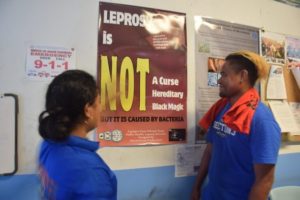
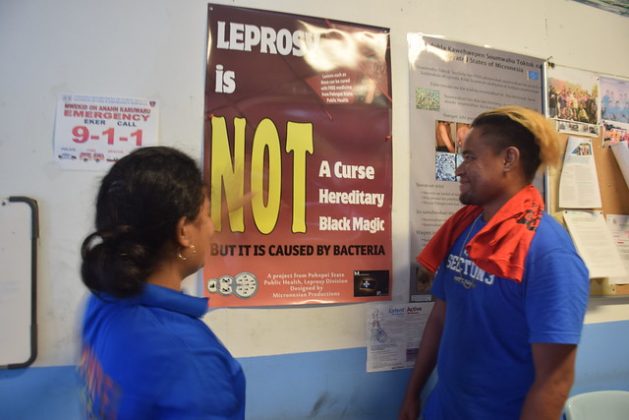
Dexter, a 25-year-old fisherman from Pohnpei in the Federated States of Micronesia, received treatment for Hansen’s disease, also known as leprosy, for over a year. He has been cured of the disease. Credit: Stella Paul/IPS
MANILA, Sep 9 2019 (IPS) – Increasing awareness of the continuing existence of Hansen’s Disease (leprosy) is critical to sustaining effective public health efforts against the disease, eliminating the social stigma associated with it, and halting its transmission.
That was the consensus reached by participants at the Global Forum of People’s Organisations on Hansen’s Disease in Manila on Sept. 9, following a lecture by Dr. Arturo Cunanan, the Chief Medical Officer of the Culion Sanitarium and General Hospital in the Philippines.The forum was organised by Japan’s Sasakawa Health Foundation (SHF) and The Nippon Foundation.
Cunanan noted that for several years, the number of new cases has plateaued at about 200,000 per year, a troubling statistic that he attributed in part to a lack of awareness among public health bodies as well as people affected by the disease.
The social stigma attached to leprosy is a barrier to early detection of the disease, which is the key to slowing its rate of transmission. Cunanan said that the average length of time between the onset of the disease and the beginning of treatment is about two years.
This happens because on the one hand, patients are unaware of medical help available to them, unwilling, or otherwise unable to seek treatment due to stigma; and on the other, a lack of expertise and resources on the part of public health departments due to a misunderstanding of the persistence of the disease.
Not a priority
“Many public health and government officials confuse elimination and eradication,” Cunanan told the forum participants. “They think that leprosy being eliminated as a public health problem means it has been eradicated, so they are surprised when they learn it still exists.”
What this has resulted in is a decline in the material and human resources available for combatting leprosy. “Leprosy will never be a priority” for government health programmes, Cunanan said. “There are more pressing problems, bigger emergencies.”
The Philippines is a good example. The disease is considered a minor problem, and the number of new cases each year is relatively low – there were 2,108 new cases in 2017, out of a national population of about 107 million – but has been relatively consistent year after year, “between 2,000 and about 3,000”.
Because of the mistaken belief that leprosy has either disappeared entirely or has become rare, medical expertise and programmes have disappeared from public health institutions. That in turn has degraded the supervision and monitoring needed to identify new cases and prevent the transmission of the disease, Cunanan explained.
Lucy Massao, a member of the Tanzania Leprosy Association (TLA), noted that the stigma and lack of understanding of leprosy among the public in her country was also reflected in the shortcomings of the public health framework.
“We at TLA really spend a lot of time trying to educate people, including the officials,” she said. “Many patients, the health officials refer to us, because they cannot offer much support except for the medications. But they are improving, through working with us.”
Role of people’s organisations
Public health authorities elsewhere are also gradually recognising the value of the organisations of people who have been affected by leprosy. “You are the best experts,” Cunanan told the forum participants, “Because you have first-hand experience.”
Organisation members can assist in early detection and outreach, Cunanan explained, and help public health authorities improve their services to leprosy patients.
In the Philippines, collaboration with people’s organisations such as Coalition of Leprosy Advocates of the Philippines has actually been included in official policy. Philippine Assistant Secretary of Health Dr. Maria Laxamana, who delivered the keynote address on the forum’s first day, noted that “intensified collaborative efforts among [government] agencies and with private partners” is a key objective of the government’s National Leprosy Control Programme.
Dr. V.R. Pemmaraju of the World Health Organisation’s (WHO) Global Leprosy Programme said that there has been a marked growth in talent and inclusiveness among people’s organisations, which is increasing their effectiveness in supporting and extending public health efforts towards leprosy.
“What we’re seeing, and you can see it at this forum, is that the groups are more global, include more women, and are more educated about the disease and the support needed,” Pemmaraju told IPS.
“This has been very good from the point of view of the WHO, because of the added social aspect of the Global Leprosy Partnership,” he explained. Where people’s organisations still need to develop is in working effectively with governments.
“They [the organisations] have the experience and knowledge about leprosy, but what I’ve seen is that most need more skills in negotiating and engaging with government officials,” Pemmaraju said. “There is still some gap in inclusion of people’s organisations in forming public health policy [related to leprosy], and developing those skills would help to reduce that.”
Pemmaraju is upbeat about the prospects of people’s organisations gaining a bigger voice in public health policy towards leprosy.
“In each of these meetings, I see the groups growing globally and gaining more influence,” Pemmaraju said. “With the engagement of the people’s organisations, we [the WHO] are optimistic that we can achieve our goal of ‘zero leprosy.’”
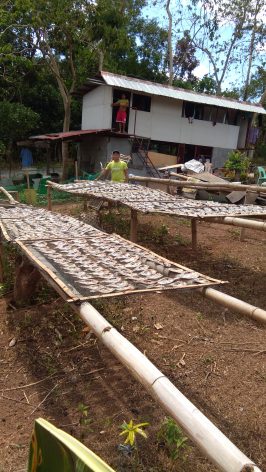
Ariel Lazarte of the Coalition of Leprosy Advocates of the Philippines (CLAP) shows off the dried fish production run by patients of a transient house operated by HD (Hope & Dignity) Philippines. Courtesy: Ariel Lazarte
MANILA, Sep 8 2019 (IPS) – Organisations supporting people affected by Hansen’s disease (leprosy) have social rather than capitalist aims, but they need to take a business-minded approach to their work if they wish to be sustainable, experts at a global conference in Manila, Philippines said.
In workshops conducted at the Global Forum of People’s Organisations on Hansen’s Disease in Manila on Saturday and Sunday, Sept. 7 and 8, representatives of organisations from Asia, Africa, and Latin America agreed that sustainability is the biggest challenge they face.
Every organisation faces some uncertainty over the continuity of donor or government financial support, so reducing or eliminating reliance on external funding is considered a critical priority.
Japan’s The Nippon Foundation (TNF) and Sasakawa Health Foundation (SHF), which sponsored the global forum and provided capacity support to the participating organisations, have long taken the view that sustainability should be the ultimate goal.
At a regional conference of people’s organisations held here in March, SHF Executive Director Dr. Takahiro Nanri stressed that his foundation’s goal was to see its beneficiaries become self-supporting. “In order to be truly sustainable, the organisation needs to develop an income-generating programme,” Nanri said at the time.
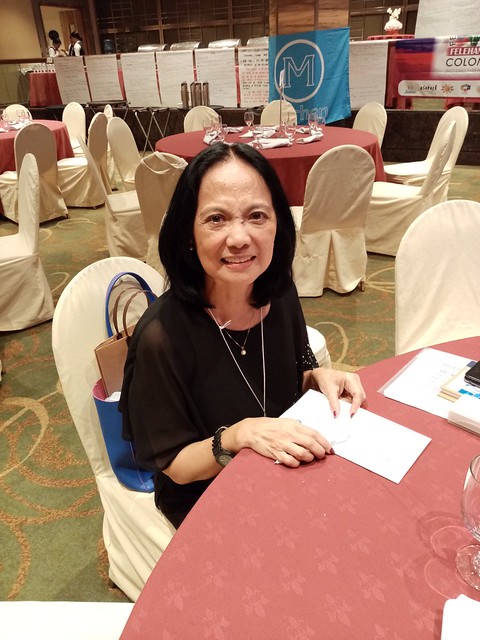
Dr. Marie Lisa Dacanay president of the Institute for Social Entrepreneurship in Asia (ISEA) outlined the fundamentals of effective social enterprises, which were derived from research conducted by ISEA in India, Indonesia, Bangladesh and the Philippines. Credit: Ben Kritz/IPS
Fundamentals of social enterprises
On Sunday Sept. 8, Dr. Marie Lisa Dacanay president of the Institute for Social Entrepreneurship in Asia (ISEA) outlined the fundamentals of effective social enterprises, which were derived from research conducted by the institute in India, Indonesia, Bangladesh and the Philippines.
Social enterprises have three common traits, Dacanay explained:
They are driven by a social mission instead of an enterprise mission;
Successful social enterprises are wealth-creating organisations that provide some form of marketable products or services; and
They follow a distributive enterprise philosophy in that profits are directed towards the social mission rather than being collected as return on investment.
In carrying out its mission, a social enterprise faces a number of external and internal challenges, Dacanay said.
External pressures come in the form of climate or environmental factors – a significant concern of agriculture-based enterprises; unfavourable government policies; harmful industry or market practises; inadequate government support for social programs; and institutional corruption.
Internal challenges include difficulty in accessing needed technology; securing initial financing; organisational and management capacity; production efficiency; and developing practical measures of the enterprise’s social impact.
Based on ISEA’s research, successful social enterprises can be organised following an entrepreneur non-profit model, a social cooperative model, a social business model, or what she described as “social entrepreneurship intervention,” which is a hybrid combining characteristics of all three models. In determining which form of organisation is most suitable to the social mission, Dacanay told IPS, “I think everything starts with the reality. Every social entrepreneur starts with, ‘what are the needs, and the problem?’”
“The first step is really understanding the stakeholders you want to help,” Dacanay continued, “find out what they are doing already, and look at what gaps there are. That, along with the resources and capabilities available, define a way of moving forward, and then the organisational form will follow.”
Social business is still business
In the Saturday workshop, Earl Parreno, the chairman of the Philippines’ Altertrade Foundation, Inc. (ATFI) conducted a training in business planning basics for the assembled people’s organisations.
Defining a social enterprise as one that pursues a triple bottom line philosophy (financial, social, and environmental results), Parreno explained that the fundamentals of business planning must still be applied, but that organisations that are made up of people who are both the providers and beneficiaries of a social mission are often handicapped by a complete lack of capacity.
“Poverty is not just lack of financial resources,” Parreno told the workshop participants in his presentation, “It’s really incapability, a lack of knowledge.”
Developing the capabilities can be an arduous process, but is achievable. One of ATFI’s areas of focus in the Philippines is among poor farmworkers in Negros Province, a centre for sugar production. Parreno described the success of the social enterprise supported by ATFI in marketing Muscovado sugar – semi-raw sugar that was at one time considered “poor man’s sugar,” but is now a premium-priced staple in organic food stores.
“The business ideation is really critical,” Parreno explained to IPS. “We have a saying here in the Philippines: gaya-gaya puta maya, which means something like ‘copycat.’” A common problem among new social enterprises, Parreno said, is a lack of originality in the revenue-generating product or service they wish to pursue.
“What we stress to our social enterprise partners is that they should not conceive a product or service that’s just better, but one that is truly different and has a ‘solidarity market,’” Parreno said, such as the market of “mindful consumers” for organic Muscovado sugar discovered by the Negros sugar farmers. “That solidarity market is so important. It really gives the people’s organisation a fighting chance.”
According to Parreno, developing a sound business plan, from business ideation through resource mapping, feasibility study, and market analysis answers one of the key concerns expressed by many of the forum participants in the post-workshop discussion: The difficulty in securing initial funding to launch a social enterprise.
“The only difference between this kind of (social) business and a conventional business is where the profits go,” Parreno explained. “The discipline and the steps that need to be taken to develop it are very much the same, and if the result is a good business plan, the investors to get it off the ground will follow.”
A poultry and dried fish production project located in Baras, Rizal Province, east of the Philippine capital, employs about 10 people, all residents of a transient house for leprosy patients. It is a good example of a social enterprise that has proved successful.
Ariel Lazarte, a member of Coalition of Leprosy Advocates of the Philippines (CLAP) who runs the social enterprise, told IPS that sales have been good enough that his out-of-pocket expenses have been fully covered by the revenue, as well as providing much-needed funding for the transient house residents. The social enterprise, part of HD (Hope and Dignity) Philippines, a non-profit managed by Lazarte, makes about 560 dollars a month.
Half of this is ploughed back into the social enterprise and the remainder is used to pay for the living expenses of the patients, including paying for medicines, transport, food, water, and vitamins. “The only outside funding we had was for [the pen for the chickens],” Lazarte told IPS, noting that the Tikkun Olam Foundation, which supports Hansen’s disease in the country, provided the funding for this.
“The residents of the house who are capable help to tend the chickens, which are layers, and produce the dried fish. We then sell the eggs and fish in the local market.”
Part of the marketing advantage the poultry project has is that the eggs are organic. “We use organic feed for the chickens,” Lazarte said. “No synthetic feed.”
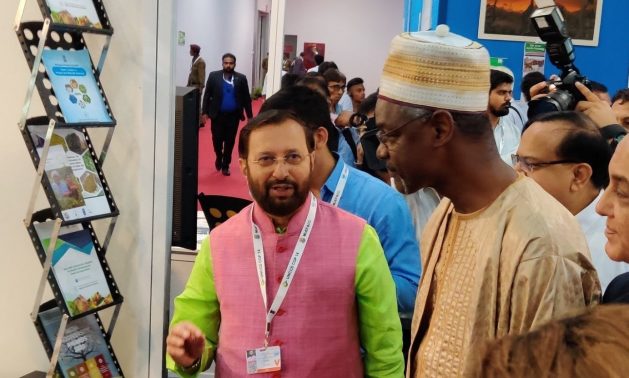
India’s minister for environment, forests and climate change, Prakash Javadekar (left), said he would be happy if CoP 14 could achieve consensus on such difficult issues as drought management and land tenure. Courtesy: Ranjit Devraj
NEW DELHI, Sep 4 2019 (IPS) – Expectations are high, perhaps too high, as the 14th Conference of the Parties (CoP 14) of the United Nations Convention to Combat Desertification (UNCCD), now into the third day of its two-week session, is being held outside the smog-filled Indian capital of New Delhi.
At the inauguration on Monday, India’s minister for environment, forests and climate change, Prakash Javadekar, soon after ceremonies to mark his taking over as president of the Convention for the next two years, said he would be happy if CoP 14 could achieve consensus on such difficult issues as drought management and land tenure.
Other issues on the agenda of CoP14, themed ‘Restore land, Sustain future’ and located in Greater Noida, in northern Uttar Pradesh state, include negotiations over consumption and production flows that have a bearing on agriculture and urbanisation, restoration of ecosystems and dealing with climate change.
The IPCC report covered interlinked, overlapping issues that are at the core of CoP14 deliberations — climate, change, desertification, and degradation, sustainable land management, food security and greenhouse gas fluxes in terrestrial ecosystems.
“Sustainable land management can contribute to reducing the negative impacts of multiple stressors, including climate change, on ecosystems and societies,” the IPCC report said. It also identified land use change as the largest driver of biodiversity loss and as having the greatest impact on the environment.
Javadekar said he saw hope in the fact that of the 196 parties to the Convention 122, including some of the most populous like Brazil, China, India, Nigeria, Russia and South Africa have agreed to make the U.N. Sustainable Development Goal of achieving land degradation neutrality (LDN) targets by 2030 as national objectives.
But the difficulty of seeing results on the ground can be gauged from India’s own difficult situation. Nearly 30 percent of India’s 328 million hectares, supporting 1.3 billion people, has become degraded through deforestation, over-cultivation, soil-erosion and wetland depletion, according to a satellite survey conducted in 2016 by the Indian Space Research Organisation.
A study, conducted last year by The Energy and Resource Institute (TERI), an independent think-tank based in New Delhi, estimates India’s losses from land degradation and change in land use to be worth 47 billion dollars in 2014—2015.
The question before CoP14 is how participating countries can slow down loss of land and along with it biodiversity threatening to impact 3.2 billion people across the world. “Three out of every four hectares have been altered from their natural states and the productivity of one every four hectares of land has been declining,” according to UNCCD.
Running in parallel to CoP14 is the 14th session of UNCCD’s committee on science and technology (CST14), a subsidiary body with stated objectives — estimating soil organic carbon lost as a result of land degradation, addressing the ‘land-drought nexus’ through land-based interventions and translating available science into policy options for participating countries.
On Tuesday, as CoP4 launched into substantive business, the participants at the CST and other subsidiary bodies began to voice real apprehensions and demands.
Bhutan representing the Asia Pacific group, highlighted the need for cooperation at all levels to disseminate and translate identified technologies and knowledge into direct benefits for local land users.
Bangladesh pointed out that LDN targets are sometimes linked to transboundary water resources and also called for mobilising additional resources for capacity building.
Colombia, speaking for the Latin America and Caribbean group, appreciated the value of research by the scientific panels, but urged introduction of improved technologies and mitigation strategies to reduce the direct impacts of drought on ecosystems, starting with soil degradation.
Russia, on behalf of Central and Eastern Europe, mooted the establishment of technical centres in the region to support the generation of scientific evidence to prevent and manage droughts, sustainable use of forests and peatlands and monitoring of sand and dust storms.
Civil society organisations, led by the Cape Town-based Environmental Monitoring Group, were also critical of the UNCCD for putting too much emphasis on LDN and demanded optimisation of land use through practical solutions that would ensure that carbon is retained in the soil.
“Retaining carbon in the soil is of particular value to India and its neighbouring countries, which presently have the world’s greatest rainwater runoffs into the sea,” says Himanshu Thakkar, coordinator, South Asia Network on Dams, Rivers and People (SANDRP), a New Delhi based NGO, working on the water and environment sectors.
“What South Asian countries need to do urgently is to improve the rainwater harvesting so as to recharge groundwater aquifers and local water bodies in a given catchment so that water is available in the post-monsoon period that increasingly see severe droughts,” Thakkar tells IPS. “This is where governments can be supportive.”
Benefits such as preventing soil degradation and consequent landslides that have become a common feature in South India, Sri Lanka and Bangladesh.
A study published in May said half of the area around 16 of India’s 24 major river basins is facing droughts due to lowered soil moisture levels while at least a third of its 18 river basins has become non-resilient to vegetation droughts.
Responding to the suggestions and demands the Secretariat highlighted recommendations to ensure mainstreaming of LDN targets in national strategies and action programmes, partnerships on science-policy to increase awareness and understanding of LDN and collaborations to assess finance and capacity development needs.
In all, the delegates, who include 90 ministers and more than 7,000 participants drawn from among government officials, civil society and the scientific community from the 197 parties will thrash out 30 decision texts and draw up action plans to strengthen land-use policies and address emerging threats such as droughts, forest fires, dust storms and forced migration.
“The agenda shows that governments have come to CoP14 ready to find solutions to many difficult, knotty and emerging policy issues,” said Thiaw at the inaugural session. The conference ends with the parties signing a ‘New Delhi Declaration’ outlining actions to meet UNCCD goals for 2018-2030.
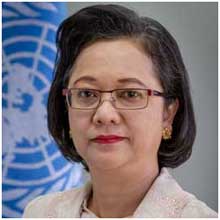
Armida Salsiah Alisjahbana is Under-Secretary-General of the United Nations and Executive Secretary of the United Nations Economic and Social Commission for Asia and the Pacific (ESCAP).
BANGKOK, Thailand, Aug 28 2019 (IPS) – The past five years have been the hottest on record in Asia and the Pacific. Unprecedented heatwaves have swept across our region, cascading into slow onset disasters such as drought. Yet heat is only part of the picture. Tropical cyclones have struck new, unprepared parts of our region and devastatingly frequent floods have ensued. In Iran, these affected 10 million people this year and displaced 500,000 of which half were children. Bangladesh is experiencing its fourth wave of flooding in 2019. Last year, the state of Kerala in India faced the worst floods in a century.
Armida Salsiah Alisjahbana
This is the new climate reality in Asia and the Pacific. The scale of forecast economic losses for the region is sobering. Including slow-onset disasters, average annualised losses until 2030 are set to quadruple to about $675 billion compared to previous estimates. This represents 2.4 percent of the region’s GDP. Economic losses of such magnitude will undermine both economic growth and our region’s efforts to reduce poverty and inequality, keeping children out of schools and adults of work. Basic health services will be undermined, crops destroyed and food security jeopardised. If we do not act now, Asia-Pacific’s poorest communities will be among the worst affected.
Four areas of Asia and the Pacific are particularly impacted, hotspots which combine vulnerability to climate change, poverty and disaster risk. In transboundary river basins in South and South-East Asia such as the Ganges-Brahmaputra-Meghna river basin, floods alternate with prolonged droughts. In South-East Asia and East and North-East Asia earthquakes, tsunamis and landslides threaten poor populations in the Pacific Ring of Fire. Intensifying sand and dust storms are blighting East, Central and South-west Asia. Vulnerable populations in Pacific Small Islands Developing States are five times more at risk of disasters than a person in South and South-East Asia. Many countries’ sustainable development prospects are now directly dependent on their exposure to natural disasters and their ability to build resilience.
Yet this vicious cycle between poverty, inequalities and disasters is not inevitable. It can be broken if an integrated approach is taken to investing in social and disaster resilience policies. As disasters disproportionately affect the poor, building resilience must include investment in social protection as the most effective means of reducing poverty. Conditional cash transfer systems can be particularly effective as was shown in the aftermath of Typhoon Haiyan in the Philippines. Increasing pre-arranged risk finance and climate risk insurance is also crucial. While investments needed are significant, in most countries these are equivalent to less than half the costs forecast to result from natural disasters.
The use of technological innovations to protect the region from natural disasters must go hand in hand with these investments. Big data reveal patterns and associations between complex disaster risks and predict extreme weather and slow onset disasters to improve the readiness of our economies and our societies. In countries affected by typhoons, big data applications can make early warning systems stronger and can contribute to saving lives and reducing damage. China and India are leading the way in using technology to warn people of impending disasters, make their infrastructure more resilient and deliver targeted assistance to affected farmers and citizens.
Asia and the Pacific can learn from this best practice and multilateral cooperation is the way to give scale to our region’s disaster resilience effort. With this ambition in mind, representatives from countries across the region are meeting in Bangkok this week at the United Nations Economic and Social Commission for Asia and the Pacific (ESCAP) to explore regional responses to natural disasters. Their focus will include strengthening Asia-Pacific’s Disaster Resilience Network and capitalising on innovative technology applications for the benefit of the broader region. This is our opportunity to replicate successes, accelerate drought mitigation strategies and develop a regional sand and dust storm alert system. I hope the region can seize it to protect vulnerable communities from disaster risk in every corner of Asia and the Pacific.
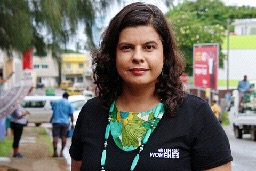
Nimarta Khuman is a Gender and Protection Advisor at UN Women under the Australia Assists Program, managed by RedR Australia. Her role involves supporting the Vanuatu Government’s Department of Women Affairs and Gender and Protection Cluster to address gender and protection concerns related to the Ambae emergency and other natural disasters.
PORT VILA, Vanuatu, Aug 19 2019 (IPS) – Vanuatu is among the world’s ‘most at-risk’ countries to natural disasters. In the last 12 months alone, the country has faced multiple volcanic eruptions, earthquakes, cyclone and tsunami.
The largest humanitarian emergency was caused by volcanic eruptions on the island of Ambae which resulted in the evacuation of over 8,000 people. Some displaced communities have resettled in the islands of Santo and Efate, but land ownership is a contentious issue.
Vanuatu also has the lowest rate of women in parliament and ministerial positions globally and high rates of gender-based violence. Cumulatively, these issues increase the risks affecting women and girls in humanitarian emergency and recovery periods.
In an interview with UN Women, Nimrata Khuman explains what it means to incorporate gender and protection in humanitarian action and why it’s important.
Excerpts from the interview:
What is meant by “Gender and Protection in Humanitarian Action”?
When we talk about gender and protection in humanitarian action, we need to ask the questions about whether we have addressed the different needs of women, girls, men and boys in our humanitarian response, because there is no “one size fits all” approach that works.
Every context in which a disaster has happened is different and women and girls may have unique risks, vulnerabilities and capabilities. There are other factors that can contribute to their marginalization and vulnerability, such as disability, age, sexual orientation, income and location.
The Department of Women’s Affairs leads the Gender and Protection Cluster in Vanuatu in partnership with CARE and Save the Children. The Cluster works to promote women’s voice and leadership, prevent and respond to gender-based violence, and ensure child protection and disability inclusion in any humanitarian response is designed and implemented for the affected population.
During the humanitarian response to the Ambae disaster for example, referral pathways for gender-based violence and child protection services were developed and Gender and Protection Cluster partners raised awareness within communities about violence prevention and where to go to access assistance.
Partners also developed and disseminated information for communities about their rights during evacuation and resettlement, conducted leadership training for women involved in humanitarian response, provided psycho-social support services and child-friendly spaces to help children cope with the effects of the disaster.
Volcanic eruption in Vanuatu
How did you incorporate gender and protection in the humanitarian response in Vanuatu?
The Gender and Protection Cluster ensures that people’s rights are protected and respected, and they can access services across all sectors safely and with dignity. This involves assessing needs, referring concerns and raising awareness among communities and service providers (such as agencies involved in food distribution, shelter, education and water, sanitation and hygiene).
It also involves advocating with other ministries to include gender and protection concerns into their response. During the Ambae State of Emergency, a joint Gender and Protection and Health Cluster was established to provide services across sectors for people with disabilities.
The Gender and Protection Cluster worked with the WASH Cluster to raise awareness on issues such as safety, lighting and privacy for toilet and shower facilities. During the Ambae and Ambrym responses, partners also integrated information on gender equality and menstrual hygiene management when speaking to communities.
We have also drawn attention to the lack of access to land and income for displaced communities, exposure to violence and delays in children’s education, when advocating with the Government.
We are now in the Ambae recovery phase and have been working with the Prime Minister’s Office to ensure all sectors include relevant actions and budgets for gender and protection in the programmes under the Ambae and Affected Islands Recovery Plan.
What has been the role of women in the different crises in Vanuatu in the past year?
Women are a vital part of humanitarian response and the ongoing emergencies have presented an opportunity to increase women’s participation and leadership in humanitarian action. In the Department of Women’s Affairs for example, seven of the ten staff who have been involved in leading response in different provinces are women.
The National Disaster Management Office and NGOs have involved senior female staff members in coordinating and responding to emergencies. The Vanuatu Women’s Centre has also been very active in efforts to prevent and respond to gender-based violence in emergencies and has provided support for life-saving counselling, health, legal assistance and access to justice services for survivors of violence.
At the community level, women are pivotal to disaster preparedness, and for designing response and resilience activities that meet the needs and realities of their communities. Gender and Protection Cluster partners are implementing programmes involving women in Community Disaster and Climate Change Committees and increasing women’s voice in decision-making at the local level.
But we need more women in leadership positions within communities, in the humanitarian sector and in Ministries and Departments which make decisions on policy, planning and financial resource allocations.
What are the biggest challenges that you are facing in your work in Vanuatu?
Since I arrived in Vanuatu a year ago, there have been five natural disasters due to the volcanic eruptions in Ambae, volcanic eruptions and earthquake in Ambrym, a tsunami affecting Aneityum, Tropical Cyclone Oma, and most recently, the Coconut Rhinoceros Beetle, which has the potential to destroy livelihoods of tens of thousands of people if left untreated.
These disasters have caused people to leave behind their homes, their land and jobs. Integrating into new communities has also not been an easy process for the displaced. Some are still living in tents in Santo and there is tension between displaced people and host communities due to the lack of essential services and resources in resettlement sites.
Some of the key issues that the Gender and Protection Cluster addresses in times of emergencies include violence against women and children, family separation, inclusive response for marginalized groups and ensuring that people can access services across sectors.
Although we have been able to shape policies, we need them to be implemented down to the community level. For this to happen, we need increased awareness that addressing gender and protection in humanitarian action is lifesaving and planning and budgeting needs to reflect that.
More initiatives are also required to prepare communities for the effects of natural disasters and to ensure that they are supported in the recovery phases.
What innovative approaches have worked so far?
Listening to communities and community-led solutions have been key in the programmes developed by the Gender and Protection Cluster partners. In Vanuatu, we have very strong church and chief systems and the Gender and Protection Cluster has been working with both in disaster preparedness, emergency and recovery.
Partners have trained church leaders and chiefs in community-based protection, peacebuilding, violence prevention and referral pathways. Churches are often used as evacuation centres and in the recovery phase, the Vanuatu Christian Council has mapped churches and assessed inclusivity of design in different islands.
The Vanuatu Women’s Centre has trained church leaders and chiefs to become male advocates and other partners have included local chiefs in their awareness-raising activities to ensure women’s leadership and voice is factored into response programmes.
The joint Gender and Protection and Health Cluster for the Ambae State of Emergency was also the first of its kind in Vanuatu and demonstrated that collaboration across different sectors and ministries can increase access to services for the most vulnerable.
Building upon lessons learned from recent disasters, in the next year we will be working on strengthening preparedness and response at the local level and developing protocols for elimination of violence against women and girls in emergencies.
We will also be training government, NGO partners and community leaders in Gender and Protection in Humanitarian Action and setting up Gender and Protection Committees in each of the six provinces of Vanuatu.
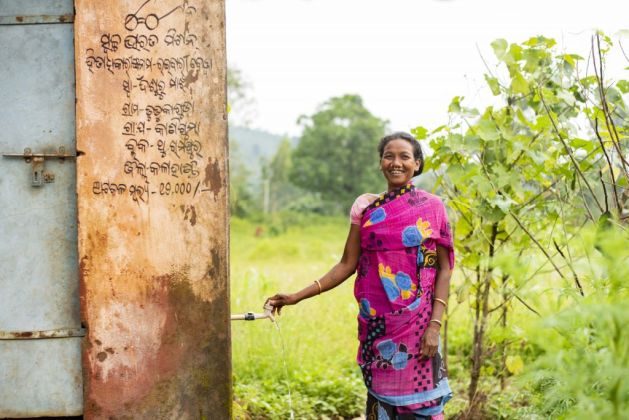
Raibari Bewa standing near the toilet, bathroom unit and collecting water from the third tap in Dudukaguda village, in Thuamul Rampur block, Kalahandi district of Odisha. On the walls, details of Swachh Bharat Mission benefits availed by her in Odia | Picture courtesy: Ajaya Behera
BHUBANESWAR, Odisha, India, Jul 30 2019 (IPS) – Research and experience across more than two decades in rural Odisha, India, show that an effective rural sanitation model requires both financial assistance and an integrated water supply.
There are studies and field reports that have analysed the Swachh Bharat Mission (SBM) in terms of coverage and use of toilets in rural India. The official government survey, the NARSS 2018-19, shows that 93 percent of rural households have access to a toilet and 96 percent of those having a toilet use them. Critiques of the survey point out the contradictions between NARSS and micro-level assessments in different parts of India. Other studies point out issues related to how comprehensive the approach to sanitation needs to be, if SBM is to truly address the large scale problems of ill-health, malnutrition, and poor quality of life caused by poor sanitation practices.
The Ministry of Drinking Water and Sanitation has already issued guidelines for follow-up components, such as the ‘Advisory on ODF Sustainability interventions‘. It is quite likely that with the Prime Minister and his government taking charge for the second term, the sustainability of the first generation SBM efforts will be given high priority. In this context, it is pertinent to throw light on some micro–level issues, based on more than two decades of experience in rural Odisha.
A rural sanitation model that works
Gram Vikas, the organisation I lead, started its work in rural sanitation in the year 1994. Our model of 100 percent coverage of all households in a village, all of them building and using household level toilets and a bathing room with piped water supply, has been recognised as a best practice nationally and globally.
Infrastructure alone is insufficient to sustain health benefits. Additional efforts are needed to motivate people to adopt safe sanitation practices…There are other aspects of personal hygiene and sanitation, including personal habits, disposal of child faeces, and menstrual hygiene; these need to be addressed by demonstrating workable models, accompanied by education
The integrated water, sanitation, and hygiene (WSH) intervention that we support rural communities with, is built on the following principles:
Participation of 100 percent of the habitation’s households; it is all, or none.
Cost sharing by the household, partially towards construction of the facilities, and fully for operations and maintenance.
Ownership and management by a village water and sanitation committee, consisting of representatives of all sections in the village.
A sanitation corpus fund built from a one-time contribution by all, towards providing cash incentives for future families in the village to build toilets and bathing rooms (ensuring 100 percent coverage at all times).
A maintenance fund through regular household fee collection, for maintenance of the piped water supply system.
In 25 years (up to March 2019), the Gram Vikas WSH model has been implemented in more than 1,400 villages, covering close to 90,000 households. The villages are financed primarily through the sanitation and rural drinking water schemes of the government, and Gram Vikas has mobilised private resources to fill in gaps.
What we learnt
Over the past two decades, working with rural communities of different types, we have realised that bringing about attitudinal and behaviour changes towards safe sanitation is not easy. When we began in the mid-1990s, saying that every house in the village will have toilets, bathing rooms, and piped water, most people laughed.
Between 1994 and 1999, we could cover only 30 villages—this resulted from our own efforts at motivating people, and not any felt desire on their part. Then started the gradual process of change—fathers of unmarried girls motivating future sons-in-laws’ village elders to take up the sanitation project; women taking the lead to convince their men to build toilets, and even stopping cooking for a day or two to make their husbands see reason; migrants who worked outside Odisha coming back to their own villages and motivating their parents, and so on.
When it comes to rural sanitation, government financial assistance matters
Between 1999 and 2007, the government’s support to sanitation, as part of the then newly launched Total Sanitation Campaign, was INR 300 per household, for below poverty line families. Support for community-led, piped water supply projects came much later, in the form of Swajaldhara in 2003.
The prevalent thinking among policy makers in the early 2000s was that financial incentives were not necessary to promote rural sanitation. This was based on the limited success of the subsidy-led Central Rural Sanitation Programme, that ran between 1986 and 1998.
Financial incentives to rural households for building toilets is more than a subsidy, it’s about society meeting part of the costs of helping rural communities build a better life. To compare, urban dwellers who may have built their own household toilets, do not pay anything for removing the human waste from their premises; municipal governments ensure sewage lines and treatment plants. The cost of this (which is borne by the government) is not seen as a subsidy. And yet, the upfront payment made to rural households to help build toilets is looked down upon as wasteful expenditure.
In 2011, the policy moved to a higher level of financial incentives to rural households for constructing individual household latrines, mostly likely in recognition of the fact that rural households needed the financial incentive as motivation to change sanitation behaviours. But today, with statistics showing 93 percent or more coverage of toilets, the policy prescription is likely to move to the pre-2011 phase–big financial incentives are not needed for building rural household toilets.
Our experience has taught us that nothing can be further from the truth. First, actual coverage of usable toilets is likely much less than what the numbers show. Second, households will need support for repairs and upgradation of the already built latrines. In addition, there are two categories for whom the financial assistance must continue: those who, for various reasons, have not constructed latrines so far; and new households that have come up in villages that have already been declared open defecation free (ODF).
Availability of water in the toilet is critical to encouraging use and maintenance of the facility
In most cases, where water is not available in proximity, the load on women to carry water has increased. A pour-flush latrine, the type mostly preferred, requires at least 12 litres of water per use. With 4-5 members in the household, the minimum daily requirement becomes about 60 litres, forcing women to collect at least three times the water they would otherwise collect. We have observed that without water in the household premises, women’s water carrying load increases to more than twice the pre-latrine times.
The addition of a bathing room, affords women more privacy, and a better way to keep themselves clean and hygienic. In most villages we have worked with, women especially, equate this part of their physical quality of life to what people in the city enjoy.
During the last few years, financial allocation for rural water supply has decreased. While the allocation to drinking water has reduced from 87 percent (2009-10) to 31 percent (2018-19), the allocation to rural sanitation has increased from 13 percent to 69 percent in the same period. This is definitely not a desirable situation, as noted by many.
Mainstreaming the community-owned and managed method of rural water supply will ensure equitable distribution
Doing this, rather than pushing for large water supply projects across many villages, will give rural communities and local governments greater control over managing their resources and meeting the needs of every household in an equitable manner. The Swajal programme of the Ministry of Drinking Water and Sanitation, which talks about village level, community-based water projects, is a step in the right direction. Much greater push is needed by the central government to ensure that the state-level apparatus moves to a more enabling and empowering approach in addressing rural drinking water needs.
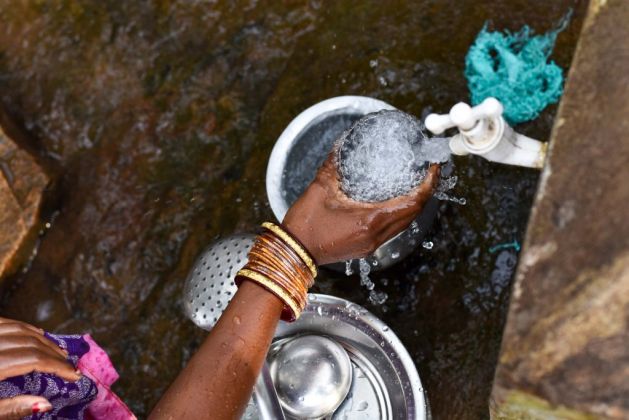
A woman collects the drinking water from the third tap in Simlipadar village in Thuamul Rampur, Kalahandi | Picture courtesy: Ajaya Behera
Second generation challenges
The water and sanitation infrastructure, when first built, contributes to a substantial decrease in water-borne diseases in villages. These are borne out of several studies conducted in villages in Odisha.
After the initial round of benefits, we find that the infrastructure alone is insufficient to sustain health benefits. Additional efforts are needed to motivate people to adopt safe sanitation practices. The ensuing issues have been highlighted by many. For instance, changing long-standing beliefs and attitudes related to toilet use requires intensive hand holding, particularly for older people. There are other aspects of personal hygiene and sanitation, including personal habits, disposal of child faeces, and menstrual hygiene; these need to be addressed by demonstrating workable models, accompanied by education.
From Gram Vikas’ experience in Odisha, we have been able to enumerate several challenges that need to be addressed. Even when piped drinking water exists, households prefer to store drinking water. We have found that handling of stored drinking water is an area that needs better education.
Disposal of child faeces, especially by mothers who do not think the child’s faecal matter is harmful, is another area of concern. We are also coming across new forms of discrimination in households, where menstruating women are not allowed to use the toilets and bathrooms.
While issues related to personal hygiene and washing hands with soap are already quite widely discussed, the next set of challenges relate to safe disposal and/or managing liquid and solid waste at the household and community level.
A charter of demands
We hope that the next iteration of Swachh Bharat Mission will truly lead to a Swachh Bharat. Based on our experience, we would like to draw the following charter of demands: .
1. Strengthen the ways of providing household sanitation infrastructure
Add a bathing room component to the design and costing provided in the national guidelines; increase financial support per household to INR 18,000 for new entrants; allow additional funding of INR 6,000 per household for those wanting to add a bathroom to their existing toilets.
Create provisions for repair or upgradation of toilets built, till 2018; provide for additional assistance to households whose toilets were built by contractors without involvement of the household.
Provide financial assistance for new households in villages already declared ODF.
Correct errors in the baseline of deserving households.
2. Integrate piped water supply with sanitation at the household level, and facilitate greater community control over rural drinking water projects
Enlarge the scope for Swajal scheme by allocating more funds.
Where ground water availability challenges dictate building of larger projects, it will make sense to separate the pumping and supply, from household distribution of water. The former could be done centrally for a large number of villages, while the latter could be managed by the communities at their level.
Make individual household–level piped water supply the standard design principle for rural water supply projects.
Build community capacities to manage groundwater resources and undertake watershed and springshed interventions.
Integrate water quality management as a community–level initiative, by demystifying testing technologies, and creatinga wider network of testing laboratories.
3. Deepen and integrate WSH interventions for better health and nutrition outcomes at the community-level
Incentivise states to achieve stronger schematic and financial convergence between National Health Mission and the Integrated Child Development Services at the intermediate and gram panchayat level.
4. Create a multi-stakeholder institutional platform to deepen and sustain SBM across rural India
Incentivisestates toenable Panchayati Raj Institutions to play a greater role in the SBM process.
Allow for more active participation of civil society organisations as facilitators and implementors, to support rural community–based institutions to adopt sustainable sanitation interventions. Provide financial incentives to such organisations based on outputs and outcomes.
Liby Johnson is the executive director of Gram Vikas, Odisha




 The largest humanitarian emergency was caused by volcanic eruptions on the island of Ambae which resulted in the evacuation of over 8,000 people. Some displaced communities have resettled in the islands of Santo and Efate, but land ownership is a contentious issue.