How Digital Can Drive a Green Recovery

Civil Society, Development & Aid, Economy & Trade, Education, Featured, Global, Globalisation, Headlines, Inequity, Sustainability, TerraViva United Nations

Opinion

Shutterstock

UNITED NATIONS, Oct 13 2022 (IPS) – As much of the world was starting to glimpse recovery from the COVID-19 pandemic, it now finds itself amid a cost-of-living crisis brought on by disruptions in global energy and food markets that are the result of conflict and climate change.


This again highlights how societal and planetary imbalances reinforce each other, as well as the need for a truly inclusive and green recovery. One that is foundational for achieving the Sustainable Development Goals (SDGs).

The COVID-19 pandemic demonstrated that digital is no longer optional. Countries with existing digital foundations were much better equipped to respond to citizens’ needs, including through the effective delivery of public services such as healthcare, social security benefits, and remote education. Digital will play a similarly important role in shaping a global green recovery.

Beyond building national socioeconomic resilience, digital transformation is also proving a key enabler in advancing global climate commitments. Countries supported by UNDP are leveraging digital in innovative ways to redouble their efforts to adopt renewable energy, transition to a circular economy, and to protect biodiversity.

Ecuador is building a digital traceability system for monitoring land use change and to track commodities through the supply chain. Papua New Guinea has piloted a mobile phone application to assist law enforcers to quickly record and report environmental harms such as illegal logging and bush fires.
Riad Meddeb

Whether it’s emerging technologies like Artificial Intelligence (AI) or more established digital tools like the mobile phone digital can be a fundamental driver of change. It is reshaping the dynamics between the economy, governments, businesses, and civil society and is an important tool in rebalancing our planetary, societal, and economic priorities.

However, digital is fast becoming the global metric of both inclusion and exclusion. With 37 percent of the world’s population still offline, the digital divide, notably, the lack of accessible broadband, gaps in digital skills, and marginalized groups excluded from technology, has become a key barrier for countries wanting to capitalize on the potential opportunities of the increasingly digital economy.

And digital technologies themselves could constrain a Green Recovery. The industry’s carbon footprint could account for about 14 percent of global emissions by 2040. If digital were a country, it would nearly surpass the US as the second largest contributor to climate change. And this impact may worsen, with emerging technologies also contributing to increased emissions.

Digital and a green recovery

Integrating sustainable development in digital is central to ensuring a green recovery – one that drives inclusive digital access and capacity, promotes openness and open data, and fosters innovations that increase the efficiency of digital technologies and mitigates their environmental footprint.

In this context, the UNDP Global Centre for Technology, Innovation and Sustainable Development organized its flagship event ‘Digital for a Green Recovery’ on the sidelines of the World Cities Summit in Singapore. The event highlighted three priorities for an inclusive and green digital transformation.

First, we must put people at the centre of innovation. This includes ensuring the availability of foundational digital infrastructure so that everyone can benefit. We must also ensure that the technical standards and explorations of emerging technologies are ‘human-centred’, founded on the local needs and aspirations of populations, but also ‘environment-centred’.

Second, we need to strengthen collaboration between innovation ecosystems. Innovation doesn’t happen in a vacuum. It requires an enabling ecosystem comprising policies and regulations, investors, incubators and accelerators; and educational institutions. Digital can be a potent enabler for connecting dispersed national and global innovation ecosystems in pursuit of sustainability.

Third, data is the lifeblood of digital transformation and could be an important equalizer for countries in accelerating their efforts towards the Sustainable Development Goals.

However, a number of countries lack even foundational data infrastructure, such as data centres, communication networks, and energy grids. We need to accelerate efforts to build data capacity to ensure that existing digital divides are not widened.

Digital is an indispensable enabler for driving a green and inclusive recovery. But it is truly a ‘whole-of-society’ endeavour.

As a platform to showcase innovation, best practice, and to foster partnerships, the UNDP Global Centre for Technology, Innovation, and Sustainable Development will continue to convene global discussions, support and align innovation ecosystems around the world, and guide governments in leveraging the potential afforded by digital. Through driving the experimentation, adoption, and scaling of digital, we can shape a Green Recovery that works for both people and planet.

Riad Meddeb is Acting Director, UNDP Global Centre for Technology, Innovation and Sustainable Development & Senior Principal Advisor for SIDS

These insights were drawn from ‘Digital for a Green Recovery’ – the Flagship Event of the UNDP Global Centre for Technology, Innovation and Sustainable Development, held on the sidelines of the World Cities Summit 2022 in Singapore.

Source: UNDP Blog

IPS UN Bureau

  Source

Doubts about Chile’s Green Hydrogen Boom

Biodiversity, Civil Society, Conservation, Development & Aid, Economy & Trade, Editors’ Choice, Energy, Environment, Featured, Green Economy, Headlines, Integration and Development Brazilian-style, Latin America & the Caribbean, Projects, Regional Categories, TerraViva United Nations

Energy

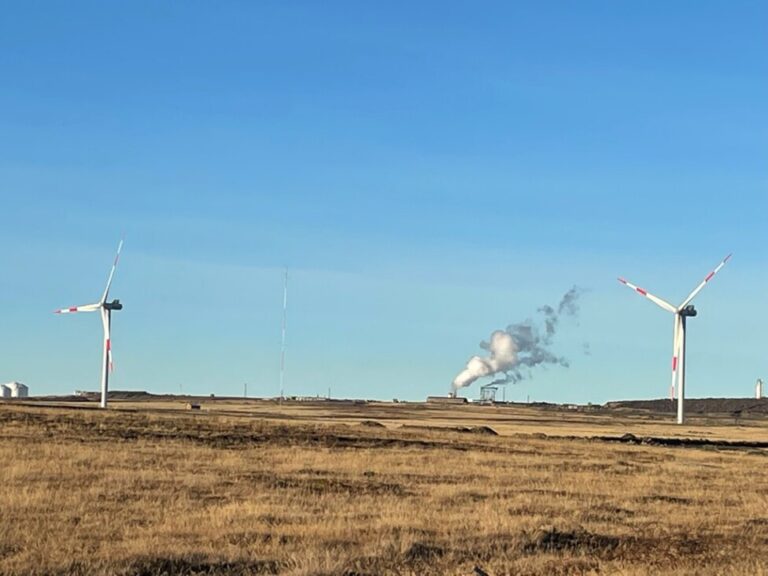
The administration of President Gabriel Boric, a self-described environmentalist, is facing a growing rift between scientists, social leaders and energy companies that have differences with regard to the production of green hydrogen in Magallanes. The first wind turbines have already been installed in the Magallanes region, in the far south of Chile, such as these in Laredo Bay, east of Cabo Negro, where companies are pushing green hydrogen projects in a scenario where environmental costs are beginning to take center stage. CREDIT: Courtesy of Erika Mutschke

The administration of President Gabriel Boric, a self-described environmentalist, is facing a growing rift between scientists, social leaders and energy companies that have differences with regard to the production of green hydrogen in Magallanes. The first wind turbines have already been installed in the Magallanes region, in the far south of Chile, such as these in Laredo Bay, east of Cabo Negro, where companies are pushing green hydrogen projects in a scenario where environmental costs are beginning to take center stage. CREDIT: Courtesy of Erika Mutschke

SANTIAGO, Oct 12 2022 (IPS) – In Magallanes, Chile’s southernmost region, doubts and questions are being raised about the environmental impact of turning this area into the world’s leading producer of green hydrogen.


The projects require thousands of wind turbines, several desalination plants, new ports, docks, roads and hundreds of technicians and workers, with major social, cultural, economic and even visual impacts.

“The scale of production creates uncertainties, heightened because there is no baseline. The question is whether Chile currently has the capacity to carry out large-scale green hydrogen projects.” — Jorge Gibbons

This long narrow South American country of 19.5 million people sandwiched between the Andes Mountains and the Pacific Ocean has enormous solar and wind energy potential in its Atacama Desert and southern pampas grasslands. This has led to a steady increase in electricity generation from clean and renewable sources.

In 2013, only six percent of the country’s total electricity generation came from non-conventional renewable sources (NCREs) – a proportion that climbed to 32 percent this year. Installed NCRE capacity in September reached 13,405 MW, representing 40.7 percent of the total. Of the NCREs, solar energy represents 23.5 percent and wind power 12.6 percent.

In Chile, NCREs are defined as wind, small hydropower plants )up to 20 MW), biomass, biogas, geothermal, solar and ocean energy.

According to the authorities, the wind potential of Magallanes could meet 13 percent of the world’s demand for green hydrogen, with a potential of 126 GW.

Green hydrogen is generated by low-emission renewable energies in the electrolysis of water (H2O) by breaking down the molecules into oxygen (O2) and hydrogen (H2). It currently accounts for less than one percent of the world’s energy.

However, it is projected as the energy source with the most promising future to advance towards the decarbonization of the economy and the replacement of hydrocarbons, due to its potential in electricity-intensive industries, such as steel and cement, or in air and maritime transportation.

The National Green Hydrogen Strategy, launched in November 2021 by the second government of then right-wing President Sebastián Piñera (2018-2022), seeks to increase carbon neutrality, decrease Chile’s dependence on oil and turn this country into an energy exporter.

The government of his successor, leftist President Gabriel Boric, in office since March, created an Interministerial Council of the Green Hydrogen Industry Development Committee, with the participation of eight cabinet ministers.

A spokesperson from the Ministry of Energy told IPS that “this committee has agreed to bring forward, from 2025 to 2022, the update of the National Green Hydrogen Strategy and the new schedule for the allocation of state-owned land for these projects.”

“We will promote green hydrogen in a cross-cutting manner, with an emphasis on harmonious, fair and balanced local development. By bringing forward the update of the strategy, we seek to generate certainty for investors and to begin to create the necessary regulatory framework for the growth of this industry in our country,” he said.

In the area known as Cabo Negro, in the Chilean region of Magallanes, several companies have installed wind turbines to generate wind energy. The installation of thousands of turbines will affect the landscape of Magallanes and environmentalists believe it will impact many birds that migrate annually to this southern region. CREDIT: Courtesy of Erika Mutschke

In the area known as Cabo Negro, in the Chilean region of Magallanes, several companies have installed wind turbines to generate wind energy. The installation of thousands of turbines will affect the landscape of Magallanes and environmentalists believe it will impact many birds that migrate annually to this southern region. CREDIT: Courtesy of Erika Mutschke

Warnings from environmentalists

In a letter to the president, more than 80 environmentalists warned of the risk of turning “Magallanes y La Antarctica Chilena” – the region’s official name – into an environmental sacrifice zone for the development of green hydrogen.

“The energy transition cannot mean the sacrifice of migratory routes of birds that are in danger of extinction, otherwise it would not be a fair or sustainable transition,” said the letter, which has not yet received a formal response.

Environmentalists argue that the impact is not restricted to birds, but also affects whales that breed there, due to the effects of desalination plants, large ports and harbors.

Carmen Espoz, dean of science at the Santo Tomás University, who signed the letter, told IPS that “the main warning that we have tried to raise with the government, and with some of the companies with which we have spoken, is that there is a need for zoning or land-use planning, which does not exist to date, and for independent, quality baseline information for decision-making” on the issue.

Espoz, who also heads the Bahía Lomas Center in Magallanes, based in Punta Arenas, the regional capital, clarified that they are not opposed to the production of green hydrogen but demand that it be done right.

It is urgently necessary, she said in an interview in Santiago, to “stop making decisions at the central level without consultation or real participation of the local communities and to generate the necessary technical information base.”

The signatories asked Boric to create a Regional Land Use Plan with Strategic Environmental Assessment to avoid unregulated development of projects.

“We are not only talking about birds, but also about profound social, cultural and environmental impacts,” said Espoz, who argued that the model promoted by the government and green hydrogen developers “does not have a social license to implement it.”

Sunset at Laredo Bay in the Magallanes region where the Chilean government will have to decide on what changes in the grasslands are acceptable, in the face of a flood of requests to use the area for largescale green hydrogen projects. CREDIT: Courtesy of Erika Mutschke

Sunset at Laredo Bay in the Magallanes region where the Chilean government will have to decide on what changes in the grasslands are acceptable, in the face of a flood of requests to use the area for largescale green hydrogen projects. CREDIT: Courtesy of Erika Mutschke

The bird question

Prior to this letter to Boric, the international scientific journal Science published a study by Chilean scientists warning about potential impacts of wind turbines on the 40 to 60 species of migratory birds that visit Magallanes.

“It is estimated that the installation of wind turbines along the migratory paths of birds could affect migratory shorebird populations, which is especially critical in the cases of the Red Knot (Calidris canutus rufa) and the Magellanic Plover (Pluvianellus socialis),” said Espoz.

Both species, she said, “are endangered, as is the Ruddy-headed Goose (Chloephaga rubidiceps).”

She added that if 13 percent of the world’s green hydrogen is to be generated in southern Chile, some 2,900 wind turbines will have to be installed by 2027, “which could cause between 1,740 and 5,220 collisions with bird per year.”

Jorge Gibbons, a marine biologist at the University of Magallanes, based in Punta Arenas, said the big problem is that Magallanes does not have a baseline for environmental issues.

“The scale of production creates uncertainties, heightened because there is no baseline. The question is whether Chile currently has the capacity to carry out large-scale green hydrogen projects,” he told IPS from the capital of Magallanes.

Gibbons believes it would take about two years to update the data on the dolphin and Southern Right Whale (Eubalaena australis) populations

“The greatest risks to dolphins will be seen in the Strait of Magellan. I am talking about Commerson’s Dolphins (Cephalorhynchus commersonii), which are only found there in Chile and whose population is relatively small,” he said.

He proposed studying the route to ports and harbors of these species and to analyze how they breed and feed.

“The issue is how noise disturbs them or interrupts their routes. These questions are still unanswered, but we know some things because it is the best censused species in Chile,” he explained.

According to Gibbons, the letter to Boric is timely and will help reduce uncertainty because “the process is just beginning and the scientific and local community are now wondering if the plan will be well done.”

Conflict of interests

The partnership between HIF Chile and Enel Green Power Chile withdrew from the Environmental Evaluation System the study of the Faro del Sur Wind Farm project, involving an investment of 500 million dollars for the installation of 65 three-blade wind turbines on 3,791 hectares of land in Magallanes.

The study was presented in early August with the announcement that it was “a decisive step for the future of green hydrogen-based eFuels.”

But on Oct. 6, its withdrawal was announced after a series of observations were issued by the Magallanes regional Secretariat of the Environment.

“The observations of some public bodies in the evaluation process of this wind farm exceed the usual standards,” the consortium formed by the Chilean company HIF and the subsidiary of the Italian transnational Enel claimed in a statement.

The companies argued that “the authorities must provide clear guidelines to the companies on the expectations for regional development, safeguarding the communities and the environment.

“In light of these exceptional requirements, it is necessary to understand which requirements can be incorporated and which definitely make projects of this type unfeasible in the region,” they complained.

The government reacted by stating that it is important to remember that Faro del Sur is the first green hydrogen project submitted to the environmental assessment process in Magallanes.

“During the process, some evaluating entities made observations on the project, so the owners decided to withdraw it early, which does not prevent them from reintroducing it when they deem it convenient,” the Ministry of Energy spokesperson told IPS.

He added that the ministry stresses “the conviction to develop the green hydrogen industry in the country and that this means sending out signals, but in no case should this compromise environmental standards and citizen participation in the evaluation processes.”

  Source

Journalists, Under Threat, Need Safe Refuge Through Special Emergency Visas

Active Citizens, Civil Society, Democracy, Featured, Global, Headlines, Human Rights, IPS UN: Inside the Glasshouse, Press Freedom, TerraViva United Nations

Opinion

A video journalist covers a news event. Credit Unsplash/Jovaughn Stephens
 
Journalists and media workers are facing “increasing politicization” of their work and threats to their freedom to simply do their jobs, that are “growing by the day”, said UN Secretary-General Antonio Guterres, marking World Press Freedom Day, May 2022

NEW YORK, Oct 4 2022 (IPS) – “This woman sitting next to me, Maria Ressa, is a Nobel laureate and a convicted criminal,” said barrister Amal Clooney, who co-leads the international legal team representing Ressa. The founder of news website Rappler, Ressa has been targeted with a barrage of legal charges intended to stop her journalism in the Philippines.


During a conversation hosted by the Committee to Protect Journalists (CPJ) on the sidelines of the UN General Assembly high-level week, which concluded September 26, Clooney revealed that Ressa faces the possibility of imminent imprisonment in the Philippines.

“The only thing standing between her and a prison cell is one decision from the Philippines Supreme Court that could come as soon as in 21 days’ time,” said Clooney to an audience of news leaders, diplomats, and advocates.

She then appealed for prosecutors to drop the baseless charges and for newly elected President Ferdinand Marcos Jr. to issue a pardon. In May, CPJ wrote to Marcos requesting that he urgently take concrete steps to undo former President Rodrigo Duterte’s long campaign of intimidation and harassment of the press.

The conversation, led by CPJ President Jodie Ginsberg, also explored the broader misuse of laws increasingly deployed to silence the press across the world. Clooney and Ressa are both past recipients of CPJ’s Gwen Ifill Press Freedom award for their extraordinary and sustained achievement in the cause of press freedom.

UNGA week also served to gather legal experts, diplomats, and activists to discuss the plight of journalists forced to flee their homes and the responsibility of governments to provide safe refuge through special emergency visas.

During a high-level side-event hosted by the Czech Republic, CPJ’s Ginsberg joined Czech Foreign Minister Jan Lipavsky and deputy chairs of the High Level Panel of Legal Experts on Media Freedom to make the case for these visas.

CPJ has advocated for such visas in the past in line with recommendations by members of the Media Freedom Coalition, a group of 52 governments that support press freedom.

Ginsberg’s message: Governments must create special emergency visas for journalists to allow them to quickly evacuate and relocate to safety. The visas should be granted to individuals who are at risk due to their work keeping the public informed.

As Ginsberg noted, across the world, from Afghanistan to Nicaragua and Belarus to Myanmar, CPJ has worked on hundreds of cases of such journalists seeking safe refuge. There is no time to waste.

Journalists forced to flee often try to continue reporting in exile. Panelist Roman Anin, an exiled investigative journalist who runs news website iStories, shared his story of moving his newsroom out of Russia.

“When the war started, we had a choice between three options, either stay in Russia and stop our work, stay in Russia, continue our work and end up in jail, or relocate the newsroom,” he said. Anin said that in spite of the hardship of the relocation, his newsroom has been able to reach Russian audiences with stories on alleged war crimes committed in Ukraine.

Anin’s experience, and CPJ’s own work helping many other displaced journalists, demonstrate how critical it is for governments to prioritize emergency visas for swift relocation and safety. Refusing to do so not only impacts the lives of individual journalists, it is a blow to free expression and access to information globally.

In solidarity,

Gypsy Guillén Kaiser is CPJ Advocacy and Communications Director.

IPS UN Bureau

  Source

Uyghur Violations a Litmus Test for Global Governance & Rules-based International Order

Asia-Pacific, Civil Society, Crime & Justice, Democracy, Featured, Global Geopolitics, Global Governance, Headlines, Human Rights, TerraViva United Nations

Opinion

Protesters in Washington, DC, march against the alleged killing of Uyghur Muslims. June 2022. Credit: Unsplash/Kuzzat Altay

NEW YORK, Oct 3 2022 (IPS) – This week is a momentous one for the world’s premier human rights body. At stake is a resolution to decide whether the UN Human Rights Council in Geneva can hold a debate on a recently released UN report.


The report concludes that rights violations by China’s government in its Xinjiang region ‘may constitute international crimes, in particular crimes against humanity’.

Unsurprisingly, China’s government is doing everything in its power to scotch plans for a debate on the report’s contents. Its tactics include intimidating smaller states, spreading disinformation and politicising genuine human rights concerns – the very thing the Human Rights Council was set up to overcome.

The historic report, which affirms that the rights of Xinjiang’s Uyghur Muslim population are being violated through an industrial-level programme of mass incarceration, systemic torture and sexual violence, attracted huge controversy before it was released on 31 August 2022, minutes before the end of the term of the outgoing High Commissioner for Human Rights, Michelle Bachelet.

The report was supposedly ready in September 2021 but so great was the pressure exerted by the Chinese state that it took almost another year for it to be aired. Absurdly, the 46-page report includes a 122 page annex in the form of a rebuttal issued by China, rejecting the findings and calling into question the mandate of the Office of the High Commissioner for Human Rights.

The Office of the High Commissioner has asserted that the report is based on a rigorous review of documentary evidence with its credibility assessed in accordance with standard human rights methodology. The report’s recommendations are pretty straightforward: prompt steps should be taken to release all people arbitrarily imprisoned in Xinjiang, a full legal review of national security and counter-terrorism policies should be undertaken, and an official investigation should be carried into allegations of human rights violations in camps and detention facilities.

Nevertheless, a proposed resolution to hold a debate on the report’s contents in early 2023 is facing severe headwinds. A number of states inside and outside the Human Rights Council, united by their shared history of impunity for rampant human rights abuses – such as Cuba, Egypt, Laos, North Korea, Pakistan, Saudi Arabia, Syria and Venezuela – have already rallied to China’s defence in informal negotiations on the brief resolution.

What is most worrying is that China appears to be leaning on smaller states that make up the 47-member Human Rights Council by inverting arguments about politicisation of global human rights issues and projecting itself as the victim of a Western conspiracy to undermine its sovereignty.

If China were to have its way, it would be a huge setback for the Human Rights Council, which was conceived in 2006 as a representative body of states designed to overcome the flaws of ‘declining credibility and lack of professionalism’ that marred the work of the body it replaced, the UN Commission on Human Rights.

Former UN Secretary-General Kofi Annan, in his ground-breaking In Larger Freedom report, lamented that states sought membership ‘not to strengthen human rights but to protect themselves against criticism or to criticize others’.

Human Rights Council members are expected to uphold the highest standards in the protection and promotion of human rights. But our research at CIVICUS shows that eight of the Council’s 47 members have the worst possible civic space conditions for human rights defenders and their organisations to exist. In these countries – Cameroon, China, Cuba, Eritrea, Libya, Sudan, United Arab Emirates and Uzbekistan – human rights are routinely abused and anyone with the temerity to speak truth to power is relentlessly persecuted.

Regimes that serially abuse human rights may be motivated to block findings of investigations being aired on the international stage, but the international community has a collective responsibility to the victims. Civil society groups are urging Human Rights Council members to stand firm on the call for a debate on the China report.

Human Rights Council member states that assert the importance of human rights and democracy in their foreign policy are expected to vote in favour. Nevertheless, the influence of regional and geo-political blocs within the Council mean that the issue will essentially be settled by the decisions of states such as Argentina, Armenia, Benin, Brazil, Côte d’Ivoire, Gabon, Honduras, India, Indonesia, Malawi, Malaysia, Mexico, Paraguay, Senegal, Ukraine and Qatar.

China will undoubtedly pressure these states to try to get them to oppose or abstain in any vote that seeks to advance justice for the Uyghur people.

The stakes are particularly high for China’s mercurial leader, Xi Jinping, who is seeking to anoint himself as president for a third term – after abolishing term limits in 2018 – at the Chinese Communist Party’s Congress, which begins on 16 October.

Recognition of the systematic abuses to which Xi’s administration has subjected the Uyghur people would be considered an international affront to his growing power.

If China were to prevail at the Human Rights Council, it would be another blow to the legitimacy of the UN, which is already reeling from the UN Security Council’s inability to overcome Russia’s permanent member veto to block action on the invasion of Ukraine. So much – for the UN’s reputation, and for the hope that human rights violators, however powerful, will be held to account – is resting on the vote.

Mandeep S. Tiwana, is chief programmes officer and representative to the United Nations at global civil society alliance, CIVICUS.

IPS UN Bureau

  Source

Reasonable Left, Irresponsible Right: & the Future of Social Democracy

Civil Society, Democracy, Featured, Global, Global Governance, Headlines, Human Rights, TerraViva United Nations

Opinion

Credit: Pexels via

VIENNA, Sep 28 2022 (IPS) – With no shortage of catastrophes in the past 15 years worldwide — the democratic left is stepping up to provide stability amid the storm.

Throughout the history of mankind, there have been catastrophes. In modern times, there have also been media representations of catastrophe, including worked-up or even imagined catastrophes.


More than 60 years ago, the German author Friedrich Sieburg wrote about the ‘lust for doom’, which, strangely enough, has a tremendous appeal especially in eras perceived as stable: ‘The everyday life of democracy with its dreary problems is boring, but the impending catastrophes are highly interesting.’

Now that we have had no shortage of real catastrophes in the past 15 years, we no longer have to conjure them up. First came the global financial crisis, which threatened to topple banks and other financial institutions — even states — as if houses of cards.

Later the pandemic arrived and then the military invasion of the second largest country in Europe by the largest. Its shockwaves are devastating half the world, with energy crisis, broken supply chains, price explosion, food shortages, impoverishment and destitution.

Robert Misik

And all the time comes the onrushing climate catastrophe, whose consequences are already apparent and which intersects with the current geopolitical crisis. The global electricity markets are going crazy because there is a lack of gas from Russia, but also because the rivers are drying up, the hydroelectric power plants are empty and nuclear power plants have to be shut down because the cooling water in the rivers is becoming too scarce — even the coal-fired plants are having problems where coal can no longer be shipped.

In any case, disaster is not now something we frivolously imagine because we are bored. It is there — very real for many and at least felt by most. Not only does it colour political debates but an atmosphere of pessimism, insecurity and fear has settled over most societies.

This is so even, perhaps especially, in the affluent societies of the west, which had become accustomed to stability and relative prosperity. A sentiment is spreading: the whole machinery no longer works, it is broken — and the political elites have no plan.

The left choosing stability

Against this backdrop, while the left is trying to develop programmes and instruments to master the crises, to stem the decline in prosperity and the social costs for ordinary people, those on the hard right are betting on things getting even worse, playing up catastrophe.

They hope this will benefit them, that they can thereby achieve electoral success — as with the right-wing radicals in Sweden recently or the right-wing bloc in Italy over the weekend.

It’s no surprise, then, that the far-right contenders paint the ‘elite’ and its networks in dark colours. They rummage through supposedly suppressed news and hidden secrets. They identify, to their satisfaction, how the powerful secure their dominance and say all this is connected. They imagine themselves as if detectives smugly putting pieces of the political puzzle together, in the manner of a latter-day Hercule Poirot.

It is not a completely new phenomenon to offer such a fundamental critique of ‘the system’. What is astonishing is that the far right has hijacked what used to be a prerogative of Marxist intellectuals — and of those activists who imagined a terminal catastrophe would some day issue in a socialist millennium.

Right-wing propaganda has appropriated elements of left-wing critical thinking — the questioning of the conventional and familiar, of the all-too-obvious, and the healthy suspicion of power. Amazingly, the motifs of the enlightenment have been subverted to serve conspiracy theories and fanaticism, in the cause of authoritarianism and nationalism.

The democratic left, in sharp contrast, sees its task today, grosso modo, as providing stability amid the storm. Of course, this is true where it is in government. But it in most cases it also has this reflex of responsibility where it is in opposition.

This has consequences. The left sometimes finds itself defending the status quo, against its deterioration. It knows it cannot score points with simple answers but has to work out complex plans whose realisation is tough.

This liberal left has always stood for freedom, democracy, the rule of law — for social equality and against hierarchy and fascist temptations. The Russian president, Vladimir Putin, has however drawn his country back into despotism in recent decades, aligned with an ideology of expansionism.

While the radical right (and some pro-Russian hard leftists) propose to kneel to Putin, the democratic left supports Ukraine’s right to self-defence and an independent path.

Russia’s imperialism has been met with sanctions from liberal Europe and north America, rebutted in turn in an economic quasi-war with the help of the ‘weapon’ of gas and oil. Yet in a multipolar and chaotic world where not all are on their side, progressives find themselves having to balance decisiveness and prudence.

Now their own economies must be stabilised and protected, and their societies, because the supply of energy and the functioning of the critical infrastructure has a much broader social centrality. This includes changes in the design of energy markets, which simply no longer function when panic on the markets leads to price explosions of 600 or even 1,000 per cent.

The colonisation of lifeworlds by market ideology has however meant that even the essential goods of everyday infrastructure have been left to the mercy of the markets. Energy suppliers which get into trouble have thus to be bailed out by governments.

The dangers of ‘politics without a project’

The effects of inflation are also different from what we know from economics textbooks. Classic inflation occurs when there is a boom, an economy reaches the limits of its capacity and there is more or less full employment. Then asset owners lose, while borrowers gain. But above all, workers and employees do not really lose out: prices rise but so do wages.

Classical inflation is characterised by a wage-price spiral in which real wages rise along with them. Historically, wage earners lost out primarily because of anti-inflationary policies, not because of inflation.

Today, however, inflation is not the result of a boom but an economic shock: it is imported, primarily due to higher energy prices and supply problems. Many companies too are groaning under their energy overheads, as they cannot fully pass on the cost increase to consumers. This in turn will mean workers will not be able to make up fully for price increases through wage rises.

The unions will fight but it will be very difficult to avoid real wage losses. Low wage increases lead to impoverishment and a decline in aggregate demand but high wage increases would lead to more bankruptcies and thus more unemployment.

The most likely result will be a combination of misfortune — a marked recession plus high inflation. Government will have to intervene with price controls, by dramatically accelerating the shift to renewable energy, by providing payments to the most vulnerable segments of the population, by accepting further budget deficits.

None of these solutions will be perfect. We must be careful not to enter a new era of depoliticised pragmatism — a ‘politics without a project’, to borrow an old formulation from a famous German book edited by the legendary Suhrkamp publisher Siegfried Unseld 30 years ago. But there will tend to be no grand design to policy, just muddling through.

Public debates will be characterised by a certain confusion, as we are already observing. On the one hand, most citizens want clear and focused plans, but at the same time they know that there are no easy, simplistic answers.

A pandering left-wing populism is therefore not an attractive alternative. It is not only a too-narrow preaching to the converted but also there is a broad swath of potential support among liberal and left citizens for a politics of reason and responsibility.

In times of such uncertainty, we do not need trumpeters and bullshiters. We need people who can be trusted to do the best they can to sort things out.

Robert Misik is a writer and essayist. He publishes in many German-language newspapers and magazines, including Die Zeit and Die Tageszeitung.

Source: International Politics and Society is published by the Global and European Policy Unit of the Friedrich-Ebert-Stiftung, Hiroshimastrasse 28, D-10785 Berlin.

IPS UN Bureau

  Source

From Indonesia to India: Is There Hope for Anti-Corruption Efforts Within the G20?

Civil Society, Development & Aid, Economy & Trade, G20, Global, Global Governance, Headlines, TerraViva United Nations

Opinion

Many of the global crises we face are caused or exacerbated by corruption. Credit: Ashwath Hedge/Wikimedia Commons

Many of the global crises we face are caused or exacerbated by corruption. Credit: Ashwath Hedge/Wikimedia Commons

WASHINGTON DC, Sep 27 2022 (IPS) – As global crises mount, the G20 is proving unable to find solutions. Political disagreements within the bloc- including most prominently with Russia over the ongoing war in Ukraine- have hamstrung collective efforts.


Economic challenges have inevitably led to a focus on domestic priorities. And significant political changes in key G20 countries over the past few months- such as the UK and Italy- have further undermined joint decision-making.

Equally, on corruption issues, the G20 has a long way go, although the body continues to reiterate its commitment fighting graft and leading by example on core issues such as the role of audit institutions, anti-corruption education, money laundering and graft in the renewable energy sector.

The G20 Anti-Corruption Working Group (ACWG) meets for the final time under the Indonesian Presidency this week- and while there remains plenty to do, there are also glimmers of hope for the future, as India takes on leadership of the G20 for 2023.

It is easy to get disheartened about the continued ubiquity of corruption- but beyond the headlines and if we pay attention to the small print, there is some important progress being made

To better understand the progress made, Accountability Lab, as one of the international Co-Chairs of the C20 Anti-Corruption Working Group (ACWG), has partnered with the Royal United Services Institute (RUSI) to distill complex and scattered information on anti-corruption within G20 countries (often buried in lengthy reports, as we’ve highlighted previously) into a set of easy-to-understand one-pagers. Each of these (see Australia here or South Africa here for example) outlines for each of the member countries the progress made against key priorities, with the goal of encouraging sharing of ideas and learning within the G20.

Here is what we found:

Enhancing the role of audit in tackling corruption

The G20 ACWG recognizes the important role of audit in preventing corruption in both the public and private sectors, and member countries have institutions and systems in place to deter corruption.

For instance, 17 out of the 19 G20 member countries (the 20th is the EU) score over a global average of 63 on the International Budget Partnership’s metric for oversight by supreme audit institutions. Brazil has received a great deal of scrutiny in recent years because of corruption, but Brazil’s Tribunal de Contas da Uniao (TCU) is cited as an example for its innovative use of data analytics and artificial intelligence including identifying indicators of corruption.

Member countries are also improving existing laws, with Japan proposing to reform its audit law to provide more enforcement power to the Japanese Institute of Certified Public Accountants and improve oversight of listed companies.

Promoting public participation and anti-corruption education

Most G20 member countries have policies guaranteeing the right to participation through specific laws such as the right to information, public information disclosure or public procurement, to name a few.

In India, the Pre-legislative Consultation Policy was passed recently to ensure public participation in policy-making processes, and government as well as civil society platforms are available to promote public education, including on corruption issues.

Similarly, South Korea’s Public-Private Consultative Council for Transparent Society under the Anti-Corruption and Civil Rights Commission provides a platform to inform and disseminate anti-corruption messages. South Korea also aims to strengthen civic space and public participation including through a national Participatory Budgeting Citizens’ Committee.

In Australia a public-private partnership (Bribery Prevention Network) launched in October 2020 bringing together the private sector, civil society, government and academia to provide free resources to help corporates implement anti-bribery programmes, and was runner up in the Anti Corruption Collective Action Awards 2022.

Professional enablers of money laundering

The G20 acknowledges gaps in member countries’ anti-money laundering efforts, particularly related to preventive measures targeting professional enablers, including accountants, lawyers, or real estate agents- and is aiming to pull together guidance on these issues through a Compendium for Professional Enablers of Money Laundering.

While most countries do not have a comprehensive definition of Designated Non-Financial Business Professionals (DNFBPs), Indonesia, Japan, Mexico, and Saudi Arabia comply with the 2012 Financial Action Task Force (FATF) standards on the definition. The 2021 follow-up review from FATF noted that the revisions to China’s anti-money laundering law will include general provisions and supervision of DNFPBs.

In the US, if the ENABLERS Act– which was approved by the House of Representatives in July 2022– is passed by the Senate, it could regulate professional enablers; and in the UK, lack of supervision of enablers is being acknowledged by the government as it looks at different models to strengthen the supervision of accountants and lawyers.

Promoting corruption in the renewable energy sector

The G20 is working on a background note on Promoting Anti-Corruption in Renewable Energy in order to raise awareness and increase collaboration to prevent corruption in the energy sector. In 2022, Argentina launched an open information system (SIACAM) which provides public access to data on mining activities in the country, including their environmental and socio-economic impacts.

The Resource Governance Index notes that Argentina is one of only 7 countries that has made this type of data available. Similarly in Mexico, progress has been made with the publication of all oil procurement contracts on the state-owned website oil company, Pemex.

Japan’s cooperation agreement with India and the European Union to share experiences and best practices on liquid natural gas is cited as an example to follow by the International Energy Agency.

It is easy to get disheartened about the continued ubiquity of corruption- but beyond the headlines and if we pay attention to the small print, there is some important progress being made.

With the G20, the key now- as India assumes leadership of group- is for member countries to double down on their commitments and follow-through on implementation of reforms. Many of the global crises we face are caused or exacerbated by corruption- now is the time for our leaders to get this right.

Blair Glencorse is Executive Director of Accountability Lab; Sanjeeta Pant is of Accountability Lab. This piece draws on research carried out with RUSI. Follow the Lab on Twitter @accountlab

  Source