‘Aid Organizations Must Include the Youth Voice’ August 12, 2022—International Youth Day

Armed Conflicts, Civil Society, Education, Education Cannot Wait. Future of Education is here, Global, Headlines, Health, Humanitarian Emergencies, TerraViva United Nations, Youth Thought Leaders

Opinion

NEW YORK, Aug 12 2022 (IPS) – Today marks International Youth Day, a global celebration of the transformative power of young people. Introduced by the United Nations General Assembly in 1999, the event was inaugurated not only to observe the power of the youth voice, but to serve as a promise from those in power to activate the power of youth across the development sector.


Yasmine Sherif

Since then, the United Nations appointed a Youth Envoy, dedicated to the diffusion of the day’s promise, and many aid organizations have followed suit by including the voices of young people in social media campaigns, high-level events, and stakeholder forums.

In 2021, Education Cannot Wait (ECW), the United Nations global fund for education in emergencies and protracted crises, took a further, concrete step to democratically include youth in its governance structure and decision-making processes. Scores of youth-led NGOs applied to join a newly created youth constituency, and after only a few weeks, the sub-group had become one of the largest, most active, and most diverse constituencies within the fund.

On the Executive Committee and High-Level Steering Group of ECW, young people were represented for the first time alongside government ministers, heads of UN agencies and civil society organizations, and private sector leaders — a refreshing example of intergenerational collaboration at the highest levels of humanitarian aid.

Another significant step in the race for youth inclusion occurred when ECW partnered with Plan International to support a group of youth activists through the ‘Youth for Education in Emergencies Project,’ a campaign by youth panelists aiming to demonstrate the value of youth participation.

As ECW builds momentum towards its High-Level Financing Conference in February 2023 with the #222MillionDreams Campaign, we call on strategic partners to include the youth voice as we come together to mobilize funding resources for the 222 Million crisis-impacted children and adolescents worldwide that require urgent educational support.

Fortunately, there is no shortage of exceptional young people ready to lead the charge. The Global Student Forum, for example, has brought together more than one hundred national student unions, composed of millions of youth activists, and successfully lobbied governments around the world with its democratic force.

H.D. Wright

The success of Nobel Laureate Kailash Satyarthi’s 100 Million Campaign, a global, youth-led effort to end child exploitation, further illustrates the immense value of grassroots organizing. And at a local level, youth-led NGOs have brought change to their communities in ways equally substantial.

Aid organizations and professionals have changed the lives of countless young people around the world. By including them, aid organizations can tap into their extraordinary resilience and strength, and actually learn from them. Using their reach on social media, young people excel at spreading awareness and engagement around the world. Just as unknown singers become famous because of the young people who promote them, previously unknown issues have reached national prominence overnight and created substantive change.

With regard to fundraising, each young person is surrounded by a community, offering a network ready to lend a hand. In terms of policy, young people affected by crises can identify their needs with an ease unmatched by any humanitarian policy professional, for they are experts in their own lives, challenges and opportunities. Young people are intelligent and capable of shaping their own futures. They have an idealism and a courage that the world so desperately needs today. Their unflinching optimism, powerful energy, and uncompromising commitment to change will ensure that those futures are not only safe, but better than the present they inherited.

ECW can attest to the enlightening and inspiring vitality of young people. Since its creation, the youth constituency has worked energetically on behalf of this breakthrough global fund, providing valuable input and guidance on multi-year programs and first emergency responses in Bangladesh, Burkina Faso, Burundi, Haiti, Iraq and Mali. When schools shut down due to the pandemic, the youth constituency persisted, working together to inform aid programmes dispersed across crisis-affected countries.

The youth constituency even responded in real time to developing crises, including the earthquake in Haiti, the deteriorating crisis in Afghanistan, and most recently, the war in Ukraine. Their contributions played a role in meaningful projects: since its inception in 2016, ECW’s programs have reached over 5 million children and adolescents, providing them with quality support, including educational materials, school meals, mental health programs, and other basic necessities.

On this day, it is important to observe the power of young people, and the impactful work that aid organizations have conducted across the sector. Yet celebration and transformation must go hand in hand, ensuring that next year, when International Youth Day returns, we are one step closer to fulfilling its original promise to unleash the power of the youth.

Yasmine Sherif is the Director of Education Cannot Wait. H.D. Wright is Youth Representative at Education Cannot Wait

IPS UN Bureau

  Source

Colombia’s New President May Need U.S. Blessing to Realize his Domestic Agenda

Armed Conflicts, Civil Society, Development & Aid, Featured, Headlines, Human Rights, Latin America & the Caribbean, TerraViva United Nations

Opinion

The writer is a Geneva-based researcher for the Third World Network

A woman paints a mural for Peace and Reconciliation in Colombia. Credit: UNMVC/Jennifer Moreno

GENEVA, Aug 9 2022 (IPS) – For the first time in its contemporary history, Colombia has a left-wing government. The presidency of Gustavo Petro, who took the reins August 8, marks a significant break from the political status quo. He also represents a stiff test for U.S. influence in Latin America.


Colombia is Washington’s most enduring ally in the region, and in recent years their relationship has been built around combatting the nation’s drug cartels. But despite major efforts to curb supply, Colombia remains a top source of cocaine for the United States.

The United Nations Office on Drugs and Crime (UNODC) recently estimated that Colombia’s cocaine harvest hit a record high in 2020. On the back of new coca varieties (the base ingredient for cocaine) and better cultivation techniques, Colombia’s potential output reached 1,228 tonnes in 2020. This was triple the 2010 level and four times greater than in the early 1990s, when Pablo Escobar was at the height of his infamy.

Since launching its controversial ‘war on drugs’ in 1971, successive Republican and Democratic administrations have supplied more than $13 billion in military and economic aid to Colombia. To little avail.

According to a 2021 United States’ Drug Enforcement Agency report, over 90 percent of the cocaine seized in the U.S. originates from Colombia. The U.S. remains the biggest consumer market for Colombian cocaine.

Petro is among those who have denounced the U.S.’s counter-narcotics strategy as counterproductive. In particular, he’s taken aim at US-backed aerial fumigation campaigns to destroy coca fields.

He favours expanding crop substitution programs that provide credit, training and enhanced land rights to rural farmers. For Petro, tackling Colombia’s violent drug trade is bound up with the county’s historic land ownership inequality.

He has also been an ardent critic of Colombia’s free-trade agreement (FTA) with the U.S. for pushing farmers into coca production and for exacerbating Colombia’s over-reliance on fossil fuel and coffee exports.

At the same time, imports from America’s highly subsidized agricultural sector have displaced whole segments of Colombia’s agrarian economy, forcing thousands of farmers into coca production.

Petro’s election campaign called for “smart tariffs” to protect Colombia’s rural farmers from U.S. imports and, by extension, criminal activity. “The free trade agreement signed with the United States handed rural Colombia to the drug traffickers,” he told the Financial Times in May. What’s more, he noted that “agricultural production cannot be increased if we do not renegotiate the FTA.”

An ex-member of the M-19 guerrilla group, Colombia’s new president has vowed to tackle asymmetric trade relations in line with land reform and the drug trade. But he will likely face severe opposition from the armed forces, who themselves fought leftist guerrilla movements during Colombia’s 52-year civil conflict.

Further, the military have a longstanding role in the U.S.-led war on drugs. For his part, Petro has accused Colombia’s top brass of corruption and human rights abuses, even since the Government-Farc peace treaty of 2016.

Elsewhere, the President faces a divided congress and deep hostility from landowning elites. It will require skilful manoeuvring to unite a fractured country around his domestic policies. And even if Petro can generate sufficient national support around his policy aims, he would still need to convince the Biden administration to back-track on the U.S.’s ideological commitment to free trade.

So, what cards can Petro play?

His opening gambit is likely to be a financial argument. While cocaine overdoses claim far fewer lives than opioids, the fiscal costs associated with interceding cocaine into the U.S. are staggering.

Navy and Coast Guard seizures alone cost American taxpayers US$56 billion in 2020, to say nothing of land border expenditures. State funds are also used for cocaine-linked policing, incarcerations and medical treatment.

The current geopolitical landscape may also provide Petro with an unlikely Trump card. Given President Joe Biden’s condemnation of Russia’s invasion of Ukraine, he will be careful avoid pushing Colombia (which he has described as a security “linchpin”) into a closer embrace with Cuba and Venezuela, who are diplomatically aligned with the Kremlin.

To isolate Russia even further, Biden will likely soften America’s stance in renegotiating its FTA with Colombia.

Last month, senior representatives from the Biden administration met with Petro to discuss, among other things, the FTA. While the U.S. has taken tentative steps towards renegotiating the deal, Petro should be wary of a favourable result.

Over the past twenty-five years, an intricate web of government and military bureaucracy has been constructed around U.S.-Colombian counter-narcotics operations. It will be difficult to disentangle.

IPS UN Bureau

  Source

The Price of Bukele’s State of Emergency in El Salvador

Civil Society, Crime & Justice, Editors’ Choice, Featured, Headlines, Human Rights, Latin America & the Caribbean, Regional Categories

Human Rights

A group of alleged gang members is presented to the media by police authorities in El Salvador on Jul. 20 as a demonstration of the effectiveness of the war against gangs waged in this Central American country under a state of emergency. But families of detainees and human rights organizations warn that in many cases they have no links to criminal organizations. CREDIT: National Civil Police

A group of alleged gang members is presented to the media by police authorities in El Salvador on Jul. 20 as a demonstration of the effectiveness of the war against gangs waged in this Central American country under a state of emergency. But families of detainees and human rights organizations warn that in many cases they have no links to criminal organizations. CREDIT: National Civil Police

SAN SALVADOR, Aug 5 2022 (IPS) – The body of Walter Sandoval shows a number of dark bruises on his arms and knees, as well as lacerations on his left eye and on his head – signs that he suffered some kind of violence before dying in a Salvadoran prison, accused of being a gang member.


The evidence of the beating is clear in photographs that Walter’s father, Saúl Sandoval, showed to IPS.

Walter, 32, was one of those who died in Salvadoran prisons after being detained by the authorities in the massive raids that the government of Nayib Bukele launched at the end of March, under the protection of the decreed state of emergency and the administration’s fight against organized crime and gangs.

The young man, a farmer, died on Apr. 3, in the parking lot of the hospital in Sonsonate, a city in the west of the country where he was transferred, already dying according to the family, from the police station in Ahuachapán, a city in the department of the same name in western El Salvador.

He had been transferred to the police station after his Mar. 30 arrest in the Jardines neighborhood of the municipality of El Refugio, also in the department of Ahuachapán.

“They tortured him in the dungeons of the Ahuachapán police station,” his father told IPS.

He added that his son had been hanging out with friends, getting drunk. A few minutes later, a police patrol picked him up on charges of being a gang member, which the family vehemently told IPS was not true.

“He never received medical assistance, he died in the hospital parking lot,” the father added.

“They tortured him in the dungeons of the Ahuachapán police station. He didn’t receive medical assistance, he died in the hospital parking lot.” — Saúl Sandoval

He says the only explanation he has for why the police detained Walter is because “they wanted to get the day’s quota.” What he meant is that police officers are apparently supposed to arrest a specific number of gang members in exchange for benefits in their assigned workload.

Deaths like Walter’s, if the participation of police is confirmed, are the most violent and arbitrary expression of the human rights violations committed since the government began its plan of massive raids, in what it describes as an all-out war on gangs.

Since late March, the Salvadoran government has maintained a state of emergency that suspended several constitutional guarantees, in response to a sharp rise in homicides committed by gang members between Mar. 25 and 27.

In those three days, at least 87 people were killed by gang members, in a kind of revenge against the government for allegedly breaking an obscure under-the-table agreement with the gangs to keep homicide rates low.

The state of emergency has been in place since Mar. 27, extended each month by the legislature, which is largely dominated by the ruling New Ideas party. Since then, violent deaths have dropped to an average of three a day.

Among the constitutional rights suspended are the rights of association and assembly, although the government said it only applies to criminal groups that are meeting to organize crimes. It also restricts the right to defense and extends the period in which a person may be detained and brought before the courts, which is currently three days.

The government can also wiretap the communications of “terrorist groups”, meaning gangs, although it could already do so under ordinary laws.

After the state of emergency was declared, homicides dropped again to around two or three a day, and there are even days when none are reported.

But some 48,000 people have been arrested and remanded in custody, accused by the authorities of belonging to criminal gangs. And the number is growing day by day.

However, the families of detainees and human rights organizations complain that among those captured are people who had no links to the gangs, known as “maras” in El Salvador, which make up an army of a combined total of around 70,000 members.

On Jun. 2, rights watchdog Amnesty International stated in an official communiqué that “Under the current state of emergency, the Salvadoran authorities have committed massive human rights violations, including thousands of arbitrary detentions and violations of due process, as well as torture and ill-treatment, and at least 18 people have died in state custody.”

But President Bukele, far from being receptive to criticism, dismisses and stigmatizes the work of human rights groups, referring to their representatives as “criminals” and “freeloaders” who are more interested in defending the rights of gang members than those of their victims.

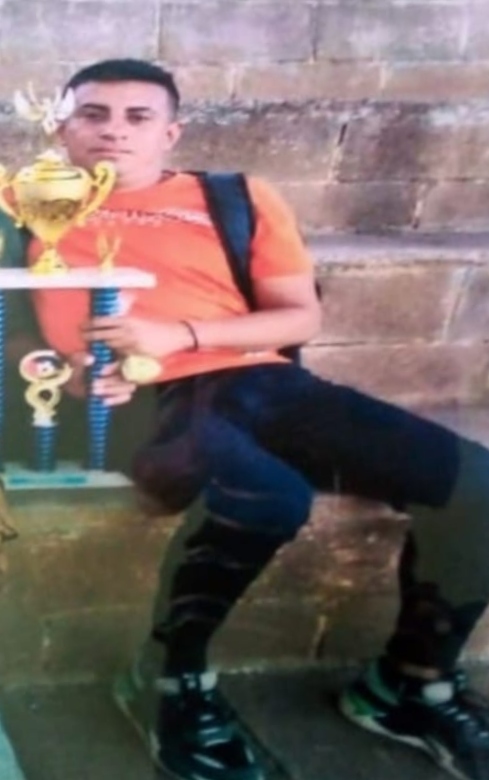
Walter Sandoval is one of the young men who have died with signs of torture in El Salvador's prisons under the state of emergency in force in the country since the end of March. The police captured him without any evidence linking him to gangs, said the young man's family - part of a pattern that has been documented by human rights organizations. CREDIT: Courtesy of the Sandoval family

Walter Sandoval is one of the young men who have died with signs of torture in El Salvador’s prisons under the state of emergency in force in the country since the end of March. The police captured him without any evidence linking him to gangs, said the young man’s family – part of a pattern that has been documented by human rights organizations. CREDIT: Courtesy of the Sandoval family

Silent deaths and torture

The local human rights organization Cristosal has documented nearly 2,500 cases of arrests which, according to the families, have been arbitrary, with no basis for their loved ones to have been detained under the state of emergency.

The organization has also monitored press reports and social networks and has carried out its own research to establish that, as of Jul. 28, some 65 people had died while detained in the country’s prisons or in police cells as part of the massive police raids.

Some of the deceased showed obvious signs of beatings and physical violence, as was the case with Walter and other cases that have been widely reported in the media.

The official reports of these deaths received by family members are vague and confusing, such as that of Julio César Mendoza Ramírez, 25, who died in a hospital in San Salvador, the country’s capital, on Jul. 15.

The official report stated that he had died of pulmonary edema, i.e., his lungs filled with fluid, but also stated that the case was “being studied.”

Suspicions that the deceased were victims of beatings and torture during their imprisonment are not ruled out by their relatives or by human rights organizations.

“The cause of death given to the relatives in the hospital sometimes differs from the legal medical examination, and that leads one to think that something is going on,” lawyer Zaira Navas, of Cristosal, told IPS.

She added: “There are also families who say they were told it was cardiac arrest, but the victims have bruises on their bodies, which is not compatible (with the official version).”

And in the face of doubts and accusations that beatings and torture are taking place under the watchful eye of the State, the authorities simply remain silent and do not carry out autopsies, for example, which would reveal what really happened.

Navas remarked that, even within the state of emergency, “the detentions are arbitrary” because the procedure followed is not legally justified and many people are detained simply because of telephone complaints from neighbors – with which other human rights defenders coincide.

Another problem is that among these 2,500 complaints by families, about 30 percent involve detainees who have chronic diseases or disabilities or were receiving medical or surgical treatment, according to Cristosal’s reports.

The prison staff do not allow family members of the sick detainees to bring their medication, although in a few rare cases they have authorized it.

“We have seen deaths because it is presumed that they have been tortured, beaten, etc., but there have also been deaths of people who have not been given the medication they need to take,” Henri Fino, executive director of the Foundation for Studies on the Application of Law (FESPAD), told IPS.

Regarding the dubious role played by the government’s Institute of Legal Medicine (IML), in charge of conducting the forensic examinations to inform families about the cause of deaths, Fino said that in his opinion it has no credibility.

Especially, he added, now that members of the so-called Military Health Battalion have been stationed since Jul. 4 at several IML offices, presumably to assist in various tasks, including forensic exams, given the shortage of staff.

“What collaboration can they (the military) provide, if they are not experts, and the only reason they are in the IML is to exercise oversight?” Fino said.

Media war

Some of the people who have died in jails or prisons, who were arrested under the state of emergency, were described by the local media as victims of arbitrary, illegal detentions, in contrast with Bukele’s propaganda war claiming that all the detainees are, in fact, gang members.

The press has highlighted the case of Elvin Josué Sánchez, 21, who died on Apr. 18 at the Izalco Prison located near the town of the same name in the department of Sonsonate in western El Salvador.

The media have referred to him as the “young musician”, because he had been learning to play the saxophone, and they have described him as a decent person who was a member of an evangelical church in the area.

But according to neighbors, Sánchez was well-known as an active gang member in his native El Carrizal, in the municipality of Santa Maria Ostuma, in the central department of La Paz.

“They saw him well-armed on farms in the area, along with other gang members, and he told the owners not to show up there anymore, or they would kill them,” a resident of that municipality, who asked not to be identified, told IPS.

Contradictions like this have strengthened local support for Bukele’s insinuations that the independent media are in favor of gang members and against the government’s actions to eradicate violence in the country.

In fact, opinion polls show that a majority of the population of 6.7 million support the president’s measures to crack down on the maras.

But even though Sánchez was recognized by neighbors as a gang member, his arrest should have been carried out following proper procedures and protocols, based on reliable information proving his affiliation to a criminal organization.

This is something the police do not usually do in these massive raids where it is impossible for them to have the evidence needed on each of the nearly 48,000 detainees.

Nor did the fact that he had been a gang member merit him being beaten to death, since his human rights should have been respected, said those interviewed by IPS.

  Source

What Makes a Human Rights Success?

Civil Society, Headlines, Human Rights, Indigenous Rights, Inequality, Multimedia, North America, Podcast, TerraViva United Nations

Indigenous Rights

KATHMANDU, Aug 4 2022 (IPS) – The largest ever settlement in Canadian legal history, 40 billion Canadian dollars, occurred in 2022, but it didn’t come from a court – it followed a decision by the Canadian Human Rights Tribunal. In 2016 the Tribunal affirmed a complaint that the Government of Canada’s child welfare system discriminated against First Nations children. (First Nations are one of three groups of Indigenous people in Canada).


When I heard about that amount and subsequently how the government was negotiating the details of that settlement, I was astounded. Although I’ve had an interest in and reported regularly about human rights in the past three decades, my most intense experience has been here in Nepal, where for a couple of years I worked at the United Nations human rights office.

Nepal’s Human Rights Commission has a long history of having its recommendations virtually ignored by the government of the day. In fact, since 2000, only 12% of the NHRC’s 810 recommendations have been fully implemented. So when I compared the situation in Nepal to the tribunal’s decision and aftermath in Canada, my first question was ‘how’? How could the human rights situation in the two countries be so different that one government was compelled to pay out $40 billion for discrimination while another could virtually ignore recommendations?

First, I have to confess that my understanding of the human rights framework in Canada and Nepal was lacking. As today’s guest, Professor Anne Levesque from the University of Ottawa, explains, Canada, like Nepal, has a federal human rights commission (as well as commissions in its provinces). But Canada also has the tribunal, a quasi-judicial body that hears complaints and can issue orders. Nepal however, lacks a human rights body that has legal teeth.

But is that the whole story, or are there other reasons why the Government of Canada must – and does – pay up when it loses a human rights case while the Government of Nepal basically files away the NHRC’s recommendations for some later date? Nepal, by the way, is not a human rights pariah. It is serving its second consecutive term on the UN Human Rights Council and the NHRC has been given an ‘A’ rating by an independent organization for conforming to international standards.

Resources

As a lawyer who’s helped fight for the rights of First Nations children, here’s what you need to know about the $40 billion child welfare agreements – article by Anne Levesque

Ruling of the Canadian Human Rights Tribunal

Public advocacy for the First Nations Child Welfare complaint

  Source

The Politics of the Hangman’s Noose: Judge, Jury & Executioner

Civil Society, Crime & Justice, Featured, Global, Global Governance, Headlines, Human Rights, IPS UN: Inside the Glasshouse, TerraViva United Nations

Young people take part in a pro-democracy demonstration in Myanmar. Credit: Unsplash/Pyae Sone Htun

UNITED NATIONS, Aug 3 2022 (IPS) – A spike in state-sanctioned executions worldwide – including in Iran, Singapore, Saudi Arabia, and more recently Myanmar – has triggered strong condemnations from the United Nations and several civil rights and human rights organizations.


As Covid-19 restrictions that had previously delayed judicial processes were steadily lifted in many parts of the world, says Amnesty International (AI), judges last year handed down at least 2,052 death sentences in 56 countries—a close to 40% increase over 2020—with big spikes seen in several countries including Bangladesh (at least 181, from at least 113), India (144, from 77) and Pakistan (at least 129, from at least 49).

Other countries enforcing the death penalty, according to AI, include Egypt, Iraq, Somalia, South Sudan, Belarus, Japan, the United Arab Emirates, the Democratic Republic of Congo (DRC), China, North Korea, Viet Nam and Yemen.

In military regimes, such as Myanmar, the armed forces play a triple role: judge, jury and hangman.

Dr Simon Adams, President of the Center for Victims of Torture, the world’s biggest organization that works with torture survivors and advocates for an end to torture worldwide, told IPS the recent execution of four pro-democracy activists by Myanmar’s military junta represents a sickening return to the “politics of the hangman’s noose”.

Arbitrary detention and torture have also been committed on an industrial scale, he said.

The military regime has detained over 14,000 people and sentenced more than 100 to death since the (February 2021) coup. While many governments around the world have condemned the recent hangings, it is going to take more than words to end atrocities in Myanmar, he pointed out.

“People are crying out for targeted sanctions on the Generals, for an arms embargo, and for Myanmar’s torturers and executioners to be held accountable under international law”, said Dr Adams, who also helped initiate the case at the International Court of Justice (ICJ) in The Hague, where The Gambia is trying to hold Myanmar accountable for the genocide against the Rohingya.

The London-based Amnesty International (AI) said last May that 2021 “saw a worrying rise in executions and death sentences as some of the world’s most prolific executioners returned to business as usual and courts were unshackled from Covid-19 restrictions.”

Iran accounted for the biggest portion of this rise, executing at least 314 people (up from at least 246 in 2020), its highest execution total since 2017.

This was due in part to a marked increase in drug-related executions—a flagrant violation of international law which prohibits use of the death penalty for crimes other than those involving intentional killing, said AI.

Antony J. Blinken, US Secretary of State, said last week the United States condemns in the strongest terms the Burma military regime’s executions of pro-democracy activists and elected leaders Ko Jimmy, Phyo Zeya Thaw, Hla Myo Aung, and Aung Thura Zaw for the exercise of their fundamental freedoms.

“These reprehensible acts of violence further exemplify the regime’s complete disregard for human rights and the rule of law.’

Since the February 2021 coup, he pointed out, the regime has perpetuated violence against its own people, killing more than 2,100, displacing more than 700,000, and detaining thousands of innocent people, including members of civil society and journalists.

The regime’s sham trials and these executions are blatant attempts to extinguish democracy; these actions will never suppress the spirit of the brave people of Burma, (Myanmar), he added.

“The United States joins the people of Burma in their pursuit of freedom and democracy and calls on the regime to respect the democratic aspirations of the people who have shown they do not want to live one more day under the tyranny of military rule,” Blinken declared.

Condemning the execution of the four democracy activists by the military regime in Myanmar, UN High Commissioner for Human Rights Michelle Bachelet said last week: “I am dismayed that despite appeals from across the world, the military conducted these executions with no regard for human rights. This cruel and regressive step is an extension of the military’s ongoing repressive campaign against its own people.”

“These executions – the first in Myanmar in decades – are cruel violations of the rights to life, liberty and security of a person, and fair trial guarantees. For the military to widen its killing will only deepen its entanglement in the crisis it has itself created,” she warned.

The High Commissioner also called for the immediate release of all political prisoners and others arbitrarily detained, and urged the country to reinstate its de-facto moratorium on the use of the death penalty, as a step towards eventual abolition.

Meanwhile, in a statement released August 2, Liz Throssell, a Spokesperson for the UN Human Rights Office in Geneva said : “We deplore the hanging today of two men in Singapore and are deeply troubled by the planned execution of two others on 5 August.

The two, a Malaysian and a Singaporean, were hanged at Changi Prison this morning after they were convicted in May 2015 of drug trafficking and their appeals subsequently rejected.

Two other men, Abdul Rahim bin Shapiee and his co-accused Ong Seow Ping, are currently expected to be executed on Friday after Bin Shapiee’s family was notified of his fate on 29 July.

They were both convicted in 2018 of possession of drugs for the purpose of trafficking and their sentences upheld on appeal. In the past, co-accused persons have almost always been executed on the same day.

“We urge the Singapore authorities to halt all scheduled executions, including those of Abdul Rahim bin Shapiee and Ong Seow Ping. We also call on the Government of Singapore to end the use of mandatory death sentences for drug offences, commute all death sentences to a sentence of imprisonment and immediately put in place a moratorium on all executions, with a view to abolishing the death penalty”, the statement said.

“The death penalty is inconsistent with the right to life and the right to be free from torture or cruel, inhuman or degrading treatment or punishment and there is growing consensus for its universal abolition. More than 170 States have so far abolished or introduced a moratorium on the death penalty either in law or in practice,” she noted.

Agnes Callamard, AI Secretary-General, said that “China, North Korea and Viet Nam continued to shroud their use of the death penalty behind layers of secrecy, but, as ever, the little we saw is cause for great alarm.”

The known number of women executed also rose from nine to 14, while the Iranian authorities continued their abhorrent assault on children’s rights by executing three people who were under the age of 18 at the time of the crime, contrary to their obligations under international law.

Meanwhile, Saudi Arabia more than doubled its number of executions, a grim trend that continued in 2022 with the execution of 81 people in a single day in March, according to AI

As well as the rise in executions seen in Saudi Arabia (65, from 27 in 2020), significant increases on 2020 were seen in Somalia (at least 21, from at least 11) South Sudan (at least 9, from at least 2) and Yemen (at least 14, from at least 5). Belarus (at least 1), Japan (3) and UAE (at least 1) also carried out executions, having not done so in 2020.

Significant increases in death sentences compared to 2020 were recorded in the Democratic Republic of the Congo (at least 81, from at least 20), Egypt (at least 356, from at least 264), Iraq (at least 91, from at least 27), Myanmar (at least 86, from at least 1), Viet Nam (at least 119 from at least 54), and Yemen (at least 298, from at least 269), AI said.

In several countries in 2021, AI said, the death penalty was deployed as an instrument of state repression against minorities and protestors, with governments showing an utter disregard for safeguards and restrictions on the death penalty established under international human rights law and standards.

IPS UN Bureau Report

  Source

U.S.-Latin America Immigration Agreement Raises more Questions than Answers

Active Citizens, Civil Society, Development & Aid, Editors’ Choice, Featured, Headlines, Human Rights, Latin America & the Caribbean, Migration & Refugees, Population, Poverty & SDGs, Regional Categories

Migration & Refugees

A hundred Central American migrants were rescued from an overcrowded trailer truck in the Mexican state of Tabasco. It has been impossible to stop people from making the hazardous journey of thousands of kilometers to the United States due to the lack of opportunities in their countries of origin. CREDIT: Mesoamerican Migrant Movement

A hundred Central American migrants were rescued from an overcrowded trailer truck in the Mexican state of Tabasco. It has been impossible to stop people from making the hazardous journey of thousands of kilometers to the United States due to the lack of opportunities in their countries of origin. CREDIT: Mesoamerican Migrant Movement

SAN SALVADOR, Jul 19 2022 (IPS) – The immigration agreement reached in Los Angeles, California at the end of the Summit of the Americas, hosted by U.S. President Joe Biden, raises more questions than answers and the likelihood that once again there will be more noise than actual benefits for migrants, especially Central Americans.


And immigration was once again the main issue discussed at the Jul. 12 bilateral meeting between Mexican President Andrés Manuel López Obrador and Biden at the White House.

At the meeting, López Obrador asked Biden to facilitate the entry of “more skilled” Mexican and Central American workers into the U.S. “to support” the economy and help curb irregular migration.

Central American analysts told IPS that it is generally positive that immigration was addressed at the June summit and that concrete commitments were reached. But they also agreed that much remains to be done to tackle the question of undocumented migration.

That is especially true considering that the leaders of the three Central American nations generating a massive flow of poor people who risk their lives to reach the United States, largely without papers, were absent from the meeting.

Just as the Ninth Summit of the Americas was getting underway on Jun. 6 in Los Angeles, an undocumented 15-year-old Salvadoran migrant began her journey alone to the United States, with New York as her final destination.

She left her native San Juan Opico, in the department of La Libertad in central El Salvador.

“We communicate every day, she tells me that she is in Tamaulipas, Mexico, and that everything is going well according to plan. They give them food and they are not mistreating her, but they don’t let her leave the safe houses,” Omar Martinez, the Salvadoran uncle of the migrant girl, whose name he preferred not to mention, told IPS.

She was able to make the journey because her mother, who is waiting for her in New York, managed to save the 15,000-dollar cost of the trip, led as always by a guide or “coyote”, as they are known in Central America, who in turn form part of networks in Guatemala and Mexico that smuggle people across the border between Mexico and the United States.

The meeting of presidents in Los Angeles “was marked by the issue of temporary jobs, and the presidents of key Central American countries were absent, so there was a vacuum in that regard,” researcher Silvia Raquec Cum, of Guatemala’s Pop No’j Association, told IPS.

In fact, neither the presidents of Honduras, Xiomara Castro, of Guatemala, Alejandro Giammattei, or El Salvador, Nayib Bukele, attended the conclave due to political friction with the United States, in a political snub that would have been hard to imagine just a few years ago.

Other Latin American presidents boycotted the Summit of the Americas as an act of protest, such as Mexico’s López Obrador, precisely because Washington did not invite the leaders of Cuba, Nicaragua and Venezuela, which it considers dictatorships.

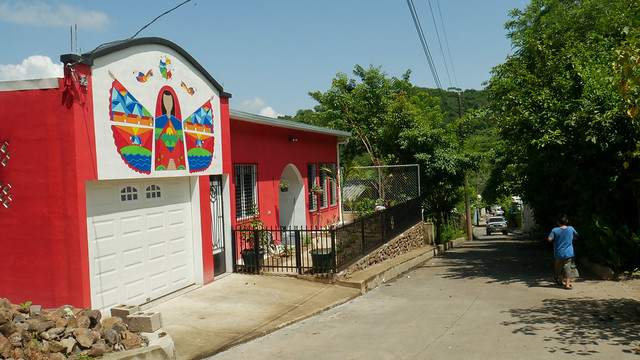
 From rural communities like this one, the village of Huisisilapa in the municipality of San Pablo Tacachico in central El Salvador, where there are few possibilities of finding work, many people set out for the United States, often without documents, in search of the "American dream". CREDIT: Edgardo Ayala/IPS

From rural communities like this one, the village of Huisisilapa in the municipality of San Pablo Tacachico in central El Salvador, where there are few possibilities of finding work, many people set out for the United States, often without documents, in search of the “American dream”. CREDIT: Edgardo Ayala/IPS

More temporary jobs

Promoting more temporary jobs is one of the commitments of the Los Angeles Declaration on Migration and Protection adopted at the Summit of the Americas and signed by some twenty heads of state on Jun. 10 in that U.S. city.

“Temporary jobs are an important issue, but let’s remember that economic questions are not the only way to address migration. Not all migration is driven by economic reasons, there are also situations of insecurity and other causes,” Raquec Cum emphasized.

Moreover, these temporary jobs do not allow the beneficiaries to stay and settle in the country; they have to return to their places of origin, where their lives could be at risk.

“It is good that they (the temporary jobs) are being created and are expanding, but we must be aware that the beneficiaries are only workers, they are not allowed to settle down, and there are people who for various reasons no longer want to return to their countries,” researcher Danilo Rivera, of the Central American Institute of Social and Development Studies, told IPS from the Guatemalan capital.

The Los Angeles Declaration on Migration and Protection states that it “seeks to mobilize the entire region around bold actions that will transform our approach to managing migration in the Americas.”

The Declaration is based on four pillars: stability and assistance for communities; expansion of legal pathways; humane migration management; and coordinated emergency response.

The focus on expanding legal pathways includes Canada, which plans to receive more than 50,000 agricultural workers from Mexico, Guatemala and the Caribbean in 2022.

While Mexico will expand the Border Worker Card program to include 10,000 to 20,000 more beneficiaries, it is also offering another plan to create job opportunities in Mexico for 15,000 to 20,000 workers from Guatemala each year.

The United States, for its part, is committed to a 65 million dollar pilot program to help U.S. farmers hire temporary agricultural workers, who receive H-2A visas.

“It is necessary to rethink governments’ capacity to promote regular migration based on temporary work programs when it is clear that there is not enough labor power to cover the great needs in terms of employment demands,” said Rivera from Guatemala.

He added that despite the effort put forth by the presidents at the summit, there is no mention at all of the comprehensive reform that has been offered for several years to legalize some 11 million immigrants who arrived in the United States without documents.

A reform bill to that effect is currently stalled in the U.S. Congress.

Many of the 11 million undocumented migrants in the United States come from Central America, especially Honduras, Guatemala and El Salvador, as well as Mexico.

While the idea of immigration reform is not moving forward in Congress, more than 60 percent of the undocumented migrants have lived in the country for over a decade and have more than four million U.S.-born children, the New York Times reported in January 2021.

This population group represents five percent of the workforce in the agriculture, construction and hospitality sectors, the report added.

 Despite the risks involved in undertaking the irregular, undocumented journey to the United States, many Salvadorans continue to make the trip, and many are deported, such as the people seen in this photo taken at a registration center after they were sent back to San Salvador. CREDIT: Edgardo Ayala/IPS

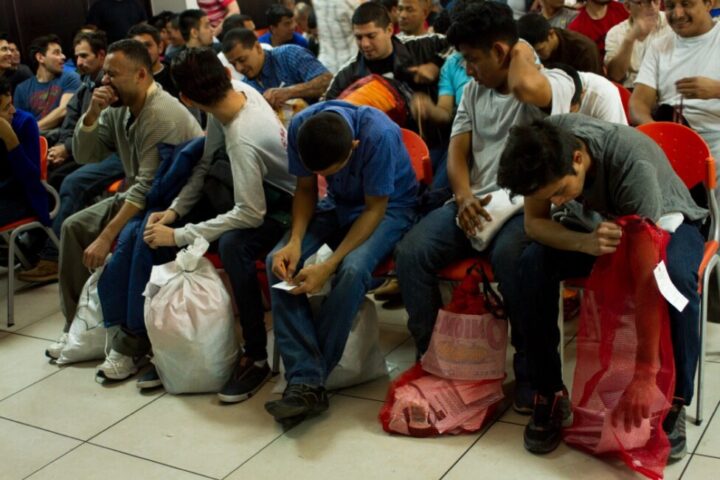
Despite the risks involved in undertaking the irregular, undocumented journey to the United States, many Salvadorans continue to make the trip, and many are deported, such as the people seen in this photo taken at a registration center after they were sent back to San Salvador. CREDIT: Edgardo Ayala/IPS

More political asylum

The Declaration also includes another important component of the migration agreement: a commitment to strengthen political asylum programs.

For example, among other agreements in this area, Canada will increase the resettlement of refugees from the Americas and aims to receive up to 4,000 people by 2028, the Declaration states.

For its part, the United States will commit to resettle 20,000 refugees from the Americas during fiscal years 2023 and 2024.

“What I took away from the summit is the question of creating a pathway to address the issue of refugees in the countries of origin,” Karen Valladares, of the National Forum for Migration in Honduras, told IPS from Tegucigalpa.

She added: “In the case of Honduras, we are having a lot of extra-regional and extra-continental population traffic.”

Valladares said that while it is important “to enable refugee processes for people passing through our country, we must remember that Honduras is not seen as a destination, but as a transit country.”

Raquec Cum, of the Pop No’j Association in Guatemala, said “They were also talking about the extension of visas for refugees, but the bottom line is how they are going to carry out this process; there are specific points that were signed and to which they committed themselves, but the how is what needs to be developed.”

Meanwhile, the Salvadoran teenager en route to New York has told her uncle that she expects to get there in about a month.

“She left because she wants to better herself, to improve her situation, because in El Salvador it is expensive to live,” said Omar, the girl’s uncle.

“I have even thought about leaving the country, but I suffer from respiratory problems and could not run a lot or swim, for example, and sometimes you have to run away from the migra (border patrol),” he said.

  Source