International Women’s Day, 2021The World Not Only Needs Women Leaders – It Needs Feminist Leaders

Civil Society, Crime & Justice, Economy & Trade, Education, Featured, Gender, Gender Violence, Global, Headlines, Health, Human Rights, Humanitarian Emergencies, Inequity, Labour, TerraViva United Nations, Women & Economy, Women in Politics

Opinion

The following opinion piece is part of series to mark the upcoming International Women’s Day, March 8.
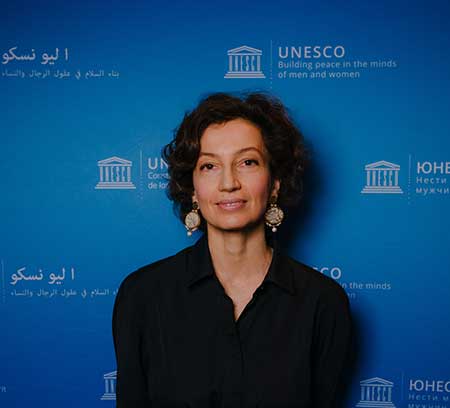
Audrey Azoulay, Director-General of UNESCO

PARIS and REYKJAVIK, Mar 5 2021 (IPS) – International Women’s Day pays tribute to the achievements of women worldwide and reminds us what still needs to be done for full gender equality. In 2021, we are taking stock of the many ways in which COVID-19 has disproportionately affected women and girls around the world.


The pandemic has created a new landscape. Although women have played a key role in responding to the crisis, gender inequalities have widened across the board. In education, 767 million women and girls were impacted by school closures. Eleven million may never return to class, joining the 132 million already out of school before the crisis struck. From the economic perspective, the recession is pushing 47 million more women and girls into poverty, destroying their economic independence and making them more vulnerable to gender-based discrimination and violence.

As we look at this landscape, we have to ask ourselves: if gender equality is our goal, what kind of leadership will the world need moving forward?

It is not enough to just count the number of women in the highest positions of power. No single person at the top of the pyramid can repair the damage being done to the progress that has been made in gender equality since the world adopted the Beijing Declaration on women’s rights 25 years ago.

What we need are leaders for gender equality – and we need them everywhere in our societal structures. Leaders of all ages, all gender identities and from all backgrounds. These leaders are not just agents of change, but designers of change. They lead through their example and engagement. They expose injustices and unequal opportunities. They know that gender inequalities stem from discrimination and exclusion and that it is only by lifting these barriers that real change can happen. This is feminist leadership.
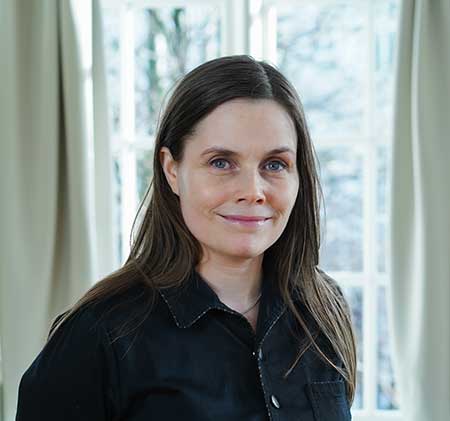
Katrín Jakobsdóttir, Prime Minister of Iceland

Feminist leaders tackle power structures. They name and deconstruct all forms of exclusion and marginalization. They empathize with the vulnerable and voiceless, and champion their causes. They open new doors and take risks, courageously blowing the whistle on hidden injustice, and unmasking structural barriers perpetuating inequalities. They are all around us. Be it the activist defending an indigenous community, the schoolgirl mobilizing her generation to save the climate, or the poet raising her voice to promote social justice.

Feminist leaders have the courage to create, report, educate, experiment. Think about Azata Soro, actress, film director and producer who broke her silence on sexual harassment and violence in the African film industry. Think about Maria Ressa, risking jail for her brave investigative journalism. Think about Yande Banda, a tireless advocate for girls’ education in Zambia and beyond. Think about Katalin Karikó, who overcame the many challenges faced by women in science and was instrumental in developing the Pfizer-BioNTech coronavirus vaccine. As stories like these become known, they challenge people’s intimate convictions of what is achievable and by whom. These women are, in all their diversity, feminist leaders.

However, feminist leadership is not the prerogative of women alone. Gender equality isn’t just a women’s fight, it’s a fight for social justice. Men also need to be involved in the construction of a fairer society. Many of them are showing the way. The Congolese gynecologist, Dr Denis Mukwege, won a Nobel Peace Prize for his advocacy to stop rape from being used as a ‘strategy of war’. And there are many others like him, all over the world.

On this International Women’s Day, we stand committed to building future generations of feminist leaders through education. We support women who dare to create and do what is necessary to prevent them from censorship and attacks. We call on the international community to ensure the safety of women journalists who address gender inequalities through their reporting. We also stand side by side with men who dare to care and reject toxic masculinities and behaviours and open up spaces for women to influence decision-making or participate in scientific discovery and innovation.

Let us support these feminist leaders, from all walks of life. Let us take action so that women can affirm their leadership and be powerful role models for generations to come. Because gender equality not only serves to advance the cause of women – a fairer society benefits us all.

Audrey Azoulay is Director-General of UNESCO and Katrín Jakobsdóttir is Prime Minister of Iceland.
  Source

International Women’s Day, 2021Gender Equality is The Roadmap We Need to Overcome Our Most Pressing Global Challenges

Civil Society, Climate Change, Development & Aid, Economy & Trade, Featured, Gender, Gender Violence, Global, Headlines, Health, Human Rights, Humanitarian Emergencies, Poverty & SDGs, Sustainability, TerraViva United Nations, Women & Climate Change

Opinion

The following opinion piece is part of series to mark the upcoming International Women’s Day March 8.

NEW YORK, Mar 4 2021 (IPS) – In 2020, progress on gender equality stalled or regressed in many countries in large part because of the far-reaching impacts of the COVID-19 pandemic. According to a recent analysis, by 2021, around 435 million girls and women will be living on less than $1.90 a day, including 47 million pushed into poverty as a result of the pandemic. Global lockdowns contributed to a surge of gender-based violence worldwide, and estimates show that sexual and reproductive health and rights (SRHR), the bedrock of gender equality, have been severely disrupted, resulting in an additional 49 million women at risk of experiencing an unmet need for modern contraception. Our most pressing global issues have seldom been so daunting, and fault lines in existing social, political, and economic systems have never been so deep.


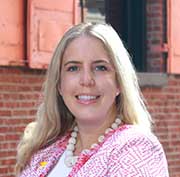
Kathleen Sherwin

Fortunately, the evidence-based solutions we need to lay the groundwork for a future that delivers for all, including for girls, women, and underrepresented populations1 , are in plain sight. As a global community, by using gender equality as our shared North Star, we can set in motion actions that help us not only recover, but come out on the other side of our most pressing global challenges stronger. Achieving gender equality, with a focus on girls’ and women’s health and rights, must be central to the actions we take in response to COVID-19, and other deeply entrenched barriers to progress, such as climate change.

On this International Women’s Day, we’re calling on governments, the private sector, and civil society leaders to firmly position gender equality as our collective roadmap for coordinated action on COVID-19 and sustainable development. As essential first steps, together, we must prioritize collecting and using disaggregated data, securing the full and effective participation of girls and women in all aspects of decision-making, and investing more in gender equality. Sustainable progress toward a world that works for everyone depends on it.

Decision-makers must collect and use disaggregated data to set equitable action in motion.

Girls and women are too often invisible to decision-makers because data and knowledge about them is either incomplete or missing. To create policies that advance gender equality by addressing the disproportionate impacts of global challenges on girls, women, and underrepresented populations, we first need to invest in disaggregated data to get a full, intersectional picture of the uneven impacts of global issues.

In August 2020, in partnership with Focus 2030, we set out to do just that, conducting a first-of-its-kind multi-national survey — in 17 countries, representing half of the world’s population — to better understand the impacts of COVID-19 on girls and women, and global public opinion and expectations for policymaking on gender equality. We learned that girls and women are shouldering the worst of the pandemic’s impact: across 13 of 17 countries surveyed, women report experiencing greater emotional stress and mental health challenges than men, and taking on an even greater share of household tasks.

Girls and women must be fully and effectively engaged in charting our shared path forward.

Building a sustainable future for all requires the full participation — and potential — of girls and women in all aspects of our international and domestic response to global issues, and the realization of that potential depends on their health and rights. In fact, we now know that 82% of citizens globally believe women must be involved in all aspects of COVID-19 global health response and recovery efforts.

Crucially, we must engage today’s youth, who will ultimately bear the consequences of our action — or inaction — and who have the highest expectations for more government funding for gender equality. 75% of female respondents aged 18-24 expect their government to spend more on gender equality, and over 94% of young men and women are ready to take personal action to make sure that they do.

Gender equality is what citizens want, and it’s what the world needs to build a healthier future for all.

The resounding call for action on gender equality, matched by robust funding and accountability mechanisms, holds across countries surveyed for men and women, young and old alike. Over 80% of citizens globally want their government to invest more to promote gender equality, and are ready to act — from the way they vote, to the products they buy — to make sure that this happens. The resounding majority of citizens also believe that increasing access to SRHR is a top priority for immediate government action.

As governments, the private sector, and civil society leaders come together on International Women’s Day, and during upcoming global fora including the 65th session of the Commission on the Status of Women and the Generation Equality Forum to discuss how to transform words into action that improves the health of all people and the planet, ensuring that gender equality is our shared roadmap for responding to global challenges is crucial to sustainable progress now and in years to come. It’s what citizens want, and it’s what the world needs to build a healthier, more gender-equal future.

1 People of underrepresented sexual orientation, gender identity, and/or expressions, and sex characteristics (SOGIESC), and those who experience multiple and intersecting forms of discrimination and oppression.

The author is Interim President & CEO, Women Deliver

  Source

International Women’s Day, 2021To Lead is to Serve — A Pacific Woman’s Perspective

Asia-Pacific, Civil Society, Development & Aid, Featured, Gender, Headlines, Health, Humanitarian Emergencies, Inequity, Poverty & SDGs, TerraViva United Nations, Women & Climate Change, Women & Economy, Women in Politics, Women’s Health

Opinion

The following opinion piece is part of series to mark International Women’s Day March 8.

SUVA, Fiji, Mar 1 2021 (IPS) – An often quoted indigenous reference in the Samoan language is, O le ala i le pule o le tautua, literally translated, “the pathway to leadership is through service” because to be able to lead is to be willing to serve.


Since world leaders endorsed the blueprint for gender equality in Beijing 1995, women in leadership has dominated in numerous conversations and forums in terms of the need to increase women in leadership as a critical factor to achieve gender equality. Many of the perspectives shared, are about facilitating opportunities for women, advancing women in fields dominated by men, particularly in the sciences, and achieving equality in decision-making. Women in leadership has become a popular discourse from development, to academia, to politics, to science and innovation; and organisations across all sectors are recognizing the importance of inclusivity and equity for achieving sustainable development.

The 2020 Pacific review of the Beijing Platform for Action, 25 years after Beijing, highlighted that Pacific states still have a long way to go in achieving balanced representation of women in national parliaments. With the exception of the French Territories where equitable representation of women in their legislative assemblies is ensured by the French ‘parity law’, women’s representation in national parliaments across the region is shockingly low and temporary special measures (TSMs) are only used in a few states. At all levels, and across all nations, gender power dynamics disadvantage women as decision makers; and socio-cultural norms in the Pacific see men as the ‘natural’ spokespeople for families, communities and governments. That said, the report also noted an increase in women’s participation in all levels of decision-making at community levels, in public service and in civil society organisations. This raises a number of challenging questions.

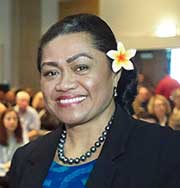
Leituala Kuiniselani Toelupe Tago-Elisara

Where does this lead us in a pandemic environment? COVID-19 has exacerbated existing and ongoing inequalities in the Pacific, hindering what is already very slow progress for achieving gender equality. The evidence is quite clear as to where these inequalities are found and policy dialogues and talanoa sessions held within the region over the last two and a half decades, have generated a multitude of recommendations on what can be done by governments and as a region. What then is the problem, we ask ourselves? It’s the resourcing, the response, the lack of political will and commitment, and the list goes on, that women leaders and women engaging in the gender space, know all too well.

So, what can we do and what does this mean for Women in Leadership? The answer lies in our ongoing concerted efforts to have women at the table with an equal voice to speak for the 50% of our population. We will keep pushing to have women leaders at the table who understand women’s lived experiences and needs, and that these are translated into decision-making on resource allocation and prioritisation. We need women who lead, knowing that they have families and communities to attend to after work, and appreciate the value of unpaid care work. More importantly, we need the same women leaders at the table to share those perspectives with their men counterparts, to affect change that will transform societies and enable positive and inclusive change for gender equality at all levels in society and across all locations – urban, rural and remote.

Our unprecedented experience with COVID-19 has changed the way we live, the way we work and certainly the way we exercise leadership and deliver service. It has reminded us that with border closures and travel restrictions, we need to be searching within our own borders and within our own societies for solutions. One of these solutions is for us to utilize and capitalize on the often-untapped skills, knowledge and expertise of women, to generate solutions for our development challenges. The role of women, as we are seeing in recovery efforts across the Pacific, is a testament to the service they continue to provide for our families and our communities. It is evidenced in women’s resilience and their significant capabilities in managing our communities and societies through multiple disasters and climatic events over the years, and through the multitude of cultural and customary obligations that we have all lived through, and will continue to live through. It is a reflection of women’s knowledge of our Pacific ways of knowing and ways of being, gathered and passed down from generation to generation.

The impacts of COVID-19 are huge and as a region and as a people, it will take some time to navigate our way through these impacts towards full recovery. However, if there is one learning that I take away from this crisis, it is our ability to remain resilient and to continue to serve each other and our people, with our women holding the fort in all our societies and communities across the Pacific Ocean, through their ongoing service. It is a manifestation and a living example of leadership through service, because to be able to lead is to be willing to serve, and being able to serve is being able to lead, and such is the spirit of Pacific women in leadership.

Leituala Kuiniselani Toelupe Tago-Elisara is Acting Regional Director, Polynesia Regional Office Pacific Community (SPC)

  Source

UN Peacebuilding Commission must Prioritise Protecting Youth Activists Facing Retaliation

Active Citizens, Civil Society, Featured, Global, Headlines, Human Rights, IPS UN: Inside the Glasshouse, TerraViva United Nations

Active Citizens

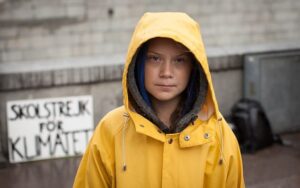
Swedish teen activist Greta Thunberg has faced massive backlash for supporting the Indian farmers’ protests. (File photo) Credit: Anders Hellberg/CC BY-SA 4.0

Swedish teen activist Greta Thunberg has faced massive backlash for supporting the Indian farmers’ protests. (File photo) Credit: Anders Hellberg/CC BY-SA 4.0

UNITED NATIONS, Feb 25 2021 (IPS) – The United Nations Peacebuilding Commission must prioritise the protection of youth activists who face retaliation from state and non-state actors, said UN Youth Envoy Jayathma Wickramanayake.


Wickramanayake was speaking at the Peacebuilding Commission high-level virtual meeting on Youth, Peace and Security, where she outlined numerous ways the commission can assist youth activists around the world — especially with their grassroots efforts.

“I hope you will consider including young people in your delegation to building commissions, consult young people in your own countries to input to your work and, most importantly, ensure the protection of young people who you decide to engage with as we have seen many incidents of retaliation against young activists by state and non-state actors for simply deciding to speak up and working with the UN,” Wickramanayake, from Sri Lanka, told the commisison.

Other speakers at the event included Mohamed Edrees, chair of the Peacebuilding Commission, Allwell O. Akhigbe of Building Blocks for Peace Foundation in Nigeria and Oscar Fernández-Taranco, UN Assistant Secretary-General for Peacebuilding Support.

Wickramanayake comments come when youth activists are facing attacks and harassment online and offline. Swedish teen activist Greta Thunberg has faced massive backlash for supporting the Indian farmers’ protests, while Indian youth activist Disha Ravi was arrested because of her activism in support of the protests.

Wickramanayake further highlighted the importance of acknowledging and promoting local grassroots organisations working in the field of youth peacebuilding.

“Young people around the world are building national coalitions, conducting baseline studies and monitoring efforts in support of youth-led peacebuilding,” she said.

She added that these organisations require “adequate, predictable and sustained” financing to thrive but this was yet to be explored.

“I would like to challenge this commission today to consider what the peacebuilding commission can do to encourage this critical support and resources at the local level where they are actually making a big difference,” she said.

Wickramanayake recommended that the commission should not only support a “substantial increase in the financial resources” for peace and security, but it should also make sure that the resources go directly to youth working on “homegrown building strategies”. 

Mia Franczesca D. Estipona, from the Generation Peace Youth Network in the Philippines, also shared the importance of involving youth who are directly affected by issues such as conflict.

“In creating facilities for youth projects and capacity building for support, we must make an effort to directly engage with youths in areas affected by conflict, understand their work and how it contributes back to the community,” Estipona said. “This is highly important especially for community-based youths who have programmes and projects but cannot be sustained due to lack of access to funding and support.” 

Both Estipona and Wickramanayake emphasised the importance of representation and being inclusive of marginalised youths or those whose stories are often left behind.

Wickramanayake highlighted the work of a colleague who promotes the voices of youth with disabilities and had reportedly briefed the Security Council on the situation in the Central African Republic by broadcasting the issue of youth, peace and security in sign language.

“[Their] organisation removes barriers limiting the participation of young people with disabilities in peacebuilding, actively mobilising the deaf community to act on Resolution 2250,” she said, referring to the UN Security Council Youth, Peace & Security thematic resolution that deals with the topic of youth from an international peace and security perspective.

Meanwhile, Estipona pointed out: “Many youth organisations have established strong programmes that truly represent and attend to youth who are in areas affected by conflict – their voices are most left behind.”

“We should pursue representation that truly represents and focuses on the collective efforts of youth as a community — and as a sector of society, not just as a different individual,” she said.

Other speakers at the event agreed with both Wickramanayake and Estipona.

Ambassador Rabab Fatima, the Permanent Representative of Bangladesh to the UN, said that it’s crucial to address the “distinct needs” of the youth as the world recovers from the coronavirus pandemic.

She highlighted the importance of access to education, sufficient funding, and including youth participation in peacebuilding as part of the “broader national policy framework”. 

Estipona said the engagement of the youth must be sustained in various stages of the process of peacebuilding: consultation, crafting, implementation and monitoring.

“Continuity of these efforts is still a challenge because they are constantly shifting priorities of stakeholders and leadership,” she said.

In offering recommendations on how to strengthen youth participation and involvement, Wickramanayake said there must be a periodic review of the efforts to increase engagement with young people.

“Accountability is key,” she said, “[we] want to hear your strategic plan. Also think beyond security and think about the intersection of peace, sustainable development, and human rights.” 

She also urged leaders to “walk the talk” – and prioritise the development of dedicated local, national and regional road maps and action plans.

  Source

Is the USA Fit to Rejoin the UN Human Rights Council?

Civil Society, Democracy, Featured, Global, Headlines, Human Rights, North America, TerraViva United Nations

Opinion

Emily Standfield is CIVICUS Member and data volunteer.

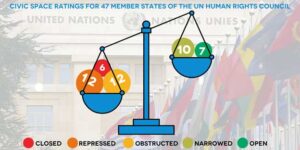
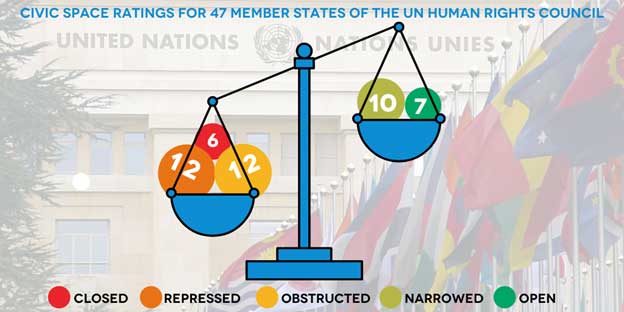
National civic space ratings from the CIVICUS Monitor, which uses up-to-date information and indicators to assess the state of freedom of association, peaceful assembly and expression for all UN Member States. Credit: CIVICUS Monitor

TORONTO, Canada, Feb 24 2021 (IPS) – A month into Joe Biden’s presidency, the U.S. has rejoined nearly all the multilateral institutions and international commitments that it withdrew from under Trump. These include the World Health Organization and the Paris Climate Accords.


Most recently, on February 8th, the U.S. announced it would also rejoin the United Nations Human Rights Council (HRC) as an observer. The U.S.’ role in the human rights forum looks different than it did four years ago in light of its recent track record on civil liberties.

The HRC has two primary functions: to draft and adopt new standards for human rights and to conduct investigations into specific human rights issues. In 2018, U.S. Ambassador to the UN Nikki Haley and U.S. Secretary of State Mike Pompeo announced that the U.S. would be leaving the HRC, claiming that it was a barrier to any genuine global human rights protection. The U.S. had two primary grievances.

First, that the HRC has an “unconscionable” and “chronic bias” against Israel. And second, that the HRC’s membership criteria allows chronic human rights abusers to have a seat on the Council. Neither of which are entirely baseless claims.

Israel remains the only country-specific agenda item covered at every HRC meeting and Russia, China, and Eritrea — to name a few — all currently hold seats on the Council and have some of the worst human rights records in the world.

Emily Standfield. Credit: CIVICUS

On Monday, the HRC’s 47 member states met for its 46th session, it’s third time meeting since the beginning of the pandemic. The further decline of political and civil rights as enshrined in international law will be an unavoidable hot topic.

The CIVICUS Monitor which rates UN member states’ track records of upholding the legal tenets of freedom of expression, freedom of peaceful assembly and freedom of association finds that 30 of the Council’s full member states routinely and severely restrict these rights.

And in the case of its newest observer state, the USA was recently downgraded to the Monitor’s third worst civic space rating of ‘Obstructed’. The body is a long way off from adequately representing its values.

In the case of the USA, the rating change and decline in rights is reflected by the police response to the Black Lives Matter (BLM) protest movement. During protests in 2020, law enforcement detained thousands of demonstrators, used teargas and projectiles to disperse crowds, and attacked journalists, despite the fact that most wore media credentials.

President Trump and other authority figures encouraged police officers to respond forcefully and, in some cases, requested such violent actions for their own benefit. In a perfect example of this, the Attorney General ordered the use of teargas against peaceful protesters so that President Trump could have a photo-op in front of a church.

While the BLM protests may have made the decline in civic freedoms abundantly clear, this rating change represents a longer deterioration of political and civil rights.

In response, in June the HRC unanimously passed a mandate that called for a report on ‘systemic racism’ targeted at individuals of African descent. Philonise Floyd, the brother of George Floyd, whose murder at the hands of white police officers began the mass protests, called on the human rights body to examine the U.S.’ history of racial injustice and police brutality.

In the end, the final resolution passed by the HRC called for an investigation of systemic racism globally and regrettably did not single out the U.S.

While Biden has rejoined the HRC as an observer, the U.S. must win elections in October 2021 if it wants to regain its seat on the Council. In 2019, Biden said, “American leadership on human rights must begin at home” and — in some ways — it has.

The BLM protests have sparked a degree of state and local level police reform, and Biden has made a commitment to achieving racial equity. While the U.S. should focus on improving freedoms within its borders, it should also not exempt itself from becoming a full member of the HRC again in October.

Former President Barack Obama ran for a seat on the Council because he believed the U.S. could do more to advance human rights as a member of the body. This turned out to be true— the U.S. supported the creation of several important international commissions of inquiry to investigate human rights violations.

If the rationale by Trump was that leaving the council would do more for human rights than holding a seat, it’s clear that this has not come to fruition. Whether it is freedom of speech or the right to peacefully protest, today more of the world’s population lives in ‘Closed’, ‘Repressed’ or ‘Obstructed’ countries as compared to four years ago, finds the CIVICUS Monitor.

Leadership is needed at the UN Human Rights Council on these issues, but it must come from those that have a full seat at the table and have a demonstrated track record of upholding their commitments. The U.S. is currently disqualified on both accounts. Credibility and moral leadership must come from somewhere else.

Instead, the U.S. must support other member states that are leading by example on these issues. Seven members of the HRC — Denmark, Germany, Uruguay, Netherlands, Marshall Islands, and Czechia — are rated ‘Open’ by the CIVICUS Monitor, the highest civic space rating a country can achieve.

These countries are adequately representing the values that the HRC is committed to defending. While there are surely other issues at the HRC that the U.S. will prove influential, the country is far from the inspirational example it often likes to present itself on these world stages.

At the current session of the HRC, which began on February 22nd, the U.S. should champion these members who have made meaningful progress on civil liberties and be prepared to take a backseat on issues that it so obviously falls short on.

  Source

The Boon and Bane of LDC Graduation: The Bangladesh Experience

Asia-Pacific, Civil Society, Development & Aid, Economy & Trade, Education, Food & Agriculture, Gender, Headlines, Health, TerraViva United Nations

Opinion

SINGAPORE, Feb 22 2021 (IPS) – Bangladeshis at the present time share a modicum of justifiable pride in the fact that the world merits this country worth watching in terms of its economic potentials. To my mind , we have reached this stage for the following reasons: First, effective utilization of early foreign assistance; second a steady ,albeit sustained, move away from a near -socialistic to an open and liberal economy; third , a shift from agriculture to manufacturing as land-space shrank to accommodate urbanization; fourth , an unleashing of remarkable entrepreneurial spirit among private sector captains of industry, as evidenced in the Ready Made Garments industry: fifth, the prevalence of a vibrant civil society intellectually aiding the social transformation with its focus on health, education, and gender issues: and finally ,a long period of political stability notwithstanding the traditional predilections of Bengali socio-political activism.


Dr. Iftekhar Ahmed Chowdhury

The philosophical underpinning behind the concept of ‘Least Developed Countries’ (LDCs) devised at the UN in the 1960s was to identify a set of States whose impediment to development was structural, and not due to their own faults. Hence the idea that the global trading system needed to be adjusted by providing these nations ‘special and differential treatment’, such as entailed in non-reciprocal preferential market access. This would, hopefully, create for them a level playing field. Bangladesh joined the Group in 1975, immediately following its UN membership. The conditions for joining the list of LDCs or graduating from it , are determined by the Committee for Development Policy (CDP) based on certain criteria. Out of original 48 six countries have already graduated: Botswana, Cape Verde, Maldives, Samoa, Equatorial Guinea, and Vanuatu. Nepal and Bangladesh are in the cusp of graduation.

Graduation is for Bangladesh a mix of boon and bane. It is a boon because it is an acknowledgment of progress, a major milestone in the nation’s development journey. It would improve the country’s global image which should give it better credit ratings. This would allow it to borrow more cheaply on the world market. It is a bane because it would ultimately lose all the preferences accorded to LDCs in global trade such as under the European Union’s Everything but Arms (EBA) initiative. However, Bangladesh has not quite optimized on those advantages.

Incidentally, as chair of the WTO Committee of Trade and Development, as also of the LDC Group in Geneva in the late 1990s and early 2000, and also as Special Advisor to Secretary General Rubens Ricupero of the United Nations Conference on Trade and Development (UNCTAD), I was involved with the related deliberations with the European Union. Bangladesh has always played a leadership role on behalf of the LDCs in all multilateral negotiations, both at the WTO in Geneva and at the United Nations in New York. Sometimes these involved not only tough deliberations with developed countries and ‘economies in transition’ (former socialist countries) , but also with developing member-States of the Group of 77 (because it entailed the sharing of the cake).Bangladesh’s graduation will in many ways deprive the LDCs of this capacity. Across the diplomatic scene, Bangladesh could also depend on the support of fellow-LDCs on a broad range of issues. I would gratefully recall the contribution in this regard of the so-called “Utstein Sisters” of Europe (named after a venue in Northern Europe where they met), five women Development Cooperation Ministers, including Evelyn Herfkens of the Netherlands and Claire Short of the UK. They were ardent advocates of LDC aspirations, and were instrumental, among other things, in the WTO’s acceptance, unlike in the case its predecessor, the General Agreement on Trade and Tariff (GATT), of the broad principle that trade is a key tool of development.

Following graduation, Bangladesh will need to negotiate a continuation of international support measures to render the graduation process smooth and sustainable. If needs be, even after the grace period of quota-free duty- free market access vis-à-vis Europe till 2029. Though in Brussels the EU could cut Bangladesh some slack because of its performance, at the WTO, Bangladesh, will be well advised to attempt a norm setting exercise with regard to graduating countries with the new Director General, Dr Ngozi Okonjo-Iweala, who is empathetic, as well as with the membership. This will take some skillful diplomacy. But I would like to strongly underscore that negotiations are but the tip of the ice- berg. The main challenge would lie in tackling the fundamentals beneath. For instance, in addressing domestically the 27 requirements, including corruption, non-compliances, and other inadequacies, across the governance spectrum to achieve GSP -plus status. Also, to derive other global market benefits.

Comparative advantages would have to be transformed into competitive advantage. Low-wages will tend to perpetuate poverty. So wage-rise, an essential tool for poverty mitigation, would need to be carefully calibrated with the increase in productivity. Economy should diversify, particularly into services, which do not face goods tariff and hence less affected by loss of preferences. The Internet sector, on which the government is prudently laser-focused, can help Bangladesh leapfrog into economic modernity. The pharmaceutical industry should seriously reflect on how to navigate WTO regulations on Trade in Intellectual Property, or TRIPS. Mutually rewarding arrangements with other Asian economic powerhouses are called for. For instance, Free Trade Agreement with a country like Singapore could, and I use the word ‘could’ advisedly, unlock potentials, but that would require further serious study and examination.

Throughout my negotiating career I had felt that preferences tend only to prolong pain. There are no such things as friends in the marketplace. The sooner we start to confront the real world of competition the better off we are. Indeed, if we can play our cards right, the graduation could be our ‘’break-out” moment to reflect on reforms, on raising productivity and on boosting growth. Efforts must be directed towards moving up the value chain by attracting quality FDI. From my current perch in the corporate sector in Singapore, I see Vietnam as an example worthy of emulation.

So, to conclude, graduation is inevitable if progress is the goal, as it must be, and indeed desirable, just as, in our individual lives, coming of age, that is of turning 21, is. Readiness is key. From what I see, there is nothing like the last minute in speeding up requisite preparations. Doubtless, there is much work to be done. But we must bear in mind that if there is a hill to climb, waiting will not make it any smaller!

Dr Iftekhar Ahmed Chowdhury is the Honorary Fellow at the Institute of South Asia Studies, NUS. He is a former Foreign Advisor (Foreign Minister) of Bangladesh and President & Distinguished Fellow of Cosmos Foundation. The views addressed in the article are his own. He can be reached at: isasiac@nus.edu.sg

This story was originally published by Dhaka Courier.

  Source