Building Water Security for the Next Generation in the Pacific Territories

Aid, Asia-Pacific, Biodiversity, Civil Society, Climate Action, Climate Change, Climate Change Justice, Conservation, Development & Aid, Editors’ Choice, Environment, Featured, Natural Resources, PACIFIC COMMUNITY, Pacific Community Climate Wire, Small Island Developing States, Sustainability, Sustainable Development Goals, TerraViva United Nations

PACIFIC COMMUNITY

Pacific Community’s PROTÉGÉ Project strives to advance climate resilient development. Credit: SPC

Pacific Community’s PROTÉGÉ Project strives to advance climate resilient development. Credit: SPC

SYDNEY, Oct 14 2024 (IPS) – The Pacific Islands region is both the frontline of the wrath that climate change is lashing on the environment and human life and the drive for innovation and solutions to stem the destruction and strengthen island environments for the future. The survival of life, even nations, in the Pacific depends on it.


“The world has much to learn from you… Plastic pollution is choking sea life. Greenhouse gases are causing ocean heating, acidification and rising seas. But Pacific Islands are showing the way to protect our climate, our planet and our ocean,” United Nations Secretary-General António Guterres, said during his visit to Tonga in August.

And the Pacific Community’s PROTÉGÉ Project (the name means ‘protect’ in French) is doing just that. Launched six years ago with funding by the European Development Fund (EDF), it is striving to advance climate resilient development through protecting and better managing biodiversity and natural renewable resources, such as freshwater, in the three French overseas territories of New Caledonia, French Polynesia and Wallis and Futuna, as well as the British overseas territory of Pitcairn, in the Pacific. To achieve this, it has brought together provincial and local-level governments, consulting firms, non-government organizations, and local communities and is led and coordinated by science and development experts from the regional development organization, Pacific Community (SPC), that works for 22 Pacific island governments and territories.

It honors the interconnected nature of island ecosystems through the four focus areas of the project: agriculture and forestry, coastal fisheries and aquaculture, invasive species and water. For instance, “in an integrated watershed management approach, what happens in the mountains ends up in the rivers and eventually in the sea,” Peggy Roudaut, SPC’s PROTÉGÉ Project Manager in Noumea, New Caledonia, told IPS.

A community worker, replants and maintains the forest. Reforestation develops long-term climate-resilient environments. Credit: SPC

A community worker replants and maintains the forest. Reforestation develops long-term climate-resilient environments. Credit: SPC

Healthy forests are the lungs of flourishing natural ecosystems and biodiversity and restoring and maintaining forests is at the heart of the PROTÉGÉ Project. Credit: SPC

Healthy forests are the lungs of flourishing natural ecosystems and biodiversity, with forest maintenance at the heart of the PROTÉGÉ Project. Credit: SPC

“The water theme is central,” she continued. “By working on the sustainability of water resources and supporting the water policies of the territories, while also promoting actions to make aquaculture and agriculture more sustainable, we contribute to making the overseas countries and territories more resilient to the effects of climate change.”

While the Pacific Islands are surrounded by a vast 161.76 million square kilometers of ocean, their sources of freshwater are fragile. Most islanders who live in rural areas have to choose from limited groundwater lenses, streams or rainwater harvesting. Ninety-two percent of Pacific islanders living in urban centers have access to clean drinking water, declining to 44 percent in rural communities, reports the Pacific Community (SPC).

Improving water security is a priority in the national development goals of Pacific Island countries, but real progress is being undermined by population growth, which is rapidly increasing demand, and the worsening impacts of climate change. Rising air and sea temperatures, more heatwaves and unreliable rainfall with rising sea levels that are driving coastal erosion are all taking their toll on the region, reports the Intergovernmental Panel on Climate Change (IPCC).

In the western Pacific, temperatures are predicted to increase by 2-4.5 degrees Celsius by 2100, while most Pacific Island states will witness a sea level rise 10-30 percent higher than the global mean, which is projected to be 38 centimeters by the end of the century, according to the United Nations.

And then there’s pollution. “For many rural and remote and even urban communities, water sources that were once safe to drink or use for farming have become unsafe due to pollutants, including improper waste disposal and agricultural runoff,” Professor Dan Orcherton, Professor in Sciences at the University of Fiji, told IPS, emphasizing “that freshwater security in the Pacific Islands is quite precarious, reflecting a complex interplay of natural and human induced factors.”

The Pacific Community (SPC) is working to protect, manage and support countries to monitor freshwater reserves across the entire Pacific region.  PROTÉGÉ, specifically focused on Pacific territories, has been supporting this work by regenerating forests and vegetation in their vicinity and developing long-term climate-resilient management plans.

The quality of drinking water is also being improved through closely studying detrimental factors, such as construction and development, and decontaminating rivers and wells that are polluted by waste and landfills.

Healthy forests are the lungs of flourishing natural ecosystems and biodiversity that, in turn, regulate the local climate, protect natural watersheds and prevent soil erosion. Forests cover 43.7 percent of the five archipelagos in French Polynesia, which is regularly battered by cyclones, droughts and sea level rise. Meanwhile, in Wallis and Futuna, a small group of volcanic islands in the central Pacific with scarce freshwater, deforestation due to forest clearing, and soil erosion are serious problems.

Closer to the east coast of Australia, forest covers 45.9 percent of the islands of New Caledonia. Here, water resources are being affected by nickel mining, forest fires and soil erosion. Scientists forecast that, against predicted climate change impacts, 87-96 percent of native tree species in New Caledonia could decline by 2070.

The broader community, including children, are also involved in the reforestation projects. Credit: SPC

The broader community, including children, are also involved in the reforestation projects. Credit: SPC

The World Wildlife Fund (WWF) is a partner in a project being rolled out in the district of Dumbea, north of the capital, Noumea. Credit: SPC

The World Wildlife Fund (WWF) is a partner in a project being rolled out in the district of Dumbea, north of the capital, Noumea. Credit: SPC

Roudaut spoke of three projects in New Caledonia that, together, boosted the reforestation of 27 hectares, the replanting of vegetation around drinking water supply catchments and put in place 3,460 meters of fencing around water sources that will prevent damage, whether by fires or wildlife, such as deer and wild boars. Local communities were vital to their success, with 190 islanders, many of whom were women and youths, involved in making the projects a reality on the ground.

The World Wildlife Fund (WWF) is a partner in one being rolled out in the district of Dumbea, north of the capital, Noumea. The project focuses on the Montagne des Sources upstream of the Dumbea dam, which provides water to 110,000 people, or 40 percent of New Caledonia’s population.

Solène Verda, Head of WWF’s Forestry Program in the territory, told IPS that the incidence of forest fires, as well as floods and droughts, which also affect water security, will only intensify with climate change. “Every year in New Caledonia, fires destroy around 20,000 hectares of vegetation, which is a disaster regarding the islands’ surface; in ten years, 10 percent of the main island has already burned,” she said. “The predictions are not cheery for New Caledonian forests and, thus, the freshwater resources.”

Improving water security is a priority in the national development goals of Pacific Island countries. Credit: SPC

Improving water security is a priority in the national development goals of Pacific Island countries. Credit: SPC

The PROTÉGÉ initiative is tackling one of the greatest inhibitors to combating climate damage, which is limited technical and management capacity. Due to “the remoteness of these islands and small populations… combined with the emigration of skilled professionals out of the region, there is minimal capacity within regional countries to respond to the day-to-day vulnerability threats, let alone the frequent natural disasters experienced,” reports the United Nations Environment Program (UNEP).

“Thanks to SPC’s PROTÉGÉ, we had the opportunity to test different forest restoration techniques on our degraded watersheds… and it has given us a clearer idea of the methods best suited to our context,” Verda said.

It is a key issue understood by the EU, which has supported the initiative with 36 million euros, in addition to 128,000 euros contributed by the three French territories.

PROTÉGÉ is part of our “commitment to environmental sustainability, climate resilience and sustainable economic autonomy for these small, often vulnerable island territories in line with the Green Deal,” Georges Dehoux, Deputy Head of the Office of the European Union (EU) in the Pacific in Noumea, told IPS. The Green Deal is the EU’s ambition to achieve net zero emissions and non-resource equitable economic growth to become the world’s first climate-neutral continent by 2050.

All Pacific Island countries and territories “are facing the same environmental and economic challenges, and a combined and coordinated response at the regional level will ensure better resilience to these challenges,” Dehoux added.

Those working with the project have a sense of urgency about what they are aiming to achieve. For, as the International Monetary Fund (IMF) advises, “We can still reverse some of the damage we have inflicted on our precious planet. But time is running out. If we don’t take decisive action in the next 10-20 years, the damage will have passed irreversible tipping points.”

IPS UN Bureau Report

  Source

Agroecology: The Game-Changing Solution to Global Food, Climate and Conflict Crises

Armed Conflicts, Biodiversity, Civil Society, Climate Action, Climate Change, COP16, Editors’ Choice, Environment, Featured, Food and Agriculture, Food Security and Nutrition, Food Sustainability, Global, Headlines, Humanitarian Emergencies, Natural Resources, Sustainable Development Goals, TerraViva United Nations

Biodiversity

Edward Mukiibi, President, Slow Food. Credit: Busani Bafana/IPS

Edward Mukiibi, President, Slow Food. Credit: Busani Bafana/IPS

TURIN, Italy, Oct 8 2024 (IPS) – Edward Mukiibi, President of Slow Food, champions agroecology as a transformative answer to the world’s most pressing crises: food insecurity, climate change, and violent conflicts.


In a world where these challenges intersect, Mukiibi called for an urgent rethink of our approach to food systems. 

Agroecology, a practice already embraced by millions of farmers worldwide, is emerging as a sustainable alternative to the industrialized agriculture model that dominates today. It emphasizes biodiversity, environmental stewardship, and equitable livelihoods—elements that Mukiibi insists are key to addressing the multifaceted crises facing our planet.

Speaking ahead of the highly anticipated Terra Madre 2024 event in Turin, Mukiibi called for immediate global action to end the misuse of food as a weapon in war-torn regions like Gaza and Ukraine, where food scarcity is exacerbating human suffering.

“Slow Food strongly advocates for an end to all violence in the ongoing conflicts, from the Gaza Strip to Sudan, from Lebanon to the Democratic Republic of Congo, from Ukraine to Yemen, and opposes the use of food as a weapon of war, said Mukiibi, calling for immediate negotiations to achieve a just solution that ensures the dignity of all people and fosters a peaceful future for everyone.

With global crises growing more complex, Mukiibi stresses that agroecology is not just about farming techniques—it is a framework for building more resilient societies.

Carlo Petrini, Founder, Slow Food. Credit: Busani Bafana/IPS

Carlo Petrini, Founder, Slow Food. Credit: Busani Bafana/IPS

The Power of Agroecology

As climate change accelerates, its devastating impacts—melting glaciers, rising sea levels, extreme weather events, and shifting ecosystems—are becoming harder to ignore. Mukiibi linked these environmental crises directly to our food systems, calling industrial agriculture a “leading culprit.” He argues that agroecology offers a path toward resilience, citing its ability to regenerate soil health, reduce social inequality, and provide local communities with economic opportunities.

Mukiibi’s call for change comes as 3,000 international delegates convene at the biennial Terra Madre event to explore solutions for sustainable food systems. He argues that agroecology not only regenerates soil fertility and promotes environmental health but also strengthens local economies, reduces social inequalities, and builds resilience against climate-induced disasters.

“As climate change intensifies, agroecology offers a path to more resilient and equitable food systems,”  Mukiibi declared. “This situation compels us to reflect on the transformation needed if we want to achieve a food system that feeds all people well, regenerates and protects the environment, and allows local cultures to survive and prosper.”

A Call for Global Food System Reset

Carlo Petrini, the founder of Slow Food, echoed Mukiibi’s sentiments, calling for nothing less than a complete reset of the global food system.

“The current global food system is not only unfair but is criminal because it destroys our mother earth, it destroys biodiversity and is based on waste and it has turned food into a price, not into a value,” said Petrini. “We need to restore the value of food because food represents our common good; with food we can establish relations with each other, we can establish reciprocity.”

Petrini emphasized the political significance of food in shaping our future, asserting that the fight for sustainable food systems is inherently tied to larger social and environmental battles.

Petrini also condemned multinational corporations that prioritize profit over the health of the planet, calling on them to stop polluting ecosystems through unsustainable food production methods. He called for an ecological transition.

Food and Humanity

Pope Francis, head of the Catholic Church, also weighed in, highlighting the spiritual and cultural dimensions of food.

In a message to the Terra Madre network, the Pope criticized the commodification of agriculture, noting that it is being manipulated for profit at the expense of both the environment and human dignity.

The Pope praised Terra Madre for fostering a movement that respects the integrity of both food and culture. He argued that only through recognizing the value of food and promoting food education can humanity move towards a future of universal fraternity—a future where diversity is celebrated rather than a cause of division.

The Food Revolution

Launched 20 years ago, Terra Madre has sparked a global food revolution. Over the past two decades, it has united small-scale producers, farmers, and consumers committed to creating a better, cleaner, and fairer food system.

Mukiibi said Terra Madre 2024 serves as a reflection point, a moment to assess the progress made and chart a course for the future.

Coinciding with Terra Madre, the G7 Agriculture Ministers met in Sicily, where Slow Food has urged governments to place food at the center of global political agendas. The call is clear: food must be recognized as a cornerstone of fundamental rights and environmental sustainability.

Mukiibi underscored that millions of farmers around the world are already practicing agroecology, ensuring food sovereignty, food security, and healthy diets. He emphasized the need to build on these successes by expanding the Slow Food network and empowering more farmers to take up agroecological practices.

Agroecology is a path forward for resilient local food systems, Mukiibi noted, explaining that Slow Food was building a network of Slow Food Farms to empower farmers and make them central to future sustainable food systems.

A Hopeful Vision for the Future

Mukiibi’s message is agroecology is not just a farming method—it’s a movement with the potential to tackle some of the most profound challenges of our time.

“Agroecology is the solution, not just for a more sustainable food system, but for addressing inequality, social injustice, and the global environmental crisis.”

As the world grapples with the devastating impacts of climate change, violent conflict, and food insecurity, the vision laid out by Slow Food offers a hopeful path forward—one where food is not a weapon, but a source of unity, resilience, and renewal.

IPS UN Bureau Report

  Source

Why Africa Should Embrace Territorial Markets to Withstand Climate Shocks and Crises

Active Citizens, Africa, Civil Society, Climate Action, Climate Change, Cooperatives, Development & Aid, Economy & Trade, Editors’ Choice, Environment, Featured, Food and Agriculture, Food Security and Nutrition, Food Sustainability, Headlines, Sustainable Development Goals, TerraViva United Nations, Trade & Investment

Economy & Trade

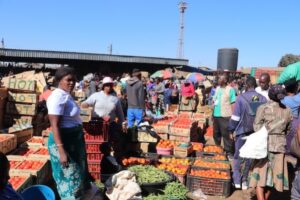
Farmers, traders and consumers at the Mbare Musika Territorial Market in Harare, Zimbabwe. Credit: Isaiah Esipisu/IPS

Farmers, traders and consumers at the Mbare Musika Territorial Market in Harare, Zimbabwe. Credit: Isaiah Esipisu/IPS

HARARE, Oct 4 2024 (IPS) – African policymakers, local leaders and the private sector have been asked to create an enabling environment that will help African traders and farmer folks build reliable systems for food security and resilience through territorial markets.


During a week-long 2024 Africa Agroecological Entrepreneurship and Seed Festival in Harare, Zimbabwe, experts observed that persistent crises have shown the importance of resilient close-to-home ‘territorial’ markets that feed billions of people every day—from public markets and street vendors to cooperatives, from urban agriculture to online direct sales, and from food hubs to community kitchens. 

“For instance, following Russia’s invasion of Ukraine, global food prices spiked by 15 percent, forcing policymakers around the world to question how to reduce dependency on volatile global markets and strengthen food self-sufficiency,” said Dr. Million Belay, the General Coordinator at the Alliance for Food Sovereignty in Africa (AFSA).

“Further, questions have been raised about how people are actually fed and by whom, prompting us to ask: in this century of crisis, what kinds of food supply chains and markets can build resilience and help fulfill the right to food—nourishing people around the world more sustainably and equitably?” asked Belay.

To answer the question, experts are calling for policies and a sound working environment that will empower territorial markets that promote dietary diversity and affordable nutritious foods for all, allow producers and food workers to retain control over their livelihoods, and produce food that is adaptable to climate change shocks and emerging crises.

These markets have been broadly defined as markets that are centered on small-scale agroecological food producers and business owners that produce and sell a variety of commodities, and often meet the preferences of the majority of farmers, traders and consumers.

Studies have shown that these markets play a crucial role in making food accessible and affordable, especially for low-income populations in the Global South, allowing for the purchase of small and flexible quantities of food, price bargaining, informal credit arrangements, and being located in or near low-income neighborhoods.

A new study launched on the sidelines of the Harare event that culminated into the fifth Biennial Africa Food Systems Conference, however, shows that profit-oriented corporate value chains are highly concentrated in Africa’s market places.

The report, titled ‘Food from Somewhere,’ by the International Panel of Experts on Sustainable Food Systems (IPES Food), finds that just seven grain traders control at least 50 percent of the global grain trade, six major corporations control 78 percent of the agrochemical market, the top eight carriers of freight account for more than 80 percent of the market for ocean freight capacity and globally, 1 percent of the world’s largest farms control 70 percent of the world’s farmland.

This, according to experts, amounts to a corporate capture of Africa’s food systems.

The report is therefore advocating for a paradigm shift, urging governments to reinvest in local and regional supply infrastructure, relocalize public purchasing and develop food security strategies for a more resilient and equitable approach to food security.

“The problem for smallholders is not of being connected to markets (most are already involved in markets) but rather the conditions of their access and the rules and logics by which markets operate—who determines prices and on what criteria, who controls the costs of production, who holds market power, among other issues,” said Mamadou Goïta, a member of IPES and the lead author.

A spot check at the Mbare Musika territorial market in Harare found a variety of foodstuffs sourced from all eight regions of Zimbabwe, among others from neighboring countries, such as apples and other fruits from South Africa, fish and ginger from Mozambique, groundnuts from Malawi, sorghum from Botswana, as well as grapes from Egypt and tamarind from Tanzania, among others.

“This is the central hub for smallholder farmers and traders, supporting over seven million people from all over Zimbabwe and other parts of the continent,” said Charles Dhewa, Chief Executive Officer, Knowledge Transfer Africa (KTA), whose flagship known as eMkambo (eMarket) is to create a physical and web-based market for agriculture and rural development, integrating the use of mobile phones and the internet to create, adapt and share knowledge.

Mbare Musika Market, which is in the outskirts of Harare, is located next to the main bus-park, through which food is brought in using informal means such as passenger buses and vans from different parts of the country, in small and big quantities, and of different varieties and qualities.

“The evidence is clear—localized food systems are vital for feeding an increasingly hungry planet and preventing food insecurity and famine,” said Shalmali Guttal, the Executive Director of Focus on the Global South. “They provide nutritious, affordable food and are far more adaptable to global shocks and disruptions than industrial supply chains,” she added.

Jennifer Clapp, professor and Canada Research Chair in Global Food Security and Sustainability at the University of Waterloo, Canada, pointed out that during this time of rising hunger and ecological fragility, global industrial food chains will be catastrophically liable to break down under the strain of frequent crises.

“To have a chance of reaching the world’s zero hunger goal by 2030, we need to re-imagine our food systems, and we need to bolster the food markets that serve the poor,” she said.

IPS UN Bureau Report

  Source

Cuba’s Coastal Dwellers Mitigate the Effects of Climate Change

Active Citizens, Aid, Biodiversity, Caribbean Climate Wire, Civil Society, Climate Action, Climate Change, Climate Change Justice, Conservation, Development & Aid, Editors’ Choice, Environment, Featured, Headlines, Latin America & the Caribbean, Natural Resources, Sustainable Development Goals, TerraViva United Nations, Women & Climate Change

Climate Action

When the weather is bad, the residents of the Litoral neighborhood in Manzanillo, Cuba, are forced to evacuate their houses. When it’s calm, the sea penetrates the foundations of houses, leaving them vulnerable. Now the community is getting together to restore the mangroves and improve the environment to return their homes to safety.

A fisherman sits next to several boats at the GeoCuba Local Interest Fishing Port in the bay of Manzanillo, in the eastern Cuban province of Granma. Credit: Jorge Luis Baños / IPS

A fisherman sits next to several boats at the GeoCuba Local Interest Fishing Port in the bay of Manzanillo, in the eastern Cuban province of Granma. Credit: Jorge Luis Baños / IPS

MANZANILLO, Cuba, Oct 2 2024 (IPS) – Every time a hurricane clouds the skies over the city of Manzanillo, in the eastern Cuban province of Granma, the sea pounds the Litoral neighbourhood, forcing many of the 200 families who live there to evacuate inland because of flooding.


When the weather is calm, the sea penetrates subtly and constantly, salinizing the water table and eroding the coast, affecting the foundations of houses and artesian wells.

“The water almost always enters this area. The houses were built too close to the sea and the mangroves are deforested,” community leader Martha Labrada, 65, told IPS.

Labrada has presided over the people’s council (local administration organisation) for 13 years, which covers the Litoral neighbourhood and a two-kilometer stretch of coastline that is home to about 5,000 people.

Also, in her jurisdiction, about 0.2 square kilometres of mangroves have been deforested or are in very poor condition.

A mangrove forest in Manzanillo Bay, eastern Cuba. Credit: Jorge Luis Baños / IPS

A mangrove forest in Manzanillo Bay, eastern Cuba. Credit: Jorge Luis Baños / IPS

Protective mangroves

According to the United Nations Environment Programme (UNEP), mangroves extract up to five times more carbon than land forests, raise the ground level and thus slow down the rise in sea level.

This coastal ecosystem, typical of tropical and subtropical areas, usually consists of a swamp forest, a strip of black mangrove (Avicennia germinans) and a strip of red mangrove (Rhizophora mangle), the barrier closest to the sea, whose trunks absorb the impact of waves and protect against extreme weather conditions.

Mangroves act as nurseries for fish fry and as havens for honey bees, among a huge variety of fauna and flora.

They also serve as a protective area for fresh water. If degraded, salt from marine waters would more easily enter underground water basins, contaminating the drinkability of this liquid and disabling wells located miles inland.

Blanca Estrada, administrative coordinator of the Mi Costa project on behalf of the provincial government of Granma in eastern Cuba. Credit: Jorge Luis Baños / IPS

Blanca Estrada, administrative coordinator of the Mi Costa project on behalf of the provincial government of Granma in eastern Cuba. Credit: Jorge Luis Baños / IPS

Protection from the sea

The Litoral neighbourhood is one of the most vulnerable in the municipality to climate change because it borders the mangroves, but it is not the only one in this situation.

In Manzanillo there are six people’s councils that are in direct contact with the coast. Some 60,000 inhabitants suffer the consequences, almost half of the total population of the municipality located 753 kilometres east of Havana.

The need to find solutions to the problem of rising sea levels was therefore born in the rural neighborhoods and villages of Manzanillo.

To counteract this prospect, small community projects emerged in 2018, also promoted by a national plan to tackle climate change known as Tarea Vida, which had been launched by the central government a year earlier.

As a result, 23 initiatives were set up in the municipality, which were later grouped in a single nationwide project called Mi Costa, the project’s coordinator in Manzanillo, Margot Hernández, told IPS.

Mi Costa seeks to create conditions of resilience to climate change through adaptation solutions based on strengthening the benefits provided by coastal ecosystems. In essence, its main task is to reforest and rehabilitate mangroves.

“In addition, we have to change living habits. That’s what we are working on,” Hernández added.

Ditch built in the middle of a mangrove swamp to contribute to its drainage and the recirculation of saline and fresh water, in the municipality of Manzanillo, eastern Cuba. Credit: Courtesy of Mi Costa in Manzanillo

Ditch built in the middle of a mangrove swamp to contribute to its drainage and the recirculation of saline and fresh water in the municipality of Manzanillo, eastern Cuba. Credit: Courtesy of Mi Costa in Manzanillo

Behind deforestation

Manzanillo, because of its low isometry and its 25 kilometres of coastline, is in a serious state of environmental vulnerability.

The deforested areas of mangroves amount to 708.7 hectares, being the most affected concentrated at the river mouths.

With a weakened natural containment barrier, the saline waters penetrate the riverbeds and, for example, in the Yara River, in the north of the municipality, they do so up to seven kilometres inland, according to Leandro Concepción, the project coordinator for the Granma Provincial Delegation of Hydraulic Resources.

In any case, the salinity penetrates through underground water basins and, according to Hernández, the coordinator in Manzanillo, “there are people’s artesian wells, which were once used for consumption but are now salinized.”

Mangrove deforestation has several causes: the lack or blockage of channels hinders the ebb and flow of the tide and alters the exchange of freshwater with marine waters.

It is also affected by the invasion of invasive exotic species such as the arboreal Ipil Ipil or guaje (Leucaena leucocephala), anthropogenic human intervention through the construction of infrastructure, agricultural and livestock practices near the coast, and even the felling of mangroves to make charcoal.

A group of people receive a given by the Mi Costa project at the Manzanillo Training Centre. Credit: Courtesy of Mi Costa in Manzanillo

A group of people receive a class given by the Mi Costa project at the Manzanillo Training Center. Credit: Courtesy of Mi Costa in Manzanillo

According to Labrada, the community leader in Litoral, several houses have been built almost adjacent to the mangrove, without the corresponding construction permits. Moreover, state-owned industrial infrastructures, such as a shoe factory and an inactive sawmill, cause the same damage.

Coastal and river pollution from industrial waste dumping also depresses coastal ecosystems.

For decades, the region’s sugar mills and rice industry dumped their waste into the rivers, Blanca Estrada, administrative coordinator of Mi Costa on behalf of the Granma provincial government, told IPS.

This situation is one of the examples of climate injustice in the area: upstream, the industrial sector caused environmental havoc that affected mangrove health and, at the end of the chain, the quality of life of coastal residents, making them more vulnerable to climatic events.

In 2023, decisive measures were taken to solve the problem and the few active factories no longer discharge their waste into the sea or use filters. In the second half of 2024, the results have already begun to show: “The migratory birds have returned, something you didn’t see months ago,” said Estrada.

However, the effects of climate change still persist in Manzanillo.

“The environmental situation today is quite complex for the keys,” Víctor Remón, director of Manzanillo’s Department of Territorial Development, which belongs to the local government, told IPS.

The municipality’s territory contains an extensive cay of 2.44 square kilometres, but Cayo Perla has already been submerged under the waters of the Gulf of Guacanayabo.

“It disappeared six or seven years ago. It was a beautiful key, with beautiful white sands. There was a tourist facility from where you could see the city of Manzanillo,” Remón said.

For his part, Roberto David Rosales, fisherman and Mi Costa contributor, remembers a path he used to walk along the shore until last year; now it has been ‘swallowed’ by the sea.

“Almost two meters were lost in this area in one year. These are things that force us to be protectors of the mangroves. The Mi Costa project came at the right time,” he told IPS.

Margot Hernández (left), coordinator of the Mi Costa project in Manzanillo, opens the training centre in the city of Manzanillo. Credit: Courtesy of Mi Costa in Manzanillo

Margot Hernández (left), coordinator of the Mi Costa project in Manzanillo, opens the training centre in the city of Manzanillo. Credit: Courtesy of Mi Costa in Manzanillo

Steps towards a solution

Mi Costa was made official in December 2021, but heavy work began in 2023, due to a pause caused by the COVID pandemic.

In Manzanillo, the project brought together about 100 collaborators, who were divided into small community groups of about 10 people, who support the monitoring and cleaning of mangroves and ditches and awareness-raising among the population.

Labrada also has its own people’s council group, composed of six women and four men.

In addition, training centres have been set up in the municipality on climate change adaptability, environmental safeguards, gender and other issues. To date, 10,500 people have been trained.

“We are working with the coast dwellers, because the issue is that people don’t leave the coasts, but that they stay and learn to live there, taking care of them,” said Estrada, the government coordinator.

Sunset on the boardwalk in the eastern Cuban city of Manzanillo. Credit: Jorge Luis Baños / IPS

Sunset on the boardwalk in the eastern Cuban city of Manzanillo. Credit: Jorge Luis Baños / IPS

They have also built 1,300 meters of ditches, using picks and shovels, to achieve a form of water rotation, but this figure has yet to be multiplied.

The immediate challenge is to finish building the nursery where the mangrove seedlings will sprout and then be planted in the deforested areas.

“Once we have the nursery, there will be no difficulty at all in Granma to begin the process of rehabilitating the mangroves,” Norvelis Reyes, Mi Costa’s main coordinator in the province, told IPS.

Mi Costa’s area of action in Granma covers, in addition to the coast of Manzanillo, the northern municipalities of Yara and Río Cauto.

Nationwide, 24 communities in the south of Cuba are involved in resilience actions (1,300 kilometres of coastline), of which 14 are at risk of disappearing due to coastal flooding by 2050, including Manzanillo.

The southern coast of this Caribbean island country was chosen because it is more vulnerable to climate change and sea level rise, given its lower geographical isometry than in the north.

In addition, the south also has a higher concentration of mangroves, making it more necessary and effective to build coastal resilience based on adaptation and focused on the rehabilitation and reforestation of these ecosystems.

While implemented by the communities themselves and with the participation of the villagers, the project is supervised by the Ministry of Science, Technology and Environment and the country office of the United Nations Development Programme (UNDP).

The Green Climate Fund provided funding of USD 23.9 million, while Cuban state institutions contributed USD 20.3 million.

The ultimate goal will be to restore some 114 square kilometres of mangroves, 31 square kilometres of swamp forest and nine square kilometres of grassy swamps in eight years. After that, a period of 22 years will be dedicated to the operation and maintenance of the implemented actions.

It is estimated that more than 1.3 million people will benefit on this Caribbean island, the largest in the region and home to 11 million people.

UN Bureau Report

  Source

‘Australia Must Turn Its Climate Rhetoric into Action’

Asia-Pacific, Civil Society, Climate Action, Climate Change, Climate Change Justice, COP29, Energy, Environment, Featured, Global, Headlines, Indigenous Rights, Peace, TerraViva United Nations

Oct 1 2024 (IPS) –  
CIVICUS discusses the recent Pacific Islands Forum (PIF) meeting in Tonga with Jacynta Fa’amau, Pacific Campaigner at 350.org, a global civil society organisation campaigning for climate action.


Representatives from 18 countries gathered in Tonga for the 53rd Pacific Islands Forum Leaders Meeting from 26 to 30 August, seeking to address issues including the climate crisis, socio-economic challenges and political conflict in New Caledonia. A key agenda item was securing funding for the Pacific Resilience Facility, a climate finance mechanism aimed at supporting communities affected by climate change. Civil society called on Australia, the world’s third largest fossil fuel exporter and a co-founder of the Forum, to demonstrate real climate leadership by phasing out fossil fuels and transitioning to renewable energy.

Jacynta Fa’amau

What was on the agenda at the recent PIF Leaders Meeting?

The PIF is an intergovernmental body that aims to improve cooperation between Pacific states and territories, Australia and New Zealand. We may be divided by national borders, but we are united by the ocean, and many of the issues that affect one island can provide valuable lessons for another. As a Samoan, I know my future is linked to that of a sister in the Solomon Islands or a brother in the atolls of Kiribati.

PIF meetings bring together regional leaders to discuss the most pressing issues facing our region. At the 53rd session, the agenda focused on several issues, including climate change, climate finance, education, health and the Pacific Policing Initiative – an Australia-backed strategy to train and support police.

But climate issues were at the top of the agenda. As Pacific Islanders, we know that phasing out fossil fuels is critical to our survival. We deserve not just resilience, but the ability to thrive in the face of this crisis. To do this, we need access to adequate climate finance and affordable renewable energy. The Pacific Resilience Facility is part of the way to achieve this, with an emphasis on ensuring accessibility for communities. Leaders had already endorsed Tonga as the host country for this financial facility, so now the key priority is to secure the resources.

What were civil society’s priorities, and what did it bring to the table?

Civil society has a vital role to play in holding leaders to their promises and creating pathways for communities to get involved. The PIF’s Civil Society Village hosted remarkable groups such as the Pacific Islands Climate Action Network and the Pacific Network on Globalisation, which are working to bridge the gap between civil society and policymakers.

As for 350.org Pacific, our role has always been to ensure that communities have the tools they need to take part in multilateral discussions that often seem far removed from realities on the ground. There’s no point in making decisions about the people you serve if you do it without their input. Before the PIF began, we held the Our Pawa Training with over 200 young people and students across Tonga. ‘Pawa’ references the people power driving the climate movement and the promise of a Pacific built on safe, ethical renewable energy. This training equipped young Tongans with tools to engage in climate conversations.

Our top priority is to ensure a safe and liveable future for the Pacific. Scientists have made it abundantly clear that our survival depends on an immediate global phase out of fossil fuels. Wealthier nations must phase out first, and historical emitters must support the global south in achieving their phase out.

The Pacific mustn’t be left behind in the renewable energy revolution. It’s unfair that our islands should bear the financial burden of recovering from a crisis we didn’t cause. We need the resources and expertise to transform our energy systems on our own terms and put the land, sea and wellbeing of Pacific Islanders first. We call for accessible climate funding to meet the Pacific Resilience Facility’s US$500 million target.

For us, this means Australia must turn its climate rhetoric into action.

Why is Australia at the centre of civil society’s demands?

As the region’s biggest producer of fossil fuels and the third largest exporter in the world, Australia plays a significant role in the climate crisis that threatens our survival. To come to the lands of our ancestors and claim climate leadership while signing our death warrants with every gas project you approve is immoral and unacceptable.

But we also hold Australia to high standards because it claims to be our family. In the Pacific, kinship puts the welfare of the many before the greed of the one. There’s no world in which Australia can be a true partner to the Pacific while continuing to exploit fossil fuels. With every tonne of coal exported, Australia is exporting climate disaster to our islands.

Australia must commit to phasing out fossil fuels, domestically and in its exports. It must ensure the Pacific is not left behind in the transition to renewable energy and commit to the funding it’s historically owed to the victims of the climate crisis. The Ki Mua Report commissioned by the Fossil Fuel Non-Proliferation Treaty Initiative found that eight Pacific countries could transform their energy systems for less than a seventh of the amount Australia gives to the fossil fuel industry.

With its potential COP31 presidency on the horizon, Australia has the chance to become the climate leader it claims to be.

Did the outcomes of the PIF meeting meet your expectations?

We had high expectations, particularly on climate action, given the recent report by the World Meteorological Organisation on the accelerated sea level rise our region faces. The Pacific is particularly vulnerable, so we need to be exceptionally ambitious. Despite our negligible contribution to this climate crisis, we have set ourselves ambitious climate targets. We have been innovative in our adaptation strategies and ambitious in our climate finance goals.

And while the PIF’s final communiqué is an encouraging step towards securing the resources we need to tackle the climate crisis, there’s a disappointing lack of pressure on the region’s major fossil fuel producers to commit to a phase out.

The PIF’s focus on peace and stability was important given the current sovereignty struggles and the shadow of a geopolitical tug-of-war hanging over our islands. But the climate crisis remains the most pressing security threat we face. With each new cyclone comes increased instability, and with each displaced community comes a host of security issues.

The time for deliberation is long past and the time for action is upon us. The PIF may be over, but the journey to COP29 is just beginning. We Pacific climate warriors will continue to celebrate our culture and ancestors as we advocate for decisive climate action that will help us achieve a safe and sustainable future for the Pacific. We hope those with the power to effect change will choose to join us.

Get in touch with 350.org through its website or Facebook and Instagram pages, and follow @350 on Twitter.

  Source

COP 29: High Stakes for Small Islands Fighting for Climate Finance

Asia-Pacific, Climate Action, Climate Change, Climate Change Finance, Climate Change Justice, Conferences, COP28, COP29, Development & Aid, Editors’ Choice, Environment, Featured, Latin America & the Caribbean, PACIFIC COMMUNITY, Pacific Community Climate Wire, Small Island Developing States, Sustainable Development Goals, TerraViva United Nations

COP29

Buoyed by the collaboration and agenda established in their SIDS4 conference in May, small island developing states are preparing for COP29 with a focus on climate finance and collaboration. IPS spoke with an official from Saint Lucia about that nation’s climate action, preparation for COP29 and the importance of a united SIDS’ voice in negotiations.

Section of Castries, Saint Lucia. Through ambitious NDCs, SIDS like Saint Lucia are hoping to shore up resilience and protect their economies and infrastructure. Access to adequate climate financing remains crucial to these efforts. Credit: Alison Kentish/IPS

Section of Castries, Saint Lucia. Through ambitious NDCs, SIDS like Saint Lucia are hoping to shore up resilience and protect their economies and infrastructure. Access to adequate climate financing remains crucial to these efforts. Credit: Alison Kentish/IPS

SAINT LUCIA, Oct 1 2024 (IPS) – Small Island Developing States (SIDS) are experiencing the most severe impacts of climate change. When leaders of those islands met in Antigua and Barbuda in May, they let the world know that achieving climate justice hinges on comprehensive climate finance.


As they prepare for the 2024 United Nations climate change conference (COP29) in Baku, Azerbaijan, Saint Lucia is prioritizing this issue, strengthening alliances with other SIDS, and seeking critical funding for adaptation and mitigation projects. With the recent enactment of its Climate Change Act of 2024, the island nation recognizes that securing climate finance is vital for safeguarding its future.

“This year’s COP has been dubbed the ‘Finance COP’,” Maya Sifflet, a Sustainable Development and Environment Officer for Saint Lucia told IPS. “The focus is to get the finance we need to mobilize and implement the ambitious climate action we’ve committed to.”

Saint Lucia, like many other SIDS, faces significant challenges in adapting to the impacts of climate change. Rising sea levels, more intense storms and shifting weather patterns are already threatening its economy and infrastructure. Sifflet explained that Saint Lucia has developed a comprehensive National Adaptation Plan (NAP), which integrates climate action into national development strategies. However, without adequate funding, even the most well-crafted plans risk falling short.

“Every year, countries submit their nationally determined contributions (NDCs), outlining the climate action they’re taking. We are encouraged to make them as ambitious as possible, stating what climate action we are taking. Our NDCs now capture not only our mitigation efforts, but our adaptation efforts as well,” Sifflet said.

Finance is crucial to those plans.

“We need to ensure our sectors are more resilient—agriculture, tourism, fisheries. Each sector was encouraged to assess its risk, assess vulnerabilities and explore what actions can be taken to build resilience. We have therefore developed several sectoral adaptation strategies and action plans.”

Saint Lucia has also developed a set of bankable project concepts, which aim to make the nation “finance-ready” when global funds become available. These initiatives are part of a broader effort to position the country to receive climate funding, whether through bilateral agreements or international mechanisms.

Sifflet emphasized that collective action through umbrella groups like the Alliance of Small Island States (AOSIS) is crucial to Saint Lucia’s success at COP29. “We negotiate in blocs. Our strength is in numbers,” she said. “Through AOSIS, we exchange knowledge, share experiences, and amplify each other’s voices in the negotiations. It’s a big arena, it’s very contentious and you need that collective presence to have power.”

One of the key areas Saint Lucia and AOSIS members will focus on during COP29 is the operationalization of the Loss and Damage Fund, which was a breakthrough agreement during COP27. The fund is designed to provide financial assistance to vulnerable countries for losses and damages resulting from climate change impacts that cannot be mitigated or adapted to.

“Operationalizing the Loss and Damage Fund would be a major success at COP29,” Sifflet noted. “It’s something SIDS have lobbied for over many years. This fund signifies that the global community is ready to put money where their mouth is.”

Saint Lucia, in anticipation of the fund’s formalization, has already conducted a Loss and Damage Needs-Based Assessment to ensure it is prepared to access financing once it becomes available.

“As vulnerable countries, we bear the brunt of climate change, often being forced to hit the reset button after every extreme weather event,” Sifflet added. “And it’s not just about economic losses—our cultural assets, things that can’t be quantified, are at risk. There is so much at stake for us as small islands,” she told IPS.

Sifflet concluded that while Saint Lucia’s preparation for COP29 has been extensive, the real measure of success will be securing the finance and global commitments needed to ensure the survival and prosperity of small islands in the face of climate change.

This week, the COP29 Presidency unveiled a group of programmes to propel global climate action. In a letter to all parties, President-Designate Mukhtar Babayev said it include the Baku Initiative on Climate Finance, Investment and Trade, noting that “climate finance, as a critical enabler of climate action, is a centrepiece of the COP29 Presidency’s vision.”

This year’s COP is expected to be a competitive negotiations stage for global climate change funding. Small island developing states will be looking to the large economies and major emitters of greenhouse gases to give the financial support needed for adaptation and mitigation measures to cope with a crisis that they did little to create. The stakes for Saint Lucia, and other SIDS, are high.

IPS UN Bureau Report

  Source