Human Rights Crucial as Wealthy Nations Reap Energy Transition Benefits

Civil Society, Climate Action, Climate Change, Climate Change Finance, Climate Change Justice, COP28, Development & Aid, Editors’ Choice, Environment, Featured, Global, Headlines, Human Rights, Humanitarian Emergencies, Sustainable Development Goals, TerraViva United Nations

COP28

Yamide Dagnet, the Director for Climate Justice at Open Society Foundations, delves into the intricacies of the negotiations at the United Nations Framework Convention on Climate Change (UNFCCC) 27th session of the Conference of Parties (COP28) in Dubai.

Yamide Dagnet points to the urgency of climate action to meet the Paris Agreements, while protecting frontline communities as about 70 000 attendees grapple with issues during the UN Climate Change Conference COP28. Credit: COP28/Walaa Alshaer

Yamide Dagnet points to the urgency of climate action to meet the Paris Agreements, while protecting frontline communities as about 70 000 attendees grapple with issues during the UN Climate Change Conference COP28. Credit: COP28/Walaa Alshaer

DUBAI, Dec 3 2023 (IPS) – As the world converges for COP 28, the urgency of addressing climate change has never been more palpable. In an exclusive interview with IPS, Yamide Dagnet, the Director for Climate Justice at Open Society Foundations, delves into the intricate details of this pivotal conference—from the unprecedented start to key challenges and opportunities in climate finance. She offers a comprehensive and nuanced perspective on global climate discourse.


As COP 28 unfolds, this interview provides a panoramic view of the complex landscape of climate action. From the challenges of climate finance to the critical role of the private sector and the ethical considerations in technology deployment, Dagnet offers a roadmap for navigating the intricate terrain of climate change, including an urgent call to action urging global leaders, businesses, and civil society to address the challenges that lie ahead collaboratively. As the world grapples with the consequences of climate change, the interview serves as a compass, guiding stakeholders towards a more sustainable and resilient future, and her voice clearly articulates her views that while the just energy and industrial revolution hold immense potential for economic growth in resource-rich nations, it is crucial to protect the rights of frontline communities and activists.

The Start of COP 28

The conference’s initial day set an unprecedented tone. “Positive developments like the creation of the Loss and Damage Fund and sizeable pledges, especially from countries like the UAE, Germany, and the EU, are highlights of this momentum’s emphasis on international solidarity; I hope that the momentum generated on day one will permeate the entirety of COP 28,” Dagnet told Inter Press Service.

Yamide Dagnet, Director for Climate Justice at Open Society Foundations. Credit: TJ Kirkpatrick, Open Society Foundations

Yamide Dagnet, Director for Climate Justice at Open Society Foundations. Credit: TJ Kirkpatrick, Open Society Foundations

Wealthier Nations and Climate Change

Dagnet delves into the role of wealthier nations in the fight against climate change. “While there is an expectation for these nations to fulfil their commitments, reality paints a different picture. Adaptation finance has not seen the necessary investment,” she said while pointing to a critical gap in addressing the immediate impacts of climate change. Looking at the financial dynamics, Dagnet dissected the pledges made by key nations and highlighted the ongoing challenges in reaching the financial targets made since 2009 and outlined in the Paris Agreement. Dagnet contends that “fulfilling pledges and demonstrating seriousness are essential steps for wealthier nations to regain trust and ensure a unified front in the fight against climate change.”

Key Trends in Climate Change Policy

Transitioning into a discussion on key trends shaping climate change policy in the next decade, Dagnet underscored the critical importance of aligning investments with the goals of the Paris Agreement. A concerning trend emerges as she highlights the “doubling of subsidies for fossil fuels, signaling a misalignment with the imperative to transition to clean energy. There is a need to redirect investments toward clean energy, adaptation, and activities in line with the Paris Agreement.”

Delving into philanthropic organizations’ role in supporting climate action, Dagnet says that while some positive dynamics have emerged on loss and damage, much work remains to be done. “Let us not forget that economic and non-economic losses and damages cost several hundreds of thousands of dollars each year.” She says there is a need to prioritize investments in supporting adaptation efforts, acknowledging the urgent need for resilience in the face of climate change impacts. She is hopeful as diverse group of eleven philanthropic organizations committed on December 2 to develop a joint strategic plan, joining the global chorus of voices calling for increased funding and action on climate adaptation.

Balancing Economic Goals and Climate Policies

Dagnet also highlights the challenge of balancing economic goals while adhering to climate policies, emphasizing the integration of climate policy into the broader development agenda. She illustrated the economic risks posed by climate-related disasters, citing examples of hurricanes causing widespread destruction. “Resilient infrastructure is vital, as even substantial economic gains can be wiped out if development projects are not resilient to floods, hurricanes, and other climate-related events,” she said.

Exploring the business sense of investing in reducing emissions, Dagnet highlights that, with the decreasing costs of renewable energy, it is not only an environmental imperative but also financially prudent. “The cost-effectiveness of renewable energy makes a compelling case for nations to prioritize emission reduction efforts, aligning economic goals with sustainable development,” she said.

It also means recognizing that the rare transition minerals needed to scale up the use of renewable energy require a just energy and industrial revolution, which holds immense potential for economic growth in resource-rich nations.

“However, the risk of human rights abuses and other adverse effects should be taken into account and mitigated by focusing on value addition in mineral supply chains by reconciling with the protection of activists and frontline communities, including people’s rights in land use, labor, and conservation of cultural heritage.”

The Role of the Private Sector

Dagnet further delves into the role of the private sector in climate action, focusing on areas such as adaptation and loss and damage. She acknowledged the challenges faced by the private sector in engaging with these aspects, emphasizing the need for them to integrate climate risk into their business models. “While adaptation may not seem immediately profitable, the long-term consequences of inaction are severe,” she says. She suggests that insurance companies need to review their business models, considering how they can better contribute to tackling losses and damages.

Technology for Addressing Climate Change

Turning to the role of technology in addressing climate change, Dagnet discussed the potential and pitfalls. She advocates for a “balanced approach that leverages indigenous knowledge alongside technological solutions. Dagnet highlights the importance of proper assessment, monitoring, safeguards, and global governance to mitigate the risks associated with less-proven and more controversial solutions like geoengineering, carbon dioxide removal, and carbon capture and storage. This is critical for responsible technology deployment, recognizing that while technology can offer solutions, it must be guided by ethical considerations, an understanding of potential risks, and the design of appropriate guardrails to minimize unintended adverse impacts.” She suggested that a holistic approach, which includes both technological advancements and indigenous knowledge, together with a more participatory process bringing various constituencies from both the global north and global south, provides a more robust foundation for addressing climate change challenges in an innovative and equitable way.

Civil Society’s Accountability Role

Dagnet further highlighted the vital role of civil society in holding governments accountable for their climate commitments, including their financial pledges. She contends that efforts to “measure progress and scrutinize government actions are essential tools for civil society to hold governments accountable for their commitments.” She also acknowledged the power of public pressure to drive governments to take more ambitious climate action. Dagnet emphasized the need for a multi-faceted approach, combining legal frameworks, grassroots movements, and international collaboration based on robust data and supported by nuanced and more sophisticated communication strategies, to hold governments accountable on the global stage effectively.

Assessment of International Agreements

Dagnet provided a sober assessment of the international agreements reached so far in the fight against climate change. She also acknowledged that the world is far from achieving its climate objectives, and the window to meet temperature goals is shrinking rapidly. But like many climate justice avengers, she is not defeated and points out ways COP28 and its global stocktake can create an inflection point, with a “course correction pathway” that highlights the need for increased attention to scaling up efforts to keep global temperature increases to 1.5 degrees Celsius and enhance resilience, especially in the face of recent climate-related disasters globally. “No country is immune to the disasters the climate change is unleashing. It is imperative to scale up and speed up efforts to keep fossil fuels on the ground while focusing on building resilience to mitigate the impact of climate change,” she concluded.

IPS UN Bureau Report

  Source

Africa Will Not Cope with Climate Change Without a Just, Inclusive Energy Transition

Africa, Civil Society, Climate Action, Climate Change, Climate Change Finance, COP28, Editors’ Choice, Energy, Environment, Featured, Headlines, Human Rights, Humanitarian Emergencies, Sustainable Development Goals, TerraViva United Nations

COP28

Climate change impact on Africa has been devastating as this photo taken in the aftermath of Cyclone Idai in Mozambique shows. A just transition is needed. Credit: Denis Onyodi / IFRC/DRK

Climate change impact on Africa has been devastating as this photo taken in the aftermath of Cyclone Idai in Mozambique shows. Credit: Denis Onyodi / IFRC/DRK

NAIROBI, Nov 24 2023 (IPS) – A just transition should be viewed as an opportunity to rectify some of the wrongs where women are not prioritised in the energy mix, yet their experience of the impact of climate change is massive, says Thandile Chinyavanhu, a young South African-based climate and energy campaigner with Greenpeace Africa.


Recent UN scientific research on the state of the climate change crisis and ongoing climate action reveals that the window to reach climate goals is rapidly closing. The world is not on track to reach the goals set out in the Paris Agreement, which commits all countries to pursue efforts to limit the global temperature increase to 1.5°C above pre-industrial levels.

To achieve this goal, emissions must decrease by 45% by 2030 and reach net zero by 2050. Ahead of COP28 in Dubai, United Arab Emirates (UAE), expectations are high that a clear roadmap to net zero progress will be reached, bringing issues of energy, a global energy transition, and energy security into sharp focus.

The energy sector has a significant impact on climate as it accounts for an estimated two-thirds of all harmful greenhouse gas emissions. The burning of fossil fuels is the primary cause of the ongoing global climate change crisis, significantly altering planet Earth. The issue of energy and climate is of particular concern to African countries, especially the Sub-Saharan Africa region, as they also relate to increased vulnerabilities for women, especially rural women. The intersection between energy security and economic growth, poverty reduction, and the empowerment of women and girls is not in doubt.

Still, despite access to reliable, affordable, and sustainable energy for all being articulated under the UN’s SDG 7, one in eight people around the world has no access to electricity. In sub-Saharan Africa alone, nearly 600 million people, or an estimated 53 percent of the region’s population, have no access to electricity. Currently, less than a fifth of African countries have targets to reach universal electricity access by 2030. For some, the silver bullet is to dump fossil fuels and go green; for others, it is an urgent, just, and equitable transition to renewables.

IPS spoke to Chinyavanhu about her role as a social justice and climate activist. She says she wants to contribute to climate change mitigation, ensuring that people and cities are prepared for climate change and can adapt to what is coming.

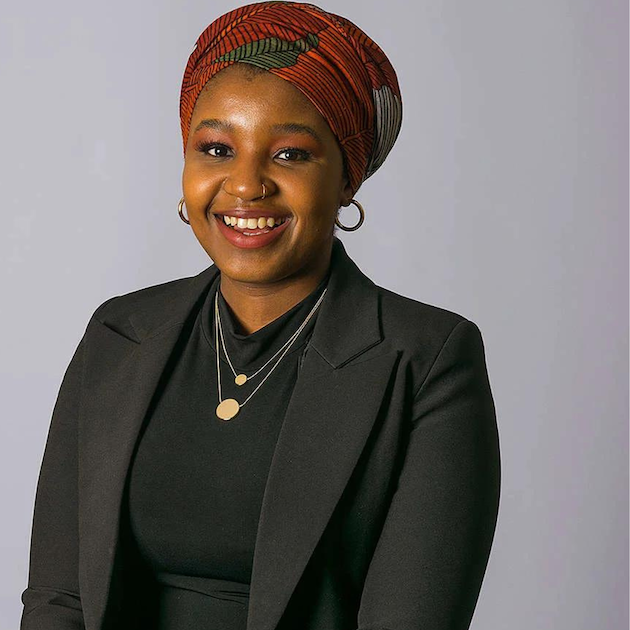
Thandile Chinyavanhu

Thandile Chinyavanhu

Here are excerpts from the interview.

IPS: Why are current energy systems untenable, considering the ongoing climate change crisis?

Chinyavanhu: On going green and dumping fossil fuels, there are several issues at play, and they vary from country to country. Fossil fuels—coal, oil, and gas—are by far the largest contributors to global climate change, as they account for more than 75 percent of global greenhouse gas emissions and nearly 90 percent of all carbon dioxide emissions. South Africa, for instance, has a big coal mining industry and is one of the top five coal-exporting countries globally. The country relies heavily on coal for about 70 percent of its total electricity production. We need to move away from energy consumption models that are exacerbating the climate crisis, but we must also ensure that we are centred on a just transition.

IPS: What should a ‘just energy transition’ look like for Africa and other developing nations?

Chinyavanhu: Overall, we are looking at issues of socio-economic development models that leave no one behind. To achieve this, renewable energy is the pathway that provides us with energy security and accelerated development. We have serious energy-related challenges due to a lack of preparation and planning around the energy crisis. The challenge is that Africa needs energy and, at the same time, accelerates its development in a manner that leaves no one behind, be it women or any other vulnerable group that is usually left behind in policy responses.

There is a need to address challenges regarding access to energy for all so that, in transitioning to clean energy, we do not have any groups of people being left behind, as has been the case. This is not so much a problem or challenge as an opportunity for countries to address gaps in access to energy and ensure that it is accessible to all, especially women, bearing in mind the many roles they play in society, including nurturing the continent’s future workforce. A just energy transition is people-centred.

We must recognise and take stock of the economic impact that moving from fossil fuels to clean energy could have on people and their livelihoods, such as those in the mining sector. It is crucial that people are brought along in the process of transition, giving them the tools and resources needed for them to be absorbed into new clean energy models. There is a very deep socio-economic aspect to it because people must be given the skills and capacities to engage in emerging green systems and industries.

IPS: As a young woman activist, what do you think the roles of women in an energy transition are?

Chinyavanhu: Women are generally not prioritised, and so they do not have the same opportunities as men, even in matters of climate change adaptation and mitigation, and this is true for sectors such as agriculture and mining. Women have great economic potential and have a very big role to play towards a just energy transition as key drivers of socio-economic progress.

In the green energy space, economic opportunities are opening up. Men are quickly taking over the renewable energy industry, but there are plenty of opportunities for women to succeed if given the right resources. We are at a point in time when we have the opportunity to leave behind polluting technologies and, at the same time, address some of the key socio-economic challenges that have plagued societies for a long time.

This transition should be viewed as an opportunity to rectify some of those wrongs in a way that is people-centred and inclusive. No one should be left behind. It is really about building harmony with nature while also addressing many of the socio-economic issues that plague us today. This is more of an opportunity than a hurdle. It is about understanding and rectifying systems’ thinking that contributes to women being left behind. It is important that we see the bigger picture—identify and acknowledge that different groups—not just women, but any identifier that places people at a point of vulnerability—have been left furthest behind. The energy transition process has presented an opportunity to make it right.
IPS UN Bureau Report
  Source

COP28: Climate Summit in Closed Civic Space

Civil Society, Climate Action, Climate Change, Crime & Justice, Energy, Environment, Featured, Global, Headlines, Human Rights, Press Freedom, TerraViva United Nations

Opinion

Credit: Bryan Bedder/Getty Images for Bloomberg Philanthropies

LONDON, Nov 17 2023 (IPS) – The need to act on the climate crisis has never been clearer. In 2023, heat records have been shattered around the world. Seemingly every day brings news of extreme weather, imperilling lives. In July, UN Secretary-General António Guterres grimly announced that ‘the era of global boiling has arrived’.


In short, there’s a lot at stake as the world heads into its next climate summit.

But there’s a big problem: COP28, the latest in the annual series of conferences of parties (COP) to the UN Framework Convention on Climate Change, will be held in the United Arab Emirates (UAE). This is a country with closed civic space, where dissent is criminalised and activists are routinely detained. It’s also a fossil fuel power bent on continuing extraction.

At multilateral summits where climate change decisions are made, it’s vital that civil society is able to mobilise to demand greater ambition, hold states and fossil fuel companies and financiers to account and ensure the views of people most affected by climate change are heard. But that can’t happen in conditions of closed civic space.

Concerning signs

In September, the UAE was added to the CIVICUS Monitor Watchlist, which highlights countries experiencing significant declines in respect for civic freedoms. Civic space in the UAE has long been closed: no dissent against the government or advocacy for human rights is allowed, and those who try to speak out risk criminalisation. In 2022, a Cybercrime Law introduced even stronger restrictions on online expression.

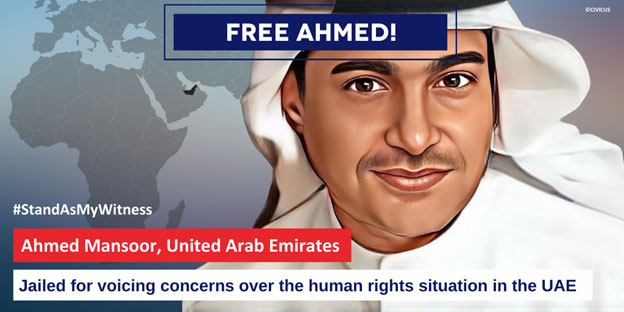
There’s widespread torture in jails and detention centres and at least 58 prisoners of conscience have been held in prison despite having completed their sentences. Many of them were part of a group known as the UAE 94, jailed for the crime of calling for democracy. Among the ranks of those incarcerated is Ahmed Mansoor, sentenced to 10 years in jail in 2018 for his work documenting the human rights situation, and held in solitary confinement for over five years and counting.

Ahead of COP28, civil society has worked to highlight the absurdity of holding such a vital summit in closed civic space conditions. Domestic civil society is unable to influence COP28 and its preparatory process, and it’s hard to see how civil society, both domestic and international, will be able to express itself freely during the summit.

Civil society is demanding that the UAE government demonstrate that it’s prepared to respect human rights, including by releasing political prisoners – something it’s so far failed to budge on.

An ominous sign came when the UAE hosted a climate and health summit in April. Participants were reportedly instructed not to criticise the government, corporations, individuals or Islam, and not to protest while in the UAE.

Civic space restrictions aren’t the only indication the UAE isn’t taking COP28 seriously. The president of the summit, Sultan Ahmed Al Jaber, also happens to be head of the state’s fossil fuel corporation ADNOC, the world’s 11th-biggest oil and gas producer. It’s like putting an arms manufacturer in charge of peace talks. Multiple other ADNOC staff members have roles in the summit. ADNOC is currently talking up its investments in renewable energies, all while planning one of the biggest expansions of oil and gas extraction of any fossil fuel corporation.

Instead of real action, all the signs are that the regime is instrumentalising its hosting of COP28 to try to launder its reputation, as indicated by its hiring of expensive international lobbying firms. An array of fake social media accounts were created to praise the UAE as host and defend it from criticism. A leaked list of key COP28 talking points prepared by the host made no mention of fossil fuels.

A summit that should be about tackling the climate crisis – and quickly – is instead being used to greenwash the image of the host government – something easiest achieved if civil society is kept at arm’s length.

Fossil fuel lobby to the fore

With civil society excluded, the voices of those actively standing in the way of climate action will continue to dominate negotiations. That’s what happened at COP27, also held in the closed civic space of Egypt, where 636 fossil fuel lobbyists took part – and left happy. Like every summit before it, its final statement made no commitment to reduce oil and gas use.

The only way to change this is to open the doors to civil society. Civil society has consistently sounded the alarm and raised public awareness of the need for climate action. It’s the source of practical solutions to cut emissions and adapt to climate impacts. It urges more ambitious commitments and more funding, including for the loss and damage caused by climate change. It defends communities against environmentally destructive impacts, resists extraction and promotes sustainability. It pressures states and the private sector to stop approving and financing further extraction and to transition more urgently to more renewable energies and more sustainable practices. These are the voices that must be heard if the cycle of runaway climate change is to be stopped.

COPs should be held in countries that offer an enabling civic space that allows strong domestic mobilisation, and summit hosts should be expected to abide by high standards when it comes to domestic and international access and participation. That should be part of the deal hosts make in return for the global prestige that comes with hosting high-level events. Civil society’s exclusion mustn’t be allowed to happen again.

Andrew Firmin is CIVICUS Editor-in-Chief, co-director and writer for CIVICUS Lens and co-author of the State of Civil Society Report.

  Source

Smallholder Farmers Gain Least from International Climate Funding

Africa, Aid, Civil Society, Climate Action, Climate Change, Climate Change Finance, COP28, Development & Aid, Editors’ Choice, Food and Agriculture, Food Security and Nutrition, Food Sustainability, Global, Headlines, Human Rights, Humanitarian Emergencies, Sustainable Development Goals, TerraViva United Nations

Climate Change Finance

David Obwona at his seed rice farm in Katukatib village, Amoro district, northern Uganda. The farmer is part of a group that is now engaged in seed rice farming to climate-proof agriculture courtesy of the Regional Universities Forum for Capacity Building Agriculture. Credit: Maina Waruru/IPS

David Obwona at his seed rice farm in Katukatib village, Amoro district, northern Uganda. The farmer is part of a group that is now engaged in seed rice farming to climate-proof agriculture courtesy of the Regional Universities Forum for Capacity Building Agriculture. Credit: Maina Waruru/IPS

NAIROBI, Nov 14 2023 (IPS) – Smallholder farmers from the Global South benefit from a grossly disproportionate 0.3% of international climate finance despite producing a third of the world’s food and despite holding the key to climate-proofing food systems.


The family farmers and rural communities received around USD 2 billion from both public and private international climate funds out of the USD 8.4 billion that went to the agriculture sector in 2021, even as over 2.5 billion people globally depended on the farms for their livelihoods.

The USD 8.4 billion was almost half of the USD 16 billion that was availed for the energy sector and is only a fraction of the estimated USD 300-350 billion needed annually to “create more sustainable and resilient food systems,” a new report has found.

The amount was also quite different from the USD 170 billion that smallholder farmers in Sub-Saharan Africa alone would require per year, the study on global public finance for climate mitigation and adaptation conducted by Dutch climate advisory company Climate Focus has found.

The low level of climate finance for agriculture, forestry, and fishing is of concern, given the impact of climate change on food production and the extent to which food and agriculture are fueling the climate and biodiversity crisis.

Agricultural productivity has declined by 21 percent due to climate change, while the food and agriculture sector as a whole is responsible for 29 percent of greenhouse gas emissions and 80 percent of global deforestation, the study explains.

The farmers have been sidelined by global climate funders and locked out of decision-making processes on food and climate despite being the engines of rural economic growth. This is especially so in Sub-Saharan Africa, where up to 80 percent of agriculture is by smallholder farmers and where 23 percent of regional GDP is attributable to the sector.

It reveals that 80 percent of international public climate finance spent on the agri-food sector is channeled through governments and donor country NGOs, making it hard for smallholder farmers’ organizations to access it. This is because of complex eligibility rules and application processes and a lack of information on how and where to apply.

Many family farmers also lack the infrastructure, technology, and resources to adapt to climate impacts, with serious implications for global food security and rural economies as well, it notes.

The study ‘Untapped Potential: An analysis of international public climate finance flows to sustainable agriculture and family farmers,’ published on 14 November, laments that only a fifth of international public climate finance for food and agriculture supports sustainable practice. The money mainly goes to the Global North, even as agriculture becomes the third biggest source of global emissions. and the main driver of biodiversity loss.

“Climate change is hitting harvests and driving up food prices across the globe. It has helped push 122 million people into hunger since 2019. We need to create more sustainable and resilient food systems that can feed people in a changing climate, but we can’t do this without family farmers,” the report compiled on behalf of ten farmer organizations in Africa, Asia, Latin America, and the Pacific says.

“Family farmers are also key to climate adaptation. They are at the forefront of the shift to more diverse, nature-friendly food systems, which the Intergovernmental Panel on Climate Change (IPCC) says is needed to safeguard food security in a changing climate,” it further notes.

The groups are led by the World Rural Forum and include African groups—the Eastern Africa Farmers Federation, Eastern and Southern Africa small-scale Farmers Forum, the Regional Platform of Farmers’ Organisations in Central Africa, and the Network of West African Farmers’ and Producers’ Organisations. Also part of the group is Northern Africa’s Maghreb and North African Farmers Union.

The Asian Farmers Association for Sustainable Rural Development, the Pacific Island Farmers Organization Network, the Confederation of Family Producers’ Organizations of Greater Mercosur, and the Regional Rural Dialogue Programme are also represented in the study.

Many of the farmers are already practicing climate-resilient agriculture, including approaches such as agroecology, which implies a wider variety of crops, including traditional ones, mixing crops, livestock, forestry, and fisheries, while reducing agrochemical use, and building strong connections to local markets.

The study by the new alliance of farmer networks representing over 35 million smallholder producers ahead of COP28, which is set to agree on a Global Goal for Adaptation, is concerned that since 2012, overall, only 11% of international public climate finance has been targeted at agriculture, forestry, and fishing, which amounts to an average of USD 7 billion a year.

In 2021, the World Bank, Germany, the Green Climate Fund, and European Union institutions contributed around half—54 percent, amounting to USD 4 billion collectively, while Nigeria, India, and Ethiopia were the top recipients, receiving a combined USD 1.8 billion. Notably, some of the world’s most food insecure countries, including Sudan, Sierra Leone, and Zambia, each received less than USD 20 million, it discloses.

“As the climate crisis pushes the global food system ever closer to collapse, it is vital that governments recognize family farmers as powerful partners in the fight against climate change,” it warns.

Hakim Baliriane, Chair of the Eastern and Southern Africa small-scale Farmers Forum, observed: “Climate change has helped push 122 million people into hunger since 2019. Reversing this trend will not be possible if governments continue to tie the hands of millions of family farmers.”

The study defines small-scale family farms as those of less than two hectares, mainly in developing countries.

On the other hand, international climate finance broadly refers to finance channeled to “activities that have a stated objective to mitigate climate change or support adaptation. These include multilateral flows in and outside the (UNFCCC) and the Paris Agreement, as well as bilateral flows at national and regional levels, including the Global Environment Facility, Adaptation Fund, and Green Climate Fund, and are usually disbursed as grants and concessional loans

The study finds that family farms are also the backbone of rural economies, supporting over 2.5 billion people globally who depend on family farms for their livelihoods. It says that in Sub-Saharan Africa, where up to 80 percent of farming is done by smallholder farmers, agriculture contributes 23 percent to regional Gross Domestic Product.

Family farmers are also key to climate adaptation in that they are at the forefront of the shift to more “diverse, nature-friendly food systems,” which, according to the Intergovernmental Panel on Climate Change (IPCC), are critical in safeguarding food security in a changing climate.

It finds that millions of smallholder farmers are already practicing climate-resilient agriculture, including approaches such as agroecology—growing a wider variety of crops, including traditional crops, mixing crops, livestock, forestry, and fisheries, reducing agrochemicals use while building “strong connections to local markets.”

It concludes that governments must ensure that available climate finance for sustainable climate-resilient practices is increased, including that of agroecological approaches.

It explains: “This means funds to support diverse, nature-friendly approaches and to create community-based solutions that build on traditional expertise and experience.

It recommends that small-scale family farmers ought to have direct access to more climate finance and that financing mechanisms and funds should be developed with the participation of farmers’ organizations to meet their needs.

In addition, efforts should be made to ensure longer-term, flexible funding so that communities can determine their own priorities.

The role of the farmers as powerful catalysts for climate action, food system transformation, and the protection of biodiversity should be acknowledged and given a “real say” in decision-making on food and climate at the local, national, regional, and international levels. This should include decisions on land reform and agricultural subsidies.

The COP28 in Dubai later this month has food systems as a big part of the agenda.

An August report by the UK’s ActionAid has found that climate adaptation and green transition initiatives in the Global South received 20 times less financing when compared to main global emitters, fossil fuels, and intensive agriculture sectors in the last seven years.

It found that leading banking multinationals funded the emitters’ activities in the southern hemisphere to the tune of USD 3.2 trillion since 2015 when the Paris Agreement on Climate was adopted. German agrochemical giant Bayer was the biggest recipient of the financing, receiving an estimated USD 20.6 billion since 2016.

IPS UN Bureau Report

  Source

How to Defend the Environment and Survive in the Attempt, as a Woman in Mexico

Active Citizens, Biodiversity, Civil Society, Climate Action, Conservation, Crime & Justice, Editors’ Choice, Environment, Featured, Gender, Headlines, Human Rights, Latin America & the Caribbean, Regional Categories, TerraViva United Nations, Water & Sanitation, Women & Climate Change

Human Rights

Dozens of women environmentalists participated in Mexico City in the launch of the Voices of Life campaign by eight non-governmental organizations on Oct. 12, 2023, which brings together hundreds of activists in five of the country's 32 states. CREDIT: Emilio Godoy / IPS

Dozens of women environmentalists participated in Mexico City in the launch of the Voices of Life campaign by eight non-governmental organizations on Oct. 12, 2023, which brings together hundreds of activists in five of the country’s 32 states. CREDIT: Emilio Godoy / IPS

MEXICO CITY, Oct 24 2023 (IPS) – The defense of the right to water led Gema Pacheco to become involved in environmental struggles in the southern Mexican state of Oaxaca, an area threatened by drought, land degradation, megaprojects, mining and deforestation.


Care “means first and foremost to value the place where we live, that the environment in which we grow up is part of our life and on which our existence depends,” said Pacheco, deputy municipal agent of San Matías Chilazoa, in the municipality of Ejutla de Crespo, some 355 kilometers south of Mexico City.

“We are in the phase of seeing how the Escazú Agreement will be applied. The most important thing is effective implementation. It is something new and it will not be ready overnight.” — Gisselle García

A biologist by profession, the activist is a member of the Local Committee for the Care and Defense of Water in San Matías Chilazoa, which belongs to the Coordinating Committee of Peoples United for the Care and Defense of Water (Copuda).

The local population is dedicated to growing corn, beans and chickpeas, an activity hampered by the scarcity of water in a country that has been suffering from a severe drought over the past year.

To deal with the phenomenon, the community created three water reservoirs and infiltration wells to feed the water table.

“Women’s participation has been restricted, there are few women in leadership positions. The main challenge is acceptance. There is little participation, because they see it as a waste of time and it is very demanding,” lamented Pacheco.

In November 2021, the 16 communities of Copuda obtained the right to manage the water resources in their territories, thus receiving water concessions.

But women activists like Pacheco face multiple threats for protecting their livelihoods and culture in a country where such activities can pose a lethal risk.

For this reason, eight organizations from five Mexican states launched the Voices of Life campaign on Oct. 12, involving hundreds of habitat protectors, some of whom came to the Mexican capital for the event, where IPS interviewed several of them.

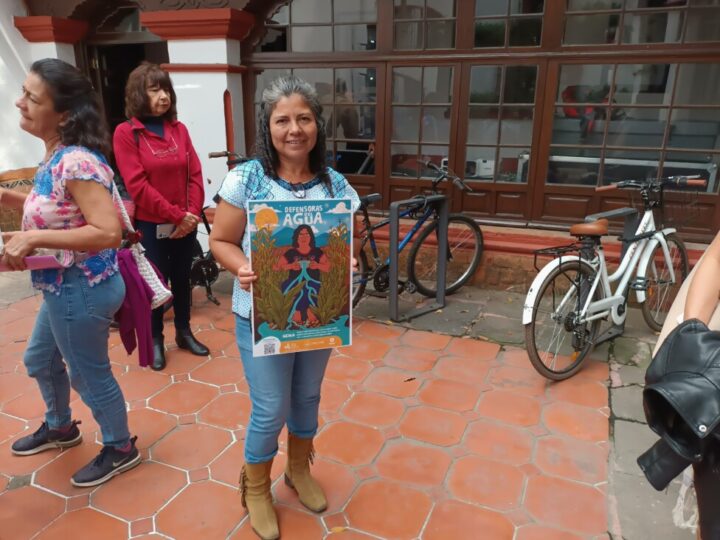
Involvement in the defense of water led Gema Pacheco to become an environmental activist, participating in the Voices of Life campaign in Mexico, which seeks to bring visibility and respect to this high-risk activity in Mexico. CREDIT: Emilio Godoy / IPS

Involvement in the defense of water led Gema Pacheco to become an environmental activist, participating in the Voices of Life campaign in Mexico, which seeks to bring visibility and respect to this high-risk activity in Mexico. CREDIT: Emilio Godoy / IPS

The initiative seeks to promote the right to a healthy environment, facilitate environmental information, protect and recognize people and organizations that defend the environment, as well as learn how to use information and communication technologies.

In 2022, Mexico ranked number three in Latin America in terms of murders of environmental activists, with 31 killed (four women and 16 indigenous people), behind Colombia (60) and Brazil (34), out of a global total of 177, according to the London-based non-governmental organization Global Witness.

A year earlier, this Latin American country of almost 129 million inhabitants ranked first on the planet, with 54 killings, so 2022 reflected an improvement.

“The situation in Mexico remains dire for defenders, and non-fatal attacks, including intimidation, threats, forced displacement, harassment and criminalization, continued to greatly complicate their work,” the report says.

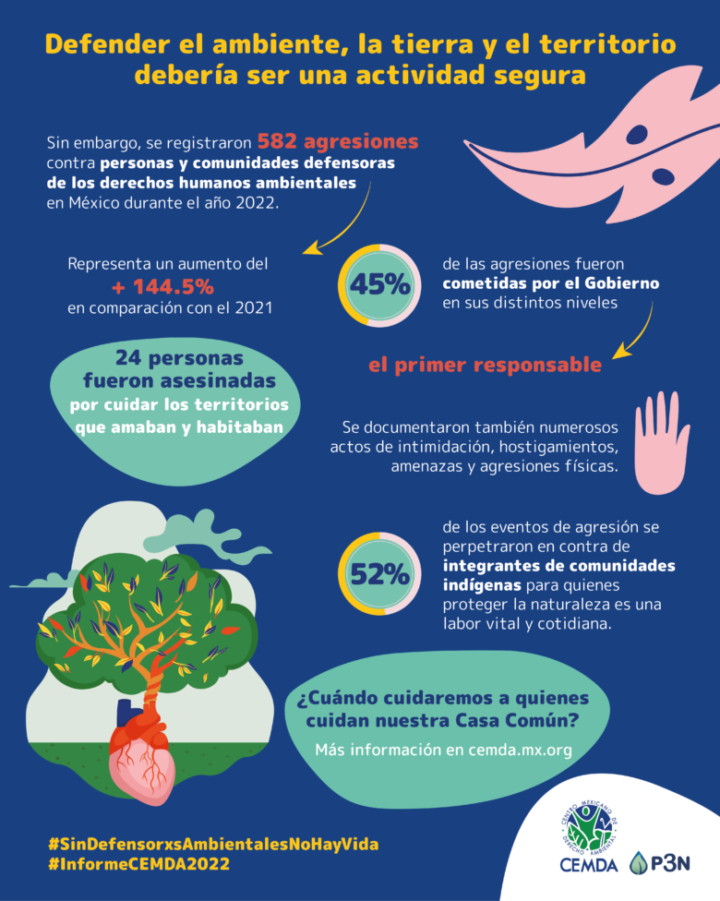
The outlook remains serious for activists, as the non-governmental Mexican Center for Environmental Law (Cemda) documented 582 attacks in 2022, more than double the number in 2021. Oaxaca, Mexico City and the northern state of Chihuahua reported the highest number of attacks.

Urban problems

The south of Mexico City is home to the largest area of conservation land, but faces growing threats, such as deforestation, urbanization and irregular settlements.

Protected land defines the areas preserved by the public administration to ensure the survival of the land and its biodiversity.

Social anthropologist Tania Lopez said another risk has now emerged, in the form of the new General Land Use Planning Program 2020-2035 for the Mexican capital, which has a population of more than eight million people, although Greater Mexico City is home to more than 20 million.

“There was no public consultation of the plan based on a vision of development from the perspective of native peoples. In addition, it encourages real estate speculation, changes in land use and invasions,” said López, a member of the non-governmental organization Sembradoras Xochimilpas, part of the Voices of Life campaign.

Mexico is one of the most dangerous countries in the world for environmental defenders. In 2022, 31 activists were murdered, the third highest number in the region behind Colombia and Brazil. CREDIT: Cemda

Mexico is one of the most dangerous countries in the world for environmental defenders. In 2022, 31 activists were murdered, the third highest number in the region behind Colombia and Brazil. CREDIT: Cemda

Apart from the failure to carry out mandatory consultation processes, activists point out irregularities in the governmental Planning Institute and its technical and citizen advisory councils, because they are not included as members.

The conservation land, which provides clean air, water, agricultural production and protection of flora and fauna, totals some 87,000 hectares, more than half of Mexico City.

The plan stipulates conservation of rural and urban land. But critics of the program point out that the former would lose some 30,000 hectares, destined for rural housing.

The capital’s legislature is debating the program, which should have been ready by 2020.

Gisselle García, a lawyer with the non-governmental Interamerican Association for Environmental Defense, said attacks on women activists occur within a patriarchal culture that limits the existence of safe spaces for women’s participation in the defense of rights.

“It’s an entire system, which reflects the legal structure. If a woman files a civil or criminal complaint, she is not heard,” she told IPS, describing the special gender-based handicaps faced by women environmental defenders.

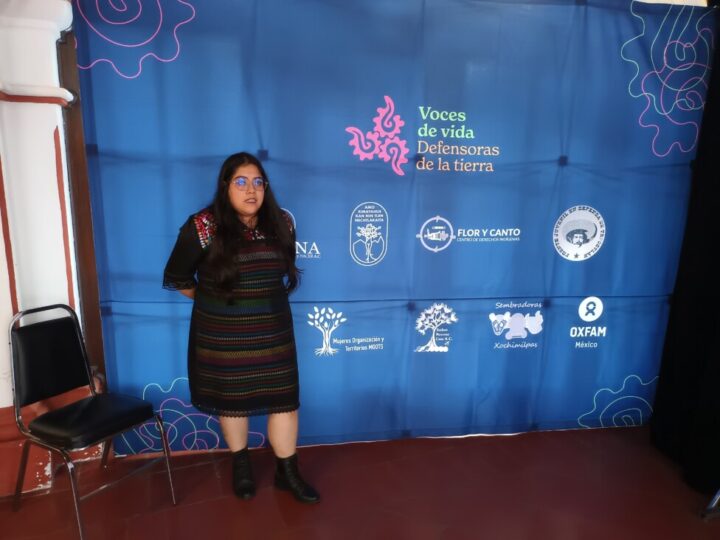
Social anthropologist Tania López is one of the members of the Voices of Life campaign, launched by eight non-governmental organizations on Oct. 12, 2023 to highlight the work of women environmental defenders in Mexico. CREDIT: Emilio Godoy / IPS

Social anthropologist Tania López is one of the members of the Voices of Life campaign, launched by eight non-governmental organizations on Oct. 12, 2023 to highlight the work of women environmental defenders in Mexico. CREDIT: Emilio Godoy / IPS

Still just an empty promise

This risky situation comes in the midst of preparations for the implementation of the Regional Agreement on Access to Information, Public Participation and Justice in Environmental Matters in Latin America and the Caribbean, known as the Escazú Agreement, an unprecedented treaty that aims to mitigate threats to defenders of the environment, in force since April 2021.

Article 9 of the Agreement stipulates the obligation to ensure a safe and enabling environment for the exercise of environmental defense, to take protective or preventive measures prior to an attack, and to take response actions.

The treaty, which takes its name from the Costa Rican city where it was signed, guarantees access to environmental information and justice, as well as public participation in environmental decision-making, to protect activists.

The Escazú Agreement has so far been signed by 24 Latin American and Caribbean countries, 15 of which have ratified it as well.

But its implementation is proceeding at the same slow pace as environmental protection in countries such as Mexico, where there are still no legislative changes to ensure its enforcement.

In August, the seven-person Committee to Support the Implementation of and Compliance with the Escazú Agreement took office. This is a non-contentious, consultative subsidiary body of the Conference of the Parties to the agreement to promote and support its implementation.

Meanwhile, in Mexico, the Escazú National Group, made up of government and civil society representatives, was formed in June to implement the treaty.

During the annual regional Second Forum of Human Rights Defenders, held Sept. 26-28 in Panama, participants called on the region’s governments to strengthen protection and ensure a safe and enabling environment for environmental protectors, particularly women.

While the Mexican women defenders who gathered in Mexico City valued the Escazú Agreement, they also stressed the importance of its dissemination and, even more so, its proper implementation.

Activists Pacheco and Lopez agreed on the need for national outreach, especially to stakeholders.

“We need more information to get out, a lot of work needs to be done, more people need to know about it,” said Pacheco.

The parties to the treaty are currently discussing a draft action plan that would cover 2024 to 2030.

The document calls for the generation of greater knowledge, awareness and dissemination of information on the situation, rights and role of individuals, groups and organizations that defend human rights in environmental matters, as well as on the existing instruments and mechanisms for prevention, protection and response.

It also seeks recognition of the work and contribution of individuals, groups and organizations that defend human rights, capacity building, support for national implementation and cooperation, as well as a follow-up and review scheme for the regional plan.

García the attorney said the regional treaty is just one more tool, however important it may be.

“We are in the phase of seeing how the Escazú Agreement will be applied. The most important thing is effective implementation. It is something new and it will not be ready overnight,” she said.

As it gains strength, the women defenders talk about how the treaty can help them in their work. “If they attack me, what do I do? Pull out the agreement and show it to them so they know they must respect me?” one of the women who are part of the Voices of Life campaign asked her fellow activists.

  Source