CARICOM Leaders Take Steps to Tackle Crime, Climate, Trade and Food Crises

Climate Change, Climate Change Finance, Conferences, Development & Aid, Economy & Trade, Editors’ Choice, Education, Environment, Featured, Food Security and Nutrition, Headlines, Human Rights, Humanitarian Emergencies, Latin America & the Caribbean, Least Developed Countries, Small Island Developing States, Sustainable Development Goals, TerraViva United Nations, Trade & Investment

Conferences

Leaders of the 15 member states of the Caribbean Community concluded their 48th meeting on February 21 with commitments to tackle growing climate change and food security challenges, education and trade reform, while declaring crime and violence a public health concern.

Press Conference to mark the end of the 48th Regular CARICOM Heads of Government Meeting (L-R) CARICOM Secretary General Dr. Carla Barnett, Prime Ministers Philip Davis (Bahamas), Dr. Keith Rowley (Trinidad & Tobago), Mia Mottley (Barbados), Andrew Holness (Jamaica) and President Dr. Irfaan Ali (Guyana).

Press Conference to mark the end of the 48th Regular CARICOM Heads of Government Meeting (L-R) CARICOM Secretary General Dr. Carla Barnett, Prime Ministers Philip Davis (Bahamas), Dr. Keith Rowley (Trinidad & Tobago), Mia Mottley (Barbados), Andrew Holness (Jamaica) and President Dr. Irfaan Ali (Guyana).

DOMINICA, Feb 24 2025 (IPS) – CARICOM leaders wrapped up a crucial meeting on February 21, reaffirming their commitment to tackling pressing regional challenges with unity and resolve. From crime and security to education, trade and climate change, the leaders highlighted the need for decisive action amid global uncertainties.


Education Transformation

Barbados’ Prime Minister and CARICOM Chair Mia Mottley told the press that the leaders agreed to establish a CARICOM Educational Transformation Commission—a body that will move the region’s education systems beyond outdated foundations.

“We all accept that our educational systems are not fit for purpose. They were designed for a colonial period with a hierarchical system that only served a few, not all of our people. If we are to be able to ensure that we produce citizens fit for the time, with the appropriate social and emotional learning targets, we must move now,” she stated.

Over the coming weeks, the commission’s Terms of Reference and composition will be finalized, marking a major step in reshaping regional education policies.

Violence and Crime: Existential Threats

Outgoing Trinidadian Prime Minister Dr. Keith Rowley, attending his final CARICOM Heads of Government meeting, highlighted the increasing crime surge across the region, particularly the rise of gang violence in some countries.

Trinidad is still in a state of emergency over surging crime levels.

“We agreed that the changing nature of crime is such that action and acts of violence in the public space in certain instances must now be regarded as acts of terrorism. We are talking here about indiscriminate shooting in a public place where perpetrators endanger all and sundry.”

The leaders endorsed the classification of crime and violence as a public health issue and committed to appointing a high-level representative on law and criminal justice to design a strategic plan for modernizing the region’s criminal justice system.

Critical Climate Change Concerns

Another existential threat that leaders are grappling with is climate change.

Representing small island states that contribute minimally to global emissions but face disproportionate vulnerability to its impacts, the CARICOM leaders voiced their frustration with unmet promises by major polluters.

The USD 100 billion climate fund promised in 2015 remains unfulfilled, leaving these nations without critical support.

“For several years we attempted to see how we could shake up those who are pledging and committing to live up to their pledges and commitments. They decided to come up with a new regime called the New Collective Quantified Goal,” said Bahamian Prime MInister Philip Davis, adding, “All I can say is that we should continue our advocacy to ensure that not only is finance available to small island developing states but also to ensure that there will be easier access and timely release of funds once a request is made.”

A Changing Trading Environment

Meanwhile, Jamaican Prime Minister Andrew Holness addressed concerns over shifts in United States trade policy and their potential impact on regional economies.

“We must be prepared. We cannot approach this with panic and we should accept that with these changes the concern should not only be disruption in the normal routine of trade, but that there could also be great opportunities for the region.”

Holness announced that CARICOM will conduct a comprehensive review of its trade relations with the U.S., aiming to deliver a policy direction within the next few months to support regional governments.

Mounting Food Security Worries

Guyanese President Irfaan Ali warned of escalating food security issues due to rising global food prices, bird flu outbreak and increased logistics costs. The region faces a 20% decline in U.S. egg production, leading to a 70% price hike, adding further strain.

“Increased climate-related challenges, increased transportation and logistics costs, and uncertainty in tariffs and trade rules will have a significant impact on the cost of food globally and in our region,” Ali stated.

Ali said that if Brazil is affected by these challenges, it could lead to major problems with pricing and supply for the region. In response, CARICOM is exploring alternative supply routes and strategies to enhance regional capacity against a potential major shock in the global market.

The Dream of Stability—and Elections—in Haiti

The crisis in Haiti remained a focal point of discussions. Prime Minister Mottley reaffirmed CARICOM’s dedication to stabilizing the nation.

“This last incarnation of the Haiti situation goes back to the gas riots of September 2022. It has been an unacceptably long period of time to bring stability and relief to the people of Haiti. You will appreciate that there are some matters that are delicate at the discussion stages, but suffice it to say CARICOM expresses solidarity with the government and people of Haiti that we will work with the United Nations and all of the other friends of Haiti to be able to ensure that Haiti is in a position to have its elections in a fair and free way.”

Martinique’s Potential Associate Membership

In a historic move, CARICOM leaders signed an agreement with France and Martinique, paving the way for the French territory to become the newest associate member of CARICOM, pending ratification by the French government. If approved, Martinique will join Anguilla, Bermuda, the British Virgin Islands, the Cayman Islands, Montserrat and the Turks and Caicos Islands in this capacity.

The way forward

The meeting concluded with a renewed commitment to collective action and regional unity.

Like she did two days before at the meeting’s opening ceremony, the CARICOM Chair underscored the importance of a united CARICOM taking action towards a sustainable future.

“Now, more than ever, unity is crucial for overcoming the shared challenges posed by the world,” Prime Minister Mottley said.

IPS UN Bureau Report
 

A Global Retreat from Solidarity

Civil Society, Climate Change, Economy & Trade, Environment, Featured, Global, Headlines, Human Rights, Sustainable Development Goals, TerraViva United Nations

Opinion

Credit: CIVICUS

PARIS, Feb 17 2025 (IPS) – The world is witnessing a dangerous retreat from international solidarity by Global Minority countries. From Washington to Brussels, governments are slashing funds that sustain human rights, democracy, and humanitarian initiatives.


The U.S. foreign aid freeze, the European Union’s cut in development spending, and Belgium’s reduction in foreign aid all reflect a broader trend in countries with far-right elected governments of prioritizing domestic politics over global responsibility and solidarity.

Some may argue this is simply an abstract budgetary issue. But these funding cuts translate into real-life lost jobs, shuttered programs, and the most marginalized communities being left without vital support.

They send a clear signal: governments, even those once seen as champions of human rights, are redefining their external priorities and turning inward. The consequences will be devastating, particularly for Global Majority countries, where local organizations are already struggling to survive.

But this crisis is not inevitable. Philanthropy, civil society, and remaining international allies must step up not just to fill financial gaps but to rethink global solidarity and how civil society is funded, protected, and sustained in the long term.

The dangerous trend around funding cuts

Far-right governments and their growing global influence are driving these decisions. The U.S. foreign aid suspension is part of a broader pattern of governments scaling back support for civil society and humanitarian initiatives.

Similarly, the European Union’s decision to cut its development spending by 2 billion euros over the next three years will reduce aid to the world’s lowest-income countries by 35%, exacerbating existing inequalities.

Belgium’s 25% cut in foreign aid mirrors this shift, as does the Netherlands’ move to reduce funding for NGOs, prioritizing themes that serve its national interests over global needs. These disruptions weaken trust in international partnerships and force organizations further into survival mode rather than allowing for long-term strategic action.

The long-term impact of the foreign aid cuts

This comes at a time when the Sustainable Development Goals (SDGs) are severely off track, and the world keeps experiencing, year after year, the consequences of “the hottest year on record”.

The withdrawal of funding not only to civil society and humanitarian organizations, but also to multilateral institutions will further hinder efforts to address economic inequality and climate change for all.

Although it will take time to fully assess the impact of these recent decisions, we can already foresee their magnitude in terms of humanitarian assistance, but also in terms of human rights, democracy and global governance.

The U.S. 90-day foreign aid freeze alone has halted critical funding for international development organizations and federal contractors delivering humanitarian assistance worldwide. Thousands of jobs will be lost, and many organizations may not survive the freeze due to a lack of reserve funds.

Programs focused on combating HIV/AIDS, child health, food security, and education with reverberating impacts on all Americas have been abruptly thrown into uncertainty.

Beyond economic devastation, the crisis is deeply human. Hospitals that once provided essential care are shutting down, perishable food supplies are going to waste, and communities are left without lifesaving support.

The full impact on human rights and democracy may take longer to materialize, but we already see the warning signs: fewer resources for independent media, greater exposure for vulnerable activists, and increasing shrinking spaces for civil society.

This funding retreat is particularly dangerous for civil society organizations operating in repressive environments. Countries where civic space is already under immense pressure will become even more vulnerable, putting human rights defenders and activists at higher risk.

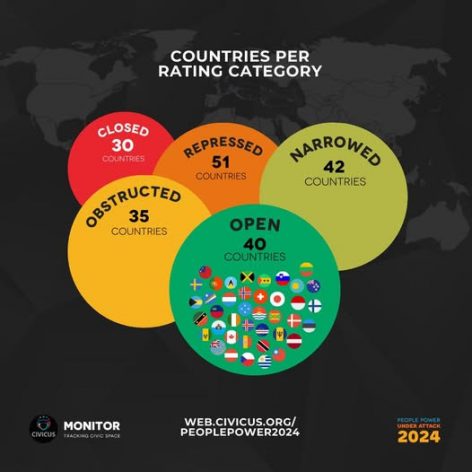
According to the CIVICUS Monitor, 72.4% of the world’s population lives in countries where civic space is repressed or closed. The message these funding cuts send to authoritarian and repressive states is clear: civil society is no longer a priority for Western democracies that once invested in the protection and promotion of civic space.

The role of philanthropy

Private foundations and philanthropic institutions must fill the gaps left by bilateral funders, providing flexible and rapid funding to sustain critical work. While the shortfall is vast, philanthropy must rise to the occasion to prevent the collapse of vital organizations and initiatives.

Emergency grants are needed to sustain operations, protect staff, and support security-related expenses such as safe houses, legal aid and physical and digital protection. Without this intervention, our ability to advocate for democracy, justice, and human rights for all will be severely diminished. Investments must prioritize local actors, ensuring they have the resources to lead, innovate, and sustain their work beyond donor-driven priorities.

Rethinking global solidarity

This moment calls for a fundamental rethinking of global solidarity. The traditional donor-recipient model is currently showing its limits. In this time of crisis, we must recognize that the challenges faced by civil society globally are shared, and the responsibility to support those in need should be mutually distributed rather than concentrated in a few high-income countries.

We should foster collaborative, co-designed solutions where all partners, North and South, large and small, share the risks and rewards of international development efforts.

This is where the power of coalitions and alliances like CIVICUS comes in. In the face of growing fear and retribution, many individuals and organizations, both in the U.S. and abroad, are afraid to speak out. CIVICUS and other global alliances and coalitions must step in to amplify the voices of those who fear retaliation and support those on the ground fighting for justice.

This moment demands not just financial resources but a renewed commitment to our shared values. This crisis might be ripping the guts out of the international aid system, but it cannot take the heart out of solidarity.

Conclusion

This moment is a stress test for global civil society. If donor-driven priorities continue to dictate the fate of grassroots organizations, social and activist movements, and civil society organizations, we will see the erosion of human rights, justice, and democracy worldwide.

The question is not just how to survive these cuts, but how to build a model of solidarity that is independent of political whims.

At the same time, this is a moment for introspection and transformation within civil society itself. Circumstances demand that we explore alternative means of resource mobilization, adapt to new challenges, and build resilience that is not solely dependent on traditional funding structures.

Now more than ever, we must reaffirm our commitment to global solidarity not as a charitable act, but as an existential necessity for a just and sustainable future.

Jessica Corredor Villamil is Chief Officer, Advocacy and Solidarity Action at CIVICUS, the global civil society alliance. She is based in Paris.

IPS UN Bureau

  Source

Why a Global Tech Fund for the Poorest Countries is a Smart Investment

Civil Society, Climate Change, Development & Aid, Environment, Featured, Global, Headlines, Human Rights, Least Developed Countries, Sustainable Development Goals, TerraViva United Nations

Opinion

GEBZE, Turkiye, Feb 17 2025 (IPS) – The 4th International Conference on Financing for Development could catalyse coordinated action to close the financing gap and set the stage for a STI-driven transformation in the world’s poorest countries.


The stark reality is that just over 250 weeks remain to go before the end of the decade, marking the endgame for achieving the Sustainable Development Goals (SDGs). With less than a fifth of the Goals on track, the Least Developed Countries (LDCs) or the world’s poorest countries urgently need bold, innovative financing for science, technology and innovation (STI) to re-set their development trajectories and salvage the 2030 Agenda.

In June/July this year, the Spanish city of Seville will host the 4th International Conference on Financing for Development, or FfD4. The last such summit was held in Addis Ababa, Ethiopia in 2015, the same year the SDGs were agreed.

Since then, the development financing gap has widened as has the divide between the richest and poorest countries across the globe. The financing gap – the amount of money required to achieve the SDGs and the resources that have been committed – is now estimated at $4.2 trillion annually.

The silver lining could be golden for the world’s most vulnerable

Notably, this past decade has seen astonishingly rapid developments in STI, spanning areas such as biotech, artificial intelligence, machine learning, green technologies and satellite connectivity. These breakthroughs, largely driven by digital technologies, have created immense wealth for a few.

According to Oxfam, five individuals will reach trillionaire status before the close of 2029, while the number of people living in poverty has remained stubbornly high since 1990. Yet for the 700 million people in the margins, this progress has not translated into better opportunities.

For them, these developments in STI could be truly transformational. There’s no better time than now to close the inequality gap and harness these assets for the benefit of all.

“There is nothing more powerful than an idea whose time has come”- Victor Hugo

The concept of a dedicated global fund for STI has never been fully operationalized at scale, but the idea is not new. The United Nations, UNESCO, the World Bank, the African Union, the G77 and China have all proposed the idea of an STI funding pool, suggesting growing momentum and backing for such a mechanism.

However, it is important to push the envelope and make the case for such a fund exclusively for the LDCs. June/July’s high-level summit on financing for development could provide the coordination and impetus it needs to get started. With the key global players in attendance, this summit could be a pivotal moment to bring the idea of a STI fund to life.

The 2024 Pact for the Future and its associated Global Digital Compact along with the Doha Programme of Action offer the policy foundation and moral imperative for such an initiative.

What the world’s 44 least developed countries (LDCs) need.

A global fund for STI should focus on financing three priorities: Boosting the capacity of institutions in LDCs; closing the skills gap; and creating an enabling environment for STI to flourish.

Economic resilience and structural change depend upon strong productive capacity which is driven by equally strong national institutions that can effectively implement pro-growth strategies and technology. Tech transfer and skills building will only support development if a country’s institutions can take advantage of the technologies they need. This aligns with the imperative to upskill and reskill workers in LDCs.

With just under half of their citizens having no access to electricity and only a third able to access the internet, it is imperative that countries are supported with vital, enabling development infrastructure. Additionally, a grant financing facility to bolster centres of excellence in the Global South would enable countries to effect game-changing outcomes in critical areas such as climate change, agriculture, and business development.

Why a global STI fund is a smart investment

Investing in the tech capacities of LDCs is not only a moral obligation but makes good business sense. High levels of inequality limit access to education and skills, undermining social mobility and economic growth in the world’s 44 LDCs. Rapid economic growth and development in these countries – with their massive market of over one billion people – represents an equally massive opportunity for countries in the global South and also for developed countries.

Investing in a dedicated STI fund would pave the way for long-term sustainable development in LDCs, providing opportunities for collaboration, harnessing the talent of their youthful populations and opening up new markets.

The Financing for Development summit as a catalyst for coordinated action

This decade began with a global pandemic that wrought havoc on economies worldwide, particularly the most vulnerable. Those who didn’t have the buffers to bounce back continue to struggle to meet basic development objectives and as a result, the SDG promises of 2015 remain elusive.

The 4th International Conference on Financing for Development presents a unique opportunity to focus on STI as an essential driver for development. The summit could catalyse coordinated action to close the financing gap and set the stage for a STI-driven transformation in the world’s poorest countries.

As we approach the final stretch of the 2030 Agenda, the need for solutions has never been more obvious. Investing in a global STI fund for LDCs is not just about making a big difference for the people in the poorest and most vulnerable countries, it also makes good business sense.

Deodat Maharaj is the Managing Direct0r of the United Nations Technology Bank for the Least Developed Countries and can be reached at: deodat.maharaj@un.org

IPS UN Bureau

  Source

Development Effectiveness & the Quality of Financing: Towards a More Holistic Approach at Seville

Civil Society, Climate Change, Development & Aid, Environment, Featured, Global, Headlines, Human Rights, Sustainable Development Goals, TerraViva United Nations

Opinion

The Sustainable Development Goals (SDGs) are off track. Decades of progress on poverty and hunger have stalled, and in some cases, been thrown into reverse. Many developing economies are mired in debt, with financing challenges preventing the urgently needed investment push in the SDGs, according to the United Nations. But amid these challenges there lies opportunity. The Fourth International Conference on Financing for Development (FfD4) – 30 June to 3 July 2025–provides a unique opportunity to reform financing at all levels, including to support reform of the international financial architecture. Credit: United Nations

STOCKHOLM Sweden / MILAN, Italy, Feb 14 2025 (IPS) – When world leaders gather in Seville for the 4th International Conference on Financing for Development (FfD4) in June, they will be meeting at a pivotal moment: one defined by mounting systemic risks, a multiplication of crises, and proliferation and fragmentation of development co-operation actors and funds.


International development co-operation is also threatened by the ongoing erosion of funding, including through unilateral decisions of unparalleled magnitude. While momentum for reform and transformative change to the financial and development architecture is growing, it is crucial not to lose sight of the fundamentals.

To achieve the Sustainable Development Goals (SDGs), increases in the quantity of development financing, be it official development assistance (ODA), private finance, or South-South co-operation, must be complemented with boosting the quality of all types of financing so that they are delivered and used in the most effective way.

Credit: Nuthawut Somsuk

Efforts to increase the quality of financing are embodied by the development effectiveness agenda and its internationally agreed principles: country ownership, focus on results, inclusive partnerships, and transparency and mutual accountability. The principles are tried and tested, and more relevant than ever.

They build on and reflect decades of global experience and are increasingly crucial for addressing the challenges that characterize today’s development co-operation landscape, such as fragmentation and misalignment with country priorities. They are also key for mobilising different types of finance from a growing array of development partners and partnerships.

Yet, as the development landscape has increased in complexity in the years after the 2015 Addis Ababa Action Agenda, the systematic focus on development effectiveness at country level has not been adequately integrated into country ecosystems and ambitions. For instance, Integrated National Finance Framework (INFF) processes could be better utilized as opportunities to talk about development effectiveness.

As Co-Chairs of the Global Partnership for Effective Development Co-operation, we believe that development effectiveness is essential to mobilising financing for sustainable development, across all types of international co-operation for development. The FfD4 Outcome Document must clearly stress this point.

A stronger, more systematic focus on the benefits of development effectiveness – and on addressing the bottlenecks and trade-offs that hinder progress on the 2030 Agenda and SDGs – is essential to reinstate trust, increase financing for development, and achieve long-term positive impacts.

The four principles of effective development co-operation remain the core enablers of development effectiveness. We welcome the focus of the recently released FfD4 Zero Draft Outcome Document on country leadership, coherence, and mutual accountability, but reiterate the need to uphold past commitments originating from the long-lasting aid effectiveness and development effectiveness processes.

It is important for the Outcome Document to stress the continued validity and intertwined nature of the four effectiveness principles, including the role of inclusive partnerships and of civil society organizations in particular.

The involvement of all stakeholders – partner countries, development partners, the private sector, civil society, parliamentarians, philanthropies, and trade unions – remains central to the effectiveness agenda. It is also important to focus on the effectiveness of partnerships with the private sector, in particular by creating enabling environments for a local private sector to thrive, an area monitored by the Global Partnership through the Kampala Principles Assessment.

Effective private sector partnerships are key for ensuring transparency and accountability and for combatting corruption. A whole-of-society approach is key to achieving true country ownership, which has emerged as a central theme in the FfD4 negotiations.

How can the Global Partnership and development effectiveness contribute to FfD4 and its follow-up?

First, the Global Partnership Monitoring Exercise provides evidence to inform how development actors can improve their policies, practices and partnerships, insights into progress in implementing the agreed effectiveness commitments, as well as opportunities for learning, dialogue and sharing of experiences on emerging effectiveness challenges.

The monitoring is a partner-country led tool holding development stakeholders to account for their implementation of the commitments, and a starting point for concrete action and behaviour change. Since 2011, 103 partner countries have led the monitoring exercise one or more times in collaboration with over 100 development partners and other actors. The ongoing global monitoring round will bring new evidence into the discussions on effectiveness, including in the lead-up and follow-up to FfD4.

(Read preliminary observations from the first 11 countries to complete data collection: Bosnia and Herzegovina, Burkina Faso, Cambodia, the Democratic Republic of Congo, Indonesia, Lao People’s Democratic Republic, Nepal, the Philippines, Uganda, Yemen and Zambia).

The fresh insights from the monitoring round are one important source of evidence which will feed into country-led multi-stakeholder action for how to enhance effectiveness.

Second, the Global Partnership’s 4th High-Level Meeting (HLM4) in 2026, where the monitoring results will be presented, is the next crucial moment after FfD4 to take stock of development effectiveness, accelerate progress, drive accountability, and inform policy dialogue on international development co-operation trends.

We invite all development stakeholders to contribute to HLM4, and to act on the dilemmas, tensions and trade-offs we are all facing to expedite delivery of the 2030 Agenda. Strengthening and streamlining the development co-operation architecture must be a collaborative, inclusive process.

The Global Partnership offers a proven, multi-stakeholder platform to ensure that all voices are heard in shaping the future of development co-operation.

We invite you to join forces with us: raise the profile of development effectiveness in the lead-up and follow-up to FfD4, and use the monitoring findings for learning, dialogue and action at country level.

Recognizing that development effectiveness is a key enabler for sustainable development by 2030 (and beyond) and fully embracing and recognizing the effectiveness principles in their integrity, is a prerequisite for an impactful and action-oriented outcome at FfD4.

Annika Otterstedt is Assistant Director General, Swedish International Development Cooperation Agency and Luca De Fraia is Co-Chair, CSO Partnership for Development Effectiveness.

Annika Otterstedt and Luca De Fraia are also Co-Chairs of the Global Partnership for Effective Development Co-operation.

IPS UN Bureau

  Source

Not an Option. A Call for Action

Armed Conflicts, Civil Society, Climate Change, Education, Education Cannot Wait. Future of Education is here, Human Rights, Humanitarian Emergencies

NEW YORK, Feb 11 2025 – A global alert is not an option. It requires global action. Over the past three years, the number of crisis-impacted school-aged children in need of urgent quality education support has grown by an alarming 35 million, according to Education Cannot Wait’s new Global Estimates Report.


The recently published report offers a stark and brutal alert for the future of 234 million girls and boys enduring the frontlines of the world’s most dire humanitarian crises. Their access to a quality education is non-existent. We cannot stand by and let the consequences avalanche into a total collapse. They desperately need our urgent collective global action, now.

The complex and horrific disruption of education in Gaza, the Eastern Democratic Republic of the Congo, Sudan, Ukraine and beyond are utterly dangerous and harmful to them and all of us. Without action, we are pushing even more children into harm’s way. Without a quality education, we risk repeating cycles of displacement, instability, insecurity, uncertainty, chaos and mayhem. We risk leaving an entire generation behind. This will have severe impact on their lives, as well as all our lives.

Education Cannot Wait (ECW) and all our partners – be it strategic donors, the private sector, ministries of education, UN agencies, civil society and local communities – have proven again and again that it is indeed possible to make a difference and a bold impact. It is indeed possible to extinguish the fire, reduce the speed of the avalanche and turn challenges into opportunities. In just a few years, we jointly and collectively delivered a continued quality education to over 11 million children and adolescents in the harshest circumstances on earth.

With more funding, we could double that number in just over a year. With even more funding, we can and will eventually become a collective force of nature that makes sure that every child and young person in crises reaches their potential. When they reach their potential through a quality education, they will be the force of nature for their societies and the world at large, be it in science, in business, as highly-qualified teachers, or any other profession that every society needs to thrive and make an impact.

The needs have never been greater. At the same time, the evidenced-based model for success has never been stronger. This is not the time to fear to fail, nor for closing our eyes to the reality, or the power of education to resolve it.

This is an investment in the human potential at its best. It is an investment in stronger economies and greater stability across the globe. No one loses. All are winners.

According to the United Nations, there is a US$100 billion annual financing gap to achieve the education targets in low- and lower-middle income countries. ECW is calling for a tiny part of that figure to make a major impact. That is US$600 million to deliver on the goals outlined in our four-year strategic plan: to reach 20 million crisis-impacted children and adolescents.

The need for collaboration has never been more important. In January, ECW and our close strategic partner the Global Partnership for Education (GPE) issued a Complementarity Note that underscores the value-addition of our individual organizations and charts a path toward increased results, impact, coordination and collaboration. We ensure that there is no duplication, nor double funding. Rather, we provide a holistic approach based on each other’s comparative advantage. The same applies for the third funding mechanism of IFFEd, the International Finance Facility for Education. With the resources required, these three funds work with all our partners to deliver comprehensively and completely. It is possible.

In Sudan, for example, recent analysis from OCHA indicates that of the 4.2 million targeted through the humanitarian response toward education, only 777,000 have been reached thus far, and of the US$131 million humanitarian funding ask for education, only US$22.8 million has been funded thus far. That is an 83% funding gap.

It is astonishing considering that education is both lifesaving and has the power to reduce aid-dependency in the long run. Now, more than ever, we need to step up funding for education in emergencies and protracted crises. Humanitarian, development, public and private sector funding can make a huge contribution to address the vicious cycle of humanitarian crises.

We should make no mistake: the children and adolescents in crises are extremely resilient due to their soul-shattering experiences. Once they get an education, they will certainly tap into extraordinary innovation, unbreakable courage and a limitless source of creativity. Then, they will show us how to make the impossible possible.

In conclusion, we need to connect the dots and see the whole picture. Climate change is no less of a major factor in disrupting education than conflict. Indeed, conflicts, climate change and forced displacement are all interconnected humanitarian crises. In this month’s high-level interview, we discuss the connection between education and climate change with ECW’s Climate Champion Adenike Oladosu. Funding climate change demands funding education, too. We cannot afford to separate the two.

Or, as the multi-faceted Leonardo da Vinci once said: “Learn how to see. Realize that everything connects to everything else.”

The 234 million children and adolescents deprived of a quality education are connected to 8 billion people, our future as a human species and the progress of our world. Making an investment requires us to see the whole picture. It is not an option. It is a call for action.

Yasmine Sherif is Executive Director of Education Cannot Wait

IPS UN Bureau

  Source

Still Hopes for a Future Plastic Treaty– But it Won’t be Easy

Civil Society, Climate Change, Environment, Global, Headlines, Sustainable Development Goals, TerraViva United Nations

Opinion

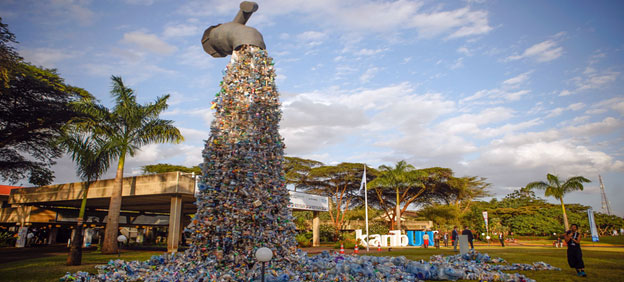
A 30-foot- high monument entitled Turn off the plastics tap by Canadian activist and artist Benjamin von Wong was exhibited at the UN Environment Assembly in Nairobi, Kenya, in 2022. Credit: UNEP/Cyril Villemain

KATHMANDU, Nepal, Jan 20 2025 (IPS) – The last few weeks of 2024 were a disappointment for those who strongly believed that planet Earth is in need of bold actions.

First, there were the frustration stemming from what could be defined at minimum as unconvincing outcomes of both COP 16 on Biodiversity and COP 29 on Climate.


Then all hope was resting on a successful conclusion of the 5th and final round of negotiations held in Busan to reduce plastic pollutions, at the Inter-governmental Negotiating Committee INC-5. (25 November -1 December 2024)

Instead also in this case, at the end, it was a letdown because no consensus had emerged on some of the key elements of the negotiations. Yet, flopping this more gloomy and dark view, I am learning that activists for a strong treaty are not giving up.

They are not ready to concede defeat and, rightly so. The fight must go on.

At least at Busan, the gap between the parties involved in the discussions came at the fore, providing clarity on their own desired outcomes, this time, each showing their cards, without hesitancy. On the one hand, a diverse coalition of more progressive nations.

Within it, both members of the Global South and a part of the Global North worked very hard to press for the best possible outcome, a treaty that would also include targets to reduce plastic production, especially the most nefarious type of it.

On the other hand, governments representing strong petro-chemical establishments had the overt mission to trample and block any attempts of reducing plastic production. Their mantras were conveniently focused on recycling and circularity as the best remedy to reduce plastic pollution.

To have a better assessment of INC-5, I approached the Plastic Pollution Coalition, a US civil society organization advocating an ambitious treaty. The group has also pressurized Washington to take a bolder stance in the fight against plastic pollution.

The resulting conversation with members of the Coalition, carried out via e-mails, was also an opportunity to identify the next goalposts for future negotiations and what scenarios might emerge in the months ahead.

They key messages are that, despite the final outcomes of the negotiations were not what many had hoped for, those, who want bold actions towards reducing plastic pollution, should not despair.

First of all, my interest was on assessing the level of disillusionment among activists advocating for a strong and ambitious treaty.

“Plastic pollutes throughout its existence, and a strong globally binding treaty is critical for a healthy future for humanity. While we are disappointed with the outcome of INC-5—little to no progress on the treaty text—we remain hopeful and are very inspired by the growing collaboration and efforts of a majority of ambitious countries” said Dianna Cohen, Co-Founder and CEO of the Plastic Pollution Coalition.

The commitment from the members of the Coalition is not diminished but rather it is growing ad with it also a sense of optimism.

“The fight is far from over. Talks will resume in 2025, and Plastic Pollution Coalition and allies continue to call on the US government to adopt a stronger position in the treaty negotiations” said Jen Fela, Vice President, Programs and Communications at the Plastic Pollution Coalition.

“The work won’t be easy. While necessary to protect the planet and human health, there will likely be even less support for a strong and legally binding global treaty by the incoming US administration”.

“The good news is that the talks in Busan demonstrated that more and more countries are willing to be bold and tell the world to get on board with what UN Environment Programme Executive Director Inger Andersen called a ‘once-in-a-planet opportunity’ for a treaty that will end the plastics age once and for all”, Fela further stressed.

But what next? Balancing realism with ambition, what activists should aim in the next negotiations?

“We will keep pushing for a treaty that caps plastic production and prioritizes health, centers frontline and fence-line communities, acknowledges the rights of Indigenous Peoples and rights holders, restricts problematic plastic products and chemicals of concern, and supports non-toxic reuse systems”, Cohen, the Co-Founder and CEO of the Coalition told me.

“We are proud to stand with our incredible community of allies and continue our work toward a more just, equitable, regenerative world free of plastic pollution and its toxic impacts”,

Indeed, signs of hope are not misplaced”.

“Despite Member States being unable to reach a deal at INC-5, there was promising ambition and growing collaboration among the majority of countries, and we’re hopeful for the additional round of talks at INC-5.2 next year”, she further added.

“Ultimately, a delay is better than settling for a weak agreement that fails to meaningfully address the problem now, and the silver lining is that in the meantime, we can gain even more support for a strong treaty that cuts plastic pollution”.

Moreover, it is important to remember that despite there was no agreement, a new consensus is emerging.

“Despite pressure from a handful of petrostates, the majority of countries are rallying together for a strong treaty, with more than 100 countries backing Panama’s proposal to reduce plastic production, 95 supporting legally binding targets to regulate harmful chemicals, and over 120 nations calling for a treaty with robust implementation measures” reads a summary of INC-5 published by the Coalition.

A new coalition got cemented in Busan with countries like Panama and Rwanda working with European nations and others in the so called High Ambition Coalition to end Plastic Pollution.

I also wanted to better understand the key elements that can either make a future treaty at least acceptable for those advocating for plastic reductions and which are the “red lines” for them.

“Signs of a weak Plastics Treaty include voluntary measures to address plastic pollution, failure to commit to a significant global reduction in the total production of plastics, failing to identify and cease production of “chemicals of concern” known to harm frontline communities—a major environmental justice issue, a focus on recycling plastic as a solution, and omitting a full and strong range of actions that address plastic pollution throughout its endless toxic existence—from the extraction of its fossil fuel ingredients through plastic and plastic chemical production, shipping, use, and disposal” explained Erica Cirino, Communication Manager at the Coalition.

“The key is a mandated and significant reduction in plastic and plastic chemical production”.

“Signs of a strong treaty include mandatory caps on plastic and plastic chemical production, identification and further regulation of especially hazardous chemicals of concern, and including a full and strong range of actions that work to end plastic pollution throughout its endless toxic existence, starting with the extraction of its fossil fuel ingredients through plastic and plastic chemical production, shipping, use, and disposal” she further said.

“A binding commitment that reduces especially “problematic” plastic products and chemicals of concern would not be acceptable without a cap in overall production. All plastics pollute, and all plastic production must be reduced”, Cirino further explained.

The point raised by Cirino is one of the most contentious. “Those of special concern must especially be eliminated and regulated, but taking action to mitigate their harm should only be expedited—and not stand in place of mitigating harm of all plastics”.

Would it be still acceptable, in case there will be no breakthrough at all in the next round of negotiations, the most progressive nations, say the members of The High Ambition Coalition to End Plastic Pollution, would come up with their own, alternative binding agreement, even if not a fully-fledged global treaty as we are envisioning now?

Could this “extreme” and until now unimaginable ‘last” option make sense even if plastic polluters would continue with their “business as usual approach”?

“It’s certainly not an ideal solution, as plastic pollution is a global issue perpetuated by a global set of governments; investors; and industrial players, activities and infrastructure. That said, it potentially would be better than nothing if more progressive nations were to devise their own binding agreement, so long as it focused on curbing plastic pollution”, Cirino shared.

“The main issue is, many of the biggest plastic producers in the world (namely, the US and China) are absent from the high-ambition talks for now. It’s crucial that levels of plastic production drop globally. It would be all for naught if some countries reduce production, only for other nations to increase it”.

Meanwhile having some countries going “solo” carries risks and these they are crystal clear.

Indeed, there are palpable concerns in places like Europe on this regard.

There, the plastic lobbying is worried that a decline of plastic production in Europe means that other nations like China are taking advantage by ramping up their production.

We are in a conundrum. At this moment, I can’t imagine how the petro states will change their key negotiating positions. “If passed, hopefully an agreement among progressive nations would push other nations to also reduce their plastic production or, such an agreement may not help at all” concluded Cirino.

Simone Galimberti writes about the SDGs, youth-centered policy-making and a stronger and better United Nations.

IPS UN Bureau

  Source