The UN Food Systems Summit and Some Issues of Concern

Climate Change, Combating Desertification and Drought, Conferences, Economy & Trade, Environment, Food and Agriculture, Food Security and Nutrition, Food Sustainability, Global, Headlines, Health, Humanitarian Emergencies, Labour, TerraViva United Nations

Opinion

Oxen have been used to plough in agriculture for at least 3,000 years. They are still used today. Painting from the burial chamber of Sennudjem c, 1200 BC, Egypt. Credit: Trevor Page

LETHBRIDGE, Canada, Sep 21 2021 (IPS) – Why is the UN holding a Food Systems Summit? Two issues that need discussion at the international leadership level are: Long before the Covid crisis was upon us, the number of hungry people in the world was increasing. Why ? What is the cause of this disturbing trend? And, can a country really claim to be food secure, unless it produces or can buy enough food to feed its population and its people can access sufficient quantities to keep themselves fit and healthy? Disquietening questions as extreme weather begins to show the destructive power that climate change will have on the planet and its people.


A whole range of food system issues will be discussed at the summit, among them: production, processing, supply chain, consumption, nutrition, malnutrition, food aid and waste.

Food Production

Food, or the nutrients it contains, is fuel for the body. Agriculture and the production of food in an organized way is one of the earliest human endeavors. It started in the fertile crescent of the Middle East, some 10,000 BCE. While mechanization dominates the way food is produced today in the major food producing countries, animal traction is still important in many parts of the world.

Million dollar combines handle reaping, threshing, gathering and winnowing in a single operation on North American and European cereal fields today. GPS programmed, they are set to become driverless within a decade. Fruit and vegetables grown in vertical farms in cities using aquaponics are already springing up around the world. Aquaculture too can be moved to vertical farms, making fish much cheaper for urban dwellers. Vertical farms will greatly reduce labour costs and transportation requirements. Mechanization hugely reduces the number of people engaged in farming and consequently, the cost. Robotics and digital agriculture are already with us in some parts of the world. But where most people live in the world, traditional manual methods and animal traction are set to continue until the high investment needed for cutting-edge technology becomes doable.
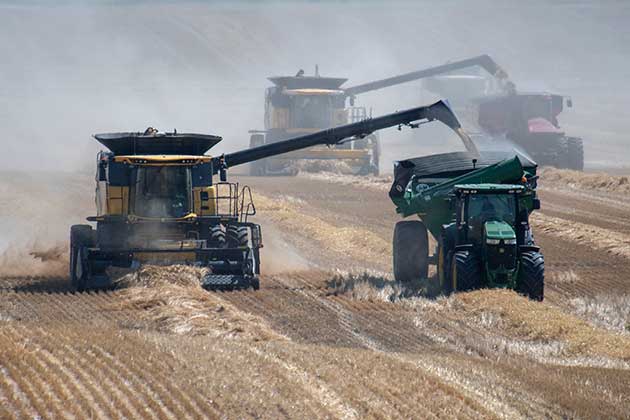
Combines harvesting barley for the 2021 annual Canadian Food Grains Bank (CFGB) food drive, Alberta, Canada. The grain is auctioned and the proceeds matched 4:1 by the Canadian government and used by CFGB to promote agriculture in developing countries. Credit: Trevor Page

Wrestling with nature

Despite the advances in technology, drought can badly affect a crop. Cereal crops in western Canada and the United States have been seriously affected by drought this year. Climate change presents the greatest challenge yet to agriculture, and to the human species, generally.

Agriculture is the largest emitter of greenhouse gasses contributing to climate change. According to FAO, the rearing of livestock accounts for the highest proportion because of the methane produced from enteric fermentation as well as manure left on pastures. Also according to FAO, 44% of GHGs are emitted from Asia, 25% from the Americas, 15% from Africa, 12% from Europe and 4% from Oceania.

Is organic agriculture the answer to healthier food and also the way to go because it’s kinder to the planet? Studies have found that there are higher antioxidant levels in organically grown plant-based foods. There is also evidence that organic food has lower toxic, heavy metal levels and less pesticide residue, for instance organic eggs, meat and dairy products. Organic farms use less energy and have lower GHG emissions. They also reduce the pollution caused by the widespread use of nitrogen fertilizer on industrial farms, with the runoff causing the eutrophication of water bodies. Organic agriculture is based on nourishing the soil with composts, manure and regular rotations, keeping it covered with different crops throughout the year. That sequesters carbon, building healthier soil.

The problem is that organically grown food is more expensive that industrially produced food. On average, it retails around 25% more than food sold in supermarkets. Also, most organic farmers need to supplement their income from an additional occupation in order to make ends meet. So, despite the benefits to human health and to the planet, does organic farming have a future? The answer is a resounding “yes!”, both from producers and consumers. Although globally, only 1.5% of farmland is organic, in 16 countries 10% or more of all agricultural land is organic, and the proportions are growing. The countries with the largest organic share of their total farmland are Liechtenstein at 38.5 %, Samoa at 34.5% and Austria 24.7%, according to IFOAM Organics International. Today, organic food is more of a lifestyle choice, both by the producer and the consumer. But if its growth is an indicator of concern for our health and for that of the planet, and more and more people are willing and able to pay the extra cost involved, then organics can be seen as an indicator of wellbeing and a reduction of inequality, which is a major cause of conflict in the world today.
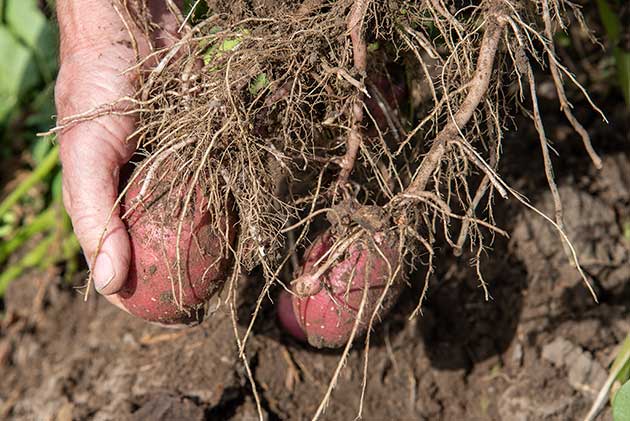
Healthy root formation on Mozart red potatoes on The Perry Farm in Taber, Canada. Regenerative agriculture is practiced on this farm. Credit: Trevor Page

Although humankind has grown up largely on a diet of just three cereals: wheat, corn and rice, potatoes are actually more nutritious. Furthermore, potatoes can be grown on marginal land and they require only one-third of the water needed to grow the world’s three main cereals. Five years ago, China moved to double its potato production and to add them to the diet of its growing population. Should Africa be following suit?

Conclusion

The Food Systems Summit kicks off in New York on September 23 during the UN General Assembly High-Level Week. World leaders will come together to find common ground and form alliances that accelerate our way to realizing the SDGs in this remaining decade of action before 2030 is upon us. Will we succeed in making Zero hunger a reality? If we are serious about this goal, the answer includes rethinking and redesigning our food systems to make them more sustainable.

Trevor Page, resident in Lethbridge, Canada, is a former Emergencies Director of the World Food Programme. He also served with the UN Food & Agriculture Organization, FAO, the UN refugee agency, UNHCR and what is now the UN Department of Political and Peace Building Affairs.
 

In a Watershed Year for Climate Change, the Commonwealth Secretary-General calls for Urgent, Decisive and Sustained Climate Action

Biodiversity, Climate Change, Combating Desertification and Drought, Commonwealth, Conferences, Conservation, COP26, Editors’ Choice, Environment, Featured, Gender, Global, Headlines, Humanitarian Emergencies, Sustainability, TerraViva United Nations, Water & Sanitation, Women & Climate Change

Climate Change

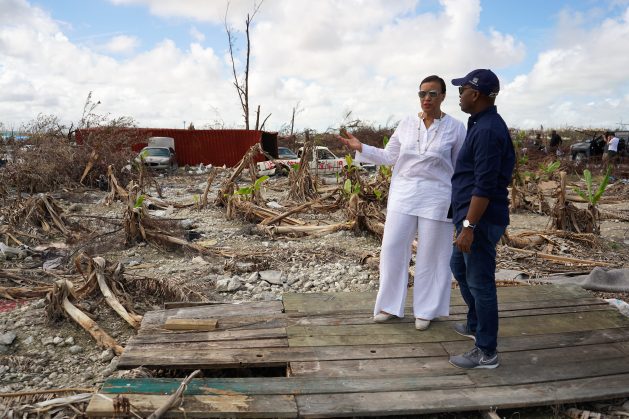
Commonwealth Secretary-General Patricia Scotland in The Bahamas after Hurricane Dorian. Scotland expressed concerns about the impact of climate change on exacerbating superstorms, like this 2019 event which took a massive human toll. Credit: Commonwealth

London, Sep 8 2021 (IPS) – This November, five years after signing the Paris Agreement and pledging to limit global warming to 2 degrees Celsius above pre-industrial levels, with a further target of below 1.5 degrees Celsius, world leaders will meet in Glasgow, UK amid COVID-19 pandemic shocks, rising hunger and an Intergovernmental Panel on Climate Change report that warns of more extreme temperature, droughts, forest fires and ice sheet loss due to human activity.


The leaders are expected to submit more ambitious targets to limit greenhouse gas emissions.

Out of the 197 countries which signed the Paris Agreement, 54 are members of the Commonwealth. That association has been helping its members to craft their national climate targets and follow through with implementation.

IPS spoke to Commonwealth Secretary-General the Rt Hon Patricia Scotland QC about the Association’s climate initiatives, the unique challenges faced by small states, its focus on gender mainstreaming and access to financing for critical adaptation and mitigation projects.

Scotland is the sixth Secretary-General of the Commonwealth and the first woman to hold the post. The Commonwealth is an association of 54 countries that work together to advance shared values enshrined in the Commonwealth Charter, including democracy, human rights and sustainable development.

Excerpts of the interview follow:

===========
Inter Press Service (IPS): Secretary-General, it is a pleasure to be able to interview you from a small community in Dominica. Dominica continues to be proud of not just being a member of the Commonwealth but the land of your birth and the home of the Baroness Patricia Scotland Primary School.

In Dominica, we know that the Commonwealth is invested in climate change, and I’m happy to be speaking to you about one of the most pressing issues of our time.

The IPCC report has been dominating the climate change headlines in the lead-up to COP26. It is a sobering report that calls for urgent, increasingly ambitious action by world leaders to tackle the climate crisis. What does the report mean for the 54 member countries of the Commonwealth?

The Rt Hon. Patricia Scotland QC (PS): The latest IPCC report is a stark warning for humanity. One cannot argue with the definitive scientific evidence in the report, which shows how climate change is intensifying on a global scale, with widespread impacts. Some of these impacts are unravelling on our television screens and even right before our eyes, including increasingly destructive extreme weather events – from monstrous super storms in the Pacific and Caribbean to deadly floods in Africa and raging wildfires in Europe.

In many ways, the report reaffirms many of the concerns the Commonwealth has been advocating for over the past 30 years, particularly in relation to small and other vulnerable states. It also challenges us, as an international community, to respond – urgently!

We no longer have any excuse not to act. We already have a blueprint for international cooperation in the form of the Paris Agreement. What’s more, emerging from the Covid pandemic, we have a critical window to set a new development path and build back better. What the world needs now is urgent, decisive and sustained climate action. As I’ve always said: if not now, then when; if not us, then who?

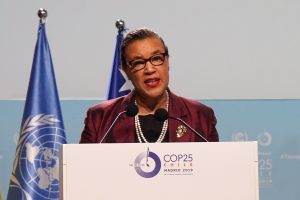
Commonwealth Secretary-General Patricia Scotland at COP 25. She was speaking to IPS ahead of the 26th UN Climate Change Conference of the Parties (COP26) to be held in Glasgow in October and November 2021. Credit: Commonwealth

(IPS): We know that Nationally Determined Contributions (NDCs) are important to gauge how each country intends to do its part to reduce global warming. We also know that new NDCs should be submitted every five years, but some countries have not met the deadlines. How is the Commonwealth assisting member countries with articulating and submitting their NDCs?

(PS): The Nationally Determined Contributions – or national climate plans – are at the heart of the Paris Agreement. I cannot overstate their importance. It is through the NDCs that we translate this global agreement into reality on the country level.

This is why the Commonwealth Secretariat is working with the NDC Partnership to support governments in enhancing and delivering their national climate plans under the Climate Action Enhancement Package (CAEP).

Through this initiative, we embed highly skilled Commonwealth National Climate Finance Advisers in countries to fast-track the process. In Jamaica and Eswatini, our experts help create frameworks to include climate-related spending in national budget planning. In Belize and Zambia, our advisers assist in developing national climate finance strategies.

Our flagship Commonwealth Climate Finance Access Hub has also deployed advisers in nine other countries across Africa, the Caribbean and the Pacific to help governments develop strong climate finance proposals for NDC implementation and wider climate action.

Commonwealth Secretary-General Patricia Scotland pictured in Seychelles. She is particularly concerned about the financing and support of small island developing nations with their climate change challenges. Credit: Commonwealth

(IPS): How can Commonwealth countries help each other with their NDCs submission and implementation?

(PS): The Commonwealth is a family of 54 equal and independent nations, spanning five geographical regions with a combined population of 2.4 billion people, 60 percent of whom are under age 30. Thirty-two members are considered ‘small states’, while we also have some of the world’s biggest economies along with emerging countries in our group.

One of the most valuable aspects of the Commonwealth is, therefore, its diversity and incredible capacity to be a platform for countries to share experiences on a wide range of global issues, examining what works and what does not work and cross-fertilising ideas. Building on this, the Secretariat organises regular virtual events, convening a range of actors from different regions and sectors to exchange knowledge and best practices for climate action.

We also welcome the generous financial and in-kind support from member countries such as Australia, the United Kingdom and Mauritius, which enables the work of key programmes like the Commonwealth Climate Finance Access Hub and the CommonSensing Project (funded by the UK). The CCFAH ‘hub and spokes’ model ensures a dynamic network of expertise and a useful mechanism for cross-regional dialogue and international cooperation around NDCs.

(IPS): Access to finance for climate adaptation and mitigation initiatives continues to be an issue of concern, particularly for small island developing states. What mechanisms have the Commonwealth Secretariat established to assist countries in financing their climate commitments?

(PS): Funding for climate action is absolutely critical for the survival of our small and vulnerable member states. However, a concerning paradox is that countries most vulnerable to climate change are often the ones that find it most challenging to access climate finance.

This is mainly because they have constrained resources or capacity. For example, a small island developing nation may have just a small ministry or unit dedicated to climate change, and a single officer, if any, focused on mobilising finance. When you look at the complex requirements, application processes and varying criteria set by different international climate funds, it is clear there is a gap.

Consequently, many countries can spend months and even years working through the process to access finance, delaying climate action whilst impacts are ongoing.

This is why the Commonwealth Climate Finance Access Hub (CCFAH) was initiated in 2015, whereby long-term Commonwealth national climate finance advisers are embedded in government departments to help them develop successful funding proposals, and who then pass on the knowledge and skills to local officials and actors. As of June 2021, CCFAH has helped raise US$ 43.8 million of climate finance, including US$ 3 million of country co-financing for 31 approved projects. More than US$762 million worth of projects are in the pipeline.

We are also looking at innovative ways to fill the data gap in project proposals. Under the CommonSensing Project, we work with UNITAR-UNOSAT, the UK Space Agency and others, to use earth observation technology and satellite data to build more robust, evidence-based cases for climate finance in Fiji, Solomon Islands and Vanuatu.

(IPS): According to agencies like UNICEF, women and girls are disproportionately impacted by climate change – a reflection of patterns of gender inequality seen in other areas. Are you satisfied with the work of the Commonwealth in ensuring gender integration across climate change initiatives?

Commonwealth Secretary-General Patricia Scotland planting mangroves in Sri Lanka. Scotland believes that the diversity of the Commonwealth is its strength in tackling climate issues. Credit: Commonwealth

(PS): To tackle climate change, we simply cannot ignore the role of half the world’s people who are women. In fact, the most recent Commonwealth Women’s Affairs Ministers Meeting in 2019 reiterated gender and climate change as one of four priority areas on gender equality. It is absolutely a top concern for the Secretariat, which is committed to mainstreaming gender across its work programmes.

All our regional/national climate finance advisers are expected to mainstream gender and youth considerations in their operations. All their projects must be responsive to the needs of women, men, girls and boys, as equal participants in decision-making and beneficiaries of climate action.

For instance, the Commonwealth National Climate Finance Adviser in Jamaica helped the government secure a grant of US$270,000 from the Green Climate Fund for the project ‘Facilitating a Gender Responsive Approach to Climate Change Adaptation and Mitigation’.

The Secretariat recently launched a gender analysis of member country climate commitments. This research will help us better understand the current situation and inform future activities and programmes.


NDC Partnership: Supporting a Global Network of Youth Climate Advocates

Biodiversity, Civil Society, Climate Change, Combating Desertification and Drought, Development & Aid, Environment, Featured, Global, Green Economy, Headlines, Humanitarian Emergencies, Inequity, Natural Resources, NDC Partnership, Sustainability, TerraViva United Nations, Water & Sanitation, Youth

Climate Change

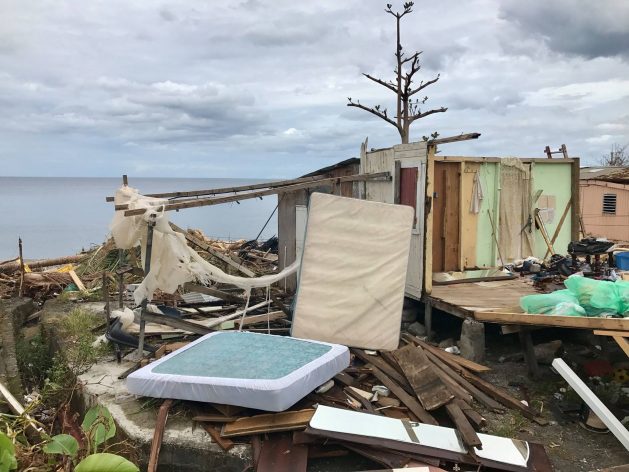
Madrelle, Loubiere, Dominica 2017, a few days after Category 5 Hurricane Maria struck the island. Credit: Alison Kentish/IPS

UNITED NATIONS, Aug 19 2021 (IPS) – Just over six months after launching its Youth Engagement Plan, the NDC Partnership, the coalition assisting governments with their climate action plans, has brought together youth climate advocates for its inaugural NDC Global Youth Engagement Forum.


NDCs, or Nationally Determined Contributions, refer to governments’ commitments to reduce greenhouse gas emissions, an integral part of the Paris Climate Agreement. NDCs are scheduled for revision every five years and are expected to be increasingly ambitious to tackle the climate crisis effectively.

Countries and the NDC Partnership want to ensure that, as agents of implementation, young people have platforms for engagement and a say in national climate action.

The Partnership recently brought youth together in 3 regional groupings: Africa, the Middle East, and Europe, Asia and the Pacific, and Latin America and the Caribbean. The young people engaged with representatives of partners such as the Food and Agriculture Organization (FAO) and the United Nations Children’s Emergency Fund (UNICEF) through sessions like ‘agriculture and climate change,’ and ‘equipping young people to engage in the NDC process.’

The NDC Partnership, the coalition assisting governments with their climate action plans, has brought together youth climate advocates for its inaugural NDC Global Youth Engagement Forum. Credit: NDC Partnership

The participants say the teaching element was bolstered by the opportunity to be heard, as the organizers asked for their input in areas that include NDC enhancement, structures needed to strengthen youth involvement, and ways young people are already impacting climate action.

For youth like Natalia Gómez Solano of Costa Rica, the forum provided a space to share experiences and ideas.

“Working for a more resilient and a more just, low-emissions world moves us, and that is why we are here today,” she told the virtual event.

“We are already experiencing the impacts of climate change, and they are worsening. We need increased adaptation and mitigation action, and the NDCs are the key instruments to achieve that. The NDCs are the roadmaps for climate ambition in which young people are key in bringing new climate solutions to the conversations and to raise action.”

Jamaica’s Permanent Secretary in the Ministry of Housing, Urban Renewal, Environment, and Climate Change, Dr Alwin Hales, told the Latin America and Caribbean forum that the virtual event and Youth Engagement Plan hope to leverage the ‘leadership and power’ of youth into NDC implementation and enhancement.

“Today’s children and young people are caught in the center of climate change, for it is they who have to live with and manage its consequences,” he said.

“The NDC Partnership launched the Youth Engagement Plan (YEP). It aims is to build young people’s capacity on climate change matters and engage the youth in global NDC partnership activities. This is in direct support of our mission to increase alignment, coordination, and access to resources to link needs with solutions.”

The forum was proposed by the NDC Partnership’s Youth Task Force but is a priority of the NDC Partnership’s Steering Committee and Co-Chairs, Jamaican Minister of Housing, Urban Renewal, Environment, and Climate Change Pearnel Charles Jr. and U.K. Minister Alok Sharma, who also serves as President of COP 26.

Noting that young people are vital to effective action on climate change, NDC Partnership Global Director Pablo Vieira Samper reminded them that their input also ensures that action is inclusive.

“We want to hear about what capacity or technical support is still needed and what learning you are eager to share with your peers,” he said.

“The Youth Engagement Plan was the starting point for greater action for youth engagement in NDCs. Today the NDC Partnership is thrilled to be turning this plan into concrete steps for more meaningful engagement and bringing new ideas to this framework to inspire action. We look forward to your insights as we collaborate across the Partnership to build a low carbon, climate-resilient future by supporting sustainable development.”

The youth attending the forum have described it as an important platform for highlighting the challenges faced by young climate activists.

“It is important to increase climate finance to support projects that are led by children and youth and integrate a rights-focused education curriculum in schools and universities,” said Xiomara Acevedo, the Founder and Chief Executive of Barranquilla+20, an NGO run by young people who empower their peers to tackle issues of biodiversity, sustainability, policy inclusion, and climate change.

Acevedo’s NGO has reached over 2,000 young people. She says it is clear that youth have a unique role to play in climate activism.

“We have seen that involving young people at the local and subnational level has also helped to ensure that a lot of citizens are seeing that climate action is not something beyond their territories, or is not only a topic that is managed at the national level. They can relate our message to their narrative, to their realities. We engage climate action as an important topic in the local agendas,” she said.

According to UNICEF, including youth in climate change action is important to achieving Sustainable Development Goals 13,2 which urges urgent action to combat climate change and its impacts; 16,3 which calls for the promotion of peaceful, inclusive societies for sustainable development and 17,4 with its target of assistance to developing countries in attaining debt sustainability.

The United Nations Framework Convention on Climate Change (UNFCCC) released its NDCs scorecard in February. It applauded countries for strengthening their commitments to the Paris Agreement but encouraged them to further step up their mitigation pledges, adding that greenhouse gas emissions targets were falling ‘far short’ of what is required to achieve the Agreement’s goals.

Young people like Natalia Gómez Solano say as custodians of the planet, youth must be mobilized, and their voices amplified to arrive at the deep emissions reductions needed in the NDCs.

“We need to integrate more voices and reach more places. As the Latin America and Caribbean Region, we need to keep working, keep asking, keep demanding, and doing more. Not all youth know how to be involved in climate action, and we need to work with more young people, for example, in the rural areas,” she said.

The delegates at the NDC Partnership’s inaugural Youth Engagement Forum say they are hoping for more opportunities at the table.

They say it takes persistence, organization, time, and passion to achieve climate goals. It also takes an empowered, well-connected, and financed global network of youth.

  Source

Stopping Marine Plastic Pollution: A Key IUCN Congress Goal

Civil Society, Climate Change, Conferences, Economy & Trade, Environment, Featured, Global, Headlines, Health, Natural Resources, Poverty & SDGs, Sustainability, TerraViva United Nations, Water & Sanitation

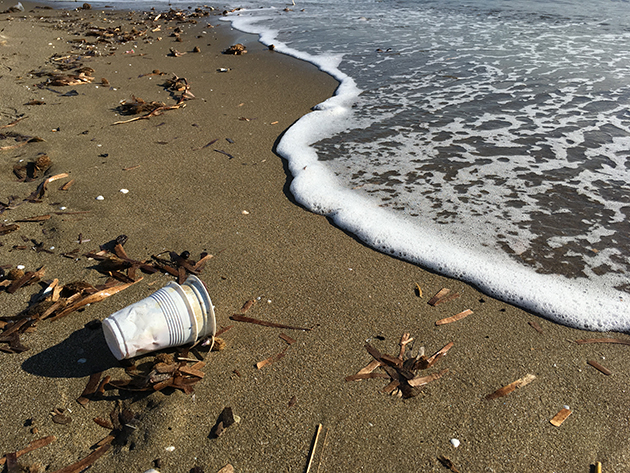
Plastic bags may remain intact for years in the marine environment. Plastic products certified to be industrially compostable are no solution for littering, as they do not degrade efficiently in the environment and continue to pose a threat to wildlife as they break down. Credit: Eleonora de Sabata / Clean Sea LIFE

St David’s, Wales, Jul 1 2021 (IPS) – Documented images of albatross chicks and marine turtles dying slow deaths from eating plastic bags and other waste are being seared into our consciences. And yet our mass pollution of Earth’s seas and oceans, fuelled by single-use plastics and throw-away consumerism, just gets worse.


Plastic debris is estimated to kill more than a million seabirds, 100,000 marine mammals and countless sea turtles every year. Plastics, with all their benefits and promises, have revolutionised societies and economies since their development in the 1950s, but now some 8 million tonnes end up in the oceans every year.

Waste plastic, making up to 80% of all marine debris from surface waters to deep-sea sediments, breaks down into micro-plastics which enter the digestive systems of sea and land animals and humans. Invisible plastic is in the water we drink, the salt we eat and the air we breathe. Experts are still working out the long-term impacts, such as cancer and impaired reproductive systems.

The fishing industry, nautical activities and aquaculture also leave a massive legacy in terms of ocean waste, poisoning and ensnaring sea life.

Hasna Moudud heads a small NGO in Bangladesh, working to protect coastal areas where vast rivers pour into the Indian Ocean, providing livelihoods and food for millions.

Her NGO, Coastal Area Resource Development and Management Association (Cardma), plants coastal trees, protects olive ridley sea turtles in a conservation hatchery in the Bay of Bengal, and helps women in cottage industries, using cane grass to make mats instead of plastic.

“Oceans are always neglected,” she tells IPS. “Small NGOs like myself take risks to save whatever we can of the fragile ecosystem that is left for our future generations.”

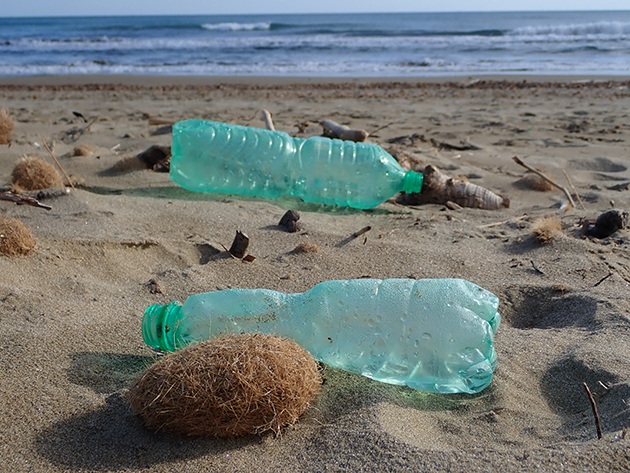
Plastic bottles and bottle caps are among the most frequent items found along Mediterranean shores. Credit: Eleonora de Sabata / Clean Sea LIFE

But to combine her NGO’s efforts with those of others, Moudud says she is “praying” to attend the IUCN World Conservation Congress 2020 in Marseille this September where government, civil society and indigenous peoples’ organisations from around the world will join discussions to set priorities and drive conservation and sustainable development action.

Meeting every four years – with this Congress delayed by the Covid pandemic – member organisations of the International Union for Conservation of Nature, vote on major issues to shape humanity’s response to the planet’s conservation crises. This particular Congress in Marseille is offering both in-person and virtual participation options, allowing those unable to make the trip to Marseille for the full Congress the opportunity to join discussions and provide their feedback.

Moudud’s NGO is a co-sponsor of Congress Motion 022: “Stopping the global plastic pollution crisis in marine environments by 2030.”

The broad resolution goes to the heart of the waste plastics issue. It notes that global production is due to increase by 40% over the next 15 years from current levels of around 300 million tonnes and that the world’s “predominant throwaway model” means that over 75% of the plastics ever produced to date are waste, “notably because the price of plastic on the market does not represent all of the costs of its lifecycle to nature or society”.

Recalling previous international efforts to set goals for ending marine plastic litter, the motion calls on the international community to reach a wide-ranging global agreement to combat marine plastic pollution. This would entail, among other measures, eliminating unnecessary plastic production, in particular single-use plastic waste; recycling and proper prevention of leakage into the environment; and public awareness campaigns.

Sunlight, salt and pounding waves grind marine litter down to plastic grains. Credit: Eleonora de Sabata / Clean Sea LIFE

Activists say previous international efforts to curb plastic pollution have been toothless. Moudud is among many who want mandatory and enforceable measures, accusing big business of what she calls “manipulative practices through sponsorship and malpractice without helping build the natural world”.

“No one is looking or holding the polluters responsible,” she says, calling for a toughening up of the resolution. “I am deeply involved in everything IUCN does to help save the natural world and sustainable living.”

Steve Trott, project manager for IUCN-member Watamu Marine Association which is tackling plastic pollution in their Marine Protected Area in Kenya, says Motion 022 clearly sets out the threats posed by plastic waste to marine and coastal environments, economies and human health and well-being.

“Watamu Marine Association and EcoWorld Recycling based on the Kenya coast embrace the IUCN call for action,” Trott told IPS.

Pushing circular economy initiatives, their NGO has created dynamic plastic value chains through partnerships between the hotels industry and local communities, sponsoring beach clean-ups and collecting plastic waste for recycling. This provides a second source of income for community waste collectors while local artists are also up-cycling plastic waste.

Reflecting one of the main themes of IUCN’s membership structure bringing together civil society and indigenous peoples and government authorities, Trott says Watamu is following a “win-win model which can be replicated and up-scaled, sending out an ‘Act Local, Think Global’ message to inspire others”. He hopes to attend the Congress in Marseille if all goes well.

Single Use items are littering the world’s oceans. Credit: Eleonora de Sabata / Clean Sea LIFE

The Plastic Waste Makers index, a study by Australia’s Minderoo Foundation, identifies 20 companies producing more than half of all single-use plastic waste in the world. Some are state-owned and multinational corporations, whose plastic production is financed by major banks. The report notes that nearly 98% of single-use plastic is made from what is called virgin fossil fuels — plastic created without any recycled materials.

Single-use plastics explain why fossil fuel companies are ramping up their production as their two main markets of transport and electricity generation are being decarbonised. By 2050 plastic is expected to account for 5%-10% of global greenhouse gas emissions.

Humankind possesses unprecedented levels of knowledge but also the accompanying responsibility, knowing that oceans are in the poorest health since humans started exploiting them.

Single use plastics – and the estimated 130 million tonnes that are dumped each year around the world – have dominated studies and discussions on waste. Plastic bottles, food containers and wrappers, and single-use bags are the four most widespread items polluting the seas.

One element woven into similar narratives of how to tackle the world’s burning environmental issues – such as carbon emissions, species loss, and plastic waste – is the potential fix offered by technology. Motion 022 refers to the need for more investment in environmentally sound plastic waste collection, recycling and disposal systems as well as forms of recovery.

A study led by biologist Nikoleta Bellou at the Helmholtz-Zentrum Hereon institute focuses on inventive sea-cleaning solutions to date, including floating drones. But her paper suggests that it could take about a century to remove just 5% of plastics currently in the oceans using clean-up devices because plastic production and waste are accumulating so fast.

Activists welcome IUCN’s intervention on plastic waste pollution and the strong mandate a successful and unanimous motion can convey to governments and international institutions. But they also caution against taking too narrow an approach towards tackling marine pollution at the September 3-11 Congress.

Eleonora de Sabata, spokesperson for the Clean Sea Life project, co-funded by the European Union’s LIFE programme, told IPS that the narrative needs to shift away from single-use plastic to single-use everything. “Technology” has come up with so-called ‘bio’ plastics as a replacement for some plastics but only to create a whole suite of problems of their own.

“It’s the throwaway culture that creates problems, whether plastic or not. Green washing and sloppy leadership are filling our world of single use,” she argues. Washing our consciences by simply substituting single-use plastics with other single-use items, such as supposedly biodegradable bags and cutlery, are not the answer.


From Climate Change to Covid, Are We Ready to Deal with Disasters?

Civil Society, Climate Change, Education, Environment, Food Security and Nutrition, Gender Violence, Global, Headlines, Health, Humanitarian Emergencies, Labour, Migration & Refugees, Sustainability, TerraViva United Nations, Water & Sanitation

Opinion

Credit: Bibbi Abruzzini

PARIS, Jun 10 2021 (IPS) – In the last 20 years, disasters affected over 4 billion people. At global level we witness on average one sweeping disaster a day, the majority of which are floods and storms. From the Covid-19 pandemic to climate change, calamities are taking new shapes and sizes, infiltrating every dimension of society. From the emotional to the political, how do we deal with disasters? How can we create a whole-of-society approach to disaster risk reduction?


Right through this vortex of intersecting crises, a new toolkit and interactive website by Forus, the Global Network of Civil Society Organizations for Disaster Reduction (GNDR), Save the Children Switzerland and Inventing Futures, with the support of Fondation de France, looks at how civil society organisations coordinate disaster risk reduction and post-emergency interventions. Meant for civil society networks, activists, government officials and community-based organizations, the toolkit provides best-practices from around the globe.

“Today, we are all actors and victims of crises. How can we better understand and learn to cope with them? These practical tools allow us to discover the stakes, the exemplary actions and their effects, through simple definitions and concrete testimonies experienced by civil society,” says Karine Meaux, Emergency manager at Fondation de France.

“Building resilient communities in the face of natural and man-made hazards has never been more important. While disasters don’t discriminate, policies do. Together we can act and put pressure on decision-makers to promote a holistic approach to disaster prevention and reduction and truly people-centred policies,” says Sarah Strack, Director of Forus.

Civil society at the forefront of disaster management

From resilient communities in Nepal, to conflicts in Mali and peace processes in Colombia, the toolkit presents six approaches to disaster risk reduction gleaned from case studies compiled across the civil society ecosystem. The toolkit looks at various topics from capacity building, to local knowledge, resource mobilisation, partnerships with governments and long-term sustainable development and livelihood resilience, ensuring that communities ‘bounce forward’ after a disaster.

Credit: Bibbi Abruzzini

Specifically, the toolkit aims to clarify the crucial role frontline civil society organisations play in reducing the impacts of disasters in the midst of an expanding and intensifying global risk landscape. Bridging governments, communities and experts is the only way we can tackle the multiple ways disasters affect local and social processes such as education, migration, food security and peace. If civil society is not free to operate – or even exist – our collective capacity to deal with disasters and create long-term resilience is hampered.

“You have countries [in the region] in which civil society is not even allowed to exist. This reality changed a lot after the Arab Spring, with countries living in a terrible crisis, with military conflicts, where the role of civil society now is not only to struggle for their existence, but also to provide the population with basic needs and humanitarian interventions,” says Ziad Abdel Samad, Director of the Arab NGO Network for Development (ANND).

Everyday disasters and inequalities

Robert Ninyesiga, from UNNGOF, the national civil society organisation platform in Uganda, argues that in most cases, “more effort has been put towards disaster response while neglecting the disaster prevention aspect”.

This therefore calls for continuous intentional awareness and capacity building as regards to disaster prevention and this can only be effectively achieved if sustainable partnerships between central governments, local governments, civil society organisations, media and citizens are strengthened.

Shock events, high-impact disasters, such as conflicts, earthquakes or tsunamis are just the tip of the iceberg. Underneath this layer there are an increasingly high number of “everyday disasters” affecting people around the globe. Localised, small scale, and slow onset disasters are often “invisible” – far from the spotlight. Those at low incomes are the most vulnerable and find themselves at the periphery of infrastructures, response systems and media attention.

For instance, in addition to being often exposed to intensive disasters such as floods and storms, residents in urban slums across Bangladesh are suffering much more than other communities since the outbreak of the Covid-19 pandemic.

Credit: Bibbi Abruzzini

“Most slum dwellers are daily wage earners, but they are not able to earn money. They are not able to maintain social distance, because in one room 4-5 members are living. Many people are using a shared bathroom. It’s very difficult to maintain hygiene. There is not enough space to sit or sleep at home while maintaining sufficient distance. Due to lack of money, many slum dwellers have only one or two meals a day. Violence and sexual harassment are increasing in the community due to cramped conditions. Children are not attending school,” explains the Participatory Development Action Programme (PDAP) which works in the slums of Dhaka .

These pressures add to regular “everyday” challenges of air pollution and garbage management, flooding, water-logged land, and poor quality water.

Local knowledge and Resilient Future

Civil society organisations often fill a tremendous gap and find themselves at the forefront of prevention and emergency efforts. The localisation of responses and partnerships are absolutely crucial to understand the needs of communities in pre and post-disaster scenarios.

In Honduras, civil society has created community-led interventions, to prioritise local plans of action across the country.

“Honduras, and Central America more in general, have been hit in the last 10 years by an intensification of disasters, most of them linked to climate change. Our role in helping communities to adapt to climate change and to deal with disasters, is in terms of capacity building, humanitarian assistance and advocacy by creating links between local, national, regional and global levels,” says Jose Ramon Avila from ASONOG, the national platform of civil society organisations in Honduras.

The intense and cascading nature of risks, such as seen in the cases of Covid-19 and climate change, represent a serious threat to the achievement of a sustainable and resilient future. Growing experience over the last three decades has revealed that disasters and development are closely linked. Ignoring the impact of disasters makes it more difficult to pursue sustainable development.

“Sustainable development can only be achieved when local risk is fully understood. Critical to understanding and assessing the complex threats and risks, challenges and opportunities faced by communities most at risk, is the need to partner with those people. This practical toolkit provides valuable insights and examples from GNDR members and others on how this can be achieved,” says Bijay Kumar, Executive Director, Global Network of Civil Society Organisations for Disaster Reduction (GNDR)

It has also been found that much of the negative impact on sustainable livelihoods comes not from large, ‘intensive’ disasters, but from many smaller, ‘everyday’ disasters. It has become crucial to address intensive and everyday disasters and to integrate our responses with overall work to pursue sustainable development.

We need to ask ourselves this question: can we build new bridges of solidarity between civil society, communities and governments? Can we prevent and anticipate disasters? Our future is not disaster-free; to build resilient communities it is crucial to nurture strong roots for our society to flourish.

The author Bibbi Abruzzini is Communications officer at Forus.
Find the toolkit and microsite on Disaster Risk Reduction here. Available in English, French and Spanish.

  Source

Time to End Generational Injustice with a ‘Global Blue New Deal’ to Protect Oceans

Active Citizens, Biodiversity, Climate Change, Economy & Trade, Education, Environment, Global, Green Economy, Headlines, Labour, Poverty & SDGs, TerraViva United Nations, Water & Sanitation

Opinion

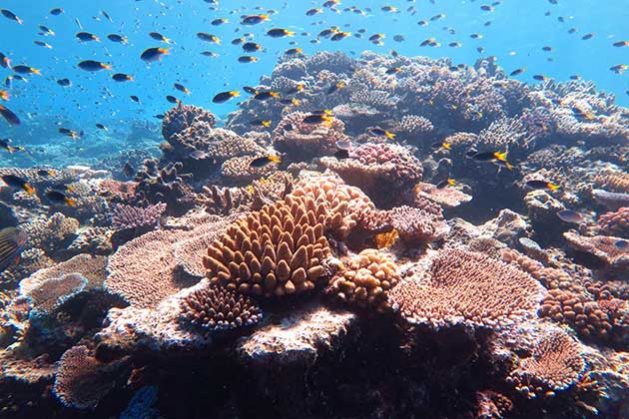
Credit: Australian Institute of Marine Science

PARIS, Jun 8 2021 (IPS) – Increasingly, youth are rising up to declare that they’ve had enough of the cyclical exploitation of the environment that jeopardizes their own future.


Youth activism through the Global Climate Strikes and Fridays For Future protests have helped spur revolutionary policy frameworks, like the Green New Deal championed by U.S. Congresswoman Alexandria Ocasio-Cortez.

International organizations and sovereign governments have now interpreted the Green New Deal into frameworks and policies of their own; it’s clear that environmental policy led by youth has energized the discussion on global decarbonization and the social impacts of climate change.

However, the Green New Deal only mentioned the ocean once. We need to insert more Blue into the green transition.

Earth’s vast oceans are humanity’s single most important climate regulation tool. As governments coalesce around plans to quite literally save our species, we must recognize that there is no future without understanding the role the ocean has to play.

Beyond human life support, the ocean economy contributes to ecosystem services, jobs, and cultural services valued at USD 3-6 trillion, with fisheries and aquaculture alone contributing USD 100 billion per year and 250+ million jobs.

Our ocean, however, is overfished, polluted with plastic, and exploited for non-renewable resources like minerals and fossil fuels. This perpetuates a cycle of generational injustice and leaves youth to inherit an increasingly degraded environment with less and less time to restore it. Not only is this detrimental to progress at large, but our most vulnerable global communities, who contribute the least to global emissions, will feel the effects of our degraded environment the most severely.

Youth not only need to be proactive advocates for the SDGs, we need to hold the global community accountable to commitments they have made between nations and to youth as the greatest stakeholders in the future health of our environment.

Creating the “Global Blue New Deal”

In 2019, the Sustainable Ocean Alliance distributed surveys across its network to identify the key youth policy priorities for a healthy ocean and just future. We received 100+ responses from 38 countries in 5 languages.

Over the past year, SOA’s Youth Policy Advisory Council synthesized these into a youth-led, crowdsourced ocean policy framework: the Global Blue New Deal.

The first public draft of our Global Blue New Deal is being launched now, at the dawn of the UN’s Decade of Ocean Science for Sustainable Development, which aims to gather global ocean stakeholders behind a common framework to deliver “the ocean we need for the future we want.”

Youth want to contribute to the success of the Ocean Decade and call on the international community to recognize our policy suggestions as part of the solutions our planet needs.

The vision of the Global Blue New Deal is to “outline an ocean policy framework that integrates crowdsourced youth priorities that will be proposed to governments on international, national, and local scales for implementation.”

It is organized under four pillars, each containing specific ocean policy solutions.

In brief:

Pillar 1
Carbon Neutrality: Transition to a Zero Carbon Future

    1. End offshore drilling and invest in renewable ocean energy
    2. Decarbonize the shipping industry
    3. Reduce land-based marine pollution
    4. Transition to a circular economy
    5. Strengthen legislation and enforcement against ocean contamination

Pillar 2
Preserve Biodiversity: Apply Nature-based Solutions to Promote Healthy Ecosystems and Climate Resilience

    1. Support the global movement to protect 30% of the world’s ocean by 2030
    2. Enforce against non-compliance in Marine Protected Areas (MPAs)
    3. Establish a global moratorium against deep-sea mining
    4. Transition from “gray” manmade infrastructure like culverts and seawalls to nature-based blue carbon infrastructure including the restoration of wetlands, mangroves and marshes

Pillar 3:
Sustainable Seafood: Match Increasing Global Demand Sustainably

    1. Encourage sustainable governance of capture fisheries
    2. Enforce against illegal, unreported, and unregulated fishing
    3. Eliminate capacity-enhancing fisheries subsidies
    4. Provide a sustainable path for aquaculture
    5. Fund research and development of plant-based and cell-cultured seafood

Pillar 4:
Stakeholder Engagement: Include Local Communities in Natural Ocean Resource Management

    1. Ensure the sustainability of coastal ecotourism
    2. Promote ocean research and innovation, with a goal of mapping 100% of the global seafloor by 2030.
    3. Emphasize ocean literacy and capacity building
    4. Build stakeholder participation in ocean governance

We invite like-minded youths, scientists, policymakers, and other ocean stakeholders to visit https://www.soalliance.org/soablog/youth-led-blue-new-deal and help as we finalize the Global Blue New Deal ocean policy framework during our public comment period throughout July.

Each generation has inherited an increasingly degraded ocean environment with the poorest, most vulnerable communities feeling the impacts the most severely. This is our opportunity to rewrite the long history of compromising our ocean.

Mark Haver and Marina Porto are Chair and Co-Chair respectively of the Youth Policy Advisory Council of the Sustainable Ocean Alliance, the world’s largest youth-led network of ocean allies.

  Source