Preserving World’s Biodiversity: Negotiations Convene at FAO Headquarters

Biodiversity, Civil Society, Climate Change, Conferences, Economy & Trade, Environment, Featured, Food & Agriculture, Gender, Global, Headlines, Indigenous Rights, Natural Resources, TerraViva United Nations
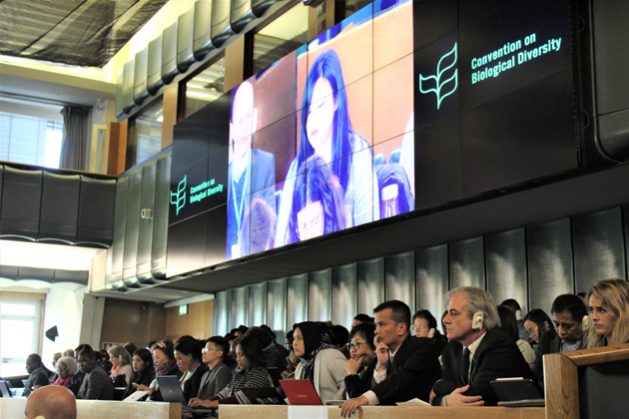
Delegates gather at FAO headquarters to advance negotiations of the post-2020 global biodiversity framework. Credit: Maged Srour/IPS

ROME, Feb 24 2020 (IPS) – “The world out there is watching and waiting for results,” Elizabeth Maruma Mrema warns while talking to IPS regarding the preservation of biodiversity of our planet.


The acting Executive Secretary of the Secretariat of the Convention on Biological Diversity, is referring to a worrying report[1] released by the Food and Agriculture Organization (FAO) which paints a grim picture of the planet.

“Many key components of biodiversity for food and agriculture at genetic, species and ecosystem levels are in decline and evidence suggests that the proportion of livestock breeds at risk of extinction is increasing,” the report says.

The FAO also warns that “nearly a third of fish stocks are overfished, and a third of freshwater fish species assessed are considered threatened”.

These are just some of the critical issues being debated during the open-ended working group on the post-2020 biodiversity framework. This round of negotiations is taking place at FAO headquarters from 24 to 29 February. In the run-up to October’s historic UN Biodiversity Conference, government officials, experts and activists from around the world gathered today at FAO headquarters, Rome, to forge ahead with negotiations. This round of talks was supposed to take place in Kunming, China, on the same dates. Due to the ongoing situation following the outbreak of the novel coronavirus 2019 (COVID-19), it was moved to Rome, Italy.

Background

The fourteenth meeting of the Conference of Parties (COP) to the Convention on Biological Diversity (CBD) had its meeting in Sharm el-Sheikh, Egypt, in 2018. It was here that the working group on the post-2020 global biodiversity framework was appointed. The working group’s mandate was to prepare the text of a framework that would guide the work of the Convention after the year 2020. At the working group’s first meeting held in Nairobi in August 2019, the Open-ended Working Group (WG2020) requested the Co-Chairs and the Executive Secretary to prepare a zero-draft text of the post-2020 global biodiversity framework. This framework is under consideration at its second meeting, which is currently taking place in Rome. The aim of the second meeting of the Working Group is to significantly advance the negotiation of the post-2020 global biodiversity framework, discussing the different aspects of the whole ambitious project.

‘Healthy Diets’ was among the proposed initiatives during the first day of the six-day event at FAO headquarters. The initiative emphasised the importance of ‘geographical indications’ for biodiversity, with examples and experiences from Africa and Eastern Europe. Credit: Maged Srour/IPS

Negotiations in Rome: Promoting a bi-directional approach

In the coming days, the working groups will be divided on a regional basis. They will discuss a wide variety of concerns including biodiversity, food, agriculture and fishing systems, to the importance of promoting an approach that leaves no one outside of this circuit. Civil society, the private sector, indigenous people, local communities, women and youth are all represented to create a functional framework for the whole society and at all levels. Many organisations, like Bioversity International, supported by a host of international agencies, have submitted research reports on biodiversity and food systems. It has also made representations on alternative models for access and benefit-sharing rules, practices and impacts in the Post-2020 Global Biodiversity Framework.

The voice of indigenous people

Key to the discussions is the role of indigenous people in biodiversity and Aslak Holmberg, the representative of the indigenous people, is convinced that policymakers can learn from these groups.

“There is a key message we want to share with other groups here during these negotiations,” he told IPS. “Indigenous peoples and local communities’ management of natural resources is (in fact) conserving biodiversity. (This is) because these management practices are built on a balanced relationship with the respective environment.

“Biological and cultural diversity are linked, and by this, I mean that (for indigenous communities) culture plays a fundamental role in the process of preserving biodiversity: it is in our culture to use our areas in a sustainable way. That is the message we want to share with others”.

The voice of the business sector

Representatives of the private sector too, in particular of the business world, wish to be part of the framework that will result from the negotiations and officially approved in October, in China.
Eva Zabey, Executive Director of the Business for Nature Coalition, told IPS she was grateful to the CBD secretariat for giving business and opportunity to engage and contribute to the zero draft of the post-2020 framework.

This coalition is a unique global group of influential business and conservation organisations participating in the negotiations.

“Forward-thinking businesses are starting to change the way they operate, based on their understanding of the value of nature – but this is still the exception, not the norm,” she told IPS.
“Therefore,” said Zabey, “Political leadership is needed now to transform our economic and financial systems in a way that places nature at the heart of global decision-making. It needs to create a level playing field and a stable operating environment for business.”

Zabey is looking forward to an ambitious post-2020 framework which will facilitate businesses’ involvement and create and positive “policy-business feedback loop,” she said.

Perspectives

Audrey Azoulay, United Nations Educational, Scientific and Cultural Organization (UNESCO) Director-General, perfectly summarised urgency at the negotiation.

Commenting on the global assessment report, she said: “The present generations have the responsibility to bequeath to future generations a planet that is not irreversibly damaged by human activity.”

“Our local, indigenous and scientific knowledge are proving that we have solutions and so no more excuses: we must live on earth differently”.

Zabey echoes Azouley. She said entrepreneurs are increasingly aware that the profit-sustainability ‘conflict’ is no longer feasible or conceivable.

“Companies planning on being successful in the future are starting to realise that financial performance is irrelevant on a dead planet.’

[1] http://www.fao.org/3/CA3129EN/ca3129en.pdf
 

World’s Young Activists at War: First, Occupy Wall Street, Next Un-Occupy Palestine

Active Citizens, Climate Change, Editors’ Choice, Featured, Global, Headlines, IPS UN: Inside the Glasshouse, Peace, Regional Categories, TerraViva United Nations

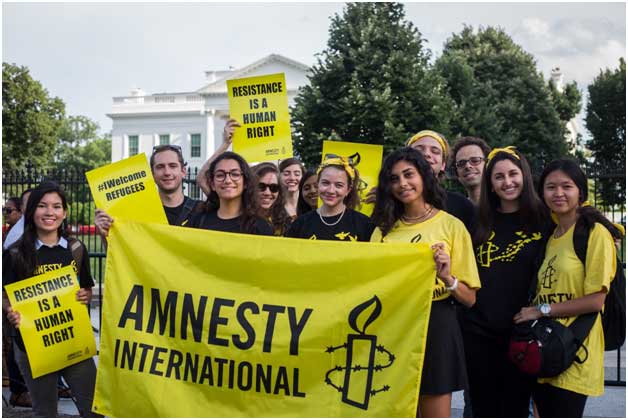
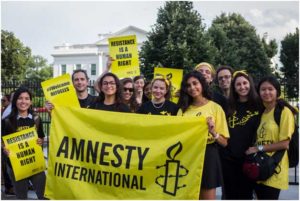
Credit: Amnesty International

UNITED NATIONS, Feb 6 2020 (IPS) – The world’s young activists, numbering over 3.8 billion, are on the war path.

The rising new socialist movements—which originated with “Black Lives Matter” and “Occupy Wall Street” (one protester’s slogan read: “Un-Occupy Palestine”) — were aimed at battling racism, political repression and institutionalized inequalities in capitalist societies.


In its recent cover story, Time magazine dubbed it “Youthquake” – a new phenomenon shaking up the old order, as young activists lead the fight against right-wing authoritarianism, government corruption and rising new hazards of climate change.

Joanne Mariner, Senior Crisis Response Adviser at Amnesty International (AI), told IPS “it is stunning to see how aggressive government efforts to quash protests, including by killing protesters, have not even succeeded in stopping them in the short run”.

In the long run, far too much is at stake, she said, where the coming years are likely to see more protests rather than fewer.

And it is more so in Asia, says AI, in a recently-released report which reviews human rights in 25 Asian and Pacific states and territories during 2019.

“2019 was a year of repression in Asia, but also of resistance”.

“As governments across the continent attempt to uproot fundamental freedoms, people are fighting back – and young people are at the forefront of the struggle,” says Nicholas Bequelin, AI’s Regional Director for East and South-East Asia and the Pacific.

“From students in Hong Kong leading a mass movement against growing Chinese encroachment, to students in India protesting against anti-Muslim policies; from Thailand’s young voters flocking to a new opposition party to Taiwan’s pro LGBTI-equality demonstrators. Online and offline, youth-led popular protests are challenging the established order,” he added.

Also, the rise of a new generation determined to lead the fight against climate emergency has led to a major youth movement worldwide, resulting in protest marches, with thousands of young people demonstrating in the streets of New York and in several world capitals.

According to Time magazine, the world’s under-30 population has been rising since 2012, and today accounts for more than half of the world’s 7.5 billion people.

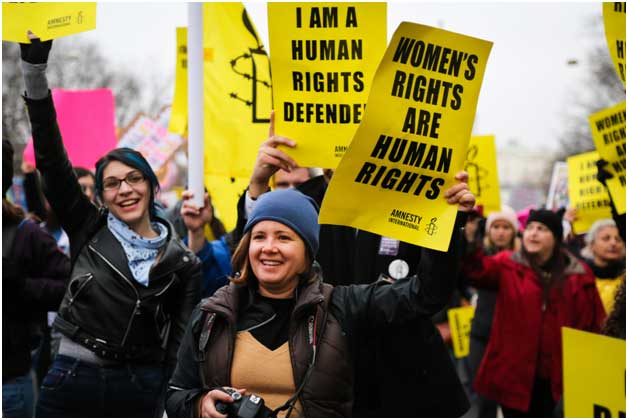
Credit: Amnesty International

Asked for the primary reasons for this surge in young activism, Mariner said this new era of youth activism reflects young people’s understanding that it’s their future at stake.

“If they don’t demand more from governments, including a voice in the decisions that affect their lives, their future is uncertain. It is the young who will inherit this fast-warming planet, and they see all too clearly the consequences of their elders’ inaction and irresponsibility,” she argued.

Meanwhile, the Youth Assembly, described as one of the longest-running and largest global youth summits, is scheduled to take place in New York city February 14-16.

The theme of next week’s 25th session will be: “It’s Time: Youth for Global Impact” aimed at underlining the importance of engaging young people, “especially at a time when the youth are influencing and leading movements that can change the world.”

Meanwhile, the Amnesty International report says China and India, Asia’s two largest powers, set the tone for repression across the region with their overt rejection of human rights.

Beijing’s backing of an Extradition Bill for Hong Kong, giving the local government the power to extradite suspects to the mainland, ignited mass protests in the territory on an unprecedented scale.

Since June, Hong Kongers have regularly taken to the streets to demand accountability in the face of abusive policing tactics that have included the wanton use of tear gas, arbitrary arrests, physical assaults and abuses in detention. This struggle against the established order has been repeated all over the continent, said AI.

In India, the AI report noted, millions decried a new law that discriminates against Muslims in a swell of peaceful demonstrations. In Indonesia, people rallied against parliament’s enactment of several laws that threatened public freedoms.

In Afghanistan, marchers risked their safety to demand an end to the country’s long-running conflict. In Pakistan, the non-violent Pashtun Tahaffuz Movement defied state repression to mobilize against enforced disappearances and extrajudicial executions.

Divya Srinivasan, Equality Now’s South Asia Consultant, told IPS young people across Asia have shown incredible resilience and bravery in their continuing battle against government repression in 2019.

One remarkable feature of these protests is that in many instances, they have been led by women and girls, including those from minority communities, she added.

In India, one of the epicentres of protests against the new anti-Citizenship Amendment Act (CAA) which discriminates against Muslims, has been the neighbourhood of Shaheen Bagh in New Delhi.

Srinivasan said women and children have braved the winter chill and gathered in huge numbers to continuously occupy a highway around the clock in a peaceful protest that has already lasted over a month.

“The voices of these women, particularly Muslim women, have been bravely opposing the Government’s discriminatory laws, and voicing concerns about the oppression of minorities and police brutality.”

“The Shaheen Bagh protest began on December 14th with around a dozen local women and their children and numbers soon swelled into the hundreds”, she said.

And the site has become a creative space for many children and young people, with singing, storytelling, poetry, and talks happening daily, and drawings, graffiti, posters, photographs, and art installations decorating the roadside where people are camping”

In early 2019, Srinivasan said, India saw another historic protest in the form of the Dignity March, which was a 10,000-kilometre long march through 24 states that brought together thousands of survivors of sexual violence, including many young women and girls, who were raising their voices to call for justice, dignity, and an end to victim-blaming and stigma.”

“Young women across Asia are making their voices heard. We cannot ignore them any longer,” declared Srinivasan, a licensed attorney in India with a background in women’s rights, including work on sexual harassment in the workplace and sexual violence against women.

Asked whether there is a role for the United Nations to either support or give its blessings to these youth activists, AI’s Mariner said: “The UN, including at the highest levels, can and should speak out to demand that governments respect the right of peaceful protest”

She pointed out it was heartening to hear UN Secretary General Antonio Guterres condemn the killings of protesters in Iraq, “although he has been far less vocal regarding repression elsewhere”.

Also encouraging, from the perspective of UN action, are the numerous UN special rapporteurs who have called on the authorities in Hong Kong, India, and Indonesia, among others, to protect the rights of those who participate in protests, she declared.

The AI repot said people speaking out against these atrocities were routinely punished, but their standing up made a difference. There were many examples where efforts to achieve human rights progress in Asia paid off.

In Taiwan, same-sex marriage became legal following tireless campaigning by activists. In Sri Lanka, lawyers and activists successfully campaigned against the resumption of executions.

Brunei was forced to backtrack on enforcing laws to make adultery and sex between men punishable by stoning, while former Malaysian prime minister Najib Razak took the stand on corruption charges for the first time.

The Pakistani government pledged to tackle climate change and air pollution, and two women were appointed as judges on the Maldivian Supreme Court for the first time.

And in Hong Kong, the power of protest forced the government to withdraw the Extradition Bill. Yet, with no accountability for months of abuses against demonstrators, the fight goes on.

The writer can be contacted at thalifdeen@aol.com

  Source

Our Message at Davos: Water & Sanitation Are a Critical Line of Defence Against Climate Change

Civil Society, Climate Change, Development & Aid, Environment, Featured, Global, Headlines, Health, Population, Poverty & SDGs, TerraViva United Nations, Water & Sanitation

Opinion

Tim Wainwright is Chief Executive of WaterAid UK.

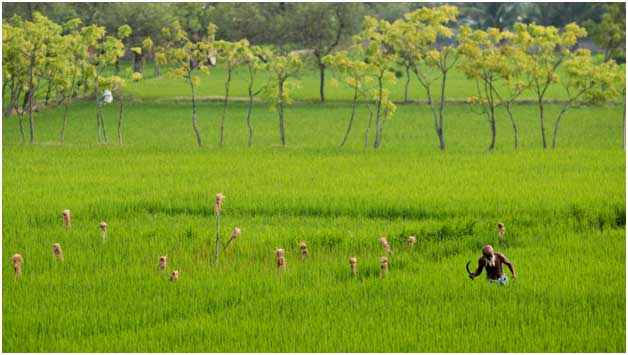
Credit: WaterAid/ DRIK/ Habibul Haque

LONDON, Jan 31 2020 (IPS) – There was only one topic on everyone’s lips at Davos this year – climate change. The headlines focused on the cold war between Greta Thunberg and Donald Trump, but there was much greater consensus among those gathered for the annual meeting of the World Economic Forum (WEF).


The Forum itself updated its manifesto for responsible business – with climate right at its core.

Among those calling for urgent action was WaterAid’s own president, His Royal Highness the Prince of Wales. It’s more than 30 years since he last attended Davos and, as he reminded the audience, 50 years since he made his first speech on the environment.

His message was stark, and his call to action challenging: the climate emergency requires nothing less than an overhaul of the current economy, with a new deal for people and planet.

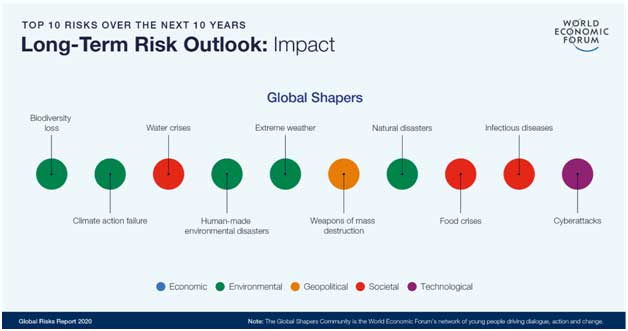
The mood is slowly shifting towards the scale of action needed, given that climate change will affect every part of the economy. This cannot be truer than for water – the WEF has ranked water crises in its top five global risks in terms of likelihood or impact every year since 2012.

Infographic showing the top 10 risks over the next 10 years, according to the World Economic Forum’s 2020 report. Credit: World Economic Forum

The climate crisis is a water crisis, and a threat multiplier

Throughout the forum I had one consistent message: for the world’s poorest, the climate crisis is a water crisis. Yes, it has long-term implications for your businesses and economies. But, first and foremost, it is a question of survival, dignity and justice, with climate change already having devastating impacts on the lives of the people who did least to cause it.

Flooding, storms and droughts, which all impact on how and if people can get clean water, are becoming more frequent and extreme, and these trends are predicted to rise as the climate continues to change. This will undermine the already precarious access to water for billions around the world.

Climate change acts as a huge threat multiplier, worsening existing barriers to these services and rolling back progress already made.

As people living in climate-vulnerable areas experience changing weather patterns, less predictable rainfall, salt water intrusion and increased exposure to disease, water and sanitation become a critical line of defence.

If your water supply comes from a shallow aquifer that fills with sea water, then you can no longer drink it. But if the person designing your water supply has thought of this threat and factored it in, perhaps by drawing on deeper aquifers, then you can carry on living in your neighbourhood.

If your toilets and sanitation systems are constructed to withstand flooding, then your community does not suffer the same level of contamination after flooding as if human waste had been spread by the high waters.

The water and sanitation sector could become a leader in climate adaptation

But we currently lack the level of public and private sector investment and innovation required to deliver the sustainable water services that would benefit poverty reduction, industry and economic development.

This is a huge blind spot for business leaders and politicians, and a missed opportunity for creating a more sustainable future.

Rather than lagging behind, the water and sanitation sector could become a leader in delivering the kind of green infrastructure, services and jobs urgently required to enable adaptation to the worst impacts of climate change.

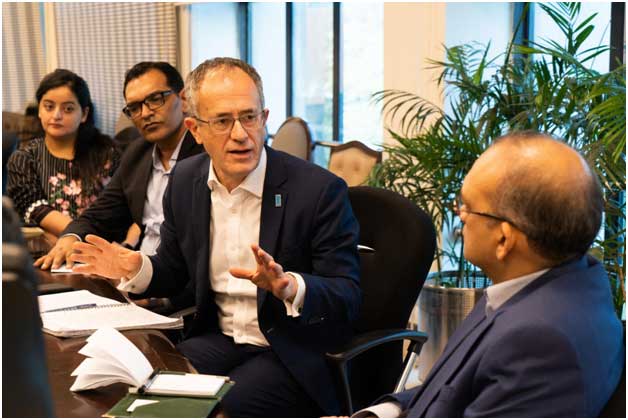
Tim Wainwright, Chief Executive of WaterAid UK, speaking with Hassan Nasir Jamy, Secretary Ministry of Climate Change, at Pakistan’s Ministry of Climate Change in Islamabad, Pakistan. Credit: WaterAid/ Sibtain Haider

Water, sanitation and hygiene are core to a sustainable future

Leaving Davos last year, I was frustrated. I felt that too few understood or discussed the impact climate change would have on the already grave state of the world’s water and sanitation, and the devastating consequences for education, health, productivity and development.

This year, I sensed a greater understanding of the interlinked challenges we face, and with that an air of urgency and proactivity. Businesses are looking for solutions – not just raising concerns.

That is why WaterAid will be one of the organisations working closely with HRH the Prince of Wales as part of his 2020 year of action.

In March, in London, we will bring together the public, private and philanthropic sectors for a high-level summit that will position water, sanitation and hygiene at the forefront of the fight against climate, and work on the solutions that will ensure a sustainable future for all.

And we will continue that work across the WaterAid federation throughout the year, including at the Commonwealth Heads of Government Meeting in Kigali in June, and at the UN Climate Change Conference, COP 26, in Glasgow in November, to help build momentum for decisive action.

In this way we hope WaterAid can play its part in shifting the global trajectory in the coming decade, resulting in a fairer world for the poorest and most marginalised people.

Read our guide Water and resilient business: the critical role of water, sanitation and hygiene in a changing climate to learn more about how businesses can take action.

  Source

2020 Is the Decade of Action & It Has to Be a Sprint

Africa, Armed Conflicts, Climate Change, Conferences, Crime & Justice, Development & Aid, Economy & Trade, Featured, Gender, Global, Headlines, Human Rights, Labour, Peace, Poverty & SDGs, Sustainability, TerraViva United Nations, Trade & Investment

Opinion

Hosted by the governments of Kenya, Denmark and UNFPA, world leaders gather for the 3-day Nairobi Summit on ICPD25 to advance sexual, reproductive health & rights for all. November 12, 2019. Photo Courtesy: Redhouse Public Relations

NAIROBI, Kenya, Dec 31 2019 (IPS) – Happy New Year, Kenya. 2020 marks a decade of action towards the realization of the Sustainable Development Goals by 2030.

Peace and development are inextricably linked, with each making the achievement of the other far more likely. This puts the conflict-prevention and development work of the UN at the heart of the agenda in East Africa, but in a multi-agency and programme environment, making meaningful progress is challenging.


Aware of this, the UN began a process of structural reforms led by the UN Secretary-General António Guterres who made reforms of the United Nations, a priority at the very beginning of his term in January 2017. The aim being to deliver better results through cooperation, collaboration and integration. 2019 was the year that the impact of these reforms became real and nowhere more than in the peace, conflict-prevention and development pillars of the UN’s work.

At the country level, that shift towards a nimble, 21st century UN challenges deeply entrenched practices and operations. In a country team with over 23 individual agencies, funds and programmes, the reform process can be complicated, even messy.

To the credit of the Kenya country team, we overcame the challenges of ceding long-held agency interests for the collective good and achieved some ground-breaking milestones in our partnership with governments, civic organizations and the private sector.

The most outstanding was our venturing out to confront challenges that transcend borders. East Africa faces major threats to peace and development across multiple fronts, and respective UN country teams have, in a remarkable show of teamwork, sought to harmonize their responses to these threats. Internecine border conflicts and the effects of climate change together make a formidable challenge that brought together UN teams from Kenya and Uganda, in a pact that seeks to bring sustainable development to the Karamoja triangle.

This pact follows from another successful regional collaboration project on the Kenya-Ethiopia border where communities accustomed to recurrent hostilities are now reaching out to each other to find solutions to common socio-economic challenges.

We believe that our regional surge towards prevention, peacemaking and diplomacy will have a particular impact on the youth, who suffer an enduring sense of being neglected and ignored. This narrative is a breeding ground for extremism and radicalization, so addressing such concerns was a key point of deliberation during last July’s African Regional High-Level Conference on Counter-Terrorism and the Prevention of Violent Extremism in Nairobi.

The same regional approach was behind the initiative by Kenya, Uganda, Tanzania, Ethiopia and Somalia to sign the Declaration and Action Plan to End Cross-border FGM in April 2019. This was the first time multiple countries had come together to tackle this pernicious cross-border crime.

But there remain many in the region still left behind by development, and we continue to stand up for them through our UN Development Assistance Framework 2018-2022. The framework’s gender equality and rights focus is unmistakable, because in too many communities, the simple fact of being born female shatters one’s chances of living in full human dignity.

Our focus on giving a leg-up to those left farthest behind has attracted a positive response from our partners in national and county governments. By staying in lockstep with national priorities on issues such as health, agriculture and housing, the common thread of messages from our partners is that we are staying effective and responsive to the ambitions of Kenyans.

As 2020 beckons, the decade of action starts and it has to be a sprint to deliver on the SDGs, the UN team in Kenya is rolling up its sleeves with greater urgency, ambition and innovation. We will enhance regional cooperation and private-public partnerships as we work with the Government towards lifting millions of the citizens of this region out of poverty and upholding their human rights.

We are re-imagining ways of delivering development in ways such as the co-creation of an SDG innovation lab between the Government of Kenya, the Centre for Effective Global Action at the University of California in Berkeley, the Rockefeller Foundation, and the UN. The SDG Lab will kick off with support for the delivery of Kenya’s Big Four agenda by harnessing, big data, technology and innovation to achieve scale and impact.

As a UN country team, we got off the blocks in 2019 in pursuit of UN Deputy Secretary General Amina Mohammed’s challenge to “flip the orthodoxy” for the repositioning of the UN. We have dared to go beyond the typical and will do whatever it takes to respond effectively to the challenges faced by Kenya’s people, now and in the future.

Siddharth Chatterjee is the United Nations Resident Coordinator in Kenya.


Carbon Markets Can Provide a Crucial Part of the Solution to the Climate Crisis

Climate Change, Conferences, Development & Aid, Economy & Trade, Energy, Environment, Global, Green Economy, Headlines, Labour, TerraViva United Nations

Opinion

Fenella Aouane, Principal Green Finance Specialist, Investment and Policy Solutions Division, Global Green Growth Institute (GGGI)

SEOUL, South Korea, Dec 18 2019 (IPS) – One of the main discussions at the COP25 climate change talks was Article 6, which is designed to provide financial support to emerging economies and developing countries to help them reduce emissions by using global carbon markets. Carbon pricing is an essential piece of the puzzle to curb emissions. Without a value on carbon, there is less incentive to make positive changes, especially in the private sector. The most efficient way to carry this forward is to allow trading of carbon both nationally and internationally, which will ensure the lowest cost of mitigation for participants globally.


Fenella Aouane

The COP25 negotiations in Madrid have largely been dominated by Article 6 negotiations on potential carbon markets as they are perceived by many, including businesses, as a way to generate financial flows to emerging economies and developing countries, and to reduce emissions at the lowest possible cost. Thus, it’s crucial to adopt decisions on Article 6 as rules need to be set to show how such markets will operate – this is the guidance the Article 6 rulebook will create. The sooner the better, overall mitigation in global emissions (OMGE) will be possible under the Paris Agreement through international carbon trading with aspects such as corresponding adjustments, which were lacking under the Kyoto Protocol. Carbon markets are a way to not only manage mitigation emissions cuts, but help to find the lowest cost and therefore a strong motivator for implementing international efforts.

The Global Green Growth Institute (GGGI), a Seoul-based treaty-based international, inter-governmental organization that supports emerging economies and developing country governments transition to a model of economic growth that is environmentally sustainable and socially inclusive, is already involved in several programs, funded by developed country governments such as Norway and Sweden. GGGI is working with the Norwegian Ministry of Climate and Environment on wider policy approaches, which have been made possible under Article 6 of the Paris Agreement through cooperative approaches. This program looks at helping its member and partner governments to identify areas above their Nationally Determined Contribution (NDC) targets, where emissions reductions directly resulting from policy interventions are quantified and transacted. This creates a flow of carbon finance, in exchange for the transfer of the resultant internationally transferred mitigation outcomes (ITMOs). These programs will not only create ITMO transactions but also set up the lasting infrastructure needed for countries to be able to govern and properly account for future transfers, ensuring environmental integrity and transparency.

GGGI has a key role to play. A further good example is GGGI’s recent collaboration with the Swedish Energy Agency (SEA). The two organizations will work together to catalyze international trading of mitigation outcomes in support of the increased climate ambitions needed under the Paris Agreement. Through a joint cooperation, SEA and GGGI will identify and structure mitigation activities and support the establishment of governance frameworks within host countries as required under the developing rulebook of Article 6 of the Paris Agreement, with the goal of completing ITMO transactions.

Although specific rules related to cooperative approaches under Article 6 have yet to be codified, Article 6 aims at supporting the authorization of international emissions trades while avoiding double counting and ensuring environmental integrity, permitting the movement of the related emission reductions between registries, and better linking national emission trading schemes, project-level transactions, and cooperative approaches.

What next? Carbon markets can and should be seen as an opportunity to lower the cost of cutting greenhouse gas emissions and enabling countries to commit to more ambitious targets. At next year’s Glasgow climate change conference, countries need to come forward with more ambitious Nationally Determined Contributions. GGGI’s work on pioneering designs for international carbon transactions over 2020 will help shape how the carbon markets can contribute to this increased ambition. It has also made the 2020 NDCs a priority in support of its Members and will ensure that there is strong support to deliver this next year. We need to come to Glasgow with concrete plans and steps. However, tackling climate change cannot be solved by one government alone. There needs to be high-level political commitment and collective action – these are a must.


Social Summit Demands Stronger Commitments in Climate Talks

Civil Society, Climate Change, Conferences, Development & Aid, Economy & Trade, Editors’ Choice, Environment, Featured, Global, Global Governance, Globalisation, Green Economy, Headlines, Human Rights, Indigenous Rights, IPS UN: Inside the Glasshouse, Poverty & SDGs, Regional Categories

Climate Change

One of the continuous protests staged at the Social Summit for Climate Action, meeting Dec. 7-13 parallel to the official 25th Conference of the Parties (COP25) on climate change. The Summit, hosted by the Complutense University of Madrid, is tackling issues such as the controversial trading of carbon credits, human rights in the climate struggle and opposition to the growing production of hydrocarbons. Credit: Emilio Godoy/IPS

One of the continuous protests staged at the Social Summit for Climate Action, meeting Dec. 7-13 parallel to the official 25th Conference of the Parties (COP25) on climate change. The Summit, hosted by the Complutense University of Madrid, is tackling issues such as the controversial trading of carbon credits, human rights in the climate struggle and opposition to the growing production of hydrocarbons. Credit: Emilio Godoy/IPS

MADRID, Dec 9 2019 (IPS) – As the COP25 deliberations enter the decisive final week, representatives of environmental and social organisations gathered in a parallel summit are pressing the governments to adopt stronger commitments in the face of a worsening climate emergency.


In the debates in the week-long Social Summit for Climate Action, which began Dec. 7 parallel to the Dec. 2-13 United Nations 25th Conference of the Parties (COP25) on climate change taking place in Madrid, skepticism has been expressed with respect to the results to come out of the official meeting.

“Nothing good is going to come out of it for Central America, only proposals that are going to make it more vulnerable. The damage is going to become more serious,” Carolina Amaya, representative of the Salvadoran Ecological Unit, told IPS, pointing out that the region is one of the most exposed to the climate crisis, facing persistent droughts, intense storms, rising sea levels and climate migrants.

The social summit is taking place at the public Complutense University, in the west of the Spanish capital, about 15 km from the IFEMA fairgrounds which are hosting COP25 after Chile pulled out on Oct. 30 from holding the event due to massive anti-government protests and social unrest.

The alternative activities, which also end on Friday Dec. 13, include a varied menu of issues, such as free trade and its socioenvironmental impacts, oil drilling in indigenous territories, the protection of forests, and opposition to trading reductions in greenhouse gas (GHG) emissions, which cause global warming.

They are also discussing the monetisation of environmental services, increased funding for the most vulnerable nations, climate justice and attacks against land rights activists.

The Madrid Social Summit is also holding sessions in Santiago de Chile, under the same slogan, “Beyond COP25: People for Climate”, although there are fewer representatives of organised civil society than at previous COPs because of the last minute change of venue.

Civil society groups are also organising activities at their green pavilion within the official COP25 compound of the United Nations Framework Convention on Climate Change (UNFCCC), where their participation is more formal and ceremonious.

The demands of civil society gained visibility thanks to the mass demonstration held in Madrid on Friday Dec. 6, with the participation of Swedish activist Greta Thunberg, the reluctant star of the official conference and social summit.

COP25 is the third consecutive COP held in Europe, this time under the motto “Time to act”.

The deliberations, which enter the crucial phase of the adoption of agreements Tuesday Dec. 10, are focusing on financing national climate policies, rules for emission reduction markets, and the preparation of the update of emissions reductions and funding of the Warsaw International Mechanism for Loss and Damage, designed to assist regions particularly affected by climate change.

COP25 is the climate summit that directly precedes the 2020 entrance into effect of the historic Paris Agreement on climate change, adopted in the French capital in 2015, which left key areas to be hashed out at the current conference, such as the controversial emissions market.

In their statement to the COP, the organisations criticise the economic model based on the extraction of natural resources and mass consumption, blaming it for the climate crisis, and complaining about the lack of results in the UNFCCC meetings.

“The scientific diagnosis is clear regarding the seriousness and urgency of the moment. Economic growth happens at the expense of the most vulnerable people,” says the statement, which defends climate justice “as the backbone of the social fights of our time” and “the broadest umbrella that exists to protect all the diversity of struggles for another possible world.”

At the social summit, the first “Latin American Climate Manifesto was presented on Monday Dec. 9, which lashes out at carbon credit trading, the role of corporations in climate change and the increase in production of hydrocarbons, while expressing support for the growth of agroecology, the defence of human rights and the demand for climate justice.

In addition, indigenous peoples are holding their own meeting, the “indigenous Minga“, with the message “Traditional knowledge at the service of humanity in the face of climate change.” They are demanding respect for their rights, participation in the negotiations and recognition of their role as guardians of ecosystems such as forests.

“We are here to raise our voices and offer our contribution to fight” against the climate emergency, Jozileia Kaingang, a chief of the Kaingang people and a representative of the non-governmental Articulation of the Indigenous Peoples of Brazil, told IPS.

Brazilian indigenous groups are in conflict with the government of far-right President Jair Bolsonaro because of its attempts to undermine their rights and encourage the commercial exploitation of their territories. In fact, the Brazilian government delegation does not include a single indigenous member – unprecedented in the recent history of the COPs.

Faced with this dispute and the critical situation of the Amazon jungle, Brazil’s indigenous people have sent representatives to Madrid to speak out and seek solidarity.

The murder of two leaders of the Guajajara people in northeastern Brazil on Saturday Dec. 7 shook the indigenous delegation. Two murders had already occurred in that native community in the last two months.

In 2017, the States Parties to the UNFCCC adopted at COP23 the Local Communities and Indigenous Peoples Platform for the exchange of experiences and best practices, thereby ensuring the participation of these groups in the negotiations of the convention.

The Platform’s facilitative working group, composed of delegates from seven States Parties and seven indigenous peoples, is currently developing its plan for the period 2020-2021.

Martín Vilela, a representative of the Bolivian Platform for Climate Change umbrella group of local organisations, questioned the effectiveness of the climate summits.

“The agreements are only paper. Emissions continue to rise and countries’ voluntary targets are insufficient. The countries have to be more ambitious if they really want to avoid major disasters,” he told IPS.

Social organizations fear that the Paris Agreement, when it replaces the Kyoto Protocol next year, will be stillborn, because countries are failing to keep their promises, even though scientists are warning that the goal of limiting global warming to 1.5 degrees Celsius is insufficient.

The Agreement sets mandatory emission reduction targets for industrialised countries and voluntary targets for developing countries in the South.

“The countries need to know that we’re monitoring them. We, the organisations, must prepare ourselves to demand better action,” said Amaya from El Salvador.

For her part, Brazil’s Kaingang argued that the climate struggle would only be effective if it includes indigenous peoples.

COP26 will be hosted by Glasgow, Scotland in November 2020, after pre-conference meetings in Germany and Italy.

This article was supported by the COP25 Latin American Journalistic Coverage Programme.