Turning Indigenous Territories From ‘Sacrifice’ Zones to Thriving Forest Ecosystems

Biodiversity, Climate Change Finance, Climate Change Justice, Combating Desertification and Drought, Conferences, COP30, Economy & Trade, Editors’ Choice, Environment, Featured, Global, Headlines, Human Rights, Latin America & the Caribbean, Sustainable Development Goals, TerraViva United Nations, Trade & Investment


A new report, ‘Indigenous Territories and Local Communities on the Frontlines,’ calls for secure land rights, free and informed consent, direct financing to communities, protection of life, and recognition of traditional knowledge.

Brazil's Minister of Indigenous Peoples Sonia Guajajara attends a meeting during the UN Climate Change Conference COP 30. Credit: Hermes Caruzo/COP30

Brazil’s Minister of Indigenous Peoples, Sonia Guajajara, attends a meeting during the UN Climate Change Conference COP 30. Credit: Hermes Caruzo/COP30

SRINAGAR, India & BELÉM, Brazil, Nov 8 2025 (IPS) – A report by the Global Alliance of Territorial Communities (GATC) and Earth Insight paints a stark picture of how extractive industries, deforestation, and climate change are converging to endanger the world’s last intact tropical forests and the Indigenous Peoples who protect them.


The report, ‘Indigenous Territories and Local Communities on the Frontlines,’ combines geospatial analysis and community data to show that nearly one billion hectares of forests are under Indigenous stewardship, yet face growing industrial threats that could upend global climate and biodiversity goals.

Despite representing less than five percent of the world’s population, Indigenous Peoples and local communities (IPs and LCs) safeguard more than half of all remaining intact forests and 43 percent of global biodiversity hotspots.

These territories store vast amounts of carbon, regulate ecosystems, and preserve cultures and languages that have sustained humanity’s relationship with nature for millennia. But the report warns that governments and corporations are undermining this stewardship through unrestrained extraction of resources in the name of economic growth or even “green transition.”

One of the main report authors, Florencia Librizzi, who is also a Deputy Director at Earth Insight, told IPS that the perspectives and stories from each region are grounded in the lived realities of Indigenous Peoples and local communities and come directly from the organizations from each of the regions that the report focuses on in Mesoamerica, Amazonia, the Congo Basin, and Indonesia.

Across four critical regions—the Amazon, Congo Basin, Indonesia, and Mesoamerica—extractive industries overlap with millions of hectares of ancestral land. In the Amazon, oil and gas blocks cover 31 million hectares of Indigenous territories, while mining concessions sprawl across another 9.8 million.

In the Congo Basin, 38 percent of community forests are under oil and gas threat, endangering peatlands that store immense quantities of carbon. Indonesia’s Indigenous territories face 18 percent overlap with timber concessions, while in Mesoamerica, 19 million hectares—17 percent of Indigenous land—are claimed for mining, alongside rampant narcotrafficking and colonization.

These intrusions have turned Indigenous territories into sacrifice zones. From nickel extraction in Indonesia to oil drilling in Ecuador and illegal logging in the Democratic Republic of Congo, corporate incursions threaten lives, livelihoods, and ecosystems. Between 2012 and 2024, 1,692 environmental defenders were killed or disappeared across GATC countries, with 208 deaths linked to extractive industries and 131 to logging. The report calls this violence “the paradox of protection”—the act of defending nature now puts those defenders at deadly risk.

Yet the report also documents extraordinary resilience. In Guatemala’s Maya Biosphere Reserve, Indigenous forest communities have achieved near-zero deforestation—only 1.5 percent forest loss between 2014 and 2024, compared to 11 percent in adjacent areas. In Colombia, Indigenous Territorial Entities maintain over 99 percent of their forests intact.

The O’Hongana Manyawa of Indonesia continue to defend their lands against nickel mining, while the Guna people of Panama manage autonomous governance systems that integrate culture, tourism, and ecology.

In the Congo, the 2022 “Pygmy Law” has begun recognizing community rights to forest governance, a historic step toward justice.

The report’s findings were released ahead of the 30th UN Climate Conference (COP30), emphasizing the urgency of aligning international climate and biodiversity frameworks with Indigenous rights.

The 2025 Brazzaville Declaration, adopted at the First Global Congress of Indigenous Peoples and Local Communities from the Forest Basins, provides a roadmap for such alignment.

Signed by leaders from 24 countries representing 35 million people, it calls for five key commitments: secure land rights, free and informed consent, direct financing to communities, protection of life, and recognition of traditional knowledge.

These “Five Demands” are the cornerstone of what the GATC calls a shift “from extraction to regeneration.”

They demand an end to the violence and criminalization of Indigenous leaders and insist that global climate finance reach local hands.

The report notes that, despite the 2021 COP26 pledge of 1.7 billion dollars for forest protection, only 7.6 percent of that money reached Indigenous communities directly.

“Without financing that strengthens territorial governance, all global commitments will remain symbolic,” said the GATC in a joint statement.

Reacting to the announcement of the The Tropical Forest Forever Facility (TFFF) announced on the first day of the COP Leaders’ Summit and touted as a “new and innovative financing mechanism” that would see forest countries paid every single year in perpetuity for keeping forests standing, Juan Carlos Jintiach, Executive Secretary of the Global Alliance of Territorial Communities (GATC) said, “Even if the TFFF does not reach all its fundraising goals, the message it conveys is already powerful: climate and forest finance cannot happen without us Indigenous Peoples and local leadership at its core.

“This COP offers a crucial opportunity to amplify that message, especially as it takes place in the heart of the Amazon. We hope the focus remains on the communities who live there, those of us who have protected the forests for generations. What we need most from this COP is political will to guarantee our rights, to be recognized as partners rather than beneficiaries, to ensure transparency and justice in climate finance, and to channel resources directly to those defending the land, despite growing risks and violence.”

Deforestation in Acre State, Brazil. Credit: Victor Moriyama / Climate Visuals

Deforestation in Acre State, Brazil. Credit: Victor Moriyama / Climate Visuals

Jintiach, who is also the report’s author, told IPS  the Global Alliance has proposed establishing clear mechanisms to ensure that climate finance reaches Indigenous Peoples’ and local communities’ initiatives directly, not through layers of external actors.

“That’s why we have established our Shandia Platform, a global Indigenous-led mechanism designed to channel direct, predictable, and effective climate finance to our territories. Through the Shandia Funds Network, we ensure that funding is managed according to our priorities, governance systems, and traditional knowledge. The platform also includes a transparent system to track and monitor funding flows, with a specific indicator for direct finance to Indigenous Peoples and local communities,” he said.

The report also warns that global conservation goals such as the “30×30” biodiversity target—protecting 30 percent of Earth’s land and sea by 2030—cannot succeed without Indigenous participation. Policies under the Kunming-Montreal Global Biodiversity Framework and the Paris Agreement must, it says, embed Indigenous governance and knowledge at their core. Otherwise, climate strategies risk reinforcing historical injustices by excluding those who have sustained these ecosystems for centuries.

Jintiach said that based on his experience  at GATC, Indigenous Peoples’ and local communities’-led conservation models are not only vital but also deeply effective.

“In our territories, it is our peoples and communities who are conserving both nature and culture, protecting the forests, waters, and biodiversity that sustain all of us,” he said.

He added, “Multiple studies confirm what we already know from experience: Indigenous and local community lands have lower rates of deforestation and higher biodiversity than those managed under state or private models. Our success is rooted in ancestral knowledge, collective governance, and a deep spiritual connection to the land, principles that ensure true, lasting conservation.”

According to Jintiach, the GATC 5 demands and the Brazzaville Declaration are critical global reference points and we are encouraged by the level of interest and engagement displayed by political leaders in the lead-up to COP 30.

Map highlighting extractive threats faced by Indigenous Peoples and Local Communities across the Amazon basin. Credit: GATC

Map highlighting extractive threats faced by Indigenous Peoples and Local Communities across the Amazon basin. Credit: GATC

“We are hopeful that these principles will be uplifted and championed at COP 30, the UN Permanent Forum on Indigenous Issues, CBD COP 17 and on the long road ahead,” he said.

When asked about the rising violence against environmental defenders, Jintiach said that the Brazzaville Declaration calls for a global convention to protect Environmental Human Rights Defenders, including Indigenous Peoples and local community leaders.

According to him, the governments must urgently tackle the corruption and impunity fueling threats and violence while supporting collective protection and preventing rollback of rights.

“This also means upholding and strengthening the Escazú Agreement and UNDRIP, and ensuring long-term protection through Indigenous Peoples and local communities-led governance, secure land tenure, and accountability for human rights violations.”

Earth Insight’s Executive Director Tyson Miller described the collaboration as a call to action rather than another policy document. “Without urgent recognition of territorial rights, respect for consent, and protection of ecosystems, global climate and biodiversity goals cannot be achieved,” he said. “This report is both a warning and an invitation—to act with courage and stand in solidarity.”

The case studies highlight how Indigenous governance models already offer proven solutions to the climate crisis. In the Brazilian Amazon, Indigenous organizations have proposed a self-determined Nationally Determined Contribution (NDC) to reduce emissions through territorial protection. Their slogan, “Demarcation is Mitigation,” underlines how securing Indigenous land rights directly supports the Paris Agreement’s goals. Similarly, in Central Africa, communities have pioneered decolonized conservation approaches that integrate Indigenous leadership into national park management, reversing exclusionary models imposed since colonial times.

In Mesoamerica, the Muskitia region—known as “Little Amazon”—illustrates both crisis and hope. It faces deforestation from drug trafficking and illegal logging, yet community-based reforestation and forest monitoring are restoring ecosystems and livelihoods. Women and youth play leading roles in governance, showing how inclusive leadership strengthens resilience.

The report’s conclusion is unequivocal: where Indigenous rights are recognized, ecosystems thrive; where they are ignored, destruction follows. It argues that the fight for land is inseparable from the fight against climate change. Indigenous territories are not just sources of raw materials; they are “living systems of governance, culture, and biodiversity” essential to humanity’s survival.

The Brazzaville Declaration urges governments to ratify international human rights conventions, end deforestation by 2030, and integrate Indigenous territories into national biodiversity and climate plans. It also calls for a global convention to protect environmental human rights defenders, whose safety is central to planetary stability.

For GATC’s leaders, the message is deeply personal. “Our traditional knowledge is the language of Mother Earth,” said Joseph Itongwa, GATC Co-Chair from the Congo Basin. “We cannot protect the planet if our territories, our identity, and our livelihoods remain under threat.”

This feature is published with the support of Open Society Foundations.

IPS UN Bureau Report

IPS UN Bureau, IPS UN Bureau Report,
  Source

Rajagopal PV’s Blueprint for Another World: Peace

Active Citizens, Africa, Asia-Pacific, Civil Society, Conferences, Editors’ Choice, Featured, Global, Headlines, Human Rights, Humanitarian Emergencies, Peace, Population, Sustainable Development Goals, TerraViva United Nations

Peace

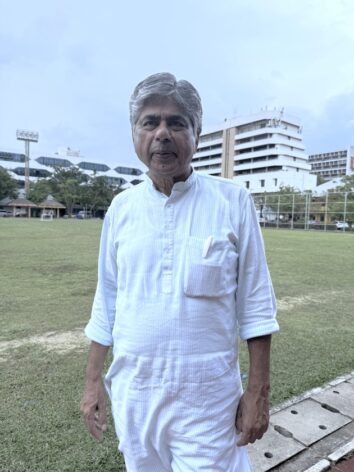
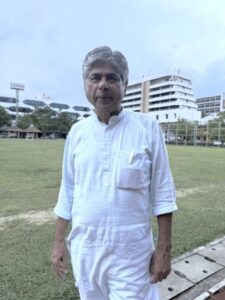
Rajagopal P.V. at the International Civil Society Week (ICSW2025) in Bangkok. Credit: Zofeen Ebrahim/IPS

Rajagopal P.V. at the International Civil Society Week (ICSW2025) in Bangkok. Credit: Zofeen Ebrahim/IPS

BANGKOK, Nov 4 2025 (IPS) – “If nations can have defense ministries, why not peace ministries?” asks Rajagopal PV, the soft-spoken yet formidable founder of Ekta Parishad. “We are told to see issues through a gender lens—why not a peace lens? Why can’t we imagine a business model rooted in non-violence or an education system that teaches peace?”


Founded in 1989, Ekta Parishad—literally Forum for Unity—is a vast people’s movement of more than 250,000 landless poor, now recognized as one of India’s largest and most disciplined grassroots forces for justice.

To Rajagopal, these aren’t utopian dreams—they’re blueprints for a possible world.

Over the decades, Ekta Parishad has secured land rights for nearly half a million families, trained over 10,000 grassroots leaders, protected forests and water bodies, and helped shape key land reform laws and policies in India.

All this has been achieved not through anger, but through disciplined, nonviolent marches that stretch across hundreds of kilometers. Along the way, many leaders have walked beside him—among them, the current Prime Minister of Armenia.

In an age marked by deep disorder—where wealth concentrates in few hands, poverty spreads, and the planet itself trembles under human greed—the 77-year-old Gandhian remains unshaken in his belief that peace alone can redeem humanity.

“We must rescue peace from the clutches of poverty and all its evils,” he told IPS on the sidelines of the International Civil Society Week, standing on the football ground of Bangkok’s Thammasat University.

“And it can be done,” he insists—and his life is proof. In 1969, the centenary year of Mahatma Gandhi’s birth, the Government of India launched a unique exhibition on wheels, a ten-coach train carrying Gandhi’s life and message across the nation. Rajagopal was part of the team that curated and travelled with it.

“For an entire year, we journeyed from state to state. Thousands of schoolchildren would gather at railway platforms, their faces lit with curiosity, waiting to meet Gandhi through our displays,” he recalls.

Yet somewhere along those long railway tracks, Rajagopal began to feel that displaying Gandhi’s ideals wasn’t enough. “The exhibition was beautiful,” he says, “but what was the use of preaching non-violence if we couldn’t live it, breathe it, and bring it to life?”

That realization led him to one of the most daring experiments in peacebuilding India had ever seen—negotiating with the feared bandits of the Chambal valley. “It was 1970,” he recalls. “We moved cautiously, first meeting villagers on the periphery to build trust. Once we had their confidence, we sent word to the dacoits: we wanted to talk. With the government’s consent, we ventured into what we called a ‘peace zone’—often by night, walking for hours through deep ravines—to meet men the world only knew as outlaws.”

The dialogues continued for four years. Eventually, as many as 570 bandits laid down their arms before a photograph of Mahatma Gandhi—a sight India had never seen before. The government, in turn, promised they would not face the death penalty and would receive land and livestock to rebuild their lives. Rehabilitation took another four painstaking years, but it was a victory of conscience over fear.

“They didn’t just surrender their weapons—they surrendered their anger,” Rajagopal says quietly. “There was real repentance, and that takes time—but it lasts.” His commitment came at a cost. At his ashram—a spiritual retreat he had founded—he was threatened, beaten, and ordered to abandon his peace efforts. He talked them through to accepting his presence.

“Today that same region is heaven,” he smiles, his eyes crinkling with memory. “Fifty years ago, people trembled at sunset—terrified of the bandits. Today, you can travel at 2:00 pm in the night, where fear ruled once.”

The mass surrender may have looked like a triumph for the state, but Rajagopal urges people to look deeper. “It’s the invisible violence—poverty, injustice, and oppression—that breeds the visible one: dacoities, kidnappings, and killings,” he explains.

Though Rajagopal and his companions had ended one form of violence, the deeper, quieter kind—born of poverty and neglect—still festered. Until that was confronted, he knew, peace would remain incomplete.

Years of working alongside the poor had taught him one truth: non-violence needs structure. If India’s Indigenous and landless communities were to be heard, they had to be organized.

“We began training young people from dozens of villages,” he says. “They went door to door, teaching others not only about their rights—especially the right to land—but also how to claim them peacefully.”

With that foundation, a five-year plan took shape. Each village home chose one member to take part. Every day, the family set aside one rupee and a fistful of rice—a humble but powerful act of commitment.

They even created a “playbook” of possible scenarios—how to stay calm under provocation, how to respond to setbacks, and how to practice non-violence in thought and action. “In one of our marches, a truck ran over three of our people, killing them,” he recalls softly. “There was grief, but no retaliation. Instead, they sat in silence and meditated. That was our true test.”

In 2006, 500 marchers walked 350 kilometers from Gwalior to Delhi, demanding land rights. Nothing changed. But they didn’t stop.

A year later, in 2007, 25,000 people—many barefoot—set out again on the national highway. “Imagine that sight,” Rajagopal says, eyes gleaming. “Twenty-five thousand people walking for a month, powered only by hope.”

The march displayed not just India’s poverty but also its power—the quiet power of the poor united. It was among the most disciplined mobilizations the country had ever seen. “There was one leader for every hundred people,” Rajagopal explains. “We walked by day and slept on the highway by night. Those in charge of cooking went ahead each morning so that by sundown, a single meal was ready for all.”

In a later march, Rajagopal recalls, the government sent a large police force. “I was worried,” he admits. “I called the authorities to tell them this was a non-violent protest—we didn’t need protection. The officer replied, ‘They’re not there for you; they’re here to learn how disciplined movements should be.’”

Along the route, villages greeted them like family—offering bags of rice, water, and prayers. “There was never a shortage of food,” Rajagopal smiles. “When your cause is just, the world feeds you.”

By the time the march reached Delhi, the government announced a new land reform policy and housing rights and agreed to enact the Forest Rights Act.

The government dispersed the marchers with hollow promises and the reforms never happened.

So Ekta Parishad planned an even larger march—a Jan Satyagraha of 100,000 people in 2012.

“Halfway through, the government came running.”

Rajagopal’s face lights up as he recalls the event. “They agreed to our ten-point agenda and signed it in front of the people. That moment was historic—governments almost never do that; the Indian government certainly never does it!”

The agreement included land and housing rights, a national task force on land reform, the prime minister’s oversight of policy implementation, and fast-track courts to resolve land disputes.

Today, because of these long, barefoot marches, more than three million Indigenous people in India now have legal rights to land and housing. The struggle also gave birth to India’s Land Acquisition, Rehabilitation, and Resettlement Act—a landmark in people’s movements.

“The Act also safeguards fertile land,” Rajagopal explains. “Before the government can acquire any area, a social impact study must be done. And if farmland is taken, the owners receive four times its value in compensation.”

“The purpose of our marches,” Rajagopal says, “is not to fight the government, but to win it over. The government is not the enemy; injustice is. We must stand on the same side of the problem.”

For Rajagopal, peace is not a sentiment but a system—something that must be built, brick by brick, through dialogue and respect. “Non-violence,” he says, “isn’t passive. It’s active patience—listening, accepting differences, never policing thought.” The same principle, he believes, can heal families, neighborhoods, nations—and the world itself.

His next mission is to create a Youth Peace Force, ready to enter conflict zones and resolve disputes through dialogue. He has also launched the Peace Builders Forum, or Peace7, uniting seven countries—South Africa, Japan, Costa Rica, Switzerland, Canada, India, and Armenia. His dream is to expand it to Peace20, where, as he smiles, “wealth will never be a criterion for membership.”

IPS UN Bureau Report


As Civil Society Is Silenced, Corruption and Inequality Rise

Active Citizens, Asia-Pacific, Civil Society, Climate Change, Climate Change Justice, Conferences, COP30, Democracy, Editors’ Choice, Environment, Featured, Global, Headlines, Human Rights, Press Freedom, Sustainable Development Goals, TerraViva United Nations

Civil Society

Mandeep Tiwana, Secretary General, CIVICUS Global Alliance. Credit: CIVICUS

Mandeep Tiwana, Secretary General, CIVICUS Global Alliance. Credit: CIVICUS

BULAWAYO & BANGKOK, Oct 31 2025 (IPS) – From the streets of Bangkok to power corridors in Washington, the civil society space for dissent is fast shrinking. Authoritarian regimes are silencing opposition but indirectly fueling corruption and widening inequality, according to a leading global civil society alliance.


The warning is from Mandeep Tiwana, Secretary General of CIVICUS Global Alliance, who points to a troubling trend: civil society is increasingly considered a threat to those in power.

That is a sobering assessment from CIVICUS, which reports that a wave of repression by authoritarian regimes is directly fueling corruption and exploding inequality.

“The quality of democracy on hand around the world is very poor at the moment,” Tiwana tells IPS in an exclusive interview. “That is why civil society organizations are seen as a threat by authoritative leaders and the negative impact of attacking civil society means there is a rise in corruption, there is less inclusion, there is less transparency in public life and more inequality in society.”

His comments come ahead of the 16th International Civil Society Week (ICSW) from 1–5 November 2025 convened by CIVICUS and the Asia Democracy Network. The ICSW will bring together more than 1,300 delegates comprising activists, civil society groups, academics, and human rights advocates to empower citizen action and build powerful alliances. ICSW pays tribute to activists, movements, and civil society achieving significant progress, defending civic freedoms, and showing remarkable resilience despite the many challenges.

The ICSW takes place against a bleak backdrop. According to the CIVICUS Monitor, a research partnership between CIVICUS and over 20 organizations tracking civic freedoms, civil society is under attack in 116 of 198 countries and territories. The fundamental freedoms of expression, association, and peaceful assembly face significant deterrents worldwide.

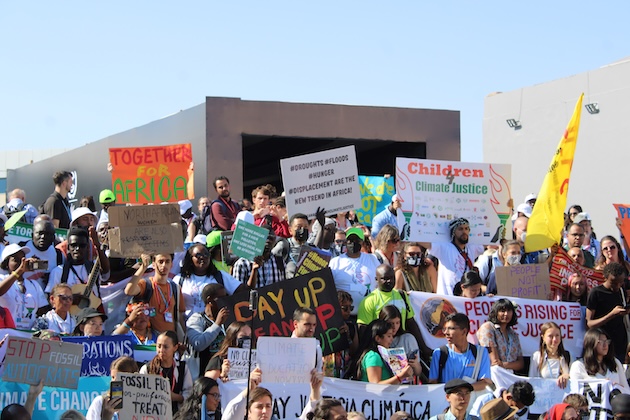
Protests at COP27 in Egypt. Mandeep Tiwana, Secretary General of CIVICUS Global Alliance, is hopeful that COP30, in Belém, Brazil, will be more inclusive. Credit: Busani Bafana/IPS

Protests at COP27 in Egypt. Mandeep Tiwana, Secretary General of CIVICUS Global Alliance, is hopeful that COP30, in Belém, Brazil, will be more inclusive. Credit: Busani Bafana/IPS

“It is becoming increasingly dangerous to be a civil society activist and to be the leader of a civil society organization,” Tiwana tells IPS. “Many organizations have been defunded because governments don’t like what they do to ensure transparency or because they speak out against some very powerful people. It is a challenging environment for civil society.”

Research by CIVICUS categorizes civic freedom in five dimensions: open, narrowed, obstructed, repressed, and closed. Alarmingly, over 70 percent of the world’s population now lives in countries rated in the two worst categories: ‘repressed’ and ‘closed.’

“This marks a regression in democratic values, rights, and accountability,” Tiwana noted, adding that even in the remaining 30% of nations, restrictions on civic freedoms remain.

Repression Tools in Tow

The ICSW, being held under the theme ‘Celebrating citizen action: reimagining democracy, rights, and inclusion for today’s world,’ convenes against this backdrop.

Multifaceted tools are used by governments to stifle dissent. Governments are introducing laws to block civil society organizations from receiving international funding while simultaneously restricting domestic resources. Besides, laws have also been enacted in some countries to restrict the independence of civil society organizations that scrutinize governments and promote transparency.

For civil society activists, the consequences are sobering.

“If you speak truth to power, uncover high-level corruption and try to seek transformative change in society, whether it’s on gender equality or inclusion of minorities you  can be subjected to severe forms of persecution,” Tiwana explained. “This includes stigmatization, intimidation,  imprisonment for long periods, physical attacks, and death.”

Multilateralism Tumbles, Unilateralism Rises

Tiwana said there is an increasing breakdown in multilateralism and respect for international laws from which civil society draws its rights.

This erosion of civic space is reflected in the breakdown of the international system. Tiwana identified a surge in unilateralism and a disregard for the international laws that have historically safeguarded the rights of civil society.

“If you look at what’s happening around the world, whether with regard to conflicts in Palestine, in the Congo, in Sudan, in Myanmar, in Ukraine, in Cameroon, and elsewhere, governments are not respecting international norms,” he observed, remarking that authoritarian regimes were abusing the sovereignty of other countries, ignoring the Geneva conventions, and legalizing attacks on civilians, torturing and persecuting civilians.

This collapse of multilateralism has enabled a form of transactional diplomacy, where narrowly defined national interests trump human rights. Powerful states now collude to manipulate public policy, enhancing their wealth and power. When civil society attempts to expose these corrupt relationships, it becomes a target.

“They are colluding to game public policy to suit their interests and to enhance their wealth.  The offshoot of this is that civil society is attacked when it tries to expose these corrupt relationships,” said Tiwana, expressing concern  about the rise in state capture by oligarchs who now own vast swathes of the media and technology landscapes.

Citing countries like China and Rwanda, which, while they have different ways of functioning, Tiwana said both are powerful authoritarian states engaging in transactional diplomacy and are opposed to the civil society’s power to hold them to account.

The election of Donald Trump as US President in 2025 has shattered the foundation of the US as a democracy, Tiwana noted. The country no longer supports democratic values internationally and is at home with  attacks on the media and defunding of civil society.

The action by the US has negative impacts, as some leaders around the world are taking their cue from Trump in muzzling civil society and media freedoms, he said, pointing to how the US has created common cause with authoritarian governments in El Salvador, Israel,  Argentina, and Hungary.

The fight Goes On

Despite facing repression and threats, civil society continues to resist authoritarian regimes. From massive street protests against corruption in Nepal, and Guatemala  to pro-democracy movements that have removed  governments in Bangladesh  and Madagascar,

“People need to have courage to stand up for what they believe and to speak out when their neighbors are persecuted,” Tiwana told IPS. “People still need to continue to speak the truth and come out in the streets in peaceful protest against the injustice that is happening. They should not lose hope.”

On the curtailing of civil society participation in climate change negotiations, Tiwana said the upcoming COP30 in Brazil offered hope. The host government believes in democratic values and including civil society at the table.

“Past COPs have been held in petro states—Azerbaijan, the United Arab Emirates and Egypt—which are all authoritarian states where civil society has been attacked, crushed, and persecuted,” he said. “We are hopeful that there will be greater inclusion of voices and the commitments that will be made to reduce emissions will be ambitious but the question is really going to be after the COP and if those commitments will be from governments that really don’t care about civil society demands or about the well-being of their people.”

Young people, Tiwana said, have shown the way. Movements like Fridays for Future  and the Black Lives Matter have demonstrated the power of solidarity and unified action.

But, given the massive protests, has this resistance led to change of a similar scale?

“Unfortunately, we are seeing a rise in military dictatorships around the world,” Tiwana admitted, attributing this to a fraying appetite by the international community to uphold human rights and democratic values.

“Conflict, environmental degradation, extreme wealth accumulation, and high-level corruption are interlinked because it’s people who want to possess more than they need.”

Tiwana illustrated what he means by global priorities.

“We have USD 2.7 trillion in military spending year-on-year nowadays, whereas 700 million people go to bed hungry every night.”

“As civil society, we are trying to expose these corrupt relationships that exist. So the fight for equality, the struggle to create better, more peaceful, more just societies—something CIVICUS supports very much—are some of the conversations that we will be looking to have at the International Civil Society Week.”

IPS UN Bureau Report

  Source

They Have Known Nothing but War—The Plight of Syria’s Out-of-School Children

Active Citizens, Aid, Armed Conflicts, Conferences, Development & Aid, Education, Featured, Headlines, Human Rights, Humanitarian Emergencies, Latin America & the Caribbean, Middle East & North Africa, Sustainable Development Goals

Education

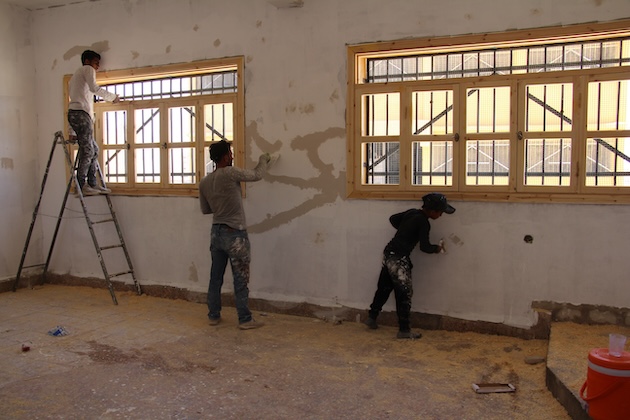
The community gets together to repair a school in the city of Saraqib, located south of Idlib, that was destroyed by bombing during the Assad regime. Credit: Sonia Al Ali/IPS

The community gets together to repair a school in the city of Saraqib, located south of Idlib, that was destroyed by bombing during the Assad regime. Credit: Sonia Al Ali/IPS

IDLIB, Syria, Oct 16 2025 (IPS) – The war has deprived thousands of Syrian children of their right to education, especially displaced children in makeshift camps. Amidst difficult economic conditions and the inability of many families to afford educational costs, the future of these children is under threat.


Adel Al-Abbas, a 13-year-old boy from Aleppo, northern Syria, was forced to quit his education after being displaced from his city and moving to a camp on the Syrian-Turkish border. He says, “I was chasing my dream like any other child, but my family’s poverty and the harsh circumstances stood in my way and destroyed all my dreams.”

Adel had hoped to become an engineer, but he left school and gave up on his goal. He replaced books and pens with work tools to help his impoverished family secure life’s necessities. He adds, “We are living in extremely difficult conditions today; we can’t even afford food. So, I have to find a job to survive and help my family, especially after my father was hit by shrapnel in the head, which caused him a permanent disability.”

Adel’s mother is saddened by her son’s situation, saying to IPS, “We need the income my son brings in after my husband got sick and became unable to provide for our family. In any case, work is better than an education that is now useless after he’s been out of school for so long and has fallen behind his peers.”

Reem Al-Diri, an 11-year-old, left school after her family was displaced from rural Damascus to the city of Idlib in northern Syria. Explaining why, she speaks with a clear sense of regret: “I loved school very much and was one of the top students in my class, but my family decided I had to stop my education to help my mom with the housework.”

The young girl confirms that she watches children on their way to school every morning, and she wishes she could go with them to complete her education and become a teacher in the future.

Reem’s mother, Umayya Al-Khalid, justifies her daughter’s absence from school, saying, “After we moved to a camp on the outskirts of Idlib, the schools became far from where we live. We also suffer from a lack of security and the widespread kidnapping of girls. So, I feared for my daughter and preferred for her to stay at home.”

Causes of school dropout

Akram Al-Hussein, a school principal in Idlib, northern Syria, speaks about the school dropout crisis in the country.

“School dropouts are one of the most serious challenges facing society. The absence of education leads to an unknown future for children and for the entire community.”

Al-Hussein emphasizes that relevant authorities and the international community must exert greater efforts to support education and ensure it does not remain a distant dream for children who face poverty and displacement.

He adds, “The reasons and motivations for children dropping out of school vary, ranging from conditions imposed by war—such as killings, displacement, and forced conscription-to child labor and poverty. Other factors include frequent displacement and the child’s inability to settle in one place during the school year, as well as a general lack of parental interest in education and their ignorance of the risks of depriving a child of schooling.”

In this context, the Syria Response Coordinators team, a specialized statistics group in Syria, noted in a statement that the number of out-of-school children in Syria has reached more than 2.5 million, with northwestern Syria alone accounting for over 318,000 out-of-school children, with more than 78,000 of them living in displacement camps. Of this group, 85 percent are engaged in various occupations, including dangerous ones.

In a report dated June 12, 2024, the team identified the key reasons behind the widening school dropout crisis.

A shortage of schools relative to the population density, a shift towards private education, difficult economic conditions, a lack of local government laws to prevent children from entering the labor market, displacement and forced migration, and a marginalized education sector with insufficient support from both local and international humanitarian organizations are seen as the causes.

The team’s report warned that if this trend continues, it will lead to the emergence of an uneducated, illiterate generation. This generation will be consumers rather than producers, and as a result, these uneducated children will become a burden on society.

Initiatives to Restore Destroyed Schools

The destruction of schools in Syria has significantly contributed to the school dropout crisis. Throughout the years of war, schools were not spared from destruction, looting, and vandalism, leaving millions of children without a place to learn or in buildings unfit for education. However, with the downfall of the Assad regime, several initiatives have been launched to restore these schools. This is seen as an urgent and immediate necessity for building a new Syria.

Samah Al-Dioub, a school principal in the northern Syrian city of Maarat al-Nu’man, says, “Syria’s schools suffered extensive damage from both the earthquake and the bombings. We have collected funds from the city’s residents and are now working on rehabilitating the school, but the need is still immense and the costs are very high, especially with residents returning to the city.” She explained that their current focus is on surveying schools and prioritizing which ones need renovation the most.

Engineer Mohammad Hannoun, director of school buildings at the Syrian Ministry of Education, states that approximately 7,400 schools across Syria were either partially or completely destroyed. They have restored 156 schools so far.

Hannoun adds, “We are working to rehabilitate schools in all Syrian regions, aiming to equip at least one school in every village or city to welcome returning students. The Ministry of Education, along with local and international organizations and civil society, are all contributing to these restoration efforts.”

Hannoun points out that the extensive damage to school buildings harms both teachers and students. It leads to a lack of basic educational resources, puts pressure on the few schools that are still functional, and causes a large number of students to drop out, which ultimately impacts the quality of the educational process.

As part of their contingency plans, Hannoun explains that the ministry, in collaboration with partner organizations, intends to activate schools with the available resources to accommodate children returning from camps and from asylum countries. This effort is particularly focused on affected areas that have experienced massive waves of displacement.

The United Nations Children’s Fund (UNICEF) said in 2025, 16.7 million people, including 7.5 million children, are in need of humanitarian support in the country, with 2.45 million children out of school, and 2 million children are at risk of malnutrition.

The phenomenon of school dropouts has become a crisis threatening Syria’s children, who have been forced by circumstances to work to earn a living for their families. Instead of being in a classroom to build their futures, children are struggling to survive in an environment left behind by conflict and displacement.

  Source

Wealthy Nations Urged to Curb Climate Finance Debt For Developing Countries

Active Citizens, Civil Society, Climate Action, Climate Change, Climate Change Finance, Climate Change Justice, Conferences, Development & Aid, Economy & Trade, Environment, Gender, Global, Headlines, Sustainability, Sustainable Development Goals, TerraViva United Nations

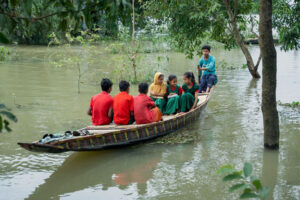
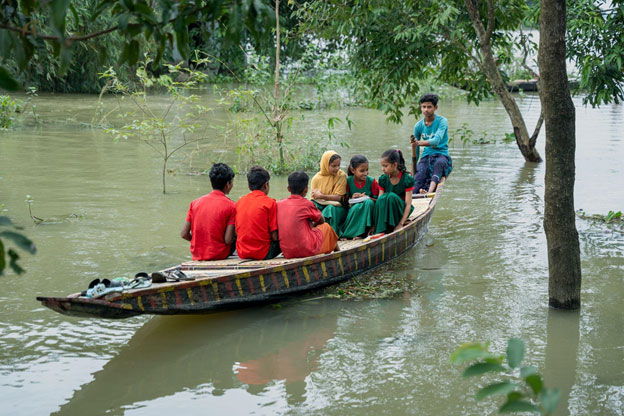
Children in Bangladesh riding a boat through a flooded river to attend school. Bangladesh is one of the most climate-sensitive regions in the world. Credit: UNICEF/Suman Paul Himu

UNITED NATIONS, Oct 8 2025 (IPS) – In recent years, international climate financing has declined sharply, leaving billions of people in developing nations increasingly vulnerable to natural disasters and unable to adapt effectively. With major cuts in foreign aid, these communities are expected to face the brunt of the climate crisis, while wealthier nations continue to reap economic benefits.


A new report from Oxfam and CARE Climate Justice Center, Climate Finance Shadow Report 2025: Analyzing Progress on Climate Finance Under the Paris Agreement, showcases the significant gaps in climate financing for developing countries in the Global South, and the far-reaching implications for climate resilience and global preparedness.

This comes ahead of the 30th United Nations (UN) Climate Change Conference (COP30), in which world leaders, diplomats, and civil society groups will converge in Belém, Brazil, from November 10–21, to discuss strategies to strengthen global cooperation, advance inclusive and sustainable development, and accelerate efforts to address the climate crisis. The United Nations Environment Programme (UNEP) states that there will be a major focus on allocating public funds for mitigation and adaptation efforts in developing countries, aiming to mobilize at least USD 300 billion annually by 2035 for developing countries and a yearly USD 1.3 trillion over the same period.

In the report, CARE and Oxfam found that developing countries are paying disproportionately high disbursements to wealthy nations in exchange for comparatively modest climate finance loans—spending about seven dollars for every five dollars they receive in return. This, compounded with “the most vicious foreign aid cuts since the 1960s”, shows a nearly 9 percent drop in climate funding in 2024, which is projected to drop by a further 9-17 percent in 2025.

“Rich countries are failing on climate finance and they have nothing like a plan to live up to their commitments to increase support. In fact, many wealthy countries are gutting aid, leaving the poorest to pay the price, sometimes with their lives” said John Norbo, Senior Climate Advisor at CARE Denmark. “COP30 must deliver justice, not another round of empty promises.”

As of 2022, developed nations reported pledging approximately USD 116 billion in climate funding for developing countries. However, the actual amount delivered is less than one-third of the pledged total — estimated at only USD 28–35 billion. Nearly 70 percent of this funding came in the form of loans, often issued at standard rates of interest without concessions. As a result, wealthy nations are driving developing countries deeper into debt, despite these nations contributing the least to the climate crisis and lacking the resources to manage its impacts.

It is estimated that developing countries are indebted by approximately USD 3.3 trillion. In 2022, developing countries received roughly USD 62 billion in climate loans, which is projected to produce over USD 88 billion for wealthy countries, yielding a 42 percent profit for creditors. The countries issuing the highest concessional loans in climate financing were France, Japan, Italy, Spain, and Germany.

“Rich countries are treating the climate crisis as a business opportunity, not a moral obligation,” said Oxfam’s Climate Policy Lead, Nafkote Dabi. “They are lending money to the very people they have historically harmed, trapping vulnerable nations in a cycle of debt. This is a form of crisis profiteering.”

Despite wealthy nations issuing high loans to developing countries, Least Developed Countries (LDCs) received only 19.5 percent of the total public climate funding over 2021-2022, while Small Island Developing States (SIDs) received roughly 2.9 percent. Only 33 percent of this funding went toward climate adaptation, a “critically underfunded” measure according to Oxfam, as the majority of creditors favor investing in mitigation efforts that deliver faster financial returns. Additionally, only 3 percent of this funding went to gender equality efforts, despite women and girls being disproportionately impacted by the climate crisis.

The report also underscores the dire impacts of the misallocation of climate financing and funding cuts, as vulnerable communities in particularly climate-sensitive environments find themselves with far fewer resources to adapt to natural disasters.

In 2024, communities in the Horn of Africa were ravaged by brutal cycles of droughts and flooding, which displaced millions of civilians and pushed tens of millions into food insecurity. In Rio Grande do Sul, Brazil, massive floods caused over 180 civilian deaths, displaced 600,000 people, and the resulting damage led to billions of dollars in losses. According to figures from UNICEF, around 35 million children in Bangladesh experienced school disruptions in 2024 due to heatwaves, cyclones, and floods, posing serious risks to their long-term development. The United Nations Environment Programme (UNEP) warns that global temperatures are on course to rise to a “catastrophic” 3°C by the end of the century, with extreme weather events expected to intensify further.

Ahead of the COP30 conference, Oxfam has urged wealthy nations to honor their climate finance commitments, including the delivery of the full USD 600 billion pledged for the 2020–2025 period, aligning with the UN’s target of mobilizing USD 300 billion annually. The organization also called for a substantial increase in global funding for climate adaptation and loss management, alongside the implementation of higher taxes on the wealthiest individuals and fossil fuel companies—which could generate an estimated USD 400 billion per year. Additionally, Oxfam emphasized the need for developed countries to stop deepening the debt of climate-vulnerable nations by expanding the share of grants and highly concessional financing instead of standard loans.

IPS UN Bureau Report


Beijing+30: A Culmination of International, Intergenerational Dialogue

Conferences, Development & Aid, Editors’ Choice, Gender, Gender Identity, Gender Violence, Global, Headlines, Human Rights, Population, Sustainable Development Goals, TerraViva United Nations, Women & Climate Change, Women & Economy, Women in Politics, Women’s Health

IPS UN: Inside the Glasshouse

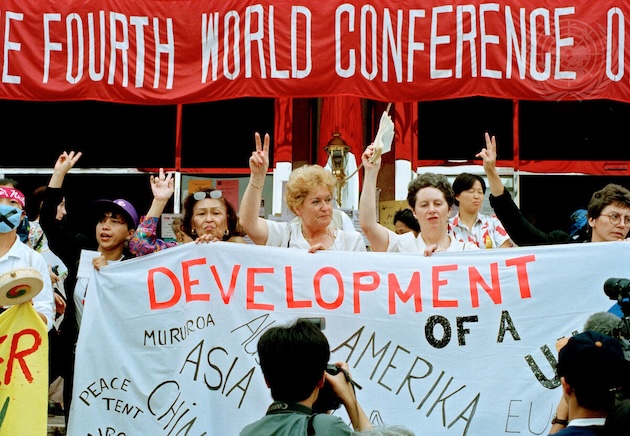
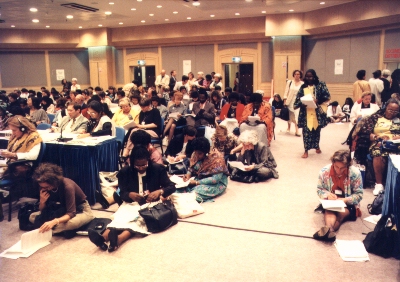
Participants at the Non-Governmental Organizations Forum meeting held in Huairou, China, as part of the United Nations Fourth World Conference on Women held in Beijing, China, on 4-15 september 1995. Credit: UN Photo/Milton Grant

Participants at the Non-Governmental Organizations Forum meeting held in Huairou, China, as part of the United Nations Fourth World Conference on Women held in Beijing, China, on 4-15 september 1995. Credit: UN Photo/Milton Grant

UNITED NATIONS, Sep 30 2025 (IPS) – Thirty years since the UN Fourth World Conference on Women in Beijing, the resolve that defined and united the world toward a global agenda for gender equality make it just as relevant in 2025.


The Beijing Conference represents a turning point for the global movement in gender equality. It is marked by the adoption of the Beijing Declaration and Platform for Action, which is still held up as a landmark document in presenting a comprehensive blueprint to achieve gender equality.

The Beijing Conference was just “one stop in a long and continuing journey of feminist advocacy,” said Sia Nowrojee, a Kenyan women’s rights advocate with more than thirty years’ experience.

“Even though it’s thirty years later, it’s absolutely relevant. It was the culmination of twenty years of advocacy and gender equality.” Nowrojee is the UN Foundation’s Associate Vice President of their Girls and Women Strategy division.

The Beijing Conference was the first time that the international community integrated gender equality into the global development and rights agenda. It was recognition that securing the rights and dignities for all women and girls would be integral to achieving widespread development. This was key for the countries that had emerged in the post-colonial era.

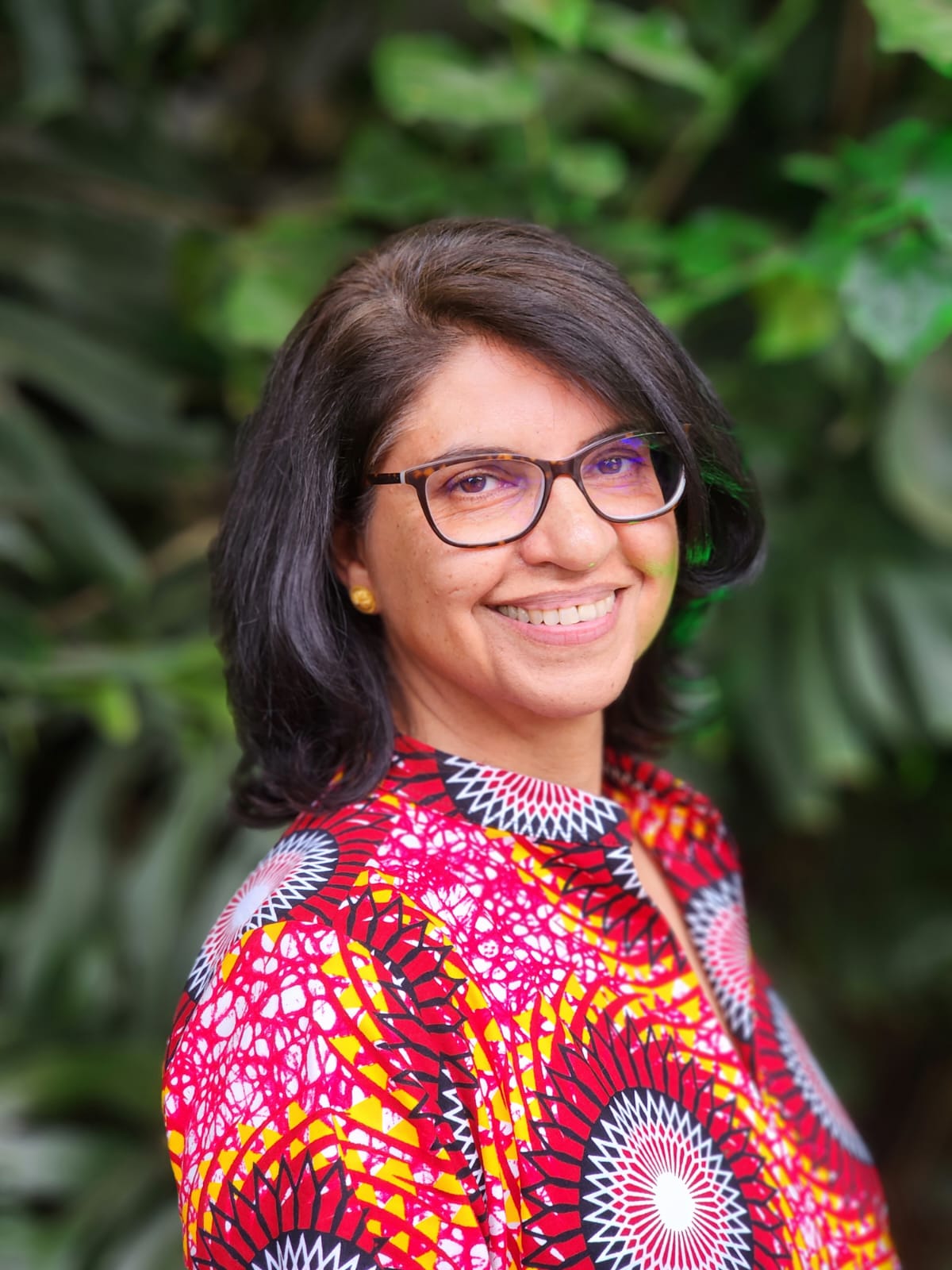
Sia Nowrojee, UN Foundation’s Associate Vice President of Girls and Women Strategy. Credit: UN Foundation

Sia Nowrojee, UN Foundation’s Associate Vice President of Girls and Women Strategy. Credit: UN Foundation

The leadership of advocates from the Global South was instrumental to the Beijing PoA. Representatives from Africa, Asia, and Latin America pushed for the measures that make the framework as inclusive as it is. Nowrojee gave the example of girls’ rights being recognized thanks to the efforts of African feminists in the lead-up to Beijing.

Hibaaq Osman, a Somali human rights activist and founder of El-Karama, considers that the Global South activists had been uniquely prepared to participate as they had lived through their countries’ great political upheavals against colonialism and racism.

Osman attended Beijing 1995 as part of the Center of Strategic Initiatives of Women, a civil society network.

Hibaaq Osman, a Somali human rights activist and founder of El-Karama. Credit: UN Foundation

Hibaaq Osman, a Somali human rights activist and founder of El-Karama. Credit: UN Foundation

“For me, as a young woman, I was shocked by the things that I heard. I was raised to believe that everything was a privacy. But to hear a woman speaking for herself and sharing things that I never thought you could share with others, including violence against women… It absolutely opened my eyes and made me see, ‘Oh my god, I can actually share things with other women,’” Osman told IPS.

For Osman, the Beijing conference represented the possibilities of what could be achieved through a shared agenda and a shared sense of hope. The unique energy from that conference drove her advocacy work through groups like the Strategic Initiative for Women in the Horn of Africa (SIHA) and then El-Karama, which is working to end violence against women in the Arab region and South Sudan.

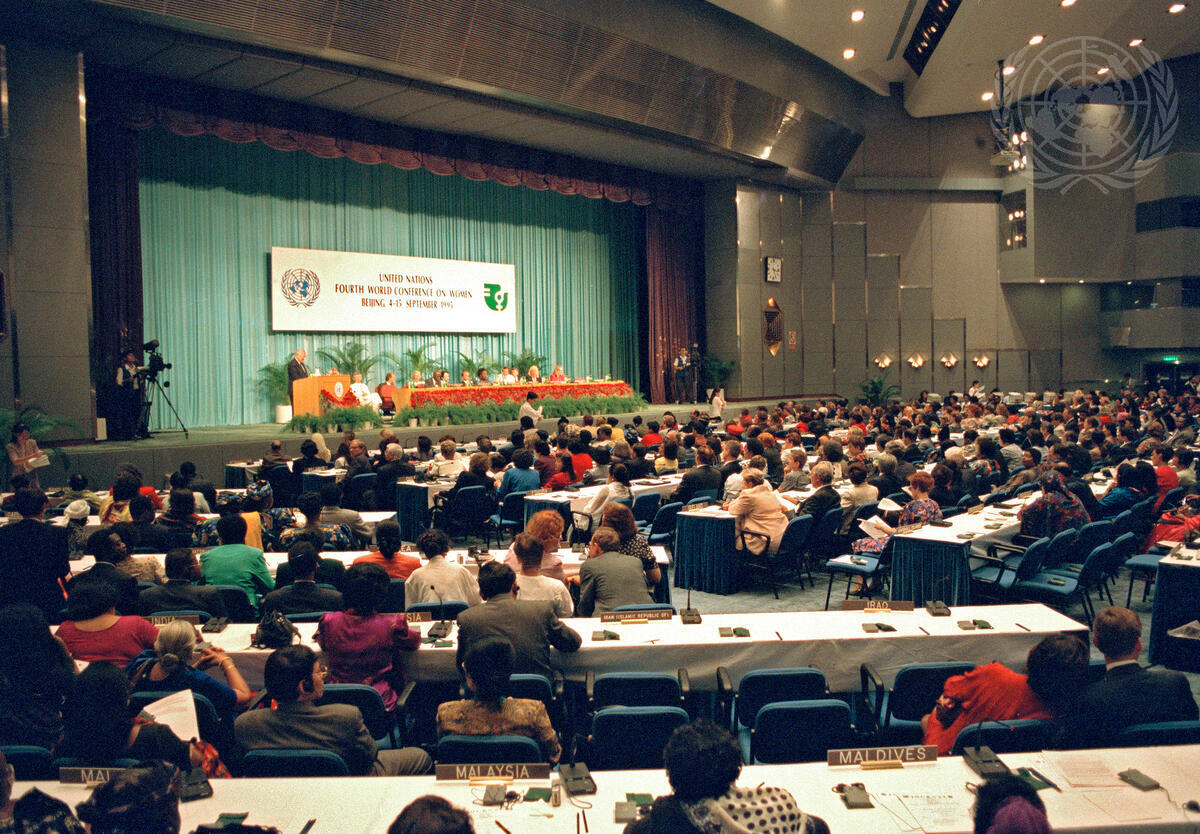
General view of the opening session of the Fourth World Conference on Women in Beijing. Credit: UN Photo/Milton Grant

General view of the opening session of the Fourth World Conference on Women in Beijing. Credit: UN Photo/Milton Grant

Beijing 1995 also provided the expectation of accountability from governments and policy makers if they did not implement the PoA. “That had never happened before. There was a mechanism for the first time…,” said Osman. “You can hold governments and policymakers accountable. But you also have the connection with grassroots. That it was no longer the individual woman that could claim that she was the leader, but having accountability to your own people, I think that whole thing was fantastic.”

“I think the legacy of Beijing 1995 honestly, it gave us a legacy of getting out of our corners and just wide open to the rest of the women. And I think that vision, that framework is still working.”

Delegates working late into the night to draft the Beijing Declaration and Platform for Action. Credit: UNDP/Milton Grant

Delegates working late into the night to draft the Beijing Declaration and Platform for Action. Credit: UNDP/Milton Grant

The success of the Women’s Conferences also demonstrated the UN’s role as a space to build up the gender equality movement, Nowrojee remarked. The UN has also served as a platform for emerging countries to raise their issues to the international community and to shape global agendas on their terms.

Prior to Beijing, the UN World Conference on Women had previously been held in Nairobi (1985), Copenhagen (1980) and Mexico City (1975). These were also key forums for people from all parts of the world to build relationships and for there to be a “cross-pollination of ideas and experiences”, laying down the groundwork for what was later achieved in Beijing.

Nowrojee was 18 years old when she attended the Nairobi 1985 Conference as part of a school/youth delegation. The experience was formative in listening to women’s activists from the region impart their wisdom and insights.

“To see the world’s women come to my home and talk about the fact that we mattered was life-changing for me,” Nowrojee said. “I made friends who I still work with and love and see today. And I think there is that sort of personal part, which is both personally sustaining, but it’s a critical part of feminist movement building.”

Each conference built up momentum that saw no sign of slowing down. Osman and Nowrojee explained that as gains were being made at local, national and global levels, this encouraged those in the movement to act with urgency and go further. This provided them the spaces to learn how to refine the messages for local contexts.

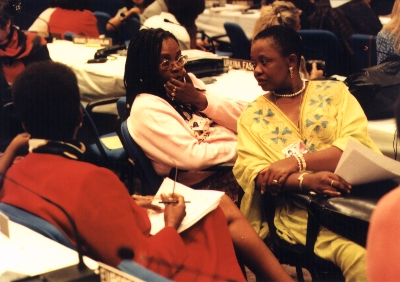
Delegates at the Fourth UN World Conference on Women in Beijing 1995.' Credit: UNDPI /UN Women

Delegates at the Fourth UN World Conference on Women in Beijing 1995. Credit: UNDPI /UN Women

The gains towards gender equality should be noted: the codification of women’s rights around the world, their increased participation in politics and in peace negotiations. Evidence has shown that investing in women’s participation in society through health, education and employment leads to economic growth and prosperity. More women in the workforce mean greater economic gains and stability. Increased social protections for women lead to more stability in communities.

And yet, there was backlash to the momentum. Recent years have seen the rise of anti-rights and anti-gender movements gain greater traction, combined with increasing attempts to strip women of their rights. UN Women has warned that one in four countries are reporting a backlash to women’s rights.

Nowrojee remarked that the autocratic leaders that champion these movements target women’s rights because it threatens their own agenda. “If you are silencing half the human family, and you are hampering their ability to make decisions about their bodies, to participate in political process… these are very, very effective ways of undermining democracy, development, peace and the achievement of all the goals and values that we hold dear.”

“They understand that if you bring women down, you are bringing society down, because women are the core of society,” Osman added.

The modern movements are also well-funded and well-organized. But there is an irony to it in that they use the same tactics that feminist movements have been using for decades by organizing at the grassroots level before moving their influence up to the national level and beyond. But this should not be where activists fall to despair. Instead they should understand, Osman and Nowrojee remarked, that women in this space already know what actions need to be taken to regain lost momentum.

“I’m sure that Sia and I and many, many others who were part of that are also thinking about today and what’s happening, and we know the space for civil society is shrinking,” Osman said. “The space for democracy, human rights, justice, reproductive rights, for all of that, there is absolutely a rollback, But it’s not going to delay us. We are just going to be more sophisticated and ask ourselves “Where are the blocks, how do we build… diverse constituencies?”… So it is hard, but we are not slowing down whatsoever.”

Today, it may seem the pursuit of gender equality is an ongoing struggle that faces the threat of autocratic movements that sow distrust and division. For the people who championed the women’s rights movement and can recall a time before the Beijing PoA, they are all too aware of what is at stake. The leaders in modern movements today need to look back to the past to take lessons, and to take courage.

IPS UN Bureau Report