An Ominous Reckoning for the Gulf States

Armed Conflicts, Civil Society, Crime & Justice, Democracy, Headlines, Human Rights, IPS UN: Inside the Glasshouse, Middle East & North Africa, TerraViva United Nations
Opinion

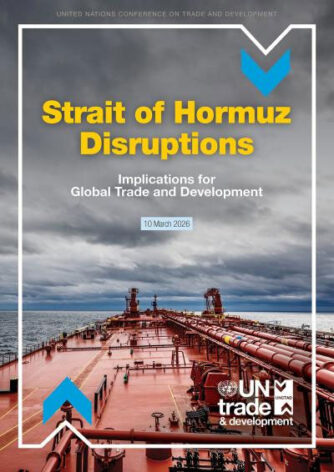
The Strait of Hormuz is one of the world’s most critical maritime chokepoints, carrying around a quarter of global seaborne oil trade and significant volumes of liquefied natural gas and fertilizers.

NEW YORK, Mar 31 2026 (IPS) – Trump’s Iran war has left the Gulf shattered: US bases turned into targets, economies battered, and the “oasis” myth destroyed. Gulf rulers now confront a harsh reckoning over their reliance on Washington and the uncertain search for a new, fragile security order.


As Trump assembled major US naval and air assets in the eastern Mediterranean and the Gulf, Saudi Arabia, the UAE, Qatar, and others quietly urged Washington to avoid a full-scale assault on Iran, fearing a direct blowback on their territory and energy infrastructure.

Nevertheless, the US–Israeli air campaign began on February 28, 2026, without a clearly defined and publicly articulated political endgame beyond “crippling” Iran’s capabilities. This disconnect between military escalation and strategic purpose now lies at the core of Gulf leaders’ anger and sense of betrayal toward Washington.

Trump’s Strategic Miscalculation

Trump’s decision to launch joint US–Israeli strikes on Iran has produced far higher strategic costs than his administration appears to have anticipated, from energy shock and disrupted shipping to heightened regional fragmentation and anti-American sentiment.

Even if Iranian capabilities are significantly degraded, the war has exposed vulnerabilities in US power projection, unsettled allies, and invited greater Russian and Chinese diplomatic activism in the Gulf. The long-term “price” for Washington will be measured less in battlefield metrics than in diminished trust and leverage among its traditional Arab partners.

US Bases Turned to Liabilities

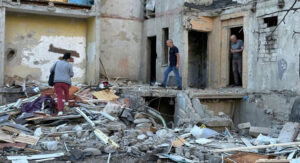
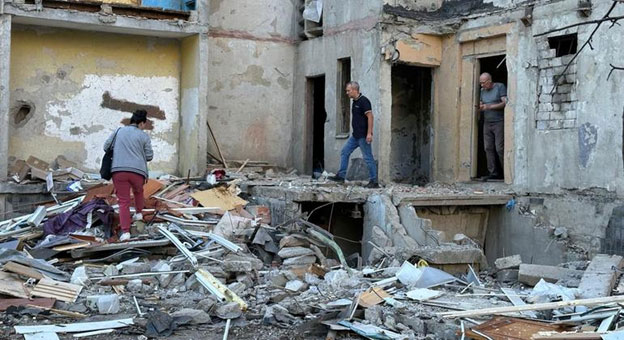
From a Gulf perspective, US bases in Qatar, Bahrain, Kuwait, and the UAE were meant to deter Iran and guarantee regime security; instead, they became priority targets once the war began. Iran explicitly framed its strikes on these facilities as retaliation against Washington, but their location in densely populated and economically vital areas meant that nearby civilian infrastructure also suffered severe damage.

This experience is reinforcing a view in Gulf capitals that foreign basing arrangements draw fire without delivering the reliable protection they assumed for decades.

A Nightmare Realized

Gulf leaders long warned that a war with Iran would shatter their security and economies, a nightmare that has now materialized as Iranian missiles and drones hit oil facilities, ports, power plants, and cities across the region. They blame Washington for launching the campaign and Israel for pressing to “neutralize” Iran regardless of collateral damage in neighboring Arab states.

The sense in Gulf capitals is that their caution was dismissed, while they have paid a disproportionate price in physical destruction, economic setback, disrupted exports, and heightened domestic anxiety.

Shattered Oasis Narrative

The image of Gulf hubs like Dubai, Doha, and Riyadh as insulated “oases” open to business, tourism, and investment has been badly damaged by missile alerts, strikes on ports and airports, and the closure of key sea lanes.

Restoring confidence will require visible reconstruction, enhanced civil defense, improved air and missile defenses, and credible diplomacy that lowers the perceived risk of another sudden war. Investors and tourists will demand proof that the region can manage Iran-related tensions, not just high-end events and mega-projects.

Trump’s Misreading of Iranian Escalation

Trump publicly argued that overwhelming force would quickly coerce Iran and usher in regime change while keeping fighting “over there,” yet he appears not to have anticipated the breadth of Iranian retaliation against neighboring Gulf states or a prolonged closure of the Strait of Hormuz.

The IRGC’s effective shutdown of the strait, including attacks and threats against commercial shipping, has produced global energy shocks and exposed the fragility of US planning assumptions. For Gulf leaders, this underscores how inadequate Washington’s war planning was in accounting for second- and third-order consequences.

Calculated Decision Not to Retaliate

Despite heavy damage, Gulf rulers have so far avoided direct retaliation against Iran, calculating that further escalation would expose their cities and infrastructure to even more punishing strikes. Publicly, they stress restraint and international law, but privately, officials acknowledge their enduring geographic reality: they must coexist with a powerful and proximate Iran long after this US-led campaign ends.

By holding their fire, they hope to preserve space for postwar de-escalation and avoid being locked into a permanent state of open conflict.

Recasting Security Arrangements with Washington

Given their limited strategic alternatives, Gulf monarchies are unlikely to sever ties with Washington but will seek more conditional, transactional security arrangements. They are pressing for clearer US commitments on defense of their territory, better integration of regional missile defenses, and greater say over decisions that could trigger Iranian retaliation.

At the same time, they will hedge by deepening ties with China, Russia, Europe, and Asian energy importers, thereby reducing exclusive reliance on the US while keeping the American security umbrella in place.

Gulf Options to Prevent Future Conflagration

To prevent a repeat, Gulf states are also exploring limited de-escalation channels with Tehran, tighter regional crisis hotlines, and revived maritime security arrangements that include non-Western actors such as China and India. They may push for new rules of engagement around energy infrastructure and shipping lanes, seeking informal understandings that keep these off-limits even in crises.

Internally, they are reassessing missile defense, hardening critical facilities, and considering more diversified export routes that reduce dependence on Hormuz. None of these options are fully reassuring, but together they offer partial risk reduction.

Prospects for Normalization with Iran

Speculation about full normalization, including a non-belligerency pact between Iran and Gulf states, builds on prewar trends of cautious dialogue and economic engagement. Whether this is truly “in the cards” depends on war outcomes, Iran’s internal politics, and Gulf threat perceptions: if Tehran’s regime survives but remains hostile, Gulf states will likely revert to hedging—combining deterrence, limited engagement, and outreach to outside powers.

A more pragmatic Iranian leadership could make structured security arrangements and phased confidence-building measures more plausible over time.

No Return to Status Quo Ante

The Gulf States will not return to the prewar status quo; instead, they are likely to pursue a more diversified security architecture, combining a thinner US shield with expanded ties to China, Russia, and Asian importers. This shift will gradually dilute Washington’s centrality in Gulf security, complicating US force posture and Israel’s assumption of automatic Arab backing against Iran.

For Israel, a more cautious, risk-averse Gulf may limit overt strategic alignment, while for the US, enduring mistrust will make coalition-building for future crises far more difficult.

Trump’s Iran adventure is not an isolated blunder but the latest, and perhaps most explosive, expression of his assault on an already fragile global order. By discarding restraint, sidelining allies, and weaponizing American power for short-term political gain, he has accelerated the erosion of US credibility, fractured Western alliances, and opened new strategic space for Russia and China. The Gulf States are simply the newest casualties of this disorder: their cities struck, economies shaken, and security assumptions shattered.

Whatever emerges from this war, it will not be a restored status quo, but a more fragmented, volatile Middle East in which Israel and the United States confront a diminished margin for error and a far narrower circle of willing, trusting partners.

Dr. Alon Ben-Meir is a retired professor of international relations, most recently at the Center for Global Affairs at New York University (NYU). He taught courses on international negotiation and Middle Eastern studies.

alon@alonben-meir.com

IPS UN Bureau

  Source

Is WWIII here?

Armed Conflicts, Civil Society, Crime & Justice, Democracy, Europe, Global, Headlines, Human Rights, IPS UN: Inside the Glasshouse, TerraViva United Nations

Opinion

Is WWIII here?

The Russo-Ukrainian war, which began in February 2014, shows no signs of ending. Credit: UNOCHA/Dmytro Filipskyy

KYIV, Ukraine, Mar 19 2026 (IPS) – It is becoming increasingly difficult to ignore the tension, violence and uncertainty in the world in recent years. The number of wars is growing, more and more money is being spent on weapons, and the rhetoric of major powers is becoming increasingly decisive.


The latest escalation in the Middle East has reignited the debate about the start of World War III. The consequences of the Israeli and US strikes on Iran are being felt to varying degrees far beyond the region, at least by those who follow oil prices.

The interests of numerous great powers are at stake, and third parties are considering their next moves and making political statements. Opinions range widely, from the belief that there can be no Third World War because of the existence of nuclear weapons, to the conviction that it has already begun. So, what is really going on?

A journalistic and academic concept

When historians talk about world wars, they mean two unique events in the past. Their scale, the involvement of a wide range of states, the level of violence and the nature of the consequences put them in a league of their own.

To understand how these wars differed from any others, one need only glance at the diagram of human casualties, defence spending, or destruction in various armed conflicts of the 20th century.

However, historians also have different opinions. One of them, better known in his political capacity, Winston Churchill, once described the Seven Years’ War as a world war. This protracted 18th-century conflict drew most of the major powers of the time into direct combat; it spanned numerous battlefields in Europe, North America, the Atlantic and the Indian Ocean; and it had serious geopolitical consequences. How was this not a world war?

By the fact that it was not a total war between industrialised states, the scale of the clashes was rather limited, as were the number of armies; and the consequences, although serious, were not systemic — this may be the response of more conservative historians than the British Prime Minister.

The number of armed conflicts in the world has been growing over the past few years: 2024 has been a record year since World War II.

‘World War’ is both a journalistic and academic concept. To enhance the effect, attract attention or draw conditional analogies, it can be used to describe more events than just the First and Second World Wars. For example, the Thirty Years’ War of the 17th century, the Napoleonic Wars of the 19th century or even the Cold War are sometimes referred to as world wars.

Within this logic, individual elements of a world war can be seen even today. The number of armed conflicts in the world has been growing over the past few years: 2024 has been a record year since World War II. According to some estimates, 61 armed conflicts in 36 countries were recorded this year, which is significantly higher than the average for the previous three decades.

Global military spending is also on the rise: today it has reached 2.5 per cent of the global economy, the highest figure since 2011 and an upward trend since 2021. This is still significantly less than during the Cold War, when a range of 3 to 6 per cent was the norm. Analysing these figures, it is clear that global security has deteriorated in recent years, but how critically?

A more academic approach would be to define a world war as one in which most of the major powers are involved; which has global reach and is total in nature; leads to enormous loss and destruction; and significantly changes the world upon its conclusion. Direct and large-scale armed conflict between major powers is a mandatory criterion.

And this is the main argument against the idea that World War III has already begun. No matter how high the level of destabilisation in the modern world, no matter how far large-scale regional conflicts have escalated, and no matter how much money states spend on armaments, this is not enough for a world war. Large-scale military operations involving major powers are needed.

All just fears?

This has not happened in the world for a long time. The interval between the Second and Third World Wars turned out to be much longer than between the First and Second. Nuclear weapons played a central role in this, raising the price of war so high that major powers began to avoid it by any means possible. This safeguard has been in place for over 80 years and looks set to continue.

Peace, or rather the absence of war between major powers, remains one of the central elements of the current international order. International institutions and regimes may collapse or weaken, regional wars may break out, but the likelihood of war between major powers remains extremely low.

Proponents of the Third World War theory sometimes point out that even in the absence of full-scale war between major powers, other manifestations occur: hybrid wars, cyberattacks, or proxy wars. This is true, but all these outbreaks of conflict are several levels below a world war in terms of their destructive potential and are not total in nature.

Throughout history, states have fought through proxies or resorted to information, trade or religious wars, but we do not consider these wars to be world wars — except in a symbolic sense.

A systemic war does not necessarily have to be a world war

Unlike the 2003 war in Iraq, the strikes on Iran are taking place in a world where, instead of US hegemony, there is complex competition between at least two centres of power. This adds nuances and forces other states to respond, directly or indirectly, for example, by supplying weapons or intelligence data, supporting one side or the other.

But this does not make the war global. Arms supplies, for example, are a common practice found in most regional conflicts, as is diplomatic or financial support from allies or partners. Even if American troops use the technology or expertise of partners – such as Ukrainian drones – this does not mean that Ukraine is being drawn into the war. Just as American arms supplies to Ukraine during the Russian-Ukrainian war did not mean US involvement in the war.

For a world war, the key ingredient is still missing: direct confrontation between major powers. In addition to world wars, there are also systemic wars. In these conflicts, it is not so much the scale that is important as the change in the international order to which they lead.

The Thirty Years’ War, the Napoleonic Wars, and the First and Second World Wars mentioned above were systemic wars: after their completion, the rules of international politics were rewritten and new ones were adopted at peace conferences and congresses. A systemic war does not necessarily have to be a world war.

Moments of hegemonic crisis and the beginning of the struggle for hegemony always carry with them the danger of new wars, arms races and escalations.

The current destabilisation and growth of various risks are largely linked to the struggle for the future of the international order. The United States and China have almost fallen into the ‘Thucydides trap’ — a strategic logic similar to that which led to the Peloponnesian War in the 5th century BC. At that time, the narrowing of the power gap between the hegemon and the challenger forced the Spartans to start a preventive war.

Today, there are well-founded fears that the decline of American hegemony, the rise of China and the approach of a bipolar world will sharply increase the likelihood of direct armed conflict between the superpowers.

The decisive, to put it mildly, steps taken by the US administration can also be considered preventive actions aimed at strategically weakening China’s position while Washington still has the upper hand. Such moments of hegemonic crisis and the beginning of the struggle for hegemony always carry with them the danger of new wars, arms races and escalations.

We are in the midst of such a crisis. It is systemic in the sense that it is not just a collection of regional conflicts in different parts of the world, which have become more numerous, but a manifestation of a large-scale redistribution of influence and power on a global scale. This redistribution will entail changes in the international order, because the rules of the game are linked to the balance of power.

If, at some point, the leaders of major states decide that it is worth taking the risk of war and paying the price, the systemic crisis will turn into a world war. But this, as the Spartans themselves said, is ‘if’.

Nickolay Kapitonenko is an associate professor at the Institute of International Relations at Taras Shevchenko National University of Kyiv and director of the Centre for International Relations Studies.

Source: International Politics and Society, Brussels

IPS UN Bureau

  Source

A Remotely-Piloted Weapon That Targets Civilians in War Zones

Armed Conflicts, Civil Society, Crime & Justice, Democracy, Featured, Global, Headlines, Human Rights, IPS UN: Inside the Glasshouse, TerraViva United Nations

A Remotely-Piloted Weapon That Targets Civilians in War Zones

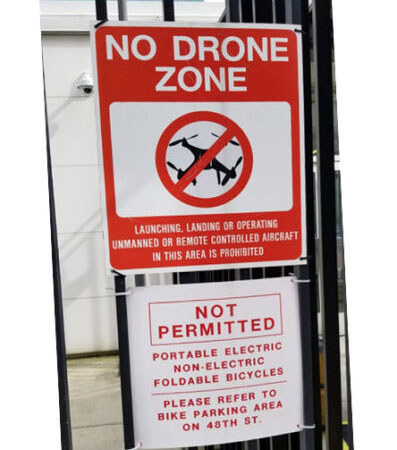
A sign outside the UN Secretariat building last year.

UNITED NATIONS, Mar 18 2026 (IPS) – As the world continues to be weighed down in political and military turmoil, drones are being increasingly used as weapons of war in a rash of ongoing conflicts—including Ukraine vs Russia, Israel vs Palestine, US vs Iran and Israel vs Lebanon, plus in civil wars in the Democratic Republic of the Congo (DRC), Sudan and Haiti.


Described as Unmanned Aerial Vehicles (UAV), drones have fundamentally transformed modern warfare, “offering a low-cost, high-impact form of air power, challenging traditional military doctrines and giving rise to new tactics and ethical debates”.

Once limited to major military powers like the U.S. and Israel, drones are now being used by numerous state and non-state actors, including militant groups and even organized crime cartels.

The use of drones, particularly in targeted killings and with increasing autonomy, has raised significant international debate regarding accountability, civilian casualties, and compliance with international humanitarian law

UN High Commissioner for Human Rights Volker Türk said last week he was “appalled by the devastating impact on civilians of increasing drone attacks”, amid reports that more than 200 civilians have been killed by drones since 4 March alone in the Kordofan region, and in White Nile state.

“It is deeply troubling that despite multiple reminders, warnings and appeals, parties to the conflict in Sudan continue to use increasingly powerful drones to deploy explosive weapons with wide-area impacts in populated areas,” said Türk.

“I renew my call on them to abide fully with international humanitarian law in their use of these weapons, particularly the clear prohibition on directing attacks against civilians and civilian objects and infrastructure, and against any form of indiscriminate attacks.”

Many homes, schools, markets and health facilities were damaged or destroyed in the attacks, compounding the impacts on civilians and local communities, he said.

Meanwhile drones are also being used in the politically-troubled Haiti and also in the conflict between the Democratic Republic of Congo (DRC) and Rwanda despite a peace agreement brokered by the US last year.

According to a report in Cable News Network (CNN) March 17, the war in Iran is continuing to disrupt travel across the Gulf after Iranian drone strikes triggered two major air incidents in recent days. Flights at Dubai International Airport were briefly suspended on Monday after a drone struck a nearby fuel tank, igniting a large fire.

The shutdown forced cancellations and diversions as aviation authorities closed the airport. Part of the UAE’s airspace was also closed for a few hours overnight after the country said it was responding to incoming missiles and drone strikes from Iran.

Meanwhile, the prices of many global airfares that bypass the Middle East are rising, as the conflict drives up oil prices and airlines warn of higher fuel costs ahead, said CNN.

Focusing on a military perspective, Siemon Wezeman, Senior Researcher, Arms Transfers Programme, Stockholm International Peace Research Institute (SIPRI), told IPS more and more states, (and also non-state armed- rebel – groups) acquire drones of all sizes.

“Some of the numbers are quite amazing – Ukraine getting not a few 1,000, but far over 10,000 drones from various suppliers, and Russia, Ukraine and Iran each use drones by the 100s almost every day in the current conflicts.”

And different from some 10 years ago, when most of the drones where for reconnaissance roles, he pointed out, today many drones are armed and many more are ‘one-way attack drones’ (also called suicide or kamikaze drones). The latter are becoming a cheap alternative for long-range missiles against ground targets.

In the SIPRI arms transfers database (https://armstransfers.sipri.org), he said, “we record transfers of all armed drones, and reconnaissance drones with a weight of at least 150kg (we had to put a weight limit to be able to keep monitoring drone transfers with the resources and sources we have)”.

“And we clearly see in recent years that a) the total numbers of drones transferred between states has grown, b) several non-state actors (e.g. Houthis and Hezbollah) have also been supplied with drones, c) the number of states and non-state actors that have acquired drone has grown – most states in the world have now acquired drones, many of them from foreign suppliers, d) the number of producers and suppliers has grown – the simpler drones are offered by dozens if not 100s of large and very small companies and that number is growing, and e) drones, and especially armed drones.”

That is the picture for flying drones, Wezeman said.

But also, sea drones (surface or submarine) are starting to become popular – even if not yet transferred in any significant number. And land drones are also starting to become popular, he declared.

At a press conference March 10, UN Under-Secretary-General for Humanitarian Affairs Tom Fletcher said: “I’m really worried about drones in particular. I think the world has decided that it’s far more interested in spending enormous amounts of money developing these increasingly deadly weapons than it is on saving lives, and it seems to have decided that it hasn’t got time to work on ensuring that the rules that govern these weapons, these lethal autonomous weapons, keep up with the pace of technology.”

So you’ve got this dangerous alliance between very innovative technology and huge amounts of money and people’s desire to kill more people – and that’s a toxic combination, he said.

“And last year, 90 per cent of all deaths caused by drones were civilians, many of them humanitarians. And we’re seeing that across the crises on which we work – whether it’s Gaza, Sudan or in Ukraine, we’re seeing these bad practices move between crises”.

In the DRC last week, a senior official of the UN children’s agency UNICEF and two civilians were killed in drone strikes.

Amplifying further Wezeman said all these drones and one-way attack drones have become more capable, especially in range (the simple Shahed, one-way attack drones used by Iran and sold to Russia have a range of up to 1500 to 2000km), changing them from tactical battlefield weapons to more strategic weapons.

Development is very rapidly continuing for all type of drones, including making them more autonomous and intelligent to be capable of independent targeting and other decision-making. AI plays a growing role in this process. This process leads to questions about control, but right now it seems the process is moving faster than the discussion on controlling the autonomous aspects (see also our programme on emerging technologies.

https://www.sipri.org/research/armament-and-disarmament/emerging-military-and-security-technologies.

Will they replace systems with a human on board or in the loop? The development goes certainly that way and for missiles and one-way attack drones that has already started. For the larger, more capable and more complex systems such as combat aircraft, warships and larger combat vehicles that is still a future – but not a distant dream as development of for example drone combat aircraft is already moving into prototypes in the USA, China, Australia and Europe.

There still is an element of doubt however – drones need navigation that now is largely based on GPS-type systems, something that is not free from the risks of being jammed or stopped.

The simpler drones, with their simple technology, cheap and easy to produce are also not as effective as hoped. Most of them are rather easy prey for air-defence systems (or jamming) – while Russia, Iran and Ukraine send every day dozens or 100s to attack their opponents, most do no reach their target but are shot down or lost due to jamming or other causes, declared Wezeman.

Meanwhile Human Rights Watch said last week its latest research on “how Haitian security forces and private contractors working with them have conducted extensive and apparently unlawful lethal drone strikes in densely populated areas killing and injuring residents who were not members of criminal groups, including children”.

“We call on Haitian authorities to urgently rein in the security forces and private contractors working for them before more children die”, said HRW.

According to data from multiple sources reviewed by Human Rights Watch, at least 1,243 people were killed by drone strikes in 141 operations between March 1, 2025, and January 21, 2026, including at least 43 adults who were reportedly not members of criminal groups, and 17 children. The data also shows that the drone strikes injured 738 people, at least 49 of whom were reportedly not members of criminal groups.

“Dozens of ordinary people, including many children, have been killed and injured in these lethal drone operations,” said Juanita Goebertus, Americas director at Human Rights Watch. “Haitian authorities should urgently rein in the security forces and private contractors working for them before more children die.”

The United Nations Integrated Office in Haiti has attributed the drone attacks in Haiti to a specialized “Task Force” established by Prime Minister Alix Didier Fils-Aimé that is operated with support from the private military company Vectus Global.

The US ambassador to Haiti has confirmed that the US State Department issued a license to Vectus Global to export defense services to Haiti.

Thalif Deen, Senior Editor, Inter Press Service (IPS) news agency, was a former Director, Foreign Military Markets at Defense Marketing Services; Senior Defense Analyst at Forecast International; military editor Middle East/Africa at Jane’s Information Group and UN correspondent for Jane’s Defence Weekly, London.

IPS UN Bureau Report

  Source

VENEZUELA: ‘An Economically Stable Authoritarian Model Could Become Entrenched’

Active Citizens, Civil Society, Crime & Justice, Democracy, Economy & Trade, Energy, Featured, Headlines, Human Rights, Latin America & the Caribbean, Migration & Refugees, TerraViva United Nations

Mar 11 2026 (IPS) –  
CIVICUS discusses the situation in Venezuela following US intervention and the ousting of President Nicolás Maduro with Verónica Zubillaga, a Venezuelan sociologist who specialises in urban violence, state repression and community responses to armed violence.


Verónica Zubillaga

In late January, the interim government led by Delcy Rodríguez announced an amnesty for political prisoners, coinciding with a rapprochement with the USA driven by oil interests. It is unclear whether this represents the beginning of a genuine opening or is an attempt by the government to gain international legitimacy without relinquishing power. In a country with millions of migrants and exiles, a historically fragmented opposition and a civil society that has faced brutal repression for years, it remains to be seen whether recent changes will create space for democracy or lead to the consolidation of economically stable authoritarianism.

Is the recently announced amnesty a real opening or a strategic manoeuvre?

We are at an unprecedented crossroads. Venezuela and its Chavista regime, under US tutelage and despite two decades of anti-imperialist rhetoric, are reconfiguring themselves in such a way that some opening could result. However, there is still a risk that an authoritarian model will be consolidated, with economic and humanitarian concessions, but without real democratisation.

The release of political prisoners — a constant demand in all negotiations with international support, and a low-cost form of early opening for the interim government that has taken over from Maduro — could function as a stepping stone towards democratisation. The restoration of civil, political and social rights will be a difficult and lengthy struggle in this context of such deprivation, in which our rights have been violated for so long.

In the first half of February, there were partial and gradual releases, but hundreds of people remained in detention. The enactment of the Amnesty Law on 19 February has accelerated the releases.

The announcement was presented as a political concession, not as a recognition of the extensive human rights violations committed by Maduro’s government. There has been no mention yet of initiating processes to seek the truth, hold those responsible accountable, provide reparations or dismantle the repressive apparatus, which are urgent.

We therefore need to react with caution. The release of people deprived of their liberty for political reasons is essential, but it cannot replace a broader agenda of justice, reparation and institutional transformation.

How has civil society worked to keep this issue at the centre of the debate?

The cause of political prisoners is cross-cutting. There are detained people of different ages, social classes and political backgrounds. In a society as polarised as ours, this is one of the few causes around which there is broad consensus.

After the results of the presidential election of 28 July 2024, which the opposition clearly won, were disregarded, it was mainly people from the working classes who took to the streets to protest. Many young people, including teenagers, were arrested and imprisoned. This situation significantly deepened the social dimension of the problem, highlighted the break between the ruling party and its traditional base and consolidated the brutally authoritarian nature and illegitimacy of Maduro’s government.

There is also an important gender dimension. While many young men are in prison, it is women – mothers, sisters and other relatives – who have organised committees, vigils and public actions demanding their release. Symbolically, the figure of the grieving mother demanding the release of her children is particularly powerful. It is a symbol that appeals to the Latin American imagination about women and their cries for democratisation, justice and reparation in the context of crumbling authoritarian regimes.

Recently, the demand for the release of political prisoners has also been raised by the student movement in its call for a rally at the Central University of Venezuela. After a year and a half of brutal repression following the 2024 election, which emptied the streets and created a climate of widespread fear, any public demonstration is a significant sign that could trigger a chain of progressive demands and the vindication of civil, political and social rights.

What has been the impact of the USA’s renewed interest in Venezuelan oil?

It is clear that the Trump administration is fixated on oil and investment opportunities and completely disregards democracy and human rights. The part of the opposition represented by María Corina Machado has been stunned by its exclusion from key decision-making despite its efforts to gain Donald Trump’s attention. This exclusion has altered the internal political balance.

Historically, there has been tension within the Venezuelan opposition between those who favour resorting to external pressure and those who prioritise internal negotiation strategies. Since 2014, two main strategies have coexisted: one that is more confrontational, demanding the immediate end of the government, and another favouring negotiation or elections. Civil society mirrors these same divisions. One of the difficulties of the Venezuelan process is this constant fragmentation and internal disagreements within the opposition. As the government has become more authoritarian, these divisions have prevented more powerful coordinated political action. It is important for the opposition to coordinate strategies and, instead of wearing itself down in these disagreements, coordinate efforts to move strategically between confrontation and negotiation.

Whenever the opposition has managed to coordinate, as in the 2015 legislative and 2024 presidential elections, it made significant gains. During the 2024 campaign led by Machado, the opposition achieved an unprecedented level of coordination, generating enormous collective hope, particularly with regard to the prospect of family reunification in a country with over eight million migrants. This situation affects people of all social classes and political ideologies. But in response, the government redoubled its repression and consolidated the dictatorship. This led to frustration, demobilisation and further fragmentation. The opposition lacked a long-term strategy to sustain its gains and withstand setbacks. This is still one of the biggest challenges today.

What should the international community do to contribute to real democratisation?

The international community, and Latin American states in particular, could have taken a firmer stance after the 2024 electoral fraud. Silence and a lukewarm approach weakened the defence of democracy. Now it should not repeat that mistake. Beyond Maduro’s profound delegitimisation, the US military operation in Venezuela is a sign of what could happen to any Latin American country under the US government’s new national security strategy.

With the USA as an imperial power primarily concerned with its geostrategic interests and oil resources, demands for democratisation may take a back seat. An authoritarian model that is economically stable but without real democratisation could become entrenched.

In this context, the USA’s prioritisation of energy interests is worrying. It is an unprecedented scenario in which external intervention and the permanence of the ruling party in power coexist. The situation is highly volatile, and this has only just begun. A period of instability and political violence could follow if the civil-military coalition in power breaks down, which may happen given the tradition of anti-imperialist discourse rooted in the armed forces during the two and a half decades of Chavista rule.

Ironically, the USA’s focus on energy interests could result in the defence of sovereignty becoming a new unifying cause for the Venezuelan opposition, potentially leading to basic agreements between the ruling party post-Maduro and the opposition to defend Venezuelan oil interests. What’s at stake is recovering politics as an exercise involving conflict and struggle, as well as recognition and exchange for democratic coexistence — something we have lost, particularly over the past decade.

CIVICUS interviews a wide range of civil society activists, experts and leaders to gather diverse perspectives on civil society action and current issues for publication on its CIVICUS Lens platform. The views expressed in interviews are the interviewees’ and do not necessarily reflect those of CIVICUS. Publication does not imply endorsement of interviewees or the organisations they represent

GET IN TOUCH
LinkedIn
Twitter

SEE ALSO
‘Although the repressive architecture remains intact, a small window of hope has opened’ CIVICUS Lens | Interview with Luz Mely Reyes 05.Feb.2026
Venezuela: democracy no closer CIVICUS Lens 29.Jan.2026
‘We are seeing an economic transition, but no democratic transition’ CIVICUS Lens | Interview with Guillermo Miguelena 26.Jan.2026

  Source

Heralding an Era of Religious Wars

Armed Conflicts, Civil Society, Democracy, Global, Headlines, International Justice, IPS UN: Inside the Glasshouse, TerraViva United Nations

Opinion

Heralding an Era of Religious Wars

Credit: Office of the High Commissioner for Human Rights (OHCHR)

NEW YORK, Mar 6 2026 (IPS) – In recent months, the language surrounding the escalating confrontation between the United States, Israel, and Iran has taken on a tone that should trouble anyone concerned with global peace.


Across television studios, online sermons, and political commentary, some American preachers and commentators have begun describing the conflict not merely as geopolitics or national security, but as a “holy war.”

Reporting in outlets such as The Guardian, along with coverage in other international media, has noted the growing number of Christian nationalist and Evangelical voices framing the Middle Eastern conflict in explicitly theological terms.

Certain Evangelical preachers in the United States have long interpreted tensions involving Israel through apocalyptic or biblical narratives. In these interpretations, the confrontation with Iran is sometimes presented as part of a divinely ordained struggle between good and evil.

In sermons broadcast online and amplified through social media, the war is described as a moment in which believers must stand with Israel in a battle perceived as spiritually consequential – even leading to ‘the rapture’.

The rhetoric is not limited to pulpits. Some former military figures and commentators have echoed similar themes, invoking civilizational language that portrays the confrontation with Iran as part of a broader clash between Judeo-Christian civilization and an Islamic adversary.

When such language enters strategic discourse, it transforms political conflict into something far more dangerous: a war imbued with sacred meaning.

History shows that once wars are framed as sacred struggles, compromise becomes nearly impossible. Political conflicts can, at least in theory, be negotiated. Holy wars, by contrast, are perceived as battles for divine truth. In that framing, negotiation is betrayal.

This phenomenon is not unique to the current Middle Eastern crisis. Religious legitimization of war has surfaced repeatedly in contemporary conflicts. At the outbreak of Russia’s full-scale invasion of Ukraine in 2022, for example, the head of the Russian Orthodox Church, Patriarch Kirill, framed the war in spiritual terms.

In sermons and public statements, he suggested the conflict represented a metaphysical struggle over the moral future of the Russian world. The language of spiritual warfare, cultural purification, and civilizational defence became intertwined with political justification for military action.

Such rhetoric matters. When religious authority sanctifies violence, it grants moral legitimacy to warfare and discourages dissent among believers. Faith communities that might otherwise advocate peace can become mobilized behind nationalistic or militaristic agendas.

We are therefore witnessing something deeply unsettling: the return of explicitly religious language to modern warfare. For decades after the Second World War, global diplomacy attempted—imperfectly but deliberately—to frame conflicts primarily in political and legal terms.

International institutions, treaties, and multilateral frameworks were designed to prevent precisely the kind of civilizational framing that once fueled centuries of bloodshed.

Yet the present moment suggests that these restraints are weakening. Wars are again being narrated as existential struggles between belief systems. Political leaders, clergy, and media personalities increasingly draw upon religious symbolism to rally support.

The danger is not simply rhetorical. When wars are sacralized, they risk becoming limitless conflicts, unconstrained by borders or diplomacy.

The Collapse of Multilateralism and the Silence of Faith Institutions

For years, I have written and spoken about the uneasy relationship between religion, global governance, and peacebuilding. In articles as well as in interviews and public lectures, I have repeatedly warned that governments and intergovernmental entities have failed to develop a coherent framework for engaging religions constructively in international affairs.

Faith-based organizations today are everywhere. They participate in humanitarian work, development programs, diplomacy initiatives, and interfaith dialogues. International institutions increasingly acknowledge the importance of religious actors in peacebuilding and development. Conferences, seminars, department programmes, global initiatives on “religion and …” or “faith and …” are not only commonplace, but proliferating.

Yet despite this apparent proliferation of engagement, the deeper structural problem remains unresolved: religious actors themselves remain profoundly fragmented, as are the political protagonists dealing with them.

Rather than forming robust alliances capable of confronting violence carried out in the name of religion, many faith organizations continue to operate within narrow institutional or theological boundaries. Interfaith initiatives exist, but they often remain symbolic—highly visible yet limited in their capacity to challenge political power or mobilize believers at scale.

I have argued that religious organizations too often underestimate their responsibility in shaping public narratives around conflict, and doing so together. When religion is invoked to legitimize violence, silence from religious leaders becomes complicity.

At the same time, the broader international system that might once have moderated such dynamics is itself under strain. The erosion of multilateralism has been one of the defining features of the past decade. International institutions that once served as mediators of global crises increasingly appear weakened or sidelined.

The United Nations Security Council remains gridlocked. International law is invoked selectively – if at all. Great-power competition has returned with renewed intensity. In such an environment, appeals to universal norms carry less weight.

Alongside this institutional weakening has come a worrying rise in authoritarianism worldwide. Governments across regions have adopted increasingly illiberal practices—restricting civil liberties, marginalizing minorities, and suppressing dissent. In many cases, religion is instrumentalized to reinforce nationalist narratives or legitimize political authority.

This combination—the decline of multilateral governance and the rise of politicized religion—creates a volatile global environment. Without strong international frameworks to mediate disputes, imperialist narratives and actions gain traction – as in Trump’s and Netanyahu’s war against Iran. Religion, ethnicity, and culture become tools through which political conflicts are interpreted and mobilized.

Faith-based organizations, despite their potential influence, have struggled to counter this trend effectively. Some remain focused on humanitarian services rather than confronting the ideological narratives that legitimize violence. Most hesitate to challenge political authorities with whom they maintain close relationships, and seek financial and/or political backing.

As a result, the global religious landscape today is marked by a paradox: religion is increasingly present in global discourse, yet its potential as a force for peace remains under-realized.

Islamophobia and the Seeds of a Wider Religious Conflict

Perhaps the most troubling dimension of the present moment is the resurgence of Islamophobia as a powerful political force in international discourse.

For more than two decades following the attacks of September 11, 2001, narratives portraying Islam as inherently linked to extremism became deeply embedded in political rhetoric and media representation across many Western societies.

Despite sustained efforts by scholars, religious leaders, and civil society actors to challenge these narratives, they continue to shape public perceptions.

In the context of the current confrontation with Iran, such narratives risk reinforcing the perception that the conflict is not merely geopolitical but civilizational. When Iran is framed not simply as a state actor but as a representative of a threatening Islamic force, the conflict becomes symbolically larger than any single nation.

The danger is clear: political wars are becoming interpreted as religious wars.

If such framing takes hold, the implications extend far beyond the Middle East. Conflicts that are perceived as religious struggles can mobilize believers across borders. They can radicalize communities, fuel sectarian polarization, and undermine the fragile coexistence of diverse religious populations.

History provides sobering examples. The European wars of religion in the sixteenth and seventeenth centuries devastated entire regions, entangling political power struggles with theological disputes. Once religious identity became intertwined with warfare, violence spread across kingdoms and empires.

Today’s globalized world is even more interconnected. Diaspora communities, digital media, and transnational networks allow narratives of conflict to circulate instantly across continents. A war perceived as targeting Islam could ignite tensions in communities thousands of miles away from the battlefield.

Similarly, religious nationalism in multiple regions—whether Christian, Jewish, Hindu, Buddhist, or Muslim—has been gaining strength in recent years. When one religiously framed conflict emerges, it can reinforce others. Narratives of civilizational struggle feed upon each other.

As the confrontation between the United States, Israel, and Iran becomes widely interpreted through a religious lens, the consequences may be profound. Christian–Muslim tensions, already strained in many contexts, could escalate dramatically. Such conflicts would not respect national borders. They would unfold within societies, across communities, and through global networks of believers.

Ironically, this escalation occurs at a time when religious leaders frequently emphasize the peace-promoting teachings of their traditions. Interfaith initiatives celebrate dialogue, coexistence, and shared values. Religious texts across traditions contain powerful injunctions toward compassion, justice, and reconciliation.

Yet these ideals remain fragile when confronted with political realities.

If religious institutions fail to challenge narratives that sanctify violence, they risk becoming spectators to a new era of religious conflict. Worse still, they may be drawn into it.

Are “Religions” Truly for Peace?

We may therefore be standing at the threshold of a profoundly dangerous historical moment.

Religious language is once again being used to justify war. Political conflicts are increasingly framed as civilizational struggles. Multilateral institutions that once mediated global disputes appear weakened. And faith communities—despite their moral authority—have yet to mount a unified challenge to the narratives that sacralize violence.

None of this means that religion inevitably leads to war. On the contrary, religious traditions contain some of humanity’s most powerful ethical teachings about peace, justice, and compassion. Faith communities have played vital roles in reconciliation processes, humanitarian action, and social movements for justice.

But these possibilities are not automatic. They depend on conscious choices by religious leaders, institutions, and believers.

If religious actors allow their traditions to be mobilized in support of political violence, then religion will become part of the problem rather than the solution.

The question confronting us today is therefore both urgent and uncomfortable.

At a moment when wars are increasingly described as sacred struggles, when geopolitical conflicts are interpreted through religious narratives, and when Islamophobia and other forms of religious prejudice continue to spread, we must ask ourselves: How are religions truly forces for peace?

Prof. Azza Karam, PhD. is President, Lead Integrity

IPS UN Bureau

  Source

Imagery, Algorithms, and the Ballot: What Takaichi’s Victory Says About Youth Politics in the Digital Age

Active Citizens, Asia-Pacific, Democracy, Development & Aid, Economy & Trade, Headlines, Labour, Peace, TerraViva United Nations, Youth, Youth Thought Leaders

Opinion

Imagery, Algorithms, and the Ballot: What Takaichi’s Victory Says About Youth Politics in the Digital Age

Image: Hiroshi-Mori-Stock / shutterstock.com and 内閣広報室 / Cabinet Public Affairs Office / Wiki Commons

Mar 3 2026 (IPS) –  
Sanae Takaichi’s electoral victory in February marks a historic turning point in Japanese politics. As Japan’s first female prime minister and the leader of a commanding parliamentary majority, she represents change in both symbolic and strategic terms. Conventional wisdom long held that younger Japanese voters leaned progressive, were sceptical of assertive security policies, and disengaged from ideological nationalism. Yet a segment of digitally active youth rallied behind a politician associated with constitutional revision, expanded defence capabilities, and a more unapologetic articulation of national identity. This shift cannot be reduced to a simple conservative swing. Rather, Takaichi’s rise reflects a deeper transformation in how democratic politics is constructed in the digital age: the growing power of imagery, digital mobilisation, and algorithm-driven branding in shaping political choice—particularly among younger voters.


Takaichi’s approval ratings among voters aged 18–29 approached 90 per cent in some surveys, far surpassing those of her predecessors. Youth turnout also rose, suggesting that Japanese youth are not politically apathetic. On the contrary, they are paying attention—but the nature of that engagement has changed. Viral images, short video clips, hashtags, and aesthetic cues travelled faster and farther than policy briefings. For many younger voters, engagement began—and sometimes ended—with the visual and emotional appeal of the candidate. This pattern is not uniquely Japanese. However, the scale of its impact in this election suggests that political communication has entered a new phase in which digital imagery can shape electoral outcomes as much as—or more than—substantive debate.

A New Phase of Digital Politics in Japan

In the months leading up to the election, Takaichi’s image proliferated across social media platforms. Supporters circulated clips highlighting her confident demeanour and historic candidacy. A cultural trend sometimes described as ‘sanakatsu’ or ‘sanae-mania’ framed political support as a form of fandom participation. Hashtags multiplied. ‘Mic-drop’ moments went viral. Even personal accessories—her handbags and ballpoint pens—became symbolic conversation pieces.

Political enthusiasm has always contained emotional and symbolic elements. What is new is the speed and scale at which digital platforms amplify them. Algorithms reward content that provokes reaction—admiration, anger, excitement. A charismatic clip often outperforms a detailed explanation of fiscal reform. For younger voters raised in scroll-based media environments, political information increasingly arrives as curated snippets. Policy complexity competes with—and often loses to—aesthetic immediacy.

Post-election surveys and interviews suggested that many first-time voters struggled to articulate specific policy distinctions between parties. Instead, they cited impressions—strength, change, decisiveness, novelty—suggesting that digital engagement does not automatically translate into policy literacy. Political identity can form through repeated exposure to imagery and narrative rather than sustained examination of legislative proposals. When campaigns are optimized for shareability, they are incentivized to simplify. Nuance compresses poorly into short-form video.

The Politics of Strength in an Age of Uncertainty

Japan’s younger generation has grown up amid prolonged economic stagnation, regional insecurity, and global volatility. China’s rise, tensions over Taiwan, North Korean missile launches, and persistent wage stagnation form the backdrop of their political participation. For many, the future feels uncertain and structurally constrained.

In such an environment, Takaichi’s assertive rhetoric carried emotional resonance. Her emphasis on strengthening national defence, revisiting aspects of the postwar settlement, and making Japan “strong and rich” projected clarity rather than ambiguity. Where institutional politics can appear technocratic or slow, decisive messaging offered the voters psychological reassurance.

At the core of her appeal is a narrative of restoring a ‘strong’ Japan. Calls for constitutional revision and expanded defence capabilities are framed as steps toward recovering national self-confidence. For younger Japanese fatigued by protracted historical disputes and what some perceive as externally imposed guilt, language emphasising pride and sovereignty resonates more readily than complex historical debates. This may not signal a rejection of peace. Rather, it may reflect a generational reframing of peace itself—understood not solely as pacifism, but as deterrence, defence capability, and strategic autonomy. Messages stressing ‘sovereignty’, ‘strength’, and ‘normal country’ can circulate more effectively in shareable digital formats than nuanced and complex historical analysis.

A Global Pattern: Virtual Branding, a Democratic Crossroads

Japan’s experience mirrors a broader transformation in democratic politics: the rise of virtual branding as the central organizing principle of electoral strategy. In earlier eras, campaigns revolved around party platforms and televised debates. Today, strategy increasingly begins with platform optimization. Campaigns are designed not only to persuade, but to perform within algorithmic systems. The guiding question is no longer only “What policies do we stand for?” but “What content travels?”

The election of Donald Trump in the United States illustrated how virtual media strategy can reshape political competition. Memorable slogans and emotionally charged posts dominated attention cycles, often eclipsing policy detail. Scholars have described this as “attention economics in action”: the candidate who captures digital attention shapes political reality before formal debate even begins. More recently, figures such as Zohran Mamdani have demonstrated how youth-centered digital branding can mobilize support with remarkable speed. Campaigns became participatory; supporters did not merely consume messaging but actively distributed political identity.

Takaichi’s recent victory reflects the evolving mechanics of digital democracy. Her leadership will ultimately be judged not by imagery but by governance — by whether her policies deliver economic stability, regional security, and social cohesion. The broader question, however, transcends any single administration. It means political decisions have migrated into digital environments optimised for speed and visual communication. In an age where images travel faster than ideas, democratic choice risks being guided more by what is seen than by what is discussed. In such an environment, political campaigns will be forced to adapt, and produce content that performs well within these algorithmic constraints. Over time, this may reshape voter expectations and politics will begin to resemble influencer culture. Campaigns that fail to master digital branding risk will appear outdated. Those that succeed can mobilize youth at scale.

Democracy has always balanced emotion and reason. The challenge today is ensuring that emotion does not eclipse reason entirely. The future of informed citizenship may depend on restoring that balance. This does not suggest that previous eras were immune to personality politics. What has changed is the proportion. The digital environment magnifies symbolic cues and compresses policy discussion. If democracies wish to maintain robust deliberation, they must consciously rebalance image and substance. This requires civic education focused on media literacy, virtual platform incentives that elevate substantive debate and political leadership willing to engage in depth, not just virality. And the responsibility is collective—voters, educators, media institutions, and candidates alike. The question facing democracies is whether this transformation can coexist with substantive deliberation or whether branding will increasingly overtake it.

Related articles:
Japan Stumbles: The Taiwan Fiasco
The New Takaichi Administration: Confronting Harsh Realities on the International Stage
Middle Powers After Davos

Ria Shibata is currently a Senior Research Fellow at the New Zealand Centre for Global Studies, and the Toda Peace Institute in Japan. She also serves as a Visiting Scholar at the University of Auckland. Her research focuses on identity-driven conflicts, reconciliation, nationalism and the role of historical memory in shaping interstate relations and regional stability in Northeast Asia.

This article was issued by the Toda Peace Institute and is being republished from the original with their permission.

IPS UN Bureau

  Source