Belém’s Hunger, Poverty Declaration Places World’s Most Vulnerable Populations at Centre of Global Climate Policy

Active Citizens, Africa, Aid, Artificial Intelligence, Asia-Pacific, Civil Society, Climate Action, Climate Change, COP30, Development & Aid, Editors’ Choice, Featured, Food and Agriculture, Food Systems, Global, Headlines, Humanitarian Emergencies, Latin America & the Caribbean, TerraViva United Nations, Trade & Investment

Food Systems


If we do not have our land and healthy territory, we do not have healthy food, and without food we do not survive. Food must become a centerpiece in the global climate discourse, and it is not just about any food, but healthy food that aligns with our ancestry and local traditions and spirituality. —Juliana Kerexu Mirim Mariano, activist

Juliana Kerexu Mirim Mariano, coordinator for the Guarani Yvyrupa Commission that advocates for the rights of Guarani peoples in southern and southeastern Brazil. Credit: Joyce Chimbi/IPS

Juliana Kerexu Mirim Mariano, coordinator for the Guarani Yvyrupa Commission that advocates for the rights of Guarani peoples in southern and southeastern Brazil. Credit: Joyce Chimbi/IPS

BELÉM, Brazil, Nov 14 2025 (IPS) – A young woman at COP30 speaks about retracing her father’s footsteps. At only 16, her father and her grandfather were among the first families displaced by an unfolding climatic crisis of erratic weather and worsening climate conditions that goes on to date from their ancestral village in Sundarbans. Nearly 60 years later, she is on a mission to reclaim her ancestral lands.


The Sundarbans is the world’s largest mangrove forest, located on the delta of the Ganges, Brahmaputra, and Meghna rivers in the Bay of Bengal, straddling the border of India and Bangladesh.

This complex ecosystem is a vital habitat for the Royal Bengal tiger and other wildlife, while also providing critical ecosystem services like storm protection and livelihoods for millions of people. It is a UNESCO World Heritage Site and faces threats from climate change, rising sea levels, and human activities.

She said farming activities in the Sundarbans have been severely disrupted and degraded by environmental changes, primarily increased soil and water salinity, more frequent and intense cyclones, and sea-level rise. These factors have led to a decline in crop productivity, changes in traditional farming patterns, and a shift in livelihoods towards aquaculture and migration.

But the Sundarbans do not stand alone. From across the global South, delegates are speaking about their shared tragedies of weather patterns out of joint with their farming systems.

Juliana Kerexu Mirim Mariano, the coordinator of the Guarani Yvyrupa Commission, told IPS her organization advocates “for the rights of Guarani peoples in southern and southeastern Brazil, particularly the recovery of their ancestral lands in the Atlantic Forest.

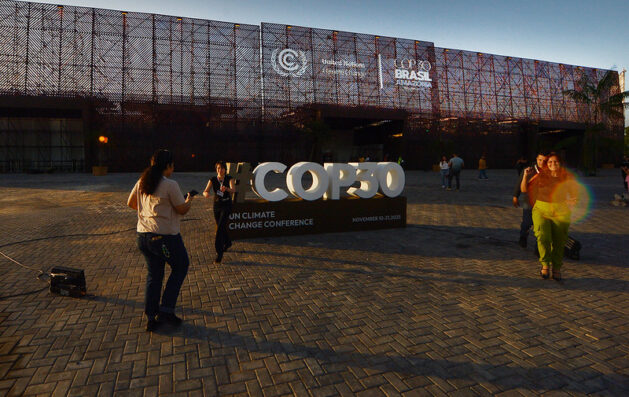
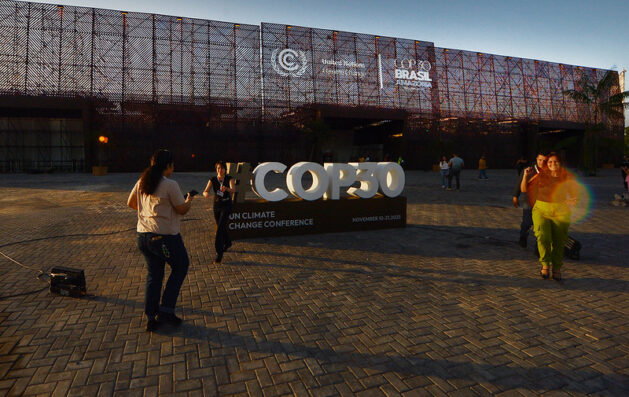
The Belém Declaration on Hunger, Poverty, and Human-Centered Climate Action, launched during the COP30 Leaders Summit, places the world’s most vulnerable populations at the center of global climate policy. Credit: Joyce Chimbi/IPS

The Belém Declaration on Hunger, Poverty, and Human-Centered Climate Action, launched during the COP30 Leaders Summit, places the world’s most vulnerable populations at the center of global climate policy. Credit: Joyce Chimbi/IPS

“Its mission is to organize a political struggle for land demarcation, which is vital for preserving cultural traditions and way of life. The commission works to secure land rights, and its efforts align with the preservation of the Atlantic Forest biome, as the Guarani have lived in the region for centuries and their culture is deeply connected to its biodiversity.”

“Within our territories, we do annual plantations for us to continue producing our sacred food, preserving our traditional ceremonies, which are linked to us and to spirituality. Our spirituality is directly connected to our food, to our plantations, to our land,” she explained.

“But all these are now under threat. We have seen this abrupt change and emergencies caused by climatic changes. So, for example, in our village, we have not been able to harvest food for more than three years.

“We have only managed to keep our sacred seeds because either it rains too much or it rains too little—at the time of the annual plantations, we have only managed to maintain the part of the traditional ceremonies that is spiritual.”

Njagga Touray, Party representative from the Gambia in West Africa, told IPS that “the food situation in the country, just like many others, is not very promising. Climate change leads to land degradation due to increasingly erratic rainfall, which decreases our production; we need to feed a growing population and plan for the next generation.”

The COP30 agenda is alive in this dire situation. The Belém Declaration on Hunger, Poverty, and Human-Centered Climate Action, announced and endorsed by 44 countries last week, launched a new Climate-Resilient Social Protection and Smallholder Agriculture Finance Partnership.

Delegates say this progress has instilled a renewed sense of optimism—proving that elevating adaptation and unleashing technology within the world’s farming systems helps the global community to redefine resilience, transforming vulnerability into strength and ambition into action.

Recognizing the fundamental role of combating hunger and poverty for climate justice, a new Climate-Resilient Social Protection and Smallholder Agriculture Finance Partnership has already been launched under the COP30 Action Agenda.

This partnership supports the Plan to Accelerate Solutions (PAS) by setting clear goals to encourage action and monitor progress, which includes helping countries like Benin, Ethiopia, Kenya, Zambia, and the Dominican Republic create plans for social protection, support small farms, and improve access to water.

The PAS brings countries together with international partners and subnational networks to align national ambition with local action, integrate local priorities into NDCs, and institutionalize multilevel governance as a foundation for achieving the Paris Agreement’s goals.

By 2028, the plan is expected to have established a joint coordination group of climate finance donors to align portfolios in support of efforts to combat hunger and poverty. Importantly, the launch builds on the November 7, 2025 adoption of the Belém Declaration on Hunger, Poverty, and Human-Centered Climate Action by 44 countries, a landmark commitment developed with the Global Alliance Against Hunger and Poverty during the COP30 Leaders Summit held just days before the start of the UN climate conference.

Furthermore, two innovative digital tools have also been launched to support climate-smart agriculture at scale. Brazil and the UAE, in partnership with the Gates Foundation, Google, and leading global agricultural institutions, announced the world’s first open-source AI Large Language Model (LLM) for agriculture, a breakthrough toward a more resilient and equitable global food system.

Secondly, the AIM for Scale, a farmer-centered AI forecasting tool, could empower over 100 million farmers by 2028 by providing real-time insights that strengthen climate-smart decision-making, risk preparedness, and inclusive innovation across agricultural systems worldwide.

The Agricultural Innovation Showcase high-level event will serve as a media and political platform for governments and philanthropic leaders to announce a multi-billion-dollar package of support to fund agricultural innovations that help farmers in lower-income regions adapt to the impacts of climate change and build resilience. Nearly USD 2.8bn has been announced for farmer adaptation and resilience to strengthen global food systems.

International donors have also announced over USD 2.8bn for farmer adaptation and resilience to strengthen global food systems. In support of the COP30 Brazil Presidency’s call to make COP30 the COP of implementation, the commitments are aimed at increasing support for smallholder farmers in poorer regions who are bearing the brunt of worsening weather extremes. The donor funds will be invested in technologies and tools to help farmers adapt, build resilience, and strengthen local food systems that feed and employ billions of people.

“Agricultural innovation is the engine of climate resilience,” Martin van Nieuwkoop, Director of Agricultural Development, Gates Foundation.

Back to those on the frontlines of climate change, where it intersects with food systems, ancestry, and traditions, like those of Mirim Mariano—it is a race against time.

“If we do not have our land and healthy territory, we do not have healthy food, and without food we do not survive. Food must become a centerpiece in the global climate discourse, and it is not just about any food, but healthy food that aligns with our ancestry and local traditions and spirituality.”

This feature is published with the support of Open Society Foundations.

IPS UN Bureau Report

  Source

The AI Revolution – A Way Forward

Artificial Intelligence, Civil Society, Development & Aid, Global, Headlines, Landlocked Developing Countries, Least Developed Countries, Small Island Developing States, Sustainable Development Goals, TerraViva United Nations, Trade & Investment

Opinion

GEBZE, Türkiye, Nov 14 2025 (IPS) – Artificial intelligence (AI) is rapidly changing our world. It has helped a few companies in developed countries set record-breaking profits. Last month, Nvidia, a leading US AI company, hit a market value of USD 5 trillion.


Nvidia, together with the other six technology companies known as the Magnificent Seven, reached a market capitalisation of USD22 trillion. This value easily eclipses the combined GDP of the world’s 44 Least Developed Countries (LDCs), Small Island Developing States and Landlocked Developing Countries.

These businesses continue to make massive investments in this transformational technology. Not only are investments being made in AI for the future, but benefits are also already being reaped as it accelerates global commerce and rapidly transforms markets.

According to the World Economic Forum, AI is streamlining supply chains, optimising production, and enabling data-driven trade decisions, giving companies a big competitive edge in global markets.

Thus far, the beneficiaries have been those living in the developed world, and a few developing countries with high technological capacities, like India.

By and large, developing countries have lagged far behind this technological revolution. The world’s 44 LDCs and the Small Island Developing States are those that have been almost completely left out.

According to UNCTAD, LDCs risk being excluded from the economic benefits or the AI revolution. Many LDCs and Small Island Developing States struggle with limited access to digital tools, relying on traditional methods for trade documentation, market analysis, and logistics. This is happening as others race ahead.

This widening gap threatens to marginalize these countries in international trade and underscores the urgency of ensuring they can participate fully in the AI-driven global economy.

AI holds transformative potential for developing countries across sectors critical to economic growth and trade. The World Bank has noted that in agriculture, AI-driven tools can improve crop yields, forecast market demand, and enhance supply chain efficiency. It can also strengthen food security and export earnings. In trade and logistics, AI can optimize operations, reduce transaction costs, and help local producers access new markets.

Beyond commercial applications, AI can bolster disaster preparedness, enabling governments and businesses to allocate resources efficiently and minimize losses. The use of AI can be a game changer in responding to massive natural disasters such as the one caused by Hurricane Melissa in Jamaica a few days ago.

Despite these opportunities, the poorest and most vulnerable countries face significant hurdles in accessing and benefiting from AI. The International Telecommunications Union has noted that many countries lack reliable electricity, broadband connectivity, and computing resources, impeding the deployment of AI technologies. This is compounded by human capacity constraints and limited fiscal space to make the requisite investments.

Given this, what is the best way forward for the world’s poorest and most vulnerable countries? Firstly, policy and governance frameworks for leveraging AI for development transformation are urgently, and we can learn from others.

For example, Rwanda, a leader in the field of using technology to drive transformation has developed a National Artificial Intelligence Policy. Another example is Trinidad and Tobago, which recently established a Ministry of Public Administration and Artificial Intelligence.

Secondly, capacity building, especially for policy leaders, is key. This must be augmented by making the requisite investments in universities and centers of excellence. Given the importance of low-cost and high-impact solutions, building partnerships with institutions in the global south is absolutely vital.

Finally, financing remains key. However, given the downward trends in overseas development assistance, accessing finance, especially grant and concessional resources from other sources will be important. Consequently, international financial institutions, especially the regional development banks, have a critical role to play.

Since the countries themselves are shareholders, every effort should be made to establish special purpose windows of grants and concessional financing to help accelerate adoption of relevant, low-cost, relevant and high-impact AI technological solutions.

In an adverse financing environment, achieving the above will be difficult. This is where Tech Diplomacy comes in and must be a central element of a country’s approach to foreign policy. This will be the subject of another piece.

In summary, AI is shaping and changing the world now. For the poorest and most vulnerable countries, all is not lost. With strategic investments, forward-looking and inclusive policies, and international cooperation via Tech Diplomacy, AI can become a powerful tool for their sustainable growth and development.

Deodat Maharaj, a national of Trinidad and Tobago, is presently the Managing Director of the United Nations Technology Bank for the Least Developed Countries. He can be contacted at: deodat.maharaj@un.org

IPS UN Bureau

  Source

The Top Climate Leaders Are Now in The Global South

Biodiversity, Climate Action, Climate Change, Conferences, COP30, Development & Aid, Economy & Trade, Energy, Environment, Global, Green Economy, Headlines, Labour, Natural Resources, TerraViva United Nations

Opinion


As climate leaders gather in the Amazon, the world’s green transformation is speaking with a southern accent—powered by markets, technology, and a new economic logic.

Belém—30th Conference of the Parties (COP30). Credit: Antônio Scorza/COP30

Belém—30th Conference of the Parties (COP30). Credit: Antônio Scorza/COP30

OSLO, Norway, Nov 11 2025 (IPS) – When world leaders now gather in Belém, Brazil for the UN climate conference, expectations will be modest. Few believe the meeting will produce any breakthroughs. The United States is retreating from climate engagement. Europe is distracted. The UN is struggling to keep relevant in the 21st century.


But step outside the negotiation tents, and a different story unfolds—one of quiet revolutions, technological leaps, and a new geography of leadership. The green transformation of the world is no longer being designed in Western capitals. It is being built, at scale, in the Global South.

Ten years ago, anyone seeking inspiration on climate policy went to Brussels, Berlin or Paris. Today, you go to Beijing, Delhi or Jakarta. The center of gravity has shifted. China and India are now the twin engines of the global green economy, with Brazil, Vietnam and Indonesia closely behind.

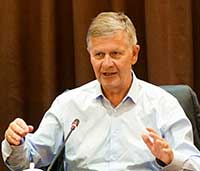
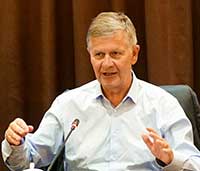
Erik Solheim

This is not about rhetoric; it is about results. China accounts for roughly 60 percent of global capacity in solar, wind, and hydropower manufacturing. It dominates in electric vehicles, batteries, and high-speed rail. China’s 93 GW installation of solar in May 2025 is a historic high and exceeds the monthly or short‐term installation levels of any other country to date.

China has made the green transition its biggest business opportunity, turning green action into jobs, prosperity and global leadership. China is now making more money from exporting green technology than America makes from exporting fossil fuels.

India, too, is reshaping what green development looks like. I was in Andhra Pradesh last month, when I visited a wonderful six-gigawatt integrated energy park—solar, wind, and pumped storage. It delivers round-the-clock clean power. There is nothing like that in the West. In another state, Tamil Nadu, an ecotourism circuit is protecting mangroves and marine ecosystems while creating local jobs in tourism. The western state of Gujarat, long a laboratory for industrial innovation, has committed to 100 gigawatts of renewables by 2030, with the captains of Indian business – Adani and Reliance – driving large-scale solar and wind investments with the state government.

These are not pilot projects. They are national strategies. And they are succeeding because the economics have flipped.

The cost of solar power has fallen by over 90 percent in the last decade, largely thanks to the intense competition between Chinese solar companies. Battery storage is now competitive with fossil fuels. What was once an environmental aspiration has become a financial inevitability. In Indian Gujarat, solar-plus-storage projects are already cheaper than coal. Switching to clean energy is no longer a cost—it is a saving.

That is why climate action today is driven not by diplomacy, but by economics. The question is no longer if countries will go green, but who will own the technologies and industries that make it possible.

Europe, long the moral voice of the climate agenda, now risks losing the industrial race. After years of blocking imports from developing countries on grounds of “inferior” green quality, it now complains that Chinese electric vehicles are too good— too cheap and too efficient. Europe cannot have it both ways. The world cannot build a green transition behind protectionist walls. The markets must open to the best technologies, wherever they are made.

President Luiz Inácio Lula da Silva of Brazil understands this new reality. That is why he chose Belém, deep in the Amazon, as the site for climate talks. The location itself is a statement: the future of climate policy lies in protecting the rainforests and empowering the people who live within them.

Forests are not just carbon sinks; they are living economies. When I was Norway’s environment minister, we partnered with Brazil and Indonesia to reward them for reducing deforestation. Later, Guyana joined our effort—a small South American nation where nearly the entire population is of Indian or African origin.

Guyana has since turned conservation into currency. Under its jurisdictional REDD+ programme, the country now sells verified carbon credits through the global aviation market known as CORSIA. In the third quarter of this year, these credits traded at USD 22.55 per tonne of CO₂ equivalent, with around one million credits sold through a procurement event led by IATA and Mercuria.

The proceeds go directly to forest communities—building schools, improving digital access, and funding small enterprises. It is proof that the carbon market can deliver real value when tied to real lives. You cannot protect nature against the will of local people. You can only protect it with them. Last year in Guyana, I watched children play soccer and cricket beneath the jungle canopy—a glimpse of life thriving in harmony with the forest, not at its expense.

That, ultimately, is what Belém should represent: not another round of procedural debates, but a vision for linking markets, nature and livelihoods.

The Global South has also sidestepped one of the West’s greatest political failures: climate denial. In India, there is no major political party—or public figure, cricket star or Bollywood artist—questioning the reality of climate change. Leaders may differ on ideology, but not on this. Across Asia, from China to Indonesia, climate action unites rather than divides. Because here, ecology and economy move together.

Prime Minister Narendra Modi of India puts it simply: by going green, we also go prosperous. President Xi Jinping of China and President Lula of Brazil share that same message—a vision that draws people in, instead of lecturing them. It is this integration of growth and sustainability that explains why the Global South is moving faster than most of the developed world.

None of this means diplomacy is irrelevant. The UN still matters. But its institutions must evolve to reflect the realities of the 21st century. The Security Council, frozen in 1945, still excludes India and Africa from permanent membership. Without reform, multilateralism risks losing its meaning.

Yet, while negotiations stall, transformation continues. From solar parks in Gujarat to high-speed rail across China, from mangrove tourism in Tamil Nadu to carbon markets in Guyana—climate leadership is happening in real economies, not in press releases.

Belém will not deliver a grand agreement. But it doesn’t need to. The world is already moving—faster than our diplomats.

The story of Belem will not be written in communiqués, but in kilowatts, credits, and communities.

The real climate leaders are no longer in Washington or Brussels.

They are in Beijing, Delhi, São Paulo, and Georgetown.

The future of climate action is already here.

It just speaks with a southern accent.

The author is the former Executive Director of the United Nations Environment Programme and Norway’s Minister for Environment and International Development.

IPS UN Bureau


The Top Climate Leaders Are Now in The Global South

Biodiversity, Climate Action, Climate Change, Conferences, COP30, Development & Aid, Economy & Trade, Energy, Environment, Global, Green Economy, Headlines, Labour, Natural Resources, TerraViva United Nations

Opinion


As climate leaders gather in the Amazon, the world’s green transformation is speaking with a southern accent—powered by markets, technology, and a new economic logic.

Belém—30th Conference of the Parties (COP30). Credit: Antônio Scorza/COP30

Belém—30th Conference of the Parties (COP30). Credit: Antônio Scorza/COP30

OSLO, Norway, Nov 11 2025 (IPS) – When world leaders now gather in Belém, Brazil for the UN climate conference, expectations will be modest. Few believe the meeting will produce any breakthroughs. The United States is retreating from climate engagement. Europe is distracted. The UN is struggling to keep relevant in the 21st century.


But step outside the negotiation tents, and a different story unfolds—one of quiet revolutions, technological leaps, and a new geography of leadership. The green transformation of the world is no longer being designed in Western capitals. It is being built, at scale, in the Global South.

Ten years ago, anyone seeking inspiration on climate policy went to Brussels, Berlin or Paris. Today, you go to Beijing, Delhi or Jakarta. The center of gravity has shifted. China and India are now the twin engines of the global green economy, with Brazil, Vietnam and Indonesia closely behind.

Erik Solheim

This is not about rhetoric; it is about results. China accounts for roughly 60 percent of global capacity in solar, wind, and hydropower manufacturing. It dominates in electric vehicles, batteries, and high-speed rail. China’s 93 GW installation of solar in May 2025 is a historic high and exceeds the monthly or short‐term installation levels of any other country to date.

China has made the green transition its biggest business opportunity, turning green action into jobs, prosperity and global leadership. China is now making more money from exporting green technology than America makes from exporting fossil fuels.

India, too, is reshaping what green development looks like. I was in Andhra Pradesh last month, when I visited a wonderful six-gigawatt integrated energy park—solar, wind, and pumped storage. It delivers round-the-clock clean power. There is nothing like that in the West. In another state, Tamil Nadu, an ecotourism circuit is protecting mangroves and marine ecosystems while creating local jobs in tourism. The western state of Gujarat, long a laboratory for industrial innovation, has committed to 100 gigawatts of renewables by 2030, with the captains of Indian business – Adani and Reliance – driving large-scale solar and wind investments with the state government.

These are not pilot projects. They are national strategies. And they are succeeding because the economics have flipped.

The cost of solar power has fallen by over 90 percent in the last decade, largely thanks to the intense competition between Chinese solar companies. Battery storage is now competitive with fossil fuels. What was once an environmental aspiration has become a financial inevitability. In Indian Gujarat, solar-plus-storage projects are already cheaper than coal. Switching to clean energy is no longer a cost—it is a saving.

That is why climate action today is driven not by diplomacy, but by economics. The question is no longer if countries will go green, but who will own the technologies and industries that make it possible.

Europe, long the moral voice of the climate agenda, now risks losing the industrial race. After years of blocking imports from developing countries on grounds of “inferior” green quality, it now complains that Chinese electric vehicles are too good— too cheap and too efficient. Europe cannot have it both ways. The world cannot build a green transition behind protectionist walls. The markets must open to the best technologies, wherever they are made.

President Luiz Inácio Lula da Silva of Brazil understands this new reality. That is why he chose Belém, deep in the Amazon, as the site for climate talks. The location itself is a statement: the future of climate policy lies in protecting the rainforests and empowering the people who live within them.

Forests are not just carbon sinks; they are living economies. When I was Norway’s environment minister, we partnered with Brazil and Indonesia to reward them for reducing deforestation. Later, Guyana joined our effort—a small South American nation where nearly the entire population is of Indian or African origin.

Guyana has since turned conservation into currency. Under its jurisdictional REDD+ programme, the country now sells verified carbon credits through the global aviation market known as CORSIA. In the third quarter of this year, these credits traded at USD 22.55 per tonne of CO₂ equivalent, with around one million credits sold through a procurement event led by IATA and Mercuria.

The proceeds go directly to forest communities—building schools, improving digital access, and funding small enterprises. It is proof that the carbon market can deliver real value when tied to real lives. You cannot protect nature against the will of local people. You can only protect it with them. Last year in Guyana, I watched children play soccer and cricket beneath the jungle canopy—a glimpse of life thriving in harmony with the forest, not at its expense.

That, ultimately, is what Belém should represent: not another round of procedural debates, but a vision for linking markets, nature and livelihoods.

The Global South has also sidestepped one of the West’s greatest political failures: climate denial. In India, there is no major political party—or public figure, cricket star or Bollywood artist—questioning the reality of climate change. Leaders may differ on ideology, but not on this. Across Asia, from China to Indonesia, climate action unites rather than divides. Because here, ecology and economy move together.

Prime Minister Narendra Modi of India puts it simply: by going green, we also go prosperous. President Xi Jinping of China and President Lula of Brazil share that same message—a vision that draws people in, instead of lecturing them. It is this integration of growth and sustainability that explains why the Global South is moving faster than most of the developed world.

None of this means diplomacy is irrelevant. The UN still matters. But its institutions must evolve to reflect the realities of the 21st century. The Security Council, frozen in 1945, still excludes India and Africa from permanent membership. Without reform, multilateralism risks losing its meaning.

Yet, while negotiations stall, transformation continues. From solar parks in Gujarat to high-speed rail across China, from mangrove tourism in Tamil Nadu to carbon markets in Guyana—climate leadership is happening in real economies, not in press releases.

Belém will not deliver a grand agreement. But it doesn’t need to. The world is already moving—faster than our diplomats.

The story of Belem will not be written in communiqués, but in kilowatts, credits, and communities.

The real climate leaders are no longer in Washington or Brussels.

They are in Beijing, Delhi, São Paulo, and Georgetown.

The future of climate action is already here.

It just speaks with a southern accent.

The author is the former Executive Director of the United Nations Environment Programme and Norway’s Minister for Environment and International Development.

IPS UN Bureau


The Silent War Before COP30: How Corporations Are Weaponising the Law to Muzzle Climate Defenders

Active Citizens, Civil Society, Climate Action, Climate Change, Climate Change Justice, Conferences, COP30, Crime & Justice, Development & Aid, Economy & Trade, Energy, Environment, Freedom of Expression, Global, Headlines, Indigenous Rights, Latin America & the Caribbean, Press Freedom, TerraViva United Nations

Opinion

Family agriculture and land defenders in Colombia. Credit: Both Nomads/Forus

BELÉM, Brazil, Nov 10 2025 (IPS) – As the world prepares for the next COP30 summit, a quieter battle is raging in courtrooms. Strategic Lawsuits Against Public Participation (SLAPPs) are the fossil-fuel industry’s new favourite weapon, turning justice systems into instruments of intimidation.


“Speak out, and you’ll pay for it”

On a humid morning in August 2025, two small environmental groups in Panama — Centro de Incidencia Ambiental and Adopta Bosque Panamá — found out through social media that they were being sued for “slander” and “crimes against the national economy.” Their offence? Criticising a port project on the country’s Pacific coast.

A few days later, across the border in Costa Rica, two environmental content creators woke up to find their bank accounts frozen and salaries withheld. Their “crime” was posting videos about a tourism project they said was damaging Playa Panamá’s fragile coastline.

In both cases, the message was straightforward: speak out, and you’ll pay for it.

These are part of a growing global trend that is particularly ominous as climate activists, Indigenous defenders, and journalists push their demands upon the upcoming COP30 negotiations. The battle to protect the planet increasingly comes with an additional cost: defending yourself in court.

SLAPPs: Lawsuits Designed to Scare, Not Win

The acronym sounds almost trivial — SLAPP — but its impact is anything but. SLAPP stands for Strategic Lawsuits Against Public Participation, a term coined decades ago to describe legal actions intended not to win on merit but to intimidate, exhaust, and silence those who speak out on matters of public interest.

According to Transparency International, “SLAPPs are also known as frivolous lawsuits or gag lawsuits, as they silence journalists, activists, whistleblowers, NGOs and anyone who brings facts to light in the public interest.”

These are not just lawsuits; they are in fact strategy. They don’t need to win, they just need to drain your time, your money, and your hope.

The claimants are usually powerful, ranging from corporations, politicians, or investors.

In the Costa Rican case, the company linked to the Playa Panama tourism project did not even allege material harm. Yet the court imposed “precautionary embargoes,” blocking credit cards, freezing wages, even restricting property rights, punishing through the process.

In Panama, the developers of the Puerto Barú port project filed a criminal complaint against environmental NGOs who had challenged the project’s environmental impact assessment before the Supreme Court. Those challenges are still pending. Rather than waiting for the judiciary’s ruling, the company launched a separate legal attack, accusing those NGOs of harming the national economy.

Observers call it “judicial intimidation.” The case triggered several alerts across the EU SEE Early Warning Mechanism, warning of a “chilling effect on civic participation.”

‘Unfortunately, in Panama, judicial harassment of journalists and activists by politicians and businesspeople is already common practice because criminal law allows it. Reform is needed in relation to so-called crimes against honour and the grounds for seizure of assets. International organisations such as the Inter-American Press Association have warned about this,’ says Olga de Obaldía, executive director of Transparency International – Panama Chapter, a national member of the EU SEE network.

In Costa Rica, the embargoes imposed on content creators Juan Bautista Alfaro and Javier Adelfang sparked outrage. Within days, 72 organisations and more than 3,000 individuals — from academics to Indigenous leaders — signed an open letter condemning the action as “an assault on public interest advocacy.”

The backlash worked: members of the Frente Amplio Party introduced a bill to restrict the use of preventive embargoes in cases involving public interest speech.

But for those already targeted, the damage – emotional, financial and reputational – has already been done.

We do not just see SLAPPs deployed in Latin America. Examples of SLAPPs as a means of lawfare by the rich and powerful have been around for a long time across the globe.

In Thailand, Thammakaset sued several members of the NGO Fortify Rights and other activists for denouncing abusive working conditions. Still today content posted by communities or NGOs, or even comments under local government posts, are often picked up and turned into criminal defamation cases.

Despite the existence of anti-SLAPP provisions in the Criminal Procedure Code, experiences indicate that they are largely ineffective. The constant threat of facing litigation based on online content disrupts CSO work and chills free speech.

Climate Activism Under Pressure

As the world heads toward another global climate summit in Brazil – where journalist Amanda Miranda faces a SLAPP by government officials for uncovering corruption – we face a paradox: while governments make promises about protecting the environment, environmental defenders are being prosecuted for holding them accountable.

Brazil’s baseline snapshot on an enabling environment also highlights a related trend: environmental defenders are frequently framed as “anti-development,” a narrative used to delegitimise their work and undermine public support. SLAPPs reinforce this strategy. Beyond draining time and resources, these lawsuits inflict reputational harm, serving as tools in broader campaigns to discredit and silence critics.

According to research from the Business & Human Rights Resource Centre, the highest number of SLAPPs – almost half of them – took place in Latin America, followed by Asia and the Pacific (25%), Europe & Central Asia (18%), Africa (8.5%), and North America (9%). Nearly three-quarters of cases were brought in countries in the Global South and 63% of cases involved criminal charges. Furthermore, most individuals and groups facing SLAPPs raised concerns about projects in four sectors: mining, agriculture and livestock, logging and lumber, and finally palm oil.

In an International Center for Non-Profit law – ICNL – study on over 80 cases of SLAPPs across the Global South, out of them “91% were brought by private companies or company officials(…) 41% brought by mining companies and (…) 34% brought by companies associated with agriculture.”

According to data from the CASE Coalition, SLAPP cases have risen sharply in recent years: from 570 cases in 2022 to over 820 in 2023 in Europe alone. Around half of those targeted climate, land, and labor rights defenders. Fossil fuel and extractive industries remain the most frequent initiators.

It is important to remember that those numbers under-represent the extent of SLAPP use, they are based on reported legal cases and can’t include the many cases in which the mere threat of a lawsuit was enough to silence before filing a complaint

The Business & Human Rights Resource Centre has documented that companies linked to mining, tourism, and large infrastructure projects are increasingly using SLAPPs to paralyse critics ahead of international events like COP, when scrutiny intensifies.

The danger of SLAPPs lies in their quietness. They happen behind closed doors, in legal language, far from the marches and hashtags. The trials often do not even end up in lawsuits. Yet their effect is profound. Every frozen bank account, every unpaid legal fee, every public apology extracted under duress weakens the collective courage needed to hold power to account.

Across regions, SLAPPs follow the same playbook: identify outspoken defenders, sue them on vague charges like “defamation” or “economic harm”, drag the process out for years, win by exhausting, not convincing.

Of course, the specific tactics vary by legal context. In some countries, certain charges carry strategic advantages. For example, in the Philippines, authorities frequently rely on serious, non-bailable allegations — including charges like illegal possession of firearms — to keep activists detained for extended periods.

The Philippines remains the most dangerous country in Asia for land and environmental defenders with frequent attacks linked to mining, agribusiness, and water projects.

Political repression persists and civil society groups continue to face “red-tagging” and SLAPPs, further enabled by the passage of the Anti-Terrorism Act, the Anti-Money Laundering Act of 2001, and the Terrorism Financing Prevention and Suppression Act of 2012.

Authorities have also used fabricated firearms and explosives charges to target activists, journalists, and community leaders, often accompanied by asset freezes, surveillance, and prolonged detention. In these settings, SLAPPs can “weaponise” the criminal justice system itself to remove critics from public life entirely.

SLAPPs have become the invisible front of the climate struggle, a slow-motion suppression campaign that rarely makes headlines.

Tactics to Fight Back

In early 2024, the European Union adopted its first-ever Anti-SLAPP Directive, a milestone achievement after years of campaigning by journalists and civil society. It sets out minimum standards to prevent abusive lawsuits and protect public participation.

But implementation remains uncertain. The Vice-President of the European Commission, Vera Jourova, called the Directive “Daphne’s law,” in memory of the Maltese journalist Daphne Caruana Galizia, who was killed in 2017 while she was the victim of numerous legal proceedings against her, and whose tragic story helped raise awareness of the issue.

Beyond the European context, similar efforts to counter SLAPPs have emerged elsewhere, for example in Colombia with the Guerra v. Ruiz-Navarro case. This case illustrates the importance of investigating sexual violence and abuse of power, recognising it as a matter of public interest that warrants protection. This ruling sets a strong precedent against the misuse of courts to silence the press by influential figures and underscores that defending victims and informing the public are acts of defending human rights.

In Indonesia, another country where SLAPPs are being deployed, civil society groups continue to advocate for stronger legal protections, including legislation to protect from SLAPPs. A small step forward came in September 2024, when the Ministry of Environment and Forestry issued Regulation No. 10/2024, on legal protection for environmental defenders.

“While the Ministry of Environment and Forestry Regulation No. 10/2024 represents an initial step toward safeguarding environmental defenders, civil society organisations expect its effective implementation, coupled with broader anti-SLAPP legislation, to ensure comprehensive protection against retaliatory lawsuits and foster a secure environment for public participation in environmental governance,” says Intan Kusumaning Tiyas of INFID, national civil society platform in Indonesia.

Civil society groups are calling for action on immediate priorities.

These include stronger legal safeguards by enacting robust national anti-SLAPP laws that allow for early case dismissal, ensure defendants can recover legal costs, and penalise those who file abusive lawsuits.

Setting up solidarity and support through regional and global networks can quickly mobilise legal assistance, mental health support, and emergency funding for those targeted.

Finally, actions around visibility and accountability are needed to bring SLAPPs into the public eye and raise awareness. SLAPPs need to be framed not as ordinary legal conflicts, but as violations of human rights that weaken an enabling environment for civil society, democratic participation and obstruct climate justice.

At COP30, negotiators will debate carbon credits and transition funds. But the real test of climate commitment may lie in whether states protect the people defending rivers, forests, and coastlines from powerful interests.

Civil society hopes to push a bold message into COP30 discussions: defending the environment requires defending those who defend it and supporting an enabling environment for civil society.

This article was written with the support of the Forus team, particularly Lena Muhs, and members of the EU SEE network.

IPS UN Bureau


Defending Democracy in a “Topsy-Turvy” World

Active Citizens, Africa, Asia-Pacific, Civil Society, Democracy, Development & Aid, Editors’ Choice, Featured, Green Economy, Headlines, Human Rights, Humanitarian Emergencies, Middle East & North Africa, Press Freedom, Sustainable Development Goals, TerraViva United Nations

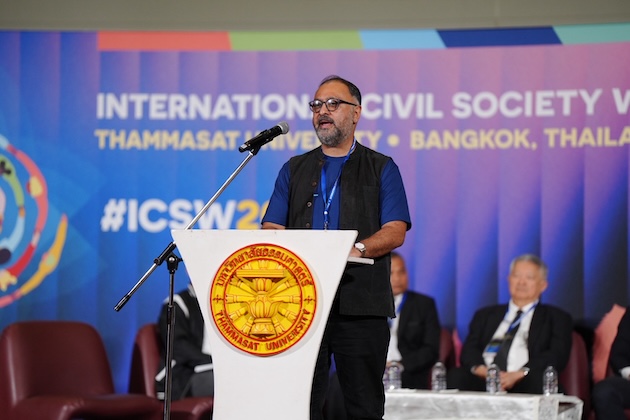
Secretary General of CIVICUS, Mandeep Tiwana, at International Civil Society Week 2025. Credit: Civicus

Secretary General of CIVICUS, Mandeep Tiwana, at International Civil Society Week 2025. Credit: Civicus

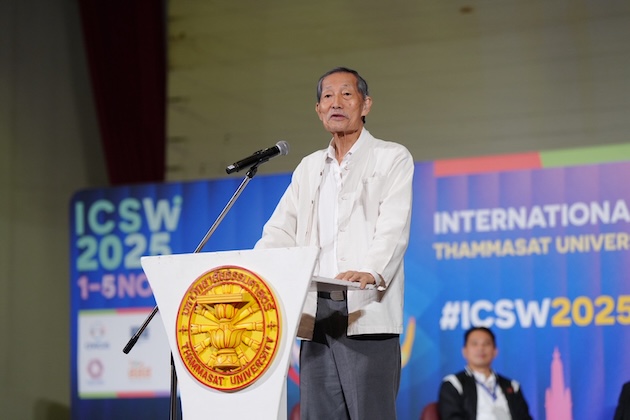
BANGKOK, Nov 1 2025 (IPS) – It is a bleak global moment—with civil society actors battling assassinations, imprisonment, fabricated charges, and funding cuts to pro-democracy movements in a world gripped by inequality, climate chaos, and rising authoritarianism. Yet, the mood at Bangkok’s Thammasat University was anything but defeated.


Once the site of the 1976 massacre, where pro-democracy students were brutally crushed, the campus—a “hallowed ground” for civil society actors—echoed with renewed voices calling for defending democracy in what Secretary General of CIVICUS, Mandeep Tiwana, described as a “topsy-turvy world” with rising authoritarianism—a poignant reminder that even in places scarred by repression, the struggle for civic space endures.

“Let it resonate,” said Ichal Supriadi, Secretary General, Asian Democracy Network. “Democracy must be defended together,” adding that it was the “shared strength” that confronts authoritarianism.

Despite the hopeful spirit at Thammasat University, where the International Civil Society Week (ICSW) is underway, the conversations often turned to sobering realities. Dr. Gothom Arya of the Asian Cultural Forum on Development and the Peace and Culture Foundation reminded participants that civic freedoms are being curtailed across much of the world.

Citing alarming figures, he spoke bluntly of the global imbalance in priorities—noting how military expenditure continues to soar even as civic space shrinks. He pointedly referred to the United States’ Ministry of Defense as the “Ministry of War,” comparing its USD 968 billion military budget with China’s USD 3 billion and noting that spending on the war in Ukraine had increased tenfold in just three years—a stark illustration of global priorities. “This is where we are with respect to peace and war,” he said gloomily.

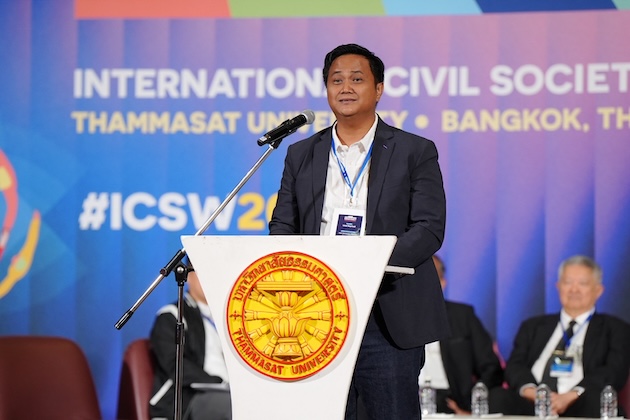
Ichal Supriadi, Secretary General, Asian Democracy Network. Credit: Civicus

Ichal Supriadi, Secretary General, Asian Democracy Network. Credit: Civicus

At another session, similar reflections set the tone for a broader critique of global power dynamics. Walden Bello, a former senator and peace activist from the Philippines, argued that the United States—especially under the Trump administration—had abandoned even the pretense of a free-market system, replacing it with what he called “overt monopolistic hegemony.” American imperialism, he said, “graduated away from camouflage attempts and is now unapologetic in demanding that the world bend to its wishes.”

Dr. Gothom Arya of the Asian Cultural Forum on Development and the Peace and Culture Foundation. Credit: Civicus

Dr. Gothom Arya of the Asian Cultural Forum on Development and the Peace and Culture Foundation. Credit: Civicus

Dr. Pervez Hoodbhoy, a Pakistani physicist and author, echoed the sentiment, expressing outrage at his own country’s leadership. He condemned Pakistan’s decision to nominate a “psychopath, habitual liar, and aggressive warmonger” for the Nobel Peace Prize, saying that the leadership had “no right to barter away minerals and rare earth materials to an American dictator” without public consent.

Hoodbhoy urged the international community to intervene and restart peace talks between Pakistan and India—two nuclear-armed neighbors perpetually teetering on the edge of renewed conflict.

But at no point during the day did the focus shift away from the ongoing humanitarian crises. Arya reminded the audience of the tragic loss of civilian lives in Gaza, the devastating fighting in Sudan that had led to widespread malnutrition, and the global inequality worsened by climate inaction. “Because some big countries refused to follow the Paris Agreement ten years ago,” he warned, “the rest of the world will suffer the consequences.”

That grim reality was brought into even sharper relief by Dr. Mustafa Barghouthi, a Palestinian physician and politician, who delivered a harrowing account of Gaza’s devastation. He said that through the use of  American-supplied weapons, Israel had killed an estimated 12 percent of Gaza’s population, destroyed every hospital and university, and left nearly 10,000 bodies buried beneath the rubble.

“Even as these crises unfolded across the world, the conference demonstrated that civil society continues to persevere, as nearly 1,000 people from more than 75 organizations overcame travel bans and visa hurdles to gather at Thammasat University, sharing strategies, solidarity, and hope through over 120 sessions.

Among them was a delegation whose presence carried the weight of an entire nation’s silenced hopes—Hamrah, believed to be the only Afghan civil society group at ICSW.

“Our participation is important at a time when much of the world has turned its gaze away from Afghanistan,” Timor Sharan, co-founder and programme director of the HAMRAH Initiative, told IPS.

“It is vital to remind the global community that Afghan civil society has not disappeared; it’s fighting and holding the line.”

Through networks like HAMRAH, he said, activists, educators, and defenders have continued secret and online schools, documented abuses, and amplified those silenced under the Taliban rule. “Our presence here is both a statement of resilience and a call for solidarity.”

“Visibility matters,” pointed out Riska Carolina, an Indonesian woman and LGBTIQ+ rights advocate working with ASEAN SOGIE Caucus (ASC). “What’s even more powerful is being visible together.”

“It was special because it brought together movements—Dalit, Indigenous, feminist, disability, and queer—that rarely share the same space, creating room for intersectional democracy to take shape,” said Carolina, whose work focuses on regional advocacy for LGBTQIA+ rights within Southeast Asia’s political and human rights frameworks, especially the ASEAN system, which she said has historically been “slow to recognize issues of sexuality and gender diversity.”

“We work to make sure that SOGIESC (Sexual Orientation, Gender Identity and Expression, and Sex Characteristics) inclusion is not just seen as a niche issue, but as a core part of democracy, governance, and human rights. That means engaging governments, civil society, and regional bodies to ensure queer people’s participation, safety, and dignity is part of how we measure democratic progress.”

She said the ICSW provided ASC with a chance to make “visible” the connection between civic space, democracy, and queer liberation and to remind people that democracy is not only about elections but also about “who is able to live freely and who remains silenced by law or stigma.”

Away from the main sessions, civil society leaders gathered for a candid huddle—part reflection, part reckoning—to examine their role in an era when their space to act was shrinking.

“The dialogue surfaced some tough but necessary questions,” he said. They asked themselves: ‘Have we grasped the full scale of the challenges we face?’ ‘Are our responses strong enough?’ ‘Are we expecting anti-rights forces to respect our rules and values?’ ‘Are we reacting instead of setting the agenda? And are we allies—or accomplices—of those risking everything for justice?’

But if there was one thing crystal clear to everyone present, it was that civil society must stand united, not fragmented, to defend democracy.

IPS UN Bureau Report

  Source