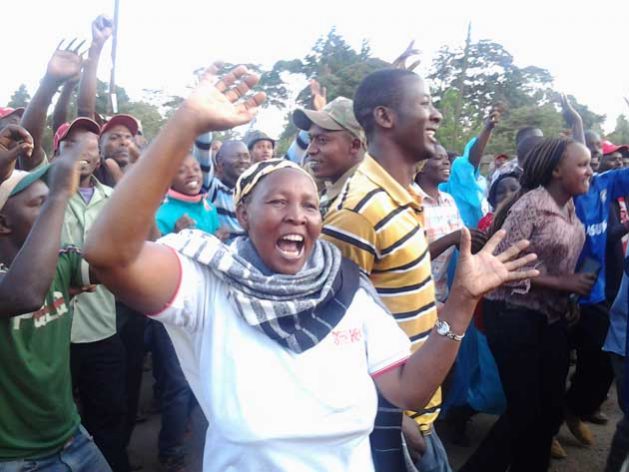
Gender equality and women empowerment at the heart of ICPD25. Credit: Joyce Chimbi / IPS
NAIROBI, Kenya, Nov 11 2019 (IPS) – Every day 830 women die while giving life. At least 33,000 girls are forced into child marriage with 11,000 girls undergoing female genital mutilation. These are some of the cruel realities young women face every day. However, there is renewed hope that delegates expected to attend the International Conference on Population and Development (ICPD) in Nairobi this week will re-energise and breathe new life to the Cairo Promise.
“The Summit is a call to action to accelerate progress towards the world we imagined in 1994,” Arthur Erken, one of the three co-chairs of the International Steering Committee of the Nairobi Summit, tells IPS. He emphasises that the magic of the first ICPD conference is in the paradigm shift from “a numbers-driven approach to development to placing people, their needs and aspirations, at the heart of sustainable development”.
Erken says this summit is, therefore, a call to action to countries and partners to fulfil the Cairo Promise by making concrete commitments towards achieving the ICPD goals.
Unfulfilled promises and Re-energising the global community
Co-hosted by the governments of Kenya, Denmark and the United Nations Population Fund (UNFPA), the Nairobi Summit takes place on the 25th anniversary of the ground-breaking 1994 International Conference on Population and Development (ICPD).
Arthur Erken says that ICPD25 is a call for action to accelerate the Cairo promise. Credit: Joyce Chimbi / IPS
Unfortunately, says Erken, this promise has for millions of women and girls around the world not been fulfilled. “The world we imagined in Cairo is not a reality,” says Erken. He says the Cairo Promise was about ensuring that all people have access to sexual and reproductive healthcare, including safe pregnancy, childbirth and family planning services, and are free from all forms of violence and harmful practices.
Other experts such as Beatrice Okundi, assistant director of the National Council for Population and Development (NCPD), affirms that at the heart of the promise is gender equality, and the emphasis placed on equality and empowerment of women and girls.
Raising awareness
Okundi says that accelerating the Cairo Promise will require raising awareness on the relationship between population growth and sustainable development. “For Kenya to absorb an additional one million people every year as it has done for the past 10 years, our economy must grow at a double-digit figure up from the current 5.7 percent,” she tells IPS.
Five themes to a call for Action
Erken explains that the summit is focused around five themes: universal access to sexual and reproductive health and rights, financing the ICPD agenda, drawing on the demographic dividends, ending gender-based violence and harmful practices and upholding the right to sexual and reproductive healthcare, even in humanitarian and fragile contexts.
He says the summit is also about achieving three critical zeroes: zero unmet need for family planning, zero maternal deaths and zero violence and harmful practices against women and girls, including child marriages and female genital mutilation. “ICPD25 is also about assessing how much these three zeroes will cost governments as well as partners, and emphasises the need for innovative financial models,” Okundi adds.
She says that “ICPD sets in place a far-sighted plan that advances human well-being and their rights, well ahead of numerical numbers”.
Erken points out the Nairobi Statement “is not a negotiated document”. However, it is nonetheless the overall global framework formulated and based on wide consultations with diverse stakeholders, including governments and CSOs, among others. “This statement is an embodiment of areas that need prioritisings. It is a reflection of the state of implementation of the ICPD Programme of Action and the areas where concrete commitments are required in order to move the ICPD agenda forward.”
Finish what we started….
But not every expert or delegate is as hopeful, as expressed by Angela Nguku, the executive director of White Ribbon Alliance, an international coalition on safe motherhood. She argues there is no need for new promises or commitments. “We need to finish what we started in Cairo by removing obstacles, especially corruption from our path,” she says. Nguku says that misappropriation of public funds continues to stand between populations and Cairo promise.
“On this continent, the ICPD agenda remains unfulfilled, not because of a resource gap, but a leadership and governance gap. We need to put the resources we have where they are needed,” she tells IPS.
Nonetheless, delegates expect that the new commitments made in the next three days will lead to completion of the unfinished business of ICPD.
Let’s not wait another 25 years
ICPD25 runs from November 12-14, bringing together more than 6,000 delegates from around the world, with at least 164 countries and delegates drawn from civil society organisations, grassroots organisations, young people, business and community leaders, faith-based organisations, indigenous peoples, international financial institutions, people with disabilities, academics and many others working towards the pursuit of sexual and reproductive health and rights.
“The summit is not a platform to prescribe solutions to convening countries and convening delegates. It is an opportunity for governments and other partners to make commitments, and own the process,” says Erken.
Experts acknowledge that tremendous progress has been made over the last 25 years, but emphasize that a lot more will need to be achieved in a shorter period of time, to fulfil the promise by 2030.
“We cannot have another 25 years of ICPD. This is hopefully the last ICPD conference,” Erken observes.
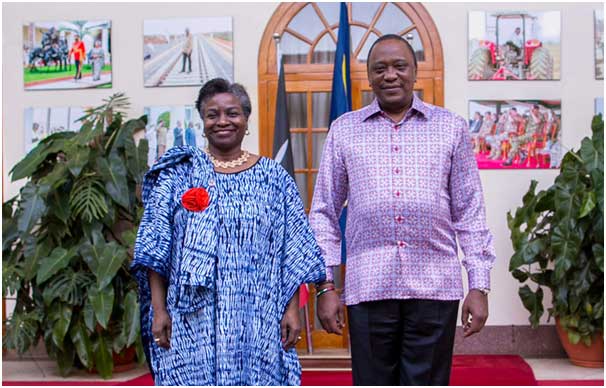
Kenyan President Uhuru Kenyatta hailed the strong partnership between his government and UNFPA during a meeting with UNFPA’s Executive Director, Dr. Natalia Kanem in March 2019, which will jointly convene the ICPD 25 from 12 to 14 November 2019 along with the Government of Denmark. Credit: PSCU
NAIROBI, Kenya, Nov 8 2019 (IPS) – As we count down the remaining days to the opening of the Nairobi Summit or the International Conference for Population and Development(ICPD), I am confounded by how much humanity has managed to simultaneously empower more women than at any other time in history, while at the same time failing to see that ‘women’s issues’ are actually ‘everyone’s issues’.
That countdown evokes memories of my own grandmother, who followed a common trend in India at the time, dropping out of school to get married and give birth to her first child at age 11. In many parts of the world, girls have over the years faced unthinkable obstacles while trying just to get an education, often jeopardizing their personal safety and risking being ostracized by their families and communities.
It wasn’t until a mere 25 years ago at the ICPD in Cairo that the world agreed that population and economic development issues must go hand in hand, and that women must be at the heart of our efforts for development.
Back then, governments, donors, civil society, and other partners made commitments to reduce infant and child mortality, reduce maternal mortality, ensure universal education, and increase access to sexual and reproductive health and rights, amongst many others. These commitments were a massive step forward for the rights of women and girls.
At the Conference in Nairobi, we all have an opportunity to repeat the message that women’s empowerment will move at snail-pace unless we bolster reproductive health and rights across the world. This is no longer a fleeting concern, but a 21st century socio-economic reality.
We can choose to take a range of actions, such as empowering women and girls by providing access to good health, education and job training. Or we can choose paths such as domestic abuse, female genital mutilation and child marriages, which, according to a 2016 Africa Human Development Report by UNDP, costs sub-Saharan Africa $95 billion per year on average due to gender inequality and lack of women’s empowerment.
Fortunately, the world has made real progress in the fight to take the right path. There is no lack of women trailblazers in all aspects of human endeavour. It has taken courage to make those choices, with current milestones being the result of decades of often frustrating work by unheralded people, politics and agencies.
Leaders like the indefatigable Dr. Natalia Kanem the Executive Director of UNFPA and her predecessors, supported especially by the Nordic countries, are pushing the global change of paradigm to ensure we demolish the silo of “women’s issues” and begin to see the linkages between reproductive rights and human prosperity.
Numerous studies have shown the multi-generation impact of the formative years of women. A woman’s reproductive years directly overlap with her time in school and the workforce, she must be able to prevent unintended pregnancy in order to complete her education, maintain employment, and achieve economic security.
Denial of reproductive health information and services places a women at risk of an unintended pregnancy, which in turn is one of the most likely routes for upending the financial security of a woman and her family.
A lot has been achieved since the years of my grandmother, when girls were expected to be demure and remain in the background. In many places the current teenage girl believes that every door is open to them; they can rise to any heights.
Yet in a lot of other countries, girls are up against a system that seems rigged against them for the long-term. These are countries where greater leadership and the right policies are sorely missing; where women and girls are robbed of the education they deserve and the jobs they need to lift themselves and their families out of poverty; where they are victims of sexual and physical abuse in their own homes or sold into child marriage.
As the UN Resident Coordinator to Kenya, I am privileged to serve in a country, which is hosting this very important conference. It has shown leadership to advance the cause of women’s right-from criminalizing female genital mutilation to stepping up the fight to end child marriage and pushing hard on improving reproductive, maternal and child health.
When the ICPD opens in Nairobi on 12 November 2019, I wonder how my grandmother’s life might have been different if she had been able to learn how to read and write and achieve her full human potential, but also appealing to all Governments to work towards giving half the world population the final and absolute control over their own bodies.
Stefanos Xenarios is a Professor at Nazarbaev University, Kazakhstan and co-editor-in-chief of the Central Asian Journal of Water Research; Iskandar Abdullaev is Deputy Director, CAREC Institute, China and Vladimir Smakhtin is Director, UN University Institute for Water, Environment and Health, Canada and series editor of the Routledge publishers’ Earthscan Series on Major River Basins of the World, in which the Aral Sea Basin Book is the latest addition.
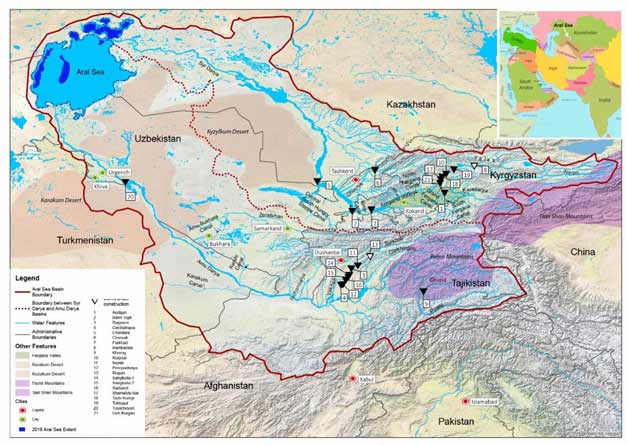
The Aral Sea Basin, defined in red, straddles six countries in Central Asia. See detailed map in full at http://bit.ly/2BQPpRm. Credit: UNU-INWEH
NUR-SULTAN CITY, Kazakhstan, Nov 7 2019 (IPS) – The water resources in Central Asia’s Aral Sea Basin support the lives and livelihoods of about 70 million people — a population greater than Thailand, France, or South Africa.
And unless well-funded and coordinated joint efforts are stepped up, with competition replaced by cooperation, ongoing over-withdrawals compounded by climate change will cause dangerous water shortages in this huge, highly complex watershed spanning six nations: Afghanistan, Kazakhstan, Kyrgyzstan, Tajikistan, Turkmenistan, and Uzbekistan.
That’s the key message of a new book co-authored by 57 regional and international experts from 14 countries and the United Nations, who spent years examining a suite of challenges in the Aral Sea Basin.
The new book assembles the views of nearly all major regional and international experts on the great challenges faced in the Aral Sea Basin. They include three co-authors from the UN University’s Institute for Water, Environment and Health, in Hamilton, Canada.
And almost half of the authors are based in Central Asia, creating a unique blend of regional and international voices and expertise on these critical issues.
The Basin’s two major rivers, the Amu Darya and Syr Darya, discharge now only about 10% of what flowed into the Aral Sea until the 1960s, shrinking the sea by more than 80 percent — “one of the world’s most severe and emblematic environmental disasters.”
Freshwater is key to food, energy, environmental security and social stability among the six Aral Basin countries. And given the countries’ prospective economic and population growth, reliance on water resources will increase, compelling cooperation in sharing benefits and reducing costs.
Intensive, wasteful irrigated farming when the nations were part of the Soviet Union was the main cause of the Aral Sea drying up and irrigation continues to consume about 90 percent of the total water withdrawal in the Basin, with agriculture contributing from 10 to 45 percent of GDP, and 20 to 50 percent of rural employment.
Most irrigation, hydropower and other water-related infrastructural systems and facilities are in transition, a blend today of past and present. Unfortunately, the existing observational meteorological and hydrological networks in the Basin, which declined in the 1990s when the Soviet period ended, are insufficient to support informed water management, and regional water data sharing is suboptimal.
Degradation of land and water are among the major hindrances to sustainable development in the region, with land degradation alone estimated to cost about US$3 billion of losses in ecosystem services annually.
There has been uneven progress across the countries on the Sustainable Development Goals (SDGs), and particularly Goal 6 (Clean Water and Sanitation), with contrasting progress also between urban and rural populations within each nation, most particularly Afghanistan.
The new book suggests a number of interventions and initiatives to end and reverse deterioration of the Aral Basin. For example, if existing large hydropower projects were managed in a collaborative manner, they can bring all countries multiple benefits, including improved reliability of supply and availability of water for agriculture, domestic use and electricity generation.
Monitoring of snow and glaciers in high altitude mountain areas, as well as permafrost, is essential for sound estimates of water availability and water-related hazards. Such systems need to be re-installed.
Also needed: institutions for decentralized management of natural resources, such as water user associations to promote cooperative, sustainable, intra-regional management between upstream and downstream countries and integrated rural development approaches.
Existing regional frameworks must either be reformed or replaced by new mechanisms of cooperation in order to successfully translate political will into highly effective, integrated regional water management.
Reforming the water sector, however, goes well beyond new policies and initiatives, updating the legislative framework, and building new institutions. A key challenge is to achieve continuous, strong, high-level political engagement throughout the Basin countries, the active participation of stakeholders, and technical and financial support.
The Aral Basin’s many water-related issues must be addressed jointly by all involved states within the concept that water, energy, and food issues represent a critical, interlinked nexus of needs.
Major geopolitical and economic development interests are placing increasing pressure on countries of the Basin to end resource competition and find a way to closer cooperation and effective pursuit of their shared interests.
Farhana Haque Rahman is Senior Vice President of IPS Inter Press Service; a journalist and communications expert, she is a former senior official of the United Nations Food and Agriculture Organization and the International Fund for Agricultural Development.
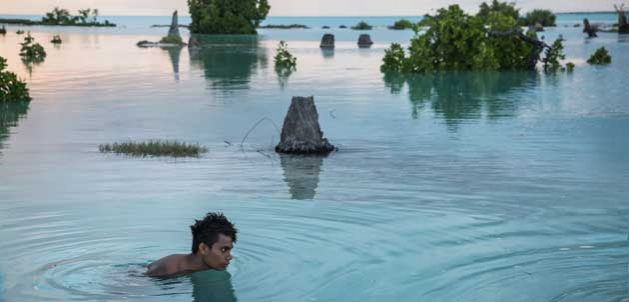
The Pacific island is one of the countries worst affected by sea-level rise. Credit: UNICEF
ROME, Oct 31 2019 (IPS) – Barely a week passes without alarming news of the most recent scientific research into the global climate crisis compounding a growing sense of urgency, particularly the impact on small island states from rising sea levels and extreme weather.
Latest findings suggest that several hundred million more people than previously thought are at risk of coastal flooding due to climate change. Climate Central, a non-profit research and news organisation, found data used in past calculations overstated the elevation of many low-lying coastal communities.
And for the people of the Bahamas who had just endured Hurricane Dorian, the most intense tropical cyclone on record to hit their islands, it came as little surprise when the UN Intergovernmental Panel on Climate Change (IPCC) soon after released its landmark special report on the planet’s oceans and frozen regions, warning of “multiple climate-related hazards” for coastal regions.
“The ocean is warmer, more acidic and less productive,” the IPCC report stated.
The “Blue Pacific” concept sees the island states establishing themselves as “large ocean states” and guardians of the region rather than “small island states”
Oceans are absorbing heat twice as fast as just two decades ago, with hundreds of billions of tonnes of melting ice raising sea levels at an average rate of 3.6 millimetres a year, more than twice as fast as during the last century.
If greenhouse gas emissions “continue to increase strongly”, the IPCC report said, then levels could rise more than a metre by 2100.
Some island states in the Pacific face becoming uninhabitable. As UN Secretary-General Antonio Guterres noted while visiting Tuvalu, the sea level rise in some Pacific countries is four times greater than the world average, posing “an existential threat” to several island states.
Against this background the UN COP25 climate change summit scheduled to be held in Santiago in December had been dubbed the Blue COP, with expectations of a focus on the oceans and commitments of aid to poorer nations most at risk. So it comes as a serious blow that President Sebastian Pinera has just announced that Chile is calling off its hosting of COP25 because of mass anti-government protests rocking the country.
While the UN anxiously looks for an alternative venue (and Santiago had been the second choice after Brazil’s newly elected president, Jair Bolsonaro, pulled out of hosting it), the small island states of the Pacific will be making their voices heard as they seek to confirm themselves in the role of custodians of the world’s largest region.
It is an existential struggle but it is not a blame game however.
As Micronesia’s President David Panuelo declared last week in The Diplomat: “Rather than point fingers, we must all point the way toward solutions.”
“No single country created this problem, and certainly a small country like ours is bearing far greater responsibility for the solution than we ever contributed to the crisis in the first place. But we sit shoulder to shoulder in a coalition which has set a goal of growing economies while achieving 30 percent marine protection globally,” he wrote in a plea for action to save the oceans.
“Everyone must do more when garbage patches larger than entire countries float in the Pacific, and rising carbon dioxide levels increase ocean acidity and devastate coral reefs and marine life.”
The Pacific Community, the principal scientific and technical organisation in the region and founded as the SPC in 1947, counts 22 Pacific island countries and territories among its members who see themselves as the “tip of the spear” in terms of the impacts of climate change and their efforts to adapt.
SPC has recently established the Pacific Community Centre for Ocean Science (PCCOS) to provide the framework to “focus its scientific and technical assistance on providing solutions that will build, sustain, and drive blue economies in Pacific Island countries and territories” and support SDG 14 of conserving and sustainably using oceans and marine resources.
The SPC’s new and growing Pacific Data Hub is a public resource of data and publications on the Pacific across key sectors, from education and human rights to oceans and geoscience.
Such initiatives reflect how Pacific Island states have grown more assertive in their diplomacy, becoming more active in global multilateral forums and using their voices and votes for increased leverage rather than the old reliance on support from Australia and New Zealand.
The “Blue Pacific” concept sees the island states establishing themselves as “large ocean states” and guardians of the region rather than “small island states”. As stewards of the Pacific with their cultural identity shaped by the ocean, the Blue Pacific framework seeks to establish leadership on issues, with smart policies backed by scientific expertise and data.
As Micronesia’s president has reminded us, the climate crisis is neither abstract nor “tomorrow’s faraway challenge”. It is happening now and as the IPCC’s special report on the oceans and cryosphere warned in September the crisis is gathering speed, as seen in the recent acceleration of sea level rise.
In Antarctica the rate of ice loss tripled in the decade 2007-2016. May and August in 2019 were the warmest on record for the Arctic while this year saw the summer minimum extent of sea ice reaching a joint-second lowest in 40 years of satellite records.
As summarised by Carbon Brief, the IPCC warns that this accelerating ice loss, and the more rapid sea level rises it causes, will continue to gather pace over this century regardless of whether greenhouse gas emissions are reduced. The “likely” maximum rise of 1.1 metres by 2100 is some 10cm above the top-end estimate from its previous estimate, while a rise of 2 metres cannot be ruled out.
Such warnings were intended to provide input at COP25 for world leaders who face mounting calls to adopt more ambitious goals for carbon emission cuts. Those negotiations will not be happening in December in Santiago after all. An alternative must be found urgently.
policy in the area of rights through international non-profit organisations. Her areas of interest include sexual and reproductive health and rights, gender equality, women’s rights and social justice*.
Credit: United Nations
BRUSSELS, Oct 22 2019 (IPS) – The number of newly elected Members of the European Parliament (MEPs) who oppose women’s reproductive rights, gender equality, sexuality education, same sex marriage and the Council of Europe Convention on Violence Against Women (Istanbul Convention) stands at around 30 per cent.
This European Parliament term has therefore seen a doubling of the number of MEPs who claim to fight these issues as compared to the last one, where I estimated around 15 per cent of parliamentarians fell into this category in a study for Finnish MEP Heidi Hautala.
Issues as diverse as women’s reproductive health and rights, LGBTI rights, sexuality education and preventing gender-based violence are collectively termed by their opponents as being part of a larger agenda of ‘gender ideology’.
The use of this ambiguous term has given opponents of women’s and other minority rights the ability to combine several diverging topics under one umbrella and present them as an integral package, allegedly being imposed on ‘traditional families’ by an all-powerful feminist and LGBTI lobby.
Many progressives are baffled by the rise of this phenomenon and often resort to the backlash or backsliding discourse to explain it, suggesting it is mere conservative opposition to the inevitable march towards greater gender equality and LGBTI rights.
However, this argument has limited explanatory power, as it ignores the complexities of the right-wing narratives and presents their voters as individually responsible for their rise.
Elena Zacharenko
To fully understand what is fuelling this trend, progressives must ask themselves a question that is much more self-reflective: what is the problem with the political, social and economic system in which opposition to these issues is able to capture the imaginations not only of supporters of extreme-right parties but also some of the voters traditionally belonging to the political centre?
As has already been argued, opposition to ‘gender ideology’ allows not only for the divergent causes mentioned above to be brought together under one umbrella, but to also bring together disparate actors, from centre-right to far-right and libertarian parties, as well as various religious movements and conservative grassroots organisations, for a common cause.
Indeed, the increase in opponents of ‘gender ideology’ in the European Parliament comes mainly from the strong performance by Matteo Salvini’s Lega, Nigel Farage’s Brexit party, Jarosław Kaczynski’s Law and Justice, Viktor Orbán’s Fidesz and Marine Le Pen’s Rassemblement National – groups which have little in common in terms of their origins and programmes, aside from their opposition to these issues.
While most of these parties belong primarily to the new far-right Identity and Democracy group or the conservative and Eurosceptic European Conservatives and Reformists, Fidesz and Bulgarian GERB are opponents of ‘gender ideology’ within the centre-right EPP, while Slovakian SMER and Romanian PSD represent this trend within the S&D group.
A healthy debate within the progressive movement
While they are not unaware of the divisions in the progressive movement, conservative actors choose to present the debate within the women’s and LGBTI rights movements as homogenous and equally supported by the political mainstream.
This allows them to create a false dichotomy between themselves as proponents ‘traditional families’ and the progressives as ‘gender ideologues’ for their own political gain.
This picture however, misrepresents the progressive scene as one with a clear and unified agenda, rather than a heterogenous collection of movements, activists, NGOs, academics and public entities with distinct and often disparate opinions and calls.
While many of the objectives of these movements are indeed aligned, significant disagreements continue to exist between parts of the feminist movement and the LGBTI movement, as exemplified by the ongoing debate on defining gender as a social construct prescribing roles for men and women and that of a felt sense of identity, or that on surrogacy.
Within feminism itself, many divergent schools of thought clash, with liberal feminists opposed to radical feminists in the sex work vs. prostitution debate and Marxist and (neo)liberal feminists disagreeing on the origins and solutions to women’s oppression as being systemic/socio-economic or individual/cultural in nature.
Opposition to ‘gender ideology’, including labour market optimisation efforts, has become a new and very potent form of anti-establishment organising and protesting the neoliberal order.
Regrettably, in view of the abovementioned rise of opposition to many of the progressive movement’s causes, its reaction has been to attempt to silence these internal debates or present them as settled – to the detriment of their quality. It is often argued that the progressive movement cannot be seen to be internally squabbling in the face of the advance of the right, lest they become the ‘useful idiots’ furthering their opponents’ cause.
This results in self-censorship as movements do not want to appear to break the joint front in the face of attacks, stifling healthy debate and creating taboo topics. However, this attitude is not conducive to coming up with either a better understanding of the arguments of the other side, or with appropriate society-wide debates leading to policy-level solutions.
The EU’s proposed gender equality measures are designed to optimise the bloc’s economic outcomes and labour market performance and take little interest in promoting reproductive rights or social justice.
This lack of the EU’s normative influence is visible in the divergent and often weak approaches taken by EU member states’ in their policies on reproductive rights. That’s true not only for Poland and Malta but also Germany, where doctors have been prosecuted for providing information on abortion care, wherein describing the procedure has been labelled by anti-choice actors as ‘advertising’ it.
The case has sparked debate on the 1933 law limiting the provision of information on abortion in Germany, which has since been relaxed, but not fully overturned.
Istanbul Convention as collateral damage
Furthermore, EU governments and their state institutions still lack commitment to combatting sexual and gender-based violence as well as domestic violence (see the horrific cases of sexual violence in Spain and Ireland which were initially dismissed by local courts).
EU governments’ approaches to the sex industry are also absolutely incoherent, ranging from the Nordic model which criminalises the purchase of sex in Sweden, to decriminalisation in Denmark and the legalisation in Germany and the Netherlands.
The economic divisions between the countries of origin of prostituted women and those with a high sex industry demand, in addition to persisting gender inequalities in the EU, are laid bare though the legalisation model, which has been shown to increase demand and in turn promote both migration and trafficking of women from East Central Europe to the West of the EU.
The EU chooses not to engage on most of these issues, with the notable exception of combating violence against women. However, its efforts in this area are now being thwarted by its own member state governments, including those belonging to the moderate political centre: at the beginning of this year, both the Bulgarian (centre-right) and Slovakian (centre-left) government refused to ratify the Istanbul Convention – a text designed to increase state efforts to combat male violence against women and provide victims with better protection.
These decisions were taken in the face of popular protests against ‘gender ideology’ (and, in Bulgaria’s case, a decision by the constitutional court which ruled the Convention unconstitutional).
The protests hardly referred to the issue of violence against women but instead accused the Convention of being ideologically driven and denying the distinction between the male and female sexes – a claim that the definition of gender in the Convention (‘social roles, behaviours, activities and characteristics that a particular society considers appropriate for women and men’) clearly refutes.
These developments constituted an additional blow to the EU’s already fraught attempts to ratify the Istanbul Convention as a bloc, which came under increased scrutiny from opponents of ‘gender ideology’ in the wake of a letter from over 300 (predominantly anti-choice) NGOs.
They pointed out that the EU’s own interpretation of the Istanbul Convention appears to define ‘gender based violence’ beyond the confines of the text (i.e. male violence against women), as ‘violence that is directed against a person because of that person’s gender, gender identity or gender expression’.
The disenchantment with neoliberal globalization
Given the disagreements within and between the feminist and LGBTI movements and the EU’s lack of interest or inability to engage on a number of key gender equality questions, why are these entities facing attacks from opponents of ‘gender ideology’, and how is this movement able to gather so much popular support?
This appears to be a symptom of a disenchantment with centrist ‘politics as usual’ and the EU’s all-pervasive neoliberal policies and its member state governments, as well as the values they are perceived to support.
Opposition to ‘gender ideology’, including labour market optimisation efforts, has become a new and very potent form of anti-establishment organising and protesting the neoliberal order.
It perfectly exemplifies the rising dissatisfaction with liberal democracy and its pronounced discourse on human rights and the protection of minorities coupled with a lack of social and economic assurances for wide swathes of the population. Examples of this trend appear across the globe, from Brazil and the US, to Western European states like France and Spain.
Continuing to push forward neoliberal economic and employment policies while continuously eroding social provisions was what drove up support for opponents of equality measures in the first place.
In East-Central Europe, ‘gender ideology’ has become a means of expressing a rejection of the European East-West hierarchy and the failed promises of capitalist transformation. Indeed, despite assurances that austere economic policies and market liberalisation would allow the region to ‘catch up’ with the West, it continues to lag in economic development and standard of living when compared to ‘old’ EU member states.
What was imported instead, often with a patronising attitude, were lessons on ‘correct’ attitudes and values. Voters reject the values of gender equality and LGBTI rights not, as is often agued, because of civilizational ‘backwardness’, but because of the strongly felt disingenuity of neoliberal decision-makers’ concerns for rights, as long as these rights are not social or economic in nature.
The EU’s focus on the labour market participation of women as an indicator of gender equality or ‘emancipation’ is a perfect example. This logic fits in with the EU’s overall neoliberal model of governance, which, especially in times of demographic decline, requires both women’s participation in the paid employment and their (unpaid) reproductive capacity and reproductive labour to continue operating.
This message is primarily communicated in a value-laden or normative way: one of the main ways to achieve gender equality is ensuring women’s equal participation in the labour market.
The more a country’s employment force structure diverges from this ideal, the more ‘catching up’ it has to do to reach the developed or enlightened club of ‘old’ member states – never mind that women’s increased availability to take up paid employment in West European countries may be facilitated by the (often underpaid and unregulated) care work of East Central European women.
This workplace ‘empowerment’ model is completely at odds with many Polish women’s experience of the neoliberal labour market since the transformation. Indeed, their work experience has been far from emancipatory – they were the ones who bore the brunt of the consequences of the de-regularisation of the labour market post-1989, working in low-pay, low-status service industry jobs.
What progressives need to do
Alongside a host of other measures targeting women and families with additional social protections, the Law and Justice (PiS) government has introduced its flagship 500+ programme, which guarantees an unconditional monthly cash transfer of €120 per each child from the second one, and from the first one for families in particular financial difficulty.
This has allowed some of them to escape the harsh conditions of the labour market and helps explain the party’s popularity among women.
As I argued with Weronika Grzebalska, women’s strong support both for PiS and its social programmes stems from these programmes meeting women’s pragmatic interests in a society governed by neoliberal policies and allows to glean some insight into why the anti-‘gender ideology’ party continues to attract a significant voter base, gathering 45.4 per cent of the votes in the European election of May 2019.
If progressive political movements want to regain the electorate that is currently increasingly voting for parties espousing the war on ‘gender ideology’ (whether it be because of this position or despite of it), it must reflect on how much of this state of affairs is in fact due to the rejection of the neoliberal world order, rather than opposition to specific groups’ rights.
Continuing to push forward neoliberal economic and employment policies while continuously eroding social provisions was what drove up support for opponents of equality measures in the first place.
Moreover, voters feel a lack of recognition and representation if popular concerns are dismissed as ‘backwards’, hotly contested issues presented as settled and beyond debate and any critique of progressive positions coming from within the camp labelled as being the ‘useful idiot’ of the right.
Any political programme that wants to reverse this trend must address these issues and introduce policies which coherently address socio-economic needs in the field of gender equality and support for minorities. *This article was originally published in International Politics and Society
Sohrab Razzaghi is Executive Director of Volunteer Activists Institute a non-profit, non-governmental, non-political and independent institute, whose primary aim is capacity building among activists and civil society organizations for democracy, human rights and peace building within Iranian society and communities in the MENA region.
Masana Ndinga-Kanga is MENA Advocacy Lead at CIVICUS, an alliance of 7000 civil society partners around the world.
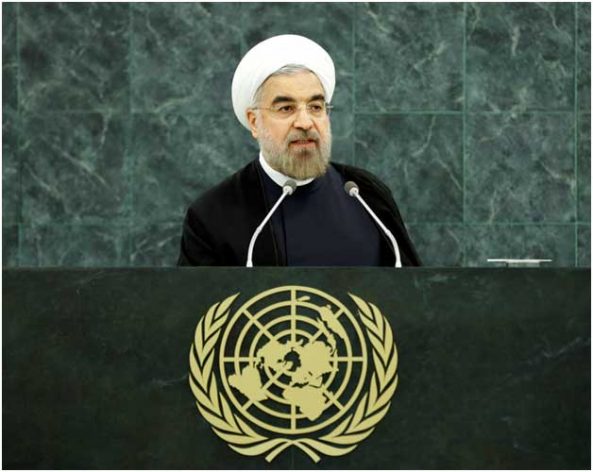
President Hassan Rouhani of Iran
JOHANNESBURG / AMSTERDAM, Oct 15 2019 (IPS) – 2019 has not been a good year for Iranian human rights activists. At a time where civic space had completely closed, many watched in disbelief as the regime mounted even more restrictions on civil society. Over recent months, many activists have been arrested, like Noushin Javari (a photographer), Marzieh Amiri (a journalist), and Javad Lal Mohammadi (teacher).
As the UN Third Committee prepares to meet in October 2019, it will be worth following whether the General Assembly will take proactive steps to respond to the crisis in Iran or continue to avert its eyes in the face of complicated global politics that have emboldened President Rouhani in his regressive anti-western crackdown on civil society.
During the UN General Assembly on 25 September 2019, Iranian President Rouhani’s called for the creation of a ‘coalition of hope’ in the Gulf region, that would focus on “peace, stability, progress and welfare” and working to “invest on hope towards a better future rather than in war and violence [sic],” with the aim of restoring justice and peace.
However, the civic space track record of Iran and many of its Gulf neighbours demonstrates that oftentimes the state is the perpetrator of violence and restrictions in-country, curtailing the very justice and peace it aims to implement.
It then begs the question, how can a regional coalition of hope be developed, when the state so frequently responds to human rights defenders with violence – excluding the language of human rights from even sustainable development goals.
Many civil society actors have been detained – deemed enemies of the state and foreign agents. As Iranian communities reel under the pressure of yet another bout of sanctions, it is worth begging the question ‘does the closure of civic space serve the interests of sustainable development in Iran?’
Contrary to what policymakers responsible for civic space closure might think, these restrictions ultimately hurt sustainable development. Human rights activists around the world, including in Iran, are oftentimes the critical purveyors of equitable ‘sustainability’ in the development process, campaigning for environmental justice, worker’s rights and the respect for the dignity and humanity of all.
In 2018, the Ayatollah Khamenei’s official website published a draft 50-year vision for “progress.” The document, entitled the Islamic-Iranian Pattern for Progress (IIPP), sets out a set of objectives to be met by 2065, covering a vast range of issues, among them the economy, justice and poverty – still to be approved by parliament.
The plan focuses on addressing poverty, the economy and the justice system. It seeks further alignment of religion and the sociopolitical system in the country, but also includes provisions for “prompting independence, accountability and specialization in the judiciary” and “enhancing women’s position and providing equal opportunities for them, with emphasis on their role as mothers.”
Critics of the regime would not be wrong to look at these policy objectives with concern, especially as the regime has a narrowed position on the role of women in society and has repeatedly failed to guarantee independence of the judiciary – where human rights defenders and political dissenters are subject to numerous violations of the International Convention on Civil and Political Rights (to which Iran is party).
According to a recent comparative report on Sustainable Development, Iran is in 82nd place among 156 countries. This lower-than-average score, however, is not surprising. Iran has not committed to the indexes of sustainable development, meaning people in Iran are not participating in a systematic and organized manner in the process of development. Instead, policymaking and development is a top-down process steered by the government.
In fact, most involvement of Iranians in this process is decorative. As a solution, Iranians have been organizing themselves in civil society to combine their voices and make sure they are heard. This, however, is counteracted by repression from the state, resulting in the country being rated as closed on the Civicus Monitor.
Countless activists who have been advocating for the true meaning of sustainable development have paid the price. Civil society activists, especially environmental activists, labor union and teacher union activists, as well as human rights defenders have been wrongfully persecuted.
Eight environmental activists are sitting in prison on charges of espionage, four of whom are additionally charged with “sowing corruption on earth”. If convicted, they will face death penalty. Another environmental expert, Dr. Kavous Seyed Emami, died in detention, and the circumstances of his death are unclear.
According to the Iranian Constitution, citizens are permitted to set up associations and assemblies; yet this clause is not implemented. Few, if any, groups have permission to freely form associations, including socio-political groups or ethnic/religious minorities. Last month for example, Omid Mehr foundation was closed by government authorities. When asked about the reason for closure, authorities said that Omid Mehr foundation was advocating Western values, which does not fit in Iran.
The false claim that campaigning for human rights is equal to advocating Western values is an adage used by repressive regimes to silence dissent and put forward a development agenda that excludes minorities and others on the margins. But development is not sustainable if they are excluded.
For example, the regime frequently equates the campaigns of women to determine their dress codes as acts against the state, threats to national security or prostitution. Despite the peaceful protest (handing out flowers in commemoration of International Women’s Day) against the hijab by Yasaman Aryani and Monireh Arabshahi, they were sentenced to 16 years imprisonment after being subject to enforced disappearance. Such lengthy sentences and gross human rights violations do not equate sustainability nor development.
The government not only fails to safeguard the freedom of associations and civil society organizations, but actively creates non-independent organizations (or Governmental NGOs, GONGOs) to put forward an inaccurate picture of civic engagement by the state.
Only CSOs that support the agenda of the state are accepted by the government, strengthening the top-down, government-centered way of working. The Organization for Defending Victims of Violence (ODVV), one of many GONGOs, attends international meetings, including UNHRC meetings.
Actively curating a counter-narrative of progress through GONGOs shows the vulnerability of the state to international pressure in an interconnected global political economy. The state recognizes its reliance on international partnerships for the advancement of its economic objectives.
But instead it fails to align its internal policy processes to international human rights conventions – channeling resources that could be spent on authentic engagement with civil society in country to its image. As a result, tensions in Iran are mounting at the dire state of socioeconomic affairs.
For instance, in January 2018, mass protests against poverty and economic difficulties erupted in the country. Rather than engage with citizens, the state responded through 4,967 arrests and any assembly was strictly and heavily repressed.
Among those arrested were activists, women, workers, students and teachers. Many of the arrestees have been sentenced to long imprisonment terms. Many more are critical to the realization of sustainable development in Iran.
Rather than supporting socioeconomic development, the state-imposed limitations on freedom of assembly and association in Iran, have weakened and decapacitated citizen engagement, and prevented their participation in the process of achieving sustainable development. It is short-term thinking that creates enemies of civil society and sustainable development.
In fact, a dynamic, vibrant, democratic and development-oriented association landscape is an important requirement for sustainable development. By releasing activists and opening the civic space, Iran can truly begin the process of social change for the upliftment of all.