A UN 2.0 Needs Robust People’s Civil Society Participation

Armed Conflicts, Civil Society, Climate Change, Conferences, Democracy, Economy & Trade, Environment, Featured, Global, Headlines, Human Rights, TerraViva United Nations

Opinion

Credit: United Nations

NEW YORK, Sep 13 2024 (IPS) – A cascade of crises endangers our world. Wars conducted without rules, governance devoid of democratic principles, surge in discrimination against women and excluded groups, accelerating climate change, greed-induced environmental degradation and unconscionable economic deprivation in an age of excess are threatening to roll back decades of human progress made by the international community.


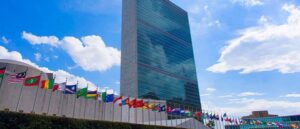
This September’s UN Summit of the Future presents a rare opportunity to address these challenges through greater participation in UN decision making. World leaders are convening later this month in New York to agree a Pact for the Future, expected to lay the blueprint for international cooperation in the 21st century.

But civil society’s efforts to ensure an outcome document fit for today’s needs are coming up against diplomatic posturing between powerful states intent on preserving the status quo.

State-centric decisions

The world has changed dramatically since the UN was established in 1945, when a large swathe of humanity was still under colonial yoke. Since then, significant strides have been made to advance democratic governance around the world. Yet decision-making processes at the UN remain stubbornly state-centric, privileging a handful of powerful states that control decisions and key appointments.

Civil society has presented the Pact of the Future’s co-facilitators, the governments of Germany and Namibia, with several innovative proposals to enable meaningful participation and people-centred decision-making at the UN. Proposals include a parliamentary assembly representative of the world’s peoples, a world citizen’s initiative to enable people to bring issues of transnational importance to the UN and the appointment of a civil society or people’s envoy to drive the UN’s outreach to communities around the world. However, these forward-looking proposals have found no traction in various drafts of the Pact, which is being criticised for lacking ambition and specificity.

It’s no surprise that diplomatic negotiations on the Pact between country representatives are being bogged down by arguments over language. As a result of diplomatic wrangling, the draft’s provisions are mostly generic and repetitive.

This is unfortunate, as civil society representatives have spent considerable time and energy over the course of the past year in engaging with Summit of the Future processes. Despite tight deadlines, civil society organisations came together at short notice to submit comprehensive recommendations on the Pact’s successive drafts. Hundreds of civil society delegates participated at considerable expense in the much-anticipated Civil Society Conference in Nairobi, designed to gather inputs to feed into the Summit outcomes.

Overall, the gains made so far have been few. These include broad commitments to reform the UN Security Council and international financial institutions. A significantly positive aspect of the Pact’s draft is a commitment to strengthen the UN’s human rights pillar; many of us in civil society rely on this to raise concerns about egregious violations. However, deep-seated tensions among member states in New York have led to the regrettable removal of references to human rights defenders, who play a crucial role in protecting and promoting human rights. This is evident in the recent Revision 3 draft of the Pact released on 27 August.

Strengthening human rights

Tellingly, the human rights pillar receives roughly five per cent of the UN’s regular budget, forcing any new initiatives to rely on underfunded voluntary contributions. This needs to change. The human rights pillar needs to be strengthened. Doing so would help make each of the three UN’s pillars – the others being peace and security and sustainable development – more strongly connected and mutually reinforcing.

To strengthen the human rights pillar, we outline five priority areas for action.

First, substantial resources should be allocated to the UN’s independent thematic and country-focused human rights experts, who enhance civil society’s impact but are forced to get by on shoestring budgets. Due to limited funding from the UN, the experts are compelled to rely on voluntary contributions to support their vital activities.

Second, an accessible and transparently managed pooled fund should be created to enable better participation by civil society in UN meetings. Many smaller civil society organisations, particularly from the global south, find it extremely challenging to cover the costs of participation in key UN arenas.

Third, accountability measures should be strengthened to ensure follow-up in cases of reprisals against people for engaging with UN human rights mechanisms. The UN’s latest reprisals report shows that reprisals have taken place against over 150 individuals in more than 30 states. This needs to be addressed immediately.

Fourth, the UN’s investigative capacities in relation to war crimes, crimes against humanity and genocide should be strengthened to ensure justice for victims. The need for this has been made tragically clear by the resurgence of authoritarian rule and military dictatorships around the world, coupled with egregious rights violations in conflicts in the Occupied Palestinian Territories, Myanmar, Sudan, Ukraine, Yemen and others.

Finally, the human rights pillar can be supported by ensuring implementation of the UN’s guidance note on civic space. This urges the protection of civil society personnel and human rights defenders from intimidation and reprisals, the facilitation of meaningful and safe participation in governance processes and the promotion of laws and policies to support these goals.

The role human rights defenders and civil society activists play in ensuring peaceful resolution of conflicts, addressing gender-based violence and promoting economic justice – among many other vital issues – is crucial. In calling to strengthen the human rights pillar, the Pact’s pen holders recognise the importance of human rights approaches. They must extend this recognition to include people’s and civil society participation. Failing to do so will result in a missed opportunity to create a transformative UN 2.0 that places people and rights at the centre.

Jesselina Rana is UN advisor at CIVICUS, the global civil society alliance. Mandeep Tiwana is chief of evidence and engagement at CIVICUS plus representative to the UN in New York.


Small Glacial Lakes’ Mass Destruction in the Himalayan Community

Active Citizens, Asia-Pacific, Climate Action, Climate Change, Climate Change Justice, COP29, Development & Aid, Editors’ Choice, Environment, Featured, Headlines, Human Rights, Natural Resources, Sustainable Development Goals, TerraViva United Nations

Climate Change

Before and after the flood: Thame village in the Mt. Everest region (Khumbu region) in Nepal-before the flood. This village is home to world renowned climbers like Kami Rita Sherpa. On August 16 a flash flood caused by the glacial lake outburst swept away the most of Thame village. Credits: Khumbu Pasang Lhamu Rural Municipality

Before and after the flood: Thame village in the Mt. Everest region (Khumbu region) in Nepal-before the flood. This village is home to world renowned climbers like Kami Rita Sherpa. On August 16 a flash flood caused by the glacial lake outburst swept away the most of Thame village. Credits: Khumbu Pasang Lhamu Rural Municipality

KATHMANDU, Sep 10 2024 (IPS) – Small glacial lakes can cause destruction, which may impact the livelihoods of entire communities. Now this is the harsh reality that the community of Thame village in the Mt. Everest region of Nepal now faces as they rebuild after the August 16 disaster.


On that day a devastating flood struck Thame, a Sherpa village in the Khumbu region, damaging houses, local businesses, a school, a health facility, and the community’s means of livelihood. 

“Thame is one of the main villages that is important in terms of trekking attraction, and the flood swept away the entire village. That will definitely impact our livelihood,” said Pashang Sherpa, “Even though I am not from that village, I have been working as a trekking guide for the last 15 years, and villages like Thame are crucial to us.”

An assessment of the damage by the local government-Khumbu Pasang Lhamu Rural Municipality in the Solukhumbu district-reports that at least 18 properties have been destroyed, including seven homes, five hotels, one school, and one health post.

“Given the difficult geographical terrain, reconstruction efforts will be costly, and the local government’s budget will not be enough. That’s why we appeal for help from individuals and institutional sectors,” the rural municipality stated in an appeal for assistance.

What Exactly Happened

A view of glacial lake after the flood. Credit: Khumbu Pasang Lhamu Rural Municipality

A view of glacial lake after the flood. Credit: Khumbu Pasang Lhamu Rural Municipality

Initially, the cause was unclear, but now things are becoming clearer: Thame village was hit by a flash flood caused by a glacial lake outburst. Thyanbo glacial lake, located upstream of Thame, burst, sending floodwaters mixed with sediment down to the village.

“It was the result of more than one event—ice/snow melt or an avalanche caused spills from one glacial lake, which then triggered an outburst flood from the lower Thyanbo glacial lake,” said Dr. Arun Bhakta Shrestha, Senior Climate Change Specialist at ICIMOD. “It’s not that both lakes burst, but rather that the overflow or spill of water from one lake caused the other lake to outburst.”

Leading up to the flood, multiple weather-related factors were at play. Recent rainfall and rising temperatures likely contributed to ice/snow melt, which in turn led to the outburst. According to the Department of Hydrology and Meteorology (DHM), the area received relatively high rainfall in the week leading up to the event, and temperatures were also relatively high.

“That may have caused ice/snow melt or an avalanche at the upper lake, and the spilled water caused erosion, which ultimately triggered the lower lake to burst,” DHM said in a statement.

Experts are saying that this flood is the latest example of the causal impact of climate change and the level of impact that can be seen at the local level. Tenzing Chogyal Sherpa, ICIMOD’s Cryosphere Analyst—who also belongs to the mountain Sherpa community and is from the Khumbu region—views this event as both personal and a stark reminder of the climate crisis.

Tenzing Chogyal Sherpa, ICIMOD’s Cryosphere Analyst, comment on X. Credit: X

ICIMOD’s Cryosphere Analyst, Tenzing Chogyal Sherpa’s comment on X tells of the ‘heartbreaking reality’ of the flood. Credit: X

“Seeing the ancestral homes of Sherpa families in ruins was just numbing,” he wrote on X (formerly Twitter). “Every disaster tests our resilience, but it also strengthens it. We, the mountain community, will emerge united and determined to protect our homes and way of life. Now, more than ever, we must raise our voices to the global community. Our stories and struggles need to be heard.”

Small Glacial Lakes Are Also Dangerous 

According to satellite image assessments, the lake’s size was approximately 0.05 square kilometers just a few hours before the breach. “This lake was not on the list of potentially dangerous lakes that may cause GLOFs, and it wasn’t that big either. There are thousands of lakes like that,” Shrestha says. “This means even small lakes can cause vast destruction, and our river corridors are not safe.”

There are several lakes upstream of Thame, and satellite images show that these lakes’ sizes are constantly growing. However, they are not listed as potentially dangerous glacial lakes (PDGLs) like the nearby Tsho Rolpa. A glacial lake inventory report published in 2020 identified 47 PDGLs within the Koshi, Gandaki, and Karnali river basins of Nepal (21 in Nepal), the Tibet Autonomous Region of China (25 in China), and India (one in India).

This report identified other small lakes in the region, but they were not listed as PDGLs; there are more than 3,624 lakes in total. The report indicates that there are 2,214 lakes smaller than 0.02 square kilometers in size and 759 lakes ranging from 0.02 to 0.05 square kilometers in size.

“Yes, lakes are getting bigger day by day because of snowmelt and glacier retreat. But these small lakes are also dangerous when it comes to the destruction they may cause to downstream communities,” Shrestha said.

He argues that it’s time to integrate potential danger into development plans and disaster risk reduction (DRR) mechanisms so that disasters like the one in Thame can be avoided. The Thame flood occurred in the afternoon, allowing locals to move to safety, which prevented human casualties. But if it had happened at night, the situation could have been much worse.

“We are getting multiple wake-up calls, but we haven’t woken up yet,” Shrestha said. “We need to consider glacial lake-related events from a watershed perspective, not from the viewpoint of individual lakes. A multi-hazard preparedness approach is needed to avoid larger destruction because there are thousands of lakes above the communities.”

IPS UN Bureau Report

  Source

Climate Change Exacerbated Flash Floods in Bangladesh

Asia-Pacific, Civil Society, Climate Change, Education, Environment, Food and Agriculture, Headlines, Health, TerraViva United Nations, Water & Sanitation

Bangladesh Feni Flood August 2024. People wading through the flood waters, in search of shelter in Feni. Credit: UNICEF/Sultan Mahmud Mukut

UNITED NATIONS, Sep 6 2024 (IPS) – Since late August, severe flash floods and monsoons plaguing Bangladesh have affected nearly 6 million people. Bangladeshi officials have declared the floods to be the country’s worst climate disaster in recent memory. These recent floods follow the wake of Cyclone Remal, which devastated Bangladesh and West Bengal earlier this year.


Floods have caused widespread destruction in Bangladesh, with the Feni, Cumilla, Laxipur, Chattogram, and Noakhali districts among those hit hardest. The United Nations Children’s Fund (UNICEF) has stated that 71 people have been reported dead. The floods have decimated villages, with thousands of homes having been destroyed or submerged underwater, causing widespread internal displacement.

“So far, a reported 500,000 people have been displaced in more than 3,400 evacuation shelters”, Stéphane Dujarric, Spokesman for the UN Secretary-General, said during a press briefing held on September 4 at the headquarters in New York.

“We, along with our humanitarian partners, are mobilized and supporting the government-led flood response,” Dujarric said. “We are also helping with local efforts to help the most vulnerable people and communities impacted by these floods.”

Displacement shelters in Bangladesh have become overcrowded due to the sheer amount of civilians that were displaced from their communities. According to an August 30 report from the United Nations Inter-Cluster Coordination Group (ICCG), this has heightened protection concerns for affected women and girls.

Floods have also damaged critical infrastructure in Bangladesh, greatly impeding relief efforts by humanitarian organizations. Farah Kabir, Country Director of ActionAid Bangladesh stated “The disruption of roads and communication has further escalated their plight, making it difficult for them to reach safety and essential resources. The UN reports that certain areas are entirely inaccessible to aid workers due to the extent of the high water levels.

According to the ICCG report, in Noakhali, approximately 50 percent of the flood-affected areas are considered “unreachable” by local authorities and aid personnel. The floods have also caused significant power outages, aggravating these challenges in accessibility.

This has taken a significant toll on nationwide education. Floods have ravaged educational facilities across the nation and have made countless roads and passages inaccessible, making schooling for children extremely difficult. According to Dujarric, over 7000 schools are now closed due to flooding, which has impacted 1.7 million children and young people.

Water sanitation systems have been severely compromised with the swelling of dirty water filling the streets. Without access to emergency medical supplies, the risk of contracting waterborne diseases has risen significantly.

Kabir added, “The collapse of the sanitation system in many areas has heightened the public health crisis”.

Last week, In one instance last week, Bangladesh’s Directorate of General Health Services (Dte. GHS) reported that over a period of 24 hours since the flooding began, 5000 people had been hospitalized, reporting cases of diarrhea, skin infections and snake bites. UNICEF is currently on the frontlines of this disaster, distributing 3.6 million water purification tablets to prevent the spread of illnesses.

Additionally, the livelihoods of millions have been impacted by the floods. Agriculture, specifically, has been hit the hardest. According to Bangladesh’s agriculture ministry, the floods have resulted in a loss of 282 million US dollars due to crop damage, impacting over 1.3 million farmers. This is significantly detrimental as the agricultural sector employs roughly 42 percent of Bangladesh’s workforce.

Dujarric added that the floods have caused 156 million US dollars worth of losses in livestock and fisheries. This has devastated Bangladesh’s economy as well as greatly exacerbated levels of food insecurity nationwide.

“With supplies disrupted, thousands of families are still stranded in shelters without any food,” said Simone Parchment, the World Food Programme (WFP) Representative in Bangladesh, in a press release issued on August 30. “Our focus is on delivering emergency assistance to the people who have been displaced and lack the means to cook for themselves.”

Hundreds of thousands of people are facing risks of starvation and malnutrition as aid workers scramble to distribute dry food to shelters. WFP is currently in the process of delivering fortified biscuits to 60,000 families in areas that have been hit the hardest.

The UN’s Acting Relief Emergency Coordinator, Joyce Msuya, has allocated 4 million dollars from the UN’s Central Emergency Response Fund (CERF). In addition, UNICEF is on the frontlines of this disaster, providing over 338,000 people with live-saving supplies. However, current efforts are not enough to mitigate this disaster. UNICEF has requested over 35 million dollars from donors in order to provide all families affected with medical assistance.

It is also imperative to tackle the climate crisis, as Bangladesh is one of the world’s most climate-sensitive nations. A 2015 report by the World Bank Institute stated that approximately 3.5 million people in Bangladesh are affected by annual river flooding, an issue that is only worsened by the climate crisis.

Deputy Representative of UNICEF Bangladesh Emma Brigham remarked that the devastation caused by the floods in the eastern regions of Bangladesh are “a tragic reminder of the relentless impact of extreme weather events and the climate crisis”, particularly for children. “Far too many children have lost loved ones, their homes, schools, and now are completely destitute,” she said.

IPS UN Bureau Report

  Source

New Zealand: Māori Rights in the Firing Line

Asia-Pacific, Civil Society, Economy & Trade, Education, Environment, Featured, Headlines, Health, Human Rights, Indigenous Rights, TerraViva United Nations

Opinion

Credit: Dave Lintott / AFP via Getty Images

LONDON, Sep 2 2024 (IPS) – A New Zealand bill that would roll back Indigenous rights is unlikely to pass – but it’s emblematic of a growing climate of hostility from governing politicians. A recent survey shows that almost half of New Zealanders believe racial tensions have worsened under the right-wing government in power since December 2023.


The Treaty Principles Bill reinterprets the principles of the 1840 Treaty of Waitangi. New Zealand’s founding text, this agreement between the British government and Indigenous Māori chiefs established British governorship over the islands in return for recognition of Māori ownership of land and other property.

The treaty was controversial from the start: its English and Māori versions differ in crucial clauses on sovereignty. Māori people lost much of their land, suffering the same marginalisation as Indigenous people in other places settled by Europeans. As a result, Māori people live with higher levels of poverty, unemployment and crime, and lower education and health standards, than the rest of the population.

From the 1950s, Māori people began to organise and demand their treaty rights. This led to the 1975 Treaty of Waitangi Act, which defined a set of principles derived from the treaty and established the Waitangi Tribunal to determine breaches of the principles and recommend remedies.

In recent years, right-wing politicians have criticised the tribunal, claiming it’s overstepping its mandate – most recently because it held a hearing that concluded the bill breaches treaty principles.

Change in direction

The bill resulted from a coalition agreement forged after the 2023 election. The centre-right National party came first and went into government with two parties to its right: the free-market and libertarian Act party and the nationalist and populist NZ First party. Act demanded the bill as a condition of joining the coalition.

The election was unusually toxic by New Zealand standards. Candidates were subjected to racial abuse and physical violence. A group of Māori leaders complained about unusually high levels of racism. Both Act and NZ First targeted Māori rights, promising to reverse Labour’s progressive policies, including experiments in ‘co-governance’: collaborative decision-making between government and Māori representatives. Act and NZ First characterised such arrangements as conferring racial privilege on Māori people, at odds with universal human rights.

NZ First leader Winston Peters – who’s long opposed what he characterises as special treatment for Māori people despite being Māori himself – pledged to remove Māori-language names from government buildings and withdraw New Zealand’s support for the UN Declaration on the Rights of Indigenous Peoples. He’s compared co-governance to apartheid and Nazi racial theory. He’s now New Zealand’s deputy prime minister.

New Zealand, though far from Europe and North America, has shown it isn’t immune from the same right-wing populist politics that seek to blame a visible minority for all a country’s problems. In the northern hemisphere the main targets are migrants and religious minorities; in New Zealand, it’s Indigenous people.

Bonfire of policies

If the bill did succeed, it would preclude any interpretation of the treaty as a partnership between the state and Māori people. It would impose a rigid understanding that all New Zealanders have the same rights and responsibilities, inhibiting measures to expand Māori rights. And without special attention, the economic, social and political exclusion of Māori people will only worsen.

The problems go beyond the bill. In February, the government abolished the Māori Health Authority, established in 2022 to tackle health inequalities. In July, a government directive ordered Pharmac, the agency that funds medicines, to stop taking treaty principles into account when making funding decisions. This is part of a broader attack on treaty principles, which the government has pledged to remove from most legislation.

Government departments have been ordered to prioritise their English-language names and communicate primarily in English, unless they’re specifically focused on Māori people. The government has pledged to review the school curriculum – revised last year to place more emphasis on Māori people – and university affirmative action programmes. It’s ceased work on He Puapua, its strategy to implement the UN Declaration.

The government has cut funding for most of its initiatives for Māori people. In all, over a dozen changes are planned, including in environmental management, health and housing.

What’s bad for Māori people is also bad for the climate. The intimate role the environment plays in Māori culture often puts them on the frontline of combating climate change. This year a Māori activist won a ruling allowing him to take seven companies to court over their greenhouse gas emissions, based in part on their impact on places of customary, cultural and spiritual significance to Māori people..

But the new government has cut funding for many projects aimed at meeting New Zealand’s Paris Agreement commitments. It plans to double mineral exports and introduce a law to fast-track large development projects, without having to navigate environmental safeguards. The draft law contains no provisions about treaty principles. Māori people will be disproportionately affected by any weakening of environmental standards.

Out in numbers

This is all shaping up to be a huge setback for Māori rights that can only fuel and normalise racism – but campaigners aren’t taking it quietly. The threat to rights has galvanised and united Māori campaigners.

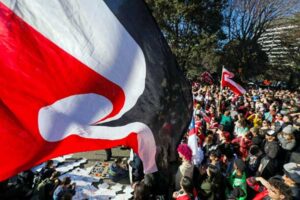
Civil society groups are taking to the courts to try to halt the changes. And people are protesting in numbers. In December, when parliament met for the first time since the election, thousands gathered outside to condemn anti-Māori policies. At the swearing-in ceremony, Te Pāti Māori politicians broke with convention by dedicating their oaths to the Treaty of Waitangi and future generations.

That same month, 12 people were arrested following a protest in which they defaced an exhibition on the treaty at the national museum. Protesters accused the exhibition of lying about the treaty’s English version.

On 6 February, Waitangi Day, over a thousand people marched to the site where the treaty was agreed, calling for the bill to be rejected. At the official ceremony, people heckled Peters and Act leader Peter Seymour when they spoke.

Most recently, Māori people had a chance to show their discontent at a ceremony held in August to commemorate the coronation of the Māori King. Although normally all major party leaders attend, Seymour wasn’t invited, and a Māori leader told Prime Minister Christopher Luxon that the government had ‘turned its back on Māori’. The Māori King also called a rare national meeting in January, and the turnout – 10,000 people – further showed the extent of concern.

Wasted potential

At the same time, the Māori population is growing quickly – it recently passed the million mark – and is youthful. Compared to previous generations, people are more likely to embrace their Māori identity, culture and language. Māori people are showing their resilience, and activism has never been stronger. But this growing momentum has hit a political roadblock that threatens to throttle its potential – all for the sake of short-term political gain.

New Zealand’s positive international reputation is on the line – but it doesn’t have to be this way. The government should start acting like a responsible partner under the Treaty of Waitangi. It must abide by the treaty principles, as developed and elaborated over time, and stop scapegoating Māori people.

Andrew Firmin is CIVICUS Editor-in-Chief, co-director and writer for CIVICUS Lens and co-author of the State of Civil Society Report.

  Source

VIETNAM: ‘Human Rights Conditions Will Likely Worsen as the Country Descends into a Police State’

Asia-Pacific, Civil Society, Crime & Justice, Environment, Featured, Global Geopolitics, Headlines, Human Rights, Labour, TerraViva United Nations

Aug 29 2024 (IPS) –  
CIVICUS discusses recent leadership changes in Vietnam with David Tran, coordinator of the Alliance for Vietnam’s Democracy, a civil society platform that promotes democracy in Vietnam and the region through international cooperation and the strengthening of local civil society.


On 3 August, President Tô Lâm was confirmed as General Secretary of the Communist Party, Vietnam’s top position, following the death of long-serving General Secretary Nguyễn Phú Trọng. Lâm, who has been president since May, is known for leading an aggressive anti-corruption campaign that has seen many officials jailed and others forced to resign. He will continue as president while assuming the duties of general secretary, potentially enabling him to consolidate power ahead of the 2026 party congress, which will choose Vietnam’s top leaders for the next five years. Civil society fears the regime could become even more autocratic and repressive if Lâm retains both positions.

David Tran

What’s Vietnam’s political system like, and what’s the likely impact of the recent leadership change?

Vietnam is an authoritarian one-party state led by the Vietnamese Communist Party (VCP). There are four key positions of authority: the president, who is the ceremonial head of state, the prime minister, who heads the government, the chair of the National Assembly, the unicameral legislature, and the most powerful, the general secretary of the VCP.

Although the president is elected by the National Assembly, this body is overwhelmingly made up of VCP members, who usually approve all incumbents unopposed. On 3 August, following the death of the last VCP general secretary, Nguyễn Phú Trọng, Tô Lâm was confirmed as the new VCP leader.

This appointment is particularly significant because it puts a lot of power in the hands of one person. His dual role gives Tô Lâm considerable influence over the state and party, as well as greater control over the public security apparatus. While he appears set to continue the policies of his predecessor, there are several cracks beneath the surface. His power is likely to be challenged by several VCP members who’ve been forced into retirement by his ‘anticorruption’ campaign, effectively an initiative to eliminate competing factions. We can expect this infighting to continue and intensify.

What does Tô Lâm’s rise mean from a human rights perspective?

Tô Lâm has had a long career, including stints as minister of public security and a member of the politburo. The key role he played in the previous general secretary’s ‘anticorruption’ campaign saw him elected president in May, after his investigations into several high-profile politicians and businesspeople led to the resignation of his predecessor and other top officials.

The accumulation of power in the hands of the architect of a purge is unlikely to lead to improvements in civic space or human rights. Tô Lâm has been closely associated with the worsening human rights situation, as the Formosa and the Trinh Xuan Thanh cases clearly illustrate.

In April 2016, the Formosa company caused an environmental disaster when it discharged heavily polluted waste off Vietnam’s central coast. This caused widespread damage in at least four provinces and sparked protests. Instead of prosecuting Formosa, Tô Lâm, then minister of public security and in charge of the environmental police, suppressed peaceful protests and had 220 people sentenced to a total of 133 years in prison, not including probation after release. He said he was protecting Formosa from what he called ‘hostile forces’ – essentially anyone who criticised the company.

The second case involves Trinh Xuan Thanh, a former vice chair of Hau Giang Province, who fled to Germany in 2016 after being accused of ‘deliberately violating state regulations, causing serious consequences’. He was abducted on German soil by the Vietnamese secret service, which is under the Ministry of Public Security, and returned to Vietnam. Tô Lâm was directly involved in this operation, which Germany condemned as a ‘scandalous violation’ of its sovereignty and a ‘gross breach of international law’.

Given Tô Lâm’s track record, we expect human rights conditions to worsen under his leadership as Vietnam descends into a police state where human rights and the rule of law are ignored. The already limited space for civil society in Vietnam has shrunk under his watch, and we expect this trend to continue.

What are the challenges facing civil society in Vietnam?

Tô Lâm’s rise to power has been marked by his consistent efforts to stifle dissent. Under his leadership, the authorities, particularly the Ministry of Public Security, have increasingly tightened their grip on civil society organisations (CSOs). They have implemented new decrees that overregulate the registration and management of foreign CSOs and applied stricter rules to domestic organisations.

They have also weaponised tax laws and the criminal code to target civil society leaders, charging them with offences such as tax evasion and ‘abuse of democratic freedoms’. This has led to the imprisonment of prominent activists, including environmental and labour rights advocates.

Independent CSOs are subject to strict surveillance, with some being dismantled or forced to reorganise to conform to the authorities. This was exacerbated by the COVID-19 pandemic, which the authorities used as a pretext to impose further restrictions on civil society under the guise of public health measures.

Despite this repressive environment, some social service CSOs and philanthropic groups continue to operate and strive to make a positive impact. But their independence is severely restricted as they and their activists are constantly targeted.

What international support does Vietnam’s civil society need?

Human rights organisations and international bodies have raised concerns about the shrinking space for civil society in Vietnam. They have called for respect for freedoms of assembly, association and expression and urged the authorities to ease restrictions. While these statements are important, they must be accompanied by trade sanctions and other enforcement mechanisms. Words alone are not enough.

Unfortunately, human rights in Vietnam are also falling victim to geopolitics. As tensions with China escalate, the USA is increasingly seeing Vietnam as a counterweight to China. In this context, human rights and civic space are often sidelined, if not ignored altogether. We believe that a democratic Vietnam would be the best partner and ally in promoting a peaceful, open and stable Indo-Pacific region.

Even if Tô Lâm has a long way to go before he reaches a position comparable to Xi Jinping’s in China, consolidation of power is a general trend we’re seeing among the region’s communist states. Oddly enough, given how these two leaders came to power, it could be a sign that pressure for human rights and civic space, both domestically and internationally, is working. If the authorities feel compelled to respond by consolidating power and positioning figures like Tô Lâm to counter these movements, there is still hope we are on the right track.

Civic space in Vietnam is rated ‘closed’ by the CIVICUS Monitor.

Get in touch with the Alliance for Vietnam’s Democracy through its webpage or Facebook page.

  Source

UN Efforts for a Resilient Iraq

Civil Society, Climate Action, Climate Change, Editors’ Choice, Environment, Featured, Headlines, Middle East & North Africa, Sustainable Development Goals, TerraViva United Nations

Opinion

UN agencies are working together to integrate traditional knowledge with modern technology, optimizing water use for agriculture. Credit: FAO Iraq

BAGHDAD, Iraq, Aug 28 2024 (IPS) – Climate change and water scarcity pose significant threats to Iraq’s stability, prosperity, and the well-being of its people. The environmental challenges facing the nation are complex and interconnected, requiring a comprehensive and coordinated response.


In Iraq, the United Nations Country Team (UNCT), under my leadership, has been at the forefront of addressing these critical issues, working tirelessly to build a more sustainable and resilient future for all Iraqis.

Through the Resident Coordinator’s Office (RCO), we aim to leverage the diverse expertise and resources of different UN agencies, fostering a coordinated and integrated approach to development challenges.

Through this collaborative model, we can maximize our impact and deliver holistic solutions to tackle the interconnected web of factors that contribute to climate change and water scarcity.

This includes not only mitigating the immediate effects of these environmental threats but also addressing their underlying causes, such as unsustainable water management practices and overreliance on fossil fuels.

United Nations Resident Coordinator in Iraq Ghulam Isaczai visiting a water project site. Credit: UN in Iraq

The UN in Iraq has made a lasting impact in Iraq through a number of key initiatives. These include:

1) Forging climate resilience

Iraq is highly vulnerable to climate change impacts, including rising temperatures, droughts, and desertification severely impacting agricultural productivity and social stability. To address this, the UNCT, in cooperation with the Iraqi Government, organized Iraq’s first Climate Conference in Basra in 2023. This event resulted in the “Basra Declaration” with key government commitments and initiatives like an afforestation campaign, aimed at enhancing Iraq’s climate resilience.

These efforts led to increased national and international awareness and cooperation on climate issues, establishing a framework for future environmental and policy planning, including the National Adaptation Plan (NAP) and Nationally Determined Contributions (NDC).

The Basra Declaration aims at strengthening Iraq’s institutional, technical, and financial capacities to tackle climate change by mainstreaming medium- to long-term adaptation strategies into national and local planning.

2) Advancing water security

Iraq suffers from a critical water crisis due to reduced rainfall and over-utilization of the Tigris and Euphrates rivers. These challenges are exacerbated by inefficient water management and agricultural practices.

Last year, Iraq was the first country in the Middle East to join the UN Water Convention, underscoring the country’s commitment to boosting regional cooperation and ensuring equitable water use, essential for the stability and prosperity of the region.

In alignment with these national objectives, the RCO is leading a ‘Water Task Force’ that brings together UN agencies in Iraq to enhance water governance, boost agricultural resilience, and improve sustainable water usage.

For instance, the UN Educational, Scientific and Cultural Organization (UNESCO) and the Food and Agriculture Organization (FAO) are working together to integrate traditional knowledge with modern technology, optimizing water use for agriculture—an essential step for bolstering Iraq’s food security.

Meanwhile in the Sinjar district, a United Nations Office for Project Services (UNOPS) initiative, funded by the Italian government is transforming local water access, in-line with the need to ensuring safe water for all Iraqis. Similarly, in Ninewa Governorate, the UN Children’s Fund (UNICEF) installed water desalination systems in seven villages, significantly improving living conditions.

3) Preserving the Mesopotamian Marshes

The Mesopotamian Marshes, a unique ecosystem and a UNESCO World Heritage Site, are threatened by climate change, pollution, and unsustainable water management practices, leading to severe ecological and human impacts.

The RCO coordinated efforts across UN agencies to conserve the marshes by developing environmental strategies, supporting afforestation projects and facilitating community-based adaptation plans to improve the livelihoods of local communities.

For example, the World Food Programme (WFP) is undertaking afforestation projects in both southern Iraq and the Kurdistan Region, aligning with the government objective of planting five million trees by 2029. These efforts are directly contributing to the national climate change strategy through the Local Adaptation Plan, focusing on areas most impacted by climate change.

Furthermore, the UN has led legislative advancements in natural resource management, including the adoption of the Environmental Strategy and the National Sustainable Land Management Strategy and Action Plan, which are crucial for agriculture and marshland conservation.

These initiatives have helped restore ecological balance, supported local livelihoods, and bolstered the marshlands’ resilience to environmental pressures, thereby securing their status as a UNESCO World Heritage Site.

4) Developing renewable energy policies

Iraq’s heavy reliance on fossil fuels not only constrains its economic stability but also contributes to substantial greenhouse gas emissions. The country has significant potential for renewable energy development but faces challenges in attracting investment and developing necessary infrastructure.

To address this gap, the UN facilitated the revision and adoption of Iraq’s Renewable Energy Law, a pivotal move towards boosting renewable energy investment and development. The revised Renewable Energy Law has created a more favourable environment for renewable energy investment.

Similarly, an initiative by the United Nations Development Programme (UNDP) is supporting Iraq’s shift away from oil-dependence, through the NAP – which outlines efforts to reduce emissions and prepare for the effects of climate change. The UN is also assisting Iraq develop its NDCs for 2025, which is the country’s commitment to reduce emissions and adapt to climate change as part of the Paris Agreement.

These efforts have opened avenues for increased investment in renewable energy, promoting sustainable economic growth and reducing the country’s carbon footprint.

A sustainable and resilient future for Iraq

The collective work of the UN in Iraq has set the country on a promising trajectory towards climate sustainability and resilience. Our upcoming United Nations Sustainable Development Cooperation Framework (UNSDCF) for 2025-2029 will outline our efforts to help Iraq mitigate and adapt to climate change, manage water resources sustainably, and protect its unique environmental and cultural heritage.

As we look to the future, the UN in Iraq remains committed to supporting the government and people of Iraq in their pursuit of a sustainable and resilient future.

Ghulam Isaczai is United Nations Resident Coordinator in Iraq. To learn more about the work of the UN in Iraq visit iraq.un.org.

IPS UN Bureau

  Source