Pivotal Shift at Seabed Authority: Nations Rally for Deep-Sea Mining Moratorium

Civil Society, Climate Action, Climate Change, Editors’ Choice, Environment, Featured, Global, Headlines, Sustainable Development Goals, TerraViva United Nations

Opinion

KINGSTON, Jamaica, Aug 7 2024 (IPS) – The International Seabed Authority (ISA) Assembly meeting concluded last week with no mining authorized, an unprecedented number of States calling for a moratorium or precautionary pause and a new Secretary-General elected.


Three weeks of negotiations included intense scrutiny of the ISA’s annual financial management; no Mining Code was agreed; a Head of State attended the meeting to support a moratorium for the first time in the Assembly’s history; and there was the first formal debate ever by the ISA Assembly on the need to adopt an overall policy for the protection of the marine environment.

Momentum to defend the deep increased with 32 states now calling for a precautionary pause or moratorium. The attendance of senior political figures, Indigenous Leaders and youth from across the world added weight to the push to stop mining from proceeding and the election of a new Secretary General opens up a new era for the ISA.

The Deep Sea Conservation Coalition (DSCC) has been present throughout the negotiations in Kingston and Deep-Sea Mining Moratorium Campaign Lead, Sofia Tsenikli said: “For years the ISA has operated in its own bubble, pressing ahead and resisting the mounting calls for precaution. This Assembly meeting has marked a pivotal shift for the ISA and the moratorium campaign.

The dumbo octopus, which uses its ear-like fins to propel itself off of the seafloor, is one of the many species that call the deep-sea home. Credit: U.S. National Oceanic and Atmospheric Administration’s Okeanos Explorer Program, 2014 expedition, Gulf of Mexico.

States and communities that are on the front lines of deep-sea mining and its impacts are here in Jamaica to defend their homes and cultures from this destructive activity before it can begin. We applaud the ocean champions spearheading efforts to safeguard our fragile and essential deep sea.”

Malta, Honduras, Tuvalu, Guatemala, and Austria joined the ever-growing wave of countries calling for a precautionary pause to deep-sea mining, citing a lack of scientific knowledge and understanding of the deep sea, the absence of an effective regulatory regime and the high risk to the marine environment.

The ISA Assembly elected Leticia Carvalho as the new Secretary-General of ISA after defeating incumbent Michael Lodge, marking a new chapter for the institution responsible for the effective protection and long-term health of the deep sea.

The DSCC’s co-founder Matthew Gianni congratulated Carvahlo and the government of Brazil on this historic election and noted: “The ISA has an opportunity to champion a new way forward for sound ocean governance that prioritizes the precautionary principle and secures the health of the deep sea and its benefits for future generations.

We urge the new Secretary General to prioritize advancing transparency in the work of the ISA and independent scientific research and capacity building, decoupled from an extractive agenda, to achieve a comprehensive understanding of the deep ocean, its diversity of species and ecosystems, and the role they play in maintaining the health of the planet for all of us.”

For the first time, the ISA Assembly discussed the possibility of a General Policy for the protection and preservation of the marine environment, which could set the necessary conditions to be fulfilled before commercial deep-sea mining exploitation can be considered.

However, no decision was taken, as a group of States, including China, Italy, Saudi Arabia, Kuwait, Uganda and Ghana, refused to engage in any development on a General Policy at this Assembly, despite the support from a large number of States, including Chile, Palau, Vanuatu, Samoa, Switzerland, Brazil and Greece to bring the protection of the marine environment into the heart of ISA’s supreme organ: the Assembly.

We urge the Assembly to open this discussion again next year and to develop a General Policy to safeguard these fragile ecosystems.

DSCC International Legal Adviser Duncan Currie said: “A discussion on the protection of the marine environment is long overdue at the ISA Assembly considering the global outcry of environmental concerns surrounding deep-sea mining.

The ISA Assembly, as the supreme organ of the ISA, has the legal authority under UNCLOS to establish such a general policy. We are disappointed this didn’t happen this year but we look forward to working with states constructively on the establishment of a General Policy for the protection and preservation of the marine environment next year.”

Moreover, a Mining Code remains far from being agreed – a blow to mining companies – and the unrealistic and artificial 2025 Roadmap remains on the table, with over 30 outstanding regulatory matters still unresolved, undecided or undiscussed.

DSCC Policy Officer Emma Wilson said, “With independent scientists pointing to the risks of deep-sea mining, as well as the absence of a robust scientific understanding of these ecosystems, it’s time for States to zoom out from the technicalities of the mining code and instead address one basic question: is it or is it not safe to allow this industry to proceed under the current circumstances? Rushing to adopt a regulatory regime that would open the gates to a highly destructive activity for an area we know little about is beyond reckless and risks irreparably and permanently damaging our ocean and planet.”

Patricia Roy is a senior press officer for the Deep Sea Conservation Coalition and Communications INC. She has worked for more than 10 years in art management and communication in the public and private sectors in France, the UK and Spain. Working with Communications INC, she specialises in European and international media strategy, coordination and outreach for environmental and social campaigns designed by international NGOs.

IPS UN Bureau

  Source

Chilean Fisherwomen Seek Visibility and Escape from Vulnerability

Biodiversity, Civil Society, Editors’ Choice, Environment, Gender, Headlines, Inequality, Labour, Latin America & the Caribbean, Natural Resources, Sustainability, Sustainable Development Goals, TerraViva United Nations, Women & Economy

Women & Economy

Gatherer Cristina Poblete, from the town of Pichilemu, carries one of the sacks of freshly harvested seaweed. This coastal town in the O'Higgins region of central Chile is known worldwide for its large waves. Credit: Courtesy of Cristina Poblete

Gatherer Cristina Poblete, from the town of Pichilemu, carries one of the sacks of freshly harvested seaweed. This coastal town in the O’Higgins region of central Chile is known worldwide for its large waves. Credit: Courtesy of Cristina Poblete

PAREDONES, Chile, Aug 5 2024 (IPS) – The number of organisations that bring together fisherwomen who seek to be recognised as workers, make their harsh reality visible and escape the vulnerability in which they live is growing in Chile.


These women have always been present in the fishing sector, but have been ignored, classified as assistants, and relegated socially and economically.

There are 103,017 registered artisanal fisherpeople in Chile, and 26,438 of them are women who work as seaweed gatherers on the shore, known as algueras in Spanish, and related tasks.

According to statistics from the government’s National Fisheries Service  (Sernapesca), in 2023 there were 1,850 artisanal fisherpeople’s organisations in Chile, of which 81 were made up of women alone.

The fisheries sector in this long and narrow South American country of 19.5 million people exported 3.4 million tonnes of fish and seafood in 2021, bringing in USD 8.5 billion.

Chile is one of the 12 largest fishing countries in the world, being its industrial fishery the most economically relevant.

Meanwhile, artisanal fishing is carried out in 450 coves or inlets where groups of fisherpeople operate from the far north to the southernmost point of the country, stretching 4,000 kilometres in a straight line.

Seaweed harvesting, which is mainly carried out by women, lasts from December to April. In the remaining seven months, the algueras barely survive on their savings and must reinvent themselves in order to earn an income.

The invisible seawomen

Marcela Loyola, 55, is the vice-president of Agrupación de Mujeres de Mar (Seawomen Group) in the coastal town of Bucalemu, which belongs to the municipality of Paredones. It is 257 kilometres south of Santiago and part of the O’Higgins region, bordering the southern part of the capital’s metropolitan area.

The Agrupación brings together 22 algueras, as well as fish filleters, weavers who sew and place the hooks spaced out in the fishing nets, and shellfish shuckers, who extract their edible meat.

“The main problem is that we fisherwomen are invisible throughout the country. We have always been in the shadow of our husbands. There is a lack of recognition of women also from the authorities, in society and policies,” she told IPS in the Bucalemu cove.

“There are many trade unions, but their projects only reach men, never anything that serves women. And we don’t have health, welfare, nothing”, claims Loyola.

Together with Sernapesca, her group launched an activity to legalise workers in artisanal fishery.

“We held an application day and a lot of people came because they didn’t have a licence.  In Bucalemu alone, 60 people signed up. Some had fishing credentials, but no permit to collect cochayuyo (edible brown seaweed) or in other related activities,” she explained.

Bucalemu also hosted a National Meeting of Women of the Land and Sea on 31 May, attended by more than 100 delegates from different parts of Chile.

Gissela Olguín, 40, coordinator of the national Network of Seawomen in the O’Higgins region, told IPS that the meeting sought to defend seafood sovereignty.

“We are working to learn from seawomen about food sovereignty. From the right to land, water and seeds, we analysed how people of the sea are threatened today because the inequality of the rural model is now being repeated on the coast,” she said.

Marcela Loyola, vice-president of Agrupación de Mujeres de Mar in the coastal town of Bucalemu, at a local tourist lookout point. Credit: Orlando Milesi / IPS

Marcela Loyola, vice-president of Agrupación de Mujeres de Mar in the coastal town of Bucalemu, at a local tourist lookout point. Credit: Orlando Milesi / IPS

Women-only management area

Delfina Mansilla, 60, heads the Women’s Union of Algueras in the municipality of Pichilemu, also in O’Higgins, 206 kilometres south of Santiago. It brings together 25 members and is in charge of the La Puntilla management area, the only one given to women in central Chile.

The leader told IPS by telephone from her town that the management area has cochayuyo (Durvillaea antárctica) and huiro (Macrocystis integrifolia) seaweed, along with the bivalve molluscs called locos (Concholepas concholepas) as its main products.

The cochayuyo is extracted by going into the sea with a diving suit and using a knife to cut the stalk attached to the rocks so that the seaweed can grow back.  In the case of huiro, an iron barrette, called chuzo by the algueras and fishermen, must be used.

“Our main issue is that the men are bothered by our management area and come diving in. Some people don’t respect women and also go into an area that was given to us and that we have taken care of for years,” she said.

These women sell the locos to restaurants in Pichilemu, while the cochayuyo is traded “in green (the estimated extraction, not yet extracted)”, to middlemen in Bucalemu.

According to Olguín, there has been significant growth in women’s organising nationwide thanks to the Gender Equity Law, number 20820, passed in 2020.

“The labour of women have been invisible in the fishing sector, and even more so within the fisheries organisation because, although unions have women, they are in the minority,” she said.

The law, she explained, opened up the possibility for women to train and organise themselves.

In spite of this progress, male chauvinist mentality persists in the fishery.

“They believe women can’t be on the boats or they have smaller spaces for them in the cove. It is a behaviour of men who still think that women only help in the fishing industry, but don’t work in it,” she said.

María Godoy ties and prepares in her home in the coastal town of Bucalemu, in the Chilean municipality of Paredones, the packets of cochayuyo seaweed collected by her husband and daughter. Credit: Courtesy of Gisela Olguín

María Godoy ties and prepares in her home in the coastal town of Bucalemu, in the Chilean municipality of Paredones, the packets of cochayuyo seaweed collected by her husband and daughter. Credit: Courtesy of Gisela Olguín

Critical situation of the algueras

The leader describes the situation of women seaweed gatherers as bad.

“The women who work at sea live and sleep in little shacks with minimal conditions. They don’t have water or electricity and everyone has to make do as best they can.  The same goes for sanitation, they have to make makeshift toilets,” she said.

It is hard work because the timetable is set by the sea, she adds. The first low tides can be at 7:00 am or sometimes at noon in summer, with the sun over their heads.

“Conditions are always a bit extreme. Throwing seaweed out when cutting the cochayuyo is a job requiring much physical strength,” she explained.

Since the working season is short, the women prefer to stay in the shacks, improvised dwellings made of sticks and cloth that are erected on the sand or ground resembling tents.

“Here, women stop going to the sea only when their bodies prevent them from doing so. I know women over 70 who are still working on the shore because that’s how they subsist,” she added.

Another determining factor is the price of seaweed, which is set by buyers and ranges from 200 to 500 pesos per kilo (between 20 and 50 US cents).

The fisherwomen work long hours to extract more product. “It is a very vulnerable sector, with no social security or cultural recognition,” Olguín concluded Olguín.

Hortensia, Sonia, Cristina and Elizabeth, four seaweed workers from the Chilean municipality of Pichilemu, in front of the municipal building where they will meet the deputy mayor, Sergio Mella. The workers are seeking a concession and municipal premises to exhibit and sell their handicrafts, soaps and various products made from seaweed. The sale allows them to subsist during the southern winter, when seaweed extraction is banned. Credit: Orlando Milesi / IPS

Hortensia, Sonia, Cristina and Elizabeth, four seaweed workers from the Chilean municipality of Pichilemu, in front of the municipal building where they will meet the deputy mayor, Sergio Mella. The workers are seeking a concession and municipal premises to exhibit and sell their handicrafts, soaps and various products made from seaweed. The sale allows them to subsist during the southern winter, when seaweed extraction is banned. Credit: Orlando Milesi / IPS

The threat to seaweed

Alejandra González, a doctor in ecology and evolutionary biology at the University of Chile, told IPS that some species of brown and red macroalgae found along Chile’s coasts are raw material for the food, pharmacological and medical industries.

This commercial value and high demand leads to direct extraction, “causing a reduction in natural populations and fragmentation, with a slow recovery rate of only those that survive harvesting”, she explains.

“This scenario makes populations less able to cope with environmental change, leaving them vulnerable to events such as Enos (El Niño), heat waves, increased tidal surges, changes in seawater pH, many of them associated with climate change,” she said.

Among the greatest threats to macroalgae are habitat destruction due to coastal port constructions, pollution caused by urbanization, and invasive species associated with ship movements and migrations.

Other threats are overexploitation related to human population growth, climate change caused by increased carbon dioxide (CO2) and its side effects, such as higher temperatures, storm surges and chemical changes.

According to González, the greatest threat to seaweed is the combination of all these variables.

Chile has developed various strategies for the conservation and management of natural seaweed meadows, but these measures are inadequate, argues the specialist.

“In Chile’s north, the exploitation of brown macroalgae from natural meadows is greater, because drying is free on the beaches themselves, but it is also affected by El Niño current events. While in the south it is necessary to invest in sheds or drying systems, it is more efficient to cultivate them because there are tamer bays,” she said.

González also believes that measures to recover natural seaweed meadows are not efficient “either because of legal loopholes, difficulties in on-site monitoring and/or other additional environmental variables such as those associated with climate change.”

  Source

Partnering for Progress: Maldives’ Sustainable Ocean Initiatives

Asia-Pacific, Civil Society, Climate Action, Climate Change, Editors’ Choice, Environment, Featured, Headlines, Small Island Developing States, Sustainable Development Goals, TerraViva United Nations

Opinion

The UN’s focus on green energy, plastic, biodiversity, and early warnings aims to safeguard the Maldives from climate change. Credit: UNDP Maldives / Ashwa Faheem

MALE, Maldives, Aug 2 2024 (IPS) – The ocean is our lifeline, covering 70 percent of the earth’s surface, it is the source of half of the oxygen we breathe, and it absorbs 26 percent of the carbon dioxide we produce. It is home to millions of marine species, contains 97 percent of all of the water on our planet and offers humankind immense resources. 


Maldives – 500,000 people living in ocean-side communities across an archipelago of 26 atolls and 1,192 islands – demonstrates both the challenges of living within an ocean world and its vast potential. Therefore, we must ensure that the ocean is not only our treasured history but part of our healthy and prosperous future as well.

The UN in Maldives together with Ocean Generation (an organization working to restore a healthy relationship between people and the ocean), is supporting the Maldives in meeting the increasing dangers of the climate crisis and preserving and protecting our threatened ocean.

At the recently concluded 4th Small Island Developing States (SIDS4) Conference in Antigua, Maldives President Mohamed Muizzu directly addressed these challenges, calling for international public and private sector finance to invest in Maldives – to provide urgently needed climate financing for new green energy sources and to fund climate protection for communities and islands threatened by rising sea levels.

Recognizing the precarious state of our oceans due to human consumption patterns and global heating, the President has recently ordered a pause to coastal development activities over concerns of high-water temperatures and coral bleaching in nearby waters.

Heeding the President’s call, the UN and Ocean Generation are looking forward to working with Maldives towards solutions for the challenges faced by one of the most climate-vulnerable states in the world.

Here are four key areas with the potential to make the biggest difference.

1) Green energy

A critical issue for Maldives is to reduce the use of expensive diesel fuel for energy production and transport between the many and distant atolls and island communities. Less diesel fuel use is a win-win: fewer carbon emissions and less foreign exchange spent on costly imported fuel.

International investment is urgently needed to scale-up commercial, private-sector supported solar and other renewable energy sources for the capital city Malé and other urban areas, for smaller island communities, and for resorts.

Meeting the Government’s goal of 33 per cent green energy supply by 2028 is a key priority where UN and World Bank initiatives can contribute.

2) Reducing plastic pollution

Safely disposing of waste and reducing the amount of waste that is generated are crucial goals for improving the lives of coastal communities. Reducing the import of single use, throwaway plastics into Maldives that ultimately end in our ocean and wash up on the shores of Maldives atolls, will be essential.

Global plastic production is currently around 420 million metric tonnes per year.  Half of this is destined for single-use. We cannot rely on recycling to address our plastic waste problem.  Only 13 percent of global plastic is recycled and of that 13 percent, only 1 percent is re-used through the system again meaning that even the plastic that does get recycled will eventually end up in landfill, being burned or in the environment.

Maldives Ministry of Environment, Climate Change and Technology’s efforts to increase fees on plastic bags is essential to the national goal of phasing out plastic usage. Working with the Government, the UN and Ocean Generation strive to raise awareness among stakeholders of the cost of inaction and the shift towards environmentally-friendly alternatives to single-use plastics.

The rich biodiversity of the Maldives is vital for the resilience of its island communities, supporting thriving fisheries, diverse vegetation, and various economic opportunities. Credit: UNDP Maldives / Ashwa Faheem

3) Biodiversity conservation

The broad biodiversity of Maldives coastal and marine life is the key to resilience of the interconnected communities of the islands, through fisheries and vegetation and economic livelihoods. Maldives can act as a global laboratory both for oceanic health and for the immediate and dynamic effects of climate change. Ongoing UN initiatives focused on conservation and sustainably managing coral reefs in fishing communities are already laying the ground for local lessons to shape national policy change.

4) Fighting climate change

The ocean is our biggest ally when it comes to climate change, especially with regards to absorbing heat. Average global temperatures today sit at 15 degrees C, (59 F) and without the ocean absorbing heat, that average is estimated to be 50 degrees C (122 F).  Maldives has already demonstrated its commitment to climate resilience, by becoming the first country in Asia and the first Small Island Developing State to embrace the UN Secretary-General’s Early Warnings for All (EW4All) initiative.

Globally, it is the first country to endorse a national EW4All road map, at the presidential level, to ensure multi-hazard early warnings for all by 2027. Continuing to conserve, protect and restore marine resources, as a clear nature-based solution to climate change, is of utmost priority.

Maldives’ climate initiatives offer valuable lessons for all island nations, and their successful implementation could serve as a model for global change. By scaling up efforts to reduce fossil fuel dependence and combat throwaway consumerism, we can protect our oceans and planet, creating a sustainable future for all.

This article was adapted from an Op-Ed written by the UN Resident Coordinator in the Maldives Bradley Busetto and the founder of Ocean Generation Jo Ruxton, MBE. The links follow: maldives.un.org oceangeneration.org.

Source: UN Development Coordination Office (UNDCO).

IPS UN Bureau

  Source

Cambodia’s Young Environmental Activists Pay a Heavy Price

Armed Conflicts, Asia-Pacific, Civil Society, Economy & Trade, Environment, Featured, Headlines, Indigenous Rights, Labour, Natural Resources, Press Freedom, TerraViva United Nations

Opinion

Credit: Tang Chhin Sothy/AFP via Getty Images

LONDON, Aug 1 2024 (IPS) – It’s risky to try to protect the environment in authoritarian Cambodia. Ten young activists from the Mother Nature environmental group have recently been given long jail sentences. Two were sentenced to eight years on charges of plotting and insulting the king. Another seven were sentenced to six years for plotting, while one, a Spanish national banned from entering Cambodia, was sentenced in absentia.


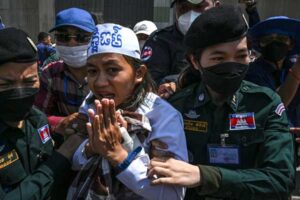
Four of the activists were then violently dragged away from a peaceful sit-in they’d joined outside the court building. The five who’ve so far been jailed have been split up and sent to separate prisons, some far away from their families.

This is the latest in a long line of attacks on Mother Nature activists. The group is being punished for its work to try to protect natural resources, prevent water pollution and stop illegal logging and sand mining.

An autocratic regime

Cambodia’s de facto one-party regime tolerates little criticism. Its former prime minister, Hun Sen, ruled the country from 1985 until 2023, when he handed over to his son. This came shortly after a non-competitive election where the only credible opposition party was banned. It was the same story with the election in 2018. This suppression of democracy required a crackdown on dissenting voices, targeting civil society as well as the political opposition.

The authorities have weaponised the legal system. They use highly politicised courts to detain civil society activists and opposition politicians for long spells before subjecting them to grossly unfair trials. Campaigners for environmental rights, labour rights and social justice are frequently charged with vaguely defined offences under the Criminal Coder such as plotting and incitement. Last year, nine trade unionists were convicted of incitement after going on strike to demand better pay and conditions for casino workers.

In 2015 the government introduced the restrictive Law on Associations and Non-Governmental Organisations (LANGO), which requires civil society organisations to submit financial records and annual reports, giving the state broad powers to refuse registration or deregister organisations. In 2023, Hun Sen threatened to dissolve organisations if they failed to submit documents.

The state also closely controls the media. People close to the ruling family run the four main media groups and so they mostly follow the government line. Independent media outlets are severely restricted. Last year the authorities shut down one of the last remaining independent platforms, Voice of Democracy. Self-censorship means topics such as corruption and environmental concerns remain largely uncovered.

This extensive political control is closely entwined with economic power. The ruling family and its inner circle are connected to an array of economic projects. Landgrabs by state officials are common. These means land and Indigenous people’s rights activists are among those targeted.

In 2023, courts sentenced 10 land activists to a year in jail in response to their activism against land grabbing for a sugar plantation. That same year, three people from the Coalition of Cambodian Farmer Community, a farmers’ rights group, were charged with incitement and plotting. The LANGO has also been used to prevent unregistered community groups taking part in anti-logging patrols.

The activity that saw the Mother Nature activists charged with plotting involved documenting the flow of waste into a river close to the royal palace in the capital, Phnom Pen. It’s far from the first time the group’s environmental action has earned the state’s ire. The government feels threatened by the fact that Mother Nature’s activism resonates with many young people.

Three of the group’s activists were convicted on incitement charges in 2022 after organising a protest march to the prime minister’s residence to protest against the filling in of a lake for construction. In 2023, Mother Nature delivered a petition urging the government to stop granting land to private companies in Kirirom National Park; there’s evidence of licences going to people connected to ruling party politicians. In response, the Ministry of Environment said Mother Nature was an illegal organisation and that its actions were ‘against the interests of Cambodian civil society’.

Media also get in trouble if they report on the sensitive issue of land exploitation. In 2023, the authorities revoked the licences of three media companies for publishing reports on a senior official’s involvement in land fraud. In 2022, two teams of reporters covering a deforestation operation were violently arrested.

Regional challenges

Repression of environmental activism isn’t limited to Cambodia. In neighbouring Vietnam, the one-party communist state is also cracking down on climate and environmental activists. In part this is because, as in Cambodia, climate and environmental activism is increasingly shining a light on the environmentally destructive economic practices of authoritarian leaders.

Cambodia’s creeping use of the charge of insulting the king to stifle legitimate dissent also echoes a tactic frequently used in Thailand, where the authorities have jailed young democracy campaigners for violating an archaic lèse majesté law that criminalises criticism of the king. Other repressive states are following its lead – including Cambodia, where the law on insulting the king was introduced when the crackdown was well underway in 2018.

Cambodia provides ample evidence of how the denial of democracy and the repression that comes with it enable environmentally destructive policies that further affect people’s lives and rights. The solution to protect the environment and prevent runaway climate change is less repression, more democracy and a more enabled civil society.

Cambodia’s international partners should emphasise this in their dealings with the state. They should press the authorities to release the jailed Mother Nature activists, who deserve to spend the coming years helping make their country a better place, not rotting in prison.

Andrew Firmin is CIVICUS Editor-in-Chief, co-director and writer for CIVICUS Lens and co-author of the State of Civil Society Report.

  Source

Sportwashing Allegations at Africa’s Top Football Tournament

Africa, Climate Action, Climate Change, Development & Aid, Editors’ Choice, Energy, Environment, Featured, Freedom of Expression, Green Economy, Headlines, Human Rights, Humanitarian Emergencies, Sustainable Development Goals, TerraViva United Nations

Climate Change

Opponents of the East African Crude Oil Pipeline protested American International Group's continued support of the project. The protest was in New York in July. Credit: 350.org

Opponents of the East African Crude Oil pipeline protested American International Group’s continued support of the project. The protest was in New York in July. Credit: 350.org

ABUJA, Jul 30 2024 (IPS) – Following the recent Africa Cup of Nations (AFCON) tournament in Ivory Coast, a continent-wide campaign has emerged on social media challenging the tournament’s main sponsor, TotalEnergies, over its involvement in the East African Crude Oil Pipeline (EACOP).


EACOP, a massive 1,443-kilometer crude oil export pipeline, is designed to transport oil from Western Uganda’s oilfields to the port of Tanga in Tanzania. TotalEnergies, a major stakeholder in the project, will extract oil from the Tilenga field and export it to the Global North.

Environmentalists argue that the project threatens the livelihoods of tens of thousands of people and the region’s fragile ecosystems. The Ugandan and Tanzanian governments have dismissed these concerns, asserting that the pipeline is essential for bolstering their economies.

Many of these campaigners, particularly environmentalists, have faced harassment and arrest.

One of them, Stephen Kwikiriza, an employee of Uganda’s Environment Governance Institute (EGI), a non-profit organization, was reportedly abducted and beaten by the Ugandan armed forces in Kampala on June 4, 2024.

After being questioned, he was abandoned hundreds of miles from the capital, highlighting the latest episode in the crackdown on environmentalists in Uganda.

TotalEnergies, through their press officer, François Sinecan, emphatically denied that the company had anything to do with the harassment of environmentalists, or was involved in legitimizing the company through sponsorship.

Sportswashing

Critics argue that TotalEnergies is exploiting Uganda and Tanzania for their oil, even as it faces numerous legal battles due to its role in the climate crisis and refusal to take responsibility.

They worry that TotalEnergies is using AFCON, the continent’s biggest football tournament, and its global viewership to enhance its image while profiting from climate-wrecking fossil fuel extraction across Africa.

“AFCON is one of the ways they [TotalEnergies] are using to legitimize their existence. They have to use the sports arena. They seem to say, ‘Look at what we are doing in Africa, and in your communities, it is to your benefit.’ Every time you look at the logo of TotalEnergies, you might be convinced that this is a big corporation that should invest [in Africa], when in actuality, they are destroying our existence,” Nkurunziza Alphonse, the Ugandan Coordinator of the Students Against EACOP Uganda, told IPS.

Alphonse was arrested in October 2022 when he led a group of students to the EU embassy in Kampala to deliver a petition against EACOP. But he is not the only student to be arrested and harassed in recent times.

On December 15 last year, Bwete Abdul Aziiz, a co-founder of the Justice Movement Uganda and a student at Kyambogo University in Kampala, rallied 50 students, including members of the movement, to protest and deliver a petition to the Ugandan parliament against the EACOP.

However, the students did not reach their destination as the police dispersed the protest and arrested Abdul Aziiz, along with three other students who are members of the movement.

“Before we were taken to the Central Police Station in Kampala, where we spent four days, we were held in an enclosed space for about an hour where the police threatened us to stop fighting the government. I was kicked in the ribs by a police officer, and other colleagues were slapped,” Abdul Aziiz told IPS.

However, Sinecan, TotalEnergies press officer, denied claims of sportwashing and involvement in the arrests of climate activists.

“Africa is part of the DNA of TotalEnergies, which has been present on the continent for ninety years and has never ceased to develop its activities and strengthen its local roots. The company employs 10,000 men and women in more than 40 African countries, working across the entire energy production and distribution chain. Every day, nearly 4 million customers visit the 4,700 service stations in the TotalEnergies network in Africa,” Sinecan told IPS.

He added that TotalEnergies  “will not tolerate any threat or attack against those who peacefully defend and promote human rights.”

“TotalEnergies has a history of engaging directly with all members of civil society, including NGOs involved in human rights issues. To this end, the company’s commitments include quarterly meetings, stakeholder dialogue, bilateral meetings, webinars on keynote topics identified by NGOs and responses to questions and concerns raised by all project stakeholders,” said Sinecan.

However, activists that IPS spoke to do not agree.

Bhekhumuzi Bhebhe, Campaigns Lead at Power Shift Africa, in a statement sent to IPS said, “Investing millions in sportswashing while undercompensating displaced households exposes a profound deceit by the French multinational. It also highlights the glaring disconnect between corporate sponsorship and genuine social responsibility.”

But the French oil giant denied claims of undercompensating displaced households, telling IPS that “as with all other aspects of the project, TotalEnergies stringently complies with local regulations and international standards (IFC).”

Football and Climate Change

The 2023 AFCON was postponed to 2024 due to adverse weather conditions, leading critics to argue that the tournament underscored the impacts of the climate crisis, for which TotalEnergies and other oil majors are largely responsible.

Richard Heede of the Climate Accountability Project has described EACOP as a mid-sized carbon bomb. The pipeline is projected to become operational by 2025 and once completed, it is expected to contribute approximately 34 million tons of carbon emissions annually for around 25 years.

Baraka Lenga, Greenfaith Tanzania coordinator, considers this a climate disaster.

“For capitalists and businessmen, EACOP implies making billions of dollars. TotalEnergies does not care about human rights but about money. In Tanzania, over 70 percent of citizens depend on agriculture, yet instead of being concerned about the negative impacts of EACOP, TotalEnergies is focused on profit,” Lenga said.

Alagoa Morris, an environmental expert and human rights activist in Nigeria, told IPS that African governments allow oil giants to exploit communities in the continent to maintain support from the Global North, where the majority of these oil firms are based. He says this has also led to numerous oil spills in the continent.

Last year, the Nigerian government confirmed the loss of 3,000 barrels of crude oil in TotalEnergies’ spill in the oil-rich Niger-Delta region, which is already one of the most polluted areas on the planet due to frequent oil spills.

“African governments are complicit in the exploitation of the continent’s oil resources because the wealth generated from oil is then used to fuel the lust for power and wealth of a few individuals, perpetuating a cycle of corruption and environmental degradation,” Morris said.

Renewable Energies?

To do away with fossil fuels by mid-century, world leaders during cop28 held at UAE last year, pledged to keep investing in renewable energies. However, with a projected population of about 2.5 billion in 2050, many African leaders doubt that renewable energy can adequately substitute for energy obtained from fossil fuels required to produce power for a rapidly growing population in Africa.

Seyifunmi Adebote, an environmental policy expert in Nigeria, believes Africa must embrace renewable energy but according to him, “many countries on the continent lack the infrastructure to transition to renewable energy in the short run.”

Despite accusations of investing in fossil fuels, TotalEnergies told IPS that it has “dedicated USD 5 billion to renewable and low-carbon energies and will dedicate another USD 5 billion in 2024. This is the second year in a row that TotalEnergies has invested more in low-carbon energies than in new hydrocarbon projects.

“Since 2020, we have been resolutely committed to our transition strategy, which is based on two pillars: gas and electricity. Gas and low-carbon electricity are at the heart of tomorrow’s energy system. Gas is an essential transitional energy to support the rise of intermittent renewable energies and replace coal in power generation. In electricity, we are already one of the world’s biggest solar and wind power developers, which should put us in the top 5 worldwide in this sector by 2030.”

Victory In Sight

The fate of EACOP is uncertain after several financial institutions, including previous supporters of TotalEnergies, announced they would no longer back the project due to global environmental protests.

European lawmakers have also condemned and called for its delay.

For the Ugandan-based Alphonse, this marks a significant victory in the fight against EACOP, as the lack of financiers could lead to the project being suspended.

“This is the time African countries should move away from fossil fuels. Oil is destroying our continent,” he said.

IPS UN Bureau Report

IPS UN Bureau, IPS UN Bureau Report,

  Source

SUMMIT OF THE FUTURE: ‘The UN Secretary-General Underestimated the Difficulty of Reaching Consensus’

Civil Society, Environment, Featured, Global, Global Governance, Headlines, Human Rights, Sustainability, TerraViva United Nations

Jul 30 2024 (IPS) –  
CIVICUS discusses the upcoming Summit of the Future with Renzo Pomi, who represents Amnesty International at the United Nations (UN) in New York.


Renzo Pomi

In September, world leaders will gather at the UN World Summit of the Future to adopt the Pact for the Future. Ahead of the summit, civil society, academia and the private sector have contributed to the pact’s zero draft. Civil society sees the process as an opportunity to strengthen commitments on the environment, human rights and social justice, and CIVICUS advocates for the inclusion of language on the protection and expansion of civic space. But much work remains to be done before, during and after the summit to ensure ambitious commitments are adopted and then realised.

How did the Summit of the Future come about?

In September 2021, the UN Secretary-General released a report, ‘Our Common Agenda’, outlining global challenges and proposing a summit for world leaders to address them. Originally scheduled for September 2023, the summit was postponed due to a lack of consensus and will now take place in September 2024. Just before the opening of the 79th session of the UN General Assembly, world leaders will gather in New York to discuss the future and adopt by consensus an action-oriented document, the Pact for the Future.

The pact and its two annexes – the Global Digital Compact and the Declaration on Future Generations – will be the summit’s main outcome. It aims to address our global challenges through commitments in five thematic areas: sustainable development and financing for development, international peace and security, science, technology and innovation, youth and future generations, and transforming global governance. The pact will address a wide range of challenges facing humanity and the international system, and will seek to make intergovernmental institutions such as the UN more fit for the purpose they were created for.

What has the process towards the draft pact been like, and what role has civil society played in it?

The drafting process has been largely a state-owned and state-exclusive process. Germany and Namibia have co-facilitated the negotiations and presented the zero draft in January and subsequent revisions in May and July 2024.

Civil society participation has been very limited. We rely mostly on friendly states for information, as we are not in the room when negotiations take place. After each draft was released, we were invited to submit our recommendations and participate in virtual consultations to discuss the content. But, while we value these opportunities, nothing replaces the chance to be actively involved in negotiations. When you hold a virtual meeting like this, what you get is a series of hasty statements, not a real dialogue. As a result, we’ve had to lobby states to champion our issues, and it’s unclear whether our views will be reflected in the pact.

While the co-facilitators are often blamed for this, the truth is that the process was agreed by all states. The UN Charter recognises civil society as an important stakeholder, as does the Secretary-General, but many states believe the UN should be exclusively state-run and civil society shouldn’t have a place in discussing important issues.

Further, relations between civil society and the UN in New York are particularly strained compared to Geneva, where there is a more established tradition of including civil society in discussions. And the UN’s financial crisis means there’s no investment in hybrid meetings, which allow civil society organisations (CSOs) that can’t afford to travel to have a voice in meetings.

What did you advocate should be including in the pact?

We made two submissions, one before the zero draft was circulated and the other commenting on it. We analysed the whole document and focused on ensuring that a human rights perspective was adopted in every measure. Our proposals covered issues from Security Council reform to increased civil society participation in the UN.

We have long argued that Security Council permanent members should refrain from vetoing or blocking credible resolutions on serious violations such as war crimes, crimes against humanity and genocide. Unfortunately, this proposal is not accurately reflected on the draft. States may at the end agree to expand the Security Council, but otherwise most of the language simply reaffirms existing commitments, such as Article 27.3 of the Charter, which prevents states involved in conflicts voting on related resolutions but is currently ignored.

We also highlighted that CSOs face several barriers to engaging with the UN. The Economic and Social Council’s NGO Committee, which reviews applications for consultative status, often acts as a gatekeeper, unfairly denying access to CSOs that challenge the positions of particular states. We have proposed dismantling this committee and setting up an independent expert mechanism to assess applications on the basis of merit rather than political considerations. However, this proposal is unlikely to be included in the pact’s final draft.

How much real impact do you think the pact will have?

We hope some of our recommendations will be included in the pact, but the geopolitical climate suggests many will not. The Secretary-General has correctly identified the challenges, but he has underestimated the difficulty of reaching consensus on meaningful commitments. International cooperation is now almost non-existent. Today’s context resembles the Cold War, where there was no room for agreement on even basic issues. In the current circumstances, it was unrealistic for the Secretary-General to think he could launch such a massive undertaking and get an action-oriented document with real commitments for reform adopted.

It is said that even in the worst moments you have to push for the best. We may not get actionable commitments, but we may still get some good language and a minimum common denominator every country can agree on.

For the pact to have a real impact, global civil society needs to push for the strongest possible commitments and their implementation. In 2005, a similar summit ended with a decision to create the Human Rights Council in place of the discredited Commission on Human Rights. Now it’s very difficult to foresee getting commitments this specific, and as we approach the summit, proposals are being watered down. Civil society will have to be very creative in finding ways to use the watered-down language to demand change.

What’s next for civil society ahead of the summit?

In the days leading up to the summit, Summit of the Future Action Days will allow civil society, states and UN bodies to propose side events. Getting selected is very difficult, as requirements include sponsorship by two member states and one UN entity, and support by a coalition or network of CSOs. As a result, only a few side events will be approved.

As the summit approaches, civil society should focus on reviewing the second revision of the pact and identifying advocacy opportunities. Chances to advance our agenda will become more limited as September approaches. States will struggle to reach consensus on a final document and there will be no space to reopen closed discussions.

Once the pact is adopted, civil society will need to continue to push for critical issues and stay vigilant in monitoring its implementation.

Get in touch with Amnesty International through its website or Facebook and Instagram pages, and follow @amnesty on Twitter.

This interview was conducted as part of the ENSURED Horizon research project funded by the European Union. Views and opinions expressed in this interview are those of the interviewee only and do not necessarily reflect those of the European Union. Neither the European Union nor the granting authority can be held responsible for them.

  Source