A Grim Year for Democracy and Civic Freedoms – but in Gen Z There Is Hope

Active Citizens, Armed Conflicts, Civil Society, Climate Change, Crime & Justice, Democracy, Economy & Trade, Environment, Featured, Gender, Global, Headlines, Human Rights, Inequality, LGBTQ, TerraViva United Nations
Opinion

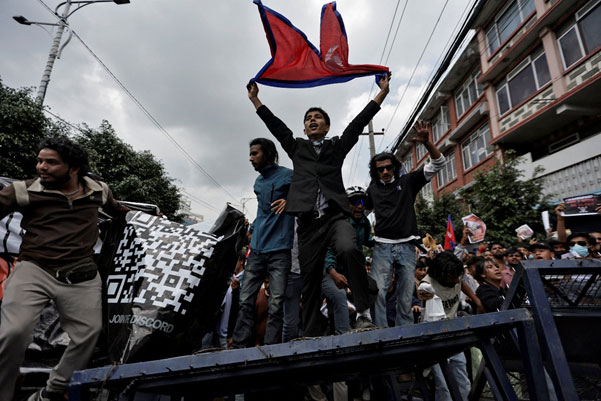
People take part in an anti-corruption protest in Kathmandu, Nepal on 8 September 2025. Credit: Navesh Chitrakar/Reuters via Gallo Images

NEW YORK, Dec 24 2025 (IPS) – 2025 has been a terrible year for democracy. Just over 7 per cent of the world’s population now live in places where the rights to organise, protest and speak out are generally respected, according to the CIVICUS Monitor, a civil society research partnership that measures civic freedoms around the world. This is a sharp drop from over 14 per cent this time last year.


Civic freedoms underpin healthy democracies, and the consequences of this stifling of civil society are apparent. At the end of the first quarter of the 21st century, the world is experiencing 19th century levels of economic inequality. The wealth of the richest 1 per cent is surging while some 8 per cent of the world’s population – over 670 million people – suffer from chronic hunger. Weapons-producing firms, closely intertwined with political elites, are reaping windfall profits as death and destruction rains down in Gaza, Myanmar, Sudan, Ukraine and many other places. It should surprise no one that the political leaders fomenting these conflicts are also squashing civic freedoms to avert questions about their motivations.

From Lima to Los Angeles, Belgrade to Dar es Salaam and Jenin to Jakarta, far too many people are being denied the agency to shape the decisions that impact their lives. Yet these places have also been the site of significant protests against governments this year. Even as authoritarianism appears to be on the march, people are continuing to pour onto the streets to insist on their freedoms. As we speak people in Sofia in Bulgaria are demonstrating in large numbers against endemic corruption which recently forced the government to resign.

History shows that mass demonstrations can lead to major advances. In the 20th century, people’s mobilisations helped achieve women’s right to vote, liberation of colonised peoples and adoption of civil rights legislation to address race-based discrimination. In the 21st century, advances have been made in marriage equality and other LGBTQI+ rights, and in highlighting the climate crisis and economic inequality through protests. But in 2025, the right to protest, precisely because it can be effective, is under assault by authoritarian leaders. Around the world, the detention of protesters is the number one recorded violation of civic freedoms, closely followed by arbitrary detentions of journalists and human rights defenders who expose corruption and rights violations.

This backsliding is now happening in major established democracies. This year, the CIVICUS Monitor downgraded Argentina, France, Germany, Italy and the USA to an ‘obstructed’ civic space rating, meaning the authorities impose significant constraints on the full enjoyment of fundamental rights. This regression is being driven by anti-rights nationalist and populist forces determined to degrade constitutional checks and balances and advance ballot box majoritarianism that denies minorities a fair say in economic, political and social life.

The push to degrade democracy by anti-rights forces now coming to fruition has been many years in the making. It accelerated this year with the return of Donald Trump. His administration immediately withdrew support to international democracy support programmes and instead built links to politicians responsible for crushing civic freedoms and committing grotesque human rights violations. Trump has laid out of the red carpet to El-Salvador’s Nayib Bukele, Hungary’s Victor Orbán, Israel’s Benjamin Netanyahu, Russia’s Vladimir Putin and Saudi Arabia’s Mohammed bin Salman, ushering in a new era of values-free might-is-right diplomacy that threatens to undermine decades of painstaking progress achieved by civil society.

The fallout is clear. Many wealthy democratic governments that traditionally fund civil society activities have significantly reduced their contributions. At the same time, they have linked their remaining support for civil society to narrowly defined strategic military and economic interests. In doing so, they have played directly into the hands of powerful authoritarian states such as China, Egypt, Iran, Nicaragua and Venezuela that seek to discredit domestic calls for accountability. Countries including Ecuador and Zimbabwe have introduced laws to limit the ability of civil society organisations to receive international funding.

All these developments are negatively impacting on civil society efforts for equality, peace and social justice. Yet the story of 2025 is also one of persistent resistance, and some successes. The courage demonstrated by Generation Z protesters has inspired people around the world. In Nepal, protests triggered by a social media ban led to the fall of the government, offering hope for a much-needed political reset. In Kenya, young protesters continued to take to the streets to demand political reform despite state violence. In Moldova, a cash-rich disinformation campaign run by a fugitive oligarch failed to sway the course of the national election away from human rights values. In the USA, the number of people joining the No-Kings protests just keeps on growing.

With over 90 per cent of the world’s population living with the institutional denial of full civic freedoms, anti-rights forces must be feeling pretty smug right now. But democratic dissent is brewing, particularly among Generation Z, denied political and economic opportunities but understanding that another world – one more equal, just, peaceful and environmentally sustainable – is possible. It’s far from game over yet, and even in difficult times, people will demand freedoms – and breakthroughs may be just around the corner.

Mandeep S Tiwana is Secretary General of CIVICUS, the global civil society alliance.

  Source

SKC Foundation champions landloss restoration, plants 800 trees

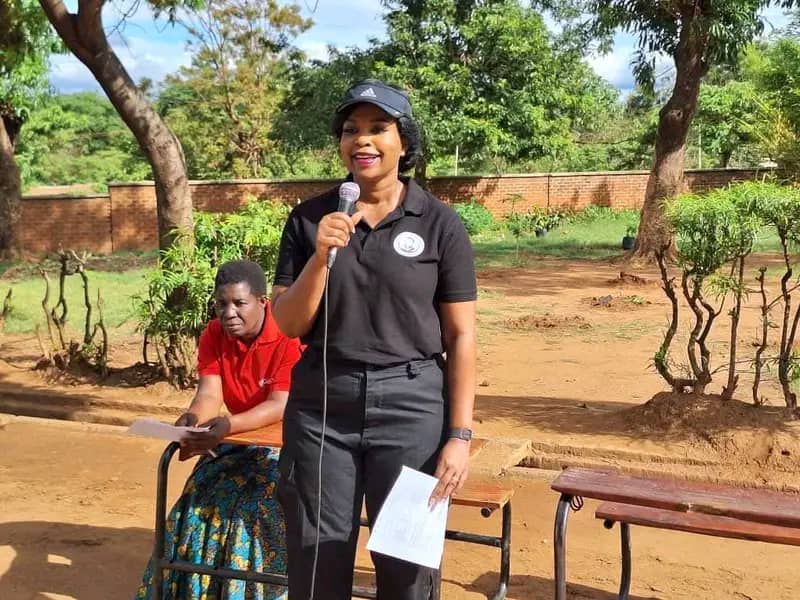
LILONGWE-(MaraviPost)-The Board Chairperson of the Saulos Klaus Chilima (SKC) Foundation, Mary Chilima has called on different stakeholders to embrace the 2025-2026 tree planting season to combat climate change.

Chilima made the appeal on Saturday, December 20, 2025 when the SKC Foundation in conjunction with C’ Steinweg Bridge Group, planted 800 tree seedlings at Nanjati Primary School in Lilongwe.

Chilima said planting trees is a simple yet effective solution to address change impacts such as floods among others.

“We are all feeling the effects of climate change and planting trees is the easy solution that we all can take part in.

“People die when floods or storms hit, so by planting trees we can make sure that these challenges are addressed”, said Chilima.

She also revealed that the Foundation has adopted Nanjati Primary School as a model school for environmental conservation, as they plan to reach different areas across the country to plant trees.

“We plan to go across the country mainly in rural areas where deforestation is a real concern to make sure that we plant as many trees as we can”, said Chilima.

On his part, Environmental Health and Safety Specialist at C’ Steinweg Bridge Group, Wamaka Neba said they thought of partnering with SKC Foundation through their Environmental, Social-Governance program which aims at afforestation.

“We work with different partners in order to reach our target of planting 100,000 trees by the end of 2025 hence assisting the government to successfully achieve the Malawi 2063 development agenda, focusing on environmental sustainability enabler”, said Neba

Esther Banda, a teacher at Nanjati Primary School thanked the SKC Foundation for taking the tree planting activity to the school and has pledged to care for the planted trees and ensure that they all survive through the school’s Wildlife club.

The Ministry of Natural Resources Mining and Energy, through the Department of Forestry launched the 2025-2026 national forestry season on 15 December 2025, and almost 41,000,000 trees have been targeted to be planted during the season nationwide.

This year’s tree planting season is themed ‘Trees and Forests for Community Resilience’ and is expected to end on 15 April, 2026.


Discover more from The Maravi Post

Subscribe to get the latest posts sent to your email.

The Maravi Post

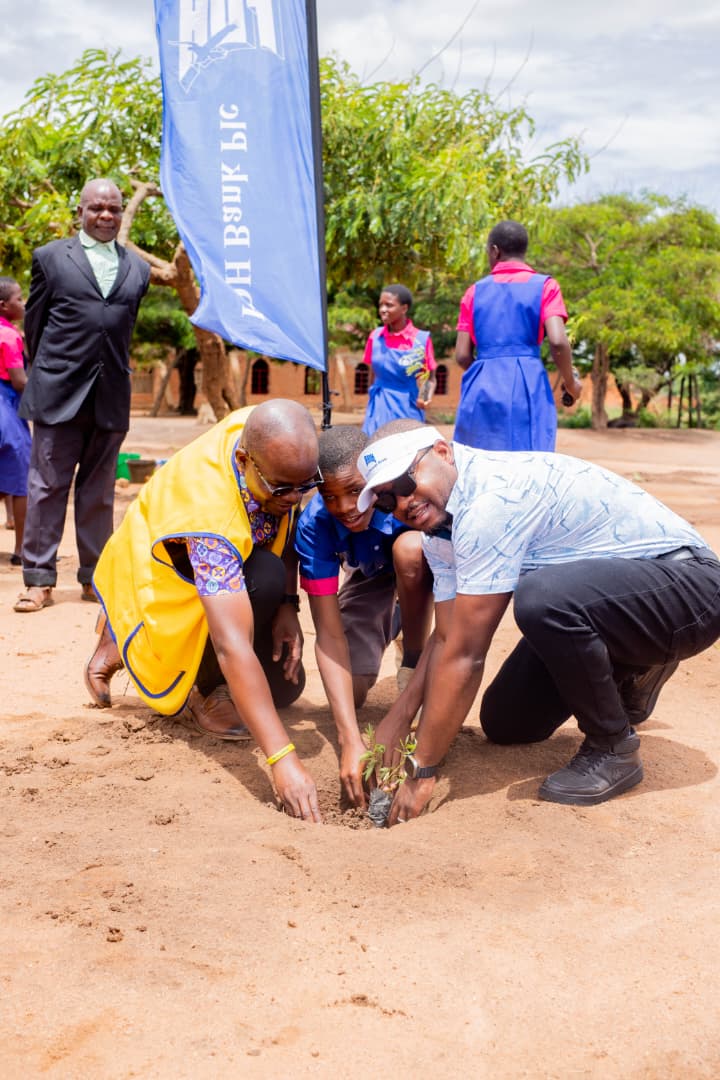
FDH Bank, Lions Club partner in nationwide tree-planting drive

BLANTYRE-(MaraviPost)-FDH Bank Plc has partnered with Lions Club Malawi in a nationwide tree-planting initiative, committing MK12 million towards the procurement of seedlings as part of its environmental sustainability efforts.

The initiative was launched during the District Tree Planting Day at Sankhani Primary School at Chitedze in Lilongwe and falls under the bank’s sustainability programme, FDH Cares: Our Environment Pillar, which promotes environmental protection and climate resilience.

Speaking at the launch, FDH Bank Senior Manager for Government and International Organisations, Eugene Chinkhandwe, said the bank remains committed to promoting a green and resilient environment.

“As FDH Bank Plc, we continually recognise the importance of a green environment, and we have over the years reinforced our commitment to championing a sustainable and resilient green environment that will foster the development of the country and nurture it against various environmental and economic forces, such as climate change,” said Chinkhandwe.

He said the partnership with Lions Club aligns with the bank’s broader sustainability agenda.

“Through our sustainability programme, FDH Cares Our Environment Pillar, we are honoured to partner with Lions Club in a tree-planting drive across the country, and we applaud Lions Club for this noble and honourable commitment to a pro-green environment,” he said.

Chinkhandwe noted that the initiative builds on earlier environmental commitments by FDH Group, whose holding company, Financial Holdings Limited, successfully planted one million trees by 2024 in line with Malawi 2063 and the United Nations Sustainable Development Goals.

Lions Club District Governor for District 412B Malawi and Mozambique, Gladson Kuyeri, described the event as a demonstration of service and shared responsibility in environmental protection.

“Today we gather at Chitedze to demonstrate service in action. We are not just planting trees, we are planting hope, responsibility, and a sustainable future for our communities,” said Kuyeri.

He said the partnership with FDH Bank shows how corporate institutions and community organisations can work together to address environmental challenges.

“We are deeply grateful to FDH Bank for their generous sponsorship of K12 million. This partnership shows how corporate leadership and community service can work together to address challenges such as deforestation and climate change,” said Kuyeri.

During the event, a total of 2,000 trees were planted at Chitedze, with organisers urging stakeholders to ensure the trees are protected and nurtured to guarantee long-term environmental impact.


Discover more from The Maravi Post

Subscribe to get the latest posts sent to your email.

The Maravi Post

Sharp Focus: A green legacy on how Saulos Klaus Chilima Foundation champions environmental stewardship

The Saulos Klaus Chilima Foundation, led by the dedicated Board Chairperson Mary Chilima, has taken a commendable step towards promoting environmental sustainability in Malawi.

The foundation’s recent visit to Nanjati Primary School was a resounding success, with a tree planting exercise that brought together community members and stakeholders to drive home the importance of preserving the country’s vegetative cover.

This inspiring initiative underscores the foundation’s commitment to environmental conservation and community development, showcasing the power of collective action in driving positive change.

By organizing the tree planting exercise, the foundation has demonstrated its proactive approach to addressing the pressing issue of environmental degradation, a major concern for Malawi’s future.

The event was a testament to the foundation’s dedication to creating a greener tomorrow, with Madame Chilima emphasizing the need for Malawians to take responsibility for nurturing trees beyond just planting them.

Her call to action is a timely reminder that environmental sustainability requires collective effort and dedication, highlighting the importance of individual contributions to the country’s environmental well-being.

“We must develop a habit of looking after trees after planting as one way of sustaining the environment,” Madame Chilima urged, underscoring the foundation’s commitment to environmental conservation.

This message is particularly significant in Malawi, where environmental degradation and climate change pose significant challenges to the country’s development and prosperity.

The foundation’s efforts are a shining example of how collective action can drive meaningful change, inspiring others to take action and contribute to a greener Malawi.

The 800 trees planted at Nanjati Primary School, courtesy of C’ Steinweg Bridge Logistics Company, demonstrate the impact that collaborative efforts can have in promoting environmental sustainability.

This initiative not only enhances the school’s surroundings but also contributes to the country’s broader efforts to restore its natural beauty and mitigate the effects of climate change.

Tree planting exercises like this one are crucial for Malawi, given the country’s vulnerability to environmental degradation and climate-related challenges.

By engaging local communities and organizations, the Saulos Klaus Chilima Foundation is helping to foster a culture of environmental stewardship and inspire others to take action.

As Malawi continues to grapple with environmental issues, initiatives like this serve as a beacon of hope, demonstrating the power of collective action in driving positive change.

The event at Nanjati Primary School is part of the foundation’s ongoing efforts to promote environmental conservation and community development, showcasing the foundation’s commitment to creating a brighter future for Malawi.

Madame Chilima’s leadership has been instrumental in driving the foundation’s environmental agenda, with her passion for environmental conservation inspiring others to take action.

The Saulos Klaus Chilima Foundation’s tree planting initiative has sparked a sense of ownership and responsibility among community members, who are now eager to take care of the trees and ensure their growth.

This is a significant step towards creating a culture of environmental stewardship in Malawi, where community members are taking an active role in promoting sustainability.

The foundation’s efforts are a testament to the power of partnerships in driving positive change, demonstrating the impact that collaborative efforts can have in promoting environmental sustainability.

As the foundation continues to champion environmental stewardship, it is clear that its impact will be felt for years to come, contributing to a greener, more sustainable Malawi.

The Saulos Klaus Chilima Foundation’s commitment to environmental conservation is a shining example of how individuals and organizations can make a difference, inspiring others to take action.

The school’s surroundings are now a testament to the power of collective action, with the trees planted serving as a symbol of hope for a greener tomorrow.

The Saulos Klaus Chilima Foundation’s initiative has sparked a sense of hope and optimism in Malawi, inspiring others to take action and contribute to a brighter future.

As Malawi continues to grapple with environmental challenges, initiatives like this serve as a reminder that collective action can drive positive change, promoting a greener, more sustainable future.

The foundation’s efforts are a shining example of how collective action can drive meaningful change, inspiring others to take action and contribute to a greener Malawi.

The Saulos Klaus Chilima Foundation’s commitment to environmental conservation is a testament to the power of leadership and community engagement, inspiring others to take action.

The foundation’s efforts will have a lasting impact on Malawi’s environment and communities, contributing to a brighter future for generations to come.

As the foundation continues to champion environmental stewardship, it is clear that its impact will be felt for years to come, promoting a greener, more sustainable Malawi.

The Saulos Klaus Chilima Foundation’s initiative has shown that environmental conservation is a collective responsibility, inspiring others to take action and contribute to a greener tomorrow.

The foundation’s efforts are a shining example of how individuals and organizations can make a difference, promoting a greener, more sustainable future for Malawi.

The Saulos Klaus Chilima Foundation’s tree planting initiative is a commendable effort that deserves praise and support, demonstrating the power of collective action in driving positive change.

As we look to the future, it is clear that initiatives like this will play a crucial role in shaping Malawi’s environmental landscape, promoting a greener, more sustainable future.

The foundation’s efforts are a shining example of how collective action can drive meaningful change, inspiring others to take action and contribute to a greener Malawi.

The Saulos Klaus Chilima Foundation’s commitment to environmental conservation is a testament to the power of leadership and community engagement, inspiring others to take action.

The foundation’s efforts will have a lasting impact on Malawi’s environment and communities, contributing to a brighter future for generations to come.

As the foundation continues to champion environmental stewardship, it is clear that its impact will be felt for years to come, promoting a greener, more sustainable Malawi.

The Saulos Klaus Chilima Foundation’s initiative has sparked a sense of hope and optimism in Malawi, inspiring others to take action and contribute to a brighter future.

The foundation’s efforts are a shining example of how collective action can drive meaningful change, inspiring others to take action and contribute to a greener Malawi.

The Saulos Klaus Chilima Foundation’s commitment to environmental conservation is a testament to the power of leadership and community engagement, inspiring others to take action.

The foundation’s efforts will have a lasting impact on Malawi’s environment and communities, contributing to a brighter future for generations to come.

As the foundation continues to champion environmental stewardship, it is clear that its impact will be felt for years to come, promoting a greener, more sustainable Malawi.

The Saulos Klaus Chilima Foundation’s initiative has shown that environmental conservation is a collective responsibility, inspiring others to take action and contribute to a greener tomorrow.

The foundation’s efforts are a shining example of how individuals and organizations can make a difference, promoting a greener, more sustainable future for Malawi.

The Saulos Klaus Chilima Foundation’s tree planting initiative is a commendable effort that deserves praise and support, demonstrating the power of collective action in driving positive change.

As we look to the future, it is clear that initiatives like this will play a crucial role in shaping Malawi’s environmental landscape, promoting a greener, more sustainable future.

The foundation’s efforts are a shining example of how collective action can drive meaningful change, inspiring others to take action and contribute to a greener Malawi.

The Saulos Klaus Chilima Foundation’s commitment to environmental conservation is a testament to the power of leadership and community engagement, inspiring others to take action.

The foundation’s efforts will have a lasting impact on Malawi’s environment and communities, contributing to a brighter future for generations to come.

As the foundation continues to champion environmental stewardship, it is clear that its impact will be felt for years to come, promoting a greener, more sustainable Malawi.

The Saulos Klaus Chilima Foundation’s initiative has sparked a sense of hope and optimism in Malawi, inspiring others to take action and contribute to a brighter future.

The foundation’s efforts are a shining example of how collective action can drive meaningful change, inspiring others to take action and contribute to a greener Malawi.

The Saulos Klaus Chilima Foundation’s commitment to environmental conservation is a testament to the power of leadership and community engagement, inspiring others to take action.

The foundation’s efforts will have a lasting impact on Malawi’s environment and communities, contributing to a brighter future for generations to come.

As the foundation continues to champion environmental stewardship, it is clear that its impact will be felt for years to come, promoting a greener, more sustainable Malawi.

The Saulos Klaus Chilima Foundation’s initiative has shown that environmental conservation is a collective responsibility, inspiring others to take action and contribute to a greener tomorrow.

The foundation’s efforts are a shining example of how individuals and organizations can make a difference, promoting a greener, more sustainable future for Malawi.

The Saulos Klaus Chilima Foundation’s tree planting initiative is a commendable effort that deserves praise and support, demonstrating the power of collective action in driving positive change.

As we look to the future, it is clear that initiatives like this will play a crucial role in shaping Malawi’s environmental landscape, promoting a greener, more sustainable future.

The foundation’s efforts are a shining example of how collective action can drive meaningful change, inspiring others to take action and contribute to a greener Malawi.

The Saulos Klaus Chilima Foundation’s commitment to environmental conservation is a testament to the power of leadership and community engagement, inspiring others to take action.

The foundation’s efforts will have a lasting impact on Malawi’s environment and communities, contributing to a brighter future for generations to come.

As the foundation continues to champion environmental stewardship, it is clear that its impact will be felt for years to come, promoting a greener, more sustainable Malawi.

The Saulos Klaus Chilima Foundation’s initiative has sparked a sense of hope and optimism in Malawi, inspiring others to take action and contribute to a brighter future.

The foundation’s efforts are a shining example of how collective action can drive meaningful change.


Discover more from The Maravi Post

Subscribe to get the latest posts sent to your email.

The Maravi Post

Kenyan Court Restores Seed Freedom: Landmark Ruling Boost for Food Security and Sovereignty

Active Citizens, Africa, Biodiversity, Civil Society, Development & Aid, Economy & Trade, Environment, Featured, Food and Agriculture, Food Systems, Natural Resources, TerraViva United Nations, Trade & Investment

Food Systems

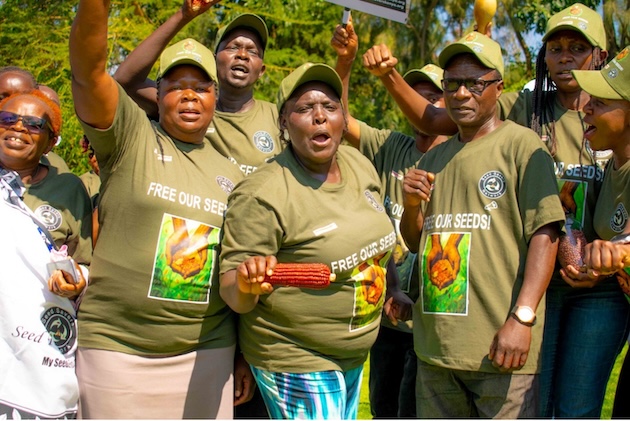
Farmers celebrate in Gilgil town in Kenya, after a court ruling that decriminalized the sharing of indigenous seeds. Credit: Jackson Okata/IPS

Farmers celebrate in Gilgil town in Kenya, after a court ruling that decriminalized the sharing of indigenous seeds. Credit: Jackson Okata/IPS

NAIROBI, Dec 18 2025 (IPS) – For years, smallholder farmers across Kenya have been engaged in a legal battle with the government over a law that criminalizes the practice of saving, sharing and exchanging indigenous seeds.


In 2022, a group of 15 Kenyan smallholder farmers petitioned the country’s High Court, seeking to compel the government to review sections of a law that bans the sharing and exchange of uncertified and unregistered seeds.

Rural smallholder farmers in Kenya rely on informal farmer-managed systems to acquire seeds through seed saving and sharing, but the Seeds and Plant Varieties Act limited their access.

Kenya’s government enacted the law in 2012 to develop, promote, and regulate a modern and competitive seed industry, but farmers are calling for its review.

The informal farmer-managed seed system allows farmers to store a portion of their seeds after harvesting, which guarantees them seeds for the next planting season.

Victory for Farmers

In a decisive victory for food sovereignty and climate justice, the High Court on November 27, 2025, ruled in favor of smallholder farmers, declaring punitive sections of the Seed and Plant Varieties Act unconstitutional.

The judgment effectively decriminalizes the age-old practice of saving, sharing, and exchanging indigenous seeds, affirming that Farmer-Managed Seed Systems (FMSS) are a protected right, not a criminal activity.

Under the punitive law, farmers faced jail terms of up to two years and a fine of 1 million shillings (about 7,800 USD) for selling or exchanging unregistered seeds.

Farmer rights defenders had argued that the law gave control of the country’s food system to multinational corporations.

In her judgment, Justice Rhoda Rutto declared unconstitutional sections of the Act that gave seed inspectors sweeping powers to raid seed banks and seize seeds meant for the next harvest, made it illegal for farmers to process or sell seeds unless they were registered seed merchants, gave extensive proprietary rights to plant breeders and none to farmers, and made it illegal for farmers to save or share seeds from their harvest without prior knowledge of seed proprietors.

Samuel Wathome, a smallholder farmer who was a petitioner in the case, says that “just like his grandmother did, he can now freely save seeds for his grandchildren without fear of police or prison.”

According to Elizabeth Atieno, a Food Campaigner at Greenpeace Africa, the court ruling affirmed the long-known tradition of seed sovereignty.

“The court ruling removed shackles from Kenya’s farmers.  This is not just a legal win; it is a victory for our culture, our resilience, and our future,” Atieno told IPS.

She added, “By validating indigenous seeds, the court has struck a blow against the corporate capture of our food system. We can finally say that in Kenya, feeding your community with climate-resilient, locally adapted seeds is no longer a crime.”

Protecting Biodiversity

According to Gideon Muya, Programs Officer, Biodiversity and Biosafety Association of Kenya, the judgment is a shield for the country’s biodiversity.

“Indigenous seeds are the library of life because they hold the genetic diversity we need to withstand droughts, pests, and a changing climate. The court has recognized that you cannot patent nature’s heritage. We have reclaimed the right to choose what we plant and what we eat, free from the coercion of commercial seed monopolies,” Muya told IPS.

Claire Nasike, an agroecologist, noted that the judgment indicates that the seed is life, and it is sovereign, and whoever controls it influences the lifeline of a generation.

Nasike observes that the ruling is a big boost for biodiversity, climate resilience and food sovereignty since indigenous seeds tend to be well adapted to local conditions like soil types, rainfall patterns, pests and disease traits that are often lost in uniform, certified commercial seeds.

“By enabling farmers to save, exchange and diversify their seed stock, communities can preserve genetic diversity, a key buffer against climate shocks like droughts and pests, as well as a safeguard for long-term food security.”

IPS UN Bureau Report

  Source

Climate Crisis Disrupts Sundarbans Community Festival, Prosperity

Asia-Pacific, Civil Society, Climate Action, Climate Change, Climate Change Finance, Climate Change Justice, COP30, Environment, Featured, Headlines, Indigenous Rights, Population, Sustainable Development Goals, TerraViva United Nations

Two years ago, a Karam tree branch brought from another district was being planted in the SAMS office premises along the Shyamnagar-Munshiganj road, but it didn't survive. Credit: Rafiqul Islam Montu/IPS

Two years ago, a Karam tree branch brought from another district was being planted in the SAMS office premises along the Shyamnagar-Munshiganj road, but it didn’t survive. Credit: Rafiqul Islam Montu/IPS

SATKHIRA, Bangladesh, Dec 9 2025 (IPS) – A dried karam tree branch stands on the bank of a pond in a field in Datinakhali village adjacent to the Sundarbans. Despite many efforts, the tree could not be saved.


For two years, the Munda community in Bangladesh’s Sundarbans had been fighting to save the Karam tree so that they could bring back their traditional Karam festival—once the biggest festival in their community. Many trees are unable to survive due to the effects of salinity—this list includes the Karam tree, which is the main ingredient in celebrating the festival.

Bhakta Sardar, a priest from the Munda community, says the festival of the indigenous Munda community would be incomplete without the branches of the Karam tree

“We believe that our prosperity and well-being are hidden in the branches of the Karam tree. We pray to God to achieve our prosperity around this festival. But frequent cyclones and salinity have killed the Karam trees.”

“Now we celebrate this festival in its name only for the prosperity of the community. We cannot leave the festival for the next generation,” added Bhakta Sardar, referring to a smaller festival where the community uses fig tree branches as an alternative.

While the debate about how to integrate non-economic losses and damages due to the impact of climate change continued during the 30th Conference of the Parties to the UNFCCC (COP30) in Belém, Brazil, the Munda community is looking for ways to revive the Karam festival, a symbol of their prosperity. A recent study emphasized that these non-economic losses and damages included the loss of religious and cultural practices.

The study says that climate risks are increasing on the coast of Bangladesh. The risk is even higher in the southwest. If this situation continues in the future, small communities like the indigenous Munda community will be in even greater crisis. The study called for policy and financial reform to assist communities like this to adapt to the impacts of climate change.

In Search of the Karam Tree

The scientific name of the Karam tree is Mitragyna parvifolia. This tree in the Asian region is also known as Kelikadam. It mainly blooms before the monsoon. As the Karam tree has disappeared, the indigenous Munda community of Bangladesh now celebrates a similar festival on a smaller scale, with branches of a fig tree. The scientific name of this tree is Ficus religiosa.

There were once many Karam trees in the villages of southwestern Bangladesh. Datinakhali, adjacent to the Sundarbans in the Shyamnagar upazila (subdistrict) of Satkhira district, is one such village. This village celebrated the Karam festival with a grand event, with people from the Munda community from different areas joining in.

In addition to their time-honored religious tradition, the community in this village on the banks of the Chuna River faces economic difficulties.

The indigenous Munda community lives in several villages adjacent to the Sundarbans in Koyra upazila (sub-district) of Khulna district in southwestern Bangladesh.

Shukkuri Rani Munda used to attend the Karam festival organized in the courtyard of Fulsingh Munda’s house in Uttar Haztakhali village.

“To everyone now, the festival feels like a myth. A storm has swept away the entire festival. The next generation will forget the name of the Karam festival,” she says.

Munda Young Balai Krishna Sardar (38), president of the Sundarban Adivasi Unnayan Sangstha of that village, cannot recall attending the festival. Rangalal Munda’s 60-year-old father, Fulsingh Munda, witnessed a small-scale celebration five years ago. After Fulsingh’s death a year ago, no one in the village now knows how to initiate the Karam festival.

Geeta Rani Munda, 42, lives precariously in Datinakhali village, adjacent to the Sundarbans. She wants the Karam festival to return for her prosperity. Credit: Rafiqul Islam Montu/IPS

Geeta Rani Munda, 42, lives precariously in Datinakhali village, adjacent to the Sundarbans. She wants the Karam festival to return for her prosperity. Credit: Rafiqul Islam Montu/IPS

‘A Symbol of Our Faith’

The Munda community holds the belief that the branches of this tree conceal prosperity and well-being. They believe that the Karam festival ensures their good health and the well-being of future generations. Various tribal communities in Jharkhand, West Bengal, and Bihar, India, celebrate this festival with the same beliefs. Indigenous communities like Munda, Mahato, Kurmi, Matato, Santal, Orao, Baraik, Singh, Pahan, Mahali, Bhumij, etc., all celebrate the Karam festival.

“The Karam festival is our faith. Perhaps our economic condition is gradually deteriorating because we cannot follow our religious instructions,” said Anandini Rani Munda of Datinakhali village, articulating the belief that religious and economic wellbeing are intrinsically interlinked.

Nilkant Pahan, a priest of Burigoalini village in Shyamnagar upazila (sub-district), had been conducting the puja (religious ceremony) of the Munda community for eight years. He has organized the Karam festival several times following the ancestral tradition. But they were small events.

“Celebrating the Karam festival is our religious tradition. Our ancestors observed this tradition. We are trying to maintain its continuity. We are facing a much greater socio-economic and cultural crisis than before. We do not know what this crisis is because we cannot observe religious traditions,” Pahan says.

Impact of salinity

During Cyclone Aila in 2009, the entire area was submerged in the wave of salt water that broke the dam. The land was submerged in salt water for a long time, and the Karam trees could no longer survive. Many elderly Munda citizens believe that not only Aila but also other cyclones, especially a strong cyclone that hit the region in 1988, helped reduce the number of Karam trees.

GM Mostafizur Rahman, Chief Scientific Officer of Khulna Soil Resources Institute, said, “Both the intensity and extent of salinity in soil and water are increasing due to climate change; 81 percent of land in Shyamnagar is affected by varying degrees of salinity.”

Professor Saleh Ahmed Khan, Department of Botany, Jahangirnagar University, said, “The tree that the Munda community calls the ‘Karam’ tree is ‘Kelikadam.’ We did not find it among the 528 species under our research. The tree may not have survived due to the spread of salinity.”

Fight To Bring Back the Karam Festival

The Sundarbans Adivasi Munda Sangstha (SAMS) and leading members of the Munda community are working to bring back the Karam tree. They are trying to bring back the Karam festival by bringing branches of the Karam tree from other districts.

Two years ago, a branch of the Karam tree was planted in the SAMS office premises on the Shyamnagar-Munshiganj road, and another branch was planted in the Munda-dominated Datinakhali village. But it was not possible to save the tree. They will try again next year.

“We celebrate the Karam festival for our prosperity. We are trying to save the Karam trees for the festival. But due to salinity in the soil, the Karam trees cannot be saved. As an alternative, we use the branches of the fig (Ficus religiosa) tree,” said Geeta Rani Munda of Datinakhali village.

Krishnapada Sardar, Executive Director of SAMS, said it wasn’t enough that this festival only survives in the stories of elders.

“It was a major event in the rural culture of this community, which is proud of its identity. Climate change has changed the food habits of the Munda community, and the opportunities for livelihood have narrowed. The families of the community are facing an extreme economic crisis.

“Our lost festivals can be brought back by restoring the Karam tree. We want to return to our lost traditions. We want to return to our roots.”

IPS UN Bureau Report

  Source