Solar Power and Biogas Empower Women Farmers in Brazil

Active Citizens, Biodiversity, Civil Society, Cooperatives, Development & Aid, Economy & Trade, Editors’ Choice, Energy, Environment, Featured, Food and Agriculture, Gender, Headlines, Integration and Development Brazilian-style, Latin America & the Caribbean, Projects, Regional Categories, TerraViva United Nations, Women & Climate Change, Women & Economy

Energy

Leide Aparecida Souza, president of the Association of Residents of the Genipapo Settlement in the rural area of Acreúna, a municipality in central-western Brazil, stands next to breads and pastries from the bakery where 14 rural women work. The women's empowerment and self-esteem have been boosted by the fact that they earn their own income, which is more stable than from farming, and provide an important service to their community. CREDIT: Marina Carolina / IPS

Leide Aparecida Souza, president of the Association of Residents of the Genipapo Settlement in the rural area of Acreúna, a municipality in central-western Brazil, stands next to breads and pastries from the bakery where 14 rural women work. The women’s empowerment and self-esteem have been boosted by the fact that they earn their own income, which is more stable than from farming, and provide an important service to their community. CREDIT: Marina Carolina / IPS

ACREÚNA/ORIZONA, Brazil , Apr 16 2024 (IPS) – A bakery, fruit pulp processing and water pumped from springs are empowering women farmers in Goiás, a central-eastern state of Brazil. New renewable energy sources are driving the process.


“We work in the shade and have a secure, stable income, not an unsteady one like in farming. We cannot control the price of milk, nor droughts or pests in the crops,” said Leide Aparecida Souza, who runs a bakery in the rural area of Acreúna, a municipality of 21,500 inhabitants in central Goiás.

“The Network is the link between the valorization of rural women, family farming and the energy transition. We chose family farmers because they are the ones who produce healthy food.” — Jessyane Ribeiro

The bakery supplies a variety of breads, including cheese buns and hot dog buns, as well as pastries, cakes and biscuits to some 3,000 students in the municipality’s school network, for the government’s school feeding program, which provides family farming with at least 30 percent of its purchases. Welfare institutions are also customers.

The bakery is an initiative of the women of the Genipapo Settlement, established in 1999 by 27 families, as part of the agrarian reform program implemented in Brazil after the 1964-1985 military dictatorship, which has so far settled 1.3 million families on land of their own.

Genipapo, the name chosen for the settlement, is a fruit of the Cerrado, the savannah that dominates a large central area of Brazil. Each settled family received 44 hectares of land and local production is concentrated on soybeans, cassava and its flour, corn, dairy cattle and poultry.
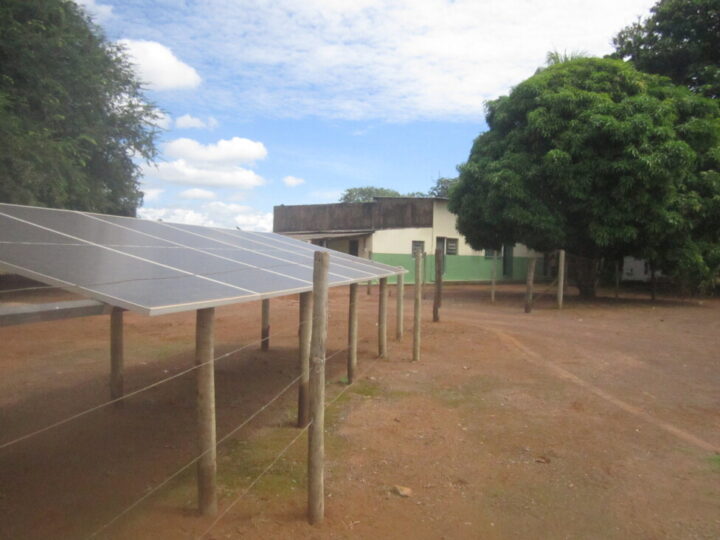
Six solar panels will reduce the costs of the women's bakery, installed on the former estate where 27 families were given land in Acreúna, in the Brazilian state of Goiás, as part of the country's ongoing agrarian reform program. CREDIT: Mario Osava / IPS

Six solar panels will reduce the costs of the women’s bakery, installed on the former estate where 27 families were given land in Acreúna, in the Brazilian state of Goiás, as part of the country’s ongoing agrarian reform program. CREDIT: Mario Osava / IPS

Bakery empowers rural women

The women of the Association of Residents of the Genipapo Settlement decided to create a bakery as a new source of income 16 years ago. They also gained self-esteem and autonomy by earning their own money. In general, agricultural and livestock income is controlled by the husbands.

Each of the women working at the bakery earns about 1,500 reais (300 dollars) a month, six percent more than the national minimum wage. “We started with 21 participants, now we have 14 available for work, because some moved or quit,” Souza said.

A year ago, the project obtained a solar energy system with six photovoltaic panels from the Women of the Earth Energy project, promoted by the Gepaaf Rural Consultancy, with support from the Socio-environmental Fund of the Caixa Econômica Federal, the regional bank focused on social questions, and the public Federal University of Goiás (UFG).

Gepaaf is the acronym for Management and Project Development in Family Farming Consultancy and its origin is a study group at the UFG. The company is headquartered in Inhumas, a city of 52,000 people, 180 km from Acreúna.

Due to difficulties with the inverter, a device needed to connect the generator to the electricity distribution network, the plant only began operating in March. Now they will see if the savings will suffice to cover the approximately 300 reais (60 dollars) that the bakery’s electricity costs.
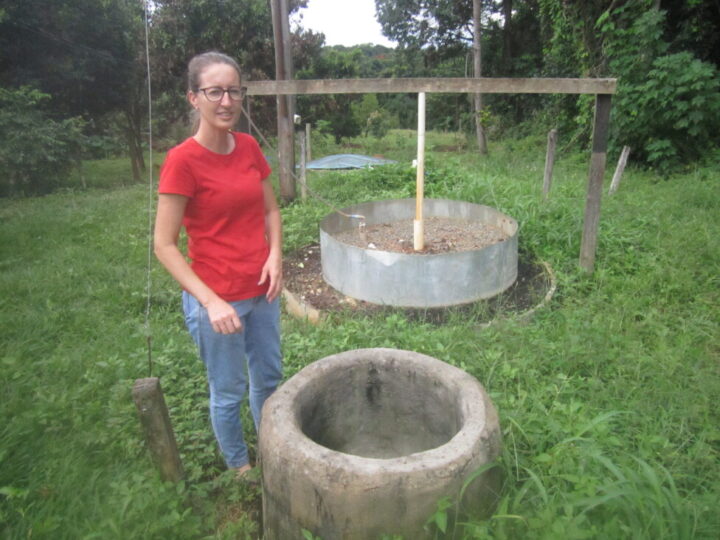
Iná de Cubas stands next to the biodigester that she got from the Women of the Earth Energy project in the municipality of Orizona, in the center-east of the Brazilian state of Goiás. The biogas generated benefits the productive activities of small farmers in rural settlements, as do solar plants on a family or community scale. Image: Mario Osava / IPS

Iná de Cubas stands next to the biodigester that she got from the Women of the Earth Energy project in the municipality of Orizona, in the center-east of the Brazilian state of Goiás. The biogas generated benefits the productive activities of small farmers in rural settlements, as do solar plants on a family or community scale. Image: Mario Osava / IPS

“It’s not that much money, but for us every penny counts,” Souza said. Electricity is cheap in their case because it is rural and nocturnal consumption. Bread production starts at 5:00 p.m. and ends at 3:00 or 4:00 a.m. from Monday to Thursday, according to Maristela Vieira de Sousa, the group’s secretary.

The industrial oven they use is low-consumption and wood-burning. There is another, gas-fired oven, which is only used in emergencies, “because it is expensive,” said de Sousa. Biogas is a possibility for the future, which would use the settlement’s abundant agricultural waste products.

Alternative energies make agribusiness viable

Iná de Cubas, another beneficiary of the Women of the Earth Energy project, has a biodigester that supplies her stove, in addition to eight solar panels. They generate the energy to produce fruit pulp that also supplies the schools of Orizona, a municipality of 16,000 inhabitants in central-eastern Goiás.

The solar plant, installed two years ago, made the business viable by eliminating the electricity bill, which was high because the two refrigerators needed to store fruit and pulp consume a lot of electricity.

The abundance of fruit residues provides the inputs for biogas production, an innovation in a region where manure is more commonly used.
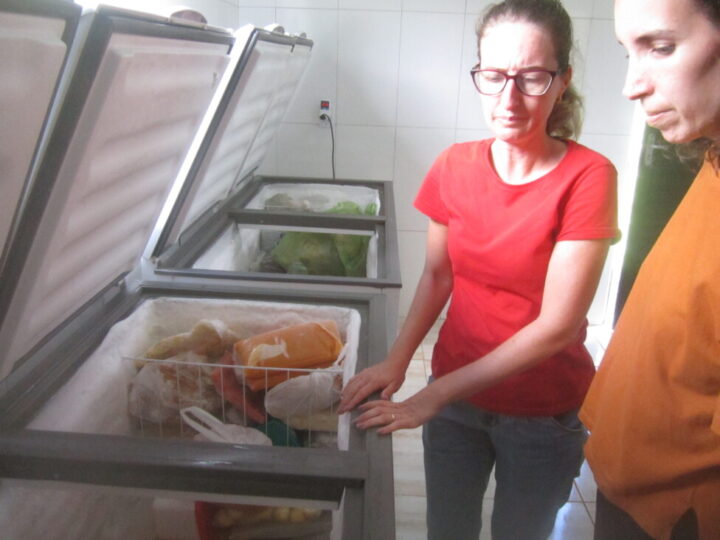
The refrigerators in which Iná de Cubas keeps the fruit and fruit pulp that she prepares for sale to schools in Orizona in central Brazil consume a great deal of electricity. CREDIT: Mario Osava / IPS

The refrigerators in which Iná de Cubas keeps the fruit and fruit pulp that she prepares for sale to schools in Orizona in central Brazil consume a great deal of electricity. CREDIT: Mario Osava / IPS

“I only use an additional load of animal feces when I need more biogas,” said Cubas, who gets the manure from her neighbor’s cows, since she does not raise livestock.

On her five hectares of land, Cubas produces numerous species of fruit for her cottage industry.

In addition to typical Brazilian fruits, such as cajá or hog plum (Spondias mombin), pequi or souari nut (Caryocar brasiliense) and jabuticaba from the grapetree (Plinia cauliflora), she grows lemons, mangoes, oranges, guava and avocado, among others.

For the pulp, she also uses fruit from neighbors, mostly relatives. The distribution of her products is done through the Agroecological Association of the State of Goias (Aesagro), which groups 53 families from Orizona and surrounding areas.

Agroecology is the system used on her farm, where the family also grows rice, beans and garlic. The crops are irrigated with water pumped from nearby springs that were recovered by the diversion of a road and by fences to block access by cattle, which used to trample the banks.

“The overall aim is to strengthen family farming, the quality of life in the countryside, incomes, and care for the environment, and to offer healthy food, without poisonous chemicals, especially for schools,” explained Iná de Cubas.

Biodigesters made of steel and cement, solar energy for different purposes, including pumping water, rainwater collection and harvesting, are part of the “technologies” that the Women of the Earth Energy project is trying to disseminate, said Gessyane Ribeiro, Gepaaf’s administrator.

In the area where Iná de Cubas lives, the project installed five biodigesters and seven solar pumps for farming families, in addition to solar plants in schools, she said.
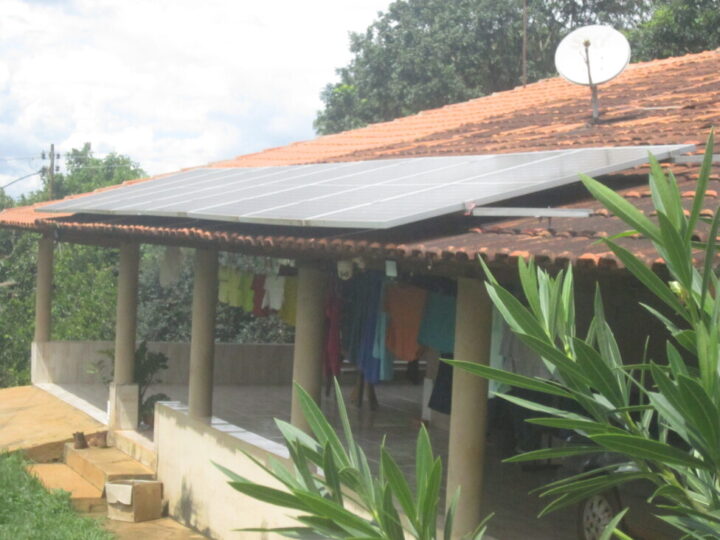
The eight solar panels on the roof of the Cubas family’s house, in the rural area of Orizona, make small agro-industrial processes viable, adding value to the wide diversity of native fruits from different Brazilian ecosystems, such as the Cerrado savannah and the Amazon rainforest, along with species imported throughout the country’s history. CREDIT: Mario Osava / IPS

Network of rural women

The Women of the Earth Energy Network, brought together by the project and coordinated by Ribeiro, operates in six areas defined by the government based on environmental, economic, social and cultural similarities. In all, it involves 42 organizations in 27 municipalities in Goiás.

The local councils choose the beneficiaries of the projects, all implemented with collective work and focused on women’s productive activities and the preservation of the Cerrado. All the beneficiaries commit themselves to contribute to a solidarity fund to finance new projects, explained agronomist Ribeiro.

“The Network is the link between the valorization of rural women, family farming and the energy transition,” she said. “We chose family farmers because they are the ones who produce healthy food.”

“We offer technological solutions that rely on the links between food, water and energy, to move towards an energy transition that can actually address climate change,” said sociologist Agnes Santos, a researcher and communicator for the Network.

Recovering and protecting springs is another of the Women’s Network’s activities.
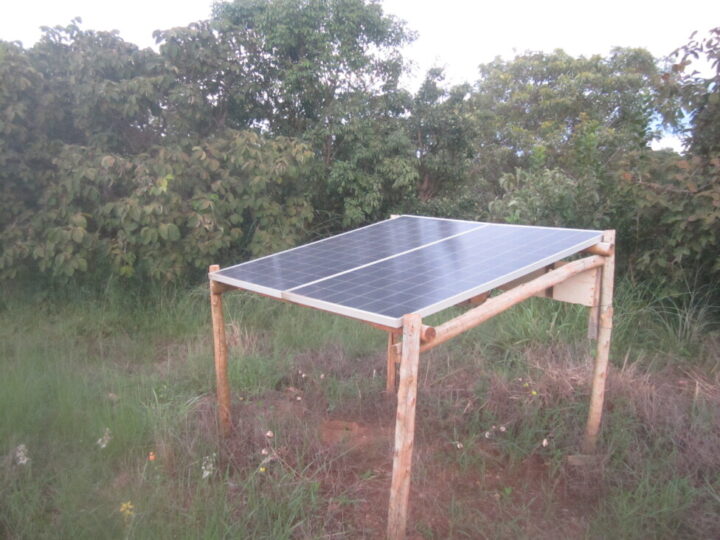
Two solar panels run a pump installed in a spring in the forest to pump the water needed by the 29 cows owned by Nubia Lacerda Matias' family in Orizona, in the state of Goiás, near Brasilia. Thus the cows stopped drinking water in the springs, which are now fenced off, vital to protect the water source for local families living downstream. CREDIT: Mario Osava / IPS

Two solar panels run a pump installed in a spring in the forest to pump the water needed by the 29 cows owned by Nubia Lacerda Matias’ family in Orizona, in the state of Goiás, near Brasilia. Thus the cows stopped drinking water in the springs, which are now fenced off, vital to protect the water source for local families living downstream. CREDIT: Mario Osava / IPS

Nubia Lacerda Matias celebrates the moment she was invited to join the movement. She won a solar pump, made up of two solar panels and pipes, which bring water to her cattle that used to damage the spring, now protected by a fence and a small forest.

“It’s important not only for my family, but for the people living downhill” where a stream flows, fed by various springs along the way, she said.

But the milk from the 29 cows and corn crops on her 9.4-hectare farm are not enough to support the family with two young children. Her husband, Wanderley dos Anjos, works as a school bus driver.

Iná de Cubas’ partner, Rosalino Lopes, also works as a technician for the Pastoral Land Commission, a Catholic organization dedicated to rural workers.

In his spare time, Lopes invents agricultural machines. He assembles and combines parts of motorcycles, tractors and other tools, in an effort to fill a gap in small agriculture, undervalued by the mechanical industry and scientific research in Brazil.

  Source

The Climate Alarm Is Ringing – It’s Time to Stop Silencing It

Civil Society, Climate Action, Climate Change, Crime & Justice, Economy & Trade, Environment, Featured, Global, Headlines, TerraViva United Nations

Opinion

Credit: Last Generation Germany

LONDON, Apr 12 2024 (IPS) – The heat records keep tumbling – 2023 was the hottest year in recorded history. Extreme weather events keep mounting up. And yet the voices most strongly calling for action to prevent climate catastrophe are increasingly being silenced.


It’s a sad fact that climate campaigners in the global south – in many countries in Africa, Asia and Latin America – have long faced repression. People have been subjected to incarceration and violence all the way up to murder for resisting climate-harming extractive projects and environmental destruction. In comparison, climate activists in global north countries – including Europe and North America – for a long time enjoyed relative freedom, which they used to protest against their governments and the corporations headquartered in their countries that bear most of the responsibility for causing global warming.

But they no longer enjoy the full freedom to do so. As the latest State of Civil Society Report from global civil society alliance CIVICUS shows, several global north governments are increasingly making it harder for people to take part in climate protests. They’re using anti-protest laws, raids, arrests, jail sentences and violence to try to subdue voices calling for urgent action.

When it comes to the climate, delay is denial, because if action isn’t taken fast, it may be too late. This means the repression of activists demanding immediate action must be seen as a form of climate denial.

Examples are piling up. In Germany last year, authorities used laws intended to combat organised crime to raid the homes of young activists from the Last Generation climate movement, seize their laptops and freeze their bank accounts. The German police also used violence against activists trying to block a coalmine expansion. The imposition of restrictions on climate activism is one the key reasons the CIVICUS Monitor recently downgraded Germany’s civic space rating.

In Italy too, the government has served climate campaigners with criminal conspiracy indictments historically used against the mafia, and it has also introduced a law to criminalise non-violent action at key sites. The Dutch authorities have responded with mass arrests to roadblock protests demanding it fulfil its promise to end fossil fuel subsidies, which amount to around US$39.9 billion a year. Thousands have been detained and the police have used water cannon against protesters.

The UK government has passed a package of laws that criminalise disruptive and noisy protests, clearly targeted at the non-violent direct action used by climate campaigners. In January, the UN Special Rapporteur on environmental defenders, Michel Forst, condemned these new laws. Numerous climate activists have been jailed for peaceful protest actions that until recently would never have received a prison sentence. Meanwhile the UK government plans to grant over 100 new oil and gas licences. Several Australian states have also passed anti-protest laws that have been used to jail climate activists.

Global north states, apparently eager to do the bidding of the fossil fuel giants, can be expected to intensify this repression as the gap between the action needed and the lack of effort being taken becomes increasingly clear. They silence civil society because activists expose the hypocrisy behind the greenwash. As right-wing populists and nationalists who oppose climate action – and often spread climate disinformation – gain influence across the global north, climate activists can expect an even greater wave of vilification.

The impacts of repression are personal. They increase the costs and dangers of activism in an attempt to deter people from getting involved and sap collective energies. However, in response, campaigners are showing resilience. In Germany, frozen funds were quickly replaced with crowdsourced donations. In the Netherlands, attempts to repress roadblocks motivated more people to turn up to protest.

But the opportunity cost is steep. Energy that should be invested in advancing creative climate solutions is instead being spent in fending off restrictions. In the long-term, there’s a danger of attrition, depleting the ranks of climate activists. And without civil society, who will push to keep the climate crisis high on the political agenda?

Civil society has shown it can make a difference. While there was much to be unhappy about with the last global climate summit, COP28, the fact that for the first time states acknowledged the need to transition away from fossil fuel use came as a direct result of civil society’s decades-long advocacy. More institutions are committing to divest from fossil fuel investments due to campaigning pressure: 72 per cent of UK universities have now done so, because student activists demanded it.

And the growing field of climate litigation keeps paying off. A group of Swiss women just won a ruling at the European Court of Human Rights, which found that their government has violated their human rights by not doing enough to tackle climate change, a verdict that sets a strong precedent. Last year, courts in Belgium and Germany insisted on stronger actions to cut emissions following lawsuits brought by campaigners. More are sure to follow.

Civil society will strive to keep working on every front possible, through protest, advocacy and litigation, because the scale of the climate crisis demands a full spectrum of responses. States should stop trying to hold back the tide and put themselves on the right side of history. They must respect the right of everyone to protest and stop the denial they practise through repression.

Andrew Firmin is CIVICUS Editor-in-Chief, co-director and writer for CIVICUS Lens and co-author of the State of Civil Society Report.

  Source

India’s Farmers Could Use Better Monsoon Forecasts

Asia-Pacific, Civil Society, Development & Aid, Editors’ Choice, Environment, Featured, Food and Agriculture, Headlines, Sustainable Development Goals, TerraViva United Nations

Food and Agriculture

Monsoon rains in Tamil Nadu, Chennai, India. Credit: Ganesh Partheeban/Unsplash

Monsoon rains in Tamil Nadu, Chennai, India. Credit: Ganesh Partheeban/Unsplash

NEW DELHI , Apr 3 2024 (IPS) – Agriculture in India need not ‘gamble’ with the monsoons if accurate weather and climate forecasts are proactively made available to farmers, according to the results of a new experimental study conducted by the University of Chicago.


Approximately 70–90 percent of total annual rainfall across most of India, a major agricultural producer, occurs during the June to September monsoon, which varies widely in onset timing and quantity, making predictions difficult for farmers, says the study published February 26, 2024, as a non-peer-reviewed working paper.

While the Indian Meteorological Department (IMD) has advanced monsoon forecasting systems, researchers from the Energy Policy Institute at the University of Chicago found that farmers in southern Telengana state, where the study was conducted, tended not to rely on IMD or other forecasts.

“For whatever reason, few of the farmers we talked with in Telengana were using a forecast about the timing of the local start of the monsoon to help guide their planting decisions,” says Amir Jina, senior fellow at the Energy Policy Institute, University of Chicago and author of the study.

While Indian farmers have traditionally depended on official forecasts issued by the IMD, first established in 1875, the Chicago team relied on forecast data generated by the Potsdam Institute for Climate Impact Research (PIK).

“The PIK model produces a probability distribution of potential onset dates, which can be summarized as a likely onset date range, making it easy for farmers to understand,” the study said.

“This particular study looks at a new approach to forecasting the onset of the Indian Summer Monsoon over southern India’s Telangana region that can predict the arrival of the monsoon across India four to six weeks in advance,” says Fiona Burlig, coauthor of the study and assistant professor at the Energy Policy Institute, University of Chicago.

PIK, under a climate capacity programme that covers East Africa, Peru, and India, focuses on staple crops in India, makes use of semi-empirical modeling frameworks, and combines them with satellite remote sensing earth observation data.

In the experimental study, PIK forecasts enabled farmers to make early decisions about key inputs such as the type of crops, labour supply, and fertilizer purchases, significantly improving profitability. “PIK forecasts were especially accurate over Telangana State, the site of our experiment,” says Burlig.

Burlig and her team studied how farmers across 250 villages in Telangana changed their planting strategies once they were convinced of the high accuracy of the monsoon forecasts. An early monsoon typically means a longer growing season, suited to cash crops like cotton, while later monsoons would help farmers decide to grow lower-value subsistence crops like paddy, the researchers said.

“This is measured proof for IMD how important the work of forecasting is for farmers in India and can help thinking about how to measure even more benefits of other types of forecasts from the IMD that the farmers use. All the progress IMD makes should be validated and encouraged by this basic fact,” Jina tells SciDev.Net.

“Farmers find that climate change is increasingly making predictions of the monsoon’s arrival and other weather patterns difficult,” says Burlig. “Our study, which was conducted in an area of low agricultural productivity, demonstrated how the new forecasts were able to deliver accurate monsoon predictions even in a changing climate.”

Because climate change increases weather variability, farmers are reluctant to take risks and typically tend to underinvest for the season ahead, Burlig said. A pre-season survey by the team in Telangana found wide variations in farmers’ estimations of when the monsoon would arrive.

The study experimentally evaluated monsoon onset forecasts in 250 villages, which were divided into a control group, a forecast group that received information well in advance of monsoon onset and a benchmark index insurance group.

Agricultural insurance lowers farmers’ risk exposure but does not improve their information, the study says. Overall, farmers who received insurance increased the land they cultivated and their investments in seeds, fertilizer, and other inputs by 12 percent compared to those who did not receive forecast information.

“The findings of the experimental study are well within what is expected,” said Arun Shanker, principal scientist at the Central Research Institute for Dryland Agriculture, Hyderabad. Studies like these, he said, are important because resilience to climate change will depend greatly on increasing agricultural productivity with available water resources.

However, Roxy Mathew Koll, a climate scientist at the Indian Institute of Tropical Meteorology, says the University of Chicago’s study is “severely outdated” as it is based on a pre-2016 prediction model. “Since then, IMD has moved to the dynamic, advanced, ‘Climate Forecast System’ that provides both regional and pan-India forecasts at a high resolution.”

“The Potsdam model and forecasts are not based on a full-fledged, dynamic system like the IMD climate forecast system and have limited application,” Koll, a lead author of the IPCC reports and former chair of the Indian Ocean Region Panel, tells SciDev.Net.

Soma Sen Roy, scientist at the IMD and India representative at the World Meteorological Organization, said the IMD issues forecasts at all time scales—nowcasting, medium range, extended range, seasonal, and long-range forecasting throughout the year.  “These forecasts are not specifically linked to the monsoons, for which special forecasts are issued.”

Said Jina, “Our research underscores that all the investments and improvements the IMD has made in recent years, and continues to make, are useful and important for farmers.”

IPS UN Bureau Report

  Source

Parents Harness Pedal and Wind Power To Demand Climate Action

Civil Society, Environment, Global, Headlines, TerraViva United Nations

Environment

Yamandú Pagliano plans to cross Praia do Cassino, the world's longest beach, stretching 250 kilometers along Brazil's southern coast from Uruguay, in his homemade wheeled wind buggy, , to highlight the need to address global heating. Credit: Yamandú Pagliano

Yamandú Pagliano plans to cross Praia do Cassino, the world’s longest beach, stretching 250 kilometers along Brazil’s southern coast from Uruguay, in his homemade wheeled wind buggy, to highlight the need to address global heating. Credit: Yamandú Pagliano

ROME, Mar 26 2024 (IPS) – Extreme sports are not just for young people. Climate activism isn’t either. Yamandù Pagliano is proof.


The 59-year-old father of two is gearing up for an epic feat. He plans to cross the longest beach on Earth, the Praia do Cassino, stretching from the border of Uruguay 250 kilometres up Brazil’s southern coastline, on his home-made wheeled wind buggy.

It’s a massive challenge both in physical and mental terms and one that brings multiple risks with it, including the danger of getting lost, crashing, or being swept out into the sea if the weather turns nasty.

But the Montevideo native has a special motive for taking it on.

Organizers want to highlight the “institutional indifference” to the climate crisis at all levels of government, promote sustainable transport and tourism, draw attention to the need for more cycle paths, especially in southern Italy, and make a loud appeal for peace around the world

Pagliano is a member of Parents for Future (PFF), a global network of citizens concerned about the climate crisis set up to support and echo the calls made by the young people of the Fridays for Future (FFF) movement.

When he takes on the Praia do Cassino challenge, he’ll be flying the Parents for Future flag on the mast of his wind buggy to highlight the need to address global heating.

“It’s going to be a PFF challenge,” Pagliano told IPS.

“My involvement in PFF started after my daughter joined FFF. Soon I was in Parents for Future Latin America (PFF LATAM) and then I helped to set up PFF Uruguay.

“I hope all the detailed stories of the crossing will help people become aware of the climate crisis, biodiversity loss and pollution. I’ll probably find dead animals and plastic garbage on the beach and face extreme weather events”.

Pagliano knows that the climate crisis is no longer a distant problem for future generations as people in Uruguay have been faced with the consequences first hand, as seen with last year’s severe drought that caused dramatic water shortages.

“In Uruguay the winters are not as cold as they used to be, and summers are a lot hotter,” he said.

“We have had big floods, with houses carried down the coast, and recently we had the biggest drought in our history, with almost no water coming out of the tap”.

Fittingly for an initiative that seeks to show the need for sustainability, Pagliano made his windcar out of reused material, welding together pipes he picked up from a scrap yard, while the sail is second-hand.

“There’ll be no phone signal in the middle section of the beach and I’ll be on my own for quite some time,” said Pagliano, who works in construction.

“I will be completely isolated. You have to be ready for every eventuality.

“Depending on the wind, it could take two or three days.

“It could take just one day with an early departure in good conditions, with the wind blowing in the perfect direction and at the perfect strength.

“It gets tiring physically after a while, but the adrenalin keeps you pumped up.

“It’s a good way to highlight the need to be sustainable.

“It’s a natural sport. There’s no contamination. No carbon footprint.

“I’ll do the crossing first and then go public if I’m successful, like Gagarin,” he quipped.

He is not the only parent harnessing renewable energy to draw attention to the need for climate action.

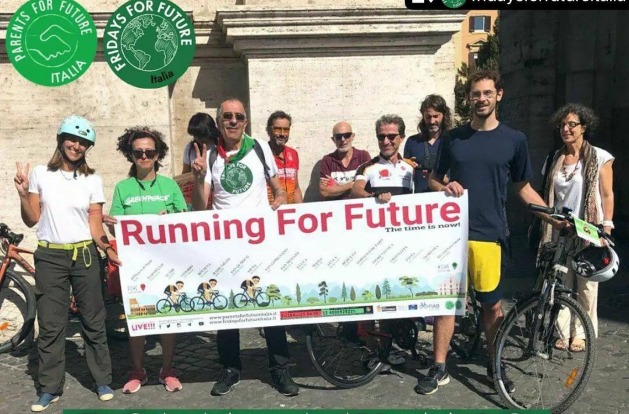
On the other side of the world, the Italian section of PFF is getting ready for the Running For Future, Cycling For Peace – a bike event which, fittingly for the land of the Giro d’Italia, is split into stages.

The ‘race’ starts in Rome’s Piazza del Popolo on May 10 and features 16 stages over nine days, roughly following the Via Francigena pilgrimage route southwards to end in Lecce on May 19.

Each stage will be used to focus on a specific aspect of the ecological crisis, such as air pollution, urban sprawl and the problems created by intensive livestock farming, while at the same time showing how they are all interconnected.

Organized with Fridays for Future Italia, the aims are multiple.

Among other things, organizers want to highlight the “institutional indifference” to the climate crisis at all levels of government, promote sustainable transport and tourism, draw attention to the need for more cycle paths, especially in southern Italy, and make a loud appeal for peace around the world.

The Italian section of Parents for Future gears up for "Running For Future, Cycling For Peace" — a multi-stage cycling event starting in Rome's Piazza del Popolo on May 10th and ending in Lecce on May 19th, following the Via Francigena route. Credit: Paul Virgo

The Italian section of Parents for Future gears up for “Running For Future, Cycling For Peace” — a multi-stage cycling event starting in Rome’s Piazza del Popolo on May 10th and ending in Lecce on May 19th, following the Via Francigena route. Credit: Paul Virgo

“We chose a cycling initiative because the bicycle has become a symbol of ecology,” said Maria Santarossa of Parents for Future Italia.
“It is a clean means of transport, which enables you to stay fit and be in direct contact with nature.

“We chose a pilgrims’ path because we can consider it an emblem of the beauty of nature and it’s a way to remind ourselves that we must take care of beauty.

“We have involved many other movements, associations, committees, and networks because we want people to know that many of us have the same objectives regarding the very serious climate and environmental crisis that is present in everyone’s lives”.

It is free to take part in the event, although participants have to cover their own accommodation and food expenses.

It is the second such event. The first took place in 2021, going from Rome northwards along the Via Francigena to Milan for the PreCOP26 conference that was held there.

That was such a success that it inspired the Polish section of Parents for Future to stage a climate grand tour of its own.

Each national PFF group is autonomous and does its own thing, campaigning on the issues that are most appropriate given the local situation.

PFF Italia, for example, is currently engaged in a major campaign to convince consumers to switch to utility companies whose electricity comes only from renewable sources.

There is also an umbrella group, Parents for Future Global (PFFG), which, among other things, is campaigning to support the drive for a Fossil Fuel Non-Proliferation Treaty.

  Source

New Report Examines Progress on Global Sustainable Development Goals

Civil Society, Climate Action, Climate Change, Environment, Global, Headlines, Human Rights, Natural Resources, Sustainable Development Goals, TerraViva United Nations

Opinion

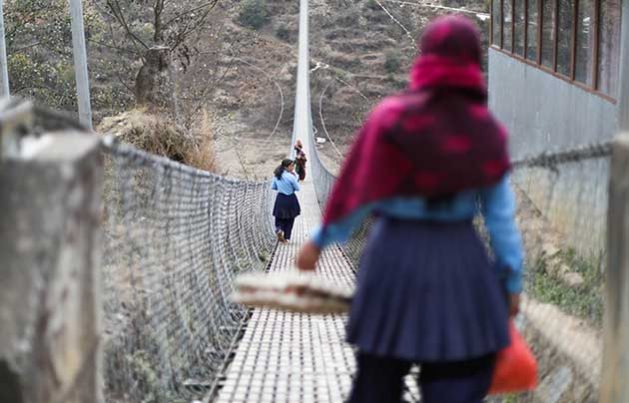
Credit: Students in Nepal’s Chitlang. Both Nomads/Forus

NEW YORK, Mar 21 2024 (IPS) – At the half-way point of the 2030 Agenda, the Sustainable Development Goals (SDGs) “are in deep trouble.” The need to accelerate progress towards the Sustainable Development Goals has never been more urgent as only approximately 12% of targets are currently on track. “Planet” is equally at risk as “people”.


As civil society leader Mavalow Christelle Kalhoule, Forus Chair and President of SPONG, the Burkina Faso NGO network, puts it, “What unfolds in the Sahel and in so many other forgotten communities ripples across the globe, impacting us all even if we choose to look away. Implementing the Sustainable Development Goals is vital to unlock a different future.”

The new “Progressing National SDGs Implementation” report looks at how countries around the world are advancing in their efforts towards sustainable development. The 2023 edition of the report is particularly significant as it marks the midpoint towards the 2030 Agenda’s goals, and the “world is not delivering”.

The report, which has been published since 2017, looks at crucial aspects such as governance, civil society involvement and space, localization, the importance of policy coherence, and the principle of Leaving No One Behind.

To compile the analysis, the report combines official Voluntary National Reviews (VNRs) submitted by member states with spotlight and alternative assessments, which aim to offer a more complete picture of national progress, particularly with respect to the fundamental 2030 Agenda principle to leave no one behind.

The report highlights that while more countries are engaging in ‘whole of government’ planning to implement the SDGs, at the same time many of the same countries do not ensure a wider ‘whole of society’ approach that involves civil society partners in delivery of the 2030 Agenda.

The report calls for a renewed global commitment to the SDGs, with a focus on:

    • Increased ambition: Countries need to adopt more ambitious plans to achieve the SDGs and ensure policy coherence.
    • Leaving no one behind: Data collection and policy focus must ensure that everyone benefits from SDG progress pacitularly by considering the extra challenges faced in reaching historically marginalized groups.
    • Stronger partnerships: Governments, civil society, and the private sector need to work together more effectively.
    • Improved monitoring: More robust data, national statistical and monitoring systems are needed to track progress and identify areas lagging behind.

Oli Henman from Action for Sustainable Development said: “We need to ensure that SDG reviews are genuinely inclusive of all parts of society and that national plans are backed up with real steps towards financing implementation at the community level. This to the only way that the world can get back on track to deliver the transformative change that was promised in 2015.”

Wangu Mwangi, a seasoned environmental journalist and expert in sustainable development, has authored the Progressing National SDG Implementation Report 2023, drawing on her extensive experience in sustainable development, land governance, natural resources management, climate change adaptation, and African development.

This report was coordinated by A4SD, in collaboration with ANND, BOND, Cooperation Canada, CPDE, Forus, IISD, Save The Children UK, and Sightsavers.

IPS UN Bureau

  Source

From Gas to Ash: The Struggle of Nigerian Women Amidst Surging Cooking Gas Prices

Africa, Civil Society, Climate Change, Development & Aid, Energy, Environment, Featured, Food and Agriculture, Gender, Headlines, Sustainable Development Goals, TerraViva United Nations

Energy

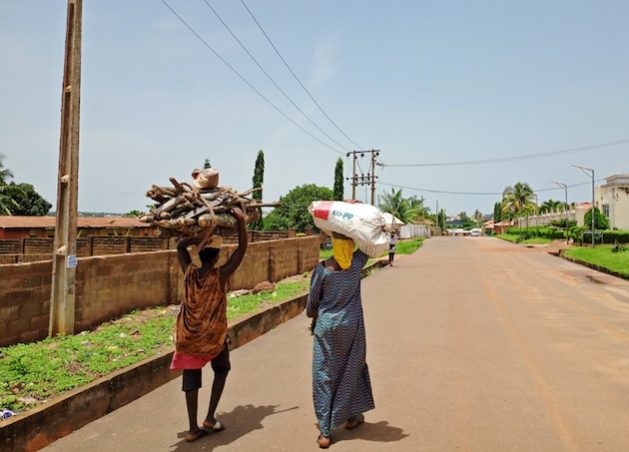
Nigerian women returning from the forest with firewood. Credit: Peace Oladipo/IPS

Nigerian women returning from the forest with firewood. Credit: Peace Oladipo/IPS

KWARA, Nigeria, Mar 1 2024 (IPS) – One sunny mid-morning in Omu-Aran village, a community in Kwara State, North Central Nigeria, Iyabo Sunday sat beside a firewood stand observing her pot of beans with rice (a combination enjoyed by many in Nigeria).

The 52-year-old widow used her plastic dirt parker to fan the flames, occasionally blowing air through her mouth for speed and frantically shielding her face from the wisps of smoke that curled from the firewood.


After a hike in electricity tariffs, Sunday told IPS that she abandoned her electric-powered stove for cooking gas. But instability in the “economy has successfully caused me to move back to the firewood since my children and I must eat.”

Oyedele Christiana, a 41-year-old restaurateur who specializes in making fufu, a local delicacy made from cassava, expressed her wish to stop using firewood and charcoal but was constrained by finances. “The smoke enters my eyes and makes me cough a lot.  I usually use firewood for my canteen business, while I use charcoal at home for household cooking.”

Like Iyabo, Christiana made use of cooking gas. The sporadic increase in the price of domestic gas has since pushed her to the traditional cooking method, with its attendant havoc on her eyes and lungs. “I am not as old as I look, but cooking has done this,” Oyedele sighed.

The price of cooking gas in Nigeria has soared wildly amid the country’s inflation woes. The removal of subsidy on petrol products, together with a depreciation of the naira, has resulted in a steep increase in the cost of food and transportation. This hike in the cost of living comes amid a minimum wage of N30,000 ($18), ranked among the lowest in the world, according to Picodi.

The price of 12.5 kg of cooking gas increased from N7,413. ($4) in 2022 to N16,875 ($10) in February 2024 across the country, a price just half the national minimum wage.

Implications on Women, Environment

Women living in grassroots communities who can no longer afford cooking gas have no choice but to bear the harsh method of cooking with firewood. Many, like Ajayi Omole, an octogenarian living in Akungba, a town in Ondo State, have made cooking with firewood a delight due to the lack of alternatives.

“We usually go into the forest, get the trees, sun dry (them), and prepare them for cooking.” However, she said, “I have a stove inside my room but I can’t use it because I don’t have enough to purchase kerosene.”

The nation’s alarming poverty circle, where Iyabo and Oyedele belong, speaks loudly about the reality of clean cooking. Statistics indicate that 63 percent of the entire population mostly relies on traditional method cooking, usually described as ‘dirty’.

The National Council on Climate Change (NCCC) has stated that, aside from the dangers of deforestation and climate destruction, the use of firewood and charcoal for cooking directly affects women’s health. This is in agreement with figures from the Federal Ministry of Environment about how more than 98,000 Nigerian women die annually from smoke inhaled while cooking with firewood.

Aisha Sulaiman, a renewable energy and green hydrogen technologist, said that rising prices of cooking gas have caused many to transition back to the use of firewood and charcoal, leading many women to multiple health issues. She emphasized that women suffer stronger health issues as secondhand smokers.

She said, “In an African setting, women belong to the kitchen; that’s how the narrative is, even if that is not supposed to be. In rural communities, the main source of energy in terms of cooking is the traditional method, which is unsustainable and harmful.

“The traditional methods of cooking involve charcoal and firewood. These are materials that lead to the release of greenhouse gases, particularly CO2, into our environment, and this in turn contributes to global warming, which brings about climate change.”

Speaking on women’s health, Sulaiman mentioned that respiratory diseases could stem from inhaling smoke from charcoal and firewood. “These methods are a source of air pollution, which can cause serious health issues. Overexposure to the smoke also leads to a disease called chronic obstructive pulmonary disease, which is very endemic to women,’’ she said. Sulaiman added that the Nigerian government should prioritize making clean energy accessible and cost-competitive to procure its acceptance by the people in low-income communities.

Ibrahim Muhammad, an energy consultant and team lead at Climate Alaramma Sustainable Development Initiative, a youth-led environmental organization in northern Nigeria, argued that the transition back to the traditional method of cooking would increase deforestation. He said the increase in LPG’s price is connected to the nation’s economic downturn.

In his words, “There is extensive research demonstrating the significant impact of traditional cooking methods on women and children. These methods contribute to deforestation and air pollution, particularly through the emission of smoke.”

Muhammad noted that women’s transition to traditional cooking was a setback in Nigeria’s transition plan to energy, especially in the area of clean cooking.

The Nigerian government and international development partners must find avenues for cleaning cooking infrastructure to be subsidized so that rural communities, mostly affected, can be able to afford it. According to him, “Considering the nature of some communities that are into agriculture, they are expected to be supported with infrastructure that can help them use this agricultural waste to cook.  Additionally, the prices of these clean cooking stoves that are being developed are subsidized.”

Speaking further on alternatives, he added, “Briquettes, produced from agricultural waste, typically resemble charcoal and can perform all the functions of charcoal. They are energy-efficient and made from various agricultural waste materials, thus not promoting deforestation.”

Muhammad added that harmless solutions should be created to fit in Nigeria’s context; electric stoves may be considered impossible due to unstable electricity.

“Solar cookers are typically used when it is sunny, but many people hardly have lunch, they mostly focus on breakfast and dinner. Many women cook early in the morning or evening, so we need to tailor solutions to our specific circumstances,’’ he said.

IPS UN Bureau Report

  Source