Uniting for Climate Action: UN, World Bank and UNDRR Leaders Push for Climate Finance, Justice and Nature-Based Solutions for SIDS

Caribbean Climate Wire, Climate Action, Climate Change, Climate Change Finance, Climate Change Justice, Conferences, Development & Aid, Editors’ Choice, Environment, Featured, Headlines, Humanitarian Emergencies, Latin America & the Caribbean, PACIFIC COMMUNITY, Pacific Community Climate Wire, Small Island Developing States, Sustainable Development Goals, TerraViva United Nations

Climate Change Finance

Panelists at SDG Media Zone at SIDS4, Antigua and Barbuda. Credit: Alison Kentish/IPS

Panelists at SDG Media Zone at SIDS4, Antigua and Barbuda. Credit: Alison Kentish/IPS

ANTIGUA & BARBUDA, May 29 2024 (IPS) – As leaders of Small Island Developing States (SIDS) meet for the 4th International Conference on SIDS in Antigua this week, top United Nations and World Bank officials are calling for urgent action to help SIDS tackle their unique challenges and plan for the next decade.


Selwin Hart, UN Special Adviser to the Secretary-General and Assistant Secretary-General of the Climate Action Team, had a frank assessment for a United Nations SDG Media Zone event on the sidelines of the conference, known as SIDS4

“The international community has failed to deliver on its commitments to these small nations, but it’s not too late to make amends,” he said.

Hart says the world has the ‘tools, solutions, technologies, and finance’ to support SIDS, but change lies in the political will of  the countries with the greatest responsibility and capacity, particularly G20 nations, which account for almost 80 percent of global greenhouse gas emissions.

“A mere USD 3 billion of the USD 100 billion goal has been mobilized annually for the small island developing state and you compare that to the USD 36 billion in profit that Exxon Mobil made last year. It represents a tenth of the climate finance that SIDS are attracting and mobilizing. We need to correct these injustices and that has to be at the root of the global response to the demands and needs of  small island developing states.”

Nature-Based Solutions for Nations on the Frontlines of Climate Change
“Both natural and man-made disasters hit SIDS first,” the World Bank’s Global Director of Environment, Natural Resources, and Blue Economy, Valerie Hickey, told the Media Zone. She said that for this reason, the international lending body describes SIDS as “where tomorrow happens today,” a nod to small islands’ role as ‘innovation incubators,’ who must adapt to climate change through the creative and sustainable use of natural capital, biodiversity, and nature-based solutions.

She says nature capital also shifts the narrative, focusing less on the vulnerabilities of SIDS and more on their ingenuity.

“We don’t talk enough about the fact that small islands are where natural capital is the engine of jobs and GDP,” she said. “It is fisheries. It is nature-based tourism. These are critically important for most of the small islands and ultimately deliver not just jobs and GDP but are going to be the only technology for adaptation that is available and affordable, and affordability matters for small islands.”

For small island states seeking to adapt to a changing climate, nature-based solutions and ecosystem based adaptation are essential, but it is also necessary to tackle perennial problems that hinder growth and access to finance. That includes a dearth of current, relevant data.

“The data is too fragmented. It’s sitting on people’s laptops. It’s sitting on people’s shelves. Nobody knows what’s out there and that’s true for the private sector and the public sector,” she said.

“In the Caribbean, where there is excess capital sitting in retail banks, USD 50 billion of that can be used to invest in nature-based solutions judiciously, to work on the kind of longer-term infrastructure that would be fit for purpose both for disaster recovery and long-term growth—it’s not happening for lack of data.”

As part of SIDS4, the world’s small island developing states appear to be tackling this decades-long data problem head-on. At the event’s opening session, Antigua and Barbuda’s Prime Minister Gaston Browne said a much-promoted Centre of Excellence will be established at this conference and that this Global Data Hub for Innovative Technologies and Investment for SIDS will use data for decision-making, ensuring that SIDS’ ten-year Antigua and Barbuda Agenda (ABAS) is led by ‘accuracy and timeliness.’

Reducing Disaster Risk and Early Warning Systems for All

A discussion on SIDS is not complete without acknowledging the disproportionate impact of disasters on the island nations. Assistant Secretary-General and Special Representative of the Secretary-General for Disaster Risk Reduction, Kamal Kishore, says mortality rates and economic losses from disasters are significantly higher in SIDS than the global average.

“If you look at mortality from disasters, the number of deaths normalized by the population of the countries, the mortality rate in SIDS is twice that of the rest of the world. If you look at economic losses as a proportion of GDP, globally it is under one percent; in SIDS, in a single event, countries have lost 30 percent of their GDP. SIDS have lost up to two-thirds of their GDP in a single event.”

Kishore says the ambition to reduce disaster losses must match the scale of the problem. He says early warning systems are a must and have to be seen by all not as generosity but responsibility.

“It is not acceptable that anybody on planet Earth should not have access to advanced cyclone or hurricane warnings. We have the technical wherewithal to generate forecasts and warnings. We have technologies to disseminate it. We know what communities need to do and what local governments need to do in order to respond to those warnings. Why is it not happening?”

The Early Warning for All initiative was launched by UN Secretary General Antonio Guterres in 2022. Kishore says 30 countries have been identified in the initial stage and a third of those countries are SIDS. Gap analyses have already been conducted and a road map has been prepared for strengthening early warning systems. The organization needs money to make it happen.

“The world needs to show some generosity and pick up the bill. It’s not in billions. It’s in millions and it will pay for itself in a single event. You invest in early warning in a country and one major event happens in the next five years, you’ve recovered your investment. The evidence is there that it makes financial sense, but we need to mobilize resources to close that gap.”

The Road Ahead

Thirty years since the first International Conference on Small Island Developing States (SIDS), the three leaders agree that there is hope, but that hope is hinged on action—an approach to development in SIDS that involves financial investment, comprehensive data collection and management and nature-based adaptation measures.

“It’s not too late,” says Selwin Hart. “What we need now is the political will to make things right for small island developing states.”

IPS UN Bureau Report


Small Island Nations Demand Urgent Global Action at SIDS4 Conference

Caribbean Climate Wire, Civil Society, Climate Action, Climate Change, Climate Change Finance, Climate Change Justice, Conservation, Development & Aid, Economy & Trade, Editors’ Choice, Environment, Featured, Headlines, Human Rights, Humanitarian Emergencies, IPS UN: Inside the Glasshouse, Latin America & the Caribbean, PACIFIC COMMUNITY, Pacific Community Climate Wire, Small Island Developing States, Sustainable Development Goals, TerraViva United Nations, Trade & Investment

Conferences

The once-in-a-decade SIDS Conference opened in Antigua and Barbuda today, with a clear message: the world already knows the challenges that SIDS face—now it’s time for action.

King Charles III of Britain addresses the opening ceremony of the Fourth International Conference on Small Island Developing States, May 27, 2024. Credit: Alison Kentish/IPS

King Charles III of Britain addresses the opening ceremony of the Fourth International Conference on Small Island Developing States, May 27, 2024. Credit: Alison Kentish/IPS

ANTIGUA, May 27 2024 (IPS) – “This year has been the hottest in history in practically every corner of the globe, foretelling severe impacts on our ecosystems and starkly underscoring the urgency of our predicament. We are gathered here not merely to reiterate our challenges, but to demand and enact solutions,” declared Antigua and Barbuda Prime Minister Gaston Brown at the opening of the Fourth International Conference on Small Island Developing States on May 27.


The world’s 39 small island developing states are meeting on the Caribbean island this week. It is a pivotal, once-a-decade meeting for small states that contribute little to global warming, but are disproportionately impacted by climate change. The Caribbean leader reminded the world that SIDS are being forced to survive crises that they did not create.

“The scales of equity and justice are unevenly balanced against us. The large-scale polluters whose CO2 emissions have fuelled these catastrophic climate changes bear a responsibility—an obligation of compensation to aid in our quest to build resilience,” he said.

“The Global North must honor its commitments, including the pivotal pledge of one hundred billion dollars in climate financing to assist with adaptation and mitigation as well as the effective capitalization and operationalization of the loss and damage fund. These are imperative investments in humanity, in justice, and in the equitable future of humanity.”

Urgent Support Needed from the International Community

United Nations Secretary General Antonio Guterres told the gathering that the previous ten years have presented significant challenges to SIDS and hindered development. These include extreme weather events and the COVID-19 pandemic. He says SIDS, islands that are “exceptionally beautiful, exceptionally resilient, but exceptionally vulnerable,” need urgent support from the international community, led by the nations that are both responsible for the challenges they face and have the capacity to deal with them.

“The idea that an entire island state could become collateral damage for profiteering by the fossil fuel industry, or competition between major economies, is simply obscene,” the Secretary General said, adding, “Small Island Developing States have every right and reason to insist that developed economies fulfill their pledge to double adaptation financing by 2025. And we must hold them to this commitment as a bare minimum. Many SIDS desperately need adaptation measures to protect agriculture, fisheries, water resources and infrastructure from extreme climate impacts you did virtually nothing to create.”

Antigua and Barbuda Agenda for SIDS (ABAS)

The theme for SIDS4 is Charting the Course Toward Resilient Prosperity and the small islands have been praised for collective action in the face of crippling crises. Their voices were crucial to the establishment of the United Nations Framework Convention on Climate Change and the landmark 2015 Paris Agreement.

Out of this conference will come the Antigua and Barbuda Agenda for SIDS (ABAS). President of the UN General Assembly, Dennis Francis, says that programme of action will guide SIDS on a path to resilience and prosperity for the next decade.

“ The next ten years will be critical in making sustained concrete progress on the SIDS agenda – and we must make full use of this opportunity to supercharge our efforts around sustainability,” he said.

The SIDS4 conference grounds in Antigua and Barbuda will be a flurry of activity over the next four days. Apart from plenaries, there are over 170 side events hosted by youth, civil society organizations, non-governmental organizations, and universities, covering a range of issues from renewable energy to climate financing.

They have been reminded by Prime Minister Gaston Browne that this is a crucial juncture in the history of small island developing states, where “actions, or failure to act, will dictate the fate of SIDS and the legacy left for future generations.”

IPS UN Bureau Report

  Source

SBSTTA and SBI—Biodiversity Meetings Crucial for the Global South Begin

Africa, Biodiversity, Conferences, Development & Aid, Editors’ Choice, Environment, Featured, Global, Headlines, Health, Sustainability, Sustainable Development Goals, TerraViva United Nations

Biodiversity

More than 1,400 delegates are present at two crucial meetings, where the topic of preserving the planet’s ongoing biodiversity for the benefit of humanity is under discussion. Under the spotlight are the Kunming-Montreal Global Biodiversity Framework, synthetic biology, the detection and identification of living modified organisms, and, critically, biodiversity and health.

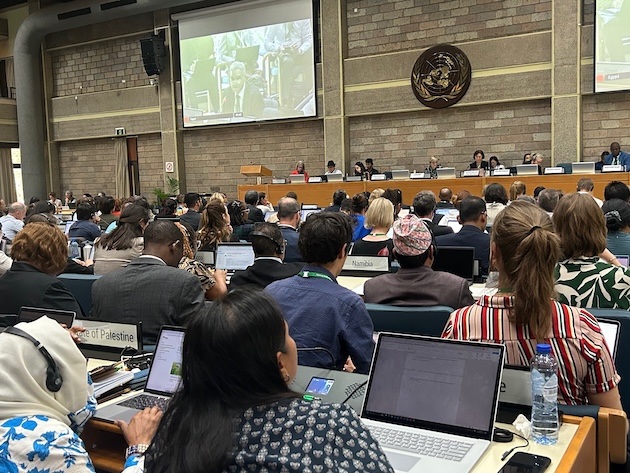
Over 1,400 delegates, including 600 representing parties or signatories from over 150 countries and a significant delegation of Indigenous Peoples and other observer organizations, including women’s groups are attending two crucial biodiversity meetings in Nairobi, Kenya. Credit: Stella Paul/IPS

Over 1,400 delegates, including 600 representing parties or signatories from over 150 countries and a significant delegation of Indigenous Peoples and other observer organizations, including women’s groups are attending two crucial biodiversity meetings in Nairobi, Kenya. Credit: Stella Paul/IPS

NAIROBI, May 14 2024 (IPS) – The 26th meeting of the Subsidiary Body of Scientific, Technical, and Technological Advisors (SBSTTA) of the United Nations Convention on Biological Diversity (UNCBD) started in Nairobi, Kenya, on Monday. Over 1,400 delegates, including 600 representing signatories or parties from over 150 countries, are present for the seven-day meeting at the headquarters of the United Nations Environment Programme (UNEP). A large number of members from Indigenous Peoples and other observer organizations, including women’s groups, are also attending the meetings.


SBSTTA will be followed by the meeting of the Subsidiary Body on Implementation (SBI), another subsidiary body of the United Nations Convention on Biological Diversity (CBD). The SBI will take place from May 20–29 at the same venue.

Opening the meeting on Monday morning, David Cooper, the Acting Executive Secretary of the UN Convention on Biological Diversity, called on the delegates for a successful meeting.

“A key part of ensuring the implementation of the Global Biodiversity Framework is to monitor the progress and that’s why finalizing a monitoring framework includes authenticators for the parties to report on. I would like to give my sincere appreciation to all those working on putting together a comprehensive set of authenticators. I encourage you to make full use of what we have achieved so far and let’s make this meeting a success,” Cooper said.

IPS, which is exclusively covering the meetings, has insights into the meetings and presents here the brief history of both the meetings and their significance in larger global biodiversity protection, especially in the global south, including the implementation of the Global Biodiversity Framework (GBF), the legally binding international biodiversity treaty adopted by the nations in December 2022

SBSTTA: History, Mandate and Role in the COP

SBSTTA was established 30 years ago, in 1994, as a subsidiary body of the CBD during the first meeting of the Conference of the Parties (COP) to the CBD in Nassau, Bahamas. Article 25 of the CBD, which mandated its creation, tasked it with giving the COP timely advice regarding the application of the Convention.

Since then, SBSTTA ‘s main role has been providing assessments of scientific, technical, and technological information relevant to the conservation and sustainable use of biological diversity. It typically meets once or twice a year to review and assess relevant scientific information, including reports submitted by Parties, relevant organizations, and stakeholders. Its discussions cover a wide range of topics, including biodiversity loss, ecosystem services, invasive species, genetic resources, and biotechnology.

The main output of SBSTTA meetings is a set of recommendations to the COP, which are based on the scientific and technical assessments conducted during its sessions. These recommendations provide guidance to Parties and other stakeholders on key issues related to the implementation of the CBD.

For example, in 2007, SBSTTA recommended that the biodiversity COP consider the potential impacts of synthetic biology on biodiversity and ecosystems and encourage Parties to undertake further research, risk assessments, and regulatory measures to address any potential risks associated with the release of synthetic organisms into the environment.

This recommendation was later taken up by the CBD COP, leading to the adoption of decisions on synthetic biology, including Decision XIII/17, which encouraged Parties to continue their efforts to address the potential positive and negative impacts of synthetic biology on biodiversity, and take a  precautionary approach.

A more recent example is the SBSTTA’s recommendation from 2018 that the COP should encourage Parties to mainstream biodiversity considerations into sectoral and cross-sectoral policies, plans, and programs, including those pertaining to agriculture, fisheries, forestry, tourism, energy, and infrastructure.

The CBD COP later agreed with this suggestion, which led to the adoption of decisions and guidelines on mainstreaming biodiversity across sectors. One of these was Decision XIV/4, which asked Parties to do more to mainstream biodiversity into relevant sectors and to encourage synergies between the goals of sustainable development and biodiversity conservation.

SBSTTA and Genetically Modified Mosquitoes

SBSTTA-26 has a large number of issues on its agenda. Most prominent among them are: 1) creating a monitoring framework for the Kunming-Montreal Global Biodiversity Framework; 2) synthetic biology; 3) detection and identification of living modified organisms; and 4) biodiversity and health.

It is expected that under the detection and identification of living modified organisms, genetically engineered mosquitoes for Malaria prevention will be discussed. Research on genetically engineered mosquitoes for malaria control has been an area of interest and investigation for several years, although little information is available on it in the public domain.

Scientists in many countries, including in the United States and Brazil, have been exploring various genetic modification techniques to create mosquitoes that are resistant to the malaria parasite or are unable to transmit the disease. One approach involves genetically modifying mosquitoes to produce antibodies that neutralize the malaria parasite when it enters their bodies.

The other approach is to use “Gene Drive Technology,” which involves modifying mosquitoes in a way that ensures the modified genes are passed on to a high proportion of their offspring. Already, many field trials of genetically engineered mosquitoes have been conducted or are underway in different parts of the world, most notably those conducted by the company Oxitec in Brazil and the Cayman Islands.

At the SBSTTA, scientific and technical advisors will look closely at the important environmental and ethical considerations related to GE mosquitoes. According to the World Health Organization’s 2023 World Malaria Report, there has been an increase in malaria infections all over the world as a result of climate change. However, several countries and organizations have serious reservations against the release of GM mosquitoes, which they believe may have an irreversible and devastating impact on local biodiversity. One of the most vocal organizations against GE/GM mosquitoes has been Friends of the Earth, a US-based environmental advocacy group. Dana Perls, senior program manager at Friends of the Earth, said, “Significant scientific research on genetically engineered mosquitoes is still needed to understand the potential public health and environmental threats associated with the release of this novel genetically engineered insect.”

The SBSTTA is expected to witness passionate discussions, especially from environmental NGOs and faith-based organizations, including the need to ensure that communities are properly informed and engaged in decision-making processes, especially in the global south.

The agenda for the meetings includes creating a monitoring framework for the Kunming-Montreal Global Biodiversity Framework, synthetic biology, detection and identification of living modified organisms, and biodiversity and health. Credit: Stella Paul/IPS

The agenda for the meetings includes creating a monitoring framework for the Kunming-Montreal Global Biodiversity Framework, synthetic biology, detection and identification of living modified organisms, and biodiversity and health. Credit: Stella Paul/IPS

SBI: Most Crucial Agenda Items

The SBI was established under the CBD during the third meeting of the Conference of the Parties (COP) to the CBD in 1996. The SBI’s mandate includes providing guidance and recommendations to the COP on matters related to the implementation of the CBD as well as identifying obstacles and challenges that may hinder effective implementation.

Like SBSTTA, SBI also typically meets once or twice a year to conduct its work. Its discussions cover a wide range of topics related to the implementation of the CBD, including national biodiversity strategies and action plans, financial resources and mechanisms, capacity-building, and technology transfer.

Chaired by Chirra Achalender Reddy of India, the SBI in Nairobi has placed several items on its agenda. However, the most crucial ones among them are: 1) resource mobilization and financial mechanisms; 2) a review of the progress in national target setting; and 3) the updating of national biodiversity strategies and action plans.

As IPS recently reported, only a handful of countries have so far been able to submit their updated biodiversity action plans, while the rest are said to be facing multiple challenges in doing so, including a lack of capacity. In fact, Kenya, the host country of these meetings, has not been able to submit their updated action plan yet.

On Monday, in her inaugural address during the opening ceremony of SBSTTA, Ingrid Andersen, the Executive Director of UNEP, acknowledged that a lack of capacity to revise and update their action plans has been reported by several member states. “Capacity building is a serious issue and at the SBSTTA and SBI, this will be seriously discussed,” Andersen said.

David Ainsworth, the Communications Director of UNCBD, said that the capacity is lacking in several areas, including communications (where countries do not know how to communicate to different ministries the need for working together to develop their biodiversity action plans), finance (lack of funding, budgetary constraints), and knowledge.

“Perhaps the most crucial of these is finance and this will be seriously discussed at the SBI,” Ainsworth said.

IPS UN Bureau Report


Rainy Chiloé, in Southern Chile, Faces Drinking Water Crisis

Biodiversity, Civil Society, Conservation, Development & Aid, Economy & Trade, Editors’ Choice, Energy, Environment, Featured, Food and Agriculture, Headlines, Integration and Development Brazilian-style, Latin America & the Caribbean, Natural Resources, Projects, Regional Categories, TerraViva United Nations, Water & Sanitation

Water & Sanitation

Residents of the municipality of Castro, in Chiloé, an archipelago in southern Chile, demonstrate in the streets of their city, in front of the Gamboa Bridge, expressing their fear of threats to the water supply that they attribute to the lack of protection of peatlands, which are key to supplying water for the island's rivers. CREDIT: Courtesy of Chiloé en defensa del Agua

Residents of the municipality of Castro, in Chiloé, an archipelago in southern Chile, demonstrate in the streets of their city, in front of the Gamboa Bridge, expressing their fear of threats to the water supply that they attribute to the lack of protection of peatlands, which are key to supplying water for the island’s rivers. CREDIT: Courtesy of Chiloé en defensa del Agua

SANTIAGO, May 2 2024 (IPS) – The drinking water supply in the southern island of Chiloé, one of Chile’s rainiest areas, is threatened by damage to its peatlands, affected by sales of peat and by a series of electricity projects, especially wind farms.


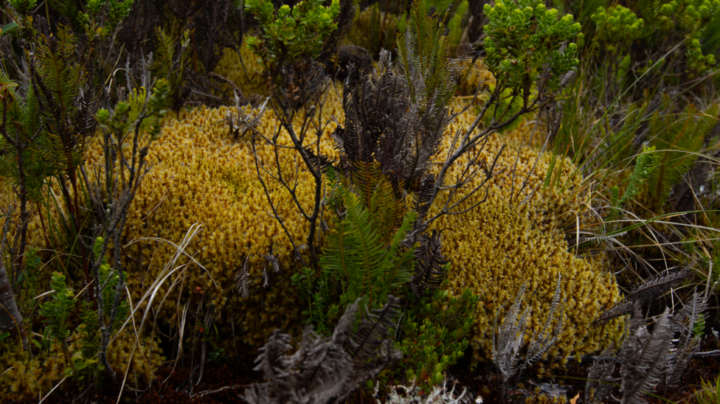
The peat bog (Moss sphagnum magellanicum) known as “pompon” in Chile absorbs and retains a great deal of water, releasing it drop by drop when there is no rain. In southern Chile there are about 3.1 million hectares of peatlands.

“We condemn the fact that the extraction of peat is permitted in Chiloé when there is no scientifically proven way for peat to be reproduced or planted…. there is no evidence of how it can regenerate.” ¨– Daniela Gumucio

Peat is a mixture of plant debris or dead organic matter, in varying degrees of decomposition, neither mineral nor fossilized, that has accumulated under waterlogged conditions.

The pompon is the main source of water for the short rivers in Chiloé, an archipelago of 9181 square kilometers and 168,000 inhabitants, located 1200 kilometers south of Santiago. The local population makes a living from agriculture, livestock, forestry, fishing and tourism, in that order.

“We don’t have glaciers, or thaws. Our water system is totally different from that of the entire continent and the rest of Chile. Since we don’t have glaciers or snow, our rivers function on the basis of rain and peat bogs that retain water and in times of scarcity release it,” Daniela Gumucio told IPS by telephone.

The 36-year-old history and geography teacher said that the Chiloé community is concerned about the supply of drinking water for consumption and for small family subsistence farming.

Gumucio is a leader of the National Association of Rural and Indigenous Women (Anamuri) and chairs the Environmental Committee of Chonchi, the municipality where she lives in the center of the island.

This long narrow South American country, which stretches between the Andes Mountains and the Pacific Ocean, has 19.5 million inhabitants and is facing one of the worst droughts in its history.

It’s strange to talk about water scarcity in Chiloé because it has a rainy climate. In 2011 more than 3000 millimeters of water fell there, but since 2015 rainfall began to decline.

In 2015 rainfall totaled 2483 millimeters, but by 2023 the amount had dropped to 1598 and so far this year only 316, according to data from the Quellón station reported to IPS by the Chilean Meteorological Directorate.

The forecast for April, May, and June 2024 is that below-normal rainfall will continue.

A water emergency was declared in the region in January and the residents of nine municipalities are supplied by water trucks.

To supply water to the inhabitants of the 10 municipalities of Chiloé, the State spent 1.12 million dollars to hire water trucks between 2019 and 2024. In Ancud alone, one of the municipalities, the expenditure was 345,000 dollars in that period.

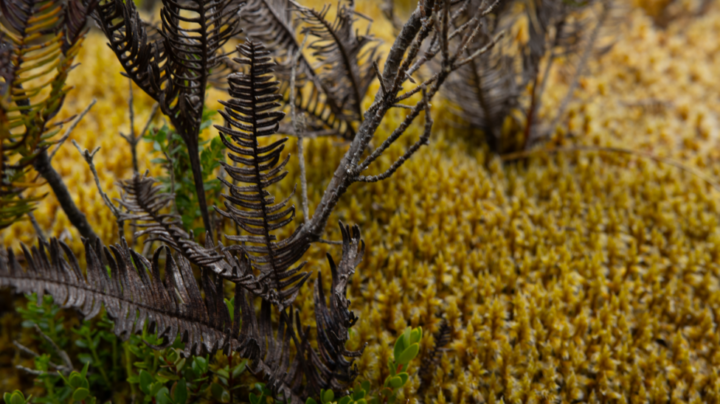
A close-up shot of a peat bog in a watershed on the island of Chiloé, which has the ability to absorb water 10 times its weight. Because of this property, those who extract it today, without any oversight, dry it, crush it and pack it in sacks to sell it to traders who export it or sell it in local gardening shops. CREDIT: Courtesy of Gaspar Espinoza

A close-up shot of a peat bog in a watershed on the island of Chiloé, which has the ability to absorb water 10 times its weight. Because of this property, those who extract it today, without any oversight, dry it, crush it and pack it in sacks to sell it to traders who export it or sell it in local gardening shops. CREDIT: Courtesy of Gaspar Espinoza

Alert among social activists

The concern among the people of Chiloé over their water supply comes from the major boost for wind energy projects installed on the peat bogs and new legislation that prohibits the extraction of peat, but opens the doors to its use by those who present sustainable management plans.

Several energy projects are located in the Piuchén mountain range, in the west of Chiloé, where peat bogs are abundant.

“They want to extend a high voltage line from Castro to Chonchi. And there are two very large wind farm projects. But to install the turbines they have to dynamite the peat bog. This is a direct attack on our water resource and on our ways of obtaining water,” Gumucio said.

In 2020, the French company Engie bought three wind farms in Chiloé for 77 million dollars: San Pedro 1 and San Pedro 2, with a total of 31 wind turbines that will produce 101 megawatts (MW), and a third wind farm that will produce an additional 151 MW.

In addition, 18 kilometers of lines will be installed to carry energy to a substation in Gamboa Alto, in the municipality of Castro, and from there to the national power grid.

Another 92 turbines are included in the Tabla Ruca project, between the municipalities of Chonchi and Quellón.

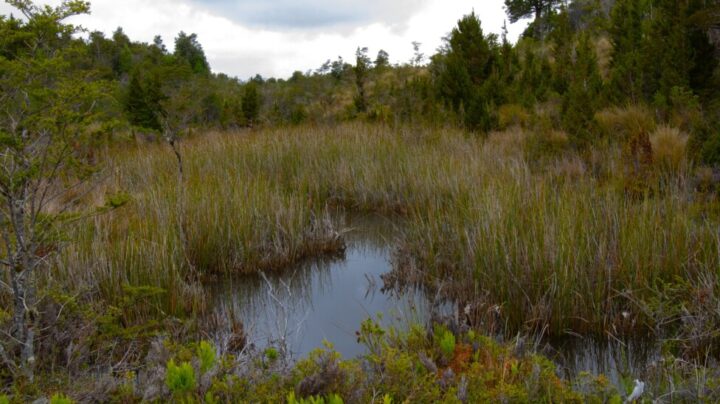
Peat bogs accumulate and retain rainwater in the wetlands of Chiloé and release it drop by drop to river beds in times of drought. CREDIT: Courtesy of Gaspar Espinoza

Peat bogs accumulate and retain rainwater in the wetlands of Chiloé and release it drop by drop to river beds in times of drought. CREDIT: Courtesy of Gaspar Espinoza

Engie describes its initiatives as part of the transition to a world with zero net greenhouse gas emissions, thanks to the production of clean or green energy.

Leaders of 14 social and community organizations expressed their concerns in meetings with regional authorities, but to no avail. Now they have informed their communities and called on the region’s authorities to protect their main water source.

Local residents marched in protest on Mar. 22 in Ancud and demonstrated on Apr. 22 in Puente Gamboa, in Castro, the main municipality of the archipelago.

Thanks to peatlands, the rivers of Chiloé do not dry up. The peat bogs accumulate rainwater on the surface, horizontally, and begin to release it slowly when rainfall is scarce.

For the same reason, peat is dup up and sold for gardening. In 2019 Chile exported 4600 tons of peat.

The wind energy projects are set up in areas of raised peat bogs, known as ombrotophic, located at the origin of the hydrographic basins.

“We have had a good response in the municipal council of Chonchi, where the mayor and councilors publicly expressed their opposition to approving these projects,” said Gumucio.

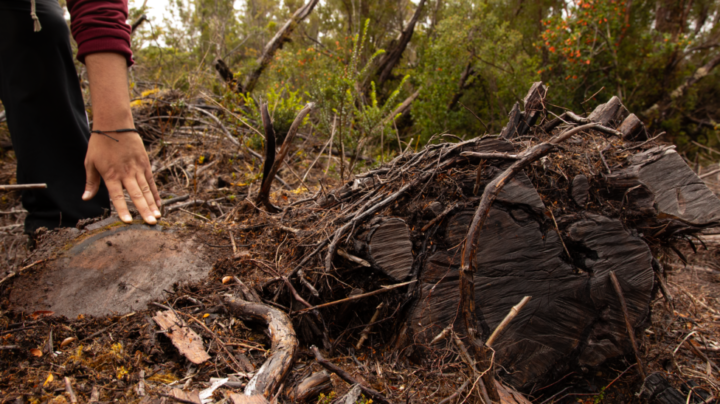
Dozens of trees have been felled in Chiloé to install wind turbines and make way for high-voltage towers that will transmit green energy to Chile's national power grid, without benefiting the inhabitants of the Chiloé archipelago. CREDIT: Courtesy of Gaspar Espinoza

Dozens of trees have been felled in Chiloé to install wind turbines and make way for high-voltage towers that will transmit green energy to Chile’s national power grid, without benefiting the inhabitants of the Chiloé archipelago. CREDIT: Courtesy of Gaspar Espinoza

The other threat to peatlands

The second threat to the Chiloé peat bogs comes from Law 21.660 on environmental protection of peatlands, published in Chile’s Official Gazette on Apr. 10.

This law prohibits the extraction of peat in the entire territory, but also establishes rules to authorize its use if sustainable management plans are presented and approved by the Agricultural and Livestock Service, depending on a favorable report from the new Biodiversity and Protected Areas Service.

The peatland management plan aims to avoid the permanent alteration of its structure and functions.

Those requesting permits must prove that they have the necessary skills to monitor the regeneration process of the vegetation layer and comply with the harvesting methodology outlined for sustainable use.

But local residents doubt the government’s oversight and enforcement capacity

Dozens of trees have been felled in Chiloé to install wind turbines and make way for high-voltage towers that will transmit green energy to Chile's national power grid, without benefiting the inhabitants of the Chiloé archipelago. CREDIT: Courtesy of Gaspar Espinoza

Dozens of trees have been felled in Chiloé to install wind turbines and make way for high-voltage towers that will transmit green energy to Chile’s national power grid, without benefiting the inhabitants of the Chiloé archipelago. CREDIT: Courtesy of Gaspar Espinoza

“We condemn the fact that the extraction of peat is permitted in Chiloé when there is no scientifically proven way for peat to be reproduced or planted…. there is no evidence of how it can regenerate,” said Gumucio.

The activist does not believe that sustainable management is viable and complained that the government did not accept a petition for the law to not be applied in Chiloé.

“We have a different water system and if this law is to be implemented, it should be on the mainland where there are other sources of water,” she said.

But according to Gumucio, everything seems to be aligned to deepen the water crisis in Chiloé.

“The logging of the forest, the extraction of peat, and the installation of energy projects all contribute to the drying up of our aquifers and basins. And in that sense, there is tremendous neglect by the State, which is not looking after our welfare and our right to have water,” she argued.

Peatland is part of the vegetation of the island of Chiloé, but is threatened by unsupervised exploitation, which the authorities hope to curb with a recently approved law, whose regulations are to be ready within the next two years. CREDIT: Courtesy of Gaspar Espinoza

Peatland is part of the vegetation of the island of Chiloé, but is threatened by unsupervised exploitation, which the authorities hope to curb with a recently approved law, whose regulations are to be ready within the next two years. CREDIT: Courtesy of Gaspar Espinoza

Scientists express their view

Six scientists from various Chilean universities issued a public statement asserting that the new law is a step in the right direction to protect Chile’s peatlands.

In their statement, scientists Carolina León, Jorge Pérez Quezada, Roy Mackenzie, María Paz Martínez, Pablo Marquet and Verónica Delgado emphasize that the new law “will require the presentation of a sustainable management plan” to exploit peat that is currently extracted without any controls.

They add that management plans must now be approved by the competent authorities and that those who extract peat will be asked to “ensure that the structure and functions of the peatlands are not permanently modified.”

They also say that the regulations of the law, which are to be issued within two years, “must establish the form of peat harvesting and post-harvest monitoring of the peat bog to protect the regeneration of the plant, something that has not been taken into consideration until now.”

They point out that the new law will improve oversight because it allows monitoring of intermediaries and exporters who could be fined if they do not comply with the legislation.

“While it is true that there is concern among certain communities and environmental groups, we believe that these concerns can be taken into account during the discussion of the regulations,” they say.

The scientists reiterate, however, that “peatlands are key ecosystems for mitigating the national and planetary climate and biodiversity crisis” and admit that “significant challenges remain to protect them, although this is a big step in the right direction.”

  Source

Harnessing Science-Policy Collaboration: The Vital Role of IPBES Stakeholders in Achieving Global Nature Targets

Biodiversity, Conferences, Editors’ Choice, Environment, Featured, Global, Headlines, Indigenous Rights, Natural Resources, Sustainability, TerraViva United Nations

Opinion

Dr. Anne Larigauderie, IPBES Executive Secretary

Dr. Anne Larigauderie, IPBES Executive Secretary

BONN, Germany, Apr 26 2024 (IPS) – In December 2022, the fifteenth meeting of the Conference of the Parties to the Convention on Biological Diversity (CBD) saw governments worldwide unite behind a set of ambitious targets aimed at addressing biodiversity loss and restoring natural ecosystems, through the Global Biodiversity Framework – known now as the Biodiversity Plan.


As the world gears up to meet these critical commitments for people and nature, success depends very directly on the concrete choices and actions of people from every region, across all disciplines and at every level of decision-making. In this collaborative effort, non-governmental stakeholders of the Intergovernmental Platform on Biodiversity and Ecosystem Services (IPBES) are vital actors, in addition to the 146 Governments who are members of IPBES.

But who are IPBES stakeholders? Any individual or organization that can benefit from or contribute to the science-policy work of IPBES is an IPBES stakeholder. They include individual scientists, knowledge-holders, experts and practitioners, as well as institutions, organizations, and groups operating within and beyond the fields of biodiversity and nature’s contributions to people.

There are two main self-organized groups of IPBES stakeholders: ONet and IIFBES. ONet provides a broad space for individuals and organizations to exchange knowledge, align actions and deepen engagement with the work of IPBES—with subgroups from the social sciences, young career researchers and many more. IIFBES is a network to bring together the expertise, perspectives and interests of Indigenous Peoples and local communities interested in IPBES’s work. Both of these ‘umbrella’ groups are instrumental in amplifying diverse voices, knowledge systems, and experience, to strengthen science-policy for biodiversity and nature’s contributions to people. This is important not only in support of IPBES, but also to the success of the Biodiversity Plan.

IPBES stakeholders contribute to the achievement of the Biodiversity Plan in three distinct ways. Firstly, they fortify the scientific foundations underpinning policies to protect biodiversity and nature’s contributions to people. Their expertise, channeled into the IPBES assessments, was instrumental in shaping the targets and indicators of the Biodiversity Plan. IPBES stakeholders will also continue to play a central role in ensuring that the actions to meet these targets are grounded in robust scientific knowledge and evidence.

Secondly, IPBES stakeholders are equipped with the resources and tools provided by IPBES: including Assessment Reports and their summaries for policymakers, to advocate for and effect change. These resources offer invaluable insights into national, regional, and global thematic issues. When considered by decision-makers, they become catalysts for evidence-based policies. Effective dissemination and uptake of these resources are paramount in translating global targets into tangible, on-the-ground initiatives that address local challenges. Consequently, stakeholders can make a substantial contribution by widely disseminating IPBES products and providing information for their effective use.

Thirdly, IPBES stakeholders have a tremendous opportunity to engage in the international forums where policy decisions are explored and made. Their active involvement and participation in decision-making bodies within these forums, coupled with their own extensive networks, foster the exchange of knowledge and resources. Collaborations forged in these settings bridge the gap between science and policy. Many IPBES stakeholders are active participants in the CBD processes, for instance, facilitating the exchange of information between these two bodies and thereby driving the Biodiversity Plan’s effective implementation.

Only through collective action and close collaboration between international institutions, policy actors, scientists, local and Indigenous communities, and other relevant stakeholders can we seamlessly translate science into policy and practice, ultimately achieving the goals of the Biodiversity Plan. This is why more individuals and organizations should seize the opportunity to become active IPBES stakeholders. Joining the IPBES community is not only a commitment to a sustainable future for people and nature but is also a positive response to the pressing global biodiversity crisis.

Dr. Anne Larigauderie is the Executive Secretary of IPBES (www.ipbes.net) – the Intergovernmental Science-Policy Platform on Biodiversity and Ecosystem Services, which provides objective scientific assessments about the state of knowledge regarding the planet’s biodiversity, ecosystems and the contributions they make to people, as well as options and actions to protect and sustainably use these vital natural assets.

IPS UN Bureau


Africa Pushing Limits To Boost Renewable Energy Supply Chain, Security

Africa, Climate Action, Climate Change, Conferences, COP28, Development & Aid, Editors’ Choice, Energy, Environment, Featured, Global, Headlines, Sustainable Development Goals, TerraViva United Nations

Energy

Dr. Amani Abou-Zeid is the current African Union (AU) commissioner for Energy and Infrastructure. She believes that cross-border approaches are critical for clean energy affordability. Credit: Aimable Twahirwa/IPS

Dr. Amani Abou-Zeid is the current African Union (AU) commissioner for Energy and Infrastructure. She believes that cross-border approaches are critical for clean energy affordability. Credit: Aimable Twahirwa/IPS

ABU DHABI, Apr 17 2024 (IPS) – Investors, regulators, researchers, policymakers, and representatives of renewable energy companies, acknowledged the key challenges of shifting away from fossil fuels to renewable energy in Africa when they gathered in Abu Dhabi, United Arab Emirates (UAE) this week.


The latest estimates by the African Development Bank show that Africa’s energy potential, especially renewable energy, is enormous, yet only a fraction of it is currently employed. Official projections indicate that the demand for energy could also be around 30 percent higher than it is today over the next decade on the continent. 

Francesco La Camera, the Director-General of the International Renewable Energy Agency (IRENA) stated that the energy transition is accelerating rapidly, but it clearly remains off track, with an unacceptable uneven distribution of renewable growth that still disproportionately affects the Global South.

“African governments and other stakeholders should adopt innovative solutions to overcome pressing challenges and achieve the energy transition,” La Camera told IPS in an interview.

According to him, there is opportunity [for the continent] to prioritize and narrow down collective actions to overcome the structural and systemic barriers that are impeding progress.

In Africa, experts believe that there are multiple dimensions to energy poverty, which is associated especially with the lack of clear plans and a clear understanding of what the continent wants to achieve.

“Electricity remains the backbone of Africa’s new energy systems, powered increasingly by renewables but a large part of the continent is still left out of the energy transition,” said Bruce Douglas, the Chief Executive Officer at the Global Renewables Alliance, one of the global coalitions of leading industry players committed to accelerating the global transition to renewable energy.

Yet several new commitments were made at the latest UN Climate Change Conference (COP 28) that took place in Dubai, UAE, last year, giving further momentum to the energy transition. Experts are now exploring priorities for the energy transition and immediate steps to ensure that current policies on the continent are improved to encourage greater deployment of renewables.

The latest estimates show that, with Africa accounting for around 39 percent of the world’s renewable energy potential, several renewable energy milestones can be achieved.

“Private and public investment is critical to tackling the multiple dimensions of today’s energy crisis on the continent but to ensure energy security, diversification of various sources is also essential,” Douglas told IPS.

Africa, for example, has abundant hydro, solar, wind, geothermal, hydrogen, and bioenergy resources, but still, the continent’s current energy generation mix continues to rely on fossil fuels, while renewable sources account for nearly 18 percent of the electricity output, it said.

Whereas countries committed on the sidelines of last year’s UN Climate Change Conference to accelerate progress towards tripling renewable power capacity globally to at least 11 terawatts (TW) by 2030, some experts believe that this is still not a long-term solution as more than half of the population still lacks access to electricity.

Amani Abou-Zeid, the Commissioner for Infrastructure and Energy of the African Union Commission (AUC) told IPS that a cross-border approach is critical for participating countries in the transition to clean energy affordability.

“Some countries in Africa have embarked on cross-border projects on clean energies but much more effort is needed to develop really sustainable transitions and adequate instruments,” she said.

The Africa Continental Power System Masterplan, a blueprint currently being developed by the African Union Development Agency (AUDA-NEPAD), highlights some key strategies for countries across the continent to identify key components at national and regional levels that will enable the creation of a smart power systems master plan that promotes access to clean, affordable, reliable, and sustainable electricity supplies across the continent by 2040.

Adja Gueye, Director of Promotion and Cooperation at the National Agency for Renewable Energies in Senegal points out that overall, African countries need appropriate plans at the policy level to overcome some key hurdles on the path to clean energies.

“To facilitate this transition, it would be appropriate for African countries to revise their regulatory framework and move towards harmonization, since the continent needs to improve regional and cross-border electricity interconnections,” she told IPS

Both Gueye and Abou-Zeid are convinced that without infrastructure and appropriate green energies policies and strategies at national and regional levels, it is challenging and impossible to buy and sell electricity across borders.

“Top-down governmental policies and long-term plans on clean energies in Africa are essential,” Abou-Zeid said of the current strategy to establish a long-term continent-wide planning process for power generation and transmission involving all five African power pools.

These include the Central African Power Pool (CAPP), East African Power Pool (EAPP), Northern African power Pool (COMELEC), Southern African Power Pool (SAPP) and Western African Power Pool (WAPP).

Dr. Jimmy Gasore, Rwanda’s Minister of Infrastructure, who is also the current chair of the International Renewable Energy Agency (IRENA) points out that Africa’s climate goals necessitate collective recognition that the energy transition is not just about technological change but also about ensuring equity and justice.

“We need to ensure that the benefits of the energy transition are universally accessible, prioritizing the needs of the most marginalized communities,” he said.

To optimize and diversify green energies on the continent, some experts also stress the importance of encouraging effective cooperation between the private and public sectors in renewable energy and energy efficiency projects.

“To prepare for the current transition to renewable energy, partnerships are essential,” said Gueye of the National Agency for Renewable Energies in Senegal, one of the few dedicated national agencies dealing with clean energies in Africa.

IPS UN Bureau Report