COP28: Climate Summit in Closed Civic Space

Civil Society, Climate Action, Climate Change, Crime & Justice, Energy, Environment, Featured, Global, Headlines, Human Rights, Press Freedom, TerraViva United Nations

Opinion

Credit: Bryan Bedder/Getty Images for Bloomberg Philanthropies

LONDON, Nov 17 2023 (IPS) – The need to act on the climate crisis has never been clearer. In 2023, heat records have been shattered around the world. Seemingly every day brings news of extreme weather, imperilling lives. In July, UN Secretary-General António Guterres grimly announced that ‘the era of global boiling has arrived’.


In short, there’s a lot at stake as the world heads into its next climate summit.

But there’s a big problem: COP28, the latest in the annual series of conferences of parties (COP) to the UN Framework Convention on Climate Change, will be held in the United Arab Emirates (UAE). This is a country with closed civic space, where dissent is criminalised and activists are routinely detained. It’s also a fossil fuel power bent on continuing extraction.

At multilateral summits where climate change decisions are made, it’s vital that civil society is able to mobilise to demand greater ambition, hold states and fossil fuel companies and financiers to account and ensure the views of people most affected by climate change are heard. But that can’t happen in conditions of closed civic space.

Concerning signs

In September, the UAE was added to the CIVICUS Monitor Watchlist, which highlights countries experiencing significant declines in respect for civic freedoms. Civic space in the UAE has long been closed: no dissent against the government or advocacy for human rights is allowed, and those who try to speak out risk criminalisation. In 2022, a Cybercrime Law introduced even stronger restrictions on online expression.

There’s widespread torture in jails and detention centres and at least 58 prisoners of conscience have been held in prison despite having completed their sentences. Many of them were part of a group known as the UAE 94, jailed for the crime of calling for democracy. Among the ranks of those incarcerated is Ahmed Mansoor, sentenced to 10 years in jail in 2018 for his work documenting the human rights situation, and held in solitary confinement for over five years and counting.

Ahead of COP28, civil society has worked to highlight the absurdity of holding such a vital summit in closed civic space conditions. Domestic civil society is unable to influence COP28 and its preparatory process, and it’s hard to see how civil society, both domestic and international, will be able to express itself freely during the summit.

Civil society is demanding that the UAE government demonstrate that it’s prepared to respect human rights, including by releasing political prisoners – something it’s so far failed to budge on.

An ominous sign came when the UAE hosted a climate and health summit in April. Participants were reportedly instructed not to criticise the government, corporations, individuals or Islam, and not to protest while in the UAE.

Civic space restrictions aren’t the only indication the UAE isn’t taking COP28 seriously. The president of the summit, Sultan Ahmed Al Jaber, also happens to be head of the state’s fossil fuel corporation ADNOC, the world’s 11th-biggest oil and gas producer. It’s like putting an arms manufacturer in charge of peace talks. Multiple other ADNOC staff members have roles in the summit. ADNOC is currently talking up its investments in renewable energies, all while planning one of the biggest expansions of oil and gas extraction of any fossil fuel corporation.

Instead of real action, all the signs are that the regime is instrumentalising its hosting of COP28 to try to launder its reputation, as indicated by its hiring of expensive international lobbying firms. An array of fake social media accounts were created to praise the UAE as host and defend it from criticism. A leaked list of key COP28 talking points prepared by the host made no mention of fossil fuels.

A summit that should be about tackling the climate crisis – and quickly – is instead being used to greenwash the image of the host government – something easiest achieved if civil society is kept at arm’s length.

Fossil fuel lobby to the fore

With civil society excluded, the voices of those actively standing in the way of climate action will continue to dominate negotiations. That’s what happened at COP27, also held in the closed civic space of Egypt, where 636 fossil fuel lobbyists took part – and left happy. Like every summit before it, its final statement made no commitment to reduce oil and gas use.

The only way to change this is to open the doors to civil society. Civil society has consistently sounded the alarm and raised public awareness of the need for climate action. It’s the source of practical solutions to cut emissions and adapt to climate impacts. It urges more ambitious commitments and more funding, including for the loss and damage caused by climate change. It defends communities against environmentally destructive impacts, resists extraction and promotes sustainability. It pressures states and the private sector to stop approving and financing further extraction and to transition more urgently to more renewable energies and more sustainable practices. These are the voices that must be heard if the cycle of runaway climate change is to be stopped.

COPs should be held in countries that offer an enabling civic space that allows strong domestic mobilisation, and summit hosts should be expected to abide by high standards when it comes to domestic and international access and participation. That should be part of the deal hosts make in return for the global prestige that comes with hosting high-level events. Civil society’s exclusion mustn’t be allowed to happen again.

Andrew Firmin is CIVICUS Editor-in-Chief, co-director and writer for CIVICUS Lens and co-author of the State of Civil Society Report.

  Source

Good for Girls and Good for the Planet: Eco-Friendly Sanitary Towels

Africa, Climate Change, Conservation, Environment, Featured, Green Economy, Headlines, Health, Innovation, Sustainable Development Goals, TerraViva United Nations

Women’s Health

Stephany Musombi and engineers preparing the banana stems for processing at KIRDI. Credit: Wilson Odhiambo/IPS

Stephany Musombi and engineers preparing the banana stems for processing at KIRDI. Credit: Wilson Odhiambo/IPS

NAIROBI, Nov 16 2023 (IPS) – ’Going Green’ seems to Dr Jacquline Kisato’s favorite catchphrase as she passionately explains her eco-friendly sanitary towel, a product she expects will help empower women and young girls while also putting money into farmers’ pockets.


Kisato is a lecturer at the Kenyatta University (KU), Fashion Design and Marketing, currently working on a project to develop affordable and eco-friendly sanitary towels while also finding a solution for sustainable packaging materials.

Kisato’s venture started out to help communities get a source of employment through the commercialization of banana stems – products that were considered useless by farmers and would usually be left to rot away on farms.

After the Kenyan government enforced a ban on the use of plastic bags in 2018, there was a need to find immediate alternatives.

Plastic bags were a necessity for grocers and fast-food vendors, an item that made it easy for customers to carry their goods home. Despite their advantage, however, their negative impact on the environment could no longer be overlooked.

‘’I started looking at this project from an entrepreneurship point of view on how I could commercialize banana stem fibers. The government had just banned single-use plastic bags, and market vendors needed alternatives to serve their customers,’’ Kisato told IPS.

‘’Poorly disposed sanitary towels also formed part of the pollution problem since they were composed of plastic,’’ she added.

According to Kisato, however, her need to empower women and young girls through affordable sanitary towels was something that she always had in mind after noticing the struggles that school-going girls went through.

‘’While walking along the hallways one day, a student on campus stopped me and asked if I could help her with a packet of sanitary pads. This incident shocked me as for a long time, I had assumed ‘period poverty’ was only experienced amongst high school children,’’ Kisato said.

Kisato and her research team interviewed 400 high school girls from Gatundi, Kibera, and Kawangware, where they found out that more than 50 percent of the girls in these low-income areas could hardly afford sanitary pads even when at home.

This did not sit well with the don as she felt something needed to be done about it.

It was while researching alternatives to plastic bags that she realized that she could solve two problems at the same time.

Kisato, therefore, applied for the National Research Fund (NRF) in 2018 with the aim of developing eco-friendly plastic bags and sanitary towels. Her wish came through when NRF granted Kenyatta University Ksh.9 million (about US $ 61,623) in 2020, with her taking the lead as the principal investigator in the project.

Her team is made up of scholars from different departments and institutions and also includes Ph.D. and master’s students, with each one of them playing a major role in seeing the project through.

‘’I lead a team of engineers from the Kenya Industrial Research and Development Institute (KIRDI), whose task is to reverse engineer machines that can extract fiber from banana stems and use them to create eco-friendly packaging and sanitary towels,’’ she explained. “I also have researchers from Moi University whose work was to turn the extracted fiber into soft materials for use.”

Kisato’s aim was to produce quality sanitary towels that could compete with what was already in the market while still being eco-friendly, a fact that led her to seek the expertise of Edwin Madivoli, a chemistry lecturer at the Jomo Kenyatta University of Agriculture and Technology (JKUAT).

According to Kisato, the towels on the market have a component in them called hydrogel, which enables them to retain fluids for longer, and were also lined with plastic sheets to prevent any leakage. Our intention is to replicate the same but use bioplastic materials, which can degrade as opposed to the normal plastic that is being used.

From her research, Kisato also discovered that Africans, on average, wore sanitary towels for longer as compared to women and girls from developed countries and were thus at risk of getting bacterial infections. This was due to limited access and affordability in Africa.

‘’The recommended period for one to have on a sanitary pad is about three hours, which means that it should be changed at least three times a day to avoid any risk of infections. This is, however, not the case for many girls in Africa due to poverty,’’ Kisato explained to IPS.

‘’We thought adding anti-microbial properties to our product would therefore make it as good or even better than what was in the market,’’ said Kisato.

The research team also found out that there were a lot of myths surrounding menstrual flow among young girls, a fact that led to a lot of stigmatization, which made it difficult for them to understand how to use sanitary towels properly.

Some of the notable ideas that girls told each other concerning menstrual flow included:

  1. It is a curse from God
  2. Girls who had periods were considered dirty and impure
  3. Their faces would become pale from losing blood

‘’These are beliefs that need to be done away with by encouraging parents and the government to speak about monthly periods with young girls openly,’’ Kisato said.

For the second phase of the project, Madivoli’s chemistry expertise came in handy, and the Research Scholarship and Innovation Fund (RSIF) was happy to add an additional Ksh.9 million (about USD 59,000) for Kisato to continue what she had started.

‘’My role is to ensure our sanitary pads are of the same quality as what is in the market while at the same time maintaining an eco-friendly nature, which is the main agenda of this whole project,’’ Madivoli told IPS.

‘’I am tasked with the development of hydrogels, production of bioplastics, and finding a way to incorporate anti-microbial properties into our products to protect the users from possible infections,’’ he said.

JKUAT received funding of Ksh.800,000 (about US $ 5477) from the Kenya National Innovation Agency (KENIA) to further help Madivoli with this research.

“As they are left to dry up on the farms, banana stems are known to produce large amounts of methane, which is a harmful greenhouse gas that contributes to the climate change problems that we are trying to tackle, added Madivoli. ‘”Having an alternative use for the stems therefore limits the greenhouse effect in the atmosphere.’’

Madivoli said that most banana farmers usually do not know what to do with the stems once they have done their harvest, and this project gives them a way to earn some extra income as they expect to buy the stems from them at Ksh.35 per stem.

“This project will not only be environmentally friendly but will also create jobs for the people who go to cut the stems from the farms while also finding use for the biomass that the farmers thought was useless,’’ he concluded.

Once it is up and running, they expect to source banana stems from counties such as Kisii, Muranga, Embu, Meru, and parts of western Kenya.

Stephany Musombi is one of Kisato’s students specializing in textiles whose task in the project is to come up with quality packaging materials.

‘’Apart from the banana fiber, I am also experimenting with other biomass such as pineapple and seaweed,’’ Musombi told IPS. If I can find a way to make this work, the project will open up a market for seaweed and pineapple biomass.

Kisato’s project could not have picked a better time there is an international joint push for green solutions to help mitigate climate change. On September 4, 2023, Kenya also played host to the climate summit that attracted leaders from across Africa.

Kenya’s president, William Ruto, drove himself in a tiny electric car to the Kenyatta International Convention Centre (KICC), where he challenged the African leaders and innovators to find sustainable solutions to their daily activities that can help them reduce the carbon print in the continent and globally.

‘’Africa can power all energy needs with renewable resources. The continent has enough potential to be entirely self-sufficient using wind, solar, geothermal, sustainable biomass, and hydropower energy. Africa can be a green industrial hub that helps other regions achieve their net zero strategies by 2050,’’ Ruto said at the summit.

Kisato expects her product to hit the market later this year, where she plans to make it more affordable for all. Her intention is to team up with startups or established companies that deal with toiletries.

‘’The cheapest sanitary packet in the market costs Ksh.140. We expect ours to go as low as Ksh.100, Kisato,’’ concluded.

Kenyatta University’s Vice Chancellor, Paul Wainaina, lauded the project, stating that it will enable the country to meet its industrial needs while conserving the environment.

IPS UN Bureau Report

  Source

How to Defend the Environment and Survive in the Attempt, as a Woman in Mexico

Active Citizens, Biodiversity, Civil Society, Climate Action, Conservation, Crime & Justice, Editors’ Choice, Environment, Featured, Gender, Headlines, Human Rights, Latin America & the Caribbean, Regional Categories, TerraViva United Nations, Water & Sanitation, Women & Climate Change

Human Rights

Dozens of women environmentalists participated in Mexico City in the launch of the Voices of Life campaign by eight non-governmental organizations on Oct. 12, 2023, which brings together hundreds of activists in five of the country's 32 states. CREDIT: Emilio Godoy / IPS

Dozens of women environmentalists participated in Mexico City in the launch of the Voices of Life campaign by eight non-governmental organizations on Oct. 12, 2023, which brings together hundreds of activists in five of the country’s 32 states. CREDIT: Emilio Godoy / IPS

MEXICO CITY, Oct 24 2023 (IPS) – The defense of the right to water led Gema Pacheco to become involved in environmental struggles in the southern Mexican state of Oaxaca, an area threatened by drought, land degradation, megaprojects, mining and deforestation.


Care “means first and foremost to value the place where we live, that the environment in which we grow up is part of our life and on which our existence depends,” said Pacheco, deputy municipal agent of San Matías Chilazoa, in the municipality of Ejutla de Crespo, some 355 kilometers south of Mexico City.

“We are in the phase of seeing how the Escazú Agreement will be applied. The most important thing is effective implementation. It is something new and it will not be ready overnight.” — Gisselle García

A biologist by profession, the activist is a member of the Local Committee for the Care and Defense of Water in San Matías Chilazoa, which belongs to the Coordinating Committee of Peoples United for the Care and Defense of Water (Copuda).

The local population is dedicated to growing corn, beans and chickpeas, an activity hampered by the scarcity of water in a country that has been suffering from a severe drought over the past year.

To deal with the phenomenon, the community created three water reservoirs and infiltration wells to feed the water table.

“Women’s participation has been restricted, there are few women in leadership positions. The main challenge is acceptance. There is little participation, because they see it as a waste of time and it is very demanding,” lamented Pacheco.

In November 2021, the 16 communities of Copuda obtained the right to manage the water resources in their territories, thus receiving water concessions.

But women activists like Pacheco face multiple threats for protecting their livelihoods and culture in a country where such activities can pose a lethal risk.

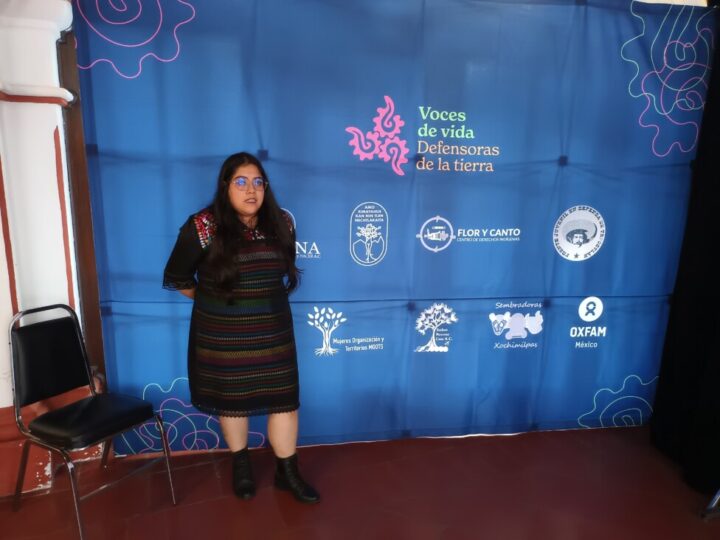
For this reason, eight organizations from five Mexican states launched the Voices of Life campaign on Oct. 12, involving hundreds of habitat protectors, some of whom came to the Mexican capital for the event, where IPS interviewed several of them.

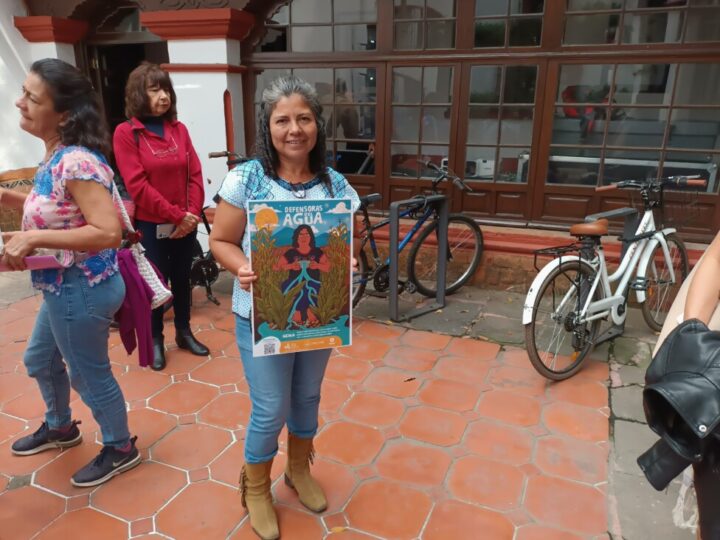
Involvement in the defense of water led Gema Pacheco to become an environmental activist, participating in the Voices of Life campaign in Mexico, which seeks to bring visibility and respect to this high-risk activity in Mexico. CREDIT: Emilio Godoy / IPS

Involvement in the defense of water led Gema Pacheco to become an environmental activist, participating in the Voices of Life campaign in Mexico, which seeks to bring visibility and respect to this high-risk activity in Mexico. CREDIT: Emilio Godoy / IPS

The initiative seeks to promote the right to a healthy environment, facilitate environmental information, protect and recognize people and organizations that defend the environment, as well as learn how to use information and communication technologies.

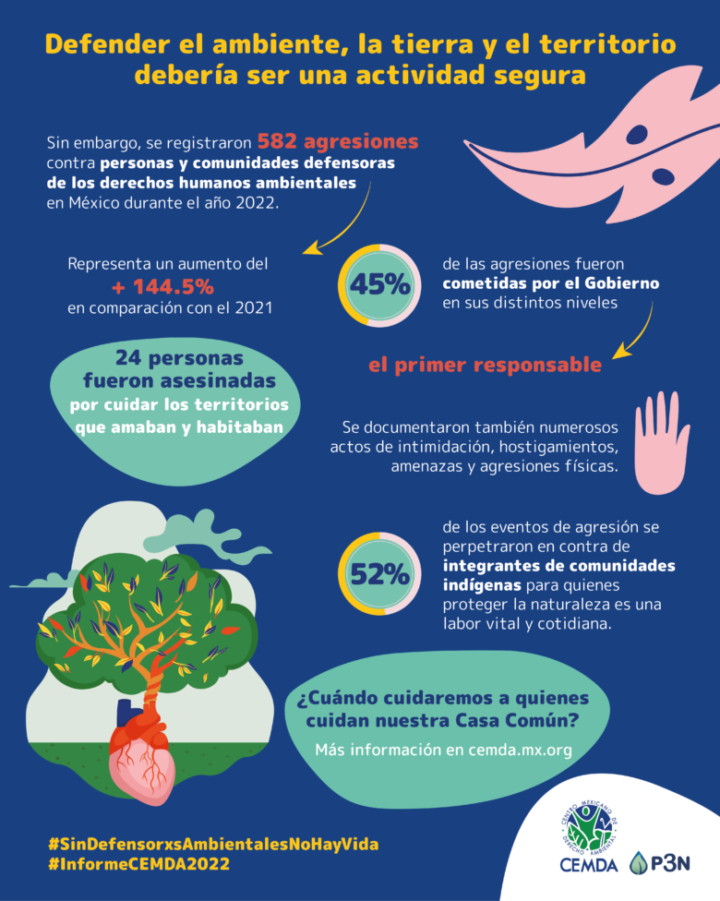
In 2022, Mexico ranked number three in Latin America in terms of murders of environmental activists, with 31 killed (four women and 16 indigenous people), behind Colombia (60) and Brazil (34), out of a global total of 177, according to the London-based non-governmental organization Global Witness.

A year earlier, this Latin American country of almost 129 million inhabitants ranked first on the planet, with 54 killings, so 2022 reflected an improvement.

“The situation in Mexico remains dire for defenders, and non-fatal attacks, including intimidation, threats, forced displacement, harassment and criminalization, continued to greatly complicate their work,” the report says.

The outlook remains serious for activists, as the non-governmental Mexican Center for Environmental Law (Cemda) documented 582 attacks in 2022, more than double the number in 2021. Oaxaca, Mexico City and the northern state of Chihuahua reported the highest number of attacks.

Urban problems

The south of Mexico City is home to the largest area of conservation land, but faces growing threats, such as deforestation, urbanization and irregular settlements.

Protected land defines the areas preserved by the public administration to ensure the survival of the land and its biodiversity.

Social anthropologist Tania Lopez said another risk has now emerged, in the form of the new General Land Use Planning Program 2020-2035 for the Mexican capital, which has a population of more than eight million people, although Greater Mexico City is home to more than 20 million.

“There was no public consultation of the plan based on a vision of development from the perspective of native peoples. In addition, it encourages real estate speculation, changes in land use and invasions,” said López, a member of the non-governmental organization Sembradoras Xochimilpas, part of the Voices of Life campaign.

Mexico is one of the most dangerous countries in the world for environmental defenders. In 2022, 31 activists were murdered, the third highest number in the region behind Colombia and Brazil. CREDIT: Cemda

Mexico is one of the most dangerous countries in the world for environmental defenders. In 2022, 31 activists were murdered, the third highest number in the region behind Colombia and Brazil. CREDIT: Cemda

Apart from the failure to carry out mandatory consultation processes, activists point out irregularities in the governmental Planning Institute and its technical and citizen advisory councils, because they are not included as members.

The conservation land, which provides clean air, water, agricultural production and protection of flora and fauna, totals some 87,000 hectares, more than half of Mexico City.

The plan stipulates conservation of rural and urban land. But critics of the program point out that the former would lose some 30,000 hectares, destined for rural housing.

The capital’s legislature is debating the program, which should have been ready by 2020.

Gisselle García, a lawyer with the non-governmental Interamerican Association for Environmental Defense, said attacks on women activists occur within a patriarchal culture that limits the existence of safe spaces for women’s participation in the defense of rights.

“It’s an entire system, which reflects the legal structure. If a woman files a civil or criminal complaint, she is not heard,” she told IPS, describing the special gender-based handicaps faced by women environmental defenders.

Social anthropologist Tania López is one of the members of the Voices of Life campaign, launched by eight non-governmental organizations on Oct. 12, 2023 to highlight the work of women environmental defenders in Mexico. CREDIT: Emilio Godoy / IPS

Social anthropologist Tania López is one of the members of the Voices of Life campaign, launched by eight non-governmental organizations on Oct. 12, 2023 to highlight the work of women environmental defenders in Mexico. CREDIT: Emilio Godoy / IPS

Still just an empty promise

This risky situation comes in the midst of preparations for the implementation of the Regional Agreement on Access to Information, Public Participation and Justice in Environmental Matters in Latin America and the Caribbean, known as the Escazú Agreement, an unprecedented treaty that aims to mitigate threats to defenders of the environment, in force since April 2021.

Article 9 of the Agreement stipulates the obligation to ensure a safe and enabling environment for the exercise of environmental defense, to take protective or preventive measures prior to an attack, and to take response actions.

The treaty, which takes its name from the Costa Rican city where it was signed, guarantees access to environmental information and justice, as well as public participation in environmental decision-making, to protect activists.

The Escazú Agreement has so far been signed by 24 Latin American and Caribbean countries, 15 of which have ratified it as well.

But its implementation is proceeding at the same slow pace as environmental protection in countries such as Mexico, where there are still no legislative changes to ensure its enforcement.

In August, the seven-person Committee to Support the Implementation of and Compliance with the Escazú Agreement took office. This is a non-contentious, consultative subsidiary body of the Conference of the Parties to the agreement to promote and support its implementation.

Meanwhile, in Mexico, the Escazú National Group, made up of government and civil society representatives, was formed in June to implement the treaty.

During the annual regional Second Forum of Human Rights Defenders, held Sept. 26-28 in Panama, participants called on the region’s governments to strengthen protection and ensure a safe and enabling environment for environmental protectors, particularly women.

While the Mexican women defenders who gathered in Mexico City valued the Escazú Agreement, they also stressed the importance of its dissemination and, even more so, its proper implementation.

Activists Pacheco and Lopez agreed on the need for national outreach, especially to stakeholders.

“We need more information to get out, a lot of work needs to be done, more people need to know about it,” said Pacheco.

The parties to the treaty are currently discussing a draft action plan that would cover 2024 to 2030.

The document calls for the generation of greater knowledge, awareness and dissemination of information on the situation, rights and role of individuals, groups and organizations that defend human rights in environmental matters, as well as on the existing instruments and mechanisms for prevention, protection and response.

It also seeks recognition of the work and contribution of individuals, groups and organizations that defend human rights, capacity building, support for national implementation and cooperation, as well as a follow-up and review scheme for the regional plan.

García the attorney said the regional treaty is just one more tool, however important it may be.

“We are in the phase of seeing how the Escazú Agreement will be applied. The most important thing is effective implementation. It is something new and it will not be ready overnight,” she said.

As it gains strength, the women defenders talk about how the treaty can help them in their work. “If they attack me, what do I do? Pull out the agreement and show it to them so they know they must respect me?” one of the women who are part of the Voices of Life campaign asked her fellow activists.

  Source

Brazil: A Step Forward for Indigenous Peoples’ Rights

Civil Society, Climate Change, Environment, Featured, Headlines, Human Rights, Indigenous Rights, Latin America & the Caribbean, TerraViva United Nations

Opinion

Credit: Evaristo Sa/AFP via Getty Images

MONTEVIDEO, Uruguay, Oct 24 2023 (IPS) – Brazil’s Supreme Court has delivered a long-awaited ruling upholding Brazilian Indigenous peoples’ claims to their traditional land. It did so by rejecting the ‘Temporal Framework’ principle, which only allowed for the demarcation and titling of lands physically occupied by the Indigenous groups who claimed them by 5 October 1988, when the current constitution was adopted. This excluded the numerous Indigenous communities who’d been violently expelled from their ancestral lands before then, including under military dictatorship between 1964 and 1985.


The case was brought in relation to a land dispute in the state of Santa Catarina, but the ruling applies to hundreds of similar situations throughout Brazil.

This was also good news for the climate. Brazil is home to 60 per cent of the Amazon rainforest, a key climate stabiliser due to the enormous amount of carbon it stores and the water it releases into the atmosphere. Most of Brazil’s roughly 800 Indigenous territories – over 300 of which are yet to be officially demarcated – are in the Amazon. And there are no better guardians of the rainforest than Indigenous peoples: when they fend off deforestation, they protect their livelihoods and ways of life. The best-preserved areas of the Amazon are those legally recognised and protected as Indigenous lands.

But there’s been a sting in the tale: politicians backed by the powerful agribusiness lobby have passed legislation to enshrine the Temporal Framework, blatantly ignoring the court ruling.

A tug of war

The Supreme Court victory came after a long struggle. Hundreds of Indigenous mobilisations over several years called for the rejection of the Temporal Framework.

Powerful agribusiness interests presented the Temporal Framework as the proper way of regulating article 231 of the constitution in a way that provides the legal security rural producers need to continue to operate. Indigenous rights groups denounced it as a clear attempt to make theft of Indigenous lands legal. Regional and international human rights mechanisms sided with them: the Inter-American Commission on Human Rights and the United Nations (UN) Special Rapporteur on the rights of Indigenous Peoples warned that the framework contradicted universal and Inter-American human rights standards.

In their 21 September decision, nine of the Supreme Court’s 11 members ruled the Temporal Framework to be unconstitutional. With a track record of agribusiness-friendly rulings, the two judges who backed it had been appointed by former far-right president Jair Bolsonaro, and one of them had also been Bolsonaro’s justice minister.

As the Supreme Court held its hearings and deliberations, political change took hold. Bolsonaro had vowed ‘not to cede one centimetre more of land’ to Indigenous peoples, and the process of land demarcation had remained stalled for years. But in April 2023, President Lula da Silva, in power since January, signed decrees recognising six new Indigenous territories and promised to approve all pending cases before the end of his term in 2026, a promise consistent with the commitment to achieve zero deforestation by 2030. The recognition of two additional reserves in September came alongside news that deforestation in the Brazilian Amazon had fallen by 66 per cent in August compared to the same month in 2022.

Agribusiness fights back

But the agribusiness lobby didn’t simply accept its fate. The powerful ruralist congressional caucus introduced a bill to enshrine the Temporal Framework principle into law, which the Chamber of Deputies quickly passed on 30 May. The vote was accompanied by protests, with Indigenous groups blocking a major highway. They faced the police with their ceremonial bows and arrows and were dispersed with water cannon and teargas.

The Temporal Framework bill continued its course through Congress even after the Supreme Court’s decision. On 27 September, with 43 votes for and 21 against, the Senate approved it as a matter of ‘urgency’, rejecting the substance of the Supreme Court ruling and claiming that in issuing it the court had ‘usurped’ legislative powers.

The Articulation of Indigenous Peoples of Brazil’s (APIB) assessment was that, as well as upholding the Temporal Framework, the bill sought to open the door to commodity production and infrastructure construction in Indigenous lands, among other serious violations of Indigenous rights. For these reasons, Indigenous groups called this the ‘Indigenous Genocide Bill’.

The struggle goes on

As the 20 October deadline for President Lula to either sign or veto the bill approached, a campaign led by Indigenous congresswoman Célia Xakriabá collected almost a million signatures backing her call for a total veto. Along with other civil society groups, APIB sent an urgent appeal to the UN requesting support to urge Lula to veto the bill.

On 19 October the Federal Public Prosecutor’s Office said Lula should veto the bill on the basis that it’s unconstitutional. On the same day, however, senior government sources informed that there wouldn’t be a total veto, but a ‘very large’ partial one. And indeed, the next day it was announced that Lula had partially vetoed the bill. According to a government spokesperson, all the clauses that constituted attacks on Indigenous rights and went against the Constitution were vetoed, while the ones that remained would serve to improve the land demarcation process, making it more transparent.

Even if the part of the bill that wasn’t vetoed doesn’t undermine the Supreme Court ruling, the issue is far from settled. The veto now needs to be analysed at a congressional session on a date yet to be determined. And the agribusiness lobby won’t back down easily. Many politicians own land overlapping Indigenous territories, and many more received campaigns funding from farmers who occupy Indigenous lands.

While further moves by the right-leaning Congress can’t be ruled out, the Supreme Court ruling also has some problems. The most blatant concerns the acknowledgment that there must be ‘fair compensation’ for non-Indigenous people occupying Indigenous lands they acquired ‘in good faith’ before the state considered them to be Indigenous territory. Indigenous groups contend that, while there might be a very small number of such cases, in a context of increasing violence against Indigenous communities, the compensation proposal would reward and further incentivise illegal invasions.

But beneath the surface of political squabbles, deeper changes are taking place that point to a movement that is growing stronger and better equipped to defend Indigenous peoples’ rights.

The 2022 census showed a 90-per-cent increase, from 896,917 to 1.69 million, in the number of Brazilians identifying as Indigenous compared to the census 12 years before. There was no demographic boom behind these numbers – just longstanding work by the Indigenous movement to increase visibility and respect for Indigenous identities. People who’d long ignored and denied their heritage to protect themselves from racism are now reclaiming their Indigenous identities. Not even the violent anti-Indigenous stance of the Bolsonaro administration could reverse this.

Today the Brazilian Indigenous movement is stronger than ever. President Lula owes his election to positioning himself as an alternative to his anti-rights, climate-denying predecessor. He now has the opportunity to reaffirm his commitment to respecting Indigenous peoples’ rights while tackling the climate crisis.

Inés M. Pousadela is CIVICUS Senior Research Specialist, co-director and writer for CIVICUS Lens and co-author of the State of Civil Society Report.
  Source

Innovative Family Farm in Cuba Uses Mix of Clean Energies

Active Citizens, Civil Society, Climate Action, Development & Aid, Editors’ Choice, Energy, Environment, Food and Agriculture, Headlines, Innovation, Integration and Development Brazilian-style, Latin America & the Caribbean, Projects, Regional Categories, Water & Sanitation

Energy

Artist and farmer Chavely Casimiro and her daughter Leah Amanda Díaz feed one of the biodigesters at Finca del Medio, a farm in central Cuba. The biodigester produces about seven meters of biogas per day, enough energy for cooking, baking and dehydrating food. CREDIT: Jorge Luis Baños / IPS

Artist and farmer Chavely Casimiro and her daughter Leah Amanda Díaz feed one of the biodigesters at Finca del Medio, a farm in central Cuba. The biodigester produces about seven meters of biogas per day, enough energy for cooking, baking and dehydrating food. CREDIT: Jorge Luis Baños / IPS

TAGUASCO, Cuba, Oct 2 2023 (IPS) – Combining technologies and innovations to take advantage of solar, wind, hydro and biomass potential has made the Finca del Medio farm an example in Cuba in the use of clean energies, which are the basis of its agroecological and environmental sanitation practices.


Renewable energy sources are used in many everyday processes such as electricity generation, lighting, water supply, irrigation and water heating, as well as in cooking, dehydrating, drying, baking and refrigeration of foodstuffs.

“We started out with windmills on artesian wells and hydraulic rams to pump water. That gave us an awareness of the amount of energy we needed and of how to expand its use,” said farmer José Antonio Casimiro, 65, owner of this agroecological family farm located in the center of this long Caribbean island nation.

“More incentives, better policies and financial support are needed so that farming families have sufficient energy for their work and can improve the comfort of their homes and quality of life.” — José Antonio Casimiro

The farmer expressed his appreciation of the help of his son, 41, also named Antonio Casimiro, in the installation of the two mills at Finca del Medio, during the days in which IPS visited the farm and shared in activities with the family.

“There was no one to assemble or repair them. We both had to study a great deal, and we learned to do a lot of construction things as we went along and perfected the techniques,” said Casimiro junior, referring to the equipment that is now inactive, but is capable of extracting some 4,000 liters of water daily from the water table.

When rainfall is abundant and the volume of the 55,000-cubic-meter-capacity reservoir rises, the hydraulic ram comes to life. The device diverts about 20,000 liters of water to a 45,000-liter tank, 400 meters away and 18 meters above the level of the reservoir.

“The only energy the rams use is the water pressure itself. Placing it on the highest part of the land makes it easier to use the slope for gravity irrigation, or to fill the animals’ water troughs,” explained Chavely Casimiro, 28, the youngest daughter of José Antonio and Mileidy Rodríguez, also 65.

An artist who also inherited the family’s “farming gene”, Chavely highlighted some twenty innovations made by her father to the hydraulic ram, in order to optimize water collection.

Other inventions speed up the assembly and disassembly of the windmills for maintenance, or in the event of tropical cyclones.

“We have been replacing the water supply with solar panels, which are more efficient. They can be removed faster (than the windmill blades) if a hurricane is coming. You can incorporate batteries and store the energy,” said Casimiro.

“Let’s say a windmill costs about 2,000 dollars. With that amount you can buy four 350-watt panels. That would be more than a kilowatt hour (kWh) of power. You buy a couple of batteries for 250 dollars each, and with that amount of kWh you can pump the equivalent of the water of about 10 windmills,” he said.

But the farmer said the windmills are more important than the energy they generate. “It would be nice if every farm had at least one windmill. For me it is very symbolic to see them pumping up water,” he said.

Lorenzo Díaz, the husband of Chavely Casimiro, uses a solar oven to cook food. In the background can be seen a windmill and a solar heater, other technologies that take advantage of the potential for renewable energies on the Finca del Medio farm in central Cuba. CREDIT: Jorge Luis Baños / IPS

Lorenzo Díaz, the husband of Chavely Casimiro, uses a solar oven to cook food. In the background can be seen a windmill and a solar heater, other technologies that take advantage of the potential for renewable energies on the Finca del Medio farm in central Cuba. CREDIT: Jorge Luis Baños / IPS

Innovations

Located in the municipality of Taguasco, in the central province of Sancti Spíritus, some 350 kilometers east of Havana, Finca del Medio follows a family farm model including permaculture, agroecology and agricultural production based on the use of clean energy.

In 1993, Casimiro and Rodríguez with their children Leidy and José Antonio – a year later, Chavely was born – decided to settle on the 13-hectare farm of their paternal grandparents, with the aim of reversing its deterioration and soil erosion and installing perimeter fences.

The erosion of the land was due to the fact that in the past the farm was dedicated to the cultivation of tobacco, which depleted the soil, and later it had fallen into abandonment, as well as the house.

The older daughter is the only one who does not live and work on the farm, although she does spend time there, and a total of ten family members live there, including four grandchildren. All the adults either work on the farm or help out with different tasks.

With the help of technological innovations adapted to the local ecosystem, and empirical and scientific knowledge, the family has become self-sufficient in rice, beans, tubers, vegetables, milk, eggs, honey, meat, fish and more than 30 varieties of fruit. The only basic foodstuffs not produced on the farm are sugar and salt.

They sell all surplus production, including cow’s milk, for which they have specific contracts, and they are also promoting agrotourism, for which they are making further improvements to the facilities.

At Finca del Medio, a system of channels and ditches allows the infiltration of rainwater, reduces erosion of the topsoil and conserves as much water as possible for subsequent irrigation.

These innovations also benefit neighboring communities by mitigating flooding and replenishing the water table, which has brought water back to formerly dry wells.

The construction of the house is also an offshoot of technological solutions to the scarcity of resources such as steel, which led to the design of dome-shaped roofs made of mud bricks and cement.

The design aids in rainwater harvesting, improves hurricane protection, and boosts ventilation, creating cooler spaces, which reduces the need for air conditioning equipment and bolsters savings.

Along with food production, the new generations and members of the Casimiro-Rodriguez family engage in educational activities to raise awareness about good agricultural and environmental practices.

Students from nearby schools come to the farm to learn about these practices, as well as specialists in agroecology and people from different parts of the world, interested in sharing the experience. Meanwhile, several members of the family have traveled abroad to give workshops on agroecology and permaculture.

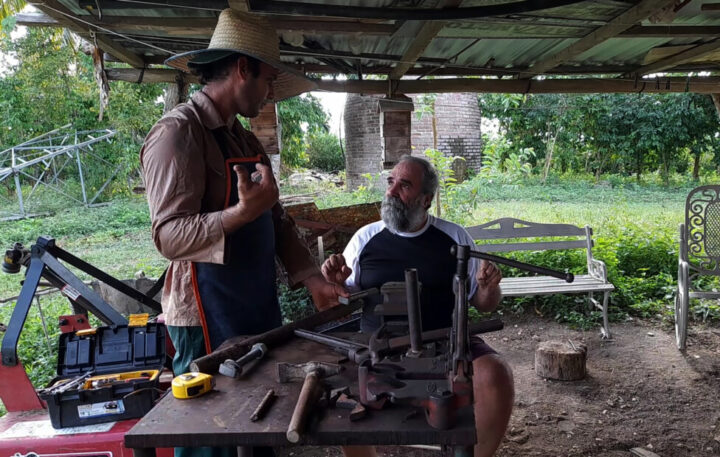
Farmers José Antonio Casimiro and his son of the same name talk in the mechanical workshop at their Finca del Medio farm. Both have come up with innovations for the use of windmills, the hydraulic ram and biodigesters, as well as agricultural tools. CREDIT: Jorge Luis Baños / IPS

Farmers José Antonio Casimiro (R) and his son of the same name talk in the mechanical workshop at their Finca del Medio farm. Both have come up with innovations for the use of windmills, the hydraulic ram and biodigesters, as well as agricultural tools. CREDIT: Jorge Luis Baños / IPS

Solar and biogas potential

On one of the side roofs of the house are 28 photovoltaic panels that provide about eight kWh, connected to batteries. The stored energy covers the household’s needs during power outages that affect the island due to fuel shortages and breakdowns and problems in maintenance of its aging thermoelectric plants.

In addition, the household has three solar water heaters with a capacity of 380 liters.

Next to the kitchen, two fixed-dome biodigesters produce another renewable fuel, biogas, composed mainly of methane and carbon dioxide from the anaerobic decomposition of animal manure, crop waste and “even sewage from the house, which we channel so that the waste does not contaminate the environment,” said Casimiro.

Due to the current shortage of manure as the number of cows has been reduced, only one of the biodigesters is now operational, producing about seven meters of biogas per day, sufficient for cooking, baking and dehydration of foodstuffs.

The innovative family devised a mechanism to extract – without emptying the pond of water or stopping biogas production – from the bottom the solids used as biofertilizers, as well as hundreds of liters of effluent for fertigation (a combination of organic fertilizers and water) of the crops, by gravity.

The installation of the biodigesters, the solar panels and one of the solar heaters was supported by the Swiss Agency for Development and Cooperation (Cosude) and the Indio Hatuey Experimental Station of Pastures and Forages through its Biomass-Cuba project, Casimiro said.

He also expressed gratitude for the link with other scientific institutions such as the Integrated Center for Appropriate Technologies, based in the central province of Camagüey, which is focused on offering solutions to the needs of water supply and environmental sanitation, and played an essential role in the installation of the hydraulic ram.

The farmer said the farm produces the equivalent of about 20 kWh from the combination of renewable energies, and if only conventional electricity were used, the cost would be around 83 dollars a month.

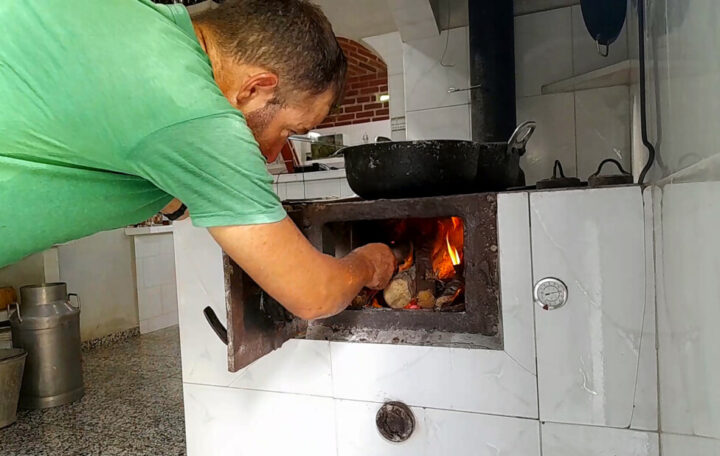
Lorenzo Díaz feeds firewood into an innovative stove that allows the Finca del Medio farm to efficiently cook food, dehydrate or dry fruits and spices, heat water and preserve meat, among other functions. CREDIT: Jorge Luis Baños / IPS

Lorenzo Díaz feeds firewood into an innovative stove that allows the Finca del Medio farm to efficiently cook food, dehydrate or dry fruits and spices, heat water and preserve meat, among other functions. CREDIT: Jorge Luis Baños / IPS

Efficient stove

In the large, functional kitchen, the stove covered with white tiles and a chimney has been remodeled 16 times to make it more efficient and turn it into another source of pride at the farm.

Fueled by firewood, coconut shells and other waste, “the stove makes it possible to cook food, dehydrate fruits and spices, heat water and preserve meat, among other tasks,” Rodríguez told IPS as she listed some of the advantages of this other offshoot of the family’s ingenuity that helps her as a skilled cook and pastry chef.

She pointed out that by extracting all the smoke, “the design makes better use of the heat, which will be used in a sauna” being built next to the kitchen, for the enjoyment of the family and potential tourists.

Casimiro is in favor of incorporating clean energy into agricultural processes, but he said that “more incentives, better policies and financial support are needed so that farming families have sufficient energy for their work and can improve the comfort of their homes and quality of life.”

Since 2014, Cuba has had a policy for the development of renewable energy sources and their efficient use.

A substantial modification of the national energy mix, which is highly dependent on the import of fossil fuels and hit by cyclical energy deficits, is a matter of national security

However, regulations with certain customs exemptions and other incentives to increase the production of solar, wind, biomass and hydroelectric energies in this Caribbean island nation still seem insufficient in view of the high prices of these technologies, the domestic economic crisis and the meager purchasing power of most Cuban families.

Clean sources account for only five percent of the island’s electricity generation, a scenario that the government wants to radically transform, with an ambitious goal of a 37 percent proportion by 2030, which is increasingly difficult to achieve.

  Source