Digital Treatment of Genetic Resources Shakes Up COP15

The executive secretary of the Convention on Biological Diversity, Elizabeth Maruma Mrema, highlighted on Friday Dec. 16 the results of the Nagoya Protocol on access to genetic resources and fair benefit sharing at an event during COP15 in the Canadian city of Montreal. But the talks have not reached an agreement on the digital sequencing of genetic resources. CREDIT: Emilio Godoy/IPS

The executive secretary of the Convention on Biological Diversity, Elizabeth Maruma Mrema, highlighted on Friday Dec. 16 the results of the Nagoya Protocol on access to genetic resources and fair benefit sharing at an event during COP15 in the Canadian city of Montreal. But the talks have not reached an agreement on the digital sequencing of genetic resources. CREDIT: Emilio Godoy/IPS

By Emilio Godoy
MONTREAL, Dec 16 2022 (IPS)

In addition to its nutritional properties, quinoa, an ancestral grain from the Andes, also has cosmetic uses, as stated by the resource use and benefit-sharing permit ABSCH-IRCC-PE-261033-1 awarded in February to a private individual under a 15-month commercial use contract.


The permit, issued by the Peruvian government’s National Institute for Agrarian Innovation, allows the Peruvian beneficiary to use the material in a skin regeneration cream.

But it also sets restrictions on the registration of products obtained from quinoa or the removal of its elements from the Andean nation, to prevent the risk of irregular exploitation without a fair distribution of benefits, in other words, biopiracy.”The scientific community is willing to share benefits through simple mechanisms that do not unfairly burden researchers in low- and middle-income countries.” — Amber Scholz

The licensed material may have a digital representation of its genetic structure which in turn may generate new structures from which formulas or products may emerge. This is called digital sequence information (DSI), in the universe of research or commercial applications within the CBD.

Treatment of DSI forms part of the debates at the 15th Conference of the Parties (COP15) to the United Nations Convention on Biological Diversity (CBD), which began on Dec. 7 and is due to end on Dec. 19 at the Palais des Congrès in the Canadian city of Montreal.

The summit has brought together some 15,000 people representing the 196 States Parties to the CBD, non-governmental organizations, academia, international bodies and companies.

The focus of the debate is the Post-2020 Global Framework on Biodiversity, which consists of 22 targets in areas including financing for conservation, guidelines on digital sequencing of genetic material, degraded ecosystems, protected areas, endangered species, the role of business and gender equality.

Like most of the issues, negotiations on DSI and the sharing of resulting benefits, contained in one of the Global Framework’s four objectives and in target 13, are at a deadlock, on everything from definitions to possible sharing mechanisms.

Except for the digital twist, the issue is at the heart of the Nagoya Protocol on Access to Genetic Resources and the Fair and Equitable Sharing of Benefits Arising from their Utilization, part of the CBD, signed in that Japanese city in 2010 and in force since 2014.
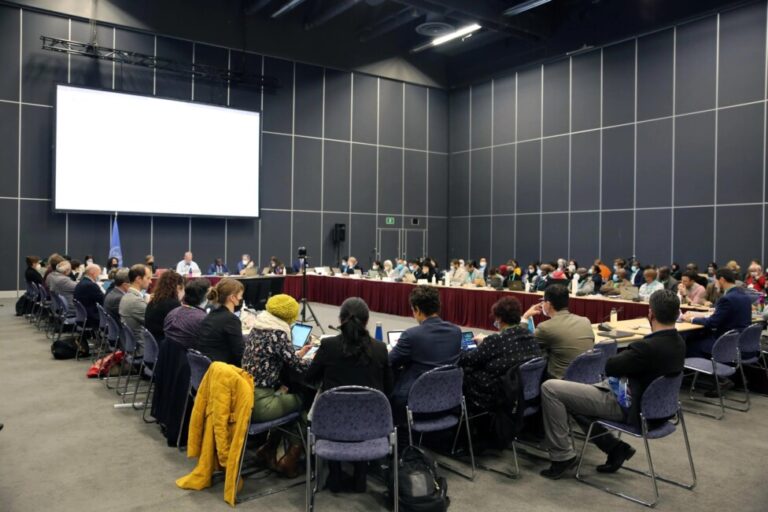
The delegations of the 196 States Parties to the Convention on Biological Diversity have failed to make progress at COP15 in the negotiations on new targets for the protection of the world's natural heritage, in the Canadian city of Montreal. In the picture, a working group reviews a proposal on the complex issue. CREDIT: IISD/ENB

The delegations of the 196 States Parties to the Convention on Biological Diversity have failed to make progress at COP15 in the negotiations on new targets for the protection of the world’s natural heritage, in the Canadian city of Montreal. In the picture, a working group reviews a proposal on the complex issue. CREDIT: IISD/ENB

Amber Scholz, a German member of the DSI Scientific Network, a group of 70 experts from 25 countries, said there is an urgent need to close the gap between the existing innovation potential and a fair benefit-sharing system so that digital sequencing benefits everyone.

“It’s been a decade now and things haven’t turned out so well. The promise of a system of innovation, open access and benefit sharing is broken,” Scholz, a researcher at the Department of Microbial Ecology and Diversity in the Leibniz Institute’s DSMZ German Collection of Microorganisms and Cell Cultures, told IPS.

DSI stems from the revolution in the massive use of technological tools, which has reached biology as well, fundamental in the discovery and manufacture of molecules and drugs such as those used in vaccines against the coronavirus that caused the COVID-19 pandemic.

The Aichi Biodiversity Targets, adopted in 2010 in that Japanese city during the CBD COP10, were missed by the target year, 2020, and will now be renewed and updated by the Global Framework that will emerge from Montreal.

The targets included respect for the traditional knowledge, innovations and practices of indigenous and local communities related to the conservation and sustainable use of biological diversity, their customary use of biological resources, and the full and effective participation of indigenous and local communities in the implementation of the CBD.

Lack of clarity in the definition of DSI, challenges in the traceability of the country of origin of the sequence via digital databases, fear of loss of open access to data and different outlooks on benefit-sharing mechanisms are other aspects complicating the debate among government delegates.

Through the Action Agenda: Make a Pledge platform, organizations, companies and individuals have already made 586 voluntary commitments at COP15, whose theme is “Ecological civilization: Building a shared future for all life on earth”.

Of these, 44 deal with access and benefit sharing, while 294 address conservation and restoration of terrestrial ecosystems, 185 involve partnerships and alliances, and 155 focus on adaptation to climate change and emission reductions.

Genetic havens

Access to genetic resources for commercial or non-commercial purposes has become an issue of great concern in the countries of the global South, due to the fear of biopiracy, especially with the advent of digital sequencing, given that physical access to genetic materials is not absolutely necessary.

Although the Nagoya Protocol includes access and benefit-sharing mechanisms, digital sequencing mechanisms have generated confusion. In fact, this instrument has created a market in which lax jurisdictions have taken advantage by becoming genetic havens.

Around 2,000 gene banks operate worldwide, attracting some 15 million users. Almost two billion sequences have been registered, according to statistics from GenBank, one of the main databases in the sector and part of the U.S. National Center for Biotechnology Information.

Argentina leads the list of permits for access to genetic resources in Latin America under the Protocol, with a total of 56, two of which are commercial, followed by Peru (54, four commercial) and Panama (39, one commercial). Mexico curbed access to such permits in 2019, following a scandal triggered by the registration of maize in 2016.

There are more than 100 gene banks operating in Mexico, 88 in Peru, 56 in Brazil, 47 in Argentina and 25 in Colombia.

The largest providers of genetic resources leading to publicly available DSI are the United States, China and Japan. Brazil ranks 10th among sources and users of samples, according to a study published in 2021 by Scholz and five other researchers.

The mechanisms for managing genetic information sequences have become a condition for negotiating the new post-2020 Global Framework for biodiversity, which poses a conflict between the most biodiverse countries (generally middle- and low-income) and the nations of the industrialized North.
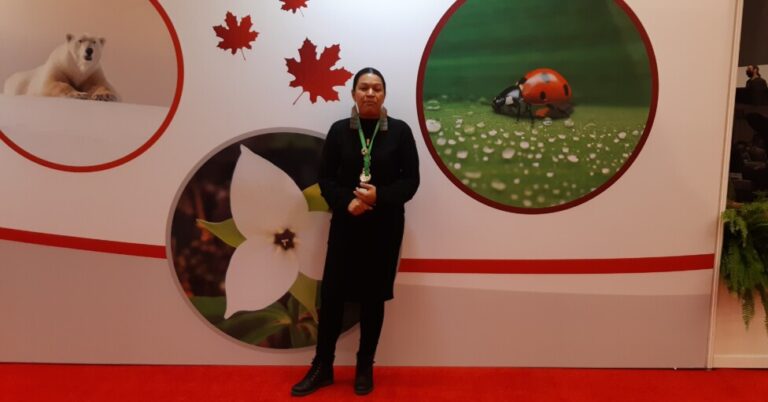
Brazilian indigenous activist Cristiane Juliao, a leader of the Pankararu people, calls for a fair system of benefit-sharing for access to and use of genetic resources and their digital sequences at COP15, being held at the Palais des Congrès in the Canadian city of Montreal. CREDIT: Emilio Godoy/IPS

Brazilian indigenous activist Cristiane Juliao, a leader of the Pankararu people, calls for a fair system of benefit-sharing for access to and use of genetic resources and their digital sequences at COP15, being held at the Palais des Congrès in the Canadian city of Montreal. CREDIT: Emilio Godoy/IPS

Indigenous people and their share

Cristiane Juliao, an indigenous woman of the Pankararu people, who is a member of the Brazilian Coordinator of Indigenous Peoples and Organizations of the Northeast, Minas Gerais and Espírito Santo, said the mechanisms adopted must favor the participation of native peoples and guarantee a fair distribution of benefits.

“We don’t look at one small element of a plant. We look at the whole context and the role of that plant. All traditional knowledge is associated with genetic heritage, because we use it in food, medicine or spiritual activities,” she told IPS at COP15.

Therefore, she said, “traceability is important, to know where the knowledge was acquired or accessed.”

In Montreal, Brazilian native organizations are seeking recognition that the digital sequencing contains information that indigenous peoples and local communities protect and that digital information must be subject to benefit-sharing. They are also demanding guarantees of free consultation and the effective participation of indigenous groups in the digital information records.

Thanks to the system based on the country’s Biodiversity Law, in effect since 2016, the Brazilian government has recorded revenues of five million dollars for permits issued.

The Working Group responsible for drafting the new Global Framework put forward a set of options for benefit-sharing measures.

They range from leaving in place the current status quo, to the integration of digital sequence information on genetic resources into national access and benefit-sharing measures, or the creation of a one percent tax on retail sales of genetic resources.

Lagging behind

There is a legal vacuum regarding this issue, because the CBD, the World Intellectual Property Organization and the International Treaty on Plant Genetic Resources for Food and Agriculture, in force since 2004, do not cover all of its aspects.

Scholz suggested the COP reach a decision that demonstrates the political will to establish a fair and equitable system. “The scientific community is willing to share benefits through simple mechanisms that do not unfairly burden researchers in low- and middle-income countries,” she said.

For her part, Juliao demanded a more inclusive and fairer system. “There is no clear record of indigenous peoples who have agreed to benefit sharing. It is said that some knowledge comes from native peoples, but there is no mechanism for the sharing of benefits with us.”

IPS produced this article with support from Internews’ Earth Journalism Network.

European Court of Justice Ruling on Beneficial Ownership, a Major Blow to the Fight Against Environmental Crimes

By Matti Kohonen
LONDON, Dec 12 2022 (IPS)

The European Court of Justice on November 22, 2022, made a ruling that reversed much of the progress we have made in a decade in the fight against corruption, economic and natural resource crimes, tax abuses and other forms of illicit financial flows across the world. In the ruling, the court declared invalid the part of the European Union’s Anti Money Laundering Directive that allowed public access to registries about companies’ beneficial owners (that is, the real people who own or actually control them).


This has a direct impact in the fight against environmental crimes, particularly illegal, unreported and unregulated (IUU) fishing which is devastating the world’s fisheries resources, accounting for up to one-fifth of global catches.

The financial secrecy surrounding the owners of vessels is a key driver of IUU fishing as secrecy makes it harder to catch the real perpetrators of this illegal trade. In a report published by the Financial Transparency Coalition in October 2022, we discovered that among the top 10 operators of vessels reported to be engaged in this illicit practice, one was based in Spain while a total of 30 vessels were flagged to Italy, making it the highest European flag jurisdiction for IUU fishing. In total, we found that 12.8% of all vessels engaged in IUU fishing were flagged to a European country.

Matti Kohonen

The ECJ ruling makes it impossible for a member of the public to investigate these linkages further. In Spain and Italy, the commitment to open up the registry was made in principle but remains unimplemented. This decision takes all pressure off to implement open beneficial ownership registries in these two countries that are most responsible for IUU fishing in the continent.

This is a welcome present to owners of IUU fishing vessels who often use complex corporate structures to hide their identities and evade punishment. Underscoring this problem, in our investigation we found the individual shareholder data was only available for 16% of industrial and semi-industrial vessels engaged in IUU fishing.

But the ECJ’s ruling impact will be felt well beyond Europe’s borders. Most of the world’s IUU fishing takes place in Africa which loses US$11.5bn in illicit financial flows linked to IUU fishing every year. A significant proportion of this illicit catch in Africa is caught in West Africa, with US$9.5bn losses in this region alone, with much of the fish caught there by foreign fleets ending up in Europe. In total, the European continent imports some US$14bn worth of seafood from the global South each year, making it a key market for seafood products.

The court’s decisions rested on a narrow interpretation of the purpose of the beneficial ownership registry, limited to fighting money laundering and terrorist financing. Fishing related offences are not yet recognised as ‘natural resource crimes’ by the Financial Action Task Force (FATF), the global anti-money laundering regulator, while illegal logging and illegal wildlife trade (IWT) related offences are already included in their definition of what constitutes money laundering. If this were to be upgraded by FATF, we could claim most, if not all, IUU fishing offences as money laundering crimes.

The ECJ decision also rests on a narrow interpretation of the ‘right to private life’ as a fundamental civil right as subscribed in the EU Charter of Fundamental Rights of the European Union that partly lays the legal foundation for the EU. Worryingly, the court did not consider any evidence of the benefits of public access to beneficial ownership information in both fighting money laundering and terrorist financing, let alone the risks that natural resource crimes pose to other rights, such as the right to a healthy environment recognised as a human right by the UN General Assembly in 2022.

Ultimately, the real winners of this ruling are the thousands of companies engaged in IUU fishing and other environmental crimes across the world, and which benefit from money laundering at the tune of billions of euros per year. The ruling undermines collective action to make the money trail of these crimes more traceable, at a time when countries especially in the global South are desperate for funds amid a cost of living crisis and high inflation.

Reacting to the ruling, the European Council signalled that member states should ensure that any natural or legal person demonstrating a legitimate interest has access to information held in the beneficial ownership registers, including especially journalists and civil society organisations as long as they can demonstrate legitimate interest in relation with fighting money laundering and terrorist financing.

However, this is insufficient since this will likely only apply to journalists and civil society in the same country as the registry, and application processes generally take a long time. Also one will need to know the company of interest before accessing any information, blocking the option of looking through public registries to spot risks and red flags.

The EU Parliament should be expected to start negotiations on a new anti-money laundering directive next spring. It must not allow the ECJ ruling to stand, for everyone’s sake.

IPS UN Bureau


!function(d,s,id){var js,fjs=d.getElementsByTagName(s)[0],p=/^http:/.test(d.location)?’http’:’https’;if(!d.getElementById(id)){js=d.createElement(s);js.id=id;js.src=p+’://platform.twitter.com/widgets.js’;fjs.parentNode.insertBefore(js,fjs);}}(document, ‘script’, ‘twitter-wjs’);  

Excerpt:

The author is Executive Director, Financial Transparency Coalition Source

Loss and Damage Fund Saves COP27 from the Abyss

Active Citizens, Civil Society, Climate Action, Climate Change, Climate Change Finance, Conferences, Editors’ Choice, Environment, Global, Global Governance, Headlines, IPS UN: Inside the Glasshouse, Latin America & the Caribbean, Regional Categories

Climate Action

Egyptian Foreign Minister Sameh Shoukry, chair of COP27, reads the nine-page Sharm El Sheikh Implementation Plan, the document that concluded the climate summit on Sunday Nov. 20, to an exhausted audience after tough and lengthy negotiations that finally reached an agreement to create a fund for loss and damage, a demand of the global South. CREDIT: Kiara Worth/UN

Egyptian Foreign Minister Sameh Shoukry, chair of COP27, reads the nine-page Sharm El Sheikh Implementation Plan, the document that concluded the climate summit on Sunday Nov. 20, to an exhausted audience after tough and lengthy negotiations that finally reached an agreement to create a fund for loss and damage, a demand of the global South. CREDIT: Kiara Worth/UN

SHARM EL SHEIKh , Nov 20 2022 (IPS) – They were on the brink of shipwreck and did not leave happy, but did feel satisfied that they got the best they could. The countries of the global South achieved something decisive at COP27: the creation of a special fund to address the damage and loss caused by climate change in the most vulnerable nations.


The fund, according to the Sharm El Sheikh Implementation Plan, the official document approved at dawn on Sunday Nov. 20 in this Egyptian city, should enable “rehabilitation, recovery and reconstruction” following extreme weather events in these vulnerable countries.

Decisions on who will provide the money, which countries will benefit and how it will be disbursed were left pending for a special committee to define. But the fund was approved despite the fact that the issue was not even on the official agenda of the summit negotiations, although it was at the center of the public debate before the conference itself.

“We are satisfied that the developed countries have accepted the need to create the Fund. Of course, there is much to discuss for implementation, but it was difficult to ask for more at this COP,” Ulises Lovera, Paraguay’s climate change director, told IPS, weary from a longer-than-expected negotiation, early Sunday morning at the Sharm El Sheikh airport.

“This COP has taken an important step towards justice. I welcome the decision to establish a loss and damage fund and to operationalize it in the coming period,” said U.N. Secretary-General António Guterres. He also described as an achievement that a “red line” was not crossed, that would take the rise in global temperature above the 1.5-degree limit.

More than 35,000 people from nearly 200 countries participated in the 27th Conference of the Parties (COP27) on Climate Change in Sharm El Sheikh, an Egyptian seaside resort on the Red Sea, where the critical dimension of global warming in the different regions of the world was on display, sometimes dramatically.

Practically everything that has to do with the future of the modes of production and life of humanity – starting with energy and food – was discussed at a mega-event that far exceeded the official delegations of the countries and the great leaders present, such as U.S. President Joe Biden and the Brazilian president-elect, Luiz Inácio Lula da Silva.

Hundreds of social organizations, international agencies and private sector stakeholders came here to showcase their work, seek funding, forge alliances, try to influence negotiations, defend their interests or simply be on a stage that seemed to provide a space for all kinds of initiatives and businesses.

At the gigantic Sharm El Sheikh International Convention Center there was also a global fair with non-stop activities from morning to night in the various pavilions, in stands with auditoriums of between 20 and 200 seats, where there was a flurried program of presentations, lectures and debates, not to mention the more or less crowded demonstrations of activists outside the venue.

In addition, government delegates negotiated on the crux of the summit: how to move forward with the implementation of the Paris Agreement, which at COP21 in 2015 set global climate change mitigation and adaptation targets.

United Nations Secretary-General António Guterres walks hurriedly through the Sharm El Sheikh Convention Center during the last intense hours of the COP27 negotiations, when there were moments when it seemed that there would be no agreement and the climate summit would end in failure. CREDIT: Daniel Gutman/IPS

United Nations Secretary-General António Guterres (3rd-R) walks hurriedly through the Sharm El Sheikh Convention Center during the last intense hours of the COP27 negotiations, when there were moments when it seemed that there would be no agreement and the climate summit would end in failure. CREDIT: Daniel Gutman/IPS

On the brink of failure

Once again, the nine-page Sharm El Sheikh Implementation Plan did not include in any of its pages a reference to the need to abandon fossil fuels, but only coal.

The document was the result of a negotiation that should have ended on Friday Nov. 18, but dragged on till Sunday, as usually happens at COPs. What was different on this occasion was a very tough discussion and threats of a walkout by some negotiators, including those of the European Union.

But in the end, the goal of limiting the temperature increase to 1.5 degrees Celsius, established in the Paris Agreement, was maintained, although several countries tried to make it more flexible up to 2.0 degrees, which would have been a setback with dramatic effects for the planet and humanity, according to experts and climate activists.

“Rapid, deep and sustained reductions in global greenhouse gas emissions (are) required – lowering global net greenhouse gas emissions by 43 percent by 2030 relative to the 2019 level – to limit global warming to 1.5°C target,” reads the text, although no mention is made of oil and gas, the fossil fuels most responsible for those emissions, in one of the usual COP compromises, since agreements are reached by consensus.

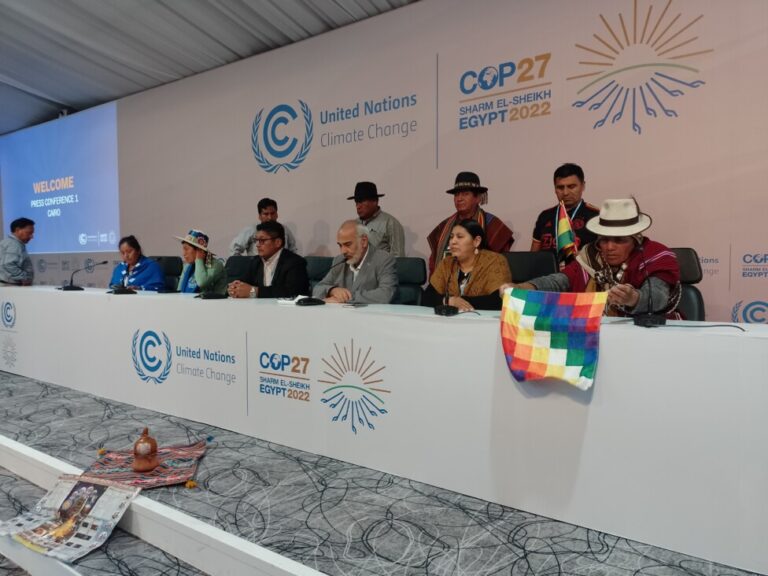
The Bolivian delegation in Sharm El Sheikh, which included officials as well as leaders of indigenous communities from the South American country, take part in a meeting with journalists at COP27 to demand more ambitious action. CREDIT: Daniel Gutman/IPS

The Bolivian delegation in Sharm El Sheikh, which included officials as well as leaders of indigenous communities from the South American country, take part in a meeting with journalists at COP27 to demand more ambitious action. CREDIT: Daniel Gutman/IPS

The priorities of the South

Developing countries, however, focused throughout the COP on the Loss and Damage Fund and other financing mechanisms to address the impacts of rising temperatures and mitigation actions.

“We need financing because we cannot deal with the environmental crisis alone. That is why we are asking that, in order to solve the problem they have caused, the rich nations take responsibility,” Diego Pacheco, head of the Bolivian delegation to Sharm El Sheikh, told IPS.

Environmental organizations, which showed their power in Egypt with the presence of thousands of activists, also lobbied throughout COP27 for greater commitments, including mitigation actions.

“This conference cannot be considered an implementation conference because there is no implementation without phasing out all fossil fuels,” the main cause of the climate crisis, said Zeina Khalil Hajj of the international environmental organization 350.org.

“Together for implementation” was precisely the slogan of COP27, calling for a shift from commitments to action.

“A text that does not stop fossil fuel expansion, that does not provide progress from the already weak Glasgow Pact (from COP26) makes a mockery of the millions of people living with the impacts of climate change,” said Khalil Hajj, head of global campaigning at 350.org.

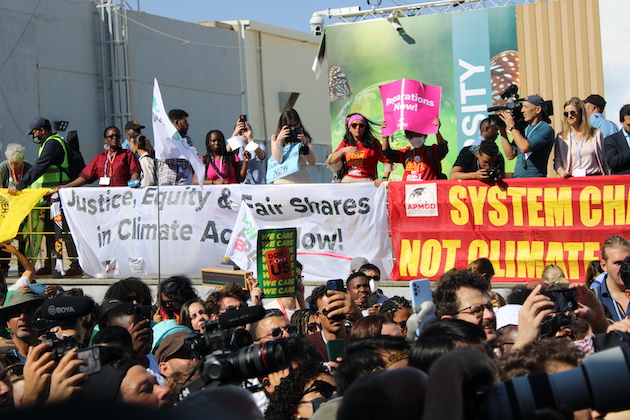
One of the demonstrations by climate activists at COP27 held in Egypt Nov. 6-20, demanding more ambitious climate action by governments, as well as greater justice and equity in tackling the climate crisis. CREDIT: Busani Bafana/IPS

One of the demonstrations by climate activists at COP27 held in Egypt Nov. 6-20, demanding more ambitious climate action by governments, as well as greater justice and equity in tackling the climate crisis. CREDIT: Busani Bafana/IPS

The crises that came together

Humanity – as recognized by the States Parties in the final document – is living through a dramatic time.

It faces a number of overlapping crises: food, energy, geopolitical, financial and economic, combined with more frequent natural disasters due to climate change. And developing nations are hit especially hard.

The demand for financing voiced by countries of the global South thus takes on greater relevance.

Cecilia Nicolini, Argentina’s climate change secretary, told IPS that it is the industrialized countries, because of their greater responsibility for climate change, that should finance developing countries, and lamented that “the problem is that the rules are made by the powerful.”

However, 80 percent of the money now being spent worldwide on climate change action is invested in the developed world, according to the Global Environment Facility (GEF), the world’s largest funder of climate action, which has contributed 121 billion dollars to 163 countries over the past 30 years, according to its own figures.

In this context, the issue of Loss and Damage goes one step further than adaptation to climate change, because it involves reparations for the specific impacts of climate change that have already occurred, such as destruction caused by droughts, floods or forest fires.

“Those who are bearing the burden of climate change are the most vulnerable households and communities. That is why the Loss and Damage Fund must be established without delay, with new funds coming from developed countries,” said Javier Canal Albán, Colombia’s vice minister of environmental land planning.

“It is a moral and climate justice imperative,” added Canal Albán, who spoke at a press conference on behalf of AILAC, a negotiating bloc that brings together several Latin American and Caribbean countries.

But the text of the outcome document itself acknowledges that there is a widening gap between what developing countries need and what they actually receive.

The financing needs of these countries for climate action until 2030 were estimated at 5.6 trillion dollars, but developed countries – as the document recognized – have not even fulfilled their commitment to provide 100 billion dollars per year, committed since 2009, at COP15 in Copenhagen, and ratified in 2015, at COP21 which adopted the Paris Agreement.

It was the absence of any reference to the need to accelerate the move away from oil and natural gas that frustrated several of the leaders at the COP. “We believe that if we don’t phase out fossil fuels there will be no Fund that can pay for the loss and damage caused by climate change,” Susana Muhamad, Colombia’s environment minister, who was at the two-week conference in Sharm El Sheikh held Nov. 6-20, told IPS.

“We have to put the victims first in order to make an orderly and just transition,” she said, expressing the sentiments of the governments and societies of the South at COP27.


Public Development Banks Can’t Drag Their Feet When It Comes to Building a Sustainable Future

Civil Society, Climate Action, COVID-19, Democracy, Development & Aid, Economy & Trade, Environment, Gender, Global, Headlines, Human Rights, Inequality, Sustainability, TerraViva United Nations

Opinion

Civil society organisations at the Finance in Common Summit. Credit: Noel Emmanuel Zako

ABIDJAN, Ivory Coast , Oct 21 2022 (IPS) – A coalition of civil society organisations is demanding public development banks (PDBs) to take radical and innovative steps to tackle human rights violations and environmental destruction. No project funded by PDBs should come at the expenses of vulnerable groups, the environment and collective liberties, but should instead embody the voices of communities, democratic values and environmental justice.


The demands, part of a collective statement signed by more than 50 civil society organisations, come as over 450 PDBs gather in Abidjan, Ivory Coast, from October 19th, for a third international summit, dubbed Finance in Common.

The COVID-19 pandemic and climate emergency, coupled with human rights violations and increasing risks for activists worldwide, is bringing the need to change current practices into even sharper focus. While public development banks may drag their feet on addressing intersecting and structural inequalities, civil society organisations are taking actions aimed at creating dignified livelihoods by embedding development with concrete affirmative measures towards climate, social, gender, and racial justice.

PDBs cannot be reluctant to act. They need to hit the target when it comes to supporting the transformation of economies and financial systems towards sustainability and addressing the most pressing needs of citizens worldwide – from food systems to increasing support for a just transition towards truly sustainable energy sources. PDBs must recognise that public services are the foundation of fair and just societies, rather than encouraging their privatisation and keep austerity narratives alive.

9 out of 10 people live in countries where civic freedoms are severely restricted, and with an environmental activist killed every two days on average over the past decade, development banks have an obligation to recognize and incorporate human rights in their plans and actions, following a “do not harm” duty.

Civil society organisations at the Finance in Common Summit. Credit: Noel Emmanuel Zako

Communities cannot be left out of the door. They need to be given the space to play the rightful role of driving forces in the answers to today’s global challenges, without them PDBs will move backwards rather than forward – and this means more environmental degradation, less democratic participation, and to put it bluntly an even greater crisis than the one we are facing today. And nobody needs that.

The recommendations in the collective civil society statement emerge from a three-year process of engagement and exchange, involving civil society networks in an effort to shape PDBs policies and projects. You can find some of their words and messages below.

As the call for accountability grows, the Finance in Common summits are an opportunity for PDBs to show moral leadership and help remedy the lack of long-term collaborations with civil society, communities and indigenous groups, threatening to curtail development narratives and practices.

Here’s the messages from civil society organisations from around the globe directed at public development banks.

Oluseyi Oyebisi, Executive Director of Nigeria Network of NGOs (NNNGO) the Nigerian national network of 3,700 NGOs said: “The Sahara and Sahel countries especially have been facing the most serious security crisis in their history linked with climate change, social justice and inequalities in the region. Marked by strong economic (lack of opportunities especially for young people), social (limitation of equitable access to basic social services) and climatic vulnerabilities, the region has some of the lowest human development indicators in the world – even before the covid pandemic. Access to affected populations is limited in some localities due to three main factors: the security situation, the poor state of infrastructures and difficult geographic conditions. PDBs must prioritise civil society organisations and Communities initiatives supporting state programs of decentralization, security sector reforms and reconciliation. This will help reduce the vulnerability of populations and prevent violent extremism.”

Mavalow Christelle Kalhoule, Forus Chair and President of Spong, the NGO network of Burkina Faso said: “Development projects shape our world; from the ways we navigate our cities to how rural landscapes are being transformed. Ultimately, they impact the ways we interact with one another, with plants and animals, with other countries and with the food on our plates. The decisions taken by public development banks are therefore existential. Such responsibility comes with an even greater one to include communities directly concerned by development projects, those whose air, water and everyday lives are affected for generations to come. For this to happen, public development banks must reinforce their long-term efforts to create dialogue with civil society organisations, social movements and indigenous communities in order to fortify the democratic principles of their work. We encourage them to listen, to ask and to cooperate in innovative ways so that development stays true to its original definition of progress and positive change; a collective, participative and fair process and a word which has a meaning not for a few, but for all.”

Tity Agbahey, Africa Regional Coordinator, Coalition for human rights in development said: “Many in civil society have expressed concerns about Finance in Common as a space run by elites, that fails to be truly inclusive. It is a space where the mainstream top-down approach to development, instead of being challenged, is further reinforced. Once again, the leaders of the public development banks gathered at this Summit will be taking decisions on key issues without listening to those most affected by their projects and the real development experts: local communities, human rights defenders, Indigenous Peoples, feminist groups, civil society. They will speak about “sustainability”, while ignoring the protests against austerity policies and rising debt. They will speak about “human rights”, while ignoring those denouncing human rights violations in the context of their projects. They will speak about “green and just transition”, while continuing to support projects that contribute to climate change.”

Comlan Julien AGBESSI, Regional Coordinator of the Network of National NGO Platforms of West Africa (REPAOC), a regional coalition of 15 national civil society platforms said: “Regardless of how they are perceived by the public authorities in the various countries, non-governmental organisations (NGOs) contribute to covering the aspects and spaces not reached or insufficiently reached by national development programmes. Despite the undeniable impact of their actions on the living conditions of populations, NGOs remain the poor cousins of donor funding, apart from the support of certain philanthropic or charitable organisations. In such a context of scarce funding opportunities, aggravated by the health crisis due to COVID-19 and the subsequent economic crisis, Pooled Finance, which is in fact a paradigm shift, appears to be a lifeline for CSOs. This is why REPAOC welcomes the commitments made by both the Public Development Banks and the Multilateral Development Banks to directly support CSO projects and programmes in the same way as they usually do with governments and the private sector. Through the partnership agreements that we hope and pray for between CSOs and banks, the latter can be assured that the actions that will be envisaged for the benefit of rural and urban communities will certainly reach them with the guarantees of accountability that their new CSO partners offer”.

Frank Vanaerschot, Director of Counter Balance, said: “As one of this year’s organisers of the Finance in Common Summit, the EIB will brag about the billions it invests in development. The truth is the bank will be pushing the EU’s own commercial interests and promoting the use of public money for development in the Global South to guarantee profits for private investors. Reducing inequalities will be second-place at best. The EIB is also co-hosting the summit despite systemic human rights violations in projects it finances from Nepal to Kenya. Instead, the EIB and other public banks should work to empower local communities by investing in the public services needed for human rights to be respected, such as publicly owned and governed healthcare and education – not on putting corporate profits above all else.”

Stephanie Amoako, Senior Policy Associate at Accountability Counsel said: “PDBs must be accountable to the communities impacted by their projects. All PDBs need to have an effective accountability mechanism to address concerns with projects and should commit to preventing and fully remediating any harm to communities”.

Jyotsna Mohan Singh, Regional Coordinator, Asia Development Alliance said: “PDBs should have a normative core; they should start with the rights framework. This means grounding all safeguards into all the various rights frameworks that already exist. There are rights instruments for indigenous people, the elderly, women, youth, and people living with disability. They are part and parcel of a whole host of both global conventions and regional conventions. Their approach should be grounded in those rights, then it will be on a very firm footing.

Asian governments need to support, implement, and apply strict environmental laws and regulations for all PDBs projects. The first step is to disseminate public information and conduct open and effective environmental impact assessments for all these projects, as well as strategic environmental assessments for infrastructure and cross-border projects.”

IPS UN Bureau

  Source

Developing Countries Battle Climate Change, While the Wealthy Make Frozen Pledges: Will COP27 Usher a New Era?

Biodiversity, Climate Action, Climate Change, Conferences, Environment, Featured, Global, Headlines, TerraViva United Nations

Climate Change

Climate change is predicted to put pressure on the Nile Valley and Delta, where about 95% of Egypt's population resides. Credit: Hisham Allam/IPS

Climate change is predicted to put pressure on the Nile Valley and Delta, where about 95% of Egypt’s population resides. Credit: Hisham Allam/IPS

Cairo, Oct 20 2022 (IPS) – The countdown to the UN Climate Summit COP27, which will take place in Sharm el-Sheikh, Egypt, from November 6 to November 18, has begun.

This summit has drawn the attention of world leaders, high-ranking United Nations officials, and thousands of environmental activists worldwide.


The COP27 summit is an annual gathering of 197 countries to discuss climate change and what each country is doing to limit the impact of human activity on the climate.

About 90 heads of state have confirmed their attendance at the COP27 in Sharm El-Sheikh, according to the special representative of the Egyptian presidency.

Amr Abdel-Aziz, Director of Mitigation at Egypt’s Ministry of Environment, noted that the central theme for COP27 is implementation.

“We hope to demonstrate what that looks like in terms of mitigation and adaptation. If the summit can address the topic of implementation in all of its discussions, it will be a sign of its success,” Abdel-Aziz said.

The primary objective of COP27 is to achieve positive results in terms of emissions reduction; on the agenda is also a discussion of financing losses and damage.

“We also intend to advance the agenda to double climate adaptation financing by 2025 and reach an agreement on the unfulfilled $100 billion financial pledge from developed countries,” Abdel-Aziz told IPS.

The overarching goal is to strike a balance between all parties’ interests. The mitigation program, for example, is primarily driven by developed countries and small island developing states, which are currently experiencing severe climate change impacts.

On the other hand, emerging markets are principally accountable for adjustments, losses, and damages.

“Our goal is to achieve a balanced result that meets all of these goals and objectives,” he continued

“We wanted to cover as much of Egypt’s total emissions as possible,” Abdel-Aziz explains, “So we focused on three sectors: energy, oil and gas, and transportation. We also chose the industries that are most likely to reduce emissions.”

Abdel-Aziz says he is optimistic about meeting the goals, especially in the transport sector, which could even exceed the goals as there has been significant progress including in the area of “transportation electrification and other forms of sustainable mobility.”

The summit’s top priorities are to achieve the Paris Agreement’s goals and progress in the fight against climate change. According to scientific research, limiting global warming to 1.5°C by 2030 requires cutting emissions in half.

“Climate finance must be available for this to occur,” COY 17 Programme Leader Hossam Imam told IPS.

COY17 is an annual event organized by YOUNGO, the Official Youth Constituency of the United Nations Framework Convention on Climate Change (UNFCCC). This year’s event will take place on the sidelines of the 27th Party Summit in Sharm El-Sheikh, Egypt (COP27).

Imam will collaborate with 1,500 young people from 140 countries to draft the youth statement, which will be delivered to the presidency of the Climate Summit and discussed by high-ranking officials.

“The impact of climate change on indigenous peoples and coastal city dwellers who face flooding is one of the most pressing issues to be addressed in COY 17,” Imam said.

Environmental activist Ahmed Fathy told IPS that the most significant obstacle to developing countries achieving their climate goals is a “lack of adequate and adequate financing from developed countries. And, despite years of neglect, adaptation financing remains a top priority for developing countries. Without it, developing countries cannot combat and mitigate the effects of climate change.”

The Nile Valley and Delta, where about 95% of Egypt’s population resides, make up only 4% of the country’s natural area. Climate change is predicted to put pressure on these areas, particularly the Nile, and the region could experience more frequent droughts.

“Egypt is also one of the few nations that actually struggle with water scarcity,” Fathy added.

“Since the world faces several economic issues in addition to the energy crisis, we expect that the conference will produce workable proposals,” said Fathy, the founder of the ‘Youth Love Egypt Association,’ involved in organizing the COY17 conference and the promotion of the COP27. “We expect the summit to produce a workable charter and to be COP for actions rather than COP for pledges.”

IPS UN Bureau Report


Doubts about Chile’s Green Hydrogen Boom

Biodiversity, Civil Society, Conservation, Development & Aid, Economy & Trade, Editors’ Choice, Energy, Environment, Featured, Green Economy, Headlines, Integration and Development Brazilian-style, Latin America & the Caribbean, Projects, Regional Categories, TerraViva United Nations

Energy

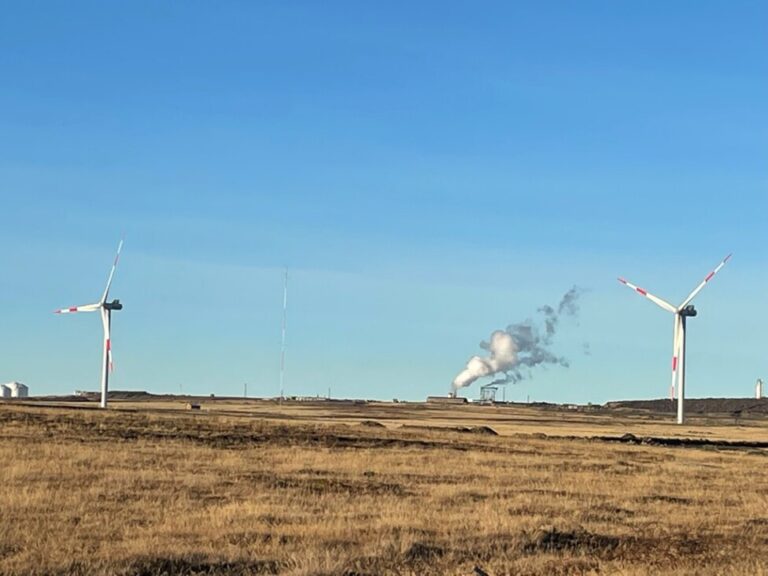
The administration of President Gabriel Boric, a self-described environmentalist, is facing a growing rift between scientists, social leaders and energy companies that have differences with regard to the production of green hydrogen in Magallanes. The first wind turbines have already been installed in the Magallanes region, in the far south of Chile, such as these in Laredo Bay, east of Cabo Negro, where companies are pushing green hydrogen projects in a scenario where environmental costs are beginning to take center stage. CREDIT: Courtesy of Erika Mutschke

The administration of President Gabriel Boric, a self-described environmentalist, is facing a growing rift between scientists, social leaders and energy companies that have differences with regard to the production of green hydrogen in Magallanes. The first wind turbines have already been installed in the Magallanes region, in the far south of Chile, such as these in Laredo Bay, east of Cabo Negro, where companies are pushing green hydrogen projects in a scenario where environmental costs are beginning to take center stage. CREDIT: Courtesy of Erika Mutschke

SANTIAGO, Oct 12 2022 (IPS) – In Magallanes, Chile’s southernmost region, doubts and questions are being raised about the environmental impact of turning this area into the world’s leading producer of green hydrogen.


The projects require thousands of wind turbines, several desalination plants, new ports, docks, roads and hundreds of technicians and workers, with major social, cultural, economic and even visual impacts.

“The scale of production creates uncertainties, heightened because there is no baseline. The question is whether Chile currently has the capacity to carry out large-scale green hydrogen projects.” — Jorge Gibbons

This long narrow South American country of 19.5 million people sandwiched between the Andes Mountains and the Pacific Ocean has enormous solar and wind energy potential in its Atacama Desert and southern pampas grasslands. This has led to a steady increase in electricity generation from clean and renewable sources.

In 2013, only six percent of the country’s total electricity generation came from non-conventional renewable sources (NCREs) – a proportion that climbed to 32 percent this year. Installed NCRE capacity in September reached 13,405 MW, representing 40.7 percent of the total. Of the NCREs, solar energy represents 23.5 percent and wind power 12.6 percent.

In Chile, NCREs are defined as wind, small hydropower plants )up to 20 MW), biomass, biogas, geothermal, solar and ocean energy.

According to the authorities, the wind potential of Magallanes could meet 13 percent of the world’s demand for green hydrogen, with a potential of 126 GW.

Green hydrogen is generated by low-emission renewable energies in the electrolysis of water (H2O) by breaking down the molecules into oxygen (O2) and hydrogen (H2). It currently accounts for less than one percent of the world’s energy.

However, it is projected as the energy source with the most promising future to advance towards the decarbonization of the economy and the replacement of hydrocarbons, due to its potential in electricity-intensive industries, such as steel and cement, or in air and maritime transportation.

The National Green Hydrogen Strategy, launched in November 2021 by the second government of then right-wing President Sebastián Piñera (2018-2022), seeks to increase carbon neutrality, decrease Chile’s dependence on oil and turn this country into an energy exporter.

The government of his successor, leftist President Gabriel Boric, in office since March, created an Interministerial Council of the Green Hydrogen Industry Development Committee, with the participation of eight cabinet ministers.

A spokesperson from the Ministry of Energy told IPS that “this committee has agreed to bring forward, from 2025 to 2022, the update of the National Green Hydrogen Strategy and the new schedule for the allocation of state-owned land for these projects.”

“We will promote green hydrogen in a cross-cutting manner, with an emphasis on harmonious, fair and balanced local development. By bringing forward the update of the strategy, we seek to generate certainty for investors and to begin to create the necessary regulatory framework for the growth of this industry in our country,” he said.

In the area known as Cabo Negro, in the Chilean region of Magallanes, several companies have installed wind turbines to generate wind energy. The installation of thousands of turbines will affect the landscape of Magallanes and environmentalists believe it will impact many birds that migrate annually to this southern region. CREDIT: Courtesy of Erika Mutschke

In the area known as Cabo Negro, in the Chilean region of Magallanes, several companies have installed wind turbines to generate wind energy. The installation of thousands of turbines will affect the landscape of Magallanes and environmentalists believe it will impact many birds that migrate annually to this southern region. CREDIT: Courtesy of Erika Mutschke

Warnings from environmentalists

In a letter to the president, more than 80 environmentalists warned of the risk of turning “Magallanes y La Antarctica Chilena” – the region’s official name – into an environmental sacrifice zone for the development of green hydrogen.

“The energy transition cannot mean the sacrifice of migratory routes of birds that are in danger of extinction, otherwise it would not be a fair or sustainable transition,” said the letter, which has not yet received a formal response.

Environmentalists argue that the impact is not restricted to birds, but also affects whales that breed there, due to the effects of desalination plants, large ports and harbors.

Carmen Espoz, dean of science at the Santo Tomás University, who signed the letter, told IPS that “the main warning that we have tried to raise with the government, and with some of the companies with which we have spoken, is that there is a need for zoning or land-use planning, which does not exist to date, and for independent, quality baseline information for decision-making” on the issue.

Espoz, who also heads the Bahía Lomas Center in Magallanes, based in Punta Arenas, the regional capital, clarified that they are not opposed to the production of green hydrogen but demand that it be done right.

It is urgently necessary, she said in an interview in Santiago, to “stop making decisions at the central level without consultation or real participation of the local communities and to generate the necessary technical information base.”

The signatories asked Boric to create a Regional Land Use Plan with Strategic Environmental Assessment to avoid unregulated development of projects.

“We are not only talking about birds, but also about profound social, cultural and environmental impacts,” said Espoz, who argued that the model promoted by the government and green hydrogen developers “does not have a social license to implement it.”

Sunset at Laredo Bay in the Magallanes region where the Chilean government will have to decide on what changes in the grasslands are acceptable, in the face of a flood of requests to use the area for largescale green hydrogen projects. CREDIT: Courtesy of Erika Mutschke

Sunset at Laredo Bay in the Magallanes region where the Chilean government will have to decide on what changes in the grasslands are acceptable, in the face of a flood of requests to use the area for largescale green hydrogen projects. CREDIT: Courtesy of Erika Mutschke

The bird question

Prior to this letter to Boric, the international scientific journal Science published a study by Chilean scientists warning about potential impacts of wind turbines on the 40 to 60 species of migratory birds that visit Magallanes.

“It is estimated that the installation of wind turbines along the migratory paths of birds could affect migratory shorebird populations, which is especially critical in the cases of the Red Knot (Calidris canutus rufa) and the Magellanic Plover (Pluvianellus socialis),” said Espoz.

Both species, she said, “are endangered, as is the Ruddy-headed Goose (Chloephaga rubidiceps).”

She added that if 13 percent of the world’s green hydrogen is to be generated in southern Chile, some 2,900 wind turbines will have to be installed by 2027, “which could cause between 1,740 and 5,220 collisions with bird per year.”

Jorge Gibbons, a marine biologist at the University of Magallanes, based in Punta Arenas, said the big problem is that Magallanes does not have a baseline for environmental issues.

“The scale of production creates uncertainties, heightened because there is no baseline. The question is whether Chile currently has the capacity to carry out large-scale green hydrogen projects,” he told IPS from the capital of Magallanes.

Gibbons believes it would take about two years to update the data on the dolphin and Southern Right Whale (Eubalaena australis) populations

“The greatest risks to dolphins will be seen in the Strait of Magellan. I am talking about Commerson’s Dolphins (Cephalorhynchus commersonii), which are only found there in Chile and whose population is relatively small,” he said.

He proposed studying the route to ports and harbors of these species and to analyze how they breed and feed.

“The issue is how noise disturbs them or interrupts their routes. These questions are still unanswered, but we know some things because it is the best censused species in Chile,” he explained.

According to Gibbons, the letter to Boric is timely and will help reduce uncertainty because “the process is just beginning and the scientific and local community are now wondering if the plan will be well done.”

Conflict of interests

The partnership between HIF Chile and Enel Green Power Chile withdrew from the Environmental Evaluation System the study of the Faro del Sur Wind Farm project, involving an investment of 500 million dollars for the installation of 65 three-blade wind turbines on 3,791 hectares of land in Magallanes.

The study was presented in early August with the announcement that it was “a decisive step for the future of green hydrogen-based eFuels.”

But on Oct. 6, its withdrawal was announced after a series of observations were issued by the Magallanes regional Secretariat of the Environment.

“The observations of some public bodies in the evaluation process of this wind farm exceed the usual standards,” the consortium formed by the Chilean company HIF and the subsidiary of the Italian transnational Enel claimed in a statement.

The companies argued that “the authorities must provide clear guidelines to the companies on the expectations for regional development, safeguarding the communities and the environment.

“In light of these exceptional requirements, it is necessary to understand which requirements can be incorporated and which definitely make projects of this type unfeasible in the region,” they complained.

The government reacted by stating that it is important to remember that Faro del Sur is the first green hydrogen project submitted to the environmental assessment process in Magallanes.

“During the process, some evaluating entities made observations on the project, so the owners decided to withdraw it early, which does not prevent them from reintroducing it when they deem it convenient,” the Ministry of Energy spokesperson told IPS.

He added that the ministry stresses “the conviction to develop the green hydrogen industry in the country and that this means sending out signals, but in no case should this compromise environmental standards and citizen participation in the evaluation processes.”

  Source