We’re embracing the festive spirit this summer, and from 4 to 19 December 2025, you can win some of the best experiences in Cape Town.
Day 4: Win a shark cage diving and viewing encounter for 2 people to the value of R6710, courtesy of Marine Dynamics.
Marine Dynamics, an award-winning ecotourism and marine company, offers captivating shark cage diving experiences and marine Big 5 tours, all while remaining committed to preserving the marine environment and providing unforgettable marine experiences.
You and a loved one can come face-to-face with the ocean’s apex predators on a thrilling shark cage diving experience in Gansbaai, located around 2 and a half hours from Cape Town.
The competition ends on 9 December 2025, at 23:59 pm SAST. The winner will be announced the next day, at 9am.
To enter, complete and submit the online entry form below.
Terms and Conditions:
This prize is not transferable and may not be sold, exchanged for cash, or used as part of any commercial promotion.
The prize is valid for two people for a Shark Cage Diving experience with Marine Dynamics in Gansbaai.
Transport to and from Gansbaai is not included in this prize.
A conservation fee applies per person and must be paid on the day of the tour.
Bookings are essential and subject to availability. The exact meeting/pick-up time can only be confirmed the day before the trip.
The prize is weather-dependent. In the event that the trip is cancelled due to weather, it will be rescheduled within the voucher’s validity period.
The voucher is valid until 30 November 2026.
The prize cannot be redeemed by unaccompanied minors. Children under 12 must be accompanied by an adult.
Should the guest choose not to enter the cage, no alternative or compensation will be provided.
Find Marine Dynamics standard terms and conditions and safety protocols here.
In addition to the above, please view our T’s and C’s here.
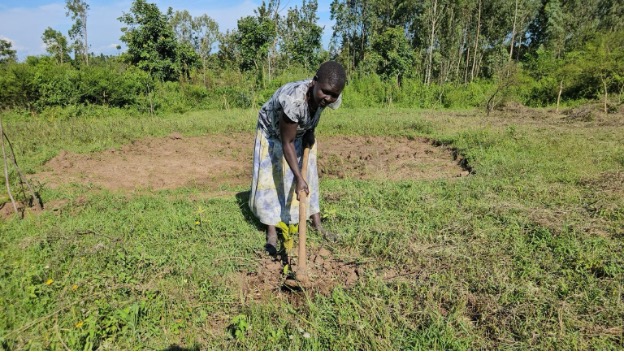
Caroline Awuor tends to tree seedlings on her farm in Siaya County, Western Kenya. She is a beneficiary of the My Farm Trees Project. Credit: Jackson Okata/IPS
SIAYA, Kenya , Dec 8 2025 (IPS) – For years, Morris Onyango had been trying to reforest his degraded land on the shores of River Nzoia, in Siaya county, 430 kilometers from Kenya’s Capital, Nairobi. But every time he planted trees on his farm, his efforts bore little fruit, as floodwaters would not only wash away his tree seedlings but also fertile topsoil on his land.
“The land became unproductive and bare. I tried reclaiming the land through reforestation, but the trees’ survival rate was too low,” Onyango said.
Siaya County has a 5.23 percent forest cover and is ranked 44th out of Kenya’s 47 counties. Judy Ogeche, a scientist from the Kenya Forestry Research Institute (KEFRI), says that the compromised forest and tree cover in the county and the lack of any gazetted forests have discouraged the integration of tree and crop farming.
“Communities here do not see tree growing as a lucrative venture. Some myths and beliefs discourage tree growing. For example, some people believe that growing the Terminalia mentalis (often known as the Panga Uzazi) tree attracts death,” says Ogeche.
According to Ogeche, another challenge is gender inequality in land ownership, with men owning most available land and making decisions on what should be planted.
“We have many women interested in restoring tree cover, but their husbands would not allow it,” Ogeche said.
Across Africa, reforestation projects struggle to survive beyond the seedling stage. However, in parts of Kenya, a groundbreaking digital innovation is transforming the landscape by empowering rural farmers to earn a living while restoring degraded lands with native trees.
Tech and Reforestation
In a bid to restore lost biodiversity and enhance tree cover in Kenya, Alliance Bioversity International and CIAT, in partnership with the International Union for Conservation of Nature (IUCN), launched the My Farm Trees project, a blockchain-based platform that offers guidance to subsistence farmers on seed selection, planting, and post-plant care, ensuring that seedlings survive and thrive in harsh conditions.
Implemented in the counties of Siaya, Turkana and Laikipia, MFT emphasizes genetically robust native species that support biodiversity, improve soil health, and provide long-term ecological and economic benefits.
Ogeche observes that the My Farm Trees project has motivated communities in Siaya to grow trees.
“They are given free seedlings and taught how to plant and take care of them, and when the trees grow, they are paid,” she said.
To provide the right seedlings, the project is partnering with the Kenya Forestry Research Institute (KEFRI), the Kenya Forest Services (KFS) and private tree nursery operators in the respective counties.
For farmers like Onyango, the My Farm Trees Project gave them the much-needed solution to their degraded lands and soils
“The project gifted me 175 seedlings of various trees, which I planted along the riverbank. The trees have helped me reclaim my land, prevent erosion and get paid for taking care of my own trees,” Onyango says.
How it Works
In the My Farm Trees project, participating farmers are registered on the MyGeo Farm App, which allows them to monitor seedlings from planting to growing. Through the app, farmers can track and report progress.
Francis Oduor, the National Project Coordinator, says since its rollout, the project has seen over 1,300 farmers registered on the MyGeo Tree App, and over 100,000 seedlings have been planted across the three counties.
“The project is especially interested in using indigenous trees for landscape restoration, which are native to specific areas, and to enhance genetic diversity,” says Oduor.
Oduor explains that My Farm Trees uses monitoring, verification, and incentives to empower local communities to become leaders and stewards of tree-planting projects that provide immediate short-term benefits.
“The project does not just focus on payment to farmers but the long-term benefits of restored landscapes for improved agricultural productivity, water regulation, and climate resilience,” said Oduor.
To ensure the use of native varieties and guarantee the production of quality tree seedlings, the project team collaborates with KEFRI to provide technical assistance to local tree nursery operators.
Lawrence Ogoda, a tree nursery operator, is among the project beneficiaries. He has been trained on seed collection, raising seedlings and record keeping.
“Through the MyGeo Tree and MyGeo Nursery Apps, I can collect data and track progress on seed collection, propagation and development at the nurseries.”
Before joining the My Farm Trees project, Caroline Awuor had not given much attention to growing trees. She received 110 seedlings, 104 of which have successfully survived and are earning her cash incentives.
“Most of them are fruit trees, including mangoes, avocado and jackfruit, while there are also some timber trees. In addition to the incentives from the project, I also earn money by selling the fruit,” she says.
Caroline intends to plant an additional 1,000 tree seedlings on her land, strategically located near the River Nzoia.
According to Joshua Schneck, the Green Climate Fund (GCF) Portfolio Manager for Global Programs at IUCN, My Farm Trees is an innovative project driven towards sustainable transformation.
The Impact
In Kenya, My Farm Tree has supported 3,404 farmers, 56 percent of whom are women. A total of 210,520 trees have been planted, with a survival rate of over 60 percent beyond the first year, with 1,250 hectares of land being restored across Siaya, Turkana, and Laikipia counties.
The program has released KES 26 million (approximately USD 200,000) in digital payments, directly benefiting 1,517 farmers. Additionally, 13 local nurseries have been strengthened in partnership with the Kenya Forestry Research Institute.
Also implemented in Cameroon, the project has seen the restoration of 1,403 hectares of forest land with over 145,000 seedlings being planted and 2,200 farmers registered on the platform. The project has also seen the restoration of 423 community lands and 315 sacred forests, with USD 130,000 in incentives distributed to farmers.
Oduor noted that the My Farm Trees project offers a scalable blueprint for forest restoration by combining science and Blockchain technology in tree selection, post-planting support, and farmer incentives, which gives it global relevance.
“MFT is a scalable model that aligns with climate action, poverty reduction, and ecosystem recovery. This approach supports the goals of the Paris Agreement, the United Nations Convention to Combat Desertification, and the UN Decade on Ecosystem Restoration,” Oduor said. IPS UN Bureau Report
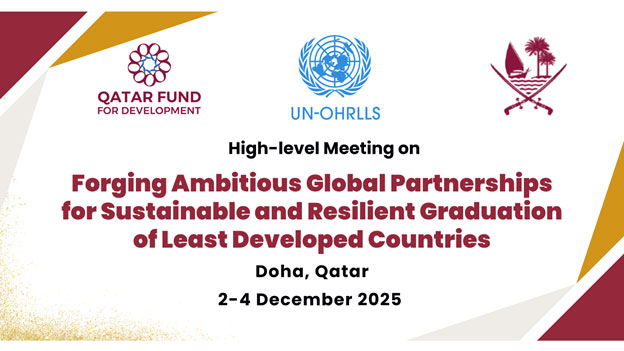
UNITED NATIONS, Dec 1 2025 (IPS) – As we gather in Doha for the High-Level Meeting on “Forging Ambitious Global Partnerships for Sustainable and Resilient Graduation of Least Developed Countries,” the stakes could not be higher. A record number of fourteen countries-equally divided between Asia and Africa are now on graduation track. Graduation from the Least Developed Country (LDC) category is a landmark national achievement—a recognition of hard-won gains in income, human development, and resilience. Yet, for too many countries, this milestone comes with new vulnerabilities that risk undermining the very gains that enabled graduation.
Since the establishment of the LDC category in 1971, only eight countries have graduated. Today, 44 countries remain in the group, representing 14% of the world’s population, but contributing less than 1.3% to global GDP. The Doha Programme of Action (DPoA) charts an ambitious yet achievable target: enabling at least 15 additional countries to graduate by 2031. But as the DPoA underscores graduation must be sustainable, resilient and irreversible. It must serve as a springboard for transformation— not a moment of exposure to new risks.
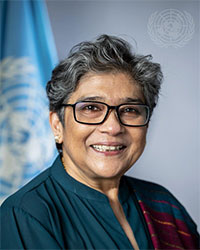
USG Rabab Fatima
Graduation with momentum: Graduation often coincides with a significant shift in the international support landscape. As preferential trade arrangements, concessional financing, and dedicated technical assistance begin to phase down, countries may face heightened fiscal pressures, reduced competitiveness, and increased exposure to external shocks. Without well-sequenced and forward-looking transition planning, these shifts can slow progress toward the Sustainable Development Goals (SDGs) and strain national systems.
Yet within these challenges also lie opportunities. With the right policies, partnerships, and incentives, graduation can catalyse deeper structural transformation, expand access to new financing windows, strengthen institutions, and unlock pathways to diversified, resilient, and inclusive growth. The task before us is to manage risks while harnessing these opportunities—ensuring that no country graduates without momentum.
Smooth Transition Strategies: A National Imperative The DPoA calls for every graduating country to develop inclusive, nationally owned Smooth Transition Strategies (STS) well-ahead of the graduation date. These strategies must be fully integrated into national development plans and SDG frameworks, ensuring coherence and resilience. They should prioritize diversification, human capital investment, and adaptive governance, while placing women, youth, and local actors at the center of design and oversight. STS must be living documents—flexible, participatory, and backed by robust monitoring and financing.
Reinvigorated Global Partnerships: The essential Pillar No country can navigate this transition alone. The Doha Programme of Action calls for an incentive-based international support structure that extends beyond graduation. For LDCs with high utilization of trade preferences – the withdrawal of preferential market access must be carefully sequenced to avoid abrupt disruptions. For climate-vulnerable SIDS and LLDCs, enhanced access to climate finance, debt solutions, and resilience support are key elements in their efforts to tackle post-graduation challenges.
Deepened South-South and triangular cooperation, innovative financing instruments, blended finance, and strengthened private-sector engagement will be essential to building productive capacities and unlocking opportunities in digital transformation, green and blue economies, and regional market integration.
iGRAD: A Transformative Tool The operationalization of the Sustainable Graduation Support Facility—iGRAD—is a concrete step forward. By providing tailored advisory services, capacity-building, and peer learning, iGRAD can serve as a critical tool to help countries anticipate risks, manage transitions, and sustain development momentum. Its success, however, hinges on strong political support and adequate, predictable resourcing from development partners.
Graduation as a Catalyst for Transformation Graduation should not be the end of the story—it should be the beginning of a new chapter of resilience and opportunity. With integrated national strategies and reinvigorated global partnerships, we can turn graduation into a catalyst for inclusive, sustainable development. Let us seize this moment in Doha to reaffirm our collective commitment: no country should graduate into vulnerability. Together, we can ensure that graduation delivers on its promise—for communities, for economies, and for future generations.
Rabab Fatima is UN Under Secretary General and High Representative for the Least Developed Countries, Landlocked Developing Countries and Small Island Developing States
Regional leaders say the outcome of the ‘mixed bag’ climate talks once again overlooks the real and mounting threats faced by Caribbean countries.
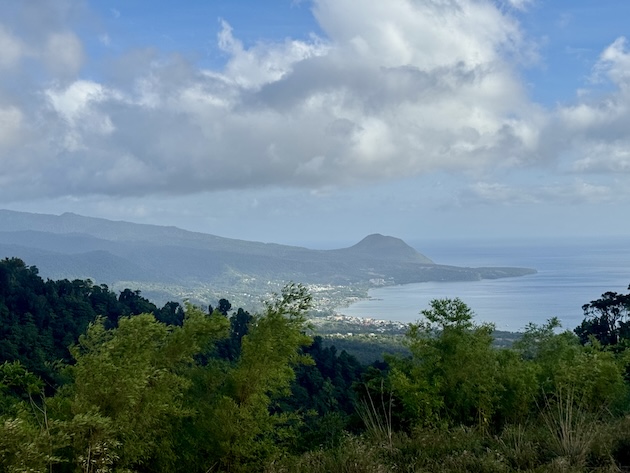
A coastal community in the Eastern Caribbean. Small island states say their extreme climate vulnerability is still not reflected in global finance decisions made at COP30. Credit: Alison Kentish/IPS
CASTRIES, St Lucia, Dec 1 2025 (IPS) – Caribbean small island states say this year’s UN climate conference has once again failed to deliver the urgency and ambition needed to tackle escalating climate devastation across the region. From slow-moving climate finance to frustrating political gridlock, leaders say COP30 did not reflect the realities that small islands are living through every day.
Jamaica is recovering from Hurricane Melissa, which left over 30 percent of the country’s GDP in losses and billions of dollars in damage. While the country has been able to respond rapidly thanks to a suite of innovative developmental finance tools, including a USD 150 million catastrophe bond, parametric insurance and a disaster savings fund, its Minister for Water, Environment and Climate Change, Matthew Samuda, warns that the vast majority of Caribbean islands do not have similar mechanisms.
Speaking at a press conference organized by Island Innovation and themed “Islands, the Climate Finance Gap, and COP30 Reflections,” Samuda said this is precisely why global negotiations must center the lived experiences of SIDS.
“I think I perhaps may be a little more disappointed than I am usually at the end of a COP because seeing what Jamaica is going through, seeing what Vietnam is going through, seeing extreme weather events pop up all around the world over the last 10 days, you would think that the urgency and the facts staring us in the face would have brought about greater ambition,” he said, adding that “unfortunately, the global geopolitical landscape didn’t allow for us to go much further.”
A Struggle Just to be Heard?
For many small islands and territories, simply participating meaningfully at COP30 was an uphill battle. The British Virgin Islands, like other Caribbean territories, had to rely on partners, including the Organisation of Eastern Caribbean States and the Caribbean Community Climate Change Centre for accreditation and access to the negotiations.
“We try to split up and cover as much as we can,” said Dr. Ronald Berkeley, Permanent Secretary in the Ministry of Environment, Natural Resources and Climate Change. “Our reliance on partners shows how limited our reach still is.”
Berkeley said that despite the Caribbean’s visible and worsening climate impacts, it remains difficult to get major emitters to understand the region’s urgency.
“For small islands, this is real. I’m not sure a lot of the big players believe us,” he said. “Until you live through being almost blown to smithereens by a Category Five hurricane, you will never understand.”
The BVI recently established its own climate trust fund, currently funded with about US$5.5 million, to address some financing shortfalls, but Berkeley emphasized that this cannot make up for reliable, large-scale climate funding.
Barriers to Pledges
Caribbean officials are echoing the same concern—that climate finance exists on paper but rarely reaches small, vulnerable nations at the speed or scale required.
“At COP there were positive commitments, about US$1.3 trillion annually by 2035 for climate action, the tripling of adaptation finance and operationalizing the Loss and Damage Fund,” said Dr. Mohammad Rafik Nagdee, Executive Director of the Caribbean Centre for Renewable Energy and Energy Efficiency (CCREEE).
“But the elephant in the room is the global finance gap,” he said. “Even where access exists, it’s not accessible at the speed the climate crisis demands. Processes are lengthy, requirements heavy and small governments simply don’t have the technical capacity.”
Nagdee said the region needs “greater predictability, simpler pathways and finance that is actually ready to disburse.”
Living Through it—Not Debating it
For Jamaica, which is emerging from one of the most devastating storms in its history, the mismatch between climate impacts and climate action is glaring.
“In the past four years, Jamaica has had its hottest day on record, its wettest day on record, its worst droughts, two tropical storms, a Category 4 hurricane and now what could be classified as a Category 6,” Samuda said. “That’s climate change in reality. That’s not an academic debate for us.”
Caribbean leaders widely described COP30 as a ‘mixed bag,’ with negotiations with incremental progress overshadowed by inadequate urgency.
“We cannot talk about building back better if the resources arrive slowly,” Nagdee said.
For small island states living on the frontlines of warming seas, rising temperatures and record-breaking storms, the message from COP30 is clear and becoming all-too familiar—that climate change is accelerating and the price of delay is already being paid.
This feature is published with the support of Open Society Foundations.
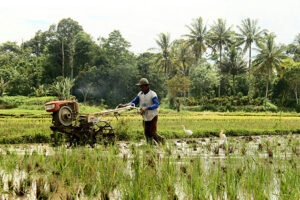
Local farmer ploughing a field in Indonesia. Credit: Unsplash
RIO DE JANEIRO, Brazil, Nov 26 2025 (IPS) – The UN climate talks at COP30 once again brought the critical issue of climate finance to the forefront of global discussions.
However, while much of the debate revolved around traditional forms of aid directed at developing countries most vulnerable to the impacts of climate change, a faster, more transformative approach lies in expanding access to carbon markets.
When emerging and developing economies (EMDEs) are equipped with the tools and knowledge needed to engage in these markets on their own terms, carbon finance can be generated and harnessed in ways that reflect their unique natural assets, governance, social contexts, and national priorities.
Achieving global climate and sustainable development goals depends on ensuring that those worst affected by climate change can fully participate in and benefit from this growing flow of finance.
EMDEs are on the frontlines of climate change — from rising sea levels threatening Pacific island nations to intensifying droughts and fires in the Amazon and Horn of Africa, and increasingly intense and frequent hurricanes in the Caribbean. These crises often hit hardest in regions that have contributed least to global emissions and in the most difficult position to react to them.
Yet, these same nations face a climate finance shortfall of $1.3 trillion per year. Carbon markets present an opportunity for these countries to bridge this gap by turning their natural advantages into climate finance assets.
Despite successful initiatives aimed at bolstering both high-integrity supply and demand for carbon credits, significant barriers to access persist, particularly for EMDEs. From fragmented policy landscapes to weak governance structures, limited institutional capacity, and low investor confidence, various obstacles prevent the vast potential of EMDEs to engage fully.
The Access Strategies Program — led by the Voluntary Carbon Markets Integrity Initiative — is a direct response to these challenges. It helps governments design and implement their own pathways into high-integrity carbon markets, enabling them to build the policies, institutional capacity, and investor confidence needed to meet their climate finance needs and transform their potential into progress.
Each country’s natural capital — from Brazil’s vast rainforest and agricultural landscapes, to the Caribbean’s blue carbon ecosystems, or Kenya’s grasslands and renewable energy potential — represents a unique competitive advantage, ready to be realised.
Simultaneously, no two countries share the same development goals or governance contexts. In some, carbon markets can drive forest conservation and biodiversity protection; while in others, they deliver the most impact by strengthening rural livelihoods or financing clean energy transitions.
The Access Strategies model recognises this uniqueness, tailoring its support to help countries use carbon finance in ways that align with their own specific economic and environmental strategies and goals.
For example, the Partnership for Agricultural Carbon (PAC) — developed with the Inter-American Institute for Cooperation on Agriculture (IICA) — is building capacity across Latin American and Caribbean agriculture ministries to participate in high-integrity carbon markets. It provides training, policy guidance, and decision-making tools that help governments and farmers identify viable carbon projects aligning with national agricultural and sustainability goals.
The collaboration has given small and medium producers a clearer route to investment, while positioning agriculture as a central player in regional climate strategies. Another example of the Access Strategies work is the recently launched Amazon Best Practices Guide, which will help Amazon state governments design and implement carbon market frameworks made specifically for their unique ecological and governance realities.
Moreover, in countries such as Kenya, Peru, and Benin, the Program has provided tailored support to develop policy and regulatory frameworks, strengthen institutional capacity, and attract responsible investment for high-priority climate mitigation projects — all in line with country-led goals.
These examples show what’s possible when governments have the tools and expertise to engage in high-integrity carbon markets on their own terms. More countries should seize this opportunity to tap into the growing flow of finance from carbon markets.
While carbon markets are not a silver bullet, they are one of the few scalable and self-sustaining tools available when grounded in integrity and tailored to each country’s needs.
Programs like Access Strategies do more than transfer technical knowledge — they build the enabling conditions for locally led action, drawing on countries’ unique ecological, social, and institutional insights to shape solutions that work in practice.
The focus of global climate action should not only be on new funding pledges, but on ensuring funding that is already available is effectively redirected for EMDEs countries to harness their own natural capital and promote social inclusion, while meeting their climate goals and reshaping their development pathway.
Building this kind of capacity is how we turn global ambition into lasting, locally owned progress, and moreover how carbon finance can become a true instrument of sustainable development.
Ana Carolina Avzaradel Szklo, Technical Director, Markets and Standards, Voluntary Carbon Markets Integrity Initiative (VCMI)
VICTORIA, Seychelles, Nov 25 2025 (IPS) – When the world gathered in Glasgow for COP26, the mantra was “building back better.” Two years later, in Sharm El Sheikh, COP27 promised “implementation.”
This year, in Belém, Brazil, COP30 arrived with a heavier burden: to finally bridge the chasm between lofty rhetoric and the urgent, measurable steps needed to keep 1.5 °C alive.
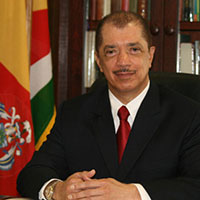
James Alix Michel
What Was Expected of COP30 were modest yet critical. After the disappointments of Copenhagen (2009) and the optimism sparked by Paris (2015), developing nations, small island states, Indigenous groups and a swelling youth movement demanded three things:
1. Binding phase out timelines for coal, oil and gas. 2. A fully funded Loss and Damage Facility to compensate vulnerable countries already suffering climate impacts. 3. Scaled up adaptation finance—tripling the $120 billion a year pledge and ensuring it reaches the frontline communities that need it most.
However the negotiations evolved into a tug of war between ambition and inertia. Wealthier nations, still reeling from economic shocks, offered incremental increases in adaptation funding and a new Tropical Forests Forever Facility (TFFF) worth $125 billion, with 20 percent earmarked for Indigenous stewardship. The Global Implementation Accelerator—a two year bridge to align Nationally Determined Contributions (NDCs) with 1.5 °C—was launched, alongside a Just Transition Mechanism to share technology and financing.
However, the text on fossil fuel phase out remained voluntary; the Loss and Damage Fund was referenced but not capitalised; and the $120 billion adaptation pledge fell short of the $310 billion annual need.
But there were Voices That Could Not Be Ignored.
Developing Nations (the G77+China) reminded the plenary that climate justice is not a charity—it is a legal obligation under the UNFCCC. They demanded that historic emitters honor their “common but differentiated responsibilities.”
Island States(AOSIS) warned that sea level rise is no longer a future scenario; it is eroding coastlines and displacing entire cultures. Their plea: “1.5 °C is our survival, not a bargaining chip.”
Indigenous Peoples highlighted the destruction of Amazon and Boreal forests, urging that 30 percent of all climate finance flow directly to communities that protect 80 percent of biodiversity.
Youth — The Gen Z generation, marched outside the venue, chanting “We will not be diluted” demanding binding commitments and accountability mechanisms.
The Legacy of Copenhagen, Paris, and the Empty COPs –
I attended COP15 in Copenhagen (2009), where the “Danish draft” was rejected, and the summit collapsed amid accusations of exclusion. The disappointment lingered until Paris (2015), where the 1.5 °C aspiration was enshrined, sparking hope that multilateralism could still work. Since then, COPs have been a carousel of promises: the Green Climate Fund fell $20 billion short; the 2022 Glasgow Climate Pact promised “phasing out coal” but left loopholes. Each iteration has chipped away at trust.
COP30 was billed as the moment to reverse that trend.
And the result? Partial progress, but far from the transformational shift required.
Did We Achieve What We Hoped For?
In blunt terms: No. The pledges secured are insufficient to limit warming to 1.5 °C, and critical gaps—binding fossil fuel timelines, robust loss and damage funding, and true equity in finance—remain unfilled.
Yet, there are glimmers. The tripling of adaptation finance, the first concrete allocation for Indigenous led forest protection, and the creation of an Implementation Accelerator signal that the architecture for change exists. The challenge now is to fill it with real money and accountability.
Let us look at ‘What Must Happen Next’
1. Full Capitalisation of Loss and Damage Fund – G20 nations must commit 0.1 % of GDP and disburse within 12 months. 2. Binding Fossil Fuel Phase out – Coal, oil and gas with just transition financing for workers. 3. Scale Adaptation Finance to $310 billion/yr – Re channel subsidies from fossil fuels to resilience projects. 4. Direct Funding for Indigenous and Youth Initiatives – Allocate 30 % of climate finance to community led stewardship. 5. Strengthen Accountability – Mandate annual NDC updates with independent verification and penalties for non compliance.
But for all this to become reality there must be a determined effort to achieve Future Actions. We have watched promises fade after every COP, yet the physics of climate change remains unforgiving. The urgency is not new; the window to act is shrinking. But hope endures – in the solar panels lighting remote villages, in mangroves being restored to buffer storms, in the relentless energy of young activists demanding a livable planet.
Humanity has the knowledge, technology, and resources. What we need now is the collective political will to use them. Let COP30 be remembered not as another empty summit, but as the turning point where the world chose survival over complacency.
The future is not written; we write it with every decision we make today.
James Alix Michel, Former President Republic of Seychelles, Member Club de Madrid.