Education Cannot Wait Executive Director Yasmine Sherif Statement on the 7-Year Anniversary of the Rohingya Crisis
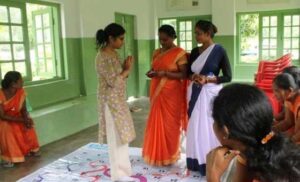
A Rohingya refugee, Jannat is back in school and dreams of being a doctor. Credit: Save The Children Bangladesh/Rubina Hoque Alee
NEW YORK, Aug 26 2024 – Seven years ago, a brutal campaign of violence, rape and terror against the Rohingya people ignited in Myanmar’s Rakhine State. Villages were burned to the ground, families were murdered, massive human rights violations were reported, and around 700,000 people – half of them children – fled their homes to seek refuge in Bangladesh.
Today, Bangladesh’s Cox’s Bazar hosts the largest refugee camp in the world with close to a million children, women and men living in makeshift settlements. The crisis is an abomination for humanity. And while the Government of Bangladesh and other strategic partners are supporting the response, the resources are severely strained and access to essential services is scarce.
As the global fund for education in emergencies and protracted crises within the United Nations, Education Cannot Wait (ECW), along with its strategic donor partners, government, UN agencies and civil society, has supported holistic education opportunities for both Rohingya and host community children in Bangladesh since November 2017. The more than US$50 million in funding, delivered through a consortium of partners – including government counterparts, PLAN International, Save the Children, UNESCO, UNHCR, UNICEF and other local partners – has reached over 325,000 girls and boys with quality education. Over the years, the programmes have provided learning materials for close to 190,000 children, financial support to over 1,700 teachers, and rehabilitated over 1,400 classrooms and temporary learning spaces.
In response to the COVID-19 pandemic, fires in the refugee camp and other pressing emergencies, the programming in Bangladesh was quickly adapted, and over 100,000 girls and boys were able to take part in remote education programmes during the height of the pandemic.
For refugee girls like Jannat, these investments mean nutritious school meals, integrated learning opportunities, catch-up classes, and security and solace in a world gone mad.
We must not forget Jannat and the hundreds of thousands of Rohingya girls like her that only yearn to learn in safety and freedom. Our investment in their education is an investment in peace, enlightenment and security across the region. Above all, it is an investment in the Rohingya people’s rights and other persecuted groups that face human rights abuses and attacks the world over.
Despite strong support from donors – as shown in this powerful joint statement by Japan, Norway, Sweden, Switzerland and the United States following their visit to the refugee camps in Cox’s Bazar in May of this year – the Rohingya crisis is fast-becoming a forgotten crisis.
The Rohingya Humanitarian Crisis Joint Response Plan 2024 calls for a total of US$852 million in funding, including US$68 million for education. To date, only US$287 million has been mobilized toward the plan. More concerning still, only 12.8% has been mobilized towards the education response, according to OCHA’s Financial Tracking Service. What we need to realize is that our investments in education are investments in health, food security and skills development. Taken together with other actions, it forms a cornerstone upon which all the other Sustainable Development Goals can be achieved.
As we commemorate seven years of persecution and attack, we must demand that perpetrators are held accountable for human rights violations, we must establish conditions conducive for a safe return of the Rohingya to their native lands, and we must enforce the rule of law and expect humanity for the people whose lives have been ripped apart by this brutal crisis.
Join ECW and our partners in urgently mobilizing additional resources to provide Rohingya girls and boys – and other children caught in emergencies and protracted crises worldwide – with the promise of a quality education. They deserve no less.
Jul 18 2024 (IPS) – CIVICUS discusses abortion rights in Brazil with Guacira Oliveira, director of the Feminist Centre for Studies and Advice (CFEMEA). CFEMEA is an anti-racist feminist organisation that defends women’s rights, collective care and self-care and monitors developments in Brazil’s National Congress.
In June, thousands of women took to the streets of São Paulo and other cities to protest against a bill that would classify abortion after 22 weeks as homicide, punishable by six to 20 years in prison. Protests began when the lower house of Congress fast-tracked the bill, limiting debate. Abortion is currently legal in Brazil only in cases of rape, foetal malformation or danger to the life of a pregnant person. The proposed bill, promoted by evangelical representatives, would criminalise people who have abortions more severely than rapists. Public reaction has slowed down the bill’s progress and its future is now uncertain.
How would this new anti-abortion law, if passed, affect women?
Currently, abortion is legal in Brazil only in cases of rape, danger to a pregnant person’s life and severe foetal malformation. However, current legislation doesn’t set a maximum gestational age for access to legal abortion. The proposed bill would equate abortion after 22 weeks of pregnancy with homicide, punishing the person seeking the abortion and the health professionals who perform it.
This would particularly affect girls, as over 60 per cent of rape victims are children under the age of 13. In more than 64 per cent of these cases, the rapist is someone close to the girl’s family, making it difficult to identify the rape and the resulting pregnancy.
Another perverse aspect of the problem is racial inequality. Forty per cent of rape victims are Black children and adolescents, and of those under 13, more than 56 per cent are Black girls. Of 20,000 girls under the age of 14 who give birth each year, 74 per cent are Black. In addition, Black women are 46 per cent more likely to have an abortion than white women. The passage of this bill would make Black women and girls even more vulnerable than they already are. The law should protect these women and girls, not criminalise them.
How has civil society mobilised against the bill?
CFEMEA has been monitoring threats to legal abortion for decades and is part of the National Front Against the Criminalisation of Women and for the Legalisation of Abortion. Threats increased with the rise of the far right to the presidency in 2018, and feminist movements mobilised over cases of girls who were victims of sexual violence and faced institutional barriers to accessing legal abortion.
In 2023, in response to regressive legislation, they launched the ‘A child is not a mother‘ platform, recently reactivated as the new anti-abortion bill was submitted as a matter of urgency. More than 345,000 people signed up to the campaign and sent messages to parliamentarians. They also applied pressure on social media through posts and hashtags such as #criançanémãe (#ChildNotMother), #PLdagravidezinfantil (#CongressForChildPregnancy) and #PLdoestupro (#CongressForRape).
We also campaigned through face-to-face actions and other collectively defined strategies, led mainly by state-level alliances against the criminalisation of women and for the legalisation of abortion. In May, we laid a symbolic wreath in front of the Federal Council of Medicine, which in April had published a resolution banning foetal asystole, a procedure recommended by the World Health Organization for legal abortions after 22 weeks. By doing so we symbolised our grief for all the women and girls whose lives are cut short due to lack of access to a legal abortion. We reenacted this outside the official residence of the President of the Chamber of Deputies, just before the fast-track request for the anti-abortion bill was approved, on the evening of 12 June.
The following day, the first public protests took place in several Brazilian state capitals. These continued over subsequent days, culminating in a nationwide action on 27 June. The issue is still on the agenda in July and demonstrations are still going strong.
Why is Brazil moving against the regional trend towards legalisation?
Brazil has seen advances by the religious fundamentalist far right since 2016, when President Dilma Rousseff was removed from office through a legal-parliamentary manoeuvre that amounted to a political coup. The violent ethnocentric, LGBTQI+-phobic, neopatriarchal and racist reaction intensified in 2018 with the victory of Jair Bolsonaro in an election marred by disinformation.
Conservatives view the rights to diverse and plural ways of life as a threat to their existence. In this sense, their regressive proposals are a direct response to women’s struggles against patriarchy and all forms of women’s oppression.
Even after its defeat in the 2022 presidential election, the far right has become stronger in the National Congress, where extremists have obtained majorities in both the Chamber of Deputies and the Senate. This has led to the revival of a bill known as the ‘Statute of the Unborn Child’, aimed at granting ‘personhood’ to the foetus in order to criminalise abortion.
Many factors explain the conservative reaction in Brazil and around the world. For fascists in power and in society, violence is justified against groups considered to be ‘enemies of the people’, which can include any dissenting voices – those of women, Black people, Indigenous peoples and LGBTQI+ people. In the case of women, they are trying to re-domesticate us, to send us back home, subservient to the command and judgement of patriarchs. Control over reproduction and our bodies is a crucial part of this strategy.
What are the forces for and against sexual and reproductive rights in Brazil?
The main force against sexual and reproductive rights is religious fundamentalism, which positions itself as a harbinger of control over women’s bodies and gender dissidents and is strongly represented in the National Congress. The defence of these rights lies in the progressive camp, represented by the political left and the feminist, women’s and LGBTQI+ movements.
But it’s worth noting that even with a Congress besieged by anti-rights groups, most people have a less punitive and more empathetic understanding of feminist struggles and women’s rights. A survey we carried out in 2023, in collaboration with the Observatory of Sex and Politics and the Centre for Studies and Public Opinion of the State University of Campinas, showed that 59 per cent were against the criminalisation and possible imprisonment of women who have abortions.
What are the main demands of the Brazilian feminist movement?
The feminist movement is plural and diverse, but what it has in common is the fight to end all forms of violence against women. CFEMEA seeks to transform the world through anti-racist feminism and by taking a stand against all gender inequalities and oppression. This is our position when we enter dialogue with society and make demands of governments. We demand public policies that reduce inequalities between men, women and people with other gender identities, considered in their intersectional dimensions of age, creed, ethnicity, nationality, physical abilities and race, among others.
A fundamental issue is the sexual and racial division of labour, a powerful structure that maintains and exacerbates the inequalities experienced by women. After all, the care work they do, despite being rendered invisible and devalued by patriarchal capitalism, is an indispensable condition for human life and the construction of collective good living. The manifesto of the Anti-Racist Feminist Forum for a National Care Policy, signed by dozens of movements and organisations, affirms the need for social reproduction activities to be recognised and shared by the state. This means that care work, which is currently unpaid and done at the family and community levels almost exclusively by women, must be effectively taken over by the state, because care is a human need.
We demand that governments allocate public investment to combat gender inequalities in areas as diverse as care, culture, education, the environment, health, justice, labour, leisure and wellbeing. It is the state, not the market, that can and must combat such inequalities.
Civic space in Brazil is rated ‘obstructed’ by the CIVICUS Monitor.
Members of a “Jugnu” club get trained by UN Women to support women who experience gender-based violence. Credit: UN Women
NEW DELHI, India, Jul 4 2024 (IPS) – As the temperature soars to new heights in India, so does domestic violence. It’s a well-established correlation that is largely left out of the climate change discussion, but the gap is glaring and needs to be bridged.
For the third summer in a row, temperatures in India are breaking historical records. The recent record high of 52.9° C (127.22° F), has resulted in loss of livelihood, water rationing, health impacts, and even death. The heat affects some more than others. As people are advised to shelter at home, those in lower economic strata contend with cramped living situations, lack of air conditioning, and power cuts.
Women bear the worst impacts. New Delhi’s Heat Action Plan (HAP) registers their greater vulnerability – noting, for example, that they’re more susceptible to falling sick from the heat compared to men, the heightened risks for pregnant people, and greater expectations of women to be caretakers. But it fails to note the increased threat of violence.¬¬¬¬¬
It is well-documented that temperature extremes lead to an increase in domestic violence cases, with low-income women bearing the brunt. In South Asia, for every degree that the temperature rises, domestic violence increases about 6%.
As India grapples with its large carbon footprint, rising temperatures, and growing population, intimate partner violence can be expected to increase drastically. P¬¬ar¬¬¬ticularly if greenhouse gas emissions aren’t regulated effectively, India could see a spike in domestic violence of more than 20% by the end of the century.
Extreme temperatures are associated with frustration, aggression, and disruptions in people’s daily routines. Researchers theorize this is the reason why heat has a such a strong influence on rates of intimate partner violence.
For low-income daily wage laborers in India, heat may result in loss of livelihood and income. Economic stress and resultant anxiety can significantly increase domestic violence risk.
In addition, women are expected to be caretakers for the family, which gives them little chance of escape from abusers and increases their vulnerability under extreme conditions. This phenomenon was prevalent during Covid-19 pandemic, when the “shadow pandemic” of domestic violence affected women across India.
Despite research demonstrating this, the spike in domestic violence during heat waves remains hush-hush. New Delhi’s Heat Action Plan (HAP) does not mention gender-based violence even once across its 66 pages.
While it acknowledges women as a vulnerable group and deals with increased risk during pregnancy, other risks to women remain shrouded in the vagueness of “social norms” and “gender discrimination.” Failing to address the threat of intimate partner violence explicitly leaves out a key piece of the puzzle.
The omission has manifold impacts. It lets policymakers shy away from confronting the issue, creating a gap in policy at the highest level. It sets up government workers tasked with implementing the plans such as New Delhi’s HAP on the ground for failure.
With no guidance on how to deal with the predictable increase in domestic violence during extreme heat, government can offer little support for women who need it. Mahila Panchayats (“women’s councils”) and grassroots non-profits often help rural and low-income women find support and community, but extreme weather can cut them off from these resources.
Forced to stay indoors and unable to access help, women have little recourse or respite. In theory, India’s laws protect them. But in practice, implementation is spotty, and they remain vulnerable.
India’s climate policy must not leave women out in the cold. New Delhi’s Heat Action Plan and other policy initiatives must protect women and offer them accessible support. First responders and government workers must be given the tools they need to help support those at risk for domestic violence, not only during heat waves but year-round.
Finally, India’s problem with domestic violence might be exacerbated during the summers but is not unique to them. India needs a suite of policies and concrete actions to contend with rising intimate partner violence, starting at the grassroots level and prioritizing education, employment, economic stability, and family planning for all.
Heat waves and the stressors they bring might be unforeseeable in a sense, but rising temperatures and rising domestic violence are completely predictable effects of climate change. There’s no excuse for failing to redress them.
By leaving women vulnerable year after year, we are doing a disservice, both to women who need help and to the institutions that they place their trust in.
Umang Dhingra is a Duke University undergraduate and a Stanback Fellow at the Population Institute, a Washington D.C.-based nonprofit that supports reproductive health and rights.
Jul 1 2024 (IPS) – CIVICUS discusses the criminalisation of same-sex relations in Iraq with Sarah Sanbar, researcher at Human Rights Watch’s Middle East and North Africa division.
Sarah Sanbar
The Iraqi parliament recently passed a law criminalising LGBTQI+ people, punishing same-sex relations with between 10 and 15 years in prison and transgender identities with sentences of one to three years. The original proposal included even harsher penalties, but lawmakers introduced amendments in response to strong criticism. Supporters claim the law upholds deeply held religious values, while critics condemn it for institutionalising discrimination and enabling serious human rights abuses.
What led to recent legislative changes criminalising LGBTQI+ people?
On 27 April 2024, the Iraqi parliament passed an amendment to the country’s 1988 anti-prostitution law, effectively criminalising same-sex relations and transgender identities. The amendment states that same-sex relations are punishable with between 10 and 15 years in prison, and provides for one to three years’ imprisonment for those who undergo or perform gender-affirming medical procedures.
The law also punishes those who ‘imitate women’ with a seven-year prison sentence and a fine of between 10 and 15 million Iraqi dinars (approx. US$7,700 to US$11,500) and criminalises the ‘promotion of homosexuality’, a vague and undefined expression.
The passing of this law follows years of steadily increasing hostile rhetoric against LGBTQI+ people. Prominent politicians and media personalities have consistently spread harmful stereotypes, tropes and disinformation. They often claim homosexuality is a western import that goes against traditional Iraqi values.
This rhetoric has increasingly translated into government action. For example, on 8 August 2023, the Communications and Media Commission issued a directive ordering all media outlets to replace the term ‘homosexuality’ with ‘sexual deviance’ in all published and broadcast language. The directive also banned the use of the word ‘gender’, which shows how the crackdown on LGBTQI+ rights is intertwined with broader issues, and is also used to target and silence women’s rights organisations working on gender-based violence.
Sadly, as in many other countries, LGBTQI+ people in Iraq are being used as political pawns and scapegoats to distract from the government’s failure to provide for its people. Tensions are growing between the more conservative and religious groups in society and government and those that take a more secular approach to governance. The fact that conservatives have gained increasing support in successive elections allows laws like this to be passed. Such a law probably wouldn’t have been passed even a few years ago.
What’s the situation of LGBTQI+ people in Iraq, and how do you expect it to change?
The situation of LGBTQI+ people is extremely unsafe. Threats to their physical safety, including harassment, assault, arbitrary detention, kidnappings and killings, come from society at large – including family and community members as well as strangers – and from armed groups and state personnel. Human Rights Watch has documented cases of abductions, rape, torture and killings by armed groups. Impunity is widespread, and the government’s failure to hold perpetrators accountable sends the message that this violence is acceptable.
With the passage of the new law, the already dire situation is expected to worsen. Tolerance for abuses has now been made explicit through legislation. As a result, an increase in violence is to be expected, along with an increase in the number of LGBTQI+ Iraqis fleeing the country to seek safety elsewhere. Unfortunately, it is becoming even harder for LGBTQI+ Iraqis to ensure their physical safety in the country, let alone lead fulfilling lives, find love, make friends and build links with others in their community.
What are the challenges facing Iraqi LGBTQI+ rights organisations?
The space for LGBTQI+ organisations in Iraq has long been extremely limited. For example, in May 2023, a court in the Kurdistan Region ordered the closure of Rasan, one of the few groups willing to publicly advocate for LGBTQI+ rights in the region. The reason the court gave for its closure was its activities ‘in the field of homosexuality’, and one piece of evidence cited was its use of rainbow colours in its logo.
Organisations such as Rasan have previously been targeted under vaguely worded morality and public indecency laws that restrict freedom of expression. By criminalising the ‘promotion of homosexuality’, the new law makes the work of LGBTQI+ organisations even more dangerous. Any action in support of LGBTQI+ rights could be perceived as ‘promoting homosexuality’, which could lead to activities being banned or organisations being shut down. It will be almost impossible for LGBTQI+ rights organisations to operate openly.
In addition, all civil society organisations in Iraq must register with the Directorate of NGOs, a process that includes submitting bylaws, lists of activities and sources of funding. But now, it is essentially impossible for LGBTQI+ organisations to operate transparently, because they can’t openly state their intention to support LGBTQI+ people without risking closure or prosecution. This leaves two options: stop working, or operate clandestinely with the risk of arrest hanging over them.
Given the restrictive legal and social environment, many organisations operate from abroad. IraQueer, one of the most prominent LGBTQI+ advocacy groups, is based in Sweden.
But despite the challenges, LGBTQI+ organisations continue to advocate for LGBTQI+ rights, help people fleeing persecution and work with foreign governments to put pressure on Iraq to roll back discriminatory policies. And they have made significant achievements, facilitating the safe passage of people fleeing persecution and broadening coalitions to advocate for LGBTQI+ rights internationally. Their perseverance in the face of adversity is inspiring.
What international support do local LGBTQI+ groups need?
Global organisations should use their capacity to sound the alarm and advocate for the repeal of the new law and the reversal of other discriminatory measures, and for impunity for violence against LGBTQI+ people in Iraq to be addressed.
An effective strategy could be to focus on human rights violations. Equal protection from violence and equal access to justice are required under international law, including the International Covenant on Civil and Political Rights and the Arab Charter on Human Rights, both of which Iraq has signed. Advocacy for LGBTQI+ rights as human rights can put greater pressure on the Iraqi government to fulfil its obligations.
It’s also essential to provide resources and support to local organisations in Iraq and in host countries where LGBTQI+ Iraqis seek refuge, to ensure people have access to basic needs and community support, and can live full lives without fear.
Civic space in Iraq is rated ‘closed’ by the CIVICUS Monitor.
Get in touch with Human Rights Watch through its website, and follow @hrw and @SarahSanbar on Twitter.
LONDON, Jun 14 2024 (IPS) – There’s been recent change in violence-torn Haiti – but whether much-needed progress results remains to be seen.
Acting prime minister Garry Conille was sworn in on 3 June. A former UN official who briefly served as prime minister over a decade ago, Conille was the compromise choice of the Transitional Presidential Council. The Council formed in April to temporarily assume the functions of the presidency following the resignation of de facto leader Ariel Henry.
Upsurge in violence
Haiti has seen intense and widespread gang violence since the assassination of President Jovenel Moïse in July 2021. Henry was finally forced out as the conflict escalated still further. In February, two major gang networks joined forces. The gangs attacked Haiti’s main airport, forcing it to close for almost three months and stopping Henry returning from abroad.
Gangs took control of police stations and Hait’s two biggest jails, releasing over 4,000 prisoners. The violence targeted an area of the capital, Port-au-Prince, previously considered safe, where the presidential palace, government headquarters and embassies are located. Haitian citizens paid a heaver price: the UN estimates that around 2,500 people were killed or injured in gang violence in the first quarter of this year, a staggering 53 per cent increase on the previous quarter.
Henry won’t be missed by civil society. He was widely seen as lacking any legitimacy. Moïse announced his appointment shortly before his assassination, but it was never formalised, and he then won a power struggle thanks in part to the support of foreign states. His tenure was a blatant failure. It was when the gangs seemed on the verge of taking full control of Port-au-Prince that Henry finally lost US support.
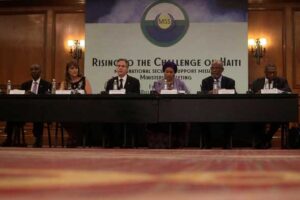
Now the USA, other states and the Caribbean Community (CARICOM) have thrown their weight behind the Council and a Kenya-led international police force, which has recently begun to deploy.
Contested developments
Gang leaders can be expected to maintain their resistance to these developments. The most prominent, ex-police officer Jimmy Chérizier, demands a role in any talks. But this looks like posturing. Chérizier likes to portray himself as a revolutionary, on the side of poor people against elites. But the gangs are predatory. They kill innocent people, and it’s the poorest who suffer the most. The things the gangs make their money from – including kidnapping for ransom, extortion and smuggling – benefit from weak law enforcement and a lack of central authority. Gang leaders are best served by maximum chaos for as long as possible, and when that ends will seek an accommodation with favourable politicians, as they’ve enjoyed before.
Political squabbling suits the gangs, which makes it a concern that it took extensive and protracted negotiations to establish the Council. The opaque process was evidently characterised by self-interested manoeuvring as politicians jockeyed for position and status.
The resulting body has nine members: seven with voting rights and two observers. Six of the seven come from political groupings, with the seventh a private sector representative. One observer represents religious groups and the other civil society: Régine Abraham, a crop scientist by profession, from the Rally for a National Agreement.
The Council’s formation was shortly followed by the arrival of an advance force of Kenyan police, with more to follow. It’s been a long time coming. The current plan for an international police force was adopted by a UN Security Council resolution in October 2023. The government of Kenya took the lead, offering a thousand officers, with smaller numbers to come from elsewhere. But Kenya’s opposition won a court order temporarily preventing the move. Henry was in Kenya to sign a mutual security agreement to circumvent the ruling when he was left stranded by the airport closure.
Many Haitians are rightly wary of the prospect of foreign powers getting involved. The country has a dismal history of self-serving international interference, particularly by the US government, while UN forces have been no saviours. A peacekeeping mission from 2004 to 2017 committed sexual abuse and introduced cholera. This will be the 11th UN-organised mission since 1993, and all have been accused of human rights violations.
Civil society points to the Kenyan police’s long track record of committing violence and rights abuses, and is concerned it won’t understand local dynamics. There’s also the question of whether resources spent on the mission wouldn’t be better used to properly equip and support Haiti’s forces, which have consistently been far less well equipped than the gangs. Previous international initiatives have manifestly failed to help strengthen the capacity of Haitian institutions to protect rights and uphold the rule of law.
Time to listen
Haitian civil society is right to criticise the current process as falling short of expectations. It’s an impossible task to expect one person to represent the diversity of Haiti’s civil society, no matter how hard they try. And that person doesn’t even have a vote: the power to make decisions by majority vote is in the hands of political parties many feel helped create the current mess.
The Council is also a male-dominated institution: Abraham is its only female member. With gangs routinely using sexual violence as a weapon, the Council hardly seems in good shape to start building a Haiti free of violence against women and girls.
And given the role of international powers in bringing it about, the Council – just like the Kenya-led mission – is open to the accusation of being just another foreign intervention, giving rise to suspicions about the motives of those behind it.
The latest steps could be the start of something better, but only if they’re built on and move in the right direction. Civil society is pushing for more from the government: for much more women’s leadership and civil society engagement. For the Kenya-led mission, civil society is urging strong human rights safeguards, including a means for complaints to be heard if the mission, like all its predecessors, commits human rights abuses. This shouldn’t be too much to ask.
MONTEVIDEO, Uruguay, May 6 2024 (IPS) – On 22 April, Dominica’s High Court struck down two sections of the country’s Sexual Offences Act that criminalised consensual same-sex relations, finding them unconstitutional. This made Dominica the sixth country in the Commonwealth Caribbean – and the fourth in the Eastern Caribbean – to decriminalise same-sex relations through the courts, and the first in 2024.
Similar decisions were made in Antigua and Barbuda, St Kitts and Nevis and Barbados in 2022 – but progress then threatened to stall. Change in Dominica revives the hopes of LGBTQI+ activists in the five remaining English-speaking Caribbean states – Grenada, Guyana, Jamaica, St Lucia and St Vincent and the Grenadines – that still criminalise same-sex relations. Sooner than later, one of will be next. A small island has made a big difference.
Winds of change
The criminalisation of consensual gay sex in the Anglophone Caribbean dates back to the British colonial era. All former British colonies in the region inherited identical criminal laws against homosexuality targeting either LGBTQI+ people in general or gay men in particular. They typically retained them after independence and through subsequent criminal law reforms.
That’s what happened in Dominica, which became independent in 1978. Its 1998 Sexual Offences Act retained criminal provisions dating back to the 1860s. Section 16 of that law made sex between adult men, described as ‘buggery’, punishable with up to 10 years’ imprisonment and possible compulsory psychiatric confinement.
The offence listed in section 14, ‘gross indecency’, was initially punishable by up to five years in jail if committed by two same-sex adults. A 2016 amendment increased the penalty to 12 years.
As in other Caribbean countries with similar provisions, prosecutions for these crimes have been rare in recent decades, and have never resulted in a conviction. But they’ve been effective in stigmatising LGBTQI+ people, legitimising social prejudice and hate speech, enabling violence, including by police, obstructing access to essential social services, particularly healthcare, and denying people the full protection of the law.
Change has begun only in the past decade, but it’s been rapid. Bans on same-sex relations were overturned by the courts in Belize in 2016 and Trinidad and Tobago in 2018. More soon followed.
The legal case
In July 2019, an unnamed gay man identified as ‘BG’ filed a legal case challenging sections 14 and 16 of the Sexual Offences Act. The defendants named in the complaint were the Attorney General, the Bishop of Dominica’s capital Roseau, the Anglican Church and the Methodist Church. The Dominica Association of Evangelical Churches was also listed as an interested party.
The lawsuit was supported by Minority Rights Dominica (MiRiDom), the country’s main LGBTQI+ advocacy group, and three international allies: the Canadian HIV/AIDS Legal Network, the University of Toronto’s International Human Rights Program and Lawyers Without Borders. The law was challenged as discriminatory and an enabler of violence against LGBTQI+ people.
The High Court heard the case in September 2022, and on 22 April 2024, Justice Kimberly Cenac-Phulgence issued a ruling setting out the reasons why sections 14 and 16 violated the applicant’s constitutional rights to liberty, freedom of expression and privacy, and were therefore null and void.
The backlash
LGBTQI+ advocates around the world welcomed the court ruling, as did UNAIDS – the United Nations agency leading the global effort to end HIV/AIDS. But resistance wasn’t long in coming.
Religious institutions, which hold a lot of influence in Dominica, were quick to decry gains in LGBTQI+ rights as losses in moral values. The day after the ruling was announced, Dominica’s Catholic Church published a statement reaffirming its position that sex should only take place within a heterosexual marriage and, while expressing compassion towards LGBTQI+ people, reiterated its belief in the centrality of traditional marriage and family. The Seventh-day Adventists expressed alarm about the potential of the court ruling to lead to same-sex unions and marriages. Some faith leaders voiced outright bigoty, with one prominent figure calling sexual acts between persons of the same sex an ‘abomination’.
The road ahead
Having decriminalised same-sex relations, Dominica is now ranked 116th out of 198 countries on Equaldex’s Equality Index, which rates countries according to their LGBTQI+ friendliness. There’s clearly much work to be done. Outstanding issues include protection against discrimination in employment and housing, marriage equality and adoption rights. LGBTQI+ activists will also continue to push for the recognition of non-binary genders, the legalisation of gender change and the prohibition of conversion therapy.
The Equality Index makes clear that, as in all the Caribbean countries that have recently decriminalised same-sex relations, changes to laws remain far ahead of social attitudes, with considerable public homophobia. As the instant conservative reactions to the court ruling suggest, changing laws and policies isn’t nearly enough. Shifting social attitudes must now be a top priority.
Dominican LGBTQI+ activists know this, which is why they’ve been working to challenge prejudice and foster understanding since long before launching their legal challenge – and why they see the court victory as not the end of a journey but a stepping stone to further change.
The challenge for Dominica’s LGBTQI+ civil society is to replace the vicious circle of legal prohibition, which has reinforced social stigma, with a virtuous one in which legal progress normalises the presence and social acceptance of LGBTQI+ people, which in turn enables effective access to legally enshrined rights.
But they’ll take heart from being part of a broader regional and global trend. While working to ensure rights are realised domestically, they’ll also offer a powerful example that change can result to the circa 64 countries around the world that still criminalise gay sex, including the five holdouts in the Commonwealth Caribbean. More progress will come.