Breaking Cycle of Violence to Save Mothers & Children: Why Ending Gender-Based Violence is Essential for Global Health

Civil Society, Crime & Justice, Featured, Gender, Global, Global Governance, Headlines, Human Rights, IPS UN: Inside the Glasshouse, TerraViva United Nations

Opinion

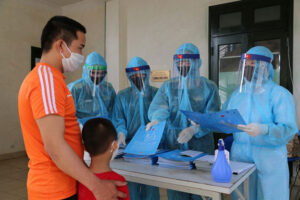
Pioneering effort to protect women and children in quarantine centres in Viet Nam Credit: UN Women

GENEVA, Nov 21 2024 (IPS) – Each year, millions of women and children around the world die from preventable causes. Maternal, newborn, and child health (MNCH) is a shared global priority, yet we often overlook one of its most pressing—and preventable—barriers: violence against women.


As we mark the 16 Days of Activism Against Gender-Based Violence, we are reminded that gender-based violence (GBV) is not just a social issue but a critical health crisis that endangers the lives of mothers and children everywhere.

When we consider that a woman experiencing violence is 1.5 times more likely to have a low-birth-weight baby and that this condition greatly increases infant mortality, the need for urgent, integrated action becomes starkly clear. 1 Addressing violence is not peripheral to MNCH efforts—it is foundational.

Violence and Health: A Devastating Cycle

Evidence tells us that intimate partner violence (IPV) directly affects maternal and infant outcomes. Pregnant women subjected to IPV face a heightened risk of complications like preterm labor and hemorrhage, often resulting in increased maternal and newborn mortality.2 3 The problem doesn’t end with pregnancy: children born to mothers experiencing violence have a higher likelihood of malnutrition, stunting, and developmental delays, perpetuating a cycle of vulnerability. 4

The psychological toll is just as concerning. Women subjected to violence are more prone to depression and anxiety, both of which affect maternal health-seeking behavior.5 Depressed mothers are less likely to access antenatal care and postnatal services, further endangering the lives of their infants. In turn, these mental health impacts lead to cascading health and social risks for women and their families, affecting entire communities.

Rajat Khosla

The Crisis Within Crises: Humanitarian Settings

Nowhere are these challenges more pressing than in humanitarian settings. Conflict, natural disasters, and displacement magnify the vulnerability of women and children, often leading to spikes in sexual violence and the breakdown of healthcare systems. In conflict zones, over 60% of women report having experienced sexual violence, according to humanitarian reports. 6 These women are not only at risk of severe trauma and infection but also of maternal mortality, with rates nearly double those found in stable environments. 7

It’s estimated that more than 500 women and girls die every day from preventable complications related to pregnancy and childbirth in humanitarian settings,8 underscoring an urgent need for an integrated approach to MNCH and GBV response. These statistics are more than numbers—they represent the lives of mothers, daughters, and children who deserve health, safety, and dignity.

The Overlooked Victims: Women Health Care Workers

It’s not only patients who suffer. Female health workers, the backbone of MNCH services worldwide, are often at grave risk. In fragile and conflict-affected settings, women health workers face high rates of violence, including harassment and physical assault.

Research suggests that up to 80% of healthcare workers in these settings report experiencing violence, a statistic that directly impacts their ability to provide care.9 High rates of violence lead to burnout, turnover, and a critical shortage of trauma-informed healthcare providers when they are needed most.10

For many, this threat is exacerbated by their roles as frontline responders to gender-based violence. The safety and mental health of our healthcare workforce are inextricably linked to the health outcomes we aim to achieve for mothers and children.

A Call to Action for Integrated Policies

    As we look to the future, it’s time to broaden our understanding of what it means to support maternal and child health. Policies that address violence against women and protect female health workers must become a central pillar of MNCH efforts. This calls for a multi-pronged approach:
    1. Prioritize Funding for Integrated MNCH and GBV Services: Donors and governments should increase funding for programs that integrate maternal health services with GBV prevention and response, particularly in crisis-prone areas.
    2. Strengthen Health Systems in Humanitarian Settings: We must scale up support for safe, trauma-informed healthcare in conflict zones, ensuring that women and children have access to life-saving care without the threat of further violence.
    3. Protect and Support Women Health Workers: Policies that safeguard the well-being of women health workers are essential. Measures like workplace protections, mental health support, and security protocols can help mitigate the impacts of violence and ensure that healthcare workers can provide essential services safely.

The costs of inaction are too high. Each preventable death of a mother or child as a result of violence marks a failure to uphold the rights to health and safety for all. By placing violence against women at the forefront of our MNCH efforts, we can break the cycle of suffering and create the conditions needed for healthy mothers and thriving children.

This 16 Days of Activism, let’s commit to integrated action against violence—because women’s health, newborn survival, and child development depend on it. Together, we can build a world where women and children live free from violence, and where health and dignity go hand in hand.

1 World Health Organization. (2013). Global and regional estimates of violence against women: prevalence and health effects of intimate partner violence and non-partner sexual violence. Geneva: World Health Organization.
2 Shah, I. H., & Hatcher, A. (2013). The impact of intimate partner violence on women’s reproductive health: A review. Trauma, Violence, & Abuse, 14(2), 128-137. doi:10.1177/1524838012451845
3 Elizabeth P. Lockington et al. Intimate partner violence is a significant risk factor for adverse pregnancy outcomes. AJOG Global Reports. Volume 3, Issue 4, November 2023, 100283
4 Ellsberg, M., & Heise, L. (2005). Researching violence against women: A practical guide for researchers and activists. Geneva: World Health Organization.
5 World Health Organization. (2013). Global and regional estimates of violence against women: prevalence and health effects of intimate partner violence and non-partner sexual violence. Consequences. https://iris.who.int/bitstream/handle/10665/77431/WHO_RHR_12.43_eng.pdf
6 UNODC. (2021). Sexual violence in conflict: Current trends and implications. Vienna: United Nations. Retrieved from UNODC
7 UNFPA. (2019). Maternal mortality in humanitarian settings. New York: UNFPA. Retrieved from UNFPA
8 UNFPA. (2020). Maternal mortality in emergencies: The hidden crisis. Retrieved from UNFPA
9 Médecins Sans Frontières. (2018). Health workers in conflict zones: Risks and realities. Retrieved from MSF
10 World Health Organization. (2021). Violence against health workers. Geneva: WHO.

Rajat Khosla is Executive Director of the Partnership for Maternal, Newborn & Child Health (PMNCH), the global alliance for women’s, children’s and adolescents’ health and well-being, hosted by the World Health Organization, based in Geneva.

Email: khoslar@who.int

IPS UN Bureau

  Source

Brazil Vows to Make COP30 a Catalyst for Climate Action and Biodiversity Celebration

Biodiversity, Climate Action, Climate Change, Climate Change Finance, Climate Change Justice, Conferences, COP29, Development & Aid, Editors’ Choice, Energy, Environment, Featured, Global, Headlines, Human Rights, Sustainability, Sustainable Development Goals, TerraViva United Nations

Moisés Savian, Brazil's Secretary of Land Governance, Territorial and Socio Environmental Development at COP29. He looks forward to COP30 which will be held in his country. Credit: Umar Manzoor Shah/IPS

Moisés Savian, Brazil’s Secretary of Land Governance, Territorial and Socio Environmental Development at COP29. He looks forward to COP30 which will be held in his country. Credit: Umar Manzoor Shah/IPS

BAKU, Nov 21 2024 (IPS) – As Brazil gears up to host COP30 in Belém next year, Moisés Savian, the country’s Secretary of Land Governance, Territorial and Socio Environmental Development, outlined the event’s significance in showcasing Brazil’s environmental policies and fostering global collaboration.


In an interview with IPS, Savian highlighted Brazil’s progress under President Lula’s administration and outlined the country’s aspirations for the upcoming climate conference.

The 2025 UN Climate Change Conference (UNFCCC COP30) is scheduled for November 2025 in Belém, Brazil. This event will feature the 30th session of the Conference of the Parties (COP30), the 20th Meeting of the Parties to the Kyoto Protocol (CMP20), and the seventh Meeting of the Parties to the Paris Agreement (CMA7). Additionally, it will include the 63rd sessions of the Subsidiary Body for Scientific and Technological Advice (SBSTA63) and the Subsidiary Body for Implementation (SBI63).

A Moment to Shine

“The next COP is a significant opportunity for Brazil. Our nation is blessed with immense natural resources, diverse ecosystems, and cultural richness. Hosting this event allows us to highlight our environmental policies and contribute meaningfully to the global dialogue on climate action.”

Savian said that past COPs held in nations like Dubai and Azerbaijan were remarkable in their own right but Brazil’s edition will be distinct.

“Brazil’s unique societal fabric, comprising contributions from people across the globe, coupled with its vast ecological diversity—from the Amazon to the Cerrado—will add an unparalleled dynamism to COP30,” he said.

Achievements in Environmental Protection

Savian says that under President Lula’s administration, Brazil has made significant strides in reducing deforestation and transitioning toward sustainable agriculture. “In the past year alone, we have reduced deforestation by 30 percent in the Amazon and 25 percent in the Cerrado. These achievements reflect our commitment to protecting our vital biomes.”

In the agricultural sector, Brazil is heavily investing in an ecological transition to reduce emissions. 

In 2023, Brazil revised its Nationally Determined Contribution (NDC) and enhanced its climate ambitions, committing to a 53 percent reduction in emissions by 2030. The country aims to position itself as the first G20 nation to achieve net-zero emissions while fostering job creation and economic prosperity. Brazil is also finalizing its 2035 emissions reduction targets, focusing on combating deforestation, promoting sustainable agriculture, decarbonizing industries, implementing nature-based solutions, expanding renewable energy sources, advancing sustainable transportation, and developing the bioeconomy. However, despite these initiatives, Brazil’s climate plans have received only a fraction of the necessary funding to meet its ambitious goals.

According to Savian, focusing on traditional and indigenous populations, ensuring their rights and territories are preserved is extremely important. “We are formulating a specific national plan for family farming, which constitutes the majority of our rural population. These communities are often the most affected by climate extremes, so targeted public policies are essential.”

Global Responsibility and Support

Savian also addressed the role of developed nations in supporting climate adaptation and mitigation in countries like Brazil. He outlined four key areas where global cooperation is essential.

Financing Climate Action- Developed countries must deliver on their promises to fund climate initiatives. Technological Support- Advanced technologies from these nations can aid in decarbonizing economies like Brazil’s. Sustainable Consumption- A focus on low-carbon products and sustainable supply chains is crucial. And Knowledge Exchange-Collaboration in research and capacity-building is vital for global progress.

“Less than 1 percent of global climate financing currently reaches family farmers and traditional communities. This needs to change. While funding is critical, so too are clear criteria for its allocation and ensuring it reaches those who need it most.”

Challenges and Priorities for COP29

Commenting on COP29, Savian expressed concerns about slow progress in implementing commitments. He stressed the need for tangible outcomes in three key areas Climate Financing—establishing actionable frameworks and ensuring funds reach grassroots communities; finalizing regulations to operationalize carbon trading and monitoring mechanisms, including setting up indicators to track progress and results.

“Without a focus on family farming and food system transformation, there can be no just transition,” he said.

Brazil’s Vision for COP30

Savian expressed confidence in Brazil’s readiness to host COP30, acknowledging the logistical challenges posed by Belém, a city of 1.5 million people.

“Despite these hurdles, we are committed to showcasing Amazon to the world. This will be a chance for global leaders and citizens to engage with the heart of Brazil’s environmental efforts.”

He also highlighted Brazil’s track record of successfully hosting major international events under President Lula’s leadership. “We aim to make COP30 a transformative experience that advances climate goals and deepens global appreciation for Brazil’s biodiversity and environmental stewardship,” Savian said.


COP29 Focus On Climate Migration as Hotter Planet Pushes Millions Out of Homes

Civil Society, Climate Change Finance, Climate Change Justice, COP29, Development & Aid, Editors’ Choice, Featured, Global, Headlines, Human Rights, Humanitarian Emergencies, Labour, Migration & Refugees, Sustainable Development Goals, TerraViva United Nations

COP29

Ugochi Daniels, the Deputy Director General for Operations at the International Organization for Migration (IOM), speaks to IPS Senior Journalist Joyce Chimbi. Credit: IOM

Ugochi Daniels, the Deputy Director General for Operations at the International Organization for Migration (IOM), speaks to IPS Senior Journalist Joyce Chimbi. Credit: IOM

BAKU, Nov 20 2024 (IPS) – Migration is growing as the planet gets even hotter. Climate change is fuelling a migration crisis and millions of people in vulnerable nations are continually being uprooted from their homes. The climate and migration nexus are undeniable and the global community has turned to the Baku climate talks for urgent and sustainable solutions.


Ugochi Daniels, the Deputy Director General for Operations at the International Organization for Migration (IOM) spoke to IPS about displacement of people due to the impact of climate change and its different dimensions, such as disaster displacement, labor mobility, as well as planned relocation. She also talked about the magnitude of this pressing problem, as nearly 26 million people were displaced due to the impact of climate change in the last year alone.

“This impact is destroying people’s livelihoods. The farms they used to farm are no longer viable and the land can no longer sustain their livestock. So, people then move, looking for job opportunities elsewhere. Then there is planned relocation, which IOM supports governments to do. When governments know certain communities can no longer adapt as the impact of climate is so great that they are going to have to move, rather than waiting for the climate impact to happen to move and probably not in as organized a way as possible, governments plan for it. That is what we refer to as planned relocation,” she explains.

Ugochi Daniels, the Deputy Director General for Operations at the International Organization for Migration at COP29. Credit: Joyce Chimbi/IPS

Ugochi Daniels, the Deputy Director General for Operations at the International Organization for Migration at COP29. Credit: Joyce Chimbi/IPS

Stressing that climate migration is on track to be an even bigger global crises, with World Bank estimates showing that “216 million people will be displaced due to the impact of climate by 2050 and that they will be displaced within their countries. Nearly a billion people are living in highly climate-vulnerable areas. Trends are showing that when people are displaced, it is often due to a mix of many factors. So, if a community is hit by an extreme weather event, and at the same time the necessary investments were not made, there is no way for the community to absorb the shock of the extreme weather event.”

Daniels notes that with progressive COPs, each year is also becoming the hottest in recorded history and there are more disasters such as heat waves, droughts, floods and hurricanes. Saying that these issues are increasingly becoming a lived reality for even more people. Further referencing the recent flooding in Spain, in addition to all the disasters unfolding in the developing countries. In turn, this is increasing awareness of the impact of climate change on people.

“Of the estimated 216 million people moving by 2050, nearly half of them are in Africa—86 million in sub-Saharan Africa and 19 million in North Africa. Africa is highly vulnerable amid all the other development issues that the continent is dealing with. And we know that, looking at Africa alone, water stress will affect 700 million people by 2030. The reality is that we are experiencing the impact of climate. We had unprecedented flooding in Nigeria this year and it is not just Nigeria—there is Chad and the Central African Republic and the Eastern Horn of Africa has faced similar events in recent times, and we have the El Niño and La Niña in Southern Africa,” she explains. 

Daniels says they are encouraged and satisfied because human mobility is integrated into submissions for the Global Goal on Adaptation and that they are unified around this issue. There is also the Kampala Declaration on Migration, Environment and Climate Change, which has already been signed by over 40 countries in Africa and the regional groups in the Pacific Island States and the islands have all prioritized the issue as it is their lived reality.

“As IOM, our presence at COP is in supporting member states in raising visibility and awareness on the link between climate change and migration and displacement. Having said that, within the negotiations, and we are still waiting to see what comes out, we hope that this continues. We count on member states in making sure that the impact on vulnerable communities is recognized, that vulnerable communities are prioritized for climate financing, and that migration is factored in as a positive coping strategy for adaptation,” Daniels observes.

She emphasises that “when we talk about displacement, we also have to recognize that as things stand, migrants, through formal and informal means, remit a trillion dollars a year. And a lot of that is going to developing and middle-income countries. And when I met with the diaspora at COP last year, they said to me, ‘We are financing loss and damage now.’ We have seen that remittances have stayed resilient since COVID-19 and continue to go up. So here at COP, it is not just recognition of climate change and human mobility, which has been in the covered decision at least for the last three COPs. But it is also about integrating this into the different instruments and mechanisms, whether it is financing or in the indicators.”

Further speaking to the issue of the operationalization of the Loss and Damage Fund. Saying that whereas there are 64 funds globally specific on climate, the Loss and Damage Fund is the only one that has a window specific for vulnerable communities. As member states continue their negotiations, IOM is looking forward to solutions that, for instance, improve access to climate finance, ensuring that in the new financing path, the loss and damage fund supports vulnerable communities to adapt or migrate safely. Emphasising the need for regional cooperation to manage climate-related migration and how climate migration features in the national adaptation plans.

“Importantly, vulnerable communities. need to be part of the solutions. They need to be at the table where these decisions are being made. IOM is one of the—it is actually the only UN organization—that is one of the representative agencies supporting the Loss and Damage Fund and implementation of the fund. Our top priority is the engagement and participation of those most affected so that they have a voice at the table. Well-managed migration is a very effective adaptation strategy. Human civilization has been shaped by migration and this will continue. Climate and other factors will continue to trigger movement,” Daniels says.

“We have the tools. We know what the solutions are. There is the global compact on migration, which is how countries have agreed they will cooperate for better migration management and better migration governance. So, because we know migration has shaped our history and that it will shape our future, we have no excuse for not ensuring that it is safe, dignified, and regular. Whatever we do not do, the traffickers and smugglers will do.”

Stressing that in the process, there will be more people dying, “We will have increased vulnerabilities, and the business model and the industry of trafficking will just continue to grow. So, the urgency for climate action is here and now and there is really no excuse for why we are not collectively working on this. The evidence is there. The solutions are there. The agreements are there too. So, we are here at COP to do our best to ensure it happens.”

IPS UN Bureau Report

  Source

Women in Africa are Better Off Today but Gender Equality Remains Out of Reach

Civil Society, Featured, Gender, Global, Global Governance, Headlines, Human Rights, IPS UN: Inside the Glasshouse, TerraViva United Nations

Opinion

ADDIS ABABA, Ethiopia, Nov 20 2024 (IPS) – Today, women in Africa generally have better access to education, healthcare, and opportunities than ever before. Yet, as they step into the world, a gap between them and their male counterparts persists, a reminder that gender equality remains out of reach.


The evidence is all around us. One in three women still experience physical or sexual violence. Nearly every woman spends twice as much time on unpaid household work as men. And not a single country offers women in Africa full legal protection.

For me, this reality stirs a mix of frustration and hope in recognizing how far we have come and how far we have still to go.

Nearly 30 years ago, 189 world leaders left the Fourth World Conference on Women with renewed hope, committing their countries to the Beijing Platform for Action, an ambitious roadmap for ending gender inequality. Yet today, as countries conduct their reviews, not a single country has achieved those commitments.

The 2023 Africa Gender Index report, produced by the United Nations Economic Commission for Africa and the African Development Bank, reveals that we are only halfway there on the road to gender equality. The journey remains long, and progress has been agonizingly slow.

The stakes could not be higher. Failing to end gender inequality incurs a heavy price: economic stagnation, weakened social systems, instability, and wasted human potential – all of which derail Africa’s progress towards the Sustainable Development Goals. Without urgent action now, we risk sleepwalking into a future marred by spiralling inequality, injustice and instability – an outcome none of us can afford.

As we reflect on the promises made in Beijing, all of us must hold ourselves accountable and take bold political and financial steps to change our current trajectories. To support this, our analysis points to five critical areas, where concentrated efforts over the next five years could pave the way to achieving gender equality by 2030.

First, despite more women working full-time, they still shoulder most caregiving responsibilities, suffer discrimination and deal with harmful stereotypes. Governments and businesses must dismantle barriers to women’s career progression. Experience teaches us that providing women with equal opportunities is not just the right thing to do but also the smart approach, with the potential to boost the GDP of emerging markets and developing economies by an average of 23 percent.

Second, as digitalization shapes the future of work, many women are being left behind. In 2023, only 32 percent of women in Africa had access to the internet. This divide translates into lost opportunities and costs African economies millions of dollars every year. We urgently need to make digital services affordable and promote digital literacy so that every woman has an equal opportunity to participate in the digital world.

Third, although maternal mortality rates have dropped, we cannot overlook the fact that healthcare is still out of reach for too many women. Governments must prioritize access to healthcare for every woman, regardless of where she lives or her income status. Focusing on women’s health not only saves lives but also makes economic sense. Every dollar invested in women’s health generates $3 in economic growth.

Fourth, while women in Africa now have near-equal access to primary, secondary, and tertiary education, this has yet to translate into leadership roles or economic power. Women’s parliamentary representation in Africa increased by only one percent from 25 percent in 2021 to 26 percent in 2024. Without their voices in leadership, we risk perpetuating the very inequalities we seek to eradicate.

Lastly, we must confront the harmful cultural norms, gender-based violence and legal barriers that restrict women’s access to resources and leadership positions. Tackling these deeply entrenched issues not just requires robust enforcement of laws and policies but also a societal shift, with responsibility shared by policymakers, board members, community elders, faith leaders and people like you and me.

None of these issues are new. And while some may seem intractable, they are not insurmountable. Africa has demonstrated incredible successes, from Tunisia’s increase in women science graduates to Rwanda’s significant reduction in cervical cancer cases and Namibia’s gender-equal parliament.

These instances remind us that change is possible when we invest in what we know works. In all of this, data plays an inextricable role in targeting and tracking interventions based on evidence rather than opinion. However, when it comes to women and girls, the data we need is too often missing, leaving too many of their challenges invisible and unaddressed. If we are serious about real progress, we must invest in gathering a fuller picture by bolstering our data capabilities.

In a world where pressing challenges dominate our attention, gender equality is often pushed to a backseat. We can no longer afford complacency or business as usual. If we stay on the current course, gender equality remains 300 years away. This is unacceptable.

We call on leaders across all sectors to recommit to the goals of Beijing and invest in real change to address the gender inequality that we know exists. Only then can we bring equality from a distant hope to a reality within our lifetimes. I am confident that this is possible, but only if we all act now.

Claver Gatete is Executive Secretary of the United Nations Economic Commission for Africa

IPS UN Bureau

  Source

One in Three Women Experiences Gender-based Violence

Civil Society, Crime & Justice, Featured, Gender, Global, Global Governance, Headlines, Human Rights, IPS UN: Inside the Glasshouse, TerraViva United Nations

Opinion

A woman with her baby attends a UN-run awareness-raising session on gender-based violence at the One Stop Centre in Sominé Dolo Hospital in Mopti, Mali. Credit: UNFPA Mali/Amadou Maiga

UNITED NATIONS, Nov 20 2024 (IPS) Every year, the 16 Days of Activism against Gender-Based Violence (GBV) campaign led by UN Women serves as a powerful reminder of the widespread violence women and girls face worldwide.


Starting from November 25, on the International Day for the Elimination of Violence against Women, and concluding on December 10, on Human Rights Day, this campaign calls on governments, activists, and individuals to unite and push for lasting change.

In support of this civil society initiative the UN Secretary-General back in 2008 launched the campaign UNITE by 2030, which runs parallel to the 16 Days of Activism.

Tweet URL

Every year, the UNITE Campaign focuses on a specific theme and this year’s focus is UNITE! Invest to prevent violence against women and girls, aiming for long-term solutions that address the root causes of the problem.

Why it matters

The statistics are staggering: nearly one in three women and girls worldwide will experience physical or sexual violence during their lifetime.

For at least 51,100 women in 2023, this violence escalated to femicide (homicide targeted at women) with over half committed by intimate partners or family members.

The agency championing women’s empowerment, UN Women, points out that femicides are the ultimate evidence that the systems and structures meant to protect women and girls are failing.

Women are not safe outside their homes either.

Public figures, including politicians, human rights defenders, and journalists, are often targeted by violence both online and offline, with some leading to fatal outcomes and intentional killings.

One alarming aspect of this issue is the prevalence of violence in conflict zones. In 2023, the United Nations reported a staggering 50 per cent increase in gender violence from the previous year.

From survivors to advocates

Women like Ukrainian activist Lyudmila Huseynova exemplify the harrowing reality of conflict-related sexual violence.

After enduring over three years of imprisonment and torture in a Russian prison, where she faced brutal physical abuse, “In that place, you become a person without rights,” she recalled of her torment in Izolyatsia prison, Ms. Huseynova’s resilience turned into activism.

Since her release in 2022, she has become an unwavering advocate for survivors, working with SEMA Ukraine to amplify the voices of those suffering from conflict-related sexual violence and to demand global attention to the atrocities faced by women and children in Ukraine.

Through her tireless efforts, Ms. Huseynova not only exposes the cruelty women endure but also leads efforts to secure justice and recovery for victims. “We will use every means to make their pain visible,” she emphasised.

What can we do?

While we may not all be activists, we all have a role in ending the abuse, says UN Women.

On an individual level, from supporting local organisations to advocating for stronger laws and supporting the women in our lives, everybody can make a difference.

Argentinian activist Iren Cari and founder of Women’s Forum for Equal Opportunities stressed the need to support women in political life and centre their voice: “We need funds to promote women’s participation – not only in public policy making, but also to participate in elections.”

UN Women emphasised that governments must enact laws to ensure accountability for perpetrators of gender-based violence, particularly through National Action Plans.

In parallel, funding women’s rights organizations is essential to support survivors and provide them with the necessary resources for recovery.

The 16 Days of Activism remind us that every action, no matter how small, counts in the fight to end gender-based violence, the agency stresses.

Source: UN News

IPS UN Bureau

  Source

Dazzling Wildlife Portraits at COP29: A Conversation with Photographer Brad Wilson

Arts, Biodiversity, Civil Society, Climate Action, Climate Change, COP29, COP29 Blog, Editors’ Choice, Environment, Featured, Global, Headlines, Sustainable Development Goals, TerraViva United Nations

COP29 Blog

Brad Wilson is an American photographer specializing in classical portraits of animals. Credit: Umar Manzoor Shah/IPS

Brad Wilson is an American photographer specializing in classical portraits of animals. Credit: Umar Manzoor Shah/IPS

As delegates at COP29 stroll through the venue in Baku, Azerbaijan, many pause to marvel at the stunning portraits of animals and birds adorning the pavilion walls. These 16 captivating images, showcasing Azerbaijan’s rich biodiversity, are more than just art—they’re a call to action.

Visitors, from diplomats to environmental activists, can often be seen snapping selfies with these majestic portraits, drawn to their lifelike intensity. Behind this collection is Brad Wilson, an American photographer whose mission is to “bridge the gap between humans and the natural world.” 

Wilson spoke to the IPS on his artistic journey and the philosophy underpinning his work.

“My name is Brad Wilson,” he begins. “I’m an American photographer specializing in classical portraits of animals.”

Classical portraits—usually a domain of human subjects—take on a unique depth when applied to animals.

“I aim to elevate animals to a higher level, presenting them as equals to humans—different but equal. Looking into their eyes through these photographs should invoke a sense of responsibility for their lives because we all share the same planet.”

For Wilson, animals represent a poignant connection to the natural world. “They are our closest relatives living in the wild,” he says. “They serve as a bridge, reminding us of our roots in nature.”

Brad Wilson photographic portraits were commissioned for the Haydar Aliyev Centre in Baku and are on display at the COP29 venue. Credit: Umar Manzoor Shah/IPS

Brad Wilson photographic portraits were commissioned for the Haydar Aliyev Centre in Baku and are on display at the COP29 venue. Credit: Umar Manzoor Shah/IPS

Process: A Dance of Patience and Precision

Creating these portraits is no simple task. Wilson describes the meticulous setup required for his work.

“All the portraits are done in a studio. I set up the studio close to where the animals live—often in sanctuaries or ranches. Then we bring them in for two or three hours,” he says. But those hours yield just fleeting moments of magic.

“I’m lucky if I get two or three good seconds with each animal. But that’s all I need—a single moment of connection that resonates.”

“My photo shoots are like meditations amidst organized chaos,” he says. Amid bustling activity, Wilson remains quiet and still, waiting for the animal to relax. “What I aim to capture is something uncommon—a glimpse of the animal’s soul, if you will. That’s what I hope viewers experience—a moment of connection.”

“I want people to understand that we are part of this planet’s biodiversity. We’re not separate from these creatures. It’s only been about 12,000 years—since the advent of farming and permanent settlements—that we began seeing ourselves as separate from the natural world. That’s a mistake. These animals remind us of our place in the web of life.”

“When we talk about climate action, it’s not just about saving the earth—it’s about saving humanity and the animals that share this planet with us. The earth will endure, but we might not.”

Behind the Scenes at COP29

Wilson’s collection at COP29 was commissioned by the Haydar Aliyev Centre in Baku.

“They brought me here in August to photograph animals in Baku and Shamaki,” he says. The project celebrates Azerbaijan’s biodiversity, showcasing species native to the region while promoting conservation awareness.

The portraits have been a hit among COP29 attendees, sparking conversations about the intersection of art, biodiversity, and climate action. Wilson hopes the images inspire policymakers and the public alike to take meaningful action.

“Climate change is already a massive problem, and it’s only going to worsen. We need to get serious about tackling it.”

Advice for Aspiring Photographers

For those inspired to follow in Wilson’s footsteps, he offers this advice: “Start with humans. I spent 15 years photographing people in New York City before transitioning to animals. That experience taught me about connection and emotion—skills that translate well to wildlife photography.”

IPS UN Bureau Report

  Source