SBSTTA and SBI—Biodiversity Meetings Crucial for the Global South Begin

Africa, Biodiversity, Conferences, Development & Aid, Editors’ Choice, Environment, Featured, Global, Headlines, Health, Sustainability, Sustainable Development Goals, TerraViva United Nations

Biodiversity

More than 1,400 delegates are present at two crucial meetings, where the topic of preserving the planet’s ongoing biodiversity for the benefit of humanity is under discussion. Under the spotlight are the Kunming-Montreal Global Biodiversity Framework, synthetic biology, the detection and identification of living modified organisms, and, critically, biodiversity and health.

Over 1,400 delegates, including 600 representing parties or signatories from over 150 countries and a significant delegation of Indigenous Peoples and other observer organizations, including women’s groups are attending two crucial biodiversity meetings in Nairobi, Kenya. Credit: Stella Paul/IPS

Over 1,400 delegates, including 600 representing parties or signatories from over 150 countries and a significant delegation of Indigenous Peoples and other observer organizations, including women’s groups are attending two crucial biodiversity meetings in Nairobi, Kenya. Credit: Stella Paul/IPS

NAIROBI, May 14 2024 (IPS) – The 26th meeting of the Subsidiary Body of Scientific, Technical, and Technological Advisors (SBSTTA) of the United Nations Convention on Biological Diversity (UNCBD) started in Nairobi, Kenya, on Monday. Over 1,400 delegates, including 600 representing signatories or parties from over 150 countries, are present for the seven-day meeting at the headquarters of the United Nations Environment Programme (UNEP). A large number of members from Indigenous Peoples and other observer organizations, including women’s groups, are also attending the meetings.


SBSTTA will be followed by the meeting of the Subsidiary Body on Implementation (SBI), another subsidiary body of the United Nations Convention on Biological Diversity (CBD). The SBI will take place from May 20–29 at the same venue.

Opening the meeting on Monday morning, David Cooper, the Acting Executive Secretary of the UN Convention on Biological Diversity, called on the delegates for a successful meeting.

“A key part of ensuring the implementation of the Global Biodiversity Framework is to monitor the progress and that’s why finalizing a monitoring framework includes authenticators for the parties to report on. I would like to give my sincere appreciation to all those working on putting together a comprehensive set of authenticators. I encourage you to make full use of what we have achieved so far and let’s make this meeting a success,” Cooper said.

IPS, which is exclusively covering the meetings, has insights into the meetings and presents here the brief history of both the meetings and their significance in larger global biodiversity protection, especially in the global south, including the implementation of the Global Biodiversity Framework (GBF), the legally binding international biodiversity treaty adopted by the nations in December 2022

SBSTTA: History, Mandate and Role in the COP

SBSTTA was established 30 years ago, in 1994, as a subsidiary body of the CBD during the first meeting of the Conference of the Parties (COP) to the CBD in Nassau, Bahamas. Article 25 of the CBD, which mandated its creation, tasked it with giving the COP timely advice regarding the application of the Convention.

Since then, SBSTTA ‘s main role has been providing assessments of scientific, technical, and technological information relevant to the conservation and sustainable use of biological diversity. It typically meets once or twice a year to review and assess relevant scientific information, including reports submitted by Parties, relevant organizations, and stakeholders. Its discussions cover a wide range of topics, including biodiversity loss, ecosystem services, invasive species, genetic resources, and biotechnology.

The main output of SBSTTA meetings is a set of recommendations to the COP, which are based on the scientific and technical assessments conducted during its sessions. These recommendations provide guidance to Parties and other stakeholders on key issues related to the implementation of the CBD.

For example, in 2007, SBSTTA recommended that the biodiversity COP consider the potential impacts of synthetic biology on biodiversity and ecosystems and encourage Parties to undertake further research, risk assessments, and regulatory measures to address any potential risks associated with the release of synthetic organisms into the environment.

This recommendation was later taken up by the CBD COP, leading to the adoption of decisions on synthetic biology, including Decision XIII/17, which encouraged Parties to continue their efforts to address the potential positive and negative impacts of synthetic biology on biodiversity, and take a  precautionary approach.

A more recent example is the SBSTTA’s recommendation from 2018 that the COP should encourage Parties to mainstream biodiversity considerations into sectoral and cross-sectoral policies, plans, and programs, including those pertaining to agriculture, fisheries, forestry, tourism, energy, and infrastructure.

The CBD COP later agreed with this suggestion, which led to the adoption of decisions and guidelines on mainstreaming biodiversity across sectors. One of these was Decision XIV/4, which asked Parties to do more to mainstream biodiversity into relevant sectors and to encourage synergies between the goals of sustainable development and biodiversity conservation.

SBSTTA and Genetically Modified Mosquitoes

SBSTTA-26 has a large number of issues on its agenda. Most prominent among them are: 1) creating a monitoring framework for the Kunming-Montreal Global Biodiversity Framework; 2) synthetic biology; 3) detection and identification of living modified organisms; and 4) biodiversity and health.

It is expected that under the detection and identification of living modified organisms, genetically engineered mosquitoes for Malaria prevention will be discussed. Research on genetically engineered mosquitoes for malaria control has been an area of interest and investigation for several years, although little information is available on it in the public domain.

Scientists in many countries, including in the United States and Brazil, have been exploring various genetic modification techniques to create mosquitoes that are resistant to the malaria parasite or are unable to transmit the disease. One approach involves genetically modifying mosquitoes to produce antibodies that neutralize the malaria parasite when it enters their bodies.

The other approach is to use “Gene Drive Technology,” which involves modifying mosquitoes in a way that ensures the modified genes are passed on to a high proportion of their offspring. Already, many field trials of genetically engineered mosquitoes have been conducted or are underway in different parts of the world, most notably those conducted by the company Oxitec in Brazil and the Cayman Islands.

At the SBSTTA, scientific and technical advisors will look closely at the important environmental and ethical considerations related to GE mosquitoes. According to the World Health Organization’s 2023 World Malaria Report, there has been an increase in malaria infections all over the world as a result of climate change. However, several countries and organizations have serious reservations against the release of GM mosquitoes, which they believe may have an irreversible and devastating impact on local biodiversity. One of the most vocal organizations against GE/GM mosquitoes has been Friends of the Earth, a US-based environmental advocacy group. Dana Perls, senior program manager at Friends of the Earth, said, “Significant scientific research on genetically engineered mosquitoes is still needed to understand the potential public health and environmental threats associated with the release of this novel genetically engineered insect.”

The SBSTTA is expected to witness passionate discussions, especially from environmental NGOs and faith-based organizations, including the need to ensure that communities are properly informed and engaged in decision-making processes, especially in the global south.
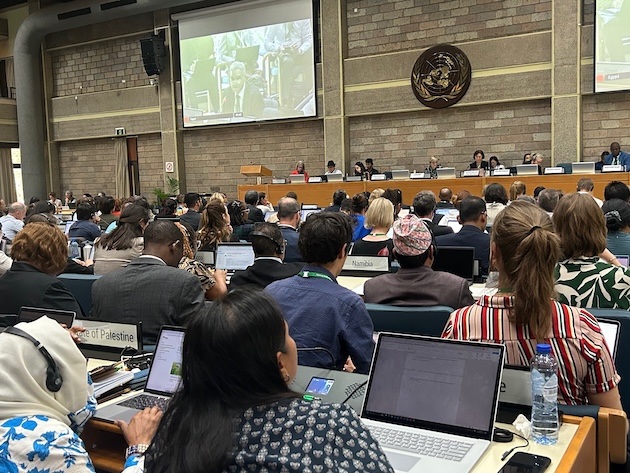
The agenda for the meetings includes creating a monitoring framework for the Kunming-Montreal Global Biodiversity Framework, synthetic biology, detection and identification of living modified organisms, and biodiversity and health. Credit: Stella Paul/IPS

The agenda for the meetings includes creating a monitoring framework for the Kunming-Montreal Global Biodiversity Framework, synthetic biology, detection and identification of living modified organisms, and biodiversity and health. Credit: Stella Paul/IPS

SBI: Most Crucial Agenda Items

The SBI was established under the CBD during the third meeting of the Conference of the Parties (COP) to the CBD in 1996. The SBI’s mandate includes providing guidance and recommendations to the COP on matters related to the implementation of the CBD as well as identifying obstacles and challenges that may hinder effective implementation.

Like SBSTTA, SBI also typically meets once or twice a year to conduct its work. Its discussions cover a wide range of topics related to the implementation of the CBD, including national biodiversity strategies and action plans, financial resources and mechanisms, capacity-building, and technology transfer.

Chaired by Chirra Achalender Reddy of India, the SBI in Nairobi has placed several items on its agenda. However, the most crucial ones among them are: 1) resource mobilization and financial mechanisms; 2) a review of the progress in national target setting; and 3) the updating of national biodiversity strategies and action plans.

As IPS recently reported, only a handful of countries have so far been able to submit their updated biodiversity action plans, while the rest are said to be facing multiple challenges in doing so, including a lack of capacity. In fact, Kenya, the host country of these meetings, has not been able to submit their updated action plan yet.

On Monday, in her inaugural address during the opening ceremony of SBSTTA, Ingrid Andersen, the Executive Director of UNEP, acknowledged that a lack of capacity to revise and update their action plans has been reported by several member states. “Capacity building is a serious issue and at the SBSTTA and SBI, this will be seriously discussed,” Andersen said.

David Ainsworth, the Communications Director of UNCBD, said that the capacity is lacking in several areas, including communications (where countries do not know how to communicate to different ministries the need for working together to develop their biodiversity action plans), finance (lack of funding, budgetary constraints), and knowledge.

“Perhaps the most crucial of these is finance and this will be seriously discussed at the SBI,” Ainsworth said.

IPS UN Bureau Report


Choose Hope: Standing at the Crossroads of the Future

Armed Conflicts, Civil Society, Climate Action, Climate Change, Global, Headlines, Nuclear Energy – Nuclear Weapons, Sustainability, TerraViva United Nations

Opinion

Future Action Festival Organizing Committee

TOKYO, Japan, May 8 2024 (IPS) – We are at the tipping point in human history, facing major existential crises. The conflict between Russia and Ukraine has heightened the risk of a nuclear weapon being used since the Cold War. Furthermore, the climate crisis is accelerating. In these crises, the most affected are those in vulnerable situations.


Future Action Festival Poster. Credit: Yukie Asagiri, INPS Japan

Amidst all these crises, the UN Summit of the Future will be held for the first time in September to strengthen global cooperation and revitalize the multilateral approach to tackle these challenges. It will be a once-in-a-generation opportunity to shift the course of humanity to a peaceful world where no one is left behind.

Toward the Summit, together with some youth-led civil society organizations in Japan, we decided to organize the “Future Action Festival” to create momentum to strengthen solidarity toward a peaceful and sustainable future.

The Future Action Festival Organizing Committee comprising of representatives from six organizations, including GeNuine, Greenpeace Japan, Japan Youth Council, Kakuwaka Hiroshima, Youth for TPNW, and Soka Gakkai International (SGI) youth, was established in the summer of 2023.Among all the global challenges, we decided to focus on addressing two major existential threats today – nuclear weapons and the climate crisis.

While youth engagement in these issues is more crucial than ever, there is also a need to cultivate awareness among youth in being agents of change. The event is not a summit, but a “festival” that is led by, with and for the youth and highlights the aspect of joyfulness in youth coming together for a better future.

To achieve a unique event, the committee engaged with as many actors as possible towards the festival. Throughout the process, the festival was joined by multiple stakeholders, including NGOs, private sectors, artists, and UN representatives, in many ways.

Engagement with corporations played a significant role in making the festival possible and raising awareness in the private sector. For example, Japan Climate Leaders Partnership (JCLP), which comprises of more than 240 corporations targeting zero-emission, agreed with the purpose of our event and supported us since the establishment of the organizing committee. In the end, the sponsorship and participation by more than 160 corporations not only supported the event financially but opened new possibilities in the sense of corporations’ involvement in abolishing nuclear weapons.

Future Action Festival convened at Tokyo’s National Stadium on March 24, drawing approximately 66,000 attedees. Credit: Yukie Asagiri, INPS Japan

The festival included entertainment elements performed by professional singers, comedians, YouTubers, and marching bands. The participation and active promotion of the event by those in the entertainment sector mobilized many people, including those who were not very much interested in the thematic issues, making the event uniquely engaging.

Finally, the engagement with the UN expanded the reach and possibilities of the festival. For example, one of the major advocates and partners of the event was the United Nations Information Centre (UNIC) in Tokyo. Since the beginning of its preparation, UNIC supported us in gaining credibility with diverse stakeholders, especially corporations and artists. In addition, the first Assistant Secretary-General for Youth Affairs Felipe Paullier sent us a video message which called upon youth participants to work together for a world without nuclear weapons and a world that is sustainable for all. At the end of the event, the Rector of the United Nations University Professor Tshilidzi Marwala gave his remarks, emphasizing the significance of the role played by youth in tackling these global issues. The partnership with the UN became the core driving force for the event’s success.

The strong partnerships and youth engagement resulted in the success of the festival held at the Japan National Stadium in Tokyo on March 24th. It gathered more than 60,000 participants at the venue and was viewed by over 500,000 people online through livestream.

Tshilisi Marwala, President of the UN University and UN Under-Secretary-General (Center) who endorsed the joint statement from the organizing committee, acknowledged the critical importance of young voices in shaping the Summit’s agenda and urged them to “be a beacon of hope and a driving force for change. Credit: Yukie Asagiri, INPS Japan

One of the key purposes of the event was to deliver youth voices to the UN. Toward the festival, the organizing committee conducted a youth awareness survey on nuclear weapons, the climate crisis, and the UN. About 120,000 responses from individuals ranging between their 10s to 40s were collected from November 2023 to February 2024. The results showed that young people have a high level of awareness on climate issues and that they think that nuclear weapons are not necessary. The youth want to contribute to addressing these issues. At the same time, more than half of the respondents find it difficult to have hope for the future. About eighty percent of all the respondents felt that youth voices are not reflected enough in national and government policies. Young people are dissatisfied with the status quo and seek a systemic change.

Based on the outcome, the organizing committee created a joint statement intended for the UN Summit of the Future to ensure youth voices are heard and reflected in the discussion process. The statement was handed over to Prof. Marwala at the event.

This is only the beginning of our journey to create a great momentum of youth standing up for a better future. As a next step to amplify youth voices, we plan to communicate with MOFA, a focal point of the Summit of the Future. We, the organizing committee, will also participate in the UN Civil Society Conference that will take place in Nairobi, Kenya in May, which is a key milestone for civil society to give their input to the Member States. We hope to convey the survey results to the co-chairs and UN high-level officials during the conference. In addition, at a national level, we will engage with the government, the UN, and like-minded organizations to contribute to the Pact for the Future in a meaningful way.

In addressing daunting global issues, we may feel a sense of hopelessness sometimes. However, through this festival, we learned that when diverse stakeholders of different background unite to create change, their solidarity serves as a beacon of hope for the youth. It is our responsibility to create a world where young people feel hopeful. Starting from youth in Japan, we will move forward, taking concrete steps to extend our local and global solidarity together with the UN and multiple stakeholders.

[embedded content]
Future Action Festival Filmed and edited by Katsuhiro Asagiri, Yukie Asagiri and Kevin Lin of INPS Japan Media.

Hiroko Ogushi is a Committee Member, Future Action Festival Organizing Committee Co-representative, Soka Gakkai International (SGI) youth

IPS UN Bureau

  Source

Harnessing Science-Policy Collaboration: The Vital Role of IPBES Stakeholders in Achieving Global Nature Targets

Biodiversity, Conferences, Editors’ Choice, Environment, Featured, Global, Headlines, Indigenous Rights, Natural Resources, Sustainability, TerraViva United Nations

Opinion

Dr. Anne Larigauderie, IPBES Executive Secretary

Dr. Anne Larigauderie, IPBES Executive Secretary

BONN, Germany, Apr 26 2024 (IPS) – In December 2022, the fifteenth meeting of the Conference of the Parties to the Convention on Biological Diversity (CBD) saw governments worldwide unite behind a set of ambitious targets aimed at addressing biodiversity loss and restoring natural ecosystems, through the Global Biodiversity Framework – known now as the Biodiversity Plan.


As the world gears up to meet these critical commitments for people and nature, success depends very directly on the concrete choices and actions of people from every region, across all disciplines and at every level of decision-making. In this collaborative effort, non-governmental stakeholders of the Intergovernmental Platform on Biodiversity and Ecosystem Services (IPBES) are vital actors, in addition to the 146 Governments who are members of IPBES.

But who are IPBES stakeholders? Any individual or organization that can benefit from or contribute to the science-policy work of IPBES is an IPBES stakeholder. They include individual scientists, knowledge-holders, experts and practitioners, as well as institutions, organizations, and groups operating within and beyond the fields of biodiversity and nature’s contributions to people.

There are two main self-organized groups of IPBES stakeholders: ONet and IIFBES. ONet provides a broad space for individuals and organizations to exchange knowledge, align actions and deepen engagement with the work of IPBES—with subgroups from the social sciences, young career researchers and many more. IIFBES is a network to bring together the expertise, perspectives and interests of Indigenous Peoples and local communities interested in IPBES’s work. Both of these ‘umbrella’ groups are instrumental in amplifying diverse voices, knowledge systems, and experience, to strengthen science-policy for biodiversity and nature’s contributions to people. This is important not only in support of IPBES, but also to the success of the Biodiversity Plan.

IPBES stakeholders contribute to the achievement of the Biodiversity Plan in three distinct ways. Firstly, they fortify the scientific foundations underpinning policies to protect biodiversity and nature’s contributions to people. Their expertise, channeled into the IPBES assessments, was instrumental in shaping the targets and indicators of the Biodiversity Plan. IPBES stakeholders will also continue to play a central role in ensuring that the actions to meet these targets are grounded in robust scientific knowledge and evidence.

Secondly, IPBES stakeholders are equipped with the resources and tools provided by IPBES: including Assessment Reports and their summaries for policymakers, to advocate for and effect change. These resources offer invaluable insights into national, regional, and global thematic issues. When considered by decision-makers, they become catalysts for evidence-based policies. Effective dissemination and uptake of these resources are paramount in translating global targets into tangible, on-the-ground initiatives that address local challenges. Consequently, stakeholders can make a substantial contribution by widely disseminating IPBES products and providing information for their effective use.

Thirdly, IPBES stakeholders have a tremendous opportunity to engage in the international forums where policy decisions are explored and made. Their active involvement and participation in decision-making bodies within these forums, coupled with their own extensive networks, foster the exchange of knowledge and resources. Collaborations forged in these settings bridge the gap between science and policy. Many IPBES stakeholders are active participants in the CBD processes, for instance, facilitating the exchange of information between these two bodies and thereby driving the Biodiversity Plan’s effective implementation.

Only through collective action and close collaboration between international institutions, policy actors, scientists, local and Indigenous communities, and other relevant stakeholders can we seamlessly translate science into policy and practice, ultimately achieving the goals of the Biodiversity Plan. This is why more individuals and organizations should seize the opportunity to become active IPBES stakeholders. Joining the IPBES community is not only a commitment to a sustainable future for people and nature but is also a positive response to the pressing global biodiversity crisis.

Dr. Anne Larigauderie is the Executive Secretary of IPBES (www.ipbes.net) – the Intergovernmental Science-Policy Platform on Biodiversity and Ecosystem Services, which provides objective scientific assessments about the state of knowledge regarding the planet’s biodiversity, ecosystems and the contributions they make to people, as well as options and actions to protect and sustainably use these vital natural assets.

IPS UN Bureau


The Summit of the Future Is a Rare Chance to Fix a Broken System: Civil Society Must Be Included

Armed Conflicts, Civil Society, Economy & Trade, Featured, Global, Global Governance, Headlines, Nuclear Energy – Nuclear Weapons, Sustainable Development Goals, TerraViva United Nations

Opinion

Credit: UN Photo/Rick Bajornas

NEW YORK, Apr 22 2024 (IPS) – Today, the spectre of a major regional conflict, and even a possible nuclear conflagration, looms large in the Middle East. Despite stark warnings issued by the UN Secretary-General, António Guterres, the multilateral system is struggling to resolve the very challenges it was supposed to address: conflict, impoverishment and oppression. In a deeply divided world, this September’s Summit of the Future offers a rare chance to fix international cooperation and make good on gaps in global governance.


The problem is, too few people and civil society organisations, outside UN circles, even know the Summit is happening. This is characteristic of a lack of broad consultation. Things started poorly with limited time and opportunities for civil society to provide inputs last December into the zero draft of the Pact for the Future, which is supposed to be a blueprint for international cooperation in the 21st century.

The zero draft, released in January 2024, lacks the ambition many hoped would be on show to tackle the enormity of the challenges before us. It included just one mention of the role of civil society and nothing about civic space, even though growing restrictions on fundamental freedoms are severely impeding the transparency, accountability and participation needed to realise the Sustainable Development Goals (SDGs) – the set of ambitious but largely unrealised universal commitments the Summit intends to reaffirm.

To be clear, the Summit’s co-facilitators, Germany and Namibia, are in an unenviable position, having to balance the demands of states that want the process to be purely intergovernmental and others that see value in civil society’s engagement. Some don’t see any role for civil society: in February, a handful of states led by Belarus sent a letter to the Special Committee on the UN Charter questioning the legitimacy of civil society organisations. If their demands were acceded to, the UN would miss the innovation and reach that civil society participation brings to the table.

Next month, the UN is hosting a major civil society conference in Nairobi with the aim of providing a platform for civil society to contribute ideas to the Summit of the Future. But, with barely a month between the selection of applicants and the hosting of the conference, it remains to be seen how many civil society representatives, particularly from smaller organisations in the global south, will be able to make it.

There remains a need for the UN to take on board the Unmute Civil Society recommendations, which include a call for the appointment of a civil society envoy. Such an envoy could drive the UN’s outreach to civil society beyond its hubs. With many finding the institution remote, an envoy could champion better and more consistent participation of people and civil society across the UN’s sprawling agencies and offices. So far, civil society engagement with the UN remains deeply uneven and dependent on the culture and leadership of various UN departments and forums.

The Summit can only benefit from civil society engagement if it’s to achieve it aims, particularly as many conflicts are raging around the world, including in Gaza, Myanmar, Sudan, Ukraine and elsewhere. Many of civil society’s reform ideas are included in the UN Secretary-General’s New Agenda for Peace, which will be deliberated at the Summit, including nuclear disarmament, strengthening preventative diplomacy and prioritising women’s participation in peace efforts.

There’s also an urgent need to address the soaring levels of debt many global south countries face, which is diverting public spending away from essential services and social protections into debt servicing. Civil society backs efforts such as the Bridgetown Initiative to secure commitments from wealthy countries on debt restructuring and debt cancellation for those countries facing a repayment crisis. But civil society needs to be included to help shape plans, because if financing for development negotiations don’t include guarantees for civic space and civil society participation there’s no way of ensuring that public funds benefit people in need. Instead, autocratic regimes could use them to shore up repressive state apparatuses and networks of corruption and patronage.

Civil society further calls for reforms in the international financial architecture. These include demands to bring decisions by the G20 group of powerful economies into the ambit of the UN’s accountability framework, and to equitably distribute shares and decision-making at the International Monetary Fund and World Bank, presently controlled by a few highly industrialised countries.

But it’s unclear how many of civil society’s transformative proposals for global governance reforms will end up in the final outcomes of the Summit of the Future. So far, there’s been limited transparency in relation to UN member state negotiations, records and compilation texts, despite civil society having shown its commitment by making over 400 written submissions to the Pact for the Future process.

Troublingly, few governments have consulted nationally with civil society groups on their positions for the Summit of the Future negotiations. If these trends continue, the international community will miss a key chance to make life better for future generations. It isn’t too late to robustly include people and civil society in the process. The aims of the Summit are too important.

Mandeep S. Tiwana is CIVICUS Chief Officer for Evidence and Engagement and representative to the UN in New York.

  Source

Africa Pushing Limits To Boost Renewable Energy Supply Chain, Security

Africa, Climate Action, Climate Change, Conferences, COP28, Development & Aid, Editors’ Choice, Energy, Environment, Featured, Global, Headlines, Sustainable Development Goals, TerraViva United Nations

Energy

Dr. Amani Abou-Zeid is the current African Union (AU) commissioner for Energy and Infrastructure. She believes that cross-border approaches are critical for clean energy affordability. Credit: Aimable Twahirwa/IPS

Dr. Amani Abou-Zeid is the current African Union (AU) commissioner for Energy and Infrastructure. She believes that cross-border approaches are critical for clean energy affordability. Credit: Aimable Twahirwa/IPS

ABU DHABI, Apr 17 2024 (IPS) – Investors, regulators, researchers, policymakers, and representatives of renewable energy companies, acknowledged the key challenges of shifting away from fossil fuels to renewable energy in Africa when they gathered in Abu Dhabi, United Arab Emirates (UAE) this week.


The latest estimates by the African Development Bank show that Africa’s energy potential, especially renewable energy, is enormous, yet only a fraction of it is currently employed. Official projections indicate that the demand for energy could also be around 30 percent higher than it is today over the next decade on the continent. 

Francesco La Camera, the Director-General of the International Renewable Energy Agency (IRENA) stated that the energy transition is accelerating rapidly, but it clearly remains off track, with an unacceptable uneven distribution of renewable growth that still disproportionately affects the Global South.

“African governments and other stakeholders should adopt innovative solutions to overcome pressing challenges and achieve the energy transition,” La Camera told IPS in an interview.

According to him, there is opportunity [for the continent] to prioritize and narrow down collective actions to overcome the structural and systemic barriers that are impeding progress.

In Africa, experts believe that there are multiple dimensions to energy poverty, which is associated especially with the lack of clear plans and a clear understanding of what the continent wants to achieve.

“Electricity remains the backbone of Africa’s new energy systems, powered increasingly by renewables but a large part of the continent is still left out of the energy transition,” said Bruce Douglas, the Chief Executive Officer at the Global Renewables Alliance, one of the global coalitions of leading industry players committed to accelerating the global transition to renewable energy.

Yet several new commitments were made at the latest UN Climate Change Conference (COP 28) that took place in Dubai, UAE, last year, giving further momentum to the energy transition. Experts are now exploring priorities for the energy transition and immediate steps to ensure that current policies on the continent are improved to encourage greater deployment of renewables.

The latest estimates show that, with Africa accounting for around 39 percent of the world’s renewable energy potential, several renewable energy milestones can be achieved.

“Private and public investment is critical to tackling the multiple dimensions of today’s energy crisis on the continent but to ensure energy security, diversification of various sources is also essential,” Douglas told IPS.

Africa, for example, has abundant hydro, solar, wind, geothermal, hydrogen, and bioenergy resources, but still, the continent’s current energy generation mix continues to rely on fossil fuels, while renewable sources account for nearly 18 percent of the electricity output, it said.

Whereas countries committed on the sidelines of last year’s UN Climate Change Conference to accelerate progress towards tripling renewable power capacity globally to at least 11 terawatts (TW) by 2030, some experts believe that this is still not a long-term solution as more than half of the population still lacks access to electricity.

Amani Abou-Zeid, the Commissioner for Infrastructure and Energy of the African Union Commission (AUC) told IPS that a cross-border approach is critical for participating countries in the transition to clean energy affordability.

“Some countries in Africa have embarked on cross-border projects on clean energies but much more effort is needed to develop really sustainable transitions and adequate instruments,” she said.

The Africa Continental Power System Masterplan, a blueprint currently being developed by the African Union Development Agency (AUDA-NEPAD), highlights some key strategies for countries across the continent to identify key components at national and regional levels that will enable the creation of a smart power systems master plan that promotes access to clean, affordable, reliable, and sustainable electricity supplies across the continent by 2040.

Adja Gueye, Director of Promotion and Cooperation at the National Agency for Renewable Energies in Senegal points out that overall, African countries need appropriate plans at the policy level to overcome some key hurdles on the path to clean energies.

“To facilitate this transition, it would be appropriate for African countries to revise their regulatory framework and move towards harmonization, since the continent needs to improve regional and cross-border electricity interconnections,” she told IPS

Both Gueye and Abou-Zeid are convinced that without infrastructure and appropriate green energies policies and strategies at national and regional levels, it is challenging and impossible to buy and sell electricity across borders.

“Top-down governmental policies and long-term plans on clean energies in Africa are essential,” Abou-Zeid said of the current strategy to establish a long-term continent-wide planning process for power generation and transmission involving all five African power pools.

These include the Central African Power Pool (CAPP), East African Power Pool (EAPP), Northern African power Pool (COMELEC), Southern African Power Pool (SAPP) and Western African Power Pool (WAPP).

Dr. Jimmy Gasore, Rwanda’s Minister of Infrastructure, who is also the current chair of the International Renewable Energy Agency (IRENA) points out that Africa’s climate goals necessitate collective recognition that the energy transition is not just about technological change but also about ensuring equity and justice.

“We need to ensure that the benefits of the energy transition are universally accessible, prioritizing the needs of the most marginalized communities,” he said.

To optimize and diversify green energies on the continent, some experts also stress the importance of encouraging effective cooperation between the private and public sectors in renewable energy and energy efficiency projects.

“To prepare for the current transition to renewable energy, partnerships are essential,” said Gueye of the National Agency for Renewable Energies in Senegal, one of the few dedicated national agencies dealing with clean energies in Africa.

IPS UN Bureau Report


The Climate Alarm Is Ringing – It’s Time to Stop Silencing It

Civil Society, Climate Action, Climate Change, Crime & Justice, Economy & Trade, Environment, Featured, Global, Headlines, TerraViva United Nations

Opinion

Credit: Last Generation Germany

LONDON, Apr 12 2024 (IPS) – The heat records keep tumbling – 2023 was the hottest year in recorded history. Extreme weather events keep mounting up. And yet the voices most strongly calling for action to prevent climate catastrophe are increasingly being silenced.


It’s a sad fact that climate campaigners in the global south – in many countries in Africa, Asia and Latin America – have long faced repression. People have been subjected to incarceration and violence all the way up to murder for resisting climate-harming extractive projects and environmental destruction. In comparison, climate activists in global north countries – including Europe and North America – for a long time enjoyed relative freedom, which they used to protest against their governments and the corporations headquartered in their countries that bear most of the responsibility for causing global warming.

But they no longer enjoy the full freedom to do so. As the latest State of Civil Society Report from global civil society alliance CIVICUS shows, several global north governments are increasingly making it harder for people to take part in climate protests. They’re using anti-protest laws, raids, arrests, jail sentences and violence to try to subdue voices calling for urgent action.

When it comes to the climate, delay is denial, because if action isn’t taken fast, it may be too late. This means the repression of activists demanding immediate action must be seen as a form of climate denial.

Examples are piling up. In Germany last year, authorities used laws intended to combat organised crime to raid the homes of young activists from the Last Generation climate movement, seize their laptops and freeze their bank accounts. The German police also used violence against activists trying to block a coalmine expansion. The imposition of restrictions on climate activism is one the key reasons the CIVICUS Monitor recently downgraded Germany’s civic space rating.

In Italy too, the government has served climate campaigners with criminal conspiracy indictments historically used against the mafia, and it has also introduced a law to criminalise non-violent action at key sites. The Dutch authorities have responded with mass arrests to roadblock protests demanding it fulfil its promise to end fossil fuel subsidies, which amount to around US$39.9 billion a year. Thousands have been detained and the police have used water cannon against protesters.

The UK government has passed a package of laws that criminalise disruptive and noisy protests, clearly targeted at the non-violent direct action used by climate campaigners. In January, the UN Special Rapporteur on environmental defenders, Michel Forst, condemned these new laws. Numerous climate activists have been jailed for peaceful protest actions that until recently would never have received a prison sentence. Meanwhile the UK government plans to grant over 100 new oil and gas licences. Several Australian states have also passed anti-protest laws that have been used to jail climate activists.

Global north states, apparently eager to do the bidding of the fossil fuel giants, can be expected to intensify this repression as the gap between the action needed and the lack of effort being taken becomes increasingly clear. They silence civil society because activists expose the hypocrisy behind the greenwash. As right-wing populists and nationalists who oppose climate action – and often spread climate disinformation – gain influence across the global north, climate activists can expect an even greater wave of vilification.

The impacts of repression are personal. They increase the costs and dangers of activism in an attempt to deter people from getting involved and sap collective energies. However, in response, campaigners are showing resilience. In Germany, frozen funds were quickly replaced with crowdsourced donations. In the Netherlands, attempts to repress roadblocks motivated more people to turn up to protest.

But the opportunity cost is steep. Energy that should be invested in advancing creative climate solutions is instead being spent in fending off restrictions. In the long-term, there’s a danger of attrition, depleting the ranks of climate activists. And without civil society, who will push to keep the climate crisis high on the political agenda?

Civil society has shown it can make a difference. While there was much to be unhappy about with the last global climate summit, COP28, the fact that for the first time states acknowledged the need to transition away from fossil fuel use came as a direct result of civil society’s decades-long advocacy. More institutions are committing to divest from fossil fuel investments due to campaigning pressure: 72 per cent of UK universities have now done so, because student activists demanded it.

And the growing field of climate litigation keeps paying off. A group of Swiss women just won a ruling at the European Court of Human Rights, which found that their government has violated their human rights by not doing enough to tackle climate change, a verdict that sets a strong precedent. Last year, courts in Belgium and Germany insisted on stronger actions to cut emissions following lawsuits brought by campaigners. More are sure to follow.

Civil society will strive to keep working on every front possible, through protest, advocacy and litigation, because the scale of the climate crisis demands a full spectrum of responses. States should stop trying to hold back the tide and put themselves on the right side of history. They must respect the right of everyone to protest and stop the denial they practise through repression.

Andrew Firmin is CIVICUS Editor-in-Chief, co-director and writer for CIVICUS Lens and co-author of the State of Civil Society Report.

  Source



