UN Cybercrime Convention: Could the Cure Be Worse than the Disease?

Civil Society, Crime & Justice, Featured, Global, Headlines, Human Rights, TerraViva United Nations

Opinion

Credit: CIVICUS

MONTEVIDEO, Uruguay, Jun 16 2023 (IPS) – If you’ve never heard of the Cybercrime Convention, you’re not alone. And if you’re wondering whether an international treaty to tackle cybercrime is a good idea, you’re in good company too.


Negotiations have been underway for more than three years: the latest negotiating session was held in April, and a multi-stakeholder consultation has just concluded. A sixth session is scheduled to take place in August, with a draft text expected to be approved by February 2024, to be put to a vote at the UN General Assembly (UNGA) later next year. But civil society sees some big pitfalls ahead.

Controversial beginnings

In December 2019, the UNGA voted to start negotiating a cybercrime treaty. The resolution was sponsored by Russia and co-sponsored by several of the world’s most repressive regimes, which already had national cybercrime laws they use to stifle legitimate dissent under the pretence of combatting a variety of vaguely defined online crimes such as insulting the authorities, spreading ‘fake news’ and extremism.

Tackling cybercrime certainly requires some kind of international cooperation. But this doesn’t necessarily need a new treaty. Experts have pointed out that the real problem may be the lack of enforcement of current international agreements, particularly the 2001 Council of Europe’s Budapest Convention.

When Russia’s resolution was put to a vote, the European Union, many states and human rights organisations urged the UNGA to reject it. But once the resolution passed, they engaged with the process, trying to prevent the worst possible outcome – a treaty lacking human rights safeguards that could be used as a repressive tool.

The December 2019 resolution set up an ad hoc committee (AHC), open to the participation of all UN member states plus observers, including civil society. At its first meeting to set procedural rules in mid-2021, Brazil’s proposal that a two-thirds majority vote be needed for decision-making – when consensus can’t be achieved – was accepted, instead of the simple majority favoured by Russia. A list of stakeholders was approved, including civil society organisations (CSOs), academic institutions and private sector representatives.

Another key procedural decision was made in February 2022: intersessional consultations were to be held between negotiating sessions to solicit input from stakeholders, including human rights CSOs. These consultations have given CSOs the chance to make presentations and participate in discussions with states.

Human rights concerns

Several CSOs are trying to use the space to influence the treaty process, including as part of broader coalitions. Given what’s at stake, in advance of the first negotiating session, around 130 CSOs and experts urged the AHC to embed human rights safeguards in the treaty.

One of the challenges it that, as early as the first negotiating session, it became apparent there wasn’t a clear definition of what constitutes a cybercrime and which cybercrimes should be regulated by the treaty. There’s still no clarity.

The UN identifies two main types of cybercrimes: cyber-dependent crimes such as network intrusion and malware distribution, which can only be committed through the use of information and communications technologies (ICTs), and cyber-enabled crimes, which can be facilitated by ICTs but can be committed without them, such as drug trafficking and the illegal distribution of counterfeit goods.

Throughout the negotiation process there’s been disagreement about whether the treaty should focus on a limited set of cyber-dependent crimes, or address a variety of cyber-enabled crimes. These, human rights groups warn, include various content-related offences that could be invoked to repress freedom of expression.

These concerns have been highlighted by the Office of the UN High Commissioner for Human Rights, which has emphasised that the treaty shouldn’t include offences related to the content of online expression and should clearly and explicitly reference binding international human rights agreements to ensure it’s applied in line with universal human rights principles.

A second major disagreement concerns the scope and conditions for international cooperation. If not clearly defined, cooperation arrangements could result in violations of privacy and data protection provisions. In the absence of the principle of dual criminality – where extradition can only apply to an action that constitutes a crime in both the country making an extradition request and the one receiving it – state authorities could be made to investigate activities that aren’t crimes in their own countries. They could effectively become enforcers of repression.

Civil society has pushed for recognition of a set of principles on the application of human rights to communications surveillance. According to these, dual criminality should prevail, and where laws differ, the one with the higher level of rights protections should be applied. It must be ensured that states don’t use mutual assistance agreements and foreign cooperation requests to circumvent domestic legal restrictions.

An uncertain future

Following the third multistakeholder consultation held in November 2022, the AHC released a negotiating draft. In the fourth negotiating session in January 2023, civil society’s major concerns focused on the long and growing number of criminal offences listed in the draft, many of them content-related.

It’s unclear how the AHC intends to bridge current deep divides to produce the ‘zero draft’ it’s expected to share in the next few weeks. If it complies with the deadline by leaving contentious issues undecided, the next session, scheduled for August, may bring a shift from consensus-building to voting – unless states decide to give themselves some extra time.

As of today, the process could still conclude on time, or with a limited extension, following a forced vote on a harmful treaty that lacks consensus and therefore fails to enter into effect, or does so for a limited number of states. Or it could be repeatedly postponed and fade away. Civil society engaged in the process may well think such a development wouldn’t be so bad: better no agreement than one that gives repressive states stronger tools to stifle dissent.

Inés M. Pousadela is CIVICUS Senior Research Specialist, co-director and writer for CIVICUS Lens and co-author of the State of Civil Society Report.

  Source

Citizen Science Is Key in Helping to Tackle the Threat of Invasive Alien Species

Biodiversity, Civil Society, Climate Action, Environment, Global, Headlines, Sustainable Development Goals, TerraViva United Nations

Opinion

Prof. Helen Roy, Prof. Peter Stoett, and Prof. Anibal Pauchard – Co-Chairs of the IPBES Invasive Alien Species Assessment

The Asian hornet, also known as the yellow-legged hornet or Asian predatory wasp, is a species of hornet indigenous to Southeast Asia. It is of concern as an invasive species in some other countries.

BONN, Germany, Jun 12 2023 (IPS) – Nature is declining rapidly, and the rate of species extinction is accelerating. The Global Assessment Report of the Intergovernmental Science Policy Platform on Biodiversity and Ecosystem Services (IPBES) (2019) revealed that one million species are at risk of extinction. Invasive alien species, alongside climate change, changing use of sea and land, direct exploitation of organisms and pollution, are all major causes of the unprecedented and ongoing declines in biodiversity and ultimately the nature crisis that we are facing now.


Biological invasions defined

Species have been introduced through human activities around the world for centuries. These species, introduced intentionally and unintentionally into regions within which they would not naturally occur, are termed alien species. Following their introduction, some of these alien species establish and spread causing adverse, and in some cases irreversible impacts. This subset of alien species is termed invasive alien species. Across Europe alone there are more than 14 000 alien species, including many different plants and animals, and a proportion of these are invasive. There are many ways in which invasive alien species cause problems for other species – for example through predation, competition, transmission of disease or hybridisation. Invasive alien species are implicated in many extinctions worldwide, especially on islands which are particularly vulnerable to biological invasions.

Prevention underpins the global target to mitigate the impacts of invasive alien species

Adopted in 2022 the Kunming-Montreal Global Biodiversity Framework recognises the threat of invasive alien species to biodiversity and ecosystems through Target 6:

Eliminate, minimize, reduce and/or mitigate the impacts of invasive alien species on biodiversity and ecosystem services by identifying and managing pathways of the introduction of alien species, preventing the introduction and establishment of priority invasive alien species, reducing the rates of introduction and establishment of other known or potential invasive alien species by at least 50 percent, by 2030, eradicating or controlling invasive alien species, especially in priority sites, such as islands.

Target 6 acknowledges that preventing the arrival of alien species by managing pathways of introduction is the most effective approach to mitigating the impacts of biological invasions. However, managing established invasive alien species is also important and many possible approaches can be adopted to sustainably address the threat of biological invasions.

Citizen science: an important tool for tracking invasive alien species

Monitoring and surveillance are critical to informing both prevention and management, and play an important role in mitigating impacts at all stages of the biological invasion process. Citizen science is one of the many tools that can contribute to monitoring and surveillance of invasive alien species. This involves volunteers in data collection and in some cases analysis and interpretation. The profile of citizen science is rising and its value in supporting research and public engagement with science is widely recognised. Additionally, innovative approaches, including the use of smartphone apps for reporting invasive alien species, and the use of emerging tools such as artificial intelligence to support participants with species identification are also contributing to the popularity of citizen science. Many people are using the iNaturalist app to document their observations of plants and animals around the world. The Asian Hornet Watch app contributes to early warning of Vespa velutina and has underpinned the successful eradication of this hornet in the UK.

“Citizen science not only provides valuable data, it can increase awareness of the threats of biological invasions, foster a sense of community ownership and stewardship, and empower individuals to take action to protect their local environment.”

Empowering people to take biosecurity action

Citizen science not only provides valuable data, it can increase awareness of the threats of biological invasions, foster a sense of community ownership and stewardship, and empower individuals to take action to protect their local environment. Many citizen science approaches include information on biosecurity which encourages people to take action to reduce their part in spreading invasive alien species.

Celebrating collaborations through the IPBES thematic assessment of invasive alien species and their control

Global collaboration and partnerships are critical to addressing the threats of environmental change including biological invasions. The IPBES thematic assessment of invasive alien species and their control, prepared over the past four years by 86 leading experts from all regions of the world and across many disciplines, will constitute the first comprehensive and evidence-based assessment of invasive alien species. It will be considered by the member States of IPBES at their tenth Plenary session in August 2023 and represents a significant step forward in addressing the urgent and complex issue of biological invasions.

The report will present and critically evaluate the available evidence on the trends, drivers and impacts of biological invasions on people and nature. Furthermore, it will outline key management and policy options to achieve the targets set by the Kunming-Montreal Global Biodiversity Framework and the 2030 Agenda for Sustainable Development on biological invasions. This IPBES thematic assessment report on invasive alien species and their control will become an indispensable tool for governments, civil society, Indigenous Peoples and local communities, the private sector and all those seeking to address the issue of biological invasions. Effectively preventing and controlling invasive alien species will have far-reaching consequences in protecting the incredible diversity of life on Earth and ultimately contributing to the quest to reverse biodiversity loss.

Prof. Helen Roy is an ecologist at the UK Centre for Ecology & Hydrology, United Kingdom.

Prof. Peter Stoett is dean and professor at the Faculty of Social Science and Humanities, University of Ontario Institute of Technology, Canada.

Prof. Anibal Pauchard is a professor at the Faculty of Forest Sciences, University of Concepción, Chile, and the Institute of Ecology and Biodiversity, Chile.

IPS UN Bureau

  Source

Transforming Food Systems through Conscious, Mindful Practices

Climate Action, Climate Change, Development & Aid, Editors’ Choice, Environment, Featured, Food and Agriculture, Global, Headlines, Innovation, Sustainability, Sustainable Development Goals, TerraViva United Nations

Sustainability

Conscious Food Systems Alliance (CoFSA) promotes consciousness as a key evidence-based practice to support systemic change – reframing how people think about food to unlock food systems transformation, nourishing all people, and regenerating planet Earth. Pictured here a farmer in Katfoura village on the Tristao Islands in Guinea benefits from opportunities to generate income and improve community life. Credit: UN Women/Joe Saade

Conscious Food Systems Alliance (CoFSA) promotes consciousness as a key evidence-based practice to support systemic change – reframing how people think about food to unlock food systems transformation, nourishing all people, and regenerating planet Earth. Pictured here a farmer in Katfoura village on the Tristao Islands in Guinea benefits from opportunities to generate income and improve community life. Credit: UN Women/Joe Saade

NAIROBI, Jun 12 2023 (IPS) – Deep in the Egyptian desert, the SEKEM community celebrates its first wheat crop – grown to alleviate shortages and price increases caused by the war in Ukraine, and the latest crop in a 46-year history of regenerative development, which has effectively made the desert bloom. On another continent, a consumer who buys acai collected and produced by the Yawanawá in Brazil helps protect 200,000 acres of land.


Food connects people, cultures, and planet Earth. But rather than nourishing global health and well-being, food systems remain at the heart of the global community’s social and environmental crises today.

Massive investment and efforts to transform food systems and existing policy and technical solutions are not delivering the desired impact. In the face of the global food systems crises manifested in food insecurity, unsustainable agricultural practices, and climate change, re-examining the origins of ongoing crises and barriers to transformation is critical.

Reframing How People Think About Food

Against this backdrop, the Conscious Food Systems Alliance (CoFSA) promotes consciousness as a key evidence-based practice to support systemic change. The alliance is built on the premise that reframing how people think about food is the key to unlocking food systems transformation, nourishing all people, and regenerating planet Earth.

“We know our food systems are in a critical state and sit at the core of the regeneration process this world greatly needs, and we believe this can only happen with a change of mindsets and heart-sets, with different values and worldviews,” says Thomas Legrand, CoFSA Lead Technical Advisor.

Convened by UNDP, CoFSA is a movement of food, agriculture, and consciousness practitioners united around a common goal: to support people from across food and agriculture systems to cultivate the inner capacities that activate systemic change and regeneration.

The alliance aims to leverage “the power of consciousness and inner transformation, including proven approaches such as mindfulness, compassion, systems leadership, indigenous and feminine wisdoms, to support systemic change towards sustainability and human flourishing in the food and agriculture sector.”

CoFSA Challenge Fund to Support Regenerative Food System Projects

The CoFSA Challenge Fund, which is about to be launched, intends to support the development of strategic, innovative ideas and solutions to scale up and accelerate progress toward the 2030 Agenda for Sustainable Development through the transformation of food systems, which is critical to achieving the UN’s SDGs.

The Challenge Fund focuses on cultivating inner capacities for regenerative food systems. This constitutes a new field of practice that requires testing and innovation to identify, develop and nurture potentially transformative solutions.

In this first round of calls for proposals, UNDP will support approximately four pilot projects of up to USD 20,000.

[embedded content]

Conscious Food System Links Supply Chain

A conscious food system is a holistic approach to the well-being of people and ecosystems, and where there is a connection and awareness between stakeholders across the whole supply chain, says Helmy Abouleish, SEKEM’s CEO. He heads the holistic, sustainable development community established in 1977 by his father, Dr Ibrahim Abouleish, in the Egyptian desert.

According to UNDP, to transform the systems that harm people and the planet and how food is produced and consumed, “We need to look beyond the problems’ symptoms and even systems’ patterns and structures, at what fundamentally drives the systems.”

Consciousness and mental models, or regenerative mindsets and cultures, are increasingly recognized as the key to unlocking systems change in food and agriculture. To this end, CoFSA applies consciousness approaches to technical solutions to support the cultivation and consideration of inner capacities based on the premise that sustainable change comes from within.

Christine Wamsler, Professor of Sustainability Science at LUND University, emphasizes that there is “increasing scientific consensus that creating sustainable, regenerative systems do not only require a change in our external worlds. Instead, it has to go hand-in-hand with a fundamental shift in our relationships — in the way we think about ourselves, each other, and life as a whole.”

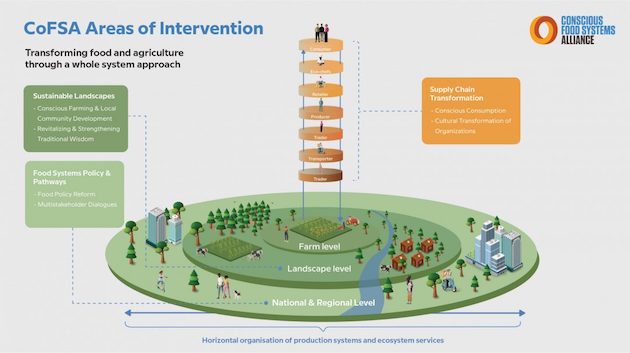
Graphic representation of the Conscious Food Systems Alliance (CoFSA) concept. Credit: UNDP/CoFSA

Graphic representation of the Conscious Food Systems Alliance (CoFSA) concept. Credit: UNDP/CoFSA

Similarly, senior lecturer at the Massachusetts Institute of Technology, Otto Scharmer, stresses, “You cannot change a system unless you change the mindsets or the consciousness of the people who are enacting that system.”

At the heart of it, mindful eating and activating transformation from the inside is a recognition that changing behavior is, at times, more about identity, emotions, and connections than data and analyses in the same way elections are campaigned and won against a backdrop of long-held beliefs and opinions.

Question Impact of Consumer Choices

“I think today, whatever you eat, however you dress, you need to ask yourself where they come from, what kind of impact they are giving back to the Mother Earth, cultural, economic, and spiritual environment,” says Tashka Yawanawá, Chief of the Yawanawá that has survived for centuries in the Brazilian rainforests.

Awareness of the people and processes in food and agriculture systems aligns with indigenous wisdom and is at the heart of the approach taken by the Yawanawá people. For instance, Tashka Yawanawá says: “When somebody drinks the acai collected and produced by the Yawanawá, they’re helping protect 200,000 acres of land.”

“They are also supporting the preservation of our language, our culture, our cultural and spiritual manifestation. Making that link gives value to where you source these products from … when you buy acai made by Yawanawá, you have an awareness that you’re supporting conscious food.”

UNDP stresses that farmers’ lives depend on being seen as human beings, not just economic agents, and says it is “Time to build safe, reflective and connecting spaces to engage in the deep conversations we need for right relationships to replace market rules.”

In the world of conscious thinking and mindful eating, everyone has a role.

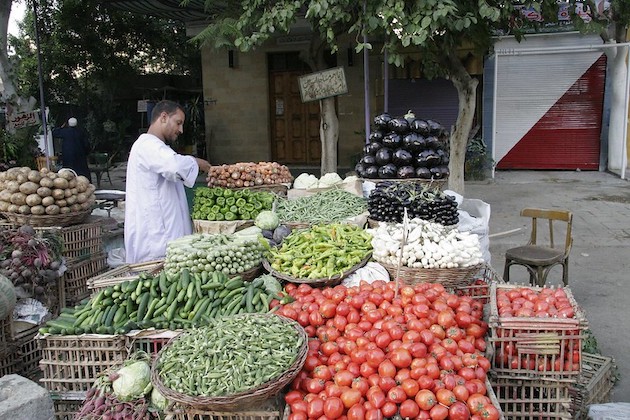
A marker trader at a vegetable stall in the village of El-Maadi near Cairo with heaps of fresh vegetables. CoFSA aims to renew lost ties between producers, the foods they grow, cooks, and consumers. Credit: Gavin Bell/Climate Visuals

A marker trader at a vegetable stall in the village of El-Maadi near Cairo with heaps of fresh vegetables. CoFSA aims to renew lost ties between producers, the foods they grow, cooks, and consumers. Credit: Gavin Bell

Teresa Corção, founder of Instituto Maniva, a non-profit in Brazil that values ​​traditional food knowledge and renews the ties lost between producers, the foods they grow, cooks, and consumers, says chefs have a critical role in listening more to the people who grow the food.

“I think we all see now more and more we need other ways of both changing ourselves and helping others change the way they think in order for us to have the right mindsets to make choices that are more sustainable,” says Andrew Bovarnick, UNDP’s Food, and Agricultural Commodity Systems, Global Head.

CoFSA is built on bringing consciousness to food systems to support the transition to a holistic, bio-regional approach and creating productive landscapes of regeneration.

That consciousness can help restore the balance in food systems between food production, conservation, and well-being, support the uptake of agroecological practices which regenerate the soil, and strengthen the capacity of food to distribute wealth and well-being in communities.

IPS UN Bureau Report

  Source

Climate Change Gets Its Day in Court

Asia-Pacific, Civil Society, Climate Action, Climate Change, Development & Aid, Environment, Featured, Global, Headlines, Human Rights, TerraViva United Nations

Opinion

Credit: Save the Children Vanuatu/Facebook

MONTEVIDEO, Uruguay, May 25 2023 (IPS) – As a matter of global justice, the climate crisis has rightfully made its way to the world’s highest court.

On 29 March 2023, the United Nations General Assembly (UNGA) unanimously adopted a resolution asking the International Court of Justice (ICJ) to issue an advisory opinion on the obligations of states on climate change. The initiative was led by the Pacific Island state of Vanuatu, one of several at risk of disappearing under rising sea levels. It was co-sponsored by 132 states and actively supported by networks of grassroots youth groups from the Pacific and around the world.


Civil society’s campaign

In 2019, a group of law students from the University of the South Pacific formed Pacific Islands Students Fighting Climate Change (PISFCC), a regional organisation with national chapters in Fiji, the Solomon Islands, Tonga and Vanuatu. PISFCC advocated with the Pacific Island Forum – the key regional body – to put the call for an ICJ opinion on its agenda. The government of Vanuatu announced it would seek this in September 2021, and Pacific civil society organisations (CSOs) formed an alliance – the Alliance for a Climate Justice Advisory Opinion – that has since grown to include CSOs and many others from around the world, including UN Special Rapporteurs and global experts.

The campaign made heavy use of social media, with people sharing their stories on the impacts of climate change and emphasising the importance of an ICJ opinion to help support calls for climate action, including climate litigation. It organised globally, sharing a toolkit used by activists around the world, and took to the streets locally. In Vanuatu, where it all started, children demonstrated in September 2022 to call attention to the impacts of climate change as their country’s single greatest development threat and express support for the call for an ICJ opinion.

In the run-up to the UNGA session that adopted the historic resolution, thousands of CSOs from around the world supported a letter calling for governments to back the vote.

[embedded content]

The ICJ’s role

The ICJ is made up of 15 judges elected by the UNGA and UN Security Council. It settles legal disputes between states and provides advisory opinions on legal questions referred to it by other parts of the UN system.

The questions posed to the ICJ aim to clarify the obligations of states under international law to protect the climate system and environment from human-induced greenhouse gas emissions. They also ask about the legal responsibilities of states that have caused significant environmental harm towards other states, particularly small islands, and towards current and future generations.

To provide its advisory opinion, the ICJ will have to interpret states’ obligations as outlined in the 1992 UN Framework Convention on Climate Change and the 2015 Paris Agreement as well as the Universal Declaration of Human Rights and a variety of international covenants and treaties. It may consider previous UNGA resolutions on climate change, such as the recent one recognising access to a clean, healthy and sustainable environment as a universal human right, and other resolutions by the UN Human Rights Council and reports by the Office of the UN High Commissioner of Human Rights and its independent human rights experts. It may also take into account decisions by UN treaty bodies and its own jurisprudence on climate and environmental matters.

Next steps

According to its statute, the ICJ can seek written statements from states or international organisations likely to have relevant information on the issue at hand. On 20 April, it communicated its decision to treat the UN and all its member states as ‘likely to be able to furnish information on the questions submitted to the Court’ and gave them six months to submit written statements, after which they will have three months to make written comments on statements made by other states or organisations.

Civil society doesn’t have any right to submit formal statements, so climate activists are urging as many people as possible to advocate towards their governments to make strong submissions that will lead to a progressive ICJ opinion. After submissions close, the ICJ is likely to take several months to deliberate, so its opinion may be expected at some point in 2024, likely towards the end of the year.

Advisory opinions aren’t binding. They don’t impose obligations on states. But they shape the global understanding of states’ obligations under international law and can motivate states to show their compliance with rising standards. An ICJ opinion could positively influence climate negotiations, pushing forward long-delayed initiatives on funding for loss and damage. It could encourage states to make more ambitious pledges to cut greenhouse gas emissions. It might also help raise awareness of the particular risks faced by small island states and provide arguments in favour of stronger climate action, helping climate advocates gain ground within governments.

A progressive advisory opinion could also help support domestic climate litigation: research shows that domestic courts are increasingly inclined to cite ICJ opinions and other sources of international law, including when it comes to determining climate issues.

The risk can’t be ruled out of a disappointing ICJ opinion merely reiterating the content of existing climate treaties without making any progress on states’ obligations. But climate activists find reasons to expect much more: many see this as a unique opportunity, brought about by their own persistent efforts, to advance climate justice and push for action that meets the scale of the crisis.

Inés M. Pousadela is CIVICUS Senior Research Specialist, co-director and writer for CIVICUS Lens and co-author of the State of Civil Society Report.
  Source

USAID Offers Protection to Journalists & NGOs Facing Defamation Lawsuits

By Thalif Deen
UNITED NATIONS, May 12 2023 (IPS)

The world’s news media — both under authoritarian regimes and democratic governments– continue to come under relentless attacks and political harassment.


“Freedom of the press is the foundation of democracy and justice. It gives all of us the facts we need to shape opinions and speak truth to power. But in every corner of the world, freedom of the press is under attack,” UN Secretary-General Antonio Guterres said on World Press Freedom Day May 3.

Journalists and media workers, he said, are directly targeted on and offline as they carry out their vital work. They are routinely harassed, intimidated, detained and imprisoned.

At least 67 media workers were killed in 2022 — a 50 per cent increase over the previous year. Nearly three quarters of women journalists have experienced violence online, and one in four have been threatened physically, according to the UN.

But there is also an increase in non-physical attacks, including defamation lawsuits against media organizations challenging their legitimate right to free expression.

The Washington-based US Agency for International Development (USAID) last week launched Reporters Shield, a new membership program that protects journalists around the world– who report in the public interest– from defamation lawsuits and legal threats.

Established as a U.S.-based nonprofit organization by the Organized Crime and Corruption Reporting Project (OCCRP) and the Cyrus R. Vance Center for International Justice, Reporters Shield has been described as “a first-of-its-kind global program that defends investigative reporting around the world from legal threats meant to silence critical voices”.

USAID, which has a long history of fostering the growth of independent media across the world, plans to work with Congress to contribute up to $9 million in seed funding for this groundbreaking new program to support media outside the United States, according to a May 2 press release.

In a statement released last week, USAID said investigative journalists and civil society organizations reporting in the public interest are increasingly facing lawsuits that aim to harass and silence them by burdening them with the cost and time of a legal defense until they abandon their stories or go out of business entirely.

Reporters Shield will help to reduce these risks through training and pre-publication review, as well as funding legal representation to fight lawsuits and other legal actions meant to intimidate and financially burden reporters.

In order to keep the program sustainable, member organizations participating in Reporters Shield will pay reasonable annual fees that are based on a variation of factors, including location of the outlet and how many stories they produce a year.

“To be considered for membership in Reporters Shield, an organization must be legally registered and focus primarily in news, public interest, and/or investigative reporting; publish reporting in print and/or online; have non-profit status or transparent ownership; be independent from political, commercial, or other undue influence or interference; and have editorial independence and adhere to professional editorial standards”.

Reporters Shield is accepting applications worldwide and will be reviewing them in a phased approach, with some regions receiving benefits in the coming months, and others added later this year and in 2024.

Interested organizations can find more information and apply for membership by visiting reporters-shield.org.

The development of Reporters Shield has been supported by the generous pro bono legal support of the law firms of Proskauer, Primmer Piper Eggleston & Cramer PC, and Weil, Gotshal & Manges LLP.

www.usaid.gov/democracy/reporters-shield.

Mandeep S. Tiwana, Chief Programmes Officer at CIVICUS, a global alliance of civil society organizations (CSOs), told IPS “these are hard times for media freedoms due to disinformation and attacks on civic space spurred by deepening authoritarianism, denigration of democracy through populism and consolidation of wealth by oligarchs”.

Uncovering serious human rights violations and high-level corruption, he pointed out, is becoming increasingly dangerous and costly for investigative journalists and civil society activists.

When few companies are ready to sign the Anti- Strategic Lawsuits Against Public Participation (SLAPP) pledge and crafty politicians are busy undermining the independence of judiciaries, this initiative comes at a critical time,” he declared.

According to the Anti-SLAPP pledge by Global Citizen, an international education and advocacy organization, strategic lawsuits against public participation, or SLAPPs, are not a legitimate business strategy for companies.

“The private sector thrives in functioning democratic societies, where the right to freedom of expression is a respected bedrock principle and where everyone can express their views without fear of intimidation or reprisal”.

“Lawsuits and legal tactics meant to silence civil organizations and human rights defenders aren’t just bad for societies, they’re also damaging to companies. When companies stifle free expression, they limit their ability to manage risk related to their operations and global supply chains.”

As companies that are committed to operating in societies where people are able to exercise fundamental rights, said Global Citizen, “we pledge to: define Strategic lawsuits against public participation, or SLAPPs, as both lawsuits and legal tactics that are designed to silence critics and abridge citizens’ ability to exercise fundamental rights.”

— Refrain from engaging in SLAPPs against human rights and environmental defenders and civil society organizations that support affected rights-holders.

— Recognize the critical role that civil society organizations and human rights defenders play in creating a profitable enabling environment for the private sector.

— Encourage partners and suppliers within our value chain to refrain from engaging in SLAPPs to silence legitimate activism.

IPS UN Bureau Report


!function(d,s,id){var js,fjs=d.getElementsByTagName(s)[0],p=/^http:/.test(d.location)?’http’:’https’;if(!d.getElementById(id)){js=d.createElement(s);js.id=id;js.src=p+’://platform.twitter.com/widgets.js’;fjs.parentNode.insertBefore(js,fjs);}}(document, ‘script’, ‘twitter-wjs’);  

Source

Parliamentarians Ask G7 Hiroshima Summit to Support Human Security and Vulnerable Communities

Parliamentarians attending the Global Conference of Parliamentarians on Population and Development Toward the 2023 G7 Hiroshima Summit. Credit: APDA

Parliamentarians attending the Global Conference of Parliamentarians on Population and Development Toward the 2023 G7 Hiroshima Summit. Credit: APDA

By Cecilia Russell
JOHANNESBURG, May 9 2023 (IPS)

Parliamentarians from more than 30 countries agreed to send a strong message to the G7 Hiroshima Summit in Japan later this year, focusing on human security and support of vulnerable communities, including women, girls, youth, aging people, migrants, and indigenous people, among others.


The wide-ranging declaration also called on governments to support active political and economic participation for women and girls, enhancing and implementing legislation that addresses gender-based violence (GBV) and eradicating harmful practices like child, early, and forced marriages. During discussions and in the declaration, a clear message emerged that budgetary requirements for Universal Health Care (UHC) should be prioritized and the exceptional work done by health workers during the pandemic be recognized.

In his keynote address, Japan’s Prime Minister Kishida Fumio reminded delegates that Covid-19 had exposed the “fragility of the global health architecture and underscored the need for UHC.”

Kishida said that the central vision of the G7 Hiroshima Summit was to emphasize the importance of addressing human security – through building global health architecture, including the “governance for prevention, preparedness, and response to public health crises, including finance. We believe it is important for the G7 to actively and constructively contribute to efforts to improve international governance, secure sustainable financing and strengthen international norms.”

Apart from contributing to resilient, equitable, and sustainable UHC, health innovation was needed to promote a “more effective global ecosystem to enable rapid research and development and equitable access to infectious disease crisis medicines … and to support aging society,” Kishida said.

Former Prime Minister of Japan Fukuda Yasuo, Chair of APDA, and Honorary Chair of JPFP said this conference and its declaration would follow in a tradition of delivering strong messages to the G7 that improving reproductive health was crucial to the development and the future of a planet which now had 8 million people living on it.

“International Community is becoming increasingly confrontational and divided, and there is the emergence of a national leader who is threatening the use of nuclear weapons. No nuclear weapons have been used in the nearly 80 years since Hiroshima and Nagasaki. We must work together to prevent the use of nuclear weapons, which can take many precious lives and people’s daily lives. In this instance, I would like you to search for the path toward appeasement and not division. We must keep all channels of dialogue open so as to ease tension,” Fukuda asked of the conference.

While calling on parliamentarians to work together to address challenges, Fukuda also expressed concern about the widening inequities caused by Covid-19 and climate change and noted: “This network of parliamentarians on population and development has been a vital resource for parliamentarians who share the same concern for not only their own countries but for the entire planet and future generations.”

Kamikawa Yoko, MP Japan, Chair of JPFP, said that with a world population of 8 billion, it was essential to “realize a society where no one is left behind … and Japan would share its experiences of being on the frontlines of an aging society with declining birth rates. “We are living in an aging society … and given these challenges in Japan, we will try to share with you our experience and lessons through our diplomacy while trying to deepen our discussions and exchanges to seek solutions.”

Japan’s Foreign Affairs Minister Hayashi Yoshimasa said it was essential for all to cooperate during the “Anthropocene era, when human activities have promised to have a major impact on the global environment, global issues that transcend national borders, such as climate change, and the spread of infectious diseases, including Covid-19 are becoming more and more prevalent.”

He reminded the delegates that at the center of Japan’s economic growth post World War II was mainly through health promotion and employment policies.

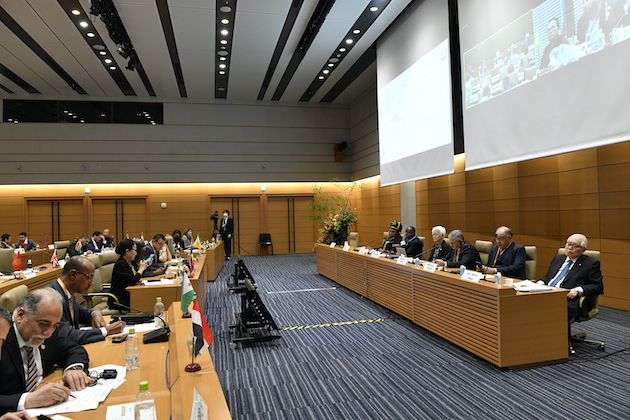
Delegates of the Global Conference of Parliamentarians on Population and Development Toward the 2023 G7 Hiroshima Summit agreed to send a strong message on human security to the Summit. Credit: APDA

Delegates of the Global Conference of Parliamentarians on Population and Development Toward the 2023 G7 Hiroshima Summit agreed to send a strong message on human security to the Summit. Credit: APDA

Director of the Division for Communications and Strategic Partnerships of UNFPA, Ian McFarlane, said it was not about the “numbers of people but the rights of the people that matter. It’s not about whether we are too many or too few, but whether women and girls can decide if, when, and how many children to have.”

A recent UNFPA report indicated that nearly half of the women across the globe could not exercise their rights and choices, their bodily autonomy, and expressed hope that policies in the future continue to focus on humanity and universal human rights.

Despite being close to the 30th anniversary of the International Conference on Population and Development (ICPD), the conference heard that much still needed to be done regarding women’s rights.

New Zealand MP and co-chair of AFPPD Standing Committee on Gender Equality and Women Empowerment, Angela Warren-Clark, reminded the audience that women still only held 26 percent of parliamentarian seats globally. While women make up 70 percent of the workforce in the health sector, only 25 percent have senior leadership positions.

“It is women in this pandemic who bore the increased burden of unpaid work at home as schools were closed, and it is girls and the poorest families who were taken out of school and forced into early marriages … We believe that if women had an equal say in decision-making during the pandemic, some of these mistakes would have been avoided.”

Baroness Elizabeth Barker, MP from the United Kingdom, told parliamentarians their role was to ensure that “no person on earth, from the head of G7 country to a poor person in a village, can say that they do not know what gender equality is. And they do not know what gender violence is.”

Barker suggested they use international standards, like the Istanbul Convention on Violence Against Women, to compare countries. “And you know that if your country doesn’t come out very well, they really don’t like it.”

She pointed to two successes in the UK, including stopping virginity testing and tackling the practice of forced marriages. She also warned the delegates that there was a right-wing campaign aimed at destroying human rights gained, and they chose different battlegrounds. The overturning of abortion rights in the United States in the Roe vs. Wade case was an example, as was the anti-LGBTQ legislation in Uganda.

Hassan Omar, MP from Djibouti, gave a host of achievements in his country, including ensuring that women occupy 25 percent roles in politics and the state administration and the growing literacy of women numbers in his country.

Risa Hontiveros, MP Philippines, painted a bleak picture of the impact of Covid in her country.

Hontiveros said GBV increased during Covid and extended to the digital space.

“The Internet has become a breeding ground for predators and cyber criminals to prey on children, especially young women, and girls. The online sexual abuse and exploitation of children … has become so prevalent in the Philippines that we have been tagged as the global hotspot.”

In a desperate attempt to provide for their families, even parents produced “exploitative material of their own children and sold them online to pedophiles abroad.”

To address these, she filed a gender-responsive and inclusive Emergency Management Act bill, which seeks to address the gender-differentiated needs of women and girls, because they were “disproportionately affected in times of emergencies.”

Former MP from Afghanistan Khadija Elham’s testimony united many in the conference and even resulted in proposals from the floor to include a condemnation of the Taliban’s women’s policies.

Elham said GBV had increased since the Taliban took over – women were forced to wear a burqa in public, they were not allowed to work, and those who wish to “learn science or (get an) education are forced to continue their studies and hidden places like basements.”

If their secret schools are exposed, they face torture and imprisonment. During the last two months, 260 people, including 50 women, were publicly whipped – a clear violation of their human rights. Women’s representation in political life has been banned, and women are no longer allowed to work in NGOs – and it has been “550 days since women could attend high schools and universities.”

She called on the international community, the United Nations, to pressure the Taliban to restore women’s work and education rights.

Nakayama Maho, Director of the Peacebuilding Program at the Sasakawa Peace Foundation, announced new research on factors contributing to men’s propensity to GBV. The research found that the higher a man’s educational attainment, the lower the level of violence. There were also lower levels of violence with “positive” masculinity – such as a man being employed, married, and capable of protecting his family. Men who experienced violence during times of conflict tended to support violence to instill discipline, or protect women and communities.

Dr Roopa Dhatt, Executive Director of Women in Global Health, summed up this critical session by saying, “Equal leadership for women in all fields is a game changer, particularly in politics and health.”

Japan’s Health, Labour and Welfare Minister, Kato Katsunobu, noted during his closing address that the G7 countries “share the recognition that investment in people is not an expense, but an investment… and as you invest in people you can create a virtuous cycle between workers well-being and social and economic activities.”

He said Japan had a lot to offer concerning aging populations.

“Japan has been promoting the establishment of a comprehensive community-based care system so that people can continue to live in their own way in their own neighborhood until the end of their lives and is in the position to provide knowledge to the G7 countries and other countries who will be facing (an aging population) in the future.”

Dr Alvaro Bermejo, Director-General of IPPF, commended the conference and said he was “thankful” that the conference declaration would tell G7 governments to set an example. “Marginalized and excluded populations are at the heart of human security and can only be achieved in solidarity, and that message from this conference is clear.”

Professor Takemi Keizo, MP Japan, Chair of AFPPD, summed up the proceeding by saying that parliamentarians as representatives of the electorate were vital to creating a “positive momentum in this global community and overcoming so many difficult issues.”

Takemi elaborated on some issues facing the world now, including climate change and military conflicts, but as parliamentarians, there was the opportunity to “build up the new basis of the global governance, which can be very beneficial.”

NOTE: Global Conference of Parliamentarians on Population and Development Toward the 2023 G7 Hiroshima Summit was organized by the Asian Population and Development Association (APDA), the Asian Forum of Parliamentarians on Population and Development (AFPPD), and the Japan Parliamentarians Federation for Population (JPFP).

It was supported by the Ministry of Foreign Affairs of Japan (MOFA), United Nations Population Fund (UNFPA), Japan Trust Fund (JTF), and Keidanren-Japan Business Federation in cooperation with the International Planned Parenthood Federation (IPPF).

IPS UN Bureau Report


!function(d,s,id){var js,fjs=d.getElementsByTagName(s)[0],p=/^http:/.test(d.location)?’http’:’https’;if(!d.getElementById(id)){js=d.createElement(s);js.id=id;js.src=p+’://platform.twitter.com/widgets.js’;fjs.parentNode.insertBefore(js,fjs);}}(document, ‘script’, ‘twitter-wjs’);