Guess Who’s Behind Paralysis on COVID19 in the UN Committee on World Food Security

Aid, Civil Society, COVID-19, Economy & Trade, Food and Agriculture, Food Security and Nutrition, Global, Headlines, Human Rights, Humanitarian Emergencies, IPS UN: Inside the Glasshouse, TerraViva United Nations

Opinion

ROME, Oct 19 2021 (IPS) – ‘COVID 19 has multiplied hunger and malnutrition challenges. We need transformative action!’ The first speaker at the UN Committee on World Food Security’s (CFS) 49th Plenary Session, the Secretary-General of the United Nations, turned the spotlight on the disastrous impacts of the pandemic that have afflicted communities around the world for close to two years.


Nora McKeon

He was echoed by the presenter of the 2021 edition of the State of Food Security and Nutrition in the World for whom ‘COVID is only the tip of the iceberg’, while keynote speaker, Jeffry Sachs, emphasized the multifaceted nature of the crisis, with chronic poverty and conflict at the center.

Delegation after delegation took the virtual floor to share their concerns: Kenya speaking for the Africa Group, Colombia, Cuba, Costa Rica, Norway, Morocco, Peru, Spain, Indonesia, Mexico, Malaysia, Mali, Cape Verde, South Africa, Uganda, Saint Lucia and more. The impacts of Covid 19 on food security and nutrition are heavy and lasting. The vulnerable are the most effected, within and between countries. Covid has deepened and exacerbated existing structural fragilities and injustices in our food systems. Its causes are multisectoral and cannot be treated in a siloed way.

‘Multilateralism, solidarity and cooperation are key to the way forward’, the President of ECOSOC added, and ‘the CFS is a unique multilateral forum because it brings all the actors together in the name of the right to food’. The text adopted at the end of Day 1 summarized all of these contributions, and deepened concern by drawing attention to the possibility of recurrent pandemics.

With this kind of an opening one could have expected a standing ovation when it was proposed, the following day, that the CFS put together a globally coordinated policy response to the impacts of COVID 19 on food security and nutrition and a proposed precautionary approach towards possible future shocks of this kind.

This proposal was a long time in the building. For a year and a half the CFS’s Civil Society and Indigenous Peoples’ Mechanism (CSM) had been documenting the experience and proposals of its constituencies and communities and bringing this evidence from the ground into the global debate. Earlier this year an informal ‘Group of Committed’ governments and other CFS participants had come together to push for the CFS to take determined action. How could it fail to live up to its mandate in the face of the most serious threat to global food security the world has faced since the 2007-2008 food crisis?

Just a week before CFS49 the Group of Committed had held a seminar where evidence and proposals for global policy action were presented by national governments, regional and local authorities, small-scale food producers, the urban food insecure, along with UN agencies, the Special Rapporteur on the Right to Food, and the CFS’s own High-Level Panel of Experts.

The seminar demonstrated that action is being taken by different actors and authorities at local, national and regional levels, while UN agencies have developed and adopted relevant policy instruments and programmes in their respective sectors. What has been missing thus far is a way of putting the different perspectives and initiatives together into a multisectoral, multilaterally coordinated approach. Filling this gap was the proposal that was put on the table in CFS49.

‘We need a globally coherent and coordinated response to support governments’ efforts and the CFS is the appropriate place for this to happen,’ the Ambassador of Mali had exhorted in his opening address.

So what about the standing ovation? The proposal was supported by countries from the Global South led by African countries, the most affected by injustice in access to vaccines, dependency on food imports, and indebtedness, but including also Mexico, Peru, Morocco, the CSM and the Special Rapporteur on the Right to Food. ‘This is the place to deal with COVID!’ he said. ‘It is the priority food issue today. It wasn’t addressed by the UN Food Systems Summit. The CFS has the mandate and the tools, and the other UN agencies are highly committed to cooperate.’

But, incredibly and unacceptably, the proposal did not pass. It was blocked on specious, procedural grounds by a steamroller coalition of big commodity exporters who push back on any possible limitation that might be placed on global trade in the name of human rights, equity, environmental concerns: the US, Canada, Argentina, Brazil, Russia. The EU, shamefully, was silent.

The implications for inclusive multilateralism, democracy, the needed radical transformation of our food systems are severe. ‘A key barrier to transformation is interference from corporations,’ stated the delegate of Mexico. ‘Governments need to assume their role as agents of change, regulators of food systems, and protectors of the planet, but we can’t do it alone. Global attention is needed and the CFS is the right place for it.’

But The CFS is being held hostage. The arrogance with which a few are ignoring reality, evidence and urgency is leading to an unacceptable increase in the violation of the human rights of the many. Patience is wearing thin. ‘If I’m in this room it’s to honor the concerns of those most affected in my region,’ a member of the Group of Committed asserted in the aftermath of the session.

And the people of her region, along with others from around the world, are raising their voices ever more loudly, as in the counter mobilization to transform corporate food systems organized last July in parallel to the Pre-Summit of the UNFSS [hyperlink]. Radical food system transformation is being built from the ground up and the CFS, however handicapped, is the most resounding global echo chamber for people’s claims.
  Source

Winning the Human Race, Together

Armed Conflicts, Civil Society, Climate Change, COVID-19, Development & Aid, Education, Education Cannot Wait. Future of Education is here, Environment, Gender, Global, Headlines, Health, Human Rights, Humanitarian Emergencies, Migration & Refugees, Poverty & SDGs, TerraViva United Nations

Opinion

NEW YORK, Oct 14 2021 (IPS) – “Now is the time for a stronger, more networked and inclusive multilateral system anchored in the United Nations,” said UN Secretary-General António Guterres in his latest report “Our Common Agenda.” Indeed, there is a fork in the road: we can either choose to breakdown or to breakthrough.


Yasmine Sherif

Making this moral choice and adopting this legal imperative is more relevant today than ever. The estimated 75 million children and adolescents caught in emergencies and protracted crisis who suffer from disrupted education has now dramatically increased from 75 million to 128 million due to the pandemic. These vulnerable girls and boys are now the ones left furthest behind in some of the world’s toughest contexts, in Afghanistan, the Middle East, Sub-Saharan Africa and South America.

The current education financing gap amounts to US$1.48 billion for low- and middle-income countries. A gap that is increasingly widening. In reviving the multilateralism that is so urgently needed, the UN Secretary-General will convene a crucial, timely summit on Transforming Education in 2022.

Despite all that we do, despite all our investments, we cannot win ‘the human race’ unless we invest in our fellow human beings, now. It is the children and young people impacted by armed conflicts, climate-crisis induced disasters, forced displacement and protracted crises who are in a sprint against time, with their lives and futures on the line.

We can no longer let “an entire generation facing irreversible losses be left behind in the ruins of armed conflicts, in protracted refuge, on a planet whose climate-change threatens us all,” as the UN Special Envoy for Global Education and Chair of Education Cannot Wait’s High-Level Steering Group, The Rt. Hon. Gordon Brown stated at the launch of Education Cannot Wait’s Annual Results Report: Winning the Human Race, on 5 October 2021.

Education is the foundation, the DNA and the absolute prerequisite for achieving all other Sustainable Human Development Goals and Universal Human Rights. Education means investments in the limitless possibilities of human potential: the workforce, governance, gender-equality, justice, peace and security.

“Access to quality education is key to addressing 21st century challenges, including accelerating the fight to end poverty and climate change,” says The LEGO Foundation’s new CEO, Anne-Birgitte Albrectsen, in this month’s ECW Newsletter high-level interview.

The time has come to connect the dots between individual human beings and our collective humanity and life on this planet. We are now investing more and more in Mother Earth through significant climate change financing. We must now also invest in the human beings populating the planet. The correlation between the positive impact of education upon on all aspects of life on the planet is indispensable and inescapable.

    Higher education levels lead to higher concern for the environment, and adaptation to climate change. If education progress is stalled, it could lead to a 20% increase in disaster-related fatalities per decade.
    Education is the one unique investment that can prevent conflict and forced displacement. High levels of secondary school enrollment have been shown to be associated with an increase a country’s level of stability and peace and reduce crime and violence.
    Every additional year of schooling reduces an adolescent boy’s risk of becoming involved in conflict by 20 percent. This effect reflects both education’s economic benefits and its role in social cohesion and national identity.
    Conversely, lack of education often leads to political disempowerment and regression to group allegiances. Across 22 countries in sub-Saharan Africa, sub-national regions with very low average education had a 50 per cent probability of experiencing the onset of conflict within 21 years, while the corresponding interval for regions with very high average education was 346 years.
    Education is also the most secure means of ending extreme poverty. For nations, each additional year of schooling can add up to 18 per cent to GDP per capita. For individuals, one more year of education brings a 10 per cent increase in personal income. If all children were to learn basic reading skills, the impact would be 171 million fewer people living in extreme poverty. *Footnotes below.

Education Cannot Wait is a multilateral global UN fund. Our Annual Results Report of 2020, Winning the Human Race, launched at the UN in Geneva this month, testifies to what we can achieve when we think and act multilaterally: when we connect the dots, become one, and act for all.

Through multilateralism, we reached more than 29 million crisis-affected girls and boys in 2020 alone through ECW’s COVID-19 emergency response, working with our strategic partners, including host governments, our 21 donors, UNICEF, UNHCR, UNESCO, UNDP, WFP, our civil society partners, such as INEE, Jesuit Refugee Service, AVSI, Save the Children, Plan International, Norwegian Refugee Council, International Rescue Committee and numerous local civil society organizations across 34 countries. Through joint programming, we were also able to jointly deliver quality education to more than 4.6 million children and youth, of whom 51% were girls and adolescent girls, 38% were refugees – all while we increased ECW allocations to children and youth with disabilities.

This is made possible because ODA governments, private sector and philanthropic partners are scaling up their support for the catalytic ECW global fund whereby their investments are part of multilateral efforts that work as closely as possible to those we serve, establishing links conducive to numerous, diverse SDGs and human rights. The full list of our 21 generous donor partners can be found at the end of this Newsletter.

In connection with the UNGA week this year, ECW strategic donors advancing multilateralism, such as Germany, the United States, the European Union/European Commission, France, The LEGO Foundation and Porticus took giant steps and committed $138.1 million to ECW, bringing the total resources mobilized thus far in 2021 alone to $156.1 million and the total since ECW’s inception to $1.85 billion ($827 million mobilized for the Trust Fund; and, over $1 billion worth of programmes aligned with ECW MYRPs, as leveraged by ECW with partners).

Furthermore, the Global Hub for Education in Emergencies celebrated its new collective space under the ECW umbrella in Geneva, thanks to Switzerland which is the second biggest UN capital for humanitarian and development actors after New York City. The Global Hub brings together NGOs, the UN, academia, foundations, and governments to inspire more commitment and resources to quality education for those left furthest behind in emergencies and protracted crisis.

Multilateralism through the United Nations works.

Still, this is just the start of a major global effort to work through the multilateral coordination system to reach those left furthest behind and bring education from the margins to the center. Based on empirical evidence, ECW calls for an additional $1 billion to contribute to an innovative model that has proven to work.

Political leaders, governments, private sector, UN and civil society – all part of ECW’s multilateral UN system – recognize that education is a precondition for achieving the Sustainable Development Goals and Universal Human Rights. Together, we think long-term and act now. Together, we connect the dots and see things from afar and within. Together, we work on what the world needs most right now: A Common Agenda to Win the Human Race.

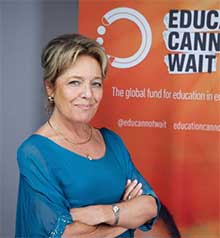
Yasmine Sherif is Director,
Education Cannot Wait
The UN Global Fund for Education in Emergencies and Protracted Crises

  Source

UN Warned of Two Dangers Ahead: Health of the Human Race & Survival of the Planet

Civil Society, Climate Action, Climate Change, Conservation, Environment, Featured, Global, Headlines, Natural Resources, TerraViva United Nations

Opinion

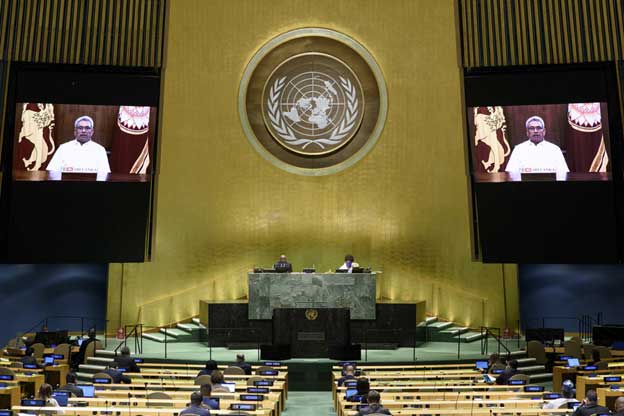
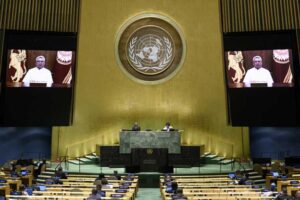
President Gotabaya Rajapaksa (on screen) of Sri Lanka addresses the general debate of the General Assembly’s seventy-fifth session. Credit: UN Photo/Loey Felipe

LONDON, Oct 5 2021 (IPS) – Addressing the UN General Assembly last month President Gotabaya Rajapaksa of Sri Lanka raised several concerns, two that had to do with health. One concerned the health of the human race; the other the health of Planet Earth on which man struggles increasingly to survive.


It is understandable for the President to draw the world’s attention to the current pandemic that plagues the people of Sri Lanka as it does the populations of most other nations that constitute the UN family that have struggled in the last two years to overcome COVID-19 which has brought some nations almost to their knees.

As we know some countries have dealt with the spreading virus more effectively and efficiently than others because they relied on the correct professional advice and had the right people in the places instead of dilettantes with inflated egos.

The immediacy of the pandemic with its daily effects on health care and peoples’ livelihoods is seen as urgent political and health issues unlike the dangers surrounding our planet which, to many, appear light miles away while still others treat it with large doses of scepticism.

Quite rightly President Rajapaksa pointed to the dangers ahead for the survival of the planet – as underscored in the recent report of the Inter-government Panel on Climate Change (IPCC) — due to human activity and said that Sri Lanka, among other measures, aims to increase its forest cover significantly in the future.

What really matters is whether those on the ground — like some of our politicians and their acolytes who seem to think that saving the planet is somebody else’s responsibility but denuding the forests and damaging our eco-systems for private gain is theirs — pay heed to the president’s alarm signals that should appropriately have been sounded at least a decade ago.

But what evoked a quick response was not the call for international action to save the people from the pandemic or the planet from climate change as President Rajapaksa told the UN but what he told the UN chief Antonio Guterres at their New York meeting.

While reiterating Sri Lanka’s stance that internal issues should be resolved through domestic mechanisms what aroused interest was the president’s sudden and unexpected readiness to invite the Sri Lankan Tamil diaspora scattered across the Global North and in smaller numbers elsewhere, for discussions presumably on reconciliation, accountability and other outstanding matters.

One would have thought that there would be a gush of enthusiasm from some sections of the Tamil diaspora which had previously shown an interest in being involved in a dialogue with the Sri Lanka Government over a range of issues that concern the Tamil community.

But the few reactions that have been reported from a few Tamil organisations appear lukewarm. Yes, the Non-Resident Tamils of Sri Lanka (NRTSL), a UK-based group, welcomed the President’s announcement saying that “engagement with the diaspora is particularly important at the time when multiple challenges face Sri Lanka”.

However, there was a caveat. The NRTSL is supportive of “open, transparent and sincere engagement of the government of Sri Lanka,” the organisation’s president V. Sivalingam was quoted as saying.

The better-known Global Tamil Forum (GTF) called it a “progressive move” and welcomed it. But its spokesman Suren Surenderan questioned what he called President Rajapaksa’s “sudden change of mind”.

Surendiran said that in June President Rajapaksa was due to meet the Tamil National Alliance (TNA) but that meeting was put off without a new date been fixed.

“When requests are made by democratically elected representatives of Tamil people in Sri Lanka to meet with the President, they are “deferred with flimsy excuses”, {and} now from New York he has declared that he wants to engage with us, Tamil diaspora,” Surendiran said rather dismissively in a statement.

Though the Sri Lanka Tamil diaspora consists of many organisations and groups spread across several continents there has been a studied silence from most of them, a sign that many of them are sceptical about how genuine the gesture is.

In March this year, after the UN Human Rights Council passed a highly critical resolution on Sri Lanka, the Rajapaksa government proscribed several Tamil diaspora organisations and more than 300 individuals labelling them terrorist or terrorist linked. These included Tamil advocacy organisations such as the British Tamil Forum, Global Tamil Forum, Canadian Tamil Congress, Australian Tamil Congress and the World Tamil Coordinating Committee.

Precisely seven years earlier in March, the Mahinda Rajapaksa government banned 424 persons and 16 diaspora organisations.

The problem for the present administration is that if it is intent on inviting Tamil organisations to participate in talks it would have to lift the existing bans on individuals and groups without which they are unlikely to talk with the government.

As transpired before peace talks at various times between the government and the LTTE, the Tamil groups are most likely to insist on participation as legitimate organisations untainted by bans. That is sure to be one of the key conditions, if not the most important pre-condition.

It is also evident that the Tamil diaspora is not a homogenous entity. It consists of moderate organisations that are ready to resolve the pressing issues within a unitary Sri Lanka, to those at the other end of the spectrum still loyal to the LTTE ideology and demanding a separate state.

If the Government cherry-picks the participants-particularly the ones that are more likely to collaborate with the administration, it would be seen as an attempt to drive a huge wedge in the Tamil diaspora.

That could well lead to the excluded groups strengthening their existing links with political forces in their countries of domicile including politicians in government as one sees in the UK and Canada, for instance, and Tamil councillors in other elected bodies to increase pressure on Sri Lanka externally.

That is why some Tamil commentators already brand this as a “diversionary move” to lessen the international moves against Colombo.

What would be the reactions of powerful sections of the Buddhist monks and the ultranationalist Sinhala Buddhists who strongly supported a Gotabaya presidency?.

And across the Palk Strait there are the 80 million or so Tamils in Tamil Nadu and an Indian Government watching developments with a genuine interest and concern.

Neville de Silva is a veteran Sri Lankan journalist who was Assistant Editor of the Hong Kong Standard and worked for Gemini News Service in London. Later he was Deputy Chief-of-Mission in Bangkok and Deputy High Commissioner in London.

  Source

IUCN World Conservation Congress Warns Humanity at ‘Tipping Point’

Biodiversity, Civil Society, Climate Action, Climate Change, Conferences, Conservation, Environment, Featured, Global, Headlines, Natural Resources, TerraViva United Nations

Conservation

President Macron and Harrison Ford among speakers at the Congress Opening Ceremony. Credit: IUCN Ecodeo

St Davids, Wales, Oct 4 2021 (IPS) – The world’s most influential conservation congress, meeting for the first time since the onset of the COVID-19 pandemic, has issued its starkest warning to date over the planet’s escalating climate and biodiversity emergencies.


“Humanity has reached a tipping point. Our window of opportunity to respond to these interlinked emergencies and share planetary resources equitably is narrowing quickly,” the International Union for Conservation of Nature (IUCN) declared in its Marseille Manifesto at the conclusion of its World Conservation Congress in the French port city.

“Our existing systems do not work. Economic ‘success’ can no longer come at nature’s expense. We urgently need systemic reform.”

The Congress, held every four years but delayed from 2020 by the pandemic, acts as a kind of global parliament on major conservation issues, bringing together a unique combination of states, governmental agencies, NGOs, Indigenous Peoples’ Organisations and affiliate members. Its resolutions and recommendations do not set policy but have shaped UN treaties and conventions in the past and will help set the agenda for three key upcoming UN summits – food systems security, climate change and biodiversity.

“The decisions taken here in Marseille will drive action to tackle the biodiversity and climate crises in the crucial decade to come,” said Dr Bruno Oberle, IUCN Director-General.

“Collectively, IUCN’s members are sending a powerful message to Glasgow and Kunming: the time for fundamental change is now,” he added, referring to the UN Climate Change Conference (COP26) to be hosted by the UK in November, and the UN Convention on Biological Diversity (COP 15) to be held in China in two parts, online next month and in person in April-May 2022.

The week-long IUCN Congress, attended in Marseille by nearly 6,000 delegates with over 3,500 more participating online, was opened by French President Emmanuel Macron who declared: “There is no vaccine for a sick planet.”

He urged world leaders to make financial commitments for conservation of nature equivalent to those for the climate, listing such tasks as ending plastic pollution, stopping the deforestation of rainforests by eradicating their raw materials in supply chains, and phasing out pesticides.

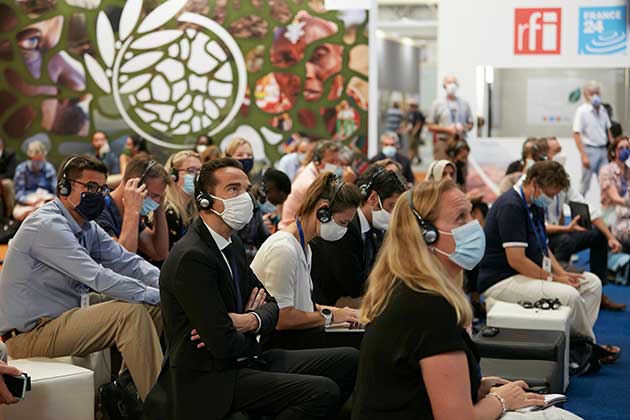
Congress participants during an Exhibition event of the Sixth Global Coral Reef Monitoring Network. Credit: IUCN Ecodeo

China’s prime minister, Li Keqiang, said in a recorded message that protecting nature and tackling the climate crisis were “global not-traditional security issues”.

While noting that some scientists fear that the climate emergency is “now close to an irreversible tipping point”, the Marseille Manifesto also spoke of “reason to be optimistic”.

“We are perfectly capable of making transformative change and doing it swiftly… To invest in nature is to invest in our collective future.”

Major themes that dominated the IUCN Congress included: the post-2020 biodiversity conservation framework; the role of nature in the global recovery from the pandemic; the climate emergency; and the need to transform the global financial system and direct investments into projects that benefit nature.

Among the 148 resolutions and recommendations voted in Marseille and through pre-event online voting, the Congress called for 80 percent of the Amazon and 30 percent of Earth’s surface—land and sea—to be designated “protected areas” to halt and reverse the loss of wildlife.

Members also voted overwhelmingly to recommend a moratorium on deep-sea mining and reform the International Seabed Authority, an intergovernmental regulatory body.

“The resounding Yes in support for a global freeze on deep seabed mining is a clear signal that there is no social licence to open the deep seafloor to mining,” Jessica Battle, leader of the WWF’s Deep Sea Mining Initiative, said, quoted by AFP news agency.

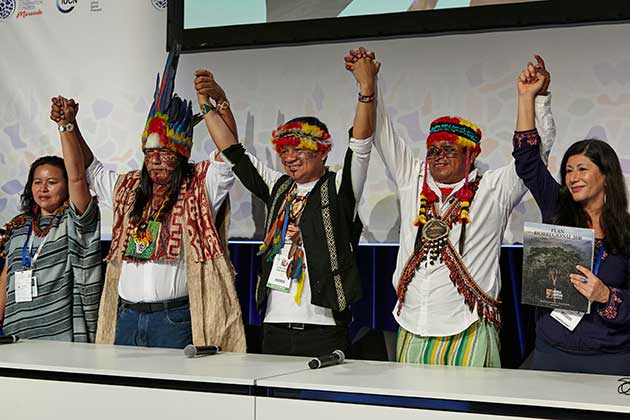
The emergency motion calling for four-fifths of the Amazon basin to be declared a protected area by 2025 was submitted by COICA, an umbrella group representing more than two million indigenous peoples across nine South American nations. It passed with overwhelming support.

Representatives from COICA and Cuencas Sagradas present their bioregional plan for the Amazon during a press conference. Credit: IUCN Ecodeo

Jose Gregorio Diaz Mirabal, general coordinator of COICA and a leader of the Curripaco people in Venezuela, said the proposal was a “plan for the salvation of indigenous peoples and the planet”.

The Amazon has lost some 10,000 square kilometres every year to deforestation over the past two decades. Brazil is not an IUCN member and thus could not take part in the vote which runs against President Jair Bolsonaro’s agenda.

The five-page Marseille Manifesto makes repeated references to indigenous peoples and local communities, noting “their central role in conservation, as leaders and custodians of biodiversity” and amongst those most vulnerable to the climate and nature emergencies.

“Around the world, those working to defend the environment are under attack,” the document recalled.

Global Witness, a campaign group, reported that at least 227 environmental and land rights activists were killed in 2020, the highest number documented for a second consecutive year. Indigenous peoples accounted for one-third of victims. Colombia had the highest recorded attacks.

The resolution calling for 30 percent of the planet’s land and ocean area to be given protected status by 2030, said selected zones must include “biodiversity hotspots”,  be rigorously monitored and enforced, and recognise the rights of indigenous peoples to their lands, territories and resources. The  ‘30 by 30’ target is meant as a message to the UN biodiversity summit which is tasked with delivering a treaty to protect nature by next May.

Many conservationists are campaigning for a more ambitious target of 50 percent.

However, the 30 by 30 initiative, already formally backed by France, the UK and Costa Rica, is of considerable concern to some indigenous peoples who have been frequently sidelined from environmental efforts and sometimes even removed from their land in the name of conservation.

The IUCN Congress also released its updated IUCN Red List. The Komodo dragon, the world’s largest lizard, was reclassified from ‘vulnerable’ status to ‘endangered’, while 37 percent of shark and ray species are now reported to be threatened with extinction. Four species of tuna are showing signs of recovery, however.

Craig Hilton-Taylor, head of IUCN’s Head of Red List Unit, said the current rate of species extinctions is running 100 to 1,000 times the ‘normal’ or ‘background’ rate, a warning that Earth is on the cusp of the sixth extinction event. The fifth, known as the Cretaceous mass extinction event, occurred 65 million years ago, killing an estimated 78 percent of species, including the remaining non-avian dinosaurs.

One of the more controversial motions adopted – on “synthetic biology” or genetic engineering – could actually promote the localised extinction of a species. The motion opens the way for more research and experimentation in technology called gene drive. This could be used to fight invasive species, such as rodents, snakes and mosquitos, which have wiped out other species, particularly birds, in island habitats.

It was left to Harrison Ford, a 79-year-old Hollywood actor and activist, to offer hope to the Congress by paying tribute to young environmentalists.

“Reinforcements are on the way,” he said. “They’re sitting in lecture halls now, venturing into the field for the very first time, writing their thesis, they’re leading marches, organising communities, are learning to turn passion into progress and potential into power…In a few years, they will be here.”

Andrea Athanas, senior director of the African Wildlife Foundation, affirmed there was a sense of optimism in the Marseille air, in recognition that solutions are at hand.

“Indigenous systems were lauded for demonstrating harmonious relationships between people and nature. Protected areas in some places have rebounded and are now teeming with wildlife. The finance industry has awoken to the risks businesses run from degraded environments and are calculating those risks into the price of capital.

“Crisis brings an opportunity for change, and the investments in a post COVID recovery present a chance to fundamentally reshape our relationship with nature, putting values for life and for each other at the centre of economic decision-making,” he told IPS.

View the complete Marseille Manifesto here.


Delivering On the Promise of Health For All Must Include Gender Equality and SRHR

Civil Society, COVID-19, Development & Aid, Gender, Global, Headlines, Health, Human Rights, Humanitarian Emergencies, Inequity, Labour, Poverty & SDGs, TerraViva United Nations, Women’s Health

Opinion

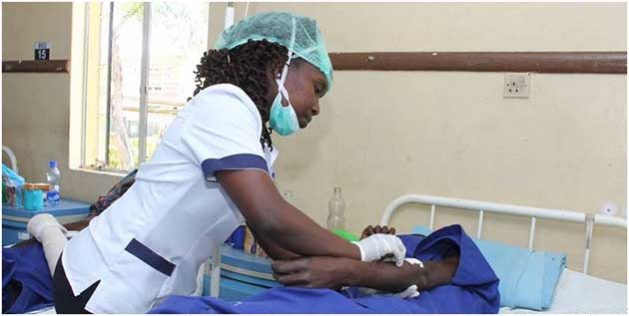
Health workers are at the frontlines in the fight against the new Corona Virus. Credit: John Njoroge

NEW YORK, Sep 29 2021 (IPS) – Gender-responsive universal health coverage (UHC) has the proven potential to transform the health and lives of billions of people, particularly girls and women, in all their intersecting identities. At tomorrow’s kick-off to the 2023 UN High-Level Meeting (HLM) on UHC, Member States and stakeholders will review progress made on the 2019 HLM’s commitments and set a roadmap to achieve UHC by 2030. We, as the co-convening organizations of the Alliance for Gender Equality and UHC, call on Member States to safeguard gender equality and sexual and reproductive health and rights (SRHR) as part of UHC implementation, especially in light of the gendered impacts of the COVID-19 pandemic.


To move forward, it is crucial to remember our cumulative past promises. In 2019, Member States adopted a Political Declaration that contained strong commitments to ensure universal access to SRHR, including family planning; mainstreaming a gender perspective across health systems; and increasing the meaningful representation, engagement, and empowerment of all women in the health workforce. Further, 58 countries put forward a joint statement that argued that investing in SRHR is affordable, cost-saving, and integral for UHC. These commitments were the result of the advocacy and hard work of civil society organizations, including members of the Alliance for Gender Equality and UHC, and set out a clear path on the steps needed to make gender-responsive UHC a reality.

However, following the 2019 HLM, the deadly and devastating COVID-19 pandemic drastically changed how individuals around the globe could access essential health services. Fundamental human rights, including hard-won gains made for UHC, SRHR, and gender equality, are now at risk as health and social services are strained and political attention is diverted. The protracted pandemic underscores how gender-responsive UHC is more important than ever.

We call on Member States to renew the commitments made in 2019 and affirm that delivering on the promise of health for all is only possible by way of gender-responsive UHC.

To truly deliver gender-responsive UHC, we offer the following five recommendations:

1. Design policies and programs with an intersectional lens that places SRHR and girls and women — in all their diversity — at the center of UHC design and implementation. To be effective, UHC must recognize and respond to the needs of women in all their intersecting identities, including by explicitly addressing the ways in which race, ethnicity, age, ability, migrant status, gender identity, sexual orientation, class, and caste multiply risk and impact health outcomes. What’s more, COVID-19 has deepened inequalities for marginalized populations, and special attention is needed, now more than ever, to deliver UHC for those pushed furthest behind.

2. Ensure UHC includes comprehensive SRH services, and provide access to SRH services for all individuals throughout the life course. These services must be free of stigma, discrimination, coercion, and violence, and they must be integrated, high quality, affordable, accessible, and acceptable. The World Health Organization (WHO) provides guidance in the UHC Compendium of interventions and supporting documents for what this can look like. The pandemic has given way to multiple interruptions to SRHR care. For example, an estimated 12 million women may have been unable to access family planning services due to the pandemic. COVID-19 response and recovery and UHC implementation must address these issues.

3. Prioritize, collect, and utilize disaggregated data, especially gender-disaggregated data. UHC policy and planning can only be gender-responsive when informed by data that are disaggregated by gender and other social characteristics. In the current pandemic, not all countries are reporting disaggregated data on infections and mortality from COVID-19 to the WHO, and most countries have not implemented a gendered policy response. In June 2021, only 50% of 199 countries reported data disaggregated by sex on COVID-19 infections and/or deaths in the previous month.1 The number of countries reporting sex-disaggregated statistics has also decreased over the course of the pandemic. Without this information, decision-makers are unable to base policies on evidence affirming how to address the health needs of all genders — a critical lesson for UHC.

4. Foster gender equality in the health and care workforce and catalyze women’s leadership. The approach to the health and care workforce in the pandemic has frequently not applied a gender lens, ignoring the fact that women are 70% of the global health workforce and powerful drivers of health services. Gender inequities in the health workforce were present long before the pandemic, with the majority of female health workers in lower-status, low-paid roles and sectors, often in insecure conditions and facing harassment on a regular basis. Moreover, although women have played a critical role in the pandemic response — from vaccine design to health service delivery — they have been marginalized in leadership on pandemic decision-making from parliamentary to community levels. In fact, 85% of national COVID-19 task forces have majority male membership. Urgent investment in safe, decent, and equal work for women health workers, as well as equal footing for women in leadership and decision-making roles, must be central to the delivery of UHC.

5. Back commitments to advancing SRHR, gender equality, and civil society engagement in UHC design and implementation with necessary funding and accountability. Now is the time to invest in health and the care economy, particularly in UHC. Governments everywhere are facing fiscal constraints from the pandemic. UHC is a critical part of investing in and building back resilient health and social systems to avoid catastrophic spending on future pandemics and global health emergencies. UHC must be designed intentionally, with appropriate accountability mechanisms, to reduce inequalities between and within countries — and especially gender inequality, which undermines social and economic rights and resilience.

We, along with our civil society partners in the Alliance for Gender Equality and UHC, stand ready to work hand-in-hand with governments, the UN, and all stakeholders to act on these recommendations on the road to the 2023 HLM on UHC. At this point in the COVID-19 pandemic, there is no time to waste in making the promise of health for all a reality, and this can only be achieved through gender-responsive UHC that centers gender equality and SRHR.

The authors are Ann Keeling of Women in Global Health, Divya Mathew of Women Deliver, Deepa Venkatachalam of Sama Resource Group for Women and Health, and Chantal Umuhoza of Spectra Rwanda. These four organizations are the co-conveners of the Alliance for Gender Equality and Universal Health Coverage.

1 Global Health 50/50 (globalhealth5050.org)

  Source

Scientific Panel’s Scoping Report Instructive for Global Food Systems Transformation

Biodiversity, Conferences, Environment, Featured, Food and Agriculture, Food Security and Nutrition, Food Sustainability, Global, Green Economy, Headlines

Biodiversity

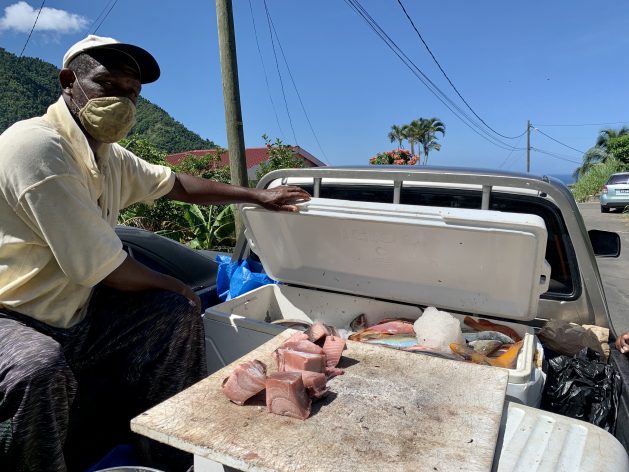
A fisherman displays his catch of the day in Dominica. Credit: Alison Kentish/IPS

DOMINICA, Sep 24 2021 (IPS) – On September 10th, on a sweltering summer afternoon, three fishers drove a van around the residential community of Castle Comfort in Dominica, blowing forcefully into their conch shells – the traditional call that there is fresh fish for sale in the area.


One of the men, Andrew Joseph, urged a customer to double her purchase of Yellowfin Tuna, stating that at five Eastern Caribbean dollars a pound (US$1.85), she was getting the deal of the summer. (In the lean season, that price can double).

“It’s good fish, it’s fresh, it’s cheap,” he told IPS, adding that, “People eat too much meat. This is what is good for the body and the brain.”

Little did he know that he was echoing the words of a scientist who is rallying the world, and the landmark United Nations Food Systems Summit (UNFSS) to put greater emphasis on the financial, nutritional and traditional benefits of aquatic foods.

“Foods coming from marine sources, inland sources, food from water, they are superfood, but this is being ignored in the global debate and at the country level, because we have had a focus on land production systems and we have to change that,” Shakuntala Haraksingh Thilsted, Global Lead for Nutrition and Public Health at World Fish told IPS.

The nutrition scientist is also the Vice-Chair of Action Track 4, Advancing Equitable Livelihoods, at the UNFSS.

As the landmark summit hopes to deliver urgent change in the way the world thinks about, produces and consumes food, issues like the linkages between aquatic systems and health are emerging.

So are other linkages a scoping report by the Intergovernmental Science-Policy Platform on Biodiversity and Ecosystem Services (IPBES) says the world cannot ignore. The report, approved in June, paves the way for a 3-year assessment of the interlinkages among biodiversity, water, food and health.

In the case of the UNFSS, it shows how food systems transformation can be achieved if tackled as one part of this network.

“It will assess the state of knowledge, including indigenous and local knowledge, on past, present, and possible future trends in these interlinkages, with a focus on biodiversity and nature’s contributions to people,” IPBES Executive Secretary Dr Anne Larigauderie told IPS.

“The IPBES nexus assessment will contribute to the development of a strengthened knowledge base for policymakers for the simultaneous implementation of the post-2020 global biodiversity framework, under the Convention on Biological Diversity, and the Paris Agreement adopted under the United Nations Framework Convention on Climate Change and the 2030 Agenda for Sustainable Development.”

Landscape Ecology Professor Ralf Seppelt was one of the scoping experts for the nexus assessment. He says the science is clear on how food systems impact biodiversity and why agroecology must be a pillar of efforts to transform food systems.

“Micronutrients are lacking a lot. Micronutrients are provided by fruits and vegetables, which need pollination. So, the nexus is really strong between agroecological principles and the nutritional value of what we are producing,” he told IPS.

“Wherever we have to increase production, we should do it on agroecological principles. We should consider what farmers say and do, their needs, their access to production goods such as fertilizers and seeds, and it’s equally important to change our diets. It’s not just reducing harvest losses and food waste, but also about moving away from energy-rich, meat-based diets and feeding ourselves in an environmentally friendly way,” he said.

Professor Seppelt is also hoping that the voices of small farmers and indigenous communities are amplified in the global food transformation conversation. “IPBES made an enormous effort to work with indigenous peoples and local communities and include indigenous and local knowledge in its reports. We organized workshops, to collect a diversity of views about nature and its contributions to people, or ecosystem services to make the assessment as relevant as possible to a range of users,” he said.

For Thilsted, any plan to revamp food systems must come with a commitment to weed out inequality. She says from access to inputs and production to consumption and waste, inequality remains a problem.

“This unequal distribution of who wins, who loses, who does well, who does not do too well, who profits and who does not is putting a strain on food and nutrition and it is limiting our progress towards a sustainable development future,” she told IPS.

“COVID-19 has shown the fragility of the system and it is further displacing the vulnerable, for example, women and children who are being more exposed to food and nutrition insecurity.”

The IPBES nexus assessment hopes to better inform policymakers on these key issues.

It is not the first assessment of interlinkages. Earlier this year IPBES and the Intergovernmental Panel on Climate Change (IPCC) launched a landmark workshop report that focused on tackling the climate and biodiversity crises as one.

Now, the current nexus assessment on interlinkages among biodiversity, water, food and health will explore options for sustainable approaches to water, climate change, adaptation and mitigation, food and health systems.

IPBES Executive Secretary Dr Anne Larigauderie says it also shows that there is hope for restoring the balance of nature.

“I would like people to remember and know that they are a part of nature, that the solutions for our common future are in nature; that nature can be conserved and restored to allow us, human beings, to simultaneously meet all our development goals. We can do this if we work together, act more based on equity, social and environmental justice, reflect on our values systems, and on our visions of what a good life actually is.”