Harness Youth to Change World’s Future

Biodiversity, Climate Change, Conferences, Development & Aid, Economy & Trade, Environment, Featured, Gender, Global, Green Economy, Headlines, Human Rights, Inequity, Natural Resources, TerraViva United Nations, Trade & Investment, Women & Climate Change
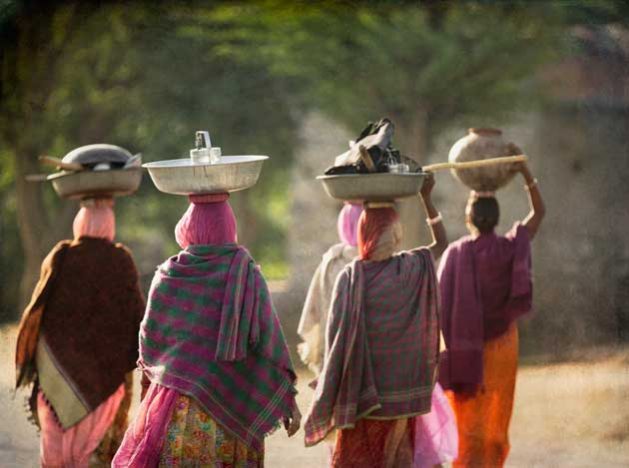
Women bear the brunt of climate change disasters. Credit: Women Deliver

NEW YORK, Mar 31 2020 (IPS) – Vanessa Nakate of Uganda may have been cropped out of a photograph taken at the World Economic Forum, but she along with Swedish activist Greta Thunberg have made the climate crisis centre stage.


Women Deliver Young Leader Jyotir Nisha discusses with Costa Rican President Carlos Alvarado Quesada on how to harness young people to overcome gender inequality and address climate change in a recent wide-ranging interview.

Quesada says key strategies to designing policy to fight climate change require unconventional decision-making to address challenges like climate change, biodiversity loss, the fourth industrial revolution, and inequality.

“These are intertwined factors that can hinder development if unattended but, if tackled, they could potentially accelerate progress and wellbeing for all,” he says.

“And, of course, this is a task that young leaders are able to handle and produce the timely answers that are necessary.”

Bringing in her experience in the non-profit sector, Nisha says training girls and women in up-cycling plastic waste to produce handmade goods has assisted them to contribute to their family income and their empowerment in the community. The question is, how can this be broadened.

Quesada says women, in particular young women, are leading the way.

Costa Rican President Carlos Alvarado Quesada. Credit: Women Deliver

“From cooperative seed banks, to early warning networks, from solar engineers to women politicians carving a path of sustainable policymaking. They are at the forefront of forest conservation, sustainable use of resources, and community enhancement, and restoration of landscapes and forest ecosystems,” he says.

However, women’s roles are often underestimated, unrecognised, and unpaid.

“Women and girls with access to technology have already begun developing innovative tools to reduce emissions by targeting sustainable consumption and production practices, including food waste, community waste management, energy efficiency, and sustainable fashion.”

The solutions exist, but much more is needed.

“It takes a whole-of-society approach for collaboration and cooperation on a bigger and enhanced scale.”

The President suggests that the way investments are made could be fundamental to ensure a flow of finance to the communities, including women, and youth. This will, he believes, provide “a stable source of funding for businesses and services that contribute to the solution of social or environmental challenges.”

The impact of this will be partnerships between traditional sources of finance, like international cooperation and development banks, and new partners, like philanthropy, hedge funds, or pension funds.

“And what better than young people giving the thrust that all this requires?”

Nisha says she was pleased to see the massive mobilisation of young people at the inaugural Climate Action Summit last year. The summit had little good news for climate change with concerns raised that the accelerating rise in sea level, melting ice would have on socio-economic development, health, displacement, food security and ecosystems. However, beyond taking to the streets, they also need to hold decision-makers accountable.

“In the last months we have witnessed the irruption of massive mobilisations in different parts of the world, lead mostly by young people. This would seem surprising for a generation that has been accused several times of passivity, indifference, and individualism,” Quesada says. “I truly believe that, as long as these demands are channelled through democratic and pacifist means, they are extremely important to set a bar and a standard of responsibility for us, decision-makers — who are, by the way, more and more often, young people.”

He adds that world leaders owe them explanations of the decisions made.

“We must also have the wisdom to pay attention to these demands and take into account their opinions and proposals to reach agreements that have the legitimacy of consensus-building.”

However, Nisha notes, while campaigns like the Deliver for Good campaign is working across sectors reports at COP25, and the recent World Economic Forum (Davos), “climate change continues to threaten progress made toward gender equality across every measure of development.”

At WEF Global Gender Gap Report 2020 showed that it would take more than a lifetime, 99.5 years in 2019 for gender parity across health, education, work and politics to be achieved.

Quesada says the climate catastrophe “demands that policymakers and practitioners renew commitments to sustainable development — at the heart of which is, and must continue to be, advancing gender equality and women’s empowerment, and realising women’s rights as a pre-requisite for sustainable development.”

Costa Rica, he says, has been recognised internationally on two significant areas: the respect of human rights and environmental protection.

“The present Administration has taken these objectives a step further by paying particular attention to women’s rights, inclusion, and diversity, and including them as part of our core policy principles and our everyday practices,” he says. “We expect to increase women’s integration into productive processes and achieve women’s economic empowerment through specific policies linked to our long-term development strategy — the Decarbonization Plan — allowing the transformational changes our society needs.

However, the critical question, Nisha says, is: “What can world leaders and governments do today to ensure young people have a seat at the decision-making table?”

Quesada is confident that young people will be part of the solution.

“The challenges we are facing today are unprecedented precisely because previous generations did not have to face situations such as biodiversity loss, global warming, or the emergence of artificial intelligence and technology. Thus, we need new answers and solutions from Twenty-First Century people, and those should and will be put forward by the youth,” he says.

The importance of youth involvement was recently highlighted too at the meeting of African Leaders for Nutrition in Addis Ababa. African Development Bank (AfDB) President Akinwumi Adesina said Africa should invest in skills development for the youth so the continent’s entrepreneurs can leverage emerging technologies to transform Africa’s food system to generate new jobs. This is especially urgent as the population on the continent is expected to double to 2.5 billion people in 40 years putting pressure on governments to deliver more food and jobs in addition to better livelihoods.

In a recent interview with IPS International Institute for Tropical Agriculture (IITA) Director General, Nteranya Sanginga, explained that this change is neither easy or necessarily something all leadership has taken on board.

“Our legacy is starting a programme to change the mindset of the youth in agriculture. Unfortunately (with) our governments that is where you have to go and change mindsets completely. Most probably 90 per cent of our leaders consider agriculture as a social activity basically for them its (seen as a) pain, penury. They proclaim that agriculture is a priority in resolving our problems, but we are not investing in it. We need that mindset completely changed.”

Quesada is unequivocal that this attitude needs to change.

“My advice to world leaders is to have the humility to listen to the people and to allow more inclusive and participatory decision-making. And to the young people, I can only encourage them to own their future, and to act accordingly, with vision, courage, and determination.”
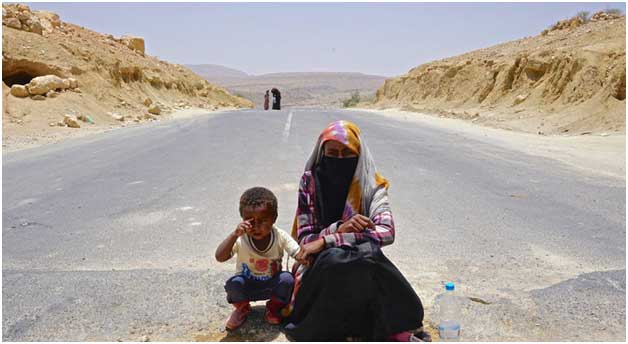
 

Coronavirus Worsens Yemen’s Long Tale of Woe

Armed Conflicts, Civil Society, Crime & Justice, Editors’ Choice, Featured, Global, Global Governance, Headlines, Human Rights, IPS UN: Inside the Glasshouse, Middle East & North Africa, Peace, TerraViva United Nations

Opinion

Abdul Mohammed is a humanitarian worker for Oxfam Yemen

Credit: United Nations

SANA’A, Yemen, Mar 26 2020 (IPS) – In every room in Yemen’s Al-Saba’een hospital, patients in critical condition waited on chairs, and still others laid on the bare ground. I saw women and girls sharing beds in pairs, and children laying close together being treated.


This is Sana’a, Yemen’s best-supplied and capital city, on what has become an ordinary day. Coronavirus hasn’t arrived in Yemen yet.

As I watch the destruction that the novel coronavirus is wreaking on wealthy and peaceful countries with developed health systems, I fear for Yemen. If cholera, diphtheria, and malnutrition can overwhelm our war-stricken health system, I can only imagine the devastation that this fast-spreading, uncurable virus could unleash.

The impact of COVID-19 would mirror the impact of the war to date: no one would be safe, but the most vulnerable would bear a disproportionate share of the burden.

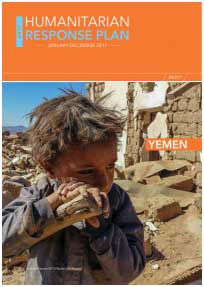
Credit: UNOCHA

The world is now getting a glimpse of the reality we have faced in Yemen for the past five years since war here escalated: life-threatening illness, deepening economic pressure, fewer and worse options for parents and caregivers, and a dizzyingly constant change in routine.

Millions now live in overcrowded shelters, without safe water, proper nutrition or proper health care. The basic steps others are taking to curtail the spread of COVID-19 are virtually impossible here. Should it take hold, the results would be unthinkable.

Public health crises don’t just threaten the well-being of the afflicted; their impacts ripple widely across families and societies. I think about Ahmed, a young man from Ibb, who lost his father to cholera, and then was suddenly thrust into the role of sole provider and caregiver for his entire family.

“I am not ready for this,” he shared in desperation. Feeling ill-equipped but required to take on extraordinary responsibilities – and with little time for grief or sentiment – is one that most Yemenis can identify with.

As we mark five years since a US-backed, Saudi-led coalition intervened and escalated the war in our country, we find ourselves defenseless against even basic maladies like diphtheria and cholera. These stone-age pathogens are held at bay in most societies by taking basic public health measures, drinking safe water, and eating nutritious food.

But parties to this on-going fighting since 2015 – have damaged or destroyed more than half of Yemen’s hospitals and other health facilities through bombing and shelling. The fighting has destroyed water and sanitation infrastructure in an already water-poor country, leaving more than two-thirds of the country with only unsafe water to drink.

As a result, Yemen now has the unenviable distinction of having experienced the world’s worst diphtheria outbreak in 30 years and the largest cholera outbreak ever recorded.

Even when it comes to critical patients who can be saved, this protracting war shown no mercy. Tens of thousands of Yemenis with life-threatening but manageable conditions have sought medical treatment abroad.

But the Saudi-led coalition, which has controlled Yemeni airspace on behalf of Yemen’s recognized government, has shut down commercial air traffic in and out of Sana’a. Only this year did the government and coalition consent to allow a long-promised medical air bridge to Cairo. 24 patients have been transported thus far. Tens of thousands have died waiting.

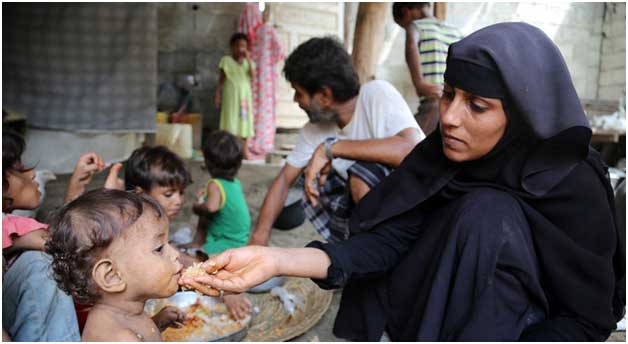
Credit: United Nations

Millions of Yemenis have already been forced from their homes, some of them multiple times to escape violence or pursue scarce opportunities for work. But even basic sanitation and health care in camps for displaced people are often unavailable.

Even with a massive aid response, as the conflict continues, we are fighting a rising tide. It goes without saying that in these cramped quarters, where social distancing is a fanciful notion and suppressed immunity the norm, a single infection would lead to countless deaths. The coronavirus epidemic would write new stories of suffering in Yemen’s already long tale of woe.

The conflict in Yemen must end before it claims any more lives. Yemen’s military and political leaders have shown too often these past five years that they are not willing to make even small compromises for the sake of their country and its people.

And the international community, so far, has failed to muster the resolve to demand the ceasefire and political settlement that can bring the life-saving peace that Yemen’s people demand.

With coronavirus knocking on Yemen’s door, we need humanitarian aid to restore our health systems, tackle the diseases currently ravaging our people, and prevent a new catastrophe. We cannot afford to wait for the next crisis to hits.

  Source

COVID-19 in the Time of Insecurity

Civil Society, Crime & Justice, Development & Aid, Economy & Trade, Education, Featured, Gender, Global, Headlines, Health, Human Rights, Humanitarian Emergencies, Inequity, TerraViva United Nations

Opinion

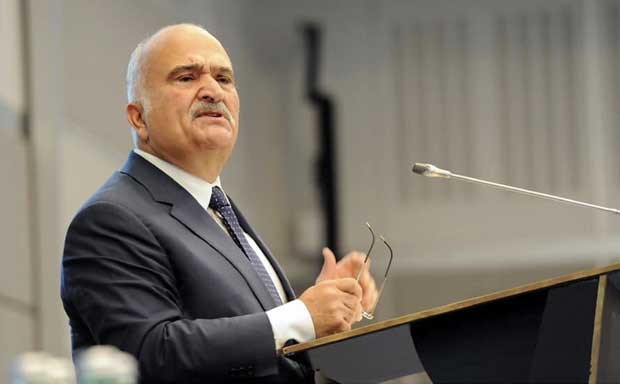
HRH Prince El Hassan bin Talal

AMMAN, Jordan, Mar 26 2020 (IPS) – Humankind has outlived multiple pandemics in the course of world history. The kingdoms and states of Central and Western Europe abolished the institution of serfdom once it had become clear that medieval rule in the aftermath of devastating pestilence would founder without ending the dependency and servitude that characterized the Dark Ages. The vulnerability of entire nations to the risk of total collapse in the absence of widespread access to the most basic healthcare in the Spanish Flu spurred governments to build the public health systems that have made the progress and development of the last hundred years possible. If the past is prologue, then continuity and survival command that we change.


We have more often than not banded together in the face of all kinds of threats. In all its ramifications, COVID-19 threatens to push our social, political and economic structures to the brink. Disease, recession and fright can rapidly overwhelm states and societies. Each coming day will bring increasing challenges that can only be met by caring for the sick, minimizing the impact of shutdowns on lives and livelihoods, securing the delivery of adequate water, food and energy supplies, and racing for a cure. Success – as in an asymmetric conflict – rests on resilience. To contain the socio-political and socio-economic fallout from the crisis, policymaking efforts should center on human dignity and welfare as the bedrock of national and international security.

The most vulnerable members of society in some parts of our world are those on the front lines of the crisis: the doctors, nurses, care-givers, pharmacists, sanitation workers, farmers, supermarket cashiers and truck drivers whose courage, sacrifice and dedication will see us through the next 12 to 18 months of expected lockdowns. In the absence of state support, what will happen to the hundreds of thousands of people who have already been laid off, while millions more face looming hardship as the numbers of layoffs grow? Some will continue to ignore the vulnerable and marginalized, those who have least access to humanitarian assistance, while others will continue to exploit them. The calls for social distancing have grown louder and more frequent over the last couple of days, and as we begin to separate from one other we must remember our humanitarian duty to each another.

Security, far from being individual, is collective and global. The current crisis calls for transcendent thinking between politicians on both sides of the aisle. Grey areas in politics in which zero-sum games and the perverse logic of mutually assured destruction proliferate will not protect and promote human dignity and welfare. Conservatives and reformers must now move beyond the tournaments and arm-twisting of politics. The logic of mutually assured survival cannot accept grey areas. If conflict resolution transcends political beliefs, nationality, ethnicity, gender, and religion, then human dignity and welfare is the benchmark of the humanitarian commitment to life.

Reliable brokers in the management of this crisis and other crises do exist as in the International Committee of the Red Cross and Médecins Sans Frontières. Corporate social responsibility requires developing a public platform of health facts so that people-to-people conversations and consultations can be promoted through civil society, the media and educational institutions. We cannot cherry-pick energy and climate change without talking about health or education and human dignity. Migrants and refugees must be an integral part of the national response for halting the spread of the novel coronavirus. The United Nations Economic and Social Commission for West Asia reports that 55 million people, in West Asia region, require some sort of humanitarian assistance and that the vulnerability of displaced women and girls is especially heightened in a pandemic. Post-conflict insecurity – whether in countries ravaged by war or across the urban centers and countrysides of advanced economies overwhelmed by disease – can only be addressed in the careful terrain mapping of humanitarian access. Yemen, Syria, Gaza and Libya are frighteningly vulnerable to the onslaught of epidemics – what will peace uncover there when the wars end?

Regional insecurity is heightened in the absence of cooperation, but the multilateral system is not at a loss in facing an existential crisis. European solidarity has been sharply damaged by the onset of widespread disease although China is performing through the swift and effective action that has come to the aid of the people and government of Italy. Multilateralism today can only be revisited with a focus on the interdisciplinary priorities of the twenty-first century that include addressing the need for a Law of Peace. We draw humanitarian concessions from the law of war in times of conflict, but have no recourse to legal instruments that can secure the dignity and welfare of all in times of peace.

The current crisis is as much a global health crisis as it is a crisis of the globalization that has come to undermine the foundations of modern society with its rampant inequality and rising injustice and which threatens the very survival of our species with climate change. The planet that we share with other organisms is fragile and prone to crises. A resolution to our predicament will take nothing short of extending the ethic of human solidarity beyond the contours of our immediate response to the outbreak of COVID-19. Real success lies not in the taming of a pathogen or in re-discovering the value of compassion, respect and generosity, but in institutionalizing these values in the days, weeks and months ahead.

  Source

Why Empowering National Human Rights Institutions Helps on the Quest for Healthy Earth?

Asia-Pacific, Civil Society, Climate Change, Development & Aid, Education, Environment, Featured, Global, Headlines, Human Rights, Population

Claudia Ituarte-Lima, Stockholm University, Sweden and University of British Columbia, Canada

 
Claudia Ituarte-Lima is researcher on international environmental law at the Stockholm Resilience Centre, and affiliated senior researcher at the Raoul Wallenberg Institute of Human Rights and Humanitarian Law. She is currently a visiting researcher at the Institute for Resources, Environment and Sustainability, University of British Columbia. She holds a PhD from the University College London and a MPhil from the University of Cambridge.

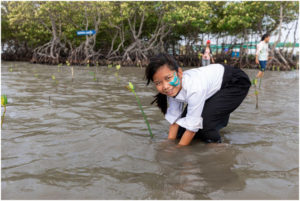
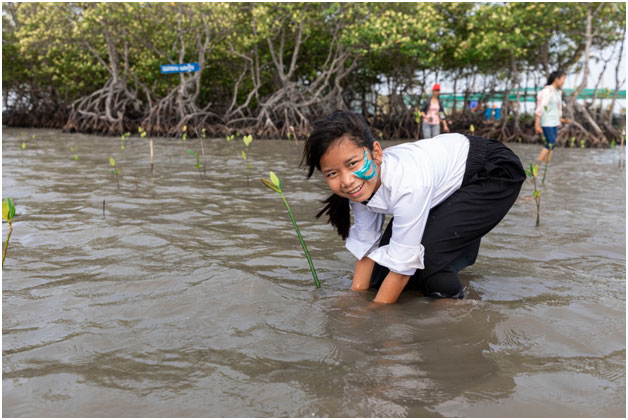
On March 2020, over 330 students, women champions, government officials, NGO members and community members from around Kampot and Kep gathered in an effort to plant 3,000 mangroves and conserve Cambodia’s coastline. The local activity took place as part of a larger mangrove planting and marine exhibition under Action Aid’s 100,000 Mangroves campaign, supported by the United Nations Development Programme (UNDP) under the project ‘Strengthening Climate Information and Early Warning Systems in Cambodia’. The campaign aims to plan 100,000 mangroves in eight community fisheries by May 2020, and raise awareness of the importance of marine ecosystems. Credit: ManuthButh/UNDP Cambodia

VANCOUVER, British Columbia, Canada, Mar 24 2020 (IPS) – We are living in a critical time. As we face existential environmental challenges from climate crises to the mass extinction of species, it is difficult sometimes to see solutions and new ideas. This is why we all need to celebrate and give visibility to creative and courageous efforts of people and organizations striving towards a healthy planet for all.


I write today about the key role played by National Human Rights Institutions (NHRIs) in the Global South in our collective fight against climate change. The time has come to empower NHRIs.

Their unique position mandated by law yet independent from the government can make an urgent needed bridge between legal and policy advances, and ground-up efforts such as youth and women movements, thereby contributing to the enjoyment of the right to a healthy environment.

I have recently had the chance of learning real-world success stories by brave NHRIs working in some of the most challenging contexts. While being a member of the facilitators’ team of a series of webinars* for technical staff and decision-makers working in NHRIs and prior face-to-face interaction with them, it became crystal clear that strengthening the skills and capacities of NHRIs can contribute positive outcomes for both human rights and the environment.

In Mongolia, for instance, the NHRI with the support of civil society organizations and environmental researchers has recently developed a draft law for safeguarding the rights of environmental defenders.

The NHRIs have also intervened in a variety of sectoral issues from pesticides and agriculture in Costa Rica, to mining in South Africa and the connections between coal mining and transportation in Mongolia. The Morocco NHRI has prompted other African NHRIs and civil society organizations to actively participate in international climate negotiations.

Business and human rights was a key issue raised by our NHRIs colleagues.

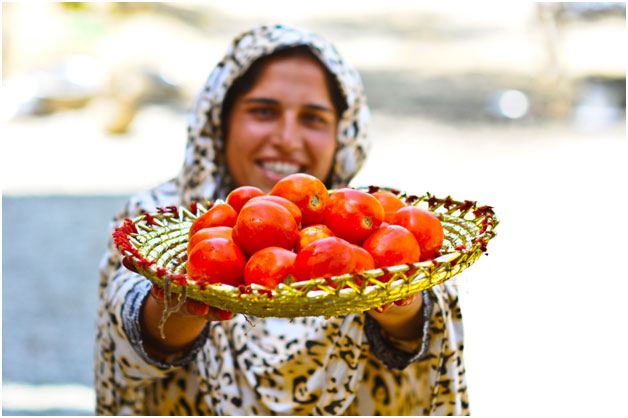
Nazia, 38, proudly shows off her home-grown tomatoes in Nadirabad village, Pakistan. She participated in kitchen gardening training offered under the joint UNDP-EU Refugee Affected and Host Areas (RAHA) Programme in Pakistan. Credit: UNDP Pakistan

The significant legal, institutional and financial obstacles that national duty bearers face to investigate transnational corporations and their responsibilities concerning their impacts to a safe climate has not proved insurmountable for NHRIs.

The Philippine’s NHRI has a mandate to promote human rights which, creatively interpreted, allowed it to investigate the climate change and human rights nexus beyond its national borders.

The systemic nature of climate change justified a national inquiry rather than a field visit. Because climate change is an existential issue not only to Filipino people but globally, the Philippines national inquiry on climate change turned into an inquiry with strong global dimensions.

It included public hearings in the Philippines, New York and London, virtual hearings and expert advice from the former UN Special Rapporteur on human rights and environment, academics from different parts of the world and the Asia-Pacific regional network of NHRIs.

A major comparative advantage presented by the NHRIs is their unique position in working hand in hand with right holders in addressing environmental – human rights gaps facing the most vulnerable populations.

Costa Rica NHRI has found, for instance, that women, girls, men and boys and elder living in coastal areas become especially vulnerable to climate change because their access to clean drinking water and fish become scarce.

The South African NHRI together with food sovereignty civil society organizations has developed a draft climate charter, to be presented to the parliament, with a more holistic approach to the current climate policy.

In recent years, the awareness of the linkages between human rights and climate change has greatly increased. The legal recognition of the right to a healthy environment in more than 150 countries, together with judicial decisions, and academic studies on the safe climate dimension of this right has grown rapidly. NHRIs can be instrumental in translating them into results and action, including under difficult circumstances.

Their role in advising duty bearers, working together with right-holders helps to understand and act upon systemic environmental challenges. Their synergies with environmental human rights defenders can also contribute to more effective investigation and advocacy, not least in the context of informal and unregulated business activities where it is especially difficult to collect data and hold businesses accountable.

Time has come for the international community to do more to support NHRIs in the Global South, a key player often overlooked in climate and biodiversity talks, debates and funding. Due to the intrinsic connections between human rights and environment, the NHRIs need to be further supported to perform their innovative roles in safeguarding life-support systems at various jurisdictional scales, including advocating for the global recognition of the right to a healthy environment by the United Nations.

* The series was organized by the Global Alliance for National Human Rights Institutions (GANHRI), UNDP, the UN Special Rapporteur on Human Rights and the Environment, the Swedish Environmental Protection Agency and UN Environment. A final report with key messages from the webinar series is available on the UNDP website.

  Source

Could the Coronavirus Pandemic have been Avoided if the World Listened to Indigenous Leaders?

Active Citizens, Climate Change, Editors’ Choice, Environment, Featured, Global, Headlines, IPS UN: Inside the Glasshouse, Regional Categories, TerraViva United Nations

Climate Change

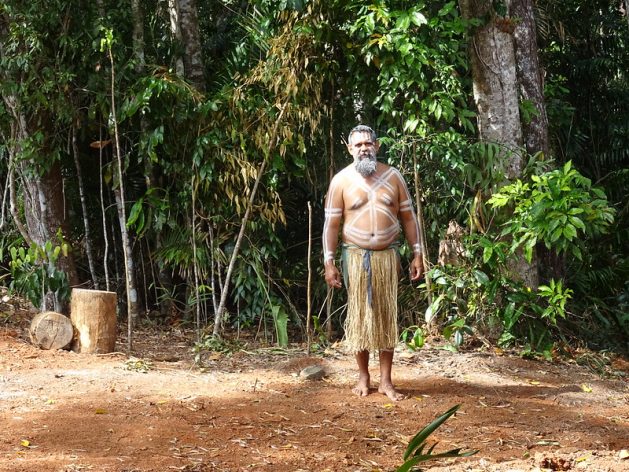
William Clark Enoch of Queensland. Aboriginal and Torres Strait Islander people, who comprise only 2.5 percent of Australia’s nearly 24 million population, are part of the oldest continuing culture in the world. At a Covering Climate Now panel in New York on Friday, indigenous leaders reiterated the need for the world to listen to them in addressing climate concerns. Credit: Neena Bhandari/IPS

UNITED NATIONS, Mar 19 2020 (IPS) Mina Setra remembers the story clearly. As a Dayak Pompakng indigenous person from Indonesia, when  visitors from the city who came into her community; brought bottled water with them because they were worried about the water not being suitable for drinking. 

Setra, who is the deputy secretary-general of the Indigenous Peoples’ Alliance of the Archipelago (AMAN), recalls one of the elders telling the visitors, “This is the problem of you city people: You eat and drink all the dead things. Like the water that is already in a bottle? It is dead water. The vegetables that you buy from the freezer in the supermarket, they’re all dead plants.”

The anecdote sums up a much bigger conversation that is relevant today: how climate change is linked to coronavirus, and why it’s important to listen to indigenous leaders on the matter.

Setra shared the story with IPS when asked about links between climate change and coronavirus, during a panel talk by Covering Climate Now in New York on Friday, where indigenous leaders reiterated the need for the world to listen to them in addressing climate concerns — and reminding them how climate change can lead to or exacerbate a global health crisis as grave as the current virus. 

The talk took place as global communities scrambled to take effective measures against the deadly virus, and just as the U.S. announced a global emergency while struggling to contain its coronavirus cases. More than two months since the world became aware of coronavirus — and increasingly learned of its alarming implicants — the pandemic has globally claimed 8,810 lives, with more than 218,800, cases. 

While global conversations have mainly focused on the issue of death rate, or the racism attached to the virus, or different countries’ isolation methods (or lack thereof), little has been said about the link to climate change.

This remains a much bigger conversation that indigenous leaders want people to be aware of: how climate change can exacerbate the dangers of something like the coronavirus, and why the world should’ve been listening to indigenous leaders to avoid such a catastrophic spread.  While many believe that coronavirus started with a bat, experts argue it’s not so black and white. A February report established what the leaders discussed at the talk: how deforestation can lead to a loss of habitat for many wild animals and species. As a result, they move to habitat that brings them to closer proximity to humans which can lead to repeated contact between them.  

“The inequilibrium of our planet is not just about climate change, but it’s also about the global economy,” Levi Sucre Romero, a member of the BriBri indigenous community from Costa Rica, told IPS at the panel talk. “So coronavirus is now telling the world what we have been saying for thousands of years: that if we do not help protect biodiversity and nature, that we will face this and worse future threats.”

Romero, a coordinator of the Mesoamerican Alliance of Peoples and Forests, further highlighted a United Nations’ statement for why it’s important for global communities to work with indigenous leaders and learn from their knowledge. United Nations for Indigenous Peoples did not respond to the IPS’ request for comments. 

While wild animals and species are forced to find a home in close proximity to humans as a result of deforestation, another crucial concern is the treatment of animals by people from commercial hubs and cities that can act as a catalyst for such a global crisis.

“Our animals are not contaminated by themselves. They get contaminated by people,” Tuxá said in response to IPS’ question about the link between coronavirus and climate change. “And the proof is that these viruses start in the commercial centres of the world. There is a direct correlation between this and coronavirus and other pandemics that are to come.”

Tuxá added the next pandemic’s cure can be found in the diversity of indigenous peoples’ lands. 

“That’s why it’s really important to demarcate and recognise our lands, to protect our lands and our biodiversity because future life depends on it,” he said.

  Source

The 2020 NPT Review Conference: From the Sublime to the Ridiculous

Armed Conflicts, Civil Society, Featured, Global, Global Geopolitics, Global Governance, Headlines, IPS UN: Inside the Glasshouse, Nuclear Energy – Nuclear Weapons, Peace, TerraViva United Nations

Opinion

VIENNA, Mar 12 2020 (IPS) – This year marks the 50th anniversary of the nuclear Non-Proliferation Treaty (NPT) and coincidentally the tenth quinquennial (five yearly) review conference is scheduled to be held at the United Nations in New York from 27 April to 22 May.


With 191 States parties, the NPT is the cornerstone of the global regime for nuclear non-proliferation, nuclear disarmament and peaceful uses of nuclear energy.

An unexpected complication is that of the novel coronavirus (COVID-19) and its impact on the NPT review conference – thus far, there is an inexplicable thundering silence from the UN regarding the postponement of the conference.

COVID-19

Yesterday, the World Health Organization (WHO) declared the COVID-19 to be a global pandemic affecting more than 114 countries with 118,000 people infected, 4,291 fatalities and many thousands more fighting for their lives in hospitals.

The WHO stated that this is the first pandemic caused by a coronavirus and that never before has there been a pandemic that can be controlled.

In the United States, according to the Centres for Disease Control and Prevention (CDC), the total number of cases as of 11 March is 938, total deaths 29, in 38 states and the District of Columbia). The New York State Department of Health is reporting 52 cases in New York City and 164 in the State.

Thus, it is clear that New York City is affected by COVID-19 and there is a high risk of the further spread of the virus. Add to this, the expected arrival of more than 400 delegates from all parts of the world, to attend the NPT conference, including obviously from countries and regions already afflicted with the corononavirus.

Should this transpire, it would not take a virologist or a rocket scientist to predict a rapid transmission of the virus to many of the delegates all concentrated in the UN General Assembly chamber for several days and in other large meeting rooms for another three weeks.

Furthermore, the US may restrict entry to delegates coming from countries afflicted with coronavirus and either deny visas or place them under quarantine for two weeks or more? In fact, President Donald Trump already has suspended all travel from mainland Europe for 30 days starting on Friday.

So, why has not the UN ordered the postponement of all large conferences till the virus infections subside and the environment is safe again for large and small congregations of people drawn from all corners of the world?

And, why have not the diplomats accredited to the UN in New York, from States parties to the NPT, already decided to postpone the NPT review conference? What is it about COVID-19 that they do not understand and why are they delaying taking the common sense decision to postpone the event?

The UN Secretary-General’s “Message on COVID 19” is limited to bulleted points such as, “All of us face a common threat – the coronavirus – COVID 19. Today’s declaration of a pandemic is a call to action – for everyone, everywhere”, which is not reassuring!

UN General Assembly President Tijjani Muhammad-Bande, on the other hand, has stated that the coronavirus will only be tackled “through a multilateral response” in which the UN “must lead by example” and that the UN should take a “coordinated and coherent approach” regarding decisions on whether major meetings can go ahead.

He added that at the UN Secretariat “we have started the process looking at scaling down, postponing and/or cancelling meetings, as appropriate”. Well, it’s high time to do so – the sooner the better!

Options for the NPT Review Conference

Reportedly, “options” are being considered but no decision has been taken as yet. One option seemingly gathering support, and reportedly pushed by some States, is to convene the NPT Review Conference as scheduled on 27th April but then to immediately prorogue (or adjourn) it to August or later this year after possibly adopting a statement or declaration commemorating 50 years of the NPT.

The stated rationale being that the NPT conference is a scheduled quinquennial event according to the Treaty and therefore must be convened – if only for a day under present circumstances – going from the sublime to the ridiculous!

The logic of such a bizarre “option” can only emanate from New York and capitals, as oftentimes they tend to be oblivious to the calendars of events and meetings in other UN capitals that deal with nuclear matters, namely Vienna (Austria) and Geneva (Switzerland).

Not surprisingly, the reaction in Vienna and Geneva has tended to be one of shock and disbelief. What were these diplomats/officials thinking? Are they not aware that the third session of the Conference on Disarmament in Geneva is scheduled for 3 August to 18 September?

And, do they not realize that in Western Europe the civilized practice of annual vacation in August is nearly sacrosanct! Just because in the United States the concept of taking an annual vacation is generally frowned upon is no reason to subject others to this stress of giving up their vacation time.

Postpone to 2021 and Convene in Vienna

As I have recommended earlier this month, there is only one sound course of action: that to postpone the NPT review conference to 2021 (possibly 26 April to 21 May) and to convene it from then on in Vienna. The following are the reasons for my recommendation, which is beginning to get some traction:

    1. The year following an NPT review conference always is a gap year; hence there should not be any impediment to moving it to next year. No important decisions need to be taken this year and the 50th anniversary of the NPT can be marked by speeches and statements by ministers in capitals, New York, Geneva and Vienna.
    2. At present, there are no prospects for any progress on nuclear disarmament – a key element of the NPT. Both the Russian Federation and the United States are engaged in modernization of their nuclear weapons; and the United States is pursuing a policy of steadily abandoning treaties, multilateralism and striking out in favour of unilateral nationalistic policies. Last year, the United States abandoned the 1987 Intermediate- and Shorter-Range Nuclear Forces (INF) Treaty as well as the Joint Comprehensive Plan of Action (JCPOA) limiting Iran’s peaceful nuclear programme; earlier in 2002 it pulled out of the Anti-Ballistic Missile (ABM) Treaty that formed the basis of strategic stability between Russia and the United States. In addition, thus far, the United States has not indicated any interest in extending the 2010 New START Treaty limiting strategic nuclear weapons that will expire in February 2021, and in preserving the Open Skies Treaty that permits confidence-building aerial overflights. In addition, some officials now are openly verbally attacking those in countries who promote fulfilling the nuclear disarmament obligations under the NPT. Thus, postponing the NPT conference to 2021 provides a respite of a year with the possibility of an improved climate in 2021?
    3. The technical and policy expertise for nuclear verification, safety and security, and peaceful uses always has resided in Vienna (Austria) at the International Atomic Energy Agency (IAEA). The IAEA provides secretariat support and expertise to the NPT review conference on two of the three pillars of the NPT – nuclear non-proliferation and peaceful uses.
    4. The expertise and experience for negotiating multilateral nuclear arms control resides at the Conference on Disarmament in Geneva (Switzerland) – the third pillar of the NPT.
    5. UN New York has no diplomatic or technical expertise related to the NPT; it is basically a political talk shop. Negotiations on resolutions on nuclear arms control matters in the First Committee of the UN General Assembly, as well as in the UN Disarmament Commission, normally are conducted by diplomats coming over to New York from Geneva and from capitals.
    6. Staff from the UN Office for Disarmament Affairs (ODA) in New York, together with IAEA staff form the “secretariat” for NPT review conferences and their preparatory committees. UN ODA New York staff travel to Vienna and Geneva, respectively, to service the preparatory committee sessions held there along with UN ODA staff based in these two European cities. Thus, UN ODA New York staff can easily support the review conference held in Vienna.
    7. The claim that participation in NPT review conferences held in New York is higher as all Member States of the United Nations are represented there is not credible. Of the 191 States Parties to the NPT, generally not more than 150 attend review conferences and then too small delegations only make a showing on the first and last days in order to be listed in the official list of participants. It need not be a burden for small States to attend review conferences in Vienna.
    8. Given concerns about the effect on the climate from air travel and current tendency to minimize long distance travel by air to reduce the carbon footprint; convening the review conference from 2021 onwards in Vienna also can have a positive impact in reducing the carbon burden of attendance. The geographic location of Vienna in Central Europe will greatly reduce distances to be travelled by delegates from Asia, Africa and Oceania, as well as of course by European countries – these regions put together comprise the largest number of countries in the world. Only the North and South American delegates will have increased travel distances, but these obviously are a minority compared to those from the regions noted above.
    9. It is obvious that costs of hotel accommodation in New York are inordinately high with tax upon taxes, as are the high costs of food and meals. Hotel and food costs in Vienna are much cheaper than in New York or Geneva, as are hotel costs. Thus, significant savings can be incurred by foreign ministries in connection with participation in the review conference held in Vienna. Such savings would be even more beneficial for civil society representatives, who obviously cannot draw upon tax payer funding as can official delegates.
    10. Finally, there is now no rationale to hold NPT review conferences at any location in any nuclear-weapon State (NWS), especially since 25 years after the indefinite extension of the NPT the deficit in nuclear disarmament remains significant, nuclear weapons are being modernized in some NWS, the threshold of possible use of nuclear weapons has been lowered, and existing treaties are under threat. Better to hold review conferences in a “neutral” country such as Austria that is a strong champion on nuclear non-proliferation and nuclear disarmament.

Decide Now

The longer this decision is delayed to move the NPT review conference to 2021 in Vienna, the higher the costs incurred this year in cancelling New York flights and hotel rooms. While government delegates may well be able to afford such penalties as tax dollars pay for their expenses, for civil society participants cancellation costs would be onerous and unaffordable as they either self-finance or rely on charitable donations.

Thus, as I have described in some detail above, there are no compelling reasons at all to convene the presently scheduled NPT review conference in New York this year. It makes eminent common and fiscal sense to convene it next year in April-May and to hold it in Vienna – the historic capital location of important conferences for more than two centuries and imbued with the intangible “spirit of Vienna” that encourages harmony and compromise.

* Tariq Rauf has attended all nuclear Non-Proliferation Treaty (NPT) meetings since 1987 as a delegate, including as senior adviser to the chair of Main Committee I (nuclear disarmament) in 2015 and to the chair of the 2014 preparatory committee; as alternate head of the International Atomic Energy Agency delegation to the NPT; and as a non-proliferation expert with the Canadian delegation from 1987. Personal views are expressed here.

  Source