The Top Climate Leaders Are Now in The Global South

Biodiversity, Climate Action, Climate Change, Conferences, COP30, Development & Aid, Economy & Trade, Energy, Environment, Global, Green Economy, Headlines, Labour, Natural Resources, TerraViva United Nations

Opinion


As climate leaders gather in the Amazon, the world’s green transformation is speaking with a southern accent—powered by markets, technology, and a new economic logic.
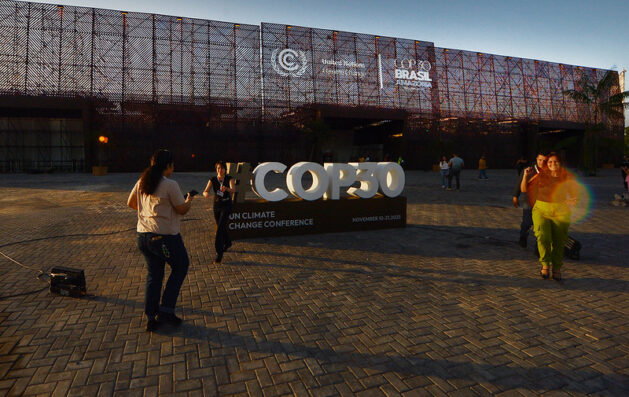
Belém—30th Conference of the Parties (COP30). Credit: Antônio Scorza/COP30

Belém—30th Conference of the Parties (COP30). Credit: Antônio Scorza/COP30

OSLO, Norway, Nov 11 2025 (IPS) – When world leaders now gather in Belém, Brazil for the UN climate conference, expectations will be modest. Few believe the meeting will produce any breakthroughs. The United States is retreating from climate engagement. Europe is distracted. The UN is struggling to keep relevant in the 21st century.


But step outside the negotiation tents, and a different story unfolds—one of quiet revolutions, technological leaps, and a new geography of leadership. The green transformation of the world is no longer being designed in Western capitals. It is being built, at scale, in the Global South.

Ten years ago, anyone seeking inspiration on climate policy went to Brussels, Berlin or Paris. Today, you go to Beijing, Delhi or Jakarta. The center of gravity has shifted. China and India are now the twin engines of the global green economy, with Brazil, Vietnam and Indonesia closely behind.
Erik Solheim

This is not about rhetoric; it is about results. China accounts for roughly 60 percent of global capacity in solar, wind, and hydropower manufacturing. It dominates in electric vehicles, batteries, and high-speed rail. China’s 93 GW installation of solar in May 2025 is a historic high and exceeds the monthly or short‐term installation levels of any other country to date.

China has made the green transition its biggest business opportunity, turning green action into jobs, prosperity and global leadership. China is now making more money from exporting green technology than America makes from exporting fossil fuels.

India, too, is reshaping what green development looks like. I was in Andhra Pradesh last month, when I visited a wonderful six-gigawatt integrated energy park—solar, wind, and pumped storage. It delivers round-the-clock clean power. There is nothing like that in the West. In another state, Tamil Nadu, an ecotourism circuit is protecting mangroves and marine ecosystems while creating local jobs in tourism. The western state of Gujarat, long a laboratory for industrial innovation, has committed to 100 gigawatts of renewables by 2030, with the captains of Indian business – Adani and Reliance – driving large-scale solar and wind investments with the state government.

These are not pilot projects. They are national strategies. And they are succeeding because the economics have flipped.

The cost of solar power has fallen by over 90 percent in the last decade, largely thanks to the intense competition between Chinese solar companies. Battery storage is now competitive with fossil fuels. What was once an environmental aspiration has become a financial inevitability. In Indian Gujarat, solar-plus-storage projects are already cheaper than coal. Switching to clean energy is no longer a cost—it is a saving.

That is why climate action today is driven not by diplomacy, but by economics. The question is no longer if countries will go green, but who will own the technologies and industries that make it possible.

Europe, long the moral voice of the climate agenda, now risks losing the industrial race. After years of blocking imports from developing countries on grounds of “inferior” green quality, it now complains that Chinese electric vehicles are too good— too cheap and too efficient. Europe cannot have it both ways. The world cannot build a green transition behind protectionist walls. The markets must open to the best technologies, wherever they are made.

President Luiz Inácio Lula da Silva of Brazil understands this new reality. That is why he chose Belém, deep in the Amazon, as the site for climate talks. The location itself is a statement: the future of climate policy lies in protecting the rainforests and empowering the people who live within them.

Forests are not just carbon sinks; they are living economies. When I was Norway’s environment minister, we partnered with Brazil and Indonesia to reward them for reducing deforestation. Later, Guyana joined our effort—a small South American nation where nearly the entire population is of Indian or African origin.

Guyana has since turned conservation into currency. Under its jurisdictional REDD+ programme, the country now sells verified carbon credits through the global aviation market known as CORSIA. In the third quarter of this year, these credits traded at USD 22.55 per tonne of CO₂ equivalent, with around one million credits sold through a procurement event led by IATA and Mercuria.

The proceeds go directly to forest communities—building schools, improving digital access, and funding small enterprises. It is proof that the carbon market can deliver real value when tied to real lives. You cannot protect nature against the will of local people. You can only protect it with them. Last year in Guyana, I watched children play soccer and cricket beneath the jungle canopy—a glimpse of life thriving in harmony with the forest, not at its expense.

That, ultimately, is what Belém should represent: not another round of procedural debates, but a vision for linking markets, nature and livelihoods.

The Global South has also sidestepped one of the West’s greatest political failures: climate denial. In India, there is no major political party—or public figure, cricket star or Bollywood artist—questioning the reality of climate change. Leaders may differ on ideology, but not on this. Across Asia, from China to Indonesia, climate action unites rather than divides. Because here, ecology and economy move together.

Prime Minister Narendra Modi of India puts it simply: by going green, we also go prosperous. President Xi Jinping of China and President Lula of Brazil share that same message—a vision that draws people in, instead of lecturing them. It is this integration of growth and sustainability that explains why the Global South is moving faster than most of the developed world.

None of this means diplomacy is irrelevant. The UN still matters. But its institutions must evolve to reflect the realities of the 21st century. The Security Council, frozen in 1945, still excludes India and Africa from permanent membership. Without reform, multilateralism risks losing its meaning.

Yet, while negotiations stall, transformation continues. From solar parks in Gujarat to high-speed rail across China, from mangrove tourism in Tamil Nadu to carbon markets in Guyana—climate leadership is happening in real economies, not in press releases.

Belém will not deliver a grand agreement. But it doesn’t need to. The world is already moving—faster than our diplomats.

The story of Belem will not be written in communiqués, but in kilowatts, credits, and communities.

The real climate leaders are no longer in Washington or Brussels.

They are in Beijing, Delhi, São Paulo, and Georgetown.

The future of climate action is already here.

It just speaks with a southern accent.

The author is the former Executive Director of the United Nations Environment Programme and Norway’s Minister for Environment and International Development.

IPS UN Bureau
 

Defending Democracy in a “Topsy-Turvy” World

Active Citizens, Africa, Asia-Pacific, Civil Society, Democracy, Development & Aid, Editors’ Choice, Featured, Green Economy, Headlines, Human Rights, Humanitarian Emergencies, Middle East & North Africa, Press Freedom, Sustainable Development Goals, TerraViva United Nations

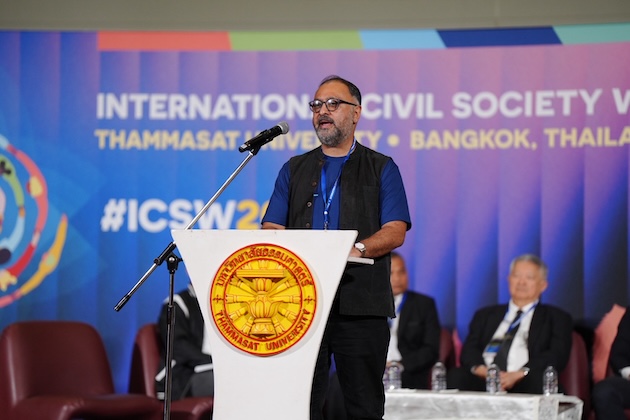
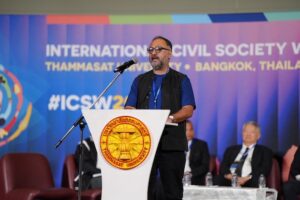
Secretary General of CIVICUS, Mandeep Tiwana, at International Civil Society Week 2025. Credit: Civicus

Secretary General of CIVICUS, Mandeep Tiwana, at International Civil Society Week 2025. Credit: Civicus

BANGKOK, Nov 1 2025 (IPS) – It is a bleak global moment—with civil society actors battling assassinations, imprisonment, fabricated charges, and funding cuts to pro-democracy movements in a world gripped by inequality, climate chaos, and rising authoritarianism. Yet, the mood at Bangkok’s Thammasat University was anything but defeated.


Once the site of the 1976 massacre, where pro-democracy students were brutally crushed, the campus—a “hallowed ground” for civil society actors—echoed with renewed voices calling for defending democracy in what Secretary General of CIVICUS, Mandeep Tiwana, described as a “topsy-turvy world” with rising authoritarianism—a poignant reminder that even in places scarred by repression, the struggle for civic space endures.

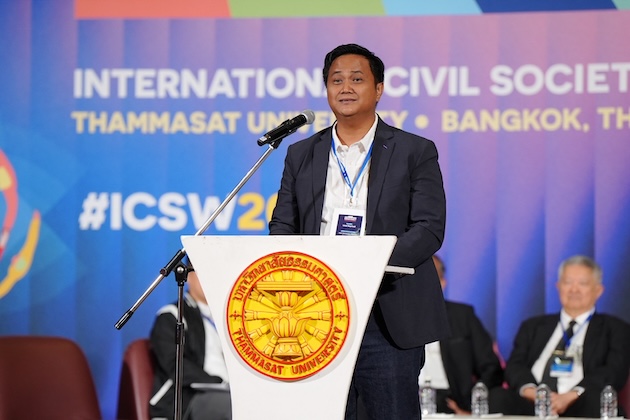
“Let it resonate,” said Ichal Supriadi, Secretary General, Asian Democracy Network. “Democracy must be defended together,” adding that it was the “shared strength” that confronts authoritarianism.

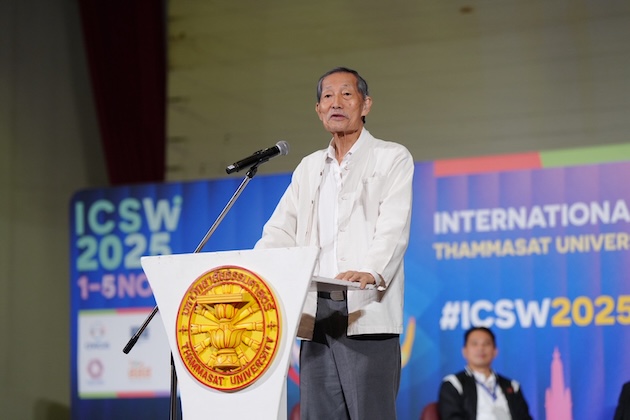
Despite the hopeful spirit at Thammasat University, where the International Civil Society Week (ICSW) is underway, the conversations often turned to sobering realities. Dr. Gothom Arya of the Asian Cultural Forum on Development and the Peace and Culture Foundation reminded participants that civic freedoms are being curtailed across much of the world.

Citing alarming figures, he spoke bluntly of the global imbalance in priorities—noting how military expenditure continues to soar even as civic space shrinks. He pointedly referred to the United States’ Ministry of Defense as the “Ministry of War,” comparing its USD 968 billion military budget with China’s USD 3 billion and noting that spending on the war in Ukraine had increased tenfold in just three years—a stark illustration of global priorities. “This is where we are with respect to peace and war,” he said gloomily.

Ichal Supriadi, Secretary General, Asian Democracy Network. Credit: Civicus

Ichal Supriadi, Secretary General, Asian Democracy Network. Credit: Civicus

At another session, similar reflections set the tone for a broader critique of global power dynamics. Walden Bello, a former senator and peace activist from the Philippines, argued that the United States—especially under the Trump administration—had abandoned even the pretense of a free-market system, replacing it with what he called “overt monopolistic hegemony.” American imperialism, he said, “graduated away from camouflage attempts and is now unapologetic in demanding that the world bend to its wishes.”

Dr. Gothom Arya of the Asian Cultural Forum on Development and the Peace and Culture Foundation. Credit: Civicus

Dr. Gothom Arya of the Asian Cultural Forum on Development and the Peace and Culture Foundation. Credit: Civicus

Dr. Pervez Hoodbhoy, a Pakistani physicist and author, echoed the sentiment, expressing outrage at his own country’s leadership. He condemned Pakistan’s decision to nominate a “psychopath, habitual liar, and aggressive warmonger” for the Nobel Peace Prize, saying that the leadership had “no right to barter away minerals and rare earth materials to an American dictator” without public consent.

Hoodbhoy urged the international community to intervene and restart peace talks between Pakistan and India—two nuclear-armed neighbors perpetually teetering on the edge of renewed conflict.

But at no point during the day did the focus shift away from the ongoing humanitarian crises. Arya reminded the audience of the tragic loss of civilian lives in Gaza, the devastating fighting in Sudan that had led to widespread malnutrition, and the global inequality worsened by climate inaction. “Because some big countries refused to follow the Paris Agreement ten years ago,” he warned, “the rest of the world will suffer the consequences.”

That grim reality was brought into even sharper relief by Dr. Mustafa Barghouthi, a Palestinian physician and politician, who delivered a harrowing account of Gaza’s devastation. He said that through the use of  American-supplied weapons, Israel had killed an estimated 12 percent of Gaza’s population, destroyed every hospital and university, and left nearly 10,000 bodies buried beneath the rubble.

“Even as these crises unfolded across the world, the conference demonstrated that civil society continues to persevere, as nearly 1,000 people from more than 75 organizations overcame travel bans and visa hurdles to gather at Thammasat University, sharing strategies, solidarity, and hope through over 120 sessions.

Among them was a delegation whose presence carried the weight of an entire nation’s silenced hopes—Hamrah, believed to be the only Afghan civil society group at ICSW.

“Our participation is important at a time when much of the world has turned its gaze away from Afghanistan,” Timor Sharan, co-founder and programme director of the HAMRAH Initiative, told IPS.

“It is vital to remind the global community that Afghan civil society has not disappeared; it’s fighting and holding the line.”

Through networks like HAMRAH, he said, activists, educators, and defenders have continued secret and online schools, documented abuses, and amplified those silenced under the Taliban rule. “Our presence here is both a statement of resilience and a call for solidarity.”

“Visibility matters,” pointed out Riska Carolina, an Indonesian woman and LGBTIQ+ rights advocate working with ASEAN SOGIE Caucus (ASC). “What’s even more powerful is being visible together.”

“It was special because it brought together movements—Dalit, Indigenous, feminist, disability, and queer—that rarely share the same space, creating room for intersectional democracy to take shape,” said Carolina, whose work focuses on regional advocacy for LGBTQIA+ rights within Southeast Asia’s political and human rights frameworks, especially the ASEAN system, which she said has historically been “slow to recognize issues of sexuality and gender diversity.”

“We work to make sure that SOGIESC (Sexual Orientation, Gender Identity and Expression, and Sex Characteristics) inclusion is not just seen as a niche issue, but as a core part of democracy, governance, and human rights. That means engaging governments, civil society, and regional bodies to ensure queer people’s participation, safety, and dignity is part of how we measure democratic progress.”

She said the ICSW provided ASC with a chance to make “visible” the connection between civic space, democracy, and queer liberation and to remind people that democracy is not only about elections but also about “who is able to live freely and who remains silenced by law or stigma.”

Away from the main sessions, civil society leaders gathered for a candid huddle—part reflection, part reckoning—to examine their role in an era when their space to act was shrinking.

“The dialogue surfaced some tough but necessary questions,” he said. They asked themselves: ‘Have we grasped the full scale of the challenges we face?’ ‘Are our responses strong enough?’ ‘Are we expecting anti-rights forces to respect our rules and values?’ ‘Are we reacting instead of setting the agenda? And are we allies—or accomplices—of those risking everything for justice?’

But if there was one thing crystal clear to everyone present, it was that civil society must stand united, not fragmented, to defend democracy.

IPS UN Bureau Report

  Source

For the Aged, Their Sunset Years Will Be Bedeviled by Lethal Heatwaves

Asia-Pacific, Civil Society, Climate Change, Development & Aid, Editors’ Choice, Environment, Featured, Global, Green Economy, Headlines, Humanitarian Emergencies, Population, Sustainable Development Goals, TerraViva FAO38, TerraViva United Nations

Climate Change

Facing frequent climate hazards, resultantly offsprings having migrated out, this South Sikkimese elder in India battles depression, anxiety and early onset of dementia. Credit: Manipadma Jena/IPS

Facing frequent climate hazards, resultantly offsprings having migrated out, this South Sikkimese elder in India battles depression, anxiety and early onset of dementia.
Credit: Manipadma Jena/IPS

NAIROBI & BHUBANESWAR, Jul 10 2025 (IPS) – The global population is aging at a time when heat exposure is rising due to climate change. Extreme heat can be deadly for older populations given their reduced ability to regulate body temperature. Already there has been an 85 percent increase since 1990 in annual heat-related deaths of adults aged above 65, driven by both warming trends and fast-growing older populations.


If this were not heartbreakingly disastrous enough, heat-related deaths in older populations are projected to increase by 370 percent annually if global temperatures rise by 2˚ Centigrade mid-century. The world is currently on track to reach 2.7°C by the end of the century, up from 1.14°C above pre-industrial levels in 2013-2022.

With 2024 the hottest year ever recorded and the past 11 years declared the 11 warmest on record since records began in 1880, the World Meteorological Organization (WMO) report warning of an 80% chance that 2025-2029 will be warmer than 2024, predicting severe climate impacts, and nearing the 1.5°C warming threshold is alarming if not surprising.

As extreme heat grips many countries and becomes ‘the new normal,’ the UN Environment Programme (UNEP) warns of heightened health risks for older persons in the Frontiers 2025 Report published today.

Older persons, especially those with chronic illnesses like diabetes, hypertension and heart ailments, limited mobility, or age-related frailty, are particularly vulnerable to severe health issues, depending on the intensity, duration, and frequency of heat spells. These could range from respiratory and cardiovascular to metabolic diseases, as well as increased mortality.

Inger Andersen, Executive Director of UNEP said solutions exist that can help protect communities and ecosystem. Courtesy: UNEP

Inger Andersen, Executive Director of UNEP said solutions exist that can help protect communities and ecosystems. Courtesy: UNEP

“Heat waves are among the most frequent and deadly impacts of climate change, along with floods and shrinking ice cover,” said Inger Andersen, Executive Director of UNEP. “We must be prepared for the risks these impacts pose, especially for society’s most vulnerable, including older persons.”

The 7th edition of the Frontiers Report, The Weight of Time – Facing a new age of challenges for people and Ecosystems, is part of UNEP’s Foresight Trajectory initiative and highlights emerging environmental issues as well as doable solutions. The first edition, in 2016, warned of the growing risk of zoonotic diseases, four years before the COVID-19 pandemic.

Those worst effected by rising temperatures: where and why

“The (third) issue is the risk to aging populations from environmental degradation. It is estimated that the global share of people over 65 years old will rise from 10 percent in 2024 to 16 percent by 2050. Most of these people will live in cities where they will be exposed to extreme heat and air pollution, and experience more frequent disasters. Older people are already more at risk. Effective adaptation strategies will need to evolve to protect these older populations,” says UNEP’s Executive Director, Inger Andersen.

Projections indicate that heatwaves will become more intense, frequent and persistent in nearly all regions. As heatwaves intensify, scientists warn of the amplified danger when extreme heat and humidity combine. Higher humidity tends to limit the human body’s ability to cool itself through the evaporation of sweat.

When temperatures rise by 1o C, estimates peg 275 million people will be exposed to humid heatwaves. The impact will shoot up to 789 million with 2o C, and with an apocalyptic 3oC rise, 1220 million people will be battling absolutely lethal humid heatwaves.

Already experiencing humid heatwaves are low-lying tropical regions of India and Pakistan, the Persian Gulf, the Arabian Gulf, the Red Sea, and eastern China.

Urban centers usually experience higher temperatures than surrounding rural areas because buildings, pavement, and other artificial surfaces trap, retain and re-radiate heat. This urban heat island effect and heat waves interact synergistically, exposing urban residents to greater heat and amplifying health risks.

Developing and low-income countries that are urbanizing at a fast pace are more at risk.

Rural-to-urban migrants often live in tin- or asbestos-roofed one-roomed houses, crowded and ill-ventilated, in informal settlements that spring up in low-value, hazardous land parcels without water supply, sanitation or electricity facilities. In recent hotter years, surveys have found the temperature inside these housing units is even higher than the ambient high heat outside on heat-wave days. Often poorer parts of cities have less green and heat up faster. Worse, night temperatures are not cooling down in cities owing to the heat-island effect.

Older adults who are uprooted from their traditional communities into cities, are socially isolated, economically disadvantaged, have cognitive, physical, or sensory impairments, and live in substandard housing with inadequate cooling systems or even basic water, are especially ill-equipped to withstand or adapt to heat extremes, say other studies.

Are only the elderly in low- and middle-income countries at heat risk? Latest reports suggest even the developed countries cannot protect their aged from growing climate heat.

A first rapid study released earlier in July by scientists at the Grantham Institute at Imperial College London and the London School of Hygiene & Tropical Medicine focused on ten days of heatwaves in 12 European cities from June 23 to July 2, 2025. The researchers estimated that climate change nearly tripled the number of heat-related deaths, with fossil fuel use having increased heatwave temperatures up to 2°C – 4°C across the cities.

Of the 2,305 estimated heat deaths in those ten days, people aged 65-plus made up 88 percent of the deaths, highlighting how those with underlying health conditions are most at risk of premature death in heatwaves.

“It is society’s most vulnerable … who suffer most in the midst of record temperatures. Europe’s dependence and soft hand on oil and gas corporations who are fueling this extreme heat is giving a death blow to our parents and grandparents,” said Ian Duff, Head of Greenpeace International’s ‘Stop Drilling Start Paying’ campaign, called on polluters to pay up.

It is not heat alone that the aged are vulnerable to

Exposure to air pollutants such as fine particulate matter, ground-level ozone, nitrogen dioxide and sulfur dioxide often triggers the onset and progression of a variety of respiratory, cardiovascular, neurological and cognitive illnesses and related deaths in older people, according to the Frontier report.

Nearly half of the 1.24 million deaths attributable to air pollution in India in 2017 were those aged 70 years or older.

Accelerating climate change that brings extreme heat, worsening air pollution, drought and dust storms, floods and melting glaciers is, in multiple ways, directly and indirectly, not only responsible for physical ailments but also for the development of dementia, late-life depression, anxiety and mental health in elders.

Building climate resilience for aging population: the time is now

“As this year’s Frontiers Report shows, solutions exist that can help protect communities and restore ecosystems long thought to have been lost,” Inger Andersen urges governments to implement adaptation strategies.

On its part, the report recommends transforming cities into age-friendly, pollution-free, resilient, accessible spaces with expansive vegetation through better urban planning.

Community-based disaster risk management and access to climate information are key approaches to help aging people adapt successfully to climate change. Investing in weather stations to monitor extreme heat is critical to protect lives.

The digital divide among older populations in cities needs to be addressed. Digital ignorance may affect their capacity to live in smart cities and be adequately informed of possible extreme events that may affect their survival. Otherwise too, day-to-day living—banking, medicine purchases, and shopping for essentials—are all going digital and, once mastered, convenient to the aged.

IPS UN Bureau Report

  Source

Make use of all urban waste, a utopia in Brazil?

Active Citizens, Development & Aid, Editors’ Choice, Energy, Environment, Green Economy, Headlines, Integration and Development Brazilian-style, Latin America & the Caribbean, Sustainability, Sustainable Development Goals

Sustainability

A recycling, biodigestion and composting complex is being installed next to the landfill of the Intermunicipal Consortium of the Middle Valley of the Itajaí River (Cimvi), to take advantage of all the solid waste from 19 municipalities in the southern Brazilian state of Santa Catarina. Credit: Mario Osava / IPS

TIMBO / FLORIANOPOLIS, Brazil , Jun 13 2025 (IPS) – In 2014, Santa Catarina became the first and only state free of open-air garbage dumps in Brazil. Now, 14 of its municipalities are seeking to also free themselves from landfills and make use of nearly all urban solid waste.


The Intermunicipal Consortium of the Middle Itajaí Valley (Cimvi) expects to process in recycling, biodigestion and composting more than 90% of the garbage, surpassing the 65% benchmark reached by the Nordic countries of Europe, emphasized its executive director, Fernando Tomaselli.

“We have 36 landfills in the state, only three public, the rest are private and there is little interest in changing the system, because whoever dominates the landfill also dominates the garbage collection service”: Fernando Tomaselli.

“It is a utopia,” said the executive president of the Brazilian Association of Energy from Waste (Abren), Yuri Schmitke.

“The unrealistic goal compromises the project,” he warned. Several European countries, Japan and South Korea have already eliminated sanitary landfills – the areas for the final disposal of solid waste – but resort to incineration to generate energy with non-recyclable garbage, he added.

Cimvi rules out that alternative. Its goal is to expand recycling and the circular economy of waste to an unprecedented proportion. “Our obsession is to take advantage of everything, to prove that garbage does not exist,” said Tomaselli.

But recycling has limits. Europe, after many attempts and advances, covers 25 % of waste on average and 32 % in the exceptional case of Germany. In addition, 19% of the waste still goes to landfills, according to data from Abren, which had its sixth annual congress in Florianopolis, capital of Santa Catarina, on June 5 and 6.

Cimvi was created in 1998, with only five participating municipalities, to jointly manage several issues, but not yet garbage. It reached its current composition of 14 municipalities in 2017 after taking over the management of the sanitary landfill in 2016, previously in charge of the water and sewage authorities.

Its headquarters was installed in Timbo, a town of 46 099 people, according to the 2022 national census. The 14 municipalities had 283 594 residents that year, the most populous being Indaial, with 71 549.

Fernando Tomaselli, director of Cimvi, an intermunicipal initiative that promotes circular waste management in the southern Brazilian state of Santa Catarina. Credit: Mario Osava / IPS

Fernando Tomaselli, director of Cimvi, an intermunicipal initiative that promotes circular waste management in the southern Brazilian state of Santa Catarina. Credit: Mario Osava / IPS

Landfill and recycling

The landfill receives garbage from five other “partner” cities, in addition to the 14 in the consortium, with a total of between 5,000 and 7,000 tons per month. Environmental education campaigns in schools, businesses and the streets have gradually expanded selective waste collection.

Yellow sacks were popularized and disseminated where the population put recyclable waste which, collected by the municipalities, are taken to the Waste Assessment Center (CVR I) at the Cimvi headquarters, on the outskirts of Timbo.

“Today we recover 20 to 22% of recyclable waste, against a Brazilian average of 2%. We want to reach 27%,” Tomaselli told IPS.

“We receive an average of 60 tons a day, 24 hours a day, in three shifts, Monday to Monday,” said Rosane Valério, president of the Medio Vale Cooperative, hired to separate and send the waste to purchasing companies, at CVR I, where 87 recyclers are employed.

The cooperative has another unit to process waste from two other nearby cities, Ituporanga and Aurora, with a total of 33 300 people.

“Of the material received, we still discard 30% that comes mixed or dirty with food remains, sometimes blood that attracts mosquitoes, glass and other dangerous objects such as syringes and medicines, which generate major difficulties for recycling,” explained Valério.

A bench at the entrance of Cimvi's headquarters, made of thermoplastic produced from waste that was previously considered non-recyclable and destined for landfills. Credit: Mario Osava / IPS

A bench at the entrance of Cimvi’s headquarters, made of thermoplastic produced from waste that was previously considered non-recyclable and destined for landfills. Credit: Mario Osava / IPS

Thermoplastic

She regretted that “we do not know the origin, there is a lack of awareness of the population in the correct disposal”. In any case, half of that 30% of discarded waste can be used for the production of thermoplastic, a hard material like concrete, which is used to make benches for squares, sidewalks, pavements and walls.

The cooperative already operates a pilot plant, with experimental production that has not yet been sold externally. “The municipalities are the initial market for the thermoplastic plates, as well as for the compost from the composting,” says Tomaselli.

Abren’s president, Schmitke, is skeptical. The consortium municipalities have a limited, insufficient demand, and the population does not trust products made from garbage, he argued.

Jaqueline Wagenknetht and Maria Eduarda Pegoretti, Cimvi's environmental education and communication advisors, promote environmental education in the so-called European Valley to improve selective garbage collection and promote tourism and sustainable living. Credit: Mario Osava / IPS

Jaqueline Wagenknetht and Maria Eduarda Pegoretti, Cimvi’s environmental education and communication advisors, promote environmental education in the so-called European Valley to improve selective garbage collection and promote tourism and sustainable living. Credit: Mario Osava / IPS

But thermoplastic has been around for four decades and now there is equipment that facilitates its production at a high temperature, 160 degrees Celsius, and as an input, half of the plastic that is added to other waste, such as textiles, is enough, countered the director of Cimvi.

The use of local waste will take a leap forward with the inauguration of CVR II, which is expected in early 2026 and will use a large part of the organic waste for the production of biogas and biofertilizers. Another part will go to composting.

“The goal is to take advantage of 100% or 98%,” for which alternatives must be sought for waste, the “common garbage” for which there are still no ways to recycle, he said.

Cimvi headquarters, in the Sunflower Park, which combines ecotourism, sanitary landfill and urban waste utilization plants for biogas generation, recycling and composting. Credit: Mario Osava / IPS

Cimvi headquarters, in the Sunflower Park, which combines ecotourism, sanitary landfill and urban waste utilization plants for biogas generation, recycling and composting. Credit: Mario Osava / IPS

Bottlenecks

One stumbling block is selective collection, which needs to be perfected. “In Milan, Italy, five types of garbage are separated at the source, be it food, plastics, paper, metals or glass. Here, it’s harder because everything is mixed together,” said Tomaselli.

That is why Cimvi gives priority to environmental education, through several campaigns such as “Vale reciclar”, and sustainable tourism, which highlights the beauties of the so-called European Valley, which includes other municipalities in addition to the 14 consortium members.

The Girasol Park was also created for this purpose, a tourist complex that includes the landfill, the Cimvi facilities and the surrounding forest, with trails for walks, said Jaqueline Wagenknetht, environmental education advisor.

Design and poetry contests among local students seek to promote the valley, which is called European because its population includes many immigrants, especially Germans, Italians and Poles.

The name Sunflower was chosen for the park because, in addition to its beauty, the flower symbolizes sustainability, as a source of oil and biofuel, the advisor explained.

Design of the future Sunflower Park, in which the green buildings, in the center, are intended for recycling and energy biodigestion. In the background on the left is the landfill already covered, able to receive solar energy panels. Credit: Courtesy of Cimvi

Design of the future Sunflower Park, in which the green buildings, in the center, are intended for recycling and energy biodigestion. In the background on the left is the landfill already covered, able to receive solar energy panels. Credit: Courtesy of Cimvi

Cimvi benefits from the experiences of São Bento do Sul, a municipality of 83 277 people, 120 kilometers north of Timbo, which has a similar program that seeks to use up to 100% of the waste.

A process of dehydration of the organic part allows a better use of the waste, explained Jacó Phoren, consultant of the company 100lixo, which is involved in the project, during his speech at the Abren congress on June 6.

Fostering new companies that generate solutions for the waste industry is another focus of Cimvi, said Tomaselli.

In Curitibanos, a city 185 kilometers southwest of Timbo, with 40 045 people, the company Inventus Ambiental claims to have invented equipment that will facilitate the separation of garbage for better energy recovery or recycling, reducing the waste that makes landfills bigger.

Its pilot project will be inaugurated in a few months and is based on the use of 90-degree heat to treat organic material, informed Dirnei Ferri, director of the company.

Santa Catarina has already eliminated open dumps, although it is ignored if all of them have been cleaned up. Now it is a matter of “breaking the landfill trench”, said Tomaselli.

“We have 36 landfills in the state, only three public, the rest are private and there is little interest in changing the system, because whoever dominates the landfill also dominates the garbage collection service,” he concluded.

  Source

UNOC3: Bringing Ocean Education and Science to the Global Agenda

Biodiversity, Caribbean Climate Wire, Civil Society, Climate Action, Climate Change, Conferences, Development & Aid, Economy & Trade, Editors’ Choice, Environment, Global, Green Economy, Headlines, Ocean Health, PACIFIC COMMUNITY, Pacific Community Climate Wire, Small Island Developing States, Sustainable Development Goals, TerraViva United Nations

Ocean Health

Li Junhua, head of the UN Department of Economic and Social Affairs (DESA) and the Secretary-General, Jérôme Bonnafont, Permanent Representative of France to the UN and Costa Rican Ambassador Maritza Chan Valverde during a press conference ahead of the UN Ocean Conference in Nice: Credit: Twitter

Li Junhua, head of the UN Department of Economic and Social Affairs (DESA) and the Secretary-General, Jérôme Bonnafont, Permanent Representative of France to the UN and Costa Rican Ambassador Maritza Chan Valverde during a press conference ahead of the UN Ocean Conference in Nice: Credit: Twitter

UNITED NATIONS, May 28 2025 (IPS) – A greater understanding and appreciation of the world’s oceans is needed to protect them. As the global community prepares to convene for the ocean conference, they must also prepare to invest in scientific efforts and education that will bolster their joint efforts.


France and Costa Rica will co-host the 3rd United Nations Ocean Conference (UNOC3) in Nice, France, from June 9-13. Over the course of the week, governments, the private sector, intergovernmental groups, and non-governmental groups, among others, will convene over the urgent actions that need to be taken to promote the conservation and sustainable use of the oceans.

This year’s conference will be the first to take place during the UN Decade of Ocean Science for Sustainable Development (2021-2030), which brings together stakeholders in which the UN and its partners will oversee the actions that need to be taken to protect the oceans’ unique ecosystems and biodiversity and how to promote greater awareness and research into ocean sciences and how to better protect them.

UNESCO’s Intergovernmental Oceanographic Commission (IOC) oversees and tracks the progress of the UN Ocean Decade, which brings together the global ocean community on the principles of understanding, educating, and protecting the oceans.

There will be an emphasis on strengthening the data-collection capacities in the global system for observing the ocean. Data scarcity and limitations in collection methods have meant that organizations have challenges grasping the full scope of the ocean and the changes they face in the wake of climate change.

Julian Barbiere, UNESCO’s Head of Marine Policy, told reporters that science-based discussions will be at the core of UNOC. For UNESCO, there will be discussions over how to translate scientific facts into tangible climate actions. This includes scaling up the current efforts at ocean-floor mapping. At present, only 26.1 percent of the seafloor has been mapped out by modern standards, with the goal to have 100 percent of the seafloor mapped out by 2030.

Seaweed is grown or farmed in the shallow waters of the Indian Ocean, off Wasini Island, Kenya, with plants tied to ropes in the water. Mandatory Credit: Anthony Onyango / Climate Visuals

Seaweed is grown or farmed in the shallow waters of the Indian Ocean, off Wasini Island, Kenya, with plants tied to ropes in the water. Credit: Anthony Onyango / Climate Visuals

Joanna Post, head of the IOC’s Ocean Observations and Services, remarked that there is a “real need for recognition” of the critical functions that the system performs, such as in monitoring weather conditions, mapping the ocean floor, maritime security, and disaster risk management. She announced a new initiative that would mobilize at least 10,000 commercial and research ships to collect data and measure the ocean. Commercial and research ship vessels play a key role in tracking and collecting data on the oceans, which Post emphasized must be shared across global channels.

UNESCO’s agenda for this forum also includes encouraging stakeholders to invest in and strengthen global education efforts on the ocean. “Education is key if we want to have a new generation that is aware of the importance of the ocean system,” said Francesca Santoro, a senior programme officer in UNESCO, leading the Ocean Literacy office.

Santoro stressed that education is not limited to students and young people; private investors should also be more aware of the importance of investing in the oceans.

UNESCO aims to continue expanding the networks of schools and educators that incorporate ocean literacy into their curricula, especially at the national level. Ocean literacy emphasizes the importance of the ocean for students, educators, and local communities within multiple contexts.

One such programme is the SEA BEYOND initiative, in partnership with the Prada Group, which provides training and lessons to over 20,000 students in over 50 countries. Under that initiative, a new multi-partner trust fund will be launched at UNOC3 on June 9, which will be used to support projects and programs that work toward ocean education and preserving ocean culture. As Santoro noted, “For many people and local communities, the main entry point to start interest in the oceans… is in [identifying] what UNESCO calls ‘intangible cultural heritage.’”

Human activity, including pollution, “directly threatens” the health of the ocean, according to Henrik Enevoldsen from UNESCO-IOC’s Centre of Ocean Science.

He announced the development of a new global assessment, led by UNESCO and the UN Environment Programme (UNEP), on marine pollution, to be launched on June 12.  This would be a “major leap forward,” Enevoldsen remarked, adding that this assessment would be the first of its kind that provided a global overview of ocean pollution.

IPS UN Bureau Report

  Source

The Future of Food Security Lies Beyond COP29’s Negotiation Tables

Biodiversity, Climate Action, Climate Change, Climate Change Justice, Conferences, COP29, Economy & Trade, Environment, Food and Agriculture, Food Security and Nutrition, Food Sustainability, Global, Green Economy, Headlines, Natural Resources, TerraViva United Nations

Opinion


ASUNCION, Paraguay, Oct 21 2024 (IPS) – Climate change has thrown our food systems into chaos. Extreme weather events and dramatic climate variations are hammering food production and supply chains across the world. As global leaders gear up for COP29, there’s plenty of buzz about climate action. But can we really expect these slow-moving, bureaucratic negotiations to deliver tangible and swift results to decarbonize and insulate our agri-food systems? Most likely not. But do not despair. While the COP29 talks unfold, crucial climate solutions for transforming food systems are already taking root on the ground.


Jesus Quintana

In the exhilarating, Oscar-winning movie “Everything Everywhere All at Once”, the leading characters are surrounded by overwhelming chaos and complexity. Yet, within this confusion, small actions, and the determination of people behind them, spark powerful change. In stunning similarity, the climate crisis —particularly in food systems— feels like an insurmountable challenge with everything, droughts, floods, storms, hunger and other interlocked crises, striking everywhere, and all at once.

Urgent action is needed. Where do we turn? COP 29 will likely be stuck in slow-paced discussions. Meanwhile, transformative solutions are taking shape on the ground. Across the globe, communities, farmers, sponsors and innovators are quietly building resilience in their food systems, demonstrating that true progress often emerges from the margins, not the center of chaos. Just like in the metaphoric film, finding purpose and action amid disorder is where meaningful change begins.

Grassroots solutions for climate-resilient food systems

While world leaders talk and officials try to turn decisions into workable policies, local communities are already acting. Across the Global South, where the effects of climate change are being felt most acutely, smallholder farmers and grassroots organizations are implementing innovative practices that build resilience to climate shocks.

In regions like Sub-Saharan Africa and parts of Latin America, agroecology is gaining traction as a powerful tool for both mitigating and adapting to climate change. This farming approach, which draws on traditional knowledge and emphasizes sustainable, low-emission methods, is helping communities adapt to changing weather patterns while improving food security. Agroecology promotes biodiversity, improves soil health, and reduces dependency on chemical inputs, all of which enhance the resilience of agricultural systems to climate impacts and helps decarbonize them.

The private sector’s role in transforming food systems

Community movements and local governments are playing a vital role, but the private sector is also increasingly driving climate solutions in food systems. Market forces are pushing companies to innovate in ways that reduce agriculture’s climate footprint. The plant-based food revolution is an example of how the private sector is responding to the need for more sustainable diets that lower greenhouse gas emissions. Similarly, alternative protein food-tech startups are leading the way towards a sustainable and tasty food future. These unconventional substitutes for traditional livestock farming offer a glimpse of how innovation can drive systemic changes in food production.

In addition to product innovation, there is growing corporate investment in regenerative agriculture—a practice that rebuilds soil health, captures carbon, and improves biodiversity. Large food companies, driven by consumer demand for sustainable products, are making commitments to source ingredients from regenerative farms, contributing to both climate mitigation and long-term food security.

Climate finance outside the COP processes

One of the most significant barriers to transforming food systems in the face of climate change is the lack of adequate financing. While COPs have made important commitments, such as the creation of the Green Climate Fund, the flow of funds has been slow and insufficient to meet the needs of vulnerable communities. In response, philanthropy and private finance are stepping in.

Some patrons and foundations are funding initiatives that help smallholder farmers adapt to climate change, while impact investors are supporting agri-tech innovations that boost productivity in a sustainable way. These efforts, although outside the COP framework, are critical in scaling climate-resilient food systems and achieving global net-zero targets.

Real solutions are happening now

While COP29 will no doubt produce important global agreements, the truth is that many of the solutions to the climate crisis—especially when it comes to food—are already in motion. Farmers, local communities, philanthropies and private companies are building a food system that is more resilient, sustainable, and low-carbon.

Global leaders must take notice. Yes, we need ambitious targets and international commitments. But we also need to support and scale the grassroots movements and private-sector innovations that are already leading the way. Real food security in a climate-challenged world will not be achieved through top-down solutions alone—it will come from empowering those on the frontlines.

As COP29 approaches, let’s not lose sight of what is happening beyond the negotiation tables. The future of food security depends on action today, led by those who can’t afford to wait.

Jesus Quintana is Senior Advisor on Sustainable Food Systems and former Director General, CIAT

IPS UN Bureau