Biodigesters Boost Family Farming in Brazil

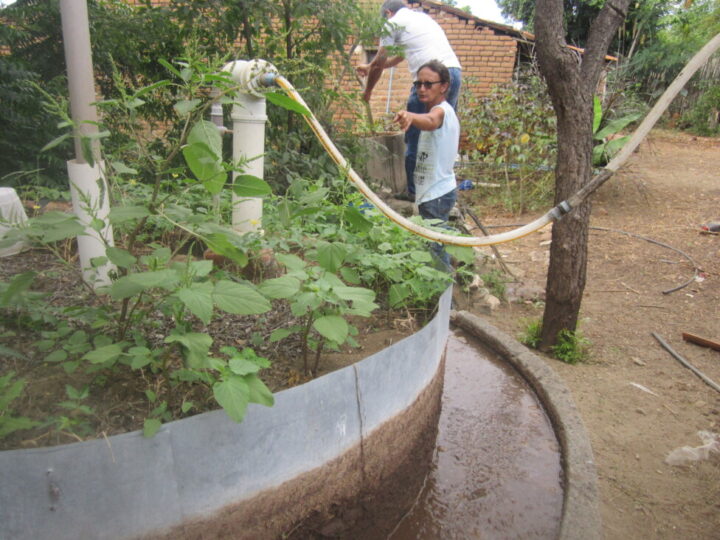
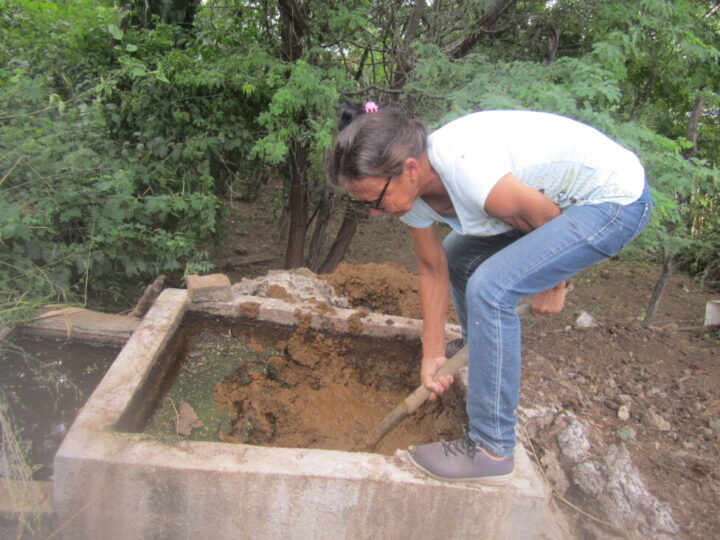
Lucineide Cordeiro loads manure from her two oxen and two calves into the "sertanejo" biodigester that produces biogas for cooking and biofertilizer for her varied crops on the one-hectare agroecological farm she manages on her own in the rural municipality of Afogados da Ingazeira, in the semiarid ecoregion of northeastern Brazil. CREDIT: Mario Osava / IPS

Lucineide Cordeiro loads manure from her two oxen and two calves into the “sertanejo” biodigester that produces biogas for cooking and biofertilizer for her varied crops on the one-hectare agroecological farm she manages on her own in the rural municipality of Afogados da Ingazeira, in the semiarid ecoregion of northeastern Brazil. CREDIT: Mario Osava / IPS

By Mario Osava
AFOGADOS DA INGAZEIRA, Brazil , Jun 24 2023 (IPS)

“The biodigester really gives a huge boost to those who have the courage to do things,” said Maria das Dores Alves da Silva, based on her own experience as a 63-year-old small farmer.


She did not hesitate to accept the offer of Diaconia, a social organization of Protestant churches in Brazil, to acquire the equipment to produce biogas on her farm in the rural area of Afogados da Ingazeira, a municipality of 38,000 people in the state of Pernambuco in the Northeast region of Brazil.”We seek to promote energy, food and water autonomy to maintain more resilient agroecosystems, to coexist with climate change, strengthening community self-management with a special focus on the lives of women.” — Ita Porto

At first she did not have the cattle whose manure she needed to produce biogas, that enables her to save on liquefied petroleum gas, which costs 95 reais (20 dollars) for a 13-kg cylinder – a significant cost for poor families.

She brought manure from a neighboring farm that gave it to her for free, in an hour-long trip with her wheelbarrow, until she was able to buy her first cow and then another with loans from the state-owned Banco del Nordeste.

“Now I have more than enough manure,” she said happily as she welcomed IPS to her four-hectare farm where she and her husband have lived alone since their two children became independent.

Das Dores, as she is known, is an example among the 163 families who have benefited from the “sertanejos biodigesters” distributed by Diaconia in the sertão of Pajeú, a semiarid micro-region of 17 municipalities and 13,350 square kilometers in the center-north of Pernambuco.

Farmer Maria das Dores Alves da Silva stands between the manure pit and the "sertanejo" biodigester designed by Diaconia, a social organization of Protestant churches in Brazil, which has already installed 713 biogas production plants in eight of Brazil's 26 states. CREDIT: Mario Osava / IPS

Farmer Maria das Dores Alves da Silva stands between the manure pit and the “sertanejo” biodigester designed by Diaconia, a social organization of Protestant churches in Brazil, which has already installed 713 biogas production plants in eight of Brazil’s 26 states. CREDIT: Mario Osava / IPS

Biofertilizer

In addition to using the biogas, she sells the manure after it has been subjected to anaerobic biodigestion that extracts the gases – the so-called digestate, a biofertilizer that she packages in one-kilo plastic bags, after drying and shredding it.

Every Saturday, she sells 30 bags at the agroecological market in the town of Afogados da Ingazeira, the municipal seat. At two reais (40 cents) a bag, she earns an extra income of 60 reais (12.50 dollars), on top of her sales of the various sweet cakes she bakes at home, at a cost reduced by the biogas, and of the seedlings she also produces.

The seedlings provided her with a new business opportunity. “The customers asked me if I didn’t also have fertilizer,” she said. The biodigester produces enough fertilizer to sell at the market and to fertilize the farm’s crops of beans, corn, fruit trees, flowers and different vegetables.

This diversity is common in family farming in Brazil’s semiarid Northeast, but even more so in the agroecological techniques that have expanded in this territory of one million square kilometers in the northeastern interior of the country, which has an arid biome highly vulnerable to climate change, subject to frequent droughts, and where there are areas in the process of desertification.

The Pajeú river basin is the micro-region chosen by Diaconia as a priority for its social and environmental actions.

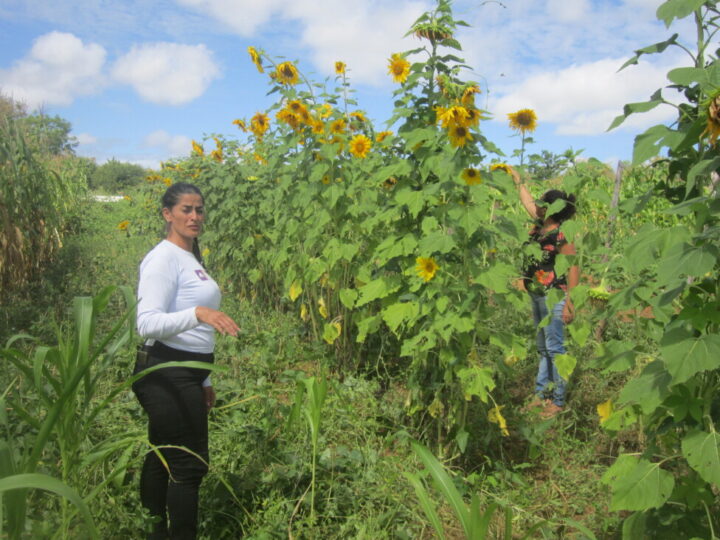
On Lucineide Cordeiro's small farm, cotton, corn, sesame, sunflower, cassava and fruit trees are alternated in the fields, as recommended by agroecology, which is on the rise on family farms in Brazil's semiarid Northeast, which is threatened by longer and more severe droughts due to the climate crisis. CREDIT: Mario Osava / IPS

On Lucineide Cordeiro’s small farm, cotton, corn, sesame, sunflower, cassava and fruit trees are alternated in the fields, as recommended by agroecology, which is on the rise on family farms in Brazil’s semiarid Northeast, which is threatened by longer and more severe droughts due to the climate crisis. CREDIT: Mario Osava / IPS

Energy and food security

“We seek to promote energy, food and water autonomy to maintain more resilient agroecosystems, to coexist with climate change, strengthening community self-management with a special focus on the lives of women,” Ita Porto, Diaconia’s coordinator in the Pajeu ecoregion, told IPS.

“The production of biogas on a rural family scale fulfills the needs of energy for cooking, sanitary disposal and treatment of animal waste and reduction of deforestation, in addition to increasing food productivity, with organic fertilizer, while bolstering human health,” said the 48-year-old agronomist.

More than 713 units of the “sertanejo biodigester”, a model developed by Diaconia 15 years ago, have been installed in Brazil. In addition to the 163 in the sertão do Pajeú, there are 150 in the neighboring state of Rio Grande do Norte and another 400 distributed in six other Brazilian states, financed by the Caixa Econômica Federal, a government bank focused on social questions.

“Hopefully the government will make it a public policy, as it has already done with the rainwater harvesting tanks in the semarid Northeast,” said Porto.

More than 1.3 million rainwater harvesting tanks for drinking water have already been built, but some 350,000 are still needed to make them universal in rural areas, according to the Articulation of the Semi-Arid (Asa), a network of 3,000 social organizations that spearheaded the transformative program.

Maria Das Dores examines the biofertilizer that comes out of the biodigester, without the gases from the animal manure. She sells this by-product at the agroecological market in the town of Afogados da Ingazeira, the seat of the municipality where her four-hectare farm is located, which earns her an average extra income of 12.5 dollars a week. CREDIT: Mario Osava / IPS

The value of manure

“One cow is enough to produce the biogas consumed in our stove,” said Lucineide Cordeiro, on her one-hectare farm where she grows cotton, corn, sesame seeds and fruit, in an interconnected agroecological system, along with chickens, pigs and fish in a pond.

She also has two oxen and two calves, which she proudly showed to IPS during the visit to her farm.

“Pig manure produces biogas more quickly, but I don’t like the stench,” the 37-year-old farmer who is the director of Women’s Policies at the Afogados da Ingazeira Rural Workers Union told IPS.

The difference in the crops before and after fertilization by the biodigester by-product is remarkable, according to her and other farmers in the municipality.

She tends to her many crops on her own, although she is sometimes helped by friends, and has several pieces of equipment such as a brushcutter and a micro-tractor.

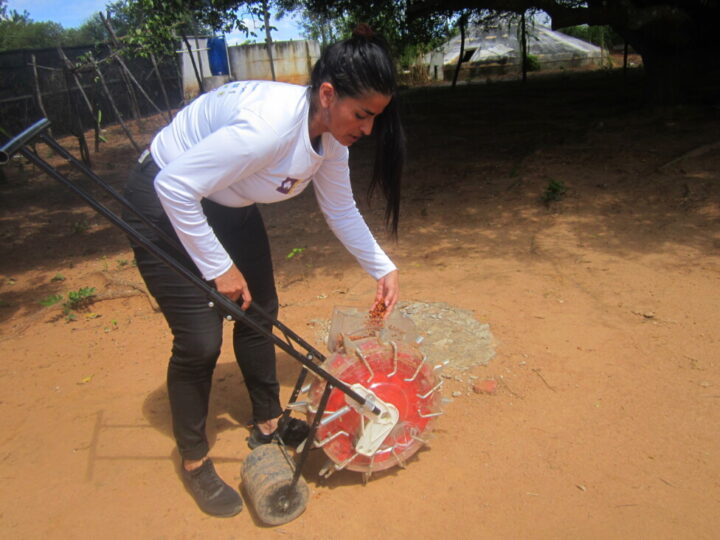
"It's the best invention," says Lucineide Cordeiro, as she shows IPS the seeder created by the Japanese for small-scale farming, which allows her to sow in half a day the land that used to take her two days to plant, on her one-hectare farm in Afogados da Ingazeira, in Brazil's semiarid Northeast. CREDIT: Mario Osava / IPS

“It’s the best invention,” says Lucineide Cordeiro, as she shows IPS the seeder created by the Japanese for small-scale farming, which allows her to sow in half a day the land that used to take her two days to plant, on her one-hectare farm in Afogados da Ingazeira, in Brazil’s semiarid Northeast. CREDIT: Mario Osava / IPS

“But the seeder is the best invention that changed my life, it was invented by the Japanese. Planting the seeds, which used to take me two days of work, I can now do in half a day,” Cordeiro said.

The seeder is a small machine pushed by the farmer, with a wheel filled with seeds that has 12 nozzles that can be opened or closed, according to the distance needed to sow each seed.

The emergence of appropriate equipment for family farming is recent, in a sector that has favored large farmers in Brazil.

Female protagonism clashes with male chauvinist violence

For the success of local family farming, the support of the Pajeú Agroecological Association (Asap), of which Cordeiro is a member and a “multiplier”, as the women farmers who are an example to others of good practices are called, is important.

In family farming the empowerment of women stands out, which in many cases was a response to sexist violence or oppression.

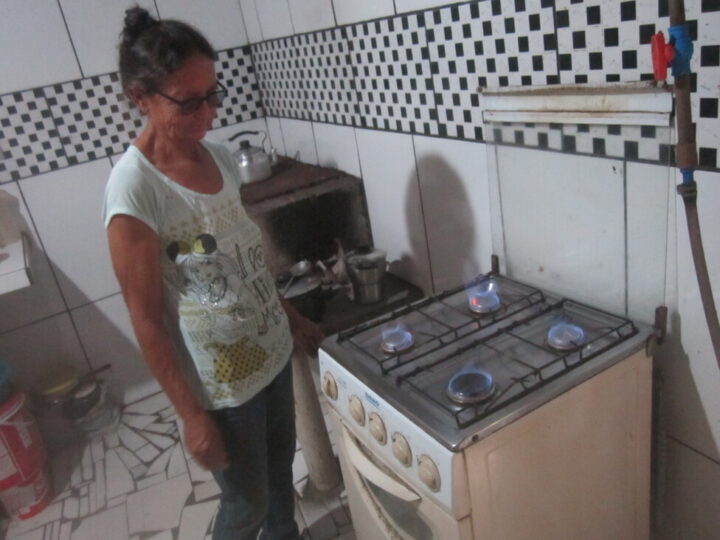
 Blue flames emerge from the burners of Maria Das Dores' biogas stove at her home in Afogados da Ingazeira, in Brazil's semiarid Northeast region. A single ox or cow produces enough manure to generate more biogas than a family requires for its domestic needs. CREDIT: Mario Osava / IPS

Blue flames emerge from the burners of Maria Das Dores’ biogas stove at her home in Afogados da Ingazeira, in Brazil’s semiarid Northeast region. A single ox or cow produces enough manure to generate more biogas than a family requires for its domestic needs. CREDIT: Mario Osava / IPS

“The first violence I suffered was from my father who did not let me study. I only studied up to fourth grade of primary school, in the rural school. To continue, I would have had to go to the city, which my father did not allow. I got married to escape my father’s oppression,” said Cordeiro, who also separated from her first husband because he was violent.

After living in a big city with the father of her two daughters, she separated and returned to the countryside in 2019. “I was reborn” by becoming a farmer, she said, faced with the challenge of taking on that activity against the idea, even from her family, that a woman on her own could not possibly manage the demands of agricultural production.

Organic cotton, promoted and acquired in the region by Vert, a French-Brazilian company that produces footwear and clothing with organic inputs, has once again expanded in the Brazilian Northeast, after the crop was almost extinct due to the boll weevil plague in the 1990s.

In the case of Das Dores, a small, energetic, active woman, she has a good relationship with her husband, but she runs her own business initiatives. Thanks to what she earns she was able to buy a small pickup truck, but it is driven by her husband, who has a job but helps her on the farm in his free time.

“He drives because he refuses to teach me how, so I can’t go out alone with the vehicle and drive around everywhere,” she joked.

Source

Solar Energy Useless Without Good Batteries in Brazil’s Amazon Jungle

Active Citizens, Civil Society, Climate Action, Climate Change, Development & Aid, Economy & Trade, Editors’ Choice, Energy, Environment, Green Economy, Headlines, Human Rights, Indigenous Rights, Integration and Development Brazilian-style, Latin America & the Caribbean, Projects, Regional Categories

Energy

Solar panels with a capacity to generate 30 kilowatts no longer work in the Darora Community of the Macuxi people, an indigenous group from Roraima, a state in the far north of Brazil. The batteries only worked for a month before they were damaged because they could not withstand the charge. CREDIT: Boa Vista City Hall

Solar panels with a capacity to generate 30 kilowatts no longer work in the Darora Community of the Macuxi people, an indigenous group from Roraima, a state in the far north of Brazil. The batteries only worked for a month before they were damaged because they could not withstand the charge. CREDIT: Boa Vista City Hall

BOA VISTA, Brazil, Jan 25 2023 (IPS) – “Our electric power is of bad quality, it ruins electrical appliances,” complained Jesus Mota, 63. “In other places it works well, not here. Just because we are indigenous,” protested his wife, Adélia Augusto da Silva, of the same age.


The Darora Community of the Macuxi indigenous people illustrates the struggle for electricity by towns and isolated villages in the Amazon rainforest. Most get it from generators that run on diesel, a fuel that is polluting and expensive since it is transported from far away, by boats that travel on rivers for days.

Located 88 kilometers from the city of Boa Vista, capital of the state of Roraima, in the far north of Brazil, Darora celebrated the inauguration of its solar power plant, installed by the municipal government, in March 2017. It represented modernity in the form of a clean, stable source of energy.

A 600-meter network of poles and cables made it possible to light up the “center” of the community and to distribute electricity to its 48 families.

But “it only lasted a month, the batteries broke down,” Tuxaua (chief) Lindomar da Silva Homero, 43, a school bus driver, told IPS during a visit to the community. The village had to go back to the noisy and unreliable diesel generator, which only supplies a few hours of electricity a day.

“The solar panels were left here, useless. We want to reactivate them, it would be really good. We need more powerful batteries, like the ones they put in the bus terminal in Boa Vista.” — Lindomar da Silva Homero

Fortunately, about four months later, the Boa Vista electricity distribution company laid its cables to Darora, making it part of its grid.

“The solar panels were left here, useless. We want to reactivate them, it would be really good. We need more powerful batteries, like the ones they put in the bus terminal in Boa Vista,” said Homero, referring to one of the many solar plants that the city government installed in the capital.

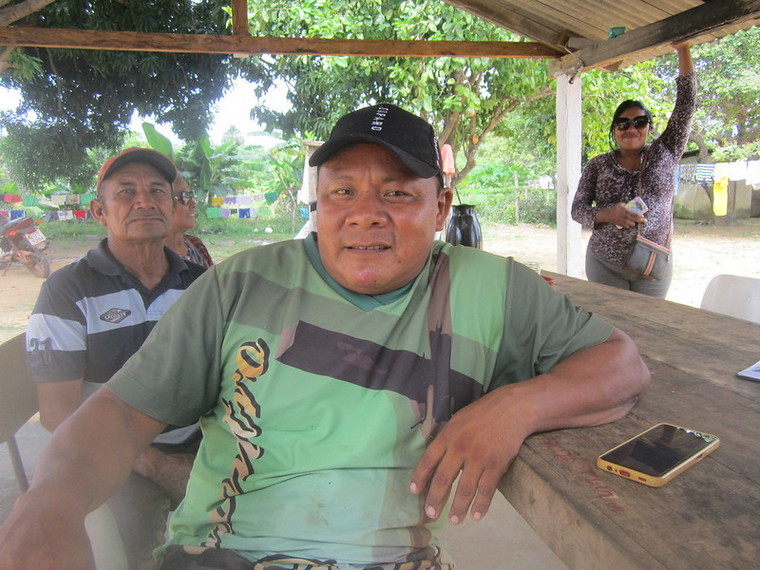
Tuxaua (chief) Lindomar Homero of the Darora Community is calling for new adequate batteries to reactivate the solar power plant, because the electricity they receive from the national grid is too expensive for the local indigenous people. Behind him stands his predecessor, former tuxaua Jesus Mota. CREDIT: Mario Osava/IPS

Tuxaua (chief) Lindomar Homero of the Darora Community is calling for new adequate batteries to reactivate the solar power plant, because the electricity they receive from the national grid is too expensive for the local indigenous people. Behind him stands his predecessor, former tuxaua Jesus Mota. CREDIT: Mario Osava/IPS

Expensive energy

But indigenous people can’t afford the electricity from the distributor Roraima Energía, he said. On average, each family pays between 100 and 150 reais (20 to 30 dollars) a month, he estimated.

Besides, there are unpleasant surprises. “My November bill climbed to 649 reais” (130 dollars), without any explanation,” Homero complained. The solar energy was free.

“If you don’t pay, they cut off your power,” said Mota, who was tuxaua from 1990 to 2020.”In addition, the electricity from the grid fails a lot,” which is why the equipment is damaged.

Apart from the unreliable supply and frequent blackouts, there is not enough energy for the irrigation of agriculture, the community’s main source of income. “We can do it with diesel pumps, but it’s expensive; selling watermelons at the current price does not cover the cost,” he said.

“In 2022, it rained a lot, but there are dry summers that require irrigation for our corn, bean, squash, potato, and cassava crops. The energy we receive is not enough to operate the pump,” said Mota.

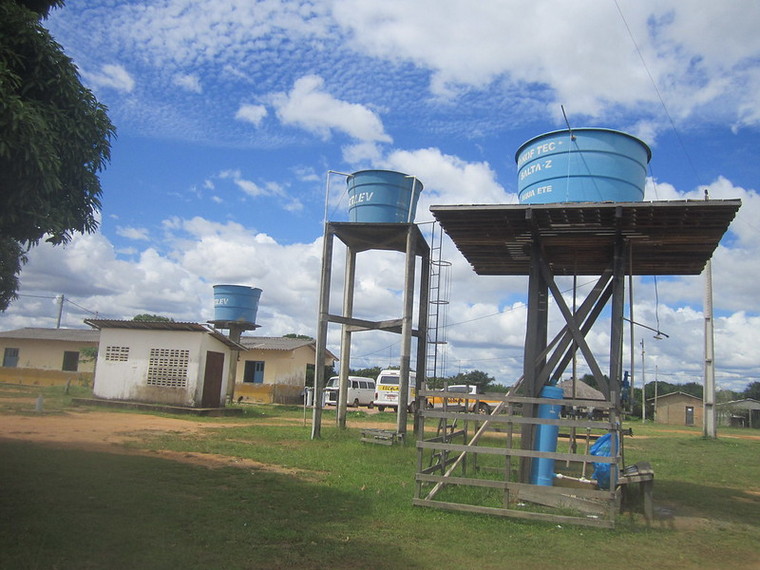
A photo of the three water tanks in the village of Darora, one of which holds water that is made potable by chemical treatment. The largest and longest building is the secondary school that serves the Macuxi indigenous community that lives in Roraima, in northern Brazil. CREDIT: Mario Osava/IPS

A photo of the three water tanks in the village of Darora, one of which holds water that is made potable by chemical treatment. The largest and longest building is the secondary school that serves the Macuxi indigenous community that lives in Roraima, in northern Brazil. CREDIT: Mario Osava/IPS

Achilles’ heel

Batteries still apparently limit the efficiency of solar energy in isolated or autonomous off-grid systems, with which the government and various private initiatives are attempting to make the supply of electricity universal and replace diesel generators.

Homero said that some of the Darora families who live outside the “center” of the village and have solar panels also had problems with the batteries.

Besides the 48 families in the village “center” there are 18 rural families, bringing the community’s total population to 265.

A solar plant was also installed in another community made up of 22 indigenous families of the Warao people, immigrants from Venezuela, called Warao a Janoko, 30 kilometers from Boa Vista.

But of the plant’s eight batteries, two have already stopped working after only a few months of use. And electricity is only guaranteed until 8:00 p.m.

“Batteries have gotten a lot better in the last decade, but they are still the weak link in solar power,” Aurelio Souza, a consultant who specializes in this question, told IPS from the city of São Paulo. “Poor sizing and the low quality of electronic charging control equipment aggravate this situation and reduce the useful life of the batteries.”

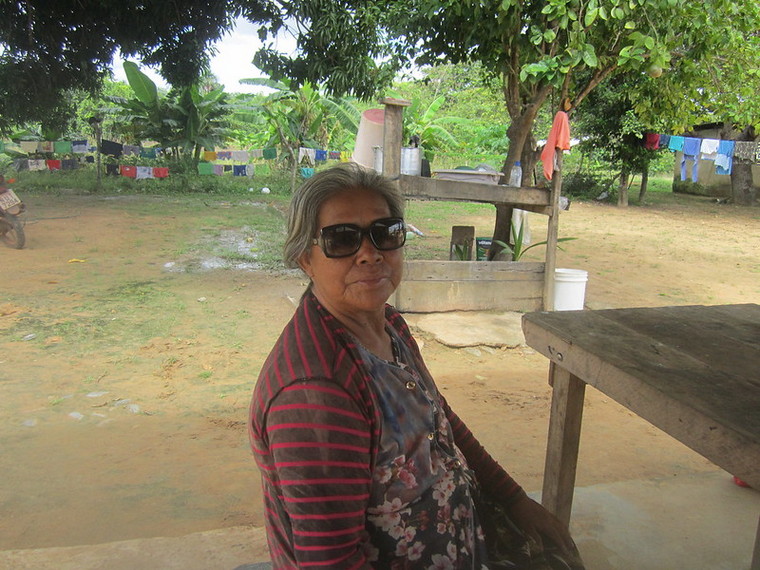
The low quality of the electricity supplied to Darora is due to the discrimination suffered by indigenous people, according to Adélia Augusto da Silva. The water they used to drink was also dirty and caused illnesses, especially in children, until the indigenous health service began to chemically treat their drinking water. CREDIT: Mario Osava/IPS

The low quality of the electricity supplied to Darora is due to the discrimination suffered by indigenous people, according to Adélia Augusto da Silva. The water they used to drink was also dirty and caused illnesses, especially in children, until the indigenous health service began to chemically treat their drinking water. CREDIT: Mario Osava/IPS

In Brazil’s Amazon jungle, close to a million people live without electricity, according to the Institute of Energy and the Environment, a non-governmental organization based in São Paulo. More precisely, its 2019 study identified 990,103 people in that situation.

Another three million inhabitants of the region, including the 650,000 people in Roraima, are outside the National Interconnected Electricity System. Their energy therefore depends mostly on diesel fuel transported from other regions, at a cost that affects all Brazilians.

The government decided to subsidize this fossil fuel so that the cost of electricity is not prohibitive in the Amazon region.

This subsidy is paid by other consumers, which contributes to making Brazilian electricity one of the most expensive in the world, despite the low cost of its main source, hydropower, which accounts for about 60 of the country’s electricity.

Solar energy became a viable alternative as the parts became cheaper. Initiatives to bring electricity to remote communities and reduce diesel consumption mushroomed.

But in remote plants outside the reach of the grid, good batteries are needed to store energy for the nighttime hours.

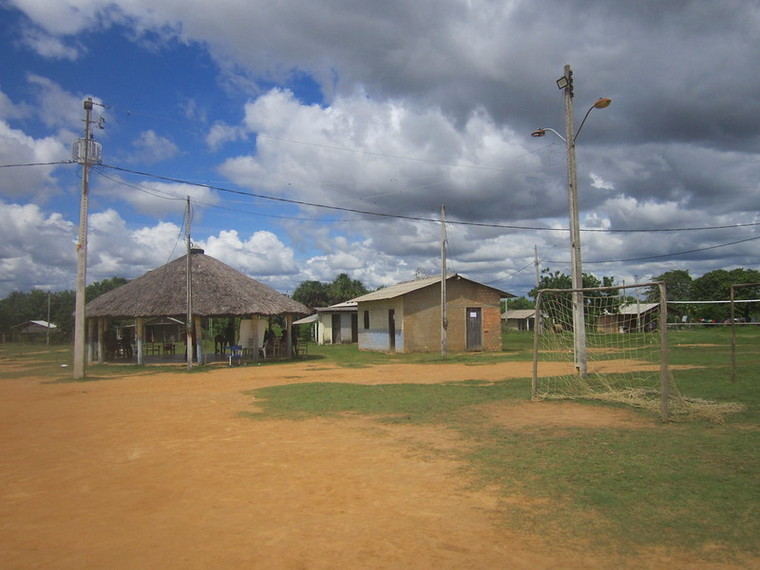
Part of the so-called "downtown" in Darora, which has lamp posts, houses, a soccer field and a shed where the community meets. A larger community center is needed, says the leader of the Macuxi village located near Boa Vista, the capital of the northern Brazilian state of Roraima. CREDIT: Mario Osava/IPS

Part of the so-called “downtown” in Darora, which has lamp posts, houses, a soccer field and a shed where the community meets. A larger community center is needed, says
the leader of the Macuxi village located near Boa Vista, the capital of the northern Brazilian state of Roraima. CREDIT: Mario Osava/IPS

A unique case

Darora is not a typical case. It is part of the municipality of Boa Vista, which has a population of 437,000 inhabitants and good resources, it is close to a paved road and is within a savannah ecosystem called “lavrado”.

It is at the southern end of the São Marcos indigenous territory, where many Macuxi indigenous people live but fewer than in Raposa Serra do Sol, Roraima’s other large native reserve. According to the Special Secretariat for Indigenous Health (Sesai), there were 33,603 Macuxi Indians living in Roraima in 2014.

The Macuxi people also live in the neighboring country of Guyana, where there are a similar number to that of Roraima. Their language is part of the Karib family.

Although there are no large forests in the surrounding area, Darora takes its name from a tree, which offers “very resistant wood that is good for building houses,” Homero explained.

The community emerged in 1944, founded by a patriarch who lived to be 93 years old and attracted other Macuxi people to the area.

The progress they have made especially stands out in the secondary school in the village “center”, which currently has 89 students and 32 employees, “all from Darora, except for three teachers from outside,” Homero said proudly.

A new, larger elementary and middle school for students in the first to ninth grades was built a few years ago about 500 meters from the community.

Water used to be a serious problem. “We drank dirty, red water, children died of diarrhea. But now we have good, treated water,” said Adélia da Silva.

“We dug three artesian wells, but the water was useless, it was salty. The solution was brought by a Sesai technician, who used a chemical substance to make the water from the lagoon drinkable,” Homero said.

The community has three elevated water tanks, two for water used for bathing and cleaning and one for drinking water. There are no more health problems caused by water, the tuxaua said.

His current concern is to find new sources of income for the community. Tourism is one alternative. “We have the Tacutu river beach 300 meters away, great fruit production, handicrafts and typical local gastronomy based on corn and cassava,” he said, listing attractions for visitors.

  Source

Digital Treatment of Genetic Resources Shakes Up COP15

The executive secretary of the Convention on Biological Diversity, Elizabeth Maruma Mrema, highlighted on Friday Dec. 16 the results of the Nagoya Protocol on access to genetic resources and fair benefit sharing at an event during COP15 in the Canadian city of Montreal. But the talks have not reached an agreement on the digital sequencing of genetic resources. CREDIT: Emilio Godoy/IPS

The executive secretary of the Convention on Biological Diversity, Elizabeth Maruma Mrema, highlighted on Friday Dec. 16 the results of the Nagoya Protocol on access to genetic resources and fair benefit sharing at an event during COP15 in the Canadian city of Montreal. But the talks have not reached an agreement on the digital sequencing of genetic resources. CREDIT: Emilio Godoy/IPS

By Emilio Godoy
MONTREAL, Dec 16 2022 (IPS)

In addition to its nutritional properties, quinoa, an ancestral grain from the Andes, also has cosmetic uses, as stated by the resource use and benefit-sharing permit ABSCH-IRCC-PE-261033-1 awarded in February to a private individual under a 15-month commercial use contract.


The permit, issued by the Peruvian government’s National Institute for Agrarian Innovation, allows the Peruvian beneficiary to use the material in a skin regeneration cream.

But it also sets restrictions on the registration of products obtained from quinoa or the removal of its elements from the Andean nation, to prevent the risk of irregular exploitation without a fair distribution of benefits, in other words, biopiracy.”The scientific community is willing to share benefits through simple mechanisms that do not unfairly burden researchers in low- and middle-income countries.” — Amber Scholz

The licensed material may have a digital representation of its genetic structure which in turn may generate new structures from which formulas or products may emerge. This is called digital sequence information (DSI), in the universe of research or commercial applications within the CBD.

Treatment of DSI forms part of the debates at the 15th Conference of the Parties (COP15) to the United Nations Convention on Biological Diversity (CBD), which began on Dec. 7 and is due to end on Dec. 19 at the Palais des Congrès in the Canadian city of Montreal.

The summit has brought together some 15,000 people representing the 196 States Parties to the CBD, non-governmental organizations, academia, international bodies and companies.

The focus of the debate is the Post-2020 Global Framework on Biodiversity, which consists of 22 targets in areas including financing for conservation, guidelines on digital sequencing of genetic material, degraded ecosystems, protected areas, endangered species, the role of business and gender equality.

Like most of the issues, negotiations on DSI and the sharing of resulting benefits, contained in one of the Global Framework’s four objectives and in target 13, are at a deadlock, on everything from definitions to possible sharing mechanisms.

Except for the digital twist, the issue is at the heart of the Nagoya Protocol on Access to Genetic Resources and the Fair and Equitable Sharing of Benefits Arising from their Utilization, part of the CBD, signed in that Japanese city in 2010 and in force since 2014.

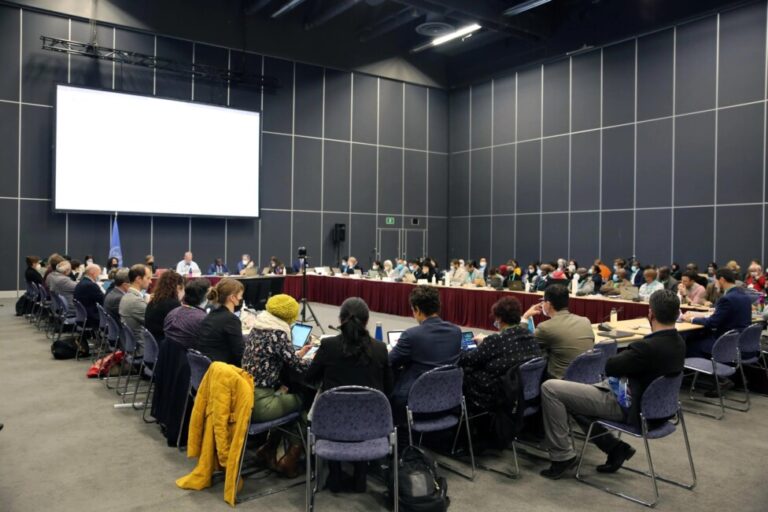
The delegations of the 196 States Parties to the Convention on Biological Diversity have failed to make progress at COP15 in the negotiations on new targets for the protection of the world's natural heritage, in the Canadian city of Montreal. In the picture, a working group reviews a proposal on the complex issue. CREDIT: IISD/ENB

The delegations of the 196 States Parties to the Convention on Biological Diversity have failed to make progress at COP15 in the negotiations on new targets for the protection of the world’s natural heritage, in the Canadian city of Montreal. In the picture, a working group reviews a proposal on the complex issue. CREDIT: IISD/ENB

Amber Scholz, a German member of the DSI Scientific Network, a group of 70 experts from 25 countries, said there is an urgent need to close the gap between the existing innovation potential and a fair benefit-sharing system so that digital sequencing benefits everyone.

“It’s been a decade now and things haven’t turned out so well. The promise of a system of innovation, open access and benefit sharing is broken,” Scholz, a researcher at the Department of Microbial Ecology and Diversity in the Leibniz Institute’s DSMZ German Collection of Microorganisms and Cell Cultures, told IPS.

DSI stems from the revolution in the massive use of technological tools, which has reached biology as well, fundamental in the discovery and manufacture of molecules and drugs such as those used in vaccines against the coronavirus that caused the COVID-19 pandemic.

The Aichi Biodiversity Targets, adopted in 2010 in that Japanese city during the CBD COP10, were missed by the target year, 2020, and will now be renewed and updated by the Global Framework that will emerge from Montreal.

The targets included respect for the traditional knowledge, innovations and practices of indigenous and local communities related to the conservation and sustainable use of biological diversity, their customary use of biological resources, and the full and effective participation of indigenous and local communities in the implementation of the CBD.

Lack of clarity in the definition of DSI, challenges in the traceability of the country of origin of the sequence via digital databases, fear of loss of open access to data and different outlooks on benefit-sharing mechanisms are other aspects complicating the debate among government delegates.

Through the Action Agenda: Make a Pledge platform, organizations, companies and individuals have already made 586 voluntary commitments at COP15, whose theme is “Ecological civilization: Building a shared future for all life on earth”.

Of these, 44 deal with access and benefit sharing, while 294 address conservation and restoration of terrestrial ecosystems, 185 involve partnerships and alliances, and 155 focus on adaptation to climate change and emission reductions.

Genetic havens

Access to genetic resources for commercial or non-commercial purposes has become an issue of great concern in the countries of the global South, due to the fear of biopiracy, especially with the advent of digital sequencing, given that physical access to genetic materials is not absolutely necessary.

Although the Nagoya Protocol includes access and benefit-sharing mechanisms, digital sequencing mechanisms have generated confusion. In fact, this instrument has created a market in which lax jurisdictions have taken advantage by becoming genetic havens.

Around 2,000 gene banks operate worldwide, attracting some 15 million users. Almost two billion sequences have been registered, according to statistics from GenBank, one of the main databases in the sector and part of the U.S. National Center for Biotechnology Information.

Argentina leads the list of permits for access to genetic resources in Latin America under the Protocol, with a total of 56, two of which are commercial, followed by Peru (54, four commercial) and Panama (39, one commercial). Mexico curbed access to such permits in 2019, following a scandal triggered by the registration of maize in 2016.

There are more than 100 gene banks operating in Mexico, 88 in Peru, 56 in Brazil, 47 in Argentina and 25 in Colombia.

The largest providers of genetic resources leading to publicly available DSI are the United States, China and Japan. Brazil ranks 10th among sources and users of samples, according to a study published in 2021 by Scholz and five other researchers.

The mechanisms for managing genetic information sequences have become a condition for negotiating the new post-2020 Global Framework for biodiversity, which poses a conflict between the most biodiverse countries (generally middle- and low-income) and the nations of the industrialized North.

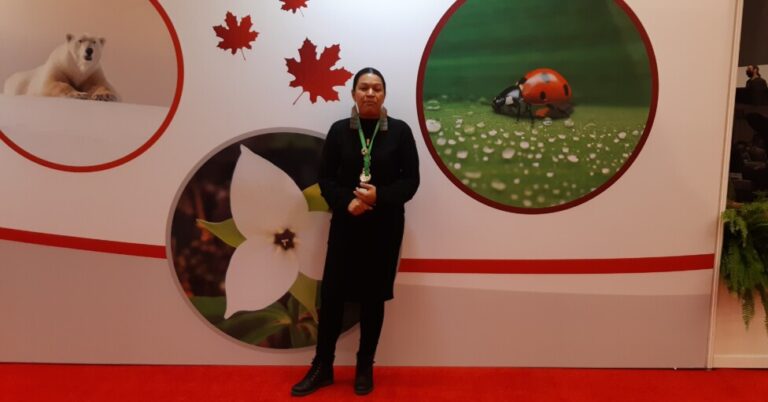
Brazilian indigenous activist Cristiane Juliao, a leader of the Pankararu people, calls for a fair system of benefit-sharing for access to and use of genetic resources and their digital sequences at COP15, being held at the Palais des Congrès in the Canadian city of Montreal. CREDIT: Emilio Godoy/IPS

Brazilian indigenous activist Cristiane Juliao, a leader of the Pankararu people, calls for a fair system of benefit-sharing for access to and use of genetic resources and their digital sequences at COP15, being held at the Palais des Congrès in the Canadian city of Montreal. CREDIT: Emilio Godoy/IPS

Indigenous people and their share

Cristiane Juliao, an indigenous woman of the Pankararu people, who is a member of the Brazilian Coordinator of Indigenous Peoples and Organizations of the Northeast, Minas Gerais and Espírito Santo, said the mechanisms adopted must favor the participation of native peoples and guarantee a fair distribution of benefits.

“We don’t look at one small element of a plant. We look at the whole context and the role of that plant. All traditional knowledge is associated with genetic heritage, because we use it in food, medicine or spiritual activities,” she told IPS at COP15.

Therefore, she said, “traceability is important, to know where the knowledge was acquired or accessed.”

In Montreal, Brazilian native organizations are seeking recognition that the digital sequencing contains information that indigenous peoples and local communities protect and that digital information must be subject to benefit-sharing. They are also demanding guarantees of free consultation and the effective participation of indigenous groups in the digital information records.

Thanks to the system based on the country’s Biodiversity Law, in effect since 2016, the Brazilian government has recorded revenues of five million dollars for permits issued.

The Working Group responsible for drafting the new Global Framework put forward a set of options for benefit-sharing measures.

They range from leaving in place the current status quo, to the integration of digital sequence information on genetic resources into national access and benefit-sharing measures, or the creation of a one percent tax on retail sales of genetic resources.

Lagging behind

There is a legal vacuum regarding this issue, because the CBD, the World Intellectual Property Organization and the International Treaty on Plant Genetic Resources for Food and Agriculture, in force since 2004, do not cover all of its aspects.

Scholz suggested the COP reach a decision that demonstrates the political will to establish a fair and equitable system. “The scientific community is willing to share benefits through simple mechanisms that do not unfairly burden researchers in low- and middle-income countries,” she said.

For her part, Juliao demanded a more inclusive and fairer system. “There is no clear record of indigenous peoples who have agreed to benefit sharing. It is said that some knowledge comes from native peoples, but there is no mechanism for the sharing of benefits with us.”

IPS produced this article with support from Internews’ Earth Journalism Network.

Doubts about Chile’s Green Hydrogen Boom

Biodiversity, Civil Society, Conservation, Development & Aid, Economy & Trade, Editors’ Choice, Energy, Environment, Featured, Green Economy, Headlines, Integration and Development Brazilian-style, Latin America & the Caribbean, Projects, Regional Categories, TerraViva United Nations

Energy

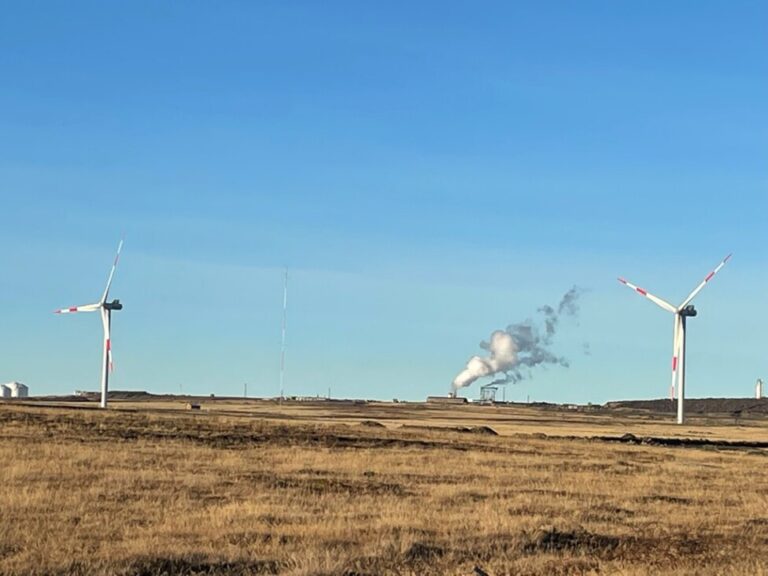
The administration of President Gabriel Boric, a self-described environmentalist, is facing a growing rift between scientists, social leaders and energy companies that have differences with regard to the production of green hydrogen in Magallanes. The first wind turbines have already been installed in the Magallanes region, in the far south of Chile, such as these in Laredo Bay, east of Cabo Negro, where companies are pushing green hydrogen projects in a scenario where environmental costs are beginning to take center stage. CREDIT: Courtesy of Erika Mutschke

The administration of President Gabriel Boric, a self-described environmentalist, is facing a growing rift between scientists, social leaders and energy companies that have differences with regard to the production of green hydrogen in Magallanes. The first wind turbines have already been installed in the Magallanes region, in the far south of Chile, such as these in Laredo Bay, east of Cabo Negro, where companies are pushing green hydrogen projects in a scenario where environmental costs are beginning to take center stage. CREDIT: Courtesy of Erika Mutschke

SANTIAGO, Oct 12 2022 (IPS) – In Magallanes, Chile’s southernmost region, doubts and questions are being raised about the environmental impact of turning this area into the world’s leading producer of green hydrogen.


The projects require thousands of wind turbines, several desalination plants, new ports, docks, roads and hundreds of technicians and workers, with major social, cultural, economic and even visual impacts.

“The scale of production creates uncertainties, heightened because there is no baseline. The question is whether Chile currently has the capacity to carry out large-scale green hydrogen projects.” — Jorge Gibbons

This long narrow South American country of 19.5 million people sandwiched between the Andes Mountains and the Pacific Ocean has enormous solar and wind energy potential in its Atacama Desert and southern pampas grasslands. This has led to a steady increase in electricity generation from clean and renewable sources.

In 2013, only six percent of the country’s total electricity generation came from non-conventional renewable sources (NCREs) – a proportion that climbed to 32 percent this year. Installed NCRE capacity in September reached 13,405 MW, representing 40.7 percent of the total. Of the NCREs, solar energy represents 23.5 percent and wind power 12.6 percent.

In Chile, NCREs are defined as wind, small hydropower plants )up to 20 MW), biomass, biogas, geothermal, solar and ocean energy.

According to the authorities, the wind potential of Magallanes could meet 13 percent of the world’s demand for green hydrogen, with a potential of 126 GW.

Green hydrogen is generated by low-emission renewable energies in the electrolysis of water (H2O) by breaking down the molecules into oxygen (O2) and hydrogen (H2). It currently accounts for less than one percent of the world’s energy.

However, it is projected as the energy source with the most promising future to advance towards the decarbonization of the economy and the replacement of hydrocarbons, due to its potential in electricity-intensive industries, such as steel and cement, or in air and maritime transportation.

The National Green Hydrogen Strategy, launched in November 2021 by the second government of then right-wing President Sebastián Piñera (2018-2022), seeks to increase carbon neutrality, decrease Chile’s dependence on oil and turn this country into an energy exporter.

The government of his successor, leftist President Gabriel Boric, in office since March, created an Interministerial Council of the Green Hydrogen Industry Development Committee, with the participation of eight cabinet ministers.

A spokesperson from the Ministry of Energy told IPS that “this committee has agreed to bring forward, from 2025 to 2022, the update of the National Green Hydrogen Strategy and the new schedule for the allocation of state-owned land for these projects.”

“We will promote green hydrogen in a cross-cutting manner, with an emphasis on harmonious, fair and balanced local development. By bringing forward the update of the strategy, we seek to generate certainty for investors and to begin to create the necessary regulatory framework for the growth of this industry in our country,” he said.

In the area known as Cabo Negro, in the Chilean region of Magallanes, several companies have installed wind turbines to generate wind energy. The installation of thousands of turbines will affect the landscape of Magallanes and environmentalists believe it will impact many birds that migrate annually to this southern region. CREDIT: Courtesy of Erika Mutschke

In the area known as Cabo Negro, in the Chilean region of Magallanes, several companies have installed wind turbines to generate wind energy. The installation of thousands of turbines will affect the landscape of Magallanes and environmentalists believe it will impact many birds that migrate annually to this southern region. CREDIT: Courtesy of Erika Mutschke

Warnings from environmentalists

In a letter to the president, more than 80 environmentalists warned of the risk of turning “Magallanes y La Antarctica Chilena” – the region’s official name – into an environmental sacrifice zone for the development of green hydrogen.

“The energy transition cannot mean the sacrifice of migratory routes of birds that are in danger of extinction, otherwise it would not be a fair or sustainable transition,” said the letter, which has not yet received a formal response.

Environmentalists argue that the impact is not restricted to birds, but also affects whales that breed there, due to the effects of desalination plants, large ports and harbors.

Carmen Espoz, dean of science at the Santo Tomás University, who signed the letter, told IPS that “the main warning that we have tried to raise with the government, and with some of the companies with which we have spoken, is that there is a need for zoning or land-use planning, which does not exist to date, and for independent, quality baseline information for decision-making” on the issue.

Espoz, who also heads the Bahía Lomas Center in Magallanes, based in Punta Arenas, the regional capital, clarified that they are not opposed to the production of green hydrogen but demand that it be done right.

It is urgently necessary, she said in an interview in Santiago, to “stop making decisions at the central level without consultation or real participation of the local communities and to generate the necessary technical information base.”

The signatories asked Boric to create a Regional Land Use Plan with Strategic Environmental Assessment to avoid unregulated development of projects.

“We are not only talking about birds, but also about profound social, cultural and environmental impacts,” said Espoz, who argued that the model promoted by the government and green hydrogen developers “does not have a social license to implement it.”

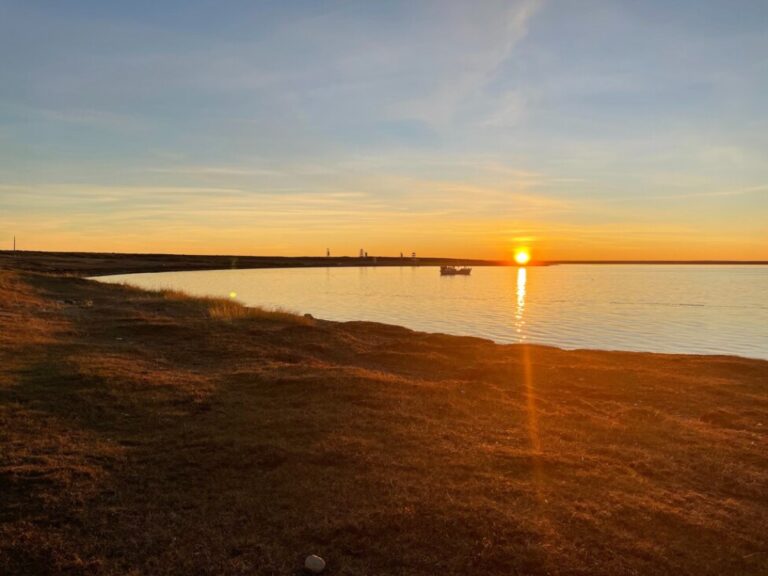
Sunset at Laredo Bay in the Magallanes region where the Chilean government will have to decide on what changes in the grasslands are acceptable, in the face of a flood of requests to use the area for largescale green hydrogen projects. CREDIT: Courtesy of Erika Mutschke

Sunset at Laredo Bay in the Magallanes region where the Chilean government will have to decide on what changes in the grasslands are acceptable, in the face of a flood of requests to use the area for largescale green hydrogen projects. CREDIT: Courtesy of Erika Mutschke

The bird question

Prior to this letter to Boric, the international scientific journal Science published a study by Chilean scientists warning about potential impacts of wind turbines on the 40 to 60 species of migratory birds that visit Magallanes.

“It is estimated that the installation of wind turbines along the migratory paths of birds could affect migratory shorebird populations, which is especially critical in the cases of the Red Knot (Calidris canutus rufa) and the Magellanic Plover (Pluvianellus socialis),” said Espoz.

Both species, she said, “are endangered, as is the Ruddy-headed Goose (Chloephaga rubidiceps).”

She added that if 13 percent of the world’s green hydrogen is to be generated in southern Chile, some 2,900 wind turbines will have to be installed by 2027, “which could cause between 1,740 and 5,220 collisions with bird per year.”

Jorge Gibbons, a marine biologist at the University of Magallanes, based in Punta Arenas, said the big problem is that Magallanes does not have a baseline for environmental issues.

“The scale of production creates uncertainties, heightened because there is no baseline. The question is whether Chile currently has the capacity to carry out large-scale green hydrogen projects,” he told IPS from the capital of Magallanes.

Gibbons believes it would take about two years to update the data on the dolphin and Southern Right Whale (Eubalaena australis) populations

“The greatest risks to dolphins will be seen in the Strait of Magellan. I am talking about Commerson’s Dolphins (Cephalorhynchus commersonii), which are only found there in Chile and whose population is relatively small,” he said.

He proposed studying the route to ports and harbors of these species and to analyze how they breed and feed.

“The issue is how noise disturbs them or interrupts their routes. These questions are still unanswered, but we know some things because it is the best censused species in Chile,” he explained.

According to Gibbons, the letter to Boric is timely and will help reduce uncertainty because “the process is just beginning and the scientific and local community are now wondering if the plan will be well done.”

Conflict of interests

The partnership between HIF Chile and Enel Green Power Chile withdrew from the Environmental Evaluation System the study of the Faro del Sur Wind Farm project, involving an investment of 500 million dollars for the installation of 65 three-blade wind turbines on 3,791 hectares of land in Magallanes.

The study was presented in early August with the announcement that it was “a decisive step for the future of green hydrogen-based eFuels.”

But on Oct. 6, its withdrawal was announced after a series of observations were issued by the Magallanes regional Secretariat of the Environment.

“The observations of some public bodies in the evaluation process of this wind farm exceed the usual standards,” the consortium formed by the Chilean company HIF and the subsidiary of the Italian transnational Enel claimed in a statement.

The companies argued that “the authorities must provide clear guidelines to the companies on the expectations for regional development, safeguarding the communities and the environment.

“In light of these exceptional requirements, it is necessary to understand which requirements can be incorporated and which definitely make projects of this type unfeasible in the region,” they complained.

The government reacted by stating that it is important to remember that Faro del Sur is the first green hydrogen project submitted to the environmental assessment process in Magallanes.

“During the process, some evaluating entities made observations on the project, so the owners decided to withdraw it early, which does not prevent them from reintroducing it when they deem it convenient,” the Ministry of Energy spokesperson told IPS.

He added that the ministry stresses “the conviction to develop the green hydrogen industry in the country and that this means sending out signals, but in no case should this compromise environmental standards and citizen participation in the evaluation processes.”

  Source

Donors Must Rethink Africa’s Flagging Green Revolution, New Evaluation Shows (Commentary)

Africa, Civil Society, Development & Aid, Economy & Trade, Food and Agriculture, Food Security and Nutrition, Food Sustainability, Green Economy, Headlines, TerraViva United Nations, Trade & Investment

Opinion

BOSTON, Mar 23 2022 (IPS) • A scathing new analysis of the Alliance for a Green Revolution in Africa (AGRA) finds that the program is failing at its objective to increase food security on the continent, despite massive funding from the Bill & Melinda Gates Foundation and the US, UK, and German governments.


• On March 30, critics of AGRA will brief U.S. congressional aides about why they think it is doing more harm than good.

• As fertilizer and food prices spike with rising energy prices from the Russia-Ukraine war, African farmers and governments need the kind of resilient, low-cost alternatives that techniques like agroecology offer, a new opinion piece argues.

A critical new donor-funded evaluation of the Alliance for a Green Revolution in Africa (AGRA) has confirmed what African civil society and faith leaders have claimed: “AGRA did not meet its headline goal of increased incomes and food security for 9 million smallholders.”

The evaluation should be a wake up call, and not just for the private and bilateral donors that have bankrolled this 15-year-old effort to the tune of $1 billion. It should also rouse African governments to repurpose their agricultural subsidies from the Green Revolution package of commercial seeds and fertilizers to agroecology and other low-cost, low-input approaches. They have been providing as much as $1 billion per year for such input subsidies.

Failing Africa’s farmers

Carried out by consulting firm Mathematica, the evaluation confirms that the Green Revolution has failed to achieve AGRA’s stated goal to “catalyze a farming revolution in Africa.”

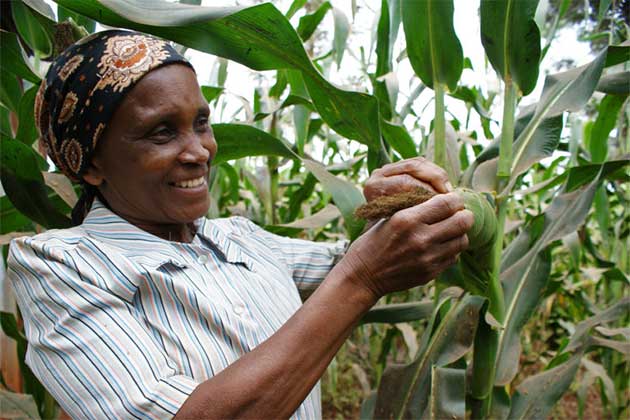
Wambui Mwihaki, a farmer from central Kenya, takes stock of her thriving maize crop following adoption of agroecology. Credit: David Njagi for Mongabay.

The assessment was funded by AGRA’s primary sponsor, the Bill & Melinda Gates Foundation, on behalf of other lead donors in AGRA’s Partnership for Inclusive Agricultural Transformation in Africa (PIATA): the U.K. Foreign, Commonwealth & Development Office; the Rockefeller Foundation; the U.S. Agency for International Development (USAID); and Germany’s Federal Ministry for Economic Cooperation and Development. The evaluation includes a summary of findings, a statistical appendix, and AGRA’s formal responses to the findings, all available publicly.

Such transparency is welcome. AGRA has been plagued by a lack of accountability since its founding in 2006. I undertook my own assessment of AGRA in 2020 when I could find no comprehensive analysis, from AGRA nor its donors, of its progress toward ambitious goals to double yields and incomes for 30 million small-scale farming families while halving food insecurity by 2020. Using national-level data, I found little evidence of progress, with meager productivity increases, little progress on poverty, and a 31% increase in the number of undernourished people in AGRA’s 13 focus countries.

The new evaluation is far from comprehensive. It covers only AGRA’s last five years of work, ignoring its first 10. It reports on results in just six of AGRA’s current 11 focus countries. Its data on yields is almost exclusively on maize and rice, to the exclusion of the many other staple food crops crucial to Africans’ sustenance. And it fails to incorporate or address the concerns raised publicly by African civil society and faith leaders in public letters to AGRA’s donors.

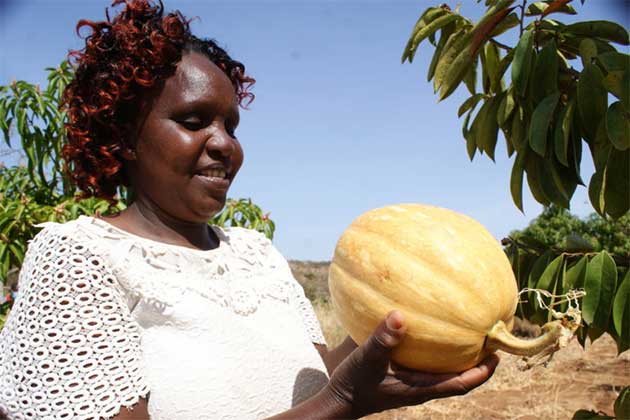
Agroforestry is a kind of agroecology where crops are grown in combination with trees, like this pumpkin that Eunice Manyi raised among fruit trees in Kenya. Credit: David Njagi for Mongabay.

Still, the findings about poor outcomes for farmers should raise concerns for private and bilateral donors to AGRA’s PIATA strategy and for the African governments that are active partners – and funders – in that effort.

Quoting from the evaluation:

    • “PIATA improved maize yields in Ethiopia, Ghana, and Nigeria, but not in Tanzania, Burkina Faso, or Kenya.” Maize is AGRA’s most heavily supported crop, so the failure to achieve yield growth in half the countries studied is alarming.
    • “Across these six countries, only farmers in Burkina Faso experienced improved maize sales as a result of PIATA.” This raises serious questions about the Green Revolution “theory of change.” Even when yields rose, they failed to translate into rising incomes for farmers.
    • “Farmers who adopted improved inputs and experienced yield increases were typically younger, male, and relatively wealthier…. productivity and income gains were also concentrated among these relatively high-resource farmers.” This finding directly contradicts the stated goals of USAID and other bilateral donors to ensure that their assistance programs benefit and empower women.
    • “AGRA’s next strategy could formally recognize that agricultural technologies and practices—such as fertilizer use and rice cultivation—can negatively impact environmental conditions and greenhouse gas emissions.” Evaluators fault AGRA on a wide range of environmentally damaging impacts, including a lack of attention to helping farmers adapt to climate change.
    • “AGRA surveys are currently not suited for rigorous impact analysis.” Evaluators offer many criticisms of the initiative’s poor monitoring and evaluation methods.

Time to rethink Green Revolution model

Evaluators gave AGRA credit for some of its work, saying it “was successful in developing key policy reforms, mobilizing flagships and partnerships, and reaching farmers with extension and seeds,” and it helped “incentivize private sector engagement in the production and delivery of improved seeds in some countries.”

But these intermediate objectives, carried out with substantial funding over 15 years, have thus far failed to further the goals of improving farmers’ productivity, incomes, and food security. When one’s development successes fail to produce the intended results, after 15 years and one billion dollars in donor funding, it is time to reconsider the efficacy of the initiative. It is time to rethink the Green Revolution model.

See related: Push-pull agroecology method debugs organic farming’s pest problem in Kenya

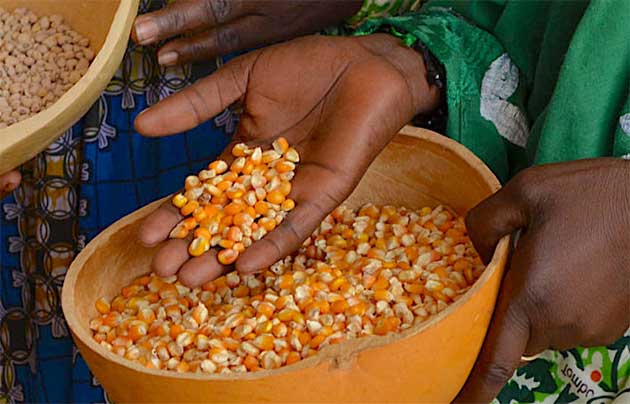
Farmers with seeds in West Africa. Image courtesy of Grassroots International.

AGRA’s management responded to the evaluation saying, “We must therefore rethink our models and focus our support, and that of our partners, on building resilience and adaptation specifically for smallholder farmers.” But there is little sign AGRA intends to pull back from its costly input-intensive Green Revolution model. AGRA president Agnes Kalibata recently defended the status quo in a Q&A with the East African.

Hopefully donors and African governments will take the new evaluation more seriously. African civil society and faith leaders have urged donors to shift their funding to agroecology and other low-cost, low-input systems, which were endorsed last year by the U.N. Committee on World Food Security as a key strategy for climate-resilient development. Such approaches have shown far better results, raising yields across a range of food crops, increasing productivity over time as soil fertility improves, increasing incomes and reducing risk for farmers by cutting input costs, and improving food security and nutrition from a diverse array of crops.

USAID was quick to reject any change in aid priorities. A spokesperson told US Right to Know, “USAID reviewed the findings and recommendations and is satisfied with the independence and rigor of the [Mathematica] evaluation. We appreciate AGRA’s response to the report conclusions and concur with their proposed next steps to improve performance outcomes.”

That will not satisfy African civil society and faith leaders, who were not consulted for the Mathematica evaluation. They plan to take their complaints to the U.S. Congress, which this year has to reauthorize funding for AGRA through its Feed the Future initiative. On March 30, they will brief congressional aides in a closed-door session to explain why the supposed beneficiaries think AGRA is doing more harm than good. As evaluators acknowledge, the main beneficiaries are wealthier male farmers, an outcome at odds with the stated goals of U.S. development policy.

As fertilizer and food prices spike with rising energy prices from the Russia-Ukraine war, African farmers and governments need the kind of resilient, low-cost alternatives agroecology offers. Kenyan farmers report today that the biofertilizers they make themselves from locally available materials cost one-quarter the price of fossil-fuel-based fertilizers.

African governments should recognize that continuing to subsidize increasingly expensive synthetic fertilizer is a losing proposition, especially when that and other Green Revolution inputs are producing such meager results.

It is time for private and bilateral donors – and African governments – to stop throwing good money after bad and recognize that their 15-year effort to “catalyze a farming revolution in Africa” through Green Revolution seeds and fertilizers has fallen short. Fortunately, more promising alternatives are proving their efficacy all over the world. They deserve support.

Timothy A. Wise is a Senior Research Fellow at Tufts University’s Global Development and Environment Institute. A detailed analysis of the recent evaluation of AGRA is available from the Institute for Agriculture and Trade Policy (IATP), where the author is a senior advisor.

IPS UN Bureau

  Source

Argentina’s Small Farming Communities Reach Consumers Online

Active Citizens, Civil Society, Cooperatives, Development & Aid, Economy & Trade, Editors’ Choice, Featured, Food and Agriculture, Green Economy, Headlines, Integration and Development Brazilian-style, Latin America & the Caribbean, Poverty & SDGs, Projects, Regional Categories

Food and Agriculture

This article is part of IPS’ coverage of World Food Day, celebrated Oct. 16, whose 2021 theme is: Grow, nourish, sustain. Together.

One of the Argentine small farmer groups participating in the digital marketing project uses agroecological irrigation and tomato crushing techniques in the province of Mendoza. CREDIT: Nicolás Heredia/Alma Nativa

One of the Argentine small farmer groups participating in the digital marketing project uses agroecological irrigation and tomato crushing techniques in the province of Mendoza. CREDIT: Nicolás Heredia/Alma Nativa

BUENOS AIRES, Oct 14 2021 (IPS) – “The biggest problem for family farmers has always been to market and sell what they produce, at a fair price,” says Natalia Manini, a member of the Union of Landless Rural Workers (UST), a small farmers organisation in Argentina that has been taking steps to forge direct ties with consumers.


The UST, which groups producers of fresh vegetables, preserves and honey, as well as goat and sheep breeders, from the western province of Mendoza, opened its own premises in April in the provincial capital of the same name.

In addition, it has just joined Alma Nativa (“native soul”), a network created to market and sell products from peasant and indigenous organisations, which brings together more than 4,300 producers grouped in 21 organisations, and now sells its products over the Internet.

“Selling wholesale to a distributor is simple, but the problem is that a large part of the income does not reach the producer,” Manini told IPS from the town of Lavalle in Mendoza province.

“The aim is to mobilise consumers to buy products from Latin American ecosystems that are made with respect for the environment, while small producers benefit from visibility and logistical support so that local products reach the entire country.” — Guadalupe Marín

The rural leader argues that, due to cost considerations, farmers can only access fair trade through collective projects, which have received a boost from the acceleration of digital changes generated by the covid-19 pandemic.

Alma Nativa is a marketing and sales solution formally created in 2018 by two Argentine non-governmental organisations (NGOs) focused on socio-environmental issues: Fibo Social Impact and the Cultural Association for Integral Development (ACDI). Their approach was to go a step beyond the scheme of economic support for productive development projects.

“Back in 2014 we began to ask ourselves why small farmer and indigenous communities could not secure profitable prices for the food and handicrafts they produce, and to think about how to get farmers to stop depending on donations and subsidies from NGOs and the state,” Fibo director Gabriela Sbarra told IPS in an interview in Buenos Aires.

Sbarra was a regular participant in regional community product fairs, which prior to the restrictions put in place due to the pandemic were often organised in Argentina by the authorities, who financed the setting up of the stands, accommodation and travel costs from their communities for farmers and craftspeople.

It was only thanks to this economic aid that farmers and artisans were able to make a profit.

“The effort was geared towards finding a genuine market for these products, which could not be sold online because it is very difficult to generate traffic on the Internet and they cannot reach supermarkets either, because they have no production volume. Informality was leaving communities out of the market,” Sbarra explained.

Three cooperatives in the Chaco region, the great forested plain that Argentina shares with Bolivia and Paraguay, are dedicated to honey production and are part of the Alma Nativa project, through which they sell their products to consumers throughout the country via the Internet. CREDIT: Nicolás Heredia/Alma Nativa

Three cooperatives in the Chaco region, the great forested plain that Argentina shares with Bolivia and Paraguay, are dedicated to honey production and are part of the Alma Nativa project, through which they sell their products to consumers throughout the country via the Internet. CREDIT: Nicolás Heredia/Alma Nativa

E-commerce, the new market

So the founders of Alma Nativa knocked on the doors of Mercado Libre, an e-commerce giant born in Argentina that has expanded throughout most of Latin America. The company agreed not to charge commissions for sales by an online store of agroecological food produced by local communities.

Alma Nativa then set up a warehouse in the town of Villa Madero, on the outskirts of Buenos Aires, where products arriving from rural communities throughout the country are labeled for distribution.

“The pandemic has created an opportunity, because it helped to open a debate about what we eat. Many people began to question how food is produced and even forced agribusiness companies to think about more sustainable production systems,” said Manini.

Norberto Gugliotta, manager of the Cosar Beekeeping Cooperative, emphasised that the pandemic not only accelerated the process of digitalisation of producers and consumers, but also fueled the search by a growing part of society for healthy food produced in a socially responsible manner.

“We were prepared to seize the opportunity, because our products were ready, so we joined Alma Nativa this year,” said the beekeeper from the town of Sauce Viejo. Gugliotta is the visible face of a cooperative made up of some 120 producers in the province of Santa Fe, in the centre of this South American country, who produce certified organic, fair trade honey.

Argentina, Latin America’s third largest economy, is an agricultural powerhouse, with a powerful agribusiness sector whose main products are soybeans, corn and soybean oil, which in 2020 generated 26.3 billion dollars in exports, according to official figures.

Behind the success lies a huge universe of family farmers and peasant and indigenous communities. According to the latest National Agricultural Census, carried out in 2018, more than 90 percent of the country’s 250,881 farms are family-run.

But the infrastructure and technological lag in rural areas is significant, as demonstrated by the fact that only 35 percent of farms have Internet access.

The deprivation is particularly acute in the Chaco, a neglected region in the north of the country, home to some 200,000 indigenous people belonging to nine groups whose economy is closely linked to natural resources, according to the non-governmental Fundapaz.

Indigenous artisans from the Pilagá community in the northern province of Formosa, within the Gran Chaco region, have begun selling their baskets online throughout Argentina. CREDIT: Rosario Bobbio/Alma Nativa

Indigenous artisans from the Pilagá community in the northern province of Formosa, within the Gran Chaco region, have begun selling their baskets online throughout Argentina. CREDIT: Rosario Bobbio/Alma Nativa

New platform for indigenous handicrafts

Communities from the Chaco, a vast region of low forests and savannas and rich biodiversity covering more than one million square km in Argentina, Bolivia and Paraguay, which is home to a diversity of native peoples, also began to market their handicrafts over Mercado Libre in the last few weeks.

“This initiative originated in Brazil with the ‘Amazonia em Pé’ programme and today we are replicating it in Argentina, in the Gran Chaco area. It seeks to build bridges between local artisans and consumers throughout the country,” explained Guadalupe Marín, director of sustainability at Mercado Libre.

“The aim is to mobilise consumers to buy products from Latin American ecosystems that are made with respect for the environment, while small producers benefit from visibility and logistical support so that local products reach the entire country,” she told IPS in Buenos Aires.

On Sept. 27, Mercado Libre launched the campaign “From the Gran Chaco, for you”, which offers for sale more than 2,500 products in 200 categories, such as baskets, indigenous and local art, decorative elements made with natural fibers, honey, weavings and handmade games.

It includes not only Alma Nativa, but also Emprendedores por Naturaleza (“entrepreneurs by/for nature”), a programme launched by the environmental foundation Rewilding Argentina, which works for the conservation of the Chaco and now promotes the sale of products made by 60 families living in rural areas adjacent to the El Impenetrable national park, the largest protected area in the region.

“The idea for the project arose last year, after we conducted a socioeconomic survey among 250 families in the area that found that the only income of 98 percent of them comes from welfare,” said Fatima Hollmann, regional coordinator of the Rewilding Argentina Communities Programme.

She told IPS that “people raise livestock for subsistence and sometimes work on fencing a field or some other temporary task, but there are no steady sources of employment in El Impenetrable.”

“That is why we are trying to generate income for local residents,” Hollmann explained in an interview in Buenos Aires. “Our production lines are focused on ceramics, since most people have built their houses there with adobe. Many also know how to make bricks and we have held trainings to teach people to turn a brick into an artistic piece, inspired by native fauna, which transmits the importance of conserving the forest.”

According to the figures released by the expert during the first week of the programme “From the Gran Chaco, for you” in early October, 644 products were offered for sale, of which 382 were sold to buyers from more than 10 Argentine provinces, including 100 percent of the textiles available and 76 percent of the wooden handicrafts.

“The alternative is to cut down the native forests,” Hollmann says. “We are proposing a transition from an extractivist economy to a regenerative one, which contributes to the reconstruction of the ecosystem, and gives consumers in the cities the chance to contribute to that goal.”

  Source