Nurturing a New Generation of Food Leaders

Biodiversity, Conferences, Environment, Featured, Food and Agriculture, Food Security and Nutrition, Food Sustainability, Global, Headlines, Health, Humanitarian Emergencies, Sustainability, TerraViva United Nations
Food Sustainability

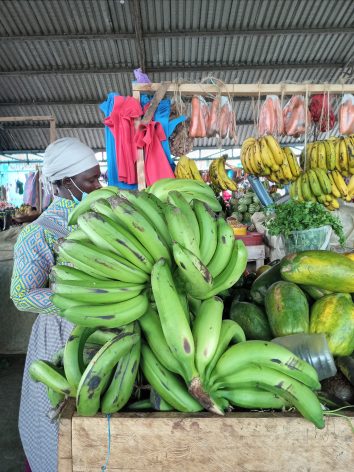
An European Institute for Innovation and Sustainability (EIIS) programme focusses on production, distribution, and consumption issues of food systems. Credit: Joyce Chimbi/IPS

NAIROBI, KENYA, Sep 22 2021 (IPS) – Food security experts have raised an alarm that with as many as 811 million people the world over or 10 percent of the global population going hungry, the world is off-track to ending hunger and malnutrition.


More so, after a decade of steadily declining, the number of malnourished people grew by 161 million from 2019 to 2020 alone, a spike attributed to complex global challenges such as COVID-19, climate change and conflict, according to the United Nations.

Against this backdrop, the European Institute for Innovation and Sustainability (EIIS) launched a three-month, challenge-based and solutions-oriented food sustainability certificate course in May 2021 to actively help countries fix their food systems.

“Our aim is to provide a comprehensive base for a deeper understanding of the complex dynamics of food, giving course participants the tools and insights to perform better at work, shift careers, and become even more conscious and responsible consumers,” says Sveva Ciapparoni, the Food and Sustainability course coordinator.

With a special focus on G20 countries, as they are most representative of the world’s population and economy, the EIIS food sustainability programme uses the Food and Sustainability Index (FSI) to help learners understand the dynamics behind food systems and their inherent power to promote or derail the attainment of UN’s Sustainable Development Goals (SDGs).

Developed by the Economist Intelligence Unit with the Barilla Center for Food and Nutrition Foundation, the food index collects data from 67 countries worldwide to showcase best practices and highlight key areas for improvement towards the production and consumption of sufficient, sustainable and healthy food.

The EIIS programme breaks away from traditional food courses solely centred around gastronomy, culinary management and hospitality to focus on production, distribution and consumption issues at the very heart of the SDGs.

Marcela Villarreal, the Director of Partnerships and UN Collaboration Division at the Food and Agriculture Organization (FAO), indicates that the “course directly addresses several SDGs. These include fighting hunger (SDG 2), promoting the health of both people and planet (SDGs 3, 13, 15), and encouraging conscious and responsible consumption (SDG 12).”

“The food system approach adopted by the course through specific challenges is particularly conducive to understanding the SDG agenda and proposing solid and interconnected solutions,” Villarreal, also one of the foremost experts from the Food and Sustainability course’s faculty, says.

As such, participants, who were part of the May 2021 cohort of learners, had an opportunity to intersect the three critical pillars of any food system, including sustainable agriculture, nutritional challenges and food loss and waste, with the three areas where food experts say solutions to the broken food systems lie: innovation, education and policy.

Also unique to the course, the programme is taught through a Challenge Based Learning approach that “allows for the practical application of the concepts learned throughout the modules.

“How to feed 10 billion healthy foods, preserving the health of people and planet is the ambitious challenge tackled by the participants,” says Villarreal.

Participant Anant Saraf confirmed that being taken through online tuition combined with practical workshops enabled them to analyse food systems, understand the complexities of the food systems, and identify the most pressing problems facing specific food systems to provide solutions.

Importantly, Ciapparoni says that the course is an opportunity to interact with topics increasingly crucial to food production, distribution, and consumption in line with the SDGs and the UN’s first-ever food systems summit that kicks off on September 23, 2021.

Held within the UN General Assembly week in New York, the virtual UN Food Systems Summit will set the stage for global food systems transformation.

To do so, the UN will engage citizens from all over the world, including youth, researchers, food producers, indigenous people, civil society, and the private sector, in a discourse to transform how the world produces and consumes food.

As with the EIIS food sustainability course, the UN Food Systems Summit is a golden opportunity to empower people to understand and use the power of food systems to recover from COVID-19 and get back on track to end world hunger and malnutrition.

Ciapparoni indicates that course participants were aware that they would be contributing to the Summit.

The course challenge aligns with the UN Food Systems Summit agenda as it was developed in consultation with Martin Frick, deputy to the UN Secretary-General Special Envoy for the UN Food Systems Summit 2021, he added.

Therefore, at the heart of the EIIS course was an urgent need to build a generation of food leaders that can effectively transform food systems for food security, improved nutrition, and affordable healthy diets for all.

Towards this objective, Villarreal says that course participants were “divided into teams based on their backgrounds, diversity being the main criteria and that each team got assigned a G20 country to be analysed, with a specific focus on its food system.”

“After identifying the country’s key challenges, each team proposed possible solutions to improve their assigned country’s food system. The underlying idea is that, by proposing ways in which single countries can improve the sustainability of their food systems, participants will be able to suggest how to promote food sustainability globally – and thus address the course’s main challenge,” Villarreal adds.

Team South Africa, for instance, discussed the country’s rapid urbanisation and unfolding food production and security challenges in light of climate change and complex social, economic, and environmental challenges.

As for Saudi Arabia, the team concluded that the food system faces numerous challenges, as highlighted in the food and sustainability index of 2021 that ranked Saudi Arabia last compared to other G20 countries.

Saudi Arabia has the highest reliance on food imports among the G20 countries. The team aimed to identify how the country could overcome the food production challenges caused by its dry and hot climate.

Team India had the task of identifying how the country, ranked 13th among the world’s extremely water-stressed countries due to inefficient irrigation systems, groundwater depletion, and high production of water-consuming crops, can overcome these challenges.

With regard to the USA, the team analysed how the country, which has the highest food waste per capita globally, can address this problem.

Team Russia sought to fix the country’s faulty food production systems, processing, and transportation.

Team South Korea’s challenge was found in the globalisation of the country’s food system has increased consumption of highly processed foods leading to a food crisis.

Participants navigated through these challenges under the guidance of food and sustainability experts, including Villarreal. By providing solutions to fix broken food systems in specific countries, the EIIS course will have contributed towards practical solutions on how to feed 10 billion people by 2050 healthy food without harming the planet.

 

The UN Food Systems Summit and Some Issues of Concern

Climate Change, Combating Desertification and Drought, Conferences, Economy & Trade, Environment, Food and Agriculture, Food Security and Nutrition, Food Sustainability, Global, Headlines, Health, Humanitarian Emergencies, Labour, TerraViva United Nations

Opinion

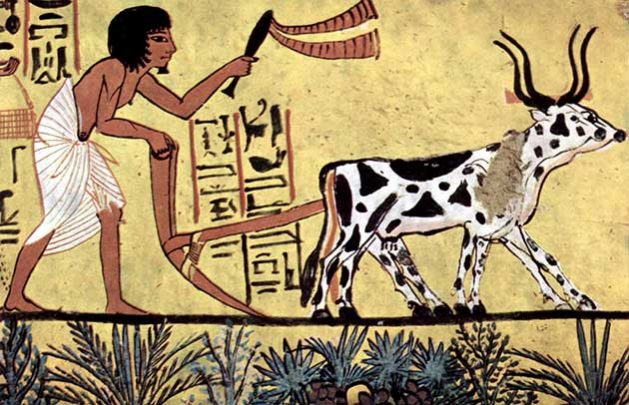
Oxen have been used to plough in agriculture for at least 3,000 years. They are still used today. Painting from the burial chamber of Sennudjem c, 1200 BC, Egypt. Credit: Trevor Page

LETHBRIDGE, Canada, Sep 21 2021 (IPS) – Why is the UN holding a Food Systems Summit? Two issues that need discussion at the international leadership level are: Long before the Covid crisis was upon us, the number of hungry people in the world was increasing. Why ? What is the cause of this disturbing trend? And, can a country really claim to be food secure, unless it produces or can buy enough food to feed its population and its people can access sufficient quantities to keep themselves fit and healthy? Disquietening questions as extreme weather begins to show the destructive power that climate change will have on the planet and its people.


A whole range of food system issues will be discussed at the summit, among them: production, processing, supply chain, consumption, nutrition, malnutrition, food aid and waste.

Food Production

Food, or the nutrients it contains, is fuel for the body. Agriculture and the production of food in an organized way is one of the earliest human endeavors. It started in the fertile crescent of the Middle East, some 10,000 BCE. While mechanization dominates the way food is produced today in the major food producing countries, animal traction is still important in many parts of the world.

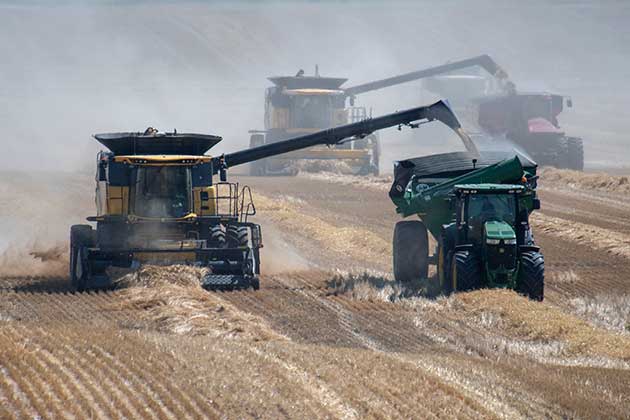
Million dollar combines handle reaping, threshing, gathering and winnowing in a single operation on North American and European cereal fields today. GPS programmed, they are set to become driverless within a decade. Fruit and vegetables grown in vertical farms in cities using aquaponics are already springing up around the world. Aquaculture too can be moved to vertical farms, making fish much cheaper for urban dwellers. Vertical farms will greatly reduce labour costs and transportation requirements. Mechanization hugely reduces the number of people engaged in farming and consequently, the cost. Robotics and digital agriculture are already with us in some parts of the world. But where most people live in the world, traditional manual methods and animal traction are set to continue until the high investment needed for cutting-edge technology becomes doable.

Combines harvesting barley for the 2021 annual Canadian Food Grains Bank (CFGB) food drive, Alberta, Canada. The grain is auctioned and the proceeds matched 4:1 by the Canadian government and used by CFGB to promote agriculture in developing countries. Credit: Trevor Page

Wrestling with nature

Despite the advances in technology, drought can badly affect a crop. Cereal crops in western Canada and the United States have been seriously affected by drought this year. Climate change presents the greatest challenge yet to agriculture, and to the human species, generally.

Agriculture is the largest emitter of greenhouse gasses contributing to climate change. According to FAO, the rearing of livestock accounts for the highest proportion because of the methane produced from enteric fermentation as well as manure left on pastures. Also according to FAO, 44% of GHGs are emitted from Asia, 25% from the Americas, 15% from Africa, 12% from Europe and 4% from Oceania.

Is organic agriculture the answer to healthier food and also the way to go because it’s kinder to the planet? Studies have found that there are higher antioxidant levels in organically grown plant-based foods. There is also evidence that organic food has lower toxic, heavy metal levels and less pesticide residue, for instance organic eggs, meat and dairy products. Organic farms use less energy and have lower GHG emissions. They also reduce the pollution caused by the widespread use of nitrogen fertilizer on industrial farms, with the runoff causing the eutrophication of water bodies. Organic agriculture is based on nourishing the soil with composts, manure and regular rotations, keeping it covered with different crops throughout the year. That sequesters carbon, building healthier soil.

The problem is that organically grown food is more expensive that industrially produced food. On average, it retails around 25% more than food sold in supermarkets. Also, most organic farmers need to supplement their income from an additional occupation in order to make ends meet. So, despite the benefits to human health and to the planet, does organic farming have a future? The answer is a resounding “yes!”, both from producers and consumers. Although globally, only 1.5% of farmland is organic, in 16 countries 10% or more of all agricultural land is organic, and the proportions are growing. The countries with the largest organic share of their total farmland are Liechtenstein at 38.5 %, Samoa at 34.5% and Austria 24.7%, according to IFOAM Organics International. Today, organic food is more of a lifestyle choice, both by the producer and the consumer. But if its growth is an indicator of concern for our health and for that of the planet, and more and more people are willing and able to pay the extra cost involved, then organics can be seen as an indicator of wellbeing and a reduction of inequality, which is a major cause of conflict in the world today.

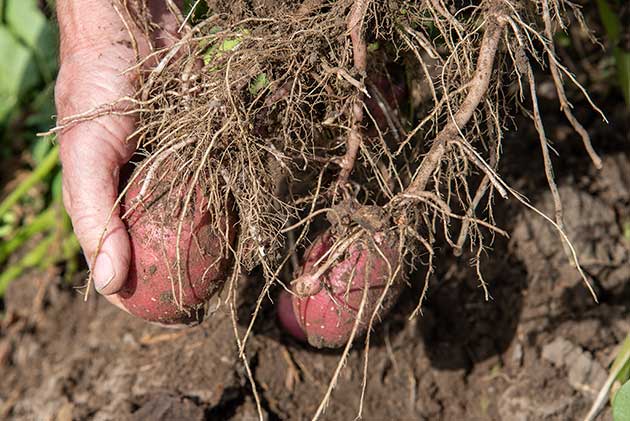
Healthy root formation on Mozart red potatoes on The Perry Farm in Taber, Canada. Regenerative agriculture is practiced on this farm. Credit: Trevor Page

Although humankind has grown up largely on a diet of just three cereals: wheat, corn and rice, potatoes are actually more nutritious. Furthermore, potatoes can be grown on marginal land and they require only one-third of the water needed to grow the world’s three main cereals. Five years ago, China moved to double its potato production and to add them to the diet of its growing population. Should Africa be following suit?

Conclusion

The Food Systems Summit kicks off in New York on September 23 during the UN General Assembly High-Level Week. World leaders will come together to find common ground and form alliances that accelerate our way to realizing the SDGs in this remaining decade of action before 2030 is upon us. Will we succeed in making Zero hunger a reality? If we are serious about this goal, the answer includes rethinking and redesigning our food systems to make them more sustainable.

Trevor Page, resident in Lethbridge, Canada, is a former Emergencies Director of the World Food Programme. He also served with the UN Food & Agriculture Organization, FAO, the UN refugee agency, UNHCR and what is now the UN Department of Political and Peace Building Affairs.


If Women Farmers were Politicians, the World Would be Fed, says Danielle Nierenberg

Biodiversity, Conferences, Economy & Trade, Environment, Featured, Food and Agriculture, Food Security and Nutrition, Food Sustainability, Gender, Global, Green Economy, Headlines, Health, Humanitarian Emergencies, Natural Resources, TerraViva United Nations, Women & Climate Change, Women in Politics

Food Sustainability

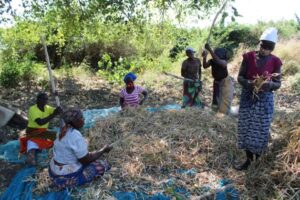
Women produce more than 50 percent of the food in the world but are disadvantaged when it comes to access to resources such as land and financial services. Credit: Busani Bafana, IPS

BULAWAYO, Zimbabwe, Sep 17 2021 (IPS) – Women, key contributors to agriculture production, are missing at the decision table, with alarming consequences, says Food Tank President Danielle Nierenberg in an exclusive interview with IPS.


Giving women a seat at the policymaking table could accelerate Sustainable Development Goals (SDGs) and keep the world fed and nourished. This necessitates a transformation of the currently lopsided global food system, she says.

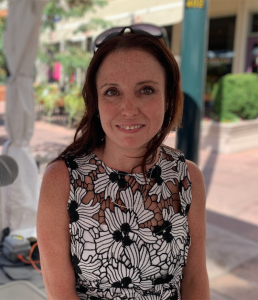
Food Tank President Danielle Nierenberg.

Nierenberg, a top researcher and advocate on food systems and agriculture, acknowledges that women are the most affected during environmental or health crises. The COVID-19 pandemic disrupted global food production, affecting women farmers and food producers who were already excluded from full participation in agricultural development.

“We still have a long way to go in making sure that policies are not gender blind and include the needs of women at the forefront when mass disasters occur,“ Nierenberg told IPS, adding that policymakers need to understand the needs of farmers and fisherfolk involved in food systems.

“I think it is time we need more people who are involved with agriculture to run for political office because they understand its challenges,” she said. “If we had more farmers in governments around the world, imagine what that would look like. If we had women farmers running municipalities, towns and even countries, that is where change would really happen.”

According to the United Nations Food and Agriculture Organisation (FAO), women contribute more than 50 percent of food produced globally and make up over 40 percent of the agricultural labour force. But while women keep families fed and nourished, they are disadvantaged in accessing critical resources for food production compared to men. They lack access to land, inputs, extension, banking and financial services.

“Until we end the discrimination of women around the globe, I doubt these things will change even though women are in the largest part of the world’s food producers,” said Nierenberg, who co-founded and now heads the global food systems think tank, Food Tank.

Arguing that COVID-19 and the climate crisis were not going to be the last global shocks to affect the world, Nierenberg said women and girls had been impacted disproportionately; hence the need to act now and change the food system. Women have experienced the loss of jobs and income, reduced food production and nutrition and more girls are now out of school.

“It is not enough for me to speak for women around the globe. Women who are actually doing the work need to speak for themselves; they need to be included in these conversations,” Nierenberg said.

“What happens is that in conferences, there are a lot of white men in suits talking on behalf of the rest of the world. But we need the rest of the world, and women included, to be in the room.”

A food system is a complex network of all activities involving the growing, processing, distribution and consumption of food. It also includes the governance, ecological sustainability and health impact of food.

Noting that the COVID-19 pandemic has highlighted invisible issues, like the interconnectedness of our food systems, she said it was urgent to invest in regional and localized food systems that included women and youth. Food Tank and the Barilla Center for Food and Nutrition (BCFN) work collaboratively to investigate and set the agenda for concrete solutions for resetting the food system.

Divine Ntiokam, Food Systems Champion and Founder and Managing Director, Climate Smart Agriculture Youth Network Global (GCSAYN), agrees. While youth are ready to engage in promoting a just and inclusive transformation of rural areas, it was unfortunate they were rarely involved in decision-making, she said. They are excluded from the household level to larger political institutions and companies and need better prospects of financial security to remain in the farming sector.

“Young men and women need to be given special attention in formulating legislation to purchase land and receive proper land rights,” Ntiokam told IPS.

“International donors and governments need to invest in youth, particularly young women and girls, for their meaningful participation along with the food systems value network,” he said.

“Youth need to have a ‘seat at the table’, as they have at the Summit, in terms of decision-making on where governments and international donors invest their resources to make agriculture and food a viable, productive and profitable career.”

Researchers say current food systems are unfair, unhealthy, and inequitable, underscoring the urgency to transform the global food system. According to the FAO, more than 800 million people went to bed hungry in 2020, and scores of others are malnourished.

Jemimah Njuki, Director for Africa at IFPRI and Custodian for the Gender Equality and Women’s Empowerment Lever of the UN Food Systems Summit.

For food systems to be just, there is an urgency to close the gender resource gap, says Jemimah Njuki, Director for Africa at IFPRI and Custodian for the Gender Equality and Women’s Empowerment Lever of the UN Food Systems Summit.

UN Secretary-General Antonio Guterres will, on September 23, 2021 host the UN Food Systems Summit during the UN General Assembly High-Level Week. The Summit is billed as a platform to push for solid support in changing the world food systems to help the world recover from the COVID-19 pandemic while spurring the achievement of the SDG by 2030.

The Summit, the UN says will “culminate in an inclusive global process, offering a catalytic moment for public mobilization and actionable commitments by heads of state and government and other constituency leaders to take the food system agenda forward”.

“They (food systems) must also transform in ways that are just and equitable, and that meaningfully engage and benefit women and girls,” Njuki told IPS. She added that harmful social and gender norms creating barriers for women and girls by defining what women and girls can or cannot eat, what they can or cannot own, where they can go or not go should be removed.

“This transformation has to be driven from all levels and all sectors in our food systems: global to local, public to private, large scale producers to smallholder farmers and individual consumers,” Njuki said.

Leaders should enact policies that directly address injustices – such as ensuring women’s access to credit, markets, and land rights, Njuki said, noting that individual women and men need to confront social norms and legal prejudices and demand changes.

Njuki believes that current food systems have contributed to wide disparities among rich and poor.

“These negative outcomes are intimately linked with many of the biggest challenges facing humanity right now – justice and equality, climate change, human rights – and these challenges cannot be addressed without transforming how our food systems work,” Njuki told IPS.

“We are at a pivotal moment on the last decade before the deadline for the UN Sustainable Development Goals. This must be the decade of action for food systems to end hunger.”


COVID-19 Recovery Requires Justice Beyond Rhetoric

Civil Society, Economy & Trade, Education, Gender, Global, Headlines, Health, Humanitarian Emergencies, Poverty & SDGs, TerraViva United Nations, Women & Economy

Opinion

Credit: Global Policy Forum

BONN, Germany, Sep 16 2021 (IPS) – Policy responses to the COVID-19 pandemic and resulting economic crisis have exacerbated rather than reduced global inequalities. On the one hand, the net wealth of billionaires has risen to record levels since the outbreak of the pandemic (increasing by more than US$ 5 trillion to US$ 13.1 trillion from 2020 to 2021), on the other hand, the number of people living in extreme poverty has also increased massively (by approx. 100 million to 732 million in 2020).


These contrasts alone show that something is fundamentally wrong in the world.

In response to the disastrous effects of the pandemic, there was much talk of solidarity with regard to health support, including access to vaccines. But the brutal national competition for vaccines shows that solidarity is embraced by many world leaders merely as a rhetorical flourish.

The World Health Organization (WHO) made an early appeal to countries to agree on a coordinated distribution of vaccines, with available doses distributed fairly according to the size of each country’s population. This has not happened.

By the end of August 2021, more than 60 percent of the people in high-income countries had received at least one dose of COVID-19 vaccine, but less than 2 percent have done so in low-income countries.

The European Commission, the USA, the UK, and numerous other countries have signed bilateral COVID-19 Vaccine Agreements with pharmaceutical producers to secure vaccine quotas. By the end of August 2021, more than 400 agreements were concluded, securing over 18 billion doses of vaccine.

The European Commission has so far negotiated supply agreements for 4.3 billion doses of vaccine, equivalent to 8 vaccine doses per capita of the EU population. The UK could vaccinate its population 9 times with the contracted doses, the USA 10 times and Canada as many as 16 times.

Exacerbating the problem for many countries in the global South is the enormous cost of vaccines. The producers do not charge standard prices, but vary their prices depending on the quantity purchased and the bargaining power of the purchaser.

Occasionally, they grant preferential terms to rich countries, while countries in the global South sometimes have to pay higher prices. For example, the European Commission received a batch of AstraZeneca vaccine for US$ 2.19, while Argentina had to pay US$ 4.00 and the Philippines US$ 5.00. Botswana had to pay US$ 14.44 million for 500,000 doses of Moderna vaccine, or US$ 28.88 per dose, while the USA got Moderna’s vaccine at almost half the price (US$ 15.00).

While the vaccine pharmaceutical oligopoly makes exorbitant profits, countries of the global South are confronted with falling government revenues and rising debt burdens. The situation will worsen as regular vaccine boosters become necessary in the coming years.

What is tantamount to a license to print money for the pharmaceutical companies is a massive burden on public budgets. In view of this dramatic disparity, the promise to “leave no one behind” of the 2030 Agenda for Sustainable Development remains an empty slogan.

Insufficient responses to the global health crisis

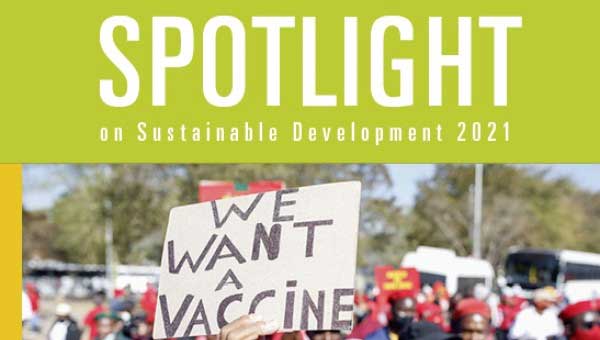
As an immediate response to the global health crisis, the People’s Vaccine Alliance has formulated “5 steps to end vaccine apartheid“. These are in line with the demands derived from the analyses in the Spotlight Report 2021.

Increasing global vaccine production capacity, lowering market prices, and substantially increasing public financial support are vital, especially for the poor and disadvantaged people in the global South.

One way to overcome the vaccine shortage is to accelerate technology transfer. In May 2020, WHO established the COVID-19 Technology Access Pool (C-TAP), designed to pool voluntary licenses, research and regulatory data. But most countries with large vaccine production capacity, such as the USA, Germany, China and India, do not support the initiative. Thus, it has so far remained without any noticeable impact.

Faced with scarce global production capacity, India, South Africa, Kenya and Eswatini applied for a waiver under the TRIPS Agreement of the WTO to temporarily remove patent protection for COVID-19-related vaccines, medicines and devices.

The TRIPS waiver is intended to enable manufacturers in the global South in particular to produce medicines and vaccines more quickly and at lower cost. More than 100 countries support this initiative, including the USA as of May 2021.

The EU, the UK, Switzerland and the pharmaceutical companies and lobby groups based in these countries are particularly opposed and have so far blocked an agreement.

In this context, the more fundamental question arises as to whether medicines vital to realize the human right to health should be patented at all. Should they not in principle be considered global public goods, especially when, as in the case of the COVID-19 vaccines, billions of dollars of public money have gone into research and development?

In another initiative, the WHO and several partners—including France, the EU and the Bill & Melinda Gates Foundation –launched the Access to COVID-19 Tools (ACT) Accelerator and its COVAX initiative.

This has shifted the centre of the global COVID-19 response from WHO to a multi-stakeholder initiative with its own governance and decision-making structure, thereby further weakening WHO’s role in the global health architecture.

But with the unilateral approach of the rich countries to vaccine procurement, COVAX has failed in its claim to serve a global coordination function. Its primary task is now to provide COVID-19 vaccines to 92 low- and middle-income countries with the objective to provide at least 2 billion COVID-19 vaccine doses by the end of 2021.

By 14 September 2021, just 270 million doses have been delivered. To date, COVAX has received pledges of US$ 9.825 billion, nowhere near enough to provide sufficient vaccines for about 4 billion people in the 92 countries.

The COVID-19 pandemic has painfully demonstrated the absence of a functioning global health system. This reality has led to the proposal to create a Pandemic Treaty – a legally binding framework and improved global governance structures for pandemic preparedness and response.

Whether it can actually overcome structural weaknesses of the global health architecture, such as the underfunding of the WHO, is very unclear. Depending on its design, it could lead to an actual strengthening of the WHO, or to its further weakening by outsourcing pandemic preparedness and response to multi-stakeholder bodies with limited public accountability.

More transformational steps are needed

Beyond responding to the global health crisis, far more fundamental transformational steps are needed.

An essential aspect of an agenda for change is the shift toward a rights-based economy and a concept of human rights that forms the basis of our vision of economic justice.

To make this systemic shift happen, the trend towards privatization, outsourcing and systematic dismantling of public services must be reversed.

To combat rising inequality and build a socially just, inclusive post-COVID world, everyone must have equitable access to public services, which must be reclaimed as public goods and run in the common interest, not for profit.

UN Secretary-General António Guterres has repeatedly emphasized that human rights must guide all COVID-19 response and recovery measures. This should also mean strengthening the rights of those on the frontlines of the COVID-19 crisis.

First and foremost, that means the millions of workers in the healthcare sector, 70 percent of them women. Most of them experience poor work conditions, low wages and job insecurity.

The situation is similar in the education sector. Research by Education International shows that even before the COVID-19 pandemic, teachers’ workloads have steadily worsened, while salaries have remained the same or even decreased.

The situation has continued to deteriorate as a result of the pandemic. The global teacher shortage, which the UN estimated at 69 million even before the pandemic, will continue to grow so long as teaching remains to be “an overworked, undervalued, and underpaid profession”.

A basic precondition for the adequate provision of public goods and services is that States have sufficient resources. To prevent the COVID-19 pandemic being followed by a global debt and austerity pandemic, governments must be enabled to expand their fiscal space and to implement alternatives to neoliberal austerity policies.

This includes implementing a progressive tax reform, which prioritizes taxes on wealth and high earners.

Over the past year, many UN officials, human rights activists and civil society groups (like in the Spotlight Report 2020) have demanded that the resources of the COVID-19 recovery and economic stimulus packages should be used proactively to promote human rights and the implementation of the SDGs.

During that time, initial studies show that this is rarely the case. A report of the Financial Transparency Coalition that tracked fiscal and social protection recovery measures in nine countries of the global South found that in eight of them a total of 63 percent of announced COVID-19 funds went to large corporations, rather than small and medium enterprises or social protection measures.

Particularly poorer countries, some of which were already facing massive budget shortfalls before the pandemic, need substantial external support to finance additional healthcare and social spending and measures to overcome the economic recession.

In this regard, the general allocation of Special Drawing Rights (SDRs) equivalent to US$ 650 billion in August 2021 – the largest distribution ever made by the IMF – has been heralded as a major achievement. However, its distribution will not benefit the countries most in need without rechanneling measures and again illustrates existing imbalances in the global economic architecture.

Only if the world collectively embarks on the path toward transformational policies is there a chance to reduce global inequalities, protect our shared planet and make the proclaimed goal of solidarity a political and institutional reality.

Jens Martens is Director, Global Policy Forum, Bonn, Germany

The Spotlight Report is published by the Arab NGO Network for Development (ANND), the Center for Economic and Social Rights (CESR), Development Alternatives with Women for a New Era (DAWN), Global Policy Forum (GPF), Public Services International (PSI), Social Watch, Society for International Development (SID), and Third World Network (TWN), supported by the Friedrich Ebert Stiftung.

The report will be published on 17 September 2021, 9am EDT and will be available at www.2030spotlight.org

  Source

White Privilege: What It Is, What It Means and Why Understanding It Matters

Civil Society, Headlines, Human Rights

Human Rights

Why is racial inequality perceivably so resistant to transformation? Some say it is because of a failure to acknowledge and confront white privilege. . Credit: Gerry Lauzon / Flickr Creative Commons CC BY 2.0.

Why is racial inequality perceivably so resistant to transformation? Some say it is because of a failure to acknowledge and confront white privilege. . Credit: Gerry Lauzon / Flickr Creative Commons CC BY 2.0.

Sep 15 2021 (IPS) – A prestigious, private school in Pretoria, South Africa, recently became a site of protest. Black learners and parents accused Cornwall Hill College of rejecting calls to make its whites-only board more representative of its diverse learner body.


In response, a right wing South African youth group called Bittereinders (the Bitter Enders), held an anti-transformation protest.“Unhappy? build your own schools,” was the response from one member.

Why is racial inequality perceivably so resistant to transformation? Some say it is because of a failure to acknowledge and confront white privilege.

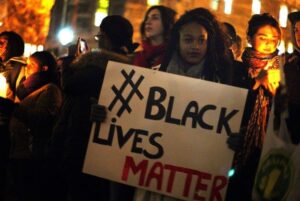
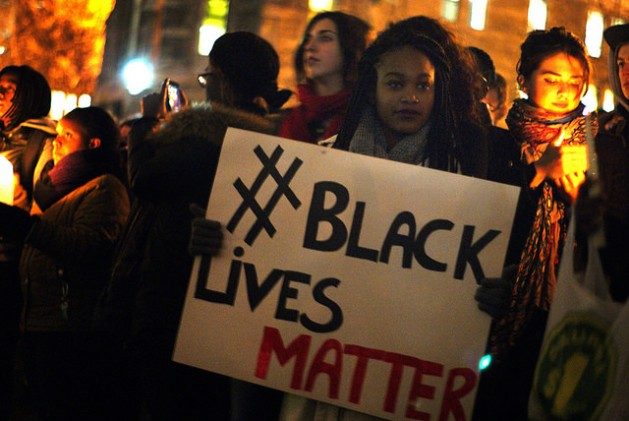
The police killing of George Floyd in the US city of Minneapolis in 2020 ignited a wave of protests across the globe and intense discussions of anti-black racism.

Focusing the discussion on the individual is especially effective for the purposes of anti-racist teaching and advocacy. Unpacking how whiteness operates to bestow privilege may allow us to understand how ‘others’ are systematically denied those same rights

From France to Colombia and South Africa, demonstrators used the term ‘white privilege’ as a means of challenging people to confront the racial disparities evident in their own countries.

Amid the demonstrations, a group of international scholars brought together at the Center for Advanced Study in the Behavioral Sciences at Stanford University in 2020 began discussing whether the concept of ‘white privilege’ is useful for addressing systemic racial inequalities across national contexts.

Although it is clear that the term has become popular across diverse contexts, some have argued against it. They say that the term ‘white privilege’ reinforces stereotypes, reifies conceptualisations of race, antagonises potential allies and creates even greater resistance to change.

As movements for racial justice have become more global in scope, the term has circulated across national boundaries. However, it does not always translate well to these new contexts.

A history

The term white privilege originated in the US in the 1980s, referring to both the obvious and the hidden advantages afforded to white people by systemic forms of racial injustice. Unlike terms such as “racial injustice” and “systemic racial bias”, the idea of privilege centres the discussion around individuals.

Focusing the discussion on the individual is especially effective for the purposes of anti-racist teaching and advocacy. Unpacking how whiteness operates to bestow privilege may allow us to understand how ‘others’ are systematically denied those same rights.

By the mid-2000s, the term white privilege had been adopted by many educators and activists in the US. They were seeking to call attention to the myriad ways in which whites, regardless of their class, benefit from white supremacy and are, therefore, implicated in maintaining the system. For whites in the US, where many live in racially homogeneous communities, the concept of white privilege could spark individual self-reflection and motivate individual political action.

While scholars in some other countries have recently used the term to elucidate systemic patterns of inequality in their own societies, in other countries scholars have been more dubious about the concept.

In South Africa, white privilege is the legacy of apartheid, which subjugated and devalued anyone whose skin colour was not white. Despite the political dismantling of apartheid, white privilege persists. Calls to transform racialised organisations are viewed as threats by white people who, correctly, hear demands for racial justice as an end to white privilege.

In France, use of the term white privilege is relatively recent, introduced in the late 2000s by social scientists. The concept is particularly accurate to describe the legacies of slavery and colonial politics. And it captures the experience of structural racism many inhabitants of France’s social-housing neighbourhoods have shared.

Yet, with growing acceptance of the concept, there has also been resistance. Some decry “white privilege” as creeping Americanisation, ill-fit to France’s liberal tradition and universalism.

Others, echoing critics in the US, argue that a sole focus on racial inequity may entrench, rather than repair, racial divisions in the country. For example, the use of ‘white privilege’ can backfire when it fails to resonate with whites disadvantaged by class, gender or religion. Consequently, the term can, at times, elicit defensive reactions and increased denial of racial disparities.

Race as a political category

Constructions of whiteness and its associated privileges are shaped by different – sometimes contradictory – histories of racial discrimination and racial justice activism. This is because understandings of race and racial categories, as socially constructed categories, remain inconsistent and unequally salient across space and time.

For example, a person from North Africa, from the Indian sub-continent or from Oceania could be considered ‘white’ – in spite of a dark complexion – in many contexts.

Race as a political category is loaded with the histories of racial extermination and racist politics in some places and less so in others. In France ‘white privilege’ could be perceived as provocative because it challenges the French universalist narrative and the modern conception of citizenship and a common will.

Thus, discussions of the material consequences of ‘race’ as a category may occur more openly outside of Western Europe, in Africa and the Americas where native populations were exterminated, enslaved and subjected to various forms of social and political exclusion.

Still, the question of who counts as ‘white’, ‘coloured’, ‘black’, or indigenous remains deeply contested across the globe. As do the explanations for the disparate outcomes and treatment of people in these socially, and sometimes legally, constructed categories. Hence whiteness, and the privileges associated with membership in such a category, remains contextually defined.

For example, an individual of European descent may be treated differently based on where they are in the world. But, this does not negate the fact that someone of Black African origin will often be treated worse than a similarly situated person of European origin in many countries. White privilege persists, even in the absence of any universal definition of “white”.

Toward a goal of racial justice

There have been countless moves to maintain the status quo, such as the Cornwall Hill College anti-transformation protest, You Silence We Amplify, and the U.S. capital insurgency.

Privilege is directly contingent on disfranchisement, measured in terms of who does and does not have access and opportunity. In countries with histories of white supremacy, the meaning of white privilege may seem self-evident to many. But for others there and in other countries, the term may prompt new questions and challenges.

Although the concept of ‘white privilege’ has proved valuable to people advocating for social change in different national contexts, there is also resistance in many countries to the notion that white people are uniquely ‘privileged’ by their race. Some critics seem unwilling to dismantle white supremacy whereas others point to the limitations of ‘white privilege’ to capture the full range of inequalities that shape people’s lives.

A transnational movement for racial justice requires a shared commitment to ending racial inequality across national boundaries. It also requires a sensitivity to the specific, local conditions in which race and racism touch the everyday lives of people.

The concept of ‘white privilege’ remains useful when presented in ways that both resonate with individuals and shed light on structural causes of racial inequality. Then, it has the potential to motivate those with advantages to combat injustices. It can undermine movements for racial justice, however, when it fails to raise awareness of the historical, structural, and political forces that confer some groups advantages over others based on skin colour, phenotype, hair texture and other physical characteristics attributed to ‘race.’

What is clear is that, as a tool for advocacy, ‘white privilege’ cannot be an end but rather a beginning, one of many concepts that can lead individuals toward a critique of systemic racism and global anti-blackness.The Conversation

Nuraan Davids, Professor of Philosophy of Education, Stellenbosch University; Karolyn Tyson, Professor, University of North Carolina at Chapel Hill; Kevin Driscoll, Assistant Professor of Media Studies, University of Virginia; Magali Della Sudda, Research scientist, Sciences Po Bordeaux; Veronica Terriquez, Associate professor, UCLA Luskin School of Public Affairs, and Vivian Zayas, Professor of Psychology, Cornell University

This article is republished from The Conversation under a Creative Commons license. Read the original article.

  Source

As War Keeps Poisoning Humanity, Organizing Continues to Be the Antidote

Armed Conflicts, Civil Society, Featured, Global, Global Governance, Headlines, IPS UN: Inside the Glasshouse, Peace, TerraViva United Nations

Opinion

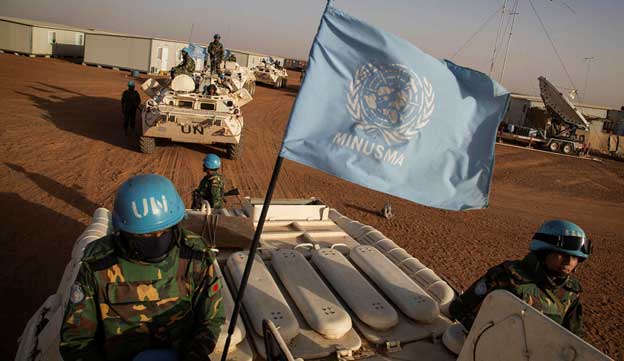
United Nations military personnel are the Blue Helmets on the ground. Today, they consist of over 70,000 troops contributed by national armies from across the globe and help keep the peace in military conflicts worldwide. Credit: United Nations

SAN FRANCISCO, USA, Sep 14 2021 (IPS) – Last weekend, U.S. corporate media continued a 20-year repetition compulsion to evade the central role of the USA in causing vast carnage and misery due to the so-called War on Terror. But millions of Americans fervently oppose the military-industrial complex and its extremely immoral nonstop warfare.


CodePink and Massachusetts Peace Action hosted a national webinar to mark the 20th anniversary of 9/11 — the day before Sunday’s launch of the Cut the Pentagon campaign — and the resulting video includes more than 20 speakers who directly challenged the lethal orthodoxy of the warfare state. As part of the mix, here’s the gist of what I had to say:

When we hear all the media coverage and retrospectives, we rarely hear — and certainly almost never in the mass media hear — that when people are killed, whether it’s intentional or predictable, those are atrocities that are being financed by U.S. taxpayers.

And so we hear about the evils of Al Qaeda and 9/11, and certainly those were evils, but we’re not hearing about the predictable as well as the intentional deaths: the tens of thousands of civilians killed by U.S. air strikes alone in the last two decades, and the injuries, and the terrorizing of people with drones and other U.S. weapons. We’re hearing very little about that.

Part of the role of activists is to make those realities heard, make them heard loud and clear, as forcefully and as emphatically and as powerfully as possible. Activist roles can sometimes get blurred in terms of becoming conflated with the roles of some of the best members of Congress.

When progressive legislators push for peace and social justice, they deserve our praise and our support. When they succumb to the foreign-policy “Blob” — when they start to be more a representative of the establishment to the movements rather than a representative of the movements to the establishment — we’ve got a problem.

It’s vital for progressive activists to be clear about what our goals are, and to be willing to challenge even our friends on Capitol Hill.

I’ll give you a very recent example. Two leaders of anti-war forces in the House of Representatives, a couple of weeks ago, circulated a “Dear Colleague” message encouraging members of the House to sign a letter urging the chair of the House Armed Services Committee, Adam Smith, to stand firm behind President Biden’s 1.6 percent increase in the Pentagon budget, over the budget that Trump had gotten the year before.

The point of the letter was: Chairman Smith, we want you to defend the Biden budget’s increase of 1.6 percent, against the budget that has just been approved by the Senate Armed Services Committee with a 3.3 percent increase.

That kind of a letter moves the goal posts further and further to the liking of the military-industrial complex, to the liking of war profiteers, to the liking of the warfare state. And so, when people we admire and support, in this case Rep. Mark Pocan and Rep. Barbara Lee, circulate such a Dear Colleague letter, there’s a tendency for organizations to say: “Yeah, we’re going to get behind you,” we will respond affirmatively to the call to urge our members to urge their representatives in Congress to sign this letter.

And what that creates is a jumping-off point that moves the frame of reference farther and farther into the militarism that we’re trying to push back against. For that reason, my colleagues and I at RootsAction decided to decline an invitation to sign in support.

I bring up that episode because it’s indicative of the pathways and the crossroads that we face to create momentum for a stronger and more effective peace and social justice movement. And it’s replicated in many respects.

When we’re told it’s not practical on Capitol Hill to urge a cutoff of military funding and assistance to all countries that violate human rights — and when we’re told that Israel is off the table — it’s not our job to internalize those limits that have been internalized by almost everyone in Congress, except for the Squad and a precious few others.

It’s our job to speak not only truth to power but also about power. And to be clear and candid even when that means challenging some of our usual allies. And to organize.

At RootsAction, we’ve launched a site called Progressive Hub, as an activism tool to combine the need to know with the imperative to act.

It’s not easy, to put it mildly, to go against the powerful flood of megamedia, of big money in politics, of the ways that issues are constantly framed by powerful elites. But in the long run, peace activism is essential for overcoming militarism. And organizing is what makes that possible.

Norman Solomon is the national director of RootsAction.org and the author of many books including War Made Easy: How Presidents and Pundits Keep Spinning Us to Death. He was a Bernie Sanders delegate from California to the 2016 and 2020 Democratic National Conventions. Solomon is the founder and executive director of the Institute for Public Accuracy.

  Source