What do Russia and Israel Share in Common?

Armed Conflicts, Civil Society, Global Governance, Headlines, Human Rights, IPS UN: Inside the Glasshouse, Middle East & North Africa, TerraViva United Nations

Opinion

Damage caused after shelling in Mariupol, in southeastern Ukraine.Credit: UNICEF/Evegeniy Maloletka

MOSCOW, Oct 11 2024 (IPS) – Russia is pursuing, during these contemporary times, a new form of economic architecture, non-hegemonic policies and simultaneously portraying its first-class military power in the world. Russia’s development paradigm is distinctively different and largely oriented towards Global South.


While Russia stands against Western hegemony and dominance, and against NATO, Israel maintains a complex relationship between the United States characterized by deep-rooted historical ties.

But a closer examination also glaringly shows Russia and Israel have in common a depopulation agenda, Russia is demilitarizing its neighbour Ukraine, both were closely-knitted republics in the Soviet times, while Israel aims at settling on Palestine territory.

Russia referred to its war with Ukraine as a ‘special military operation’ which it began on 24th February 2022 soon after Federation Council and the State Duma approved (both houses of legislators). It has since been reviewing ‘peace initiatives’ offered by China, South Africa and many others. Brazil and India are currently pushing for a peace summit. In the case of Israel, it has completely brushed aside the ‘two-state’ resolution by the United Nations.

The United States has extended a combination of different kinds of support to Israel since its recognition after its establishment in 1948. The general perception is that throughout the 20th century, particularly during the Cold War, the United States viewed Israel as a crucial ally against common enemies such as Nazism and communism.

Furthermore, it has provided significant military aid to Israel, approximately $3.8 billion annually. Based upon these and without doubts, Israel therefore represents United States strategic interests in the region.

With the escalation of Israel war in the region, Russia has started talking about peace initiatives, in contrast to its accepting peace initiatives in the case of Ukraine. Russia has voiced concerns over potential Israeli strikes on Iranian nuclear facilities. Russia and Iran have excellent relations.

Earlier, a number of foreign media outlets reported that Israel might attack Iran’s nuclear facilities in retaliation for its earlier massive missile strike. Meanwhile, the United States has indicated that it did not support this idea.

With the conflict continuing and showing signs of disastrous consequences including in Syria, Lebanon and Iran, Russia gave a more realistic warning in early October, especially to its citizens in Israel. Latest Israeli airstrikes attack on the vicinity of Russia’s Khmeimim base in Syria necessitated Kremlin to order its estimated 1.5 million citizens to immediately leave Israel.

It further warned its people to get out before it’s too late. Something big was coming. Russia also evacuated citizens from Lebanon. The perception was that Russia was first neutral and played the double games with Israel as a means to protect its citizens, and also has little moral to advocate for peace between Israel and Palestine.

Palestine-Israeli conflict, which began in October 2023, has received global condemnations. At first, Russia has been extra-cautious talking about the Palestine-Israeli situation because of two main factors. The first is connected to its own military bombardment of Ukraine, distinctive similar to Ukraine.

South Africa has not raised genocide allegations in the Russia-Ukraine conflict, though. As the developments at the Gaza Strip show, it has taken on the genocide case triggered by a disproportionate military response or the high number of Palestinian casualties.

Then, the second point is Russia has an excellent relationship with Israel that it found it extremely difficult to publicly condemned Israel’s atrocities on Palestine. Russia and Israel have been strengthening their bilateral relations.

Both have stressed the importance of continuing active work in all areas of bilateral cooperation and the development of economic and trade, scientific, and cultural spheres, despite the ongoing crisis in the Middle East, and specifically between Palestine and Israel. Russia, at the initial stages suggested adopting measures to undertake a broad dialogue in ensuring territorial integrity and sovereignty.

Putin, as far back, on October 2023, expressed Russia’s sincere condolences to the families and friends of the Israeli victims. In addition, he warned about further escalation of violence and to avert a humanitarian catastrophe in the Gaza Strip. In particular, he informed the Israeli side of the key points of the telephone conversation with the leaders of Palestine, Egypt, Iran and Syria.

Besides warning, Russia’s principled commitment to continue its work to end the Palestinian-Israeli conflict and achieve a peaceful settlement through political and diplomatic means was reaffirmed.

It was only quite recently, in December last year, that Russian President Vladimir Putin has reiterated Russia’s principled position in rejecting and condemning terrorist in all of its manifestations, the Kremlin press service said after his phone calls with Israeli Prime Minister Benjamin Netanyahu.

“The conversation focused on the situation in the zone of the Palestinian-Israeli conflict and, in particular, on the catastrophic humanitarian situation in the Gaza Strip. Vladimir Putin reiterated the principled position of rejecting and condemning terrorism in all of its manifestations. Along with that, it is extremely important to ensure that efforts against terrorist threats do not entail such severe consequences for the civilian population,” it said.

The situation in the zone of the Palestinian-Israeli conflict was among the central topics during Putin’s talks with the Saudi Crown Prince and the Presidents of the United Arab Emirates, Iran, and Egypt earlier in December 2023. Israel declared a total blockade of the Gaza Strip and launched bombardments of the enclave and some areas in Lebanon and Syria, as well as a ground operation against Hamas in the Gaza Strip.

Late January, the Israel Defense Forces has stormed a number of cities in the West Bank in sharp escalated battles with Palestinian resistance, according several media reports including Al Jazeera. Israel has declared a complete siege of the Gaza Strip. Saudi Arabia, the United Arab Emirates (UAE), Qatar, Egypt and Jordan have also submitted settlement proposals for the Gaza Strip.

The Middle East is becoming a new arena of geopolitical confrontation. And Russian experts on the Middle-East issues have been up and offering their views since the conflicted October 7, the beginning of the conflict. The experts maintained that Russia has been actively building up its relations with countries across the Middle East in the context of resolving the Palestinian-Israeli conflict.

Middle East expert Andrey Ontikov told Izvestia newspaper that if the Europeans and Americans truly wanted to promote the idea of a two-state solution, they could put some pressure on Israel’s leadership.

“While a part of the elite is committed to the idea of establishing an independent Palestinian state, others believe that the [window of] time for this has been lost. Much will depend on the outcome of the war,” he said, adding that resolving the Palestinian issue politically would depend on both the Israelis and the Palestinians themselves, Dmitry Mariyasis, leading researcher with the Department of Israel Studies at the Russian Academy of Sciences’ Institute of Oriental Studies.

According to experts interviewed by Russia’s Izvestia newspaper, Moscow’s goal here is to find partner support in its confrontation with the West, including in Ukraine. Finding ways to reduce tensions not only between the Jewish state and radical Palestinian movement Hamas, but also in the region as a whole became a key topic of discussion at a special meeting of the United Nations Security Council (UNSC).

On 28th December 2023, Foreign Affairs Minister Sergey Lavrov praised Netanyahu for not criticizing Russia in public statements regarding the ‘special military operation’ in Ukraine. Lavrov said that Russia’s goals of “demilitarization” and “denazification” in Ukraine were similar to Israel’s stated goals of defeating Hamas and extremism in Gaza.

Excerpts from the briefing held on 12th January 2024, Foreign Ministry Spokeswoman Maria Zakharova expressed absolute regret over the massive civilian casualties in the current escalation of the Palestinian-Israeli conflict. “Russia proceeds from the unacceptability of targeted violence against civilians and the deliberate destruction of medical facilities and other civilian infrastructure.”

“Our country calls for strict compliance with international law, an immediate ceasefire in accordance with the decisions of the Security Council and the UN General Assembly,” argued Zakharova, while she closed her eyes on the consequences of the Russia-Ukraine conflict which began 24th February 2022.

In a nutshell, Russia has appreciable multifaceted relations with Israel these several years, just as it has with South Africa. But what seems to be important for the Kremlin is readiness to provide possible assistance to alleviate the suffering of civilians and de-escalate the conflict.

In the Kremlin, President Vladimir Putin’s comments on Palestine-Israeli was in addition to reaffirm its principled position on the essence to avoid such grave consequences for the civilian population while countering terrorist threats. In short, there would not be any attempt, not even the least sign in the near future, to sever decades-old relations between Israel and Russia.

Kester Kenn Klomegah focuses on current geopolitical changes, foreign relations and economic development-related questions in Africa with external countries. Most of his well-resourced articles are reprinted in several reputable foreign media.

IPS UN Bureau

  Source

Strategic Patience can Mitigate Conflict Between Israel & Iran

Armed Conflicts, Civil Society, Global Governance, Headlines, Human Rights, IPS UN: Inside the Glasshouse, Middle East & North Africa, TerraViva United Nations

Opinion

President Masoud Pezeshkian of Iran addresses the general debate of the General Assembly’s 79th session in September 2024. Credit: UN Photo/Loey Felipe

WASHINGTON DC/OXFORD, Oct 9 2024 (IPS) – How will Israel respond to Iran’s recent ballistic missiles barrage? “Strategic patience” is the best course. Israel has its hands full with Hamas and Hezbollah. Now is not the time to escalate a new major war with Iran, which could have nuclear implications.


Israeli intelligence is still chafing from its failure to preempt Hamas’ attack on October 7, which killed 1,200 Israelis. In the year since Hamas attacked, the Israeli Defense Forces (IDF) launched operations that killed 41,000 Palestinians.

Its response has been brutal yet ineffective. Israel failed to capture the Hamas leader, Yahya Sinwar or gain the release of more than 100 Israeli hostages. A humanitarian catastrophe led to the starvation and displacement of more than 2 million people.

The IDF since taken a big step to redeem its tarnished reputation by deterring Iran’s missiles strikes. The “iron dome” repelled 190 ballistic missiles fired by Iran last week. Israel repelled another attack on April 13 involving 300 missile and attack drones, which caused little damage.

Iran was embarrassed by the sequence of events, which went far beyond its failed missile attacks. I know from Javad Zarif, Iran’s former foreign minister, that Persian pride is important to Iranians. Iran faced many setbacks in the past year. President Ibrahim Raisi died in a fiery helicopter crash.

Masoud Pezeshkian, who supports engagement with the United States, gained a plurality of the popular vote and became Iran’s president. The outcome was a rebuke to Ayatollah Ali Khamenei and his theocratic regime.

No event affected Iran more than the assassination of Hassan Nasrallah, the leader of Hezbollah. Nasrallah was a friend of and served as Iran’s most steadfast proxy for more than 30 years. Nasrallah was killed in an air strike in Beirut by 2,000 pound-bunker buster bombs that devastated the Southern Beirut neighborhood of Dahiyeh.

The air strike was another indignity following Israel’s sabotage of Hezbollah pagers and walkie-talkies that killed scores of Hezbollah commanders and disabled its communications system.

Hezbollah’s mythical reputation for battlefield prowess was shattered. Hezbollah was the most significant of Iran’s proxies in Iraq, Syria, and Yemen. Nasrallah fought ISIS, defended Bashar al-Assad in Syria’s civil war, and did the regime’s dirty work around the world.

Fearing his own assassination, Khamenei was removed to a secure location. He emerged in time for Friday prayers to defend Iran’s missile strikes on Israel as “correct, logical, and lawful” and to condemn Israel’s “astonishing crimes”.

Nasrallah’s death was a big blow to the Iranian regime. Iran was further humiliated by the assassination of Ismail Haniya, a senior Hamas figure staying in an official guest house while attending Raisi’s funeral in Tehran.

Netanyahu warned that no place in the Middle East is safe from Israel’s security services. He was right. In addition, economic sanctions have taken their toll on Iranians. Sanctions relief is a distant dream as the US and G7 allies tighten the screws on Iran’s economy.

Israel-Iran relations are at a fork in the road. President Joe Biden has urged Netanyahu to consider “alternatives” to attacking Iranian nuclear sites or destroying Iran’s oil infrastructure. There is an alternative conflict escalation.

Netanyahu and Khamenei should consider a new approach now that the shadow war is out in the open. Diplomacy would require assurances from Israel that it won’t launch a first strike against Iran. In turn, Iran must guarantee that its nuclear program won’t be weaponized.

Discreet discussions with the International Atomic Energy Agency would advance safeguards, including spot inspections of Iran’s nuclear sites and the reactivation of electronic surveillance. For sure, Israel will continue operations in Gaza. Israel will hunt Sinwar until he is eliminated. It cannot countenance another October 7.

In Lebanon, Israel has succeeded in killing Nasrallah and eliminating half of Hezbollah’s 150,000 missiles. Its ground operation in Southern Lebanon cannot be open-ended. Having a failed state on Israel’s northern border would result in continued instability and risk.

Regional progress would be impossible with a new front between Israel and Iran. Strategic patience means that Israel would bide its time until there is an opportunity for diplomatic progress. Diplomacy and de-escalation are preferable to war without end.

David L. Phillips is an adjunct professor at Georgetown University’s Security Studies Program and a Visiting Research Scholar at Oxford University.

IPS UN Bureau

  Source

Agroecology: The Game-Changing Solution to Global Food, Climate and Conflict Crises

Armed Conflicts, Biodiversity, Civil Society, Climate Action, Climate Change, COP16, Editors’ Choice, Environment, Featured, Food and Agriculture, Food Security and Nutrition, Food Sustainability, Global, Headlines, Humanitarian Emergencies, Natural Resources, Sustainable Development Goals, TerraViva United Nations

Biodiversity

Edward Mukiibi, President, Slow Food. Credit: Busani Bafana/IPS

Edward Mukiibi, President, Slow Food. Credit: Busani Bafana/IPS

TURIN, Italy, Oct 8 2024 (IPS) – Edward Mukiibi, President of Slow Food, champions agroecology as a transformative answer to the world’s most pressing crises: food insecurity, climate change, and violent conflicts.


In a world where these challenges intersect, Mukiibi called for an urgent rethink of our approach to food systems. 

Agroecology, a practice already embraced by millions of farmers worldwide, is emerging as a sustainable alternative to the industrialized agriculture model that dominates today. It emphasizes biodiversity, environmental stewardship, and equitable livelihoods—elements that Mukiibi insists are key to addressing the multifaceted crises facing our planet.

Speaking ahead of the highly anticipated Terra Madre 2024 event in Turin, Mukiibi called for immediate global action to end the misuse of food as a weapon in war-torn regions like Gaza and Ukraine, where food scarcity is exacerbating human suffering.

“Slow Food strongly advocates for an end to all violence in the ongoing conflicts, from the Gaza Strip to Sudan, from Lebanon to the Democratic Republic of Congo, from Ukraine to Yemen, and opposes the use of food as a weapon of war, said Mukiibi, calling for immediate negotiations to achieve a just solution that ensures the dignity of all people and fosters a peaceful future for everyone.

With global crises growing more complex, Mukiibi stresses that agroecology is not just about farming techniques—it is a framework for building more resilient societies.

Carlo Petrini, Founder, Slow Food. Credit: Busani Bafana/IPS

Carlo Petrini, Founder, Slow Food. Credit: Busani Bafana/IPS

The Power of Agroecology

As climate change accelerates, its devastating impacts—melting glaciers, rising sea levels, extreme weather events, and shifting ecosystems—are becoming harder to ignore. Mukiibi linked these environmental crises directly to our food systems, calling industrial agriculture a “leading culprit.” He argues that agroecology offers a path toward resilience, citing its ability to regenerate soil health, reduce social inequality, and provide local communities with economic opportunities.

Mukiibi’s call for change comes as 3,000 international delegates convene at the biennial Terra Madre event to explore solutions for sustainable food systems. He argues that agroecology not only regenerates soil fertility and promotes environmental health but also strengthens local economies, reduces social inequalities, and builds resilience against climate-induced disasters.

“As climate change intensifies, agroecology offers a path to more resilient and equitable food systems,”  Mukiibi declared. “This situation compels us to reflect on the transformation needed if we want to achieve a food system that feeds all people well, regenerates and protects the environment, and allows local cultures to survive and prosper.”

A Call for Global Food System Reset

Carlo Petrini, the founder of Slow Food, echoed Mukiibi’s sentiments, calling for nothing less than a complete reset of the global food system.

“The current global food system is not only unfair but is criminal because it destroys our mother earth, it destroys biodiversity and is based on waste and it has turned food into a price, not into a value,” said Petrini. “We need to restore the value of food because food represents our common good; with food we can establish relations with each other, we can establish reciprocity.”

Petrini emphasized the political significance of food in shaping our future, asserting that the fight for sustainable food systems is inherently tied to larger social and environmental battles.

Petrini also condemned multinational corporations that prioritize profit over the health of the planet, calling on them to stop polluting ecosystems through unsustainable food production methods. He called for an ecological transition.

Food and Humanity

Pope Francis, head of the Catholic Church, also weighed in, highlighting the spiritual and cultural dimensions of food.

In a message to the Terra Madre network, the Pope criticized the commodification of agriculture, noting that it is being manipulated for profit at the expense of both the environment and human dignity.

The Pope praised Terra Madre for fostering a movement that respects the integrity of both food and culture. He argued that only through recognizing the value of food and promoting food education can humanity move towards a future of universal fraternity—a future where diversity is celebrated rather than a cause of division.

The Food Revolution

Launched 20 years ago, Terra Madre has sparked a global food revolution. Over the past two decades, it has united small-scale producers, farmers, and consumers committed to creating a better, cleaner, and fairer food system.

Mukiibi said Terra Madre 2024 serves as a reflection point, a moment to assess the progress made and chart a course for the future.

Coinciding with Terra Madre, the G7 Agriculture Ministers met in Sicily, where Slow Food has urged governments to place food at the center of global political agendas. The call is clear: food must be recognized as a cornerstone of fundamental rights and environmental sustainability.

Mukiibi underscored that millions of farmers around the world are already practicing agroecology, ensuring food sovereignty, food security, and healthy diets. He emphasized the need to build on these successes by expanding the Slow Food network and empowering more farmers to take up agroecological practices.

Agroecology is a path forward for resilient local food systems, Mukiibi noted, explaining that Slow Food was building a network of Slow Food Farms to empower farmers and make them central to future sustainable food systems.

A Hopeful Vision for the Future

Mukiibi’s message is agroecology is not just a farming method—it’s a movement with the potential to tackle some of the most profound challenges of our time.

“Agroecology is the solution, not just for a more sustainable food system, but for addressing inequality, social injustice, and the global environmental crisis.”

As the world grapples with the devastating impacts of climate change, violent conflict, and food insecurity, the vision laid out by Slow Food offers a hopeful path forward—one where food is not a weapon, but a source of unity, resilience, and renewal.

IPS UN Bureau Report

  Source

‘The Focus Should Be on Holding Social Media Companies Accountable, Not Punishing Individual Users’

Civil Society, Crime & Justice, Democracy, Featured, Freedom of Expression, Global, Headlines, Press Freedom, TerraViva United Nations

Oct 7 2024 (IPS) –  
CIVICUS discusses the recent Twitter/X ban in Brazil with Iná Jost, lawyer and head of research at InternetLab, an independent Brazilian think tank focused on human rights and digital technologies.


Brazil’s Supreme Court recently upheld a ban on Elon Musk’s social media platform X, formerly Twitter, after it repeatedly refused to comply with orders to moderate content. The court ordered tech companies to remove X from app stores and imposed fines for continued access via VPNs in Brazil. This appeared to cause users to switch to alternatives such as Bluesky and Threads. Musk condemned the ban as an attack on free speech, but has since backed down and complied with the court’s orders. Debate continues over the controversy’s implications for democracy and accountability.

Iná Jost

Why did the Brazilian Supreme Court ban X?

The case began on 7 August when a Supreme Court justice, investigating ‘digital malicious activities’, ordered the blocking of seven X profiles for intimidating law enforcement officers and directly threatening the integrity of the court and democracy in Brazil.

X refused to comply with the order, claiming it violated freedom of expression. The judge then imposed a daily fine for non-compliance, which was subsequently raised and ended up amounting to over US$3 million as Musk continued to refuse to comply. At one point, the justice ordered the freezing of X’s financial assets in Brazil, but they weren’t enough to cover the fines.

After more back and forth, tensions escalated when the judge also froze the bank accounts of satellite internet company Starlink, arguing that both companies were part of the same economic group. This caused some controversy, as Starlink operates in a different sphere and its operations aren’t entirely linked to X.

The turning point came when X closed its headquarters in Brazil. Without a legal representative in the country, the court found it difficult to enforce its orders or impose additional penalties. It then gave X 24 hours to appoint a new representative, which it failed to do. As a result, on 30 August, the court ordered the closure of X.

It is important to mention that the court is not super transparent and the whole procedure was carried out under seal. We are unable to grasp the full picture because the process is closed and not all decisions are made public.

What was the legal basis for the decision to close X?

The Court based its decision on Brazil’s 2014 Civil Framework for the Internet. Under this law, platforms can be blocked for failing to comply with Brazilian laws or court orders. Some confusion arose over the notion that the ban was due to X’s lack of a legal representative in Brazil; however, the shutdown resulted from the company’s repeated refusal to comply with court orders.

Civil society raised concerns about some aspects of the decision. Initially, the order included blocking VPN services to prevent access to X, but this part was later reversed due to cybersecurity risks. Blocking VPNs that serve legitimate purposes would have been disproportionate. The order also proposed a US$9,000 fine for users trying to circumvent the ban, which many felt was excessive. We believe the focus should be on holding the company accountable, not punishing individual users.

Is it possible to strike a balance between regulating online platforms and protecting freedoms?

It is. Regulating platforms isn’t necessarily about censorship. In this case, it’s about ensuring a powerful company operates transparently and protects users. Platforms acting solely in their commercial interests can harm the public interest. Regulation can force them to provide clear terms and conditions and fair content moderation policies and respect due process for content removal.

The belief that any form of regulation threatens freedom of expression is misguided. Thoughtful regulation that allows users to express themselves while protecting them from harm such as hate speech or misinformation can balance the scales.

Musk’s stance in this case is deeply problematic. His selective compliance with court orders undermines the rule of law. While platforms like X are crucial to public communication, that doesn’t give them the right to defy the legal system they operate in. Freedom of expression does not absolve platforms of their legal responsibilities, particularly when those laws protect the integrity of democracy.

Musk’s claim that X represents absolute freedom of expression fails to consider the risks of a platform without proper rules. Without moderation, platforms can become havens for extremist groups, hate speech and disinformation. They should be regulated to ensure they remain a space for lawful discourse.

Do you think this case will set a precedent?

I don’t think so. Some people are worried other platforms could be blocked as well, but I don’t think that will happen. This is a unique scenario, and Brazil is a strong democracy. This wasn’t an act of censorship by the judiciary but a necessary measure given the platform owner’s refusal to comply with court orders.

States should develop regulatory mechanisms that allow them to hold platforms accountable and ensure compliance with national laws. This would avoid the need for outright blocking, which ultimately harms the users the most. While the company might incur some financial losses, journalists and citizens are losing access to a vital information and communication tool.

I hope states that are serious about regulating platforms will see this as an example of what shouldn’t happen. We shouldn’t allow things to escalate to this point. And we certainly shouldn’t use this as a leading case for blocking platforms.

Get in touch with InternetLab through its website or its Instagram and Facebook pages, and follow @internetlabbr on Twitte.

  Source

Why Africa Should Embrace Territorial Markets to Withstand Climate Shocks and Crises

Active Citizens, Africa, Civil Society, Climate Action, Climate Change, Cooperatives, Development & Aid, Economy & Trade, Editors’ Choice, Environment, Featured, Food and Agriculture, Food Security and Nutrition, Food Sustainability, Headlines, Sustainable Development Goals, TerraViva United Nations, Trade & Investment

Economy & Trade

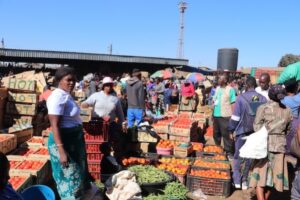
Farmers, traders and consumers at the Mbare Musika Territorial Market in Harare, Zimbabwe. Credit: Isaiah Esipisu/IPS

Farmers, traders and consumers at the Mbare Musika Territorial Market in Harare, Zimbabwe. Credit: Isaiah Esipisu/IPS

HARARE, Oct 4 2024 (IPS) – African policymakers, local leaders and the private sector have been asked to create an enabling environment that will help African traders and farmer folks build reliable systems for food security and resilience through territorial markets.


During a week-long 2024 Africa Agroecological Entrepreneurship and Seed Festival in Harare, Zimbabwe, experts observed that persistent crises have shown the importance of resilient close-to-home ‘territorial’ markets that feed billions of people every day—from public markets and street vendors to cooperatives, from urban agriculture to online direct sales, and from food hubs to community kitchens. 

“For instance, following Russia’s invasion of Ukraine, global food prices spiked by 15 percent, forcing policymakers around the world to question how to reduce dependency on volatile global markets and strengthen food self-sufficiency,” said Dr. Million Belay, the General Coordinator at the Alliance for Food Sovereignty in Africa (AFSA).

“Further, questions have been raised about how people are actually fed and by whom, prompting us to ask: in this century of crisis, what kinds of food supply chains and markets can build resilience and help fulfill the right to food—nourishing people around the world more sustainably and equitably?” asked Belay.

To answer the question, experts are calling for policies and a sound working environment that will empower territorial markets that promote dietary diversity and affordable nutritious foods for all, allow producers and food workers to retain control over their livelihoods, and produce food that is adaptable to climate change shocks and emerging crises.

These markets have been broadly defined as markets that are centered on small-scale agroecological food producers and business owners that produce and sell a variety of commodities, and often meet the preferences of the majority of farmers, traders and consumers.

Studies have shown that these markets play a crucial role in making food accessible and affordable, especially for low-income populations in the Global South, allowing for the purchase of small and flexible quantities of food, price bargaining, informal credit arrangements, and being located in or near low-income neighborhoods.

A new study launched on the sidelines of the Harare event that culminated into the fifth Biennial Africa Food Systems Conference, however, shows that profit-oriented corporate value chains are highly concentrated in Africa’s market places.

The report, titled ‘Food from Somewhere,’ by the International Panel of Experts on Sustainable Food Systems (IPES Food), finds that just seven grain traders control at least 50 percent of the global grain trade, six major corporations control 78 percent of the agrochemical market, the top eight carriers of freight account for more than 80 percent of the market for ocean freight capacity and globally, 1 percent of the world’s largest farms control 70 percent of the world’s farmland.

This, according to experts, amounts to a corporate capture of Africa’s food systems.

The report is therefore advocating for a paradigm shift, urging governments to reinvest in local and regional supply infrastructure, relocalize public purchasing and develop food security strategies for a more resilient and equitable approach to food security.

“The problem for smallholders is not of being connected to markets (most are already involved in markets) but rather the conditions of their access and the rules and logics by which markets operate—who determines prices and on what criteria, who controls the costs of production, who holds market power, among other issues,” said Mamadou Goïta, a member of IPES and the lead author.

A spot check at the Mbare Musika territorial market in Harare found a variety of foodstuffs sourced from all eight regions of Zimbabwe, among others from neighboring countries, such as apples and other fruits from South Africa, fish and ginger from Mozambique, groundnuts from Malawi, sorghum from Botswana, as well as grapes from Egypt and tamarind from Tanzania, among others.

“This is the central hub for smallholder farmers and traders, supporting over seven million people from all over Zimbabwe and other parts of the continent,” said Charles Dhewa, Chief Executive Officer, Knowledge Transfer Africa (KTA), whose flagship known as eMkambo (eMarket) is to create a physical and web-based market for agriculture and rural development, integrating the use of mobile phones and the internet to create, adapt and share knowledge.

Mbare Musika Market, which is in the outskirts of Harare, is located next to the main bus-park, through which food is brought in using informal means such as passenger buses and vans from different parts of the country, in small and big quantities, and of different varieties and qualities.

“The evidence is clear—localized food systems are vital for feeding an increasingly hungry planet and preventing food insecurity and famine,” said Shalmali Guttal, the Executive Director of Focus on the Global South. “They provide nutritious, affordable food and are far more adaptable to global shocks and disruptions than industrial supply chains,” she added.

Jennifer Clapp, professor and Canada Research Chair in Global Food Security and Sustainability at the University of Waterloo, Canada, pointed out that during this time of rising hunger and ecological fragility, global industrial food chains will be catastrophically liable to break down under the strain of frequent crises.

“To have a chance of reaching the world’s zero hunger goal by 2030, we need to re-imagine our food systems, and we need to bolster the food markets that serve the poor,” she said.

IPS UN Bureau Report

  Source

The UN Cybercrime Convention: A New Repressive Tool in Disguise?

Civil Society, Crime & Justice, Featured, Global, Headlines, Human Rights, TerraViva United Nations

Opinion

Credit: CIVICUS

MONTEVIDEO, Uruguay, Oct 4 2024 (IPS) – The UN Office on Drugs and Crime hailed the recently agreed Cybercrime Convention as a ‘landmark step’ in cooperating to tackle online dangers. But human rights organisations aren’t so sure.


Ominously, the resolution that started the process, passed by the UN General Assembly in December 2019, was sponsored by authoritarian Russia and backed by some of the world’s most repressive states. Some of them already had cybercrime laws they use to stifle legitimate dissent. Many more have passed similar laws since.

When Russia’s resolution was put to a vote, the EU, USA and many other states, alongside human rights and digital rights organisations, urged states to reject it. But once the resolution passed, they had to engage with the process to try to prevent the worst possible outcome: a treaty lacking human rights safeguards that could be used as a repressive tool.

They succeeded in tempering some of the worst aspects of early drafts, but the results still leave much to be desired.

The treaty process

The December 2019 resolution established an ad hoc committee (AHC) to lead negotiations, open to the participation of all UN member states plus others as observers, including civil society.

The pandemic delayed the process, and the AHC’s first meeting, focused on procedural rules, was held in mid-2021. Brazil’s proposal to require a two-thirds majority for decisions when states couldn’t reach consensus prevailed over the simple majority rule favoured by Russia. The AHC approved a list of eligible stakeholders, including civil society organisations (CSOs), academic institutions and private sector representatives.

The first negotiating session in February 2022 took another important decision: consultations would be held between negotiations, including for CSOs, to provide input and feedback. Numerous human rights and digital rights CSOs took part, often working in coalitions. They made written submissions, attended face-to-face and online meetings and made oral interventions.

Damage control

Ahead of the first negotiating session, some 130 organisations and experts signed a letter urging the AHC to ensure the treaty included human rights protections, warning that otherwise it could become ‘a powerful weapon for oppression’. They were up against numerous states that didn’t agree human rights safeguards were needed.

By April 2022, many states initially opposed to the treaty had begun to participate actively, so civil society focused on damage control. By then it was apparent there wasn’t a clear definition of what constitutes a cybercrime and which crimes the treaty should regulate. Several states aggressively pushed for broad and ambiguous provisions they claimed were needed to combat extremism, hate speech and terrorism.

Civil society insisted the treaty shouldn’t be overly broad and should only cover core cybercrimes or cyber-dependent crimes: crimes committed against computer systems, networks and data, including hacking, computing system interference, ransomware and the spreading of malware. And even when dealing with these crimes, civil society warned, treaty provisions shouldn’t apply to security research, the work of whistleblowers and other actions that benefit the public.

Civil society insisted on the exclusion of cyber-enabled crimes: those that can be facilitated by ICTs but can also committed without them, such as arms and drug trafficking, money laundering and the distribution of counterfeit goods. This category could potentially include numerous offences that would repress the online exercise of civic freedoms.

A second major concern was the scope and conditions for international cooperation. Here too civil society urged clear definitions and a narrow scope. It argued that if not clearly defined, cooperation arrangements could mean enhanced surveillance and bulk data sharing, violating privacy and data protection provisions. It warned that in the absence of the principle of dual criminality – which means extradition can only apply to an action that constitutes a crime in both the country making the request and the one receiving it – state authorities could be made to investigate activities that aren’t crimes in their countries on other states’ behalf. They could effectively become enforcers of the repression of others.

Tech companies also shared civil society’s concerns about the potential for expansive electronic surveillance in the name of fighting crime.

Human rights sidelined

Civil society representatives see the final draft as not as bad as it could have been, but it still lacks clear, specific and enforceable human rights protections. Rather than applying them as international standards, the treaty leaves human rights safeguards up to each state’s domestic law.

Civil society advocacy led to improvements on the first drafts, including an expanded article on human rights that references civic freedoms, and the inclusion of the right to an effective remedy in the article on conditions and safeguards. The most blatant attempts to weaponise the treaty to criminalise expression failed, although some cyber-enabled crimes still made it into the text. The activities of journalists, security researchers and whistleblowers aren’t adequately protected.

The convention includes a chapter on crimes against computer systems, networks and data, plus a limited number of cyber-enabled crimes, such as child sexual abuse. But while the list of crimes is narrower than initially proposed, the scope of cooperation in collecting and sharing data became wider, raising real dangers of state overreach in the form of surveillance and invasion of privacy.

Still time

It isn’t game over. The final text will soon be put to a vote by member states at the UN General Assembly and, assuming a majority approves it, states will then need to ratify the convention. At least 40 ratifications will be needed before it enters into force, a process likely to take several years. Two years after the General Assembly vote, negotiations are expected to begin on an additional protocol covering further crimes, which won’t be concluded until 60 states have ratified the convention. Civil society fears this is when the worst proposals to criminalise speech will resurface.

Civil society will encourage governments to reject the convention and instead take a human rights-based approach. Once the UN General Assembly approves the convention, civil society will warn of the dangers it poses to human rights and civil liberties and oppose ratification.

With or without an international convention, civil society will continue to work to ensure cybercrime legislation at all levels meets the highest human rights standards, including respect for civic freedoms, and isn’t used as a means of repression.

Inés M. Pousadela is CIVICUS Senior Research Specialist, co-director and writer for CIVICUS Lens and co-author of the State of Civil Society Report.

A longer version of this article is available here.

For interviews or more information, please contact research@civicus.org.

  Source