15 Years After the Civil War Ended, Sri Lanka Faces Another Crucial Election

Armed Conflicts, Asia-Pacific, Civil Society, Crime & Justice, Development & Aid, Featured, Headlines, Human Rights, Humanitarian Emergencies, International Justice, Sustainable Development Goals, TerraViva United Nations

Democracy

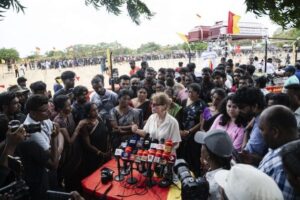
Agnes Callamard, Secretary General of Amnesty International, addresses the media and the community at the site of the Mullivaikal massacre. She says justice is overdue for the families of those killed and disappeared during the Sri Lankan civil war. Credit: Johan Mikaelsson/IPS

Agnes Callamard, Secretary General of Amnesty International, addresses the media and the community at the site of the Mullivaikal massacre. She says justice is overdue for the families of those killed and disappeared during the Sri Lankan civil war. Credit: Johan Mikaelsson/IPS

MULLIVAIKAL, Sri Lanka , Sep 16 2024 (IPS) – Thousands of Tamils are heading to Mullivaikal on the northeast coast of Sri Lanka, many of whom were here 15 years ago and still live in the region. They are there, May 18, to commemorate the massacre of civilians in a ‘no fire zone’ during the final stages of the civil war.


This was the last day of the bloody civil war, which raged mainly in the northern and eastern parts of the island since 1983. The Liberation Tigers of Tamil Eelam (LTTE) guerrillas had finally surrendered to the Sri Lankan government. The aftermath continues to rock the island.

The ethnic conflict between the island nation’s majority Sinhalese population and the minority Tamils (who were in the majority in the north and east) had escalated after 1948 when the country gained independence from Britain, the last in the line of colonial powers.

The whole island suffered during the war. Sri Lankan Tamils have been through a lot, especially those who lived in the war-torn north. Everyone who came to the beach on this day of remembrance wants to honor the memory of loved ones who fell victim and the blood that was spilled in the sand.

“Everyone here has a family member or relative who didn’t make it,” explains the teacher Shanmuganathan, who has stopped with his motorcycle by the road where porridge made from rice, the only thing that was available to eat in the war zone, is being offered before Memorial Day.

The war has left its mark. He shows scars from shrapnel and tells us that he lost his wife in the final stages of the war. He has continued to work and is involved in a teacher’s union.
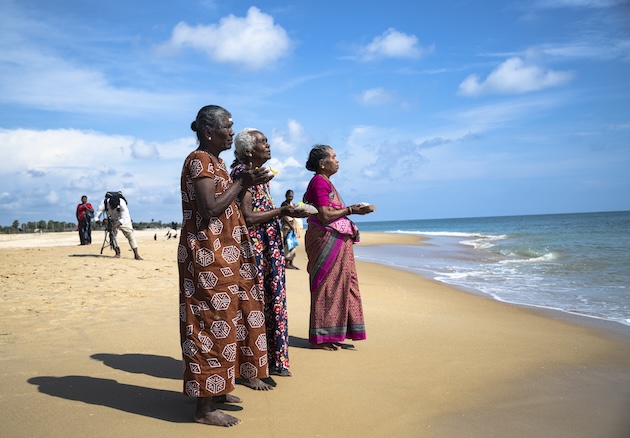
Women pray during the commemoration of the Mullivaikal massacre. Thousands died in no fire zones in the final days of the war. Credit: Johan Mikaelsson/IPS

Women pray during the commemoration of the Mullivaikal massacre. Thousands died in no fire zones in the final days of the war. Credit: Johan Mikaelsson/IPS

Internationally, the calls to investigate targeted bombings of civilians, mass executions of surrendering Tiger soldiers and leaders, widespread sexual violence and other torture are no longer as loud. Many of those who protested and demanded to know what happened to missing relatives have died without receiving any response from the government.

When war crimes are discussed, the government side highlights that the terrorist-branded LTTE carried out acts of terror against civilian targets in the south and that Tamils in the north were used as human shields.

The peace process that began in 2002 with a ceasefire and peace talks led by the Norwegian government and facilitator Erik Solheim stalled and the ceasefire agreement was torn apart by the parties. Sri Lankan government forces in 2008 launched a final offensive to capture the parts then still controlled by the LTTE, which had been fighting for a separate Tamil state in the northern and eastern parts of the island.

In early 2009, the Tigers abandoned their main stronghold, the town of Kilinochchi. The areas under guerrilla control were shrinking ever faster. Tiger leader Velupillai Prabhakaran did not listen to calls to lay down arms and surrender. Eventually, a narrow coastal strip remained, with several hundred thousand civilians and the remnants of the guerrilla movement pressed together and under fire from land, sea, and air.

For Remembrance Day, a school in the town of Puthukkudiyiruppu is organizing a poetry competition. One of the participants, Kamsaini, now 24, wants to share her experiences with the schoolchildren, who were born after the war.

“The generations after me know nothing about the pain I felt these days. We had neither food nor water and I lost several family members; some died, and my sister is missing,” explains Kamsaini.

In place under the hot sun in Mullivaikal is Agnes Callamard, Secretary General of Amnesty International. During her stay on the island, she has met President Ranil Wickremesinghe, who opened up for the visit, which was not a given. When the Rajapaksa brothers ruled the country (2005-2015, 2019-2022), the government allowed the military and police to prevent Tamils from observing commemorations linked to the war.

One reason why Callamard and Amnesty International want to be there is that she does not want Sri Lanka to “fall off the agenda,” which could happen if the main actor within the United Nations, the Office of the High Commissioner for Human Rights in Geneva, does not succeed with the latest in a series of resolutions on Sri Lanka voted through in the UN Human Rights Council.

She sees the issue of the war in Sri Lanka as a crucial test for the international community. A 30-year-long civil war must not be swept under the carpet, she believes

“Every time we fail to create justice, we all, including the international community, get a wound. We’re here because we don’t want that to happen. We feel the determination of many people in Sri Lanka and civil society, both Tamils and Sinhalese and a range of actors who are committed to seeing justice delivered,” says Callamard.

In this way, it represents a defining moment for the United Nations. Callamard is critical of the UN Security Council, which “has not taken a single step for Sri Lanka.”

Amnesty International advocates, as do a number of states, that the latest resolution must be implemented.

“Just a lot of ‘blah, blah, blah,’ something for the eyes, investments in so-called institutions and nothing, nothing, nothing. Fifteen years. Come on!” she urges.

Even on the island, there are far too many who have done nothing at all.

“The point is that the government in power must step forward, the political parties must step forward, the parliament must step forward, the religious leaders must step forward, cultural leaders must step forward. It should be an issue that everyone rallies around. The problem is that governments are being replaced. So it’s not good enough. Everyone must take their responsibility,” says Callamard.

In Mullivaikal, many people share memories. James Confucius, a Catholic priest, tells how he and a group of people barely made it out of the war zone alive.

“We waved a white flag, and we went in the direction of the soldiers to surrender, but then they shot at us, so we had to turn back,” he says.

They waited in a sand bunker and finally got another opportunity. The soldiers they encountered believed that an injured woman in the group was a Tiger soldier, because she had short hair. The priest pleaded and said she needed hospital treatment, but the soldiers said the woman had to stay.

The group had to move on and when they had gone only a short distance, they heard a shot.

“I turned around and saw that the woman had been shot,” says Confucius.

In total, roughly 300,000 people got out of the war zone. An estimate that has often been used is a death toll of 40,000 civilians in the final stages of the war alone. Tamils state higher numbers, while Sri Lankan authorities write low death tolls, including in the 2010 report by the Lessons Learned and Reconciliation Commission (LLRC), appointed by the government.

The then sitting president, Mahinda Rajapaksa, had previously said that “not a single Tamil civilian has been killed by the military.”

Experts have dismissed the statement as absurd. While the majority of Tamil politicians still refer to “genocide,” the issue of death tolls rarely receives the same attention as it did in the years after the civil war.

The UN Human Rights Council has voted through a number of non-binding resolutions that Sri Lanka is expected to follow, but no real action on the problem has been taken in Sri Lanka. There is also nothing to suggest that this will happen.

None of the main candidates in the presidential election on September 21 have highlighted truth-seeking, the rule of international law, regional power-sharing and reconciliation—what the UN is asking for. The economy is in focus, the nation and the citizens, and all candidates want to stop corruption.

The agreement that the government reached with the International Monetary Fund (IMF), is also being discussed. It was negotiated by President Ranil Wickremesinghe, who is not elected by the people but took over by a vote in Parliament after Gotabaya Rajapaksa resigned and fled the country as a result of the April-July 2022 Aragalya (meaning struggle in Sinhalese) protest movement. Before that, Rajapaksa had appointed Wickremesinghe as Prime Minister.

At the Ministry of Defense (MOD) on the outskirts of the capital Colombo, soldiers and officers move inside the compound, which is surrounded by high walls. For some, the Vesak holiday awaits when the full moon approaches. The armed forces also marked the end of the war and Victory Day, but more quietly than in previous years.

Colonel Nalin Herath is the MOD media spokesperson. Right now, work is being done to adapt the forces to actual needs. Herath says they will shrink to 100,000 by 2030. Many who were previously employed in the military have faced unemployment as civilians.

An urgent issue is trying to bring home hundreds of ex-soldiers who were lured by middlemen to go to Russia to work for Russia’s army. Most are said to have received promises not to take part in battle, which hasn’t been the case.

“We should not have mercenaries in war; it violates international law,” says Nalin Herath.

Some have also fought and died on Ukraine’s side. Herath emphasizes that Sri Lanka is neutral, adheres to non-alignment, and does not want to comment on whether it is worse to fight for Russia, which is waging an illegal war of invasion and committing war crimes.

Close to 20 men from Sri Lanka, who were on the Russian side of the front in June, were confirmed dead. An unknown number of men have surrendered to Ukrainian forces. Hundreds of former soldiers have not been heard from for a long time, which emerged after the Ministry of Defense in April-May opened a telephone line where relatives can call.

Sri Lankans who have become Russian citizens can effectively be stuck in a death trap, as the Sri Lankan government became aware after a delegation traveled to Moscow in June to discuss the matter with the Russian counterpart. It was explained that the Sri Lankans who became Russian citizens are now under Russian law.

As a spokesperson for a military organization, Herath talks about a general goal.

“War means destruction. Both parties suffer. This should not be an era of war. As a soldier, I want to see a peaceful world. The smartest thing would be to avoid the wars,” he states.

He highlights international humanitarian law, which he teaches, both in Sri Lanka and internationally. He mentions the good the Sri Lankan military has done. After the war, minefields were cleared, land was returned and soldiers donated blood to the hospitals.

But he cannot comment on Amnesty International’s statement. Political leaders are responsible for handling this. He nevertheless states:

“Violations occur in all wars. Here we are dealing with isolated cases,” he adds.

Consensus still lingers.

IPS UN Bureau Report

  Source

Bangladesh Students, Community Moves to Protect Minorities Following Fall of Hasina Government

Active Citizens, Asia-Pacific, Civil Society, Crime & Justice, Featured, Freedom of Expression, Headlines, Human Rights, Humanitarian Emergencies, Religion, TerraViva United Nations

Active Citizens

Students and youth groups in Bangladesh stand guard outside temples and churches to protect those from vandalism during unrest after the Awami League government ouster. Credit: Rafiqul Islam/IPS

Students and youth groups in Bangladesh stand guard outside temples and churches to protect those from vandalism during unrest after the Awami League government ouster. Credit: Rafiqul Islam/IPS

DHAKA, Aug 28 2024 (IPS) – Immediately after the fall of the Sheikh Hasina government on August 5, 2024, following weeks of deadly demonstrations staged by students, people carried out attacks on the houses and temples of the Hindu community in Dacope of Khulna, about 225 kilometres from Dhaka. They particularly attacked and vandalized the houses of minorities believed to be involved in the politics of the ousted Awami League government.


At least 11 Hindu houses in Dacope were attacked and vandalized, with attackers claiming these were acts of political revenge.

But, in Dacope, local Muslim and Hindu students and the community soon joined together to guard the houses and temples of the minorities so that they would no longer be victimized due to the political changeover.

Beginning in mid-June 2024, peaceful student protests in Bangladesh turned violent, resulting in hundreds of people killed, including at least 32 children, and thousands injured. The protests were the result of the reinstatement of a quota system for the distribution of civil service positions.

The government resigned in response to the protests, and a civilian interim government took its place.

In other areas too, attacks were carried out on the offices of the Awami League (AL) and residences and establishments of the AL leaders and temples, churches and houses of minority communities across Bangladesh during unrest.

Nur Nabin Robin, a resident of Chattogram City, said many people from minority communities, including Hindus, Buddhist and ethnic people, live in the port city in harmony.

But when the Sheikh Hasina government fell on August 5, people of the minority communities began to feel insecure in Chattogram since attacks on minorities were reportedly being carried out in different parts of the country, he said.

“So, we patrolled in the city for two to three nights in groups and guarded the temples and houses of the minorities so that none could attack them. We also asked them to call us via mobile phone if they can sense any clue of attack on them,” Robin told IPS.

Their concerns were exacerbated because most police stations across the country ceased operating after the fall of the previous government.

General students and even madrasa students came forward to protect the houses and places of worship as the leaders of the Anti-Discrimination Student Movement asked supporters to guard temples and churches, responding to concerns voiced over reports of attacks on minority groups.

Jasim Uddin, a resident of Kuliarchar in Kishoreganj, told IPS that after the fall of Sheikh Hasina’s government, mobs torched and vandalized houses of many AL leaders in his locality, but members of the Hindu community remained safe during the political turmoil as local people voluntarily safeguarded their temples and properties.

While national monuments and government buildings in the capital, Dhaka, were looted, there were no reports of attacks on temples or churches there during the recent political turmoil.

In Dhaka, Muslim students were found guarding the Dhakeshwari National Temple, a Hindu place of worship. A Muslim was spotted offering prayers in front of Dhakeswari temple so nobody would attack the temple.

Professor Muhammad Yunus, Chief Adviser to the interim government of Bangladesh, visited Dhakeshwari National Temple on August 13, 2024, to express his solidarity with the Hindu community. During his visit, he called upon the minorities to keep patience and remain united.

Yunus condemned the attacks on minority communities in the country as “heinous.”

Religious harmony is the long tradition of Banglalees, while people from different religions—Islam, Hindu, Buddhist, Christian—have been living together from generation to generation.

“Over 90 percent people in Bangladesh do not believe in communalism. Attacks were carried out on minorities due to political reason or gaining personal interest. Those who carried out looting and vandalism were not involved in the student movement,” adviser to interim government Syeda Rizwana Hasan told a function recently in Dhaka.

She said madrasa students had safeguarded temples in many places of Bangladesh, which showed an example of the country’s religious harmony.

Barrister Sara Hossain, the honorary executive director of the Bangladesh Legal Aid and Services Trust (BLAST), said once miscreants carry out any attack on minorities, all should protect them.

CONCERN REMAINS

Following the fall of the Sheikh Hasina government, there was chaos across the country, with law enforcement officials retreating in many places for fear of retaliation.

According to a report of the Office of the High Commissioner for Human Rights (OHCHR) of the United Nations released on August 16, 2024, attacks were conducted against minorities, including Hindus, especially in the days immediately after the change of government.

The OHCHR report recognized the role of the student organizations and other ordinary people who were forming groups to protect the minorities.

It details some of the attacks against minorities, including Hindus, especially in the days immediately after the change of government. On August 5 and 6, Hindu houses and properties were reportedly attacked, vandalized and looted in 27 districts. A number of places of worship were also damaged, including an ISKCON temple in Meherpur, Khulna division, which was vandalized and set on fire.

On August 5 and 6, Hindu houses and properties were reportedly attacked, vandalized and looted in 27 districts, while many temples were also damaged, including an ISKCON temple in Meherpur, Khulna division, which was vandalized and set on fire.

The Bangladesh Hindu Buddhist Christian Unity Council (BHBCUC) claimed that around 200-300 Hindu homes and businesses were vandalized since August 5 last while 15-20 Hindu temples were damaged.

IPS UN Bureau Report

  Source

Explainer: COP16—What’s It About and What Does It Need to Achieve?

Biodiversity, Combating Desertification and Drought, Conferences, Conservation, COP16, COP29, Editors’ Choice, Environment, Featured, Global, Headlines, Humanitarian Emergencies, Sustainable Development Goals, TerraViva United Nations

Biodiversity

David Cooper, Deputy Executive Secretary, Convention on Biological Diversity (CBD), Canadian Environment Minister Steven Guilbeault, Colombian Environment Minister Susana Muhamad and CBD Executive Secretary Astrid Schomaker at a recent press conference in which they looked ahead to COP16. Credit: CBD

David Cooper, Deputy Executive Secretary, Convention on Biological Diversity (CBD), Canadian Environment Minister Steven Guilbeault, Colombian Environment Minister Susana Muhamad and CBD Executive Secretary Astrid Schomaker at a recent press conference in which they looked ahead to COP16. Credit: CBD

JOHANNESBURG, Aug 27 2024 (IPS) – ‘Peace with Nature’ is the theme for the 16th meeting of the Conference of the Parties (COP16) to the Convention on Biological Diversity (CBD), which will take place in Cali, Colombia, between October 21 and November 1, 2024.


But what does ‘Peace with Nature’ mean?

Minister of Environment and Sustainable Development, Susana Muhamad

For COP16 chair and Minister of Environment and Sustainable Development, Susana Muhamad, the theme of Peace with Nature means understanding that climate change and restoring nature are both sides of the same coin.

“That’s the main motivation why Colombia decided to host this conference, we see there is a double movement that humanity has to make,” Muhamad told a press briefing on August 22, 2024.

Her vision clearly places biodiversity as politically relevant as the climate change agenda.

While it is crucial to decarbonize and have a just energy transition, it’s equally important to “restore nature” so that it can, in the end, “stabilize the climate.”

She outlines three political successes: strong engagement from all sectors, positioning biodiversity as a parallel movement to decarbonization, and approving the Digital Sequencing Information Fund.

“At the same time as we are not decarbonizing, the climate will continue changing, and nature will not have the time to adapt,” Muhamad said. “And if nature collapses, communities and people will also collapse, and society will collapse.”

COP16’s role as the first of three COPs (organized respectively by the UNCBD, UNFCCC and UNCCD) this year is to bring “political and economic awareness to biodiversity and so bring humanity back to safe limits during the 21st century.”

CBD Executive Secretary Astrid Schomaker

For CBD’s Executive Secretary Astrid Schomaker, the Columbian presidency’s theme of Peace with Nature is a call to action.

She describes the Kunming-Montreal Global Biodiversity Framework (KMGVF) as the blueprint for making peace with nature, with four goals: protecting and restoring nature, sharing benefits, investing in nature, and collaborating with nature.

Schomaker asserts that COP16 is essential for resolving the outstanding issues from COP 15.

“This is about access and benefit sharing of digital sequence information from genetic resources. Now that’s a very technical subject, but the very, very important one also in terms of the mobilization of resources, but also in terms of the understanding of how we interact with nature, that when we take from nature, we benefit from nature, we give back to nature.”

Schomaker also referred to the need to finance biodiversity with international support, adding to Canada’s donation of USD 200 million. The fund currently stands at USD 300 million.

Finally, COP16 will include initiatives that will bring indigenous peoples and local communities to the table and elevate their voices so that the traditional knowledge they can bring can deepen the debate.

Canadian Environment Minister Steven Guilbeault

Handing over the baton to the COP16 presidency, Guilbeault looked back at COP15, which has been termed biodiversity’s “Paris moment,” referring to the Paris Climate Treaty of 2015, which aims to hold “the increase in the global average temperature to well below 2°C above pre-industrial levels” and pursue efforts “to limit the temperature increase to 1.5°C above pre-industrial levels.”

Despite the achievements and hard work, biodiversity issues are still challenging, and are not yet at “Peace with Nature.”

“Species are still going extinct. We still use natural resources unsustainably. And we’ve still not collectively realized that, in the fight against climate change, our biggest ally is nature.”

What are the challenges?

Finance

Muhamad recognized that financing is crucial for “sustained” and secure resources for the future. She called on Parties to come forward and make firm commitments to finance biodiversity, although they have until 2025 to do so in terms of the Kunming-Montreal Global Biodiversity Framework.

The COP16 chairperson also hoped that this forum would be a “pioneer” for new financing mechanisms that go beyond relying on countries financing the framework and to “open new doors of possibilities for funding mechanisms that are more sustainable and that are at the scale of the challenge that we are facing.”

Business

Muhamad also referred to the proactive role of business with regard to their responsibilities towards keeping a safe environment and its contribution to biodiversity.

The framework mandates government remove, over time, subsidies to sectors of the economy that may impact biodiversity. This could lead to backlash, so human rights and fairness are crucial; however, there are also many opportunities.

“We hope at COP16 to bring a lot of inspiration from those business models that are already incorporated and taking nature as a design into consideration, and that are being the vanguard of new prospects.”

It is also crucial to make this a partnership between government and business to move forward and there will be opportunities in both the green and blue zones at COP16 to take the conversation forward.

Digital sequencing

Muhamad anticipates that the approval of a digital sequencing fund and the mechanism for implementation will be key achievements of the negotiations.

Schomaker added that it had already been “decided that there will be a new global mechanism for sharing the benefits of digital sequencing information on genetic resources, and that global mechanism includes a fund.” What is still under discussion is what form the fund will take.

“Will it be a new fund, a completely new fund, which is one of the options on the table, or will it be one of the existing funds that we have?”

David Cooper, CBD’s Deputy Executive Secretary , agreed that the discussion includes whether to use existing funds like the Global Biodiversity Fund, which is managed by the Global Environment Facility or create a new fund.

IPS UN Bureau Report

 

Fast-Acting Interventions Needed for Sudanese Refugee Children as Needs Outpace Response

Active Citizens, Africa, Aid, Armed Conflicts, Civil Society, Development & Aid, Editors’ Choice, Education, Education Cannot Wait. Future of Education is here, Featured, Headlines, Human Rights, Humanitarian Emergencies, Middle East & North Africa, Migration & Refugees, Population, Poverty & SDGs, Sustainable Development Goals, TerraViva United Nations, Youth

Education Cannot Wait. Future of Education is here

These Sudanese refugee children are among the 748,000 refugees and asylum-seekers who have sought refuge in Egypt. Credit: ECW

These Sudanese refugee children are among the 748,000 refugees and asylum-seekers who have sought refuge in Egypt. Credit: ECW

CAIRO & NAIROBI, Aug 26 2024 (IPS) – As peace eludes war-torn Sudan, thousands of displaced people fleeing the deadly battle between the Sudanese Armed Forces (SAF) and Rapid Support Forces (RSF) have found refuge in neighboring countries, including Egypt.


The Sudanese refugee population in Egypt has grown almost sevenfold in what is considered the worst displacement crisis in the world, impacting 10 million people, with at least 2 million having fled to neighboring countries, including Egypt. In Egypt, over 748,000 refugees and asylum-seekers are registered with the UNHCR, a majority of whom are women and children who have recently arrived from Sudan. This number is expected to continue to rise.

“When Sudan plunged into conflict, the international aid community, UN agencies, civil society and governments developed a response plan to meet the urgent needs of refugees fleeing Sudan to seek safety in five different countries, including Chad, Ethiopia, Egypt, South Sudan and the Central African Republic,” Yasmine Sherif, Executive Director of Education Cannot Wait (ECW), the global fund for education in emergencies and protracted crises within the United Nations, told IPS.

To put it into perspective, the 2024 Sudan Regional Refugee Response Plan calls for USD 109 million to respond to refugee education needs across the region. To date, only 20 percent of this amount has been mobilized, including USD 4.3 million—or 40 percent of the requirement for Egypt.

ECW was among the first to respond in the education sector, providing emergency grants to support partners in all five countries.

The government of Egypt has demonstrated great commitment to providing refugees with access to education services, but with 9,000 children arriving every month, the needs are overwhelming.

Consequently, nearly 54 percent of newly arrived children are currently out of school, per the most recent assessment.

Sherif says despite Egypt’s generous refugee policy, the needs are great, resources are running thin and additional funding is urgently needed to scale up access to safe, inclusive, and equitable quality education for refugee as well as vulnerable host community children.

“Families fleeing the brutal conflict in Sudan endured the most unspeakable violence and had their lives ripped apart. For girls and boys uprooted by the internal armed conflict, education is nothing less than a lifeline. It provides protection and a sense of normalcy amidst the chaos and gives them the resources they need to heal and thrive again,” she said.

Yasmine Sherif, Executive Director of Education Cannot Wait (ECW) interacts with Sudanese refugee children in Egypt. Credit: ECW

Yasmine Sherif, Executive Director of Education Cannot Wait (ECW), interacts with the Sudanese refugee community in Egypt. Credit: ECW

The government of Egypt has demonstrated great commitment to providing refugees with access to education services, but with 9,000 children arriving every month, the needs are overwhelming.

On a high-level stock-taking UN mission to Egypt in August 2024, ECW, UNHCR and UNICEF are urging donors, governments and individuals of good will to contribute to filling the remaining gap and scaling up the education response for refugee and host-community children.

“We have seen the important work that is being undertaken by UNHCR, the Catholic Relief Service and local organizations. But needs are fast outpacing the response, and Egypt now has a growing funding gap of USD 6.6 million. Classrooms are hosting as many as 60 children, most of whom are from host communities,” Sherif says.

Stressing that additional resources are urgently and desperately required to ensure that refugee and host community children in Egypt and other refugee-receiving countries in the region can attend school and continue learning. With the future of the entire region at stake, ECW’s call to action is for as many donors as possible to step in and help deliver the USD10 million required here and now to adequately support the refugee and host communities.

The ECW delegation in Egypt have assessed that at least USD 109 million is needed to assist with refugee education across the region. Credit: ECW

Education Cannot Wait Executive Director Yasmine Sherif, UNHCR, UNICEF, Catholic Relief Services (CRS) staff and Sudanese refugee girls and women at the CRS office in Cairo, Egypt.Credit: ECW

“We have seen the important work that is being undertaken by UNHCR, the Catholic Relief Service and local organizations, such as the Om Habibeh Foundation. But needs are fast outpacing the response,” Sherif says.

“In the spirit of responsibility sharing enshrined in the Global Compact on Refugees, I call on international donors to urgently step up their support. Available funding has come from ECW, ECHO, the EU, Vodafone, and a few other private sector partners. We should not abandon children in their darkest hour. This is a plea to the public and private sectors, and governments to step in and deliver for conflict-affected children,” she said.

Dr. Hanan Hamdan, UNHCR Representative to the Government of Egypt and to the League of Arab States, agreed.

“Forcibly displaced children should not be denied their fundamental right to pursue their education; their flight from conflict can no longer be an impediment to their rights. UNHCR, together with ECW and UNICEF, continue to ensure that children’s education, and therefore their future, are safeguarded,” she said.

“To this end, it is crucial to further support Egypt as a host country. It has shown remarkable resilience and generosity, but the increasing number of displaced individuals requires enhanced international assistance. By strengthening Egypt’s capacity to support refugees, we can ensure that more children have access to education and eventually a brighter future,” Hamdan added.

During the high-level ECW mission in Egypt, the ECW delegation met with key strategic partners—including donors, UN agencies, and local and international NGOs—and with Sudanese refugees to take stock of the scope of needs and the ongoing education response by aid partners.

Jeremy Hopkins, UNICEF Representative in Egypt, reiterated the agency’s commitment.

“UNICEF is steadfast in its commitment to ensure that conflict-affected Sudanese children have the opportunity to resume their education. In Egypt, through innovative learning spaces and the Comprehensive Inclusion Programme, UNICEF is working diligently, under the leadership of the Egyptian government, in cooperation with sister UN agencies and development partners, to create inclusive learning environments and strengthen resilient education systems and services,” Hopkins said.

“This not only benefits displaced Sudanese children but also supports host communities by ensuring that all children have access to quality education.”

In December 2023, ECW announced a USD 2 million First Emergency Response Grant in Egypt. The 12-month grant, implemented by UNHCR in partnership with UNICEF, is reaching over 20,000 Sudanese refugees in the Aswan, Cairo, Giza and Alexandria governorates.

Sudanese displaced children in Egypt are falling behind in their education. Education Cannot Wait has made a global appeal for funds to ensure they are able to continue with their education. Credit: ECW

Sudanese displaced children in Egypt are falling behind in their education. Education Cannot Wait has made a global appeal for funds to ensure they are able to continue with their education. Credit: ECW

The grant supports interventions such as non-formal education, cash grants, social cohesion with host communities, mental health and psychosocial support, and construction and refurbishment work in public schools hosting refugee children to benefit both refugee and host community children. As conflict escalates across the globe, ECW is committed to ensuring that all children have a chance at lifelong learning and earning opportunities.

Beyond Egypt, ECW has allocated USD 8 million in First Emergency Response grants in the Central African Republic, Chad, Ethiopia and South Sudan to address the urgent protection and education needs of children fleeing the armed conflict in Sudan. In Sudan, ECW has invested USD 28.7 million in multi-year and emergency grants, which have already reached more than 100,000 crisis-affected girls and boys.

During the mission, ECW called on leaders to increase funding for the regional refugee response and other forgotten crises worldwide. ECW urgently appeals to public and private donors to mobilize an additional US$600 million to reach 20 million crisis-impacted girls and boys with safe, quality education by the end of its 2023–2026 strategic plan.

IPS UN Bureau Report

  Source

Tackling the World’s Planetary Emergency

Civil Society, Climate Action, Climate Change, Environment, Featured, Global, Headlines, Human Rights, Humanitarian Emergencies, Sustainable Development Goals, TerraViva United Nations

Opinion

Tackling the Planetary Emergency: Supporting a Declaration of Planetary Emergency at the UN General Assembly and the Convening of a Planetary Emergency Platform

NEW YORK, Aug 26 2024 (IPS) – The world is facing a triple planetary crisis of climate change, pollution, and biodiversity loss.

Climate change continues to pose an existential threat to humanity, with recent science estimating that we have possibly less than six years left to change course and rapidly reduce greenhouse gas emissions to have a chance of avoiding the worst of the climate crisis.


Pollution is crippling air and water quality, exacerbating the inequality between wealthy and low-and middle-income countries. Biodiversity loss has the potential to collapse our food and water supply chains, putting further pressure on some of the most vulnerable countries in the world to manage the ever-growing risk of poverty, hunger, and harm to human health.

We also have scientific evidence that six of the nine core Planetary Boundaries have been crossed, posing a catastrophic danger to the Earth’s overarching ecosystem.

With this in mind, the Climate Governance Commission, supported by the Earth governance smart coalition Mobilizing an Earth Governance Alliance (MEGA), seeks to assist in catalyzing the implementation of critical reforms to global governance institutions for the effective management of the triple planetary crisis.

Probably the most significant and fundamental reform that could be established quickly and effectively would be a Declaration by the UN General Assembly of a Planetary Emergency and the convening of a Planetary Emergency Platform to facilitate global cooperation to address the emergency.

Adopting a Planetary Emergency Declaration would ensure that policy actions to protect the environment – especially the climate – would be elevated to top priority in global, national and local decision-making, requiring concerted action by all sectors of government, similar to the way that other critical emergencies are addressed.

Convening the Planetary Emergency Platform would help facilitate the development of cooperative plans for urgent action at all levels of governance on specific goals such as, for example, a global, fast-track de-carbonization package. The fact that we are indeed in a serious planetary emergency justifies and indeed requires an approach that can sufficiently address such an emergency.

Why declare a Planetary Emergency?

An emergency occurs when risks (impact X probability) are unacceptably high, and when time is a serious constraint. As identified by MEGA and the Climate Governance Commission based upon the best available science, we are at such a juncture. Consequently, with scientific evidence continuing to mount depicting the grave circumstances humanity finds itself in, the UN General Assembly, with the support of climate-vulnerable countries, should consider responding in kind, declaring a planetary emergency recognising this fundamental shift toward an emergency footing and moving quickly to convene an emergency platform to reflect these circumstances and facilitate urgent, coordinated action, with linked national emergency plans.

The growing urgency for declaring a planetary emergency stems from a history of a fragmented multilateral planetary policy system, that lacks a coordinated and ambitious response at the speed and scale required. Climate change to date has been treated as a peripheral issue dealt with primarily within a two-week framework every year at the climate COPs (Conference of the Parties), leading to a lack of effective cooperation between different aspects of the multilateral system and its domestic counterparts. Further, climate change solutions have not been adequately linked to mitigating pollution and biodiversity loss.

This siloed approach to handling the crisis as just another social and economic issue, rather than the interlinked and existential threat that it poses to society, illustrates how unequipped current governance structures are to handle this all-encompassing and systemic issue.

Consequently, global governance at present lacks the preparation and resilience necessary for current and future global shocks caused by the planetary emergency (e.g. extreme weather events, potential collapse of food supply chains, major economic crises, among other shock events).

However, this emergency also opens the door for the UN General Assembly and broader multilateral system to reconsider its framing of its approach and identify new governance mechanisms to address current gaps in the system. Governments and policymakers are now presented with an opportunity for transformation – to create a sustainable governance framework that facilitates the safe operation of humanity within its Planetary Boundaries.

Climate change, pollution, and biodiversity loss and its related ecological, social, and economic problems are global issues, and thus require a whole-of-system approach to provide global solutions.

By recognizing that the world is in a state of acute distress through the Declaration of a Planetary Emergency at the UN General Assembly and thereby convening a Planetary Emergency Platform to coordinate a response to this emergency, policymakers would be provided with a framework needed to transcend current political divides to effectively address the challenges we face.

What would a Declaration of a Planetary Emergency at the UN General Assembly achieve?

We have already seen regional, national, and local climate emergency declarations issued across 2359 jurisdictions (as of August 2024). Such declarations by themselves have limited impact due to the global nature of this emergency. However, they demonstrate a keen interest in responding to the triple planetary crisis within an emergency framework, providing a core foundation for multilateral cooperation.

A Planetary Emergency Declaration would be science-led and action-focused, helping to elevate global planetary policy by connecting and elevating the existing declarations and filling the gaps in our current governance framework. Activating, focusing, and coordinating existing capacities at the UN through a Declaration of this kind could form a crucial aspect in ensuring that the Declaration is not merely a reflection of well-intended aspirations, but that it provides a solid basis for building effective, cooperative action.

A Planetary Emergency Declaration could build off and connect to its predecessors’ efforts and acknowledge all inter-connected risks associated with the triple planetary crisis in order to facilitate a global green transition. This would in turn allow for the Declaration to stimulate, support and facilitate cooperation and implementation of planetary policy at multilateral, national, and subnational levels.

The Declaration could seek primarily to achieve three things at the outset.

Firstly, as noted above, it could place the multilateral system on an acknowledged emergency footing, allowing for more ambitious action at all levels of governance, and reducing the current barriers to planetary progress.

Secondly, a Declaration could open the door for more effective emergency governance platforms including in particular the convening of a Planetary Emergency Platform, in line with the broader proposal of the UN Secretary General that emergency platforms be convened to strengthen the response to complex global shocks.

A Planetary Emergency Platform, using the Declaration as its basis, could be tasked with coordinating, defragmenting, and harmonizing the international community’s response to the triple planetary crisis. This would, in turn, speed up much needed solutions to the crisis, including, for example, the unlocking of greater climate finance and increased protection of crucial global commons under threat from human activity, from the Amazon to the High Seas.

A Platform of this kind would also be capable of developing a Planetary Emergency Plan, which could outline and bring into effect these desired outcomes, as well as assist with monitoring the implementation of the Declaration.

Finally, a Declaration of Planetary Emergency would allow for scientific concepts like Planetary Boundaries to become more familiar and integrated into our global policy responses, as well as creating vital opportunities to bridge the gap between planetary science and policy.

The Declaration could seek to ensure policymakers have greater impetus to take emergency action to protect these Planetary Boundaries, helping to generate political support and reduce geopolitical barriers to progress.

A Planetary Emergency Declaration at the UN General Assembly could serve as a crucial next step toward remedying the – to date – dysfunctional and inadequate nature of our response to the triple planetary crisis and convene a Planetary Emergency Platform as a key governance mechanism to facilitate the cooperation required between national and subnational entities to ensure effective and equitable planetary action.

Working with climate-vulnerable states, and global experts, the Climate Governance Commission and Mobilizing an Earth Governance Alliance will offer support to build a coalition to advance this Declaration at the UN General Assembly and accelerate our shared efforts to capably and effectively manage the global environment.

Eoin Jackson is Chief of Staff and Legal Fellow at the Climate Governance Commission and Co-Convenor of the Earth Governance ImPACT Coalition; Nina Malekyazdi is a Summer Intern at the Climate Governance Commission and a graduate in International Relations of the University of British Columbia

Source: Mobilizing an Earth Governance Alliance (MEGA)

MEGA is a coalition of civil society organizations working in cooperation with like-minded governments, legislators, experts, private sector actors and other stakeholders to strengthen existing environmental governance mechanisms and establish additional mechanisms. MEGA is led by the Climate Governance Commission and World Federalist Movement-Institute for Global Policy (co-hosts) in cooperation with 28 co-sponsoring organizations.

IPS UN Bureau

  Source

2023 Deadliest Year for Aid Workers– & 2024 Could be Even Worse, Predicts UN

Armed Conflicts, Civil Society, Featured, Global Governance, Headlines, Human Rights, Humanitarian Emergencies, IPS UN: Inside the Glasshouse, Middle East & North Africa, TerraViva United Nations

UNITED NATIONS, Aug 19 2024 (IPS) – Back in August 2003, the United Nations faced one of its violent tragedies when a terrorist attack on the UN headquarters in the Iraqi capital of Baghdad claimed the lives of 22 people.

Among those killed was Sergio Vieira de Mello of Brazil, the UN envoy in Iraq and High Commissioner for Human Rights, who had a long and distinguished UN career stretching over 30 years.


As the UN commemorated World Humanitarian Day on August 19, it continues to be confronted with rising death tolls among both its humanitarian workers and peacekeepers worldwide.

The commemorative day was established by the General Assembly in 2008 after the 2003 bomb attack in Baghdad.

At last count, at least 254 aid workers have been killed since the current 10-month-old war began in Gaza on Oct. 7 last year, and about 188 worked for UNRWA, the UN agency for Palestinian refugees.

According to the UN, “2023 was the deadliest year on record for humanitarian workers and 2024 is on track to be even worse”.

In a statement ahead of World Humanitarian Day, Dennis Francis, President of the193-member General Assembly said aid organizations – from all over the world – have united to call for the protection of civilians and humanitarian personnel, as well as to ensure their safe and unhindered access, including across conflict lines.

Footage of destruction of Al-Shifa hospital in Gaza, following an Israeli siege. The World Health Organization (WHO) reiterated that hospitals must be respected and protected; they must not be used as battlefields. Credit: UN News

Attacks on humanitarian workers and humanitarian assets must stop, as well as on civilians and civilian infrastructure, he said.

Besides the UN and its agencies, some of the world’s humanitarian organizations in war zones include Doctors Without Borders, CARE International, Save the Children and the International Committee of the Red Cross and the Red Crescent.

Last April, seven members from World Central Kitchen (WCK) were killed in an Israeli air strike in Gaza. The WCK said its team was traveling in a deconflicted zone in two armored cars branded with the WCK logo and a soft skin vehicle.

Despite coordinating movements with the Israeli Defense Force (IDF), the convoy was hit as it was leaving the Deir al-Balah warehouse, where the team had unloaded more than 100 tons of humanitarian food aid brought to Gaza on the maritime route.

“This is not only an attack against WCK, this is an attack on humanitarian organizations showing up in most dire situations where food is being used as a weapon of war. This is unforgivable,” said WCK CEO Erin Gore.

The seven killed were from Australia, Poland, United Kingdom, a dual citizen of the U.S. and Canada, and Palestine.

“I am heartbroken and appalled that we—World Central Kitchen and the world—lost beautiful lives because of a targeted attack by the IDF. The love they had for feeding people, the determination they embodied to show that humanity rises above all, and the impact they made in countless lives will forever be remembered and cherished,” said Gore.

According to the UN Office for the Coordination of Humanitarian Affairs (OCHA), more than half of the 2023 deaths were recorded in the first three months – October to December – of the hostilities in Gaza, mostly as a result of airstrikes.

Extreme levels of violence in Sudan and South Sudan have also contributed to the tragic death toll, both in 2023 and in 2024. In all these conflicts, most of the casualties are among national staff. Many humanitarian workers also continue to be detained in Yemen.

“The normalization of violence against aid workers and the lack of accountability are unacceptable, unconscionable and enormously harmful for aid operations everywhere,” said Joyce Msuya, Acting Under-Secretary-General for Humanitarian Affairs and Emergency Relief Coordinator.

“Today, we reiterate our demand that people in power act to end violations against civilians and the impunity with which these heinous attacks are committed.”

On this World Humanitarian Day, aid workers and those supporting their efforts around the globe have organized events to stand in solidarity and spotlight the horrifying toll of armed conflicts, including on humanitarian staff, she said.

In addition, a joint letter from leaders of humanitarian organizations will be sent to the Member States of the UN General Assembly asking the international community to end attacks on civilians, protect all aid workers, and hold perpetrators to account.

Everyone can add their voice by joining and amplifying the digital campaign using the hashtag #ActforHumanity.

Meanwhile, UN peacekeeping is considered virtually humanitarian—but with a military angle– in conflict ridden countries and war zones where they are also vulnerable to attacks.

At least 11 United Nations personnel — seven military personnel and four civilians — were killed in deliberate attacks in 2023, the United Nations Staff Union Standing Committee on the Security and Independence of the International Civil Service pointed out.

And 32 UN peacekeeping personnel — 28 military and four police, including one woman police officer — were killed in deliberate attacks in 2022, the United Nations Staff Union said.

For the ninth year in a row, the United Nations Multidimensional Integrated Stabilization Mission in Mali (MINUSMA) was the deadliest for peacekeepers with 14 fatalities, followed by 13 fatalities in the United Nations Organization Stabilization Mission in the Democratic Republic of the Congo (MONUSCO), four fatalities in the United Nations Multidimensional Integrated Stabilization Mission in the Central African Republic (MINUSCA) and one fatality in the United Nations Interim Force in Lebanon (UNIFIL).

The figures for preceding years are as follows: 2021 (25 killed); 2020 (15 killed); 2019 (28 killed); 2018 (34 killed); 2017 (71 killed); 2016 (32 killed); 2015 (51 killed); 2014 (61 killed); 2013 (58 killed); 2012 (37 killed); 2011 (35 killed); and 2010 (15 killed).

Roderic Grigson, who was with the UN Emergency Force (UNEF II) on the Egyptian- Israeli border, told IPS the duties of a peacekeeper are extremely hazardous.

“Our job as peacekeepers was to insert ourselves between two warring forces and keep them apart while peace negotiations were conducted at the UN HQ in New York or elsewhere”

Sometimes, he said, those negotiations took years to happen. “The environment we worked in was often a recent warzone, scattered with unexploded shells and mines and the detritus of war.”

“The opposing forces always considered the UN peacekeepers suspicious, and we had to work hard to earn their trust. When travelling through the front lines into the buffer zone, you had to keep your wits about you”.

“We were never alone and were always in touch with headquarters over UHF radios in the clearly marked UN vehicles,” said Grigson, currently a book coach based in Melbourne, who teaches, mentors and supports writers. while running a publishing house for authors who wish to self-publish their stories.

From personal experience, he said, “I can state that I have been shot at several times, had to wear a helmet and body armour while I was working, and have experienced shelling by the two opposing forces who wished to make a point during the ongoing negotiations.”

One of my colleagues was killed while driving the daily mail truck when the road was mined overnight, said Grigson,

https://www.rodericgrigson.com/shorts/

IPS UN Bureau Report

  Source