Multilateral Peace Operations in 2020: Developments & Trends

Armed Conflicts, Civil Society, Crime & Justice, Featured, Global, Global Governance, Headlines, Human Rights, Humanitarian Emergencies, IPS UN: Inside the Glasshouse, TerraViva United Nations

Opinion

The writer is a Researcher with the Peace Operations and Conflict Management Programme at the Stockholm International Peace Research Institute (SIPRI)
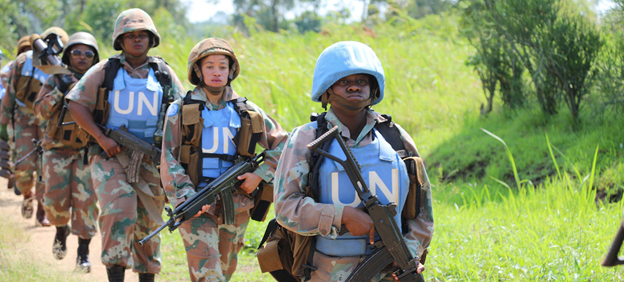
Female peacekeepers from South Africa on patrol in the Democratic Republic of the Congo. July 2021. Credit: MONUSCO/Michael Ali

STOCKHOLM / THE HAGUE, Aug 4 2021 (IPS) – The first year of the Covid-19 pandemic saw wide-ranging impacts on multilateral peace operations.

The crisis simultaneously affected all operations, host nations, headquarters and contributing countries. It caused major disruption—from the political-strategic level where mandates are drawn up, down to the operational and tactical levels.


Operations were forced to adapt in order to preserve continuity as far as was possible. While some of the effects of the pandemic are clearly reflected in the data—most notably in mission mortality rates—others are not.

For example, SIPRI data on personnel deployments cannot always capture delays in troop rotations or whether mission personnel were evacuated or working remotely for part of the year.

However, there is some evidence that Covid considerations did affect deployments, as is noted below.

Operations close in Guinea-Bissau and Sudan

There were 62 multilateral peace operations active in 2020, the same number as in 2019. The largest share of these (21) were conducted by the UN. Regional organizations such as the African Union (AU) and the European Union (EU) and alliances (such as the North Atlantic Treaty Organization, NATO) together conducted 36 operations. Ad hoc coalitions of states conducted 5 peace operations in 2020.

Two small operations in Guinea-Bissau closed in 2020. One was conducted by the Economic Community of West African States (ECOWAS): the ECOWAS Mission in Guinea-Bissau (ECOMIB), the other by the UN: the UN Integrated Peacebuilding Office in Guinea-Bissau (UNIOGBIS).

One other operation that closed during the year was the AU–UN Hybrid Operation in Darfur (UNAMID), which was launched in 2007. UNAMID had deployed between 20 000 and 25 000 international personnel at its height in 2009–14, and it still deployed around 6500 in 2020.

A small political mission based in Khartoum, the UN Integrated Transition Assistance Mission in the Sudan (UNITAMS), opened on 1 January 2021.

UNAMID’s closure is a landmark in contemporary peacekeeping. It is the fourth major UN peacekeeping operation to close since 2017; the UN Stabilization Mission in Haiti (MINUSTAH) and the UN Operation in Côte d’Ivoire (UNOCI) both closed in 2017 and the UN Mission in Liberia (UNMIL) in 2018.

Only seven operations comprising more than 5000 international personnel were still active at the start of 2021, and no operation deploying more than 1500 international personnel has been launched since 2014.

Three smaller operations open in CAR and Libya

The three operations that opened in 2020 were also in Africa. Two opened in the Central African Republic (CAR), in the wake of the 2019 Political Agreement for Peace and Reconciliation.

The AU Military Observers Mission to the CAR (MOUACA) was authorized in July 2020 to help monitor implementation of the agreement.

The EU Advisory Mission in the CAR (EUAM RCA), mandated to support security sector reform, had been established in December 2019 but was not launched until August 2020. Both operations have an authorized strength below 100 international personnel.

The AU Mission in Libya, the third new operation, was established by a decision of the AU Assembly in February 2020 to ‘upgrade’ the AU Liaison Office in Libya ‘to the level of mission’.

The Covid-19 pandemic seems to have complicated the deployment and build-up of these operations. In fact, while EUAM RCA was up and running at the end of 2020, albeit not at full capacity, there is little public information available on the status and activities of MOUACA or the AU Mission in Libya.

The latest edition of SIPRI’s Map of Multilateral Peace Operations shows all operations active as of 1 May 2021—including some that are outside the scope of SIPRI’s definition, such as the Multinational Joint Task Force (MNJTF) against Boko Haram, the Joint Force of the Group of Five for the Sahel (JF-G5S) and the EU Naval Force in the Mediterranean Sea (Operation Irini).

Personnel deployments fall

The number of international personnel deployed in multilateral peace operations globally fell by 7.7 per cent, from 137 781 in 2019 to 127 124 in 2020.

This was the largest year-on-year decrease since the drawdown of the International Security Assistance Force (ISAF) in Afghanistan in 2012–14. Around 87 per cent were military personnel, roughly the same proportion as in 2019.

Almost two-thirds of the deployed personnel in 2020 were serving in UN peace operations (66 per cent on average over the year). Almost three-quarters (74 per cent at the end of the year) were deployed in sub-Saharan Africa (both UN and non-UN operations).

The number of personnel deployed in UN peace operations globally and in multilateral peace operations (UN and non-UN) in sub-Saharan Africa declined for the fifth year in a row.

Both had peaked in 2015–16 following a period of rapid growth driven by the establishment of major operations in CAR and Mali and the expansion of major operations in Somalia and South Sudan.

The number of personnel deployed in UN peace operations fell by 2.4 per cent between 2019 and 2020 (from 88 849 to 86 712), reaching its lowest level since 2007.

Meanwhile, the number of personnel deployed in multilateral peace operations in sub-Saharan Africa decreased by 3.4 per cent (from 97 519 on 31 December 2019 to 94 201 on 31 December 2020), reaching its lowest level since December 2012.

Women continued to be under-represented among multilateral peace operations personnel in 2020, as reported in a SIPRI publication prepared for the 20th anniversary of UN Security Council Resolution 1325 on Women, Peace and Security last year.

Afghanistan: The end of NATO deployments imminent

The development that contributed most to the net reduction of peace operations personnel deployments last year was the agreement reached on 29 February 2020 between the United States Government and the Taliban on the withdrawal of all US forces from Afghanistan within 14 months.

Due to the subsequent drawdown of most US troops, the NATO-led Resolute Support Mission (RSM) shrank from 16 551 to 9592 personnel over the course of 2020.

The RSM was launched on 1 January 2015 and was mandated to train, advise and assist the Afghan National Security and Defense Forces following the departure of ISAF, which had been active from 2001 to 2014.

The new operation was originally supposed to end on 31 December 2016, but it was not until April 2021 that NATO leaders formally announced their intention to terminate the RSM. The decision came shortly after US President Joe Biden had ordered the withdrawal of the remaining US troops from Afghanistan by 11 September 2021.

As a result of the withdrawal of most US troops from the RSM, the USA started 2020 as the second largest troop contributor to multilateral peace operations (after Ethiopia) and ended the year as the tenth largest.

Fewer blue helmets killed in action, more by illness than in previous years

In 2020, UN peace operations lost 78 uniformed personnel, 13 international civilian personnel and 32 local staff. The fatality rate for uniformed personnel was 0.9 per 1000.

This was noticeably higher than in 2018 and 2019, but around the average for the period 2011–20.

Despite this, the rate of hostile deaths (i.e. deaths caused by malicious acts) among uniformed personnel was at its lowest since 2011, at 0.15 per 1000.

This decline could conceivably be partly an effect of the pandemic, for example because peacekeepers were not able to patrol as much as usual or were otherwise less exposed to the risk of violence due to pandemic-related restrictions.

Meanwhile, the number of deaths due to illness among international and local personnel in UN peace operations in 2020 was almost double that in 2019 (83 compared to 42), with most of these deaths occurring between June and September 2020.

This difference is almost certainly linked in large part to the Covid-19 pandemic and its impacts, which contributed to a record number of deaths across the UN during the year.
  Source

Latin America Sets an Example in Welcoming Displaced Venezuelans

Civil Society, Development & Aid, Editors’ Choice, Featured, Global Governance, Headlines, Human Rights, Humanitarian Emergencies, IPS UN: Inside the Glasshouse, Latin America & the Caribbean, Migration & Refugees, Population, Regional Categories, TerraViva United Nations

Migration & Refugees

A Venezuelan family carrying a few belongings crosses the Simon Bolivar Bridge at the border into Colombia. Over the years, the migration flow has grown due to increasing numbers of people with unsatisfied basic needs. CREDIT: Siegfried Modola/UNHCR

A Venezuelan family carrying a few belongings crosses the Simon Bolivar Bridge at the border into Colombia. Over the years, the migration flow has grown due to increasing numbers of people with unsatisfied basic needs. CREDIT: Siegfried Modola/UNHCR

CARACAS, Jul 26 2021 (IPS) – The exodus of more than five million Venezuelans in the last six years has led countries in the developing South, Venezuela’s neighbours, to set an example with respect to welcoming and integrating displaced populations, with shared benefits for the new arrivals and the nations that receive them.


In this region “there is a living laboratory, where insertion and absorption efforts are working. The new arrivals are turning what was seen as a burden into a contribution to the host communities and nations,” Eduardo Stein, head of the largest assistance programme for displaced Venezuelans, told IPS.

According to figures from the United Nations refugee agency, the UNHCR, and the International Organisation for Migration (IOM), 5,650,000 people have left Venezuela, mainly crossing into neighbouring countries, as migrants, displaced persons or refugees, as of July 2021.

“This is the largest migration crisis in the history of Latin America,” Stein said by phone from his Guatemala City office in the Interagency Coordination Platform for Venezuelan Refugees and Migrants (R4V), created by the UNHCR and IOM in partnership with 159 other diverse entities working throughout the region.

“This region is a living laboratory, where insertion and absorption efforts are working. The new arrivals are turning what was seen as a burden into a contribution to the host communities and nations.” — Eduardo Stein

Colombia, the neighbour with the most intense historical relationship, stands out for receiving daily flows of hundreds and even thousands of Venezuelans, who already number almost 1.8 million in the country, and for providing them with Temporary Protection Status that grants them documentation and access to jobs, services and other rights.

Colombia’s Fundación Renacer, which has assisted thousands of child and adolescent survivors of commercial sexual exploitation and other types of sexual and gender-based violence, is a model for how to welcome and help displaced persons.

Renacer, staffed by activists such as Mayerlin Vergara, 2020 winner of the UNHCR’s annual Nansen Refugee Award for outstanding aid workers who help refugees, displaced and stateless people, rescues girls and young women from places like brothels and bars where they are forced into sexual or labour exploitation, often by trafficking networks that capture the most vulnerable migrants.

“In Colombian society as a whole there has been a process of understanding, after the phenomenon was the other way around for several decades in the 20th century, of people displaced by the violence and crisis in Colombia being welcomed in Venezuela,” Camilo González, president of the Colombian Institute for Development and Peace Studies, told IPS.

When the great migratory wave began in 2014-2015, “many Venezuelans were taken on as half-price cheap labour by businesses, such as coffee harvesters and others in the big cities, but that situation has improved, even despite the slowdown of the pandemic,” said González.

Stein mentioned the positive example set by Colombia’s flower exporters, which employed many Venezuelan women in cutting and packaging, a task that did not require extensive training.

The head of the R4V, who was vice-president of Guatemala between 2004 and 2008 and has held various international positions, noted that in the first phase, the receiving countries appreciated the arrival of “highly prepared Venezuelans, very well trained professionals.”

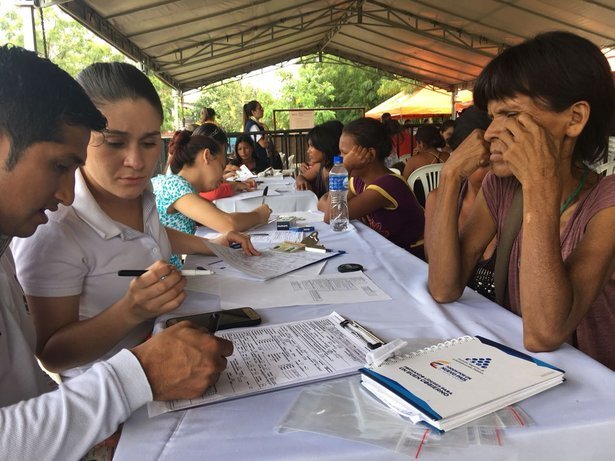
Yukpa Indians from Venezuela register upon arrival at a border post in Colombia. The legalisation and documentation of migrants arranged by the Colombian government allows migrants to access services and exercise rights in the neighbouring country. CREDIT: Johanna Reina/UNHCR

Yukpa Indians from Venezuela register upon arrival at a border post in Colombia. The legalisation and documentation of migrants arranged by the Colombian government allows migrants to access services and exercise rights in the neighbouring country. CREDIT: Johanna Reina/UNHCR

“One example would be the thousands of Venezuelan engineers who arrived in Argentina and were integrated into productive activities in a matter of weeks,” he said.

But, Stein pointed out, “the following wave of Venezuelans leaving their country was not made up of professionals; the profile changed to people with huge unsatisfied basic needs, without a great deal of training but with basic skills, and nevertheless the borders remained open, and they received very generous responses.”

But, he acknowledged, in some cases “the arrival of this irregular, undocumented migration was linked to acts of violence and violations of the law, which created internal tension.”

Iván Briscoe, regional head of the Brussels-based conflict observatory International Crisis Group, told IPS that in the case of Colombia, “it has been impressive to receive almost two million Venezuelans, in a country of 50 million inhabitants, 40 percent of whom live in poverty.”

Colombia continues to be plagued by social problems, as shown by the street protests raging since April, “and therefore the temporary protection status, a generous measure by President Iván Duque’s government, does not guarantee that Venezuelan migrants will have access to the social services they may demand,” Briscoe said.

The large number of Venezuelans “means an additional cost of 100 million dollars per year for the health services alone,” said González, who spoke to IPS by telephone from the Colombian capital.

Against this backdrop, there have been expressions of xenophobia, as various media outlets interpreted statements by Bogotá Mayor Claudia López, who after a crime committed by a Venezuelan, suggested the deportation of “undesirable” nationals from that country.

There were also demonstrations against the influx of Venezuelans in Ecuador and Panama, as well as Peru, where the policy of President-elect Pedro Castillo towards the one million Venezuelan immigrants is still unclear, as well as deportations from Chile and Trinidad and Tobago, and new obstacles to their arrival in the neighbouring Dutch islands.

“Not everything has been rosy,” Stein admitted, “as there are still very complex problems, such as the risks that, between expressions of xenophobia and the danger of trafficking, the most vulnerable migrant girls and young women face.”

However, the head of the R4V considered that “we have entered a new phase, beyond the immediate assistance that can and should be provided to those who have just arrived, and that is the insertion and productive or educational integration in the communities.”

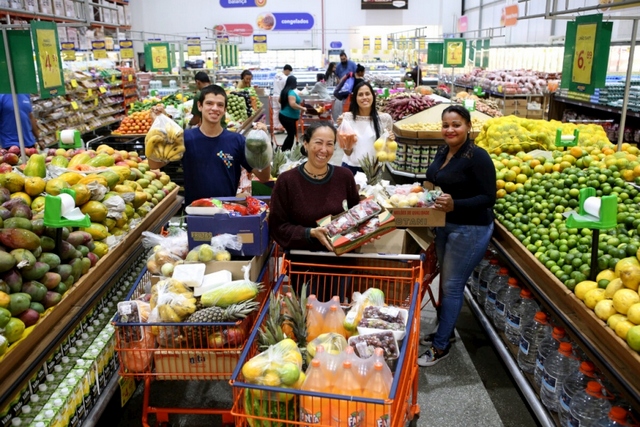
Migrants who have benefited from Operation Welcome in Brazil, where there are more than 260,000 Venezuelans, shop at a market in the largest city in the country, São Paulo. CREDIT: Mauro Vieira/MDS-UNHCR

Migrants who have benefited from Operation Welcome in Brazil, where there are more than 260,000 Venezuelans, shop at a market in the largest city in the country, São Paulo. CREDIT: Mauro Vieira/MDS-UNHCR

Throughout the region “there are places that have seen that immigrants represent an attraction for investment and labour and productive opportunities for the host communities themselves.”

Another example is provided by Brazil, with its Operação Acolhida (Operation Welcome), which includes a programme to disperse throughout its vast territory Venezuelans who came in through the northern border and first settled, precariously, in cities in the state of Amazonas.

More than 260,000 Venezuelans have arrived in Brazil – among them some 5,000 indigenous Waraos, from the Orinoco delta, and a similar number of Pemon Indians, close to the border – and some 50,000 have been recognised as refugees by the Brazilian government.

Brazil has the seventh largest Venezuelan community, after Colombia, Peru, the United States, Chile, Ecuador and Spain. It is followed by Argentina, Panama, the Dominican Republic and Mexico.

Throughout the region, organisations have mushroomed, not only to provide relief but also to actively seek the insertion of Venezuelans, in some cases headed by Venezuelans themselves, as in the case of the Fundacolven foundation in Bogota.

“We are active on two fronts, because first we motivate companies to take on workers who, as immigrants, are willing to go the ‘extra mile’,” said Venezuelan Mario Camejo, one of the directors of Fundacolven.

As for the immigrants, “we help them prepare and polish their skills so that they can successfully search for and find stable employment, if they have already ‘burned their bridges’ and do not plan to return,” he added.

On this point, Stein commented that the growing insertion of Venezuelans “shows how this crisis can evolve without implying an internal solution in Venezuela,” a country whose projected population according to the census of 10 years ago should have been 32.9 million and is instead around 28 million.

Based on surveys carried out in several countries, the head of R4V indicated that “the majority of Venezuelans who have migrated and settled in these host countries are not interested in going back in the short term.”

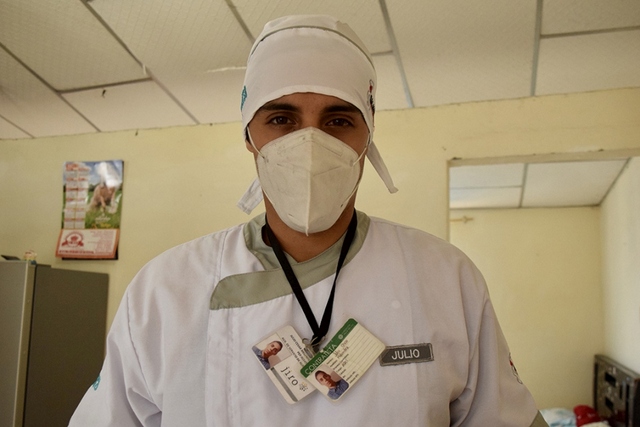
Julio Meléndez is a young Venezuelan who has found employment in food distribution at a hospital in Cali, in western Colombia. Labour insertion is key for the integration of migrants in host communities. CREDIT: Laura Cruz Cañón/UNHCR

Julio Meléndez is a young Venezuelan who has found employment in food distribution at a hospital in Cali, in western Colombia. Labour insertion is key for the integration of migrants in host communities. CREDIT: Laura Cruz Cañón/UNHCR

According to Filippo Grandi, the United Nations High Commissioner for Refugees, they have benefited from the fact that the countries of the region “are an example, and the rest of the world can learn a lot about the inclusion and integration of refugees in Latin America and the Caribbean.”

In the north of the region, Mexico is dealing with a migration phenomenon on four fronts. On one hand, 12 million Mexicans live in the United States. And on the other, every year hundreds of thousands of migrants make their way through the country, mainly Central Americans and in recent years also people from the Caribbean, Venezuelans and Africans.

In addition, the United States sends back to Mexico hundreds of thousands of people who cross its southern border without the required documents. And in fourth place, the least well-known aspect: Mexico is home to more than one million migrants and refugees who have chosen to make their home in that country.

Major recipients of refugees and asylum seekers in other regions are Turkey, in the eastern Mediterranean, hosting 3.7 million (92 percent Syrians), and, with 1.4 million displaced persons each, Pakistan (which has received a massive influx of people from Afghanistan) and Uganda (refugees from the Democratic Republic of Congo and other neighbouring countries).

In Sudan there are one million refugees, Bangladesh, Iran and Lebanon host 900,000 each, while in the industrialised North the cases of Germany, which received 1.2 million refugees from the Middle East, and the United States, which has 300,000 refugees and one million asylum seekers in its territory, stand out.

  Source

Flaws in Asia’s Pearl

Armed Conflicts, Asia-Pacific, Civil Society, Crime & Justice, Featured, Headlines, Health, Human Rights, Humanitarian Emergencies, TerraViva United Nations

Opinion

In March 2021, the UN Human Rights Council was given a mandate to collect and preserve information and evidence of crimes related to Sri Lanka’s 27-year long civil war that ended in 2009. Meanwhile, Western nations taking a cue from the Human Rights Council’s highly critical resolution on Sri Lanka appear to be tightening the noose. Credit: UN Photo / Violaine Martin. 43rd session of the Human Rights Council.

LONDON, Jul 5 2021 (IPS) – For well over a century Ceylon, now Sri Lanka, has been known to the world as the ‘Pearl of the Indian Ocean’ for its multifaceted attractions. That is until blurb writers ruined it all with hyperbolic epithets that obscured the country’s magnetic charms, which attracted visitors from around the globe.


But one particular epithet has lived up to its name. Called ‘a country like no other’, Sri Lanka is increasingly beginning to prove this true – though not for the reasons that originally prompted it.

Over the years, groups of professional politicians and those drawn to the sphere, not to serve the public but by thoughts of self-aggrandisement and avarice, have dragged this once prosperous country, with its many natural resources and strong democratic institutions, towards its nadir.

From being Asia’s first democracy, with universal franchise granted in 1931– even before independence from Britain in 1948– political commentators and increasingly the public now fear that the country is teetering on the brink of militarism, with retired and serving senior officers in key positions in the civil administration, and others appointed to virtually oversee Sri Lanka’s 25 administrative districts.

While there is both international and local disquiet over the deterioration of democratic values, of more immediate concern is the country’s dire economic state. The situation is so critical that less than two weeks ago, the respected Sunday Times wrote that President Gotabaya Rajapaksa’s government is ‘steps away from bankruptcy’.

At the same time, well-known economists were pressing alarm bells, warning about the possible breakdown of the banking system ‘causing a collapse of the economy’. The direct cause of the current crisis was the sudden hike in fuel prices in late June, which is bound to have a ripple effect on other commodities and services.

Bakers are already threatening to raise their prices, which could well have happened by the time this article appears.

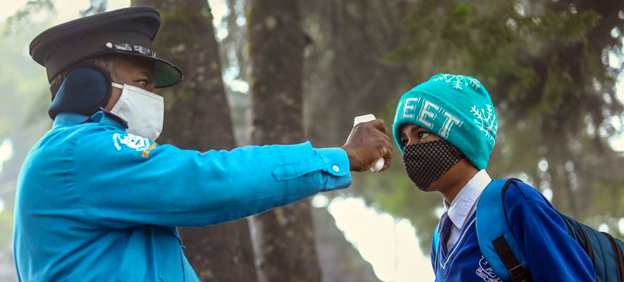
A thermometer gun is used to take a boy’s temperature in Sri Lanka. Credit: UNICEF/Chameera Laknath

With the prices of staples such as rice and vegetables unbearably high, the average consumer, already burdened by the steepening cost of living, is being pushed to the wall by a government that came to power some 20 months or so ago promising to reduce poverty and improve living standards.

Rising living costs are compounded by a still uncontrollable Covid pandemic. This has compelled the government to impose lockdowns and curb travel – restrictions which are haphazardly lifted and re-imposed, despite the best medical advice – as daily wage earners run out of cash to buy food for their families and meet other domestic needs.

Political commentators and increasingly the public fear that the country is on the brink of militarism

Last month, the Sri Lanka Medical Association urged President Gotabaya Rajapaksa to continue lockdown restrictions without interruption–”considering that over 2,000 Covid 19 cases and over 50 deaths are being reported daily” and also the detection of the highly dangerous Indian variant’.

At the time of writing, health authorities reported another 52 fatalities and put the daily count of positive cases at 2,098. But such statistics seems to matter little to politicians and their military and medical cohorts, tasked with combating the spreading pandemic but ignoring the accumulating data and the advice of specialist medical professionals.

Meanwhile, the vaccination of the population, according to a pre-determined programme, has been disrupted by politicians who have drawn up their own priority lists and even threatened doctors and health workers who refused to accept their dictates, raising law enforcement issues and public criticism.

Those with power and influence find backdoor means to gain access to vaccinations, at the expense of an increasingly frustrated and angry public, who stand in long queues for hours awaiting their turn.

While the overall Covid containment programme is reportedly in a mess, along with an economy going steadily downhill, another pearl turned up in the Indian Ocean close to Colombo port. The X-Press Pearl, a Singapore-registered container ship, was carrying noxious cargo, including a leaking nitric acid container. With Qatar and India refusing to admit the vessel for repairs, it turned up in Colombo

That poisonous pearl spewed nitric acid into the ocean and then self-immolated, burning for days before part of it went down on June 2. As a result of the incident, more than 150 marine animals, including 100 turtles, 15 dolphins, three whales and scores of birds and fish beached in various parts of the country, not to mention the kilometres of beach covered with plastic pollutants, leading a UN representative in Colombo to describe the episode as a ‘significant damage to the planet’.

Meanwhile, the original pearl of the Indian Ocean is struggling to keep its head above water. The Sunday Times’ economics columnist Dr Nimal Sanderatne, an agricultural economist, former central banker and academic, painted a bleak picture in his weekly column in late June: ‘The external finances of the country are in a perilous state. External reserves have fallen, the trade deficit is widening, the balance of payments deficit is increasing and there are foreign debt repayments of about US$4 billion during the rest of the year.’

His views about the parlous state of the economy were echoed by several other economists, including the spokesman of Sri Lanka’s main opposition party SJB, Dr Harsha de Silva, and Dr Anila Dias Bandaranaike, a former assistant governor of the Central Bank.

In a desperate bid to boost reserves, Sri Lanka went for a currency swap of US$200 million with Bangladesh, once a struggling new nation in South Asia. Prudent economic policies and management, and national interest, brought Bangladesh to its current flourishing status.

When the currency swap was announced, one Sri Lankan wag remarked that it would have made more sense if Sri Lanka had swapped its advisors for those from Bangladesh, and the swap should be permanent to protect the country’s self-respect

Only a country that has lost its political sense and perceptiveness, or has abandoned all concern for its struggling people, could seek government sanction to import nearly 300 vehicles costing Rs 3.7 billion for its 225 parliamentarians and unnamed others, in the midst of a severe foreign currency crisis, when begging and borrowing seem the only options.

What is even worse, Sri Lanka’s premier state bank was ordered to open letters of credit one month or so before cabinet approval had been sought. Whoever ordered this remains unknown to the public at the time of writing.

Critics of the government say it is fast losing its one-time popularity as ill-considered and sudden policy decisions are heaped on existing economic and health problems, such as the snap decision to ban chemical fertiliser and pesticides, so essential right now for agriculture and export crops such as tea.

Scant wonder the government is being assailed by even close associates of the Rajapaksa family. One such is the head of the Catholic Church, Malcolm Cardinal Ranjith, who, in a strongly critical statement recently said that ‘even nature seemed to be turning against the rulers’.

Meanwhile, western nations taking a cue from the UN Human Rights Council’s highly critical resolution on Sri Lanka last March appear to be tightening the noose.

At the end of June, the European Parliament moved a resolution, with almost 90 per cent voting for it, urging the EU authorities to consider suspending the Generalised System of Preference (GSP Plus) trade concessions to Sri Lanka, which would be a serious blow to exports.

Later the Core Group of Western nations that sponsored the UNHRC resolution issued a statement condemning Sri Lanka’s human rights situation and new changes to the Prevention of Terrorism Act.

Bleak times lie ahead.

Source: Asian Affairs Magazine

Neville de Silva is a veteran Sri Lankan journalist who held senior roles in Hong Kong at The Standard and worked in London for Gemini News Service. He has been a correspondent for foreign media including the New York Times and Le Monde. More recently he was Sri Lanka’s deputy high commissioner in London

  Source

Universal Civil Registration and Vital Statistics Are Critical for Truth, Trust and COVID Recovery in Asia and the Pacific

Asia-Pacific, Civil Society, Development & Aid, Featured, Headlines, Health, Human Rights, Humanitarian Emergencies, TerraViva United Nations

Opinion

BANGKOK, Thailand, Jun 28 2021 (IPS) – With health systems at a breaking point, hospitals at capacity and desperate family members searching for oxygen for loved ones, the devastating second wave of COVID-19 that has swept across South Asia has felt ¬surreal. Official figures have indicated record-breaking daily coronavirus cases and deaths, not only in South Asia, but across the entire Asia-Pacific region during the latest surge. As devastating as it has been, the truth is we may never know how many people have died during the pandemic.


Armida Salsiah Alisjahbana

Underreporting of deaths is common across the Asia-Pacific region, with an estimated 60 per cent of deaths occurring without a death certificate issued or cause of death recorded. One reason for this is the lack of a coordinated civil registration system to accurately record all vital events. This issue is exacerbated in times of crisis, as many of the poor die as they lived: overlooked or without being officially counted.

Civil registration and vital statistics (CRVS) systems record deaths and other key life events such as births and marriages. A complete approach to civil registration, tracking vital statistics and identity management relies on multiple arms of government and institutions working together to collect, verify and share data and statistics so they are reliable, timely and put to right use. Without such official data and records during catastrophes such as a pandemic, we see how fast people get left out of extended social protection, vaccination drives and emergency cash transfers. Conversely, it significantly limits the ability of the most vulnerable groups to claim this access and their rights.

The need for accurate data and reporting mechanisms is critical at all times and even more crucial during humanitarian situations, whether a natural disaster or health emergency, when urgent decisions are required and hard choices have to be made. Governments, health authorities and development partners need timely and complete data to know the extent of the issue. This data can guide evidence-based decisions on where resources should be deployed and assess which interventions have been most effective. The more complete, accurate and trustworthy the data, the better the decisions. Or at least, the leadership is unable to use the excuse of ”we did not know.”

Kanni Wignaraja

In 2014, the United Nations Economic and Social Commission for Asia and the Pacific (ESCAP) convened the first Ministerial Conference on Civil Registration and Vital Statistics, during which the Asian and Pacific CRVS Decade (2015-2024) was declared. Governments later set a time frame for realizing their shared vision – that all people in the region will benefit from universal and responsive CRVS systems.

These are complex and vast systems that need both technological and human capabilities to do it correctly, and the political commitment to sustain the effort. Development partners, including ESCAP, the United Nations Development Programme (UNDP) and the United Nations Children’s Fund (UNICEF), continue to actively work with governments and institutions to support the development of national civil registration systems, vital statistics systems and identity management systems such as national population registers and national ID card schemes.

A challenge facing governments has been transitioning from a standalone paper-based registration system to an integrated and interoperable digital one. UNICEF has worked with countries in the region on the registration of newborns, digitalization of old records and creation of integrated digital birth registration systems. UNICEF is also working with the World Health Organization (WHO) to improve integration of health services and civil registration, allowing governments to provide uninterrupted civil registration services and respond faster to health priorities, especially during crises.

Omar Abdi

UNDP and UNICEF play leading roles in implementing the UN Legal Identity Agenda, which aims to support countries in building holistic, country-owned, sustainable civil registration, vital statistics and identity management systems. Recognizing the importance of protecting privacy and personal data, UNDP advises countries on the appropriate legal and governance framework and has been engaged in supporting civil registration, national ID cards and legal identity in countries.

It is clear from the report by ESCAP, Get Every One in the Picture: A snapshot of progress midway through the Asian and Pacific CRVS Decade, that many countries in our region have seen improvements. However, we need to do more to ensure that all countries are able to produce reliable official statistics. And to use this to also learn and look forward.

The human toll of the COVID-19 crisis has been immense with far reaching consequences for the most vulnerable families. To respond effectively to disasters and build back better, it is time we get everyone in the picture.

Armida Salsiah Alisjahbana is the Executive Secretary of the United Nations Economic and Social Commission for Asia and the Pacific (ESCAP)

Kanni Wignaraja is the Director of the UNDP Regional Bureau for Asia and the Pacific, UNDP
Omar Abdi is the Deputy Executive Director of Programmes, UNICEF

  Source

From Climate Change to Covid, Are We Ready to Deal with Disasters?

Civil Society, Climate Change, Education, Environment, Food Security and Nutrition, Gender Violence, Global, Headlines, Health, Humanitarian Emergencies, Labour, Migration & Refugees, Sustainability, TerraViva United Nations, Water & Sanitation

Opinion

Credit: Bibbi Abruzzini

PARIS, Jun 10 2021 (IPS) – In the last 20 years, disasters affected over 4 billion people. At global level we witness on average one sweeping disaster a day, the majority of which are floods and storms. From the Covid-19 pandemic to climate change, calamities are taking new shapes and sizes, infiltrating every dimension of society. From the emotional to the political, how do we deal with disasters? How can we create a whole-of-society approach to disaster risk reduction?


Right through this vortex of intersecting crises, a new toolkit and interactive website by Forus, the Global Network of Civil Society Organizations for Disaster Reduction (GNDR), Save the Children Switzerland and Inventing Futures, with the support of Fondation de France, looks at how civil society organisations coordinate disaster risk reduction and post-emergency interventions. Meant for civil society networks, activists, government officials and community-based organizations, the toolkit provides best-practices from around the globe.

“Today, we are all actors and victims of crises. How can we better understand and learn to cope with them? These practical tools allow us to discover the stakes, the exemplary actions and their effects, through simple definitions and concrete testimonies experienced by civil society,” says Karine Meaux, Emergency manager at Fondation de France.

“Building resilient communities in the face of natural and man-made hazards has never been more important. While disasters don’t discriminate, policies do. Together we can act and put pressure on decision-makers to promote a holistic approach to disaster prevention and reduction and truly people-centred policies,” says Sarah Strack, Director of Forus.

Civil society at the forefront of disaster management

From resilient communities in Nepal, to conflicts in Mali and peace processes in Colombia, the toolkit presents six approaches to disaster risk reduction gleaned from case studies compiled across the civil society ecosystem. The toolkit looks at various topics from capacity building, to local knowledge, resource mobilisation, partnerships with governments and long-term sustainable development and livelihood resilience, ensuring that communities ‘bounce forward’ after a disaster.

Credit: Bibbi Abruzzini

Specifically, the toolkit aims to clarify the crucial role frontline civil society organisations play in reducing the impacts of disasters in the midst of an expanding and intensifying global risk landscape. Bridging governments, communities and experts is the only way we can tackle the multiple ways disasters affect local and social processes such as education, migration, food security and peace. If civil society is not free to operate – or even exist – our collective capacity to deal with disasters and create long-term resilience is hampered.

“You have countries [in the region] in which civil society is not even allowed to exist. This reality changed a lot after the Arab Spring, with countries living in a terrible crisis, with military conflicts, where the role of civil society now is not only to struggle for their existence, but also to provide the population with basic needs and humanitarian interventions,” says Ziad Abdel Samad, Director of the Arab NGO Network for Development (ANND).

Everyday disasters and inequalities

Robert Ninyesiga, from UNNGOF, the national civil society organisation platform in Uganda, argues that in most cases, “more effort has been put towards disaster response while neglecting the disaster prevention aspect”.

This therefore calls for continuous intentional awareness and capacity building as regards to disaster prevention and this can only be effectively achieved if sustainable partnerships between central governments, local governments, civil society organisations, media and citizens are strengthened.

Shock events, high-impact disasters, such as conflicts, earthquakes or tsunamis are just the tip of the iceberg. Underneath this layer there are an increasingly high number of “everyday disasters” affecting people around the globe. Localised, small scale, and slow onset disasters are often “invisible” – far from the spotlight. Those at low incomes are the most vulnerable and find themselves at the periphery of infrastructures, response systems and media attention.

For instance, in addition to being often exposed to intensive disasters such as floods and storms, residents in urban slums across Bangladesh are suffering much more than other communities since the outbreak of the Covid-19 pandemic.

Credit: Bibbi Abruzzini

“Most slum dwellers are daily wage earners, but they are not able to earn money. They are not able to maintain social distance, because in one room 4-5 members are living. Many people are using a shared bathroom. It’s very difficult to maintain hygiene. There is not enough space to sit or sleep at home while maintaining sufficient distance. Due to lack of money, many slum dwellers have only one or two meals a day. Violence and sexual harassment are increasing in the community due to cramped conditions. Children are not attending school,” explains the Participatory Development Action Programme (PDAP) which works in the slums of Dhaka .

These pressures add to regular “everyday” challenges of air pollution and garbage management, flooding, water-logged land, and poor quality water.

Local knowledge and Resilient Future

Civil society organisations often fill a tremendous gap and find themselves at the forefront of prevention and emergency efforts. The localisation of responses and partnerships are absolutely crucial to understand the needs of communities in pre and post-disaster scenarios.

In Honduras, civil society has created community-led interventions, to prioritise local plans of action across the country.

“Honduras, and Central America more in general, have been hit in the last 10 years by an intensification of disasters, most of them linked to climate change. Our role in helping communities to adapt to climate change and to deal with disasters, is in terms of capacity building, humanitarian assistance and advocacy by creating links between local, national, regional and global levels,” says Jose Ramon Avila from ASONOG, the national platform of civil society organisations in Honduras.

The intense and cascading nature of risks, such as seen in the cases of Covid-19 and climate change, represent a serious threat to the achievement of a sustainable and resilient future. Growing experience over the last three decades has revealed that disasters and development are closely linked. Ignoring the impact of disasters makes it more difficult to pursue sustainable development.

“Sustainable development can only be achieved when local risk is fully understood. Critical to understanding and assessing the complex threats and risks, challenges and opportunities faced by communities most at risk, is the need to partner with those people. This practical toolkit provides valuable insights and examples from GNDR members and others on how this can be achieved,” says Bijay Kumar, Executive Director, Global Network of Civil Society Organisations for Disaster Reduction (GNDR)

It has also been found that much of the negative impact on sustainable livelihoods comes not from large, ‘intensive’ disasters, but from many smaller, ‘everyday’ disasters. It has become crucial to address intensive and everyday disasters and to integrate our responses with overall work to pursue sustainable development.

We need to ask ourselves this question: can we build new bridges of solidarity between civil society, communities and governments? Can we prevent and anticipate disasters? Our future is not disaster-free; to build resilient communities it is crucial to nurture strong roots for our society to flourish.

The author Bibbi Abruzzini is Communications officer at Forus.
Find the toolkit and microsite on Disaster Risk Reduction here. Available in English, French and Spanish.

  Source

‘Let’s Talk About Sex’ Discussion Highlights Risks to Women

Civil Society, Crime & Justice, Development & Aid, Economy & Trade, Gender, Gender Violence, Global, Headlines, Health, Human Rights, Humanitarian Emergencies, Poverty & SDGs, TerraViva United Nations, Women’s Health

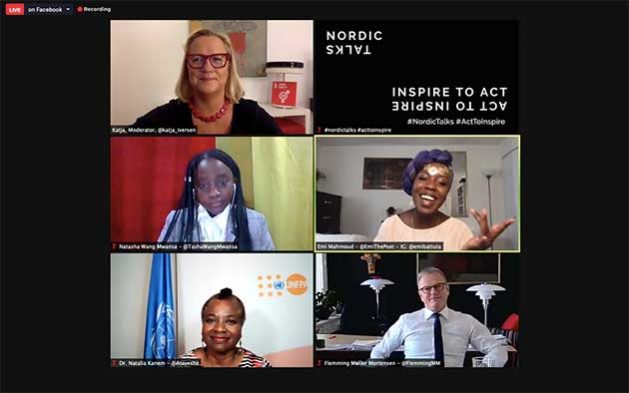
Nordic Talk moderator Katja Iversen shown here with Natasha Wang Mwansa, Emi Mahmoud, Dr Natalia Kanem and Flemming Møller Mortensen during a recent Nordic Talks webinar. Credit: Shuprova Tasneem

DHAKA and NEW YORK, Jun 4 2021 (IPS) – Every two minutes, a girl or woman dies from pregnancy or childbirth-related complications, including unsafe abortions. Every year, around 12 million girls are married while in their childhoods. An additional 10 million are now at risk of child marriage due to the Covid-19 pandemic.


In this context, the most recent Nordic Talk—a high-level debate on bodily autonomy and sexual and reproductive health and rights (SRHR) as a cornerstone of gender equality, aptly titled “Let’s Talk About Sex” — could not have come at a better time.

Moderator Katja Iversen, Dane of the Year (2018) and former CEO of Women Deliver, kicked off the discussion by focusing on the close link between bodily autonomy, gender equality, economic growth, and a healthy planet.

In an exclusive interview with IPS, Iversen said it was clear that “bodily autonomy for girls and women—in all their rich diversity—is political, social, economic and health-related.”

Women needed to have power and agency over their “bodies, fertility, and future, living a life free of violence and coercion in both the private and public sphere. It ties into norms, structure, systems – and if we want equity and health for all, we need to address all of it.”

Emi Mahmoud, two-time World Champion Poet and Goodwill Ambassador for the UNHCR, set the tone for the Nordic Talk with her emotive poetry reflecting women’s experiences in patriarchal societies, asking: “What survivor hasn’t had her struggle made spectacle?”

The three other panellists agreed that the right to control their bodies was a fundamental aspect of women’s rights and that gender equality was an essential part of the sustainable development agenda.

As Dr Natalia Kanem, Executive Director of the UNFPA, explained that “(women’s) freedom over her own body means freedom of choice”, and that all the data points towards how investment in SRHR could be the first step to empowering women to “ultimately contribute to sustainable development.”

It was critical that SRHR was adequately resourced – but warned these would be in short supply because of the COVID pandemic recovery plans.

“Part of the financing challenge is what we abbreviate as political will. It actually does not cost a lot for the agenda for SRHR to be a reality by 2030. It would take $26 billion a year to end the unmet need for contraception and to stop mothers dying at birth, many of whom were too young to be pregnant, but resources are going to be a challenge now with Covid having affected the world economies.”

While Flemming Møller Mortensen, Danish Minister for International and Nordic Development and Nordic Cooperation, expressed optimism regarding resources for SRHR now that “the US is back on track” and the global gag rule had been revoked. He was worried about a growing conservatism and pushback against women’s rights, particularly in the pandemic’s wake.

Iversen told IPS the cuts in various countries could be devastating.

“UNFPA estimates that with the $180 million the UK wants to withdraw from the Supplies Partnership, UNFPA could have helped prevent around 250,000 maternal and child deaths, 14.6 million unintended pregnancies and 4.3 million unsafe abortions. We will need foundations and other donor countries to step up, and we will need national government step up and step in and ensure that their national budgets reflect and fill the SRHR needs.”

She expressed concern that women on COVID-19 decision-making bodies were unrepresented.

“Less than 25% of national COVID-19 decision-making bodies have women included. It is too easy to cut resources from people who are not at the decision-making tables,” she said. “We urgently need to get a lot more women into leadership, including of the COVID-19 response and recovery efforts. All evidence shows that when more women are included in decision-making, there is a more holistic approach and both societies and people fare better.”

This call for inclusivity, not just for women but for the youth, was strongly echoed by adolescent sexual and reproductive health rights expert Natasha Wang Mwansa.

“So many commitments have been made by so many countries, yet there is no meaningful progress or accountability, and young people are not involved when making these decisions,” Mwansa said. “Young people are here as partners, but we are also here to take charge. From making choices over our own bodies to choices on our national budgets, we are ready to be part of these decisions.”

To deal with challenges in providing access to SRHR, Kanem stressed the importance of gender-disaggregated data for planning. She added that despite the hurdles, she was hopeful about the future because “young people and women are not waiting to make the case and show solidarity and understanding when it comes to racism or issues of discrimination and equity that divide us.”

Iversen echoed this optimism in her IPS interview.

“It gives me hope that comprehensive sexual and reproductive health services are included in the roadmap for Universal Health Coverage, in the Global Action Plan for Healthy Lives and Well-being, and latest in the Generation Equality Forum blueprint,” she said.

“Civil society has played a key role in ensuring this with good arguments, data and a lot of tenacity. But words in the big global documents about Health For All is one thing; gender equality and women’s rights, if it has to matter, it has to manifest in concrete action.”

The conversation rounded off with recommendations and commitments from the panellists: Mwansa stressed more investments in youth-run organisations and more social accountability from decision-makers; Mortensen asked for governments to be held accountable and for youth voices to be heard; and Kanem reaffirmed the UNFPA’s goal to put family planning in the hands of women as a means of empowerment, to end preventable deaths in pregnant women and girls, and change fundamental attitudes to end gender-based violence.

In her final comments to IPS, Iversen also stressed the importance of SRHR as a means of empowerment.

“Study after study shows that it pays to invest in girls, women and SRHR – socially, economically and health-wise. But we cannot look at SRHR alone; we need a full gender lens to the COVID response and recovery and development in general,” she said.

“And if we want to see positive change, we have to put girls and women front and centre of coronavirus response and recovery efforts, just as we, in general, need to see many more women in political and economic leadership.”

The Nordic Council of Ministers supports the Nordic Talks, and “Let’s Talk about Sex” was organised in partnership with UNFPA, the Danish Ministry of Foreign Affairs, Generation Equality, the Danish Family Planning Association, and Mind your Business, as a lead up to the Paris Generation Equality Forum.

  Source