The following opinion piece is part of series to mark the upcoming International Women’s Day, March 8.
Audrey Azoulay, Director-General of UNESCO
PARIS and REYKJAVIK, Mar 5 2021 (IPS) – International Women’s Day pays tribute to the achievements of women worldwide and reminds us what still needs to be done for full gender equality. In 2021, we are taking stock of the many ways in which COVID-19 has disproportionately affected women and girls around the world.
The pandemic has created a new landscape. Although women have played a key role in responding to the crisis, gender inequalities have widened across the board. In education, 767 million women and girls were impacted by school closures. Eleven million may never return to class, joining the 132 million already out of school before the crisis struck. From the economic perspective, the recession is pushing 47 million more women and girls into poverty, destroying their economic independence and making them more vulnerable to gender-based discrimination and violence.
As we look at this landscape, we have to ask ourselves: if gender equality is our goal, what kind of leadership will the world need moving forward?
It is not enough to just count the number of women in the highest positions of power. No single person at the top of the pyramid can repair the damage being done to the progress that has been made in gender equality since the world adopted the Beijing Declaration on women’s rights 25 years ago.
What we need are leaders for gender equality – and we need them everywhere in our societal structures. Leaders of all ages, all gender identities and from all backgrounds. These leaders are not just agents of change, but designers of change. They lead through their example and engagement. They expose injustices and unequal opportunities. They know that gender inequalities stem from discrimination and exclusion and that it is only by lifting these barriers that real change can happen. This is feminist leadership.
Katrín Jakobsdóttir, Prime Minister of Iceland
Feminist leaders tackle power structures. They name and deconstruct all forms of exclusion and marginalization. They empathize with the vulnerable and voiceless, and champion their causes. They open new doors and take risks, courageously blowing the whistle on hidden injustice, and unmasking structural barriers perpetuating inequalities. They are all around us. Be it the activist defending an indigenous community, the schoolgirl mobilizing her generation to save the climate, or the poet raising her voice to promote social justice.
Feminist leaders have the courage to create, report, educate, experiment. Think about Azata Soro, actress, film director and producer who broke her silence on sexual harassment and violence in the African film industry. Think about Maria Ressa, risking jail for her brave investigative journalism. Think about Yande Banda, a tireless advocate for girls’ education in Zambia and beyond. Think about Katalin Karikó, who overcame the many challenges faced by women in science and was instrumental in developing the Pfizer-BioNTech coronavirus vaccine. As stories like these become known, they challenge people’s intimate convictions of what is achievable and by whom. These women are, in all their diversity, feminist leaders.
However, feminist leadership is not the prerogative of women alone. Gender equality isn’t just a women’s fight, it’s a fight for social justice. Men also need to be involved in the construction of a fairer society. Many of them are showing the way. The Congolese gynecologist, Dr Denis Mukwege, won a Nobel Peace Prize for his advocacy to stop rape from being used as a ‘strategy of war’. And there are many others like him, all over the world.
On this International Women’s Day, we stand committed to building future generations of feminist leaders through education. We support women who dare to create and do what is necessary to prevent them from censorship and attacks. We call on the international community to ensure the safety of women journalists who address gender inequalities through their reporting. We also stand side by side with men who dare to care and reject toxic masculinities and behaviours and open up spaces for women to influence decision-making or participate in scientific discovery and innovation.
Let us support these feminist leaders, from all walks of life. Let us take action so that women can affirm their leadership and be powerful role models for generations to come. Because gender equality not only serves to advance the cause of women – a fairer society benefits us all.
Audrey Azoulay is Director-General of UNESCO and Katrín Jakobsdóttir is Prime Minister of Iceland.
The following opinion piece is part of series to mark the upcoming International Women’s Day March 8.
NEW YORK, Mar 4 2021 (IPS) – In 2020, progress on gender equality stalled or regressed in many countries in large part because of the far-reaching impacts of the COVID-19 pandemic. According to a recent analysis, by 2021, around 435 million girls and women will be living on less than $1.90 a day, including 47 million pushed into poverty as a result of the pandemic. Global lockdowns contributed to a surge of gender-based violence worldwide, and estimates show that sexual and reproductive health and rights (SRHR), the bedrock of gender equality, have been severely disrupted, resulting in an additional 49 million women at risk of experiencing an unmet need for modern contraception. Our most pressing global issues have seldom been so daunting, and fault lines in existing social, political, and economic systems have never been so deep.
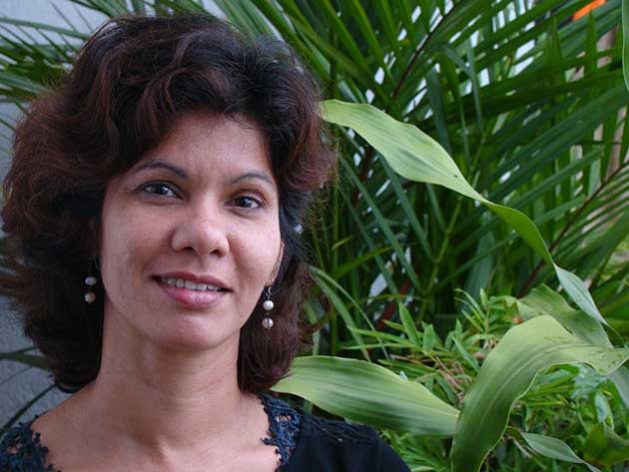
Kathleen Sherwin
Fortunately, the evidence-based solutions we need to lay the groundwork for a future that delivers for all, including for girls, women, and underrepresented populations1 , are in plain sight. As a global community, by using gender equality as our shared North Star, we can set in motion actions that help us not only recover, but come out on the other side of our most pressing global challenges stronger. Achieving gender equality, with a focus on girls’ and women’s health and rights, must be central to the actions we take in response to COVID-19, and other deeply entrenched barriers to progress, such as climate change.
On this International Women’s Day, we’re calling on governments, the private sector, and civil society leaders to firmly position gender equality as our collective roadmap for coordinated action on COVID-19 and sustainable development. As essential first steps, together, we must prioritize collecting and using disaggregated data, securing the full and effective participation of girls and women in all aspects of decision-making, and investing more in gender equality. Sustainable progress toward a world that works for everyone depends on it.
Decision-makers must collect and use disaggregated data to set equitable action in motion.
Girls and women are too often invisible to decision-makers because data and knowledge about them is either incomplete or missing. To create policies that advance gender equality by addressing the disproportionate impacts of global challenges on girls, women, and underrepresented populations, we first need to invest in disaggregated data to get a full, intersectional picture of the uneven impacts of global issues.
In August 2020, in partnership with Focus 2030, we set out to do just that, conducting a first-of-its-kind multi-national survey — in 17 countries, representing half of the world’s population — to better understand the impacts of COVID-19 on girls and women, and global public opinion and expectations for policymaking on gender equality. We learned that girls and women are shouldering the worst of the pandemic’s impact: across 13 of 17 countries surveyed, women report experiencing greater emotional stress and mental health challenges than men, and taking on an even greater share of household tasks.
Girls and women must be fully and effectively engaged in charting our shared path forward.
Building a sustainable future for all requires the full participation — and potential — of girls and women in all aspects of our international and domestic response to global issues, and the realization of that potential depends on their health and rights. In fact, we now know that 82% of citizens globally believe women must be involved in all aspects of COVID-19 global health response and recovery efforts.
Crucially, we must engage today’s youth, who will ultimately bear the consequences of our action — or inaction — and who have the highest expectations for more government funding for gender equality. 75% of female respondents aged 18-24 expect their government to spend more on gender equality, and over 94% of young men and women are ready to take personal action to make sure that they do.
Gender equality is what citizens want, and it’s what the world needs to build a healthier future for all.
The resounding call for action on gender equality, matched by robust funding and accountability mechanisms, holds across countries surveyed for men and women, young and old alike. Over 80% of citizens globally want their government to invest more to promote gender equality, and are ready to act — from the way they vote, to the products they buy — to make sure that this happens. The resounding majority of citizens also believe that increasing access to SRHR is a top priority for immediate government action.
As governments, the private sector, and civil society leaders come together on International Women’s Day, and during upcoming global fora including the 65th session of the Commission on the Status of Women and the Generation Equality Forum to discuss how to transform words into action that improves the health of all people and the planet, ensuring that gender equality is our shared roadmap for responding to global challenges is crucial to sustainable progress now and in years to come. It’s what citizens want, and it’s what the world needs to build a healthier, more gender-equal future.
1 People of underrepresented sexual orientation, gender identity, and/or expressions, and sex characteristics (SOGIESC), and those who experience multiple and intersecting forms of discrimination and oppression.
The author is Interim President & CEO, Women Deliver
The following opinion piece is part of series to mark International Women’s Day March 8.
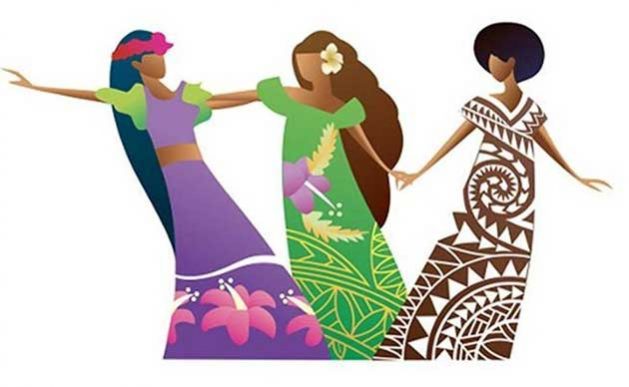
SUVA, Fiji, Mar 1 2021 (IPS) – An often quoted indigenous reference in the Samoan language is, O le ala i le pule o le tautua, literally translated, “the pathway to leadership is through service” because to be able to lead is to be willing to serve.
Since world leaders endorsed the blueprint for gender equality in Beijing 1995, women in leadership has dominated in numerous conversations and forums in terms of the need to increase women in leadership as a critical factor to achieve gender equality. Many of the perspectives shared, are about facilitating opportunities for women, advancing women in fields dominated by men, particularly in the sciences, and achieving equality in decision-making. Women in leadership has become a popular discourse from development, to academia, to politics, to science and innovation; and organisations across all sectors are recognizing the importance of inclusivity and equity for achieving sustainable development.
The 2020 Pacific review of the Beijing Platform for Action, 25 years after Beijing, highlighted that Pacific states still have a long way to go in achieving balanced representation of women in national parliaments. With the exception of the French Territories where equitable representation of women in their legislative assemblies is ensured by the French ‘parity law’, women’s representation in national parliaments across the region is shockingly low and temporary special measures (TSMs) are only used in a few states. At all levels, and across all nations, gender power dynamics disadvantage women as decision makers; and socio-cultural norms in the Pacific see men as the ‘natural’ spokespeople for families, communities and governments. That said, the report also noted an increase in women’s participation in all levels of decision-making at community levels, in public service and in civil society organisations. This raises a number of challenging questions.
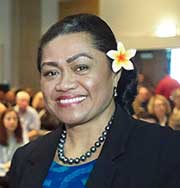
Leituala Kuiniselani Toelupe Tago-Elisara
Where does this lead us in a pandemic environment? COVID-19 has exacerbated existing and ongoing inequalities in the Pacific, hindering what is already very slow progress for achieving gender equality. The evidence is quite clear as to where these inequalities are found and policy dialogues and talanoa sessions held within the region over the last two and a half decades, have generated a multitude of recommendations on what can be done by governments and as a region. What then is the problem, we ask ourselves? It’s the resourcing, the response, the lack of political will and commitment, and the list goes on, that women leaders and women engaging in the gender space, know all too well.
So, what can we do and what does this mean for Women in Leadership? The answer lies in our ongoing concerted efforts to have women at the table with an equal voice to speak for the 50% of our population. We will keep pushing to have women leaders at the table who understand women’s lived experiences and needs, and that these are translated into decision-making on resource allocation and prioritisation. We need women who lead, knowing that they have families and communities to attend to after work, and appreciate the value of unpaid care work. More importantly, we need the same women leaders at the table to share those perspectives with their men counterparts, to affect change that will transform societies and enable positive and inclusive change for gender equality at all levels in society and across all locations – urban, rural and remote.
Our unprecedented experience with COVID-19 has changed the way we live, the way we work and certainly the way we exercise leadership and deliver service. It has reminded us that with border closures and travel restrictions, we need to be searching within our own borders and within our own societies for solutions. One of these solutions is for us to utilize and capitalize on the often-untapped skills, knowledge and expertise of women, to generate solutions for our development challenges. The role of women, as we are seeing in recovery efforts across the Pacific, is a testament to the service they continue to provide for our families and our communities. It is evidenced in women’s resilience and their significant capabilities in managing our communities and societies through multiple disasters and climatic events over the years, and through the multitude of cultural and customary obligations that we have all lived through, and will continue to live through. It is a reflection of women’s knowledge of our Pacific ways of knowing and ways of being, gathered and passed down from generation to generation.
The impacts of COVID-19 are huge and as a region and as a people, it will take some time to navigate our way through these impacts towards full recovery. However, if there is one learning that I take away from this crisis, it is our ability to remain resilient and to continue to serve each other and our people, with our women holding the fort in all our societies and communities across the Pacific Ocean, through their ongoing service. It is a manifestation and a living example of leadership through service, because to be able to lead is to be willing to serve, and being able to serve is being able to lead, and such is the spirit of Pacific women in leadership.
Leituala Kuiniselani Toelupe Tago-Elisara is Acting Regional Director, Polynesia Regional Office Pacific Community (SPC)
NEW DELHI, India, Feb 1 2021 (IPS) – A decade has passed since the end of Sri Lanka’s civil war between the government and the LTTE, where at least 100,000 people were killed in the over three-decade long conflict. Families of victims of enforced disappearances continue to seek justice, the government is yet to end impunity and put accountability for crimes under international law and human rights violation and abuses in its transitional justice process.
In a recent United Nations Human Rights Office of The High Commissioner report, UN High Commissioner for Human Rights Michelle Bachelet stressed that the failure to deal with the past continues to have devastating effects on tens of thousands of families in Sri Lanka, who are still waiting for justice, reparations – and the truth about the fate of their loved ones. The report warns that the failure of Sri Lanka to address past violations has significantly “ heightened the risk of human rights violations being repeated.”
“Sri Lanka’s current trajectory sets the scene for the recurrence of the policies and practices that gave rise to grave human rights violations.” The report also flags the pattern of intensified surveillance and harassment of civil society organizations, human rights defenders and victims, and a shrinking space for independent media.
“I see the OHCHR report as something that will give more oxygen to continue our many struggles, especially for truth and justice,” says Sri Lanka based human rights activist Shreen Saroor to IPS News. The report has articulated the lack of access to justice and the need for accountability very well. It is robust on militarisation and deep securitisation of Sri Lanka and calls for rigorous vetting and demilitarization with a warning of grave consequences if failed, says Shreen.
“Michelle Bachelet’s criticism on surveillance on CSOs and shrinking space for dissent and the abuses of Prevention of Terrorism Act (PTA) and International Covenant on Civil and Political Rights (ICCPR) Act are alarming. However in order to prevent another round of conflict, the report should emphasize more on the ongoing attacks against countries’ religious minorities,” says Shreen.
Earlier in december 2020, Muslims in Sri Lanka were outraged over the forced cremation of a 20-day-old COVID-19 victim against the family’s wishes. Sri Lanka has been flagged for ignoring the World Health Organization’s (WHO) guidelines which permits both burial and cremations.
In a country where minorities are marginalized and discriminated against, Muslims who fall victim to COVID-19 are unjustly prevented from being laid to rest in accordance with their religious beliefs and are forcibly cremated, said Amnesty International in a statement. Sri Lanka is one of the few countries in the world which has made cremations mandatory for people who have died or are suspected of having died from COVID-19. The rights group urged the Sri Lankan Government to not forget that “ it has a duty to ensure all people in Sri Lanka are treated equitably. COVID-19 does not discriminate on grounds of ethnic, political or religious differences, and nor should the Government of Sri Lanka.”
“Many of us who have witnessed continuous minority rights violations over three decades in Sri Lanka, it is important for OHCHR to take on the issue of growing Sinhala Buddhist majoritarianism and the extreme nationalism that has been mentioned in the OHCHR report.
“It is time for OHCHR to come up with an early prevention strategy, so that another bloody war or religious violence in this country is prevented,” says Shreen.
“The Sri Lankan government’s assault on justice increases the risk of human rights abuses today and in the future,” said John Fisher, Geneva Director at Human Rights Watch. “The UN Human Rights Council should adopt a resolution at its upcoming session that demonstrates to the Rajapaksa administration that the world won’t ignore its abuses and offers hope of justice to victims’ families, the report stated.
In 2018, just before and during the ongoing session of the UNHRC, Sri Lankan authorities made several announcements to signify their commitments to pledges made in the October 2015 resolution on justice and accountability for abuses during Sri Lanka’s civil war.
President Gotabaya Rajapaksha months into his tenure in November 2019, made several changes including replacing the 19th Amendment of the Sri Lankan Constitution, which was enacted to limit excessive executive power and facilitate independent institutions including the judiciary with the 20th Amendment, which consolidated power in the executive and nullified the independent commissions mainly Sri Lanka’s Human Rights Commissions and Office of the Missing Persons. “Rajapaksa appointed people implicated in war crimes and other serious violations to senior administration positions,” said Shreen.
Sri Lanka’s main Tamil political parties are now urging for an international probe, and in a joint letter addressed to members of the UN Human Rights Council said, “It is now time for Member States to acknowledge that there is no scope for a domestic process that can genuinely deal with accountability in Sri Lanka.”
According to this report, Sri Lanka is in discussion with India and other countries for support to counter the Core Group’s move which could lead to targeted sanctions, asset freezes and travel bans against alleged perpetrators of grave human rights violations and abuses in the March session of the UN Human Rights Council in Geneva.
The author is a journalist and filmmaker based out of New Delhi. She hosts a weekly online show called The Sania Farooqui Show where Muslim women from around the world are invited to share their views.
SYDNEY and KUALA LUMPUR, Dec 15 2020 (IPS) – Just before the World Health Assembly (WHA), an 18 May open letter by world leaders and experts urged governments to ensure that all COVID-19 vaccines, treatments and tests are patent-free, fairly distributed and available to all, free of charge.
Pious promises Leaders of Italy, France, Germany, Norway and the European Commission called for the vaccine to be “produced by the world, for the whole world” as a “global public good of the 21st century”, while China’s President Xi promised a vaccine developed by China would be a “global public good”.
Anis Chowdhury
The United Nations Secretary-General also insisted on access to all when available. The WHA unanimously agreed that vaccines, treatments and tests are global public goods, but was vague on the implications.
As the rich and powerful secure access, poor countries will leave out most people as only one in ten can be vaccinated in 2021, making a mockery of the Sustainable Development Goals’ over-arching principle of ‘leaving no one behind’.
Waiving WTO rules The authors of “Want Vaccines Fast? Suspend Intellectual Property Rights (IPR) argue that IPR are the main stumbling block. Meanwhile, South Africa and India have proposed that the World Trade Organization (WTO) temporarily waive its Trade-Related Aspects of Intellectual Property Rights (TRIPS) rules limiting access to COVID-19 medicines, tools, equipment and vaccines.
The proposal – welcomed by the WHO Director-General and supported by nearly 100 governments and many civil society organisations around the world – goes beyond the Doha Declaration’s limited flexibilities for national emergencies and circumstances of extreme urgency.
Jomo Kwame Sundaram
But Brazil, one of the worst hit countries, opposes the proposal, together with the US, the EU, the UK, Switzerland, Norway, Canada, Australia and Japan, insisting the Doha Declaration is sufficient.
The empire fights back The US insists that IP protection is best to ensure “swift delivery” while the EU claims there is “no indication that IPR issues have been a genuine barrier … to COVID-19-related medicines and technologies” as the UK dismisses the proposal as “an extreme measure to address an unproven problem”.
The Federation of Pharmaceutical Manufacturers and Associations Director-General claims it “would jeopardize future medical innovation, making us more vulnerable to other diseases”, while The Wall Street Journal denounced it as “A Global Covid Vaccine Heist”, warning “their effort would harm everyone, including the poor”.
Citing AstraZeneca’s agreement with the Serum Institute of India (SII) and Brazilian companies, other opponents assert that voluntary mechanisms should suffice, insisting the public-private COVAX initiative ensures fair and equitable access.
But the US has refused to join COVAX, part of the WHO-blessed, donor-funded Access to COVID-19 Tools Accelerator (ACT-A), ostensibly committed to “equitable global access to innovative tools for COVID-19 for all”.
Intellectual property fraud The Doha Declaration only covers patents, ignoring proprietary technology to safely manufacture vaccines. Meanwhile, there is not enough interest, let alone capacity among leading pharmaceutical companies to produce enough vaccines, safely and affordably, for everyone before 2024.
Despite the Doha Declaration, developing countries are still under great pressure from the EU and the US. The rules allowing ‘compulsory licensing’ are very restrictive, with countries required to separately negotiate contracts with companies for specific amounts, periods and purposes, deterring and thus often bypassing those with limited financial and legal capacities.
South Africa cited the examples of Regeneron and Eli Lilly, which have already committed most of their COVID-19 antibody cocktail drugs to the US. In India, Pfizer has legally blocked alternative pneumococcal vaccines from Médecins Sans Frontières (MSF). In South Korea, Pfizer has forced SK Bioscience to stop producing its pneumococcal conjugate vaccine (PCV).
To be sure, patents are not necessary for innovation, with the Harvard Business Review showing IPR law actually stifling it. Meanwhile, The Economist has condemned patent trolling, which has reduced venture capital investment in start-ups and R&D spending, especially by small firms.
Public subsidies Like most other life-saving drugs and vaccines, COVID-19 vaccines and treatment technologies owe much to public investment. Even the Trump administration provided US$10.5 billion to vaccine development companies.
Moderna’s vaccine emerged from a partnership with the National Institute of Health (NIH). Research at the NIH, Defence Department and federally funded university laboratories have been crucial for rapid US vaccine development.
Pfizer has received a US$455 million German government grant and nearly US$6 billion in US and EU purchase commitments. AstraZeneca received more than £84 million (US$111 million) from the UK government, and more than US$2 billion from the US and EU for research and via purchase orders.
But although public funding for most medicine and vaccine development is the norm, Big Pharma typically keeps the monopoly profits they enjoy from the IPR they retain.
Voluntary mechanisms inadequate COVAX seeks to procure two billion vaccine doses, to be shared “equally” between rich and poor countries, but has only reserved 700,000 vaccine doses so far, while the poorest countries, with 1.7 billion people, cannot afford a single deal. Meanwhile, rich countries have secured six billion doses for themselves.
Thus, even if and when COVAX procures its targeted two billion vaccine doses, less than a billion will go to poor countries. If the vaccine requires two doses, as many – including Gavi, the Vaccine Alliance – assume, this will only be enough for less than half a billion people.
Meanwhile, ACT-A’s diagnostics work seeks to procure 500 million tests, only a small fraction of what is required. Even if fully financed, which is not the case, this is only a partial solution at best.
But with the massive funding shortfall, even these modest targets will not be reached. To date, only US$5 billion of the US$43 billion needed for poor countries in 2021 has been raised.
Profitable philanthropy As of mid-October, while 18 generic pharmaceutical companies had signed up, not a single major drug company had joined WHO’s COVID-19 Technology Access Pool (C-TAP) to encourage industry contributions of IP, technologies and data to scale up worldwide sharing and production of all such needs.
Meanwhile, a few companies have ‘voluntarily’ given up some IPR, if only temporarily. Moderna has promised to license its COVID-19 related patents to other vaccine manufacturers, and not enforce its own patents. But their pledge is limited, allowing it to enforce its patents “post pandemic”, as defined by Moderna.
Besides profiting from licensing in the longer term, Moderna’s pledge will enable it to grow the new mRNA market its business is based on, by establishing and promoting a transformational drug therapy platform, yielding gains for years to come.
AstraZeneca has announced that its vaccine, researched at Oxford University, will be available at cost in some locations, but only until July 2021. Meanwhile, Eli Lilly has agreed, with the Gates Foundation, to supply – without demanding royalties from low- and middle-income countries – its (still experimental) COVID-19 antibody treatment, but did not specify how many doses.
Indeed, as Proudhon warned almost two centuries ago, ‘property is theft’.
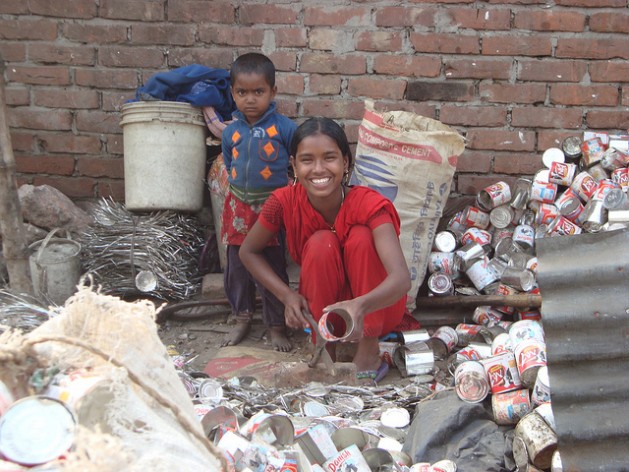
Batara slum in a Dhaka suburb. Credit: Naimul Haq/IPS
ROME, Nov 26 2020 (IPS) – The recent meeting of the G20 – scheduled to take place in Riyadh but held virtually due to the Coronavirus pandemic – has been an eloquent example of how the world is drifting, in a crisis of leadership.
It was, in a sense, a showcase. Everybody had to accept the view that the host of the meeting, the ailing King Salman of Saudi Arabia, was accompanied on TV screens by his apparent heir, Prince Mohamed bin Salman, who is clearly the mastermind of the brutal assassination, dismembering and disappearance of the body of dissident Saudi journalist Jamal Khashoggi.
Roberto Savio
Mohamed bin Salman got away with it, also because of the support of Donald Trump who, in his video intervention said, among other pearls, that nobody in US history had done as much as he had for the environment (like when he said that nobody since Abraham Lincoln had done as much as he had for black Americans). After that, Trump promptly left for his golf course, and ignored the debate.
Raison d’état, realpolitik, diplomatic constraints have always been part of history. The fact that the G20 was virtual, can partly hide a fact: that politicians now accept the most preposterous statements without blinking, because everything has become acceptable and legitimate. In Saudi Arabia, Prince bin Salman is highly popular and in the US, those who live in the parallel world of Trumpland follow blindly.
Biden will have a very difficult life. At least one-third of Americans believe that a massive fraud has deprived their idol of the presidency. He has a Supreme Court staffed by his nominee. And unless the Democrats win the two seats for the Senate in Georgia on January 5th, it will remain in the hands of Mitch McConnell, who will block every single Biden project that needs Senate approval.
Add to this a Trump permanent electoral campaign during the next four years, probably with his own TV channel, and it is difficult to predict that Biden’s vice-president, a woman and black, will repeat his feat in 2024.
There are plenty of solutions if there was only political will. For instance, Oxfam estimates that just an increase of 0.5% over ten years on the taxes paid by 1% of the richest (a negligible increase) would suffice to create 117 million jobs in strategic sectors like health, education, and assistance to the elderly
I apologise for this diversion. The real goal of this article is to show the stunning lack of responsibility of the leaders who met virtually, and besides making totally ritual declarations about the pandemic and climate change, when faced with the issue of the impact of Covid-19 on the poor of the world, simply decided to extend the moratorium on the interest of the external debt of the poorest countries for another year. This is a debt which, in many cases, has been amply repaid with the payment of cumulative interests.
Now, it is certainly difficult to believe that the leaders of France, Germany, Italy, Japan, Russia, the UK, India, China and Canada, and the President of the European Council, and the President of the European Union – leaving aside the United States – ignore the impacting data on the increase of poverty provided by all the international organisations.
The creation of the G7 and the G20 has been the most visible attempt of the great powers to displace substantial debates and decisions from the United Nations. It was certainly not due to lack of information that they ignored the appeal of the Secretary General of the United Nations, António Guterres, who implored action in his intervention against the unfolding drama of the poor of all over the world, which is nullifying all progress achieved in the last two decades.
The data that the G20 ignored all converge on two conclusions: the impact of the Covid-19 virus is stronger than expected, and it will bring about a global social imbalance that will have a lasting impact on several millions of people – in fact, about 300 million people.
This comes on top of an already dire situation. According to the World Bank, 720 million people will be living in extreme poverty (less than 1.90 dollars a day). Of those, 114 million are the direct result of Covid-19: that is 9.4% of the world’s population. According to the UN World Food Programme, more than 265 million are already starving, and many will die. And according to the International Labour Organization 200 million will lose their job.
Let us not forget that half of the world’s population – 3.2 billion people – live on less than 5.50 dollars a day. These are in the global South, as well as those in rich countries who are close to the conditions of the poor countries. The scale of this condition is much greater than we normally think. In the United States, according to the US Census Bureau, 11.1% of the population (49 million people) can be classified as poor; but Covid-19 will probably add another 8 million people.
A staggering 16.1 million children live in food precarity, while more than 47 million citizens depend on food banks. The National Center on Family Homelessness estimates that in 2013, 2.5 million US children experienced some form of homelessness. Finally, the US Health Affairs journal affirms that in 2016, the United States had the largest rate of children mortality in the 20 countries belonging to the OECD, while according to the US Census Bureau, life expectation has shrunk by three years.
In Europe thanks to a culture of welfare (absent in the US), things are going somewhat better. Eurostat estimates that in 2017, 11.8 million people lived in a household “at risk of poverty or social exclusion”. And Save the Children estimates that 28% of those under 18 are at risk of poverty and social exclusion.
We do not have estimates of the impact of Covid-19 in Europe, but the European Union estimates that poverty may increase by 47% if the pandemic lasts until next summer. This excludes the impact of the expected third wave in the winter of 2021. Caritas Italy estimates that at the end of the year there will be at least one million more poor children.
The leaders of the G20 cannot ignore that in April UNCTAD issued an alert: we need to find at least 2.5 billion dollars to attenuate the coming social crisis. They cannot ignore that the ILO has stated that in the poorest countries of the world, like Haiti, Ethiopia or Malawi, the average income of informal workers has fallen by 82%.
They cannot ignore the political consequences of this social crisis, and how Covid-19 is putting a brake on the world economy. But the poor, for many reasons, is not a priority in political choices. Suffice it to note that in the EU’s unprecedented and brilliant Recovery Plan for Europe there are no special provisions for the poor. They are part of the general population, and of those who have suffered because of Covid-19: people working in the tourism sector, in restaurants bar, in shops, and so on.
Yet, we have all the data to know that they suffer specific problems, problems that differ from those of who have lost their jobs. Structural poverty is a cage which does not let out those who are inside it. We have no space here to analyse why poverty needs a specific action. There are tons of studies on the subject, on the relations between poverty and education, poverty and democracy, poverty and social movements, and the list goes on.
What we want to stress is that there are plenty of solutions if there was only political will. For instance, Oxfam estimates that just an increase of 0.5% over ten years on the taxes paid by 1% of the richest (a negligible increase) would suffice to create 117 million jobs in strategic sectors like health, education, and assistance to the elderly.
Repatriating 10% of the capital hidden in fiscal paradises would obtain the same result. But we have been following Ronald Reagan’s mantra that the poor bring poverty and the rich bring wealth, so the rich should be left to create wealth. This may seem like a joke, but the OECD indicates that the average taxation on companies fell from 28% in 2000 to 20.6% in 2020.
This occurred despite the rise of the wealth of large companies, which has been accompanied by a notable decline of the middle class, not to speak of workers and the proliferation of precarious and informal jobs. According to the Washington-based Institute for Policy Studies, between March 18 and June 4, the wealth of the richest Americans increased by 19.1% – a monumental 565 million dollars. Now, the richest Americans own 3.5 billion dollars.
Just 10% of that would be enough to bail out the 46.2 million fellow citizens who ask for unemployment subsidies. Another solution would be to reduce subsidies to the fossil industry, which the International Institute for Renewable Energy estimates at 3.1 trillion dollars – 19 times those for renewables – in spite of the imminent climatic tragedy.
The same imbalance is happening with the pandemic. It is clear that until vaccination becomes universal, Covid-19 is here to stay. It recognises no borders and global problems cannot have an assorted collection of local answers.
Yet, to date, pharmaceutical companies have received 13.1 billion dollars to develop a vaccine: a fantastic business, as they will now make more money on the market, with their costs already having been paid by governments. A central discussion would be whether markets should make profit on common goods like water, air and humans, but we have no space for this debate.
This aside, the situation today is that again according to Oxfam, the rich countries have 13.5%of the world population, Yet they have bought in advance 51% of the doses that pharmaceutical companies will produce – in 2021, 86.5 % of the world will have to make do with the remaining 49%. A consortium of public and private enterprises, COVAX, has been established to deal with the most fragile parts of the world population. Over 185 countries are involved, but it is still very far from gathering the necessary funds.
What is the lesson we can draw from this incomplete analysis? That we are far from having a political class able to face global issues. On the contrary, nationalism and xenophobia are on their way back. The attitude of nationalist leaders to Covid-19 has been similar to that for the threat of climate change: it is a left-wing idea from globalists. So, wearing a mask has become a political declaration.
Trump lost re-election in a great measure due to his attitude on the virus. We can only have a dim hope that this lesson will have some impact. When it comes to the poor, the terms social justice and solidarity are out of fashion, but we are creating imbalances and tensions that we will probably pay dearly for. The French Revolution was not done by a political party, but by an impoverished Third State, or the poor, who revolted against the nobility and the clergy. That is a lesson that the richest 1% would do well not to forget.
Publisher of OtherNews, Italian-Argentine Roberto Savio is an economist, journalist, communication expert, political commentator, activist for social and climate justice and advocate of an anti-neoliberal global governance. Director for international relations of the European Center for Peace and Development. Adviser to INPS-IDN and to the Global Cooperation Council. He is co-founder of Inter Press Service (IPS) news agency and its President Emeritus.